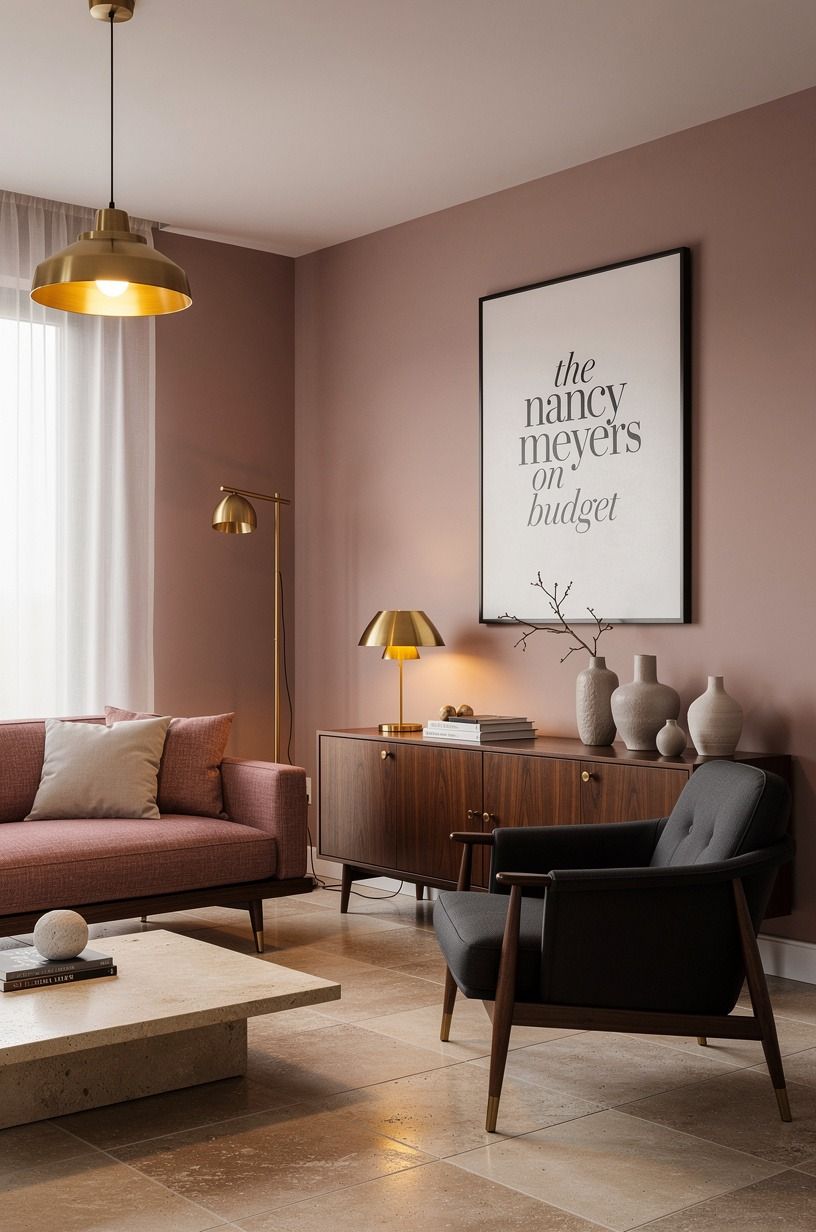
14 Nancy Meyers Aesthetic on a Budget, Small Apartment Edition That Feels Bigger
29 september 2026Nancy Meyers aesthetic on a budget can make a small apartment feel warm without buying a whole new room. I learned that after crowding mine with pale furniture and too many little objects. The fix was simpler: better light, softer texture, and breathing room. Your dream apartment doesn't need a movie-set budget.
Don’t overthink: Why Benjamin Moore White Dove Keeps a Small Apartment Open.
Start with the layered lighting plan, then make the sofa and rug work harder through better spacing. Those changes create the biggest shift before you spend much money.
- Layer the Three-Source Light Stack for a Warmer First Home
- Why Benjamin Moore White Dove Keeps a Small Apartment Open
- Float the Sofa With the Small-Space Breathing-Room Rule
- Layer Linen, Mohair, and Turkish Cotton Without Matching
- Pale Oak, Walnut, and the Two-Wood Rule for a Humble Abode
- Hang Art at the Calm 57-Inch Centerline
- Build the Three-Height Shelf Edit Instead of a Gallery Wall
- An Open Ottoman Instead of a Bulky Coffee Table
- Frame the Window With Floor-Length Curtains
- Use Sherwin-Williams Agreeable Gray as a Quiet Backdrop
- Mix Budget Furniture With One Refined Anchor
- What Should the Entry Do First?
- Style a Small Kitchen With the Three-Object Counter Edit
- Anchor the Room With a Rug That Lets Furniture Overlap
1Layer the Three-Source Light Stack for a Warmer First Home
Small apartments rarely need more furniture first. They need better light. Use three sources per room: overhead, task, and ambient.
Your ceiling fixture can handle practical work, while a shaded table lamp and a low floor lamp create the soft pools that make an ordinary room feel more sophisticated. I don't rely on one bright bulb anymore because it flattens every texture.
Choose a linen-shaded table lamp with a warm finish, then place it where you'll see the glow from the sofa. A second lamp near a reading chair gives your eye somewhere else to land. If you're renting, plug-in sconces can add height without opening a wall.
A 2700K warm-white bulb usually gives the gentlest evening light. You can use a slightly brighter bulb for reading, but keep the color temperature consistent within one visual zone. Mixed blue and yellow bulbs make a small room feel accidentally disjointed.
My opinion is firm here: skip the oversized blue-white bulb. It makes your apartment feel like a waiting room. A gentle pool of light is calmer, more flattering, and much cheaper than replacing the sofa!
Use dimmers where your lease allows them. A low setting makes dinner feel intimate, while a brighter setting helps when you're cleaning or working. You don't need a complicated smart-home system.
One plug-in dimmer and two portable lamps can change the room every evening.
If the room still feels flat, check the surfaces around the lamps. A warm travertine lamp base will add tactile warmth beside dusty rose, charcoal, and brass, while a dark ceramic base creates a quieter, grounded effect. The shade matters most because it controls how softly the light spreads.
2Why Benjamin Moore White Dove Keeps a Small Apartment Open
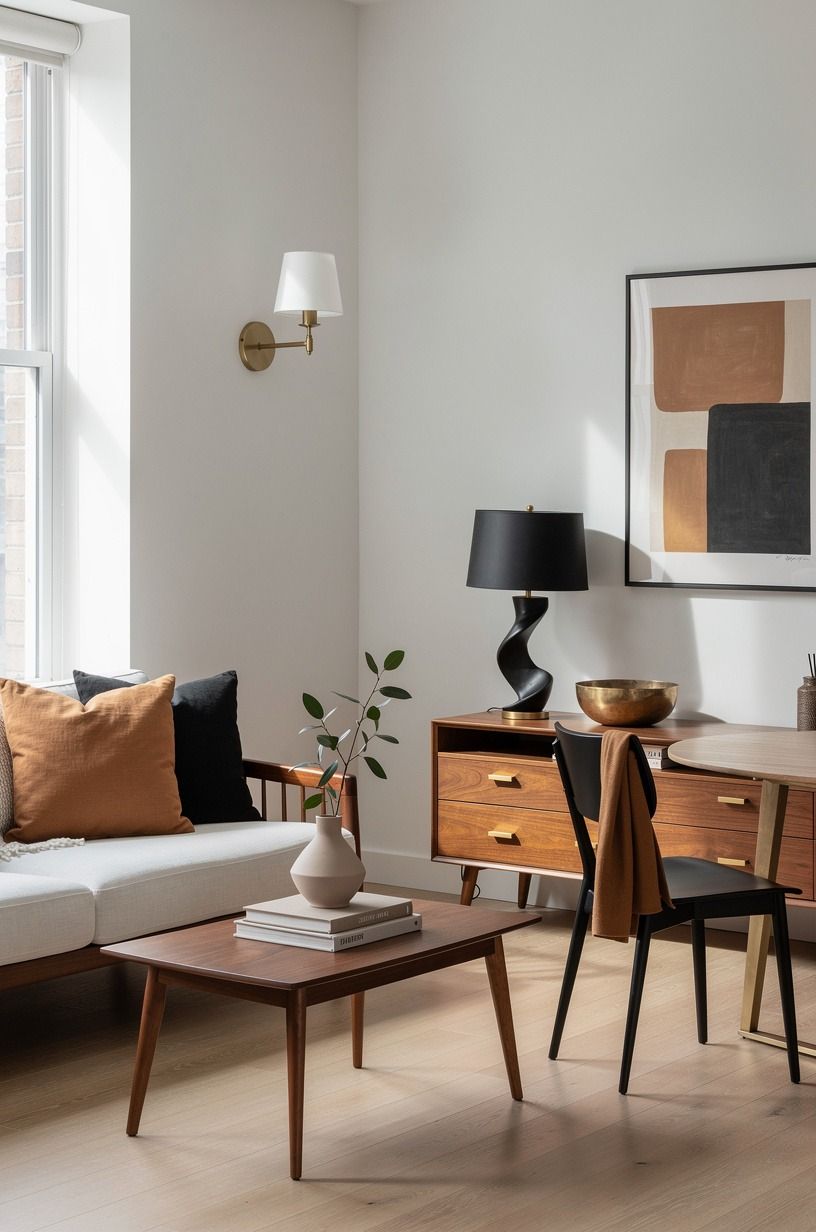
White walls can look airy, but the wrong white can make your small apartment feel cold and unfinished.
3Float the Sofa With the Small-Space Breathing-Room Rule
A sofa pushed hard against every wall can make your apartment feel crowded, even when the floor plan is open. Float it slightly if your room allows, then use the space behind it for a slim console or a basket. Midnight-blue upholstery gives you a named reference for the look: tailored, warm, and relaxed without visual fuss.
You don't need a huge gap. A narrow walkway is enough to create separation between living and dining zones.
If you're using a compact sofa, keep the surrounding pieces light, such as an ivory cane chair or an oversized-chip terrazzo coffee table. Heavy furniture blocks will make your small apartment feel shorter.
Measure the sofa, doorway, turns, and elevator before ordering. Your building may have a generous living room and a surprisingly tight entrance. A piece that arrives in a box can still have arms or legs that create problems once it's inside.
Choose the smallest sofa that lets you stretch out comfortably. Performance linen upholstery works well when you want a relaxed appearance with easier maintenance. Leather can be practical too, but it needs space around it so the room doesn't feel visually dense.
Keep at least one clear route from the entrance to the window. You won't notice the exact measurement once the room is styled, but you'll notice every time you have to walk around a chair. Ease is part of the aesthetic.
A narrow console behind the sofa can hold a lamp, keys, or a small bowl. Choose one with open legs so the floor remains visible.
You can also leave the wall completely clear and let the sofa float alone. That restraint often makes the room feel larger.
4Layer Linen, Mohair, and Turkish Cotton Without Matching
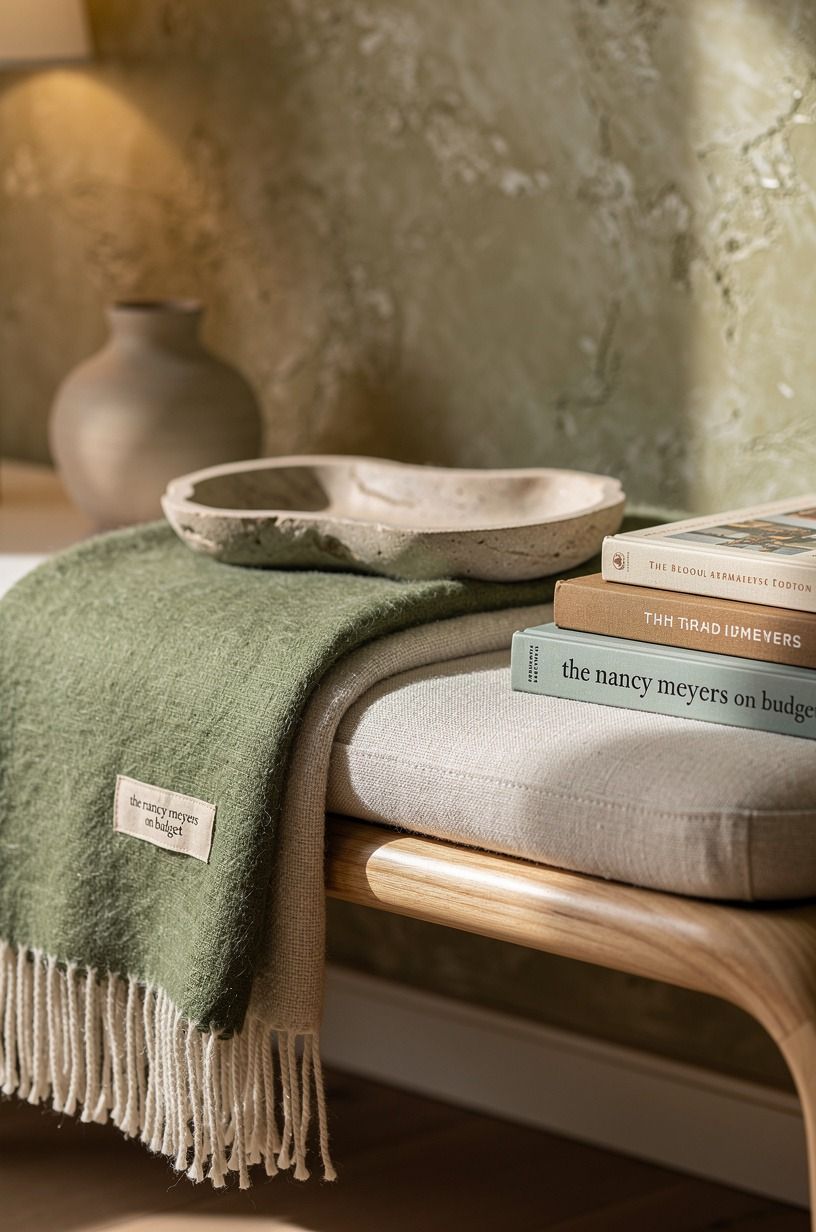
Nancy Meyers rooms look comfortable because the textures vary quietly. Your sofa doesn't need a matching collection of pillows. It needs contrast: Belgian flax linen, sage mohair velvet, and a folded Turkish cotton throw can create that collected feeling without visual noise.
Start with one large neutral pillow, then add a smaller textured pillow and a throw with a visible weave. Keep the colors close, but don't make every fabric identical. I prefer cream, oatmeal, muted green, and warm brown because they look gentle in daylight and richer at night.
A 600 GSM Turkish cotton throw can give you thick, tactile weight without filling the room with decoration. You won't need six pillows. Three well-chosen pieces usually look more intentional than a crowded sofa, and you'll still have somewhere to sit.
Texture works best when each item has a job. A nubby pillow supports your back, a throw keeps your legs warm, and a woven basket holds the extra blanket. Useful softness feels more authentic than a pile of decorative objects.
If your apartment has a lot of hard surfaces, bring in one fabric with visible irregularity. Slub cotton or washed linen adds movement without introducing another color. The slight variation keeps a neutral room from appearing flat.
Don't buy every textile at once. Live with the sofa for a week, notice where you actually sit, then add the piece that solves a real comfort problem. Your room will feel more personal when the layers develop gradually.
5Pale Oak, Walnut, and the Two-Wood Rule for a Humble Abode
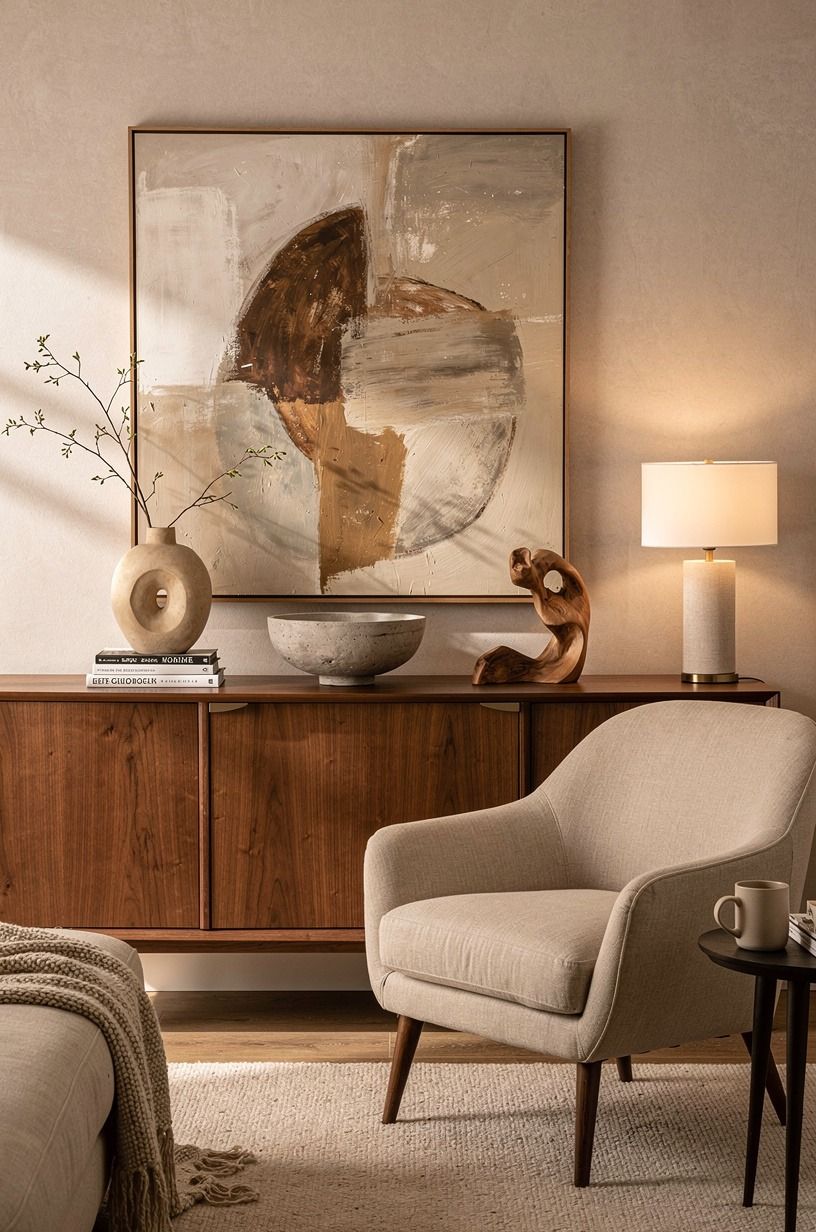
Too many wood finishes can make a small apartment look like a furniture showroom.
6Hang Art at the Calm 57-Inch Centerline
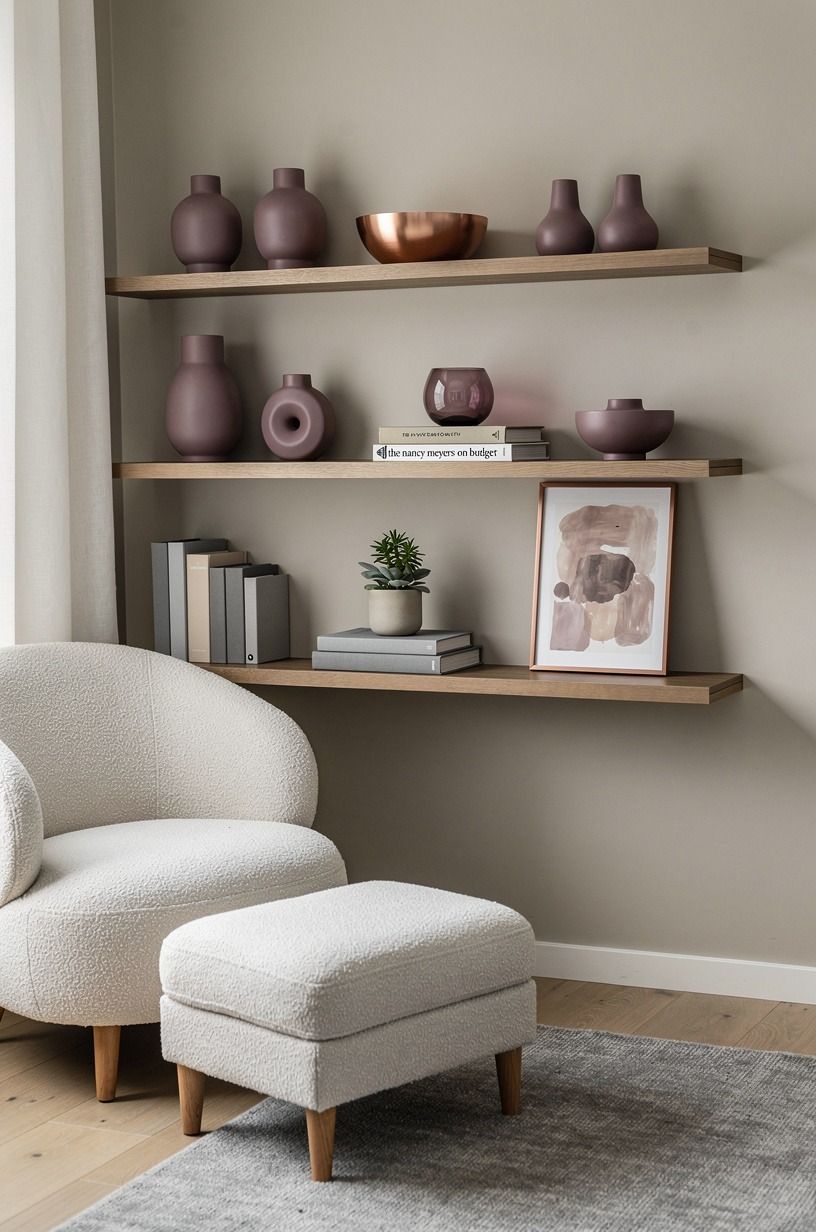
Art can make a small room feel personal, but hanging it too high makes the ceiling and walls feel disconnected. Aim for the center of the artwork to sit about 57 to 60 inches from the floor. Aged brass frame details work especially well with warm neutrals and help inexpensive prints feel more established.
If you're hanging art above a sofa, keep the whole arrangement connected to the furniture rather than floating near the ceiling. A pair of modest prints can look more polished than one oversized piece that overwhelms the wall. Your eye should move from the sofa to the artwork in one easy step.
What should you frame? Botanical studies, architectural sketches, muted still life, or a photograph with soft contrast. I wouldn't use five unrelated tiny frames across one wall.
They create visual chatter. Choose fewer pieces, give them room, and let your apartment breathe.
A small oil landscape can bring depth to a narrow room because the distant view creates a visual pause. You don't need an expensive original. Look for thrifted paintings, art-school prints, or frames you can reuse.
If your walls are already busy, lean one larger piece on a console instead of adding another hanging arrangement. The casual angle introduces softness and makes the apartment feel lived-in. Secure it properly if you have children or pets.
Use a simple mat when the artwork feels too small. Warm white museum board can give an inexpensive print more presence without adding another color. The mat should support the work and the wall, so avoid a bright optic white beside creamy paint.
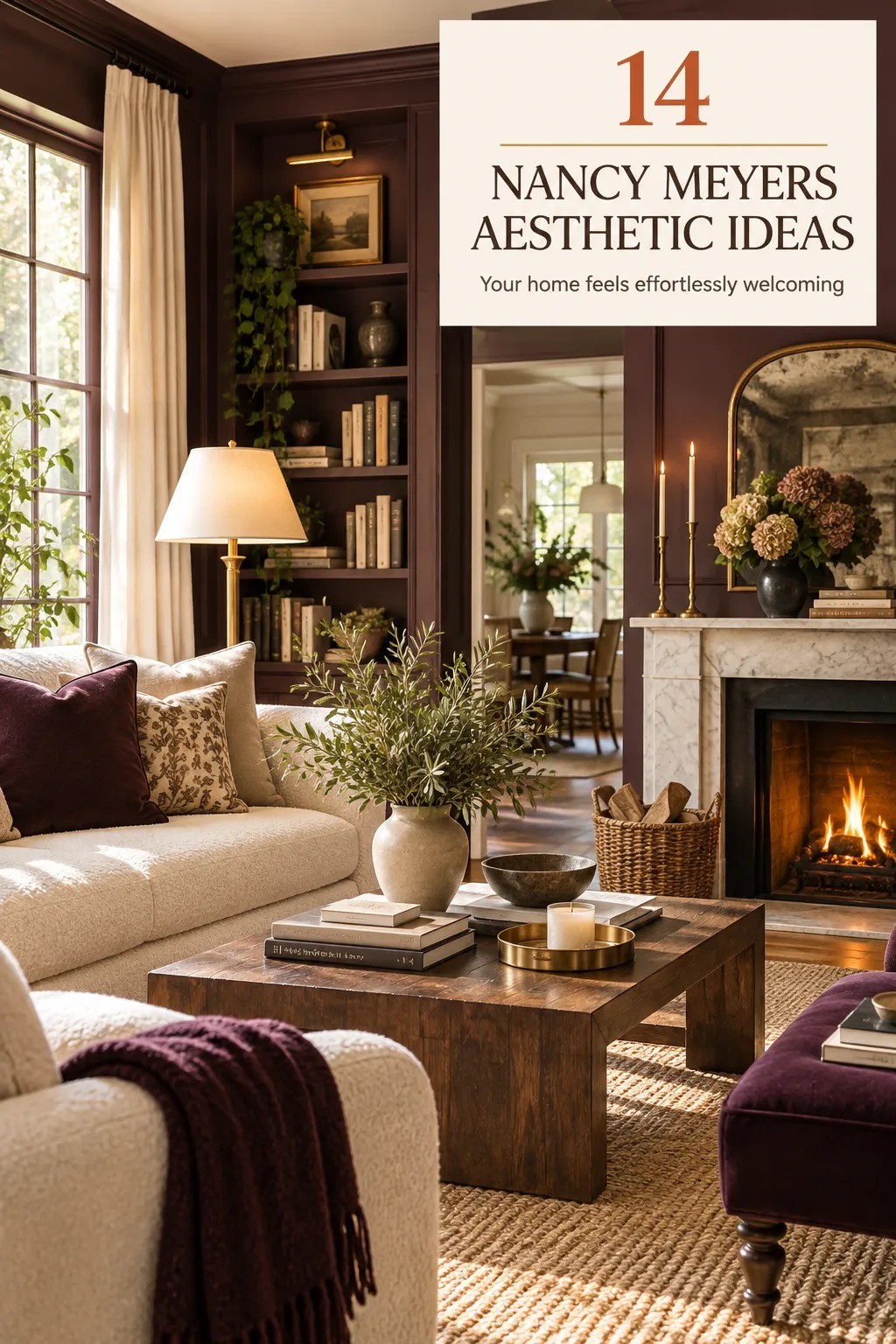
7Build the Three-Height Shelf Edit Instead of a Gallery Wall
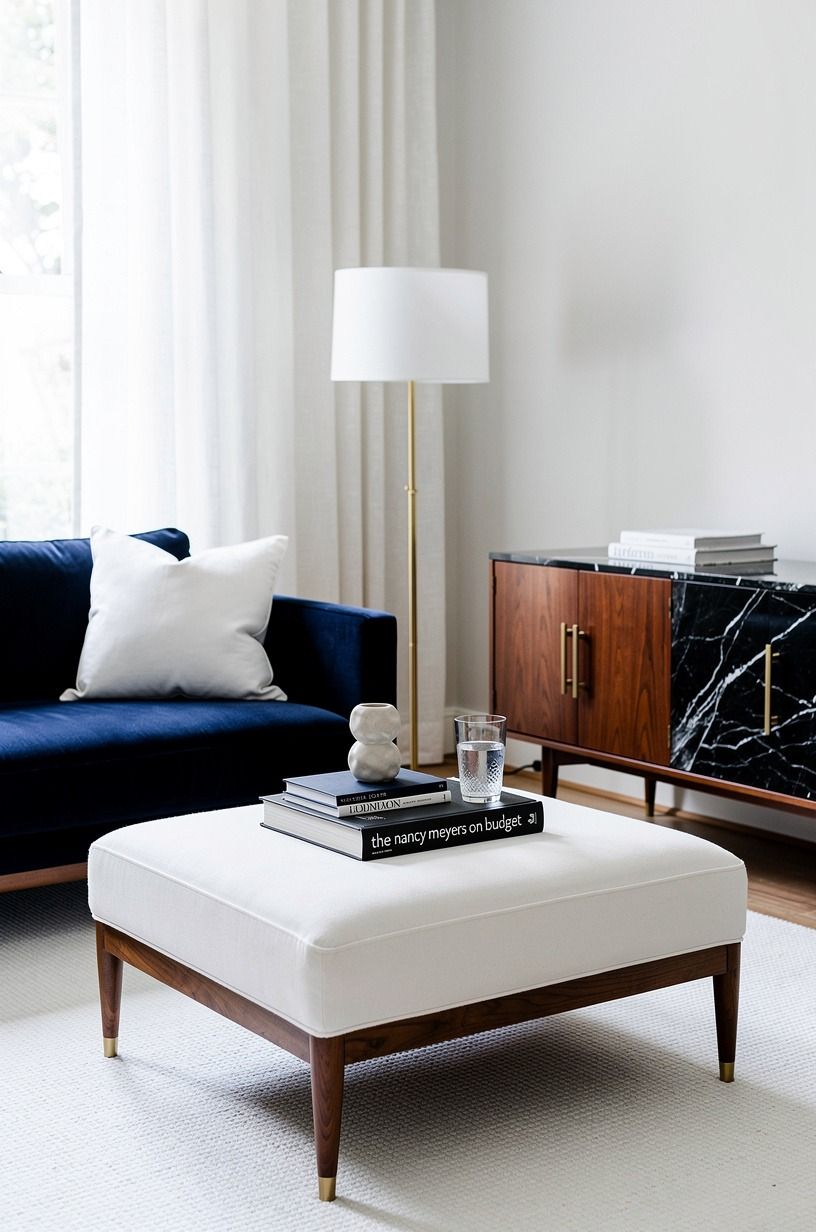
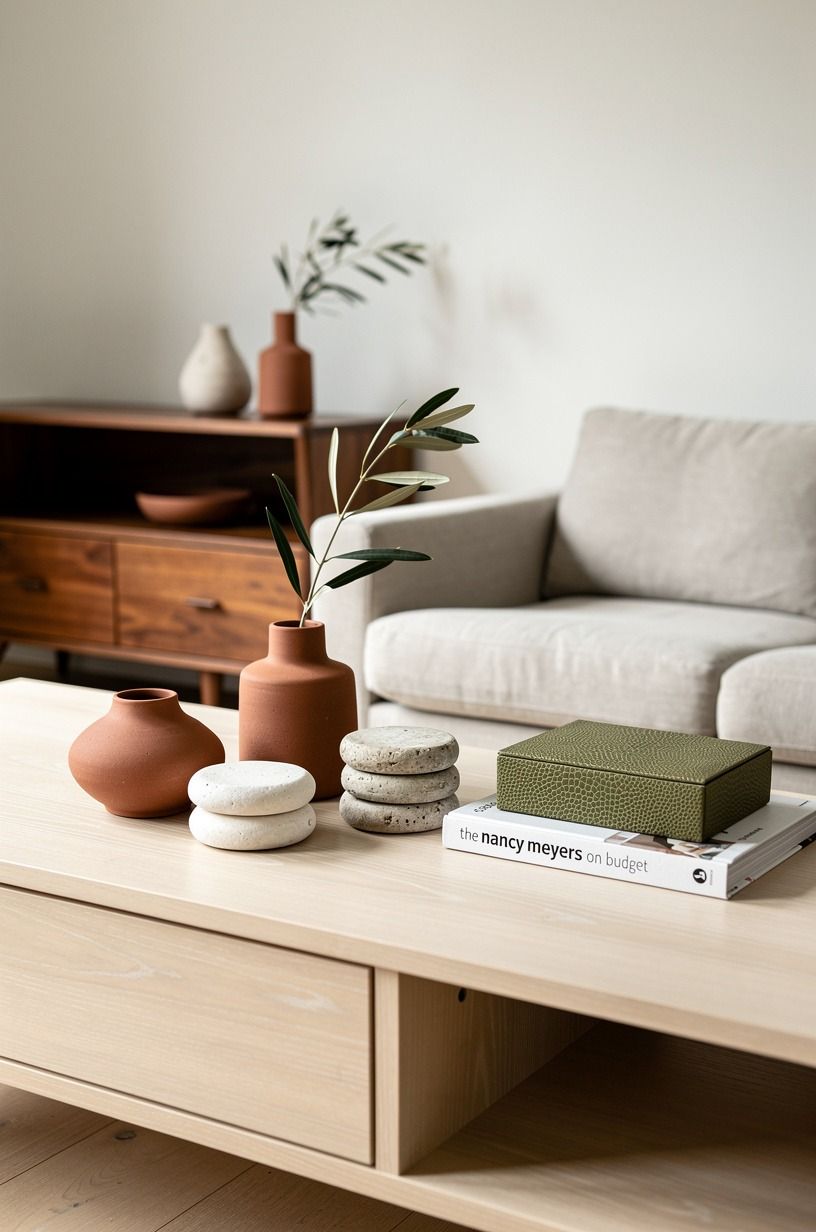
Open shelving can help your apartment feel larger because it stores objects without closing off the wall. The danger is filling every inch. Use three heights: something low, something medium, and one taller shape.
Hand-thrown ceramic vase pieces add character without needing bright color.
Your low shape might be a stack of books, the medium shape a bowl, and the tall shape a branch in a vase. Leave a patch of empty shelf between groups. That blank space isn't wasted; it gives your eye a resting place.
I like IKEA shelves for this because the simple lines disappear behind books and pottery. But I'd skip glossy plastic bins in the living room.
They make the shelf feel temporary. Woven baskets, linen-covered boxes, and one dark object will make your storage feel softer and more welcoming.
Limit the visible palette to three or four tones. Natural rattan baskets can hide cables, paperwork, and small items while keeping the shelf warm. Put the practical clutter in the lowest or least visible zone.
Books should be arranged for use rather than color perfection. A few horizontal stacks create varied heights, and the titles add personality. You can turn some spines inward if the colors are distracting, but don't make the shelf look like a store display.
If you have a television, use the shelf edit around it carefully. Leave breathing room above and beside the screen. The eye needs somewhere to rest, especially when the wall already carries a lot of technology.
8An Open Ottoman Instead of a Bulky Coffee Table
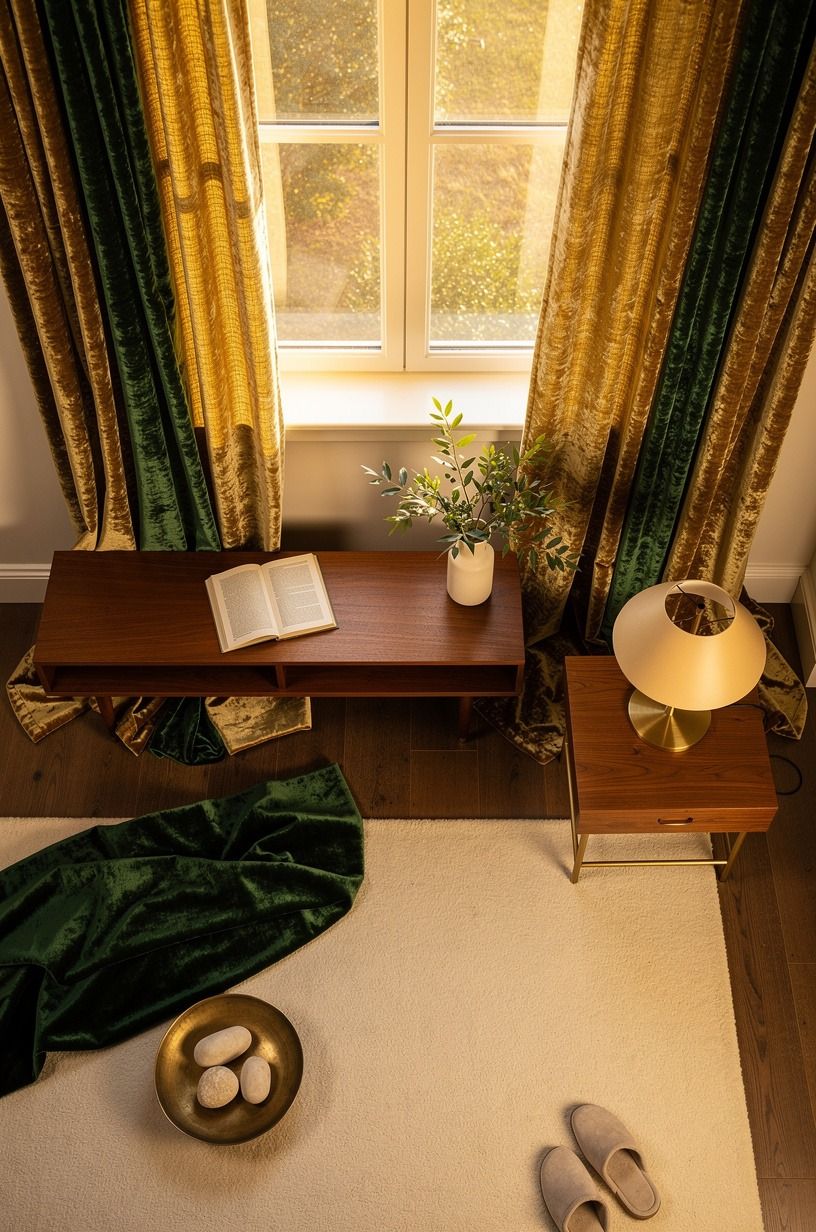
A small apartment coffee table has to work hard.
9Frame the Window With Floor-Length Curtains
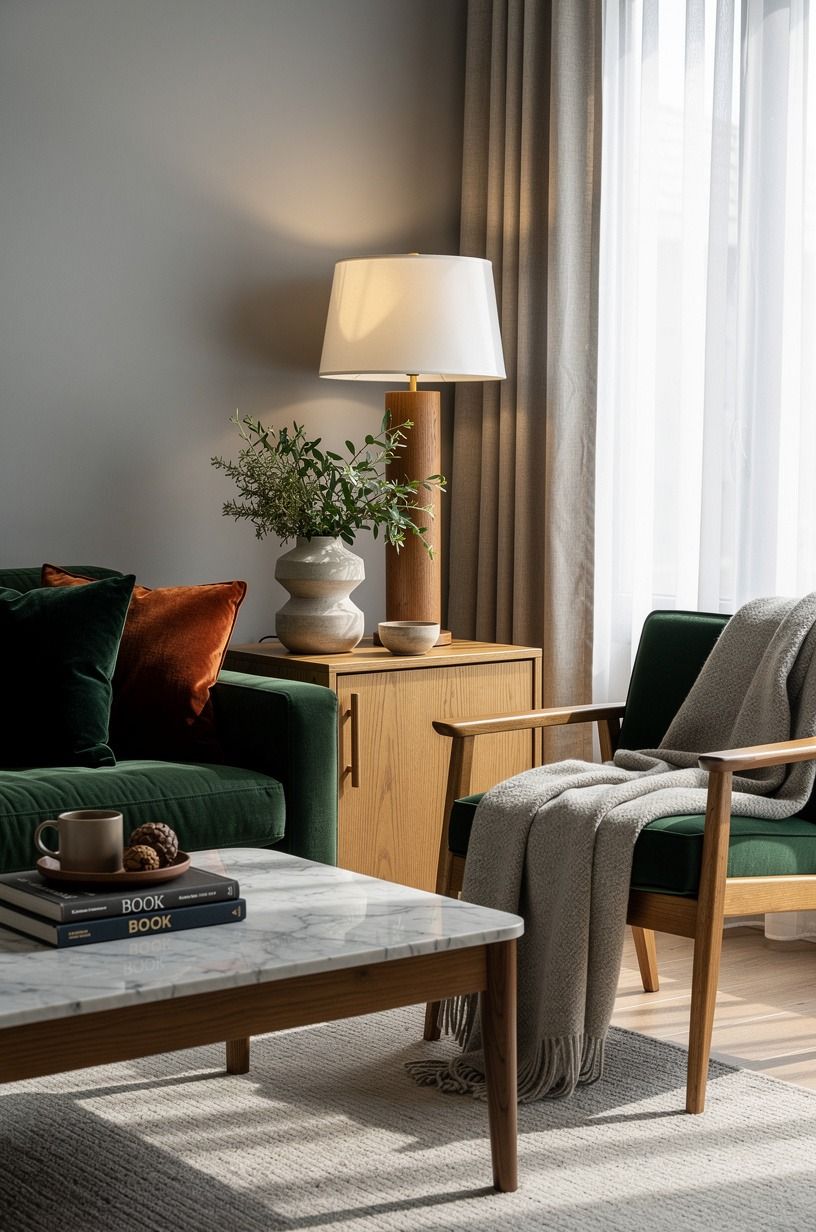
Short curtains make a small apartment feel shorter. Hang the rod 4 to 6 inches above the window frame, then let the fabric fall to the floor. Deep-pile mohair velvet drapes soften hard rental lines and create gentle vertical movement that makes your ceiling seem taller.
You don't need custom panels for this effect. Look for ready-made velvet blends, then choose the longest practical length. If your radiator or baseboard makes floor length difficult, let the fabric stop just above it rather than bunching heavily on the floor.
But don't use thick blackout panels in a small living room unless you need them for sleep. They can swallow the daylight you need most. A soft ivory or flax curtain will filter light while keeping your apartment bright, calming, and comfortable.
Mount the rod wider than the window when possible. The fabric can stack beside the glass, so the opening looks larger when the curtains are open. This small adjustment gives you more daylight without changing the window.
A brushed nickel curtain rod can disappear against a pale wall, while aged brass adds a decorative note. Match the rod to existing hardware if your apartment has several visible fixtures. Repetition makes inexpensive curtains look considered.
Steam the panels before judging them. Wrinkles make the fabric look shorter and heavier. Once the curtains hang smoothly, the whole room often feels calmer within minutes.
10Use Sherwin-Williams Agreeable Gray as a Quiet Backdrop
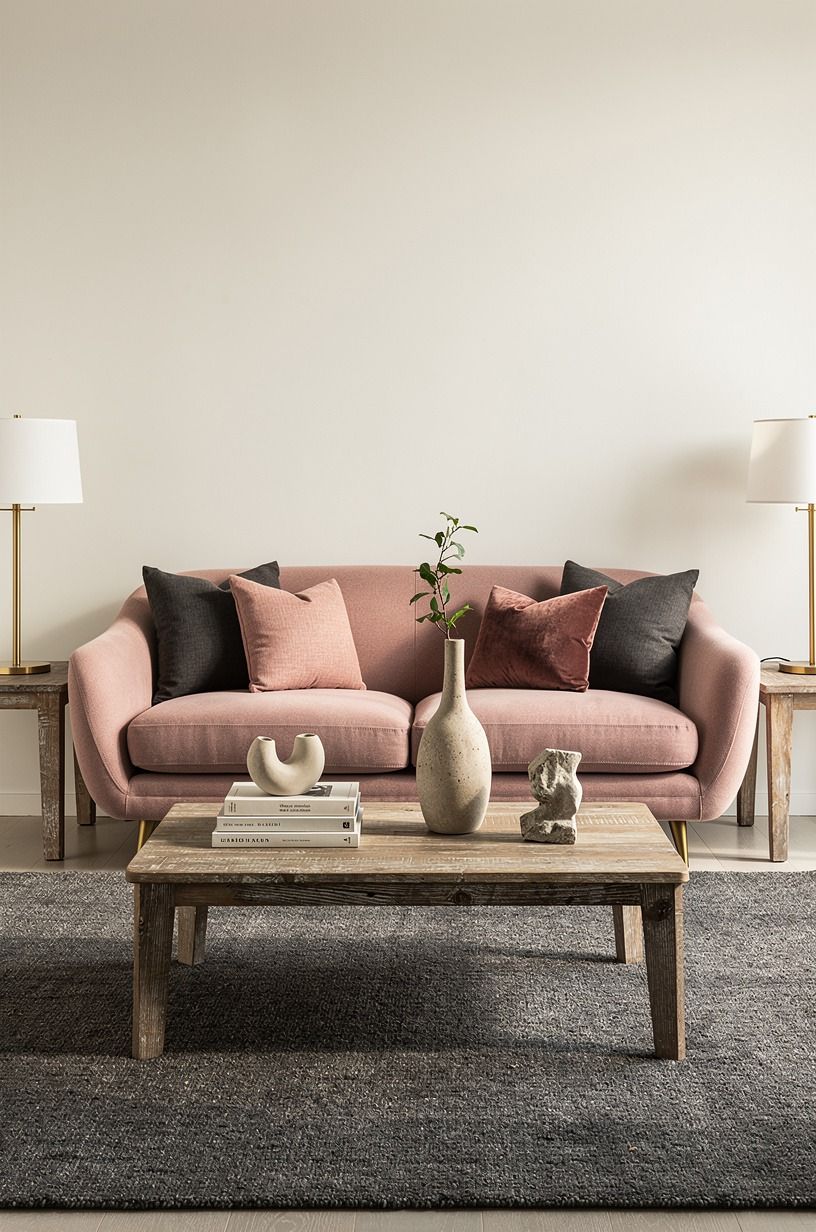
If White Dove feels too creamy for your apartment, Sherwin-Williams Agreeable Gray SW 7029 offers a flexible alternative. Its muted balance works with warm wood, black accents, and natural textiles. It is especially useful when your apartment receives mixed daylight throughout the day.
Test a sample on more than one wall. Your north-facing wall may make the shade look cooler, while the wall near a window may bring out its warmth. I don't trust a paint card alone because the surrounding floor and furniture change everything.
For a more colorful accent, Farrow & Ball Pigeon No.25 can bring an earthy, welcoming note to a tiny entry or kitchen wall. Use it where you want depth and keep the rest of the palette quiet.
Gray paint needs warmth around it. Add linen, pale wood, and cream ceramics so the room doesn't feel flat. A small amount of black can sharpen the palette, but too much will make the apartment feel harder and more graphic.
If you can't paint, create the same mood through removable pieces. A mushroom-gray wool rug, warm curtains, and a large neutral artwork can shift the room's temperature without touching the walls. Paint is powerful, but it isn't the only route.
11Mix Budget Furniture With One Refined Anchor
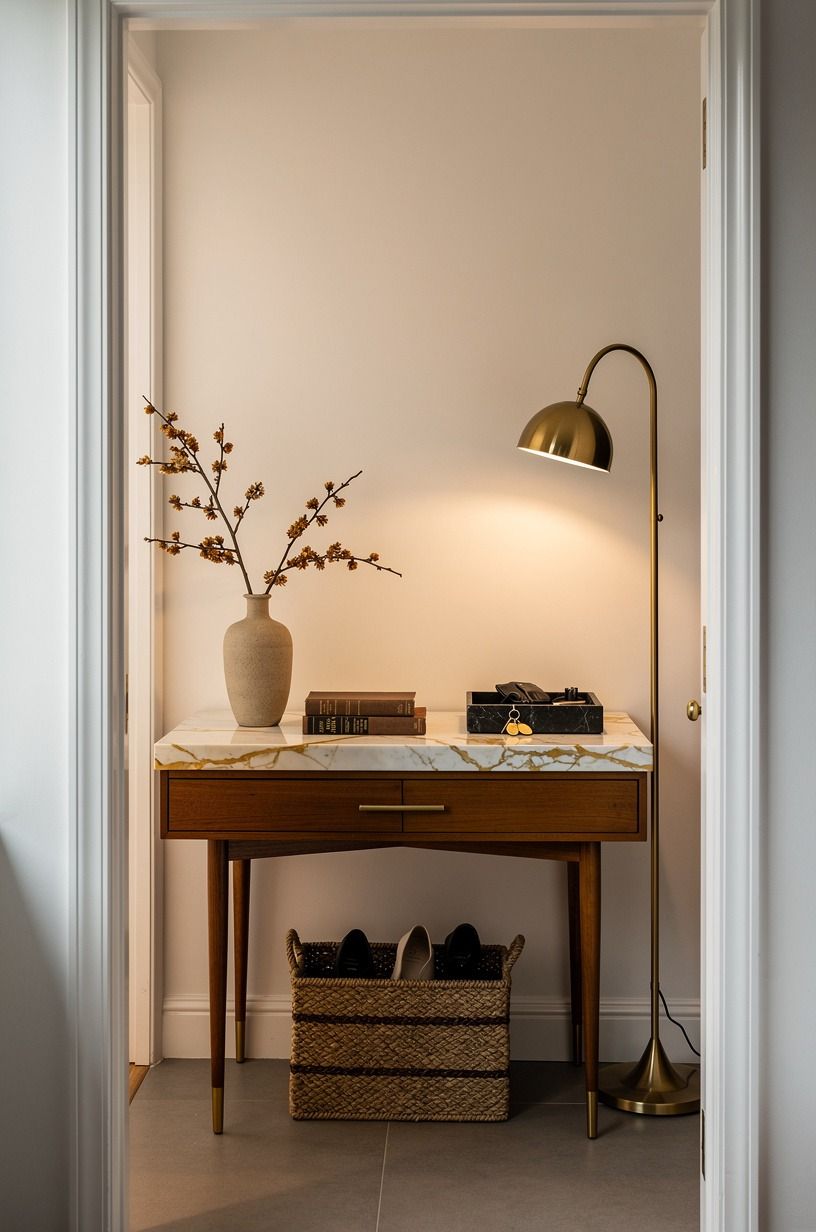
A budget room feels more expensive when one piece has presence. That doesn't mean your anchor has to be costly. It could be a substantial mirror, a reclaimed weathered-teak table, or CB2 Primitivo bouclé seating if you find it second-hand.
Let the rest of your apartment support that one item. If your chair has a nubby fabric, keep the nearby table simple.
If your table has strong grain, choose smoother textiles. You don't want every piece competing for attention.
I like IKEA TONSTAD for practical storage because its proportions are calm and its surfaces don't demand a styling performance. Your apartment will feel more personal when inexpensive pieces sit beside one object with history or tactile weight.
A vintage brass mirror is a useful anchor because it adds light, height, and character at the same time. Place it where it can reflect a window or lamp rather than a cluttered corner. The reflection should make the room feel deeper.
You can also make a small purchase feel important through placement. Give it an area of empty space, then repeat one of its materials elsewhere. A dark wood chair looks more deliberate when a small frame or tray carries the same tone.
Avoid buying a “statement” item that only works in one location. Small apartments need flexibility. Choose furniture that can move from the living room to the bedroom or entry if your needs change.
12What Should the Entry Do First?
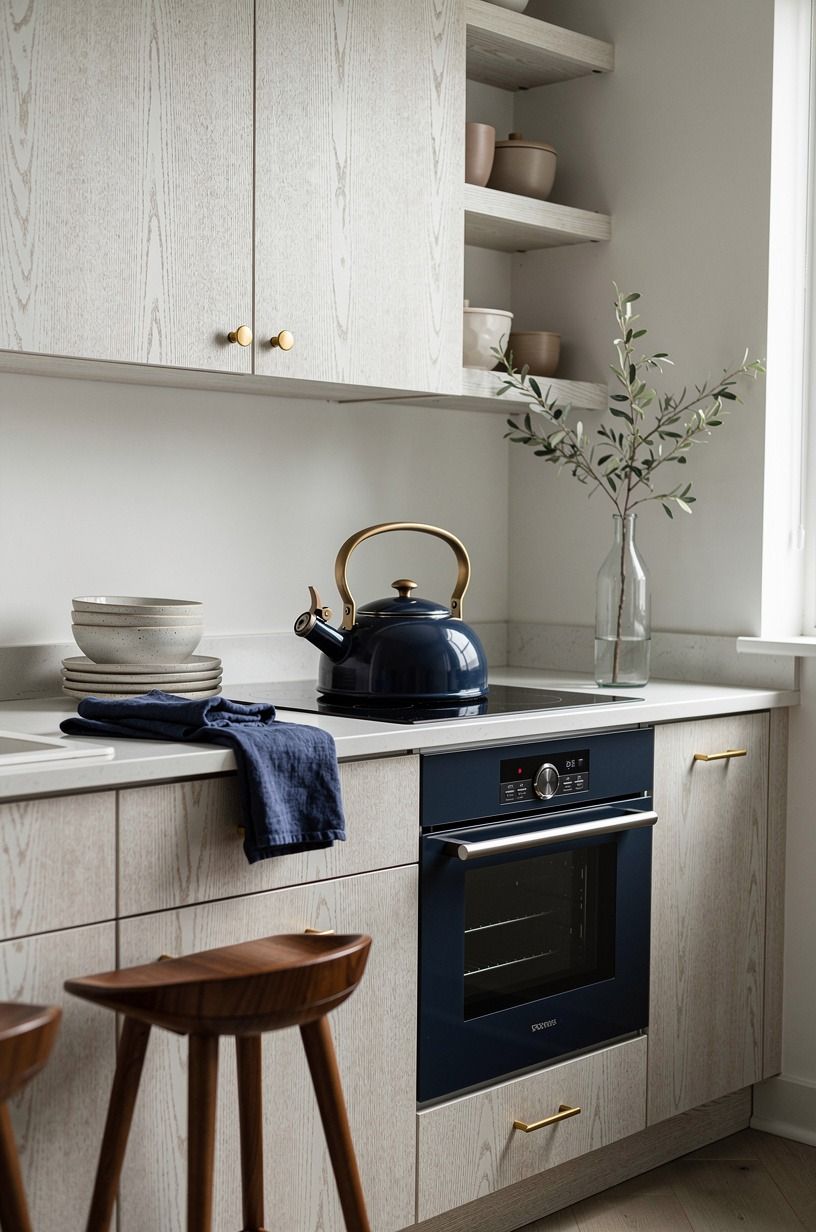
The entry is easy to ignore, especially in a rental, but it controls the first impression of your apartment.
13Style a Small Kitchen With the Three-Object Counter Edit
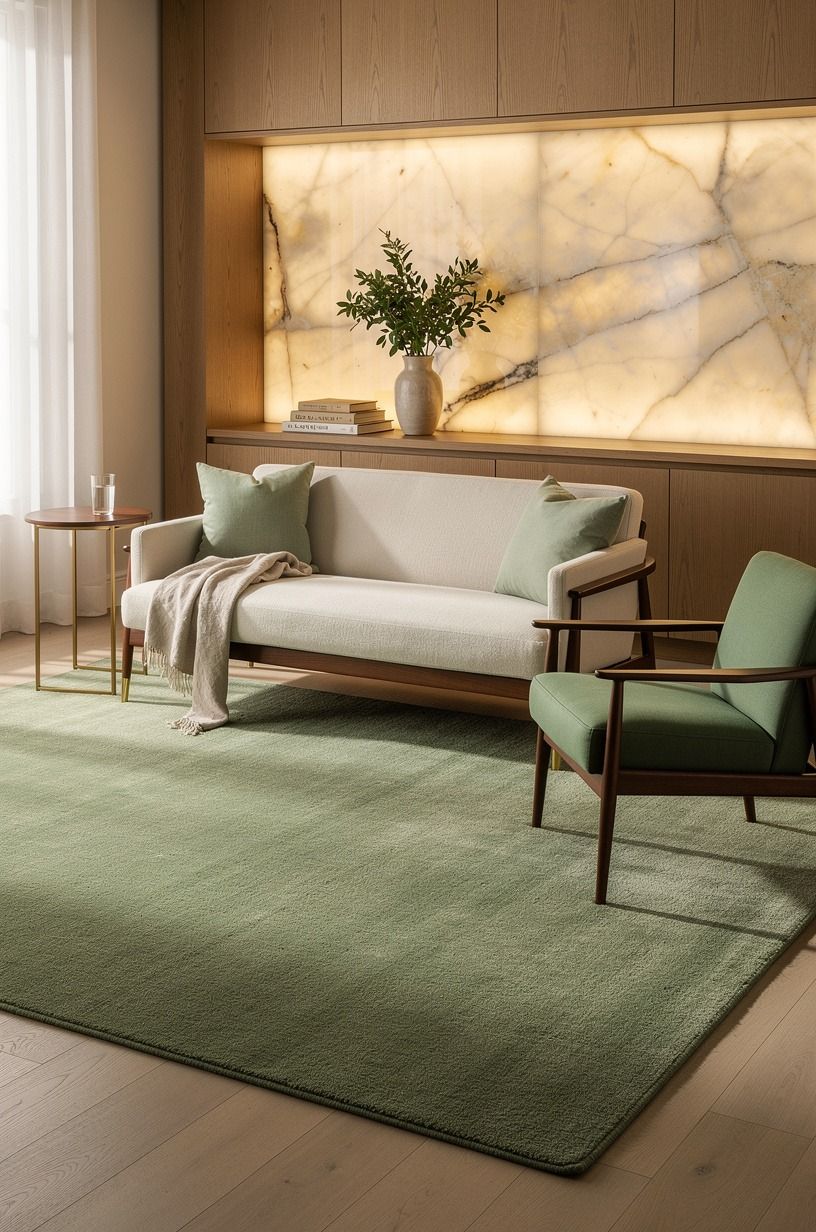
A Nancy Meyers kitchen doesn't come from filling every counter with props. It comes from a few useful objects that happen to look good together.
Try a wooden cutting board, a ceramic crock, and a bowl of fruit. Cerused white oak is the material mood to reference, even if your rental counter is laminate.
Keep one working zone clear near the stove or sink. Your kitchen will feel larger when you can cook without moving six decorative pieces first. I prefer a warm wood board over a collection of labeled jars because it adds texture and earns its space.
For a budget refresh, use a linen tea towel, a small copper hook, and one framed recipe card. You don't need open shelving or a full renovation. But you do need to remove anything you never use.
A quiet counter looks more refined than a crowded one, every single time!
A ceramic utensil crock can hide the tools you reach for daily. Keep it close to the cooking zone and limit the contents to essentials. Too many handles rising from one container quickly look messy.
Choose one organic shape for softness. A bowl of lemons, a wooden spoon, or a small potted herb can make a kitchen feel active without looking staged. Pale pears bring color that works with cream, wood, and stone.
Hardware is another affordable change when your lease allows it. Aged bronze or simple brass can warm white cabinets, while black pulls create a cleaner contrast. Measure the existing holes before ordering anything.
If the counters are already busy, edit before buying. Put away appliances used once a month, reduce duplicate utensils, and keep the area around the sink visually quiet. Space is the most convincing luxury a small kitchen can offer.
14Anchor the Room With a Rug That Lets Furniture Overlap
A rug can connect a small apartment's living area without building a wall around it. Choose one large enough for the front legs of your sofa and chairs to overlap it. Low-pile wool rug texture brings softness underfoot while keeping doors and dining chairs practical.
If your room is narrow, orient the rug to support the furniture rather than the wall. Your sofa, chair, and table should feel like one conversation area. A tiny rug floating beneath only the coffee table will make the furniture look scattered.
The typical cost can climb quickly, so shop second-hand, check flatweaves, or wait for a neutral pattern with some variation. I'd skip a busy high-contrast rug in a small apartment because it becomes the loudest object.
A washed jute flatweave can work in a sunny room, but it may feel rough beside a soft sofa. Layer a smaller wool rug over it if you want more comfort, though two rugs can make a tight room look busy. Test the scale with painter's tape first.
Leave enough clearance for doors and drawers. A beautiful rug that catches every cabinet door will become irritating fast. Measure the swing of the furniture around it before you order.
Pattern can be gentle without being boring. Look for faded stripes, small checks, or tonal botanical marks. Muted olive and cream will connect the room to wood, linen, and greenery without taking over.
What These Rooms Are Borrowing From Nancy Meyers Right Now
The Nancy Meyers look keeps returning because it understands a room as a place where ordinary life happens. The best examples aren't museum-clean.
They have a mug near the sofa, a throw that has been used, and a kitchen surface that can handle breakfast. Your apartment doesn't need to pretend nobody lives there.
I think the current version is less about copying a movie kitchen and more about choosing warmth over novelty. White Dove, Pigeon, soft linen, pale oak, and aged brass work because they age gently.
The room can change around them. A blanket comes and goes, a thrifted chair moves near the window, and your small space keeps its identity.
The budget matters, too. A $200 to $800 refresh can cover paint, textiles, art, and organization, while larger furniture projects climb much higher.
This is where I get opinionated: spend first on what your hands and eyes notice every day. Better light, a useful rug, and curtains at the right height will serve you longer than a pile of small decorative objects.
The easiest order is to handle the light first, then the kitchen surfaces, then the pieces that define the seating area. You can make each change separately and still see progress.
You can also use these typical material ranges as a planning guide:
The Questions I Get Asked Most
What is the best Nancy Meyers Aesthetic on a Budget for a small apartment?
I’d start with warm lighting paired with soft textiles. Choose an IKEA table lamp, linen-look curtains, and one textured throw before buying extra furniture. Layered light makes a small room feel more inviting, while fewer pieces keep your floor visible.
The change is inexpensive and immediately noticeable.
Where can I buy Nancy Meyers Aesthetic pieces on a budget?
I look at IKEA, Target, and Wayfair for simple furniture, lighting, and textiles. Facebook Marketplace and thrift stores are useful for wood tables, mirrors, and framed art.
You don't need every piece from one store. Mixing new and second-hand items gives your apartment more character.
How much does a Nancy Meyers Aesthetic makeover cost?
I’d expect a small refresh to cost about $100 to $300 if you focus on paint, rearranging, second-hand art, and textiles you already own. A fuller budget project typically falls in the $200 to $800 range for paint, textiles, art, and organization.
Can I create this look on a budget?
Yes, and I’d begin without buying anything. Move furniture away from the walls, group objects by color, and switch to warmer bulbs. Add a second-hand mirror or linen-look curtain when you can.
Your apartment will change quickly once the layout and light improve.
Is Nancy Meyers Aesthetic worth it in a small space?
I think it works because the style depends on comfort, proportion, and useful objects rather than oversized decoration. Keep walkways clear, let furniture overlap the rug, and use vertical curtains. A smaller room can feel more intimate, peaceful, and welcoming when every item earns its place.
Is Nancy Meyers Aesthetic a good idea for a rental?
Yes. I’d use removable hooks, a tension rod, peel-and-stick wallpaper in a small area, and plug-in lighting. You can also layer rugs, change cabinet hardware if your lease allows it, and use freestanding storage.
These swaps give your rental warmth without permanent construction.
The Change I'd Make First
If I had to pick one, I'd start with layered lighting. One ceiling fixture can't give your apartment depth, but three gentle sources can make pale walls, wood, and linen feel alive after sunset. Move one lamp tonight, then adjust the rest of the room around that glow.