15 Living Room Media Wall Ideas for Every Layout That Feel Custom Without Renovating
26 september 2026Living room media wall ideas can feel custom with paint, proportion, and smart storage, usually for $300 to $1,200. Start with a floating console, a dark painted wall, or a small-room layout. You can also soften the wall with a layered lighting plan or a warm wood grid. I once mounted a television too high and made the whole room feel stiff. Your wall doesn't need construction; it needs a plan. These ideas work for renters, homeowners, narrow rooms, and open layouts.
Don’t overthink: Paint the Wall in Farrow & Ball Hague Blue.
- Float a Console With the Two-Inch Shadow Gap
- Paint the Wall in Farrow & Ball Hague Blue
- Layer the Three-Height Light Stack
- What Should Your Media Wall Hide?
- Choose Open Shelves Over a Heavy Cabinet
- Frame the Screen With a Warm Wood Grid
- Build the Floating Console Rule Into a Small Room
- Swap Bright White for a Soft Neutral Backdrop
- Anchor the Screen With a Long Low Bench
- Use the Two-Wood Rule for Built-In Energy
- Can a Small Room Carry a Full Media Wall?
- Hang Art Beside the Television, Not Above It
- Layer a Fireplace-Free Living Room Media Wall
- Paint the Ceiling Edge for a Built-In Look
- Mix Closed Storage With One Display Niche
1Float a Console With the Two-Inch Shadow Gap
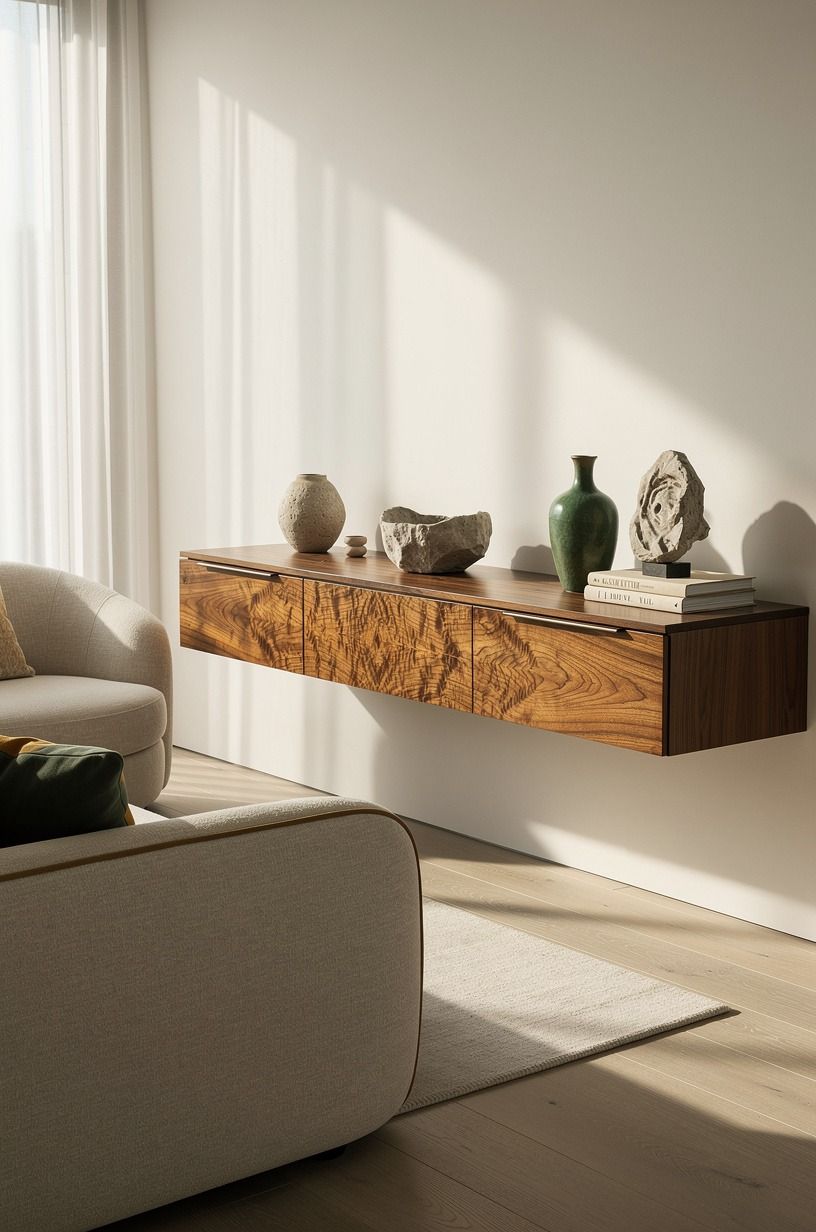
A floating console gives your living room media wall a lighter profile because the floor stays visible underneath. Mount the cabinet so you can see a slim shadow gap beneath it, then hide the cords inside a painted raceway. I prefer this to a bulky floor unit because your eye gets a clean horizontal line instead of another heavy block.
Choose a console with enough depth for your equipment, but don't fill every inch. Book-matched walnut cabinetry brings warm grain against an emerald wall, while a matte finish keeps fingerprints quiet. Your television can sit above it with roughly 1.5 to 2.5 times the screen diagonal between the screen and your main seat.
Try a budget version with an IKEA BESTÅ cabinet mounted on a sturdy rail. It won't look custom if the unit is too narrow for your screen, so measure the television, console, and wall together before you buy. You can pair this approach with hidden media storage or open shelves when the room needs more personality.
The gap beneath it is the detail that makes the whole arrangement feel airy and intentional. You'll notice the difference immediately when the floor remains visible. It creates a quieter, more graceful base for the entire wall.
2Paint the Wall in Farrow & Ball Hague Blue
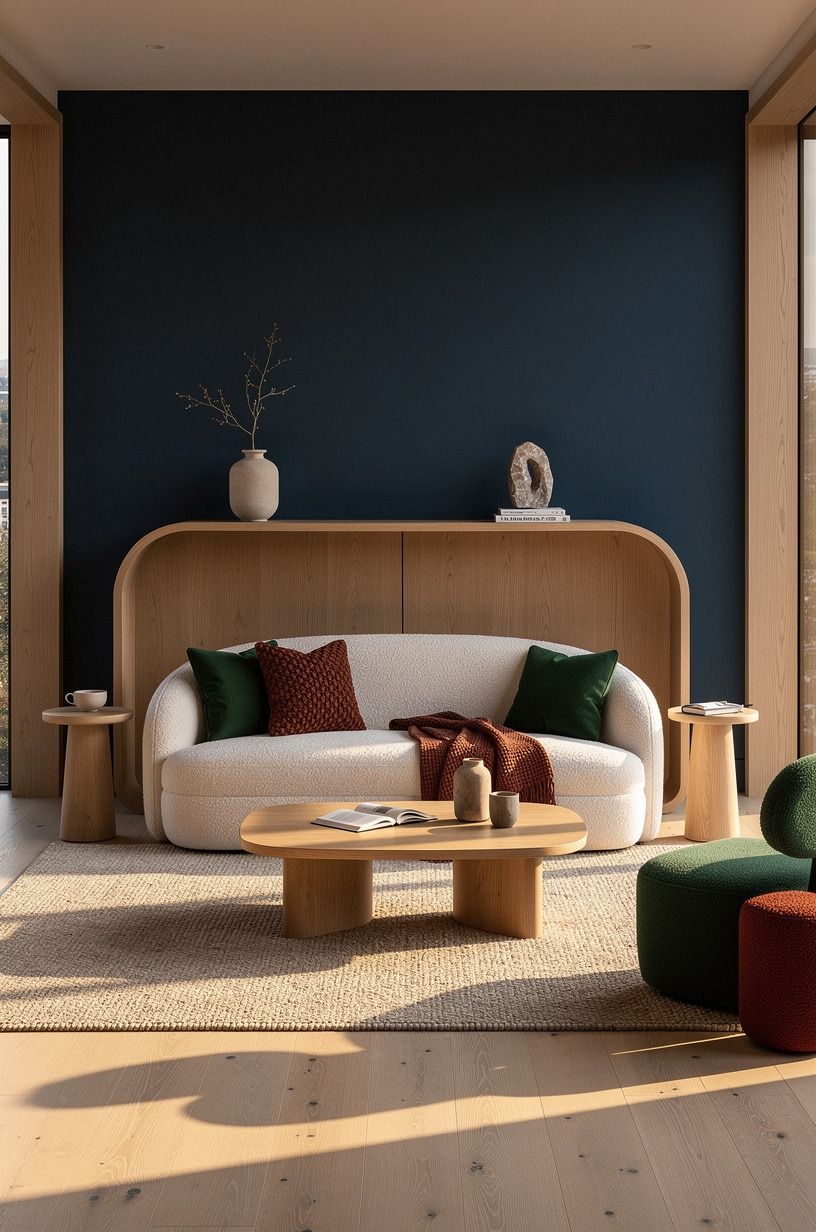
A dark forest-green painted wall turns the television into a quieter rectangle because the black screen recedes against the deeper color. Farrow & Ball Studio Green is my favorite for this move, especially when your room gets warm afternoon light. I tested a similar color beside a bright white wall, and the white made every cable and reflection louder.
Use eggshell or matte paint rather than a shiny finish. Your screen will catch less glare, and the wall will have a soft, moody surface behind shelves and art. A slim natural oak shelf keeps the green from feeling cold, while aged bronze hardware gives your room a grounded, earthy note.
And don't paint only the rectangle behind the television. Carry the color across the full wall or through the corner so your media wall feels designed rather than patched.
If you're nervous about darkness, use lighter upholstery and a 9x12 rug with warm cream, camel, or rust threads. A soft neutral backdrop is an easier fallback if the green feels too dramatic.
A small sample can save you from an expensive mistake. That difference is dramatic, especially after sunset.
3Layer the Three-Height Light Stack
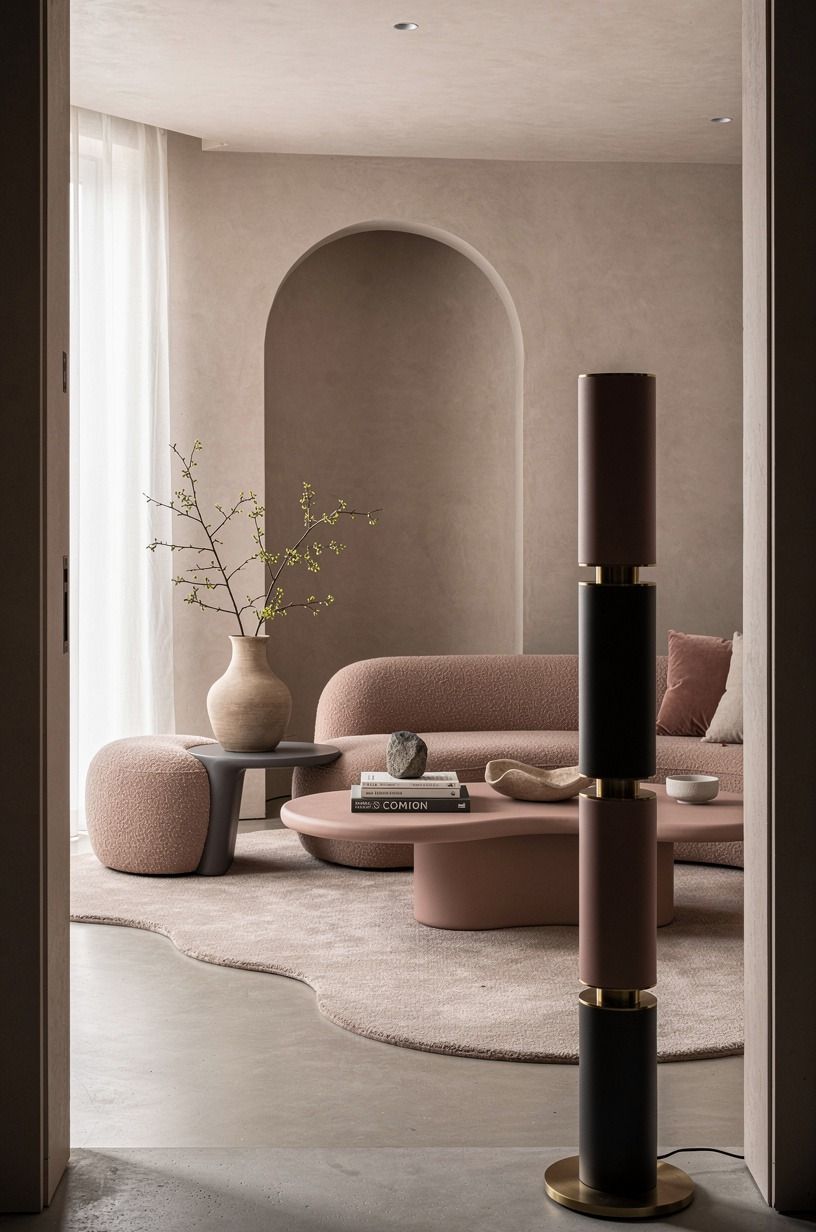
The Three-Height Light Stack uses low, middle, and high light sources so your living room media wall doesn't depend on the television glow.
4What Should Your Media Wall Hide?
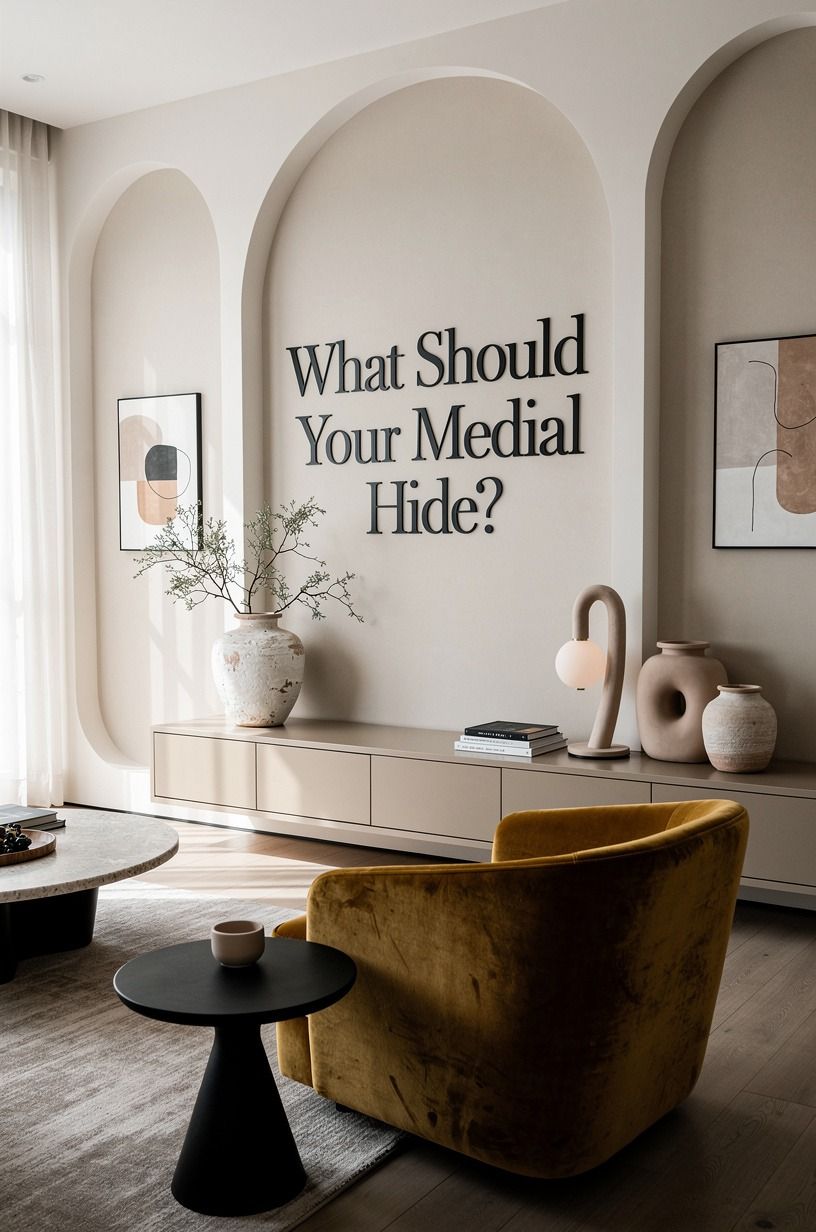
Your media wall should hide cables, remotes, game systems, and the visual clutter that makes a room feel unfinished. Start with a cable raceway painted the wall color, then use a lidded basket for controllers and spare cords. Woven seagrass storage softens the hard technology without pretending the technology isn't there.
If your console has doors, leave ventilation space around every device. Your components need air, and you don't want an overheated receiver damaging the cabinet. I like slatted doors because the vertical rhythm adds texture while an infrared repeater lets you control equipment with the doors closed.
Skip open shelving for every device. It looks tidy for a moment and becomes noisy during real life.
Keep one shelf for books, ceramics, or a small plant, then give the rest to closed storage. Your room will feel more peaceful because the practical things have somewhere specific to land.
You can connect this storage plan to the floating console idea if floor space is tight. You'll gain a cleaner, calmer view without losing everyday function. The result feels smart, edited, and wonderfully livable.
5Choose Open Shelves Over a Heavy Cabinet
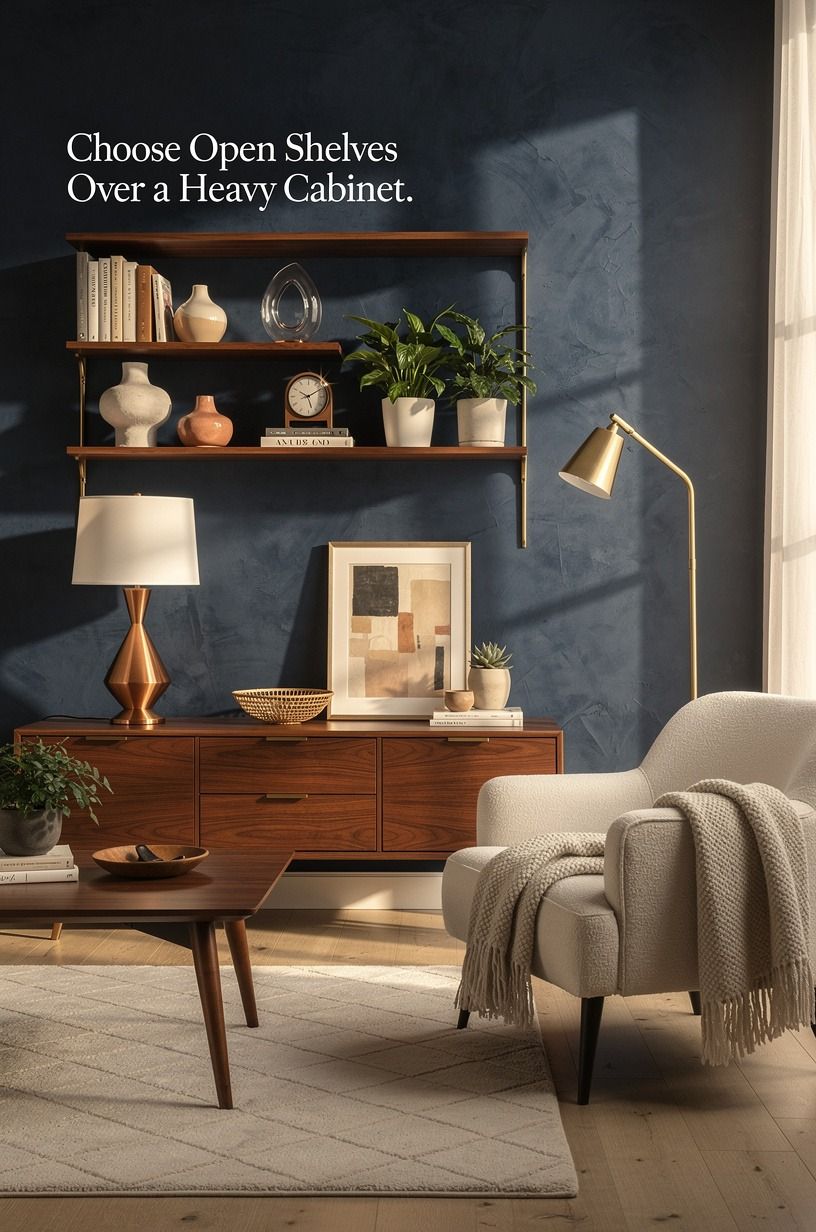
Open shelves can make a narrow living room media wall feel taller and more flexible than a wide entertainment unit. Install two or three shelves beside the screen, not across every inch of wall. Thin floating shelves against hand-applied Venetian plaster bring a warm, organic note, while their thin edge keeps the composition from becoming visually dense.
Style your shelves with breathing room. A few art books, one ceramic vessel, and a small framed photograph will read better than a row of tiny objects. You don't need symmetry, but your tallest item should relate to the screen's upper edge so your eye moves around the wall instead of stopping abruptly.
And if you have young children or pets, anchor everything securely. I prefer one deep lower shelf and fewer fragile objects over a crowded display. A CB2 stoneware vase can add weight and shape, but your everyday room should still let you reach the remote without knocking over a collection.
Anchor it first. Then edit the styling until the shelves feel generous instead of busy. A small-room media wall usually benefits from fewer, larger objects and one memorable material.
6Frame the Screen With a Warm Wood Grid
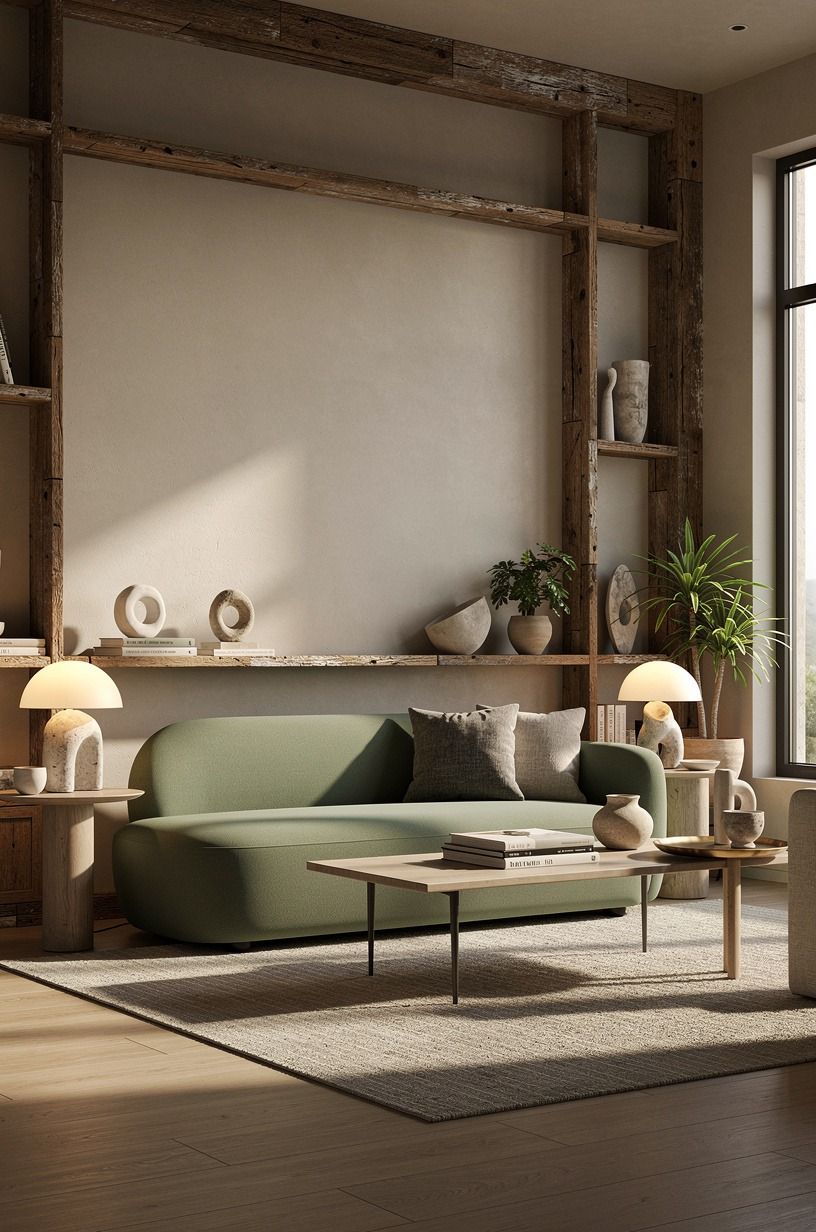
A reclaimed weathered teak grid creates architectural rhythm without opening a wall or hiring a carpenter.
7Build the Floating Console Rule Into a Small Room
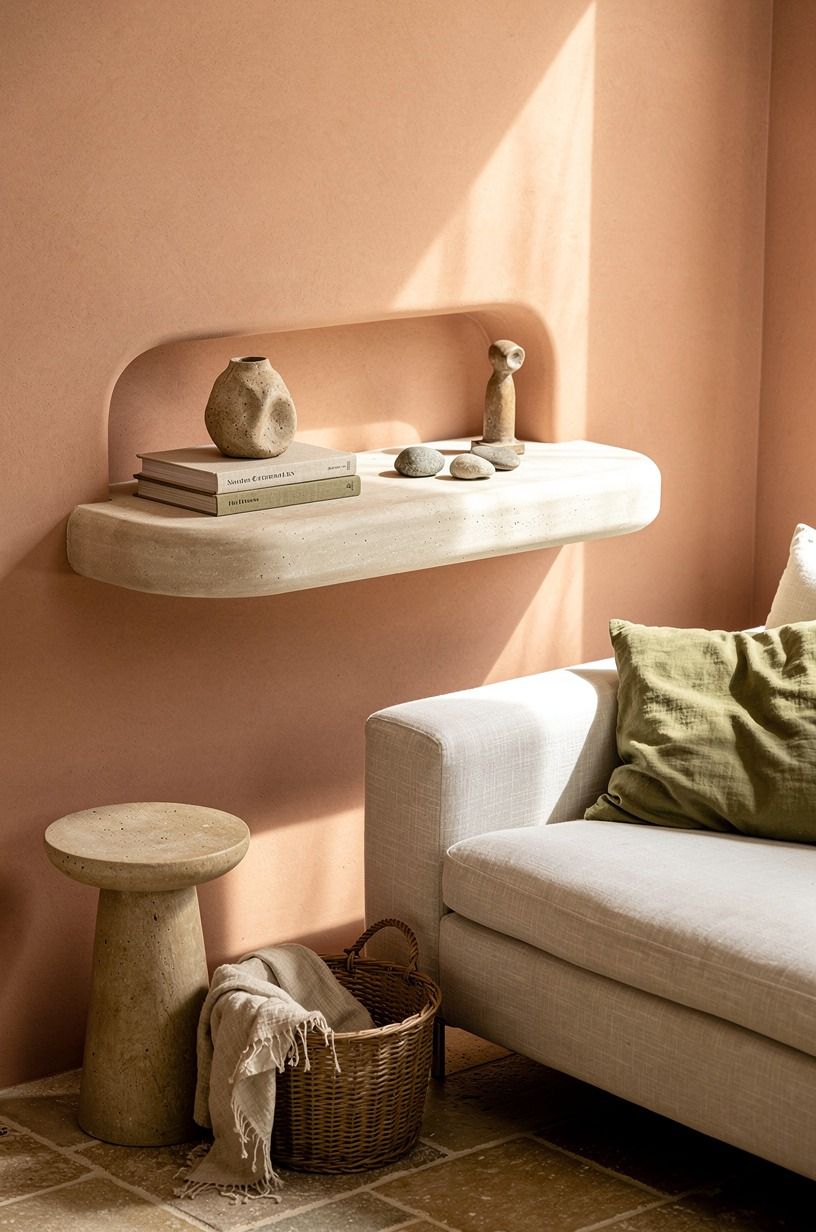
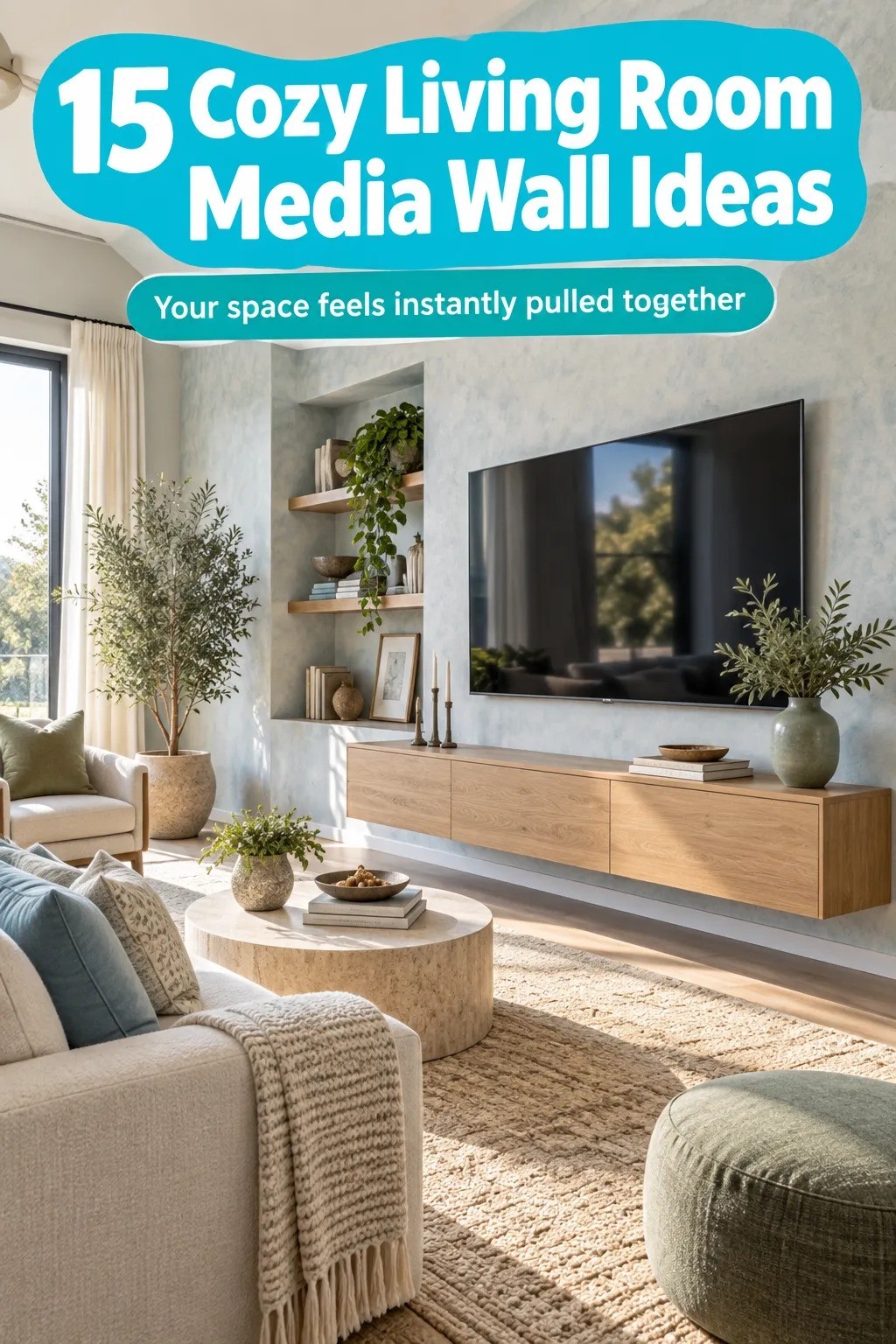
The Floating Console Rule says your lowest horizontal piece should hover when the room already feels crowded. Mount a slim console 6 to 10 inches above the floor, then keep the area underneath open for visual breathing space. Your furniture will feel less boxed in, especially when the sofa depth is already 35 to 40 inches.
Use a compact IKEA LACK shelf only if it can carry the weight safely and conceal your equipment. A stronger cabinet with wall brackets is a better choice for heavy components. You don't need a deep media unit when your screen is the main focus; a narrow profile can hold the essentials and keep circulation clear.
Add one low washed Belgian linen basket if your room needs practical storage. I wouldn't place three baskets beneath the console because the open gap loses its purpose. Your small space needs one clean pause, and that pause is what makes the wall feel calm and considered.
You can also anchor the screen with a long bench when the room needs a wider visual base. Just keep the furniture shallow enough for an easy walkway. A clear path makes the whole layout feel more generous.
8Swap Bright White for a Soft Neutral Backdrop
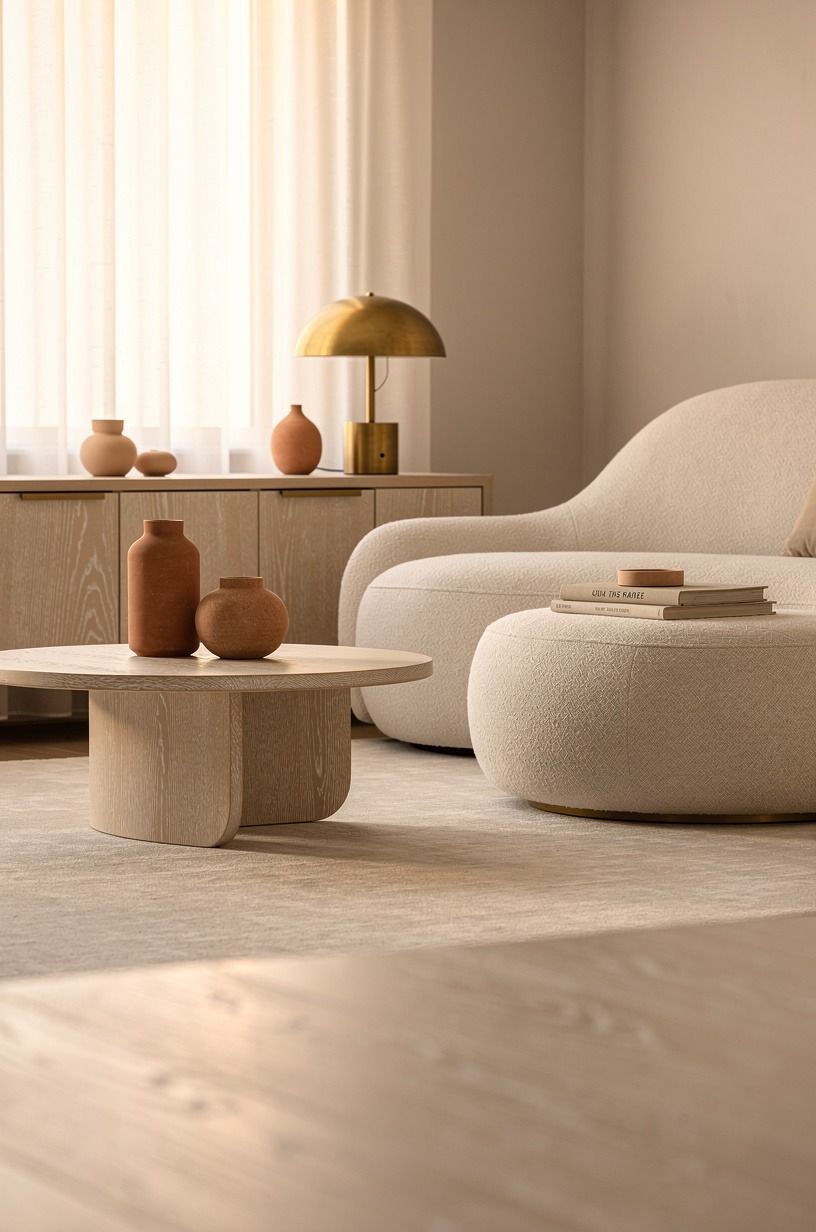
A soft neutral backdrop works when your living room has colorful art, patterned upholstery, or strong daylight. A clay-toned neutral gives you a muted, earthy surface that feels warm without turning muddy. I like it more than stark white behind a television because the screen doesn't look pasted onto the wall.
Keep the surrounding trim a related shade or a clean warm white. Your wall shouldn't fight the sofa, rug, or curtains, so pull one quiet color from those pieces and repeat it behind the screen. A Belgian flax linen curtain can echo the softness, while aged brass hardware adds a warm glint near the hard media equipment.
Don't assume neutral means bland. Add texture with a cerused white oak panel or a shallow ledge.
You can make the wall calming through layers rather than louder color. If you're renting, use removable wallpaper in a small section and test a sample for several days before covering the full wall.
This is especially helpful when you're pairing paint with art beside the television. The backdrop will support the room instead of competing with it, creating a restrained and welcoming effect.
9Anchor the Screen With a Long Low Bench
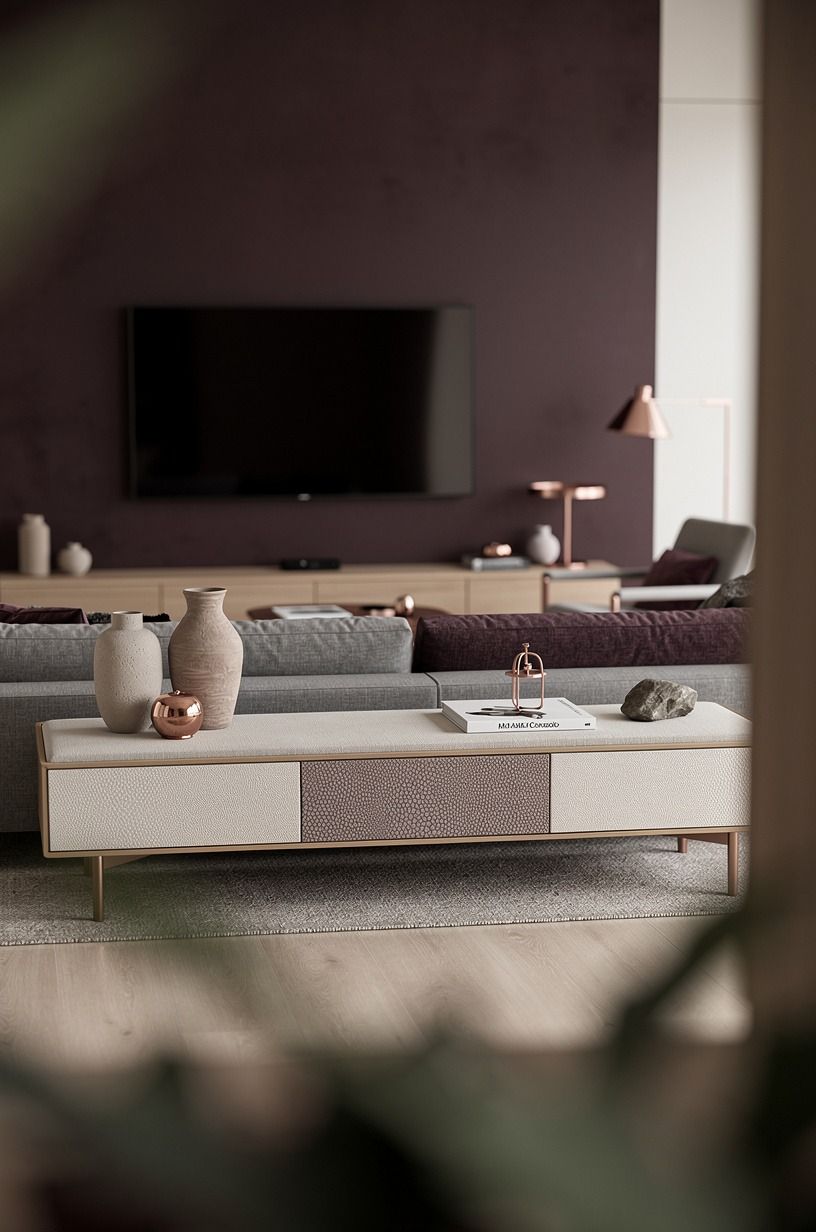
A long low bench gives your living room media wall a strong base while keeping the screen visually centered. Choose a bench at least as wide as the television, then let it extend slightly beyond both sides. Rose-gold metal legs keep the piece crisp, while a shagreen-trimmed top adds warmth under the screen.
Your bench can hold baskets, books, or a few low objects, but leave open space around the equipment. I prefer a single sculptural bowl to a line of decorative pieces. The room will feel more relaxed when the console has a clear job instead of becoming a storage dump.
For a softer look, use a West Elm Anton solid wood bench or a similar long plank design. Your rug should still connect the bench to the seating, with at least the front legs of the sofa and chairs resting on an 8x10 or 9x12 rug. That connection keeps the wall from floating away from the room.
If your bench is broad, keep the nearby lighting delicate. You'll preserve the graceful, balanced shape instead of creating another heavy block. One polished detail is enough.
10Use the Two-Wood Rule for Built-In Energy
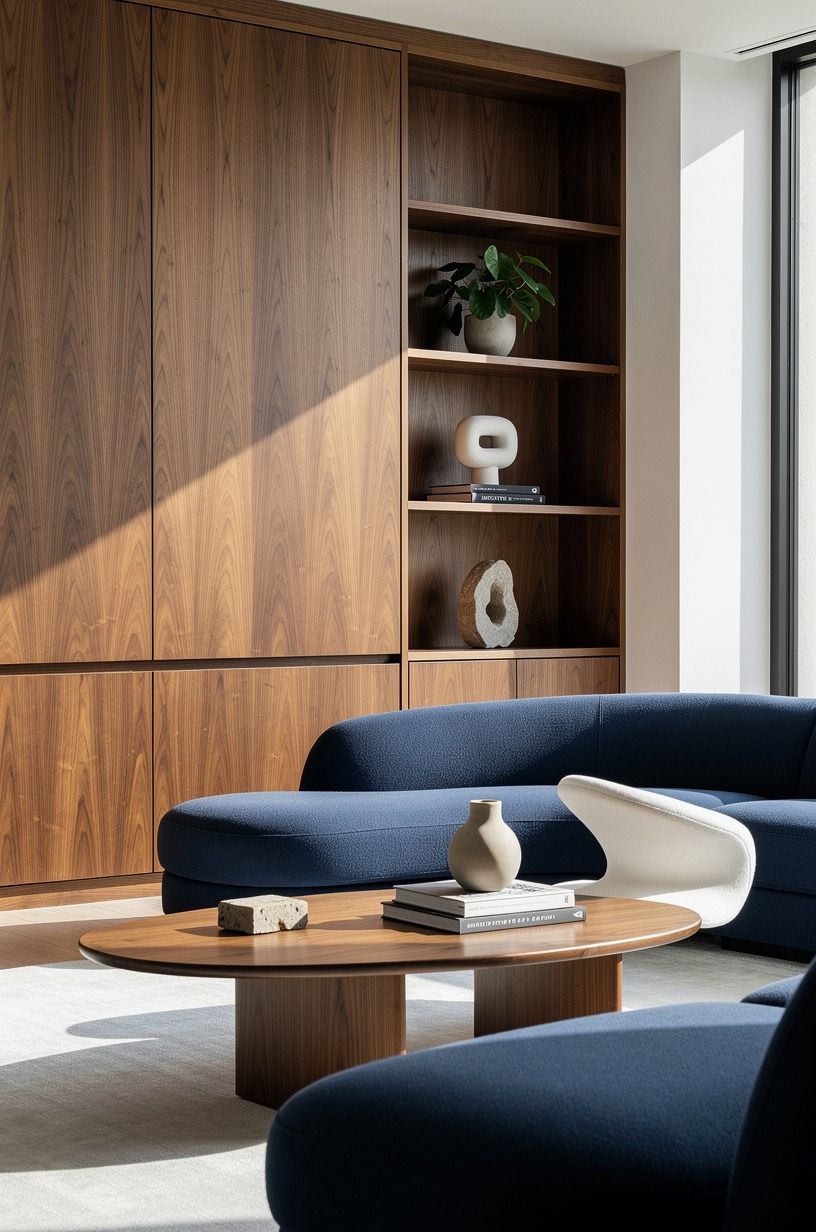
The Two-Wood Rule keeps a media wall from looking like a showroom.
11Can a Small Room Carry a Full Media Wall?
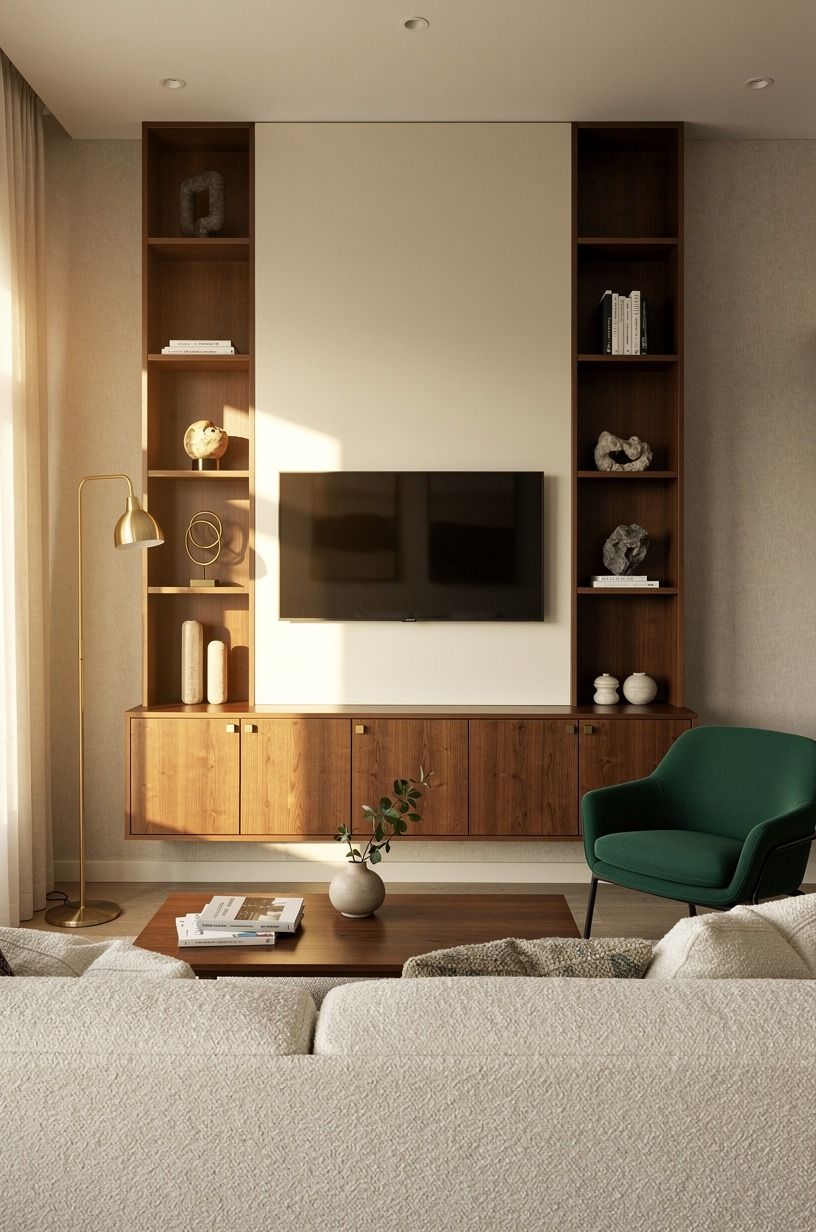
A small room can carry a full media wall when the design uses height instead of depth. Keep the cabinet shallow, mount the screen at a comfortable eye level, and use vertical shelves or tall art to draw your gaze upward. Your sofa should still have a clear walkway, so don't sacrifice circulation for decoration.
Choose one tall side element, such as a narrow bookcase or cane-front cabinet, rather than filling both sides with bulky storage. The open side gives your room a little visual relief. I would skip a deep fireplace surround here because it steals floor space and makes the screen feel oversized.
Your coffee table matters, too. A table around 16 to 18 inches tall and roughly two-thirds the sofa length will keep the seating balanced. If your wall is compact, use a rounded table with a honed travertine top so corners don't interrupt movement through the room.
The floating console rule works especially well here. You'll create more breathing room at floor level while the tall elements provide a handsome sense of scale. The room can feel intimate without feeling cramped.
12Hang Art Beside the Television, Not Above It
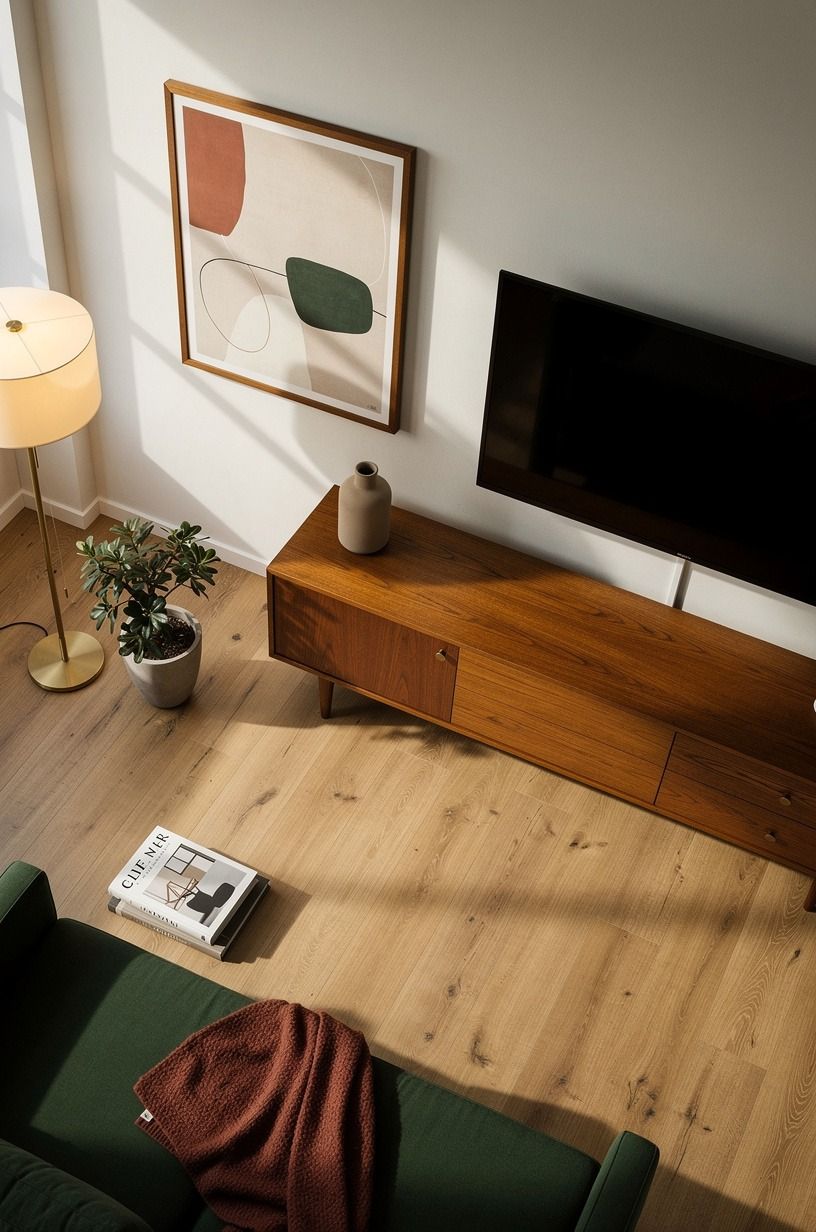
Art beside the television makes the media wall feel like part of your home rather than a technology station.
13Layer a Fireplace-Free Living Room Media Wall
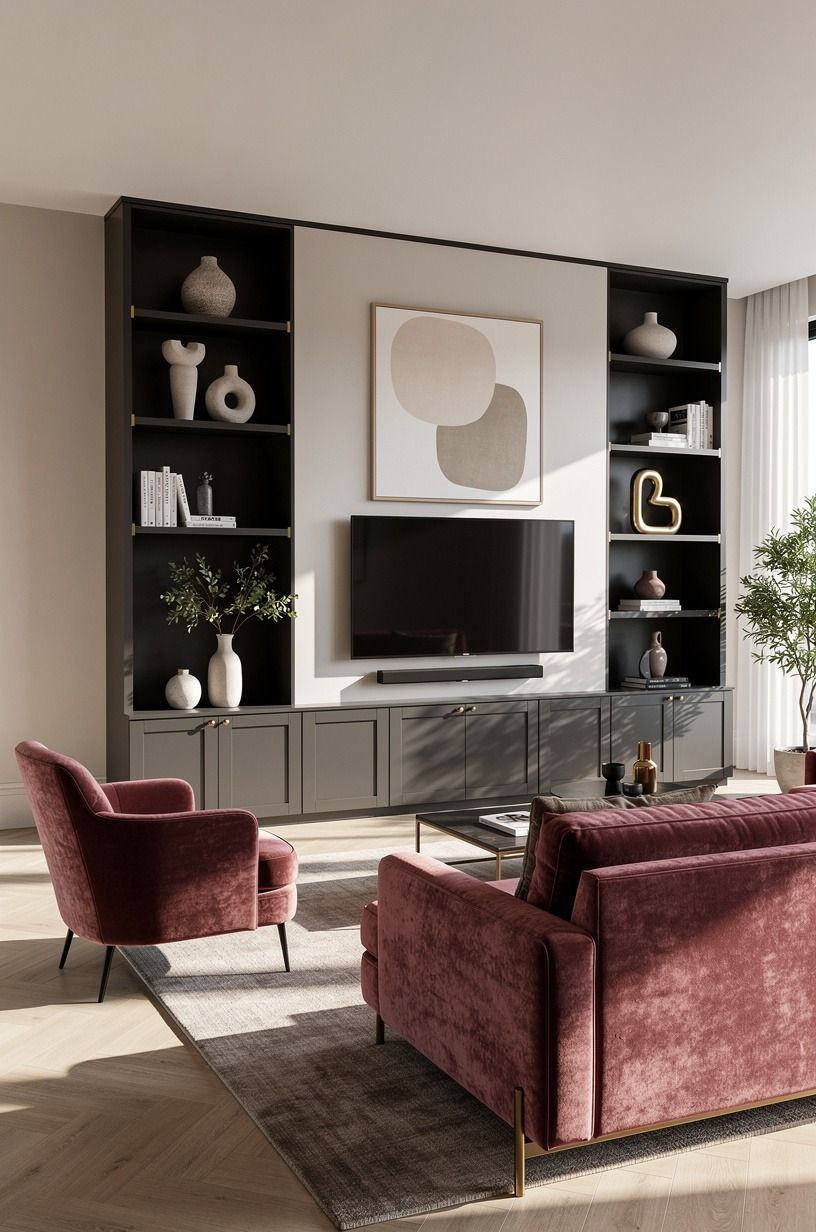
A living room media wall with fire can be tempting, but you don't need a fireplace to create a grounded focal point. Build warmth with a painted surround, a low cabinet, and lighting that pools near the floor. Deep-pile mohair velvet upholstery can give you visual weight without construction or heat concerns.
If you want the fireplace impression, use a freestanding electric unit only when ventilation, clearance, and manufacturer instructions allow it. Your television should not sit in a cramped vertical stack, and you shouldn't force a fire feature into a wall that can't support the proportions. I would choose a wider console over a too-tall fireplace every time.
Try a dusty-rose rug, a wool throw, and a pair of brass lamps to create the same evening pull. The room can feel warm and inviting without pretending to be a renovation. Your best feature may be the glow at the edges, not another rectangle in the center.
A three-height lighting stack will give this arrangement an especially atmospheric finish. You can also echo the depth with a dark painted wall. It feels cozy, generous, and quietly dramatic after sunset.
14Paint the Ceiling Edge for a Built-In Look
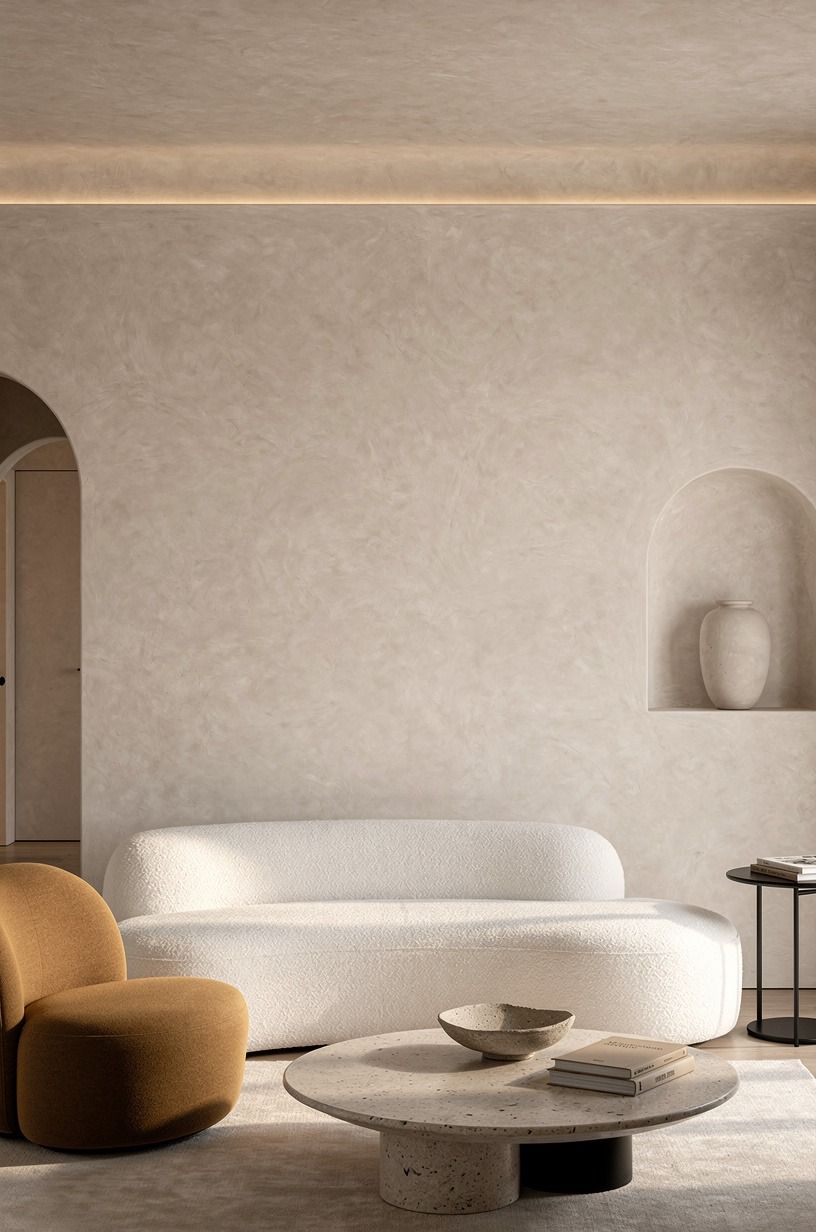
Painting the ceiling edge or adjacent return wall can make a media wall feel integrated when the room has awkward corners. Carry Benjamin Moore White Dove OC-17 through the trim, then use a hand-applied Venetian plaster finish in a deeper warm neutral on the media wall and one side return. Your eye will read the color as an architectural zone rather than a random accent.
This approach works especially well around a corner television or a wall that faces an open dining area. Use painter's tape carefully at the ceiling, and test the color in morning, afternoon, and evening light. I once approved a color after one cloudy morning, then watched it turn purple at night.
Keep the furnishings simple against a stronger paint move. A linen-blend sectional and a pale wool rug will give your room enough softness, while black metal accents can repeat the screen. You don't need to add more pattern when the wall itself is doing the framing.
If the paint feels too strong, the soft neutral backdrop is an easier reset. You'll still keep the architectural effect through the return wall and ceiling edge. The finished look can be striking without becoming theatrical.
15Mix Closed Storage With One Display Niche
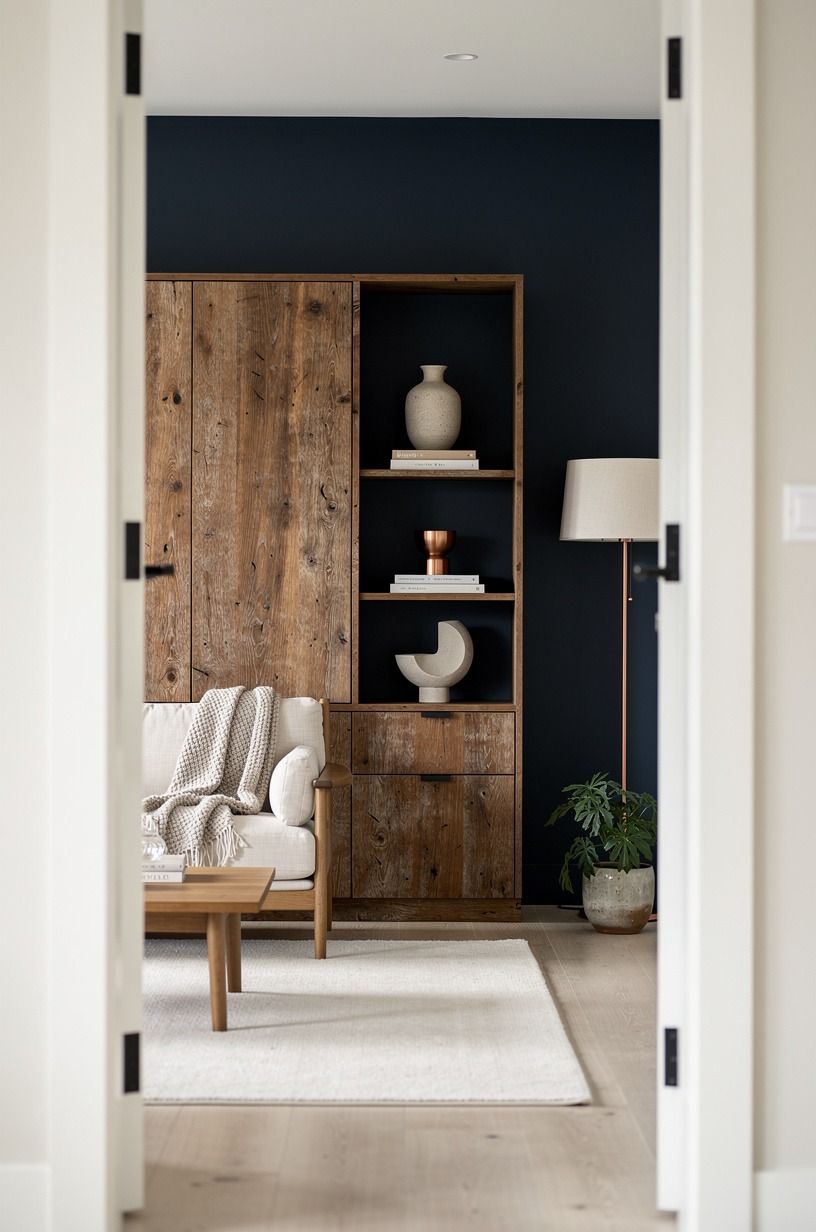
A balanced media wall uses closed storage for ordinary life and one display niche for personality. Keep games, chargers, and paperwork behind doors, then reserve one open section for a lamp, pottery, or books. Reclaimed weathered teak doors add texture without demanding the attention that a full wall of open shelves can take.
Your niche should have a clear back panel or painted interior so it looks intentional. Use one material detail inside, such as copper, ivory zellige tile, or a small piece of pale marble. I prefer one memorable niche to six shallow shelves because your room gets a focal point instead of a collection of chores.
Budget the wall by priority. This is the typical US range for related living room furnishings, not a promise for custom labor:
If you're choosing between custom doors and better lighting, I would usually choose the lighting first. Your room is experienced after sunset, and the right glow can make simple storage feel considered. The long low bench can also give you a polished base before you invest in built-in cabinetry.
Why This Wall Is Having a Moment
The media wall is changing because the television is no longer treated as a separate object that must disappear completely. People want screens, storage, books, art, and lamps to live together without making the room feel like a showroom. Your wall can acknowledge daily life and still feel warm, refined, and personal.
I don't think every home needs a built-in. In many rooms, a painted backdrop, a floating console, and one good lamp will do more than expensive millwork.
I've seen homeowners spend thousands on cabinets while leaving the screen too high and the lighting too bright. The order matters: fix proportion, hide the cords, then spend on materials.
My own rule is simple. Your media wall should support the way you watch, talk, read, and host.
If it only looks good when every remote is hidden, it isn't working hard enough. Choose one strong material, one practical storage move, and one object that tells the room who lives there. That combination feels more honest than a wall assembled from showroom pieces.
We've all seen rooms where every surface is styled within an inch of its life. A great media wall leaves space for real evenings, messy remotes, and the occasional drink on the coffee table. That little bit of imperfection is what makes the room feel alive.
The Questions Worth Answering First
What is the best Living Room Media Wall Ideas for Every Layout for a small living room?
A floating IKEA BESTÅ cabinet or slim console works best because it keeps the floor visible and stores equipment neatly. Choose a shallow piece, keep your screen centered, and use vertical art to add height. Your room will feel more open without losing practical storage.
Where can I buy Living Room Media Wall Ideas for Every Layout pieces on a budget?
IKEA, Wayfair, and Target all carry useful consoles, baskets, lamps, and shelves. You can also find solid wood pieces on Facebook Marketplace or at a thrift store. Look for sturdy construction, then refresh your find with paint, new pulls, or matte black hardware.
How much does a Living Room Media Wall Ideas for Every Layout makeover cost?
A simple makeover usually runs about $300 to $1,200 for paint, a rug, pillows, throws, and art. Your free upgrades include rearranging furniture, hiding cords, editing shelves, and moving lamps. A mid-range room can reach $2,500 to $8,000 with a sofa, quality rug, and layered lighting.
Can I create a Living Room Media Wall Ideas for Every Layout on a budget?
Yes, and you can start with paint, cord management, and furniture you already own. Add a secondhand console, a removable shelf, and one warm lamp.
Your biggest visual improvement may cost nothing if you lower the screen, clear clutter, and let the wall color carry more weight. Adhesive cable channels can help renters keep the setup tidy.
Is a Living Room Media Wall Ideas for Every Layout worth it in a small space?
Yes, because a small room benefits from one organized focal point. Mounting storage or choosing a shallow console keeps your floor clear, while one strong wall treatment reduces visual noise.
Your television, storage, and lighting can share one zone instead of spreading across several cramped corners. A rounded coffee table can make the circulation even easier.
Is a Living Room Media Wall Ideas for Every Layout a good idea for a rental?
Yes. Use removable wallpaper, a tension-mounted shelf, a freestanding console, and adhesive cable channels rated for painted walls.
Your landlord may allow small picture hooks, but check first. A large framed print can add the custom feeling without permanent millwork or heavy wall damage.
Where I'd Start First
If I had to pick one, I'd start with the floating console. It clears the floor, hides the ugly equipment, and makes a basic television feel intentionally placed. Pin the floating console idea for later, then measure your wall, sofa distance, and screen before buying anything.
Your proportions will do more than extra decor.