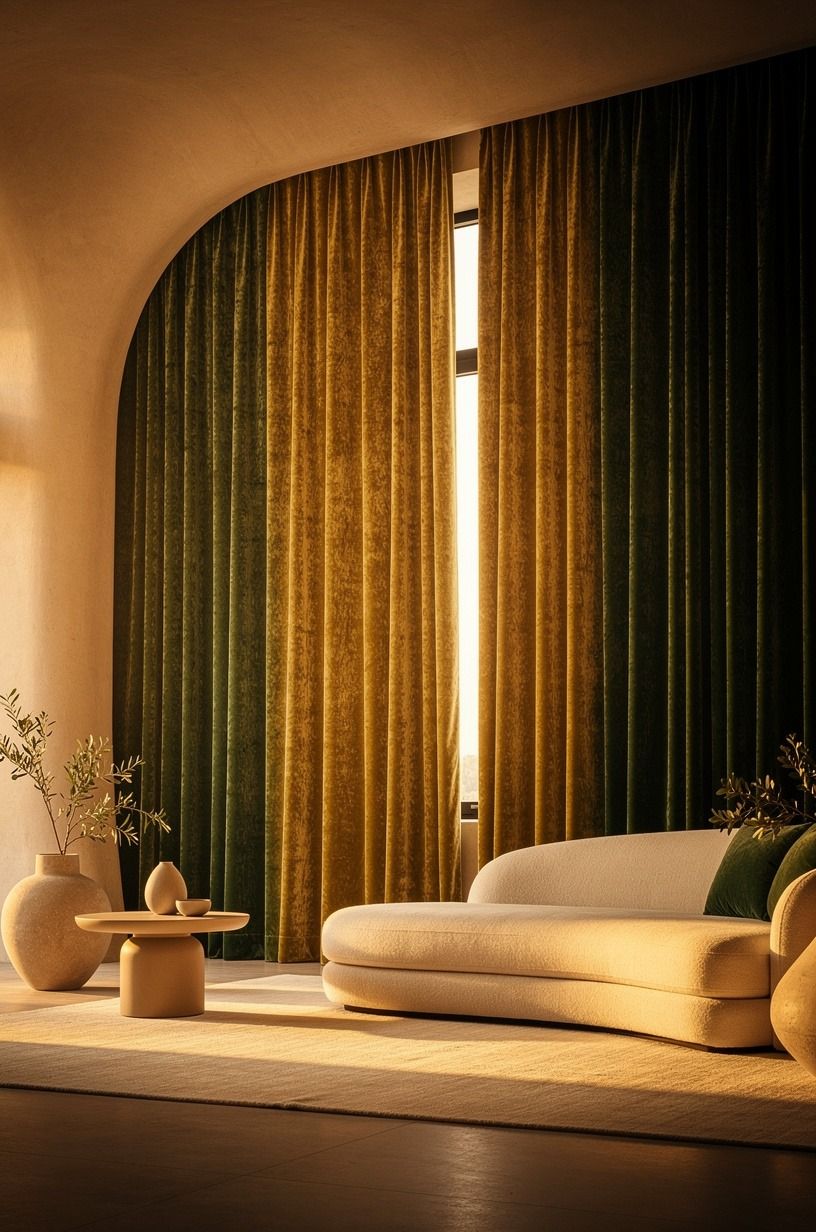
I Swapped the Curtains, Drapes Changed My Room's Mood Faster Than Any Prop
14 september 2026Swap the curtains: drapes change a room's mood faster than any prop because fabric filters the light across the largest soft surface.
- Swap the curtains before you buy another prop
- Raise the rod with the High-Hem Illusion
- Layer velvet curtains for autumn with a sheer base
I learned that after pillows and art didn't solve the room. I moved the rod, chose emerald deep-pile mohair velvet, and watched the walls turn gentle by dusk. It was a small makeover with a surprisingly dramatic result.
Here's what it looked like before:
The starting room showed the full starter-home package: a short metal rod, shiny polyester panels that stopped above the floor, and a sofa pushed hard against one wall. The windows were wide, but the polyester panels made them feel pinched. They caught daylight like a glare instead of spreading it, so the room looked bright at noon and flat by dinner.
I had painted the walls Benjamin Moore White Dove OC-17, then filled the shelves with small objects because I thought the room needed more personality. It didn't.
The surface count kept rising while the atmosphere stayed cool, and my fall blankets looked like guests who hadn't been introduced. The room was honest: nothing was broken, but nothing had landed. A calmer room wasn't there yet.
- Swap the curtains before you buy another prop
- Raise the rod with the High-Hem Illusion
- Layer velvet curtains for autumn with a sheer base
- Choose Farrow & Ball Pigeon over Agreeable Gray for moody room decor
- Frame the windows with the Two-Width Rule
- Style black drapes for a moody room
- Let the hem kiss the floor for a softer finish
- Build the Three-Source Light Stack
- Should you paint the return wall after the drapes?
- Hang art at the 57-60 inch line
- Use a window treatment seasonal shift instead of themed clutter
- Mix velvet over matching polyester
- Anchor the room with a curtain-to-rug bridge
- Can fabric halloween decorating stay grown-up?
- Fit a tension rod into a rental-safe window treatment
- Start with a bright wall beside dark drapes
- Replace the prop pile with a lower visual horizon
- Edit the room after the first evening
- Wait for the dusk test before you call it finished
1Swap the curtains before you buy another prop
The first decision was to stop shopping for objects. I had pillows, a ceramic bowl, and an art print on the floor, yet the room still looked cool and unfinished.
I pulled down the short panels and replaced them with emerald deep-pile mohair velvet; gold hardware and cream upholstery kept the color from becoming heavy. The fabric softened the daylight immediately, and I finally saw why the old props weren't helping.
And the first evening was the trigger: the sun caught in the deep pile, then left a muted amber wash on the cream sofa. If you're styling a similar room, start with the biggest visual plane before adding another small accent.
You'll notice the difference faster, and your shelves won't have to work so hard. This is a calming reset, not a shopping spree.
2Raise the rod with the High-Hem Illusion
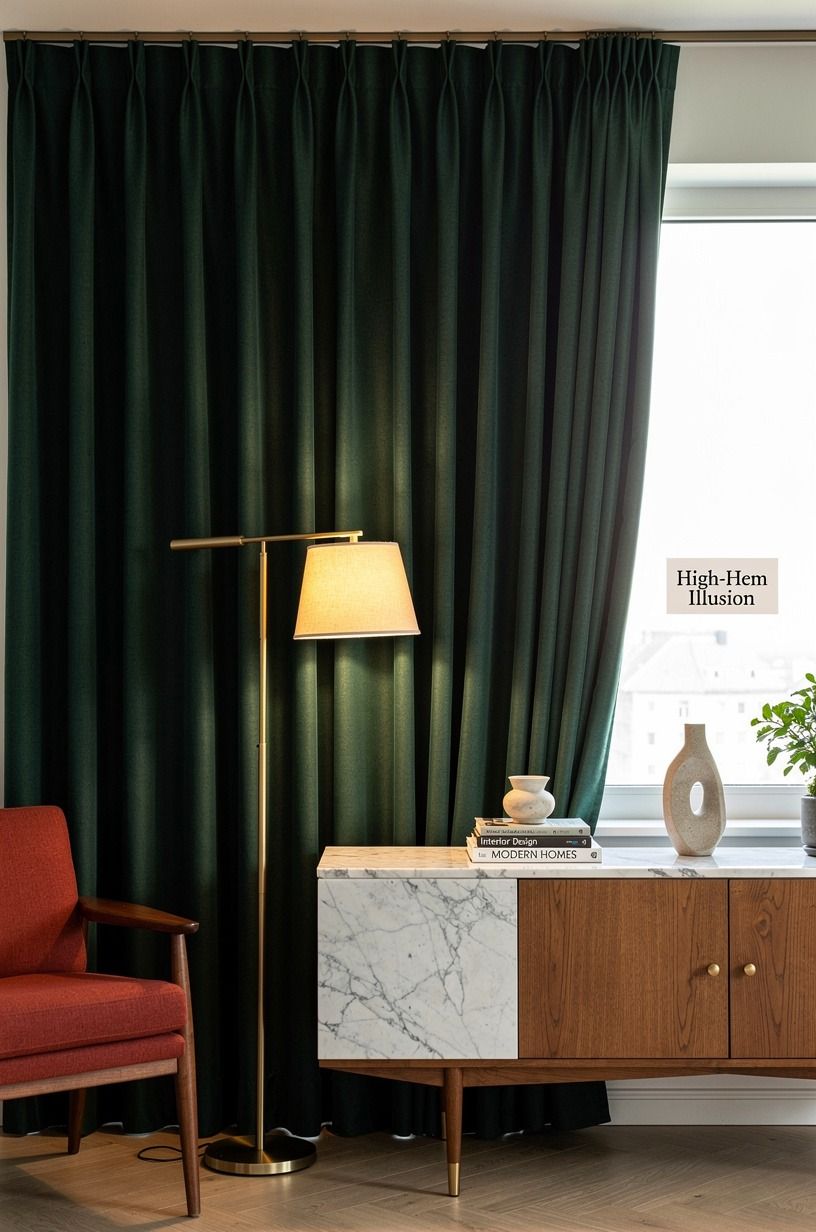
I raised the rod 4-6 in above the window and let the panels fall to the floor.
3Layer velvet curtains for autumn with a sheer base
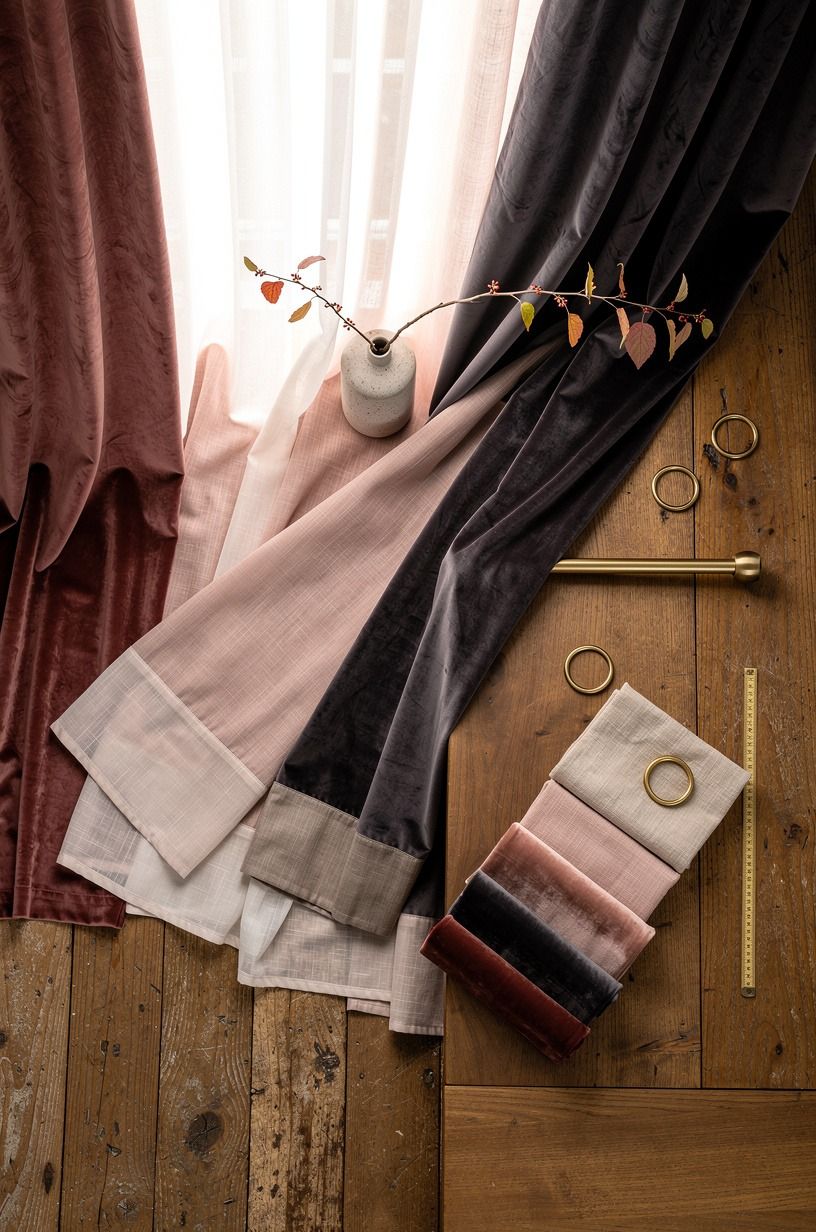
I wasn't trying to make the room dark. I wanted the fall version to feel intimate, not themed, so I layered a sheer charcoal panel behind dusty rose velvet.
In the afternoon, the velvet caught a deeper rose edge, while a reclaimed weathered teak console and brass lamp kept the window from becoming heavy. The first time the panels moved in a breeze, the room felt earthy and soft, and that was the mood I had been chasing.
For you, the useful order is light layer first, mood layer second. You're controlling glare in the day and visual warmth after sunset, so the pair earns its space.
A denser velvet would read richer than thin synthetic pile, but I'd avoid a full blackout look if your room already lacks daylight. Leave a little air.
4Choose Farrow & Ball Pigeon over Agreeable Gray for moody room decor
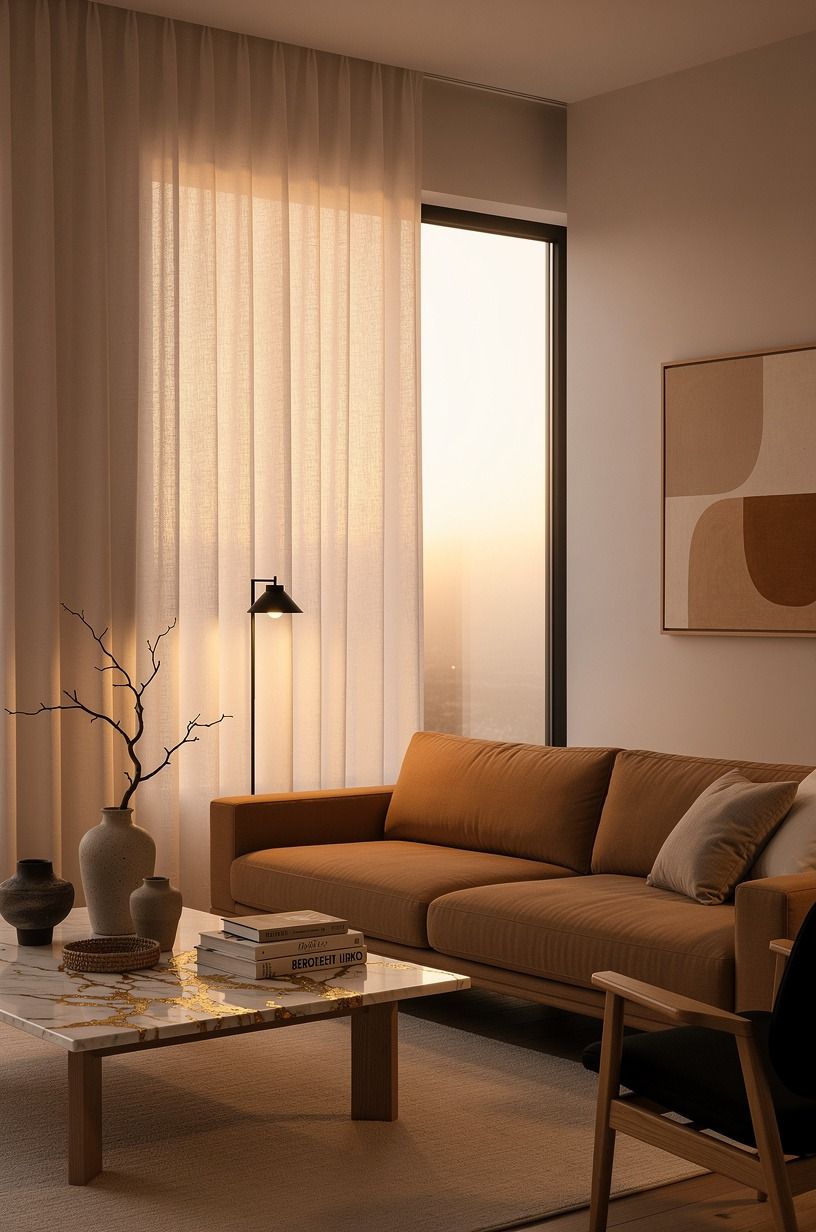
Paint was the part I nearly changed first, but the curtain fabric made the decision easier.
5Frame the windows with the Two-Width Rule
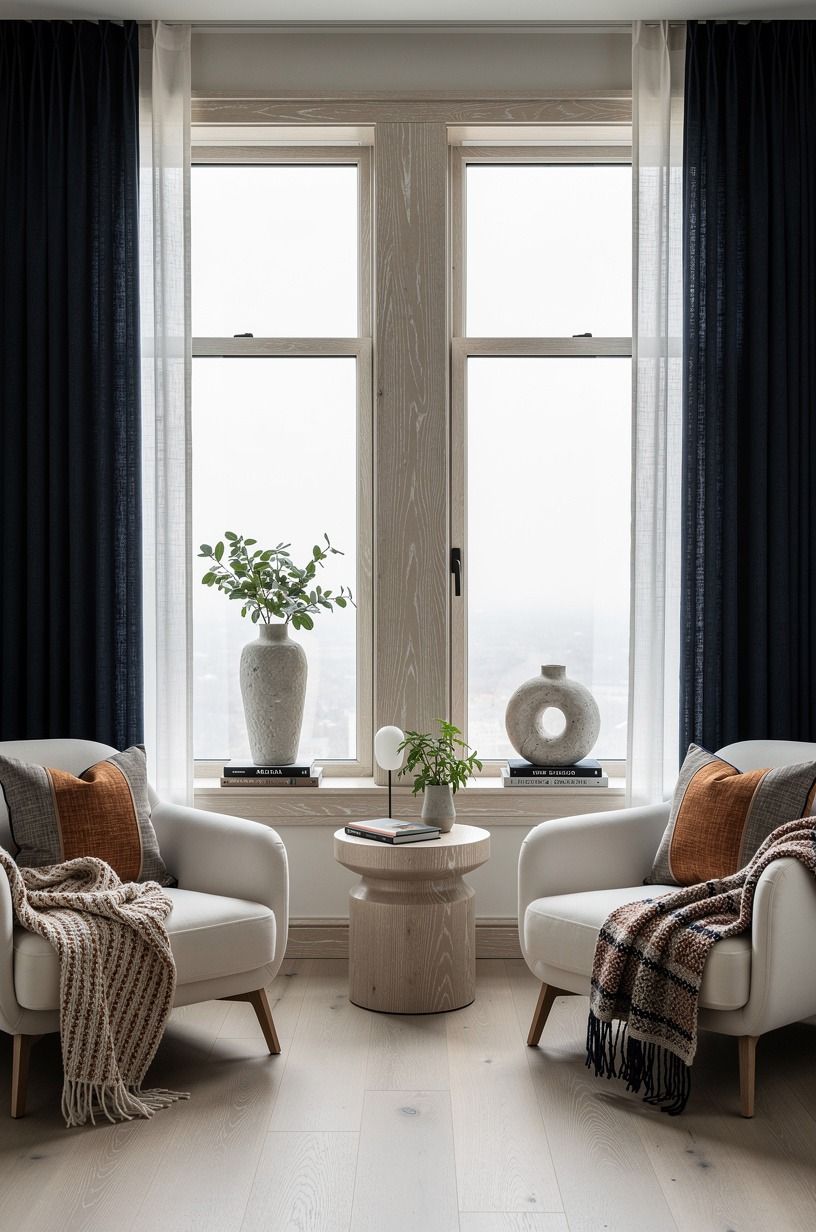
The Two-Width Rule became my fix for curtains that looked skimpy: the rod should read wider than the glass, and the fabric should have enough presence to stack away from it. I used midnight-blue panels, then opened them fully during the day so the window remained generous. Copper hardware, ivory upholstery, and a cerused white oak console kept the room airy rather than dressed up.
This is where I made my most expensive-looking mistake without spending more. I bought panels that technically covered the glass, but they left the window edges exposed like an afterthought. If you're choosing for an Article Sven tan leather sofa, give the drapes more visual width than the furniture's smallest detail.
You'll get a refined window treatment, not a curtain apology.
6Style black drapes for a moody room
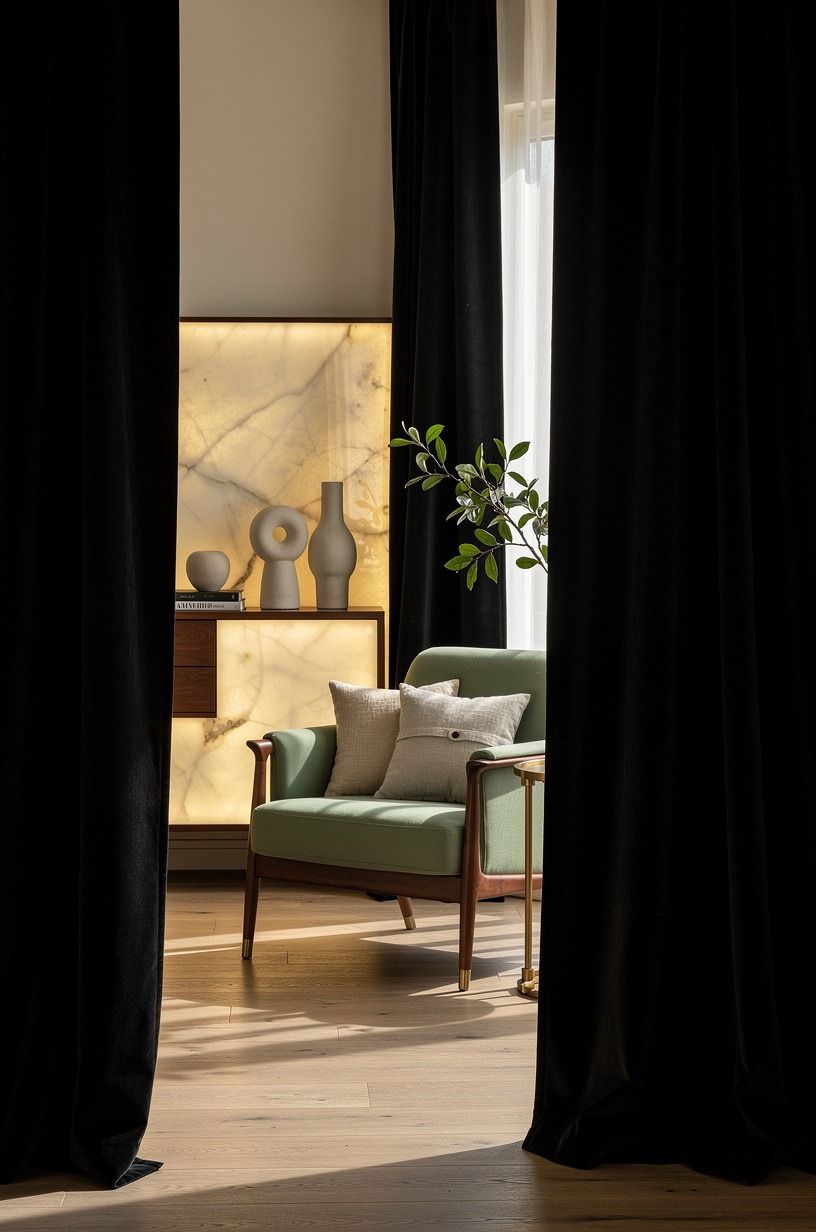
Black drapes styling sounded severe until I set them against sage green, warm cream, and natural wood instead of a glossy synthetic scheme. A backlit translucent onyx accent added a soft glow and made the brass lamp look warmer. It also gave my fall blankets somewhere to land visually, which is why the room felt moody without becoming theatrical.
I tested the panels with a simple pumpkin, then removed the pumpkin. The fabric did more work alone. You can use CB2 black linen curtains for a sharper line, but don't pair them with black everything; a warm cream wall, oak, or aged metal keeps the composition inviting.
And yes, this version worked!
7Let the hem kiss the floor for a softer finish
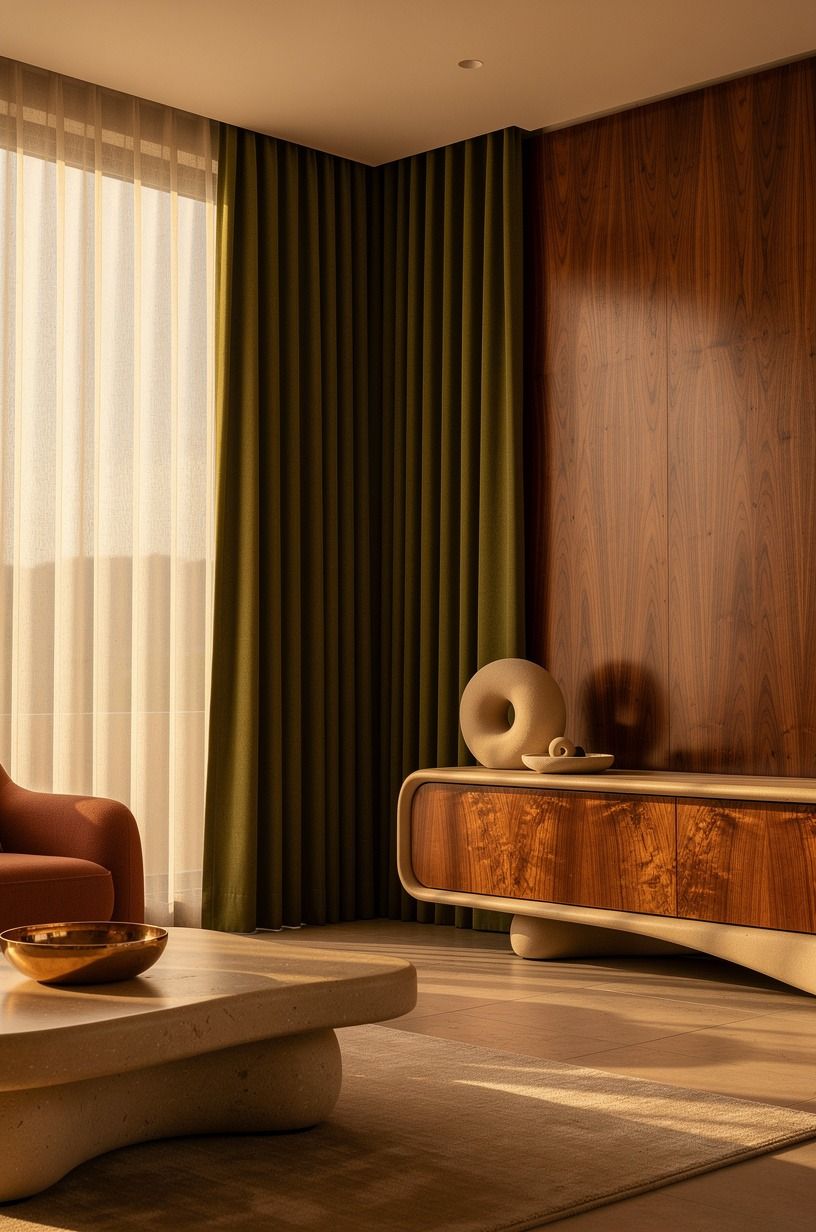
The hem was my next decision. I wanted it to meet the floor with a quiet break, not puddle into a dusty pile, so I steamed the terracotta linen and let gravity finish the job. A clean fall beside a book-matched walnut console kept the stone and olive notes grounded.
The difference showed up when the door opened: the fabric moved, settled, and made the room feel gentle instead of stiff.
You don't have to chase a tailored showroom finish. If the panel reaches the floor and hangs cleanly, your eye reads the whole wall as one calm column.
I went back and forth on a puddled hem, but it looked romantic in the store and messy beside my sofa. A West Elm panel gave me the cleaner fall, and you'll thank yourself at vacuum time.
8Build the Three-Source Light Stack
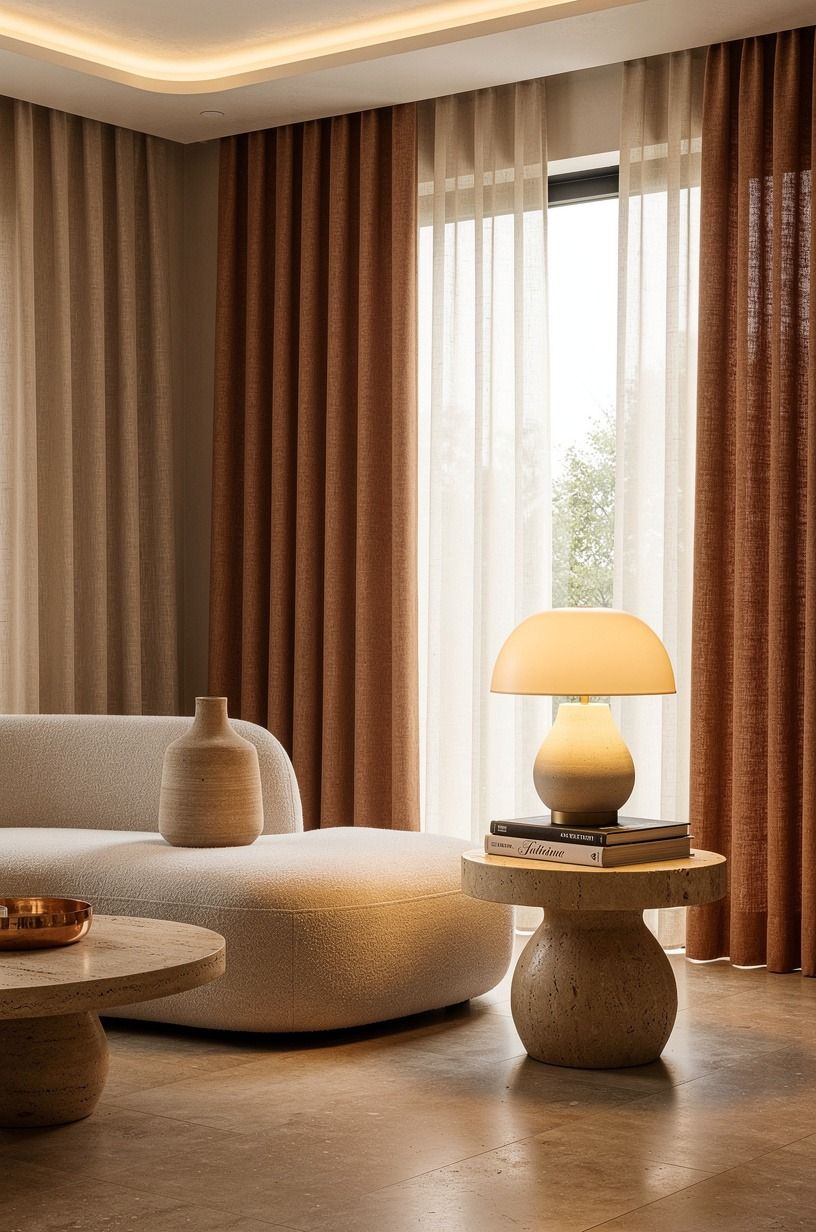
Curtains changed the light, but they couldn't carry the room after dark. I built the Three-Source Light Stack with ceiling, task, and ambient light, the three sources that keep a room from flattening at night. An aged brass floor lamp on warm travertine gave the corner a warm pool, while clay and linen around it kept the drapes from feeling heavy.
I turned off the ceiling light first, then watched where the room went dim. More glow.
You don't need every lamp on; you need each source to do a different job. An IKEA FADO lamp handled the soft background light, and you'll see the fabric look richer when no single bulb is shouting. It became serene, not sleepy.

9Should you paint the return wall after the drapes?
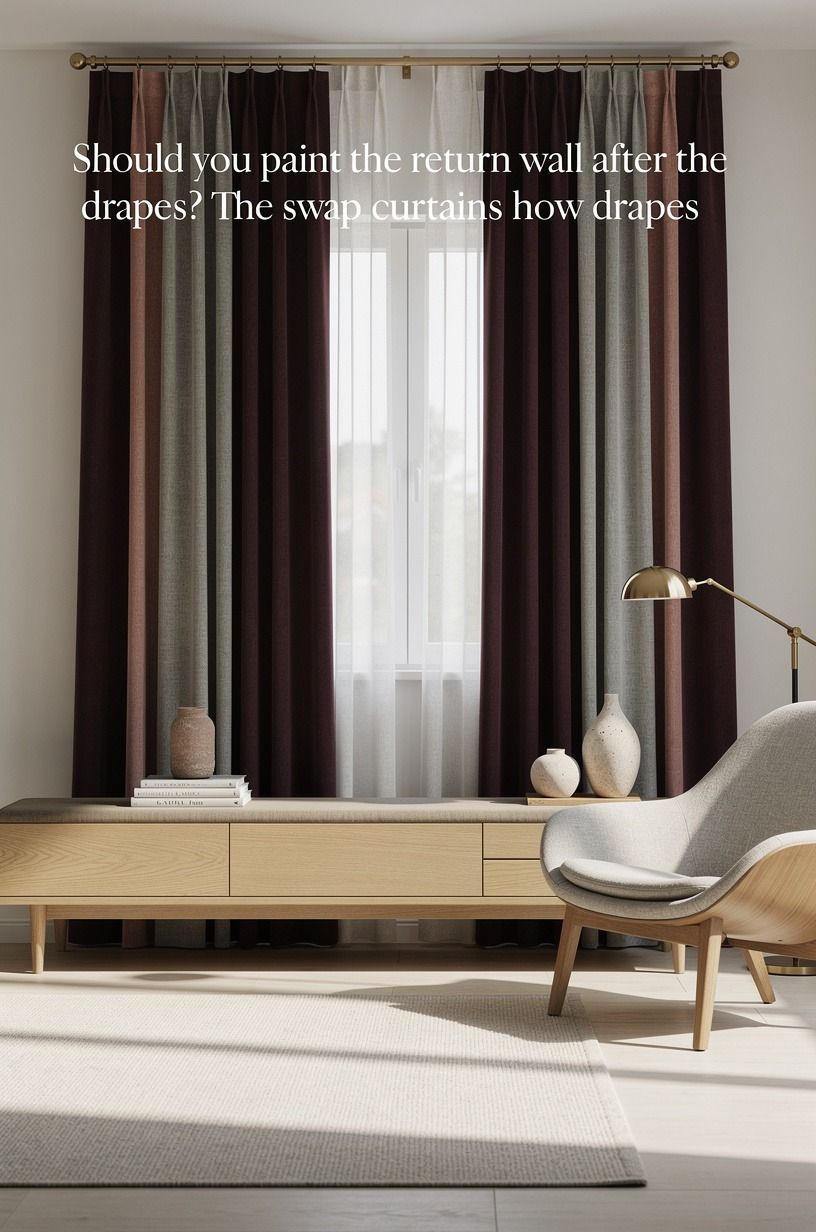
I painted the small return wall only after the drapes were hanging. That order matters because color changes under filtered light, and the Sherwin-Williams Agreeable Gray SW 7029 looked cooler beside the fabric than it did on a sample card. I chose restraint, keeping the return quiet so the window could stay the room's anchor.
If you're tempted to paint every surface in a deeper shade, test one plane first. I won't pretend a color card can predict dusk, so I watched it through the whole evening before deciding. Unlacquered brass developing patina and a rose-gold accent kept the plum-and-grey palette organic.
Your room needs a quiet boundary, not another loud object.
10Hang art at the 57-60 inch line
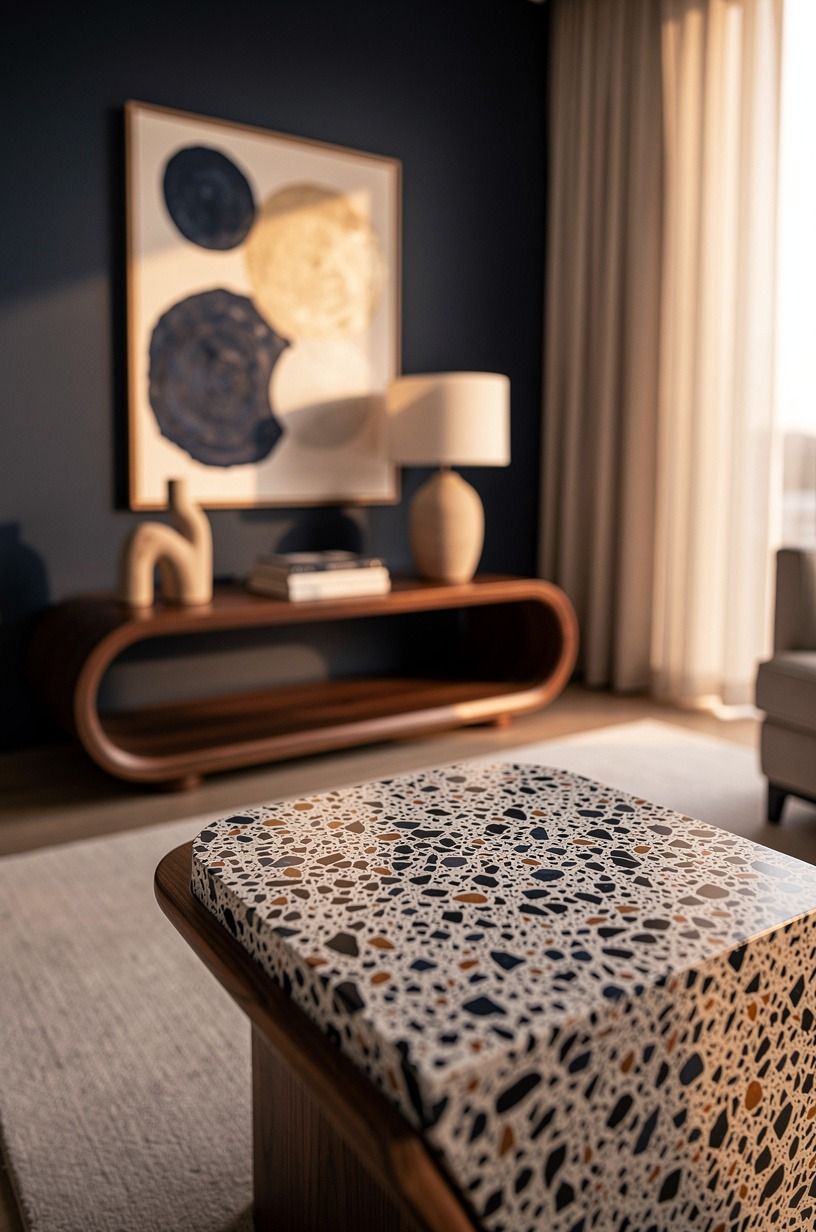
The same print that looked lost before suddenly made sense beside the new fabric. I hung its center about 57-60 in, or 145-152 cm, from the floor, using a walnut surround above an oversized-chip terrazzo table. The placement gave the wall a steady visual pause in the navy-and-white room.
Why did the art look more intentional without changing the art? The curtains gave it a boundary. You can use a Target Studio McGee print or something thrifted, but keep the artwork's border quieter than the textile.
I didn't center every object on the wall; I let the window and art share a rhythm. That small edit felt sophisticated.
11Use a window treatment seasonal shift instead of themed clutter
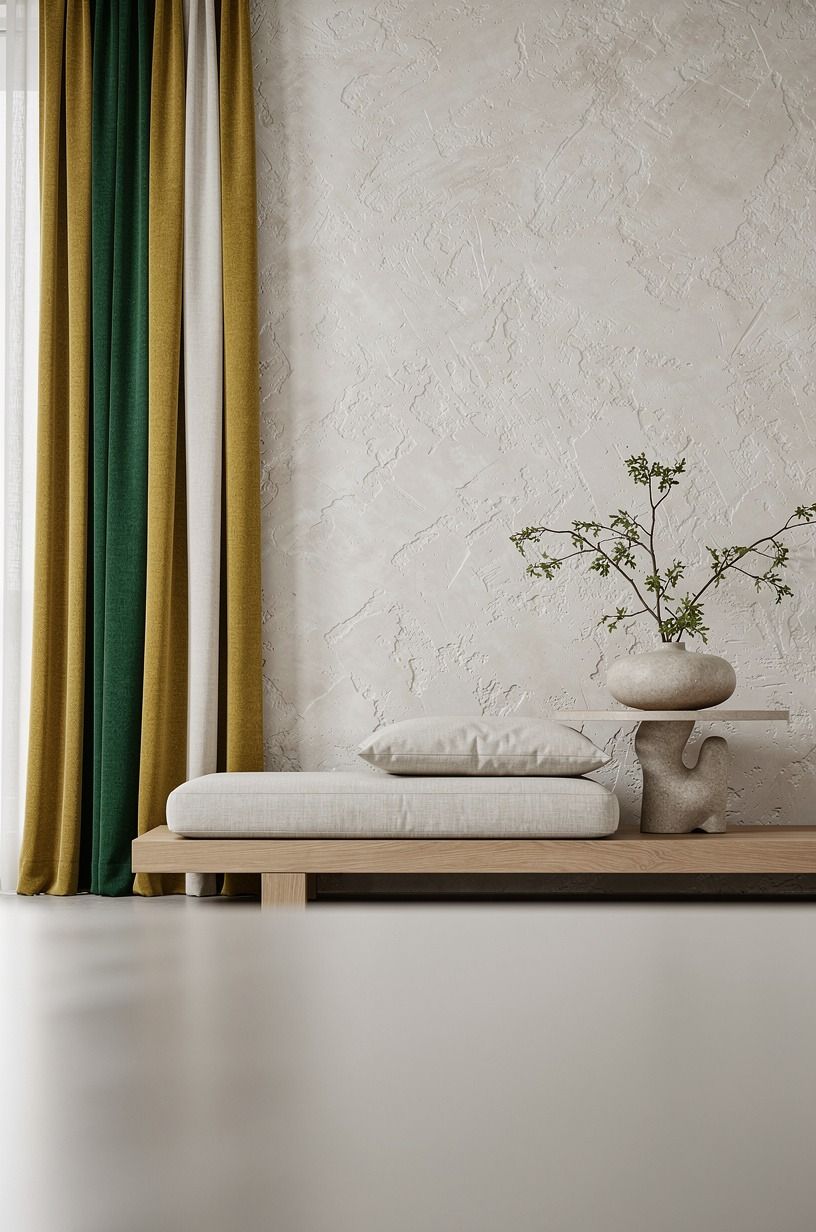
I stopped treating seasonal decorating as a pile of orange objects and started with the window.
12Mix velvet over matching polyester
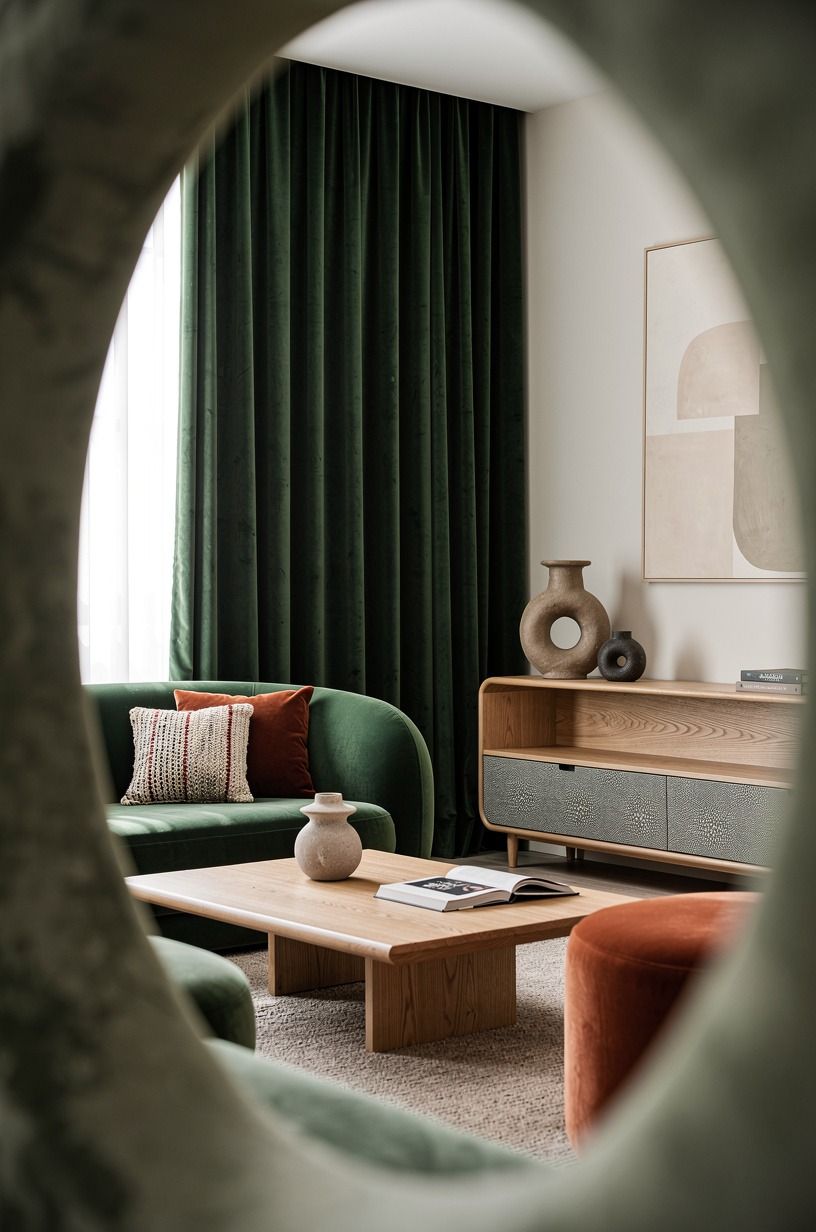
Matching polyester panels were the one popular option I was happy to leave behind. I chose forest-green velvet over shine because the matte pile caught light in tiny changes, not one hard reflection. Natural oak and rust accents made the room feel bold and soft at once, especially when the sun moved behind clouds.
If you're mixing textures, keep the color family close and let the surfaces disagree. An IKEA GURLI throw gave me a low-cost woven layer, while shagreen accents supplied the deeper note.
I don't love a room where every textile matches; it reads staged. Your eye needs one quiet difference to keep the composition alive.
13Anchor the room with a curtain-to-rug bridge
The rug came after the curtains, not before. I chose a washed Belgian linen rug with dusty rose and charcoal threads so the floor could echo the drapes without copying them.
It was large enough for the furniture to overlap, which pulled the sofa, lamp, and window into one grounded conversation. Brass nearby kept the room from feeling flat. The room felt earthy underfoot.
You can spend on a linen rug, but you don't need a loud pattern to create comfort. I tried a smaller option first, and it made the furniture look stranded around the edges.
Once the front legs sat over the linen rug, the room became harmonious. That's the bridge: shared warmth, different surfaces.
14Can fabric halloween decorating stay grown-up?
Can fabric halloween decorating stay grown-up? Yes!
If the seasonal note lives in texture instead of cartoon graphics, the room can feel dramatic and charming. I used organic bouclé on a warm-white chair, then added one black vessel and a camel throw.
The result felt welcoming, not like a store display.
The trigger was seeing the fabric at dusk, when the warm white and camel looked calm rather than costume-like. You don't need themed panels or a shelf full of props.
A removable matte black ribbon around a vase carried the season, and I kept the rest quiet. That choice made the room welcoming past October.
15Fit a tension rod into a rental-safe window treatment
Rental rooms need the same mood shift, but the hardware has to leave quietly. I used a tension rod inside the window opening and chose midnight-blue panels with copper and ivory accents. The result was gentle and practical, not a compromise.
A Target Threshold panel gave the window enough softness, while removable clips handled the top edge. A side table in Nero Marquina black marble with white veins gave the dark blue a polished counterpoint.
If you're renting, test the rod before adding weight and keep the fabric clear of the heater. You can make the room feel luxurious with reversible choices, and you won't lose the deposit to a curtain.
16Start with a bright wall beside dark drapes
Dark curtains need a counterweight, so I left the wall bright and began with Benjamin Moore White Dove OC-17 instead of repainting the whole room. The warm cream reflected a clean pool of morning light, while deep-pile mohair velvet supplied the moody edge. I wouldn't call that timid; it was the sharper choice.
Start the balance with one light surface, one sage-green note, one warm wood note, and one dark textile. You're giving the eye somewhere to rest between the dramatic folds. I tested a black wall, but it swallowed the window on cloudy days, so I sent it back to the sample board.
Your room can be bold without closing in.
17Replace the prop pile with a lower visual horizon
After the drapes went up, I removed half the objects from the shelves.
18Edit the room after the first evening
The first evening taught me that the room wasn't finished when the panels were installed. I moved the aged brass lamp away from the window, then shifted the chair so its arm didn't block the fabric. Those small changes let the curtain edge remain visible from the doorway, where the mood registered fastest.
A CB2 Primitivo chair gave the corner a soft, sculptural counterpoint, while reclaimed weathered teak grounded the clay and linen palette. I wouldn't add another rounded piece there.
You want one curve, one line, and enough floor to keep the composition bright. I sat in the room for a while (no phone, no shopping list) and knew the edit was done.
19Wait for the dusk test before you call it finished
I waited for dusk before calling the makeover complete.
How much it cost: $320 for the room
My working total was $320, built from $120 at the low end of the typical linen drape pair range and $200 at the low end of DIY room paint. I reused the rod, lamp, rug, art, and props, so no new furniture entered the receipt. That total describes this makeover, not every room.
Here is the wider US reference I used while deciding where the money should go.
The table is why curtains were the right first move for me. A curtain fabric decision changed the light before I needed accent furniture, a new rug, or custom work.
The typical linen drape pair is $120-$400, while DIY room paint is $200-$600. I kept the rest of the room and spent where the atmosphere changed fastest.
Worth it!
Why the Curtain Became the Room's Main Character
I used to treat curtains as a finishing layer, something chosen after the sofa, rug, and art. This makeover changed my order.
The fabric covered the largest soft surface, so it affected the room before my eye reached the small things. Full-height linen made the windows feel architectural, but it stayed gentle enough for a lived-in room.
I wouldn't call that a minor detail; it was the room's largest decision hiding in plain sight.
That is why I now judge drapes at three times of day, not under a store's bright ceiling. Morning tells me whether the weave is too yellow.
Noon shows glare. Dusk reveals whether the color can hold a warm, serene atmosphere without turning muddy. Filtered daylight is the material's partner, and ignoring it is how people buy a fabric they only like for ten minutes.
I've made the wrong call before. I bought shiny polyester because the price looked sensible, then spent weeks moving lamps to rescue the room.
The panels weren't offensive; they were simply too reflective for the paint and too short for the wall. Once I replaced them, I removed half the props.
Matte cotton gave me more mood with less visual noise, which is the exchange I trust now.
My firm opinion is simple: if the room feels flat, test the window before you buy another object. Choose fabric for hand, light, and movement, then decide whether you need color or quiet.
Blackout fabric has a place in a bedroom, but I wouldn't use it as a default in a living room where evening glow is the point. I would do this makeover again!
What People Always Want to Know
What drapes work best for a small room?
Full-length linen or linen-look drapes work best in a small room because they draw the eye upward and soften hard light. Vertical softness keeps the walls from feeling crowded.
IKEA RÄCKA suits a simple rod, while an Article panel adds polish. Keep the color quiet and let light control replace extra decor.
Where can I buy curtain pieces on a budget?
I would check IKEA, Wayfair, and Target first because each carries approachable curtain basics. Budget range matters more than a famous label here, so compare fabric weight and panel length before color.
For a secondhand route, search Facebook Marketplace or a thrift store for pairs sold together. Washable cotton and linen-look fabric are the easiest finds, especially paired panels.
How much does this curtain makeover cost?
A curtain-centered makeover can use $120-$400 for a linen drape pair. That pair is the main paid line when your rod, lamp, rug, and art already work.
A broader US refresh sits in the Budget tier of $200-$800 for paint, textiles, art, and organization. Editing what you own costs nothing.
Can I create this look on a budget?
Yes, you can create this look on a budget by reusing the rod, steaming existing panels, and moving the sofa before shopping. Reused hardware protects the budget.
Paint one room, thrift one textile, and edit the props last. A focused swap gives you the mood change without buying a whole new room.
Is a curtain swap worth it in a small space?
Yes, a curtain swap is worth it in a small space because the fabric changes height, glare, and evening color at once. Vertical line is the payoff.
Keep furniture overlapping the rug, leave the window edges clear, and avoid bulky side pieces. Open floor lets the drapes feel generous.
Is this a good idea for a rental?
Yes, renters can make this change with a tension rod, removable clips, and panels that do not need drilling. Reversible hardware keeps the lease safe.
Test the rod's weight before hanging the fabric, and keep the hem clear of heaters. Removable clips make seasonal changes easy.
Where I'd Start First
If I had to pick one, I'd start with the curtains. Full-length linen drapes change the room at every hour because they alter the light, not just the decoration.
Pin that swap for later and try it before you buy another prop. You'll feel the difference by dusk.