12 Lisbon Apartment Style Tricks That Make Tile and Light Work Harder
09 september 2026A Lisbon-inspired apartment can go wrong at the front door: cover every surface in pattern, then add cool ceiling bulbs, and the room starts to feel staged. The better approach gives tile one clear job and lets light soften everything around it.
For a compact rental, reserve roughly 10% of the visual field for patterned color, then keep the remaining surfaces quiet. A tiled entry zone about 36 to 48 inches deep is enough to announce the mood without swallowing the room.
What you will find inside
- Frame the Entry With a Tiled Carpet
- Keep a Slim Kitchen Tile Band
- Wash the Walls in Chalky Warm White
- Lay Down a Quiet Timber Floor
- Wrap One Fireplace in Color
- Hang Low-Glare Lamps at 2700K
- Use Aged Brass Near the Light Sources
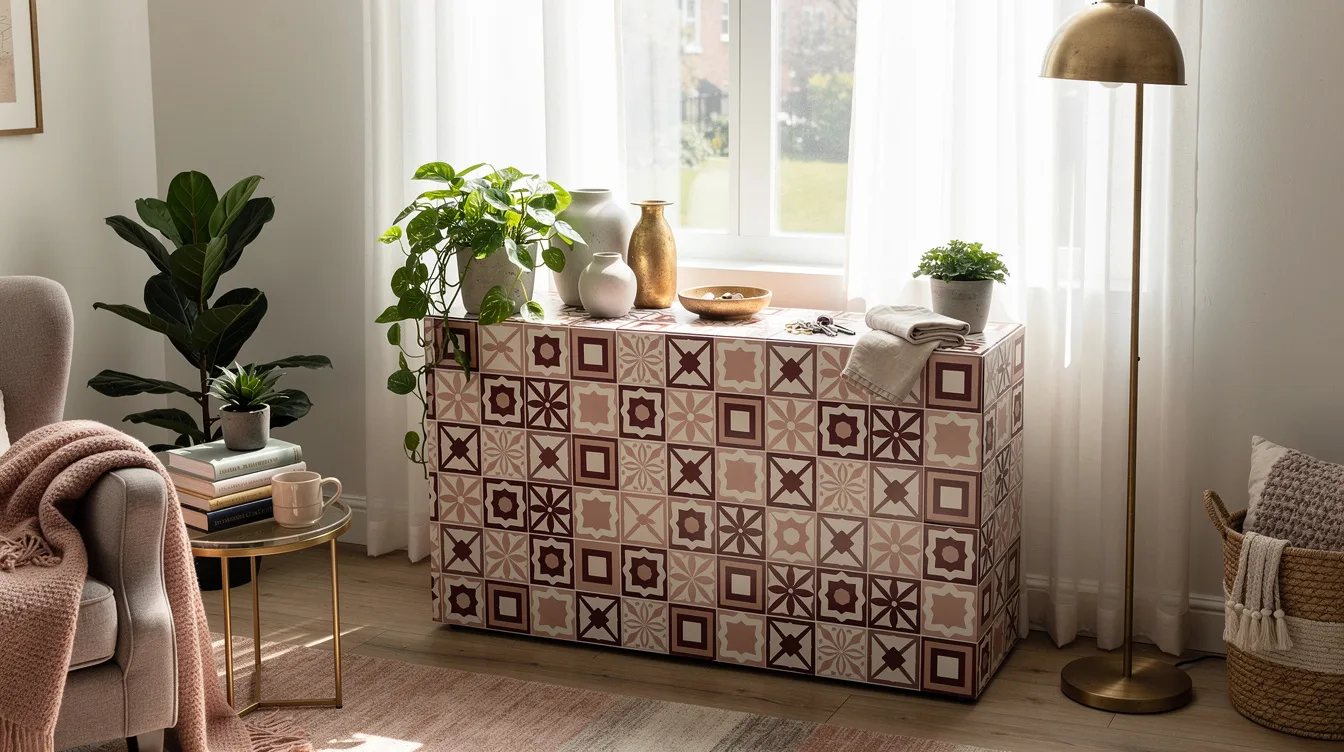
- Tile a Window Seat or Deep Sill
- Build a Bathroom Dado Line
- Aim Picture Lights Across Textured Walls
- Ground the Sofa With Faded Linen
- Reserve Pattern for One Visible Plane
Frame the Entry With a Tiled Carpet
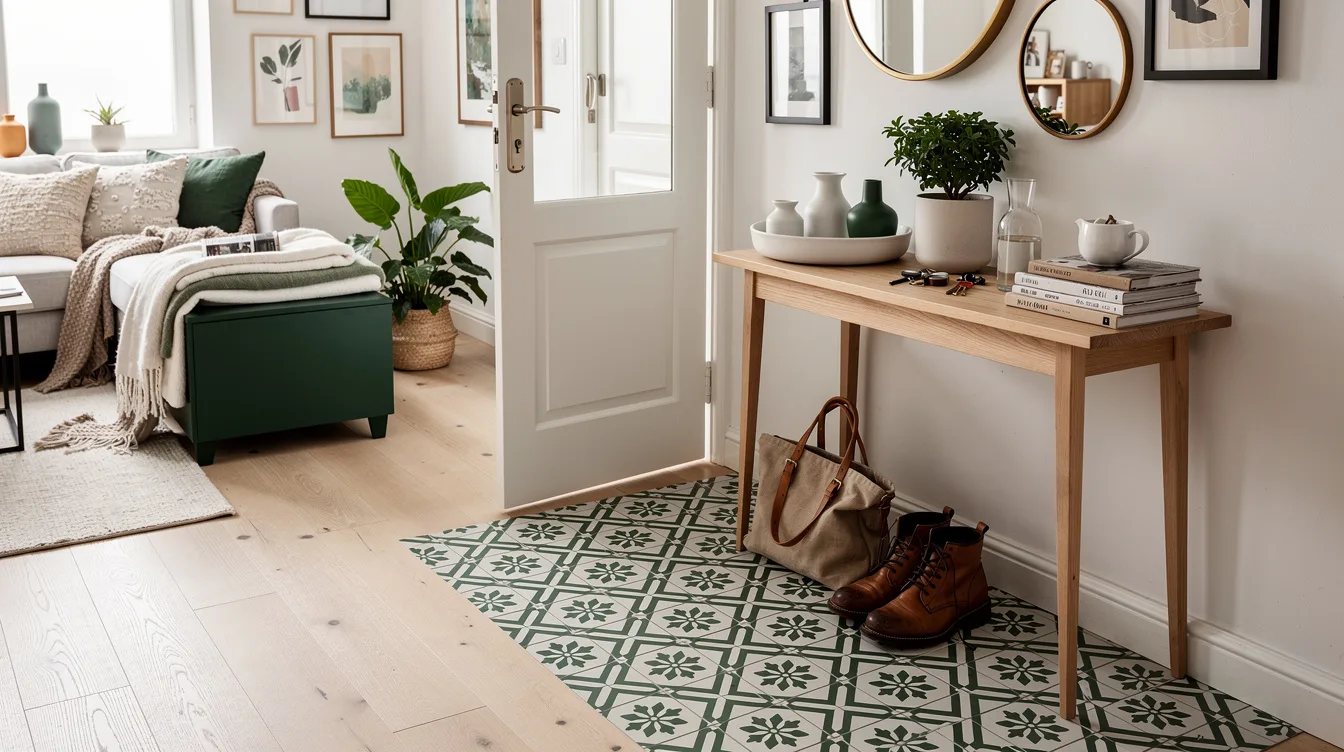
Set a rectangle of cement-pattern tile inside the entry, sized to the doorway or narrow hall. It catches wet shoes and creates the useful threshold found in older Lisbon homes.
Border the pattern with plain terracotta, soft white, or deep green tile so the motif has a deliberate edge. Ask about tile-and-adhesive height before ordering, especially where the new surface meets existing wood flooring.
Keep a Slim Kitchen Tile Band
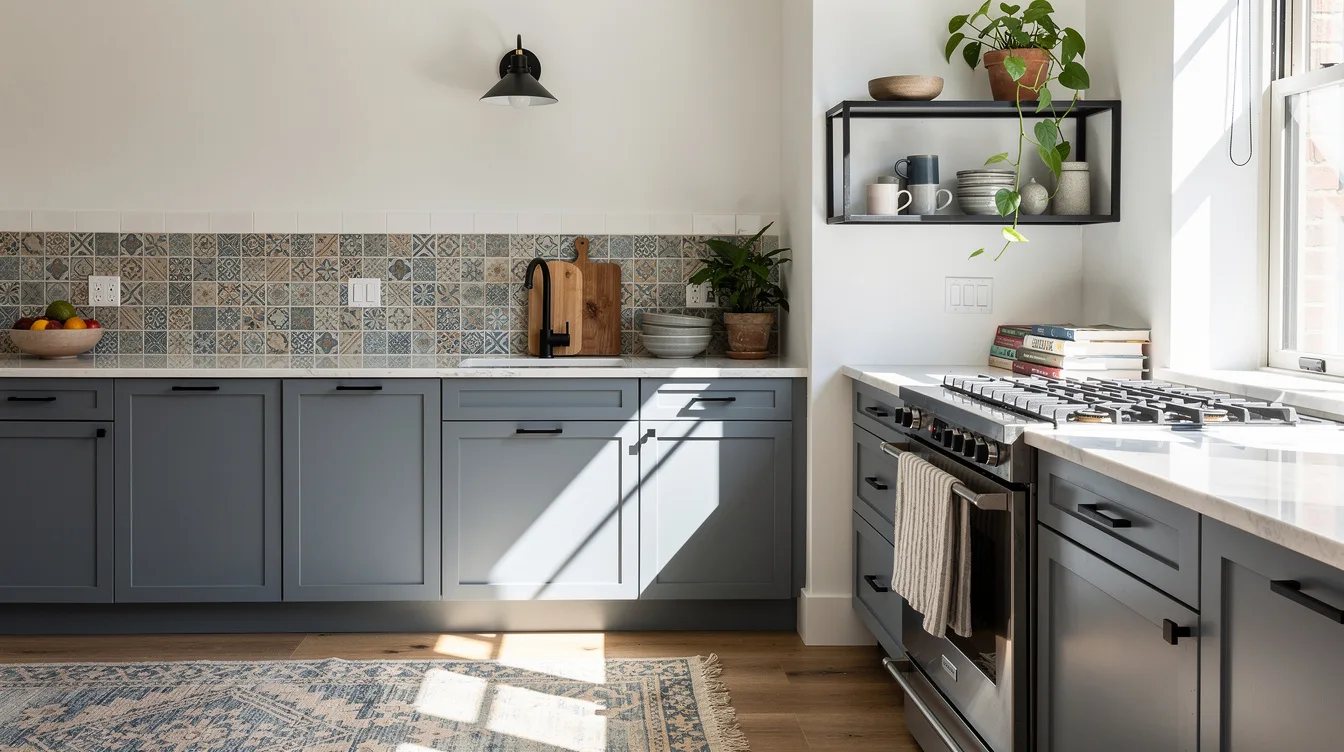
Run a band of glazed 4-inch tile behind the counter instead of coating the entire wall to the cabinets. This gives a small kitchen its color moment while preserving the open, bright feeling.
Choose faded cobalt, bottle green, warm ivory, or dusty blue, then stop the band at a window reveal or open shelf. Warm sand grout looks far more relaxed here than stark white grout.
Wash the Walls in Chalky Warm White
Use a matte mineral finish in pale putty paint rather than an icy bright white. Lisbon light has a forgiving warmth, and a chalky wall gives tile enough softness to feel collected over time.
Home Depot and Lowe's both carry sample pots that make this decision easier to test near a window. Check the color in morning sun and after dark, because a wall that looks creamy at noon can turn gray under cool bulbs.
Lay Down a Quiet Timber Floor
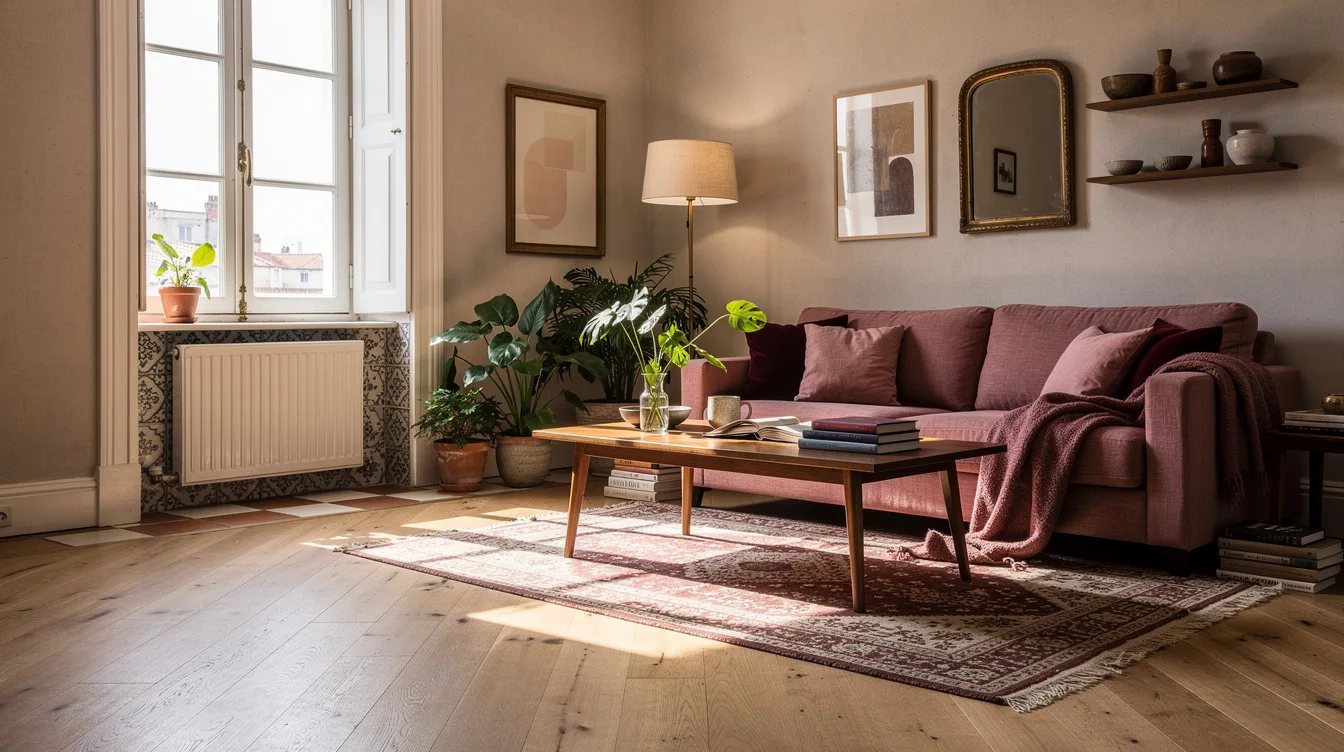
Let natural oak flooring carry most of the room, then use decorative tile only where it earns its place. Boards around 5 to 7 inches wide feel current but still have the plain, sturdy character this look needs.
A medium honey tone is stronger than a dark espresso stain, which can make patterned tile look overly formal. Existing wood with a few honest scratches is worth keeping if it is structurally sound.
Wrap One Fireplace in Color
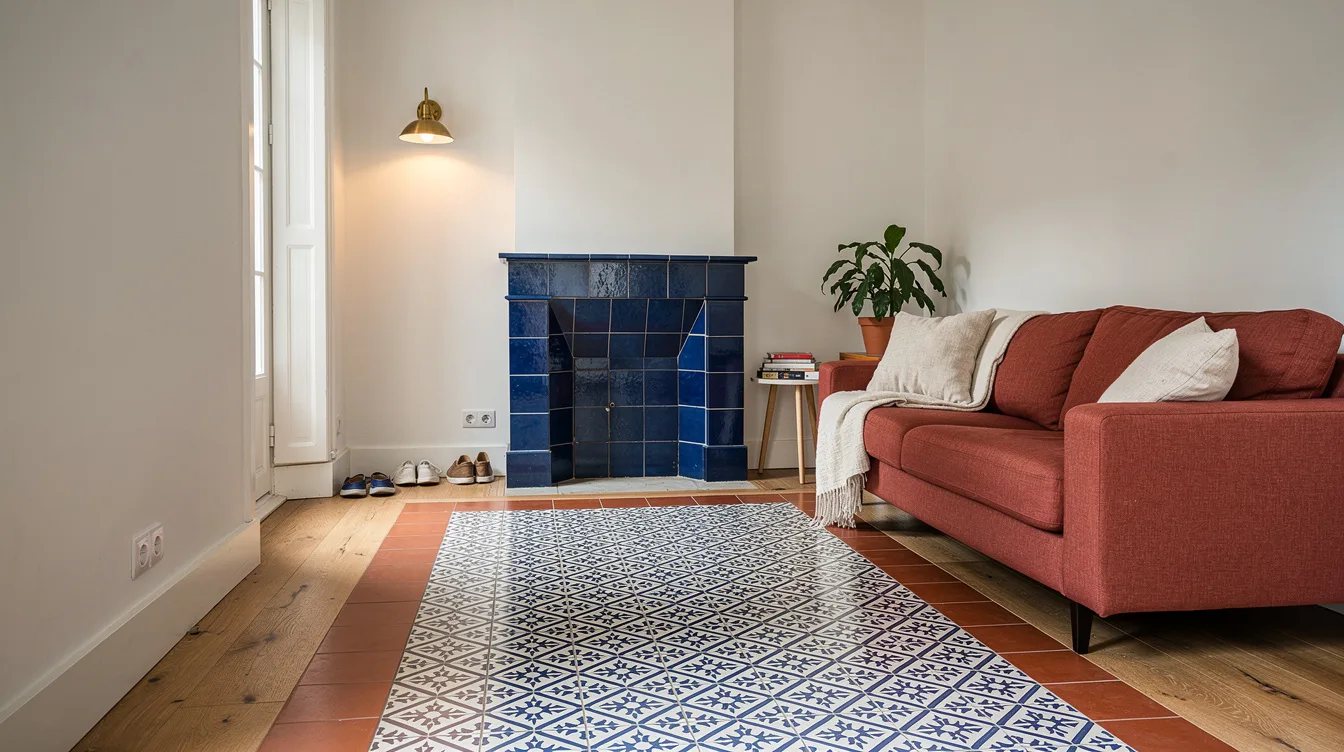
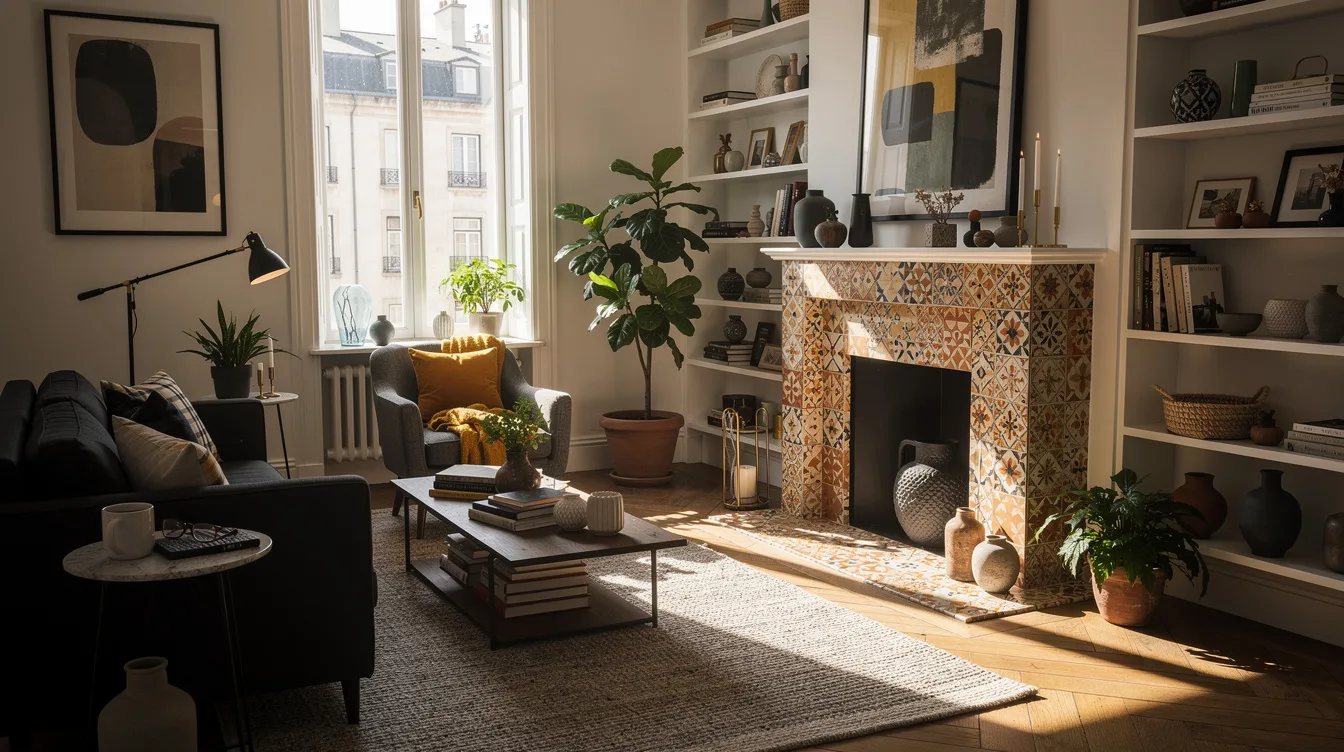
Use a fireplace surround as the main tile gesture, whether the apartment has a working hearth or a decorative opening. A field of blue-and-white azulejo-style tile gives the living room a focal point without demanding matching patterns elsewhere.
Keep the mantel simple, perhaps aged wood or limestone-look stone, and leave plenty of wall visible around it. This is the place for a dense motif, because the architecture contains it.
Hang Low-Glare Lamps at 2700K
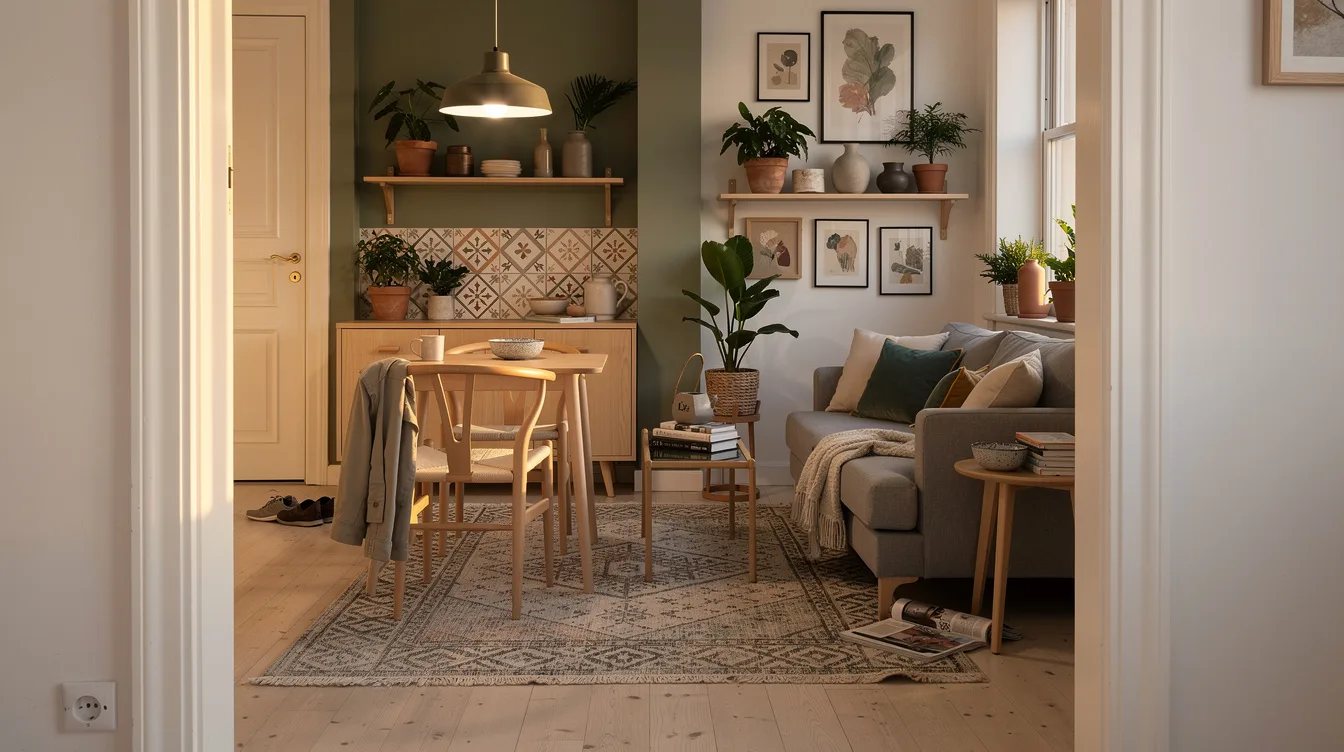
Choose bulbs marked 2700K warm white for table lamps, picture lights, and wall sconces. Their low, amber-leaning glow makes limewash-style walls and warm timber look alive after sunset.
Skip bright daylight bulbs in living areas, even when the room has limited natural light. A pair of lamps at different heights will give more comfort than one hard overhead fixture.
Use Aged Brass Near the Light Sources
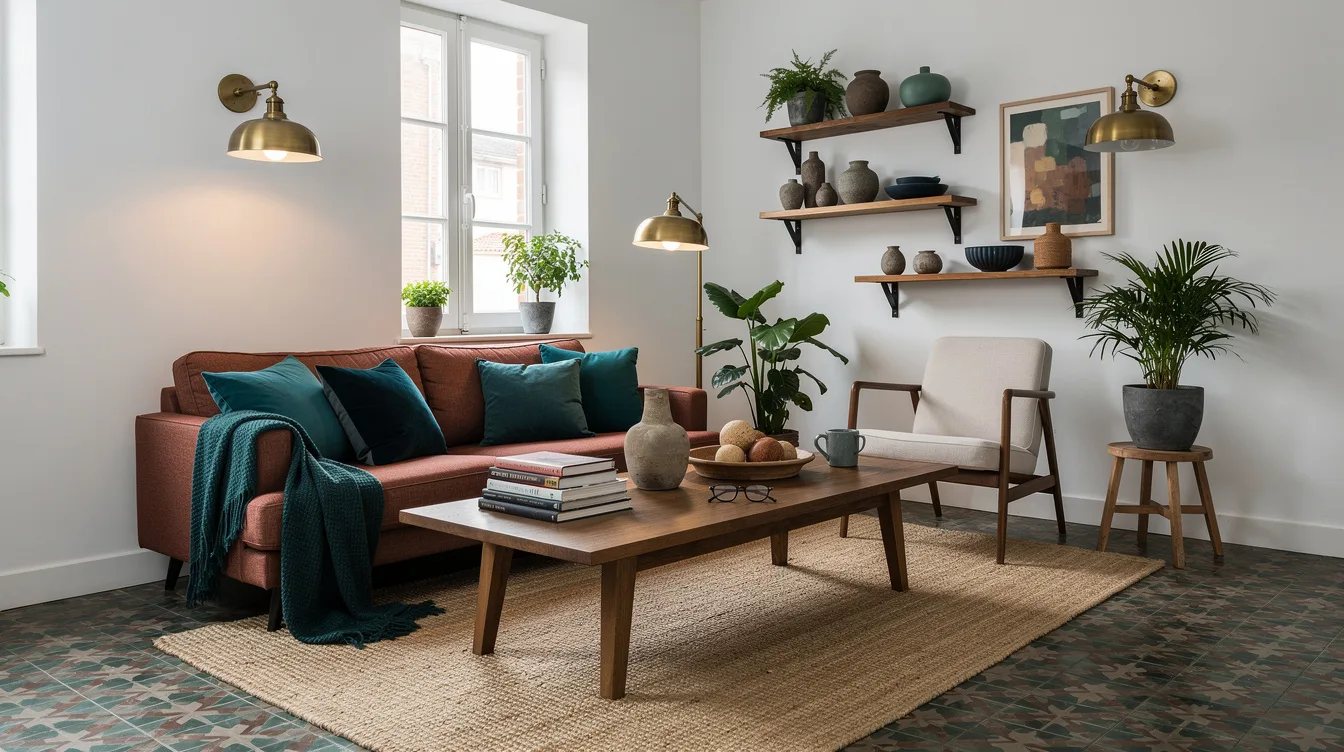
Bring in aged brass sconces beside art, a mirror, or the bed instead of spreading metallic finishes everywhere. Brass picks up the warmth of a 2700K bulb and connects naturally with ochre, olive, and tobacco textiles.
Amazon, Wayfair, and IKEA are useful places to compare simple plug-in options for rentals. Choose shades that direct light downward or diffuse it through fabric, not exposed bulbs that glare across glossy tile.
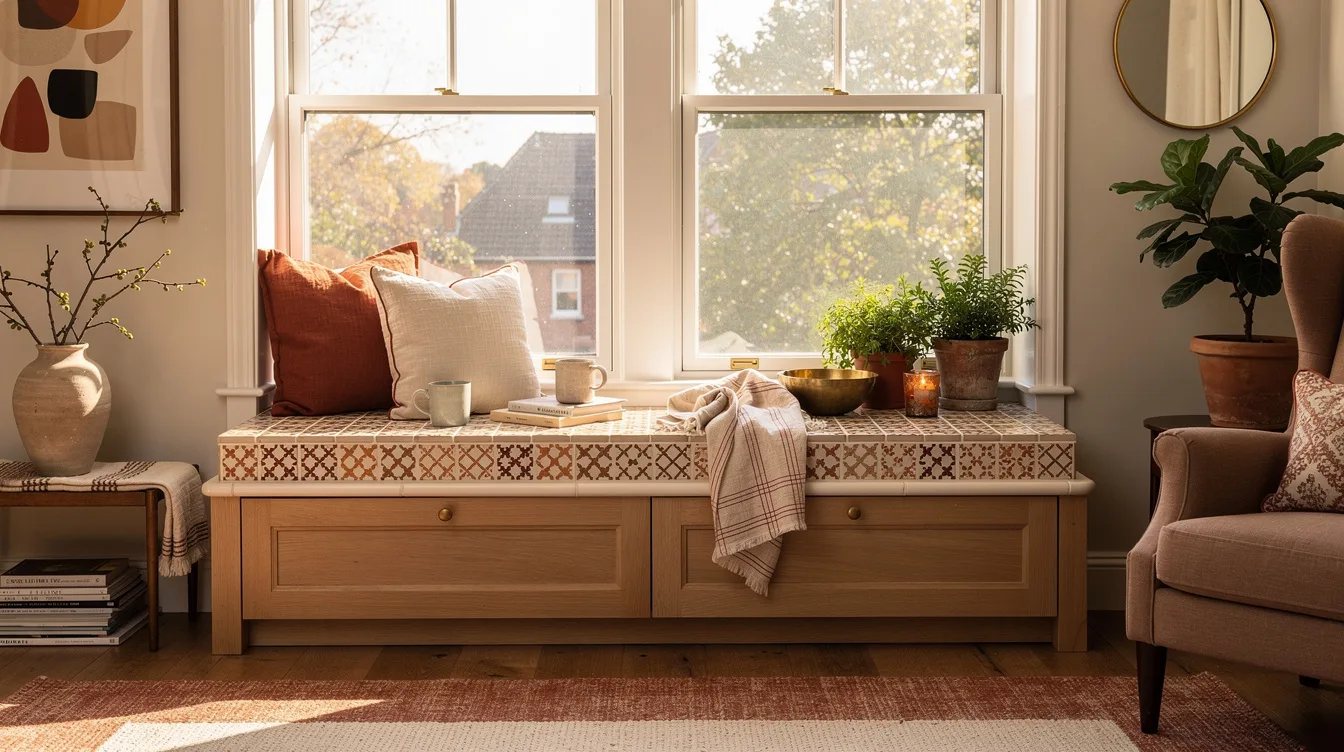
Tile a Window Seat or Deep Sill
Cover a sturdy sill or built-in bench with terracotta tile when the apartment has a sunny window. The surface is practical for plants, coffee cups, and the occasional rain-soaked jacket.
Add a linen cushion rather than a tailored upholstered pad. The slight coolness of tile beside sun-warmed fabric is exactly the kind of contrast that keeps this style from feeling like a theme restaurant.
Build a Bathroom Dado Line
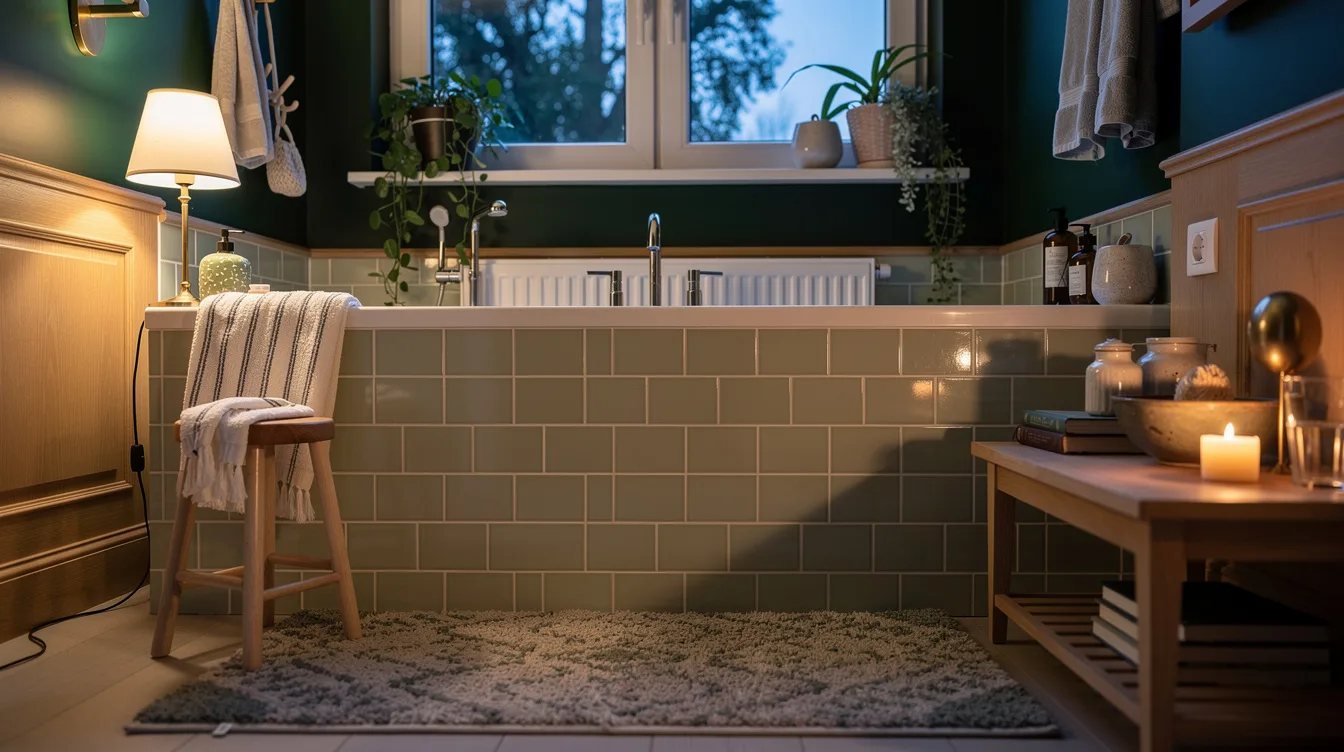
Run tile halfway up the bathroom wall, then finish the upper portion in warm off-white paint. A dark green glazed dado has more character than a fully tiled room and gives the eye a resting place.
Use a simple cap tile or narrow ledge at the top so the transition looks intentional. Matte black hardware can work here, but brushed brass is the warmer choice when the room lacks daylight.
Aim Picture Lights Across Textured Walls
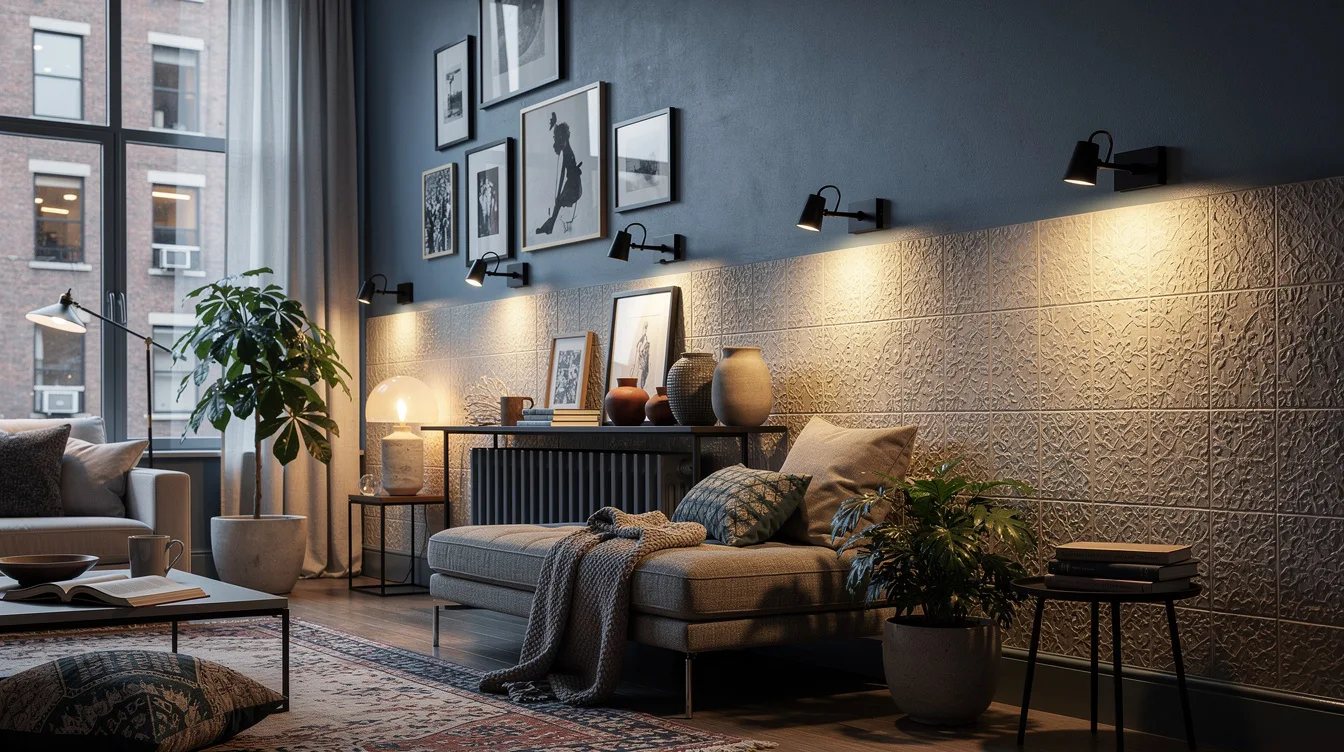
Mount a brass picture light over one framed print, then let it graze a textured wall instead of flooding the whole room. That narrow wash reveals the irregular finish that makes a mineral-painted wall appealing.
Keep artwork loose and personal: a market poster, architectural drawing, or modest landscape. One lit piece reads thoughtful, while a full gallery under matching lights can feel too polished for the setting.
Ground the Sofa With Faded Linen
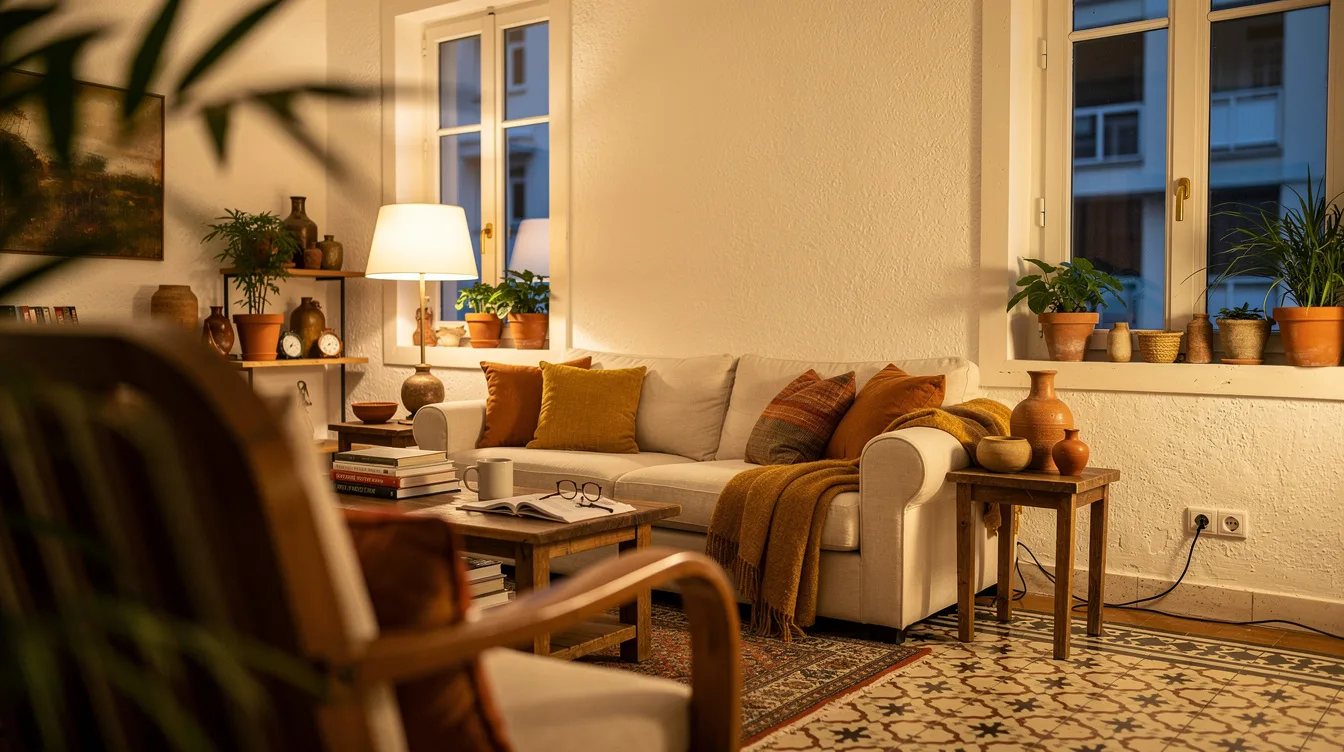
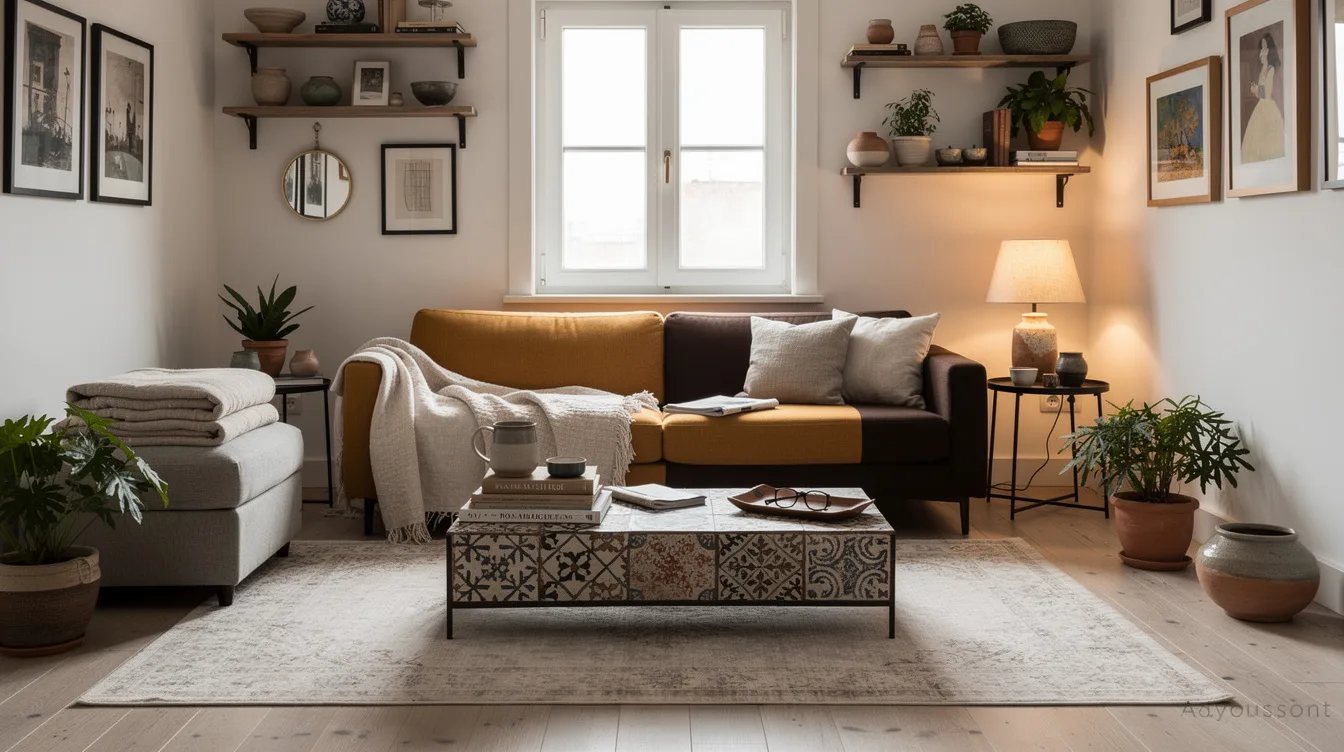
Choose an oatmeal sofa or a cover in washed linen, then layer in indigo, rust, or olive through pillows and a throw. The fabric gives patterned ceramic a calmer companion than shiny velvet or high-contrast graphic prints.
Target and Costco can be useful for affordable neutral throws, while Wayfair has broader cushion-cover options. Keep the stripe faded and slightly uneven, as though it belongs with sun-softened plaster rather than a crisp coastal catalog.
Reserve Pattern for One Visible Plane
Choose one surface for patterned ceramic tile: the entry, backsplash, fireplace, or bathroom wall. Repeating the same busy motif on every wall turns a strong material choice into scenery.
Use the rest of the room for limestone-like neutrals, wood, woven jute, and plain cotton. That roughly 70% calm background gives the patterned area enough visual authority to actually resemble an architectural detail.
Keep reading
- 12 Best Lowe's Shelving Ideas That Make Awkward Apartment Corners Work
- 12 Hotel-Style Nightstand Rules That Make a Bedroom Feel Finished
- 12 Bedroom Color Palettes That Make Low Light Feel Brighter
Start with the lighting before buying more tile: replace the harshest living-room bulb with a 2700K warm-white option, then decide where one patterned surface will matter most. The room will tell you how much color it can carry.