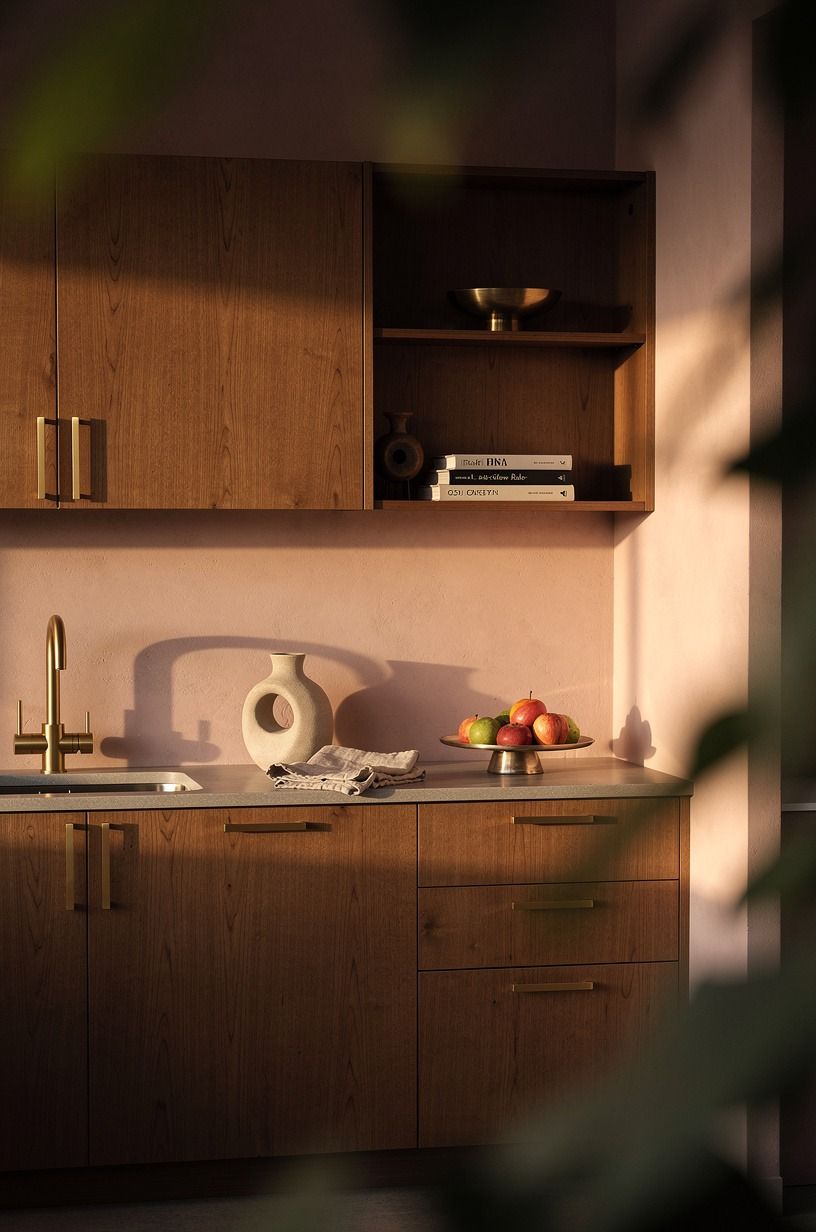
17 Golden Oak Kitchen Cabinet Ideas That Look Fresh Without Replacing Them
28 august 2026Golden oak kitchen cabinet ideas can look fresh without replacement, and a cosmetic update typically costs $300 to $1,500. I once tried to hide oak under cool gray paint. It looked flat by lunch. The better move is letting the grain stay warm while changing everything around it.
- ✓ Paint the walls with the Oak-Glow Rule
- ✓ Swap dated pulls for aged brass
- ✓ Layer a creamy backsplash behind the grain
- Paint the walls with the Oak-Glow Rule
- Swap dated pulls for aged brass
- Layer a creamy backsplash behind the grain
- Use the Two-Wood Rule for open shelves
- Ask: should you paint only the island?
- Hang pendants with the Three-Height Light Stack
- Choose a laminate counter over cold gray quartz
- Bring in a runner that softens the floor line
- Frame the sink with a warm metal faucet
- Build the Countertop Quiet Zone
- Add glass fronts to one upper cabinet run
- Choose warm oak over all-white replacement cabinets
- Use woven shades instead of fussy curtains
- Put a real lamp on the counter
- Spend where the cabinet doors meet the room
- Style the breakfast corner with soft contrast
- Refresh doors only after you fix the undertones
1Paint the walls with the Oak-Glow Rule
Start with Benjamin Moore White Dove OC-17 on the walls if your golden oak cabinets feel orange. You’ll get contrast without making your kitchen chilly, and your cabinet grain will read as intentional rather than dated.
I’d skip stark white. It can make your warm oak kitchen cabinets look yellower because the contrast is so harsh.
Put a creamy white beside a door sample first, then watch it through breakfast light and late-afternoon shadow. Your eye needs both.
A soft wall also gives you room for unlacquered brass cabinet pulls. The metal picks up the honey note in the wood, then develops a gentle patina instead of looking like a shiny afterthought.
2Swap dated pulls for aged brass
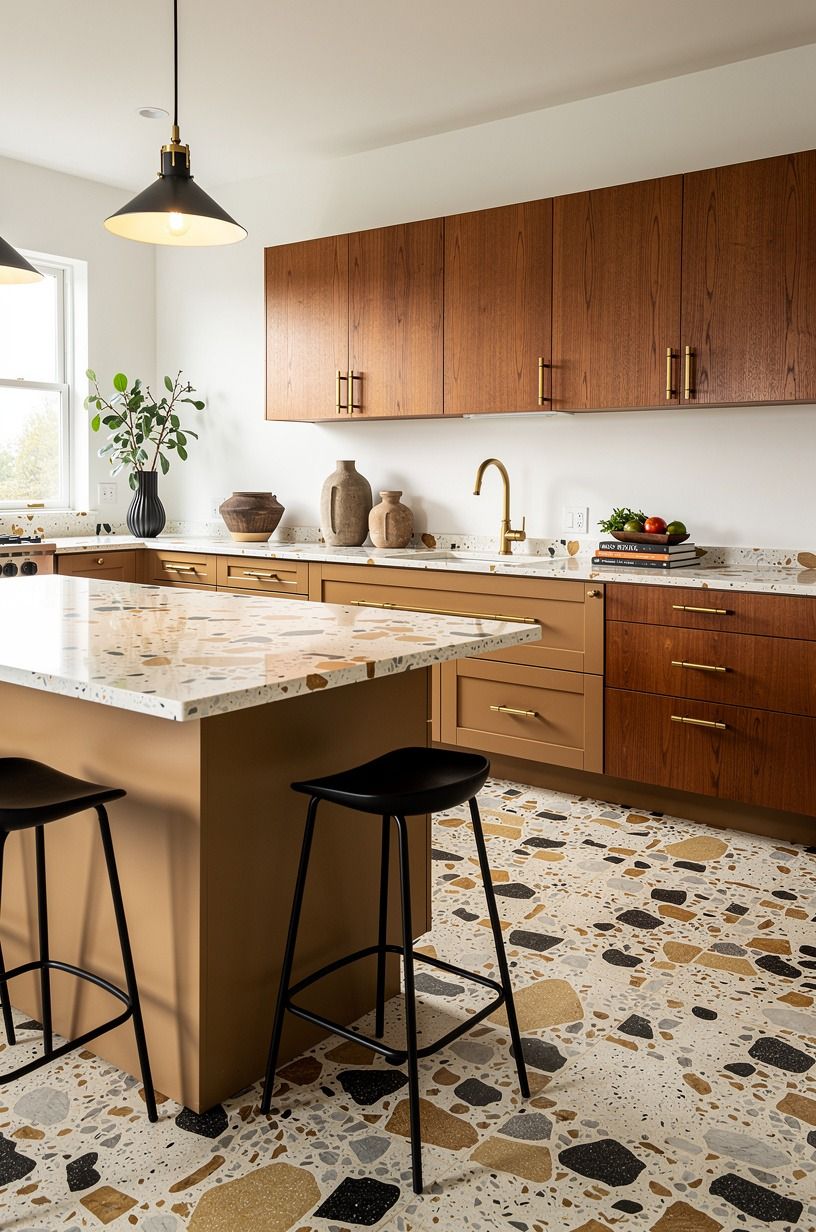
Hardware is the fastest way to change what your hands notice every day. Choose aged brass cup pulls or slim bar pulls, keeping the finish warm and slightly muted so your cabinets don’t compete with chrome.
You don’t need matching knobs everywhere. I like pulls on drawers and small round knobs on uppers because you’ll create a more collected, lived-in rhythm.
But skip black hardware if your counters are also dark. It can turn blonde wood cabinets into a heavy strip around the room.
Your small detail: 3-inch center-to-center pulls where the existing holes allow it. Measure twice. Filling misaligned holes is nobody’s favorite Saturday.
3Layer a creamy backsplash behind the grain
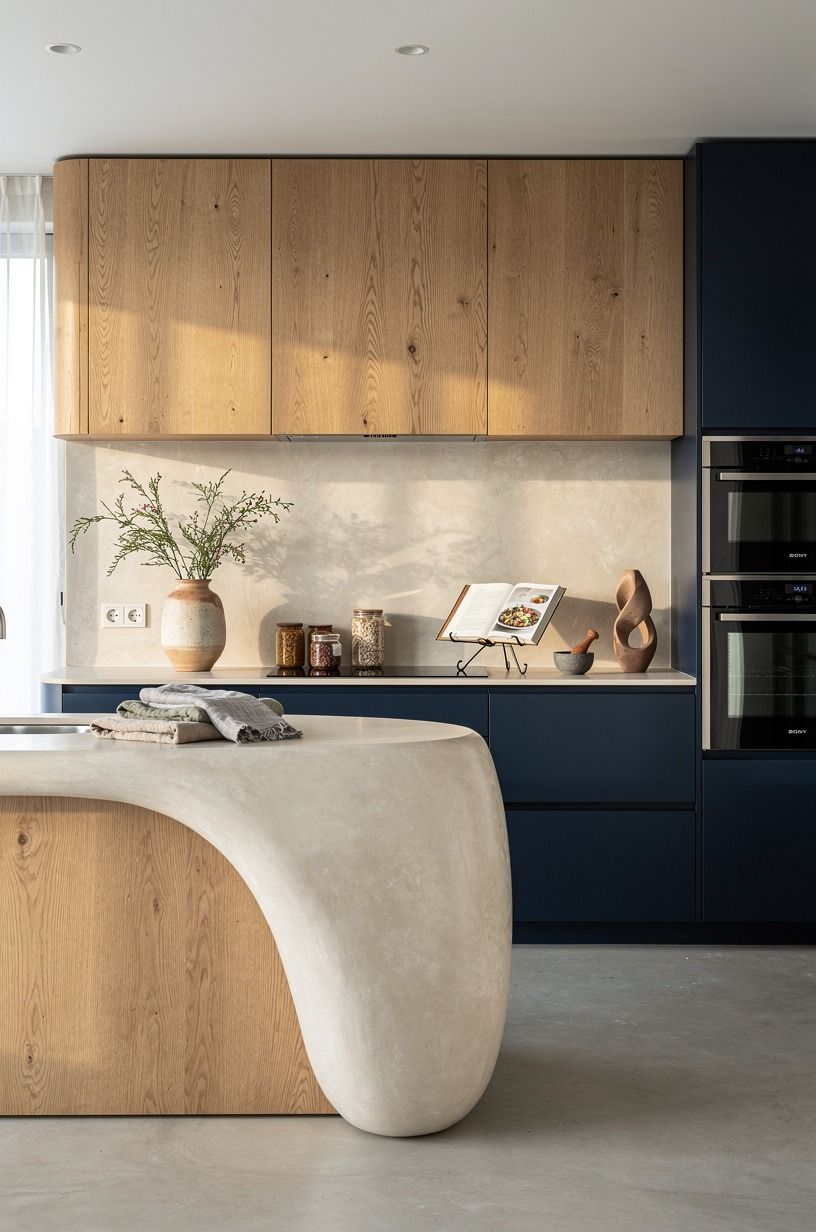
An 18 in backsplash gap is enough visual real estate to calm a classic wood kitchen. Use hand-applied ivory Venetian plaster with a soft, tactile finish, or choose a warm off-white ceramic tile that has a little surface movement.
The point isn’t to make the backsplash loud. It’s to give your oak a quiet, refined backdrop. You’ll see the cabinet grain more clearly when the wall has texture but not a busy print.
I made the mistake of choosing gray grout once. It cut every tile into a grid and made the whole kitchen feel fussy.
Warm white grout is the better call here. Softer.
More forgiving.
4Use the Two-Wood Rule for open shelves
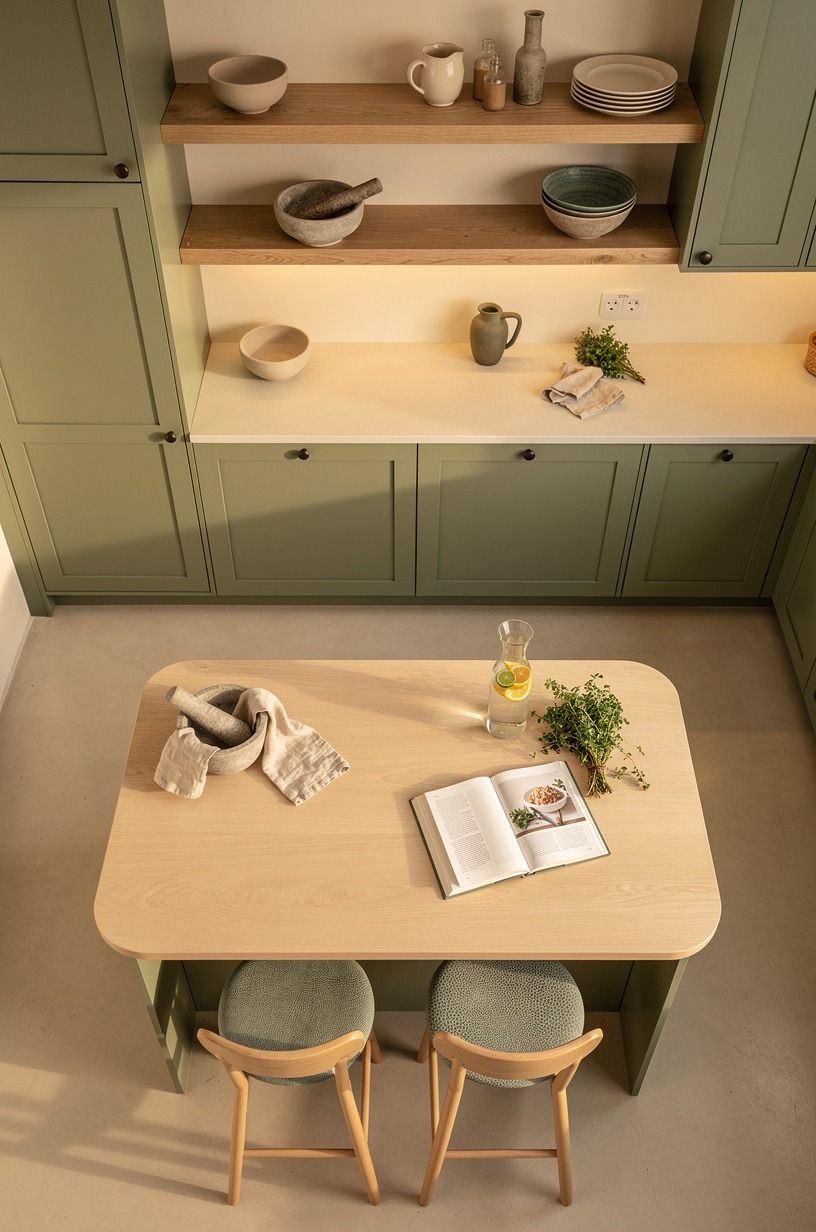
The Two-Wood Rule is simple: keep your cabinets as one wood, then introduce only one other timber tone. Try cerused white oak floating shelves above a coffee station, or use a darker walnut board for a bolder contrast.
You’ll want the second wood to look deliberate, not like a leftover plank. A shelf with a 3/4-inch solid white oak face feels substantial, especially beside upper cabinets that are 30 to 42 in tall.
And don’t fill every shelf. Three stoneware mugs, a squat glass jar, one shagreen-accented tray. Your kitchen needs a pause between all that cabinetry.
5Ask: should you paint only the island?
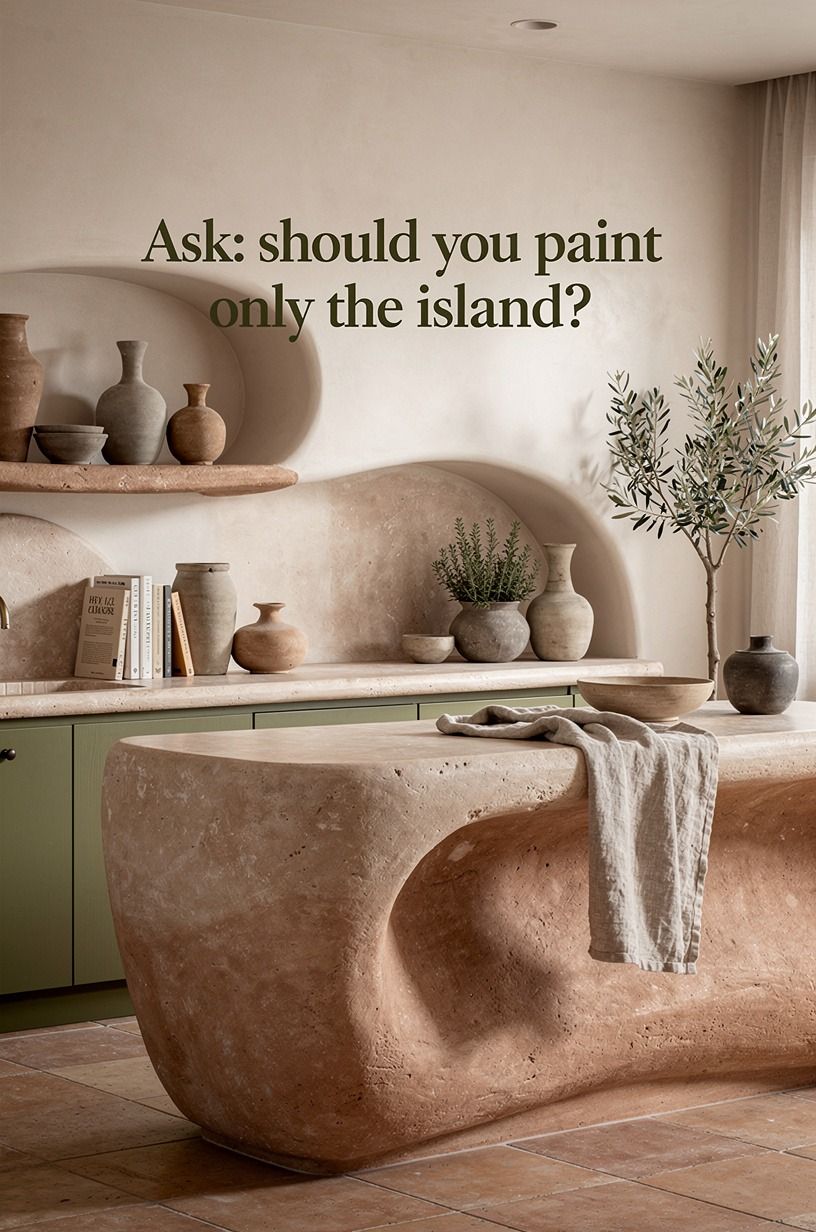
Yes, if your island sits apart from the cabinet run. Painting only the island gives you a fresh focal point while your golden oak stays visible everywhere else.
Try Sherwin-Williams Evergreen Fog SW 9130 for a calming green that doesn’t fight honey-toned wood. You’ll get a grounded contrast, especially with a pale counter and a washed Belgian linen runner underfoot.
I’d avoid navy here unless your kitchen gets strong daylight. Dark blue can make oak lean orange, while green catches its earthy side.
A painted island is also easier to reverse than painted perimeter cabinets. That matters if you’re testing your nerve.
6Hang pendants with the Three-Height Light Stack
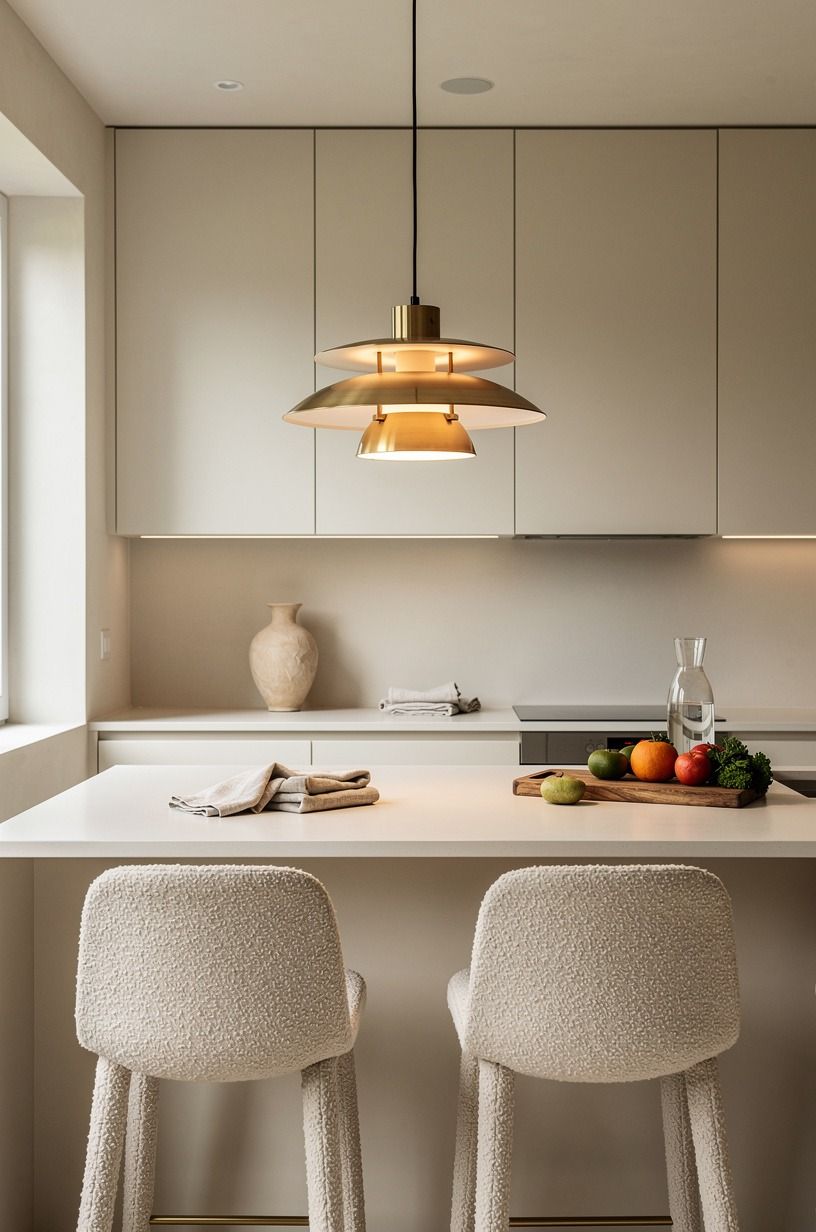
The Three-Height Light Stack means overhead pendants, under-cabinet lighting, and one lower glow point such as a lamp on the counter. Your kitchen won’t feel like a showroom when every light comes from the ceiling.
Use aged bronze schoolhouse pendants over an island, then tuck warm under-cabinet strips beneath uppers. Pair the lower glow point with an organic bouclé lampshade so the lighting feels warm rather than overly polished.
But don’t hang pendants too low. You still need a clear sightline across the room and 42 to 48 in of open clearance around an island. Function first, always.
7Choose a laminate counter over cold gray quartz
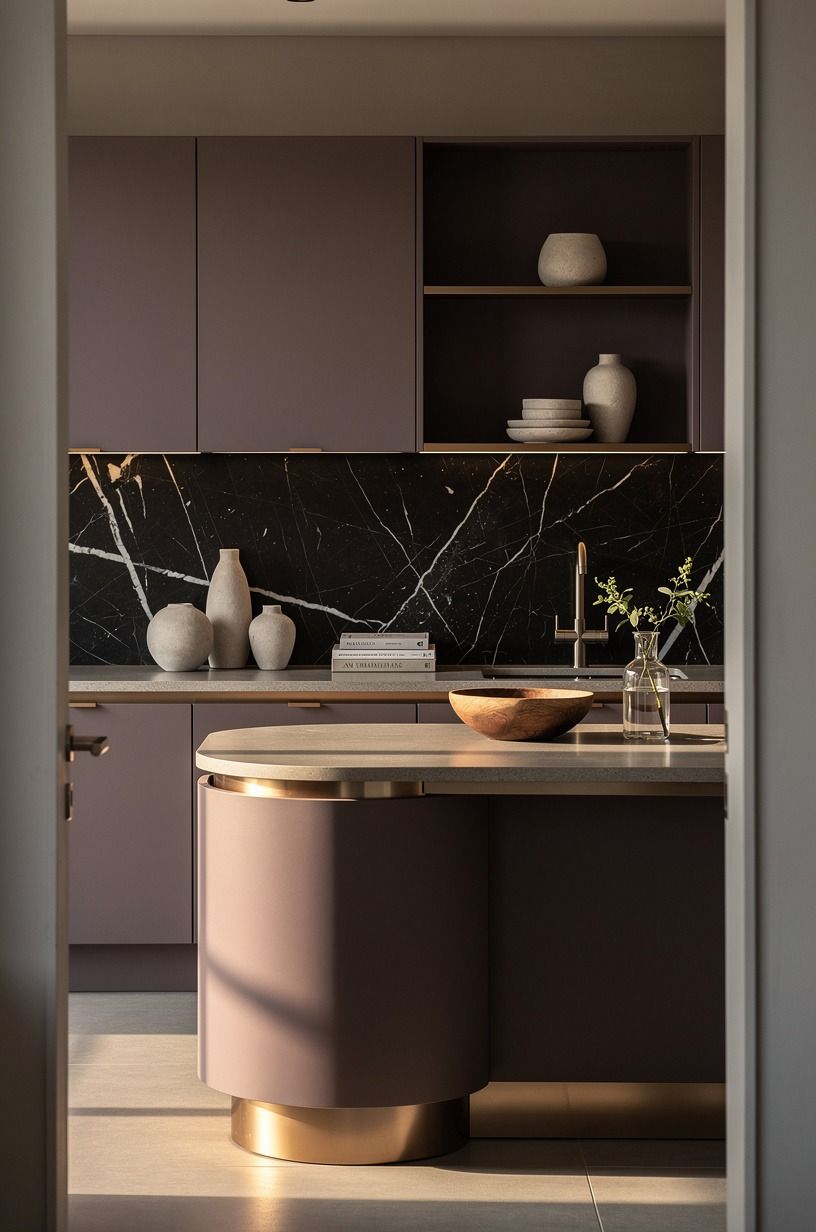
If your counters need changing, choose a warm laminate before defaulting to gray quartz.
8Bring in a runner that softens the floor line
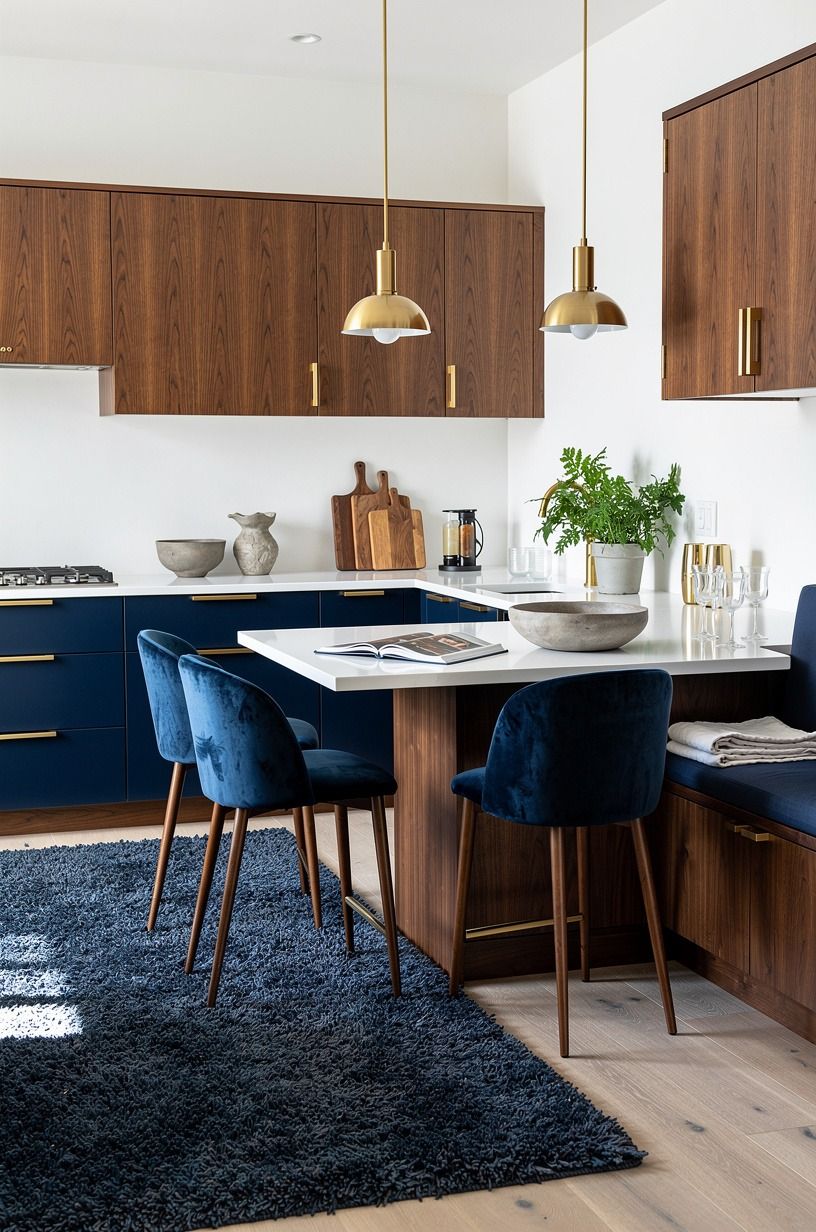
A runner can pull your cabinet color down toward the floor, especially if your room has hard tile or vinyl. Choose a deep-pile mohair velvet runner in navy, cream, and walnut-toned accents.
Your rug doesn’t need to match the cabinets. It needs to acknowledge them. A warm, slightly worn pattern makes the kitchen feel inviting, and it hides the ordinary crumbs that somehow appear five minutes after sweeping.
Go washable if you cook often. I love a thick antique rug look, but I don’t love pretending olive oil never splatters. Real life wins.
9Frame the sink with a warm metal faucet
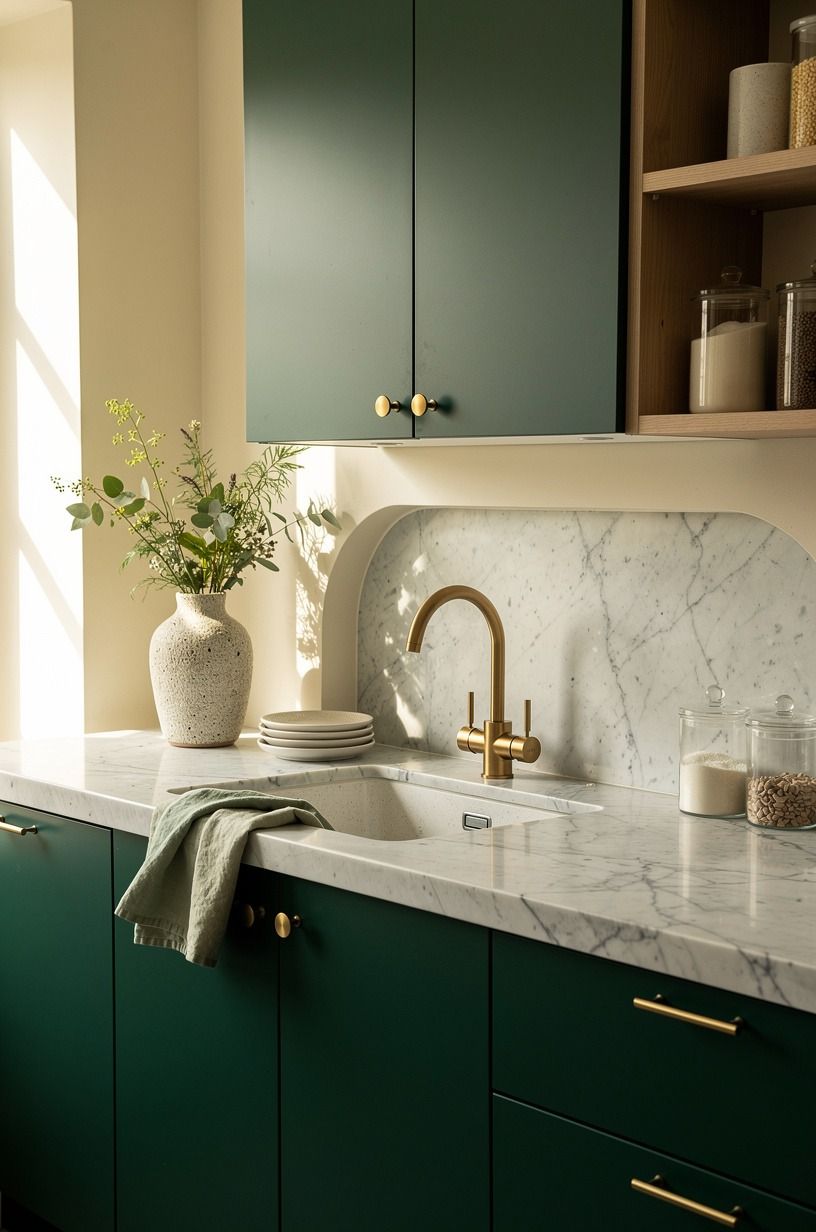
A sink wall gets used more than any styled shelf, so make it count. Install an unlacquered brass bridge faucet if your budget allows, or choose brushed brass if you need a finish that stays visually steady.
You’ll notice the faucet against oak every morning. That small amber reflection is more powerful than another decorative object. Pair it with a simple undermount sink and a Carrara marble counter, then keep the area around it clear.
Chrome is the losing option unless your kitchen already has cool stainless appliances everywhere. Golden oak wants warmth nearby, not a second temperature story.
10Build the Countertop Quiet Zone
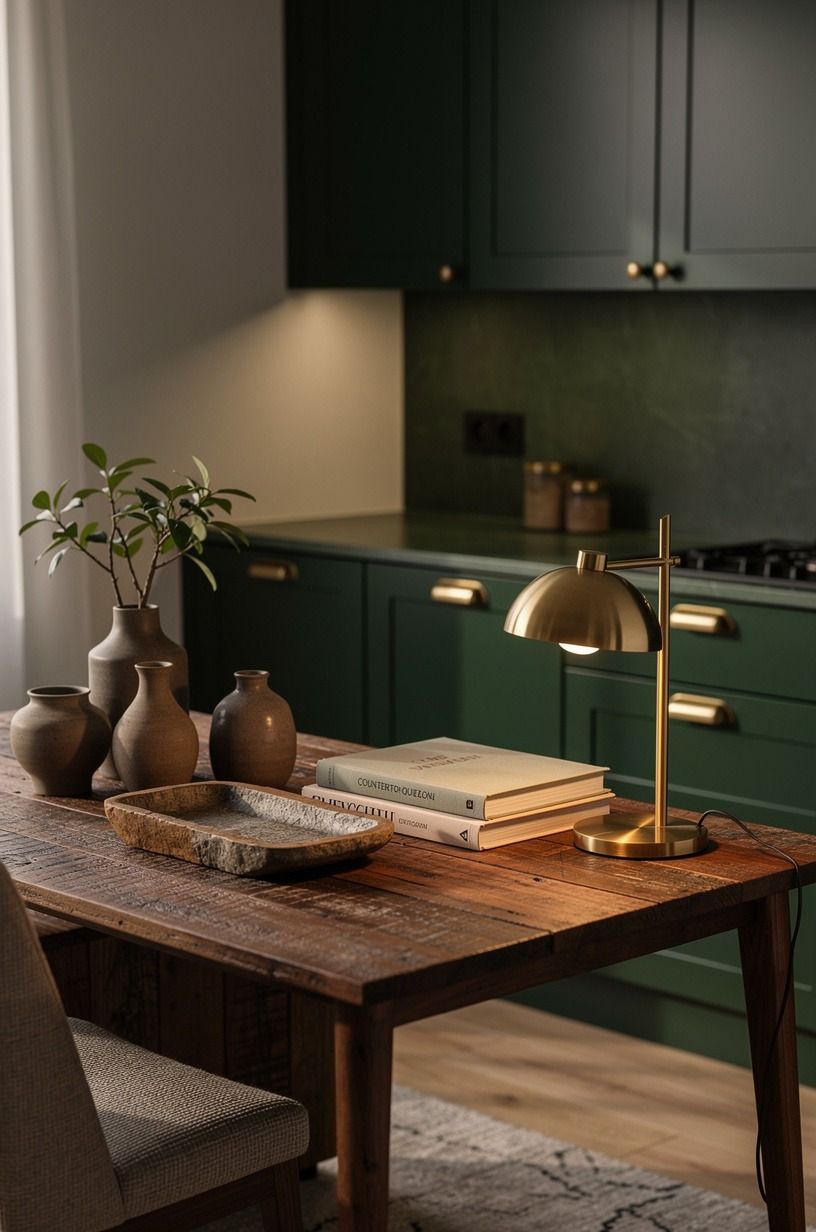
The Countertop Quiet Zone is the stretch of counter you refuse to clutter. Keep one area empty near the range or sink, then style the rest with useful pieces your kitchen already earns.
A reclaimed weathered teak cutting board, a walnut utensil crock, and a bottle of olive oil can be enough. You’ll make your cabinets look less dated simply because the room stops shouting from every surface.
And please skip the giant scripted signs. They don’t add warmth. They add visual noise, which is the opposite of what your oak needs.
11Add glass fronts to one upper cabinet run
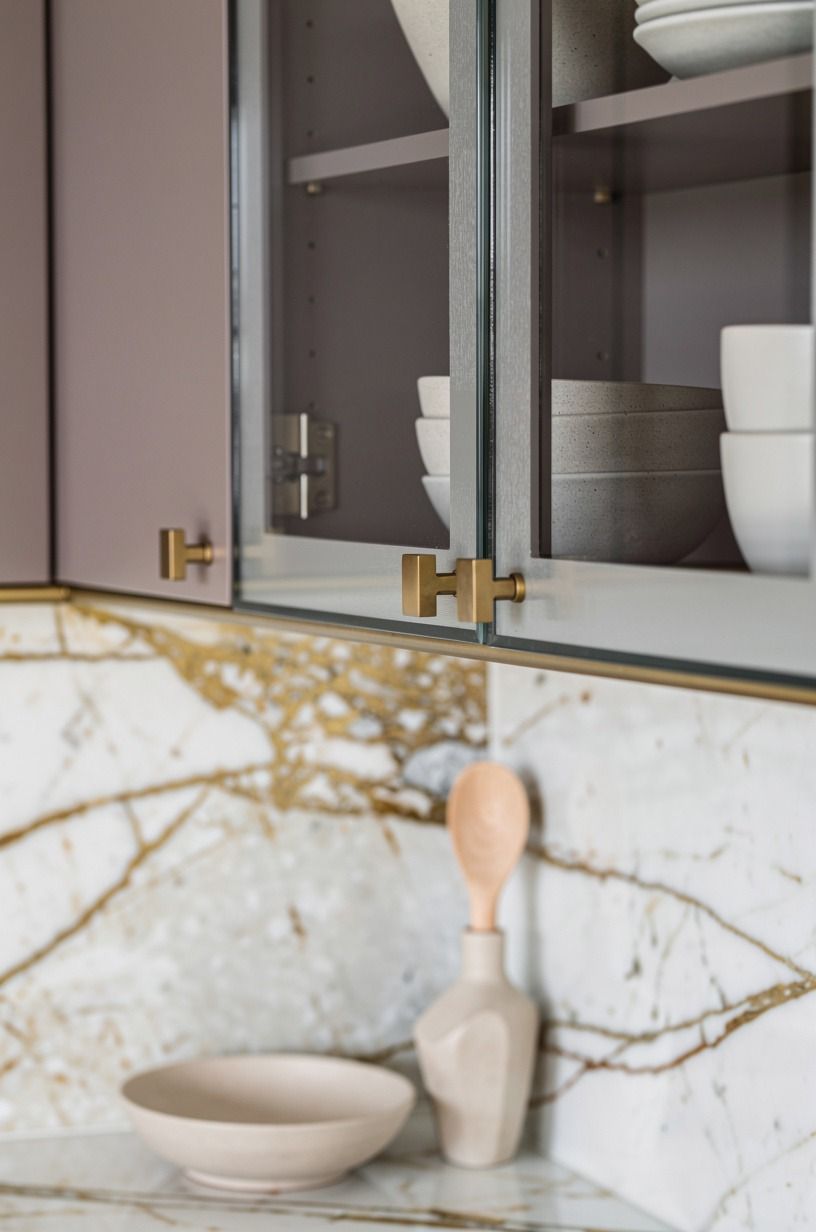
Replacing two solid doors with glass fronts can lighten a dense wall of cabinets. Use clear glass for neat everyday dishes, or reeded glass if your shelves are more practical than photogenic.
You don’t have to rebuild the whole kitchen. A local cabinet shop can match a simple frame, while IKEA SEKTION glass doors can inspire the proportion you’re after. Your goal is a break in the wood wall, not a display case.
Keep the inside paint warm. Farrow & Ball Studio Green No. 93 looks moody behind glass, especially beside Calacatta marble with warm gold veining.
12Choose warm oak over all-white replacement cabinets
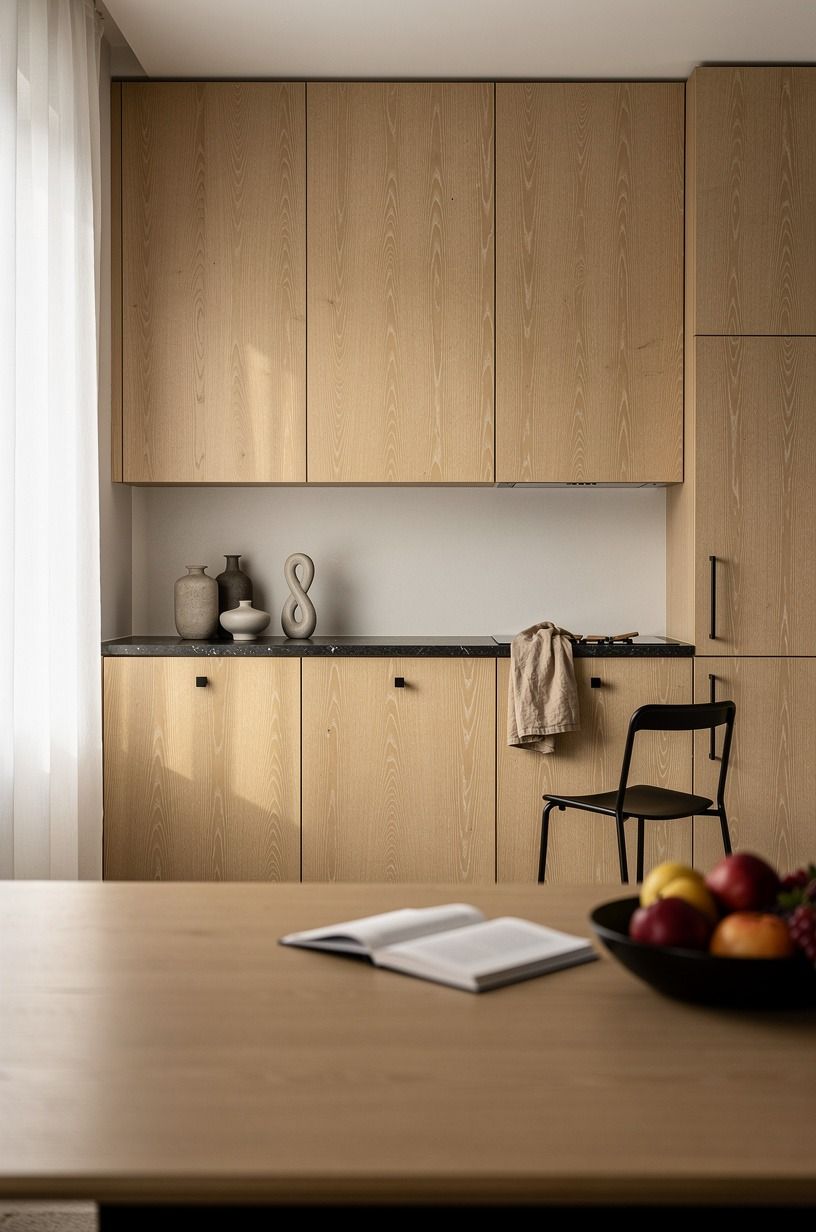
Warm oak over all-white replacement cabinets is my firm opinion. White cabinets can be lovely, sure, but they often make a kitchen feel temporary when the counters, floor, and trim don’t share their undertone.
Your existing oak has real grain and visual depth. Give it a better setting before you send it to a landfill. New hardware, pale walls, a tactile backsplash, and deliberate lighting can change the read of the room for far less than a full cabinet order.
A little history helps. The cabinet doors aren’t the problem. The 2004 beige granite, mushroom wall paint, and fluorescent tube probably are.
13Use woven shades instead of fussy curtains
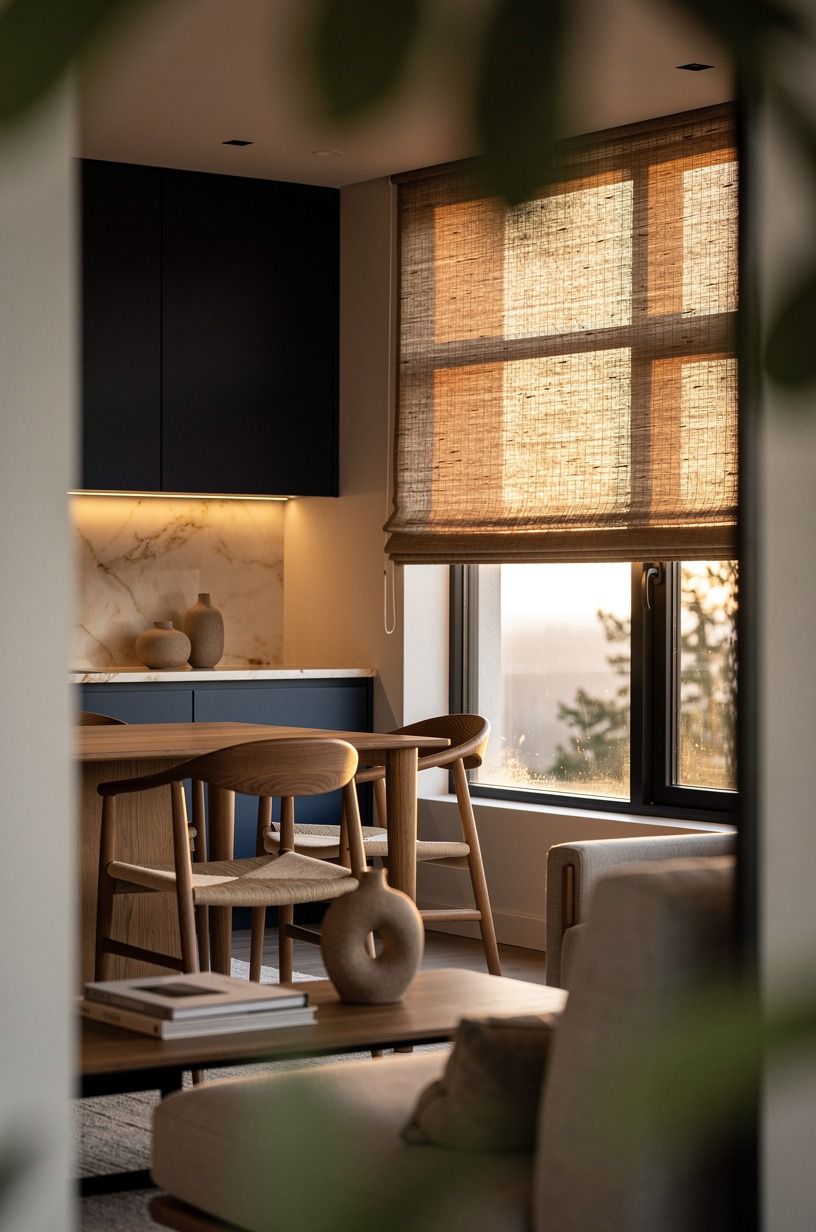
Woven shades bring texture without covering the clean lines of your cabinet doors. Choose natural woven wood Roman shades in a pale honey or flax tone, then mount them high enough that your window still feels generous.
You’ll get filtered daylight that makes oak look softer, not brighter in a harsh way. Add a café curtain only if privacy is a real issue, and use backlit translucent onyx in a nearby accent instead of a printed fabric.
I’d avoid white faux-wood blinds. They look too crisp beside real wood, and your kitchen deserves materials that speak the same language.
14Put a real lamp on the counter
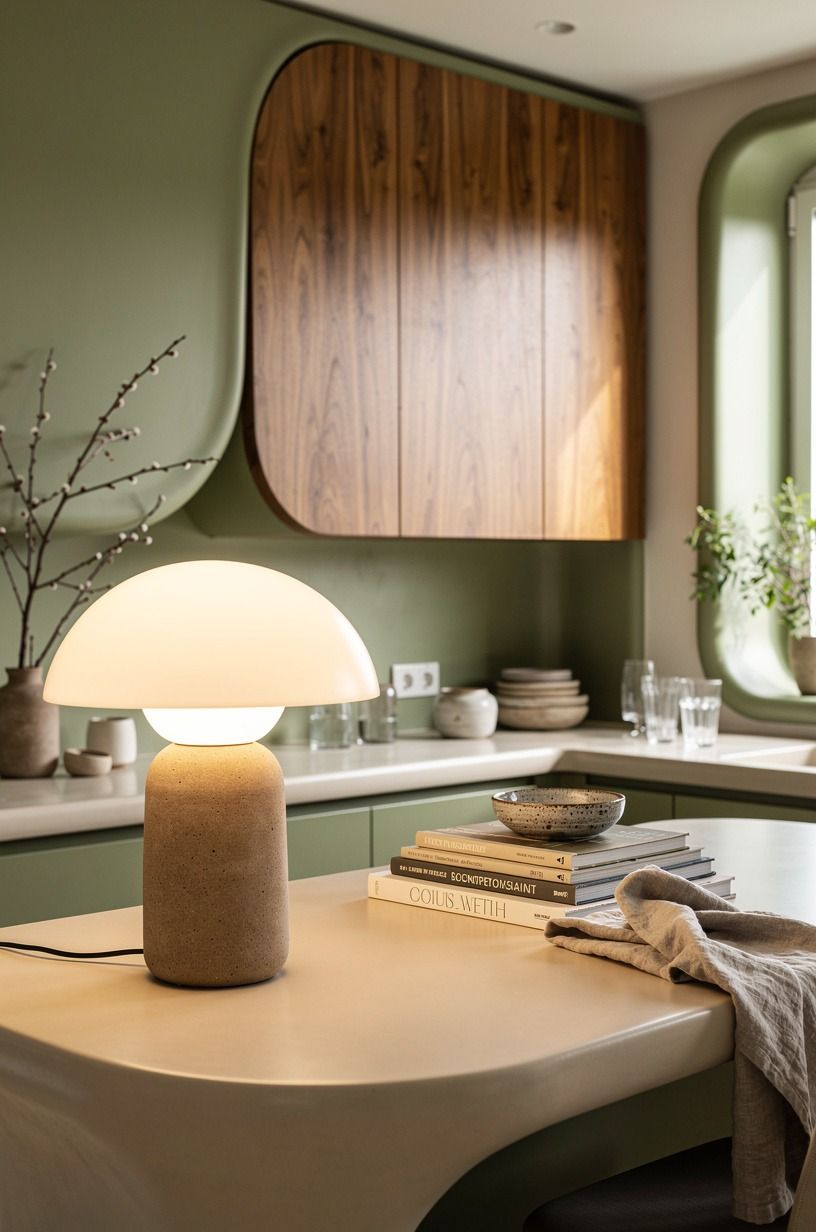
A small lamp on a kitchen counter sounds odd until you try it.
15Spend where the cabinet doors meet the room
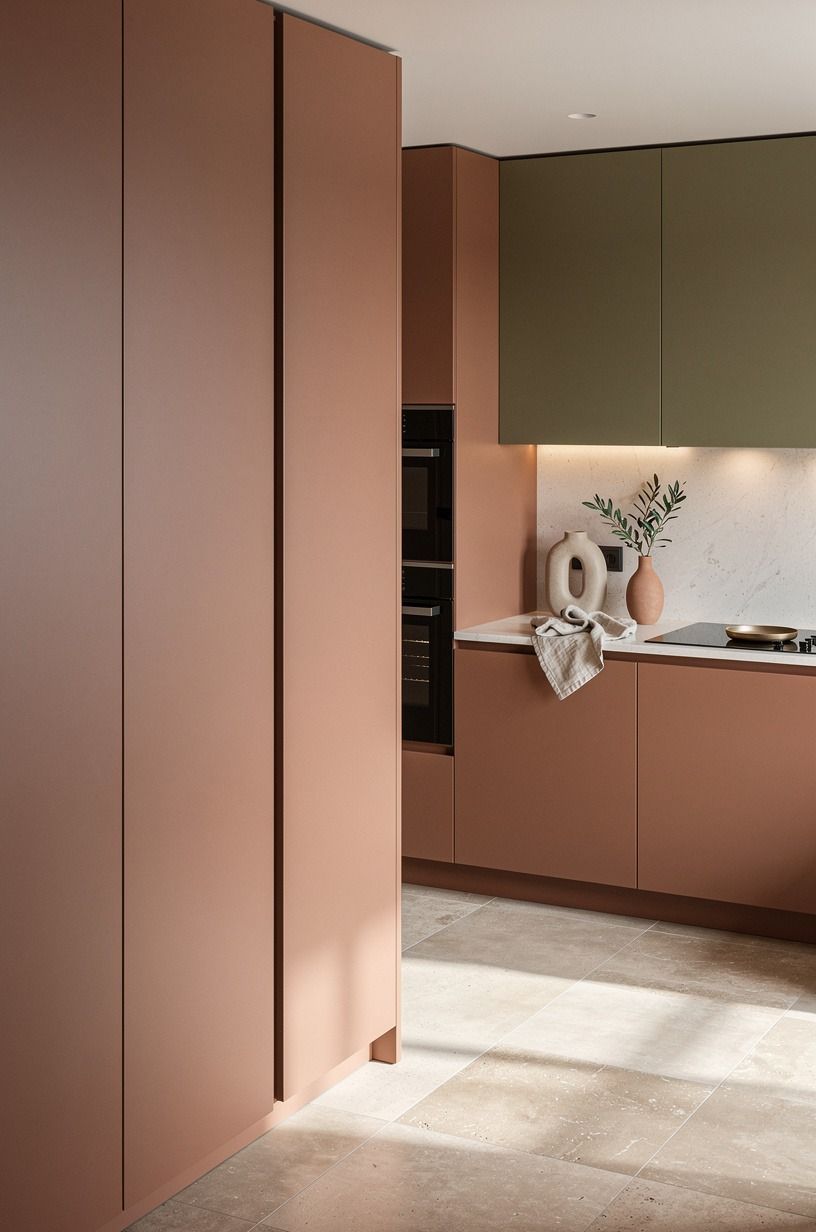
Here’s the honest cost range for updating golden oak without replacing it. Your best spending order is hardware, lighting, backsplash, then counters. You’ll feel each change more than a costly cabinet swap.
For a budget route, paint walls, replace pulls, and use removable backsplash panels. Your cabinets stay. Your money goes toward the visible friction points.
That’s a much smarter order than replacing solid boxes because an old finish annoyed you.
16Style the breakfast corner with soft contrast
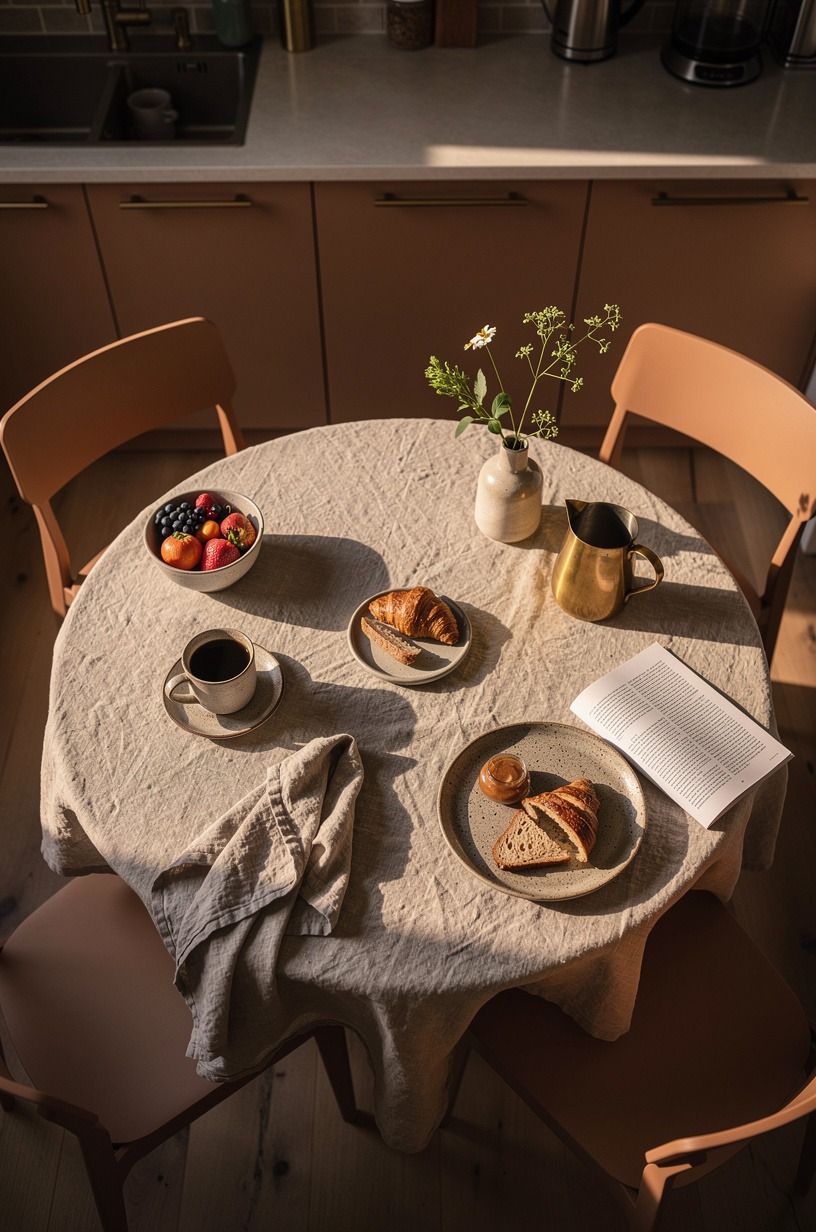
A breakfast nook lets you repeat the cabinet warmth in a gentler way.
17Refresh doors only after you fix the undertones
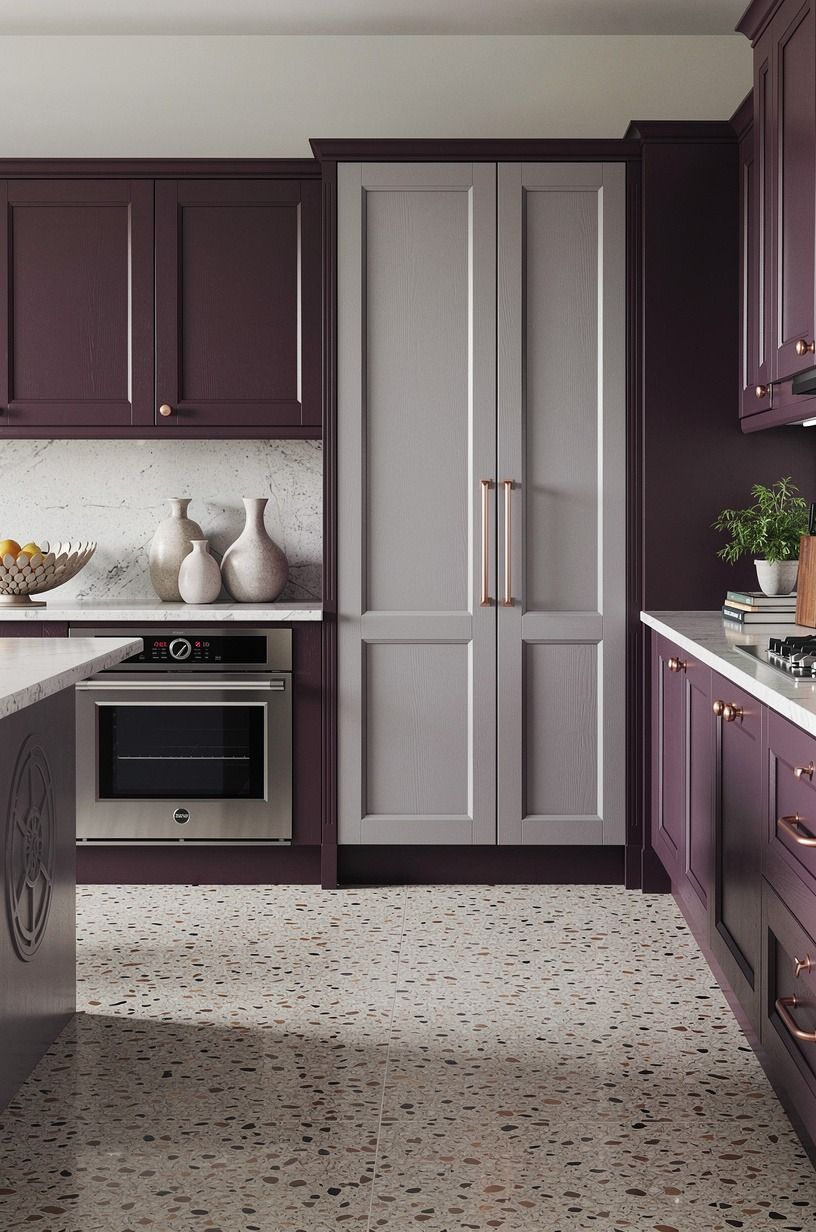
Repainting cabinet doors can work, but it should be your last cosmetic move, not your first. If your counters, walls, and lighting still pull gray or yellow, paint won’t solve the argument happening around the cabinets.
Try Benjamin Moore White Dove OC-17 walls, brass hardware, and warm bulbs first. You may find your oak looks more current than you thought. If you still hate it, repainting fronts typically falls into the $3,000 to $12,000 mid-refresh tier.
I’ve gone back and forth on this one. Paint is fine. But covering real oak grain before fixing the room’s undertones is an expensive way to miss the point.
Why Golden Oak Feels Right Again
I think golden oak is coming back because people are tired of rooms that photograph cleanly and feel a little vacant in person. For years, the default answer was to bleach everything out: pale cabinets, cool counters, black pulls, white walls.
It looked controlled. It also made a lot of kitchens feel like they belonged to no one.
I learned this the hard way in my own kitchen. I treated oak as a problem and kept adding cool materials to “balance” it.
Gray walls. Silvery hardware.
A blue-white bulb that made the cabinet faces look almost fluorescent. Nothing clicked because every new choice was fighting the same warm grain.
Once I changed the walls, light, and metal, I didn’t need to apologize for the cabinets anymore.
That’s the decision framework I’d use for your kitchen. First, decide whether you dislike the oak itself or whether you dislike the room that has grown around it.
If the doors are sound, the grain is even, and the layout works, keep them. Spend on the elements that touch your daily experience: light at night, a faucet you use fifty times a day, pulls that don’t feel cheap, a backsplash that gives the wood somewhere to land.
There’s also a practical reason to keep them. Replacing cabinets creates a cascade: counters, plumbing, flooring, drywall, paint.
Suddenly a simple preference becomes a remodel. Your existing golden oak can feel warm, organic, and quietly luxurious with a few decisions that respect what’s already there.
That’s not settling. It’s knowing where the value lives.
The Questions I Get Asked Most
What is the best golden oak kitchen cabinet idea for a small kitchen?
The best move is pale walls plus warm hardware because you’ll brighten the room without erasing its character. Benjamin Moore White Dove OC-17 and slim brass pulls keep a small kitchen airy, while a clear counter zone stops the cabinet run from feeling crowded.
Where can I buy golden oak kitchen cabinet pieces on a budget?
Look at IKEA, Target, and Wayfair for pulls, lighting, runners, and simple shelving. You’ll also find solid wood stools and vintage brass on Facebook Marketplace or at thrift stores. Secondhand metal hardware often has more character than a new matching set.
How much does a golden oak kitchen cabinet makeover cost?
A cosmetic update usually costs about $300 to $1,500, depending on paint, pulls, and backsplash coverage. Wall paint and decluttering are free if you already own the supplies. Save larger spending for a faucet or lighting you’ll use daily.
Can I create a golden oak kitchen cabinet look on a budget?
Yes, and you should start with the free changes first. Clear your counters, remove dated décor, and swap cool bulbs for warm ones. A focused $300 update can cover paint, a runner, and a small hardware change without replacing a door.
Is keeping golden oak kitchen cabinets worth it in a small space?
Yes, because a small kitchen benefits from the visual warmth of wood. You’ll avoid the sterile look that all-white finishes can create. Warm material contrast works especially well when you keep 42 to 48 in clear around the island or main walkway.
Are golden oak kitchen cabinets a good idea for a rental?
Yes, if you work around them instead of altering them permanently. Use removable backsplash panels, tension-rod café curtains, and plug-in lighting. No-damage layers let your kitchen feel personal while leaving the cabinet finish untouched for move-out.
Where I’d Start First
If I had to pick one, I’d start with Benjamin Moore White Dove OC-17 on the walls. You can’t make golden oak look current beside a cold backdrop. Pin that paint choice for later and let the cabinet grain do the work.