How to Design a Cottage Galley Kitchen for Narrow, Charming Layouts - 13 Ideas
21 august 2026Cottage galley kitchen ideas work best when you protect the walkway, build warmth in layers, and stop treating every inch like storage. I’ve worked in narrow kitchens where two people couldn’t pass without turning sideways. The answer isn’t more decoration. It’s a calmer plan with better materials.
Before You Start, Measure the Parts You’ll Fight Over
Measure your counter height, walkway, upper cabinets, and the wall between them before you buy a single basket. Your counters are typically 36-inch worktops, and you’ll want at least 42 to 48 inches of clearance around any island or rolling cart. In a narrow room, your body notices a bad clearance long before your eye does.
Write down what you use every morning. Coffee mugs, cutting board, olive oil, dog bowl. That list tells you what deserves the easy reach zone, while the pretty but rarely used things can live higher up.
I’d skip a fixed island here. It’s charming in photos, but it turns a hardworking kitchen into an obstacle course.
- Start With a Soft Wall Color That Holds the Light
- Anchor the Two-Wood Rule Underfoot
- Float Open Shelves Where Your Walls Feel Heavy
- Use the Three-Height Light Stack for Evening Warmth
- Choose a Hand-Glazed Backsplash With Imperfect Edges
- Can You Make a Narrow Kitchen Feel Bigger Without Removing Walls?
- Mix Shaker Fronts With One Old-Looking Detail
- Hang Cafe Curtains Instead of Heavy Drapes
- Build a Rolling Prep Zone Instead of an Island
- Frame a Moody Pantry Wall With Color
- Pick Laminate Over Quartz Where It Makes Sense
- Layer Everyday Storage in Plain Sight
- Finish With a Runner That Can Take a Beating
1Start With a Soft Wall Color That Holds the Light
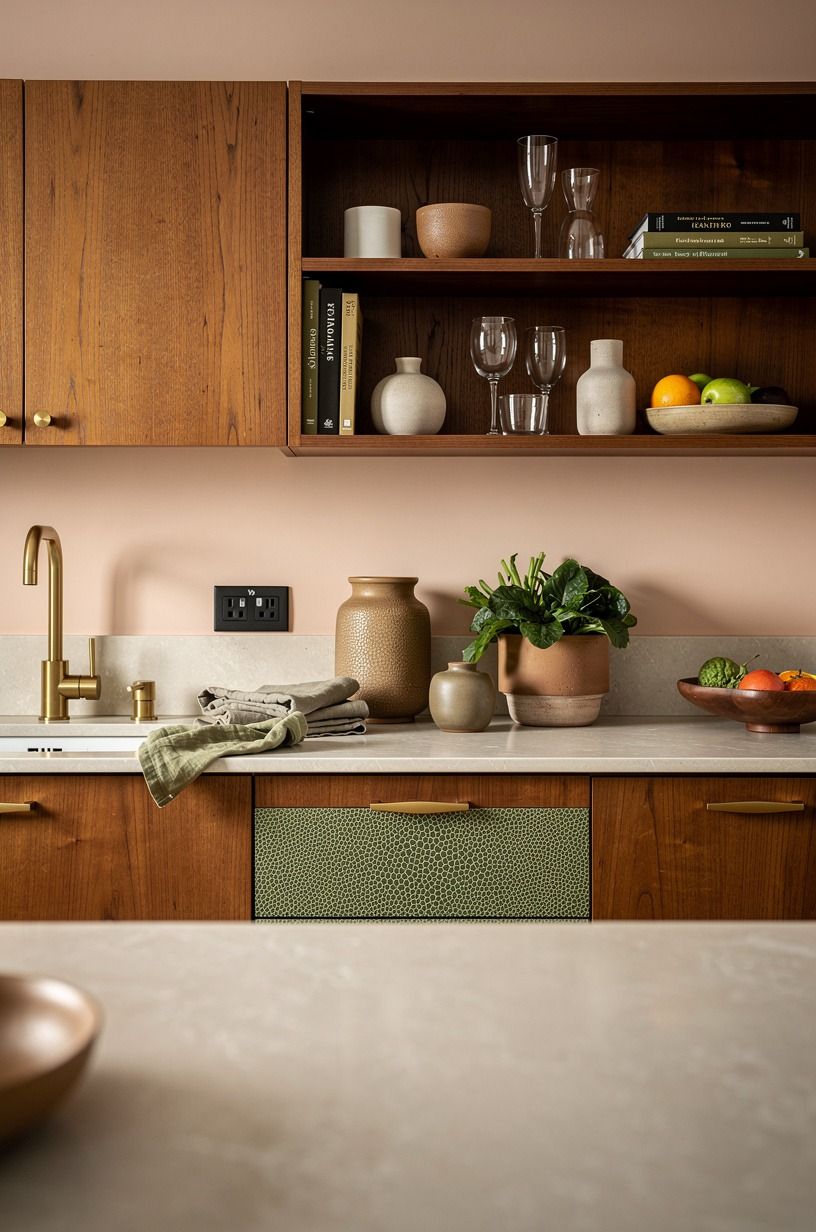
Paint is the fastest way to make a small closed off kitchen feel intentional instead of pinched. Benjamin Moore White Dove OC-17 keeps the room bright without that sharp, chilly white glare you get at noon. Pair its soft warmth with terracotta, stone, and olive accents, especially where a little shagreen texture can make the room feel collected.
If your kitchen faces north, try Sherwin-Williams Evergreen Fog SW 9130 on lower cabinets and keep the upper walls light. I’ve watched dark green swallow a narrow room when people paint every surface, so don’t do the full cave treatment.
Let your ceiling stay pale. Your eye needs somewhere to rest.
2Anchor the Two-Wood Rule Underfoot
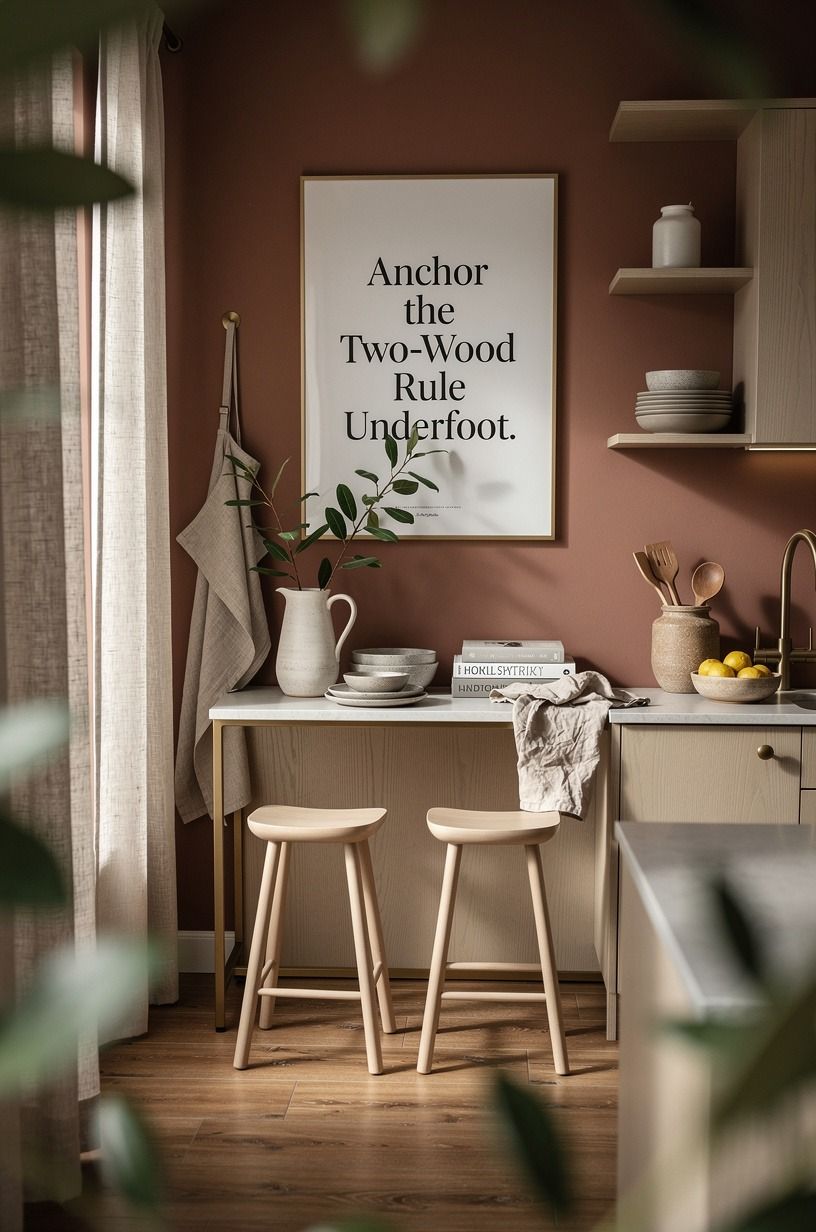
The Two-Wood Rule is simple: choose one wood tone for your floor and one for your accents, then stop.
Warm clay tones, washed Belgian linen, and aged brass keep that limited palette from feeling flat. Use the linen for a small window treatment or seat cushion rather than adding a third wood finish just to make the room feel styled.
3Float Open Shelves Where Your Walls Feel Heavy
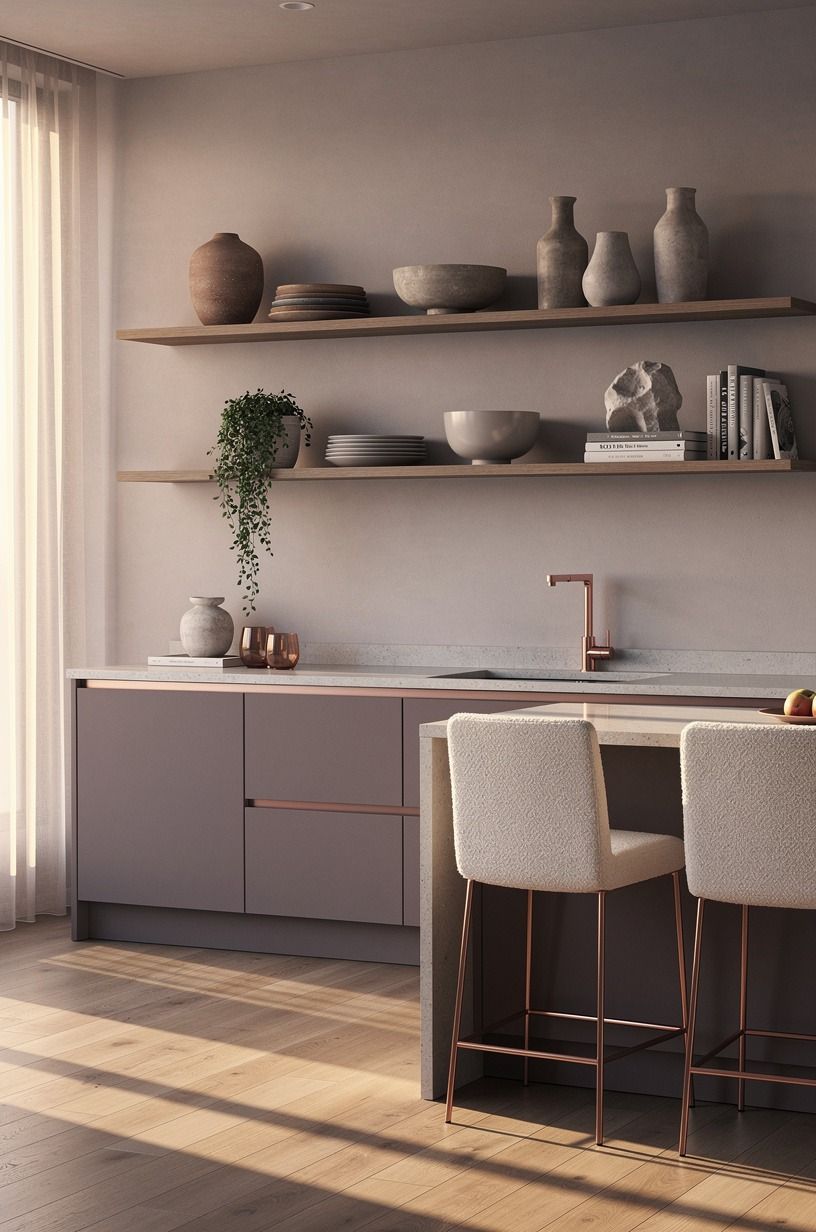
Remove one or two upper cabinet doors only if the inside is calm enough to earn the exposure. Floating shelves in 3/4-inch solid white oak look warm above a work zone, and they break up the boxed-in feeling of a gallery style kitchen without losing every bit of storage.
Keep the shelf styling useful. White stoneware bowls. A squat crock of wooden spoons.
Two amber glasses. Organic bouclé in plum, grey, and rose-gold accents can soften a nearby stool or cushion without making the shelves feel overworked. I made the mistake of putting cookbooks near the stove once, and their pages curled like old leaves within a month.
Put books at the far end, where your steam and splatter can’t reach them.
4Use the Three-Height Light Stack for Evening Warmth
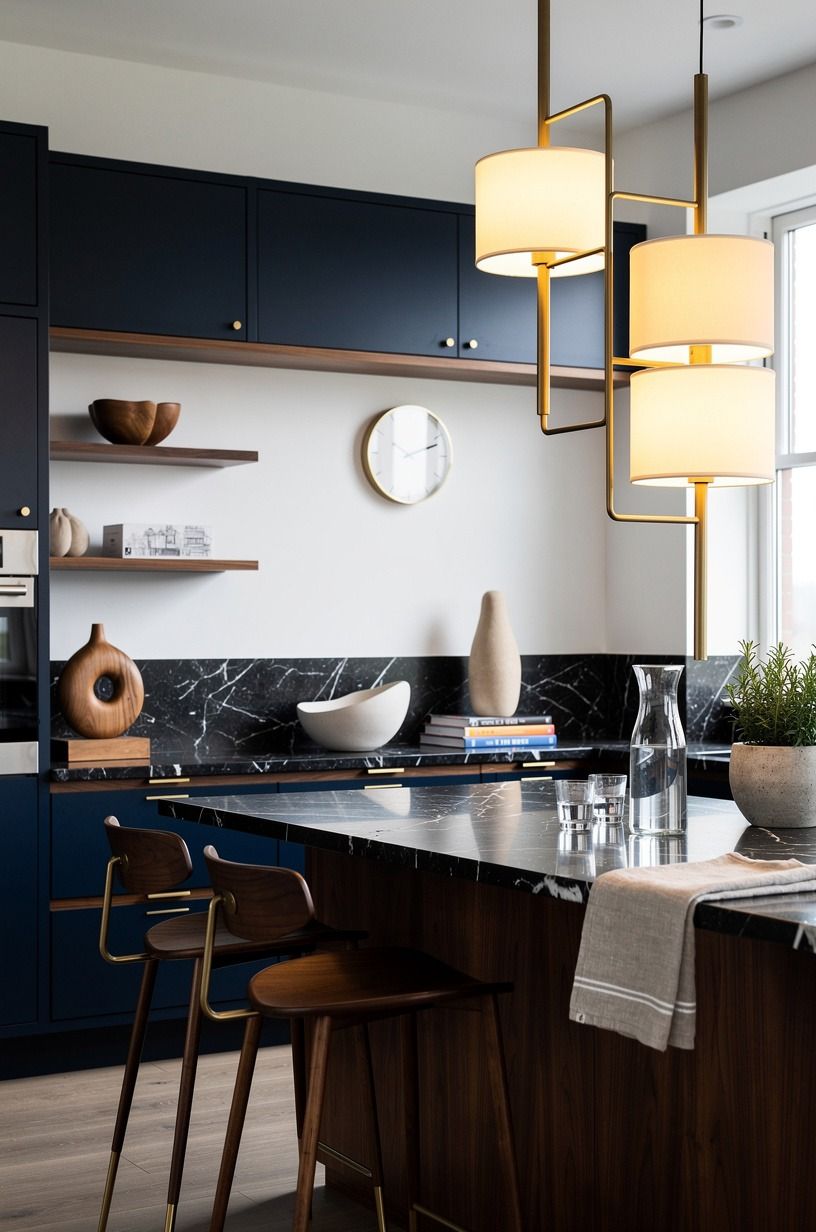
Your ceiling fixture can’t do all the work. The Three-Height Light Stack uses one overhead source, one wall-level source, and one low glow from a lamp or under-cabinet strip. You’ll get an intimate kitchen after sunset instead of a bright interrogation room.
A small unlacquered brass picture light above open shelves gives off a soft pool of amber without crowding the counter. Navy, white, and walnut feel especially rich beside a Nero Marquina black marble surface with fine white veining. Add warm bulbs, not icy ones, and your painted cabinets will look richer at dinner.
But skip oversized pendants. In a narrow galley, they hang right where your forehead wants to be.
5Choose a Hand-Glazed Backsplash With Imperfect Edges
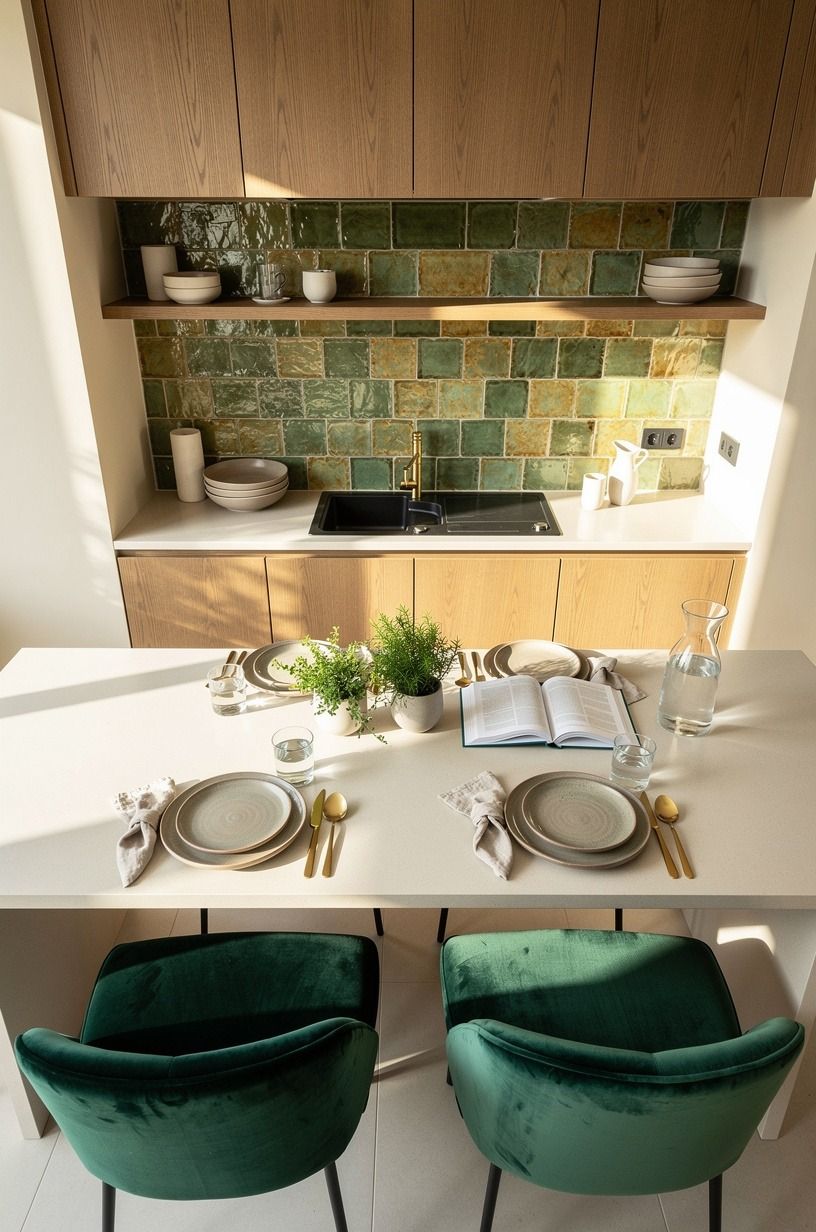
A backsplash is where cottage character earns its keep. Hand-glazed emerald zellige has tiny shifts in tone that catch morning light, so even a straight run of cabinets feels less rigid. Deep-pile mohair velvet in emerald, gold, and cream brings a softer counterpoint through a seat cushion or slim bench.
The typical backsplash gap is 18 inches between counter and uppers, which is enough space for a meaningful material without making a full wall feel busy. Zellige commonly runs $15 to $35 per square foot. I’d choose a muted cream or moss over glossy subway tile.
Subway tile isn’t wrong, it’s just too polite for this job.
6Can You Make a Narrow Kitchen Feel Bigger Without Removing Walls?
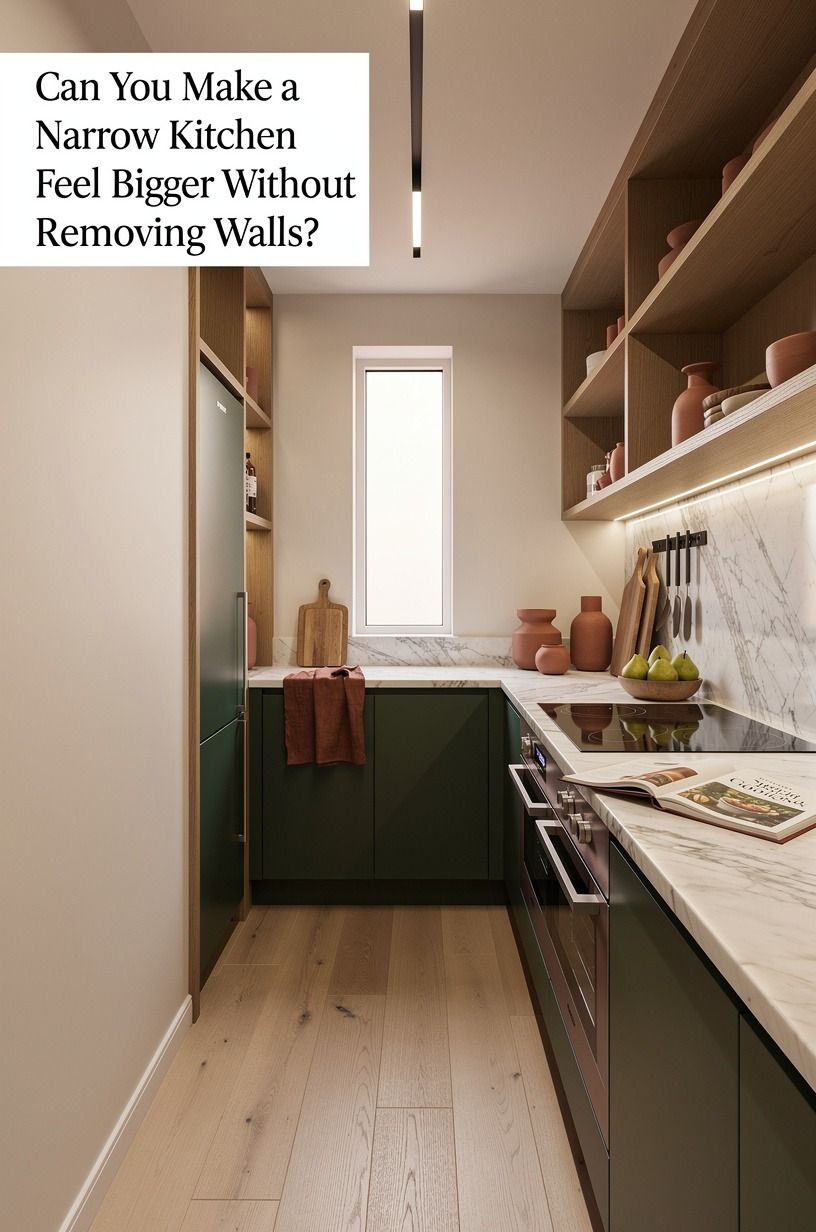
Yes, and you don’t need to fake a huge room to make it inviting.
Forest green, rust, and natural oak create depth without visual clutter, especially when you keep a Carrara marble work surface clear enough to notice its soft grey veining. Let the walkway stay open and give your daily objects one dependable home.
7Mix Shaker Fronts With One Old-Looking Detail
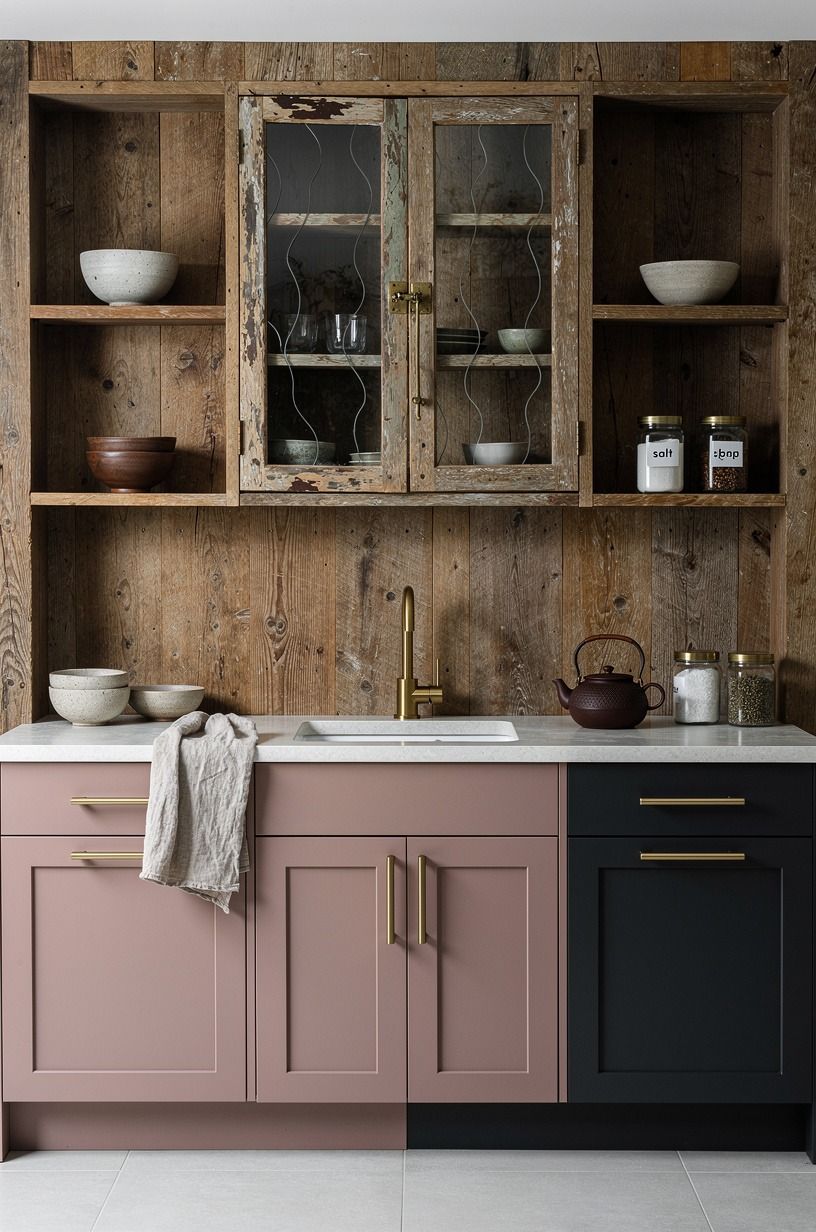
Clean shaker fronts need one slightly rumpled companion. Repainted shaker cabinet doors in White Dove can feel far more lived-in with an aged brass latch, a linen cafe curtain, or a single weathered teak stool tucked at the end. Dusty rose and charcoal details add contrast, but not costume.
Repainting cabinet fronts usually falls around $150 to $400 per door, depending on prep and finish. That’s why I’d spend your money on careful sanding before fancy knobs.
A cheap knob on a smooth, durable door looks deliberate. An expensive knob on peeling paint looks like denial.
Been there.
8Hang Cafe Curtains Instead of Heavy Drapes
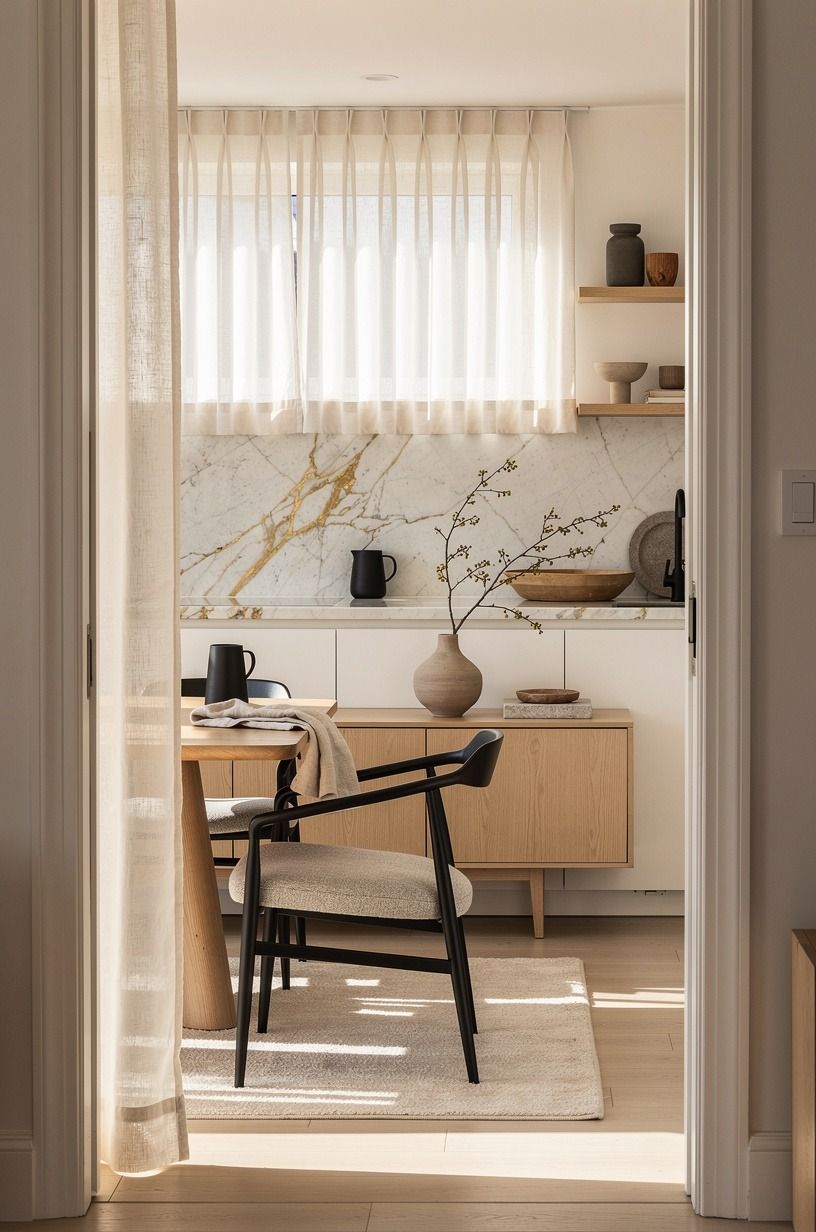
Cafe curtains soften the hard little rectangle of a kitchen window without shutting out the useful light.
Choose warm white or camel linen, then let Calacatta marble with gold veining carry the richer note elsewhere in the room. A thin black curtain rod gives the softness a little structure without making the window feel dressed for a formal dining room.
9Build a Rolling Prep Zone Instead of an Island
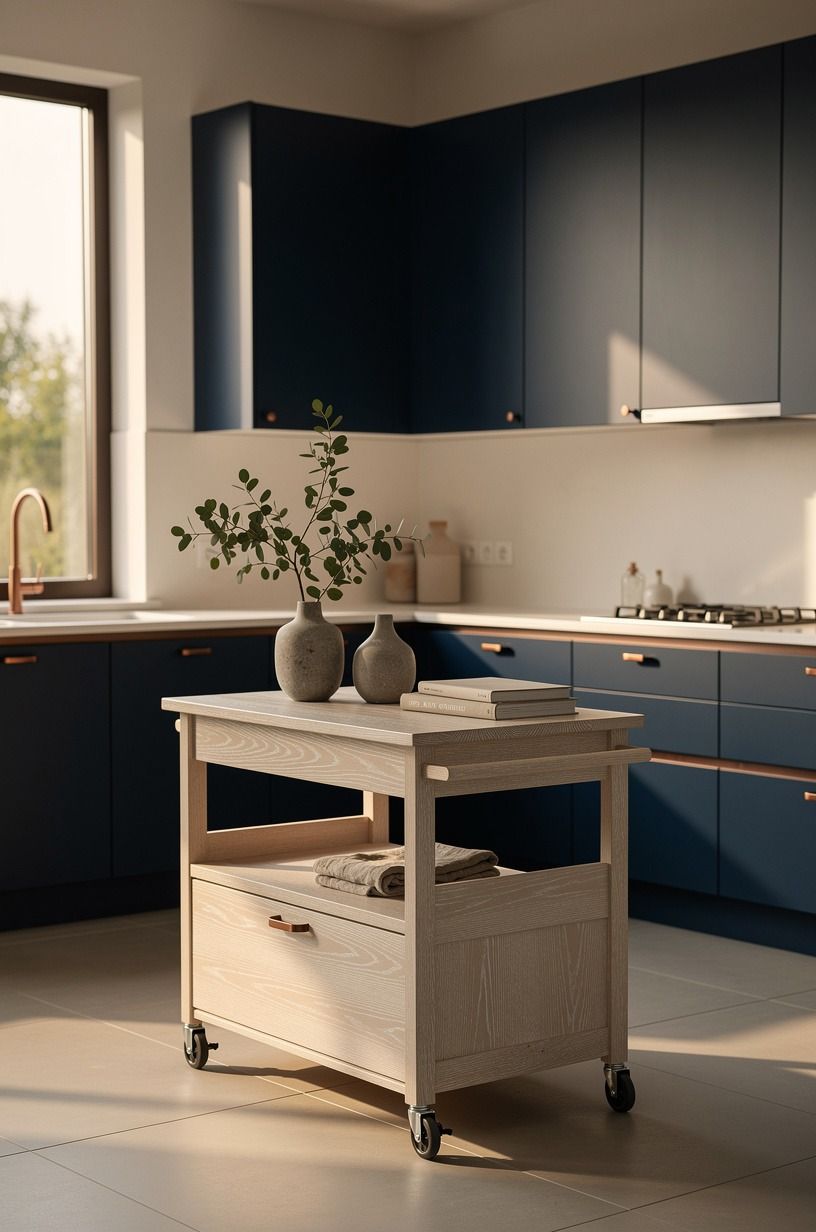
A rolling cart gives you extra prep room when you need it and disappears when you don’t. Look for a narrow IKEA RÅSKOG utility cart or a wood-topped trolley with locking casters, then park it at the kitchen’s dead end. Your walkway stays open on busy mornings.
Choose a cerused white oak top that lands below or near your 36-inch counters so chopping doesn’t feel awkward. Midnight blue, copper, and ivory make the cart feel considered without turning it into a feature wall. A cart also gives you a place for onions, dish towels, and a small crock of utensils.
But don’t load every shelf with baskets. Air around the objects is what keeps this move airy and useful.
10Frame a Moody Pantry Wall With Color
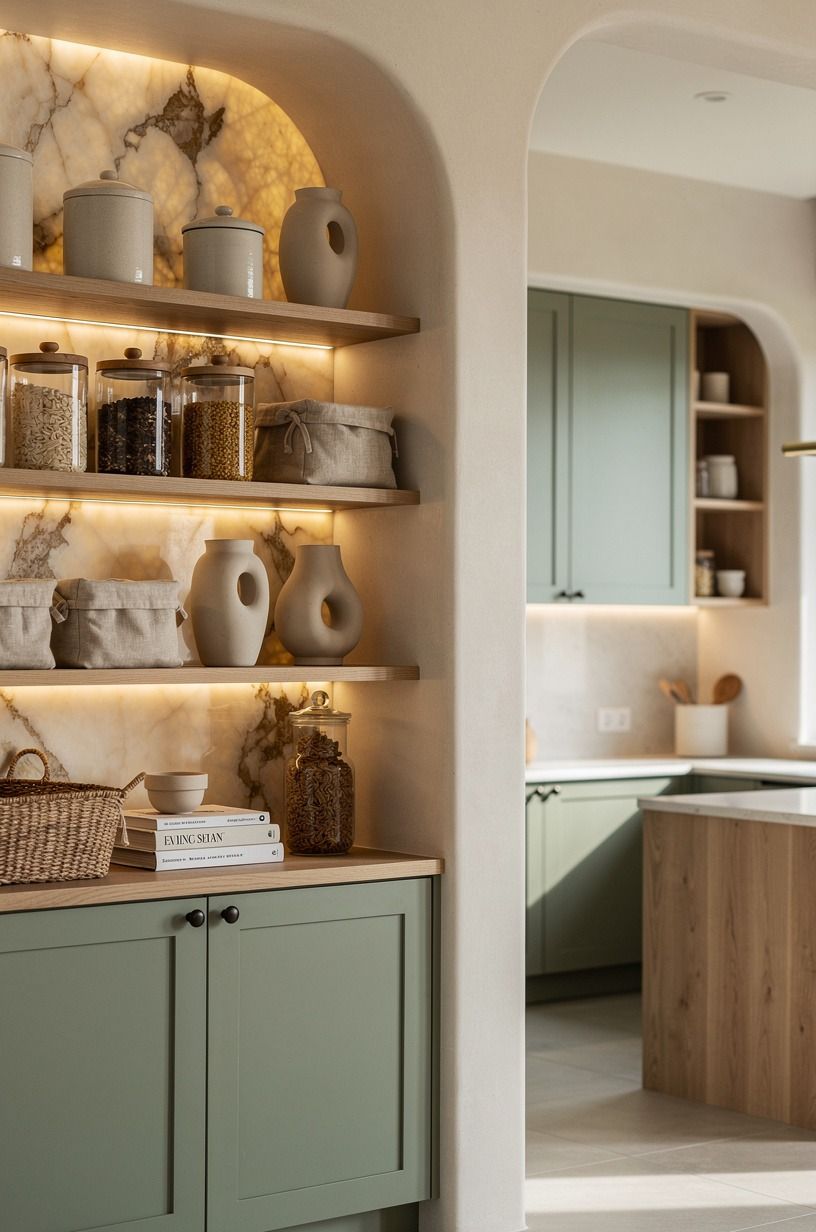
One painted pantry wall can give a narrow kitchen depth without closing it in. Farrow & Ball Studio Green No. 93 looks almost inky beside creamy trim, especially in late afternoon, and it makes pale dishes glow. A backlit translucent onyx detail adds a soft warmth against sage green, warm cream, and natural wood.
Paint only the end wall or tall pantry bank, then repeat the color once in a tea towel or small pottery piece. I went back and forth on this in my own kitchen because deep green can be dramatic fast.
The difference was leaving the opposite wall warm and quiet. Your room needs that breathing space.
11Pick Laminate Over Quartz Where It Makes Sense
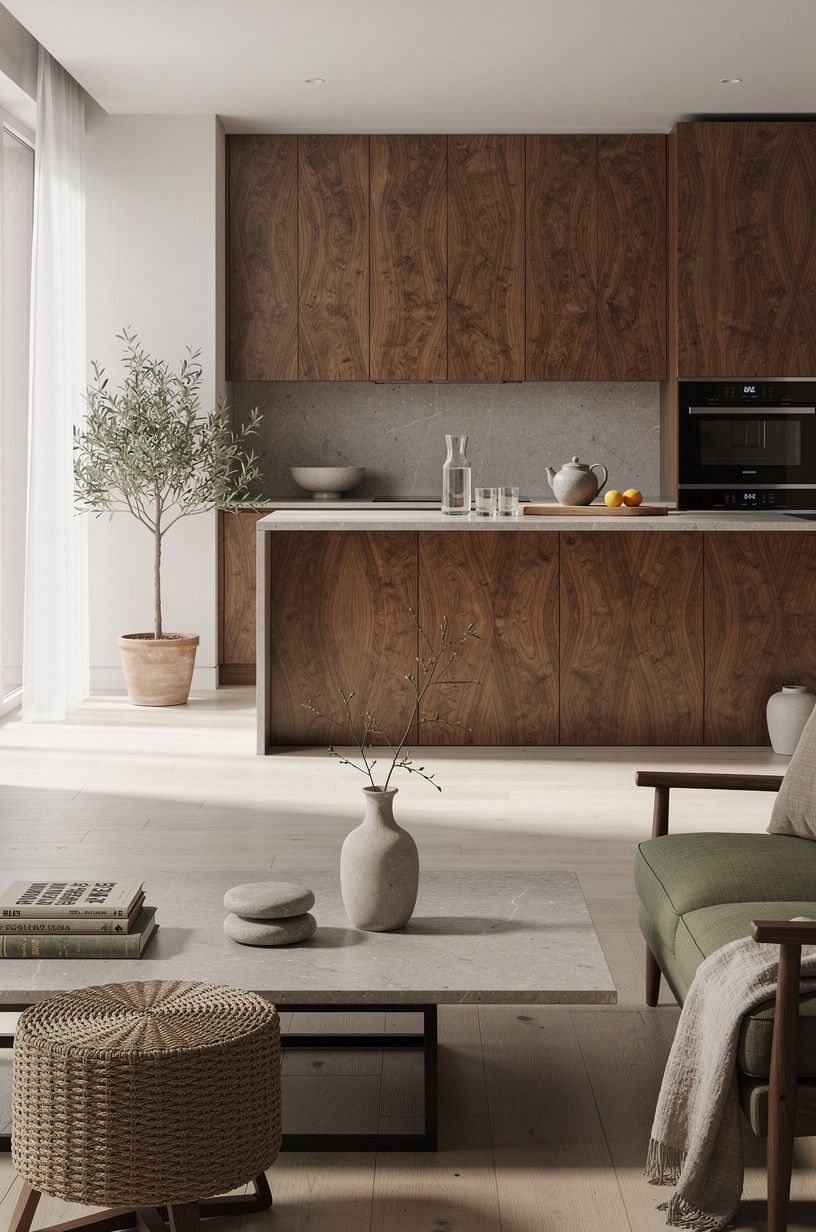
Quartz is durable, but it isn’t automatically the better call for every cottage kitchen. A good laminate countertop can cost $10 to $40 per square foot, while quartz often runs $60 to $120 per square foot. If your cabinets are dated and your lighting is harsh, quartz won’t rescue the room.
Choose a matte laminate with a warm stone look, then put the saved money into paint, hardware, and lighting. Terracotta, stone, olive, and book-matched walnut offer plenty of warmth without relying on fake marble.
You’ll touch the counter every day, sure, but you’ll see the cabinet color and fixture from every angle. I’d skip busy veining. It fights the peaceful look you want.
12Layer Everyday Storage in Plain Sight
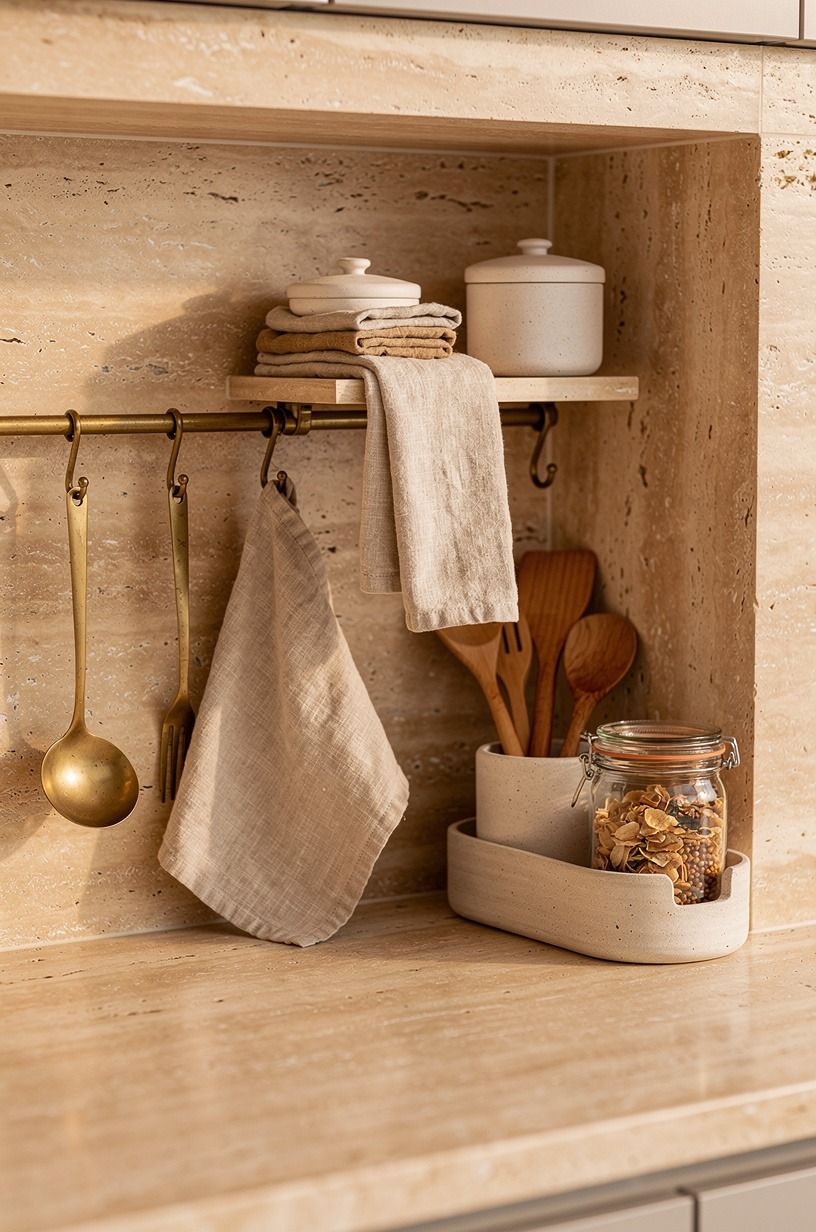
Open storage only works when it carries the things you reach for anyway. Use cane webbing baskets, labeled ceramic canisters, and one rail of brass hooks for tea towels or a market bag. Warm travertine, clay, linen, and aged brass make those practical pieces feel settled rather than scattered.
Group by use, not by color. Coffee supplies together.
Baking tools together. A stack of linen napkins near the table.
And leave one shelf partly empty. That blank bit is doing more for your charming kitchen than another tiny vase ever will.
13Finish With a Runner That Can Take a Beating
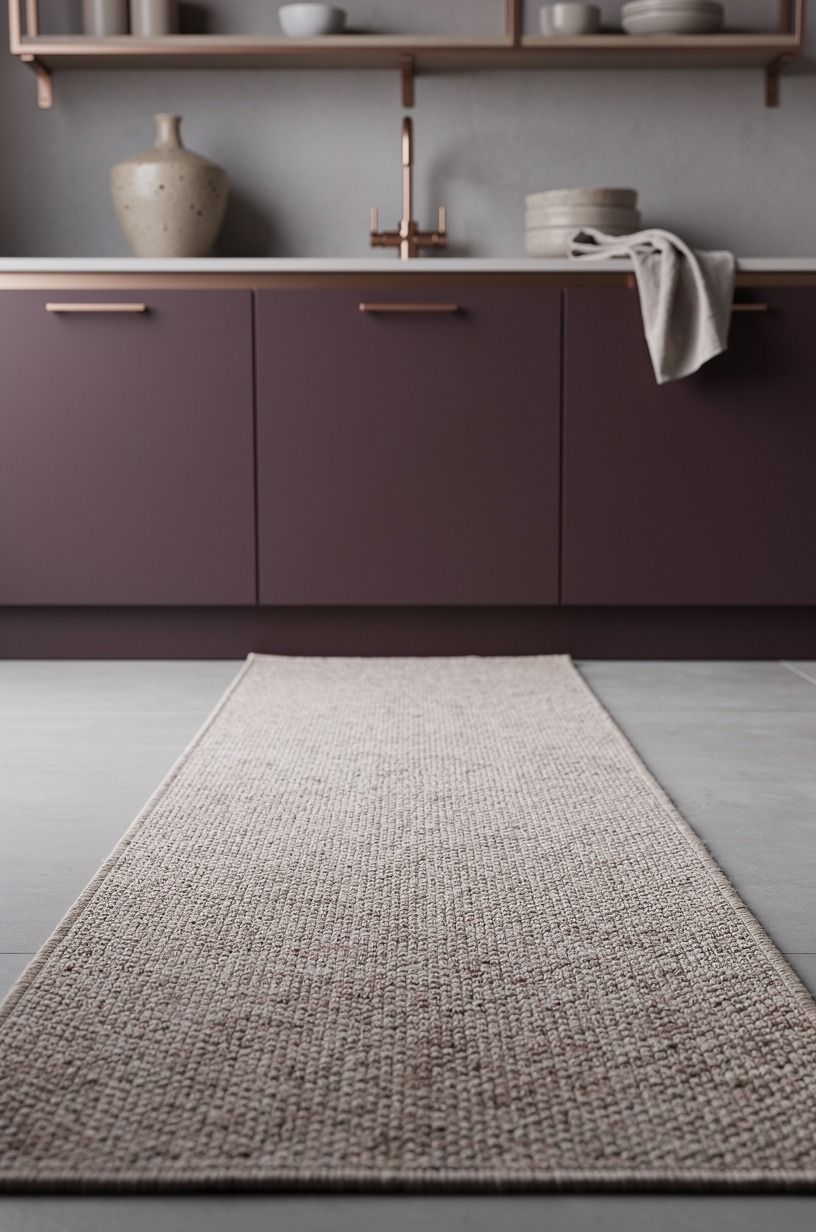
A runner is the last layer, not the first purchase. Choose a low-pile washable weave in plum, grey, and rose-gold tones so it connects your wood, paint, and metal finishes. Unlacquered brass with a little developing patina keeps the room from feeling too freshly assembled.
Avoid thick vintage rugs with a curled edge. They look picturesque until you catch your toe while carrying soup. A flat woven Turkish cotton runner is the smarter choice, especially if you cook every day.
Little spill, quick wash, back in place. That’s the kind of rustic detail I trust.
What a Cottage Galley Kitchen Refresh Typically Costs
You can make a meaningful change at the cosmetic level, but it helps to know where a project can grow legs. Start with the finish you touch and see most, then decide whether your cabinets or layout need more than a surface update.
For most narrow kitchens, I’d stay in the budget or mid range unless your cabinets are failing or your appliances force a layout change. The high-end route can be gorgeous, but a tiny room doesn’t reward every expensive decision equally. Spend where your hands and eyes spend time.
Why I Don’t Chase the “Perfect” Cottage Kitchen
I think cottage kitchens get misunderstood because people copy the visible pieces before they understand the feeling underneath. They buy the brass, the runner, the little framed art, then wonder why the room still feels stiff. I’ve done that.
I once put up open shelves, filled them with vintage-looking dishes, and stood back expecting magic. Instead, the kitchen looked like a shop display where nobody was allowed to make toast.
What changed it wasn’t another object. It was friction.
I took away the things that made daily use annoying, moved the coffee supplies closer to the kettle, put a lamp on the counter, and kept the lower shelf for the mugs we grabbed every morning. Suddenly the room had a rhythm.
You could walk in half awake and know where your hands were going.
That’s my real rule for a cottage galley kitchen: let the useful things be visible, but make them earn their place. A chipped bowl is lovely if you use it for lemons. A brass rail is lovely if it holds the towel you keep reaching for.
If everything exists only to be photographed, your kitchen will feel oddly formal, even with old wood and handmade tile.
And there’s another thing. Narrow kitchens are forgiving in a way big kitchens aren’t.
You don’t need twenty dramatic choices because the room is already close, contained, and human-sized. One moody wall, one forgiving runner, one warm light source.
Your kitchen doesn’t need to perform. It just needs to welcome you when you walk in carrying groceries.
The Questions Worth Answering First
What is the best cottage galley kitchen layout for a small kitchen?
A one-wall work zone with clear passage space is usually your best bet. A rolling prep cart gives you extra function without blocking the aisle, while an IKEA RÅSKOG utility cart can hold the daily mess you don’t want on your counters.
Where can I buy cottage galley kitchen pieces on a budget?
Start with IKEA, Target Threshold, Wayfair, and local thrift shops. Secondhand wood furniture often looks better than new faux-vintage pieces.
- Facebook Marketplace pine stools - Target linen-look curtains - Thrifted brass candlesticks
How much does a cottage galley kitchen makeover cost?
A cosmetic cottage galley kitchen makeover usually costs about $300 to $1,500. Paint and hardware make the biggest visual difference for the least money, while decluttering, rearranging shelves, and washing existing textiles cost you nothing.
Can I create a cottage galley kitchen on a budget?
Yes, and you can begin with what’s already in your drawers. A painted end wall changes the room quickly.
- Existing mugs on open shelves - Removable cafe curtains - A washable runner - New cabinet pulls
Is a cottage galley kitchen worth it in a small space?
Yes, because a small kitchen lets every material work harder. A clear visual line makes the room feel calmer, so keep the walkway open and place your strongest color or art piece at the far end.
Is a cottage galley kitchen a good idea for a rental?
Yes, if you keep the changes removable. Peel-and-stick details can bring in warmth without risking your deposit.
- Tension-rod linen panels - Removable backsplash panels - Plug-in picture lights - Freestanding rolling storage
Where I’d Start First
If I had to pick one step, I’d start with the wall color. You can’t layer warmth over cold, glaring walls because every wood tone and brass detail will fight them. Pick a soft paint first.
Pin this plan for the day your kitchen finally gets its turn.