12 Four Seasons Bedroom Design Details Worth Copying
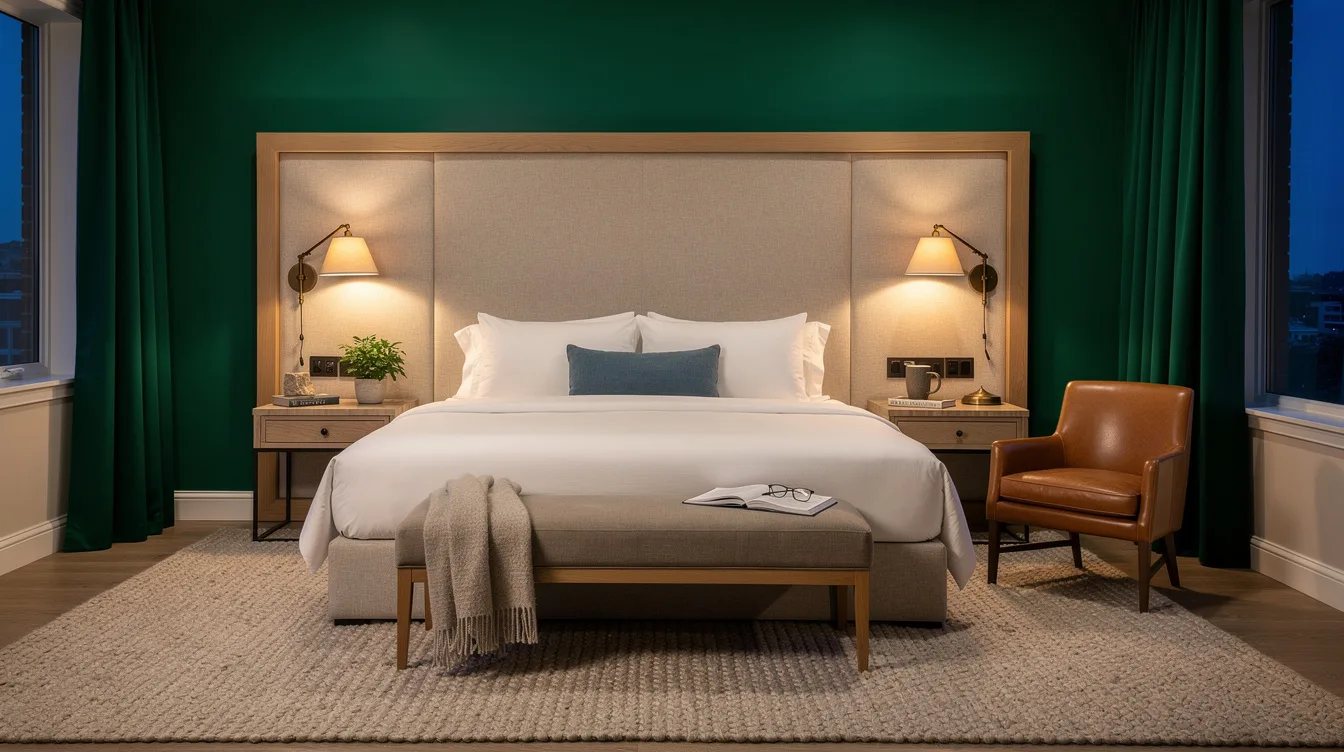
18 august 2026A king bed can take over a room and still look oddly skimpy when its wall, lighting, and bedding do not support it. The Four Seasons formula is less about piling on luxury goods and more about giving a 76-by-80-inch bed an oversized, quiet setting.
I would rather see one warm headboard wall, working bedside lights, and crisp white layers than a bedroom crowded with costly decor. The details below create that specific, settled hotel mood at home.
What you will find inside
- Build a Wider Headboard Wall
- Choose a Warm 70 Percent Base Palette
- Center the Bed With Near-Symmetry
- Install Bedside Lights That Actually Work
- Layer a Substantial White Bed
- Use Matte Natural Materials
- Anchor the Bed With a Large Wool Rug
- Place a Low Bench at the Foot
- Hide Everything Behind Closed Drawers
- Hang One Oversized Quiet Artwork
- Add One Upholstered Reading Chair
- Keep the Last Layer Deliberately Spare
Build a Wider Headboard Wall
A king bed is about 76 by 80 inches, yet many bedrooms give it a headboard that barely clears the mattress. Designers favor a continuous, oversized composition that makes the bed feel settled into the architecture.
Use a performance-linen upholstered headboard around 55 to 65 inches high, extending roughly 12 to 18 inches beyond each side of the bed. Frame it with a slim white-oak surround, a painted panel, or softly textured wallpaper from Home Depot, then keep the wall free of tiny decor.
This is where the hotel mood starts. A small standalone headboard makes even expensive bedding look temporary.
Choose a Warm 70 Percent Base Palette
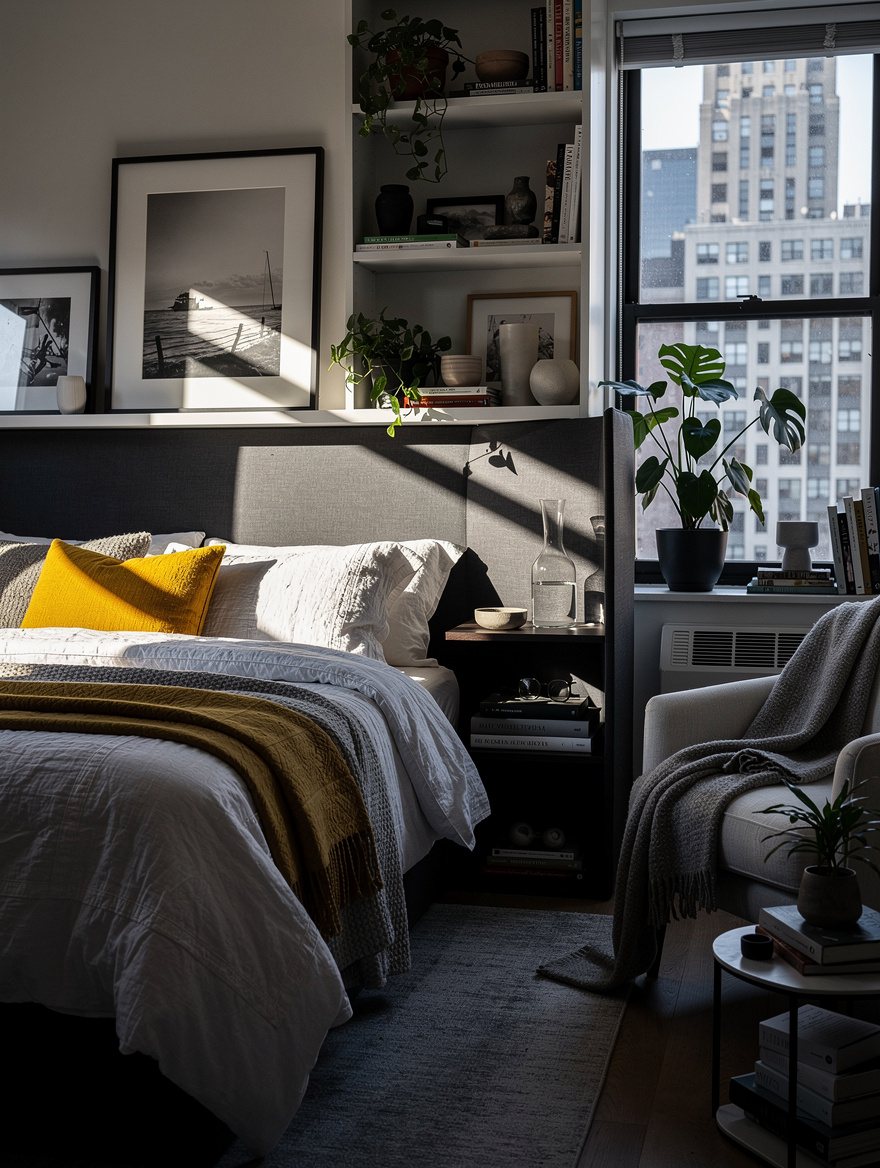
Sharp white walls paired with black furniture create more drama than a Four Seasons-style bedroom needs. Keep roughly 70 percent of what you see in chalk, mushroom, sand, pale stone, or soft taupe.
A gallon of Behr Blank Canvas paint from Home Depot is a useful starting point for a creamy, low-contrast envelope. Add one muted note, such as dusty blue on a pillow or tobacco leather at a chair, and stop there.
Warm neutrals let texture do the work. That restraint feels richer than a high-contrast color scheme.
Center the Bed With Near-Symmetry
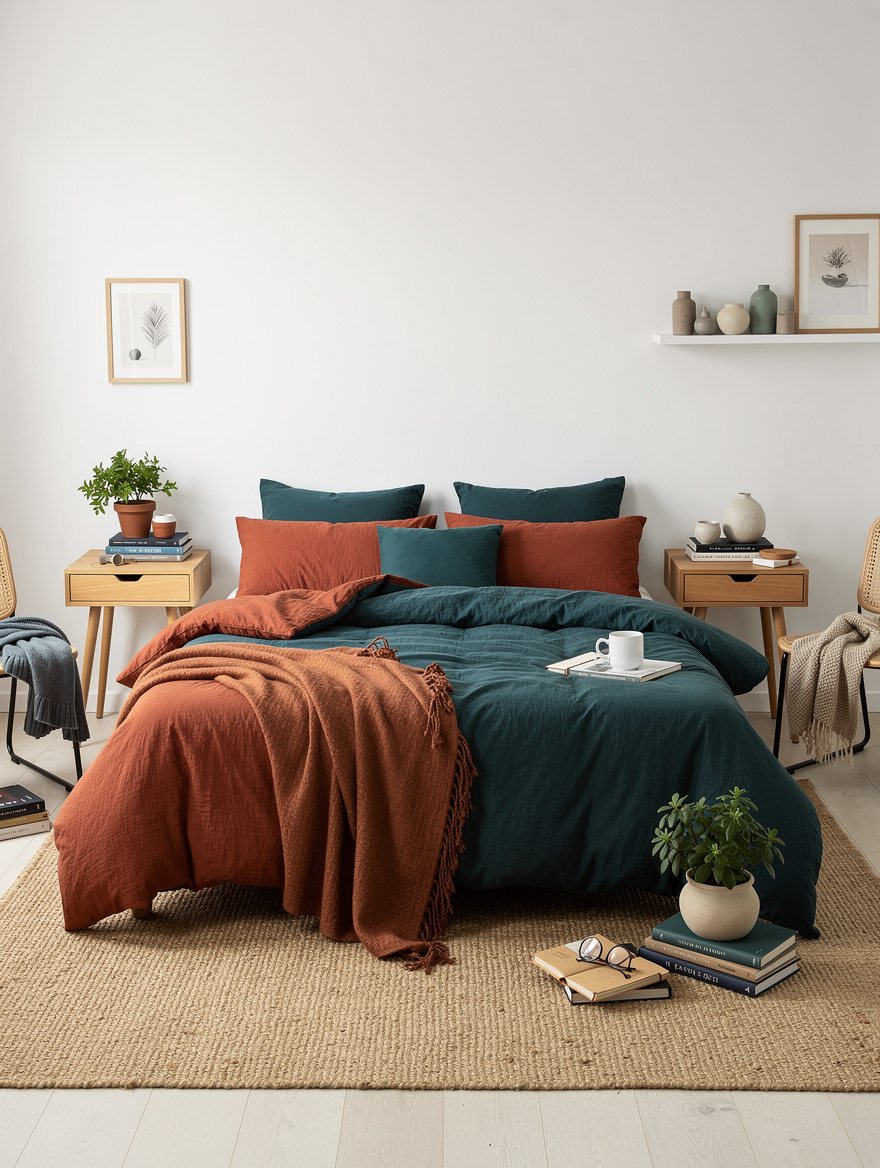
Hotel bedrooms feel restful because the bed, art, tables, and lights have an obvious center line. Start by centering the king bed on its longest uninterrupted wall, then repeat the bedside pieces.
Choose matching white-oak nightstands about 22 to 28 inches wide from Wayfair or IKEA, with tops within roughly 2 inches of the mattress height. One off-center chair can keep the room from feeling staged, but the bed wall should remain calm and balanced.
Skip mismatched flea-market tables here. This particular look depends on visual order.
Install Bedside Lights That Actually Work
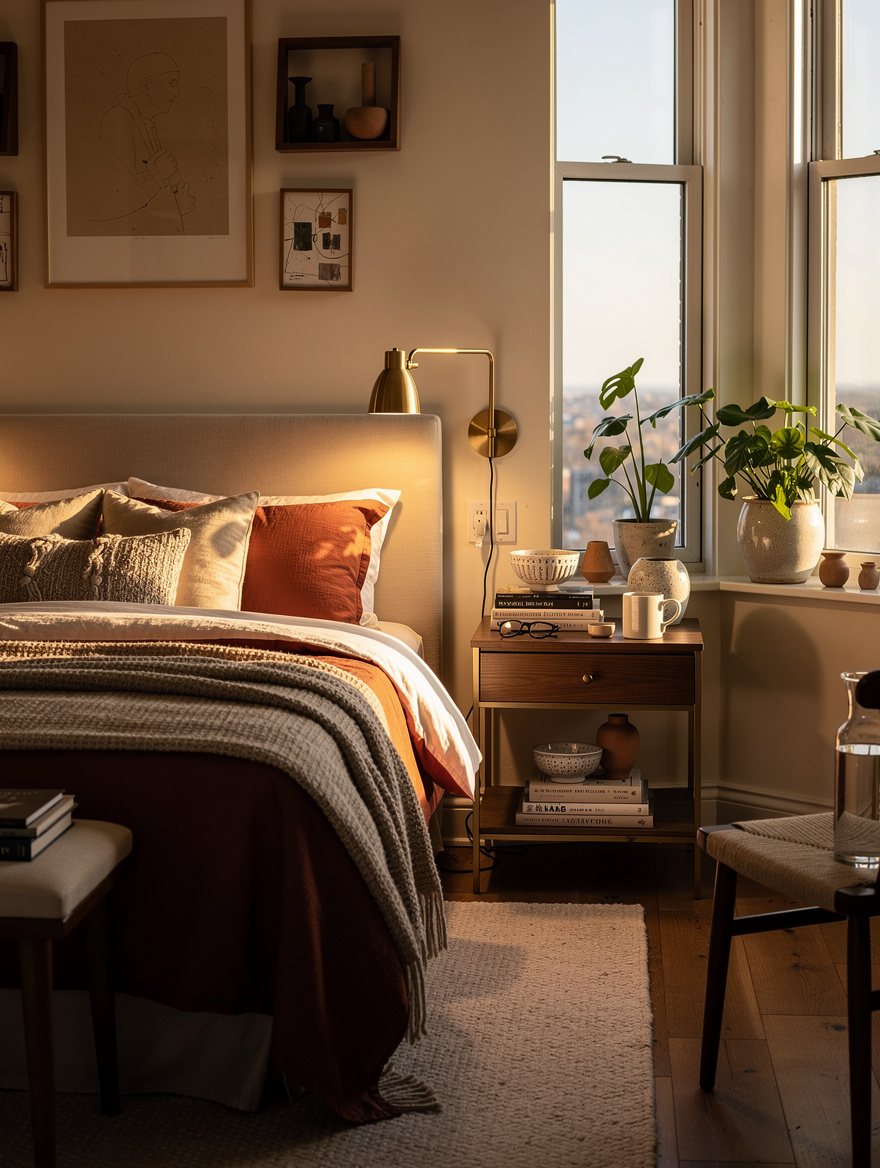
A ceiling fixture alone leaves a bedroom flat and impractical after dark. Give each sleeper a dedicated reading light, ideally mounted beside the headboard so the nightstand remains usable.
Hardwired aged-brass swing-arm sconces from Lowe's look most convincing, though plug-in versions can work when construction is off the table. Mount the light around shoulder height when sitting in bed, and hide the cord in a paintable channel.
Use warm bulbs around 2700K. Cool white light instantly breaks the late-evening hotel feeling.
Layer a Substantial White Bed
The plush bed is a performance target, not a promise that one mattress brand will recreate every Four Seasons property. A mattress around 14 to 16 inches high gives a king bed the substantial profile most people expect.
Start with a medium-plush hybrid, add a protector, then use a white cotton-sateen duvet cover and four to six sleep pillows. Target sells approachable white bedding, while Costco often has useful sheet sets, but the fabric should feel smooth rather than shiny.
Add a 2- to 3-inch down-alternative topper only when the mattress still needs softness. An overly soft stack looks inviting but can sleep terribly.
Use Matte Natural Materials
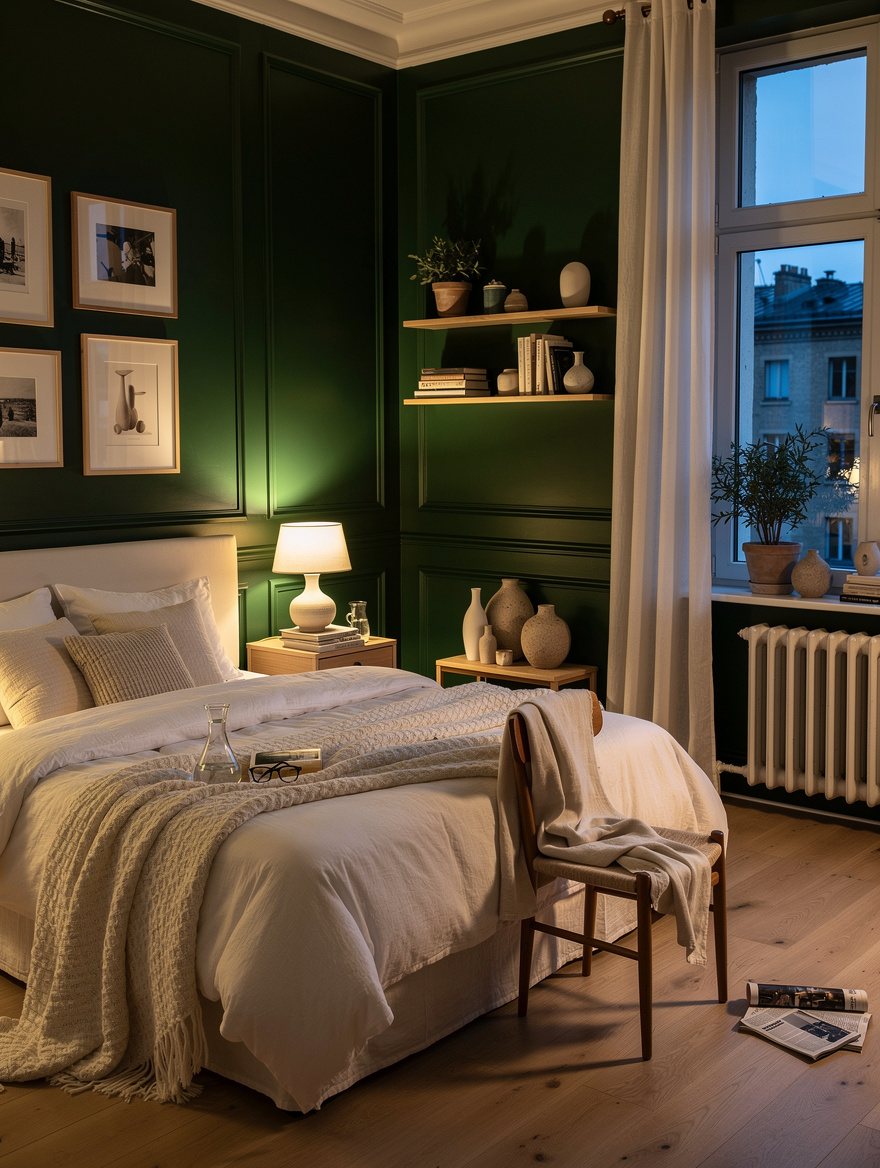
Glossy lacquer, mirrored furniture, and plastic-heavy finishes fight the quiet luxury of this bedroom formula. The room needs surfaces that look better when daylight shifts across them.
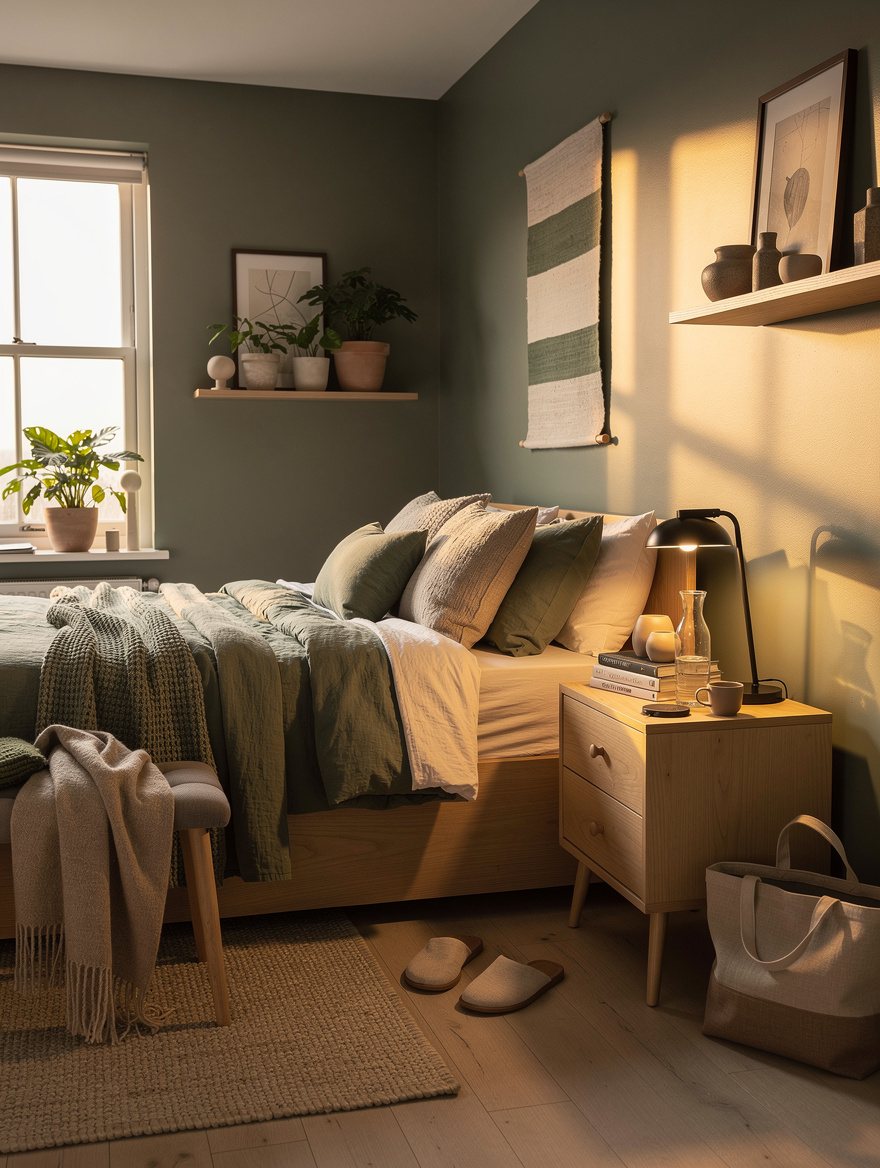
Bring in blond oak furniture, a linen shade, a wool rug, cotton sateen, and one stone or ceramic accent. Four Seasons redesigns have leaned into pale furnishings and oak details because these materials add depth without visual noise.
Choose low-sheen finishes whenever possible. Matte materials make the room feel touched, not displayed behind glass.
Anchor the Bed With a Large Wool Rug
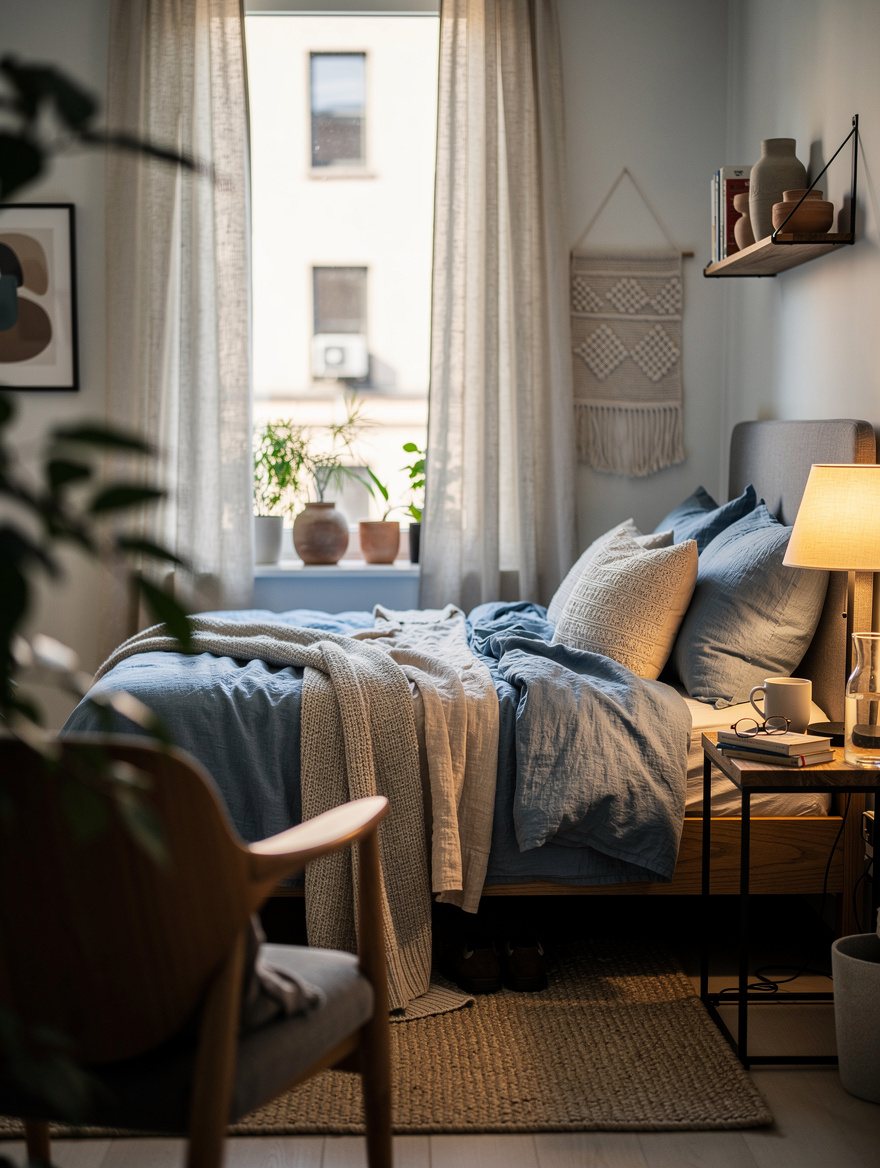
A small rug floating at the foot of a king bed makes the whole arrangement look undersized. Designers prefer a generous rug that catches bare feet on both sides and gives the bed wall a softer boundary.
For many king-bedroom layouts, an 8-by-10-foot wool rug is the practical minimum, while a 9-by-12 usually feels more generous if the room allows it. Look for muted oatmeal, warm gray, or faded blue options at Wayfair, Costco, or Home Depot.
A thick synthetic rug can be serviceable, but wool has the density and imperfect variation that reads more like a finished hotel room.
Place a Low Bench at the Foot
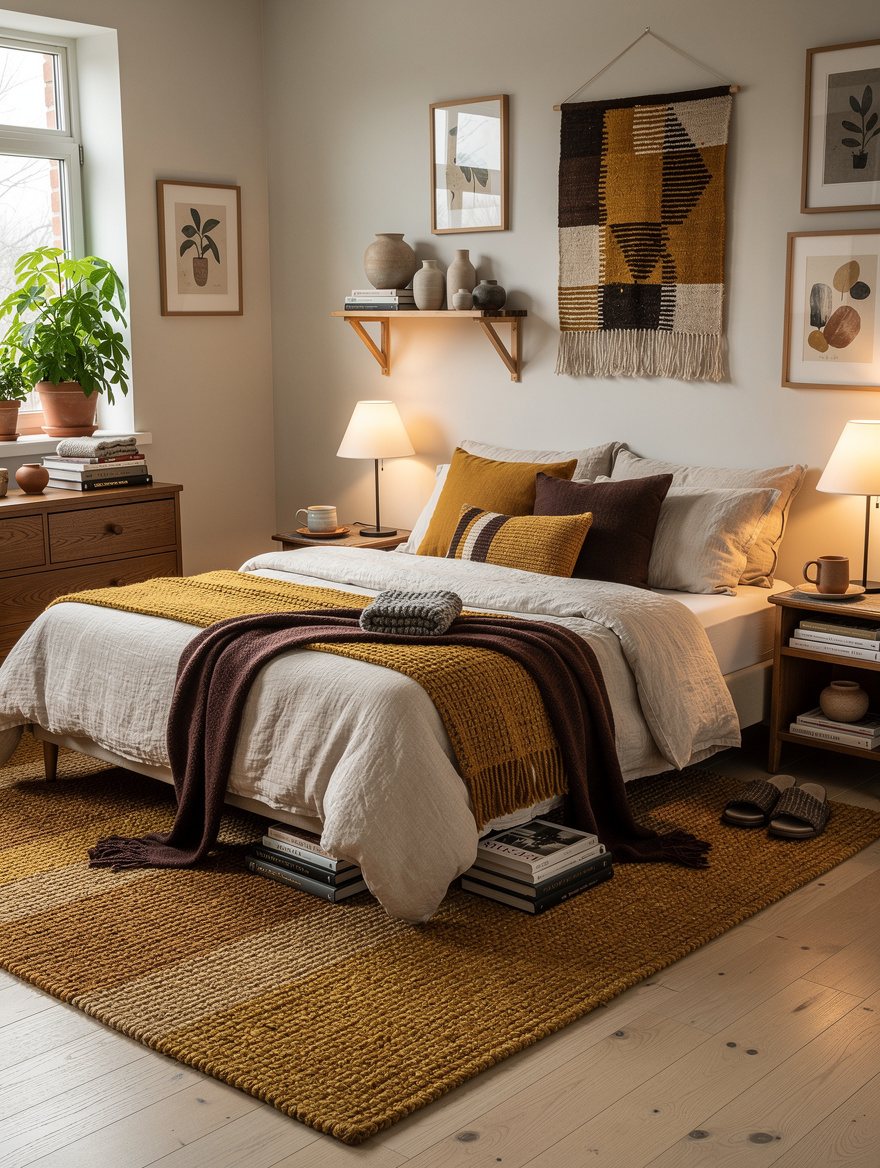
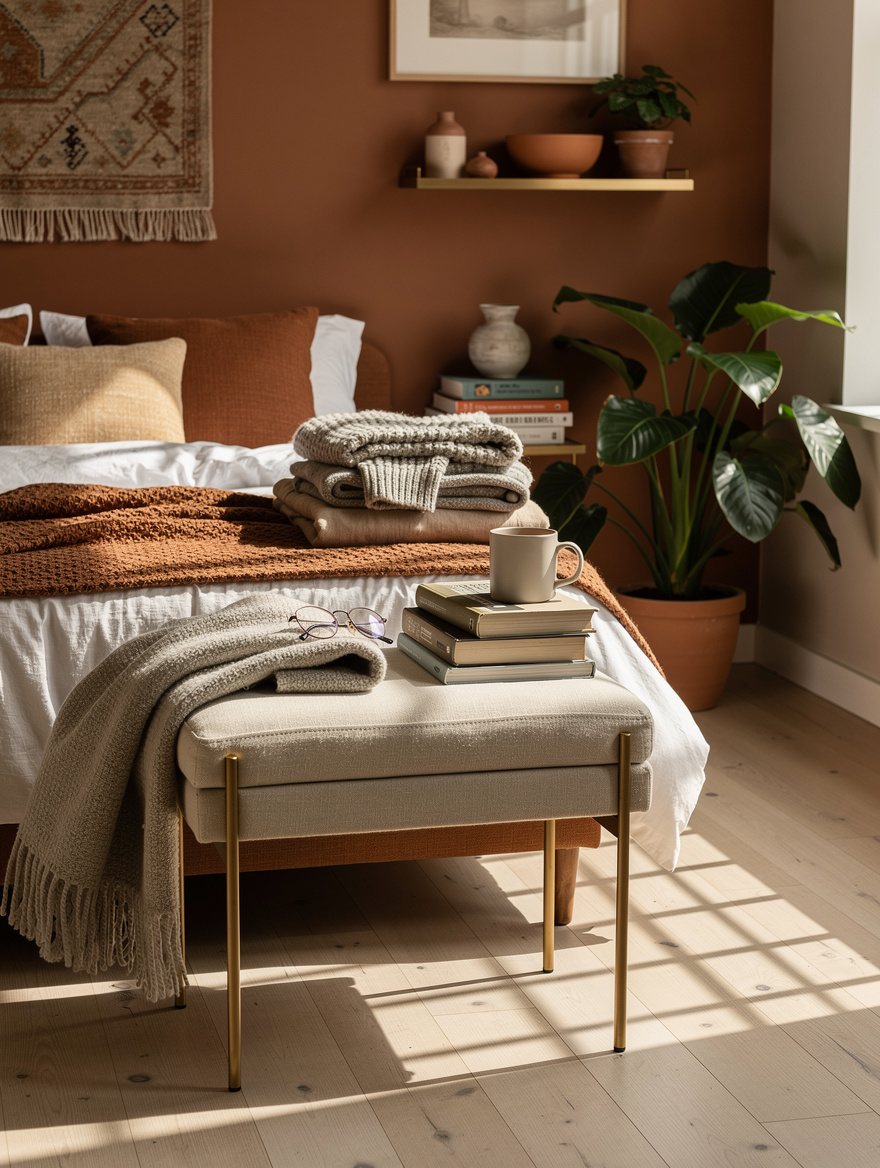
The empty space at the foot of the bed is useful real estate, not an invitation for a pile of throw pillows. A bench gives the room a clean ending point and a place to sit while dressing.
Choose a 48- to 60-inch upholstered bench for a king bed and leave roughly 6 to 10 inches between it and the frame. A taupe boucle option from Target or a simple wood-and-linen bench from Wayfair works better than a heavily tufted statement piece.
Keep its height below the mattress top. A tall bench blocks the bed composition you just paid attention to.
Hide Everything Behind Closed Drawers
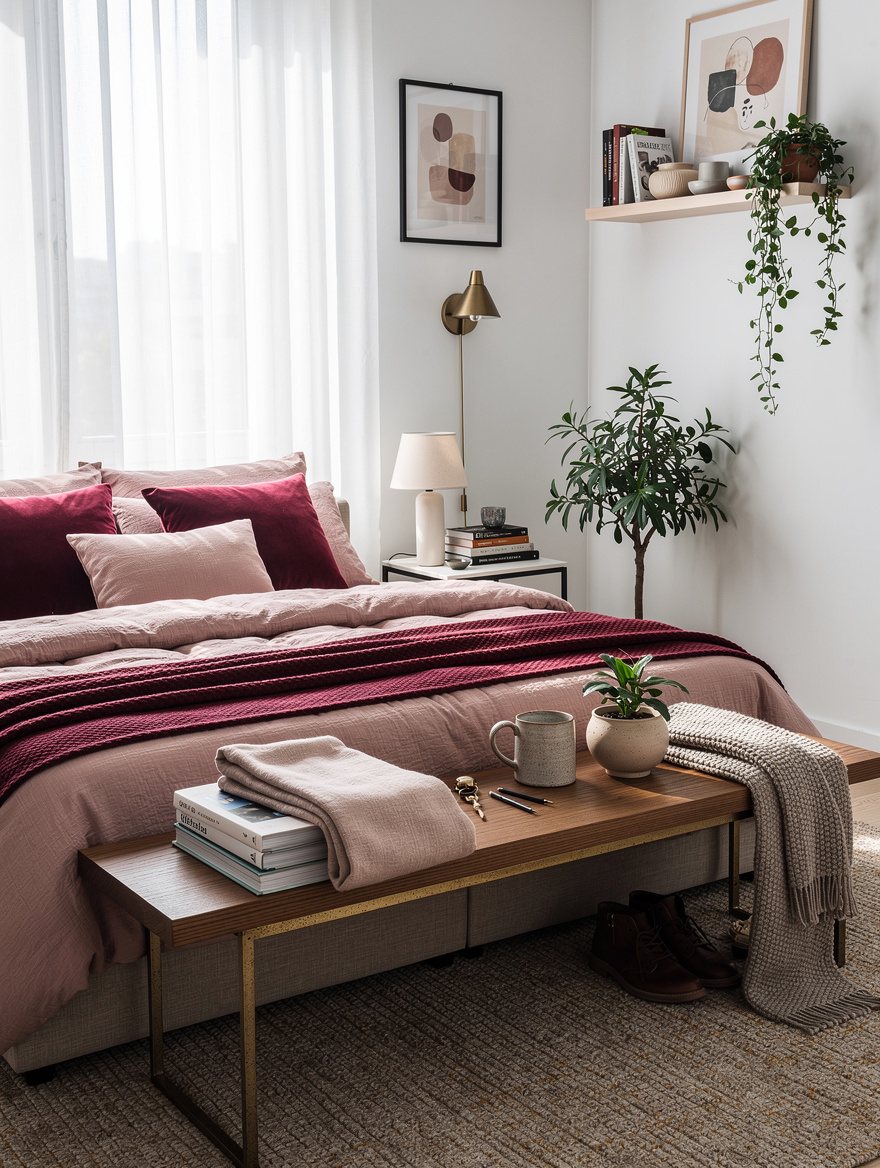
Four Seasons-style rooms look composed because the practical clutter has somewhere to go. Chargers, eye masks, medicine, water bottles, and paperbacks should not become the room's visual language.
Pick bedside tables with closed drawers, route cords behind the upholstered bed frame, and limit the top of each table to a lamp, a coaster, and one personal item. Amazon has cable boxes and under-bed organizers that solve the unglamorous part cheaply.
Open shelving asks you to style it every day. Closed storage gives you the same calm on a rushed Tuesday morning.
Hang One Oversized Quiet Artwork
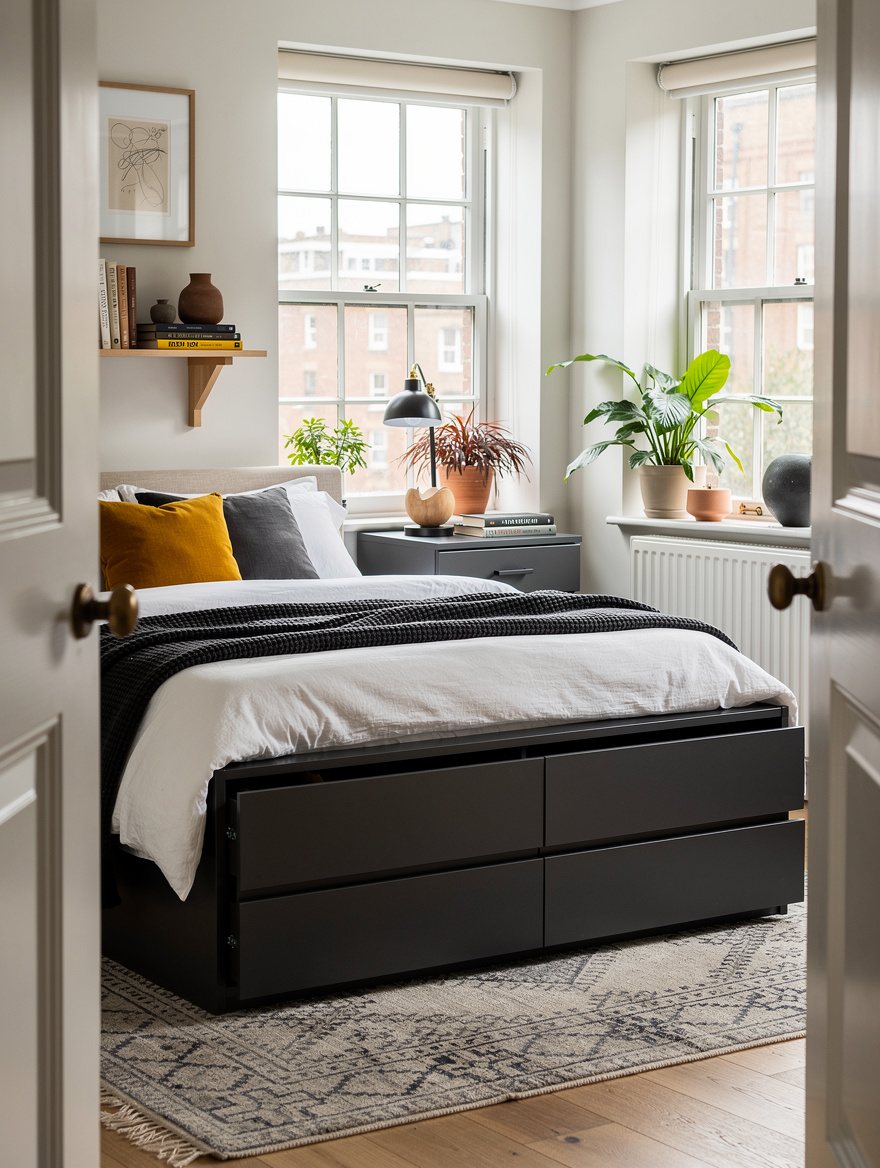
A gallery wall above the bed can make a polished bedroom feel busy before the day even begins. Use one large work with softened color and enough empty space around it to breathe.
A framed abstract canvas roughly 40 to 60 inches wide from Wayfair or Target usually has enough scale for a king bed wall. Center it with the headboard, not with a nearby window or dresser that happens to be slightly off line.
Choose washed landscape tones, pale blue, sand, or charcoal on cream. Loud typography belongs somewhere with more energy than a bedroom.
Add One Upholstered Reading Chair
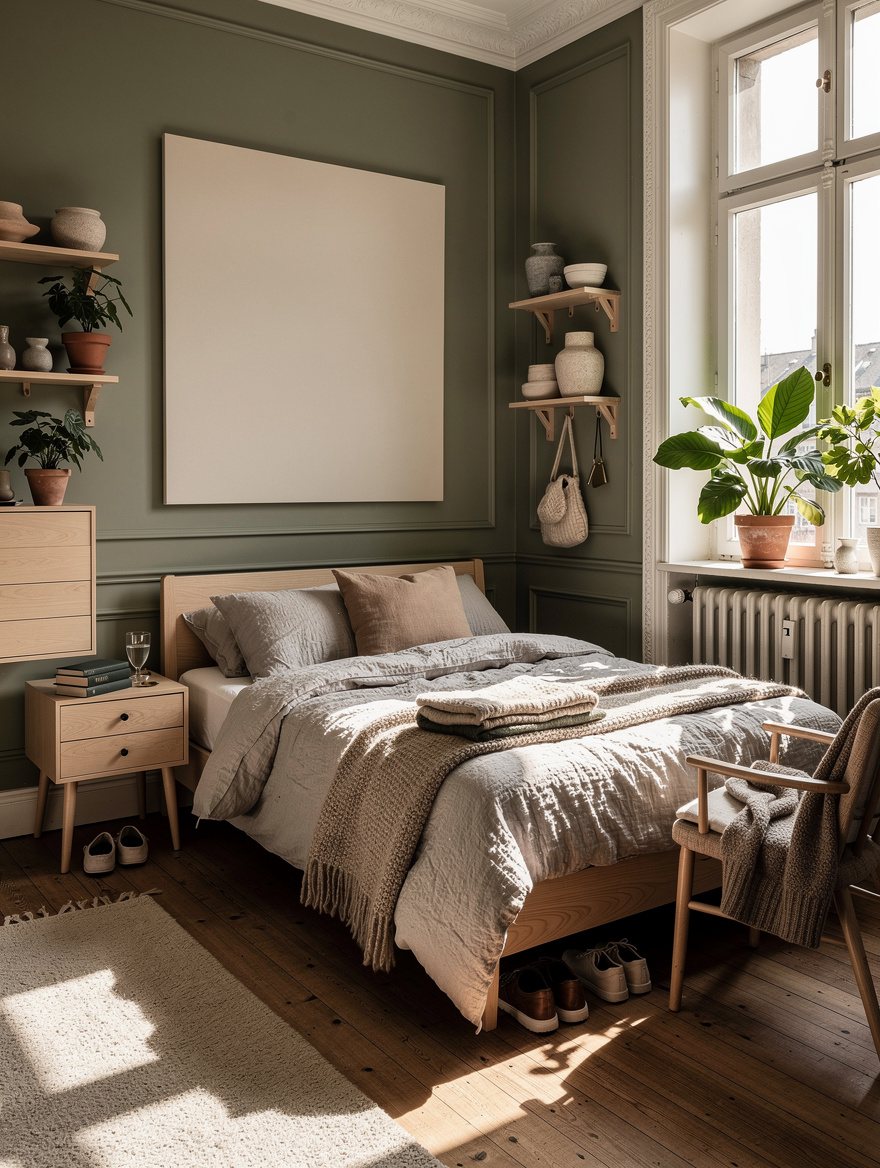
Symmetry should stop short of making every corner identical. A single chair near a window or opposite the bed introduces a lived-in note and offers a soft counterweight to the long bed wall.
Try a camel leather accent chair from Costco, Target, or Wayfair with a compact side table and a floor lamp. It should have enough room around it to function, so do not wedge one into a corner merely because a hotel room had seating.
This is the right place for a little asymmetry. One chair feels intentional; a random collection feels like overflow furniture.
Keep the Last Layer Deliberately Spare
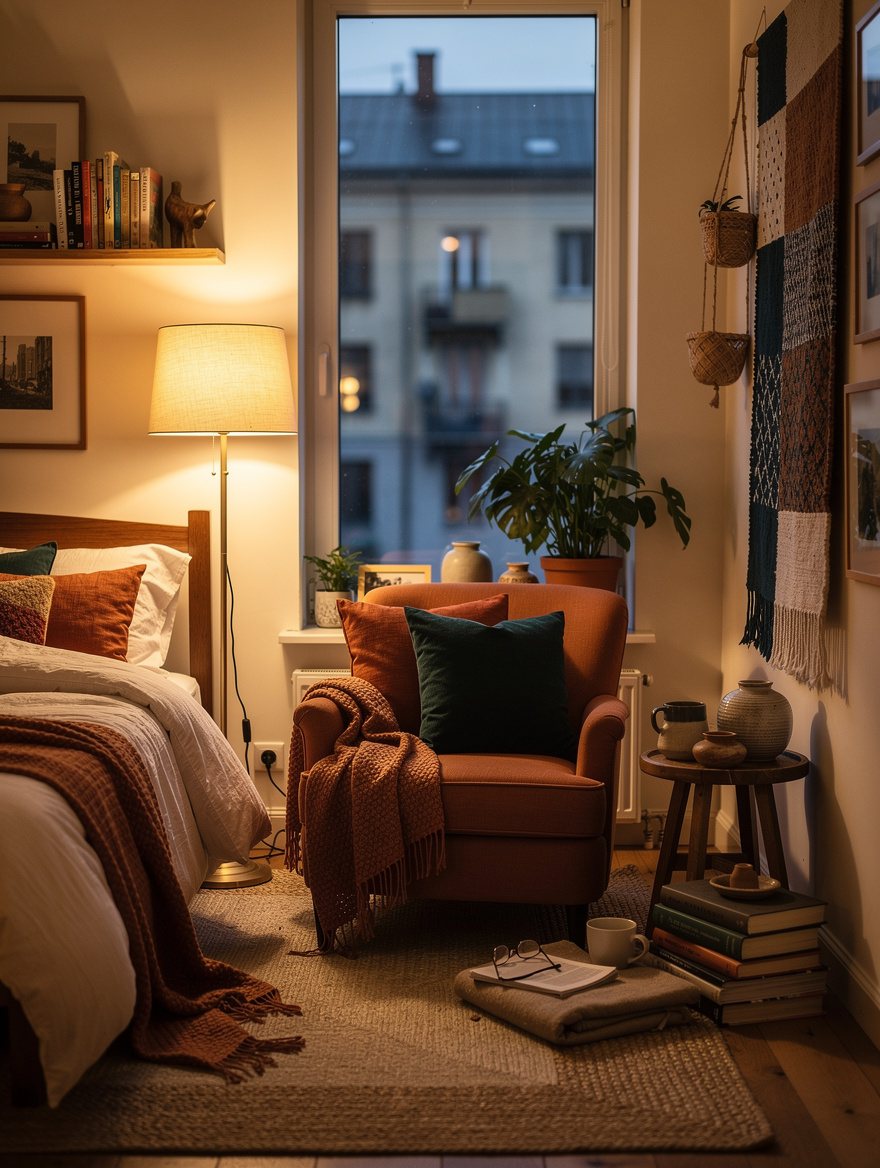
The common mistake is trying to prove luxury with more objects: extra trays, decorative pillows, tabletop sculptures, scented candles, and stacked books. Four Seasons-inspired rooms feel expensive because each object has room to matter.
Finish with a linen lumbar pillow, one textured throw folded low across the bed, and perhaps a small ceramic vessel on the dresser. A convincing king-bedroom version typically costs roughly $6,000 to $12,000 in 2026, excluding construction and major window work, so put spending into the bed, lighting, and tactile materials first.
Leave the surfaces partially empty. Space is one of the details you are copying.
Start with the bed wall: widen the headboard composition before buying another decorative object. Once the room has that anchor, every other choice becomes easier to edit.