I Stripped My Minimalist Japandi Kitchen to the Essentials, It Finally Feels Right
13 august 2026Minimalist Japandi kitchen ideas stripped to the essentials gave me a warmer, calmer kitchen without replacing a single cabinet. I did this makeover while working around a tiny rental-style footprint and a counter that always looked crowded. Less stuff. More breathing room!
Here's what it looked like before
Before, my kitchen had the full starter-home package: pale cabinets, shiny pulls, a black microwave parked on the counter, and a random pile of wood utensils that never looked intentional. I kept buying containers because I thought storage was the issue.
It wasn’t. The problem was that every surface held three jobs.
You couldn’t see the warm oak tone in the floor because white plastic appliances and paper clutter were louder. I wanted a kitchen that felt peaceful at 7 a.m., not one that asked me to tidy it before coffee.
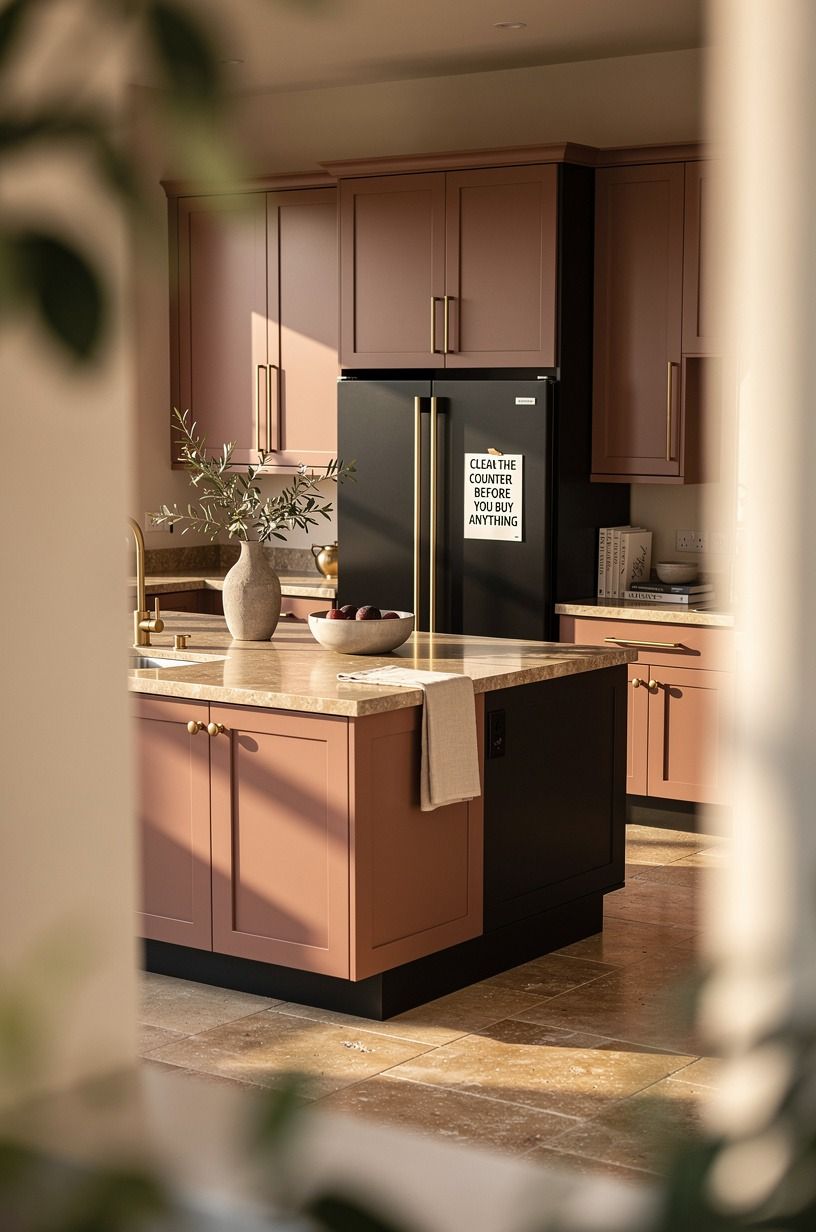
- Clear the counter before you buy anything
- Paint the cabinets in a soft mineral white
- Use The Two-Wood Rule for warmth
- Swap chrome hardware for aged brass
- Let one open shelf earn its place
- Choose a hand-glazed backsplash with restraint
- Hide the appliances that break the spell
- Build The Quiet Corner Pantry System
- Hang one paper lantern over the table
- Anchor the room with a washable runner
- Keep 42 to 48 inches around the island
- Put the darker color below eye level
- Try the Empty Wall Test before adding art
- Use the Steam-and-Stone Styling Rule
- Replace upper cabinet clutter with one rail
- Mix handmade ceramics over matching sets
- Finish with a single branch, not a floral arrangement
1Clear the counter before you buy anything
I removed everything except what I touched every day: kettle, cutting board, soap, and one bowl. You’ll be surprised how much visual noise comes from useful things that don’t need permanent front-row seating.
My first pass was ruthless. Warm travertine canisters stayed only if they held food we used weekly; the rest went inside a cabinet.
But don’t hide your whole life in opaque bins. You still need your kitchen to feel lived-in, especially if your space is small.
2Paint the cabinets in a soft mineral white
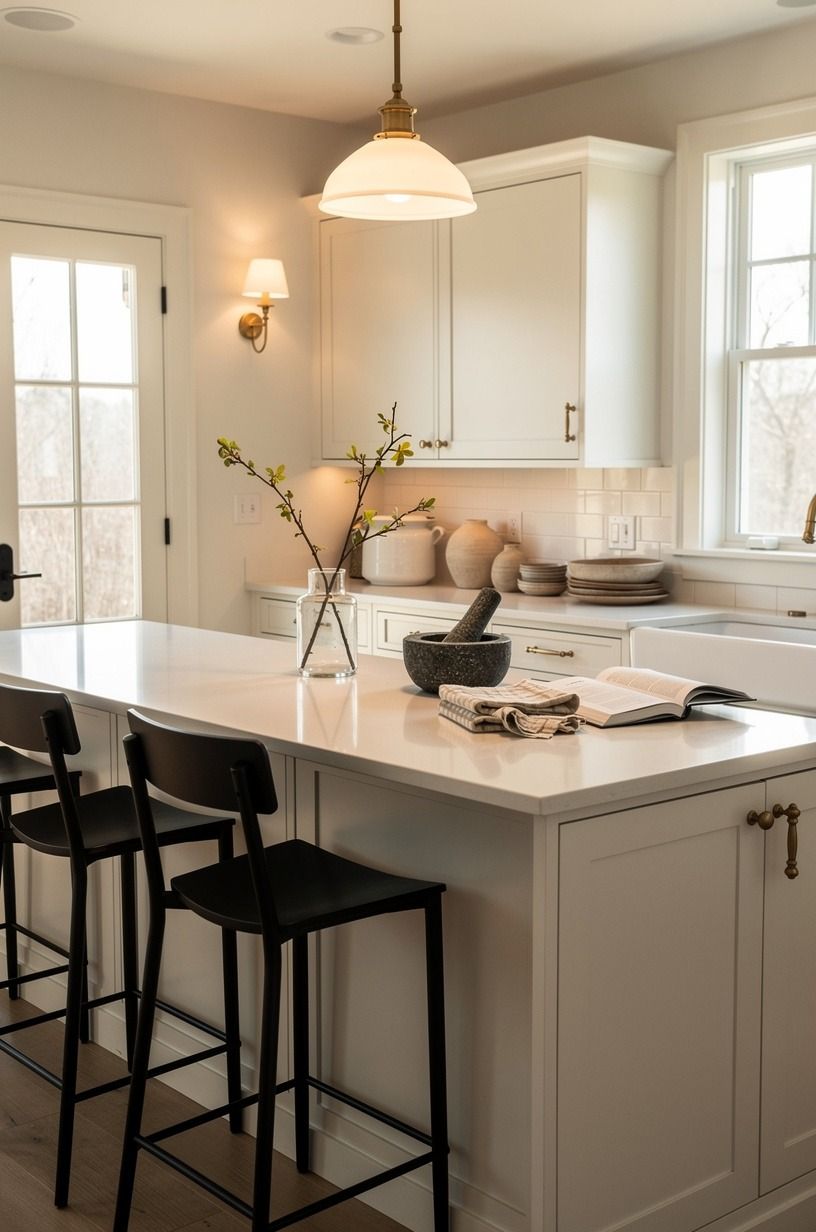
I chose Benjamin Moore White Dove OC-17 because the old bright white made the room feel clinical by noon. The soft white also lets unlacquered brass develop a little patina without making the room feel yellow.
3Use The Two-Wood Rule for warmth
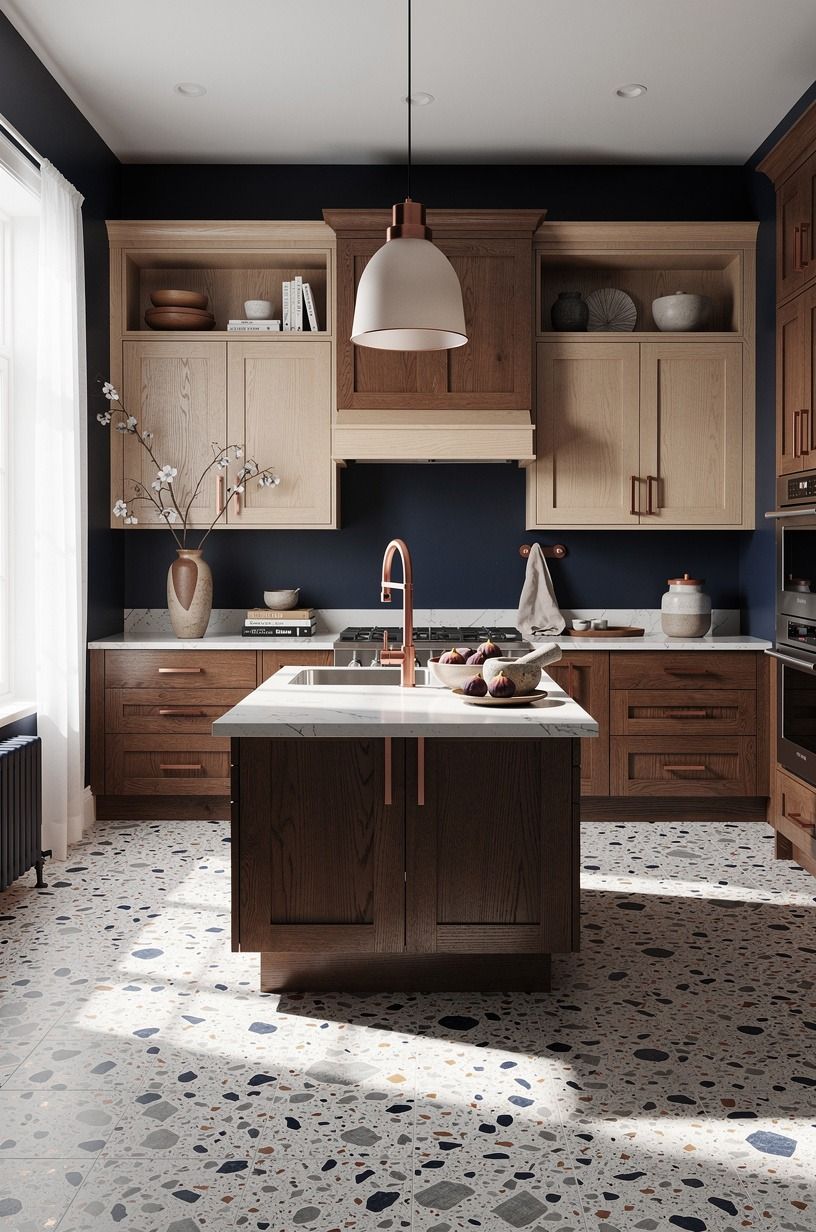
You only need two wood tones: one pale, one deeper. I kept the woods quiet beside an oversized-chip terrazzo surface in midnight blue, copper, and ivory, which gave the room contrast without making it busy.
If you add five wood finishes, your kitchen starts looking accidental. You’ll want the grain to repeat in small places: a tray, stool seat, utensil handle.
I learned that after buying a third wood tone online, then returning it the next morning. Too much.
Keep your woods warm and let the cabinets stay quiet.
4Swap chrome hardware for aged brass
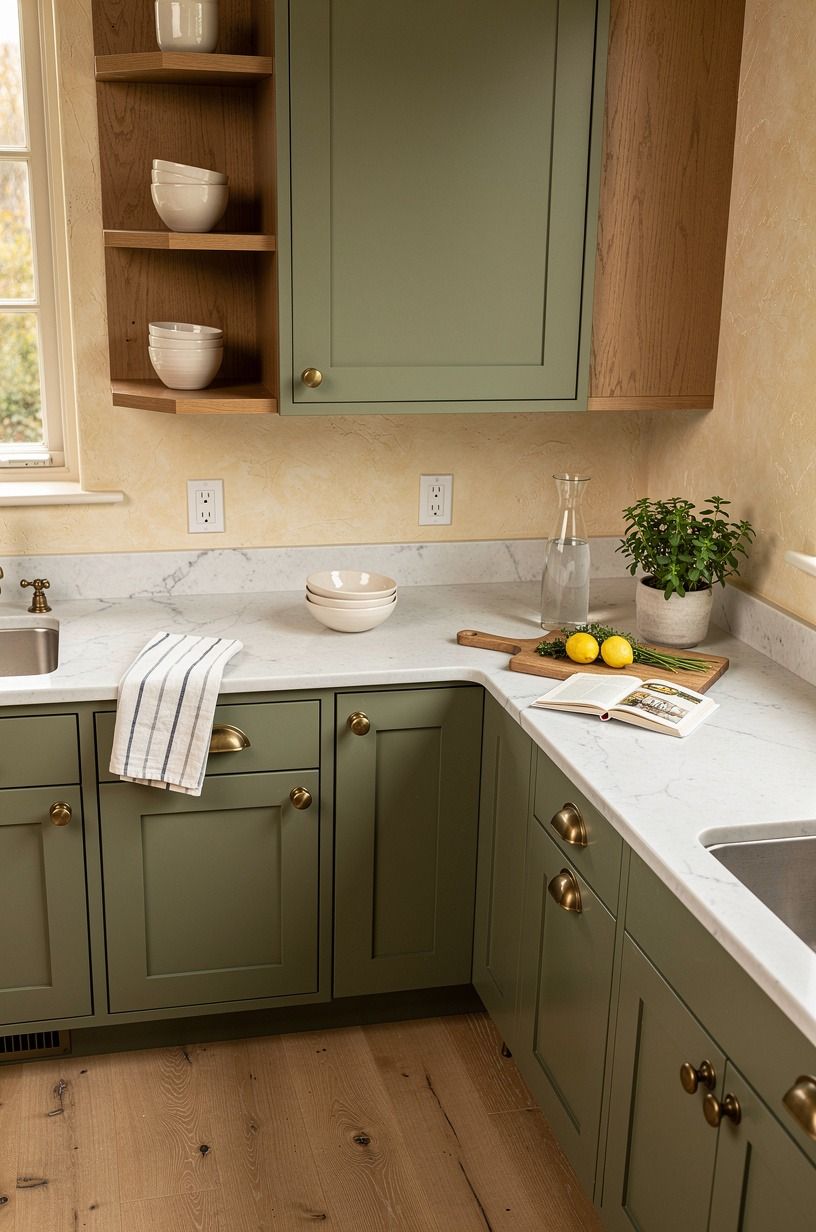
The old chrome pulls reflected every overhead bulb and made the doors feel cheaper than they were. I replaced them with aged brass bar pulls, keeping the new holes aligned with the old ones so you don’t create a repair project.
You can make this change in an afternoon, and your hands notice it every time you open a drawer. The brass isn’t supposed to look perfect.
It gains a soft patina, which is the whole appeal. Against hand-applied Venetian plaster, it feels warmer instead of fussy.
For a renter, store the original pulls in one labeled bag so you can put them back later.
5Let one open shelf earn its place
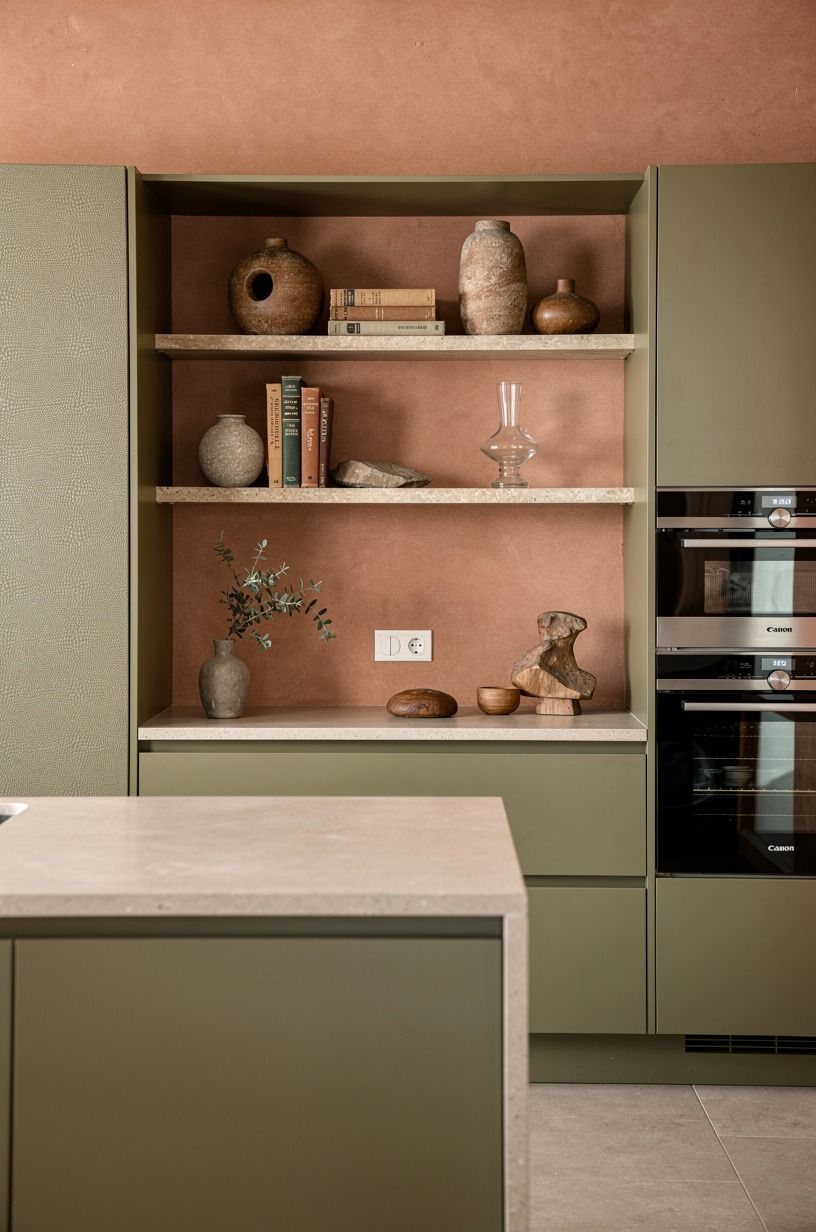
I removed one upper cabinet door rather than tearing out cabinetry. A few terracotta, stone, and olive pieces with small shagreen accents gave that shelf a reason to stay.
6Choose a hand-glazed backsplash with restraint
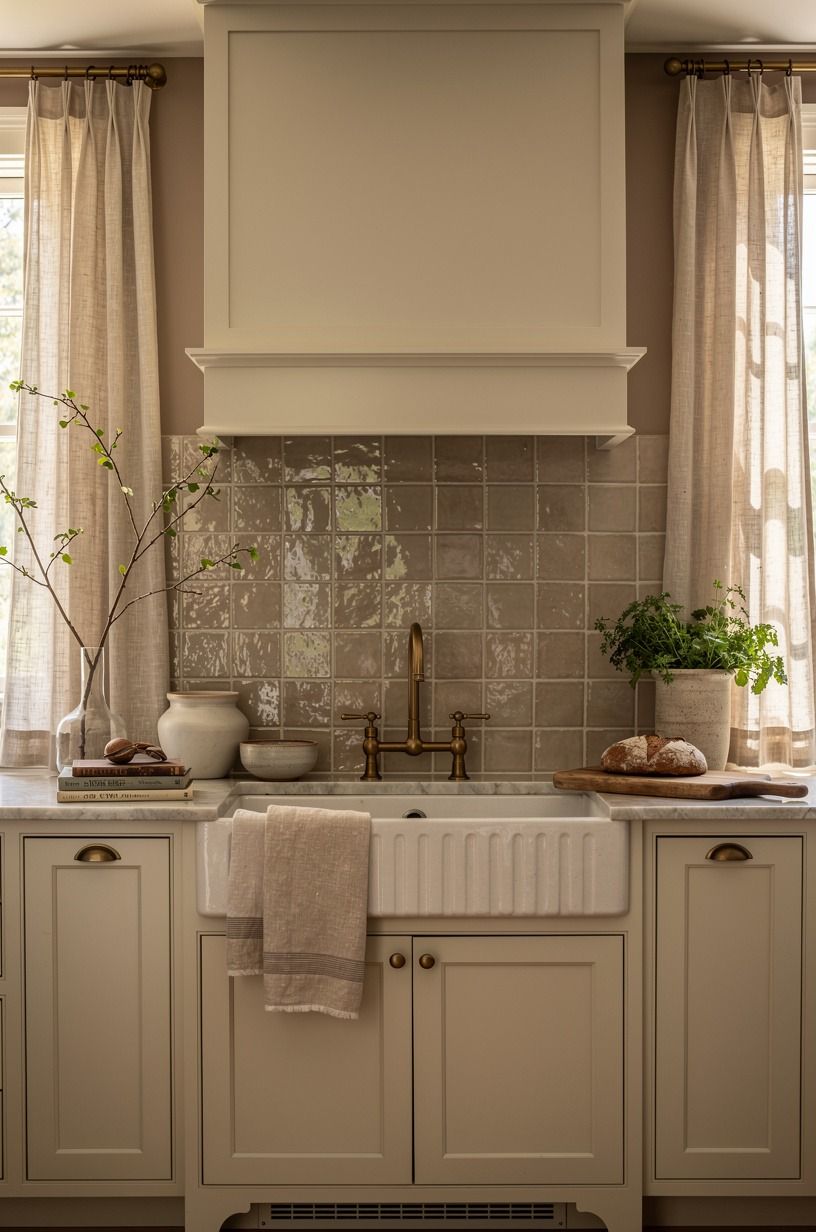
I wanted texture, not a loud pattern, so I chose hand-glazed ivory zellige for the 18 in gap between the counter and upper cabinets. A washed Belgian linen café curtain kept the clay, linen, and aged-brass palette from feeling too hard.
A flat subway tile would’ve been easier, but it felt too polished for the rest of my materials. You can use peel-and-stick in a rental, though I’d avoid fake marble prints.
They tend to look plastic under warm bulbs. A real-looking imperfect surface gives your kitchen interior minimalist character without turning it cold.
7Hide the appliances that break the spell
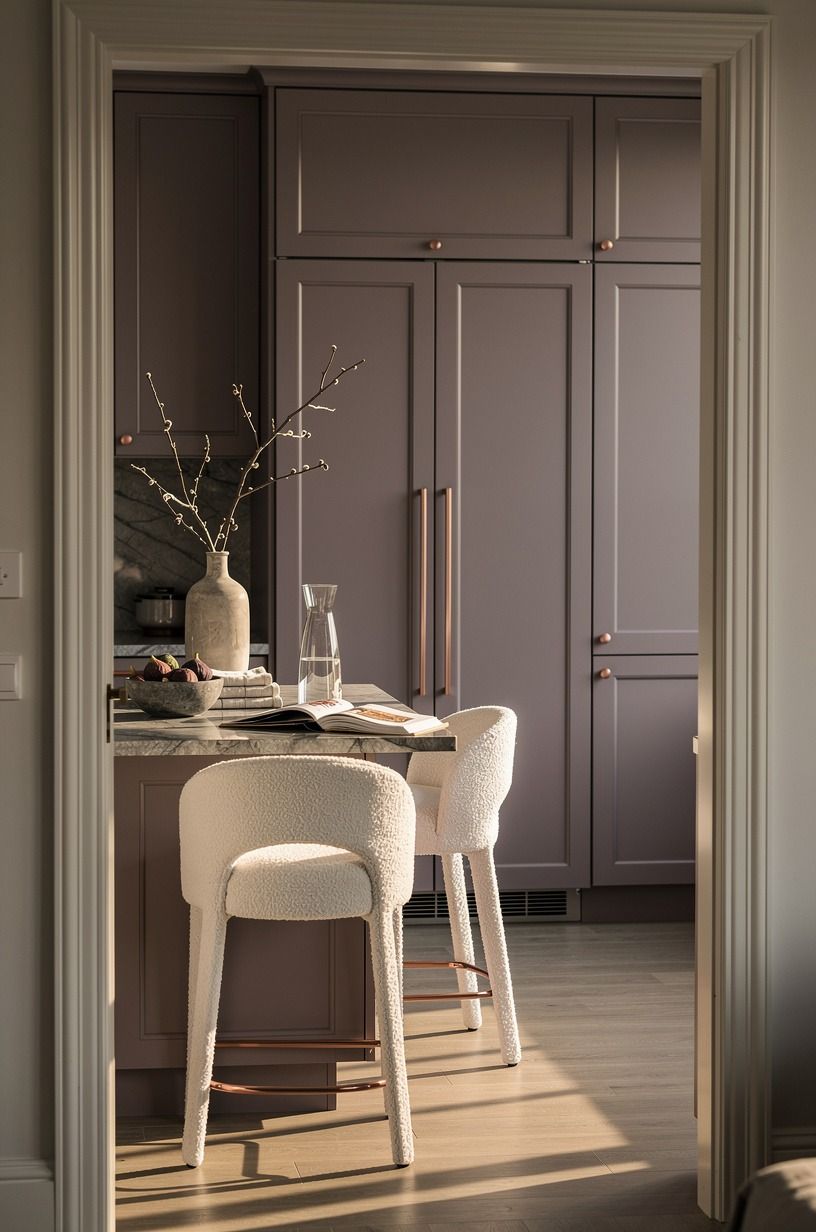
The toaster and blender were useful, but they were wrecking the view. I moved them into a cabinet with an organic bouclé-lined appliance shelf and left only the kettle out, because you’ll use it enough to justify the counter space.
But don’t force yourself into a precious routine. If you make smoothies every morning, keep the blender accessible. The goal isn’t hardship.
It’s making your daily objects look deliberate instead of scattered. One appliance visible is a choice; six becomes a store display.
8Build The Quiet Corner Pantry System
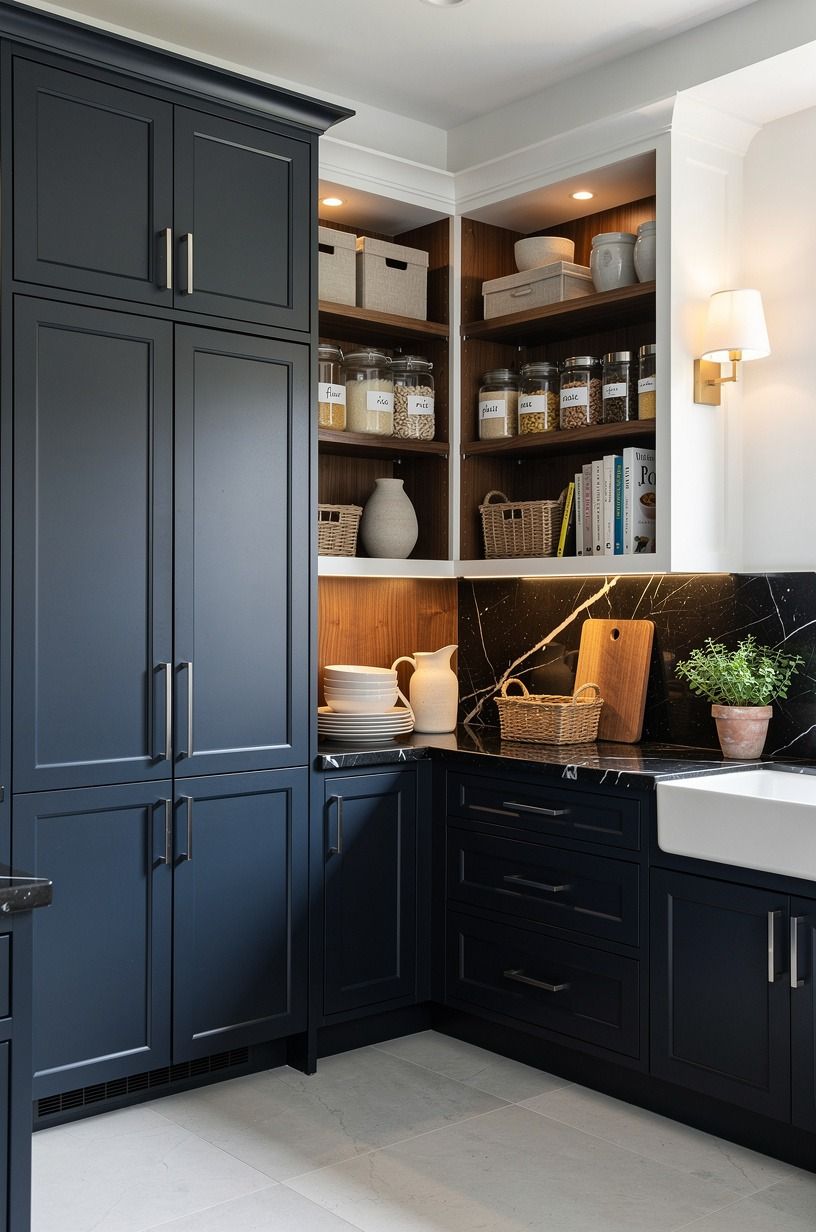
One lower cabinet became my dry-goods zone. I used the nearby Nero Marquina black marble surface for cookbooks and baskets, then grouped pantry staples behind solid doors. You can see what you need without seeing every package.
I made the mistake of decanting everything at once. It took forever, and half the labels looked fussy.
Now I decant only rice, oats, coffee, and flour. Four basics.
Your shelves will feel more organized when the labels are simple and the packaging doesn’t compete with the walnut.
9Hang one paper lantern over the table
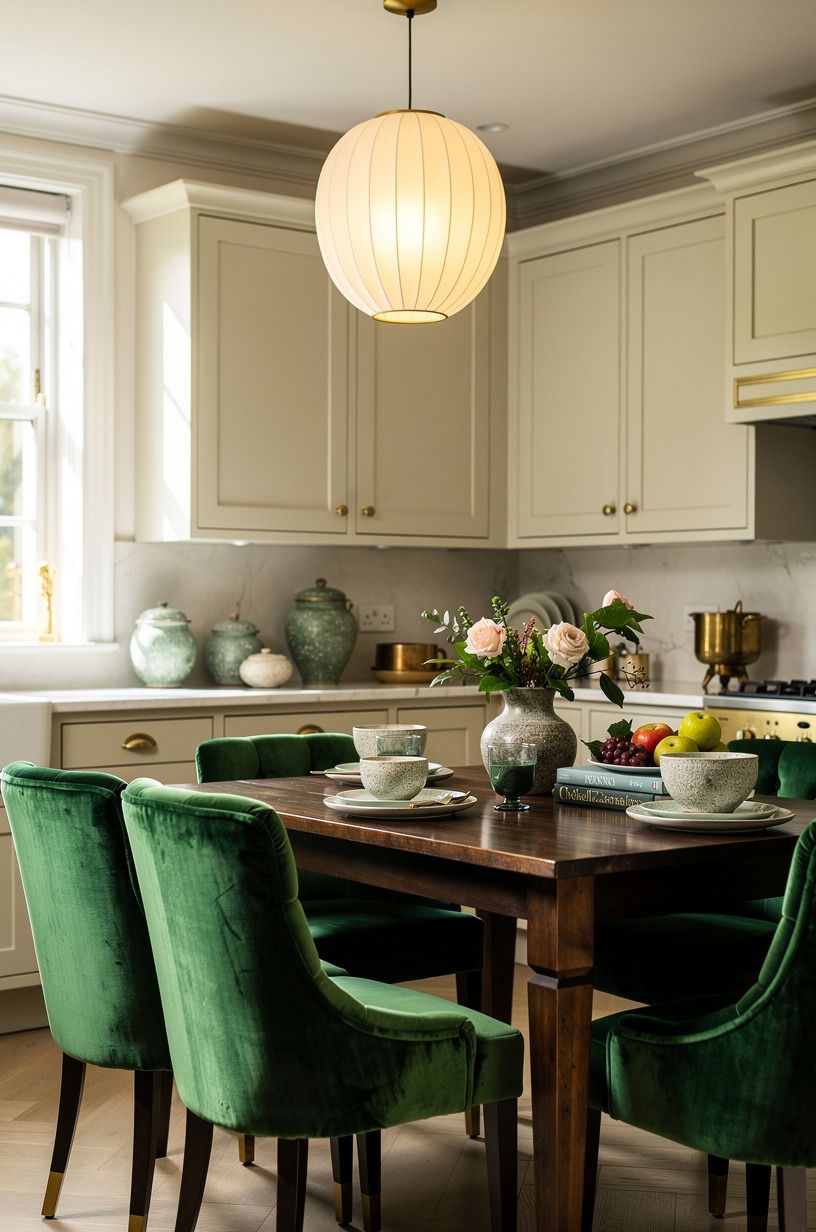
A low paper lantern softened the hard cabinet lines immediately. I chose a Noguchi-style rice paper pendant because the shade glows rather than throws sharp light across the room.
You’ll want to hang it where it gives the table a pool of light, not where it blocks a sightline. The room needs three light heights: ceiling, counter, and table.
A deep-pile mohair velvet seat in emerald, gold, and cream makes that glow feel even softer after dark. No harsh ceiling-only lighting.
Ever!
10Anchor the room with a washable runner
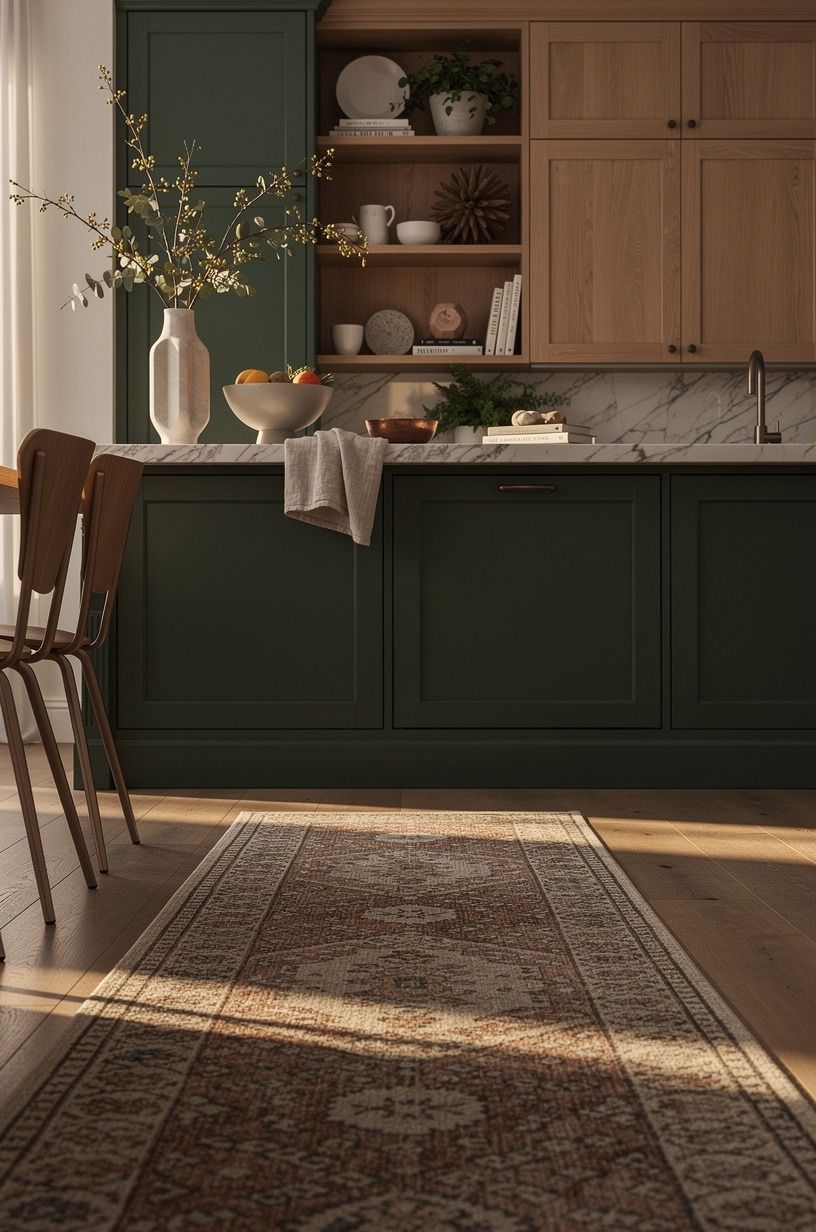
I added a narrow runner in faded clay and oat tones. The Ruggable Kamran-style runner gave the long galley floor some softness without asking for constant care.
A runner should leave clear floor around it, so your kitchen still looks airy. If it touches both cabinet runs, it’s too wide. You’re not trying to carpet the kitchen.
You’re giving bare feet a warmer landing spot while keeping the walkway clear and safe. Carrara marble with subtle grey veining keeps the forest-green, rust, and oak palette from getting too heavy.
11Keep 42 to 48 inches around the island
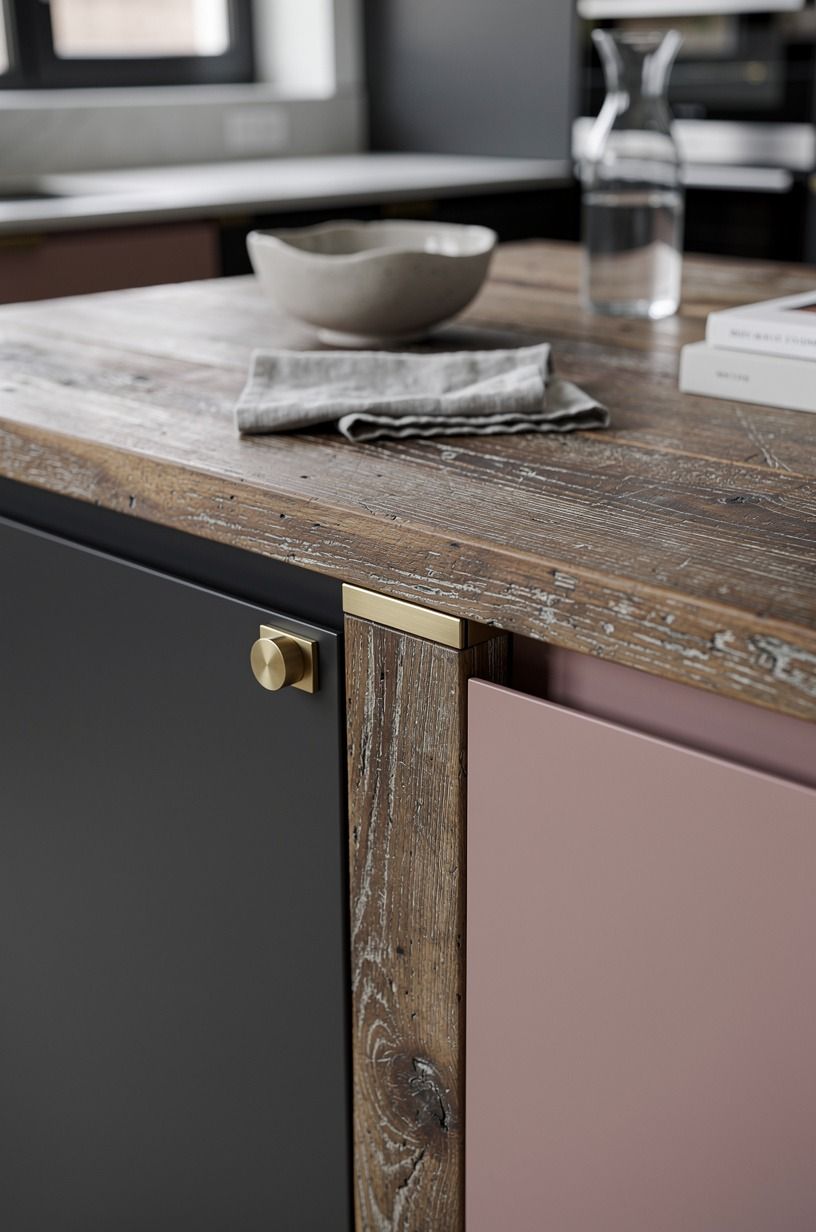
My kitchen doesn’t have a large island, but I measured the path around the peninsula anyway. You need 42 to 48 in of clearance if people are opening drawers, carrying hot pans, or passing each other.
That number stopped me from adding two extra stools. I wanted them, but they would’ve made the room frustrating.
Reclaimed weathered teak counter stools look better when there’s enough air around them. Home design minimalist style isn’t about owning less for bragging rights; it’s about leaving room for your body to move.
12Put the darker color below eye level
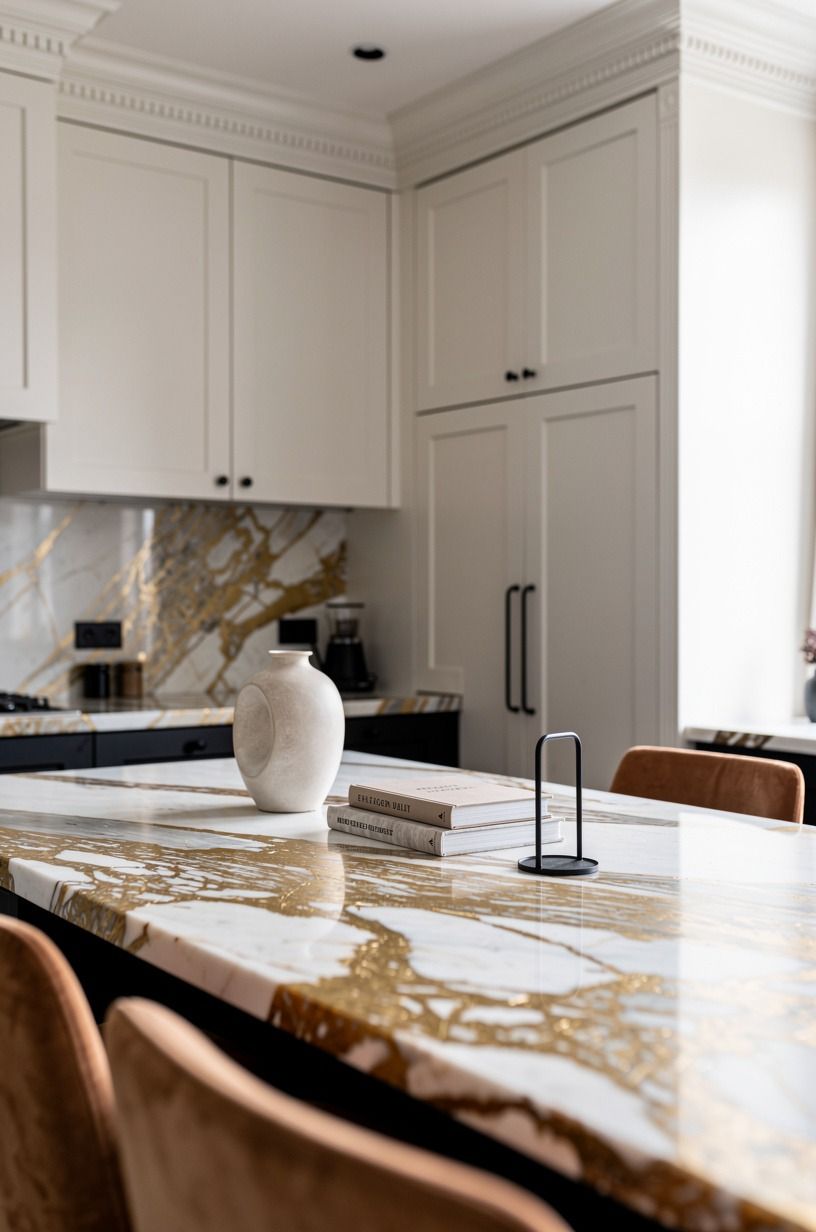
I painted the lower cabinet accents with Sherwin-Williams Evergreen Fog SW 9130 and left the uppers white. Calacatta marble with gold veining kept the warm-white, camel, and black accents from feeling flat.
13Try the Empty Wall Test before adding art
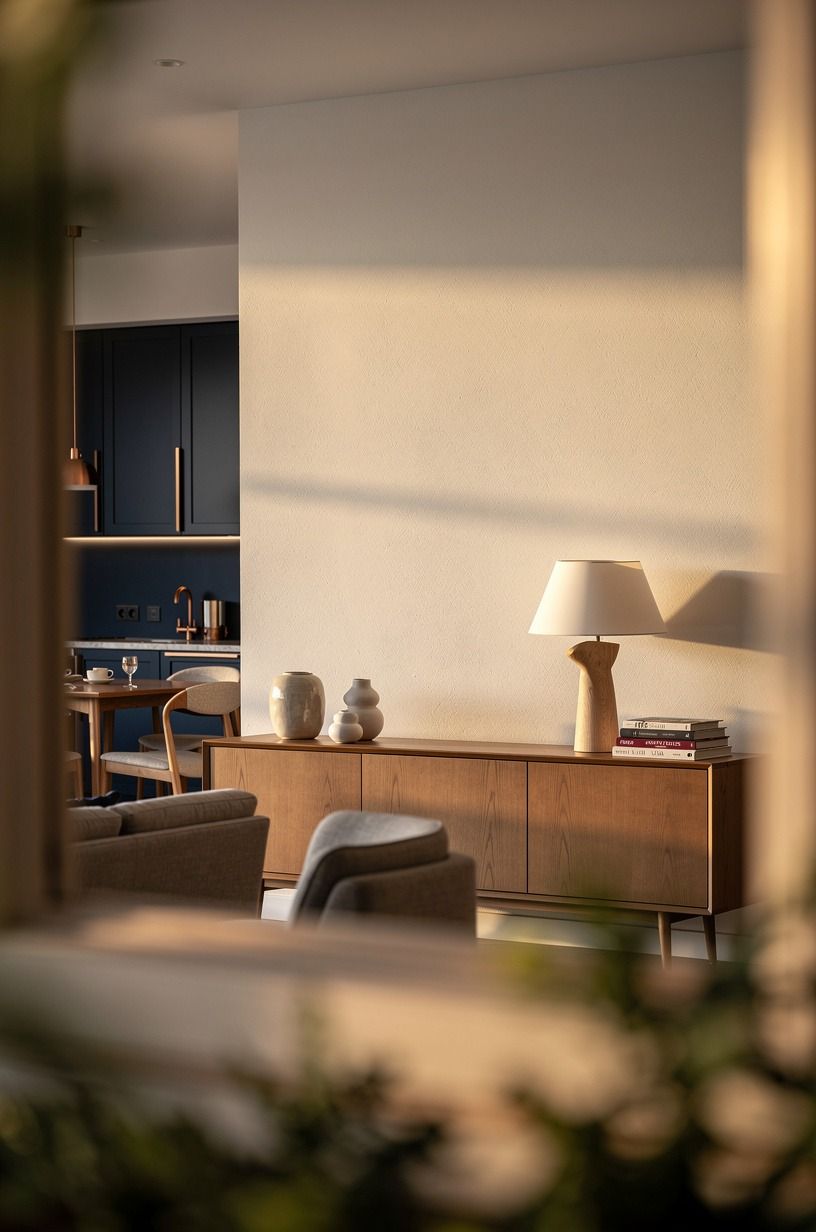
I lived with one bare wall for a week before hanging anything. Then I added a single cerused white oak-framed ink print at eye level, not a gallery wall, because the kitchen already had enough lines from cabinets and tile.
What does the empty wall give you? A pause.
You’ll see the light, the counter shape, and the wood grain better when every wall isn’t asking for attention. One quiet piece works harder than six tiny prints, especially in japan minimalist interior design.
14Use the Steam-and-Stone Styling Rule
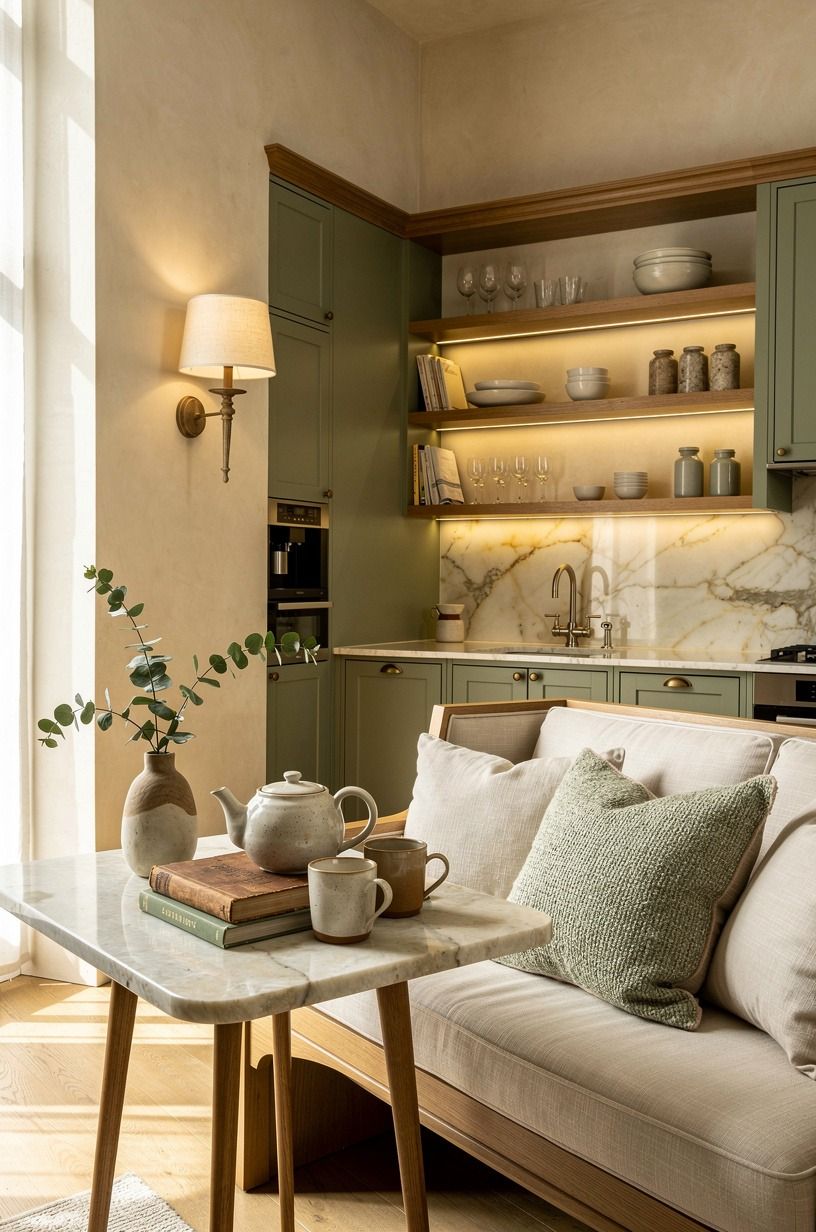
Near the stove, I kept only materials that get better with use: backlit translucent onyx, a wooden spoon crock, and a linen towel.
15Replace upper cabinet clutter with one rail
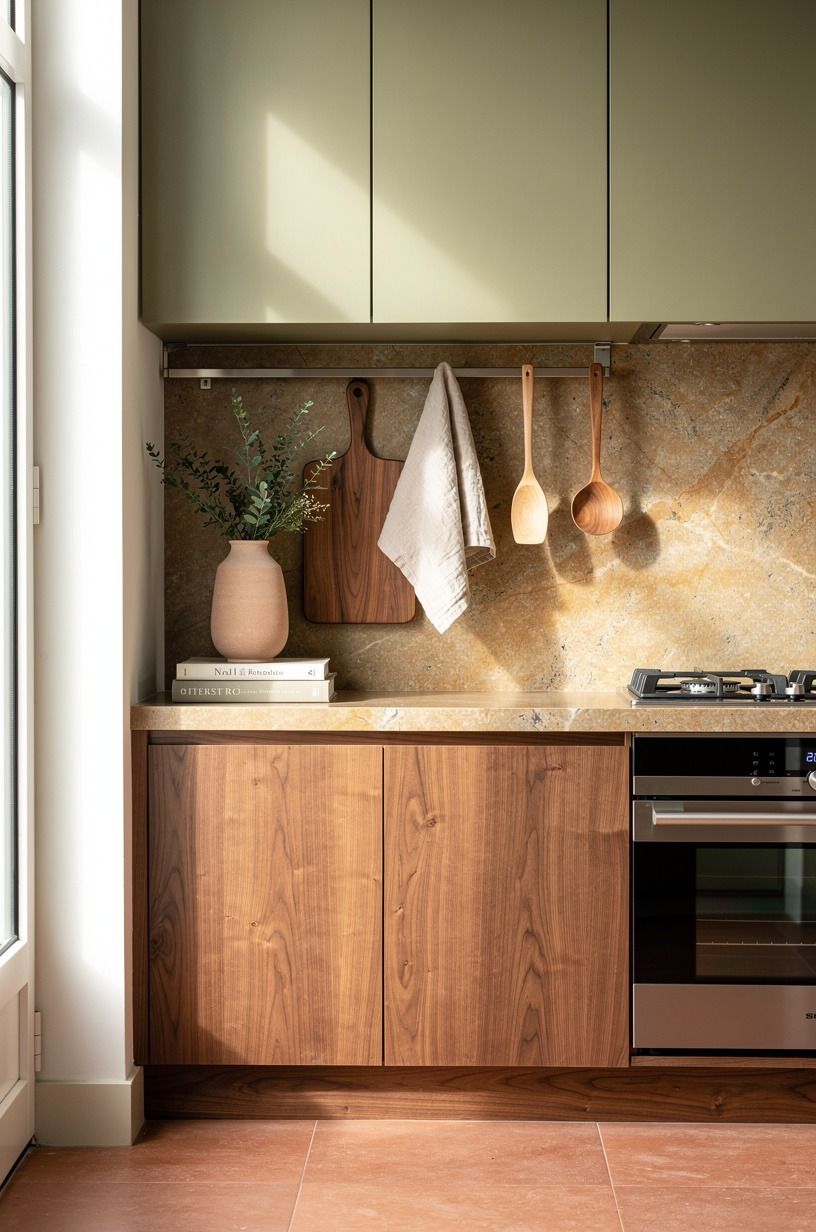
I installed a slim rail for the few things I reach for constantly: scissors, measuring spoons, and a towel. The unlacquered brass rail added function without the visual weight of another shelf.
You shouldn’t hang every utensil you own. That turns into restaurant-kitchen energy, and not the charming kind. Choose five pieces max.
The rail keeps your tools close, while the rest stay inside drawers where they belong. Book-matched walnut brings enough warmth to the terracotta, stone, and olive scheme.
Short list. Better rhythm.
16Mix handmade ceramics over matching sets
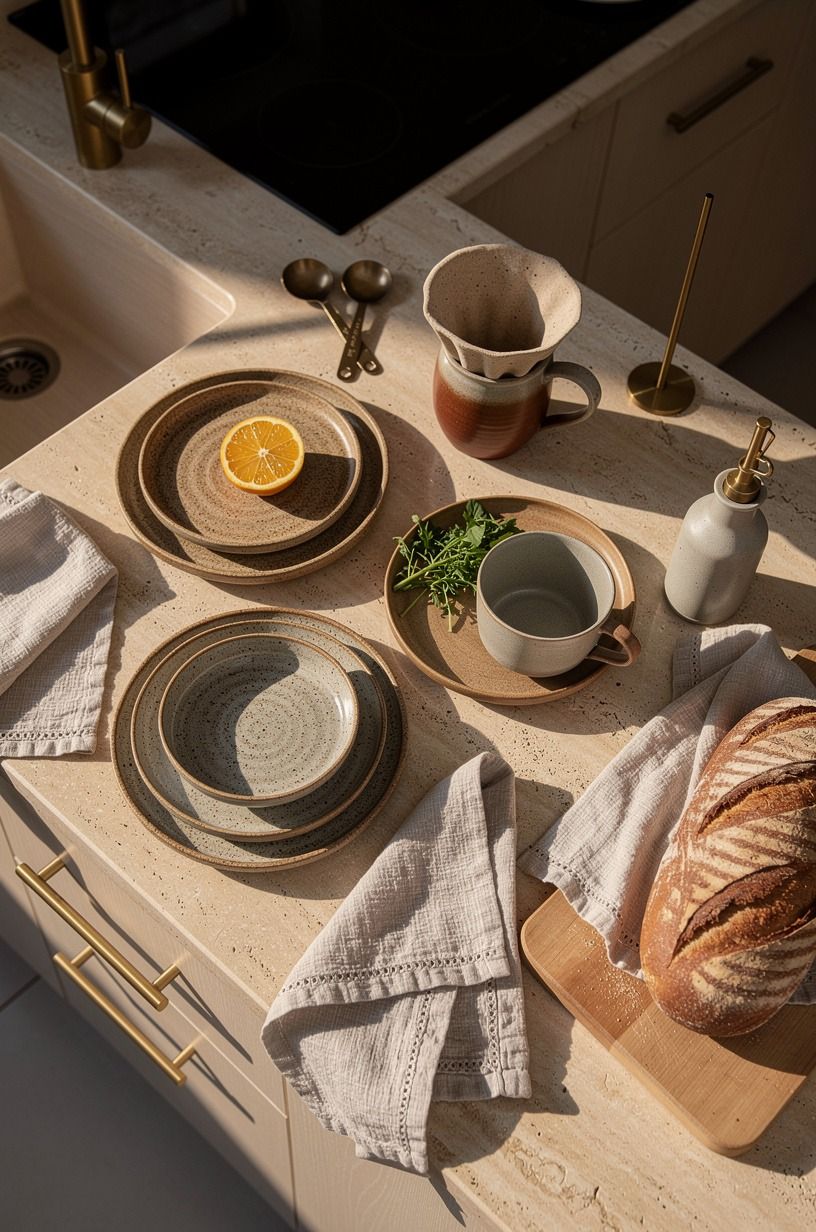
I stopped using the matching dish set and kept a smaller group of cream, sand, and charcoal bowls. A warm travertine serving piece gave the clay, linen, and aged-brass mix one grounded note.
17Finish with a single branch, not a floral arrangement
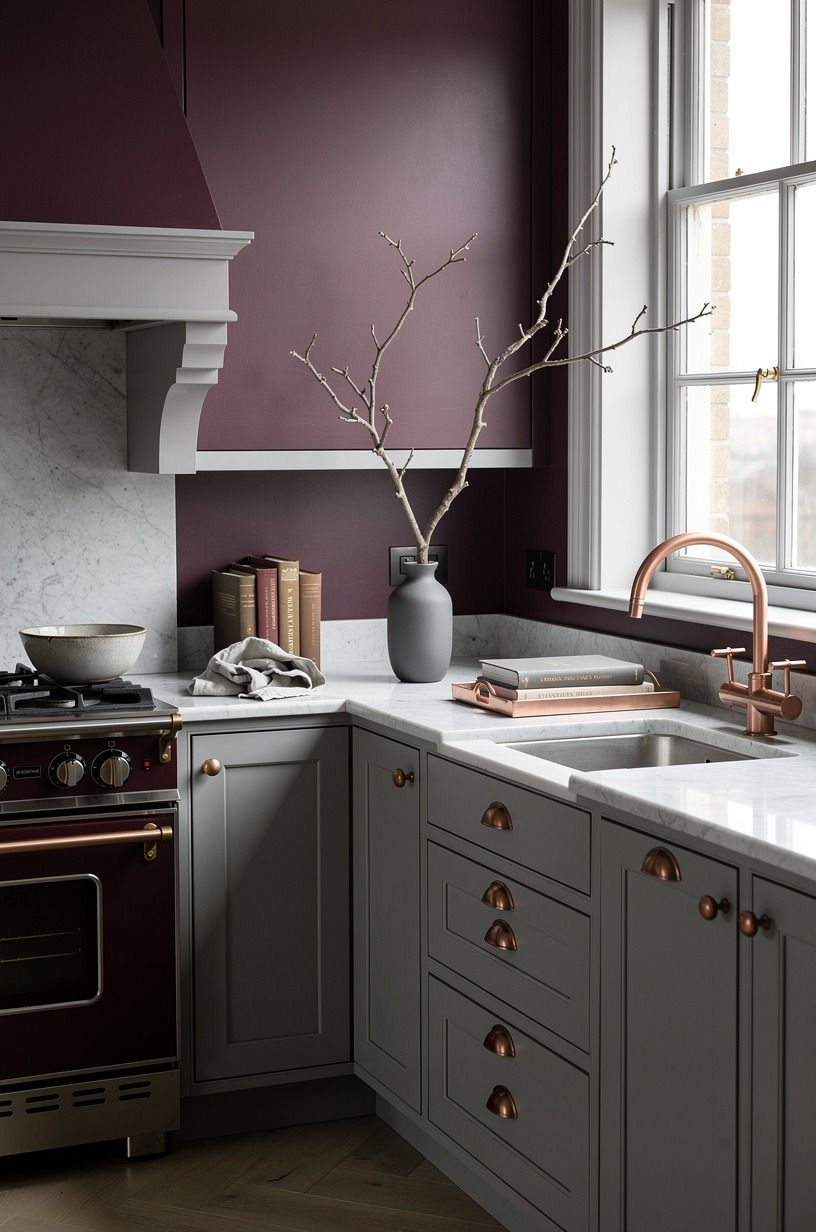
The last thing I added was one branch in a low vessel, usually olive or bare quince. An unlacquered brass bud vase kept it from feeling too rustic against the plum, grey, and rose-gold details.
You don’t need fresh flowers every week. One structural branch lasts longer and makes the counter feel seasonal without turning it into a centerpiece.
And if you have no branch, leave the vase empty for a few days. That quietness is part of the look.
How much it cost
My version was a cosmetic makeover, not a remodel. I spent money where your eye lands first: paint, pulls, lighting, and surfaces. The larger ranges below are typical US costs, so you can decide whether you’re doing a weekend reset or planning a full kitchen project.
For my own kitchen, the paint, pulls, runner, shelf supplies, and pendant came to $1,184. I’d spend that again. I wouldn’t replace a usable laminate counter just to chase quartz, which typically runs $60-$120 per sq ft while laminate commonly lands at $10-$40 per sq ft.
Why stripping it back changed how I use it
I used to think a minimalist Japandi kitchen needed discipline I didn’t have. I pictured spotless counters, expensive pottery, and a life where nobody leaves a receipt beside the kettle.
That version isn’t useful. A kitchen is where you make toast late, unload groceries while talking, and drop a phone beside the sink because your hands are wet.
The shift happened when I stopped treating every empty spot as a styling opportunity. I gave the counter a job, gave the cabinets a job, and let a few objects carry the visual weight. The wood board wasn’t there because a mood board said so.
It was there because I chop vegetables on it every day and like the sound it makes against a knife. The brass pulls weren’t a grand design statement either.
They made opening old doors feel less flimsy.
I went back and forth on the dark green cabinet detail. Part of me wanted the safer all-white version.
But all-white would’ve erased the depth that made the kitchen feel grounded after sunset. That’s the thing I’d tell you to decide first: choose the mood you want at night, not only how the room photographs at noon.
You can still have a calm room with a dish rack, a fruit bowl, and a kid’s water bottle on the counter. You just need fewer competing materials and a place for the rest. Not perfection.
Permission to use it.
What People Always Want to Know
What is the best minimalist Japandi kitchen idea for a small kitchen?
The best move is clearing the counter and adding one warm material, usually cerused white oak or a pale wood runner. You’ll gain visual room immediately.
- One appliance left out - One open shelf - One soft light source
Where can I buy minimalist Japandi kitchen pieces on a budget?
Start with IKEA, Target Threshold, and Wayfair for simple wood, linen, and storage pieces. You can also check Facebook Marketplace for solid wood stools and old ceramic bowls.
- Birch-effect storage - Matte ceramic vessels - Secondhand oak stools
How much does a minimalist Japandi kitchen makeover cost?
A cosmetic update commonly costs about $300 to $1,500, depending on paint, hardware, and backsplash choices. Paint and decluttering are the lowest-cost changes, and both make a visible difference.
Can I create a minimalist Japandi kitchen on a budget?
Yes, and you don’t need new cabinets. Start by removing counter clutter, swapping one hardware finish, and using a linen kitchen towel instead of patterned textiles.
- Free cabinet edit - Low-cost paint sample - One secondhand wood board
Is a minimalist Japandi kitchen worth it in a small space?
Yes, it’s especially worth it in a small kitchen because fewer visible objects make the layout feel more open. Keep your 36 in counter height clear so you’ve got a real work zone.
Is minimalist Japandi style a good idea for a rental?
Yes, because you can get the feeling without permanent changes. Use removable hooks, peel-and-stick backsplash, and a tension rod with a Belgian flax curtain to soften the room.
Where I’d Start First
If I had to pick one, I’d start with clearing the counter. You can’t make warm materials matter when receipts, appliances, and random packaging cover every surface. Pin the counter reset for later, then give your kitchen one quiet morning to prove it.