Easy Luxury Home Gym Design Ideas That Look Straight Out of a Magazine
01 august 2026Luxury home gym design ideas work when you give your equipment a real room, not a storage corner with a treadmill. I once bought the weights first and planned the room later. Bad order. You can make your gym feel refined with better sightlines, softer light, and a few materials that don’t scream commercial locker room.
- Paint the room like a private club gym
- Build the Two-Wood Rule around your equipment
- Float a mirror wall above the rubber zone
- Layer light with the Three-Height Light Stack
- Choose a wall-mount rack over a bulky cage
- Can a home gym look luxurious without hiding every weight?
- Anchor the room with a real bench (not an ottoman)
- Use Farrow & Ball Down Pipe instead of sterile gray
- Hang art where a commercial gym would hang a TV
- Frame the equipment with a rug-sized material zone
- Make your ceiling clearance part of the design
1Paint the room like a private club gym
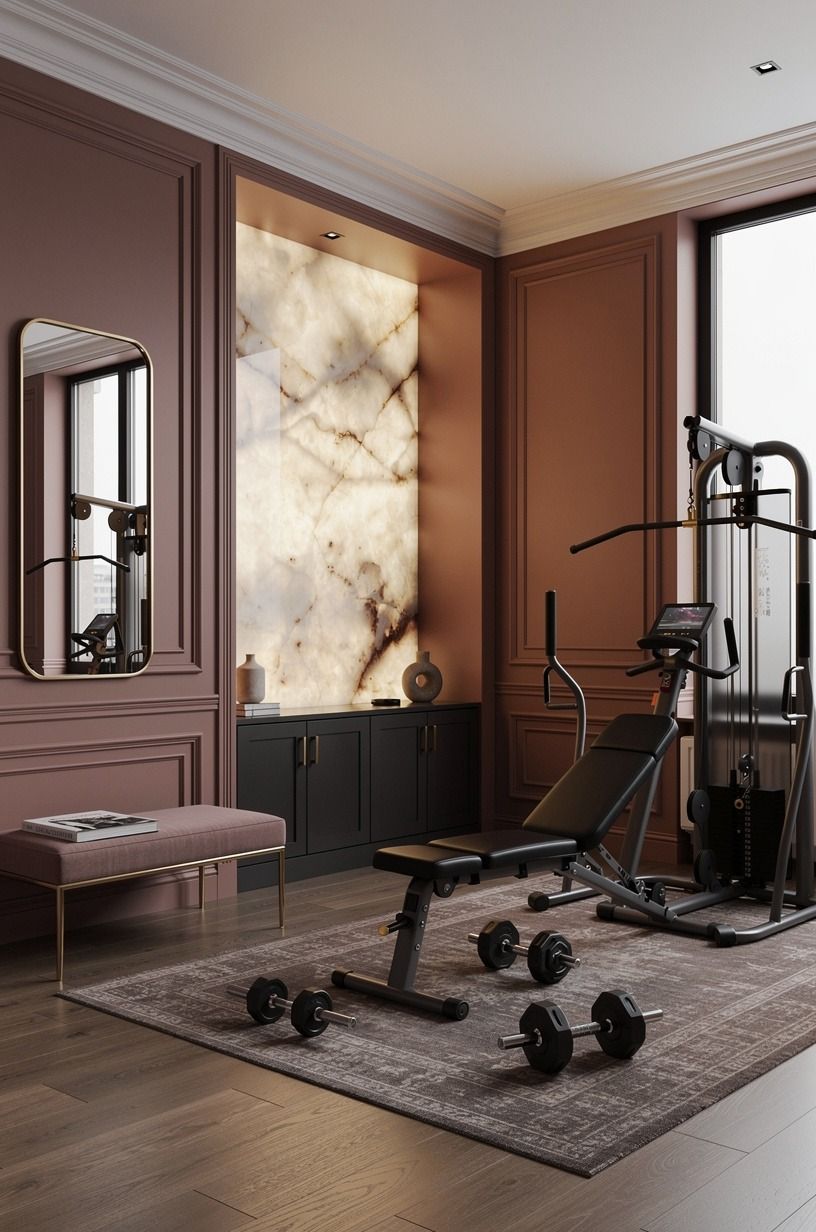
Start with a wall color that makes your equipment disappear a little. Sherwin-Williams Iron Ore SW 7069 is my first choice for a moody home gym because black dumbbells, dark screens, and rubber flooring look intentional against it. You’ll get drama without the shiny, aggressive feeling of a pure black wall.
For a softer modern luxury home gym, use dusty rose with charcoal trim and brass details. A backlit translucent onyx accent will make the room feel warmer, and you won’t feel like you’re exercising inside a garage.
I’d skip bright white walls here. They make every cord and scuff look louder than it is.
2Build the Two-Wood Rule around your equipment
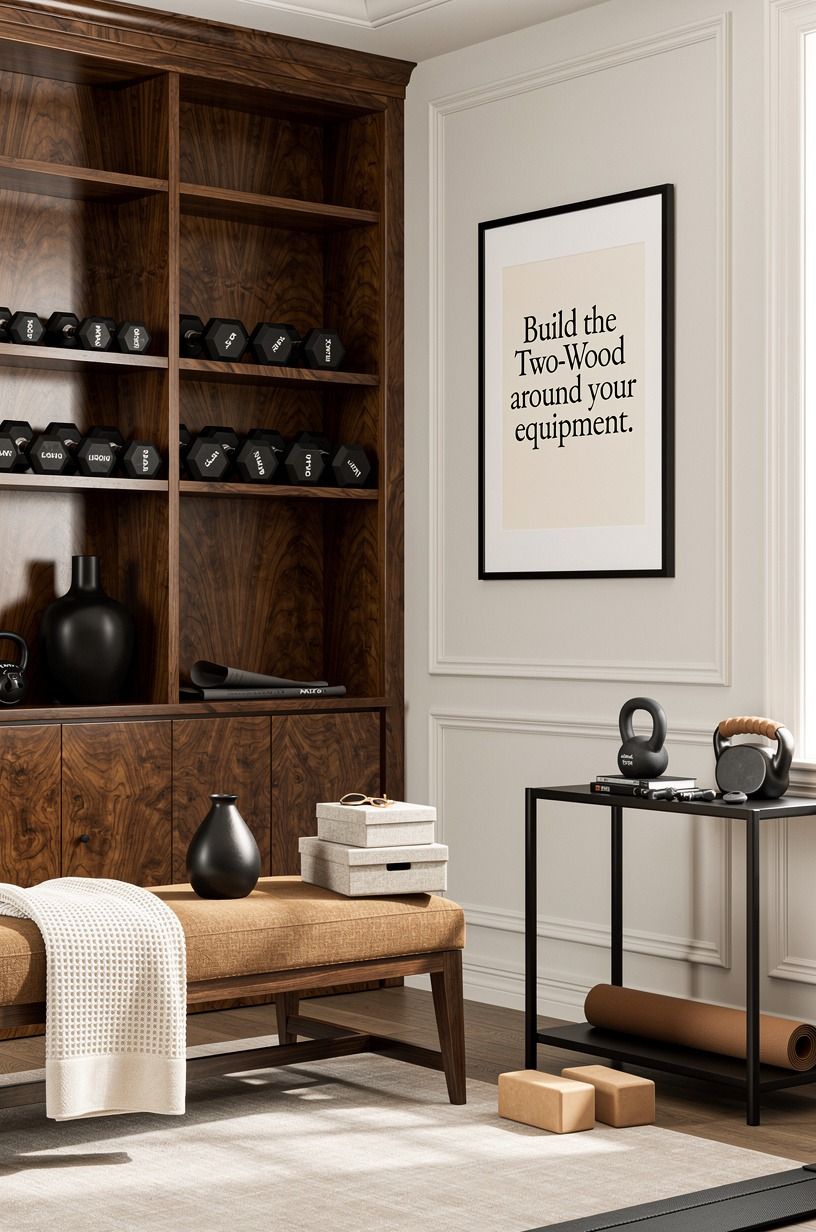
Pick two wood tones, then stop. You might use warm white walls with camel upholstery beside book-matched walnut storage, but don’t add a third wood through random storage bins or a cheap bamboo bench. Your eye needs a limit, especially in a small residential gym.
I learned this after mixing oak flooring, a teak stool, and espresso shelves in one room. It looked busy before I’d even put down a yoga mat. Keep your bench in one finish and your storage in another.
That’s enough. The walnut grain catching late-afternoon light does more for warmth than another motivational sign ever will.
3Float a mirror wall above the rubber zone
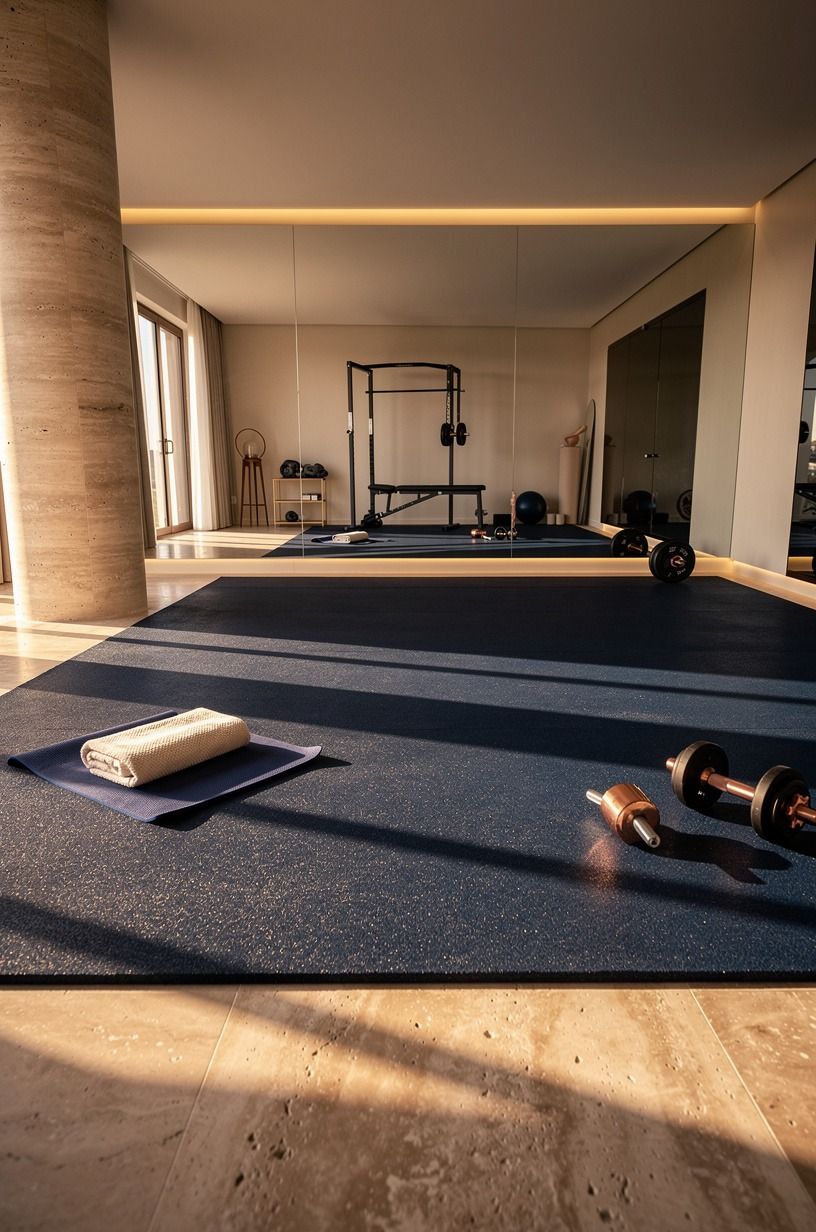
A mirror wall should sit at eye level, but it doesn’t need to run from baseboard to ceiling. Leave a strip of midnight blue painted wall above it, then anchor the lower edge above an 8x10 ft rubber mat zone. Warm travertine nearby will soften the practical rubber underfoot, and you’ll still have a useful place to check form.
Use frameless gym mirrors in clean panels if you want the magazine look. Typical mirror costs run from $100 to $400, so you can scale this idea to your budget. But don’t mirror every wall.
You’ll feel like you’re training in a dance studio, and that’s rarely the calm, inviting mood you wanted.
4Layer light with the Three-Height Light Stack
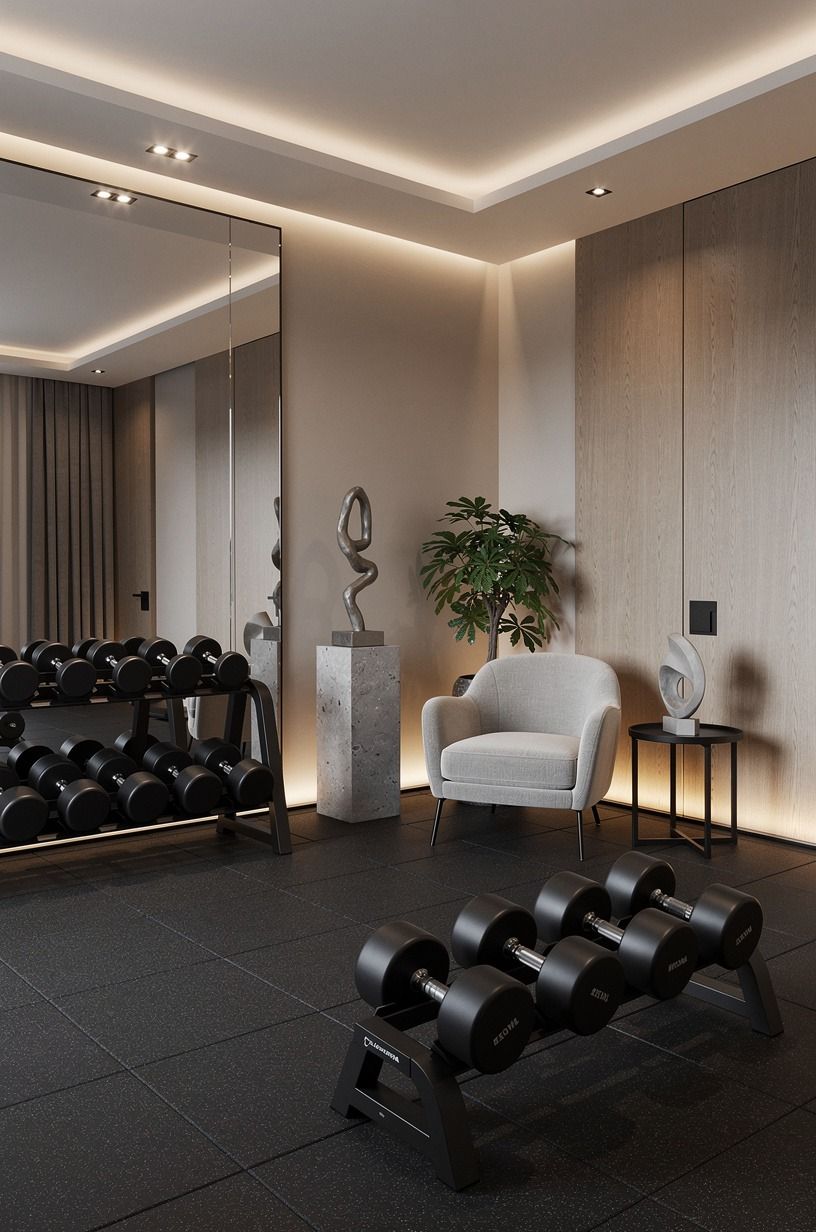
Overhead lighting alone is the fastest route to a cold gym interior. Give yourself three heights: a ceiling fixture, a wall light, and one lower glow near a shelf or bench. You’ll see your equipment clearly, but the room won’t feel harsh at 7 a.m.
Try a warm cream ceiling fixture, unlacquered brass sconces near the mirror, and a small linen-shaded table lamp on a natural wood storage cabinet. The lamp throws amber light just over the floor, which makes stretching feel less like a chore. And yes, a lamp in a gym is allowed.
It’s one of those details that makes people pause when they walk in.
5Choose a wall-mount rack over a bulky cage
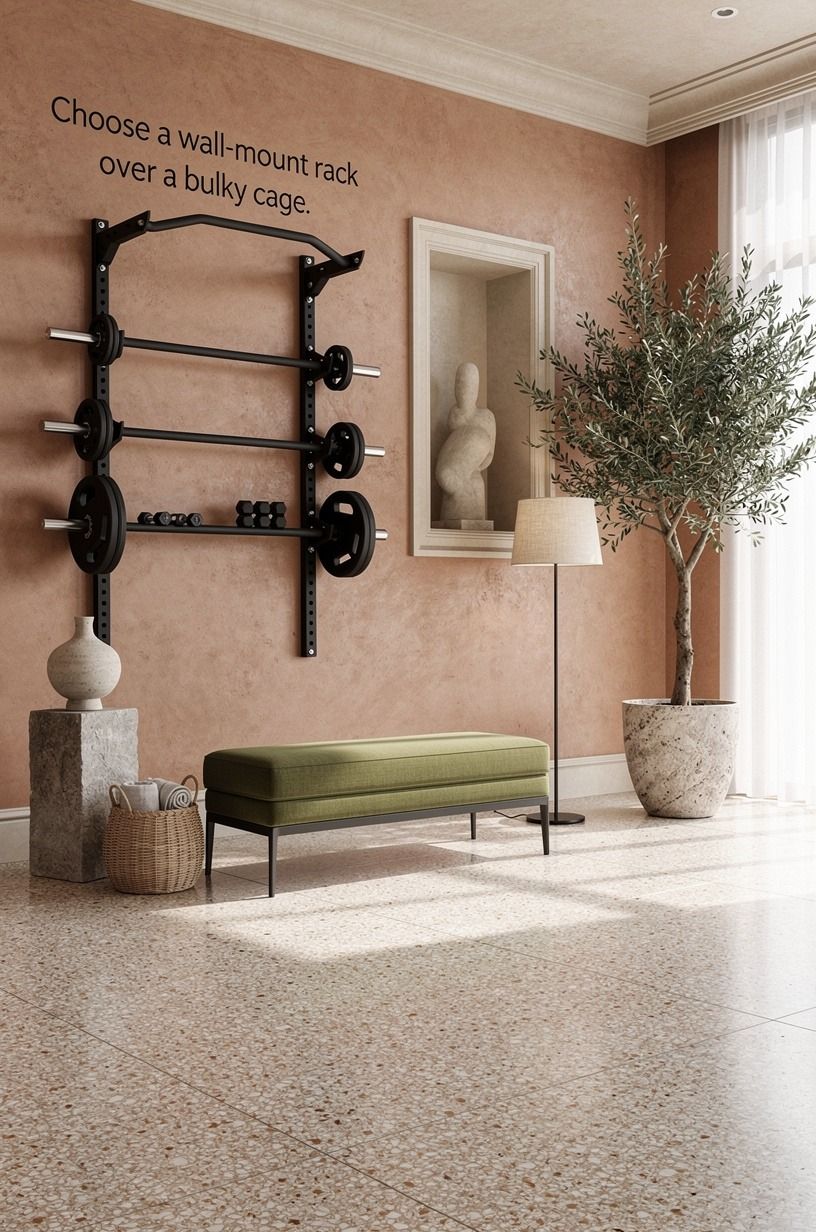
A wall-mount rack is the better call for most home gym design layouts. You need roughly 6x6 ft of floor per machine, and a giant freestanding cage eats that clearance before you’ve added a bench. A folding wall-mount rack gives you strength-training function, then gets out of your way.
Typical costs range from $150 to $600, depending on finish and attachments. I’d rather spend toward the higher end for a rack with a clean folded profile than save money on a chrome model with too many visible bolts.
Pair terracotta walls with stone and olive accents, then let oversized-chip terrazzo add durability underfoot. Your gym should look settled when you’re not lifting. That matters.
6Can a home gym look luxurious without hiding every weight?
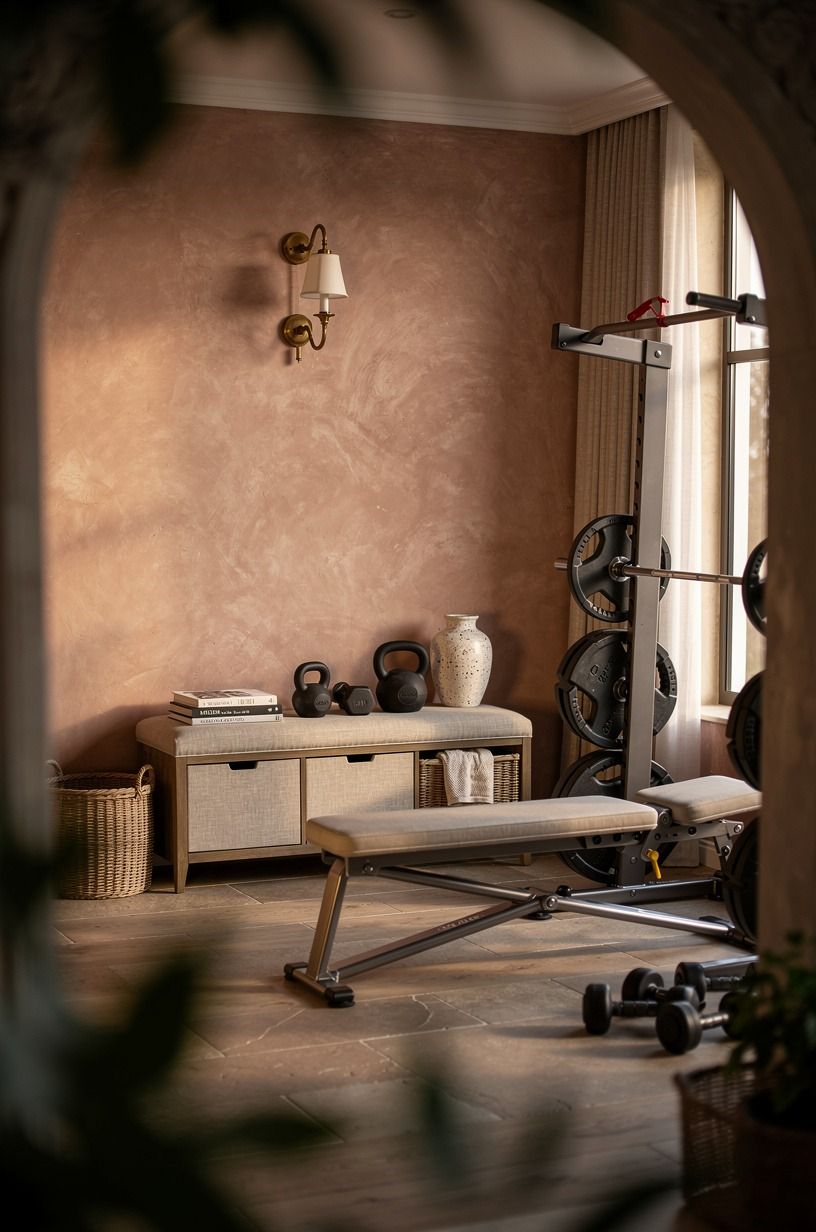
Yes, if you edit what stays visible. Put your most attractive equipment on display: urethane dumbbells, a solid white oak dumbbell shelf, and a single cork yoga block set. Your resistance bands and odd attachments can live behind cabinet doors.
The mistake is buying matching plastic containers for everything. They’re practical, sure, but they turn a refined room into a supply closet.
Use one open shelf for the pieces you reach for every day, then tuck the rest into an IKEA TONSTAD cabinet. Clay, linen, aged brass, and hand-applied Venetian plaster will keep the room calm without hiding its purpose.
You’ll clean faster, and your room will keep its peaceful rhythm.
7Anchor the room with a real bench (not an ottoman)
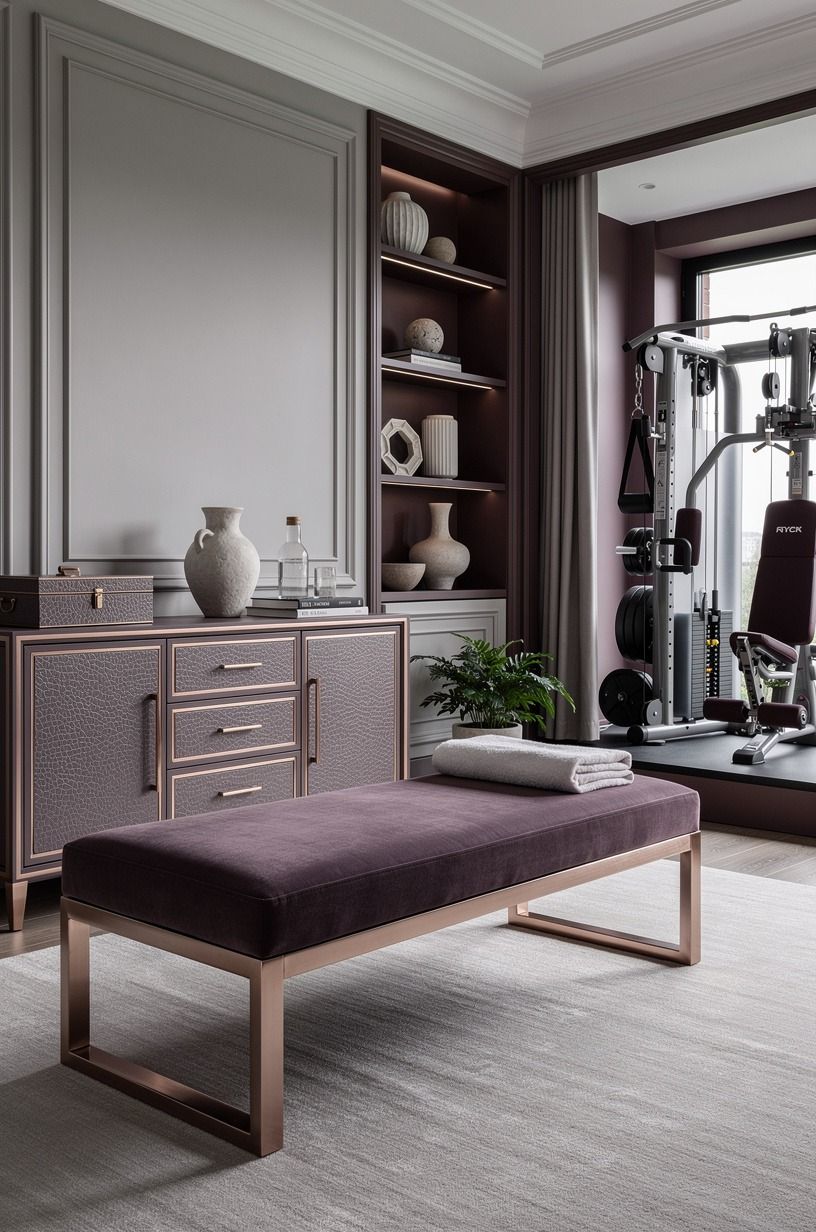
Your bench needs to look like furniture because it is furniture in this room. A bench with plum upholstery, grey detailing, and rose-gold hardware at the edge of the mat zone gives you somewhere to sit between sets, lace shoes, or drop a towel. Shagreen accents bring a little texture without making the room precious.
Choose a bench with a wipeable fabric or top-grain leather upholstery. I’ve tried the cute cream ottoman approach, and it loses the fight with sneakers and water bottles almost immediately. A longer bench also creates a clean visual line under the mirror.
Simple. Very effective!
8Use Farrow & Ball Down Pipe instead of sterile gray
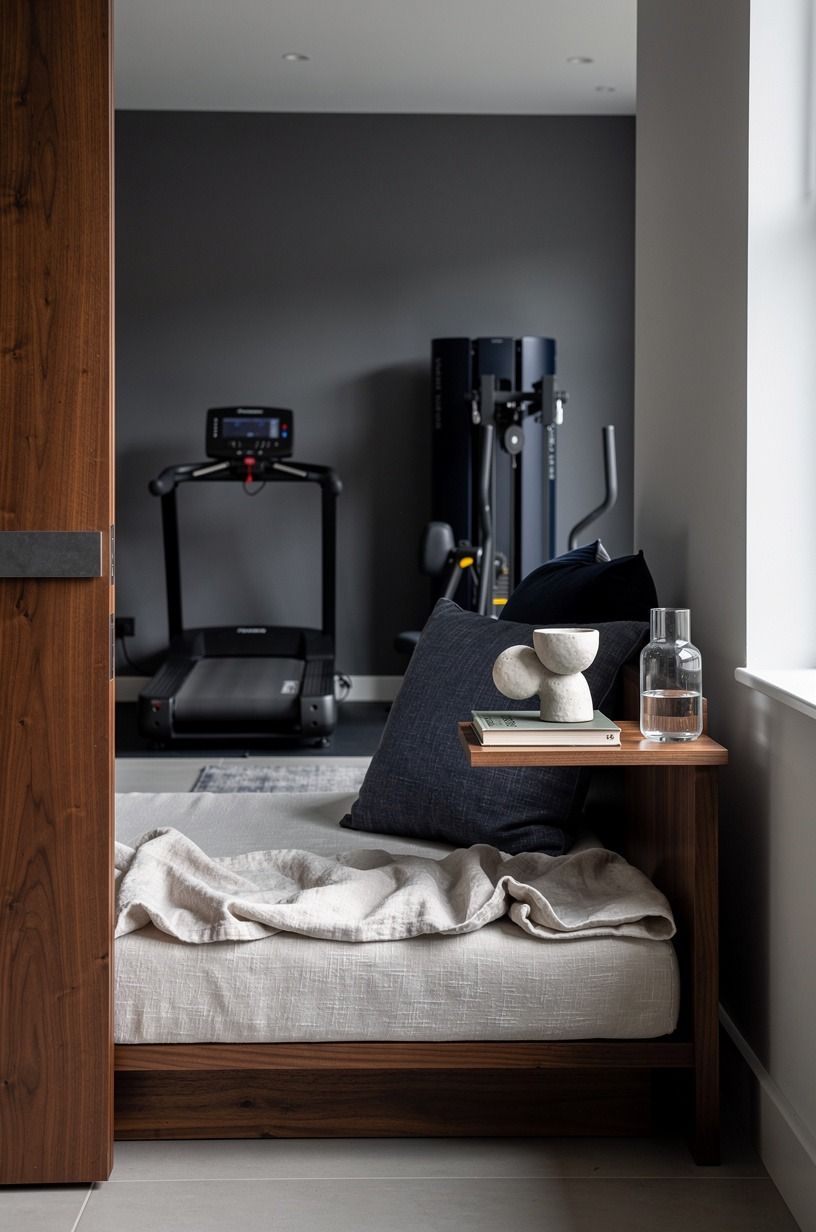
For a modern home gym design with depth, Farrow & Ball Down Pipe No. 26 beats flat builder gray every time. It has a blue-charcoal undertone that shifts in daylight, so your walls don’t look dead by noon. You’ll get a sophisticated backdrop for black equipment and walnut storage.
Pair it with washed Belgian linen curtains if your gym has windows. The fabric softens the hard edges without blocking all the light. But don’t use heavy blackout drapery unless you train late at night.
Your morning workout needs brightness, even if the rest of the room stays moody.
9Hang art where a commercial gym would hang a TV
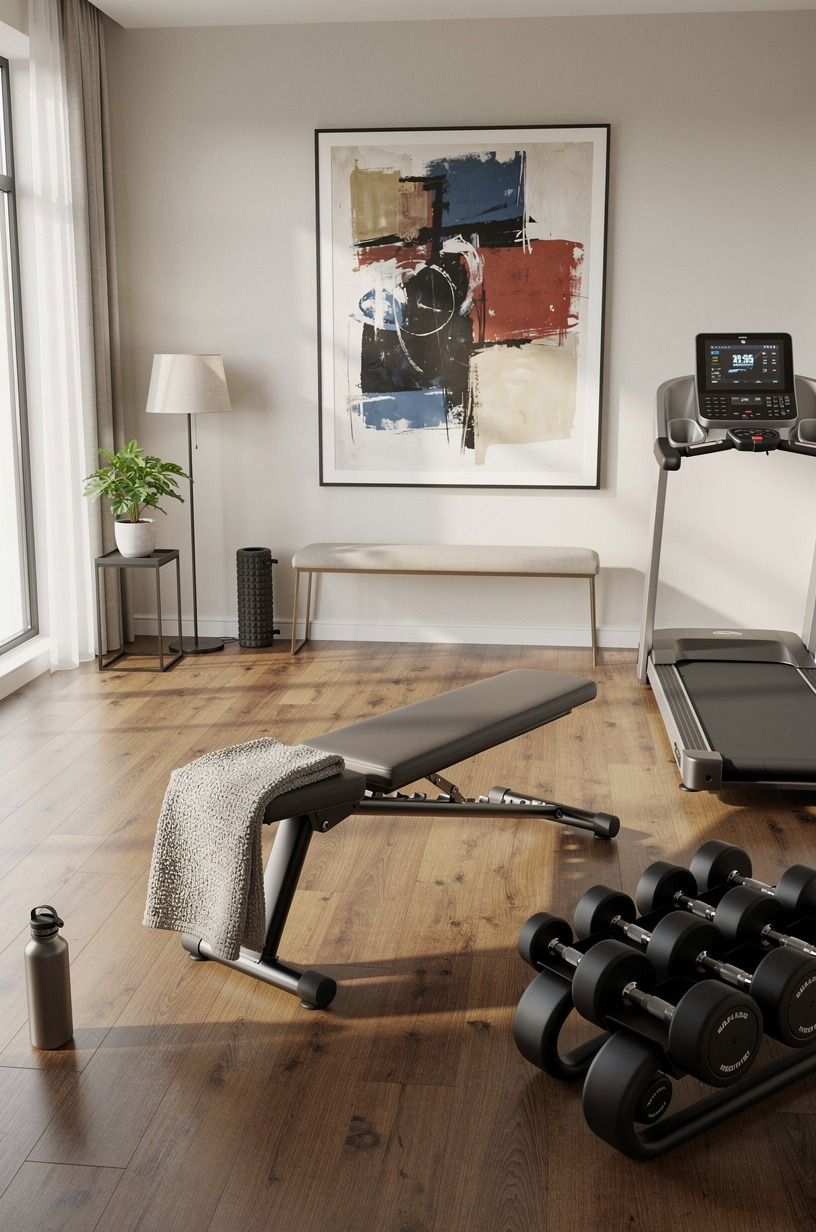
You don’t need every wall to serve the workout.
10Frame the equipment with a rug-sized material zone
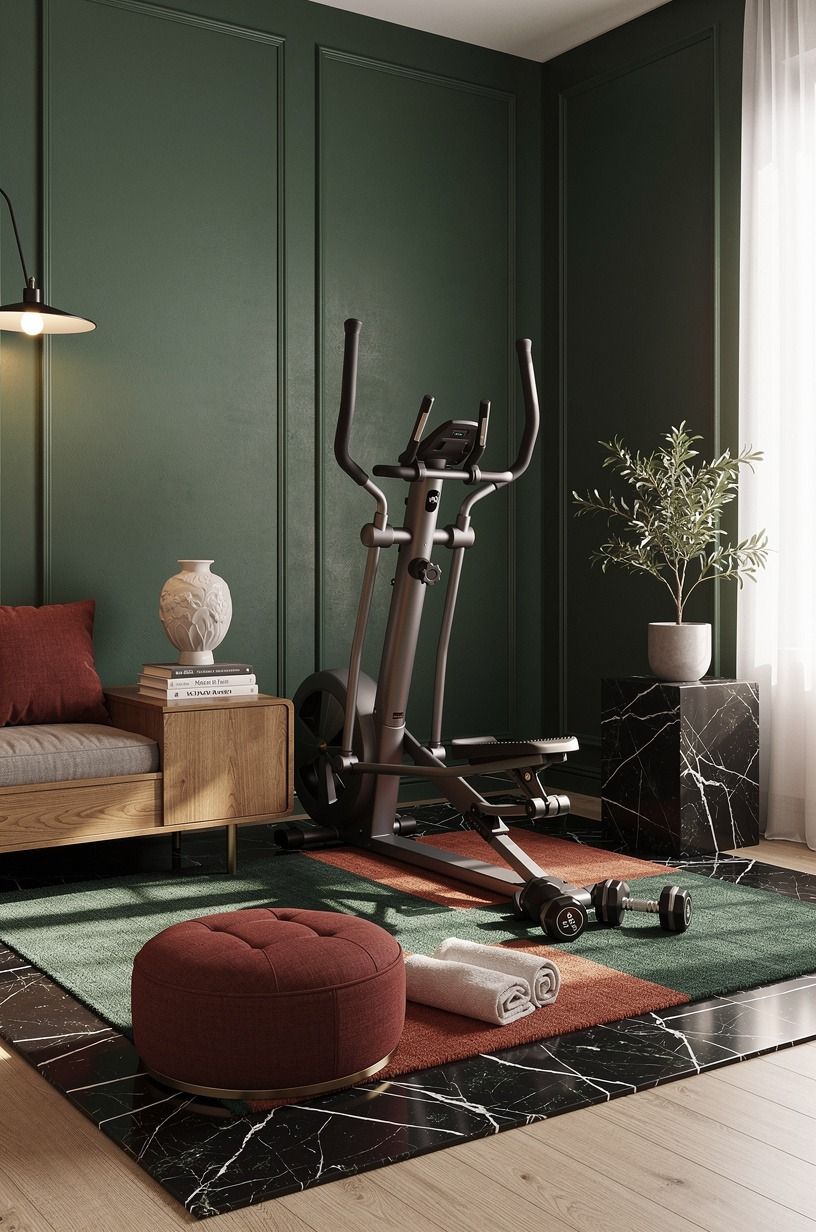
Rubber flooring doesn’t have to cover every inch of your home gym. Use it where impact happens, then let your existing floor show around the perimeter. An 8x10 ft rubber mat zone under weights and a rack looks deliberate, while full-wall black rubber can feel like a commercial facility.
A forest green and rust palette works especially well beside natural oak and Nero Marquina black marble with white veins. It gives the training area a defined finish without making it feel separate from the rest of your home.
Here’s the practical split:
Your budget decides the finish level, not whether the room can feel luxurious. A $300 setup with clean edges, one mirror, and controlled lighting will beat a $2,000 room full of mismatched gear. Every single time!
11Make your ceiling clearance part of the design
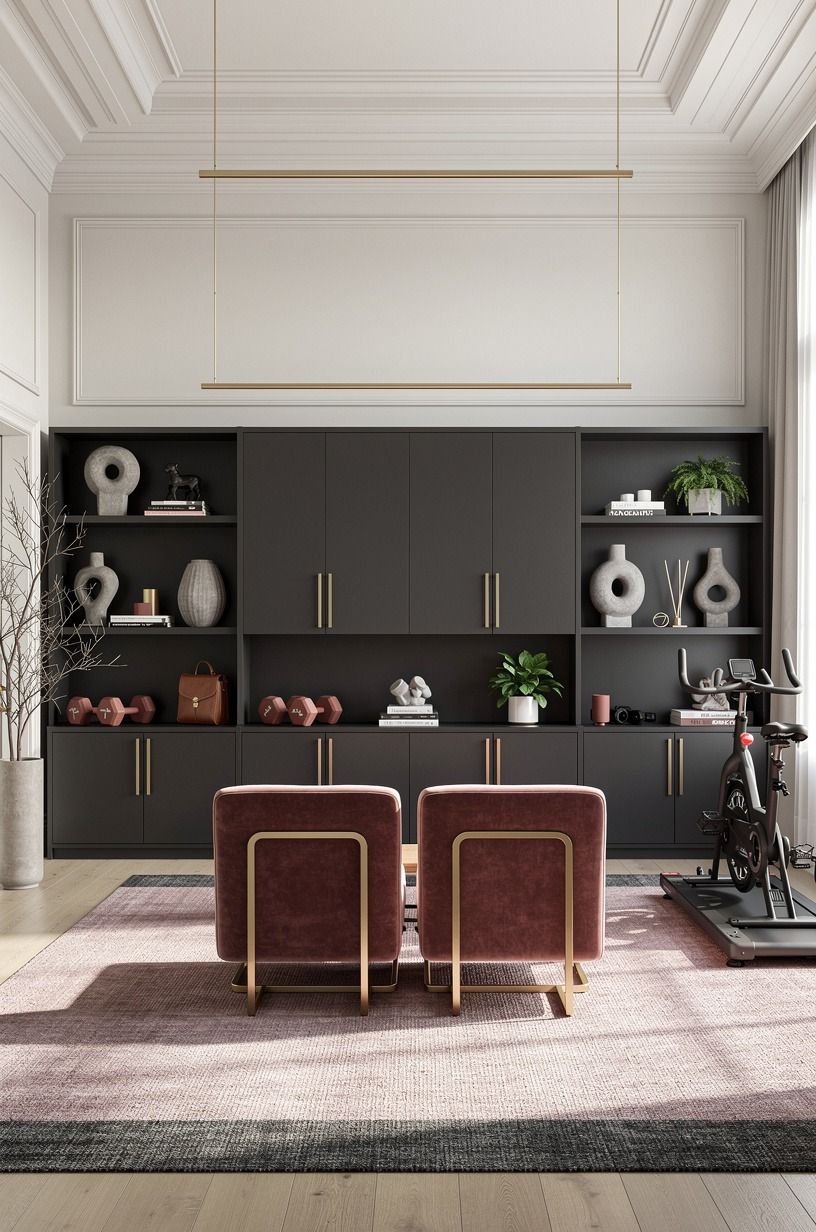
If you’ve got an 8-9 ft ceiling, plan your layout around overhead movement before you buy a tall rack or hanging fixture. You need room for jumps, presses, and even a raised arm holding a stretch band. Dusty rose, charcoal, and brass can make a lower ceiling feel considered, while deep-pile mohair velvet adds softness away from the active zone.
Use a low-profile plaster flush mount or a slim Schoolhouse-style ceiling light rather than a pendant that hangs into your movement zone. And keep tall storage on the wall with the least active floor space.
Nobody wants to duck under a light fixture during a press. Not elegant. Not safe!
Why luxury gyms feel better when they’re less “gym”
I don’t think a luxury home gym needs expensive everything. I think it needs restraint.
The rooms that feel good to use have a little emptiness in them, a place to set your phone, a wall that isn’t covered in gear, and light that doesn’t make your skin look gray. You’re asking yourself to show up here on ordinary Tuesday mornings.
Your environment has to make that easier.
I used to chase the full commercial setup. Bigger rack, more attachments, more machines. Then I spent time in a friend’s compact gym with one rack, adjustable dumbbells, a mirror, and a low oak cabinet.
It was quieter. The room smelled faintly like wood and clean rubber instead of foam packaging.
I stayed longer because I wanted to be there.
That’s the useful distinction. Equipment should support your routine, but the room should support your mood.
If you train hard, you don’t need visual chaos waiting for you before every session. Give your eyes a resting place.
Let the floor have some open space. Choose one finish that feels a little indulgent, such as unlacquered brass hardware or 18 oz cotton velvet curtains, and let that detail carry the polish.
And don’t confuse luxury with fragility. A gym has to survive dropped weights, sweat, shoes, and the occasional abandoned water bottle.
The best materials look better after use, not worse. That’s why I’ll take oak, rubber, linen, and aged metal over glossy acrylic every time. Your room should feel lived-in, not staged for a listing photo.
A Few Things Worth Answering
What is the best luxury home gym design idea for a small luxury home gym look?
A folding wall-mount rack plus a mirror is the strongest small-space pair. You’ll keep the floor open while gaining a clear workout zone. An IKEA TONSTAD cabinet can hide bands, towels, and chargers without making your room feel crowded.
Where can I buy luxury home gym pieces on a budget?
Start with IKEA, Target Threshold, and Wayfair for storage, lighting, and benches. You can also find mirrors and racks secondhand through Facebook Marketplace. Your best budget win is buying used furniture, then spending new money only on safety equipment.
How much does a luxury home gym makeover cost?
A simple makeover usually costs about $300 to $1,200, while a fuller room can run $2,000 to $8,000. You can paint, rearrange equipment, and clear visual clutter for free. Your biggest savings come from keeping the existing floor outside the training zone.
Can I create a luxury home gym on a budget?
Yes, and you don’t need to buy everything at once. Your free moves: edit visible gear, reposition the mirror, and use what you own in one color family. Add rubber flooring, a lamp, and one cabinet as money allows.
Is a luxury home gym worth it in a small space?
Yes, because a small room forces better choices. You’ll use the space more when each item earns its footprint. Keep roughly 6x6 ft per machine, and choose foldable or wall-mounted equipment to protect your walking area.
Is luxury home gym design a good idea for a rental?
Yes, if you keep the changes removable. Use peel-and-stick wall treatment, a tension rod for linen curtains, and freestanding storage. Your best rental upgrade is portable lighting, because you can take it with you without repairing drywall.
Where I’d Start First
If I had to pick one, I’d start with the wall color. You can’t make loose equipment look intentional against a blank rental-gray wall. Pin the wall color for later and build your lighting, mirror, and storage around that one grounded choice.