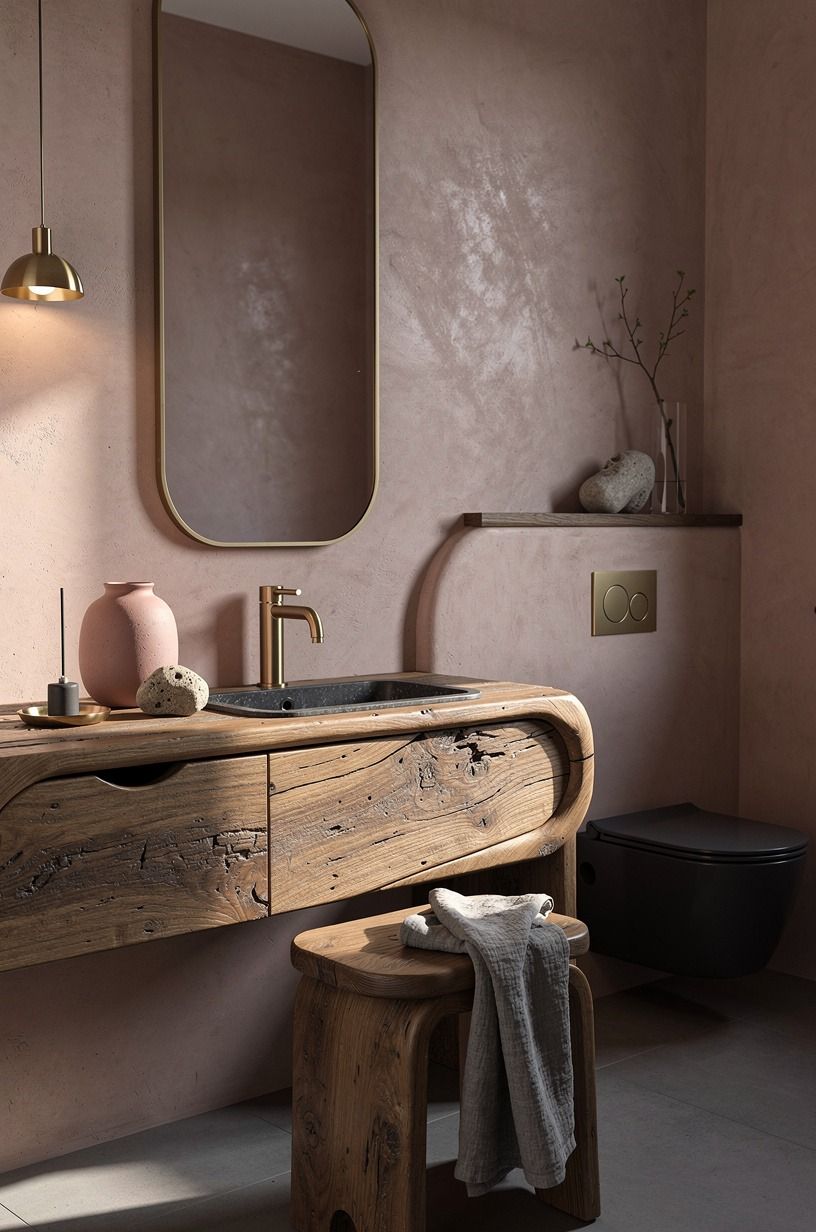
I Tried Small Powder Room Wallpaper, Pattern Without the Overwhelm Finally Worked
01 august 2026Small powder room wallpaper ideas work best when you treat the room like a jewel box, not a tiny living room. I learned that after spending one Saturday staring at a nervous beige wall, then committing to one bold print. It changed the whole room!
Here's what it looked like before
Before wallpaper, ours had the full starter-home package: builder beige paint, a narrow pedestal sink, a shiny chrome faucet, and one overhead bulb that made every surface look a little tired. The room was clean, but it wasn't inviting. You'd walk in, wash your hands, and leave without seeing anything worth remembering.
I kept trying to solve it with accessories. A new hand towel.
A thrifted mirror. A tiny vase.
Nothing stuck because the walls were still doing absolutely no work for me or for the room. You can’t decorate your way out of a blank box.
- Start with a print that gives your powder bathroom a point of view
- Use the Small-Scale Repeat Rule before you order rolls
- Paint the trim in Farrow & Ball Hague Blue No. 30
- Frame your powder room vanity wallpaper with one serious mirror
- Hang wallpaper above a wainscot line you can wipe clean
- Try the Three-Height Light Stack around the sink
- Choose brushed brass over polished chrome for warmth
- Put the pattern behind the toilet, then stop decorating it
- Build the door-back storage zone without covering the walls
- Float a 32 to 36 inch vanity over a busy print
- Let a woven shade soften the master wallpaper feeling
- Skip the matching towel set and use one deep color
- Use a 21-inch clearance check before adding furniture
- Add one imperfect antique instead of a row of new decor
- Finish with a scent that belongs to the room
1Start with a print that gives your powder bathroom a point of view
I chose a small-scale botanical Farrow & Ball wallpaper print with dusty-rose leaves, charcoal detail, and a warm brass note. You don't need a giant mural in a powder room. You need a pattern that repeats often enough that your eye reads it as atmosphere instead of one oversized picture.
The turning point came when I taped up two sample sheets beside the sink. One had huge tropical palms.
I skipped it because each leaf got chopped by the mirror, toilet, and door frame. The tighter print felt more calming, even though it was bolder up close. Your walls can handle personality.
Your sightlines need order.
2Use the Small-Scale Repeat Rule before you order rolls
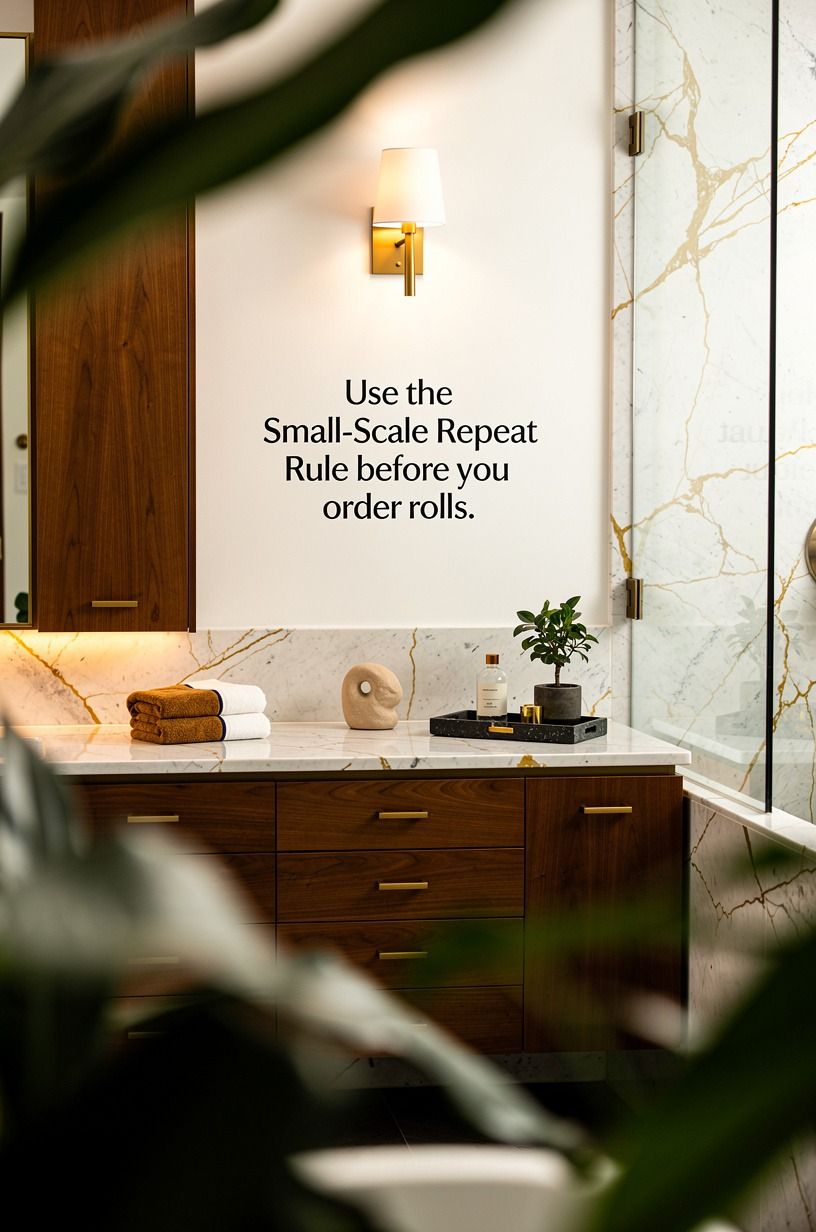
The Small-Scale Repeat Rule is simple: if you can see the full motif from the doorway, it’s probably too big for your room.
3Paint the trim in Farrow & Ball Hague Blue No. 30
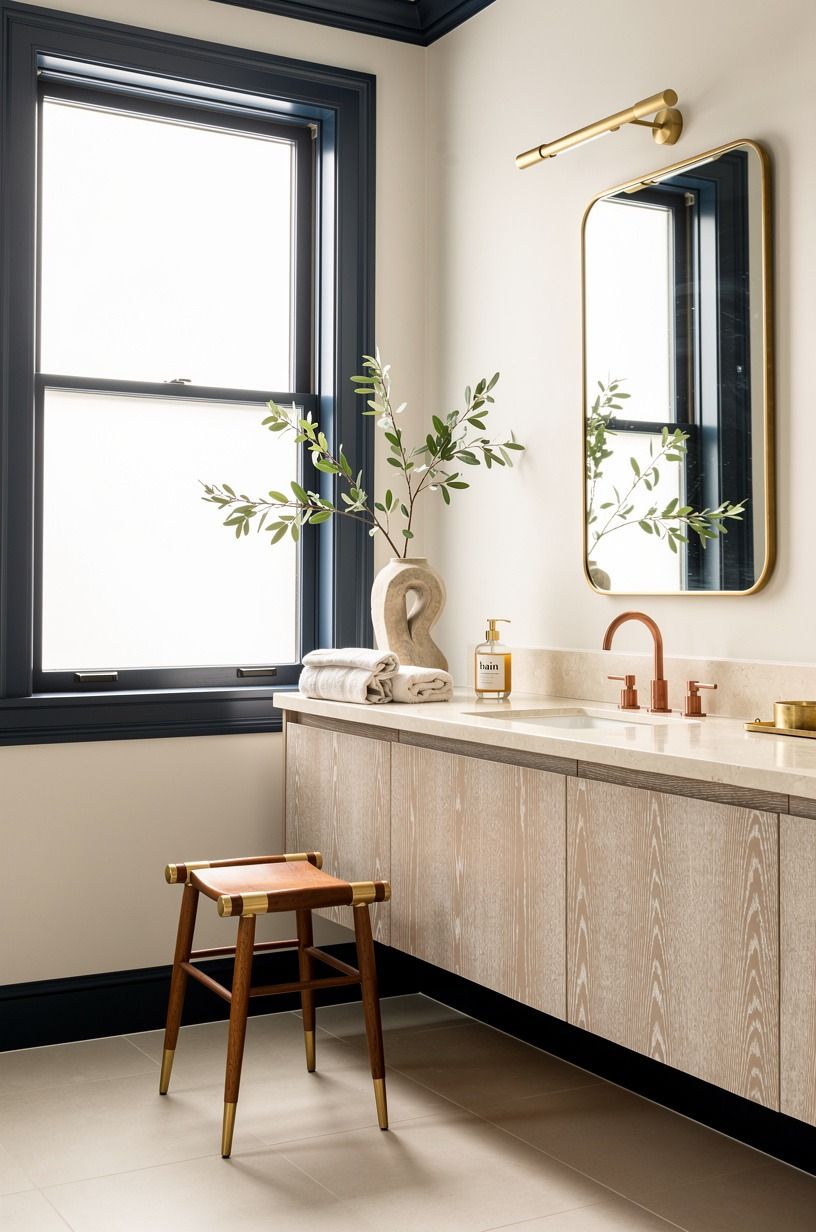
Instead of framing the wallpaper with white trim, I painted the door, baseboards, and window casing in Farrow & Ball Hague Blue No. 30. The blue pulled one quiet color from the paper and gave the room a deep, moody outline.
You might think dark trim closes in a small bath. Mine did the opposite because it erased the fussy little breaks between wall, door, and casing.
The room started to feel intentional. And the blue is much better than black here, because black would have made the ivory ground look dingy by comparison.
I used the same paint on the back of the door. That tiny continuation matters when you're standing at the sink with the door half closed.
4Frame your powder room vanity wallpaper with one serious mirror
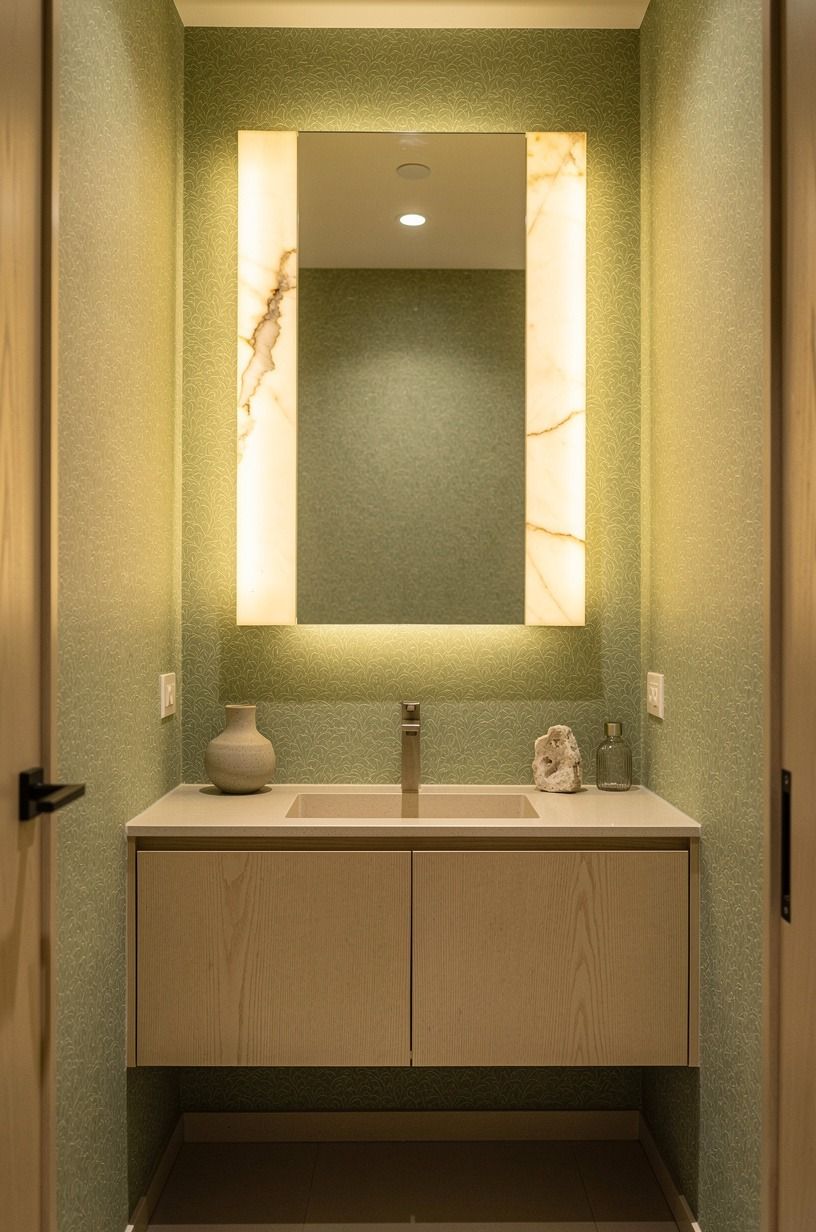
A wallpapered powder room needs a mirror with some weight. I hung an oval Pottery Barn Linden mirror with a backlit translucent onyx surround, and suddenly the print looked less like a renovation project and more like it belonged there all along.
Your mirror should cover enough visual ground to interrupt the pattern. Mine sits centered above the vanity and leaves a clear wallpaper border around it. A little warm glow against sage green and cream made the room feel settled without adding another color.
I’d skip a frameless mirror for this particular look. It’s practical, sure, but it can make a layered wall read unfinished. You need one solid shape to give your eye a resting place.
5Hang wallpaper above a wainscot line you can wipe clean
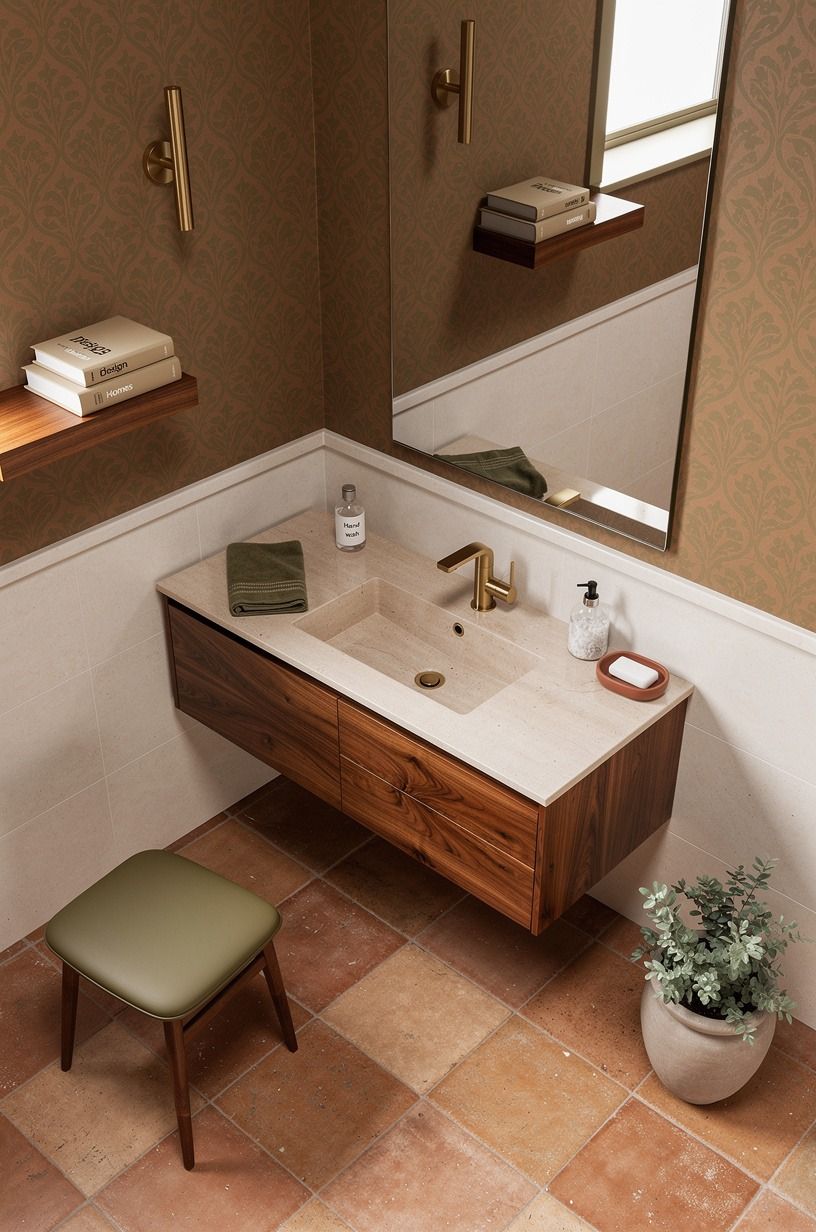
For a family powder room, I’d wallpaper above painted beadboard or a simple rail. I went full wall because ours has no splashy little-kid traffic, but you should be honest about how your room gets used.
A terracotta lower wall with book-matched walnut would be a smart choice if you want a softer, earthy base. It hides the everyday scuffs better than bright white, and you can wipe it down without worrying about the seam nearest the toilet.
You’ll get the pattern where people notice it, while your practical surfaces stay protected. That’s not less stylish. It’s better styling because you’re planning for real life.
6Try the Three-Height Light Stack around the sink
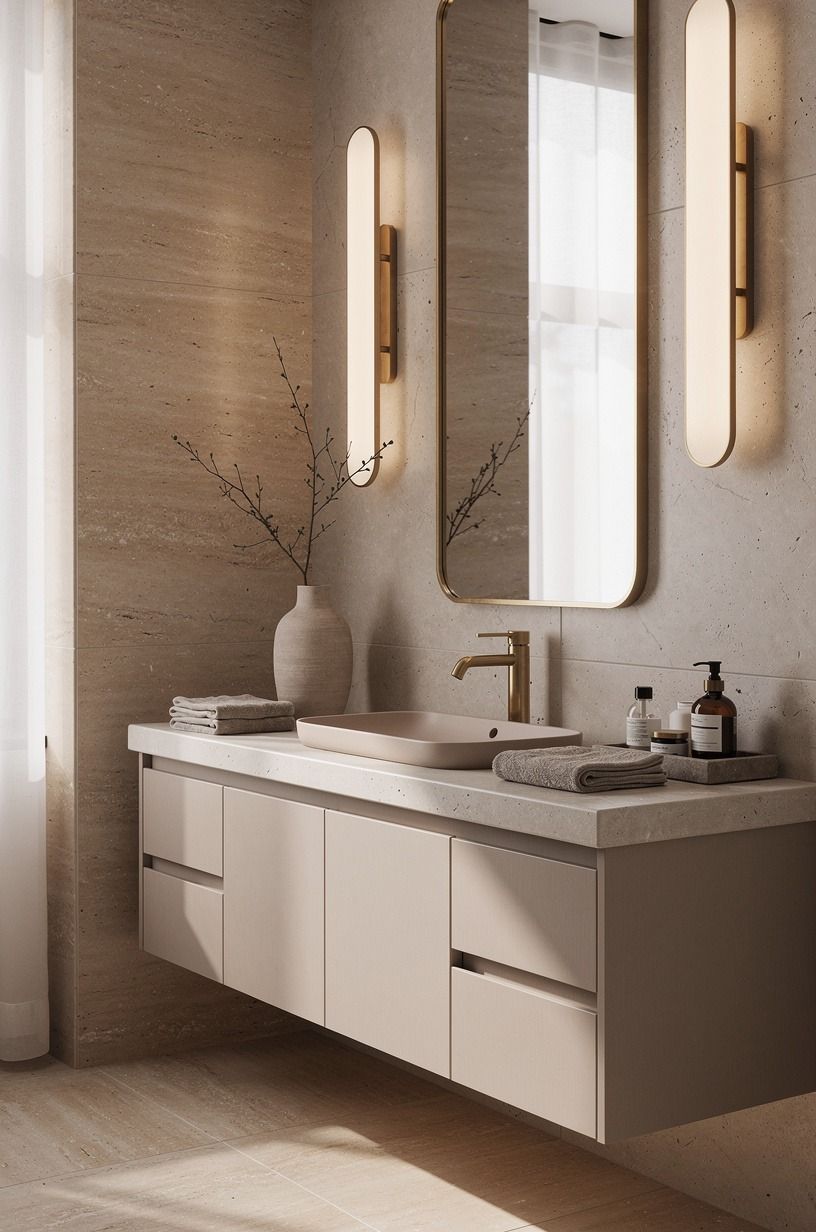
The Three-Height Light Stack saved me from the sad single-bulb look. You need light at the ceiling, near your face, and low enough to catch the wallpaper’s texture. I kept the overhead fixture, added a pair of small sconces, and placed a tiny lamp on a shelf outside the splash zone.
The Schoolhouse Solo sconce gave me a gentle side glow without crowding the mirror. You don't have to install museum lighting in a powder room, but you do need to stop relying on one harsh ceiling source. Why spend time on clay-and-linen paper if you’re going to flatten it with cold light?
But choose warm bulbs. Every time.
7Choose brushed brass over polished chrome for warmth
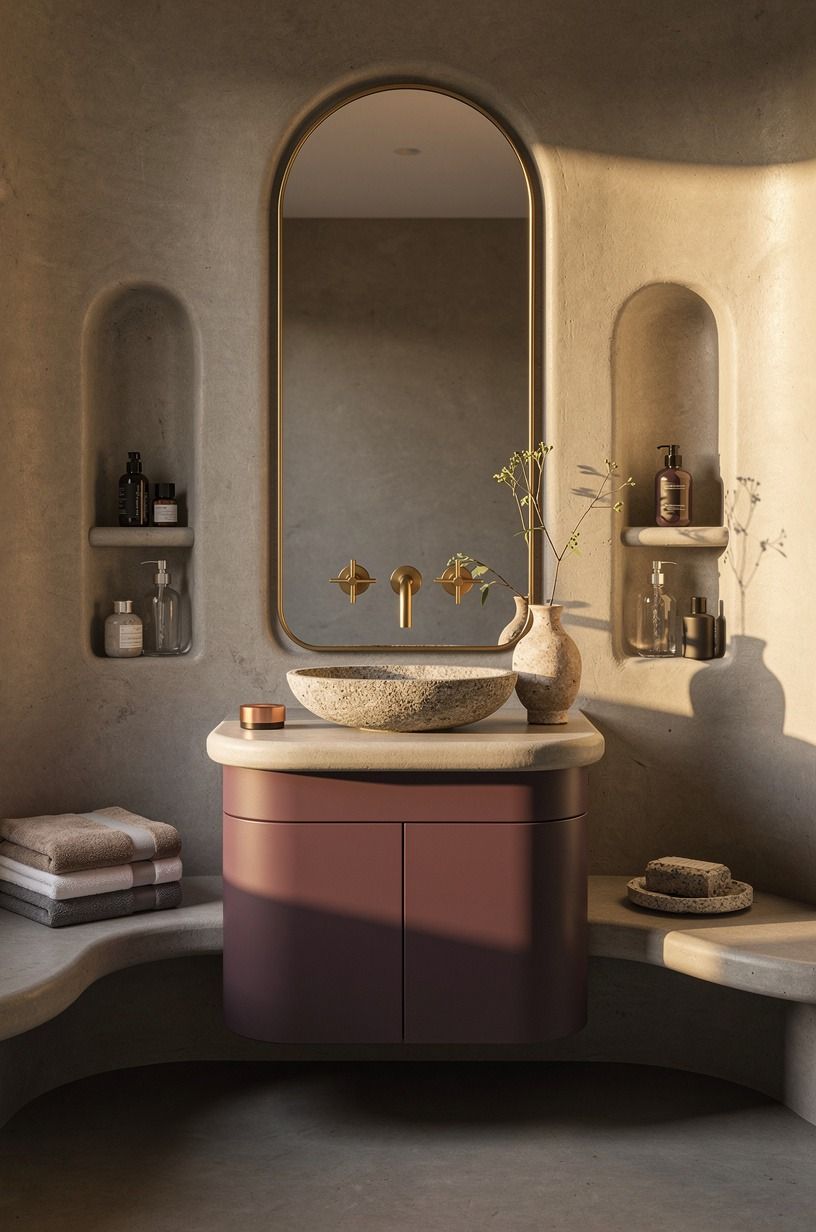
I swapped our chrome faucet for a brushed brass faucet because the wallpaper needed something quieter than a bright, silvery reflection. Typical US costs for a brushed brass faucet run from $120 to $450, so this was one of the few decisions where I paused before clicking buy.
You can keep chrome if it’s already in good shape. I just wouldn’t mix several metallic finishes in a room this small unless you’re very sure of your undertones. The brass picked up the paper’s plum and rose tones, and the surface now has a soft glow instead of a hard flash.
It feels more welcoming. Not precious.
8Put the pattern behind the toilet, then stop decorating it
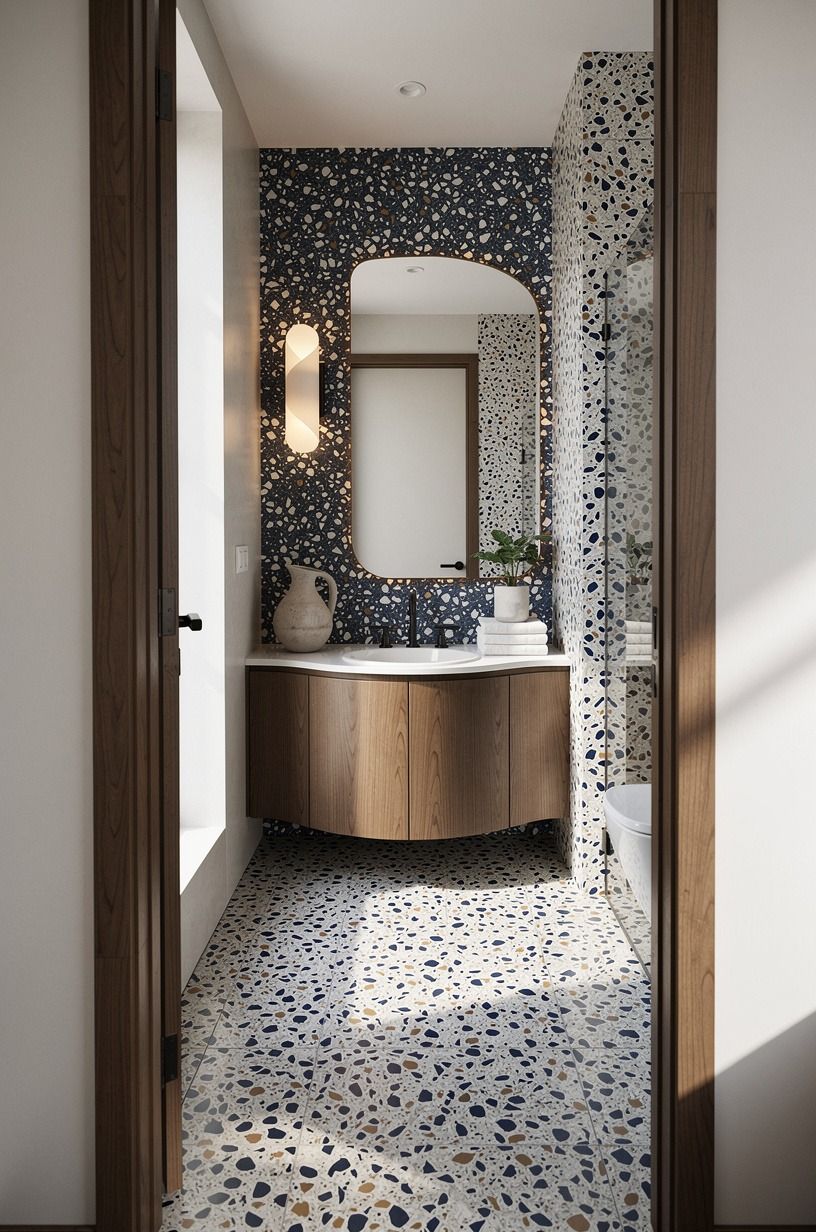
The wall behind the toilet is where I finally stopped fussing. Wallpaper, a compact terrazzo toilet-paper holder, and one small framed sketch. Done.
You don't need a leaning ladder full of towels or a shelf packed with jars there. I made that mistake in another bathroom, and the whole thing became a dust shelf with plumbing nearby.
Your wallpaper is already the artwork. Let it breathe.
A slim IKEA RIBBA frame works if you want one quiet interruption in the print. Keep the art small and slightly odd: a hand-drawn shell, an old botanical plate, a black-and-white family photo.
One piece. That’s the line.
9Build the door-back storage zone without covering the walls
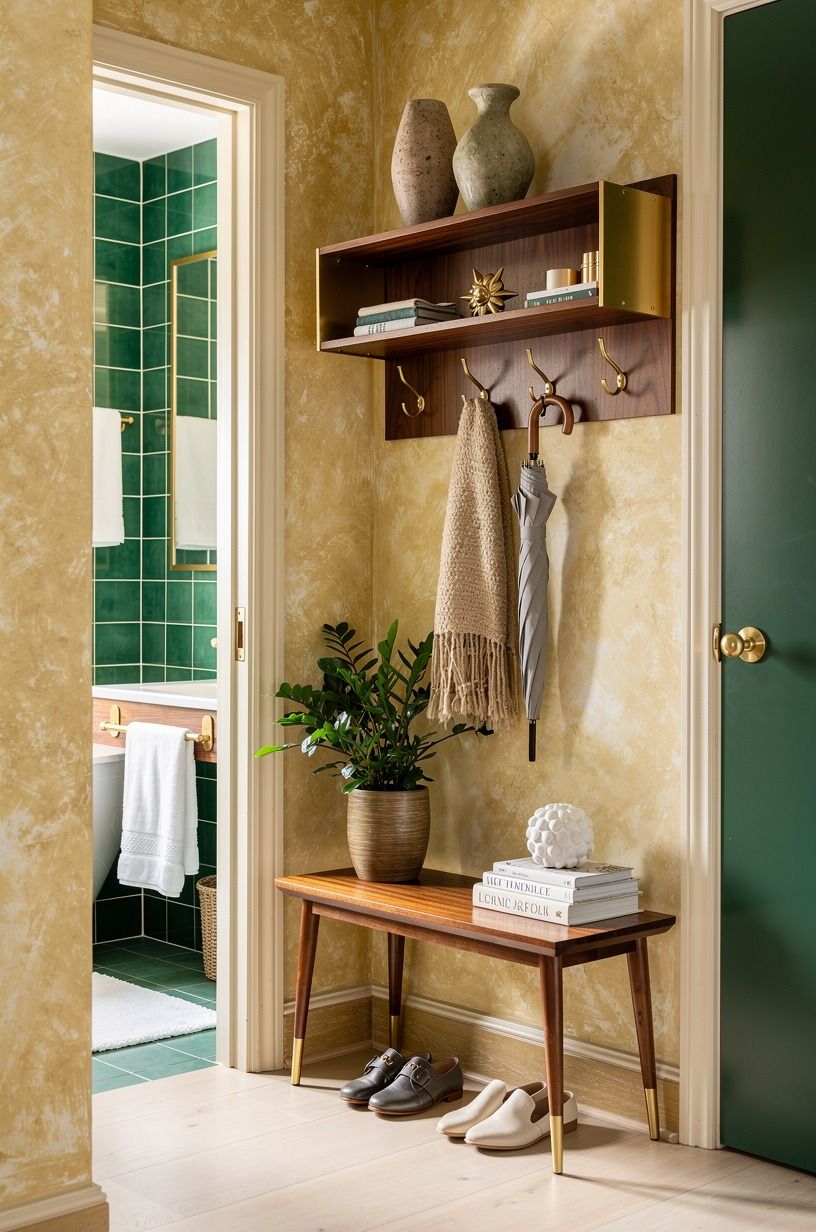
I needed hand towels and extra toilet paper somewhere, but I refused to cover the walls with a bulky cabinet. So I mounted a shallow rack on the inside of the door, where you don’t see it from the hall.
A Target Threshold over-door organizer kept the useful stuff close without stealing the room’s best view. You can hang folded Turkish cotton hand towels on the lower rail and tuck spare rolls into a small woven bin. It’s a practical move, but it also keeps the vanity clear.
Your powder room can look collected because the clutter has a job elsewhere. And honestly, clear counters make wallpaper feel more luxurious than another decorative object ever will.
10Float a 32 to 36 inch vanity over a busy print
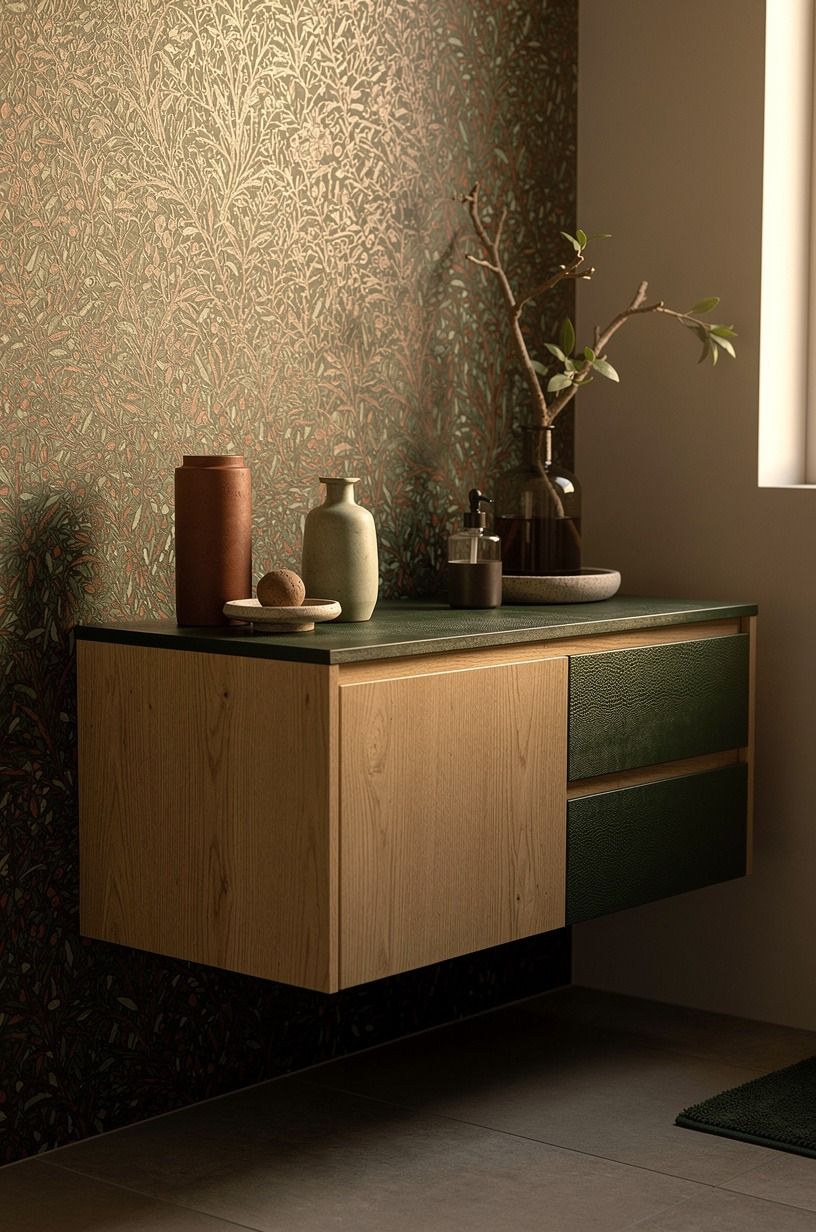
If you’re replacing the vanity, aim for a 32 to 36 inch height, then choose a shape with visible floor beneath it.
11Let a woven shade soften the master wallpaper feeling
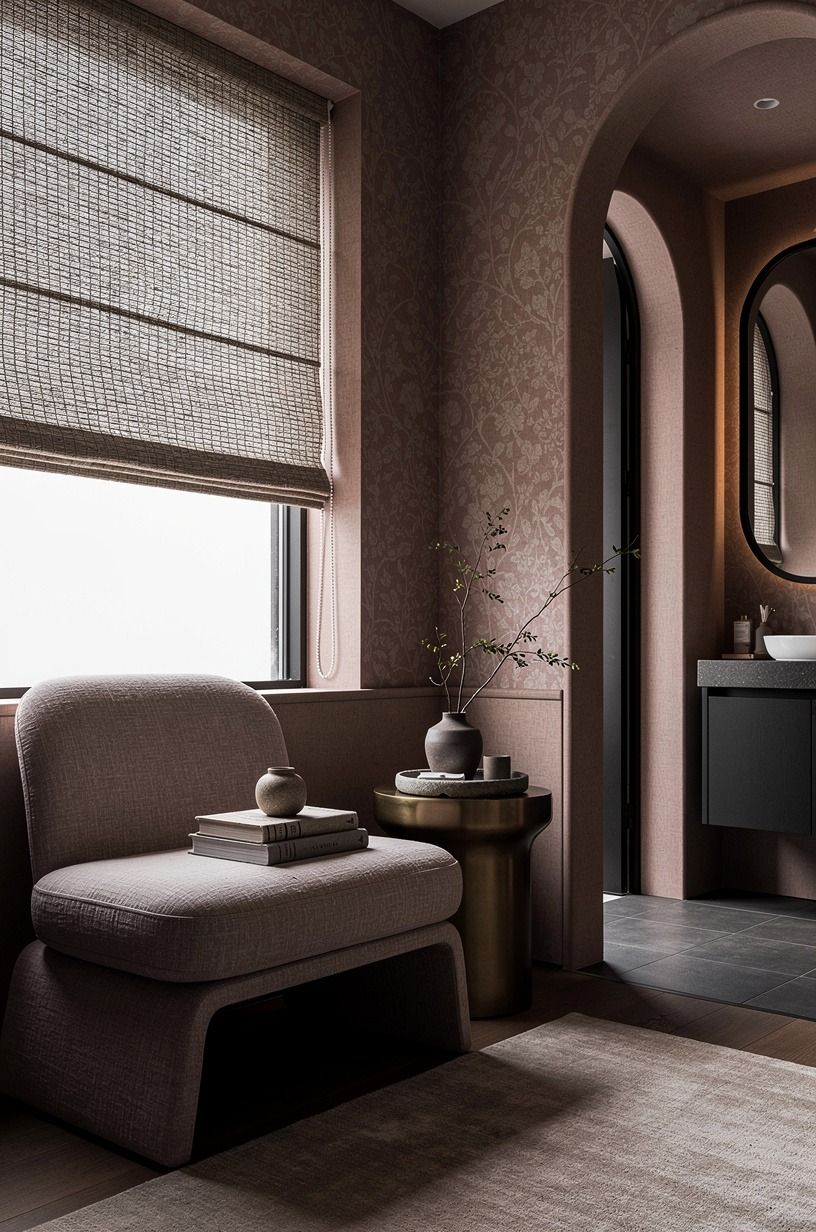
A small powder room doesn’t need master wallpaper drama. It needs one softer material to balance the paper. I added a washed Belgian linen Roman shade at the window, and the stiff little room relaxed almost instantly.
You can use an inside-mount shade if your window trim is pretty, or an outside mount if you want the window to feel taller. Mine is outside-mounted because the ceiling is low, and that extra vertical line gives the room a more elegant shape.
The linen softens afternoon light in a way plain vinyl blinds never will. A little texture.
A little softness. Enough.
12Skip the matching towel set and use one deep color
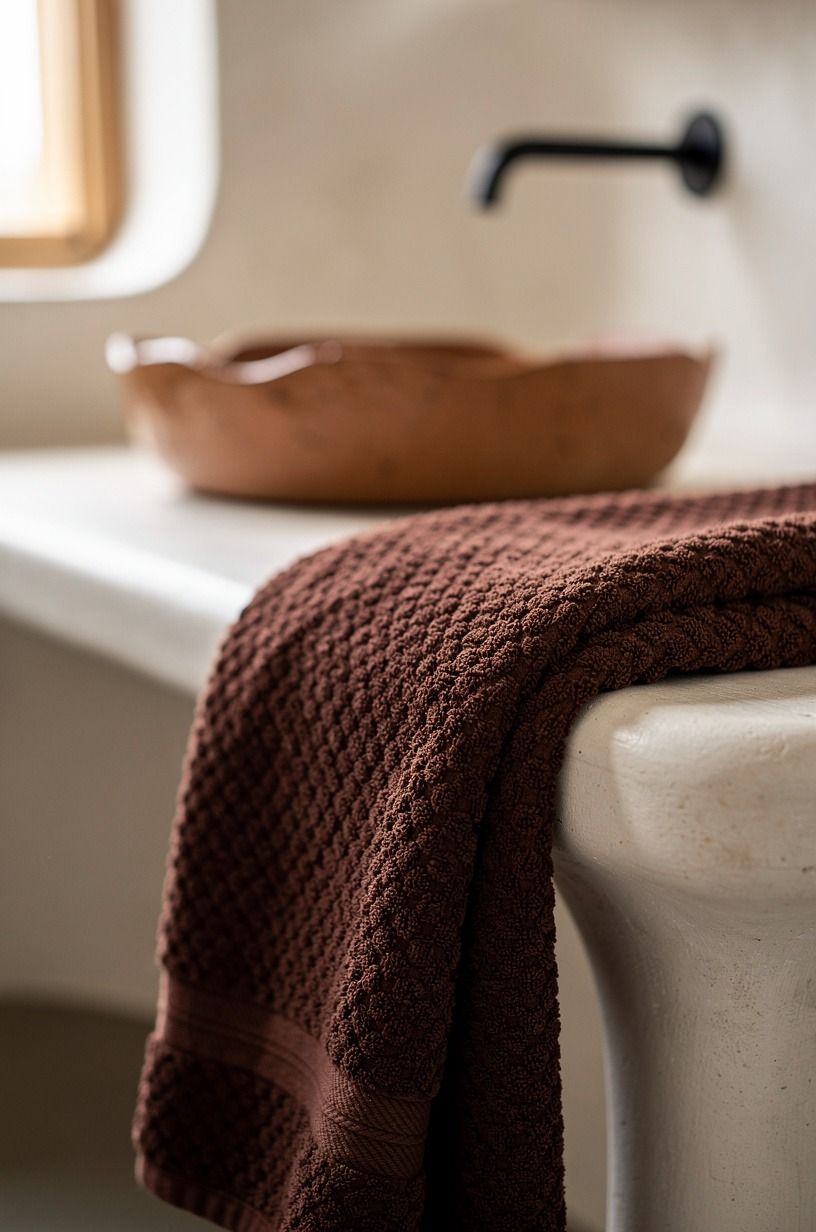
I bought one pair of deep-color organic bouclé guest towels, then stopped.
13Use a 21-inch clearance check before adding furniture
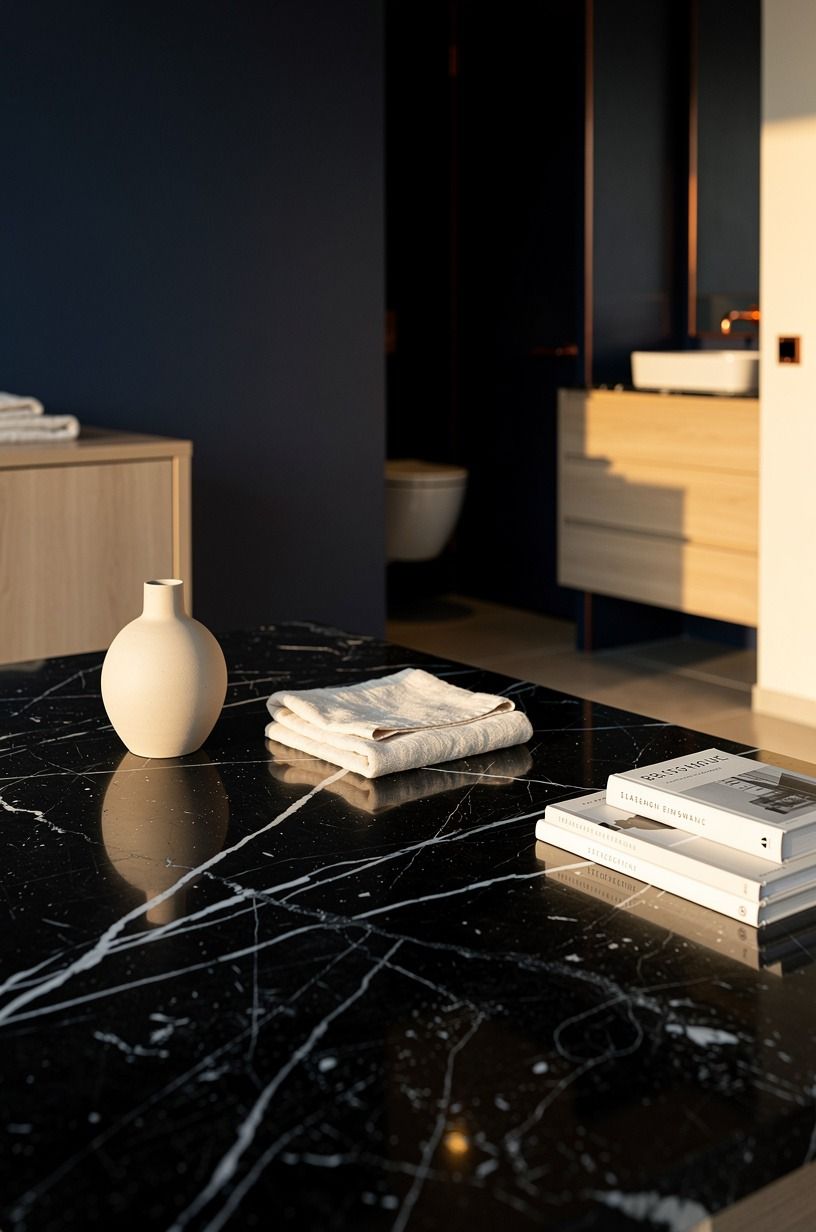
Before you add a stool, basket, or freestanding storage piece, protect the space in front of the toilet. You need at least 21 inches of clearance in front, and I measured ours twice before putting anything near that wall.
The temptation is real. A little basket looks charming in a photo.
In person, it can make your knees hit something every time you sit down. I chose a low CB2 seagrass basket that slides under the vanity edge instead.
You should let the room stay easy to move through. Small powder room inspo wallpaper only works if guests aren’t doing an awkward sideways shuffle to enjoy it.
14Add one imperfect antique instead of a row of new decor
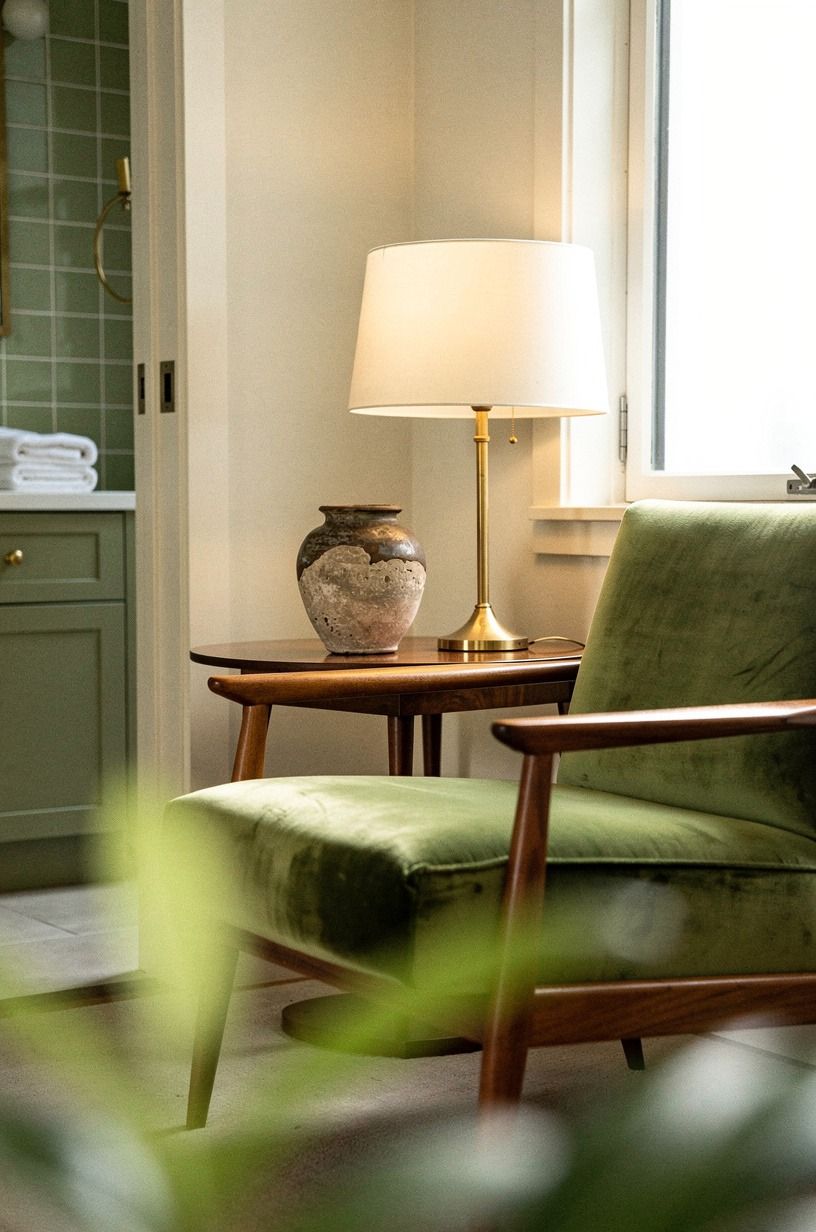
I found a small vintage stool upholstered in deep-pile mohair velvet, and it became the room’s best detail. It isn’t expensive. It isn’t pristine.
That’s why it works against fresh wallpaper.
You can use a stool beside the sink for a folded towel or under a window for a spare roll basket. Just make sure it earns its footprint. I like an antique more than a matching modern accessory because the little wear and softened velvet stop the room from feeling too planned.
And yes, I went back and forth on this. The new marble side table was prettier online. The old stool had more nerve in person.
15Finish with a scent that belongs to the room
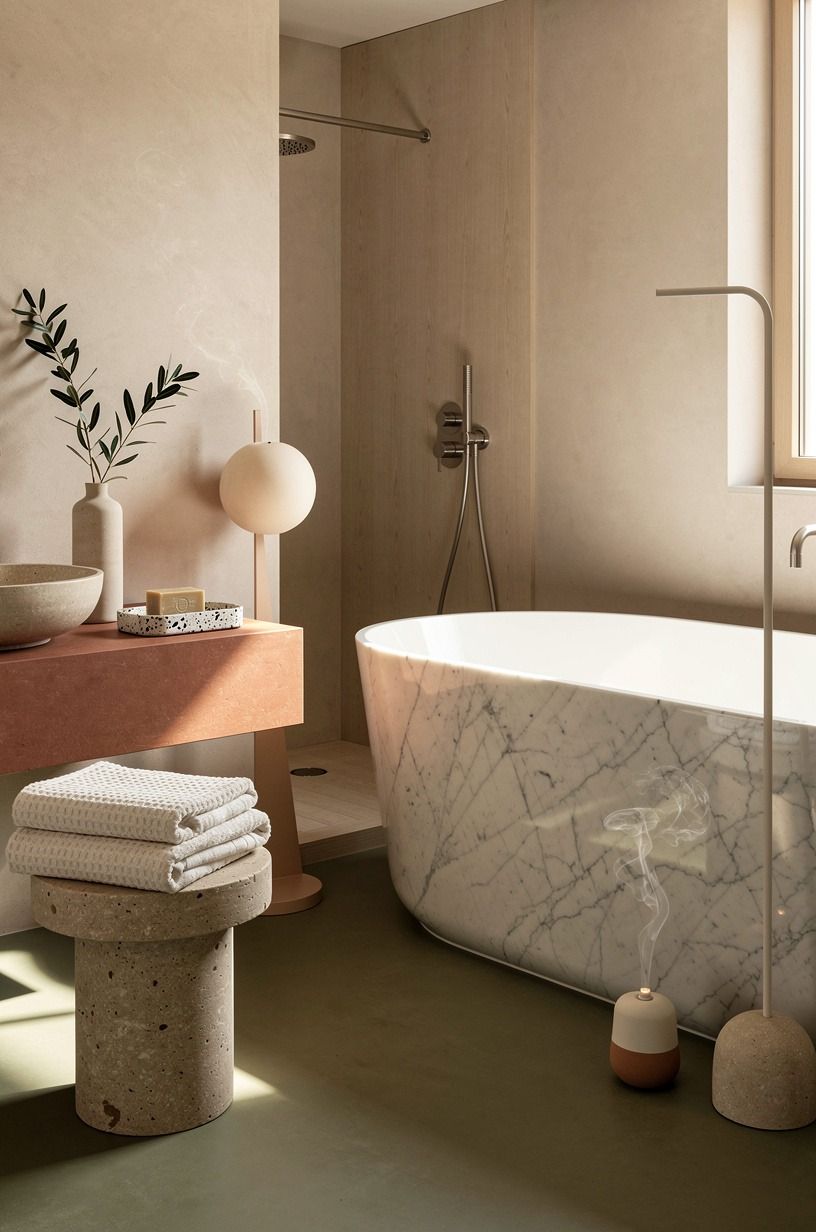
The final layer wasn’t another object. It was a diptyque-style amber candle in a small ceramic cup, lit only when we had people over. The room now has a soft, woody smell that fits the dark trim and botanical paper.
You don’t need fragrance all the time. I’d skip anything sweet or beachy with this kind of moody print because it fights the atmosphere you’ve built. Amber, cedar, black tea, or a clean fig note all make more sense.
That first evening, I walked past the open door and stopped. Not because it looked bigger. Because it finally felt like a room someone had cared for.
How much it cost
My version landed between a small refresh and a true renovation because I kept the existing layout, toilet, and plumbing. You can spend $200 to $1,200 on paint, a mirror, faucet, and textiles, or go much further if your vanity and tile need replacing. I spent where your hand and eye land first: wallpaper, lighting, mirror, and faucet.
For a more built-in look, zellige tile typically costs $15 to $35 per square foot, while subway tile usually runs $2 to $10 per square foot. A marble top can run $50 to $100 per square foot. I’d spend on wallpaper before a marble top in a powder room, because your guests see the wall before they touch the counter.
Why I stopped treating wallpaper like a commitment problem
I used to think powder room wallpaper had to be safe because the room was small. Pale print, tiny motif, neutral paint, nothing anyone could object to.
That logic sounds sensible until you stand in a room that barely gets used and realize you’ve spent money making it disappear. A powder room is one of the rare places where you can make a sharper choice without having to sleep beside it every night.
The bigger lesson, for me, was that overwhelm doesn’t come from pattern alone. It comes from too many competing decisions.
A large print, shiny faucet, busy tile, graphic rug, colorful art, and a cluttered vanity can turn even a charming paper into visual noise. I had to stop buying each pretty thing separately and decide what the room’s lead voice would be.
Here, it was wallpaper.
Once I made that call, everything else got easier. The blue trim supported the paper.
The brass warmed it. The oval mirror interrupted it.
The plain towels calmed it down. You can use this same decision frame in your room: choose the one feature you want people to remember, then make the other choices help it do its job.
I’ve made the opposite mistake before. I put a patterned paper beside dramatic floor tile and tried to rescue it with neutral accessories.
It never settled because both surfaces wanted the first word. This time, I kept the floor quiet and gave the walls permission to be bold. That’s the part I’d repeat.
Every single time!
The Questions I Get Asked Most
What is the best small powder room wallpaper for a small bathroom?
A small repeating botanical or geometric print is usually the best choice because it gives you pattern without visual crowding. Look for tightly spaced motifs, a warm ground, and one dark accent color. A simple IKEA HEMNES-style vanity helps the paper stay central.
Where can I buy small powder room wallpaper pieces on a budget?
You can find affordable supporting pieces at IKEA, Target, and Wayfair, then hunt Facebook Marketplace or thrift stores for mirrors and stools. Your best budget move is mixing one new functional item with one older piece that has some wear and character.
How much does a small powder room wallpaper makeover cost?
A cosmetic powder room wallpaper makeover often costs about $200 to $1,200 if you keep the layout and plumbing. Paint and styling are the lowest-cost changes, while a new faucet, mirror, wallpaper, and lighting create the most visible shift.
Can I create a powder bathroom with wallpaper on a budget?
Yes, and you can start with one wall of removable paper instead of a full install. Sample-sale wallpaper. Existing vanity paint.
Secondhand mirror. Those choices keep your room personal without forcing a large renovation bill.
Is a powder room vanity wallpaper makeover worth it in a small space?
Yes, it’s worth it because a small room needs fewer rolls and gives you high visual impact per square foot. Keep the vanity simple, leave clear floor around it, and use one mirror shape that breaks up the pattern.
Is small powder room wallpaper a good idea for a rental?
Yes, if you use removable finishes and protect the original surfaces. Peel-and-stick wallpaper. Tension-rod shade.
Removable hooks. You can make the room warm and expressive, then take most of it with you later.
Where I’d Start First
If I had to pick one, I’d start with the wallpaper. You can’t layer warmth onto a room whose biggest surface says nothing, and every small object will keep fighting for attention. Pin the wallpaper direction you love, then let the mirror and trim follow it.