How to Create a Basement Speakeasy to Actually Transform Your Lower Level - 15 Ideas
31 july 2026A basement speakeasy comes down to five moves in the right order: zones, budget, dark paint, low light, and a bar that anchors the room. I've finished two basements, and my first attempt felt like a waiting room with a couch because I bought furniture before touching the walls. This is the order that works. Most of it takes a weekend, not a contractor.
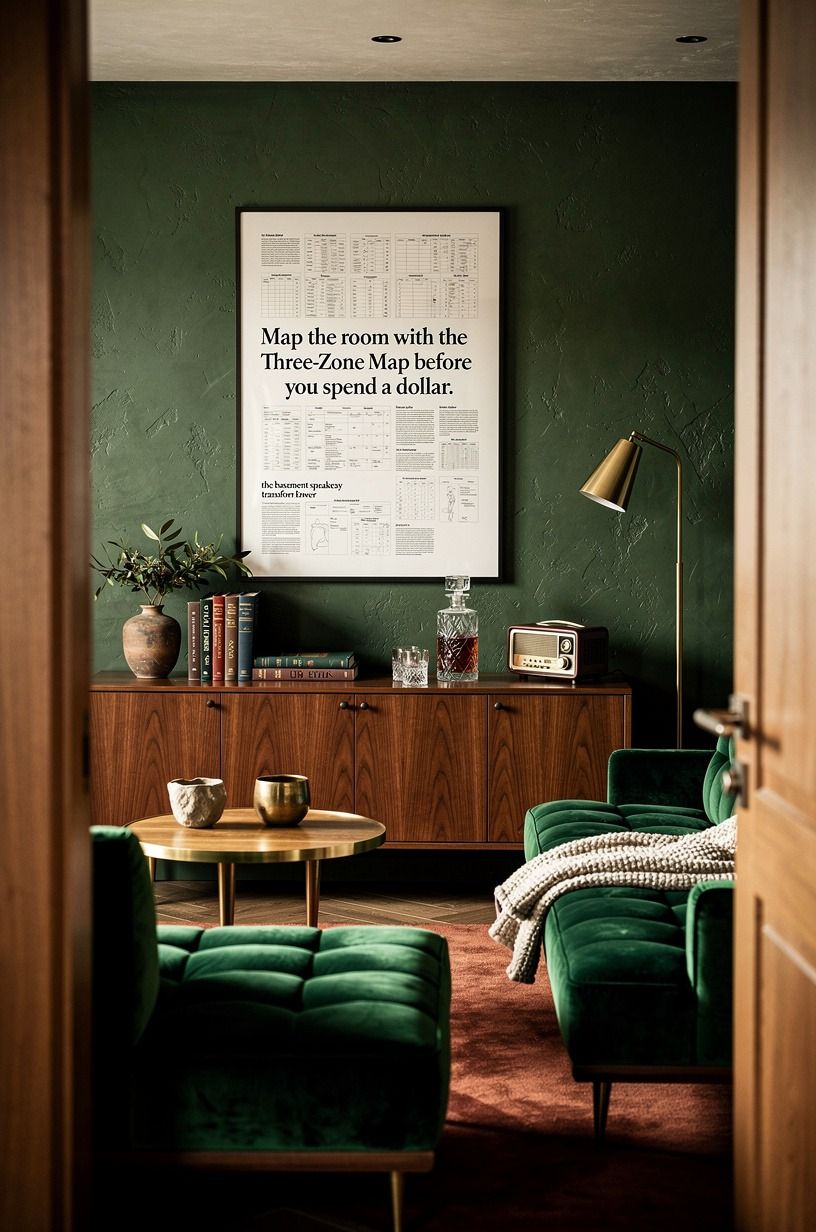
- Map the room with the Three-Zone Map before you spend a dollar
- Pick your budget tier before you pick a single finish
- Paint the walls darker than feels safe
- Paint the ceiling instead of fighting it
- Lay flooring that forgives a spilled drink
- Build the bar wall, even if the "bar" is a cabinet
- Do you really need plumbing down there?
- Stack your light at three heights with the Three-Height Light Stack
- Anchor the seating with a low table and a tight conversation zone
- Hang walls worth staring at
- Hide the ugly stuff behind closed doors
- Give the room a soundtrack
- Warm it all up with texture you can reach out and touch
- Style the back bar with the Back Bar Formula
- Choose aged brass over chrome, every single time
1Map the room with the Three-Zone Map before you spend a dollar
Before paint, before furniture, decide where everything lives. A speakeasy works because it feels intimate, and intimate comes from zones, not square footage.
You want three: a bar zone, a seating zone of at least 100+ square feet, and a walking path between them that's never under 36 inches wide. Sketch it on paper first.
Ten minutes here saves you from shoving a sectional against the wrong wall for two years.
I taped my zones out with painter's tape and walked the room for a week. Annoying?
A little. But you'll catch the problems while they're still free to fix, like the support pole sitting exactly where your barstools want to go.
If you're carving out a guest sleeping nook, remember a bedroom needs an egress window, and that's a code issue, not a style choice.
2Pick your budget tier before you pick a single finish
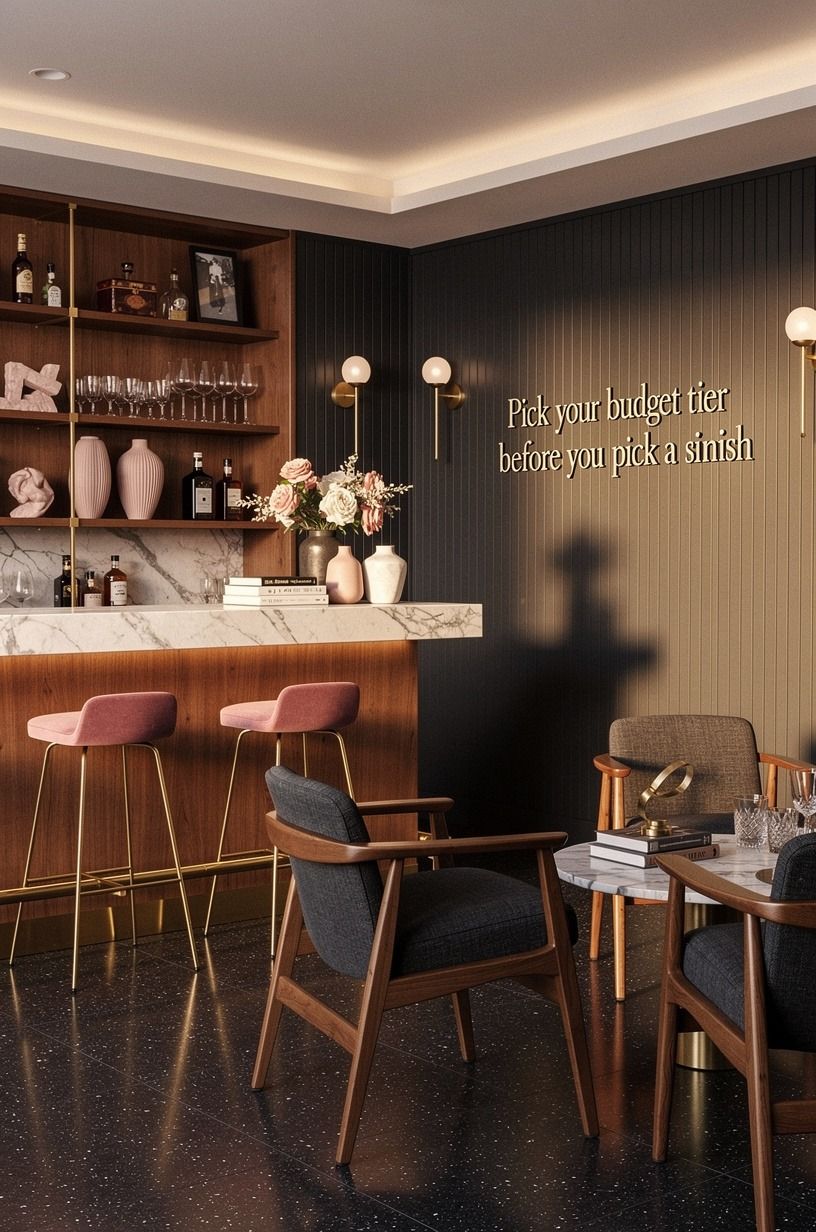
Here's the part nobody respects, and it bites people every single time! A cozy basement bar can run $500 or $50,000, and both are fine, but you need to know which game you're playing. Typical US ranges look like this:
And the materials themselves have their own price ladders:
My honest advice: a dry bar with great lighting beats a plumbed wet bar in a room that's still builder beige. Spend where your eye lands first. You'll feel the difference every night, not just when guests come over.
3Paint the walls darker than feels safe
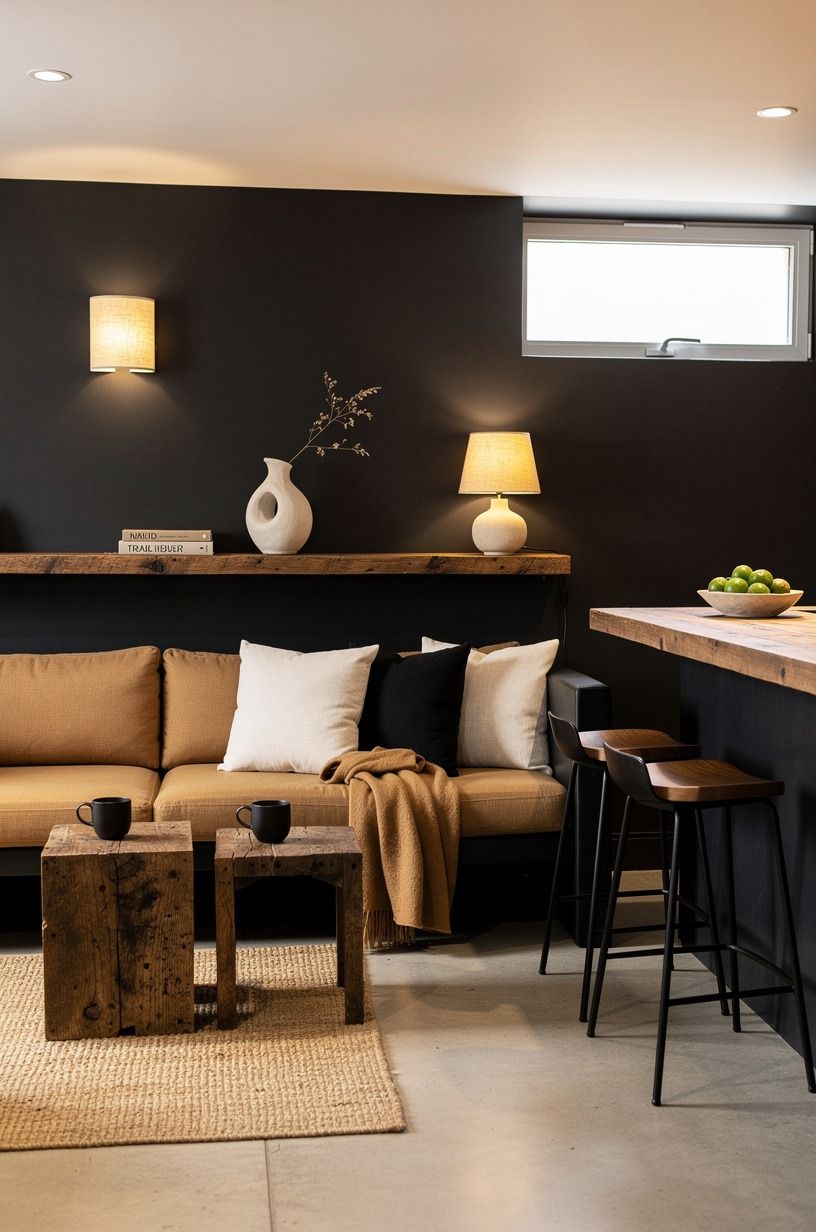
This is the move that does 80% of the work, and it's under a hundred bucks. A speakeasy can use Benjamin Moore White Dove (OC-17) on the walls, then let camel upholstery, black accents, and reclaimed weathered teak bring in the depth. Two coats, one Saturday, done.
If white is your direction, Farrow & Ball School House White (No.291) keeps it soft without looking stark. I'd skip the accent wall either way.
One dark wall in a sea of white reads indecisive, like the room can't commit. Commit.
Where the basement meets a brighter stairwell, keep that transition in Sherwin-Williams Agreeable Gray (SW 7029) so the drop into the room feels intentional. That contrast is the whole drama of the thing. Your guests will feel it on the stairs before they see a single detail.
4Paint the ceiling instead of fighting it
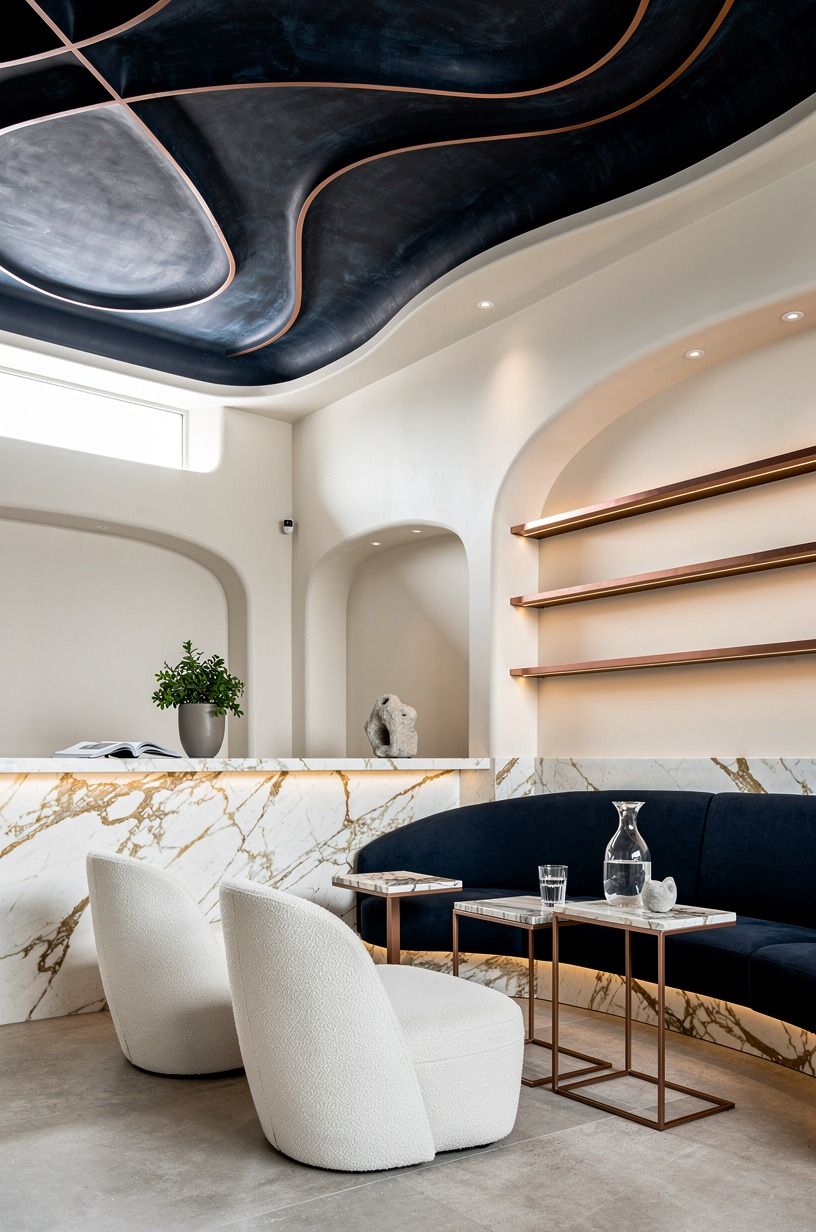
Ever walked into a basement and felt the ceiling press down on you? Finished basements need 7 feet minimum, and many older homes barely clear it.
A white drop ceiling grid announces "office." Painting the joists, ducts, and pipes a flat midnight blue makes the whole ceiling visually disappear, and the room reads taller, not lower. Counterintuitive. Also true.
It took me two days with a sprayer and more drop cloths than I want to admit. If spraying isn't your thing, a deep blue on standard drywall gets you almost there.
Just don't leave it white. An ivory ceiling over midnight-blue walls chops the room in half horizontally, and you'll feel that line every time you sit down with a drink.
5Lay flooring that forgives a spilled drink
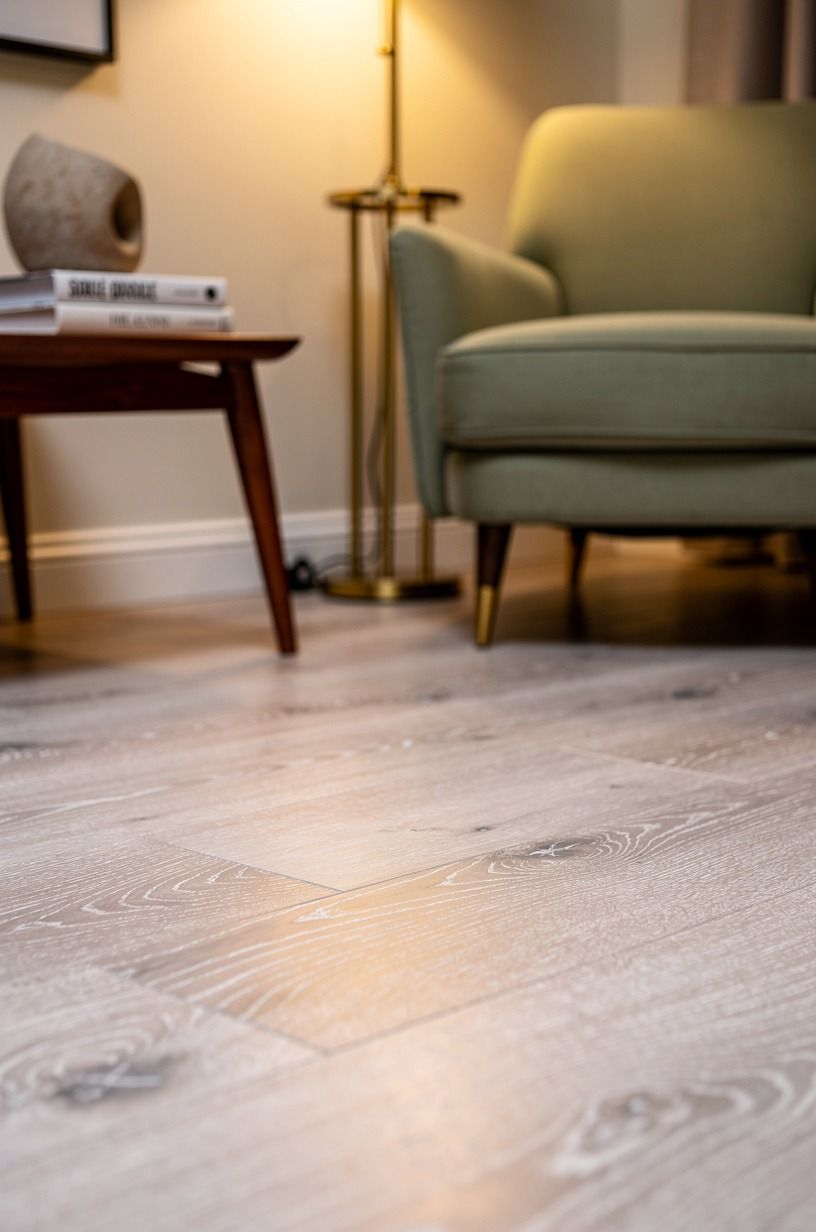
Basement floors sit on a slab, and slabs run cold and slightly damp by nature.
6Build the bar wall, even if the "bar" is a cabinet
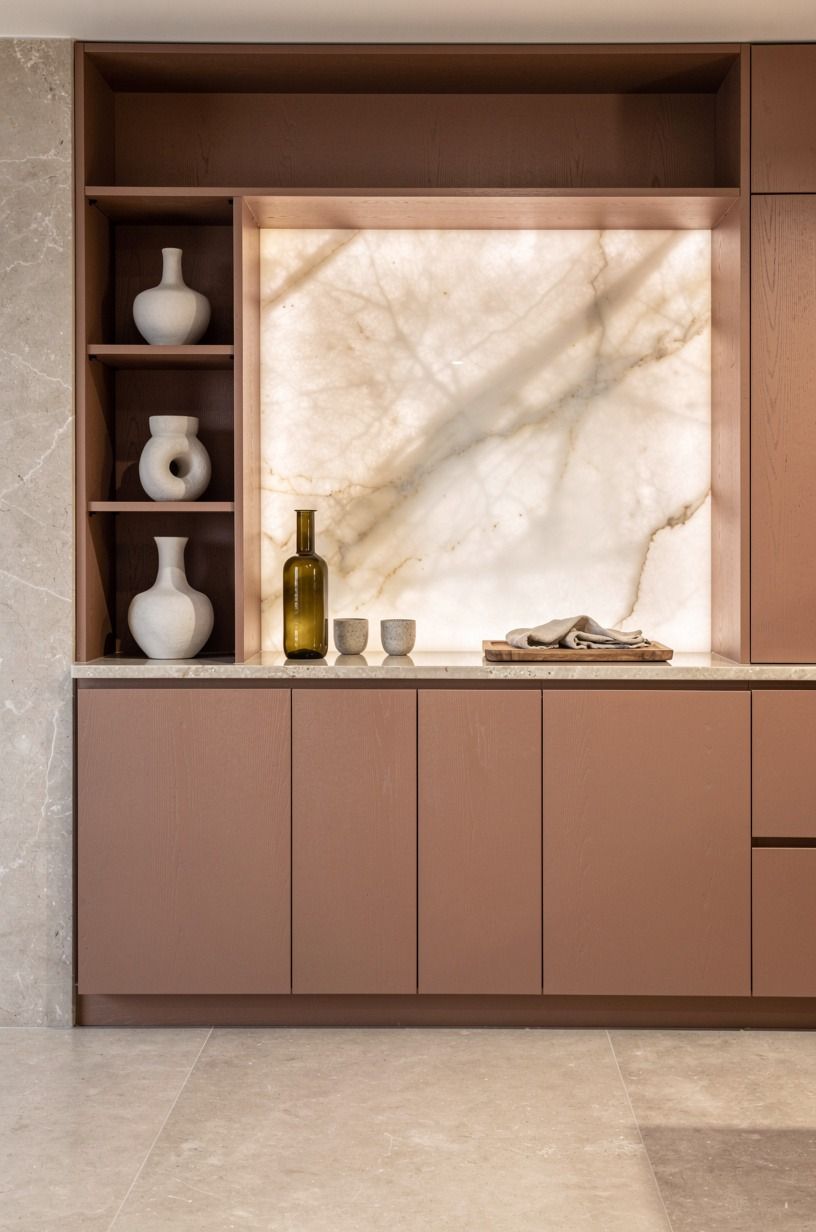
Every diy basement speakeasy lives or dies on the bar, but a bar doesn't mean custom cabinetry and plumbing. My first bar was an IKEA BESTA unit with a stone-look top, about $300 all in, and guests still talked about it. Flank it with two wall shelves, add a rail for hanging glasses, and you've got something that feels like a built-in.
If you want the real furniture moment, CB2 makes fluted bar cabinets that anchor a wall entirely on their own, typically $900 to $2,000. Pair one with a backlit translucent onyx surface if your budget tier allows.
Just measure your ceiling height first. Seven feet goes fast once you add crown anything.
7Do you really need plumbing down there?
Short answer: probably not. A true wet bar runs $2,000 to $8,000 installed, and most of that is the plumber's time cutting into your existing lines. Unless you host every single weekend, a dry bar with an ice bucket and a good tray does 95% of the job for a tenth of the money.
And here's the thing nobody tells you: the sink is the least used part of most home bars. You rinse a few glasses, sure, but you carry them up to the dishwasher anyway.
Put that $5,000 into lighting and seating instead. Your guests will never miss the faucet.
They will absolutely notice a harshly lit room with nowhere comfortable to sit.
8Stack your light at three heights with the Three-Height Light Stack
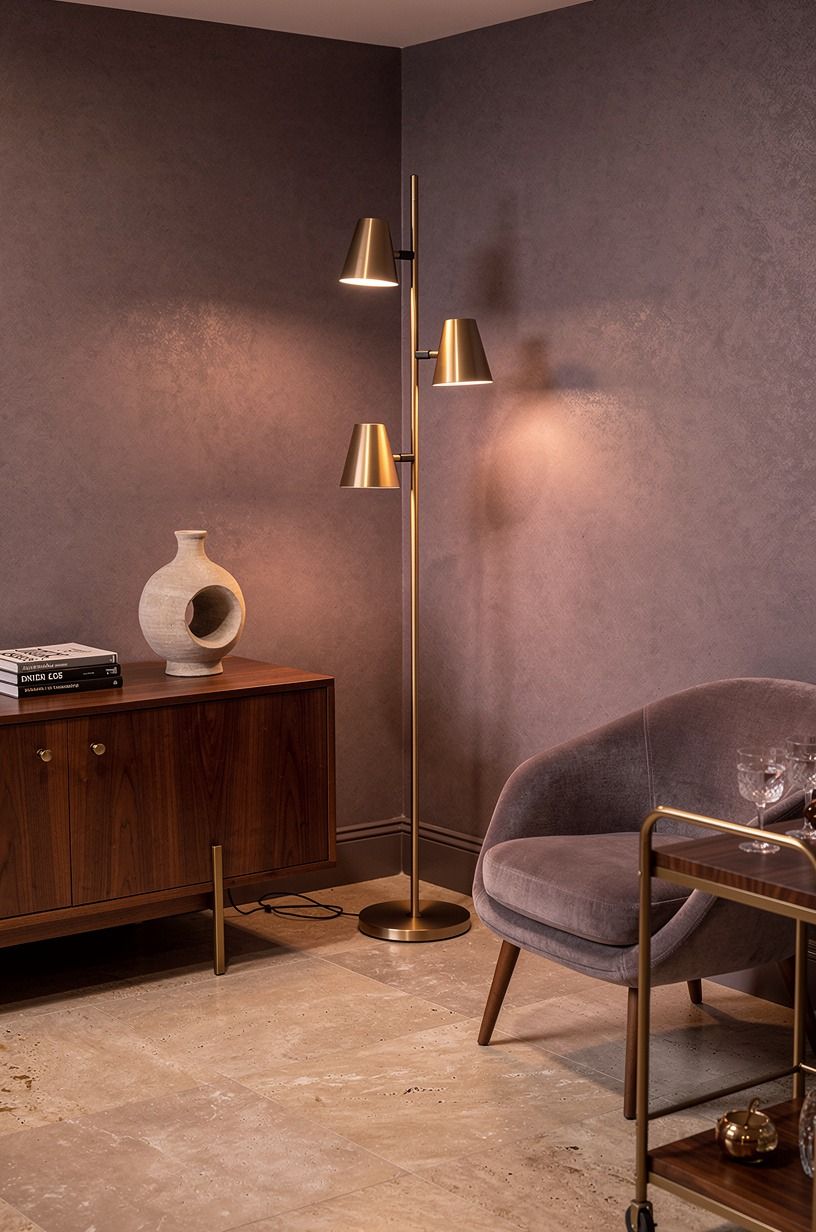
Overhead cans alone will undo everything you've done so far. A speakeasy glows; it doesn't shine.
You want light at three levels: low (candles, a small lamp on the bar), middle (rose-gold sconces flanking the back bar), and high but dimmed, recessed lights at $20 to $100 each on dimmers. Every bulb 2700K or warmer. No exceptions.
Dimmers are the cheapest mood upgrade in this entire article, about $25 a switch, twenty minutes with the breaker off. A warm travertine lamp works beautifully if you're renting or wiring-averse, and the good battery sconces are genuinely convincing now.
Kill the big light the second guests arrive. The room drops into that soft, welcoming amber that makes people stay for one more drink.
9Anchor the seating with a low table and a tight conversation zone
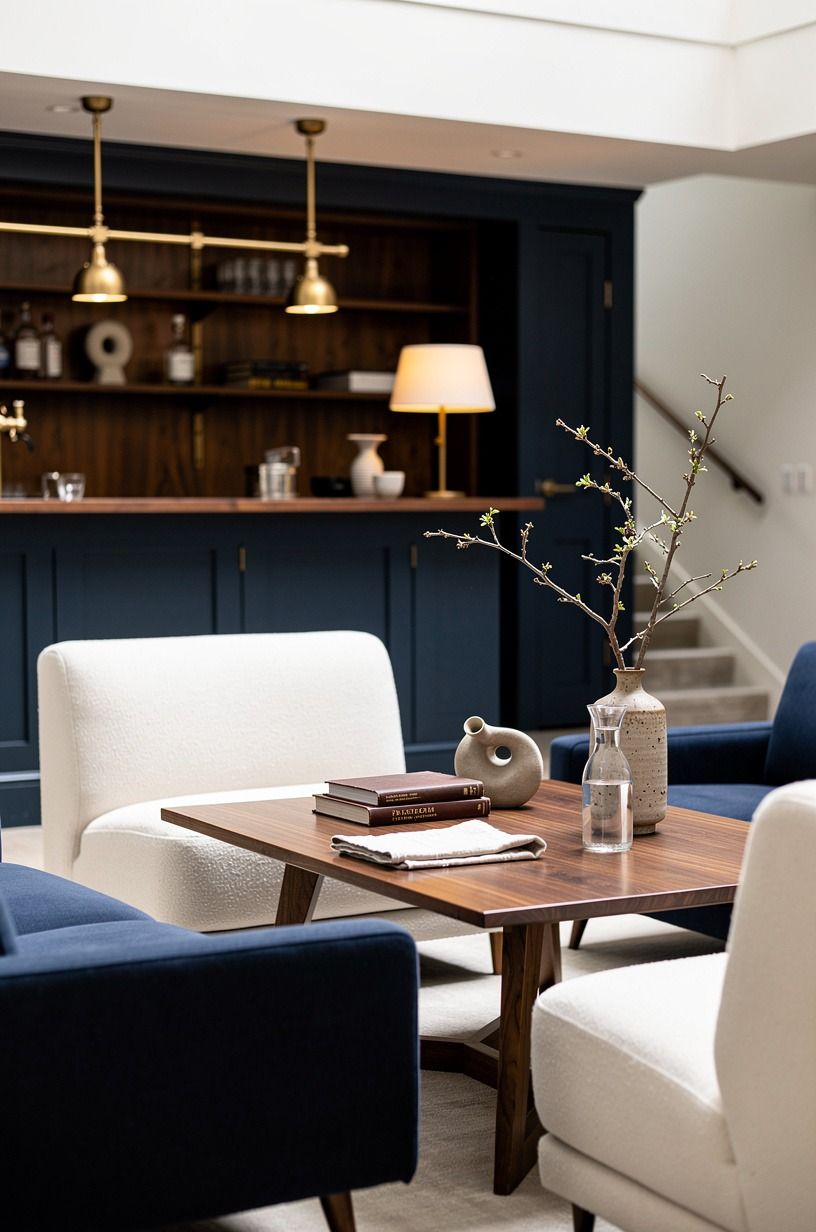
A speakeasy seat should pull people in close, knees almost touching, drinks within reach. Keep your seating zone around 100+ square feet, no bigger. Two loveseats facing each other across a low table beat one giant sectional, because you can actually talk across 48 inches but not across 12 feet.
For the anchor piece, a navy sofa is the default for a reason. The Article Sven runs about $1,900 and ages into the room instead of wearing out of it.
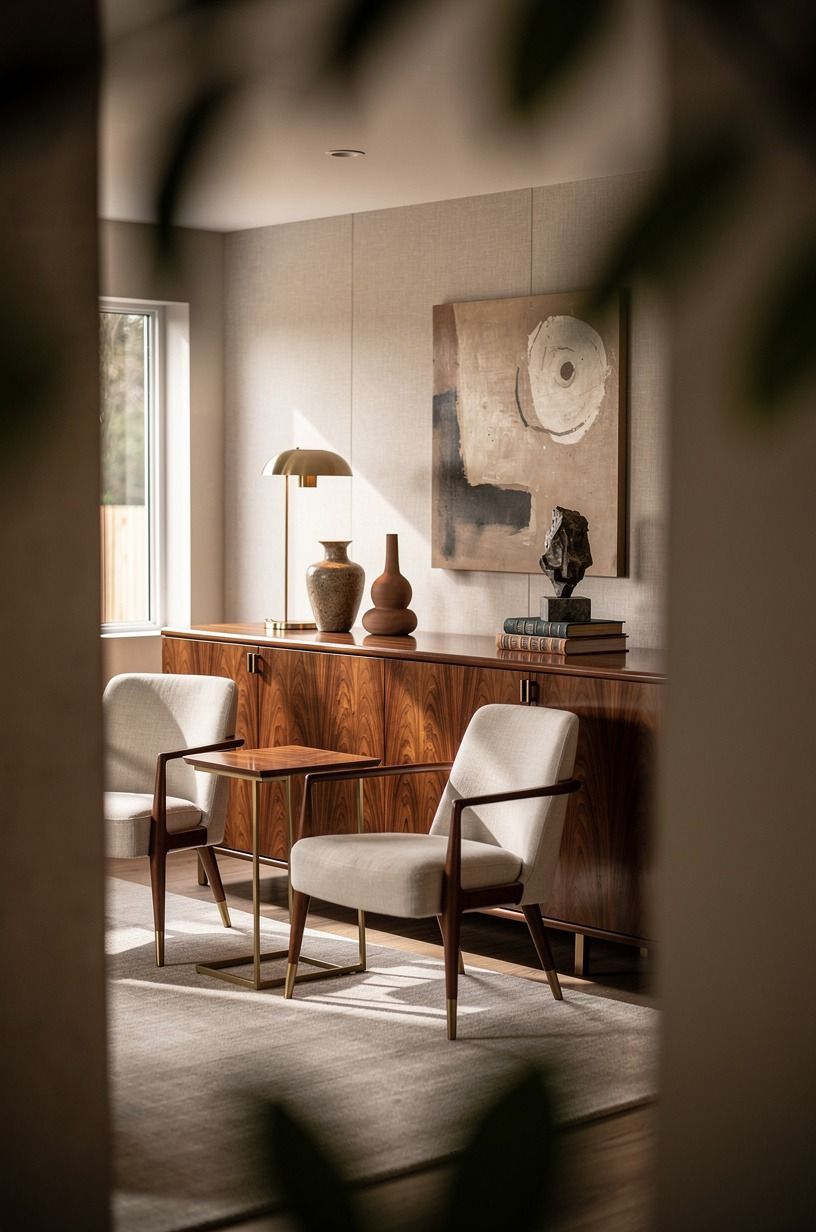
Then add two chairs in white upholstery around a walnut table with unlacquered brass details so the smooth and the plush play off each other. Budget route: Facebook Marketplace leather, a steam clean, seventy-five bucks of conditioner.
I've done it. Nobody knew.
10Hang walls worth staring at
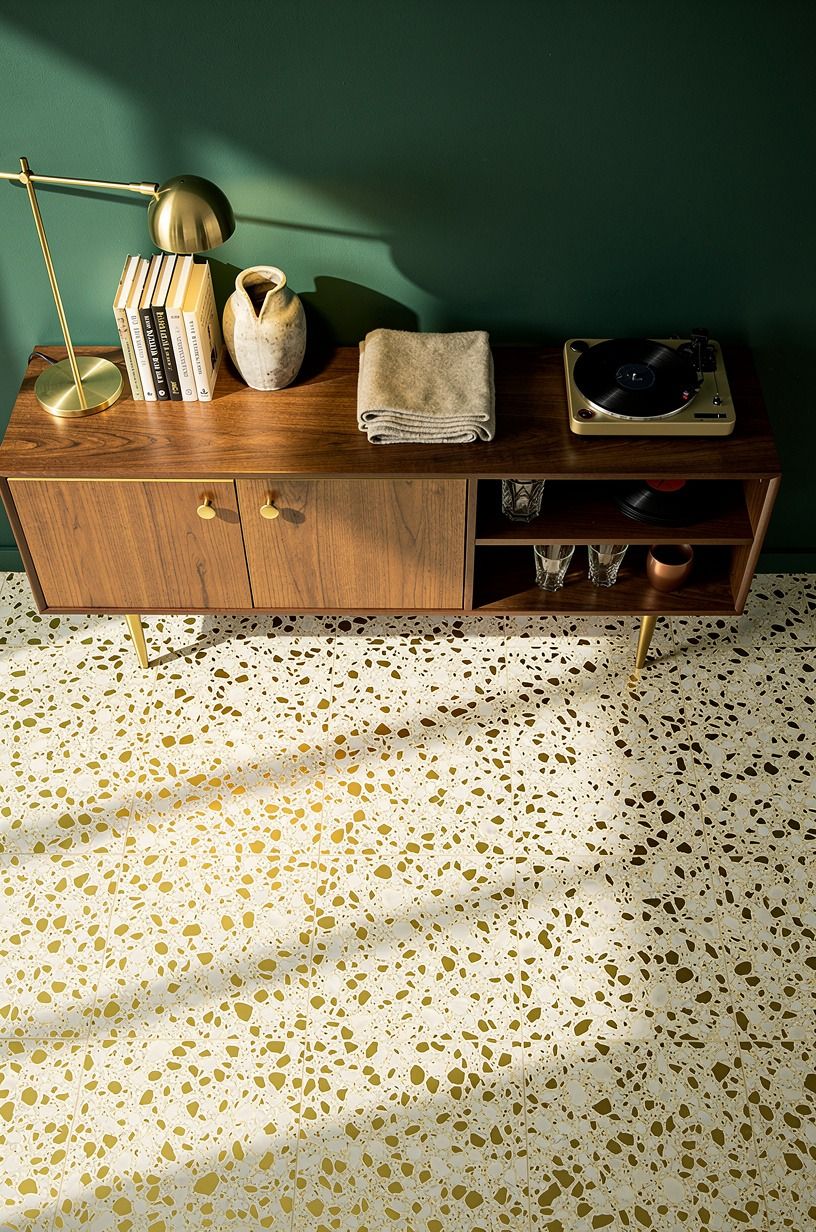
This is where prohibition basement bar inspo earns its keep: vintage cocktail prints, framed sheet music, black and white photos of old city bars. Thrift stores and estate sales are full of this stuff for five to fifteen dollars a frame. One large antiqued mirror behind the bar doubles your candlelight and lets a low-ceilinged room breathe a little.
But here's the rule: fewer, bigger pieces. Ten tiny frames read as clutter in dim light.
Three substantial ones read as a point of view. Mix in something personal, a concert poster, a framed menu from a bar you love. Your room should feel collected over time, even if you pulled it together in a month.
11Hide the ugly stuff behind closed doors
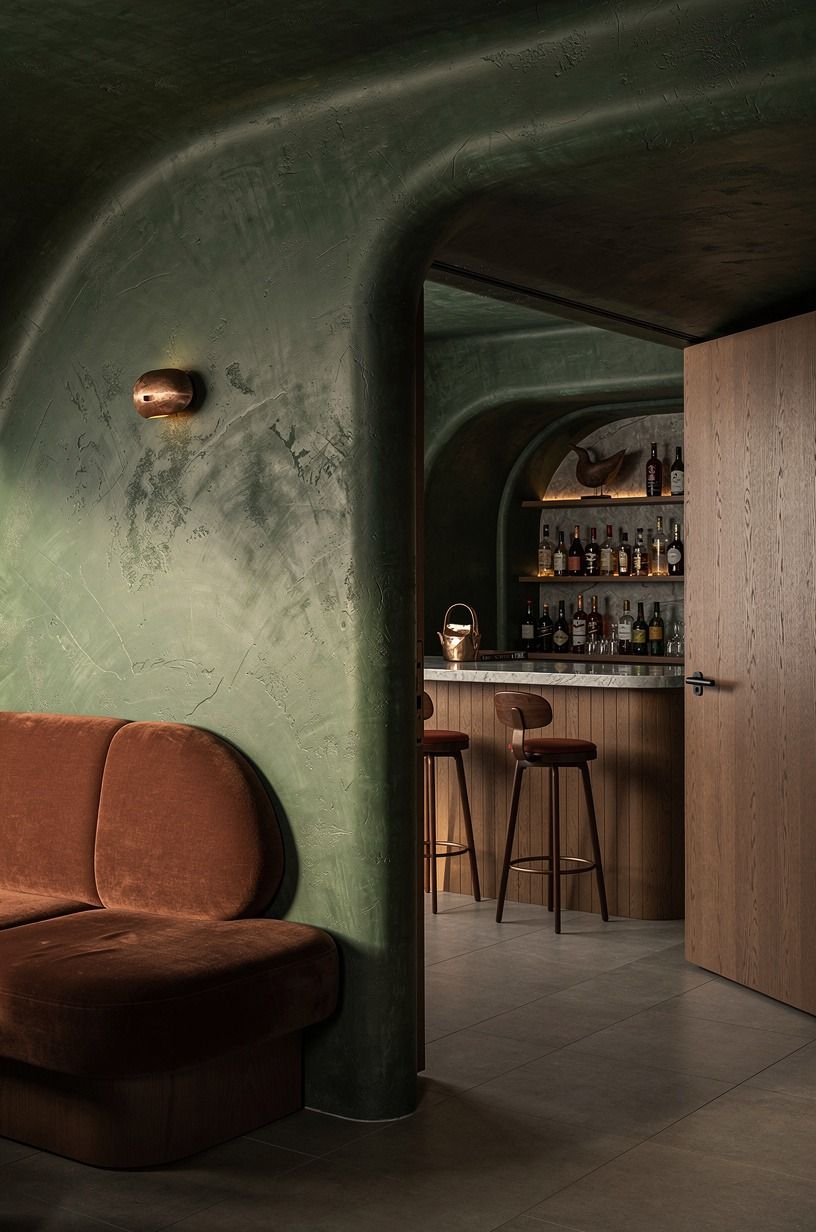
Every basement has a furnace corner, a water shutoff, a tangle of storage bins. The speakeasy answer isn't more drywall; it's concealment you can open. Closed cabinet doors set against hand-applied Venetian plaster hide clutter while keeping the room warm and layered.
For under-bar storage, a simple curtain on a tension rod hides the bottle overflow and the backup paper towels, no drilling, landlord-friendly. Renter swaps matter down here because so much of this look (peel-and-stick, freestanding cabinets, battery lighting) comes apart cleanly when you move. Zero damage, full atmosphere.
12Give the room a soundtrack
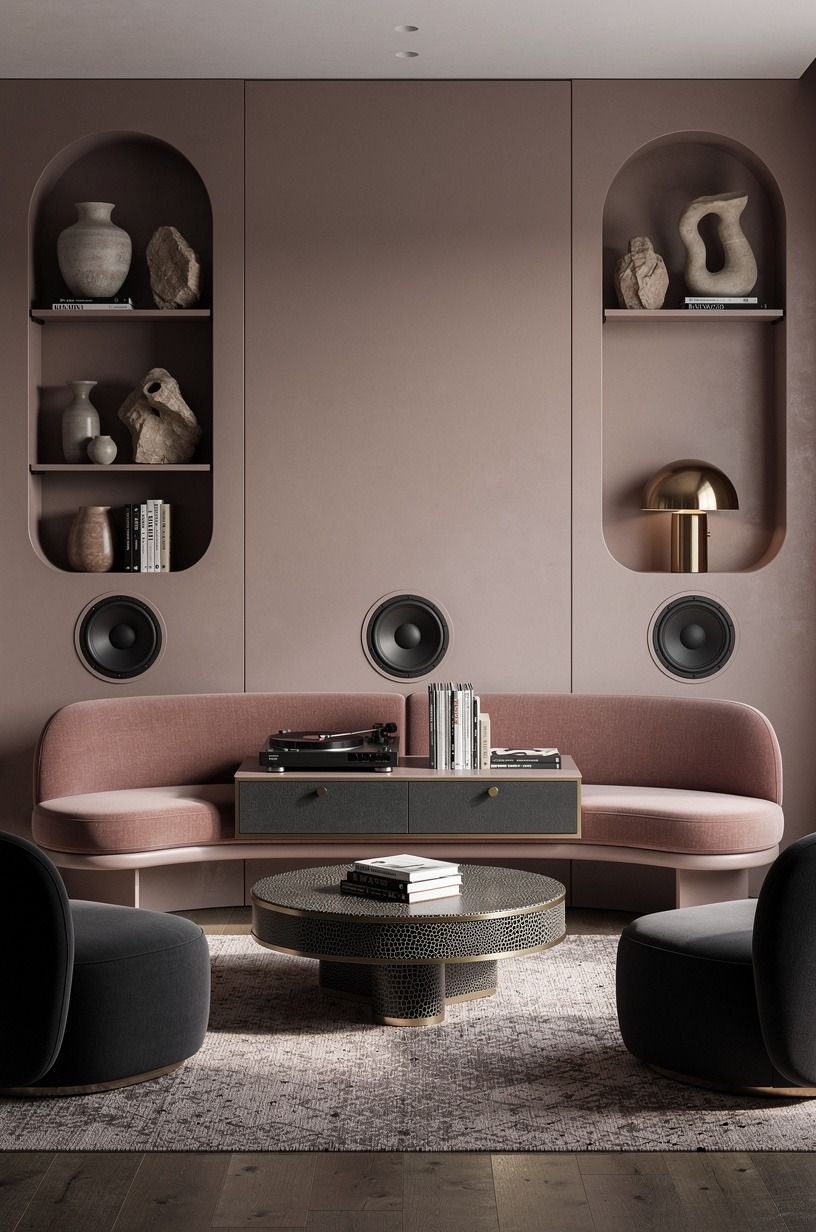
Silence kills a moody room faster than bad paint. A single Marshall Stanmore speaker on the back bar, some jazz or soul at conversation volume, and the whole space shifts from basement to destination. It's the least expensive atmosphere you'll buy, less than dinner out!
If you want the full ritual, a $150 turntable and a crate of thrifted vinyl gives your guests something to do with their hands between drinks. People love flipping a record.
It's tactile, it's unhurried, and it matches the pace a speakeasy should have. Keep the volume low enough that nobody leans in to hear each other.
The music is wallpaper, not the show.
13Warm it all up with texture you can reach out and touch
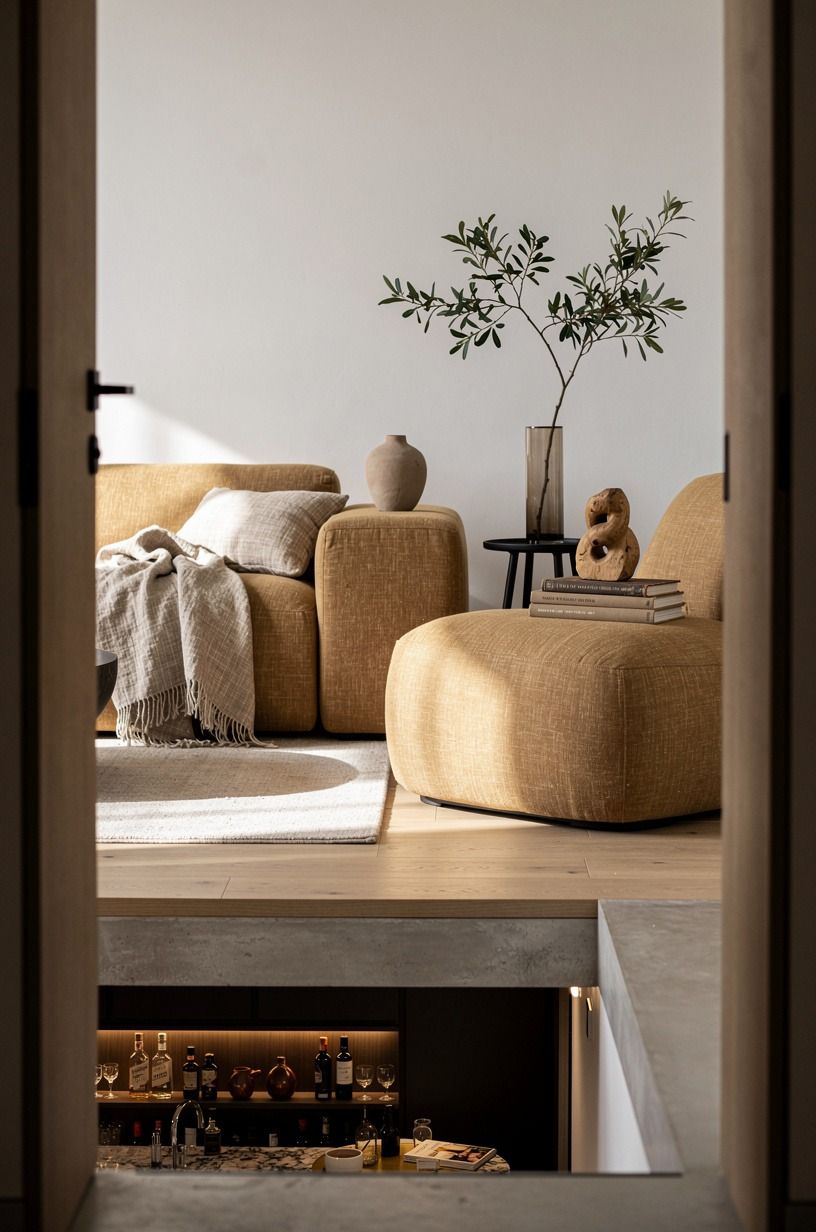
Now the soft layer, the part that turns a dark room into a comforting one.
14Style the back bar with the Back Bar Formula
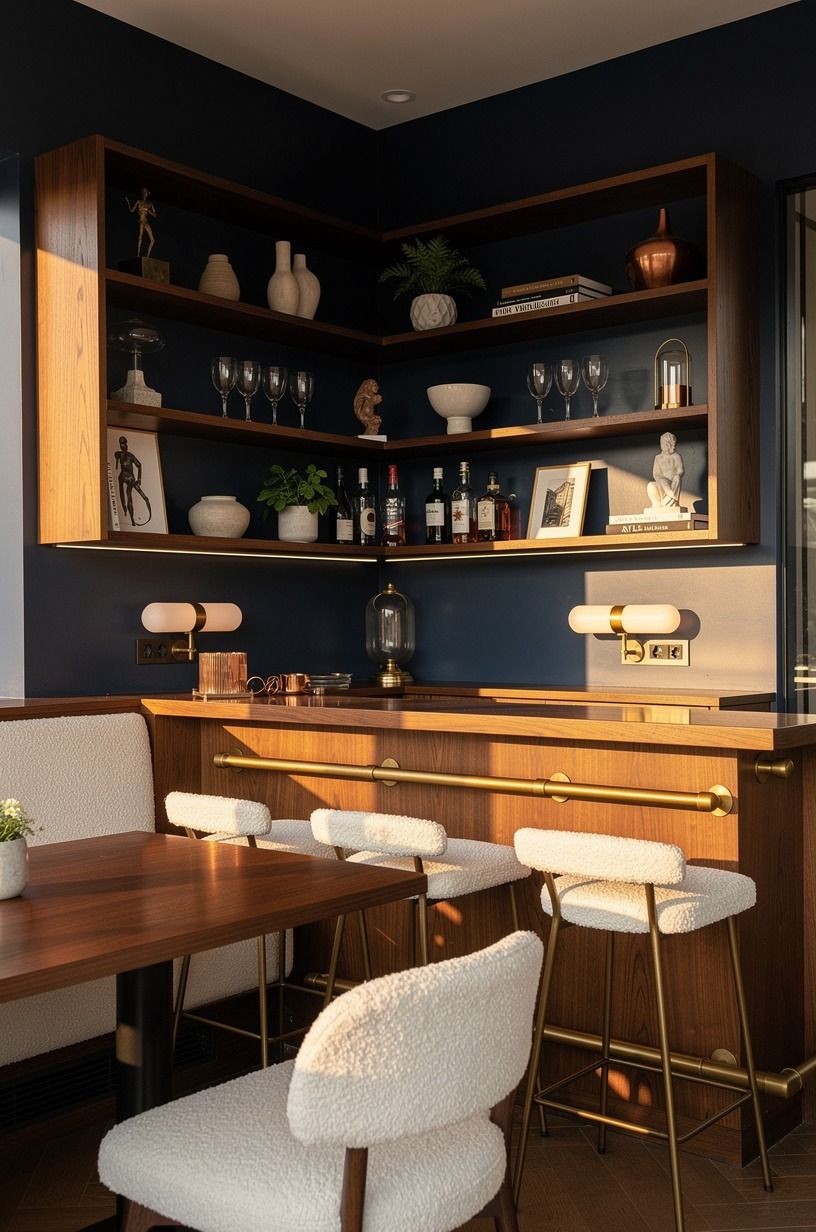
The back bar follows a formula: odd numbers, varied heights, one thing that catches light. Start with a few bottles, group them in threes, and leave breathing room between groups.
A crowded shelf reads frantic in candlelight. A spaced one reads collected.
Add one low bouclé stool, a stack of two vintage cocktail books, and a copper lamp or candle at one end. That's it.
Three heights, three materials, one glow. Let midnight blue, ivory, and copper do the decorative work.
Rotate a bottle or two seasonally and the bar always looks tended, like someone cares for it. Because someone does.
You.
15Choose aged brass over chrome, every single time
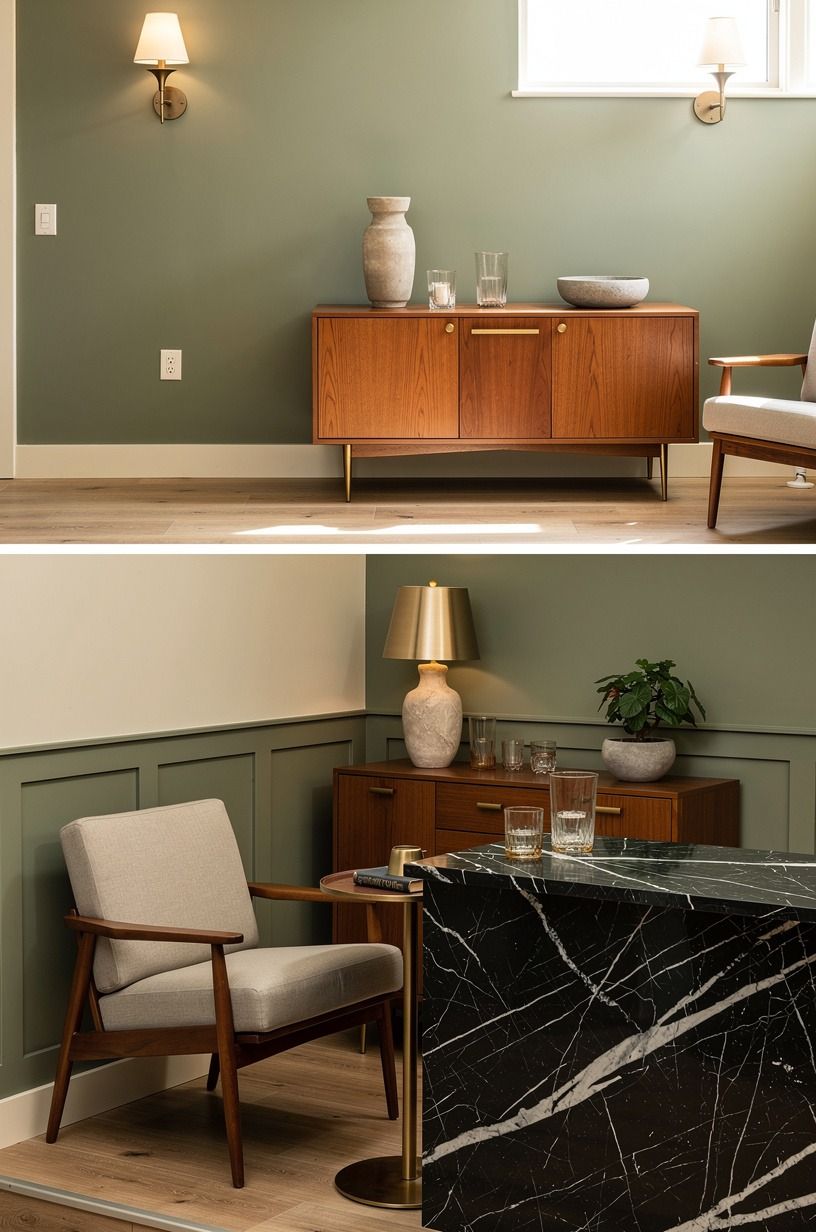
One last decision ties everything together: your metal.
The Three Mistakes I Made So You Don't Have To
I want to be honest about my first basement, because it failed in instructive ways. Mistake one: I painted too light. Everyone warned me a dark basement would feel like a cave, so I picked a safe greige and wondered why the room had zero atmosphere.
Turns out a low-ceilinged room painted light just looks like a dim office. The darkness isn't the enemy.
The darkness is the entire aesthetic. Once I repainted in a deep navy, the same furniture, the same lamp, the same everything suddenly looked intentional. Nothing else changed.
The paint did it all.
Mistake two: I bought the bar cart before I built the room. A bar cart is a lovely object and a terrible anchor.
It rolled around looking apologetic for a year while I figured out where things went. When I finally committed to a fixed bar wall, even a cheap one, the room got a spine. Your eye needs somewhere to land when you walk in, and in a speakeasy that landing spot is always the bar.
Always.
Mistake three: I lit the room with one overhead source and called it done. One light, no matter how warm the bulb, flattens everything.
The room only came alive when I split the light into layers, a lamp here, sconces there, candles on the bar. It cost maybe $120 total and changed the room more than the $900 sofa did.
So if you're standing in your basement right now wondering where to begin, begin with the things I got wrong. Go darker than comfortable.
Fix the bar wall before the furniture. Layer the light last and never skip it.
Those three decisions carry the whole project, and none of them requires a contractor, a permit, or a second mortgage. They require nerve. That's it!
What People Always Want to Know
What is the best layout for a small basement speakeasy?
A bar wall plus one tight seating zone is all you need. Skip the sectional, use two loveseats or four club chairs around a low table, and keep 36 inches of walkway clear. Small rooms read more intimate, not less.
IKEA and Article both carry apartment-scale pieces that fit.
Where can I buy speakeasy-style pieces on a budget?
Start with Facebook Marketplace and thrift stores for decanters, frames, and brass. For furniture, IKEA, Target Threshold, and Wayfair cover the bases, with CB2 for one splurge piece. Estate sales are gold for vintage barware under $20.
How much does a basement speakeasy makeover cost?
A cosmetic refresh (paint, lighting, rug, bar cabinet) typically runs $500 to $2,500 in the US. A mid-tier finish with flooring and built-ins lands $8,000 to $25,000. Paint and dimmers alone cost under $150 and deliver most of the mood.
Can I create a basement speakeasy on a budget?
Yes, and the three cheapest moves carry the most weight: dark paint (about $80), dimmer switches ($25 each), and thrifted barware (under $50). Add a dry bar from an IKEA cabinet and you've built the whole vibe for a few hundred dollars.
Is a basement speakeasy worth it in a small space?
Yes, and small is an advantage. Speakeasies are supposed to feel intimate, so a low ceiling and tight footprint do free atmospheric work for you. Keep seating to one zone, light it in layers, and let the darkness make the room feel like a destination.
Is a basement speakeasy a good idea for a rental?
Yes, with no-damage swaps: peel-and-stick wallpaper on one wall, a freestanding bar cabinet instead of built-ins, battery sconces, and a tension-rod curtain for storage. Everything packs up when you leave. Your deposit stays intact and your basement still glows.
Where I'd Start First
If I had to pick one step, I'd start with the paint. Bulbs, rugs, and brass can't warm a room whose walls bounce cold light back at you.
Color is the layer everything else sits on. Pin this for later and go buy a sample pot this weekend.
SEO JSON: