6 Budget Kitchen Updates Renters Can Make Without Losing Their Deposit
30 july 2026My rental kitchen had yellowed cabinet pulls, a dark counter corner, and exactly 34 inches of blank wall behind the sink. I gave myself a realistic budget of about $150 to make it feel intentional without risking my security deposit.
I learned quickly that renter upgrades need to earn their visual space. The best changes were the ones I noticed while making coffee every morning, not the ones hidden inside a drawer.
Measure Hardware Before Ordering Anything
I started with cabinet pulls because the old ones made every door look tired. Measure center-to-center hole spacing first, then shop for satin nickel hardware in common 3-inch, 4-inch, or 5-inch sizes, since guessing can turn a $2-per-piece upgrade into a return pile.
I skipped novelty shapes and chose simple bar pulls from Amazon in a warm brushed finish. A full mixed-finish hardware refresh can typically run about $150 to $300, but replacing only the most visible doors and drawers gave my compact kitchen the same clean effect for less.
Light the Countertops Where You Actually Work
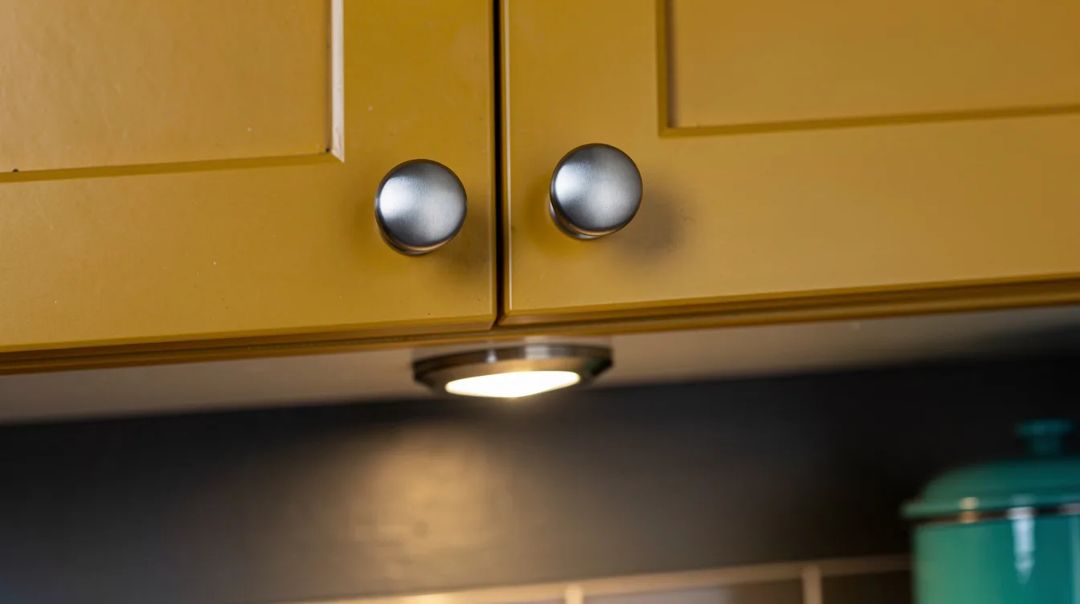
My overhead fixture cast a shadow exactly where I chopped vegetables, so lighting came next. A set of rechargeable LED puck lights typically costs about $15 to $40, and the roughly 3-inch to 4-inch circles fit neatly beneath my narrow upper cabinets.
For a longer cabinet run, choose 6-inch to 12-inch LED bars instead. I prefer warm white light over icy blue light in a rental kitchen, because it makes laminate counters and everyday dishes look calmer at night.
Cover One Backsplash Zone With Removable Tile
I did not try to tile the entire kitchen. I measured the wall behind the counter, subtracted outlets and trim, then used peel-and-stick subway tile only on the cleanest, most visible stretch.
A small backsplash project typically starts around $30, which is why it is one of the smartest visual purchases for renters. Keep removable tile away from direct high-heat areas unless the product instructions specifically allow it, and press every edge firmly so steam has less chance to lift it.
Wrap the Most Dated Small Surface
My faux-stone countertop was not worth fighting across its whole length, so I changed the coffee station instead. A roll of marble-look removable vinyl can typically cost under $20 for a small counter, appliance, or shelf project.
I chose a soft cream pattern with restrained gray veining, then used a plastic card to smooth out air bubbles. This is where renters should be ruthless: a modest area wrapped cleanly looks far better than a whole kitchen covered in a busy pattern.
Use Storage as Part of the Decoration
Open counter space is valuable, but empty counters can also make a rental feel temporary. I used a natural bamboo tray from Target to corral dish soap, a scrub brush, and one small hand towel beside the sink.
On another counter, a low basket held onions and garlic instead of crinkled grocery bags. A tray. One wood utensil crock.
A wipe-clean basket. These pieces make the room feel lived in while still letting you pack them up on moving day.
Finish With a Runner That Fits the Floor Plan
The floor was the last problem I addressed because a runner changes the view downward without becoming a renovation project. I chose a low-pile washable runner from Walmart in a muted checkerboard pattern and left enough clearance for cabinet doors and the refrigerator.
A runner is safer than bulky mats in a tight galley kitchen, especially when cabinet doors swing close to the floor. Avoid a thick rug that catches chair legs or bunches near the stove, because a kitchen refresh should make daily movement easier.
Begin with the cabinet pull measurement, then spend the next dollars on light. That sequence gives a rental kitchen a sharper outline before you add any pattern, storage, or decorative extras.