13 Luxury Media Wall Ideas That Feel High-End and Custom Without Renovating
30 july 2026Luxury media wall ideas that feel high-end and custom don't require built-ins or a contractor. I used to think they did, then I spent too much on a media console that made my TV look smaller. The better answer is proportion, texture, and light. You can get there with a weekend and a sharper eye!
- Float a Walnut Panel TV Wall (The Vertical Grain Rule)
- Layer Paint Behind the Luxury TV Wall
- Build the Two-Wood Rule Into Your Modern Classic TV Wall Design
- Can You Hide the Screen Without a Built-In?
- Swap a Low Console for a Long, Grounded Base
- Hang Curtains Wide for the Hotel-Wall Effect
- Use the Three-Height Light Stack After Dark
- Frame the Latest Media Wall Design With Stone Texture
- Anchor Seating at the Right Distance
- Choose Closed Storage Over Open Shelf Styling
- Paint a Moody Border Instead of Adding More Decor
- Mix Black Details With Warm Metals (The Quiet Contrast)
- Style the Console Like a Real Room, Not a Display
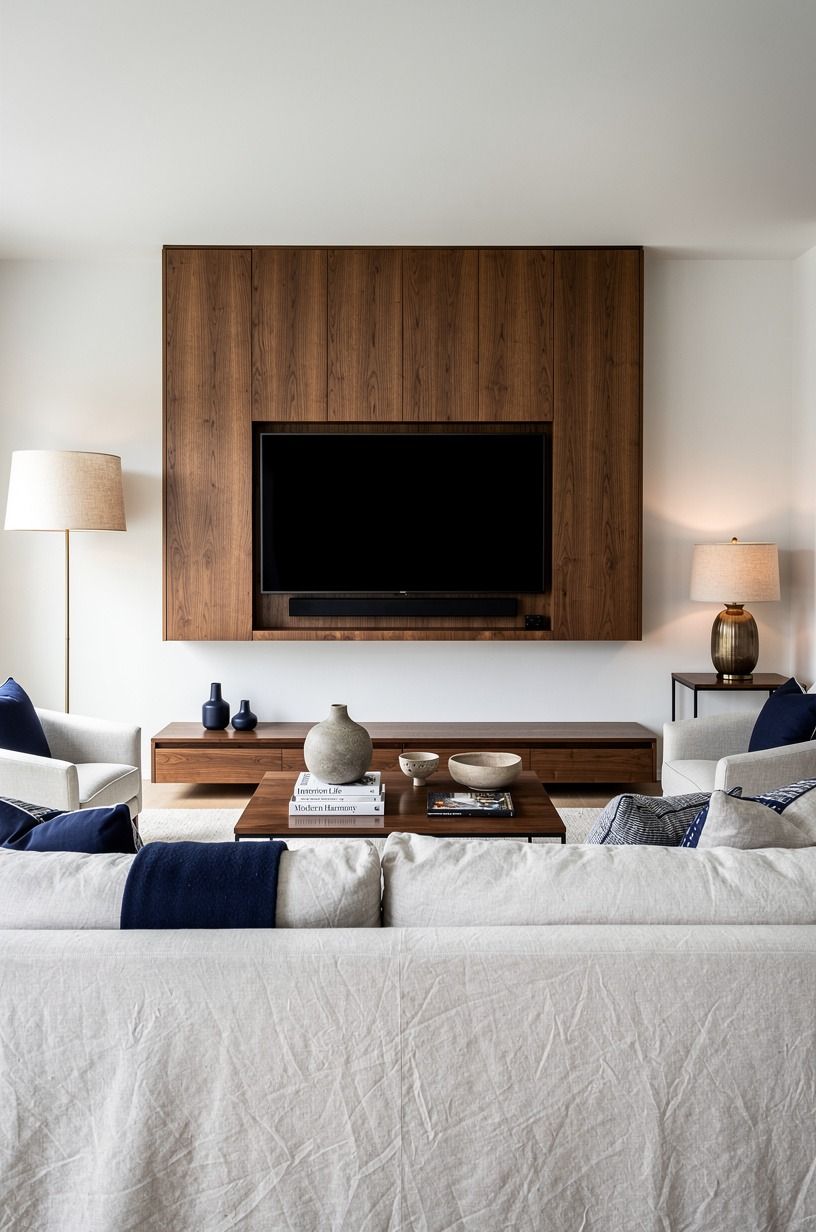
1Float a Walnut Panel TV Wall (The Vertical Grain Rule)
Mount your TV over a washed Belgian linen wallcovering with walnut details instead of letting it hover on a bare wall. You’ll get a refined backdrop, and your screen stops reading like a black rectangle dropped into the room.
Keep the walnut grain vertical and run it wider than the television on both sides. I’d skip narrow strips here, because they look like a rushed accent wall. A Samsung Frame TV looks especially convincing against navy, white, and walnut when you set the artwork matte and low-contrast.
Leave room below for a slim oak media console. Your eye needs that breathing space, even if you’re working with a small living room.
2Layer Paint Behind the Luxury TV Wall
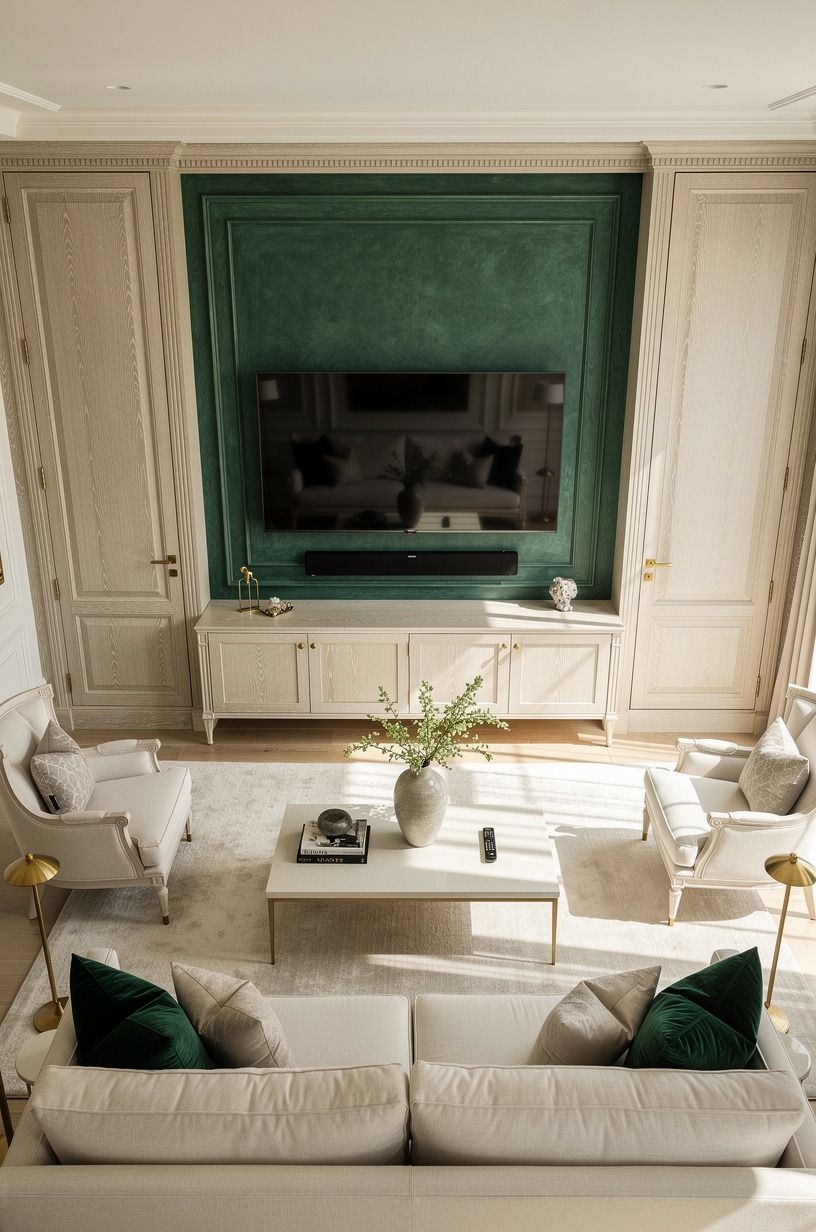
A painted wall can look expensive if you choose a shade with depth. Farrow & Ball Studio Green makes a screen recede after sunset, while its rich green feels warm beside cerused white oak.
Paint the entire wall, not just a box around the TV. You’ll avoid the awkward “feature wall” effect that makes a room feel chopped up. But keep your trim the same color if you want the wall to feel taller.
For softer rooms, Benjamin Moore Chestertown Buff HC-9 is the safer call. It brings a creamy warmth to emerald and gold accents without turning bland once lamps come on.
3Build the Two-Wood Rule Into Your Modern Classic TV Wall Design
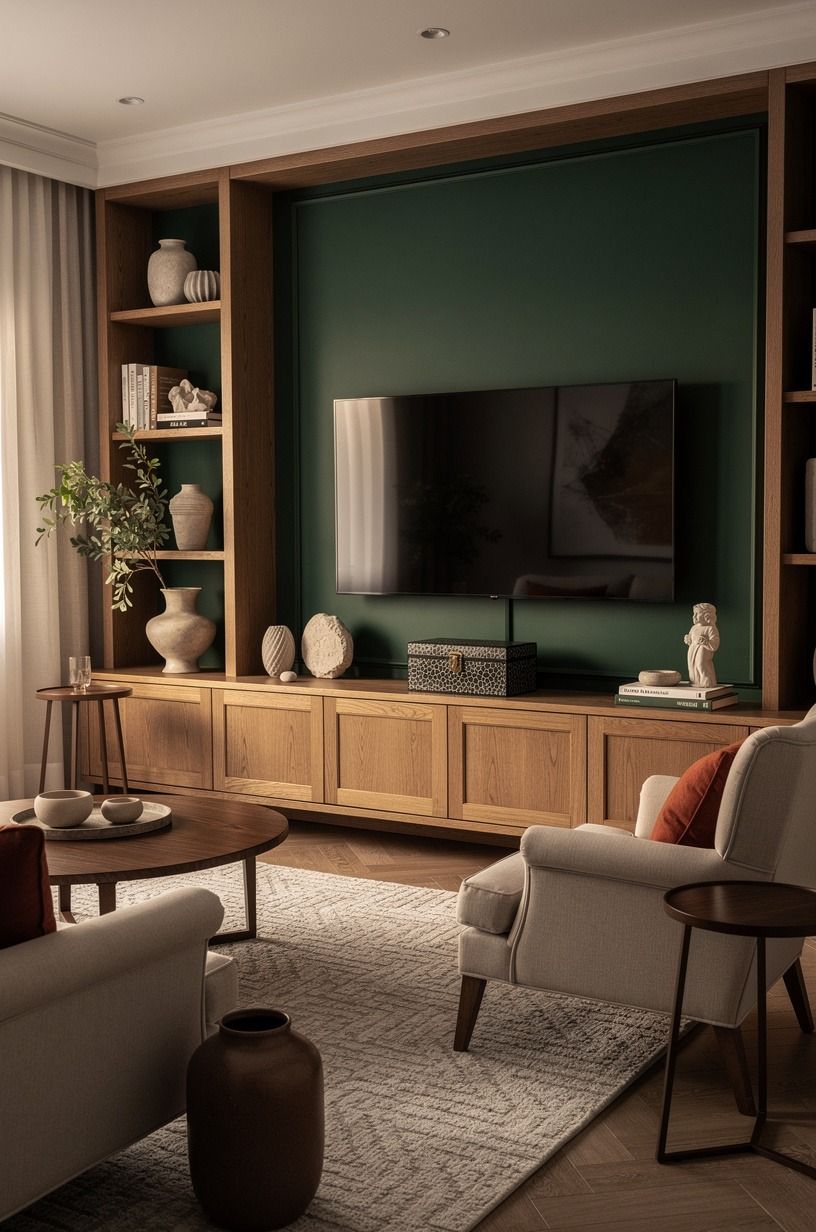
Use two wood tones only. One should lead, one should support. That’s the Two-Wood Rule, and it keeps a media wall from looking like a furniture showroom.
Try natural oak for the console and a deeper rust-toned wood detail behind the screen. You’re creating contrast without throwing five competing finishes at your wall.
I’ve done the three-wood version before. It looked busy by noon.
A small shagreen tray can be your supporting texture. Soft grain, tactile finish, no glossy lacquer. Quietly luxurious.
4Can You Hide the Screen Without a Built-In?
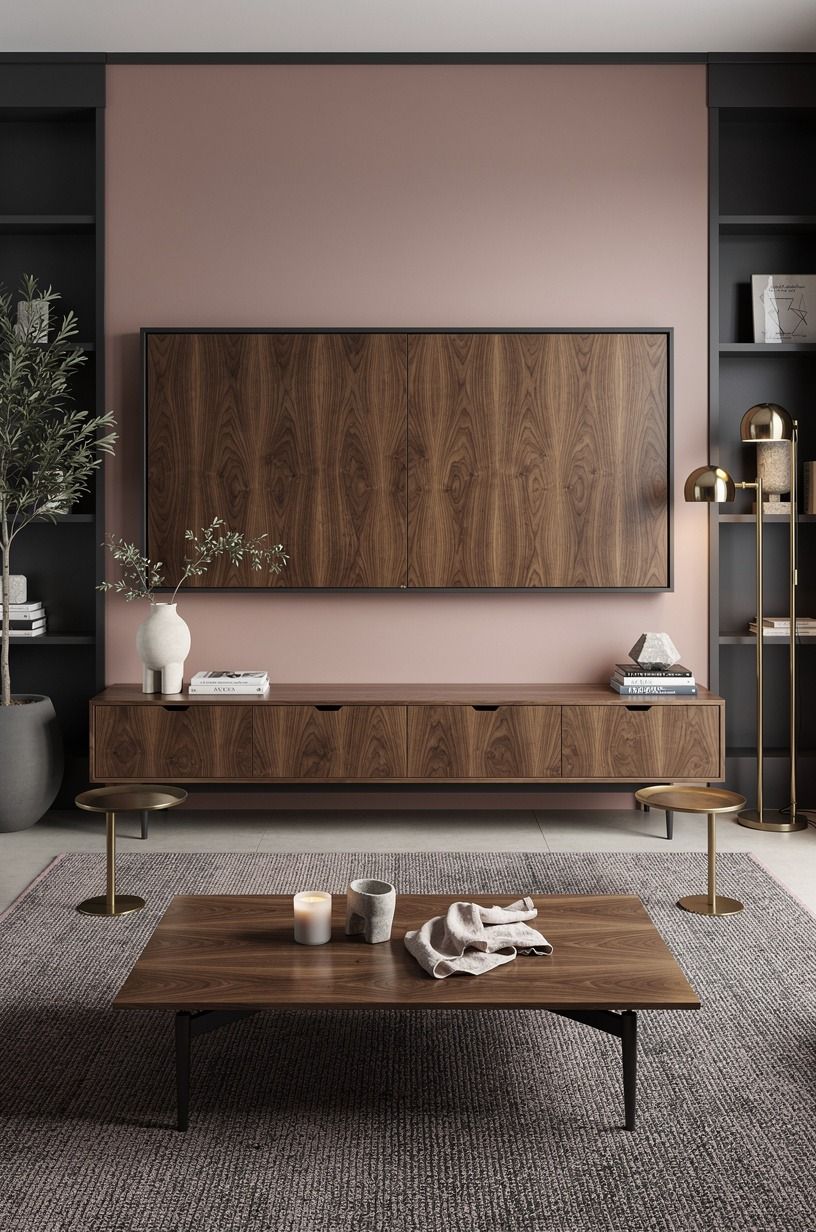
Yes, and a large framed art print is usually the cleanest answer. Hang it on a shallow picture ledge near the TV, then fill the rest of the wall with pieces that share dusty rose, charcoal, and brass tones.
You don’t need every object to match. You need your objects to feel intentional. A book-matched walnut picture ledge, a matte ceramic vessel, and one warm-toned print will do more than six tiny frames.
If you can stretch your budget, the Samsung Frame TV earns its place because the display behaves more like art between shows. That’s a real difference in a room where you want the wall to feel inviting.
5Swap a Low Console for a Long, Grounded Base
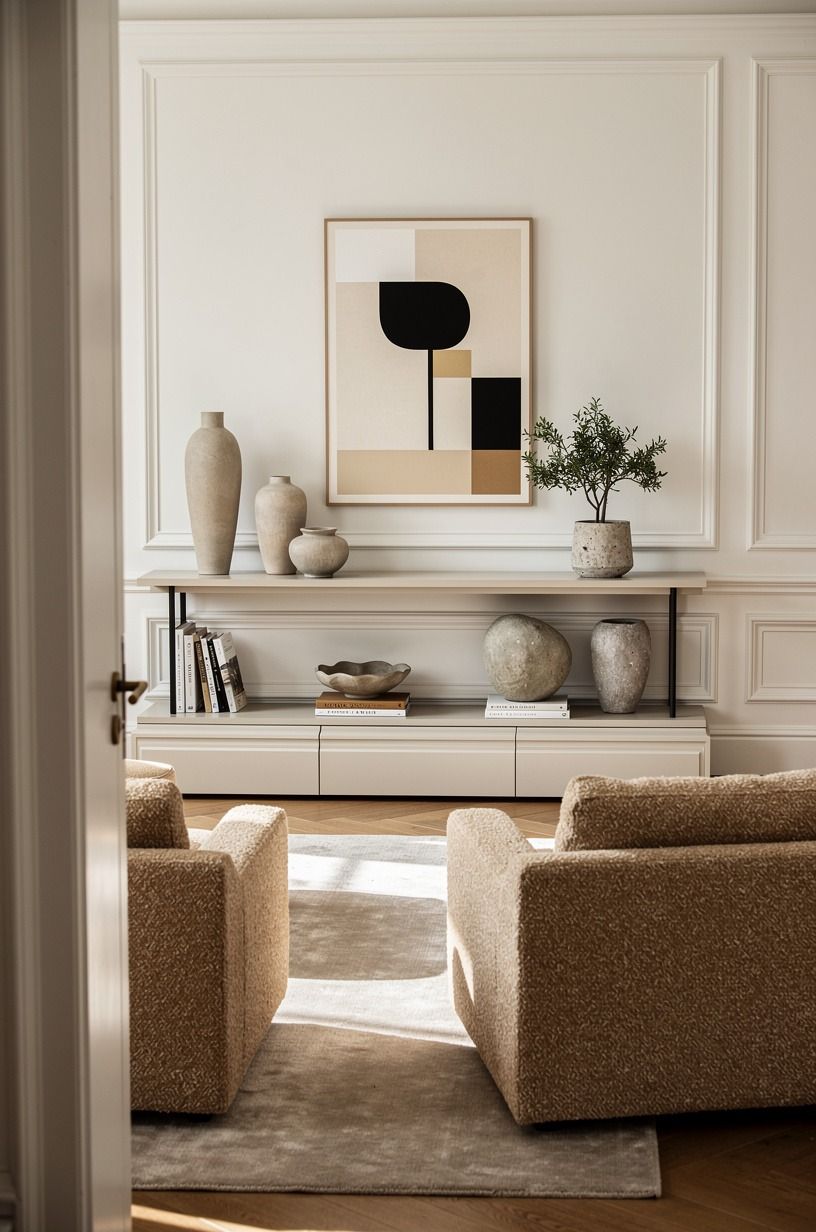
Choose a media console that extends beyond the TV.
6Hang Curtains Wide for the Hotel-Wall Effect
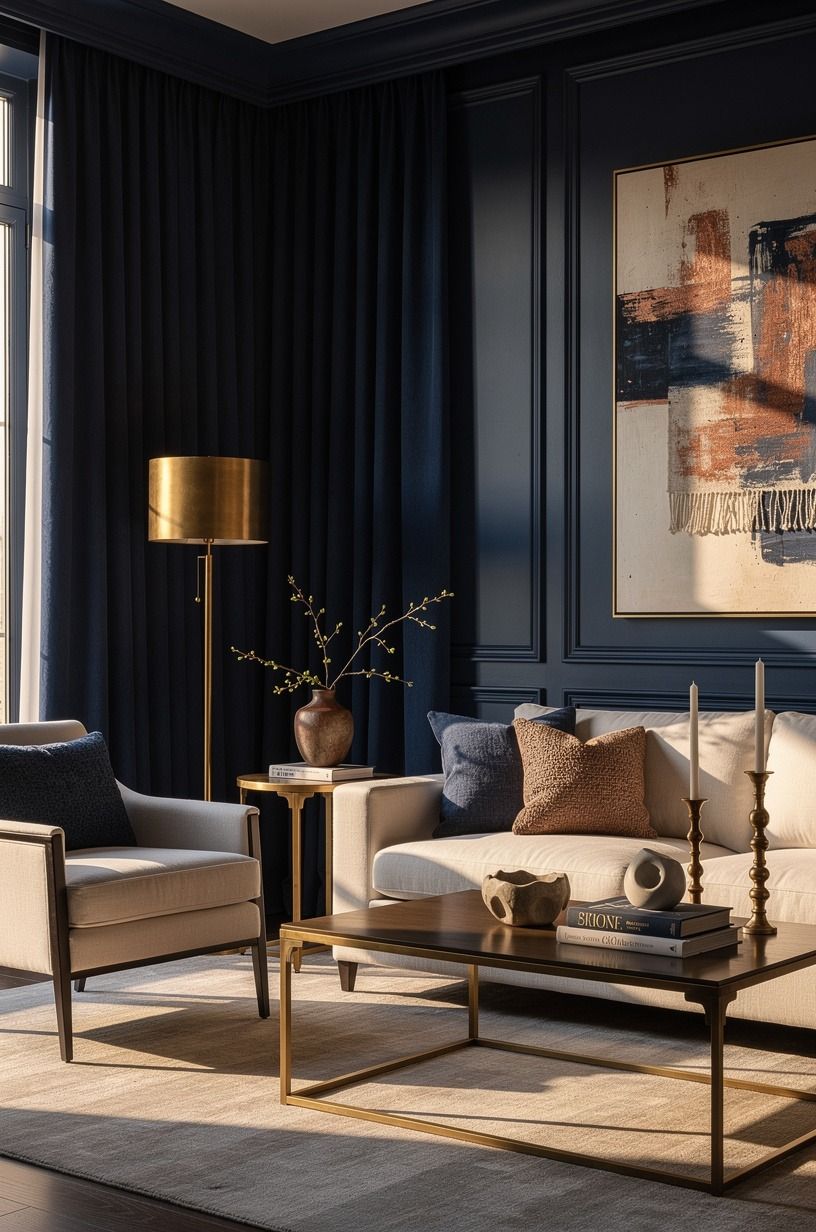
If your media wall sits between windows, take curtains all the way across the wall. That wider textile field makes your TV less dominant, especially in a room with hard floors and bright daylight.
Use ivory drapes, hung high and nearly kissing the floor. Pair them with an unlacquered brass rod that can develop a little patina over time. You’ll want the rod wider than the windows, because visible wall at either side makes the treatment feel skimpy.
Skip grommet panels. Pinch-pleat curtains have a gentler fold and read far more tailored.
The fabric softens the screen’s hard edge. Simple, but effective!
7Use the Three-Height Light Stack After Dark
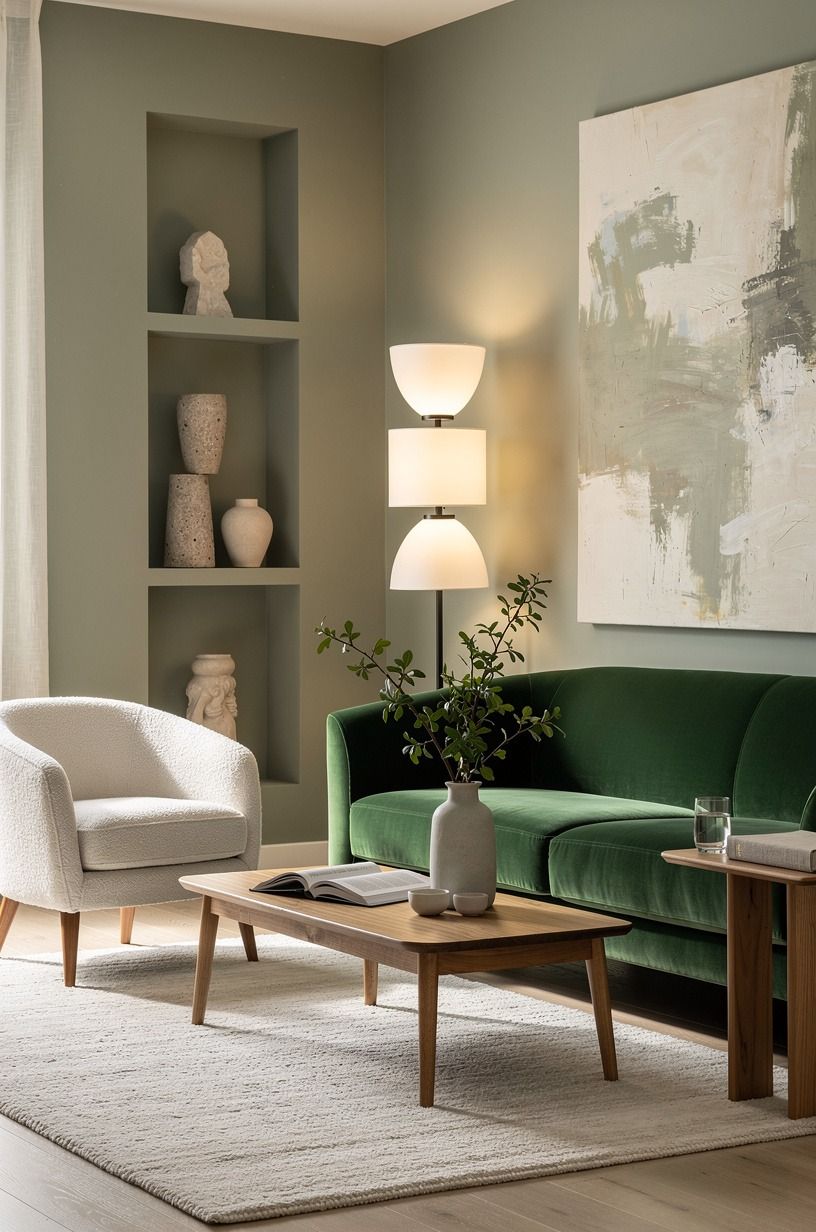
A luxury media wall fails fast under one ceiling fixture. You need three heights of light: low, middle, and high. The Three-Height Light Stack gives the wall a soft, layered glow instead of a bright, flat wash.
Start low with a floor lamp, add middle light with a lamp on the console, then place a picture light or pair of sconces above art. Sage green, warm cream, natural wood, and deep-pile mohair velvet give those layers somewhere soft to land.
I’d avoid cool bulbs completely. Their bluish cast makes natural wood look gray and turns an otherwise peaceful room into a waiting area.
8Frame the Latest Media Wall Design With Stone Texture
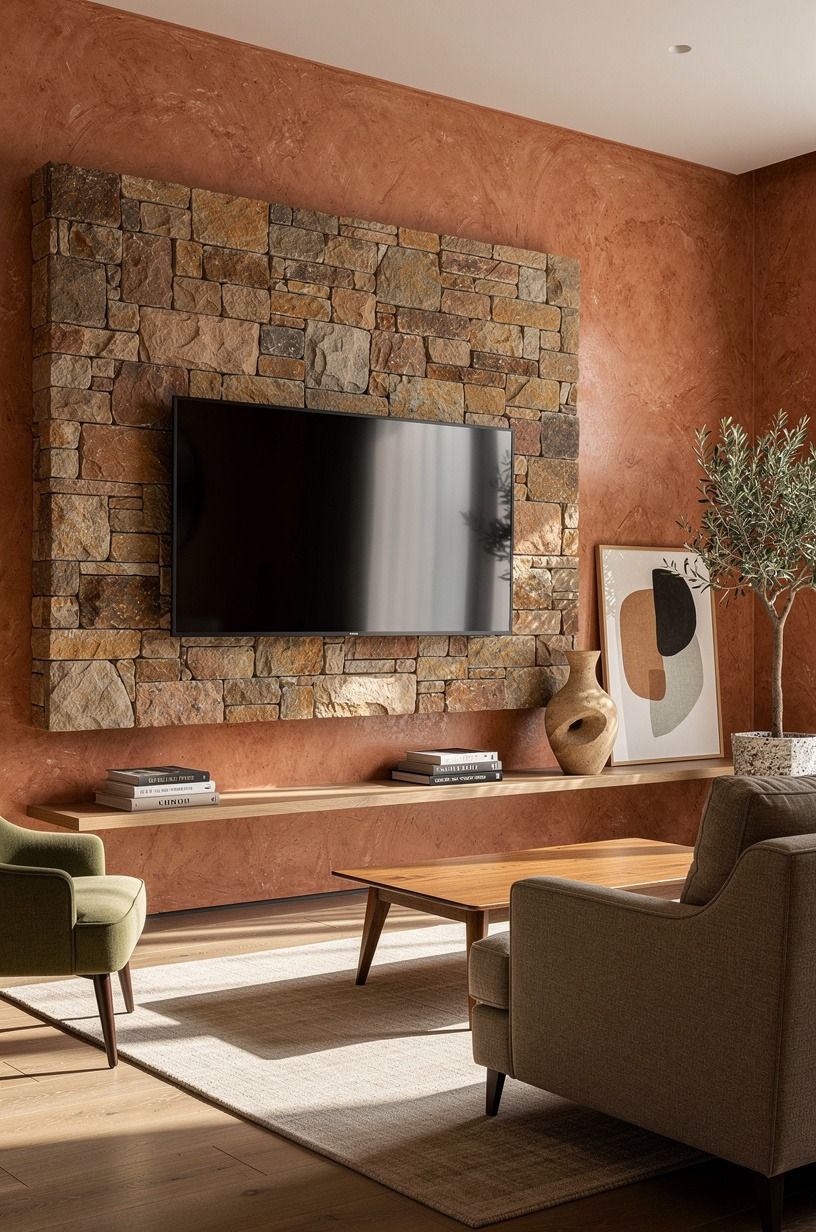
You can use stone without rebuilding a fireplace surround.
9Anchor Seating at the Right Distance
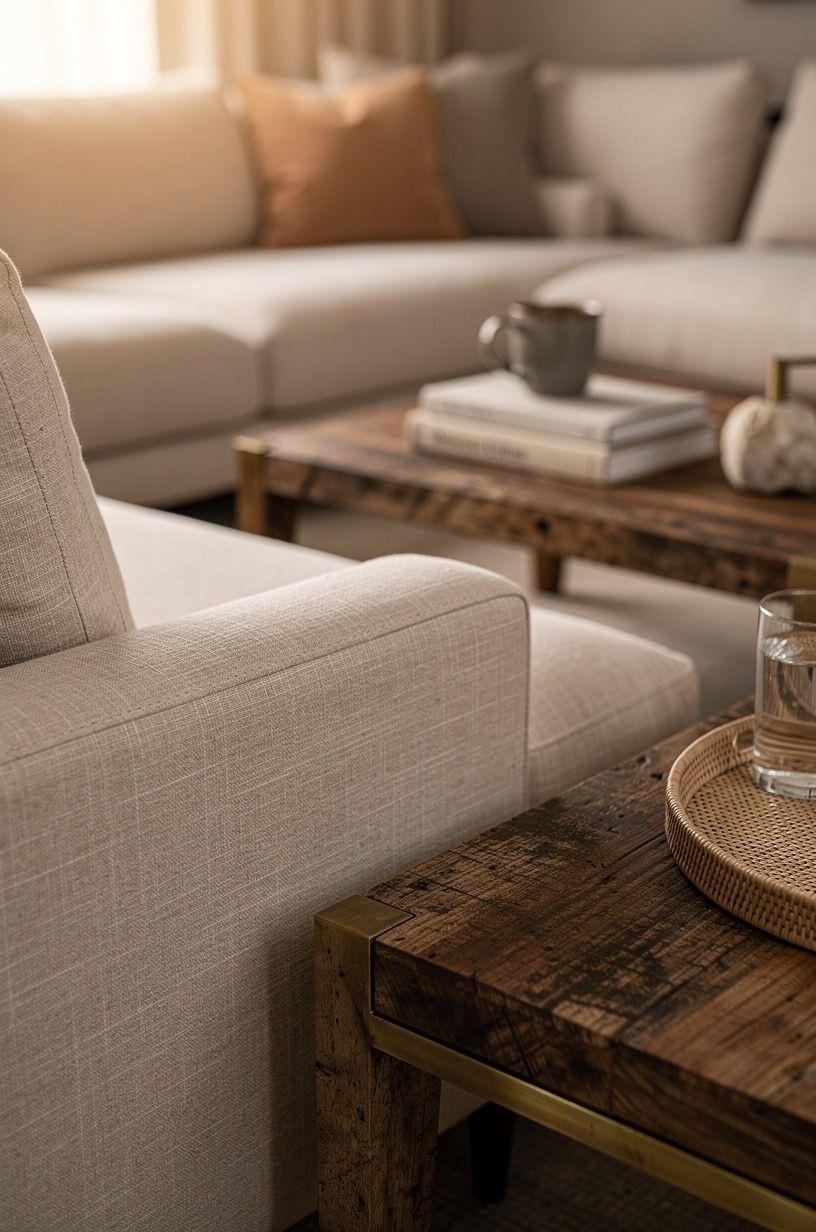
A media wall looks more custom when your furniture relates to it properly. Place your seating about 1.5 to 2.5 times the TV’s screen diagonal away, then let the rug pull the whole arrangement toward the wall.
Your sofa can be 35 to 40 inches deep, but don’t push it against the back wall just because the room is small. Float it a little if you can. That gap gives the room air.
Use an 8x10 or 9x12 rug with the front legs of your seating on it. A clay-and-linen rug is my pick over thin synthetic rugs, especially beside reclaimed weathered teak and aged brass, because the floor needs texture that can stand up to the screen.
10Choose Closed Storage Over Open Shelf Styling
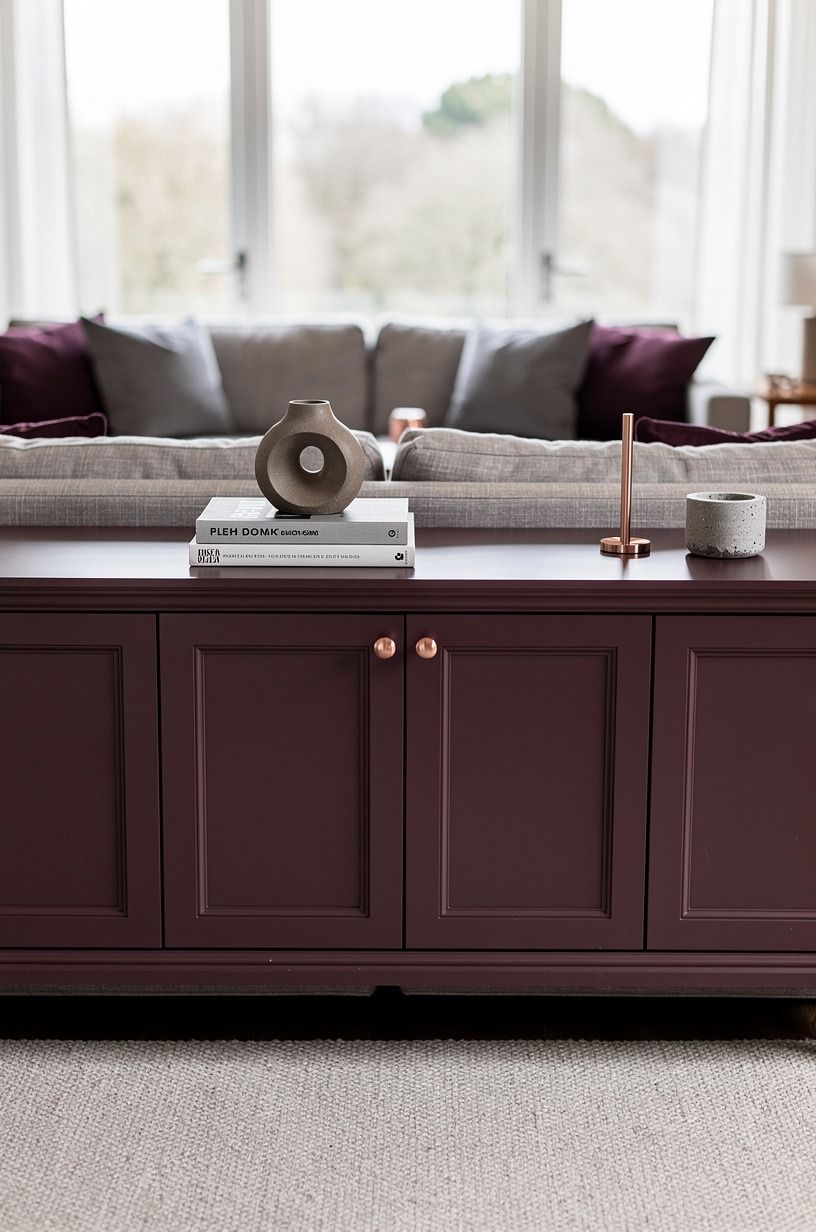
Closed storage wins for a media wall. It hides routers, remotes, cords, game controllers, and the random little objects that somehow multiply under a television.
Try IKEA TONSTAD cabinets in a greyed wood finish if you want a classic profile without visual heaviness. You can add baskets inside, but keep the outside calm. What’s the point of beautiful paneling if the console looks like a charging station?
One open shelf is enough. Put a plum-toned vase on a rose-gold tray or a small stack of books there, then stop.
A touch of washed Belgian linen nearby keeps the room from feeling too polished. Restraint looks expensive every single time!
11Paint a Moody Border Instead of Adding More Decor
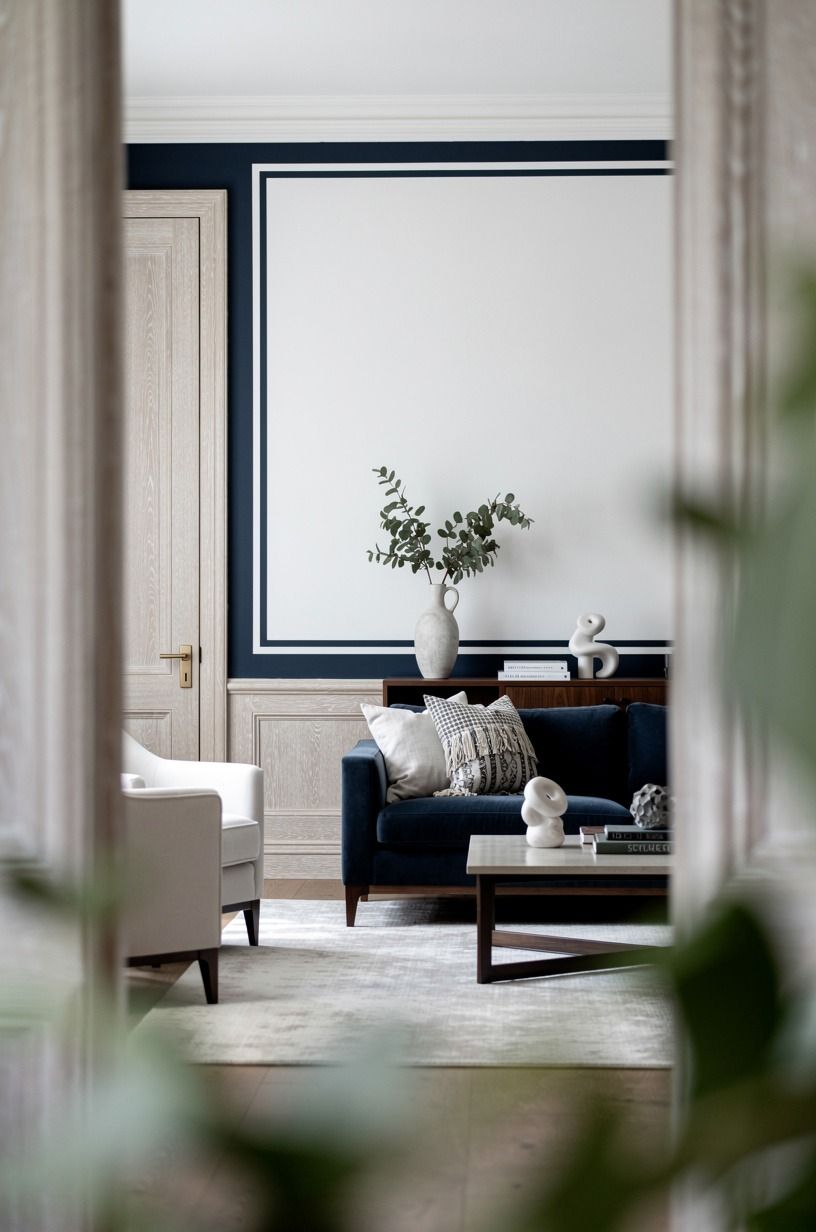
A painted border gives you a bold luxury tv wall without buying more objects. Use Farrow & Ball Hague Blue No. 30 around the TV zone, then let the surrounding wall stay white for contrast.
Make the border generous, not a tight little outline. You want it to read as architecture. A shallow painted field also helps if your TV isn’t centered exactly where you’d like, because the composition can be shifted to suit the room.
But don’t add a gallery wall inside it. The color is the decoration. A cerused white oak console and walnut detail are enough.
You’ve already made the decision, so let it stand.
12Mix Black Details With Warm Metals (The Quiet Contrast)
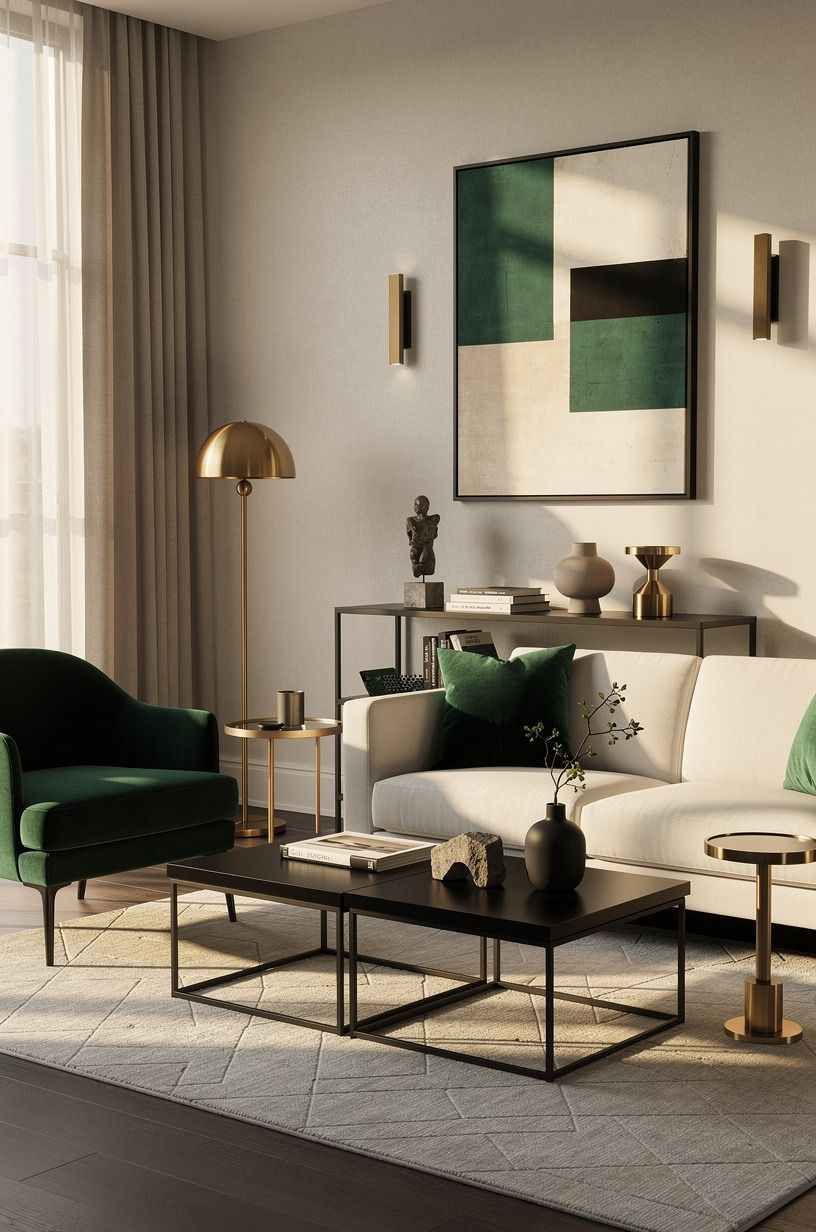
Black gives a media wall definition, but it needs warmth beside it.
13Style the Console Like a Real Room, Not a Display
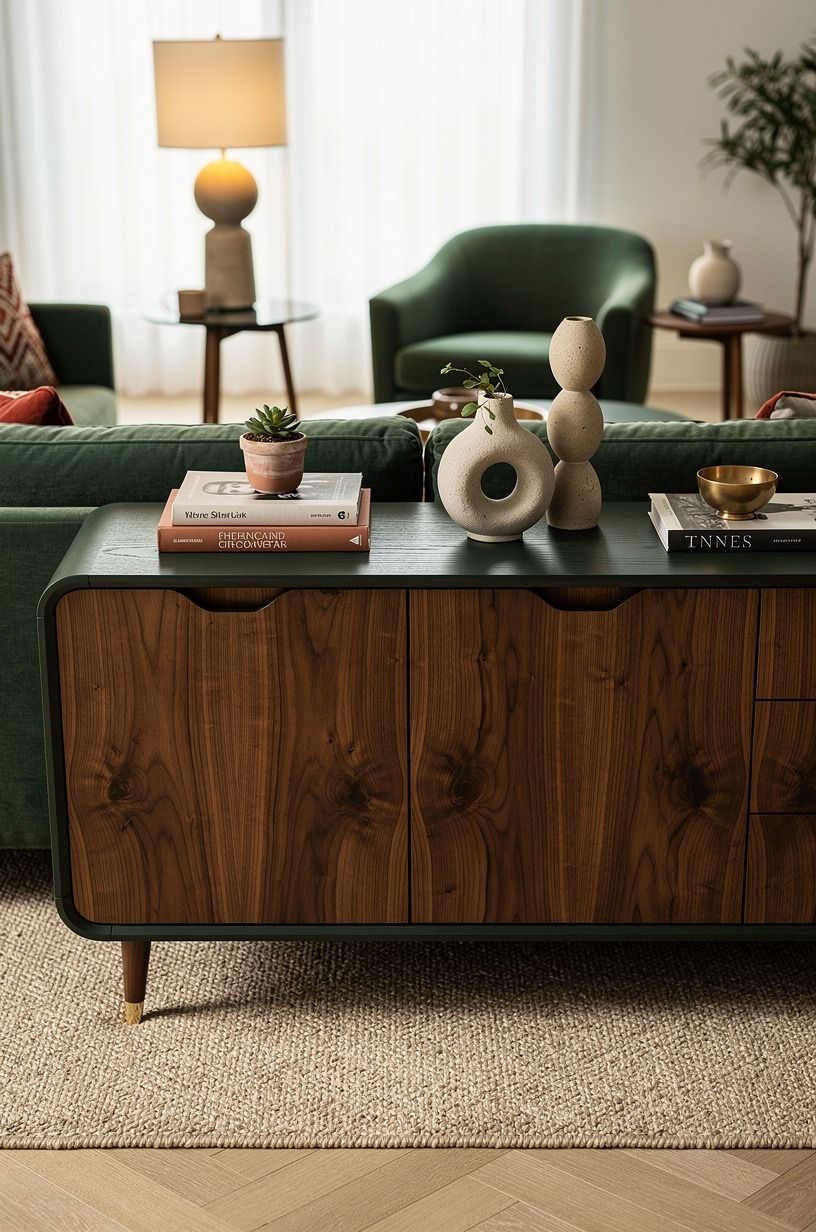
Your console should hold a few objects that suggest life beyond the screen. A book-matched walnut surface, a small lamp, and two oversized books are enough for most walls.
Keep your coffee table at 16 to 18 inches high and around two-thirds the length of your sofa, so the furniture in front of the media wall feels proportioned too. A natural oak coffee table brings the forest green and rust palette together with more presence than a lightweight glass piece.
And leave one area empty. I know, it’s tempting to fill every inch. The blank patch is what lets the rest of your wall feel refined.
What a Luxury Media Wall Can Cost
You don’t need the high tier to make a visible change. The budget range can cover paint, a better rug, soft lighting, and a console refresh, while custom millwork belongs in a different conversation.
A performance-fabric sofa typically runs $1,200 to $4,000, while a 9x12 wool rug often lands between $600 and $2,500. You can spend less, of course, but I’d put your money into the rug and lighting before decorative panels.
Why I Don’t Think Built-Ins Are Always the Answer
I love a proper built-in wall. I also think people use them as a shortcut when they haven’t solved the room around the television.
I made that mistake in a previous apartment: I was convinced shelves would fix everything, so I bought tall bookcases, filled them with objects, and still had a room that felt restless. The TV stayed too high, the console was too narrow, and every lamp was trying to do the same job.
What changed it wasn’t more storage. It was lowering the visual noise.
I repainted the wall, moved the art farther apart, traded open shelving for closed cabinets, and added one low lamp with a warm bulb. Suddenly the room had a place for the screen without making the screen the whole story.
That’s why I’d pause before paying for a wall of cabinetry. Built-ins are worth it when you need storage, have awkward architecture, or own the house long enough to enjoy them. But if your goal is simply a more luxurious look, scale and material usually get you there first.
A 9x12 rug, a long console, linen drapes, and a wall color with some nerve can make a rental feel more settled than expensive millwork in the wrong proportions.
Your media wall shouldn’t perform for visitors. It should make your evening easier.
The lamp pool on the rug, the cabinet doors hiding the clutter, the screen fading back when it’s off. That’s the part that lasts.
The Questions I Get Asked Most
What is the best luxury media wall idea for a small living room?
A long low console with a painted backdrop is the best choice for a small living room. Visual width makes your wall feel broader without adding depth. Try an IKEA BESTÅ unit, a darker paint field, and one slim lamp.
Where can I buy luxury media wall pieces on a budget?
Start with IKEA, Target, Wayfair, and Facebook Marketplace. Secondhand wood furniture often looks better than new particleboard once you clean it up.
- IKEA storage fronts - Target Threshold lamps - Marketplace oak consoles
How much does a luxury media wall makeover cost?
A basic makeover can cost about $100 to $300 if you paint, rearrange, and use what you own. Lighting and paint give the strongest return first. A larger rug or media console moves you into the $300 to $1,200 range.
Can I create a luxury media wall on a budget?
Yes, and you should begin with the free changes. Better proportion costs nothing when you lower clutter and move art wider.
- Cords hidden in a paintable channel - Books grouped by tone - Existing lamp moved beside the console
Is a luxury media wall worth it in a small space?
Yes, it’s worth it because a small room benefits from one clear focal wall. Closed storage keeps your sightline calmer. Keep furniture away from the wall by a few inches if your layout allows it.
Is a luxury media wall a good idea for a rental?
Yes, if you use removable layers. Peel-and-stick texture and tension-mounted curtains give you the look without risking your deposit.
- Removable wall panels - Tension rod drapes - Freestanding media cabinet
Where I’d Start First
If I had to pick one, I’d start with a long low media console. A TV can’t look considered when it’s balanced on furniture that’s narrower than the screen. Pin the console idea for later and build the wall around that grounded line.