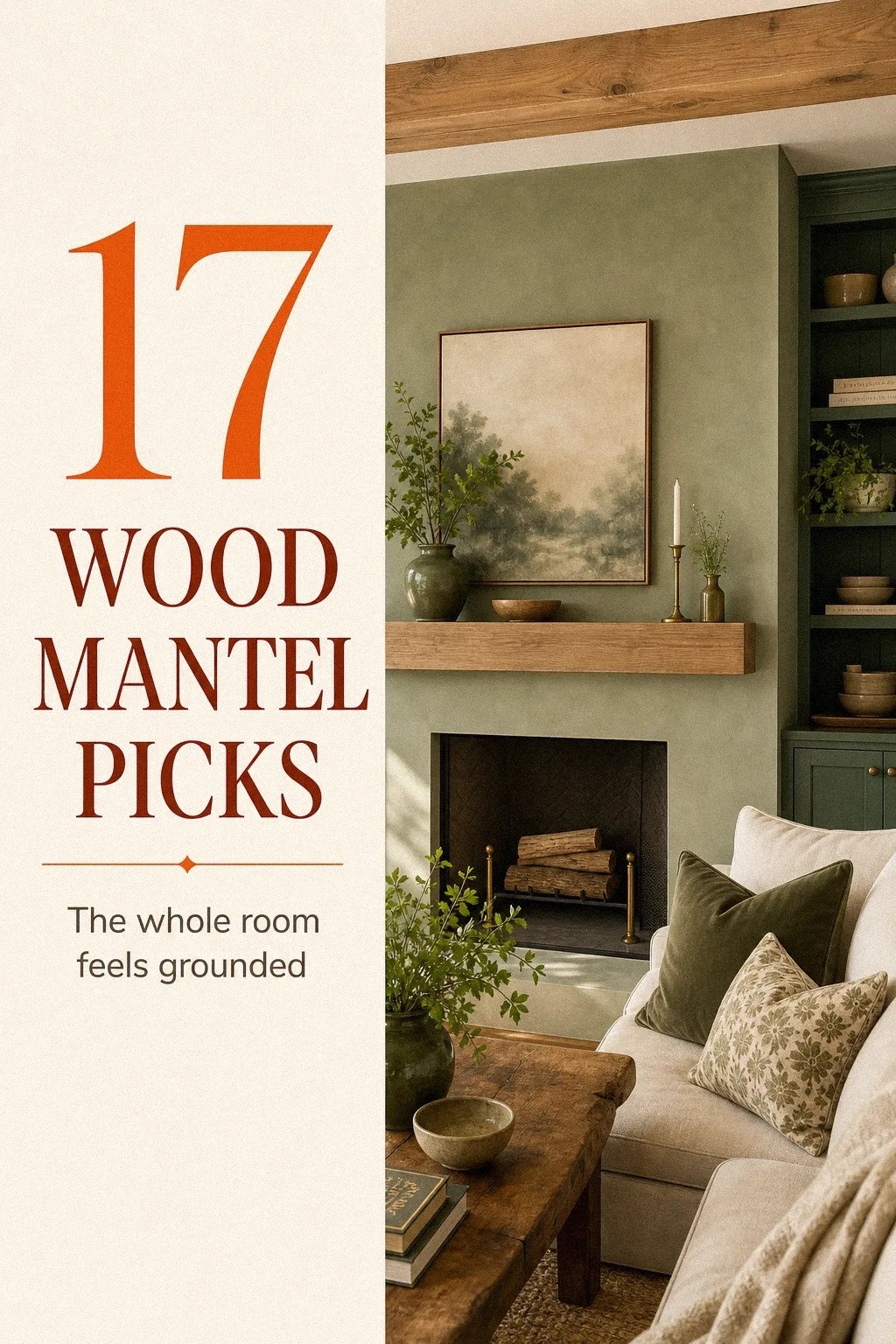
Cozy Wood Mantel Ideas for Natural, Grounding Warmth Without Clutter
29 june 2026Wood mantel ideas for natural, grounding warmth work best when the wood itself does the heavy lifting. I learned that after styling one living room into total visual mush with too many candles, too many frames, and a shelf I barely let you see.
Once I stripped it back to grain, scale, and a few materials that could hold their own, the whole fireplace settled down. That's the promise here.
You don't need more stuff. You need a better wood move, and I'd argue it's one of the cheapest ways to add real value to the room if you choose well.
- Expose the beam with a natural oil finish
- Wrap the surround in slim vertical wood slats
- What does real brick actually need above it?
- Carve shallow grooves along the mantel face
- Stain the mantel walnut against pale stone
- Cap the fireplace with a Swann's-style waterfall frame
- Add corbels beneath a thick oak shelf
- Should you run picture ledges across a wood mantel?
- Flank the mantel with built-in firewood niches
- Layer carved wood panels behind simple pottery
- Brush limewash around a raw cedar mantel
- Install a floating box beam over tile
- Pair dark wood with cream ceramic vessels
- Is one wood note across the room worth the effort?
- Soften sharp edges with rounded wood molding
- Frame the hearth with matching timber benches
- Style stacked logs under a live-edge mantel
1Expose the beam with a natural oil finish
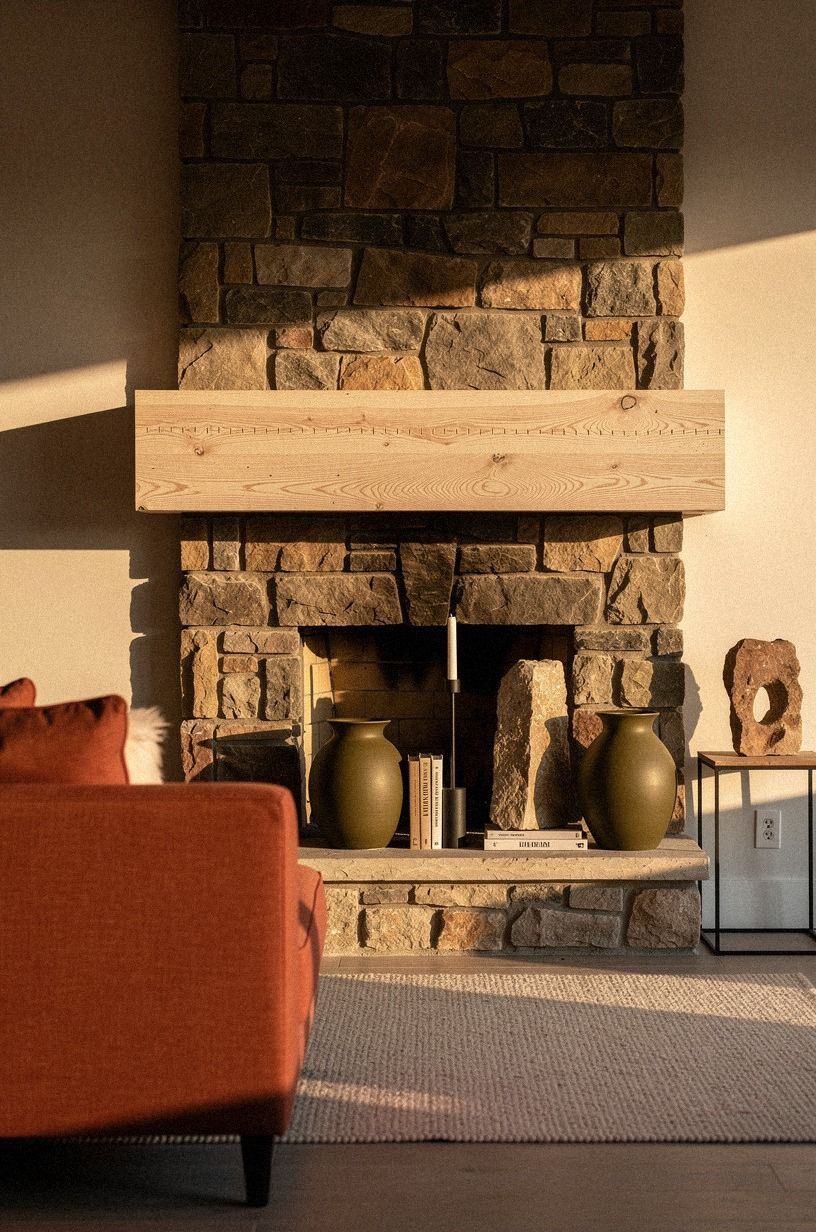
Start by letting the shelf read as architecture, not decor. If your fireplace already has a strong cerused white oak beam with exposed dovetail joinery, your job is to stop covering it up and let that pale grain breathe.
I like a natural oil finish here because you still see the wood's chalky movement instead of a plastic topcoat shine. You should keep at least a third of the beam open, especially if the shelf spans around 60 to 72 inches.
That's what gives warm fireplace decor its calm center. If you want more examples of restraint doing the work, these mantels that made spring feel fresh again are worth a look.
Use only a few grounded pieces on top. One cream pottery vase, one low stack of books, maybe one brass note, then stop.
Why hide the best material in the room under filler? A natural oil itself runs about $40 to $80 a can, and it'll do two beams.
That's the best dollar-per-square-foot decision in the whole project.
2Wrap the surround in slim vertical wood slats
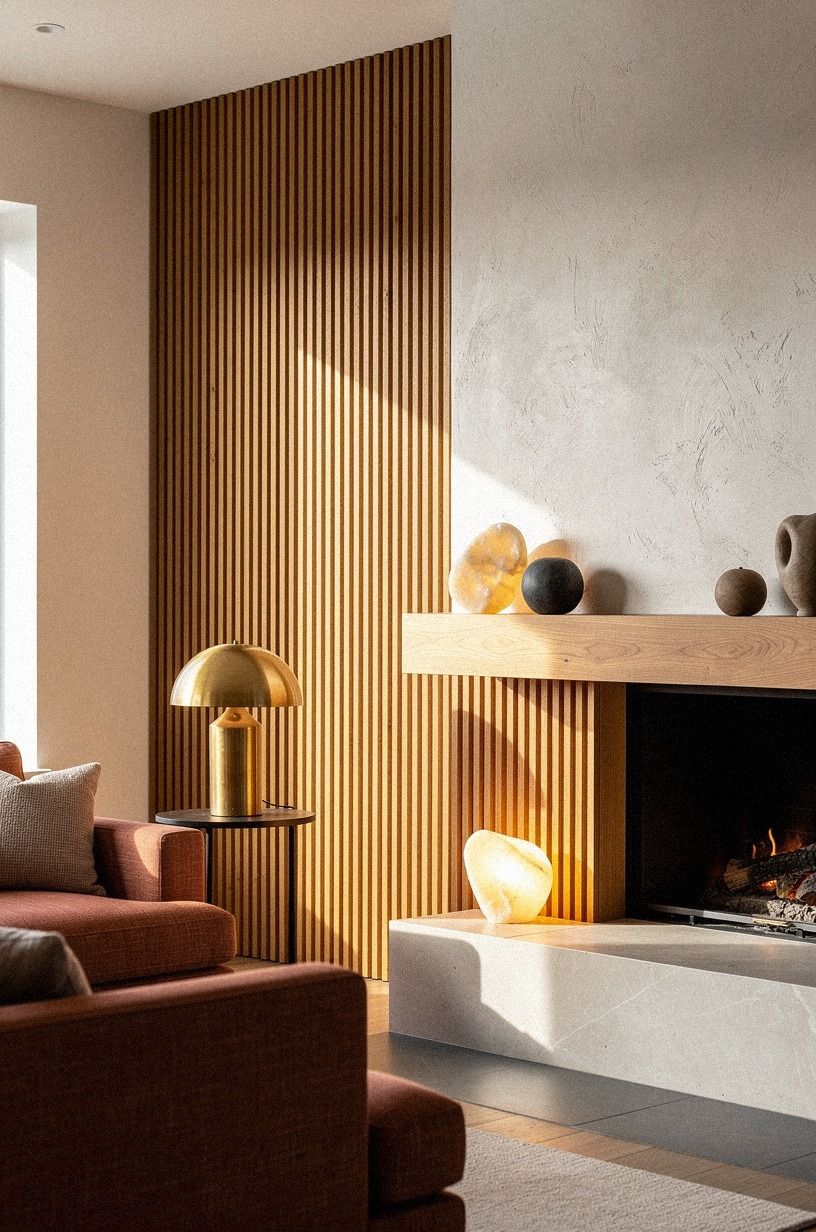
Vertical slats shift the whole fireplace from flat wall to warm focal point. If you want wooden mantel styling to feel taller, slim oak slats wrapping the surround are one of the cleanest ways to pull your eye up.
Keep the spacing tight and regular so the surround feels built in, not craft-project. I prefer narrower slats around 1 to 1.5 inches wide on a living room fireplace because anything chunkier starts stealing attention from the mantel itself.
The wood mantel and hearth should still read as one composition. Modern mantel decor ideas for a clean minimal fireplace shows the same discipline in a quieter way.
And keep the styling light. A pair of linen shade sconces or one framed piece above is enough, because the slat rhythm is already giving you texture.
DIY slats land around $2 to $4 per square foot if you're handy; a millwork install doubles that. Worth it?
Almost always, because you're not buying more shelf, you're reframing what's already there.
3What does real brick actually need above it?
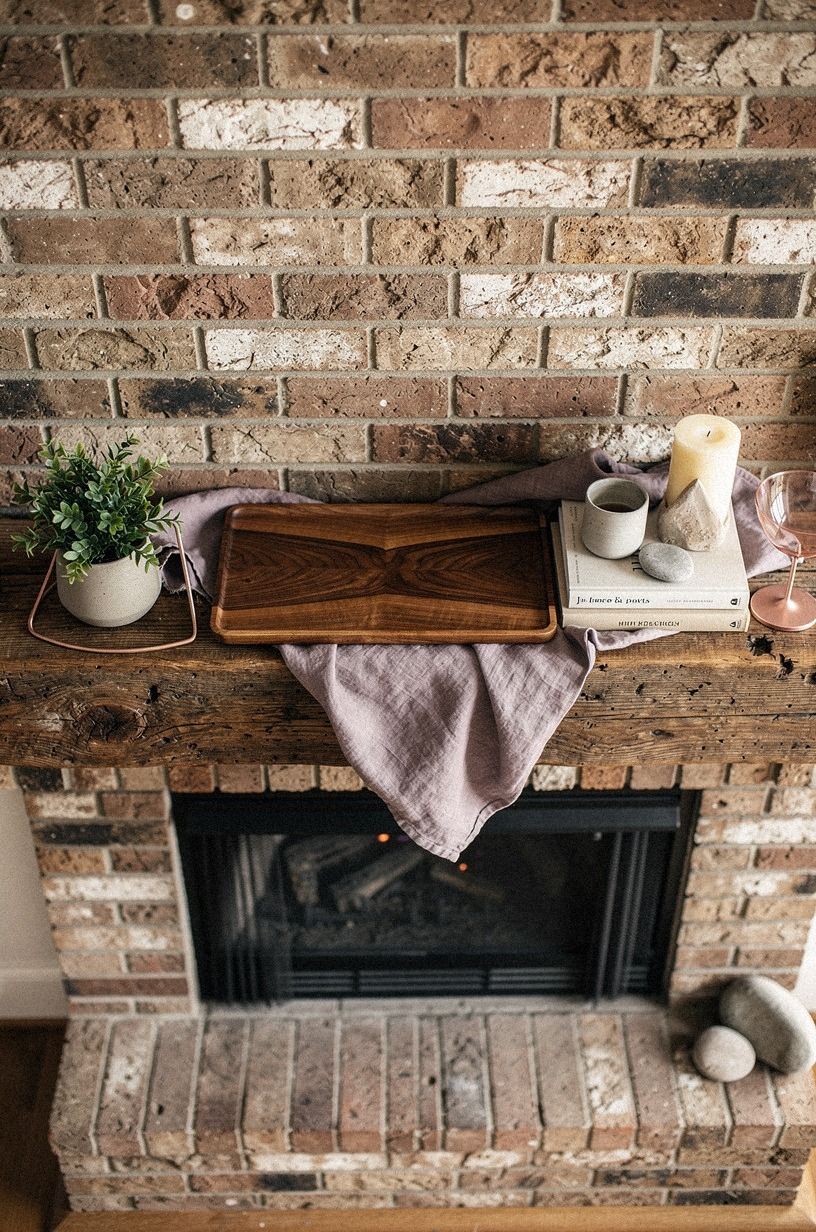
Brick needs weight above it. A skinny shelf over a textured fire mantel decor wall always looks timid, so I would mount a chunky reclaimed pine shelf and let the wear marks show.
The move is proportion. Your shelf should look intentionally heavier than the brick joints below it, not equal to them. I like a depth around 8 to 10 inches if you want room for layered styling without turning the top into storage.
You should also leave the edges honest. Saw marks, softened corners, old nail holes. That's the part that keeps reclaimed wood from feeling fake.
If you want the cleaner cousin of this contrast, simple mantel decor ideas for an uncluttered pulled-together look helps you edit it back. You'll feel the difference fast!
One vintage oil painting leaning slightly off center is usually enough here. Brick plus reclaimed wood already gives you the warmth. Reclaimed pine runs around $25 to $60 per board foot depending on age and width, and that's the line item where your money actually shows.
4Carve shallow grooves along the mantel face
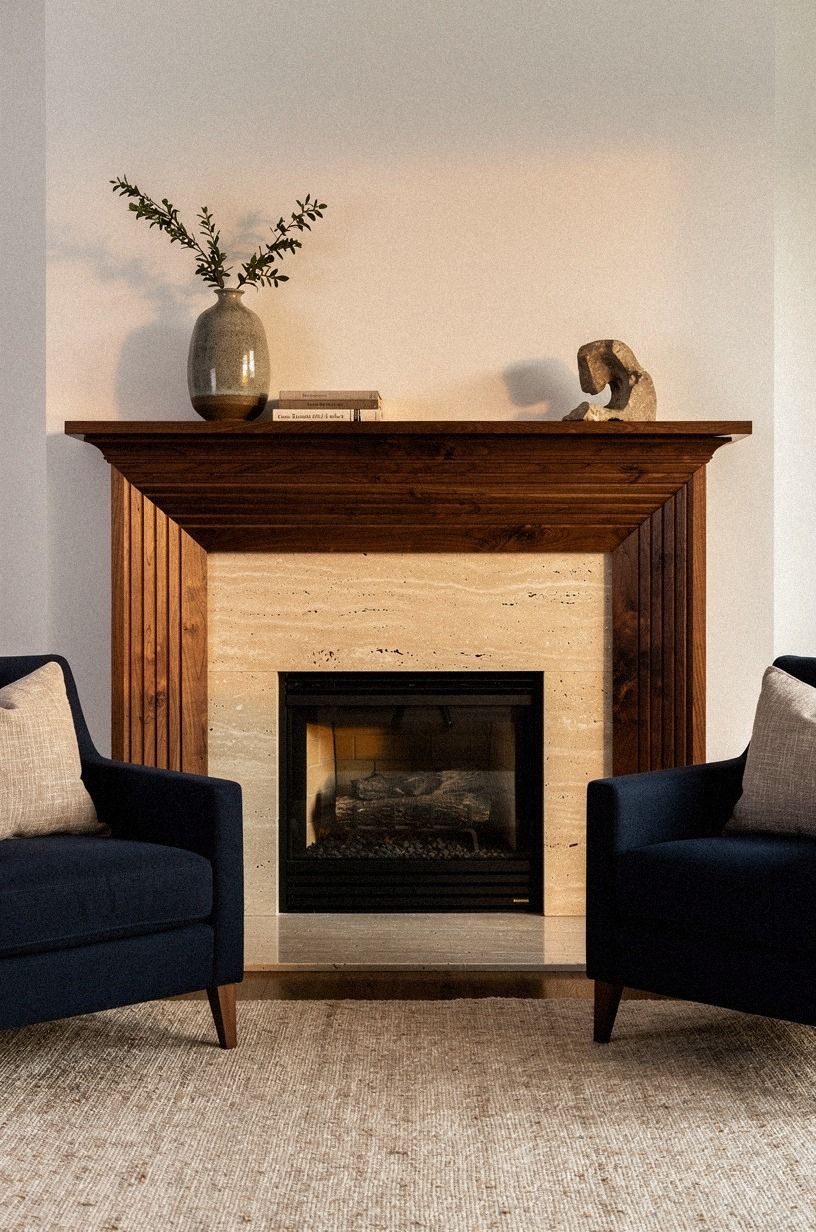
This is a subtle move, but it changes the light. Shallow grooves carved into a symmetrical walnut mantel give the front edge just enough shadow to feel crafted without turning rustic.
I like this when the fireplace below is smooth, especially warm travertine or Venetian plaster, because the groove line adds rhythm without crowding the room. Keep the grooves shallow and evenly spaced so the face still reads calm from across the sofa. If you're styling a formal living room, that tiny line of shadow matters more than another object on top.
For more ways to keep the shelf itself interesting, mantel styling 101 how to dress a mantel like a designer is useful.
Pair it with low objects only. A smoked glass vase or bowl works better than a crowded line of accessories, because the carved face should stay visible.
The millwork itself usually adds about $300 to $900 over the cost of a plain mantel. That's real money, but it's also the kind of detail appraisers notice and buyers remember.
5Stain the mantel walnut against pale stone
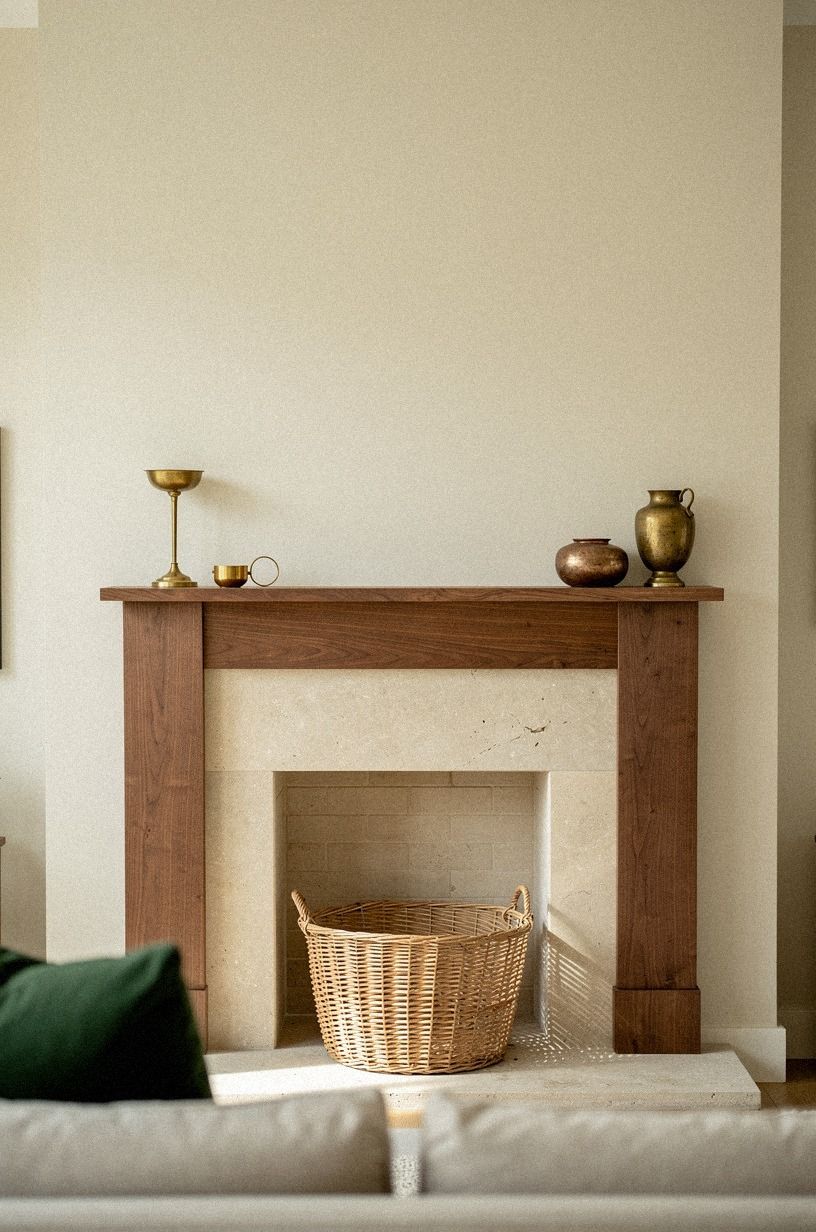
Dark wood over pale stone gives you contrast without shouting. If your surround is creamy limestone or soft plaster, a walnut stain on the mantel makes the whole fireplace feel anchored fast.
This is where I would rather go richer on the wood and quieter everywhere else. Pale stone can drift if the shelf is too blond, especially with cream walls nearby.
A walnut tone pulls the eye into the center and gives your home decor fireplace setup a strong horizontal line. I also like this with Benjamin Moore Revere Pewter HC-172 on nearby walls because the gray-beige note keeps the contrast warm, not harsh.
Mantel decor ideas to pull your whole living room together makes the same point from a whole-room angle.
But don't add dark decor just because the shelf is dark. One cream ceramic bowl usually does more than a row of black objects. You'll spend around $50 to $120 on stain and sealer for a 6-foot mantel, and the gallon goes further than you'd expect if you keep a damp rag handy.
6Cap the fireplace with a Swann's-style waterfall frame
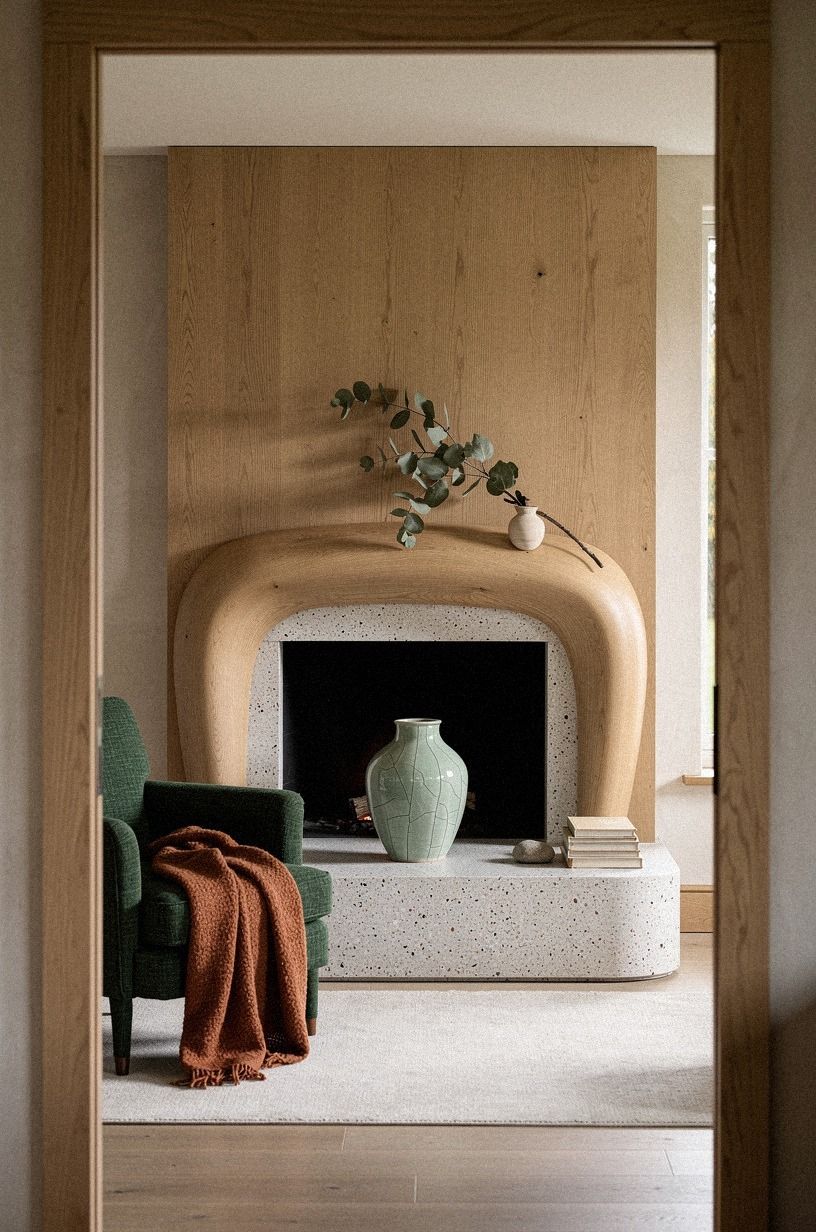
A waterfall frame turns the mantel into part of the architecture, and a Swann's-style wrap where the same slab cascades down one side is the most underrated version of it.
7Add corbels beneath a thick oak shelf
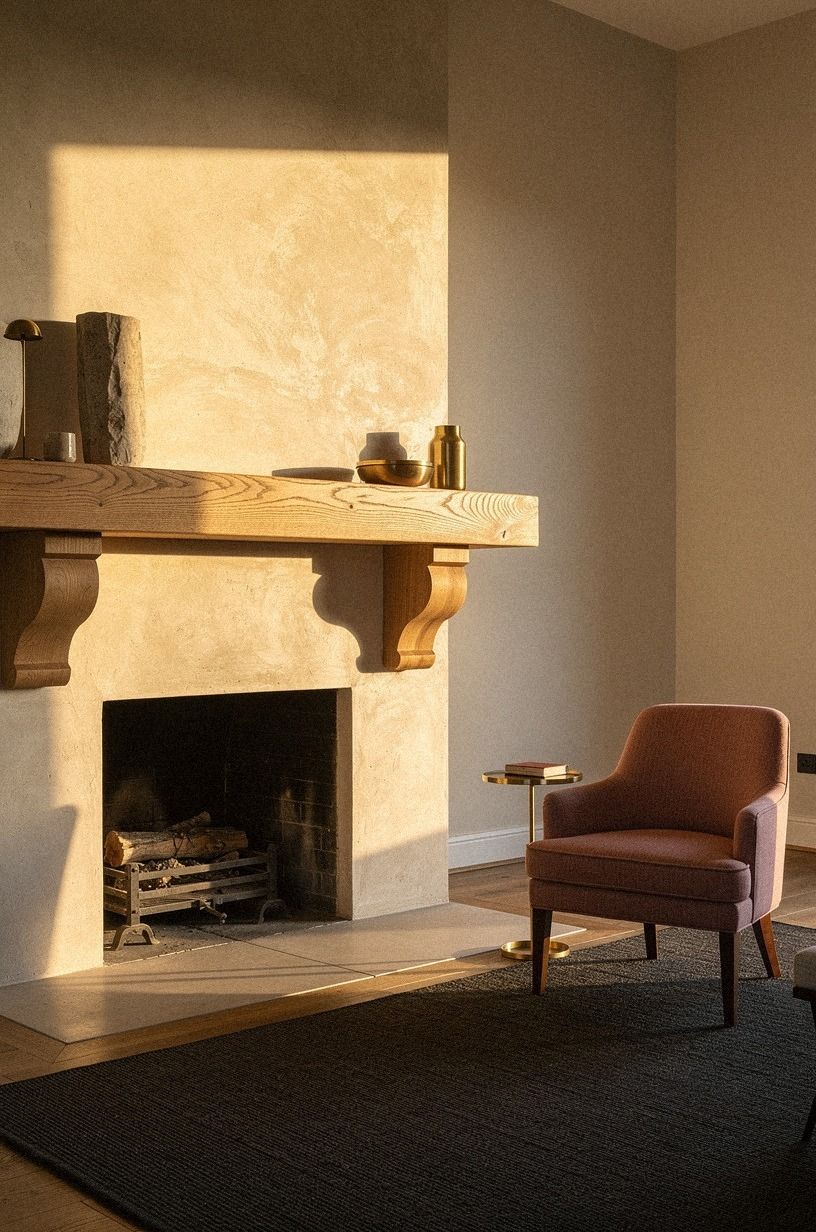
Corbels are what you use when a plain shelf feels too bare but a carved mantel surround would be too much. Under a thick oak shelf, sculptural corbels bring old-house structure without forcing you into farmhouse costume.
I like this best over a hand-applied plaster fireplace, because the soft wall texture keeps the corbels from reading stiff. Make them deep enough to feel intentional, but not so deep that they eat leg room or shadow the firebox.
And yes, you should treat the wood and the plaster like a pair. Farrow & Ball Hague Blue No. 30 elsewhere in the room looks beautiful with pale oak and creamy plaster, especially if your textiles lean wool and linen.
Farmhouse fall mantel ideas for warm gathered charm has helpful scale cues, even if your room is less rustic.
I would skip fussy carved decor on top. One antique brass candlestick is enough to echo the corbel shape without piling on. A pair of hardwood corbels runs about $80 to $250 each depending on whether you go new or salvage, and the salvage versions often look better for less.
8Should you run picture ledges across a wood mantel?
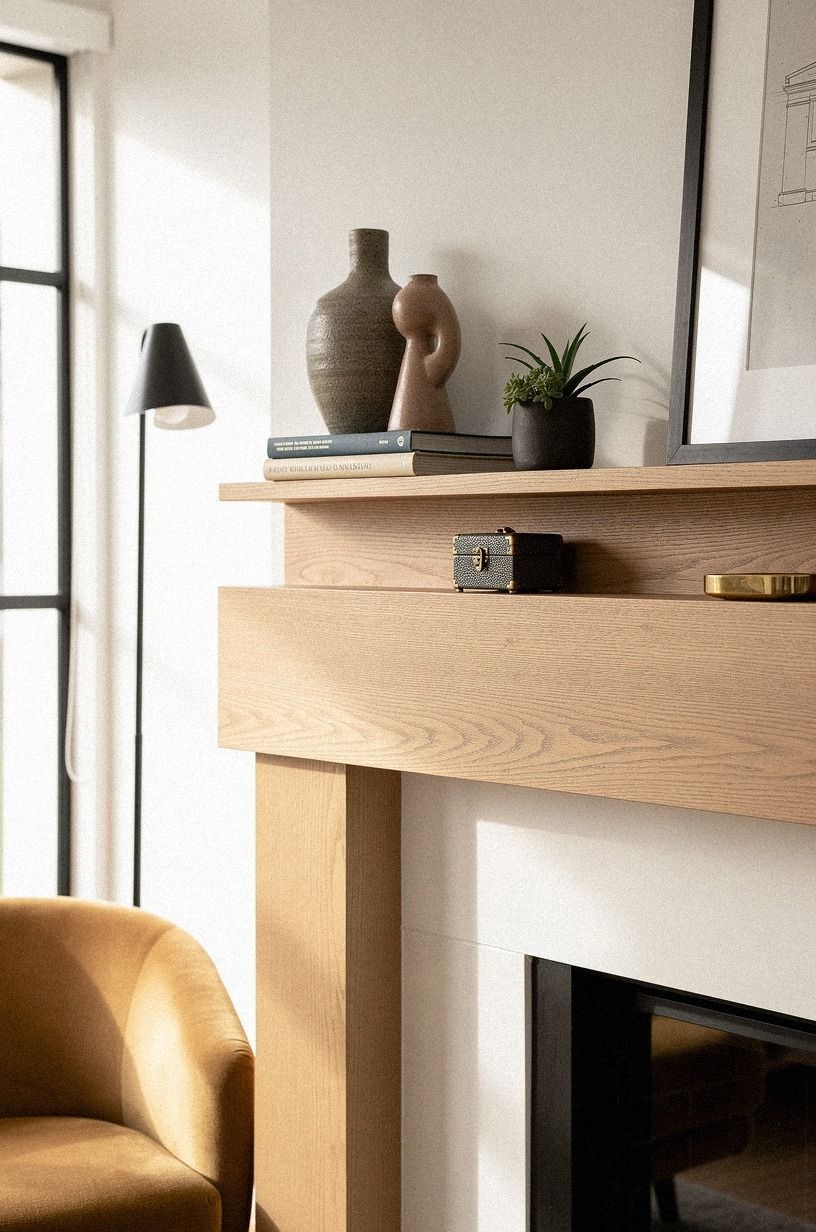
Picture ledges let you layer art without committing to one locked arrangement.
9Flank the mantel with built-in firewood niches
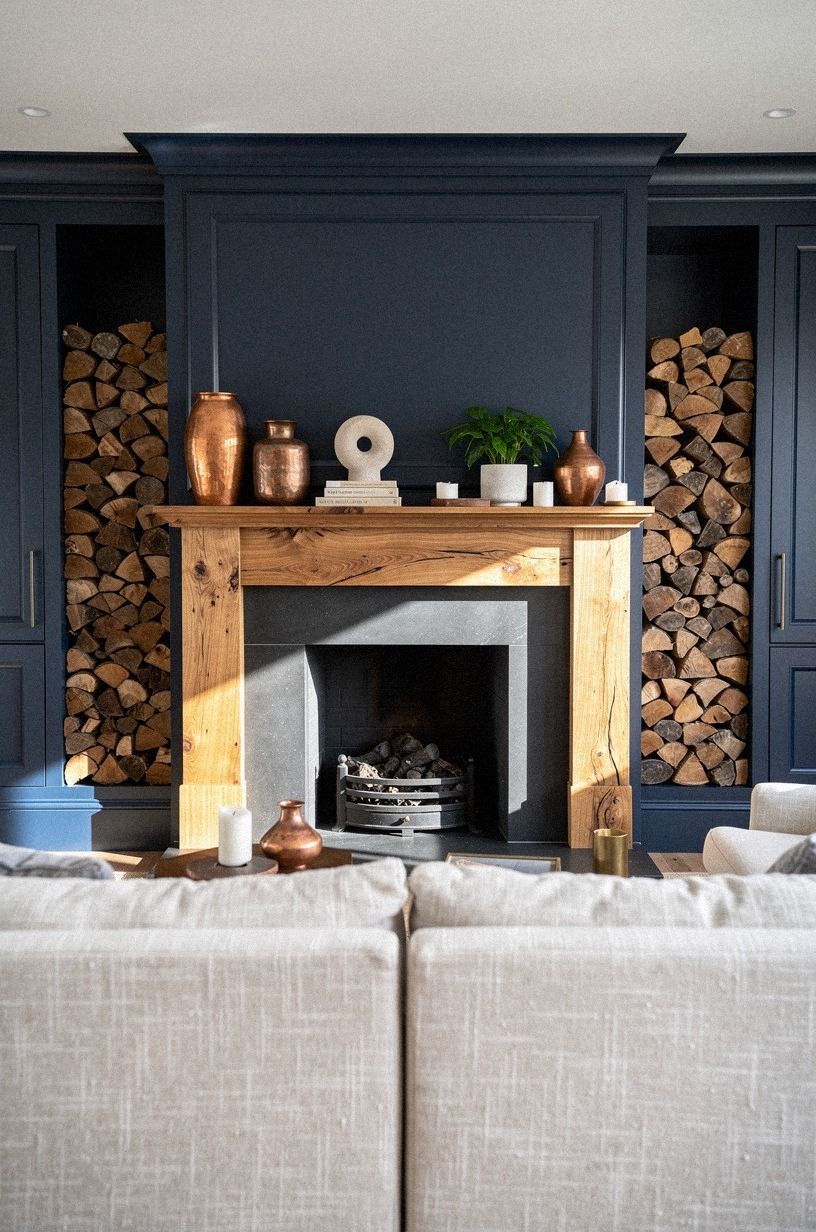
Firewood niches do more than store logs. They give the fireplace side weight, and that weight matters when your mantel itself is simple. Built-in split log niches turn the whole wall into a warm composition from floor level up.
Keep the stacks neat and repetitive so the logs read like texture, not chores waiting to happen. I prefer one species per niche if you can manage it, because mixed cuts can look messy fast.
The best version feels architectural from the doorway and practical up close. And if your room is small, the vertical storage actually helps because you gain rhythm without adding freestanding clutter. Small mantel fall decor ideas that don't overwhelm the space uses that same idea of side weight beautifully.
A darker firebox screen in the center can sharpen the log stacks without making the room feel cold. Huge difference! For a niche build you're looking at $400 to $1,200 per side in drywall and trim, and the no-cost version is a clean rolled-edge basket that you can swap out by season.
10Layer carved wood panels behind simple pottery
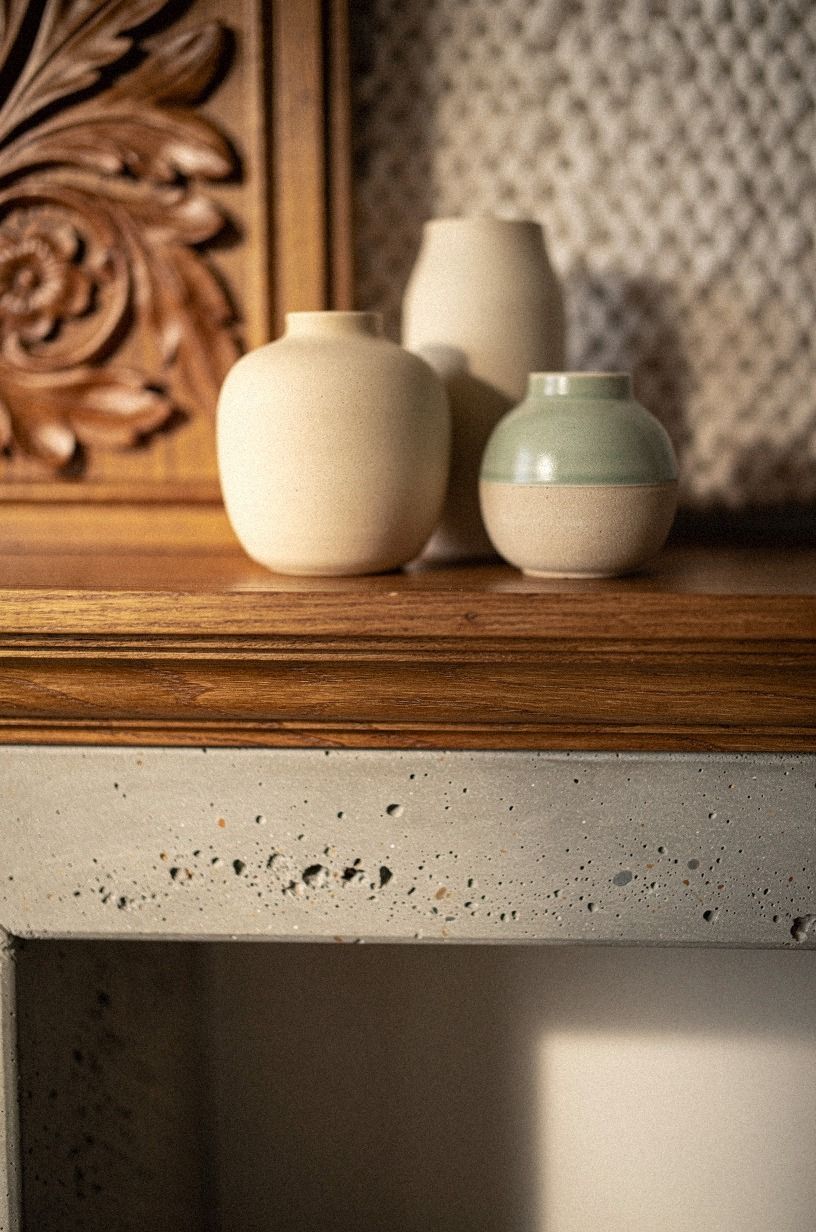
This is the move for people who want warmth without busy styling. Carved wood panels layered behind a few cream vessels give you detail, depth, and a little age, while the pottery keeps the front line quiet.
I like the panel carvings shallow rather than ornate. If the motif is too loud, your eye stops at the pattern and never gets back to the mantel as a whole.
One tall panel, one shorter panel, then two or three vessels in warm cream or sage glaze is usually enough. You can borrow the carved note from old shutters, furniture fragments, or salvage shop panels.
Simple mantel decor ideas for an uncluttered pulled-together look is a good reminder that quiet front objects make layered backdrops work.
And keep the pottery matte. A sage glaze vase with a soft chalky finish feels much better here than bright polished ceramic. Salvaged panels are usually $30 to $90 each, and you can also pick them up from architectural salvage yards for less than half a brand-new piece would cost.
That's real value if the texture matters to you more than the label.
11Brush limewash around a raw cedar mantel
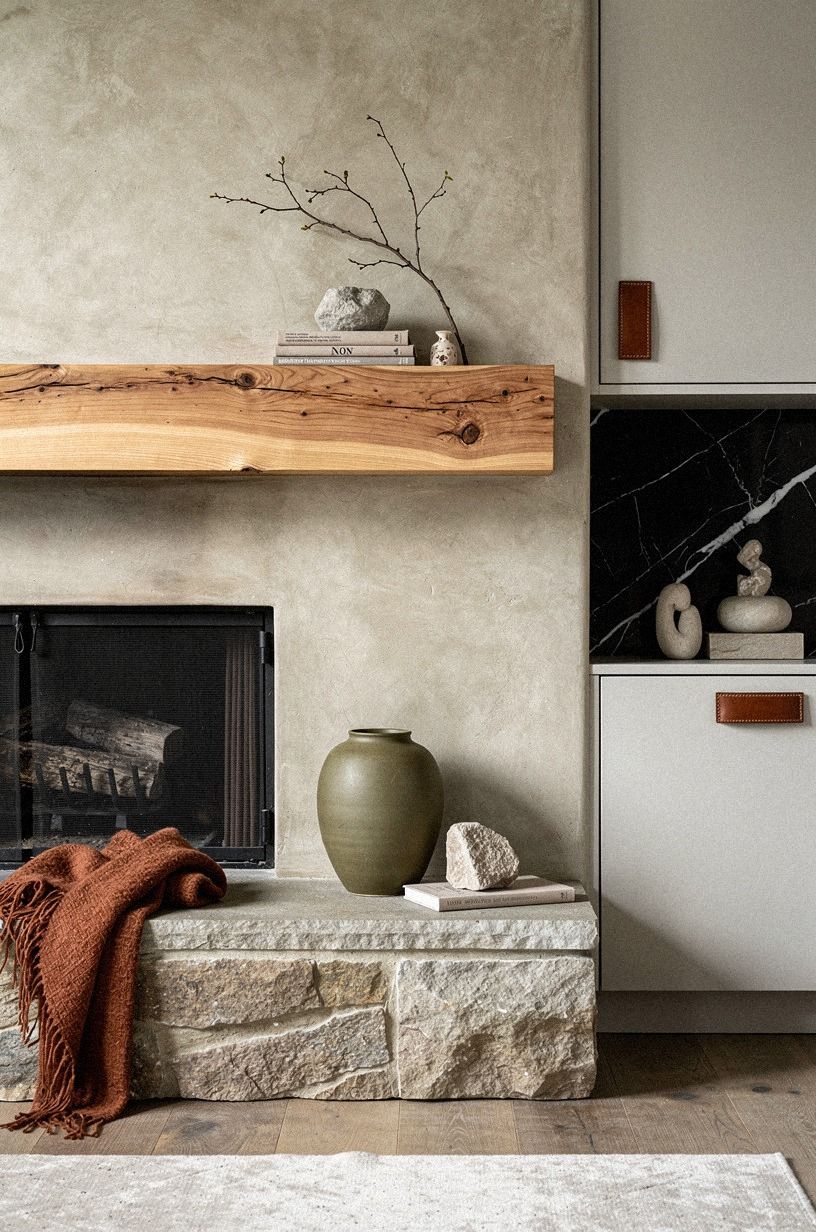
Limewash is one of the fastest ways to make a raw wood mantel feel settled into the wall. Around a cedar beam, that brushed, cloudy finish softens the transition between stone, wood, and plaster.
I messed this up once by sealing too late, and the wash grabbed unevenly. Don't do that. Test the undertone first, then keep the application loose so you still see movement.
If your cedar leans orange, the limewash keeps it from yelling across the room. I also like this with Sherwin-Williams Evergreen Fog SW 9130 in nearby textiles or a chair, because the dusty green makes the wood feel grounded instead of pink.
How to decorate a fall mantel with a TV above it is useful if your wall has a harder line you need to soften.
Use only one or two objects up top after that. A stoneware pitcher with branches is plenty, because the wall treatment is already doing real work. A bag of limewash putty is about $25 to $45 and covers roughly 200 square feet per coat, so even a tall two-story wall runs you less than the cost of a tank of paint.
Cheap move, real change.
12Install a floating box beam over tile
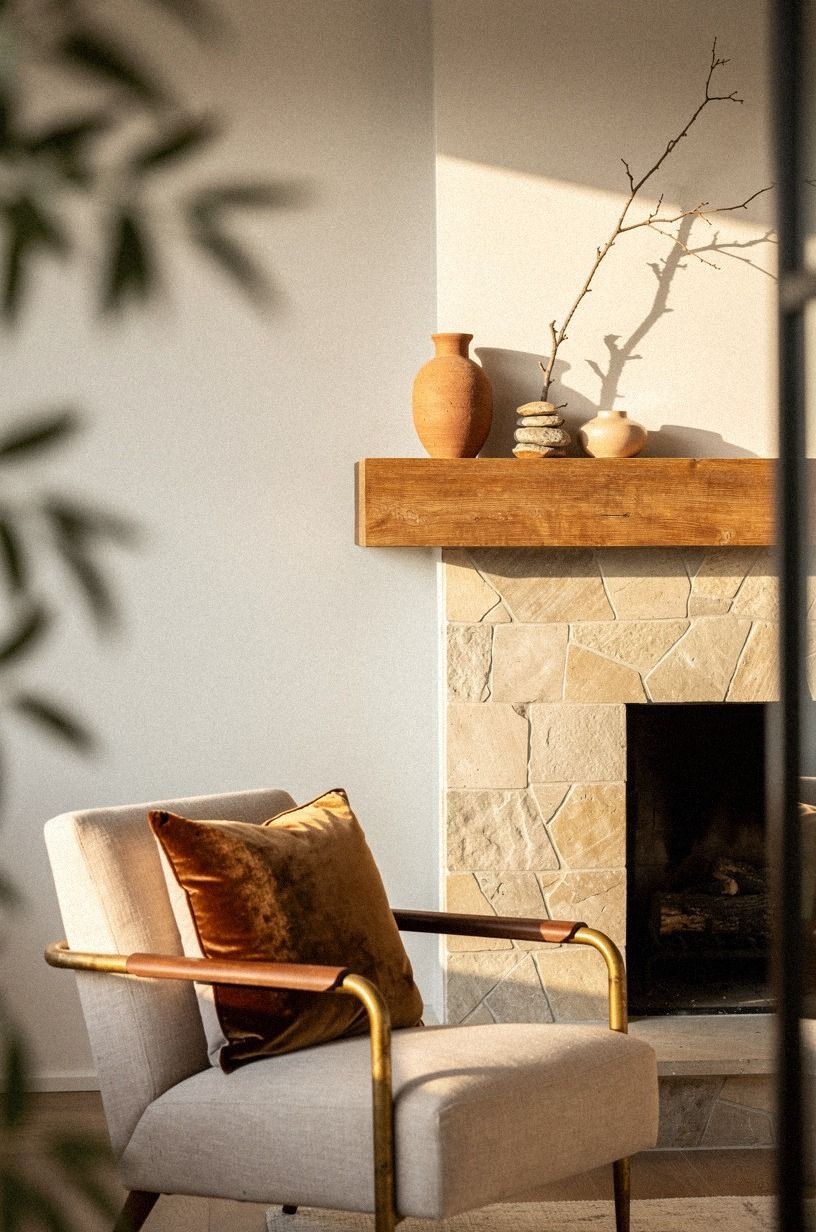
A floating box beam is the right call when you want heft without the weight and cost of a full solid timber. Over handmade zellige tile, it gives you one broad calm line to balance all that lively surface variation.
I would use a deeper beam before I'd use a busier tile. That's my bias.
The shelf should calm the wall, not compete with it. Around 6 to 8 inches deep usually looks right in a standard living room, and I want the tile below to stay readable from a side view through plants or a doorway. If you're watching your overall living room spend, the range below is a practical benchmark for the zone around the fireplace.
If your room still feels flat at night, warm lighting ideas can help you make the beam and tile feel richer after sunset. One leafy ficus in the foreground is all the softness you need. A hollow MDF or poplar box beam clocks in around $15 to $30 per linear foot and installs in a morning, which is why it's the best dollar-for-value decision in this whole list.
13Pair dark wood with cream ceramic vessels
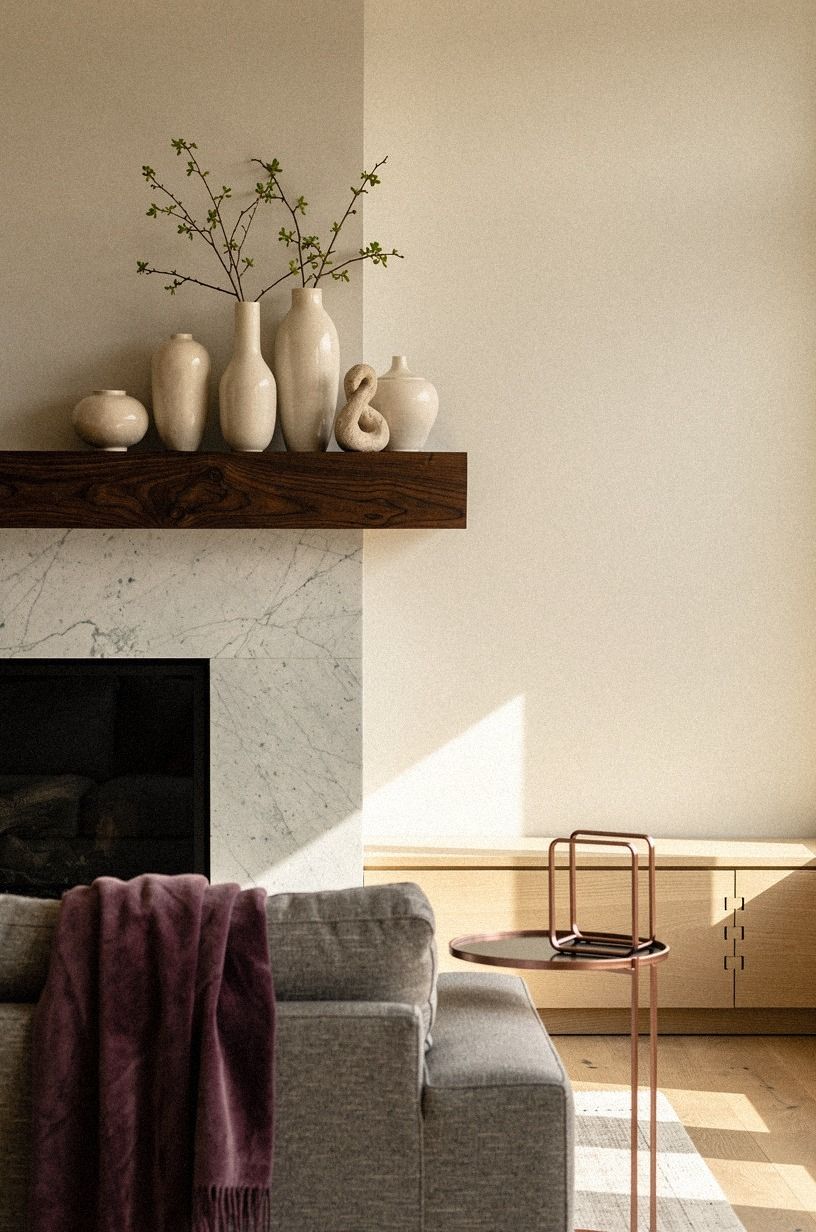
Dark mantel, pale vessels, done. A dark-stained oak shelf over subtle Carrara veining looks strongest when you let the ceramics stay soft and simple.
This is one of those combinations that seems obvious until you see how many people overcomplicate it. The marble already has movement.
The dark wood already has presence. Your job is to keep the pottery broad, chalky, and a little imperfect so the eye can rest.
I like two cream vessels in different heights and maybe one branch that bends off center. Brass candle fall mantel ideas for a warm firelit glow shows how a pale object can still hold its own against stronger materials.
But skip bright white. A cream ceramic urn with a little warmth in it feels richer than crisp gallery white every time. You'll find vessels that look right from $18 at a thrift store up to $140 for an artisan piece, and the eye genuinely can't tell the difference from across the room.
14Is one wood note across the room worth the effort?
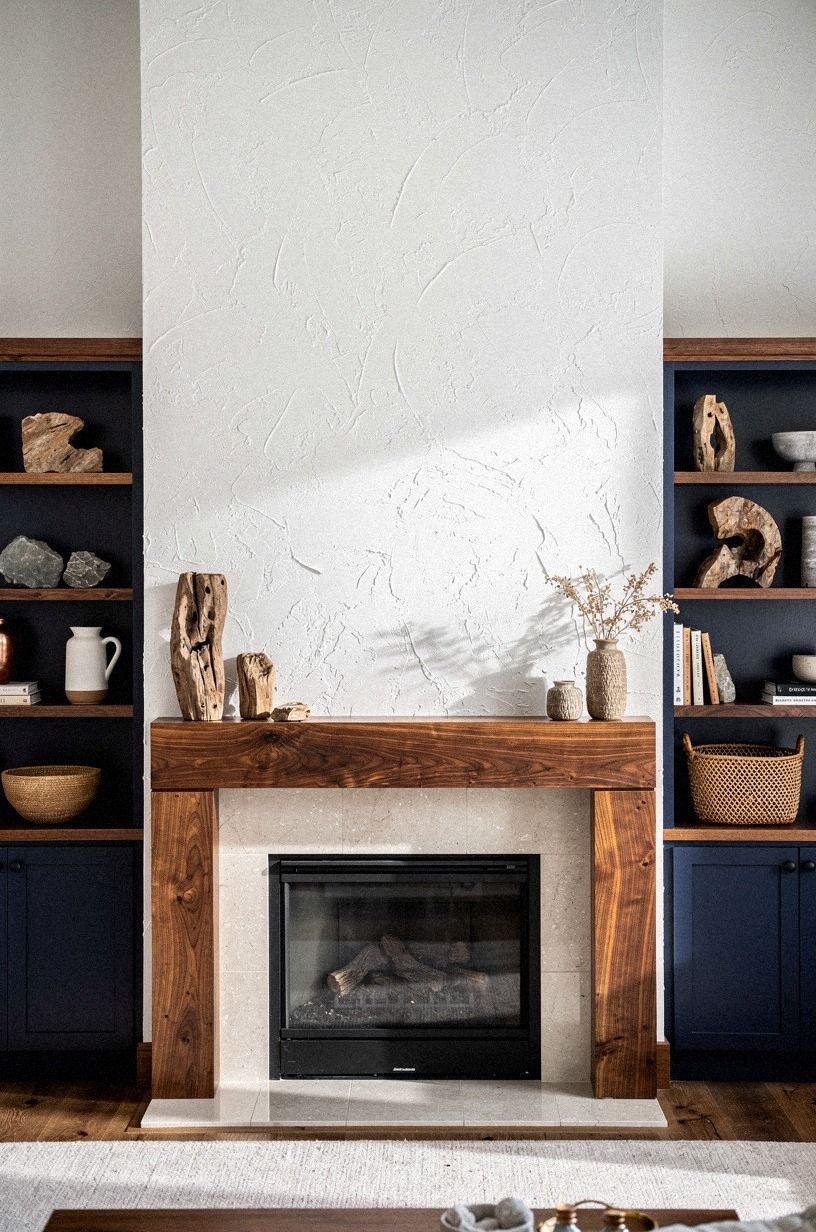
This is the no-fuss way to make the fireplace belong to the rest of the living room, and yes, it's worth it.
15Soften sharp edges with rounded wood molding
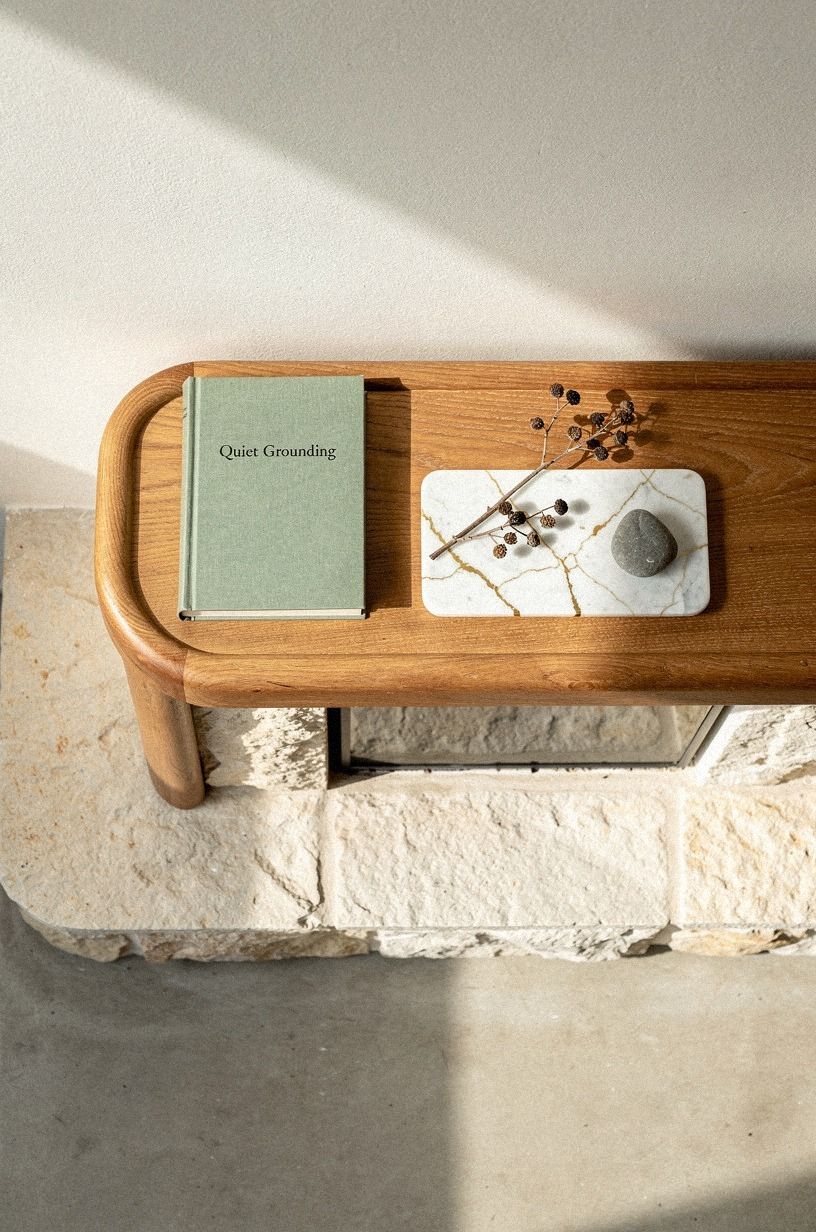
Rounded molding is what you choose when the fireplace looks a little too crisp for the room around it. A softened bullnose trim on the mantel edge gives you warmth before you even add one object.
I like this especially in calmer homes where the textiles are already soft and the architecture is a touch plain. The rounded profile catches light more gently than a hard square edge, and that makes the whole fire mantel decor setup feel less severe from overhead or from the doorway.
It also plays beautifully with plaster, limewash, and quieter stones. If your room leans modern but you still want warmth, modern mantel decor ideas for a clean minimal fireplace is worth saving.
One mohair throw on a nearby chair helps repeat that softness without forcing the mantel to carry the whole mood by itself. Rounded oak molding runs about $6 to $14 per linear foot depending on whether it's solid or finger-jointed, which is roughly the same price as a square profile, so you don't pay a premium for the upgrade.
16Frame the hearth with matching timber benches
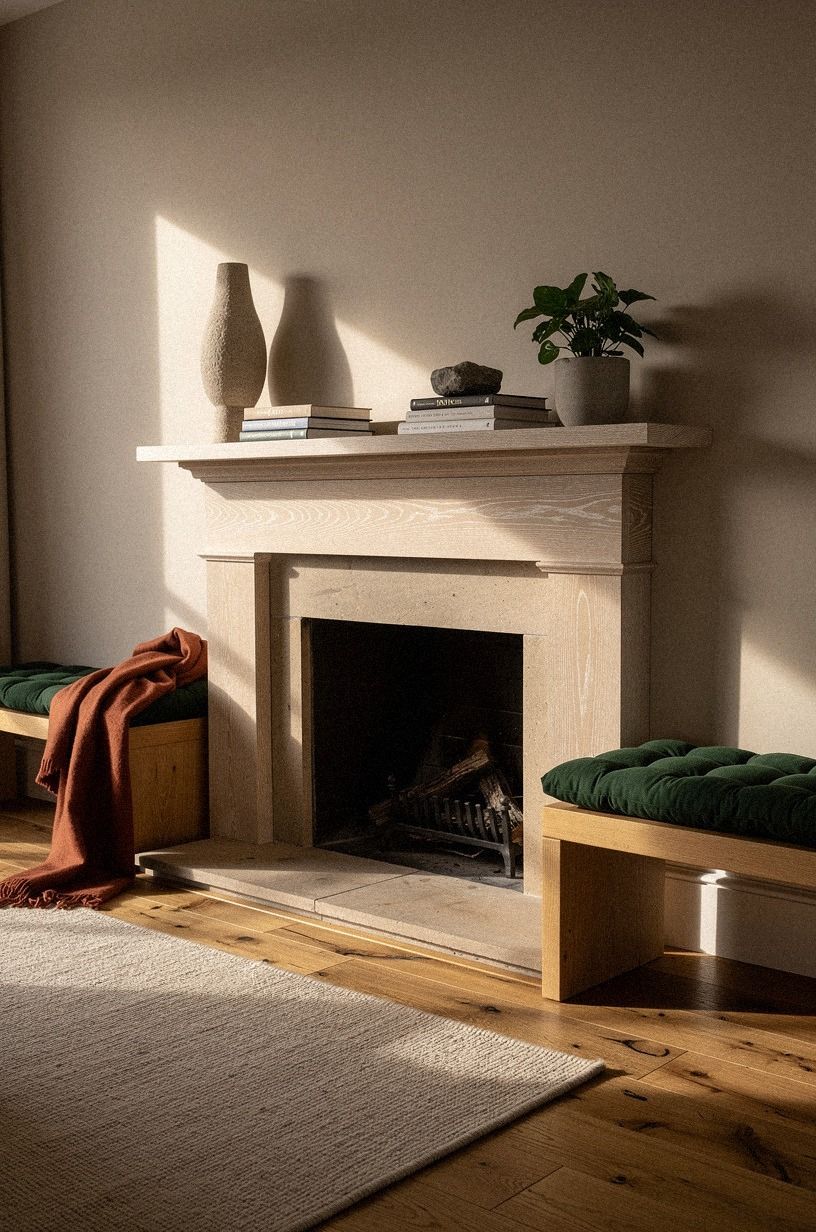
Benches beside the hearth make the fireplace feel inhabitable, not just decorated. Matching timber benches under a cerused mantel create a lower horizontal layer that keeps the wall from feeling top-heavy.
I like benches better than extra baskets when you want the fireplace zone to feel social. One on each side frames the opening and gives you a place for folded throws, books, or a cup during movie night.
Keep the benches simple and let the wood match the mantel closely enough to feel related. An IKEA STOCKHOLM side table or bench nearby can get you the same grounded tone for less if custom millwork isn't happening.
20 cozy rental-friendly decor ideas for temporary style is helpful if you need versions that can move with you.
Add one 600gsm Turkish cotton throw per bench and stop. That's enough! Anything more starts to feel staged.
The IKEA STOCKHOLM bench runs about $299 and lands at most doorsteps in under a week, which is why I keep recommending it. Real quality, fair value, no waiting on a craftsman.
17Style stacked logs under a live-edge mantel
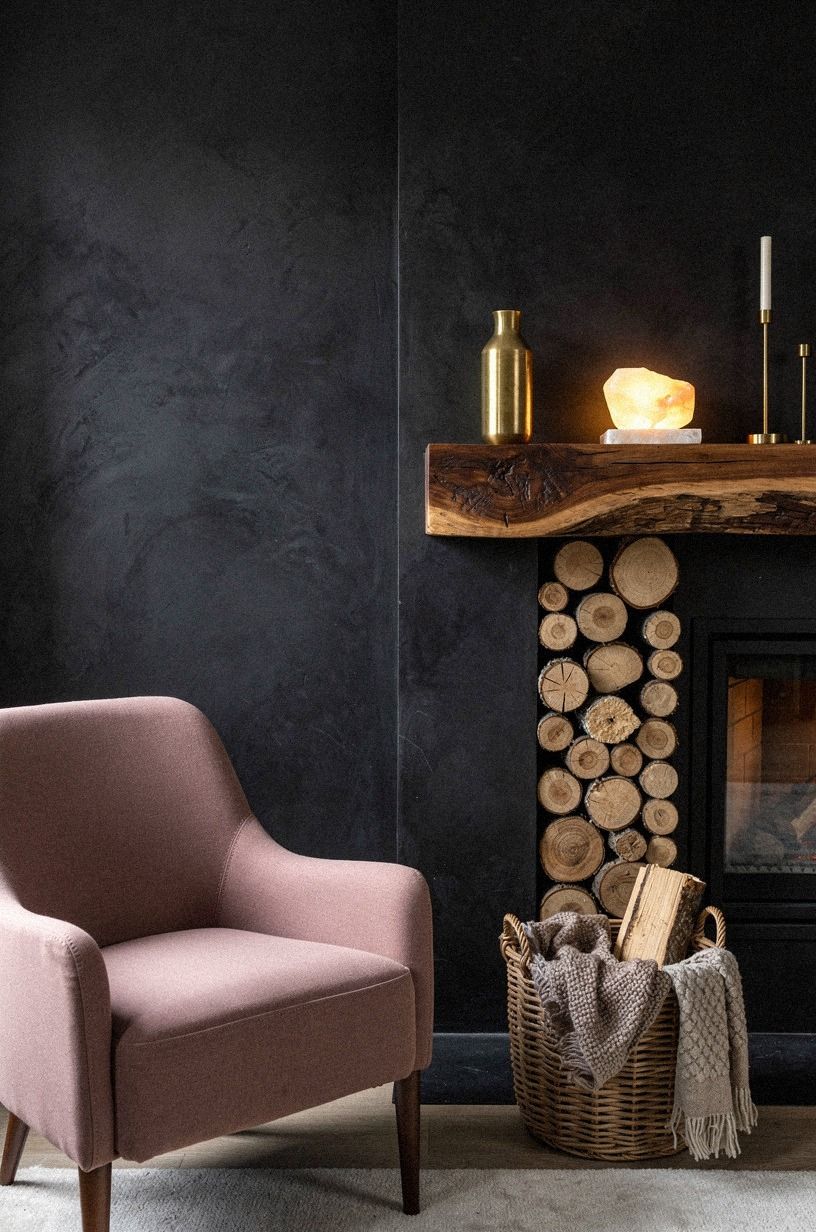
A live-edge shelf already has personality, so the best styling move is usually below it. Stacked seasoned logs under the hearth line echo the raw contour above and make the whole fireplace feel grounded from top to bottom.
You want the stacks neat, but not machine-perfect. I like the bark sides turned in mixed directions so the pile still looks touched by a person.
This works especially well with pale stone, quiet plaster, or a wall painted Benjamin Moore Revere Pewter HC-172 because the natural edge becomes the wildest line in the room. Rustic fall mantel ideas for woodsy natural texture gets this balance right without tipping into cabin cliché.
But don't fill every inch under there. A little breathing room around the live-edge slab keeps the shape special.
A face cord of kiln-dried hardwood splits the difference between decor and fuel at around $400 to $700 in most US regions, so the logs themselves aren't the cost. The slab is the line item, and that's where a thoughtful budget really matters.
Why wood mantels feel better right now
I think wood mantels are landing so hard right now because they answer a problem a lot of living rooms quietly have: too many flat, cold surfaces and not enough gravity. People keep trying to solve that with more decor.
More vases. More candles.
More little objects lined up across the shelf. I've done it too, and it almost always makes the fireplace feel fussier instead of warmer.
What changes the room faster is a stronger material decision.
Wood does that because it brings age, grain, and a little imperfection all at once. A good 3/4-inch solid white oak shelf or a thicker cedar beam doesn't just sit there as a platform.
It introduces a visual temperature. That's different from paint.
It's different from accessories. You feel the pull before you even notice why, and that matters in a room where the fireplace is supposed to be the calm center.
The honest money lesson is that I'd spend on proportion before ornament every single time. If your living room still needs the basics, a wool rug in 8x10 or 9x12, layered lighting, and seating with the front legs anchored will do more than buying five more mantel accessories.
A wool rug 9x12 can run about $600 to $2,500, and that sounds like a lot until you realize how much visual ground it gives the room. Same with lighting. A room with weak light will make even a beautiful mantel look unfinished, and a good pair of warm sconces will set you back around $80 to $180 each.
I also think the best wood mantels reject fake preciousness. They don't need bead garlands, novelty signs, or a row of tiny objects proving you styled them. They need one decisive wood move, a few honest materials, and room to breathe.
If you're choosing between a perfect showroom shelf and a beam with some saw marks, I would take the beam. Every time.
The tiny flaws are what keep the fireplace from feeling like a display wall and help your whole room feel lived in.
Is a wood mantel worth the money compared to other upgrades?
Yes, more than most people expect. A wood mantel is one of those rare upgrades that lands value on every axis at once: it changes how the room looks, it changes how the fireplace performs in winter, and it survives a resale walkthrough.
Most buyers I'm asked about notice the shelf first and the paint second, which is the opposite of how we usually prioritize. A real timber beam usually appraises at about $1,200 to $3,500 of perceived value in a mid-range home, and a floating box version comes in around $400 to $900 for the same perception lift. That's where I'd put the money if the rest of the room is already calm and it's just the focal point that needs weight.
It's also a smarter spend than a new sofa when the fireplace is the room's anchor.
Is a chunky reclaimed beam worth the cost over a hollow box?
It depends on the wall, and I've installed both. Reclaimed solid beams hit harder visually and read more honest in old houses, but they weigh 60 to 120 pounds per foot and your framing needs to know about it. Hollow box beams give you the same line for about a third of the weight and a quarter of the price, and they're the right call on standard drywall.
Reclaimed solid runs roughly $40 to $90 per linear foot delivered, and a hollow box lands around $15 to $30 per linear foot. If your framing's good and you've got a real ceiling to anchor into, the solid version wins every time. If you're renting or you're not sure what's behind the wall, the box is the smarter value and the result is about 90% of the look.
Can you build a wood mantel for under $200?
Yes, you absolutely can, and I've done it twice. A hollow MDF or poplar box beam, one quart of stain, one can of poly, and a Saturday afternoon gets you from raw lumber to mounted shelf for about $140 to $190 in materials if you've got basic tools.
It's not the same as a $1,500 solid slab, but you can't tell from across the room once it's stained and lit. The places you'll feel the difference are the edges and the weight when you knock on it. If you're moving soon, it's not worth upgrading from there.
If you're staying, you can always swap the box for a solid beam later and keep the same stain.
How do you keep the wood from looking too new?
Let it age. A few coats of matte poly and a soft wax will slow the patina without killing it, and a damp cloth on the shelf surface once a week keeps dust from sitting. Avoid direct sun for six hours a day if you can, because UV is what bleaches oak and yellows pine fastest.
A clear matte poly in a satin sheen runs $20 to $35 a quart and covers a 6-foot shelf twice with room to spare. A single tin of paste wax costs under $15 and you'll use it for years. That's about as cheap as ongoing decor maintenance gets, and it's the only reason a soft-wood mantel stays warm-looking instead of plastic.
What People Always Want to Know
What is the best Wood Mantel Ideas for Natural, Grounding Warmth for a small living room?
For a small living room, I'd pick a simple cerused oak beam or a floating box shelf with almost no top styling. You get warmth without visual traffic, and the strong horizontal line makes the wall feel wider. Small mantel fall decor ideas that don't overwhelm the space is a good companion.
Where can I buy Wood Mantel Ideas for Natural, Grounding Warmth pieces on a budget?
Start with IKEA, Target Threshold, and Wayfair for vessels, benches, frames, and simple shelves. Facebook Marketplace is great for old beams and corbels, and salvage yards are better than new faux-rustic pieces. 20 cozy rental-friendly decor ideas for temporary style has more low-commitment sources.
How much does a Wood Mantel Ideas for Natural, Grounding Warmth makeover cost?
A light mantel refresh usually runs about $100 to $300 if you're repainting, restyling, and adding one or two objects. A new beam, tile touch-up, or limewash wall can push you higher. Free moves count too: clear the shelf, restack the logs, and remove half the decor.
Can I create a Wood Mantel Ideas for Natural, Grounding Warmth on a budget?
Yes, and I'd start with shop-your-house styling before buying anything. Clear the mantel, repeat one wood tone somewhere nearby, use branches instead of bought stems, and add one secondhand pottery piece. That's usually enough to show you what the room was missing.
Is a Wood Mantel Ideas for Natural, Grounding Warmth worth it in a small space?
Yes, because a strong wood line gives a small room a center without adding floor clutter. Small spaces benefit from clear hierarchy, and the mantel can do that fast. Just keep the objects few and the side weight slim so the fireplace pulls the eye up instead of out.
Is Wood Mantel Ideas for Natural, Grounding Warmth a good idea for a rental?
Yes, if you focus on no-damage layers. Lean art, add rechargeable sconces, use a freestanding log basket, and bring in a bench or pottery that can move with you later. Simple mantel decor ideas for an uncluttered pulled-together look is the one I'd save first.
Where I'd Start First
If I had to pick one, I'd start with Expose the beam with a natural oil finish. A mantel can't anchor the room if you never let the wood read as wood, and every extra object fights that line. Pin it for later, then read mantel styling 101.