How to Style Rustic Mantel Decor With Woodsy Natural Texture
28 june 2026Rustic mantel decor with woodsy natural texture works when you build the fireplace like a landscape, not a shelf full of filler. I learned that after one November when I kept shuffling little objects across the mantel and the room still felt flat. Your eye wants weight, height, and one rough material that holds the whole story together. Once you get those three things in the right order, the mantel starts warming the room for real.
Before you start with The One-Room Warmth Map
Before you buy a single bell, branch, or lantern, stand about 8 feet back and look at the fireplace the way a guest would. You want to read the wall first, then the shelf, then the hearth. If the firebox is centered but your styling isn't, you'll feel the wobble right away.
I start by measuring the mantel depth and clear width, because a shelf that's 7 to 9 inches deep can handle a very different object mix than one that's only 5 inches deep. And if your seating is close, you need the mantel to feel calm from the sofa, not just cute from two feet away.
The budget side is simpler than people think. If you're only styling the fireplace zone, you can get a strong result by spending on one solid object and letting the natural material do the rest. Your first dollars should go to scale, not clutter.
If your room still feels cold around the fireplace wall, pair this guide with a collected neutral bedroom look or a reading nook lighting setup and steal the same warmth rules for your living room.
- Start with a rough-hewn beam mantel shelf
- Anchor warm brick with an aged landscape
- Layer iron candlesticks beside stacked firewood
- Hang a carved wood mirror over stone
- Build height with tall earthenware crocks
- Lean weathered frames behind brass lanterns
- Cluster pinecones in a hammered metal bowl
- Drape cedar garland across the mantel lip
- Place chunky pillar candles on reclaimed risers
- Frame the hearth with split-log baskets
- Mix rusted bells with creamy stoneware vases
- Finish with bare branches in a clay jug
1Start with a rough-hewn beam mantel shelf
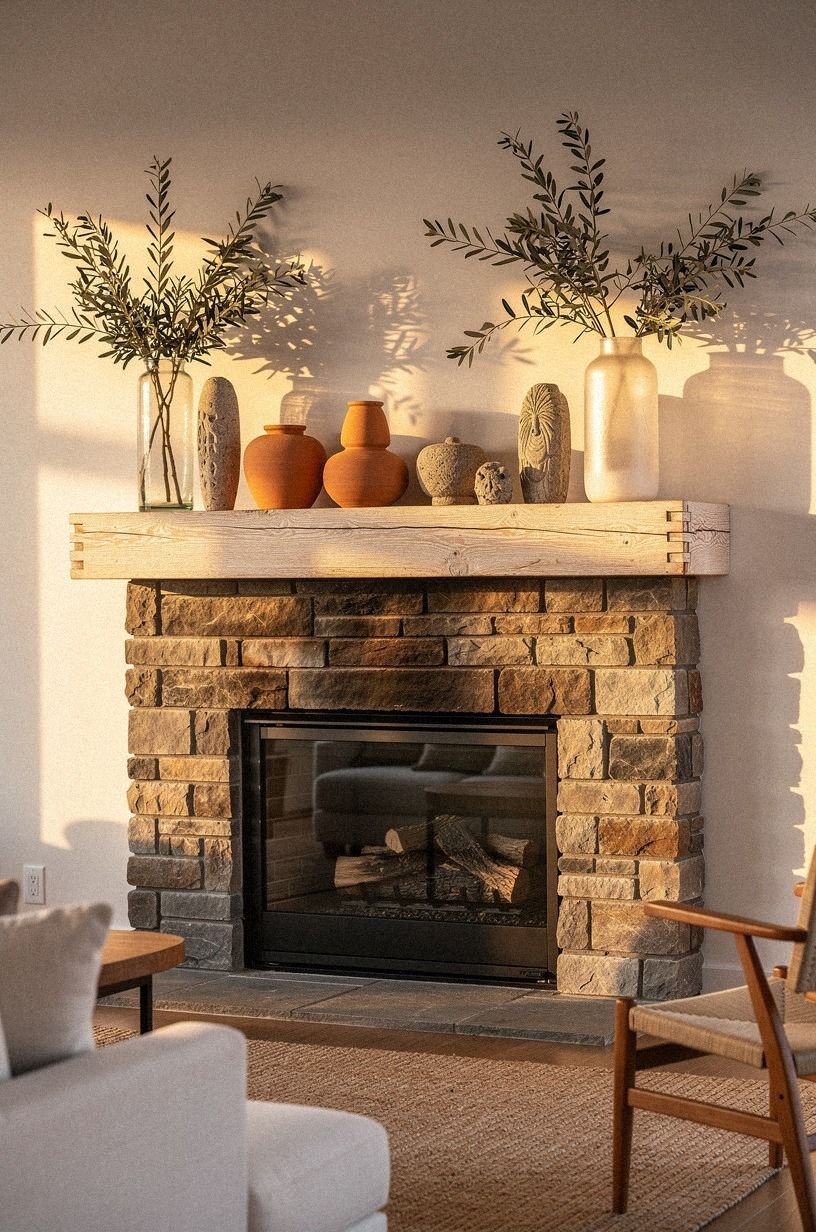
Start with the shelf because it decides whether the rest of your rustic mantel decor feels grounded or flimsy. A cerused white oak beam with visible saw texture and an exposed dovetail joint gives you the woodsy note right away, and it saves you from trying to fake character later with ten little accessories.
I like a beam that reads close to 3/4-inch solid oak on the face, even if the structure behind it is lighter, because your eye trusts thickness. If your fireplace is stone, center the beam first and let the rough grain do the talking.
Then edit hard. You don't need to cover a strong beam to prove you've styled it.
I made that mistake once, and the whole mantel looked shorter. Leave at least a third of the shelf open so your eye can read the rough grain between objects.
That's enough! If you like old-house material contrast, the collected restraint in this spring mantel roundup is a good benchmark.
Your shelf should look like architecture first, decor second. For a deeper look at how raw wood ages indoors, the same warmth logic shows up in this rustic industrial look.
2Anchor warm brick with an aged landscape
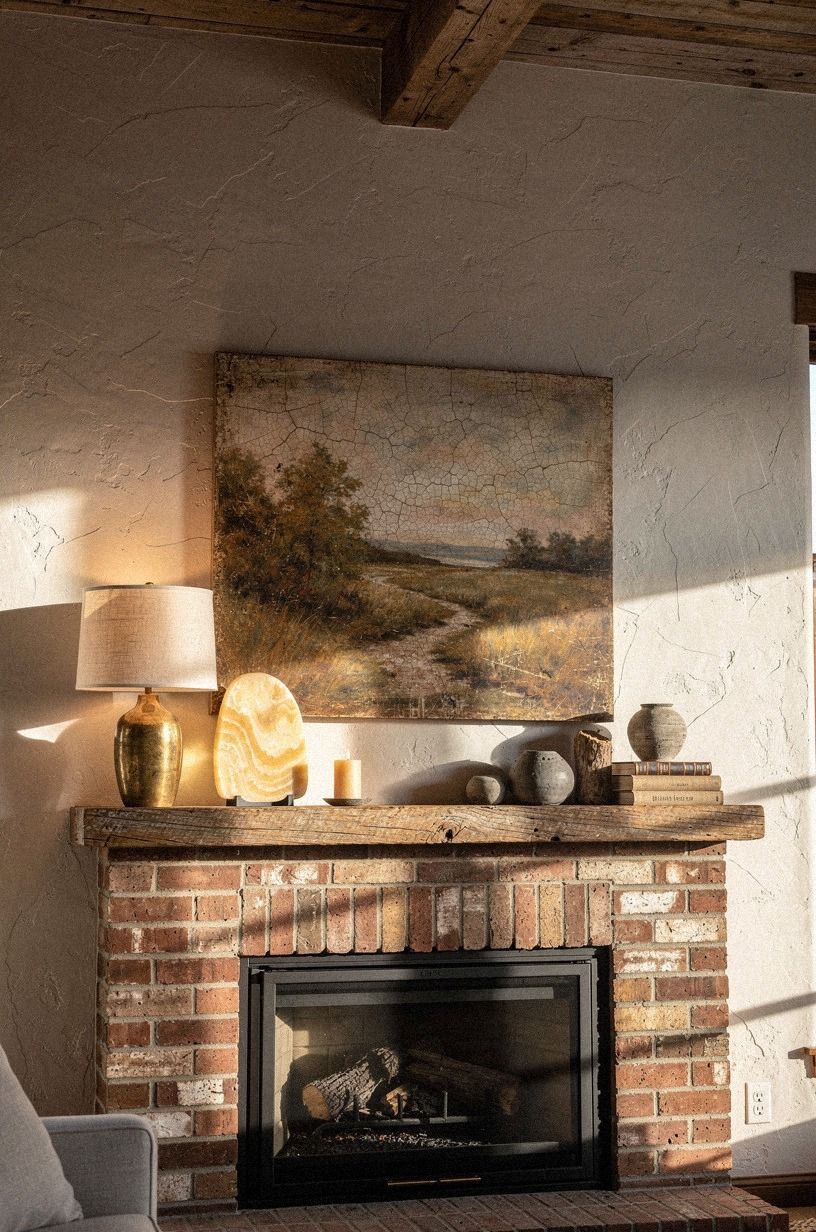
Anchor warm brick with art because brick already has enough texture, and your mantel needs one calmer plane to settle it. An aged landscape painting with mossy greens, brown fields, and a little dull sky keeps the fireplace from feeling busy, especially if the brick has orange undertones.
I lean landscapes instead of hanging them when I can, because the room feels less formal that way. And if your wall color nearby is Benjamin Moore Revere Pewter HC-172, the soft greige keeps the art from going muddy.
You want the painting large enough to carry the center without swallowing the brick line. Roughly two thirds the width of the firebox usually lands well. But don't pick a scene with bright blue water or sharp white clouds.
Rustic mantel styling needs age in the color story, not postcard contrast. If your room is still missing softness beyond the fireplace, borrow the layered calm from this neutral decor guide. It won't turn your living room into a bedroom.
It will help you see how muted color holds a space together. For more on patina and matte finishes, this collected earthy palette is a quiet study in restraint.
3Layer iron candlesticks beside stacked firewood
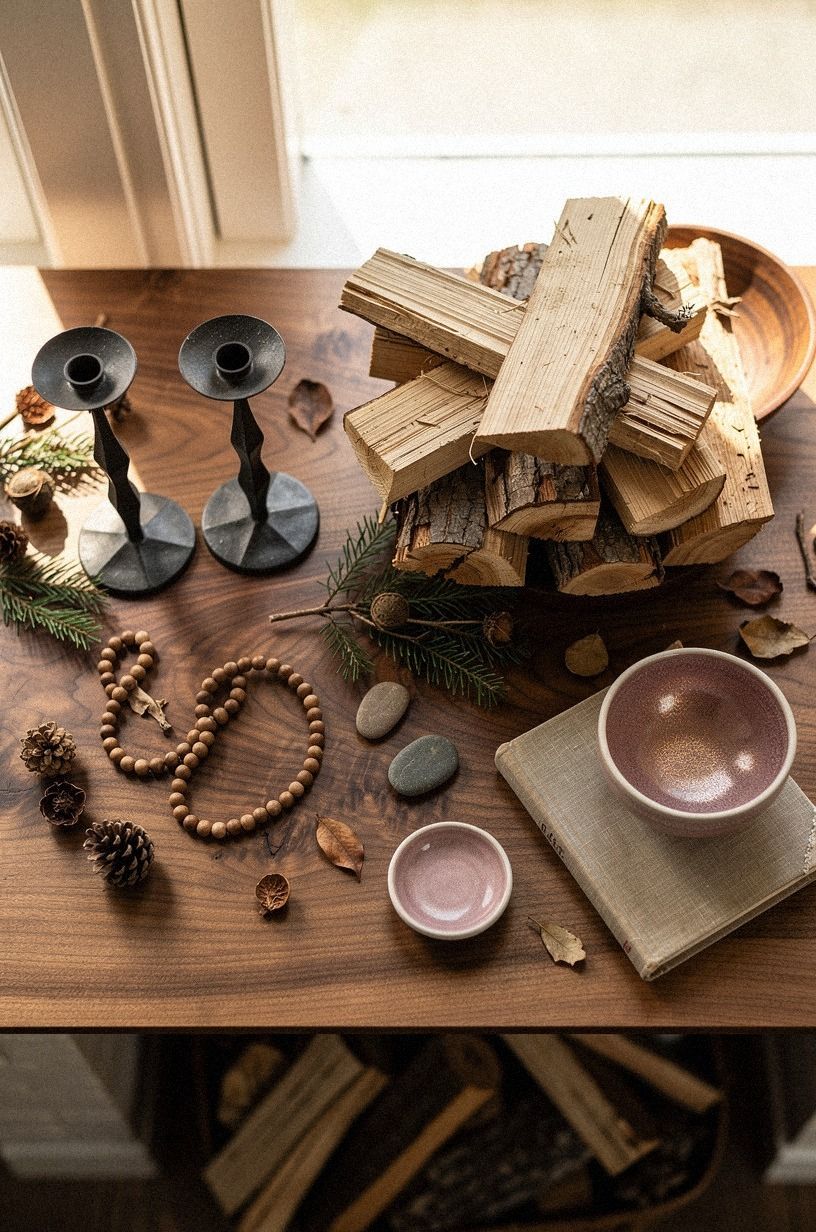
Layer the light next to something rougher than the light itself.
4Hang a carved wood mirror over stone
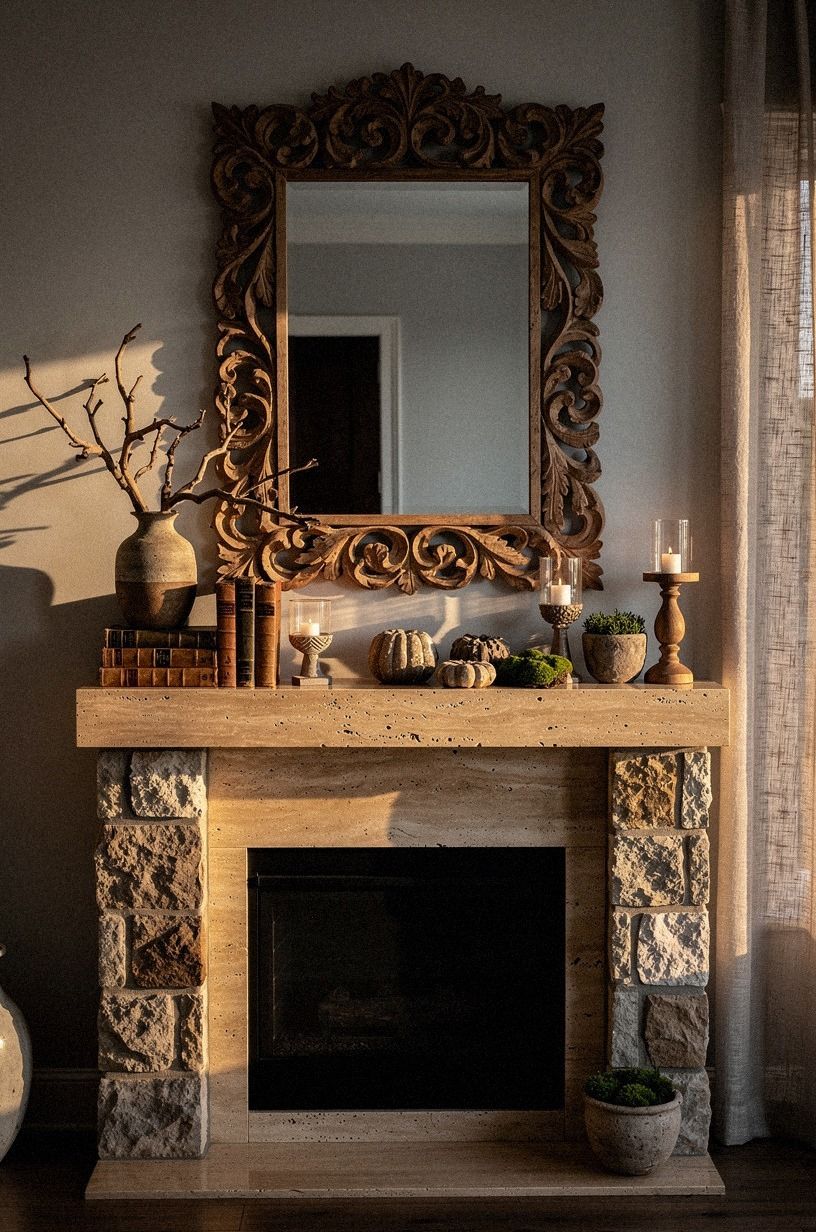
Hang a mirror when the stone surround feels heavy and you need one vertical shape to lift it. A carved walnut mirror over travertine and stone works because the carving adds age while the mirror face opens the wall back up.
I prefer a frame with low relief, not deep scrolls, so the texture reads woodsy instead of ornate. If your palette leans navy, white, and walnut, a nearby wall in Farrow & Ball Hague Blue No.30 can make the warm stone look richer without making the fireplace feel formal.
Keep the bottom edge of the mirror a little above the styling line so the objects below don't crash into it. But don't center every accessory under the mirror like you're setting a hotel console.
Rustic mantel decor wants a little looseness. A mirror that reflects branches, candlelight, or one chair across the room will do more for warmth than another object ever could.
For another study in collected symmetry, I like the quiet balance in this European farmhouse roundup.
5Build height with tall earthenware crocks
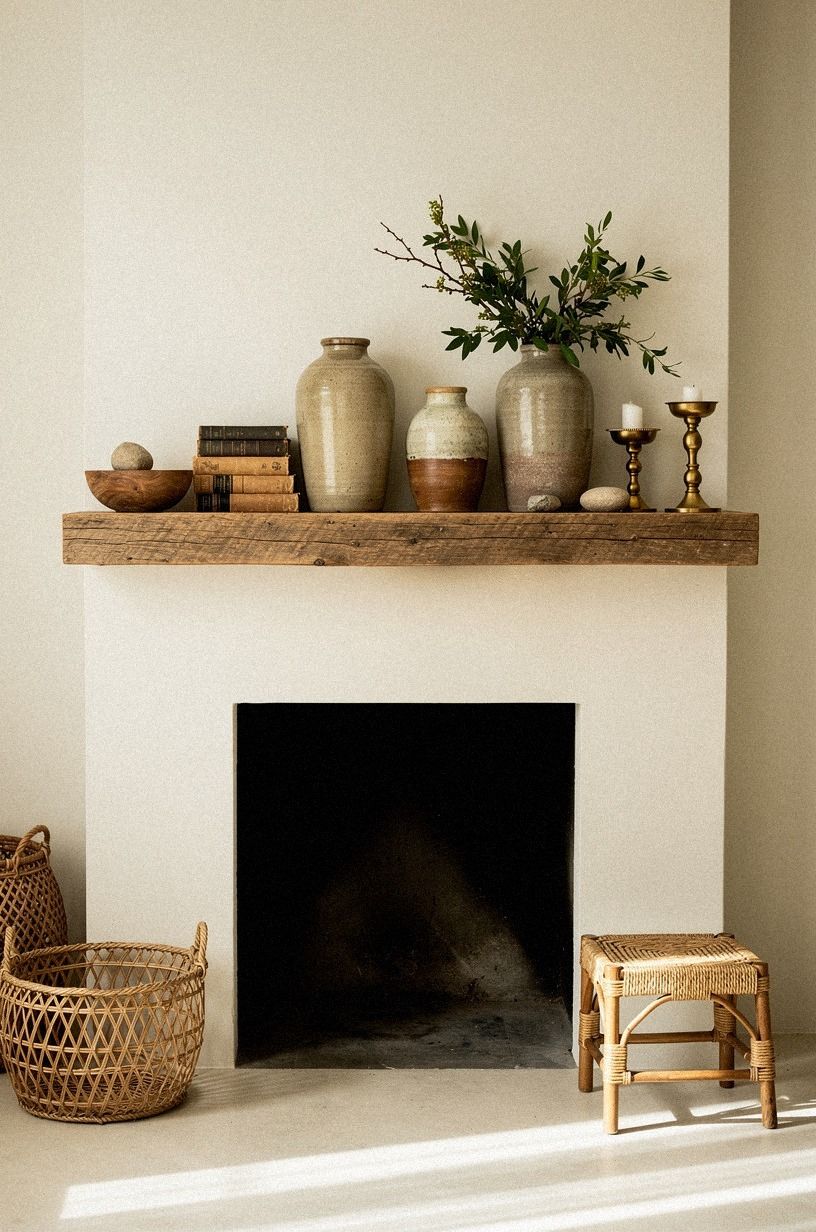
Build your height with vessels that look like they could've lived in the house before you did. Earthenware crocks are good at that because they bring scale without shine, and the chalky clay surface plays nicely with cream walls, emerald greenery, and aged wood.
I usually place the tallest crock just off center or near one end, depending on whether the art is leaning or hung. If the crock is too petite, it disappears.
You want one that can take branches or greens and still hold its own from across the room.
Your second move is to keep the mouth of the crock visible. Don't jam it full.
A few stems of cedar, olive, or eucalyptus are enough. I learned this the slow way after overstuffing a crock and losing the silhouette completely.
And if you're trying to make the whole room feel more settled, not just the shelf, steal the aged-matte texture mix from this French country collection. The room reads better when the vessel feels like a permanent object, not seasonal decor.
6Lean weathered frames behind brass lanterns
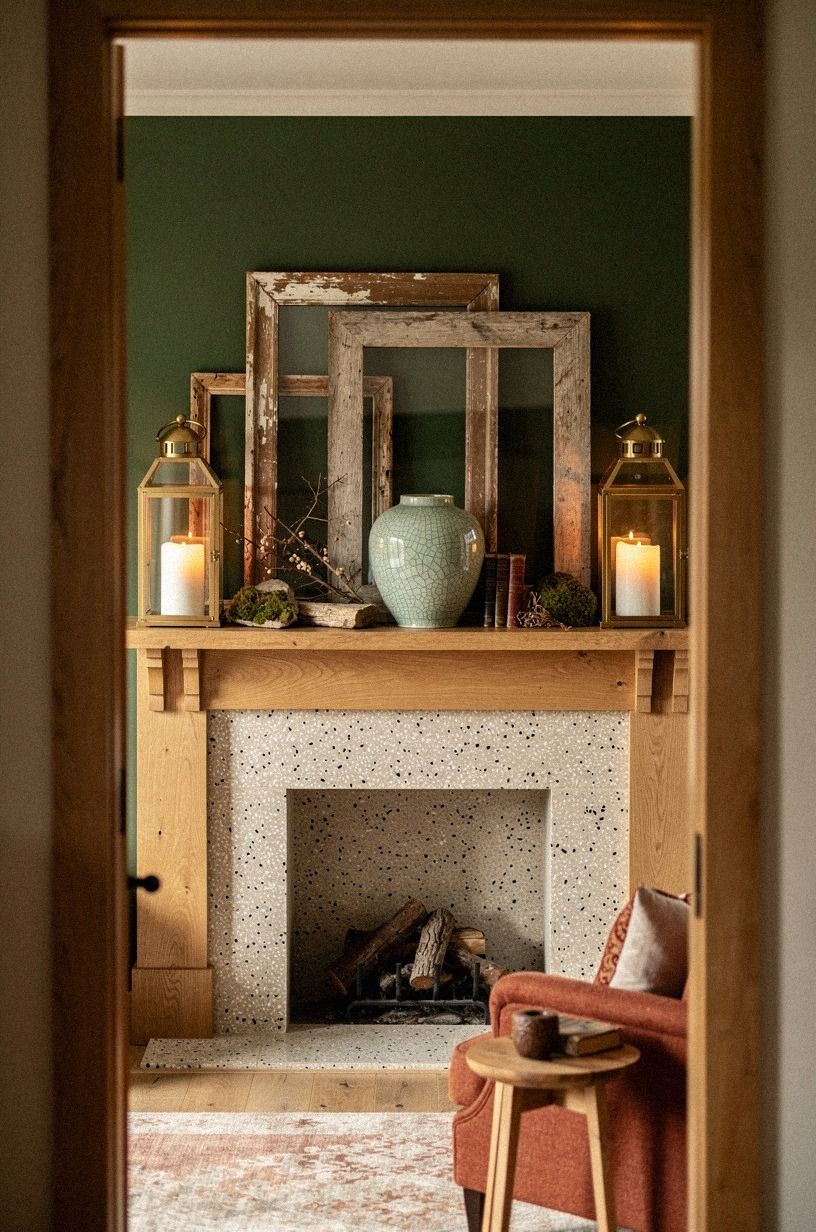
Lean weathered frames first, then place the lanterns in front so the wall gets depth before it gets glow.
7Cluster pinecones in a hammered metal bowl
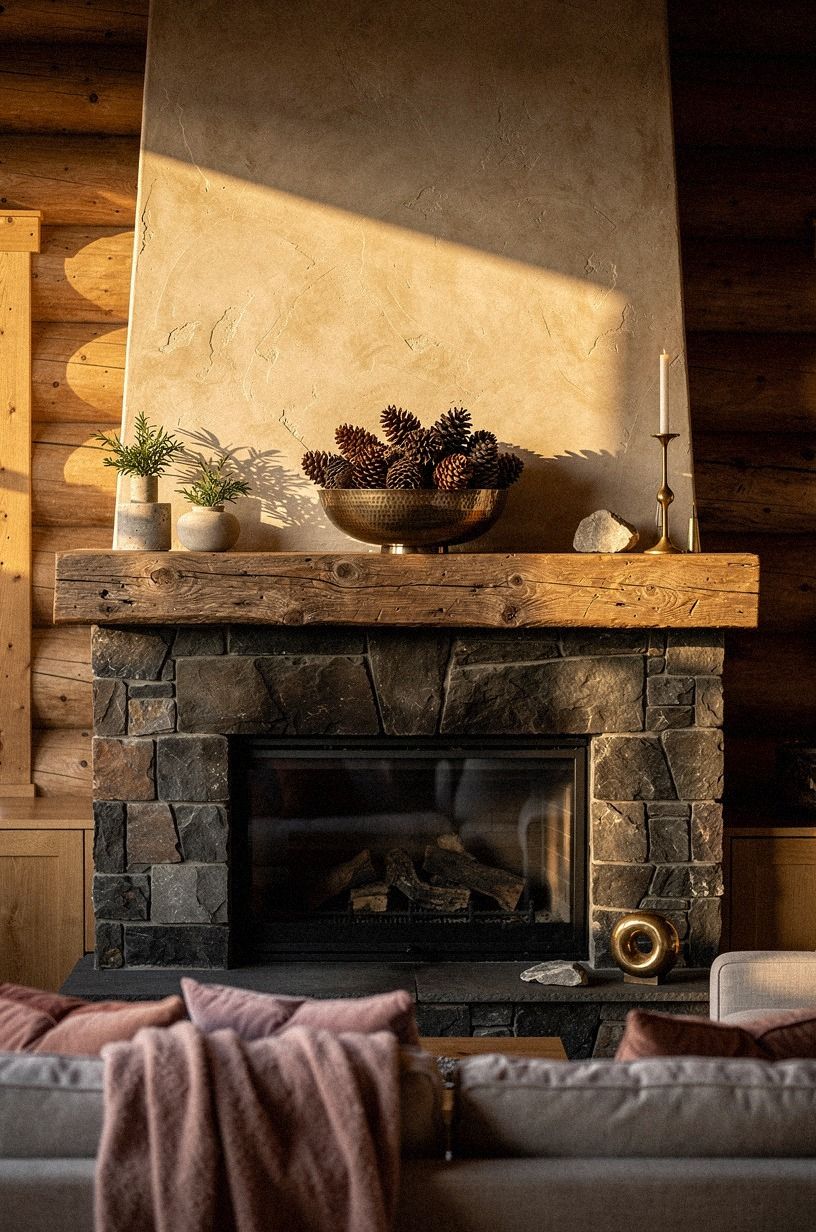
Cluster pinecones when you need one low center move that says woodsy without turning the whole mantel into a cabin set. A hammered pewter bowl works here because the uneven metal catches just enough light against Venetian plaster, and the pinecones bring matte texture back to the center. I like the bowl low and broad, not tall and footed, so it reads as part of the shelf line instead of a little trophy.
Three to five cones is usually enough.
But the cones need breathing room. If you heap the bowl full, the whole thing starts looking themed. Keep one side of the bowl a touch emptier than the other so the cluster feels handled by a person.
And if the mantel already has branches or lanterns, this low metal note stops the arrangement from drifting upward too much. For more examples of calm asymmetry, I keep coming back to this modern earthy palette guide.
It proves that restraint reads warmer than volume.
8Drape cedar garland across the mantel lip
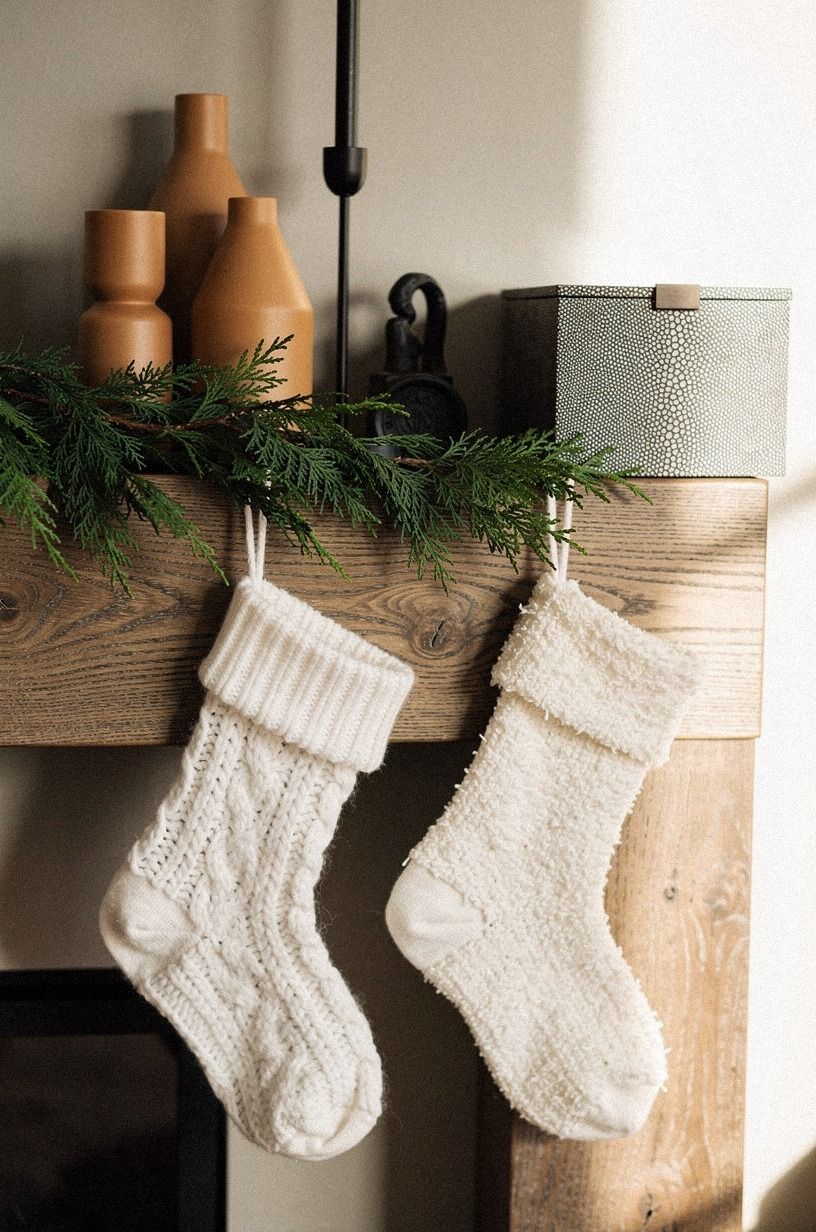
Drape garland across the lip, not the top, when you want movement without hiding the beam. Cedar garland has enough weight and needle texture to soften the shelf edge, and it looks especially good with camel ceramics, warm white stockings, and a few black accents in the room.
Let the fuller part start near the dominant object, then thin out as it travels. That's my Front-Edge Drift, and it keeps the beam visible while still letting the greenery do something useful.
You don't need a deep swag unless you're styling for a holiday moment. For everyday rustic mantel decor, a lighter drape that kisses the front edge is better.
That little skim reads so much cleaner! And please keep the garland off the firebox if the fireplace is active.
If you rent or want the no-drill version, the soft, movable layering in this cozy backyard decor article translates well indoors too. Your mantel should still feel easy to live with when the styling day is over. For more ideas on how garland shapes a wall, see this vintage bedroom guide.
9Place chunky pillar candles on reclaimed risers
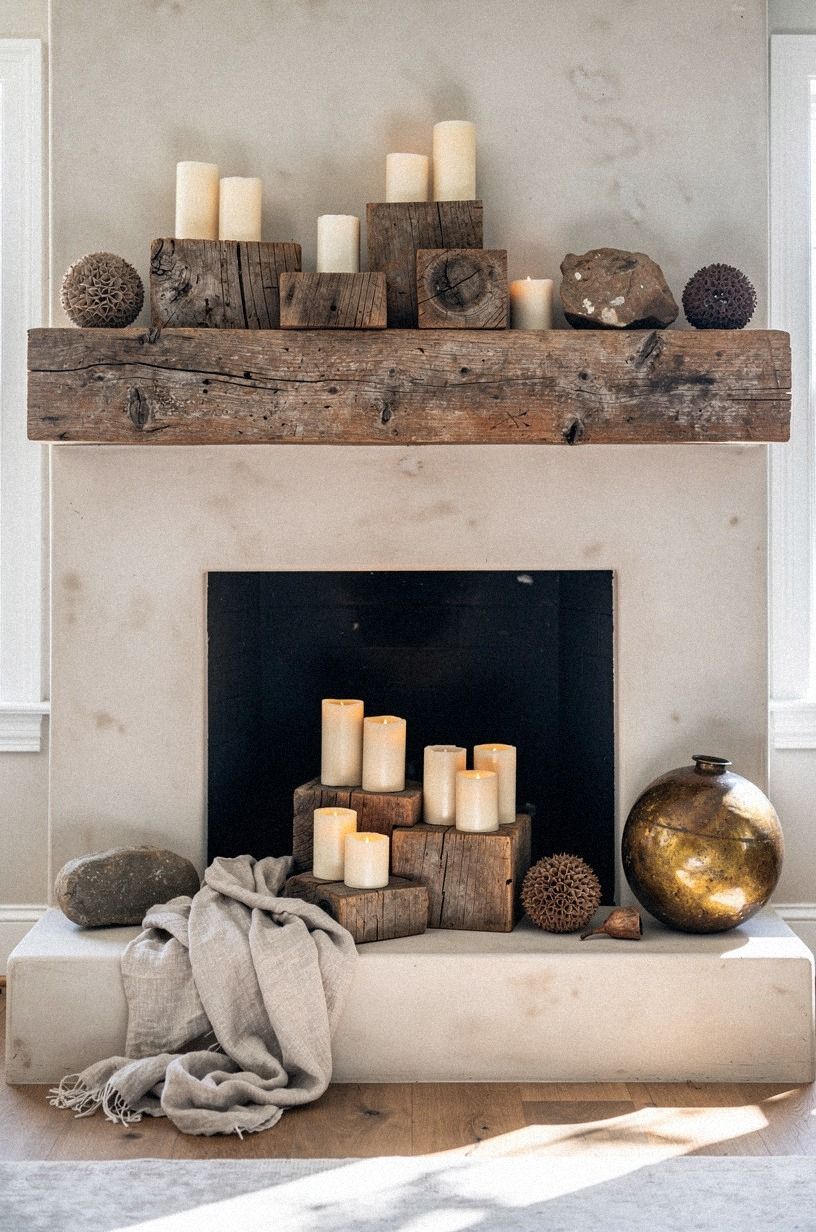
Place the candles on risers when the mantel feels too flat at eye level. Reclaimed wood risers give chunky pillar candles a little lift and make the wax read intentional against midnight blue shadows, ivory tones, and old timber.
I like uneven riser heights so the candles don't all land on one horizontal line. If your wall nearby uses Sherwin-Williams Evergreen Fog SW 9130, the green-gray makes ivory wax look softer and the reclaimed wood look deeper.
And let some of the candles live on the hearth if the room can handle it. Repeating the same material below the shelf helps connect mantel and floor, which matters in a living room where your rug should already anchor the front legs of the seating on an 8x10 or 9x12.
But keep the flame story simple. Too many pillars, and the room starts feeling like an event venue. For another look at repeated warmth across levels, I like this French farmhouse roundup.
10Frame the hearth with split-log baskets
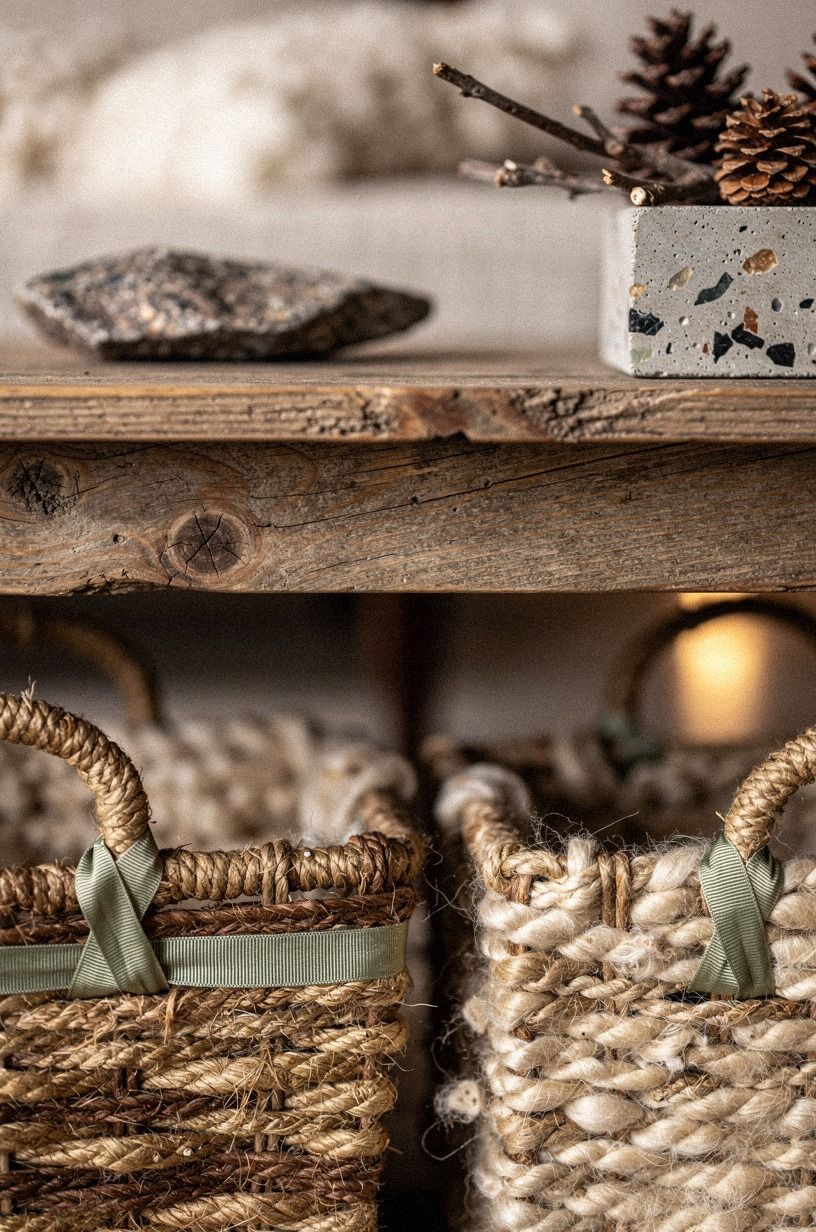
Frame the hearth because the zone below the mantel has to carry its share of the texture story.
11Mix rusted bells with creamy stoneware vases
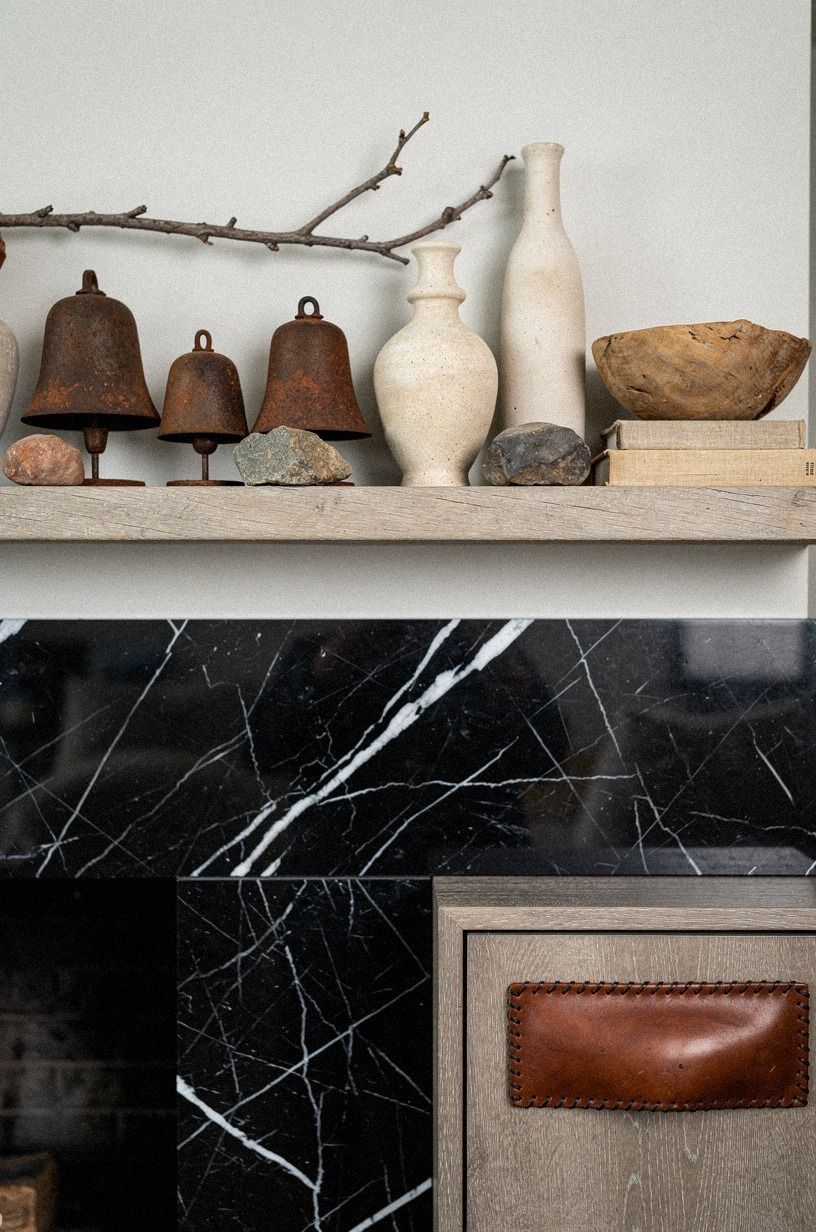
Mix the bells with stoneware only after the larger shapes are set, because tiny metal sounds and textures need a calm base. Creamy stoneware vases give you that base.
Their soft body color plays well with terracotta, olive, and brown, and the rusted bells add the sharper note that keeps the shelf from getting sleepy. I like the bells grouped in twos or threes, never spread evenly across the whole mantel.
One tighter cluster feels older and more believable.
But I wouldn't let the bells become the main event. Rustic styling can slip into novelty if every object announces the same theme.
Let the vases stay low and broad, and keep the bells slightly off to one side where they'll catch a little light. If your taste leans collected rather than polished, the same material push and pull shows up in this Mediterranean bedroom article.
Warm clay needs one rough metal note beside it. That's what keeps it alive.
12Finish with bare branches in a clay jug
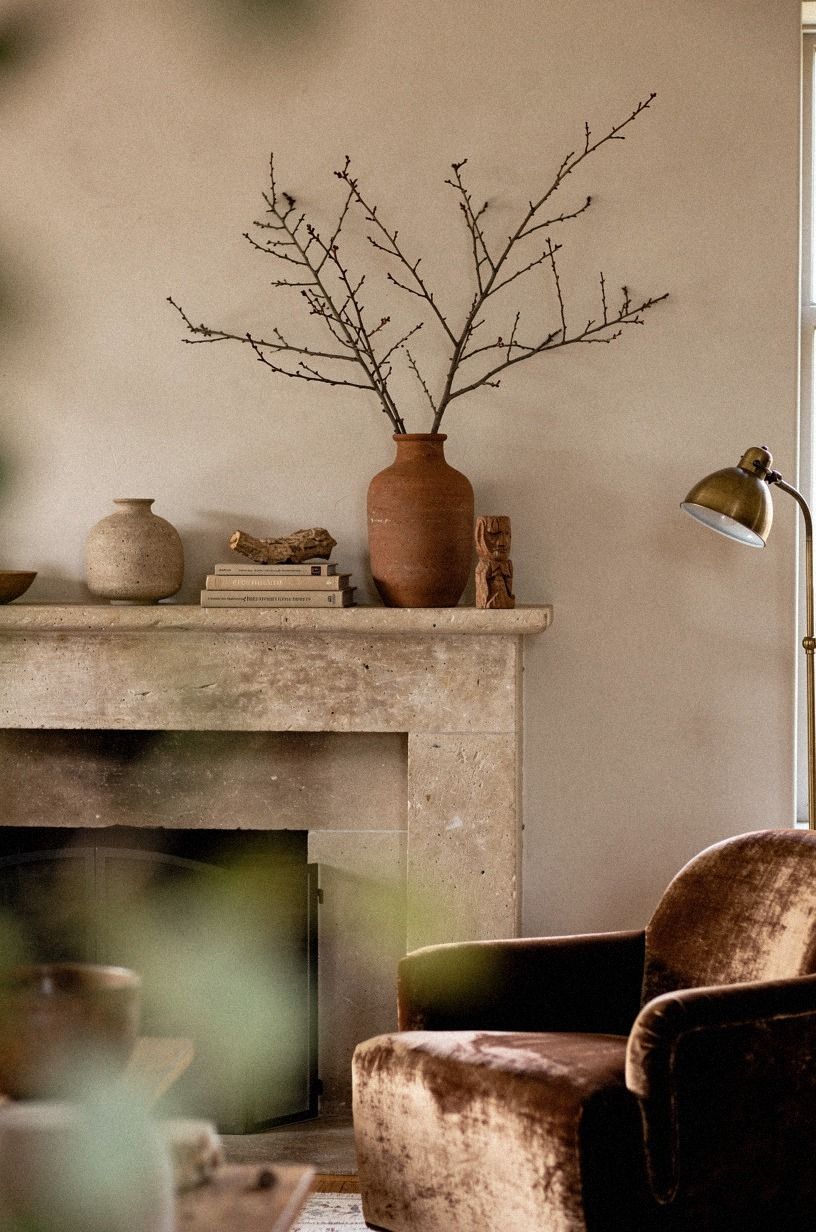
Finish with branches because the last move on a rustic mantel should give the whole composition air.
What makes a mantel read woodsy without trying too hard?
The honest answer is that rustic mantel decor feels rich in 2026 isn't more faux age. It's clearer hierarchy.
People are tired of rooms where every surface is shouting, and the fireplace wall is often where that fatigue shows up first. A mantel has stone, shadow, shelf depth, and whatever sits above it. That's already enough architecture to carry a mood.
When you add random mini objects on top of all that, the eye doesn't feel charmed. It feels interrupted.
I've started following what I call the Two-Wood Rule. One wood tone is the beam itself.
The second wood tone can show up in a frame, a carved mirror, a riser, or the branch color. That's it. Once a third or fourth wood tone barges in, the mantel stops feeling woodsy and starts feeling undecided. The same goes for metal.
Pick one weathered family and let it repeat softly. Aged brass, black iron, rusted bell metal. Choose, then stay with it.
The other shift is that people want warmth that looks structural rather than seasonal. A rough beam, a stoneware crock, stacked logs, a clay jug. Those objects feel like they belong in the house even when the month changes.
That's why they get saved. They don't read as a holiday formula. They read as a room that knows itself.
And honestly, that's what most readers are after now. They don't want a fireplace that looks styled for one weekend. They want a living room that feels steadier every night after 5 pm.
I also think this style works because it gives you permission to leave space. Empty beam between two objects. Quiet brick around one landscape. Hearth floor visible between baskets.
That's not under-decorating. That's where the material gets to breathe. If I had one warning, it's this: don't spend your budget chasing dozens of rustic signifiers when one honest material can do the whole job.
A real oak beam, a decent old frame, a clay vessel with shape. Start there.
Your mantel will look warmer, older, and calmer, and you won't have to keep rescuing it with more stuff.
A Few Things Worth Answering
What is the best Rustic Mantel Decor Ideas for Woodsy, Natural Texture for a small living room?
The best version for a small living room is a beam, one tall vessel, and one low bowl. Clear vertical hierarchy matters more than more objects. I'd use a clay jug with branches and skip the extra lanterns if your room is tight, then borrow a little softness from this quiet decor guide.
Where can I buy Rustic Mantel Decor Ideas for Woodsy, Natural Texture pieces on a budget?
I'd start with Target Threshold, IKEA, and Wayfair for candles, crocks, and lanterns, then hunt Facebook Marketplace or a thrift shop for the frames. Secondhand texture is what makes rustic styling believable. Old crocks, small landscape art, and wood risers usually look better used than brand new.
How much does a Rustic Mantel Decor Ideas for Woodsy, Natural Texture makeover cost?
A mantel-only refresh usually costs about $100 to $300, depending on whether you already own the art and vessels. The free moves are editing, stacking logs you have, and clipping branches from the yard. If you're also repainting walls or replacing lighting, that's when the number climbs into the room-level tiers above.
Can I create a Rustic Mantel Decor Ideas for Woodsy, Natural Texture on a budget?
Yes, and you probably should. Budget styling keeps you from overfilling the shelf.
Start with one thrifted frame, one branch cut, one bowl, and candles you can move around the house. Then swap in one better material later, like a heavier beam wrap or a sturdier crock, instead of buying ten fillers now.
Is a Rustic Mantel Decor Ideas for Woodsy, Natural Texture worth it in a small space?
Yes, because a small room feels the fireplace wall faster than a big one does. One strong focal point can warm the whole space if you keep the shelf edited and the hearth useful. But keep the objects scaled to the mantel width so your room feels settled, not crowded.
Is Rustic Mantel Decor Ideas for Woodsy, Natural Texture a good idea for a rental?
Yes, if you keep the moves surface-based. Rental-friendly warmth comes from leaning art, using removable picture hardware, draping greenery, and setting baskets on the hearth instead of drilling into masonry. If the original mantel is bad, a removable beam wrap or a better paint color nearby can still change the mood fast.
What paint colors work best with a rustic woodsy mantel?
I'd lean toward Benjamin Moore Revere Pewter HC-172, Farrow & Ball Hague Blue No.30, or Sherwin-Williams Evergreen Fog SW 9130 in the surrounding room. They keep the warm wood and aged brass from clashing and let the mantel hold the focal weight.
Where I'd Start First (The Anchor-First Rule)
If I had to pick one step to start with, I'd start with the rough-hewn beam shelf. Without that weight, every little object has to work too hard, and the whole mantel stays decorative instead of architectural. Pin that step for later and build the rest only after the shelf feels honest.