13+ Zen Bedrooms That Feel Calm Without Trying Too Hard
17 may 2026The first thing you notice in the best Zen bedroom designs isn't what's there. It's what isn't. These rooms breathe because someone made hard choices about what stays.
What follows are 13 rooms that get that right. Natural materials, low profiles, and just enough imperfection to feel lived in.
When Morning Light Does All the Work
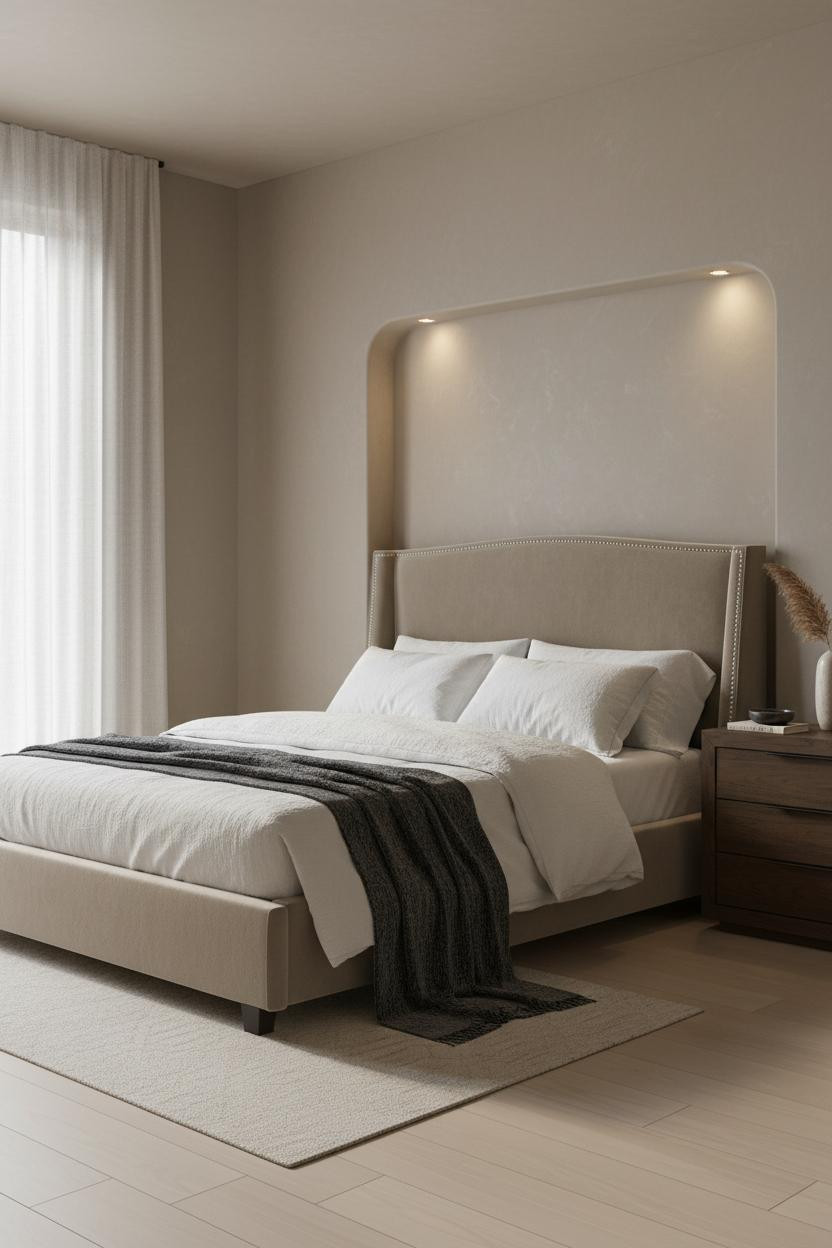

I keep coming back to rooms like this one. Still before you've even sat down.
The hand-troweled plaster alcove behind the bed catches diffused light in a way no painted wall can. It changes throughout the day, which means the room never quite looks the same twice.
The finishing layer: A single dried stem in a narrow ceramic vessel on the nightstand. That's enough. Don't add more.
Slatted Cedar and the Quiet It Creates
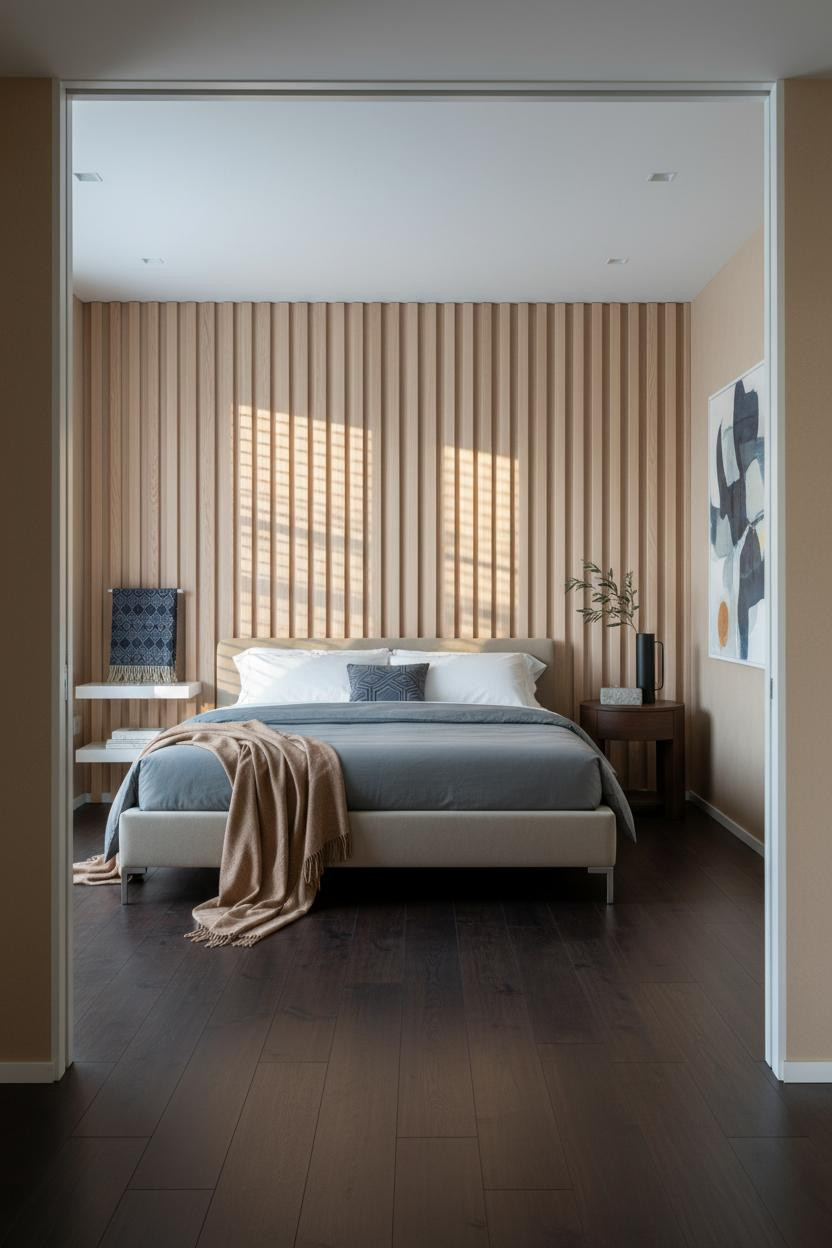

This one is divisive. But I think it's actually one of the smarter moves in modern japandi design.
Full-width pale cedar slats create a rhythm that reads as architecture, not decoration. Each thin strip casts a shadow line as north light rakes across the grain, giving the wall depth that holds the low platform bed without overpowering it.
What to borrow: Keep the flanking walls in warm sand plaster. The contrast between soft matte and raw wood is what makes the cedar sing.
Raw Ceramic Tile as the Whole Argument
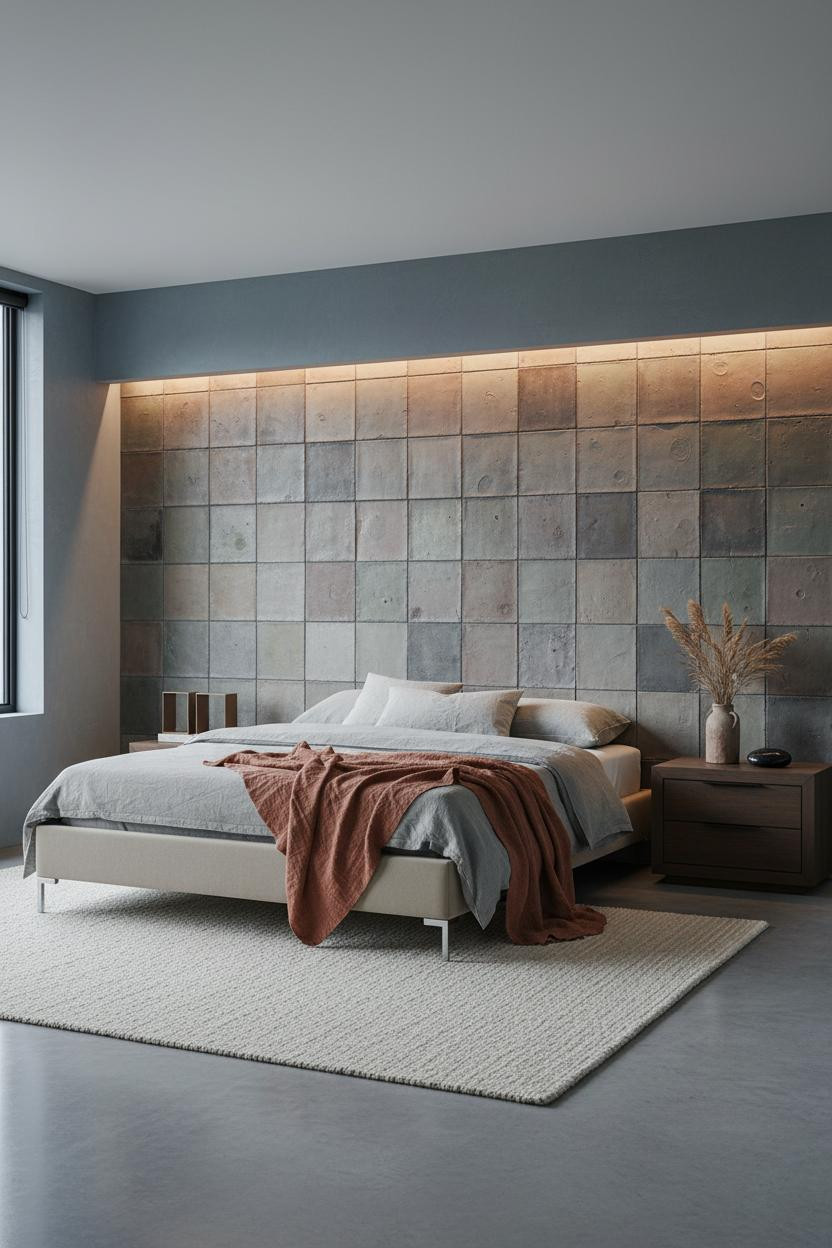
Bold choice. Not cheap to execute. But it earns every penny.
The room feels grounded in a way smooth walls simply can't achieve, because each hand-pressed tile carries its own surface variation. That slight imperfection is the whole point of a wabi-sabi bedroom.
Where to start: Pair the tile wall with polished concrete floors and a chunky undyed wool rug. The contrast between rough, smooth, and soft is what keeps the room from feeling like a showroom.
Avoid this mistake: Don't grout in bright white. A warm grey or sandy tone lets the earth tones breathe.
Steel Windows in a Matte World
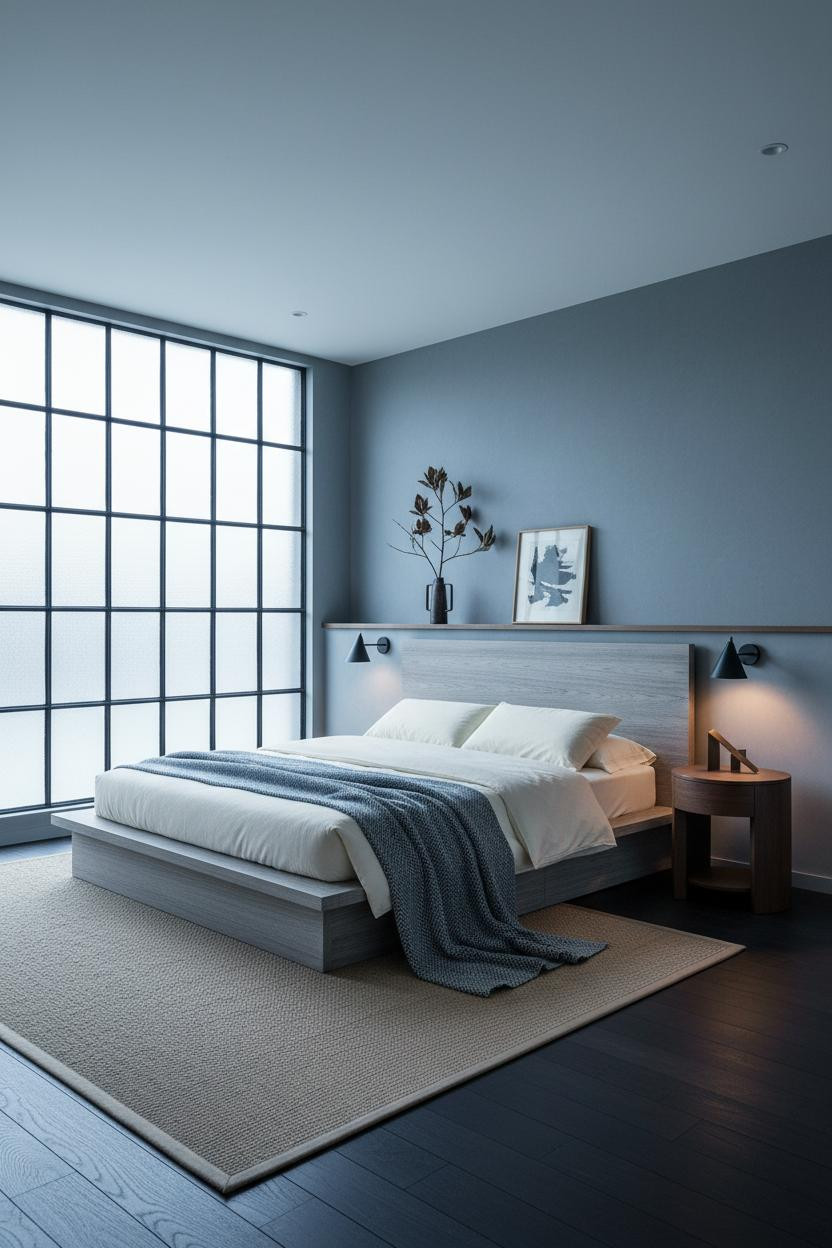

It shouldn't work. Industrial steel grid frames against slate blue limewash walls sounds cold. But it doesn't feel that way.
The Crittall-style window wall pulls flat, even daylight into every corner, and the matte organic surfaces around it absorb the harshness. The room feels spare but not stripped.
In a minimalist bedroom like this, the smarter choice is one warm accent: a herringbone wool throw at the foot, nothing else. Let the architecture carry the weight.
The Floor-to-Ceiling Shelf That Changed My Mind
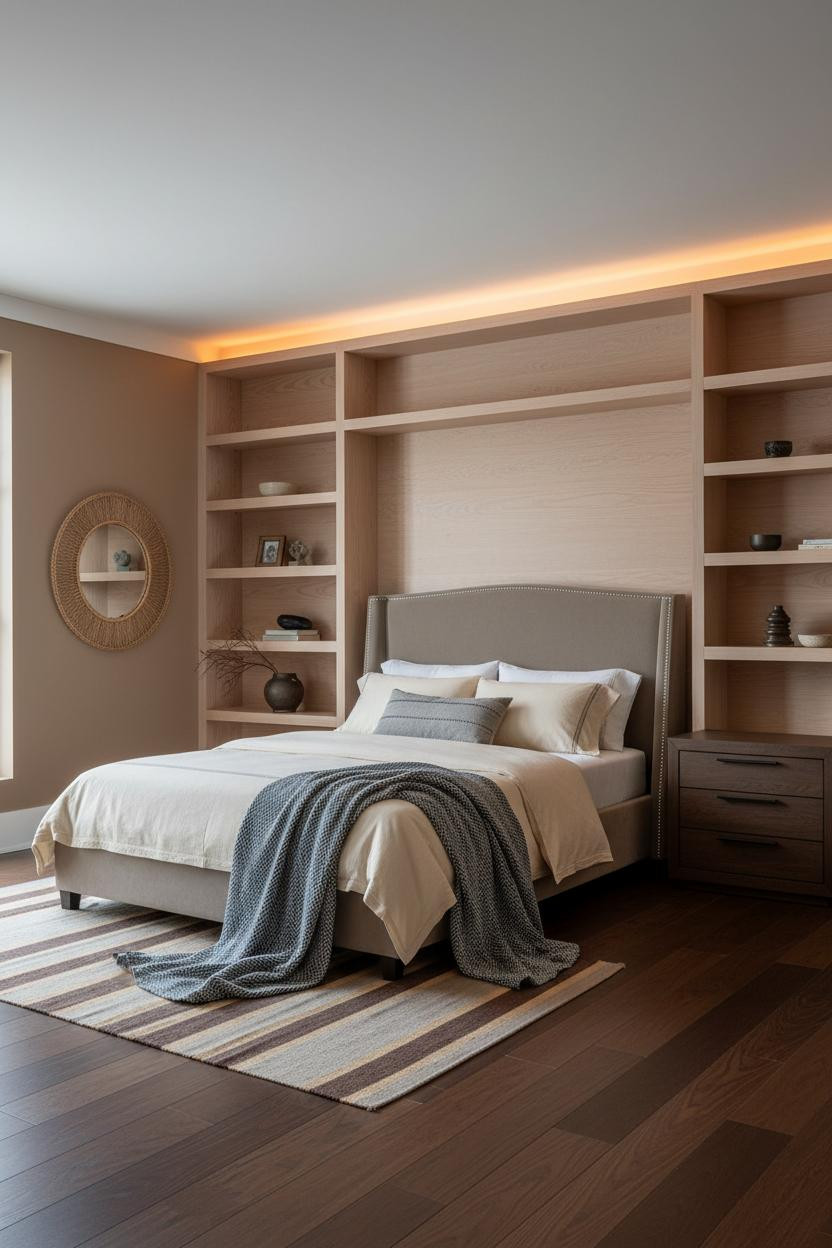
I used to think built-in shelving behind a bed made bedrooms feel smaller. This one proved me wrong.
What makes it work: The open raw pale ash shelving running wall-to-wall adds vertical scale while the sparse objects (one vessel, one folded textile, one stone) keep it from feeling cluttered. Scale and negative space in equal measure.
What not to do: Don't fill every shelf. Three objects total across the whole wall. Discipline is what makes minimalist bedrooms like this feel intentional rather than empty.
Exposed Beams Without the Farmhouse Feel
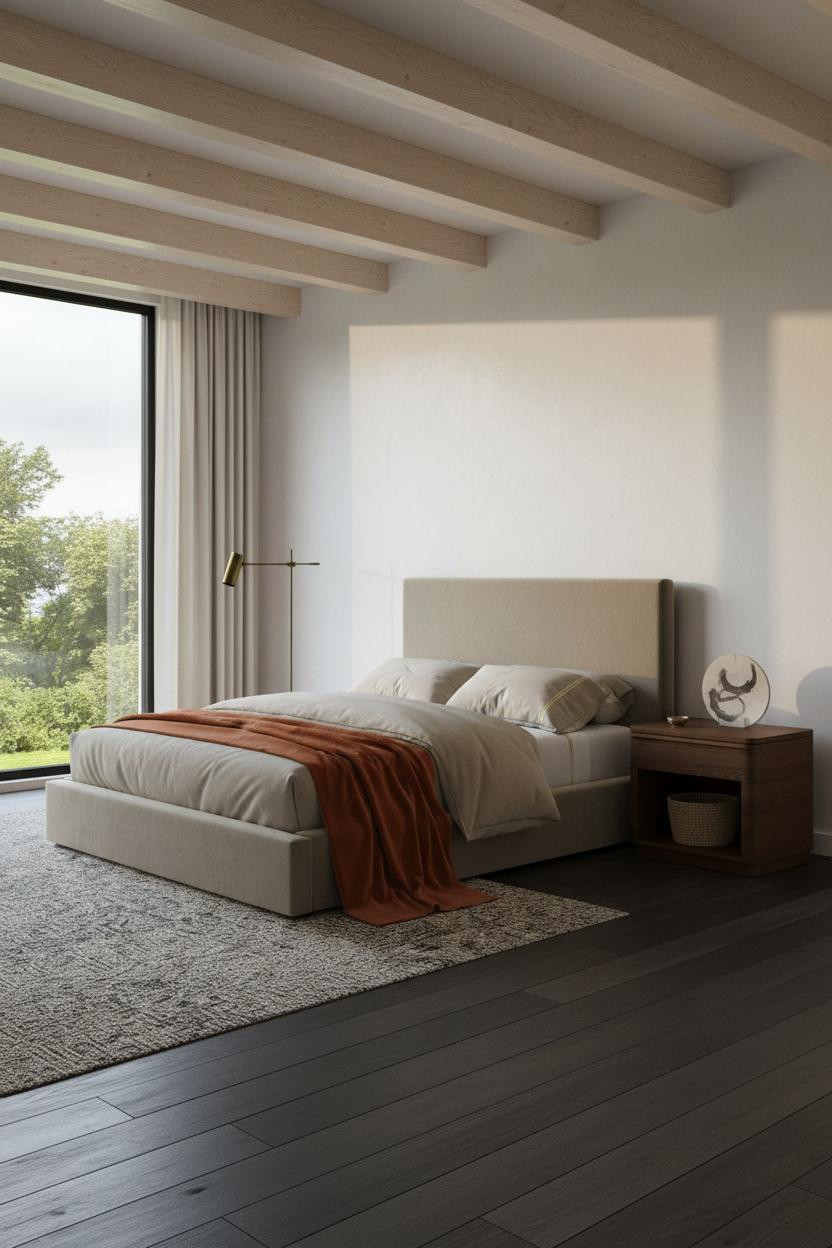

Honestly, most exposed beam ceilings end up in the wrong Pinterest board. This one doesn't.
The reason it feels zen instead of rustic is the restraint underneath it. Raw pale timber beams casting long shadow lines down chalk white walls actually need a stripped-back room to land properly. Add shiplap or a barn door and you've lost the whole thing.
A burnt orange mohair throw against oatmeal bedding gives just enough warmth while still feeling calm. One accent color. That's the ceiling.
Why Herringbone Wood Belongs in This Conversation
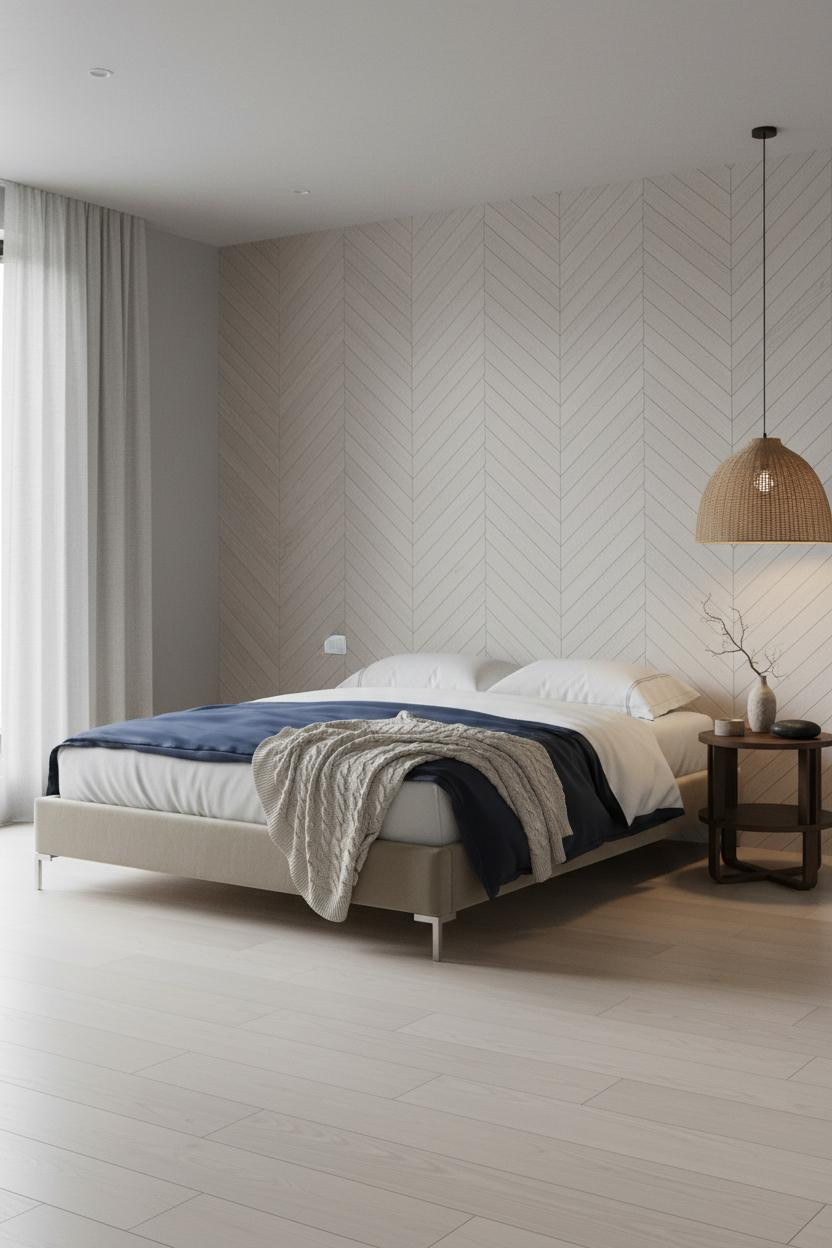

This is the kind of room that makes you want to turn your phone off.
Why it holds together: The pale ash herringbone wall carries geometric interest in a way that feels earned, not decorative. The tight diagonal grain catches diffused window light softly, so the wall stays textured without dominating the room.
Pro move: Hang a woven rattan pendant above the foot of the bed. It pulls the organic warmth of the wood wall downward, keeping the vertical scale balanced.
Dusty Rose and Pale Ash: a Combination I Didn't Expect to Love
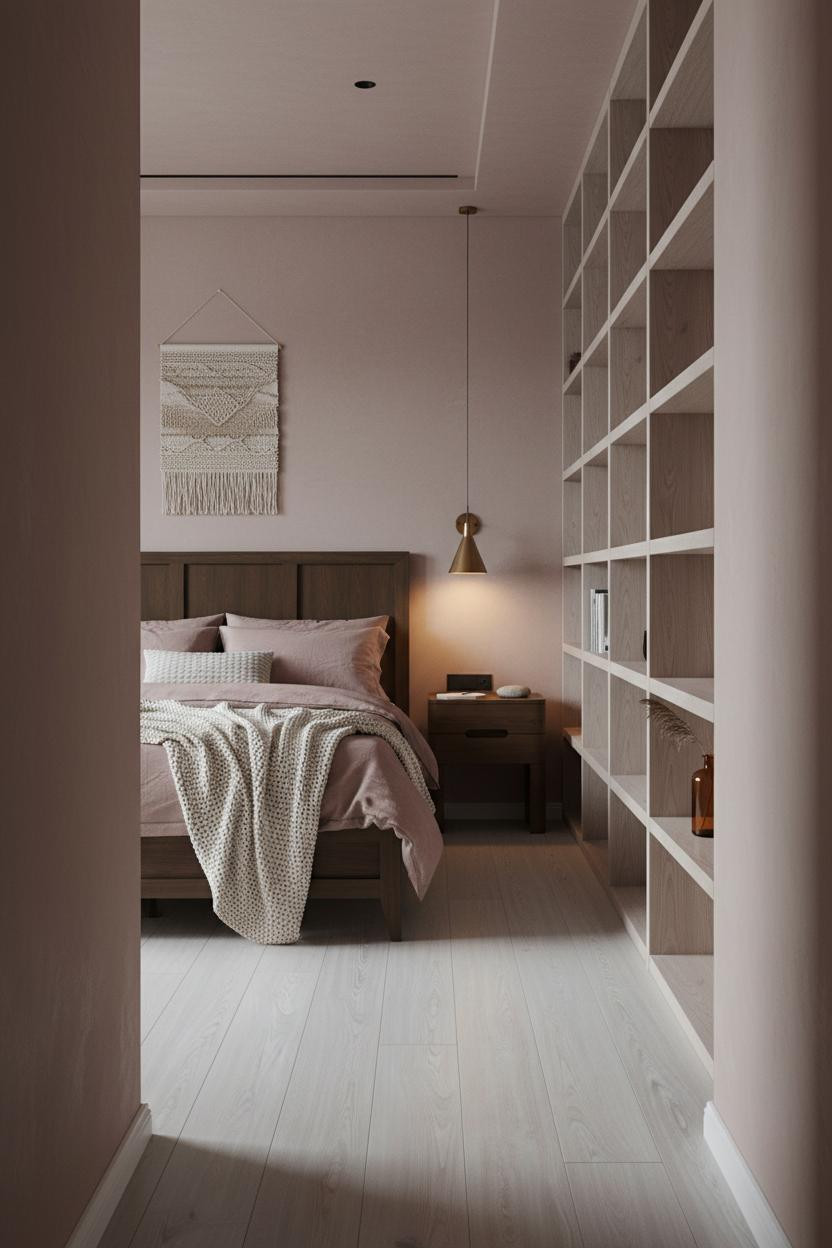
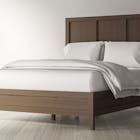
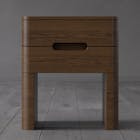
I almost scrolled past this one. Glad I didn't.
Why the palette works: Dusty rose matte plaster walls sit warmly against recessed horizontal ash shelving, each pale shelf casting a thin shadow line that adds rhythm without competing with the softness of the wall color. The room feels feminine and grounded at the same time (which is harder to pull off than it sounds).
The easy win: An undyed cotton wall hanging above the shelves keeps the upper wall from feeling bare while the tone stays quiet.
Terracotta Walls and a Floating Walnut Shelf
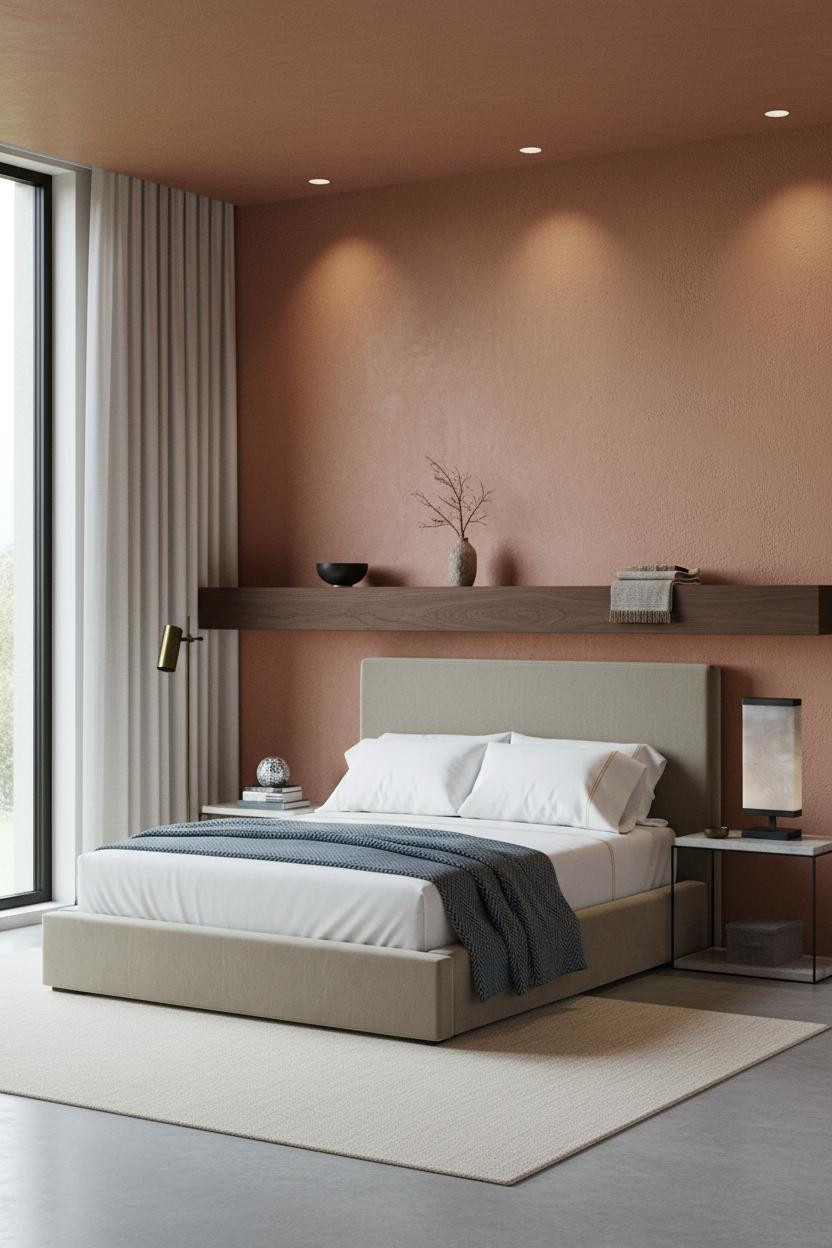
Nothing fancy. That's the point.
A single hand-finished walnut shelf spanning the full wall above the bed casts one clean shadow line across the terracotta plaster below. That single horizontal element grounds the whole composition, which is why the room feels considered rather than decorated. One shelf, one matte ceramic bowl, one dried branch. Done.
What a Carved Arch Does to a Bedroom
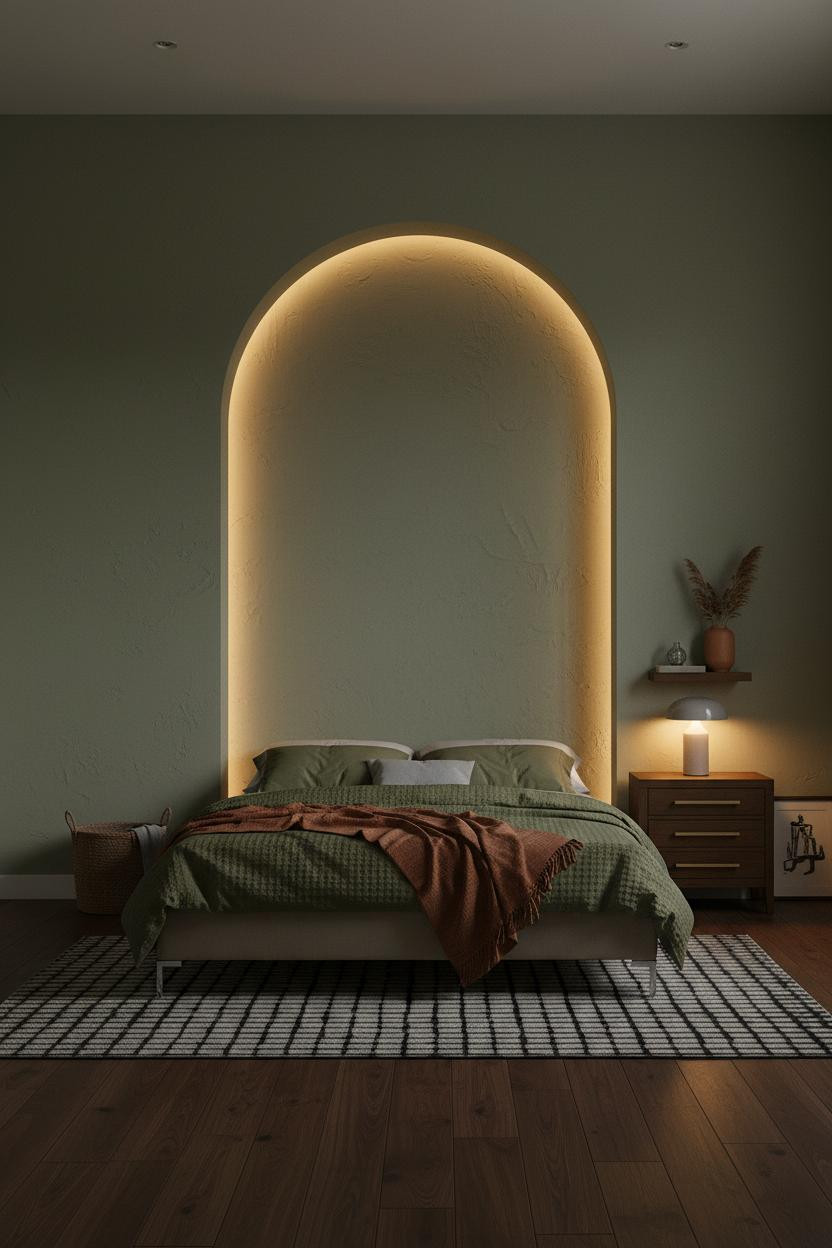
This is the kind of architectural move that changes how a room feels at night.
What creates the mood: A full-height curved plaster niche carved into the moss green limewash wall catches warm lamp light along its edges, which makes the wall feel sculptural rather than flat. The arch frames the bed the way a window frames a view.
Worth copying: Keep the bedding in muted olive waffle-weave and add one rust linen throw. The earthy tones pull the wall color into the bedding, so the room feels cohesive rather than themed.
Board-and-Batten in Pale Wood: Understated, Not Boring
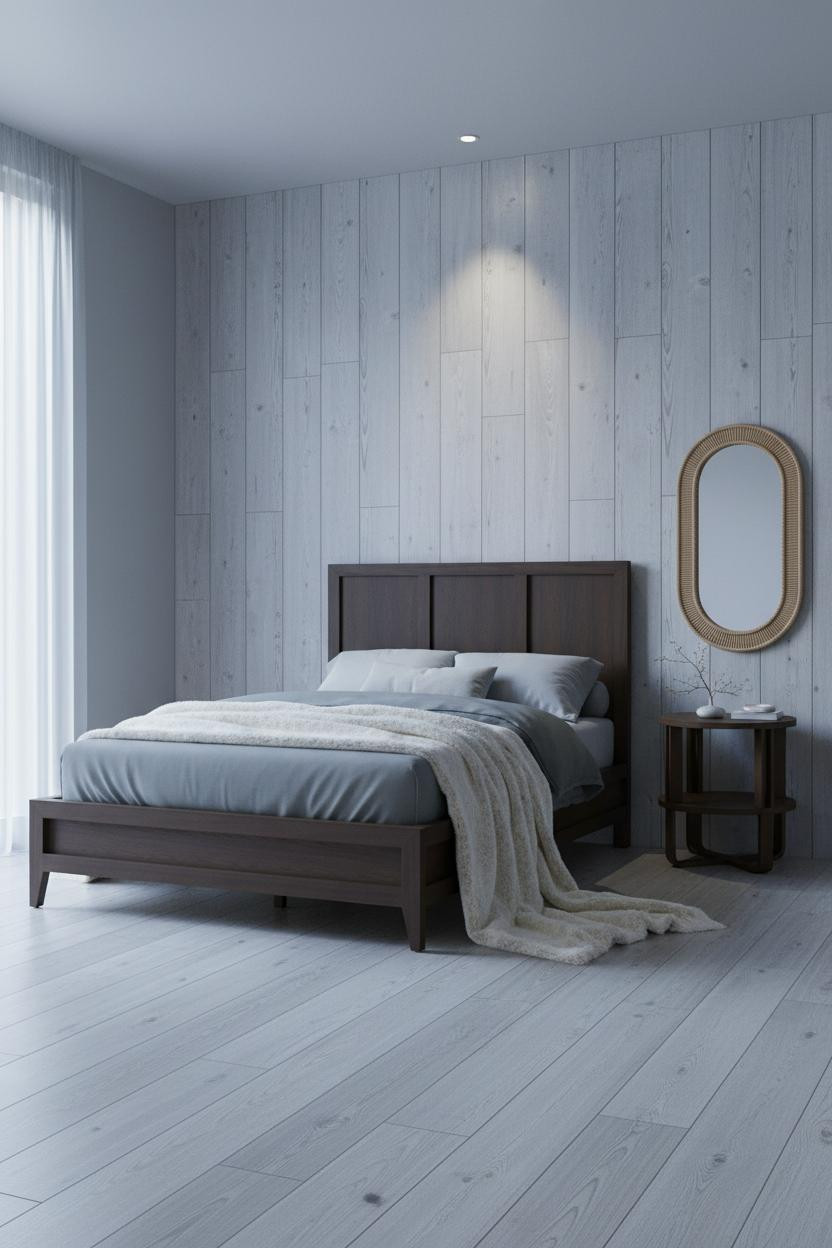
Board-and-batten usually reads traditional. In pale natural wood with cool diffused light, it somehow reads as something else entirely.
The fine vertical shadow lines cast by each batten strip create quiet rhythmic texture, in a way that feels more architectural than decorative. And against weathered pale ash reclaimed flooring, the whole wall reads warmer than the wood color alone would suggest.
The practical move: An oval rattan mirror above the nightstand keeps the corner from feeling too flat. Just enough curve to break the vertical rhythm without fighting it.
Olive Plaster and the Late Afternoon Problem
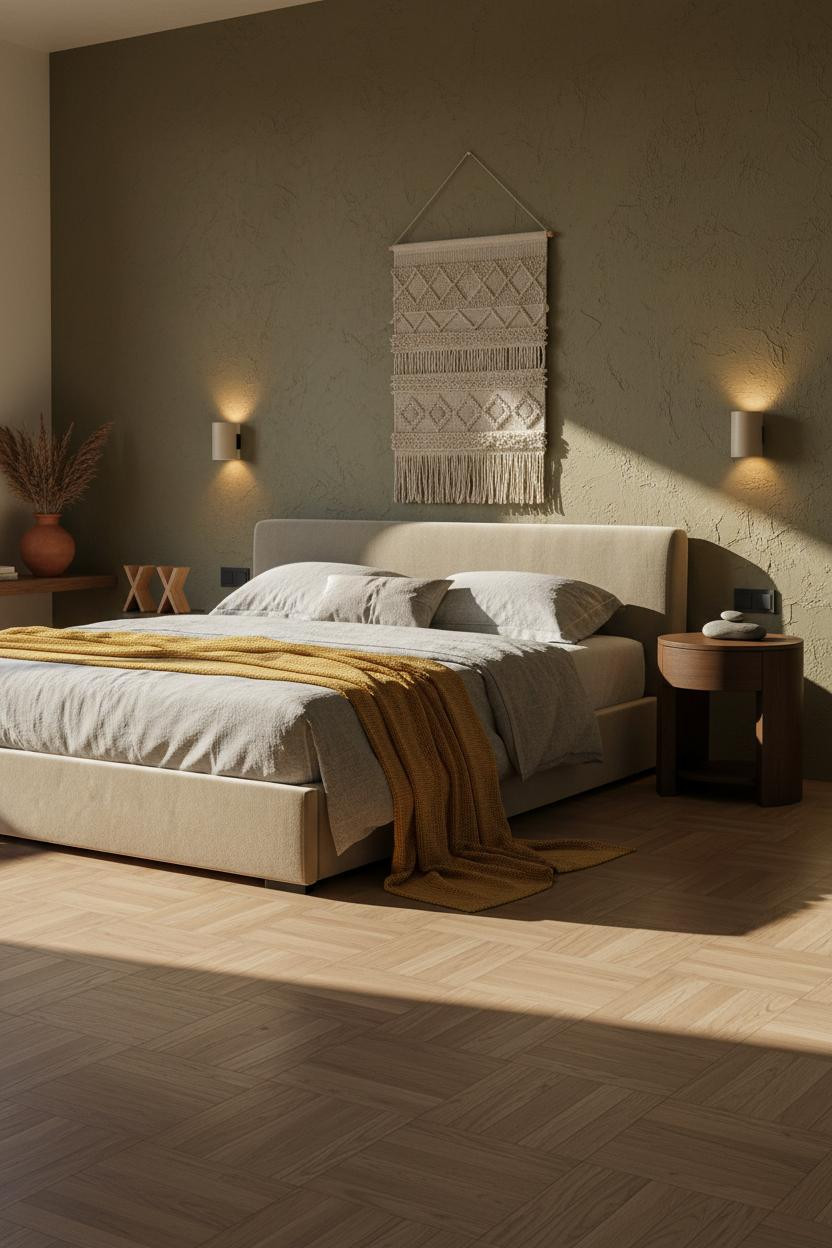

Admittedly, olive is a wall color that polarizes. But late afternoon light hitting hand-applied trowel marks in matte olive plaster is a completely different conversation.
Where the richness comes from: The visible surface relief in the plaster catches raking light and deepens toward the corners, giving the wall a quality that flat paint can't replicate. It's a living surface, not a backdrop.
Paired with honey herringbone parquet flooring, the warmth compounds without tipping heavy. A mustard wool blanket ties both tones together at the foot of the bed.
Shoji Panels and the Case for Morning Ritual
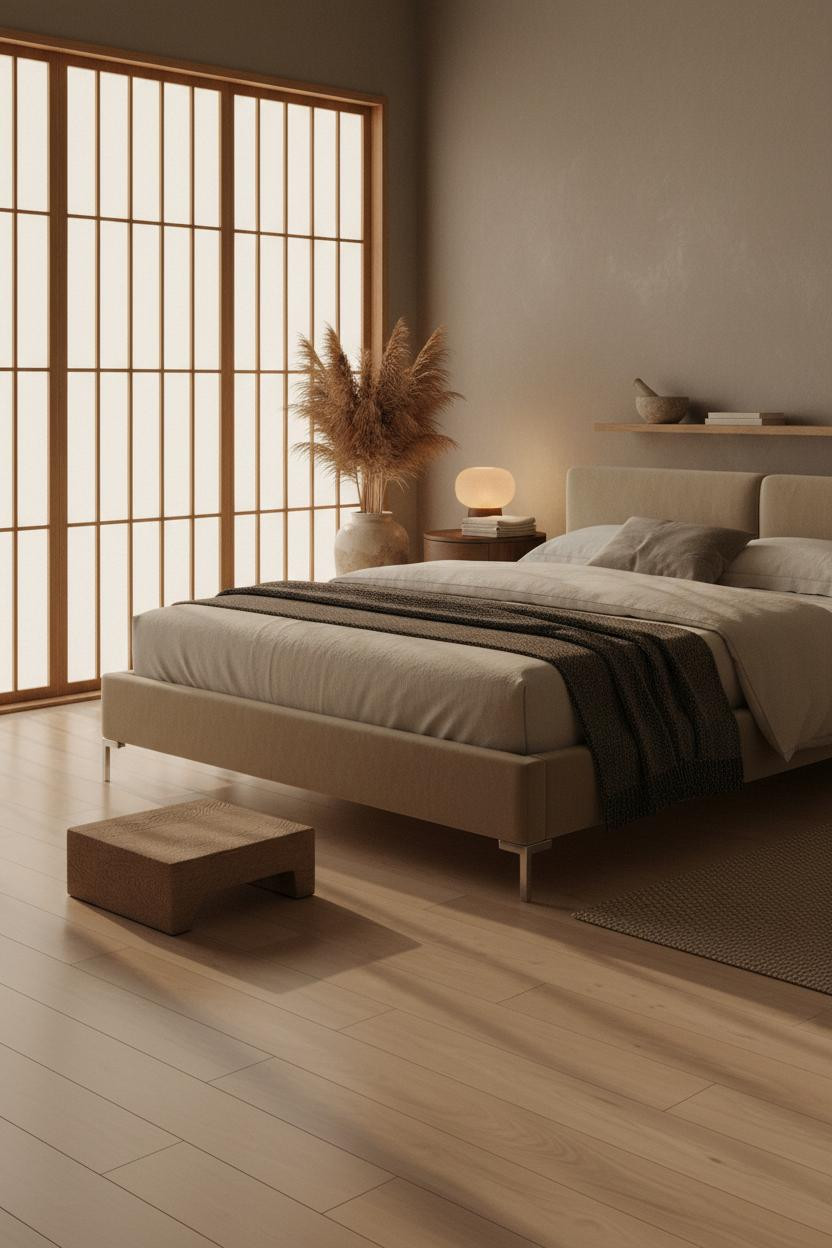
This is the most specifically Japanese room in the group, and honestly it earns that completely.
Why it feels intentional: Floor-to-ceiling shoji-inspired sliding panels cast a precise shadow grid across the room as early light presses through the rice paper, which turns the wall into something that changes by the hour. The geometric stillness is the whole design.
A low wooden meditation stool at the foot of the bed grounds the japandi bedroom proportions. But honestly the undyed cream linen bedding is where I'd start. Get that right first.
 Our #1 Pick
Saatva Classic Mattress
America's best-selling online luxury innerspring. 365-night trial, lifetime warranty, free white glove delivery.
Shop Saatva Classic
Our #1 Pick
Saatva Classic Mattress
America's best-selling online luxury innerspring. 365-night trial, lifetime warranty, free white glove delivery.
Shop Saatva Classic
The Foundation Of Every Beautiful Bedroom
Walls get repainted. Linen gets swapped. The natural bedroom you've spent months getting right will shift and evolve. But the mattress stays, and it's the one element that every other decision in the room has to work around.
The Saatva Classic is built for rooms like these. Dual-coil support that holds its shape over years, a breathable organic cotton cover that doesn't trap heat on warm nights, and a Euro pillow top that's soft without losing the structure underneath. It feels like the good hotel kind. Not the business hotel kind.
Good design ages well because it's made well.

Every room in this list has something different going on at the wall, the ceiling, or the floor. But the common thread is the same: restraint compounds. The less you add, the more each piece has to say. Start there, and the rest pretty much figures itself out.