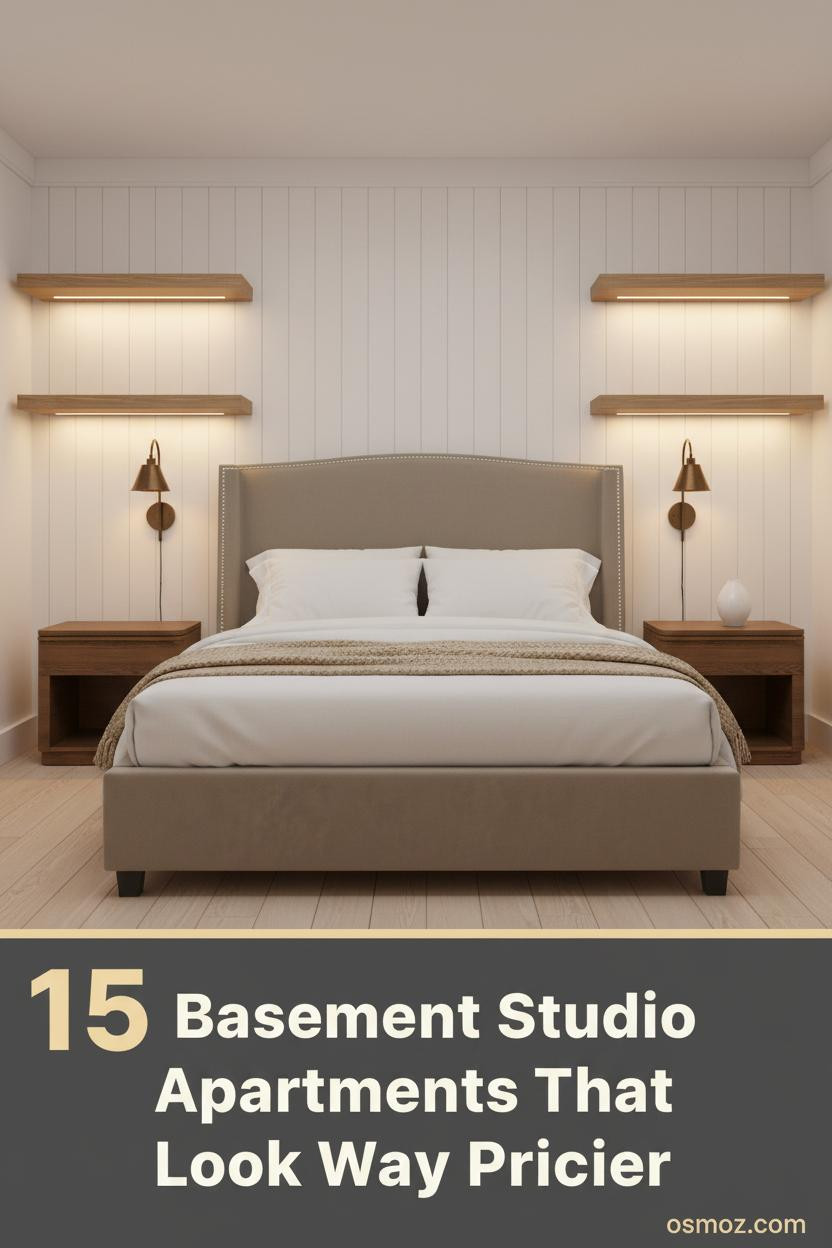
15+ Basement Studio Ideas That Actually Make Small Feel Intentional
23 april 2026Think your basement can't feel intentional? Basement studio apartment ideas that actually work don't rely on tricks. They rely on one good layout decision, then letting everything else follow.
These 15 rooms prove it. Below-grade doesn't have to mean afterthought.
The Coffered Ceiling Trick That Makes Low Ceilings Work For You
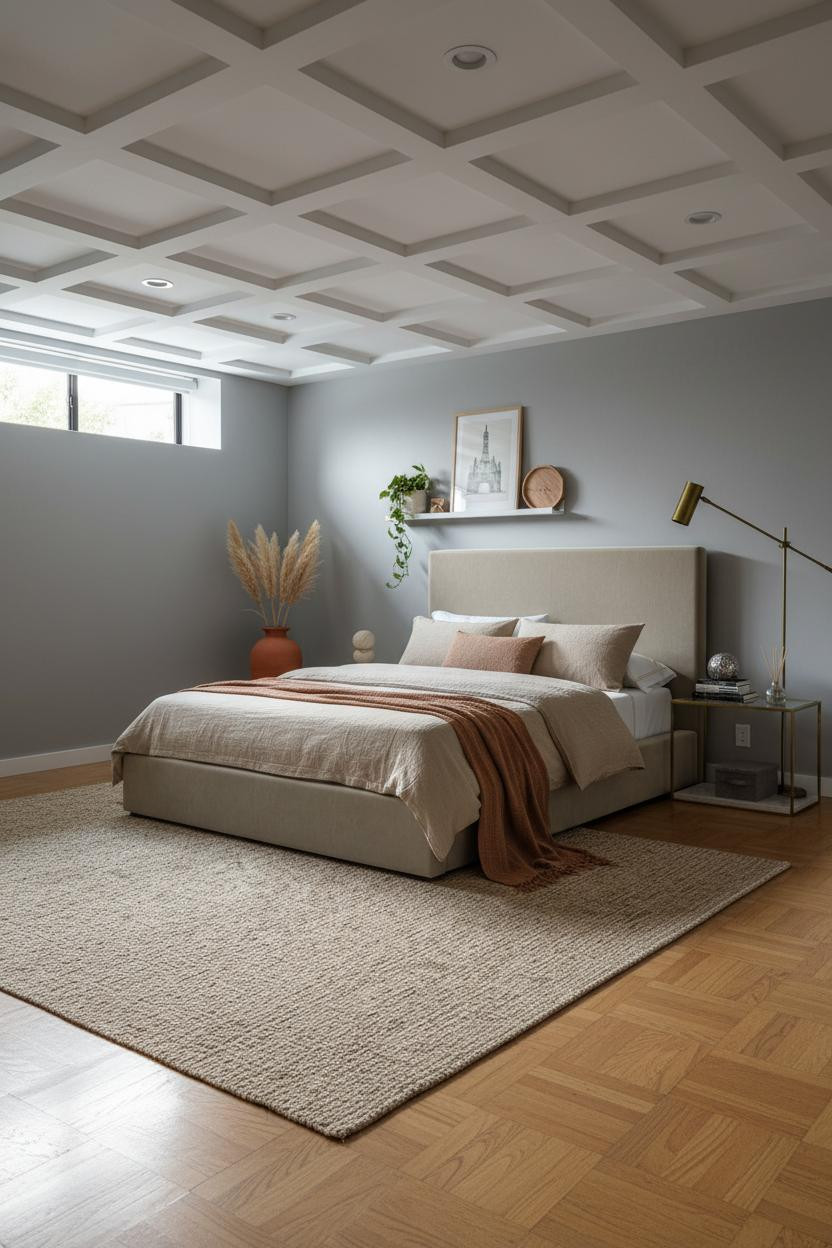


I keep coming back to this layout. Something about the geometry overhead makes the whole room feel more considered than it has any right to.
Why it works: A coffered plaster ceiling catches shadow at every recessed edge, which creates the illusion of height while the room stays compact and grounded below.
Steal this move: Pair the ceiling grid with a jute flat-weave rug in the sleeping zone. The contrast between overhead structure and floor softness keeps it from feeling too stiff.
Board-and-Batten Makes a Windowless Wall Feel Like a Feature
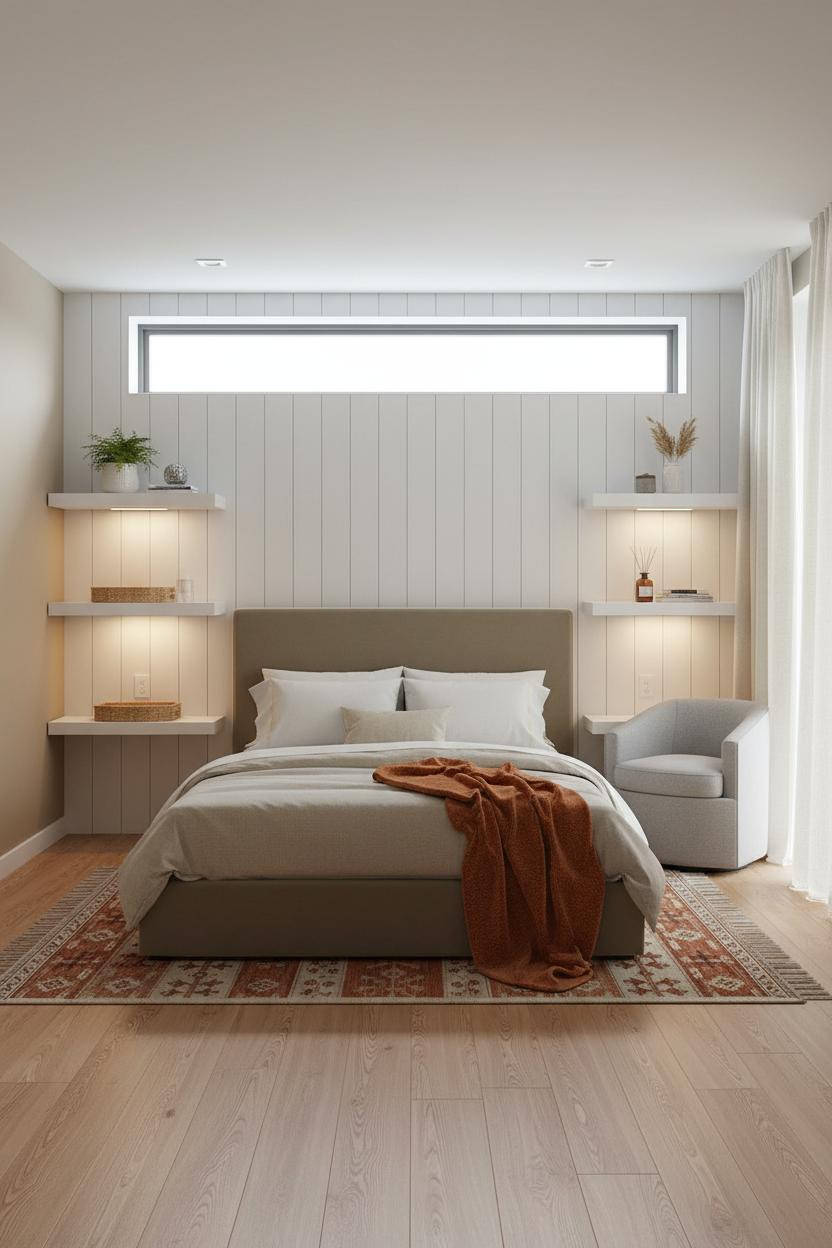

Fair warning. Full-height board-and-batten is a commitment. But rooms that pull it off look intentional in a way that plain paint never does.
The vertical shadow lines from the white-painted batten surface push the eye upward, which is honestly the most useful thing you can do in a low-ceilinged basement.
Pro move: Add staggered floating shelves directly to the batten wall. It turns architecture into storage without adding any visual bulk.
Why a Soffit Alcove Changes How the Whole Room Reads
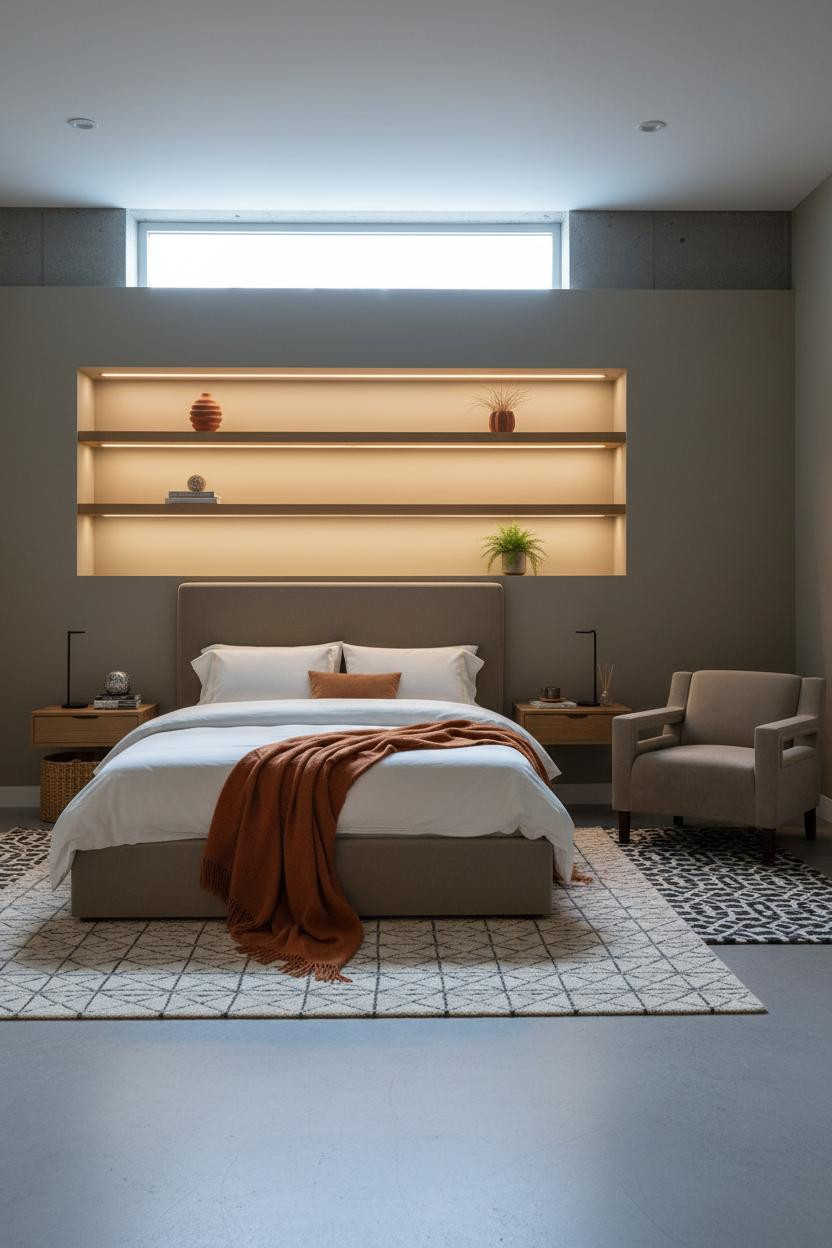
In a room this compact, defining the sleeping zone without a wall is a real problem. A recessed soffit alcove solves it without dividing the floor plan at all.
What makes it work: Natural oak floating shelves inside the alcove catch the warm LED downlight on each tier, creating a vertical rhythm that makes the ceiling feel higher than it is.
The smarter choice: Use a geometric area rug in the reading corner to separate the chair zone from the bed. Two distinct areas, one continuous room.
Floor-to-Ceiling Pine Shelving as the Whole Layout Strategy
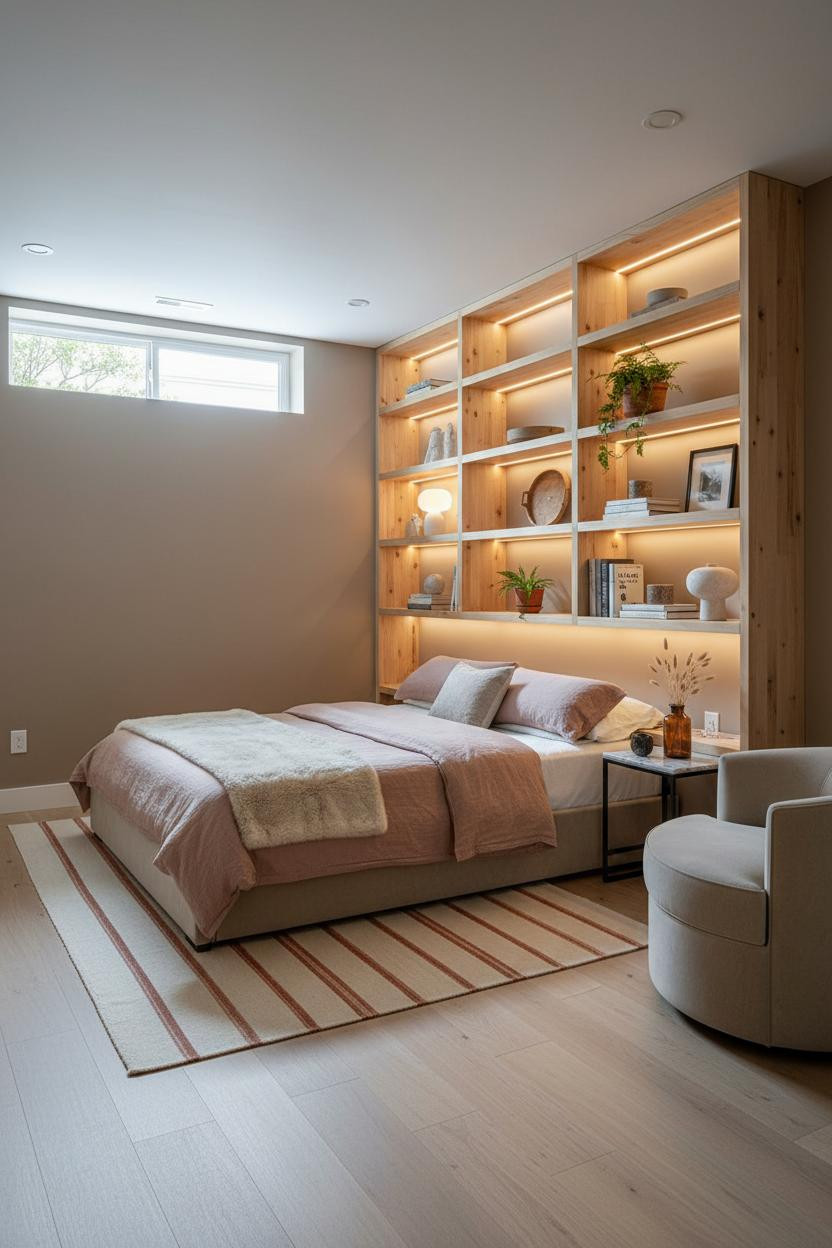


Nothing fancy. That's the point.
A five-tier natural pine shelving unit spanning the full wall height gives a basement studio the vertical anchor it needs, while LED strips under each shelf add enough warmth to keep it from reading as a warehouse.
Avoid this mistake: Don't style every shelf perfectly. One slightly crowded tier with a plant nudged sideways makes the whole thing feel lived-in rather than staged.
What a Concrete Beam Does That a Paint Color Never Could
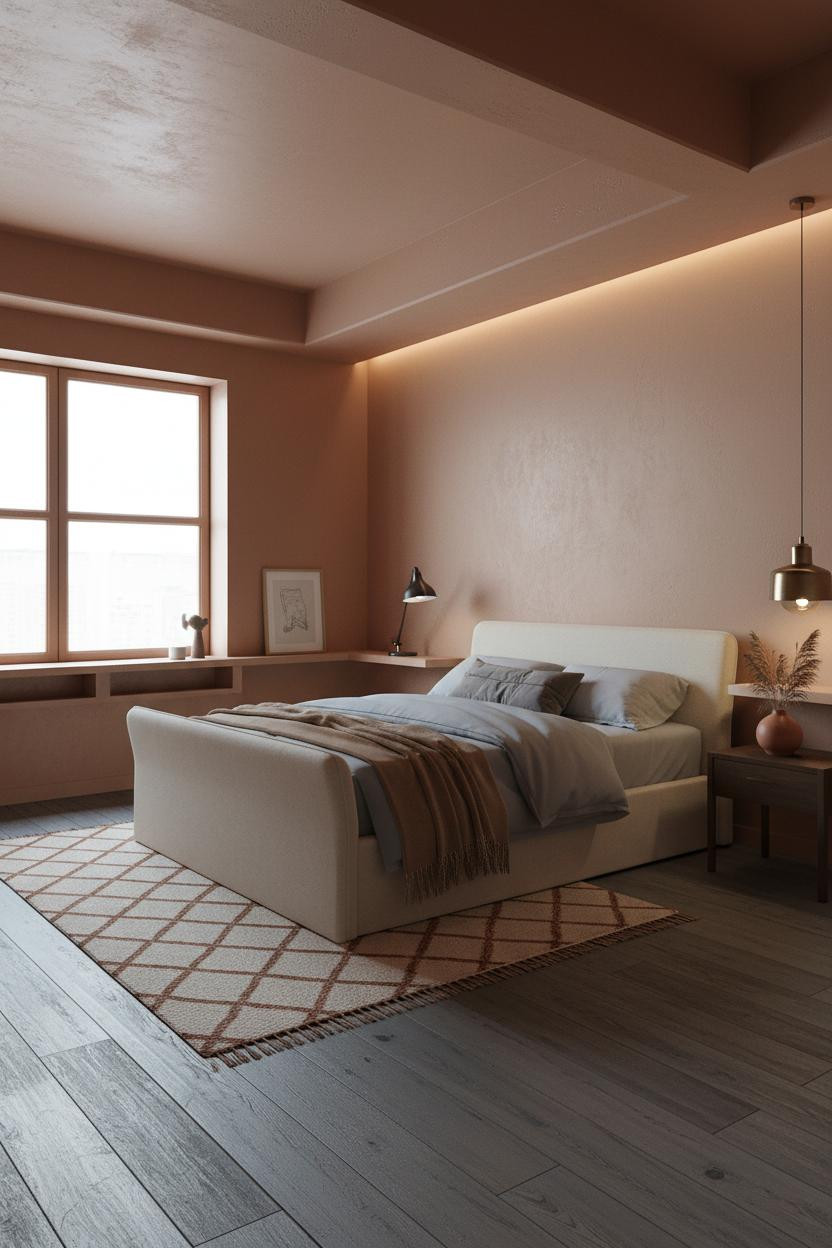

Most people try to hide the structural beam. This room leans into it, and the result is surprisingly good.
Painting the concrete perimeter beam in a terracotta clay tone pulls all the warmth downward, which keeps the below-grade proportions from feeling cold or industrial.
Worth copying: Position the bed directly beneath the beam. It creates a natural canopy effect without any additional hardware, and the weathered grey plank flooring below ties the raw materials together.
Natural Oak Shiplap Is the Warmest Thing You Can Do to a Blank Wall
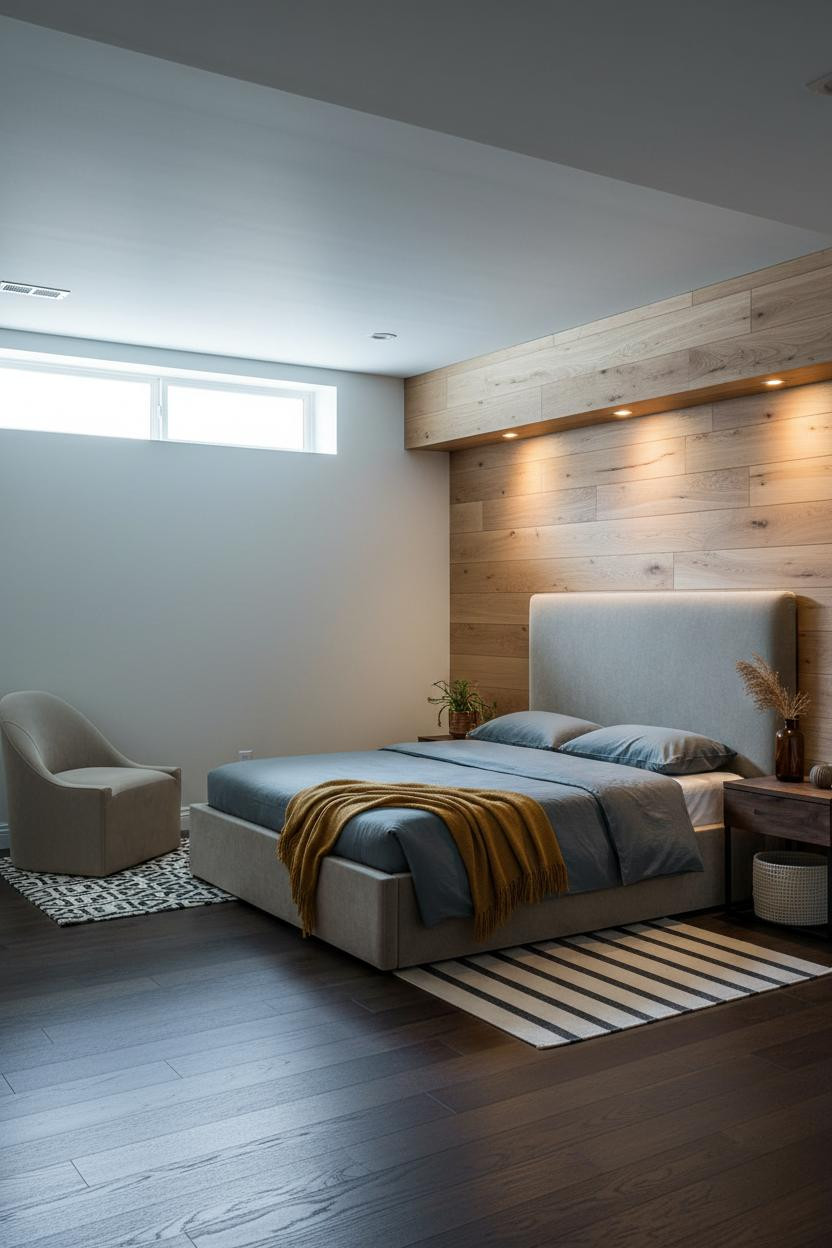

I almost scrolled past this one. Glad I didn't.
Each horizontal plank in the natural oak shiplap casts a shallow shadow line that pushes the eye across the full width of the wall, making the room feel wider while still keeping it calm and cohesive.
The easy win: Let the warm wood tone on the headboard wall do the heavy lifting, then keep the flanking walls in a simple cream. The contrast is immediate.
How a Linear Light Trough Replaces Every Other Ceiling Fixture
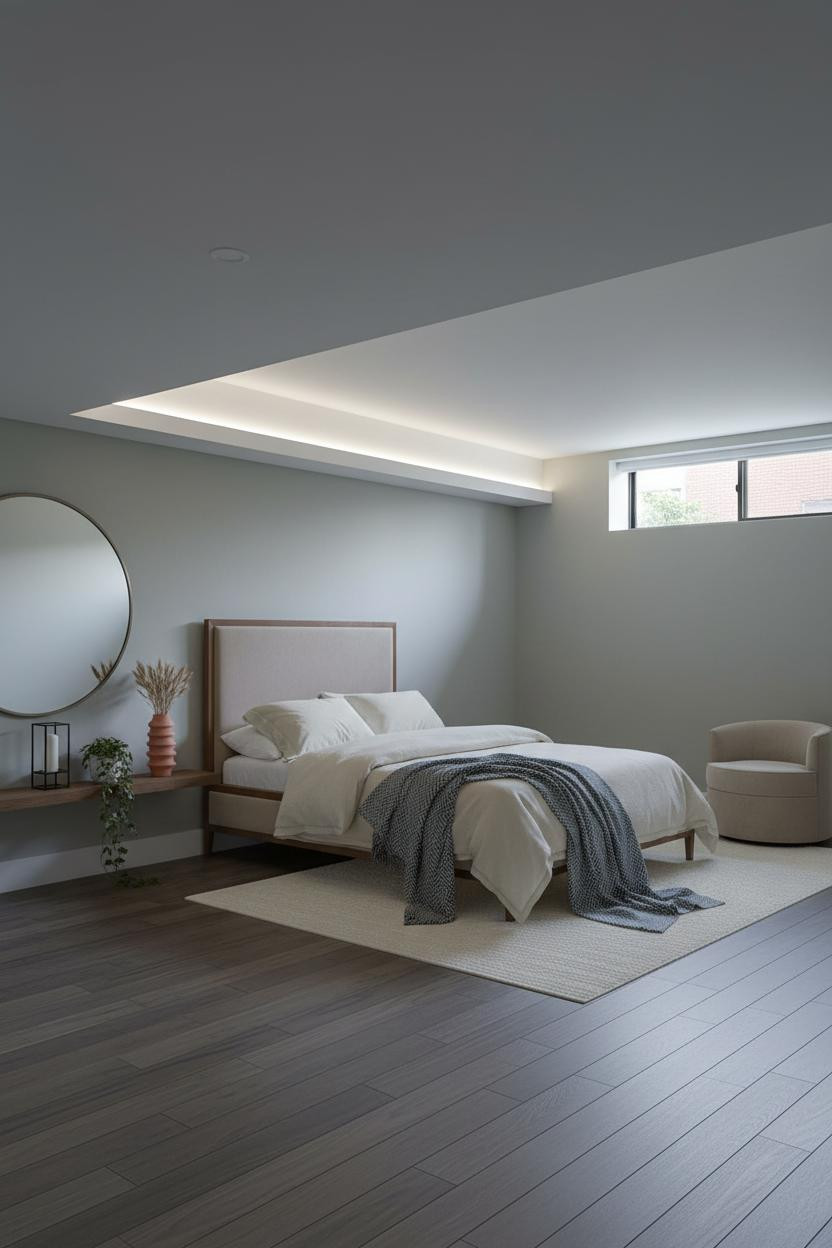

Lighting a basement well is honestly harder than any furniture decision. But getting one element right fixes most of it.
What carries the look: A frosted linear light trough running the length of the sleeping zone gives the ceiling a clean architectural reveal, which makes the low plane feel like a design choice rather than a constraint. The sage-grey matte walls absorb just enough of the ambient glow to keep it soft.
One smart swap: Lean a large round mirror against the far wall instead of hanging one. It doubles the light without adding another fixture to the ceiling.
The Floating Shelf Alcove That Earns Its Square Footage
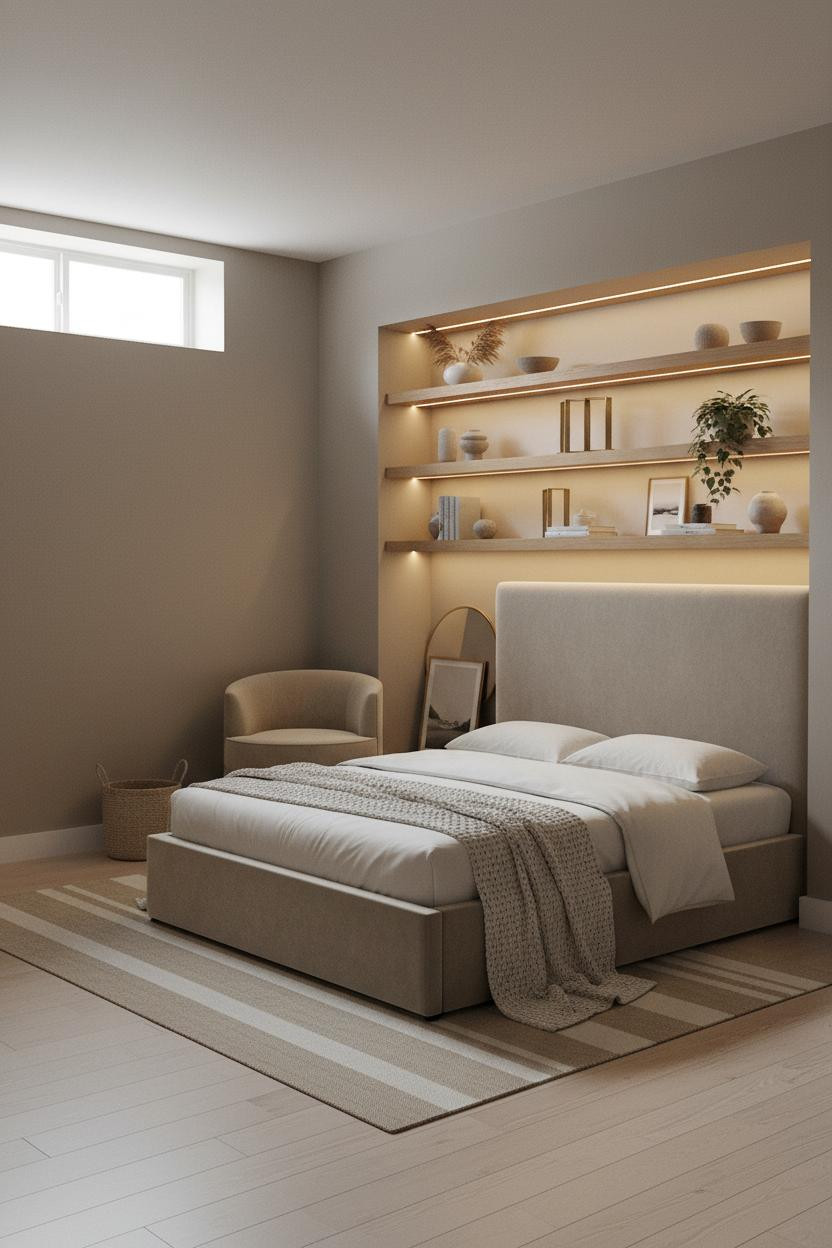
Having a recessed alcove changes how you actually use the room. Storage and display happen vertically, so the floor stays open.
Why it feels intentional: Three tiers of natural oak shelves inside the alcove, each edged in warm downlight, create enough visual depth to make a compact studio feel collected rather than cramped. The pale birch flooring below keeps things light.
Tuck a woven basket under the accent chair in the window corner. That's it. The room feels lived-in without looking messy.
I Would Put Charcoal Built-Ins in Every Basement I Ever Owned
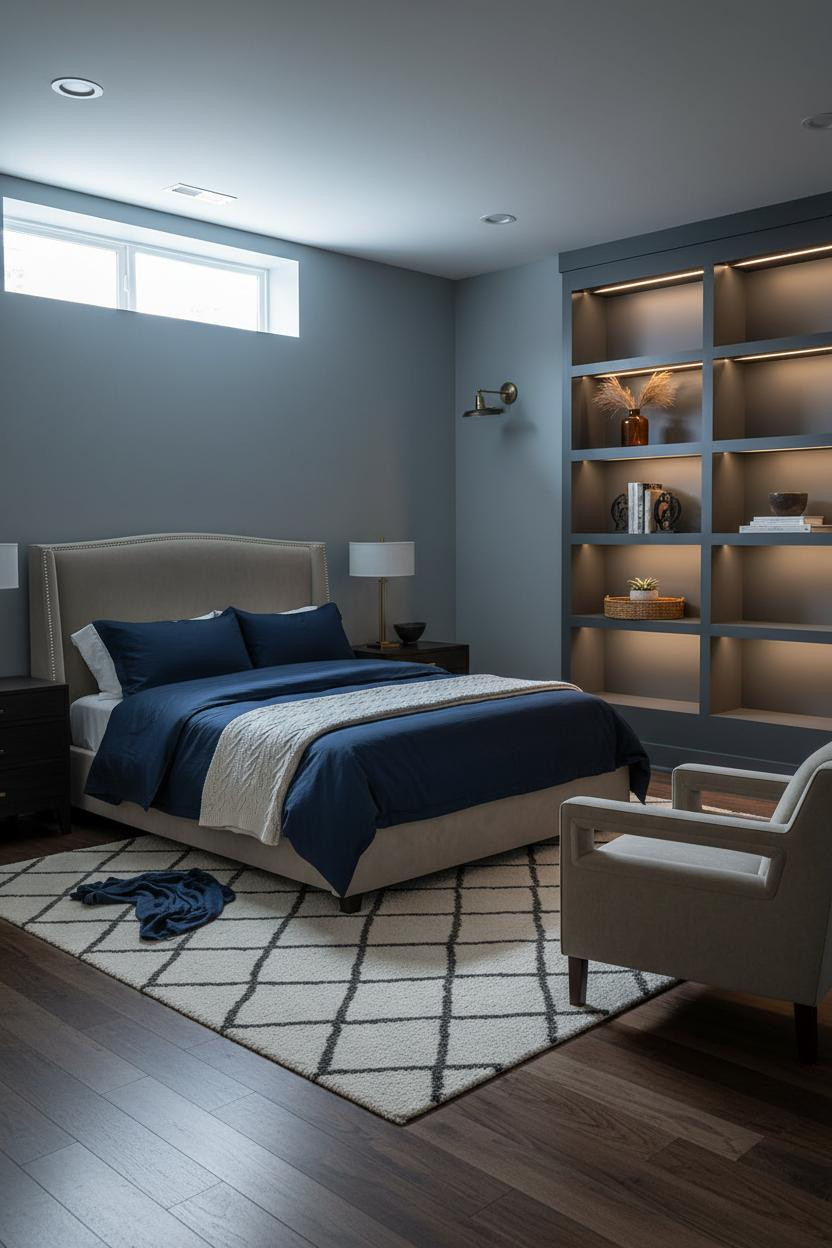

This one is divisive. But I think the dark built-ins are exactly right.
The matte charcoal-painted shelving creates enough contrast against the blue-grey walls that the unit reads as furniture rather than construction, and the LED strips underneath each shelf keep the whole thing from going too heavy.
What to borrow: Paired brushed iron sconces flanking the sleeping zone. They anchor the bed in a way that a single overhead light never manages in a long, narrow studio layout.
Cream Shiplap Plus a Platform Bed Is the Coastal Studio Formula
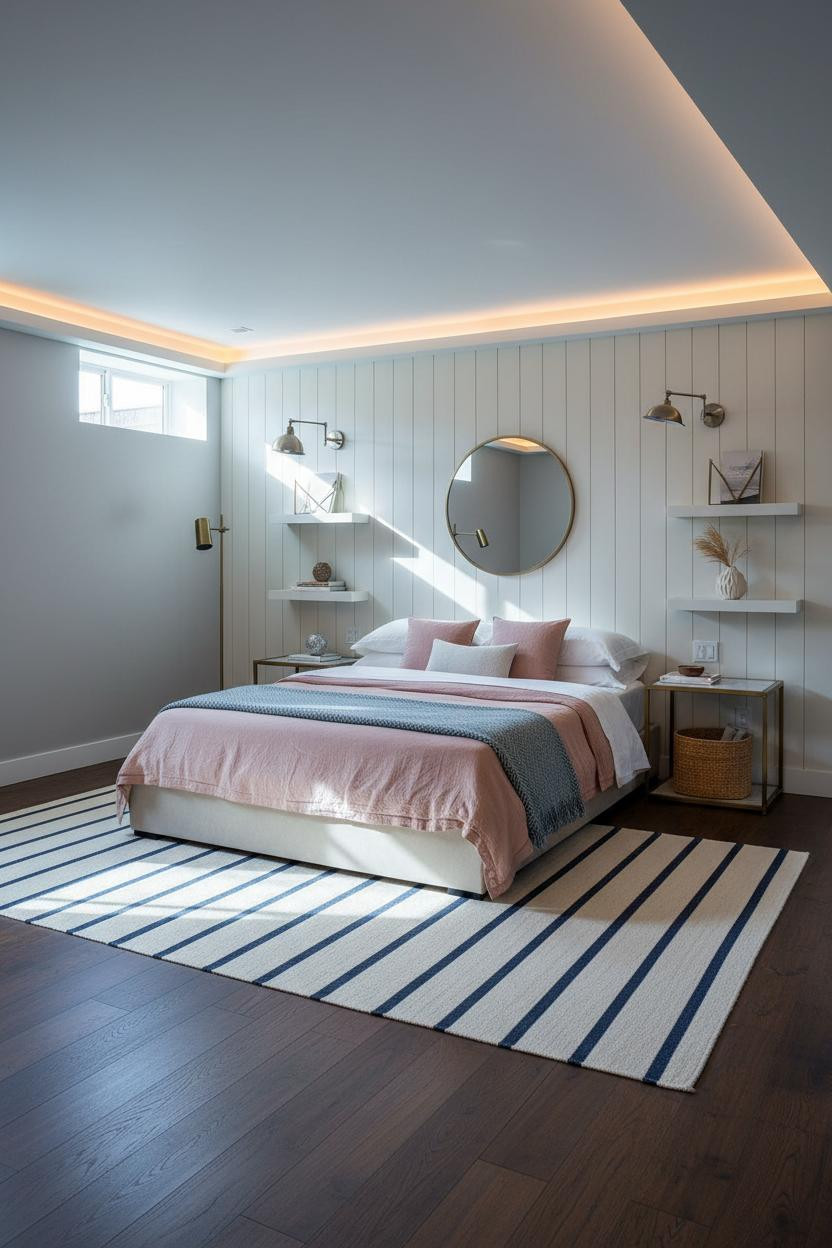
The combination works because both elements are doing the same thing: bouncing light back into a room that doesn't get much of it.
The real strength: Full-height cream shiplap paneling with two staggered floating shelves cut into the surface gives the wall storage depth and texture, while the low platform bed profile keeps the sightline open across the floor.
Don't ruin it with: Too much navy. One cream-and-navy striped rug is enough. Let the shiplap stay clean above it.
White Shiplap in a Farmhouse Studio Works Better Than You'd Think
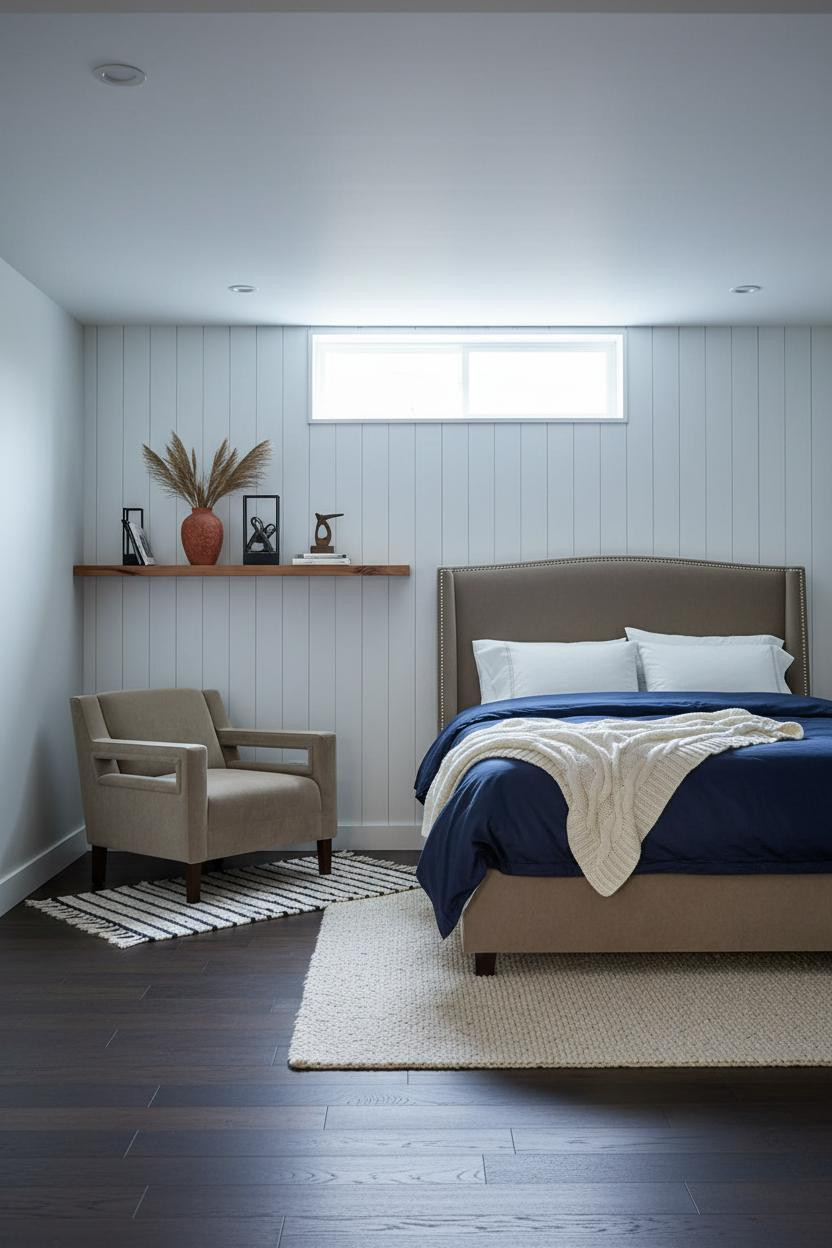
Admittedly, white shiplap can tip into farmhouse cliché fast. But here, the stone grey flanking walls pull it back into something more restrained and actually good.
Why it holds together: A single natural pine shelf integrated mid-height breaks the vertical expanse of the planks and gives the wall a moment to breathe. Without it, the full height reads flat rather than architectural.
The finishing layer: A graphic flat-weave rug in the chair zone. It separates the two functional areas of a studio layout without using any extra square footage.
What a Skylight Well Does for a Below-Grade Room
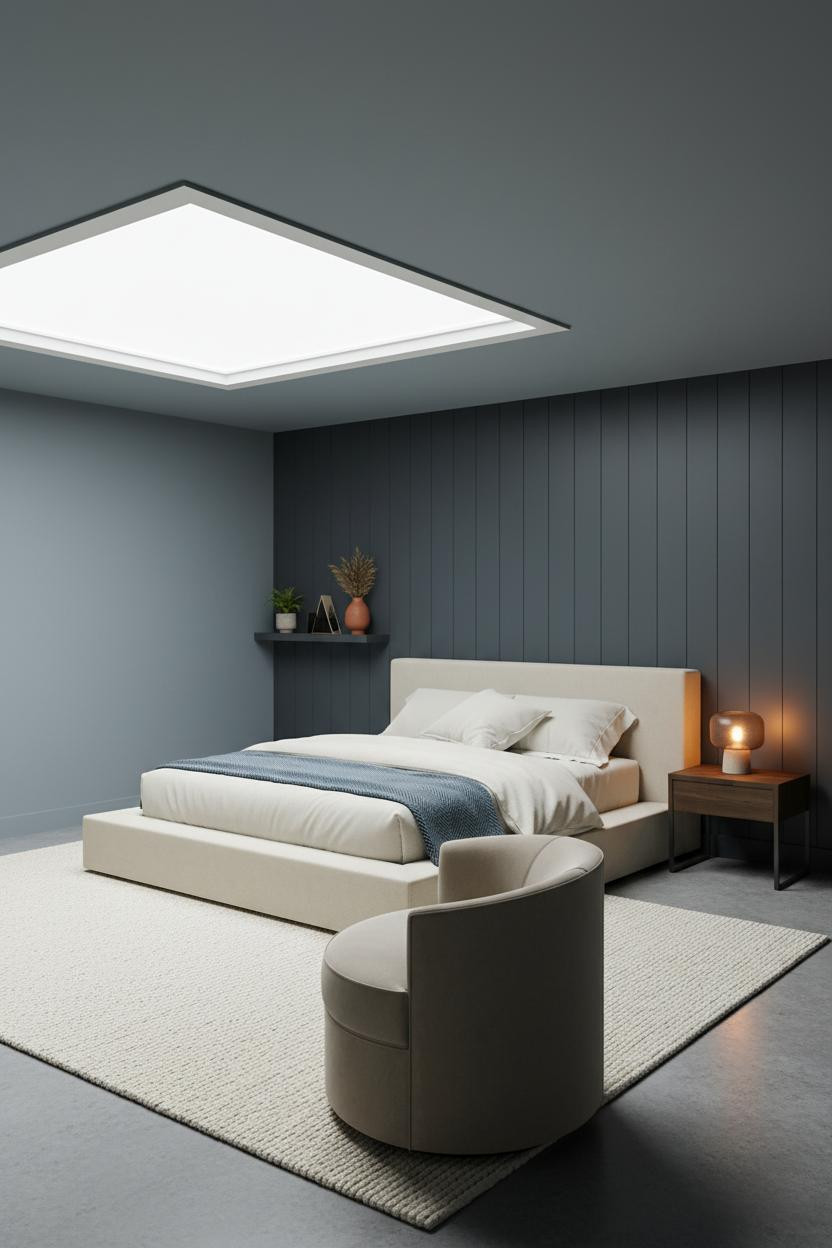
This is the kind of room that makes you question why anyone bothers with overhead pendants at all.
What gives it presence: The frosted diffuser panel inside the recessed skylight well spreads light evenly across the bed surface, while the deep charcoal vertical shiplap behind the headboard absorbs it in a way that feels calm rather than dim. The room feels warm without being heavy.
Best for: Studios where the ceiling structure allows for a recess. It's the one upgrade that genuinely changes the proportions of a basement room from the inside out.
How Late Afternoon Light Through a Basement Window Becomes a Feature
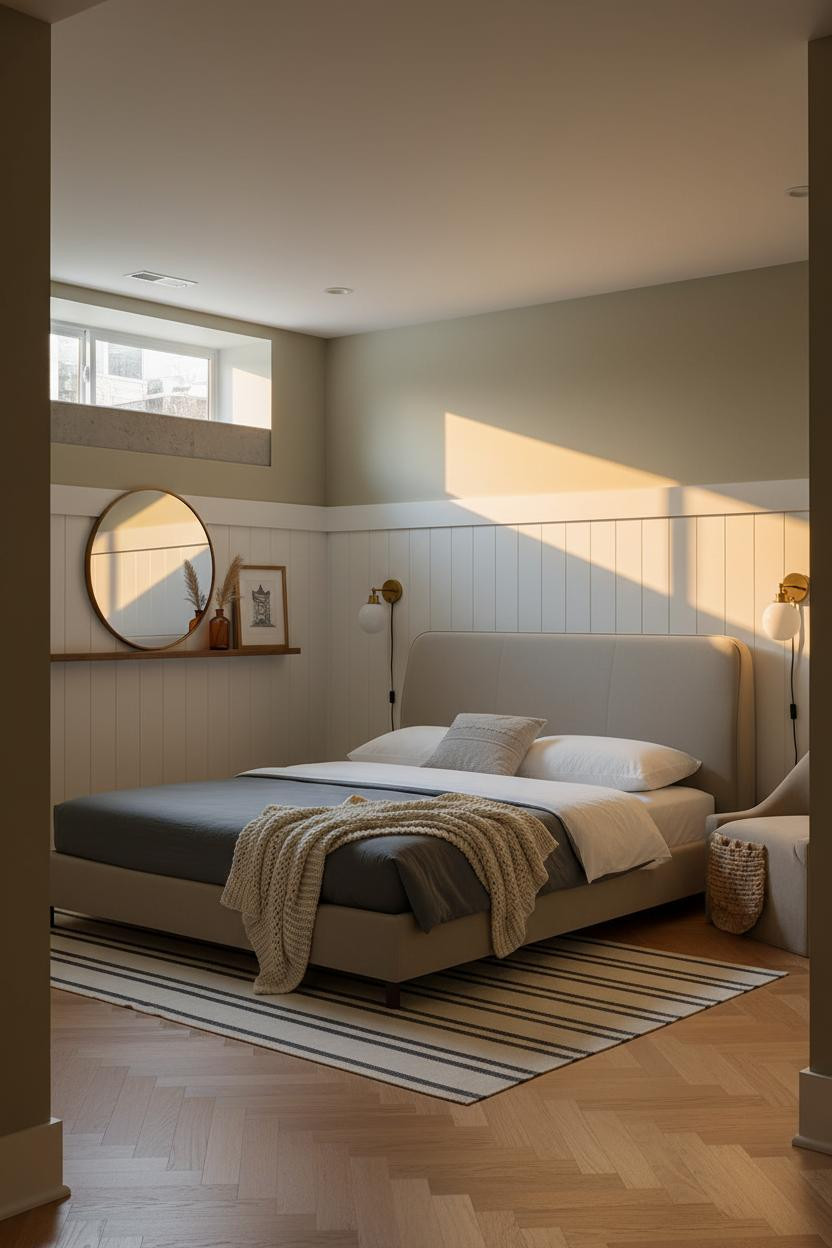

Most basement layouts treat the high horizontal window as a problem. This one treats it as the whole reason the room works.
The deep painted concrete sill catches the late afternoon angle and throws a diagonal band of warm light across the herringbone parquet flooring, which makes the compact room feel open and alive in a way that recessed lighting alone never could.
Where to start: Paint the window trim white and the sill a contrasting tone. A well-placed sconce pair flanking the bed extends that golden quality into the evening without losing it.
Exposed Brick Plus Japandi Restraint Is a Combination I Didn't Expect to Love
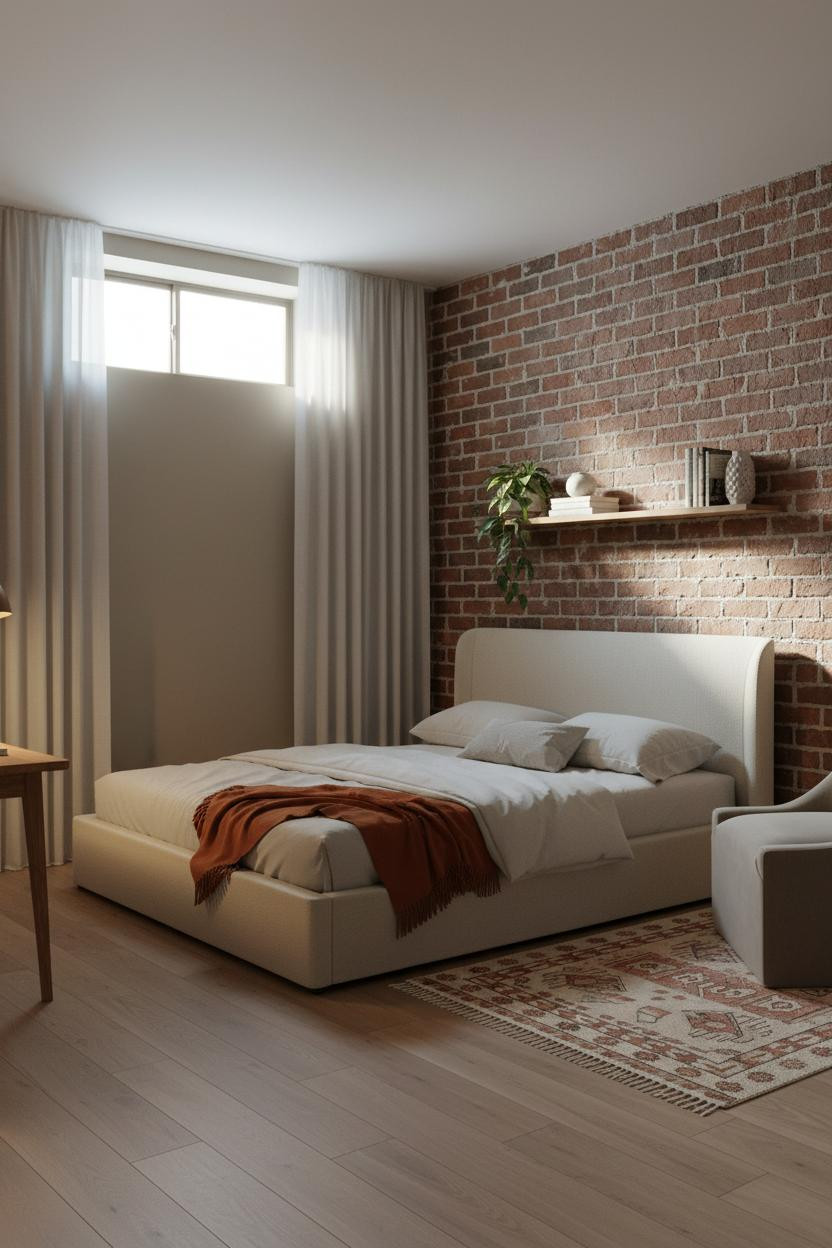

It shouldn't work. Exposed brick and Japandi restraint seem like they'd cancel each other out. But the terracotta texture of the raw brick wall actually grounds all the warm greige and oatmeal tones rather than fighting them.
What softens the room: Floor-to-ceiling cream linen curtains framing the window corner. They add enough softness to balance the rough mortar joints, while still feeling like a quiet nod to Scandinavian calm.
The practical move: Keep the floating shelf above the bed edited. Two or three objects at most. The brick is already doing the visual work.
Birch Plywood Built-Ins Make the Most Organized Small Studio I've Seen
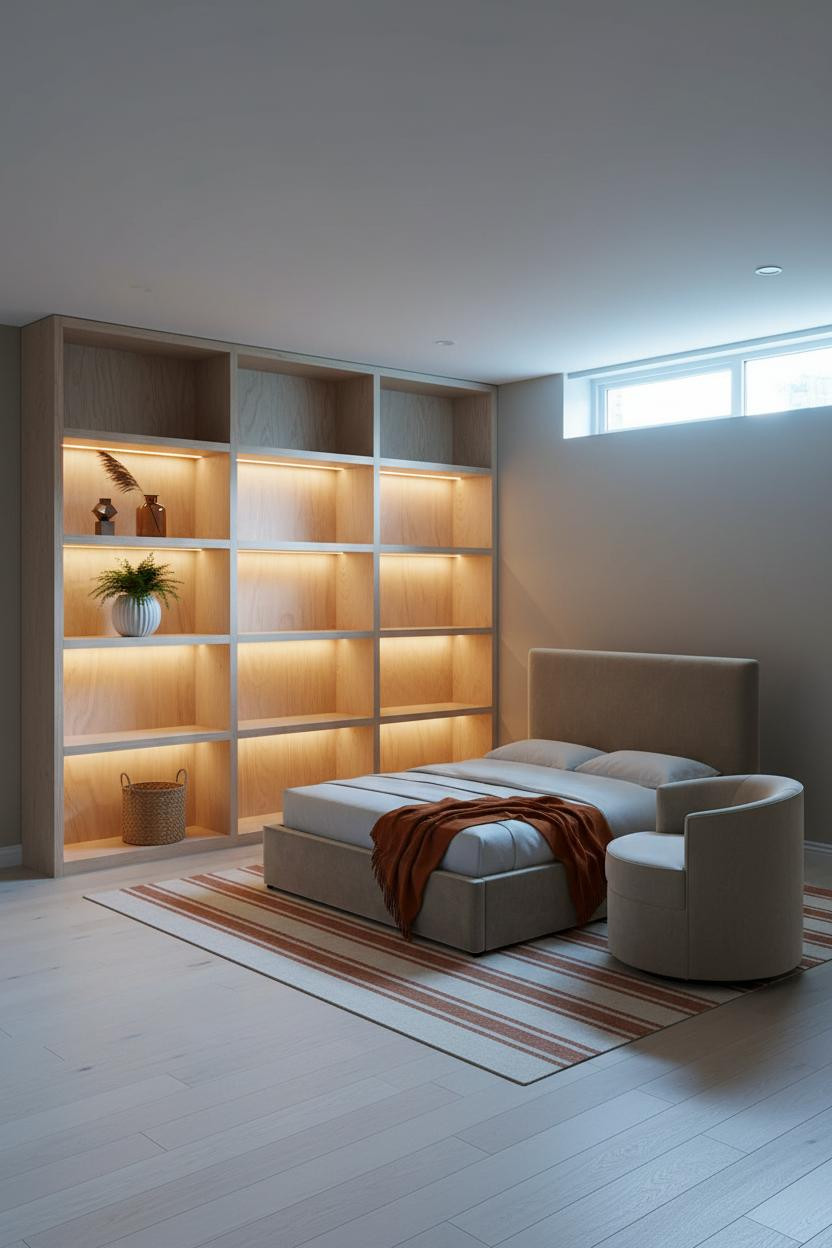
Four open tiers of natural birch plywood spanning the entire sleeping wall, warm LED strips pooling down onto each surface. It's a lot. But when the cool morning window light hits it from the opposite direction, the contrast between the two is somehow exactly right.
And the layout earns every square inch. Storage, display, and the vertical anchor a small space needs all happen in one built-in unit, leaving the floor completely open. Open floor plan without the open floor plan. That's the trick here.
 Our #1 Pick
Saatva Classic Mattress
America's best-selling online luxury innerspring. 365-night trial, lifetime warranty, free white glove delivery.
Shop Saatva Classic
Our #1 Pick
Saatva Classic Mattress
America's best-selling online luxury innerspring. 365-night trial, lifetime warranty, free white glove delivery.
Shop Saatva Classic
The Foundation Of Every Beautiful Bedroom
Every layout decision in a basement studio comes down to the same question: what stays, and what earns its place? The walls get painted. The shelving gets built. But the mattress stays for years, and it shapes how the whole room feels every single morning.
The Saatva Classic is the one I'd put in any of these rooms. Dual-coil support that holds up to daily use, a breathable cotton cover that doesn't trap heat in a below-grade space, and a Euro pillow top that feels right without going soft too fast. It's the kind of mattress you stop noticing in the best way.
And once you have the bed right, the rest of the room figures itself out faster than you'd expect.

Good design ages well because it's made well. Start with the bed. The rest follows.