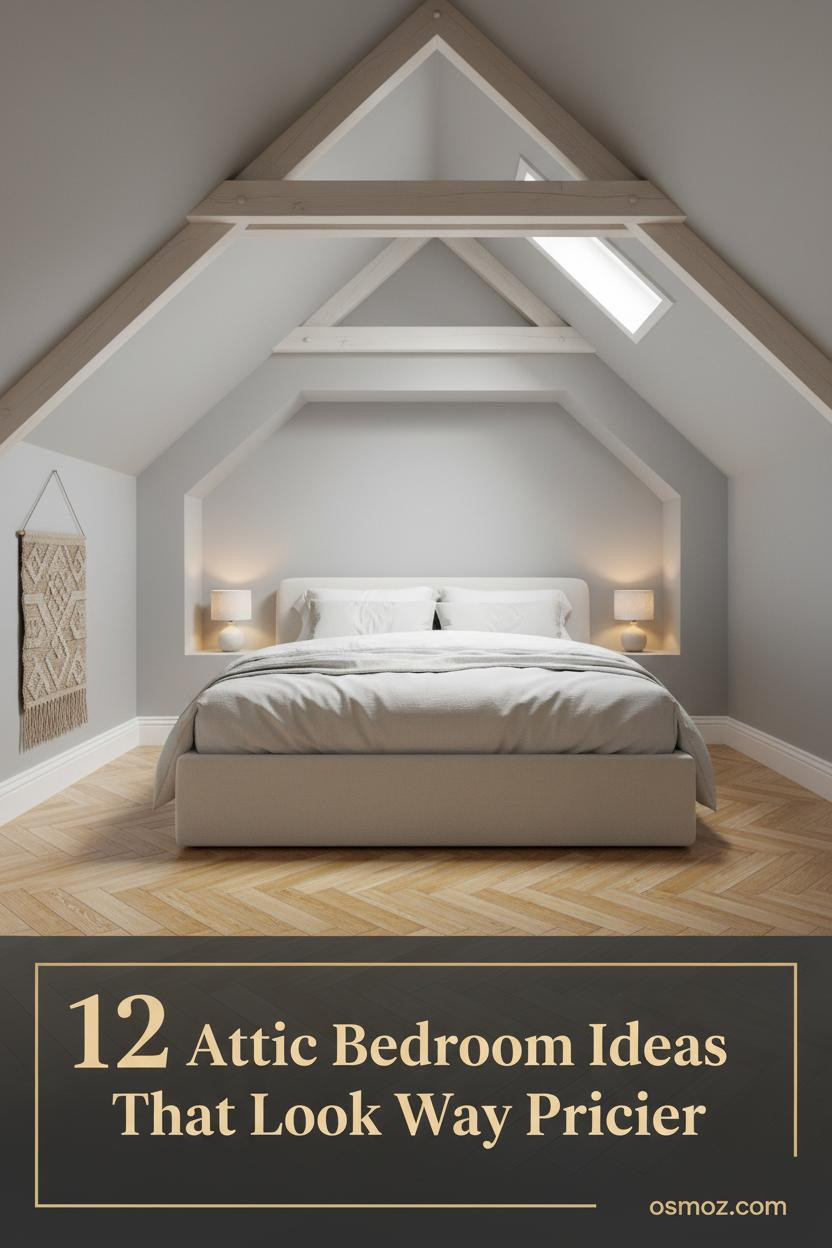
12+ Attic Master Bedrooms That Actually Work With the Slanted Walls
23 april 2026The first thing you notice in a well-done attic bedroom ideas master suite is that the slanted walls aren't fighting the design. They are the design.
These 12 rooms prove it. Low ceilings, pitched geometry, tight eave corners — all of it turned into something you'd actually want to sleep in.
The Alcove Effect That Makes Low Ceilings Feel Intentional
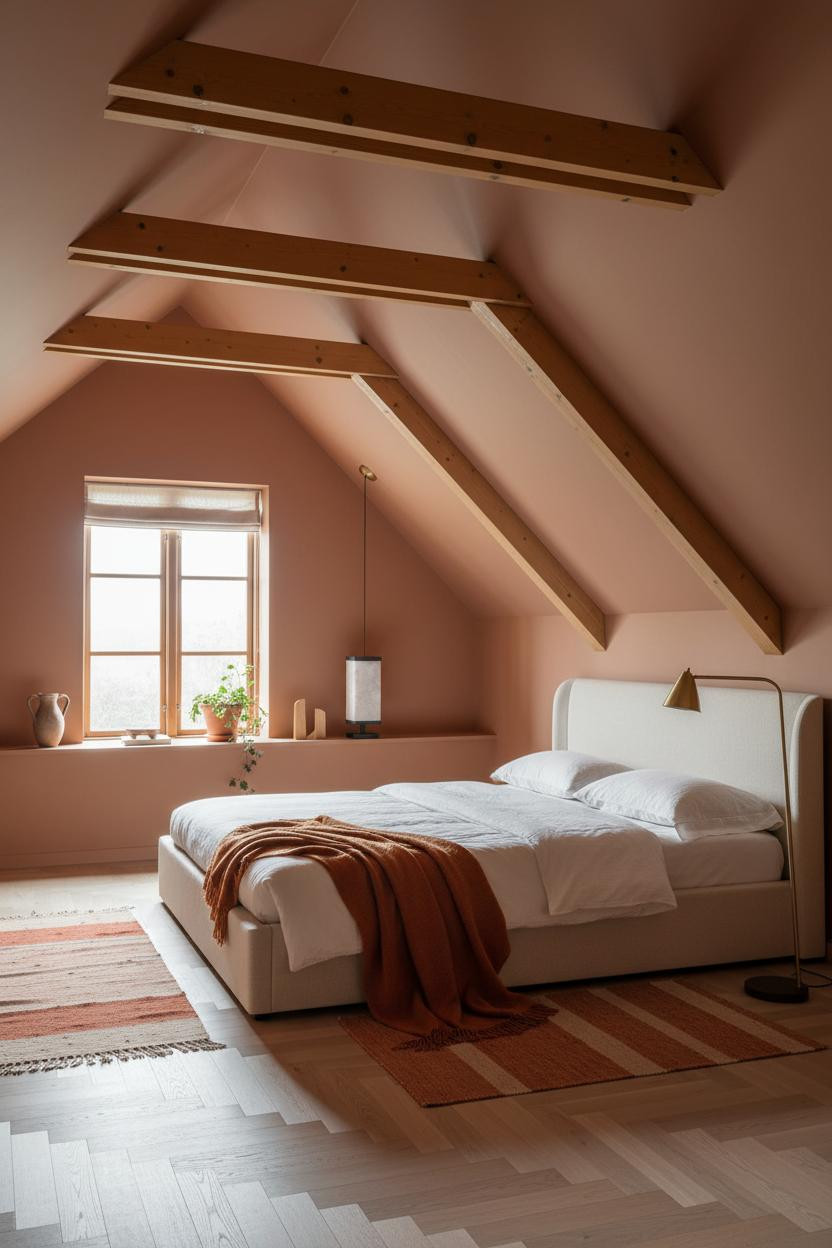


I keep coming back to this one. There's something about the way the pitch frames the bed zone that feels completely deliberate.
Why it works: Twin honey-toned timber collar ties run the full diagonal span and throw crisp parallel shadow lines across the plaster, giving the ceiling a geometric presence that flat paint could never pull off.
Steal this move: Pair warm terracotta plaster walls with a herringbone floor and a brass arc lamp. The warmth stacks and the room feels grounded.
Board-and-Batten Under a Sloped Ceiling Actually Solves Things
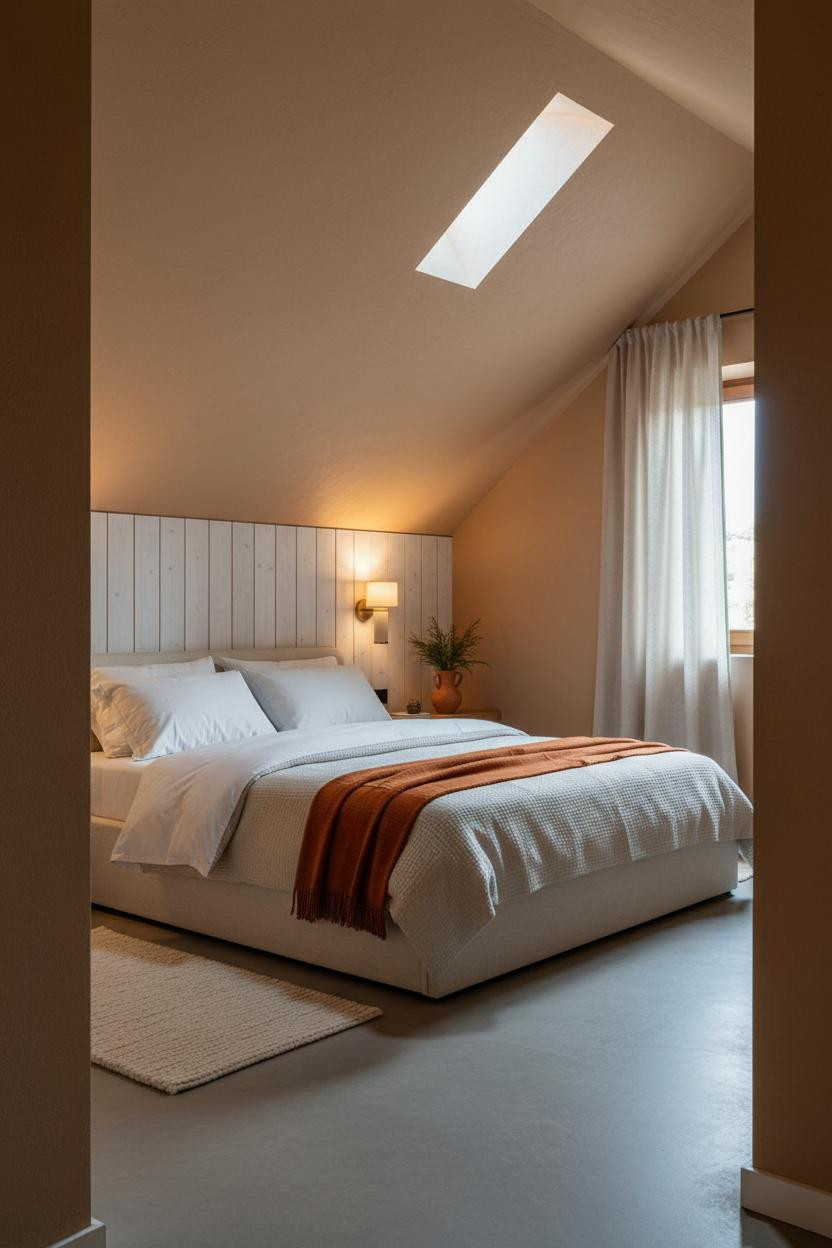


Bold choice. Most people tile or plaster the kneewall and move on.
But a full-width raw ash board-and-batten panel lining the longest sloped wall does something smarter. The vertical grooves catch raking shadow at thumb-width intervals, and that rhythm anchors the low alcove in a way that bare plaster never could.
Worth copying: Add paired sconces at the bed alcove so the amber pools hit those grooves directly. That's when the texture actually shows up.
One Exposed Rafter Can Carry the Whole Room
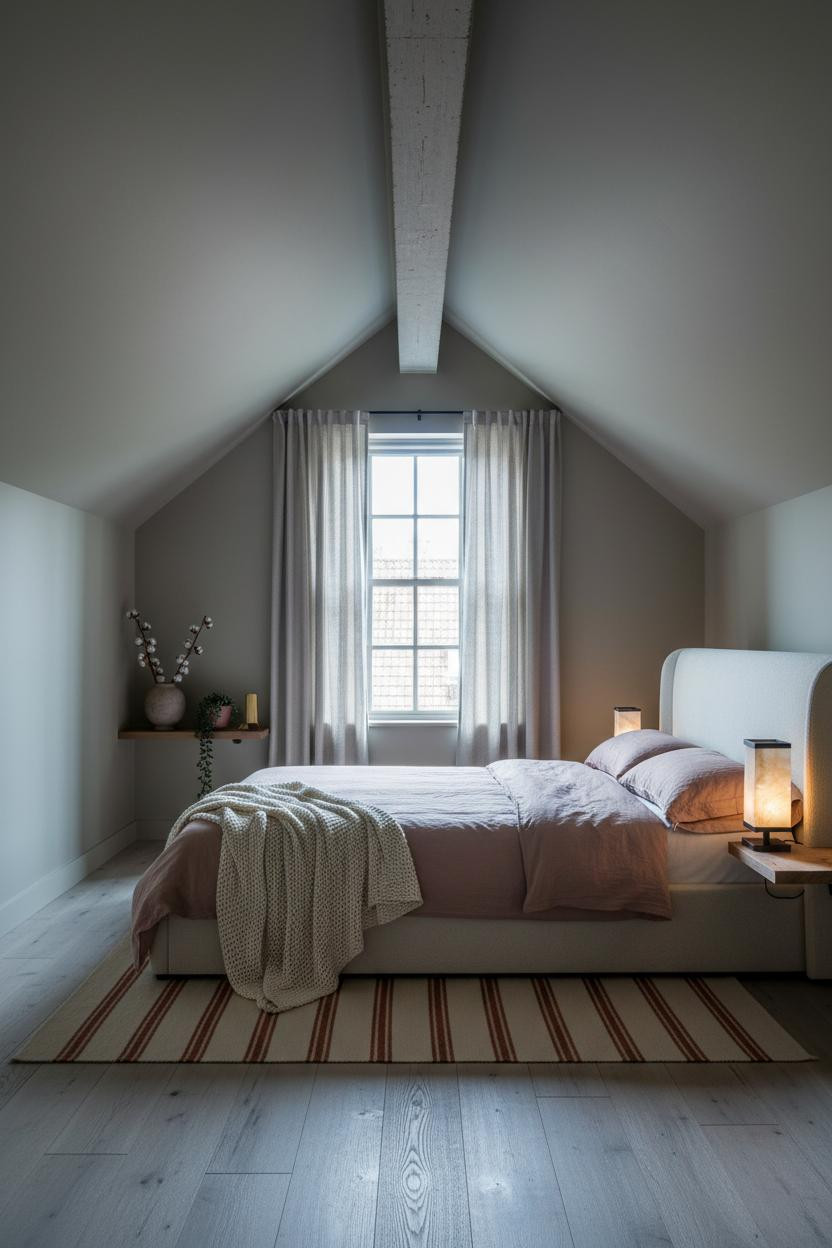
This is the kind of room that makes you want to slow down in the morning.
The reason it feels architectural instead of unfinished is a single thick concrete-grey structural rafter running the full span and throwing a hard shadow line across smooth matte plaster. Architecture as the only ornament. Honestly, that restraint is hard to pull off.
The smarter choice: In a quiet attic with muted khaki walls, resist adding too much. Let the geometry do the work and keep bedding to one or two soft tones.
Pale Ash Collar Ties Against Dove Grey: Why This Combo Works
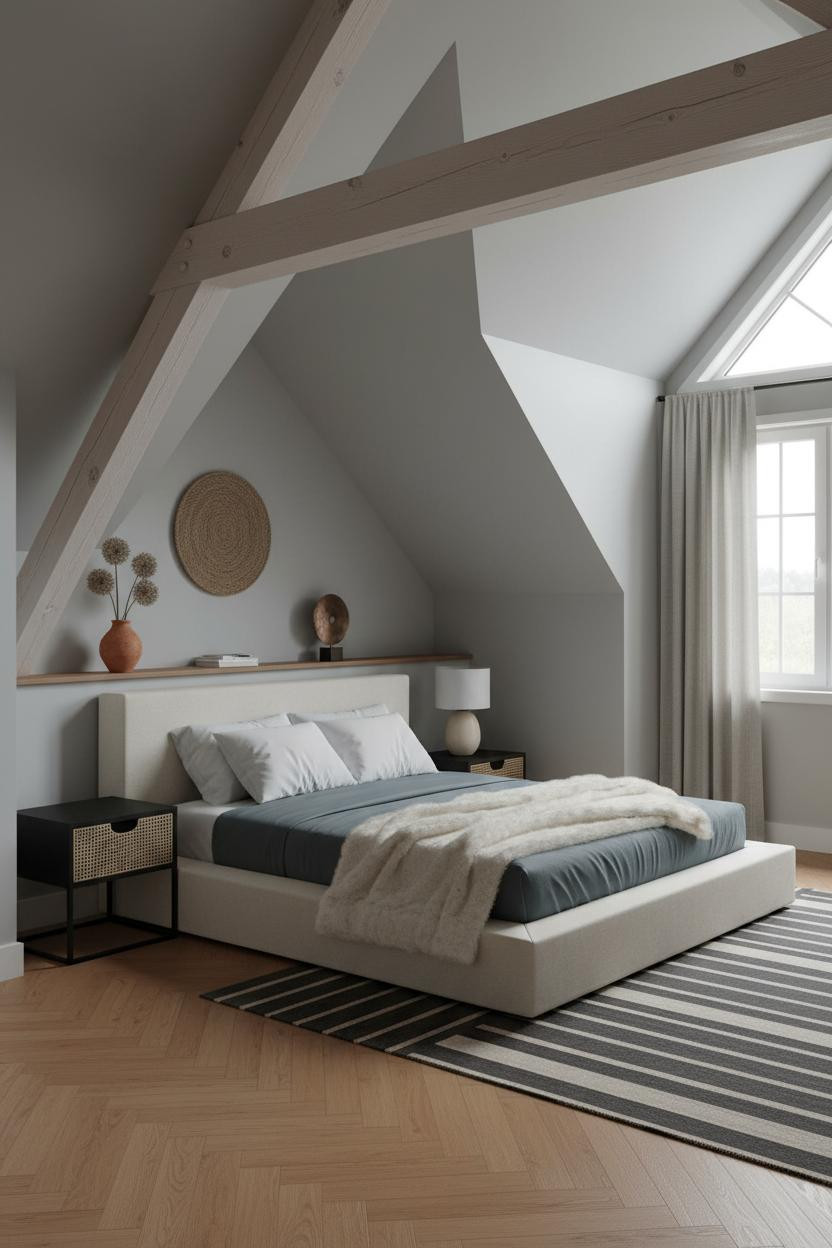


I almost scrolled past this. Glad I didn't.
What makes it work: Exposed pale ash collar ties against dove grey matte plaster keep the ceiling from feeling heavy while still giving the pitched attic that signature roofline character. The cool tones let the honey herringbone parquet below read as warm without any competition overhead.
Layer a woven jute wall hanging on the low gable wall and a faux fur throw across the footboard. Two textures. That's enough.
Dark Walls Under a Pitched Roof Feel Surprisingly Right
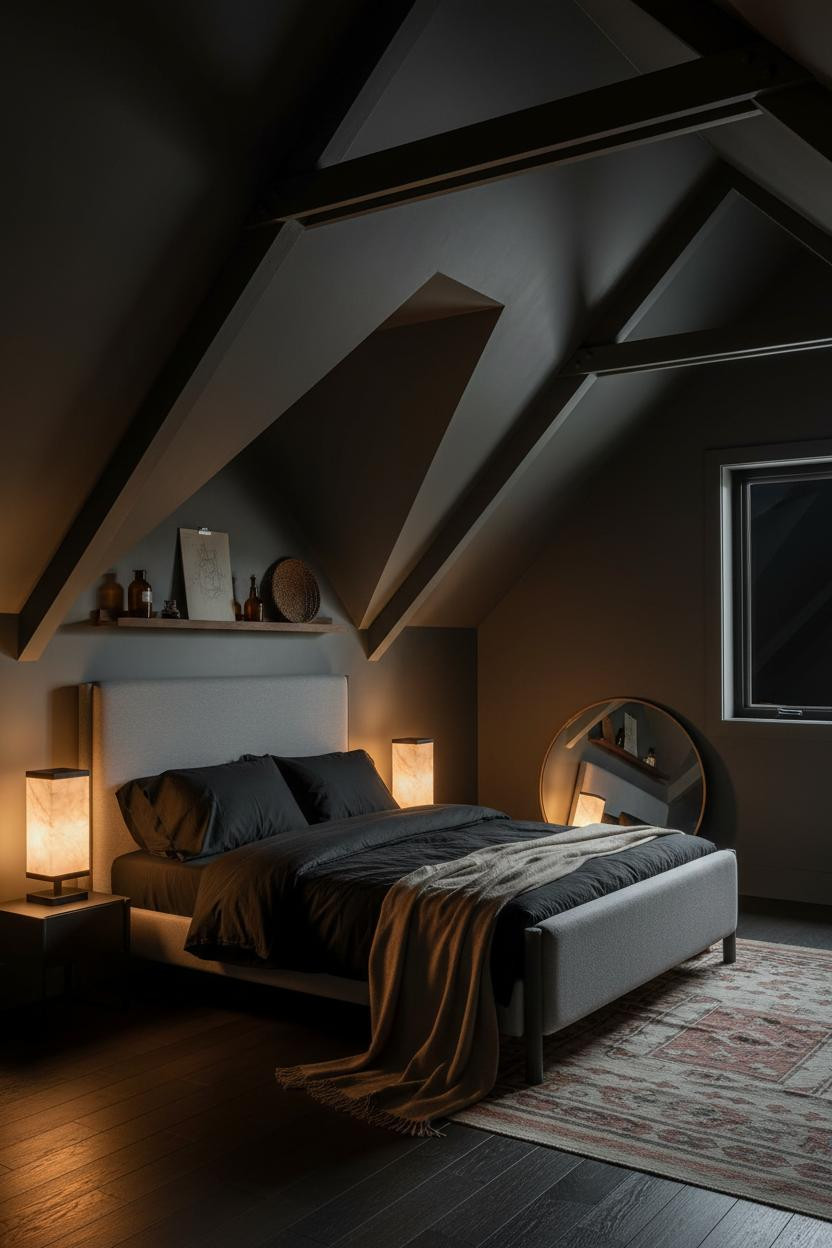

This one is divisive. And I think it's one of the best in this roundup.
Why it lands: Deep charcoal matte plaster walls paired with steel-grey painted collar ties make the attic feel like a cave in the best way. The room feels deliberately sheltered, like the darkness is a choice rather than a limitation.
Avoid this mistake: Don't rely on overhead lighting here. A warm bedside lamp at low wattage is what makes the charcoal scheme feel intimate instead of oppressive.
Sage Green Plaster and a Jute Wall Hanging: Slow Living Attic
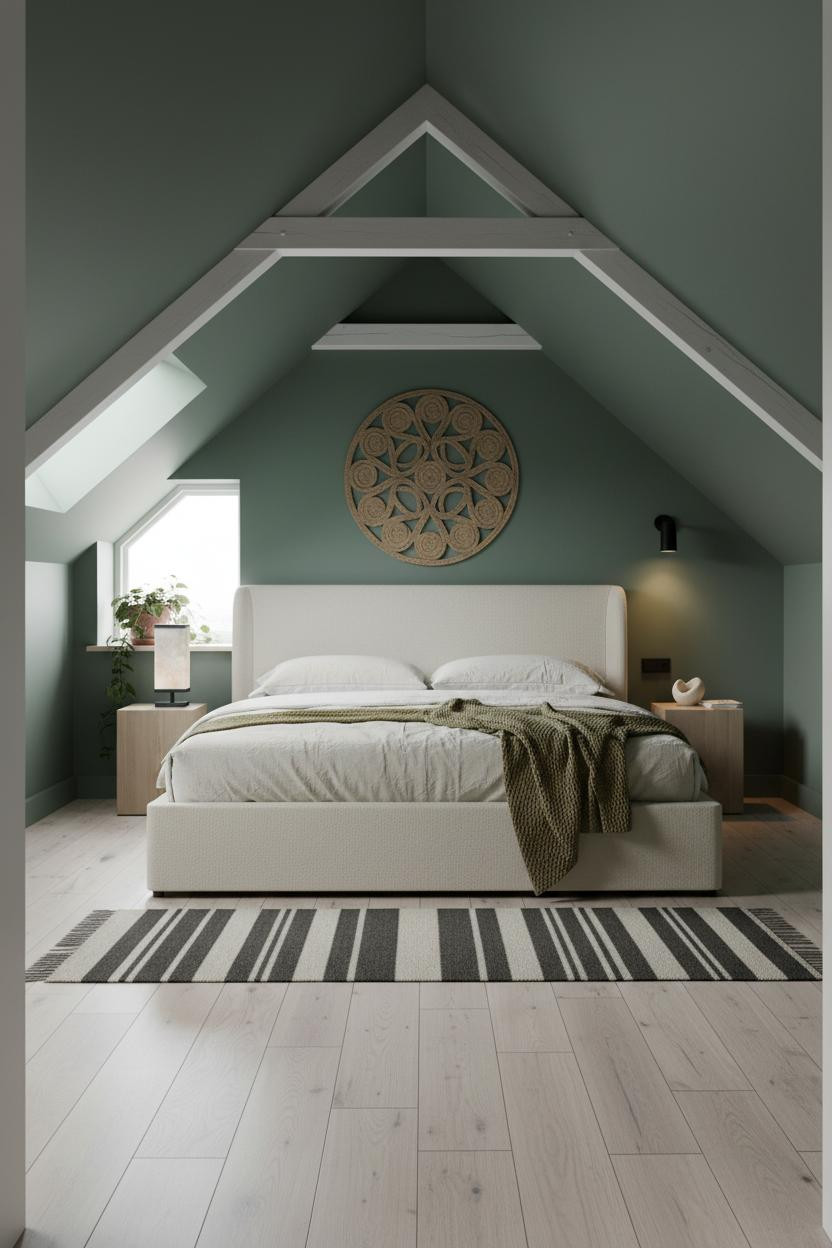
The room feels lived-in and quiet at the same time. That's harder to achieve than it looks.
What gives it depth: Deep sage matte plaster walls absorb the overcast north light in a way that makes the low ceiling feel intentional. The white painted collar ties keep it from tipping into heavy. Just enough contrast to keep things interesting.
The finishing layer: A large woven jute wall hanging above the bed fills the slope in a way that art on a flat wall can't. It moves with the pitch.
Morning Light Through a Dormer Changes Everything in a Low Attic
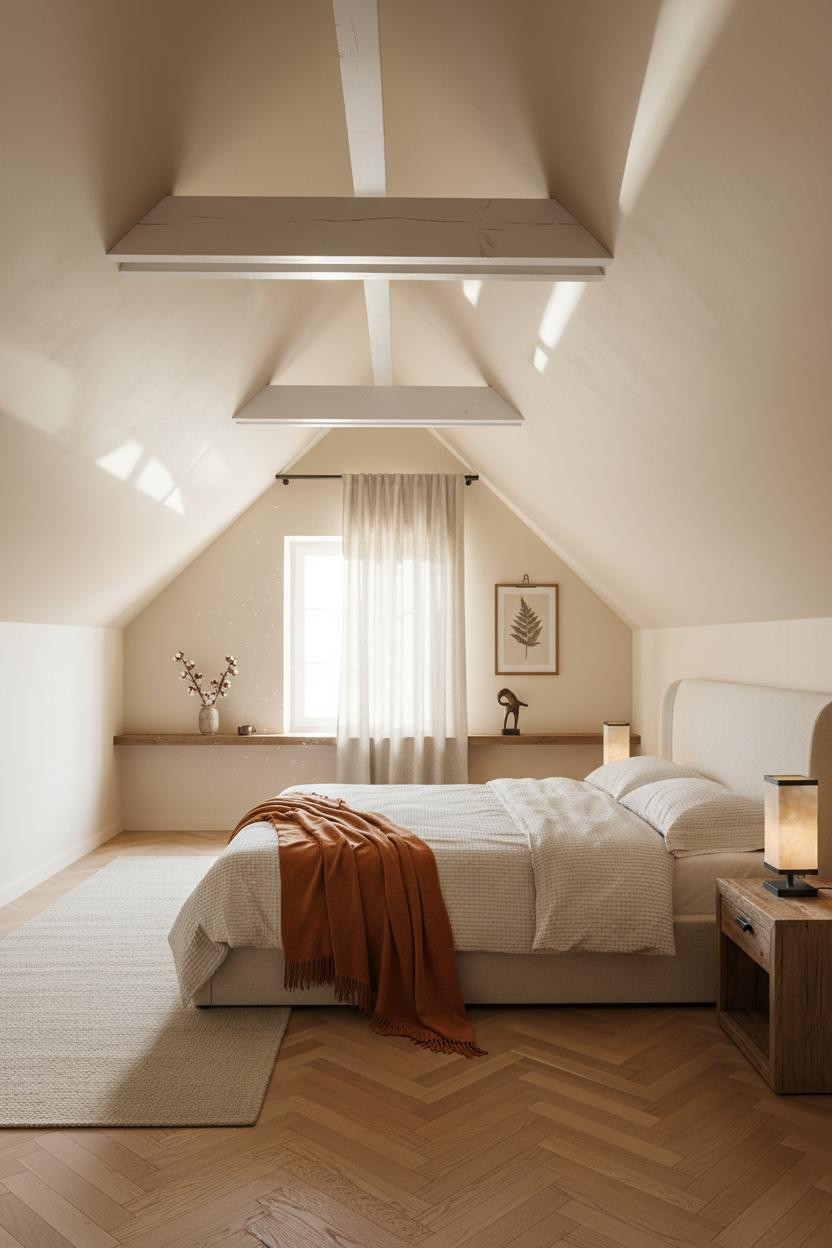
Having a dormer that actually throws sharp morning light across the ceiling changes how you experience the whole room.
The soft white painted collar ties catch those angled shafts and cast precise shadow lines down the slope. It's geometry as mood. And somehow the room feels larger at 8am than it does at noon.
Pro move: Hang a floor-to-ceiling undyed flax linen panel at the dormer. It diffuses the light without blocking it, while still keeping the morning feel you're after.
Rose Blush Walls With Exposed Timber: Softer Than You'd Expect
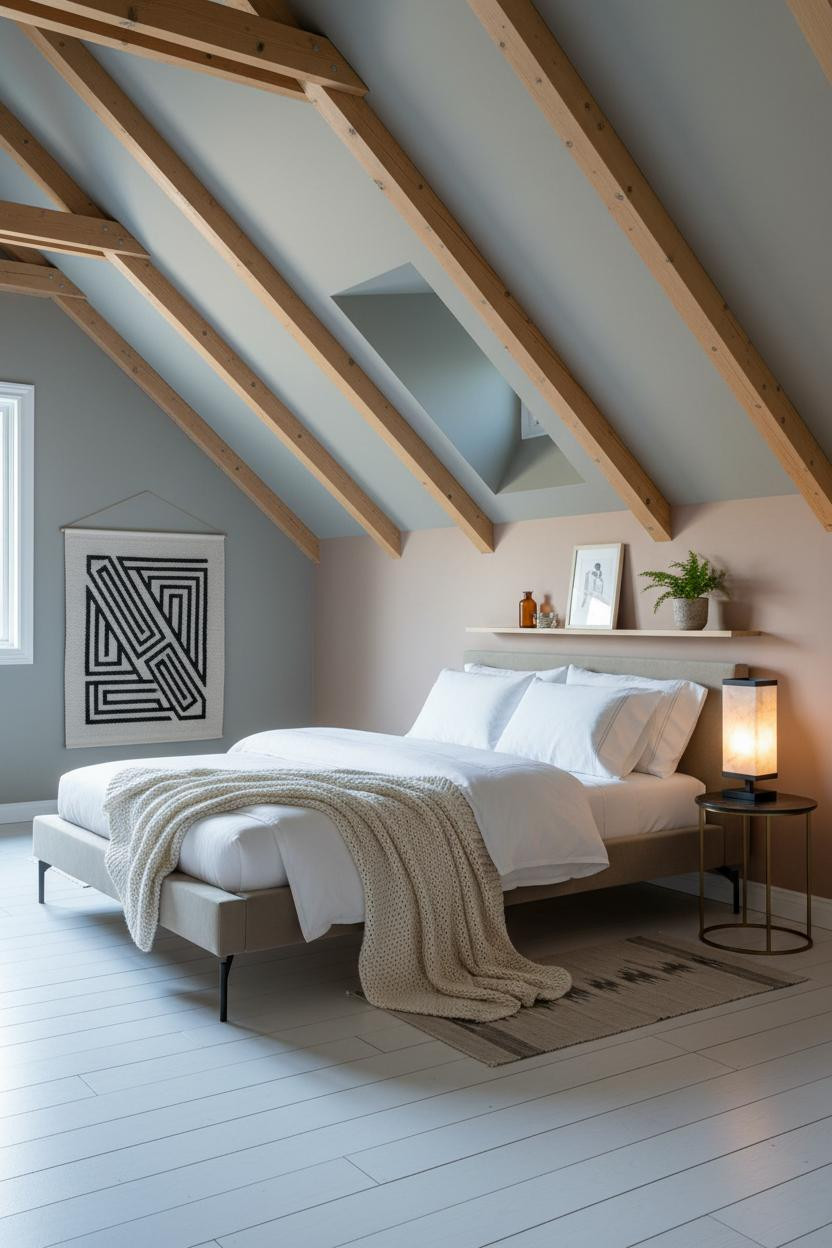

I'll be honest: rose blush walls sound risky in a low attic. But this room earns it.
Why the palette works: Honey-toned timber beams against rose blush matte plaster find a warmth between them that neither could create alone. The tones are close enough to feel cohesive, in a way that feels completely natural rather than matched.
What not to do: Don't add pink accents to reinforce the blush. White percale bedding and a graphic woven wall hanging are the right counterbalance. Keep it grounded.
Charcoal Rafters and Pale Maple: The Modern Attic Formula
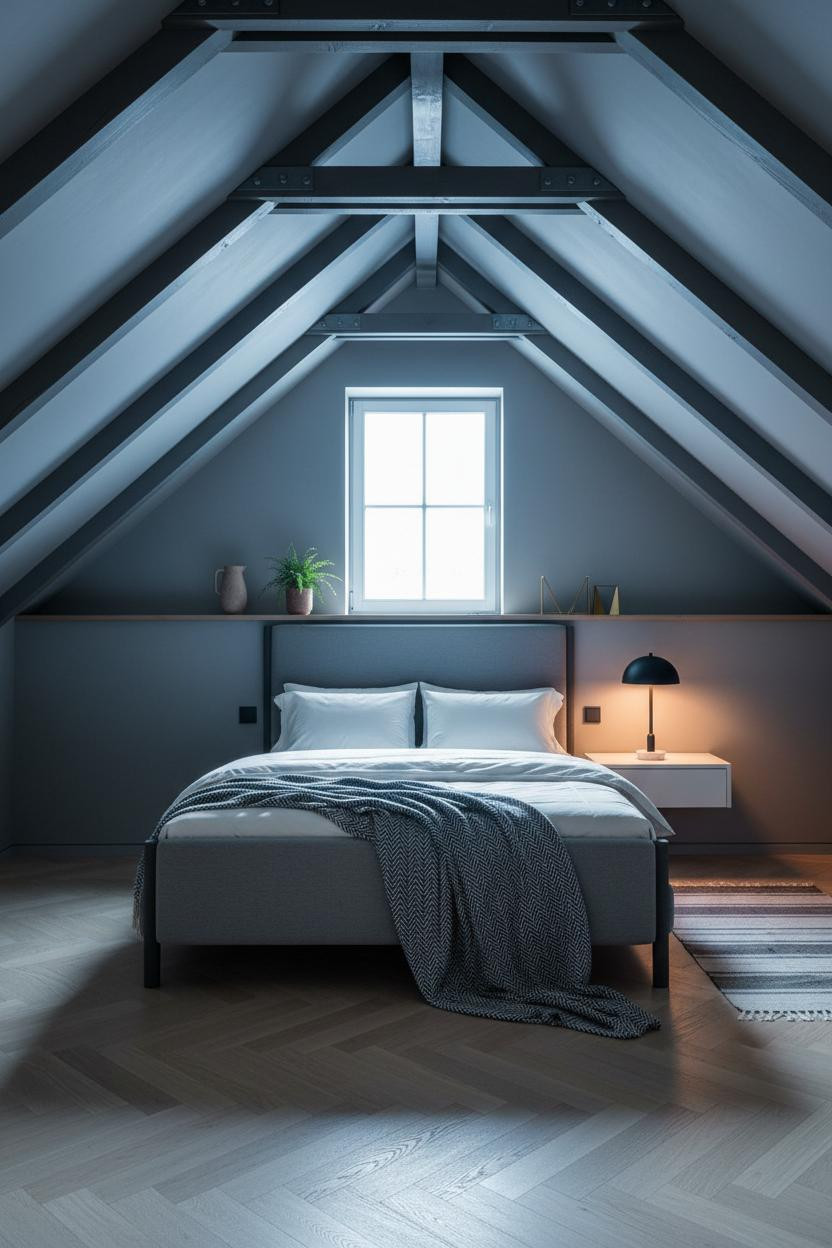

Nothing fancy. That's the point.
Why it feels expensive: Charcoal-painted timber rafters against stone grey plaster and pale maple herringbone parquet hit three tones in one family, which keeps the low attic from reading as chaotic. The raw steel connector plates at the rafter joints add just enough industrial edge to make it feel modern without trying too hard.
Ivory percale bedding with a steel-blue herringbone throw. Two cool tones. Let the floor carry the warmth.
Dusty Blue Walls and Natural Wood Beams Feel Like a Tucked-Away Escape
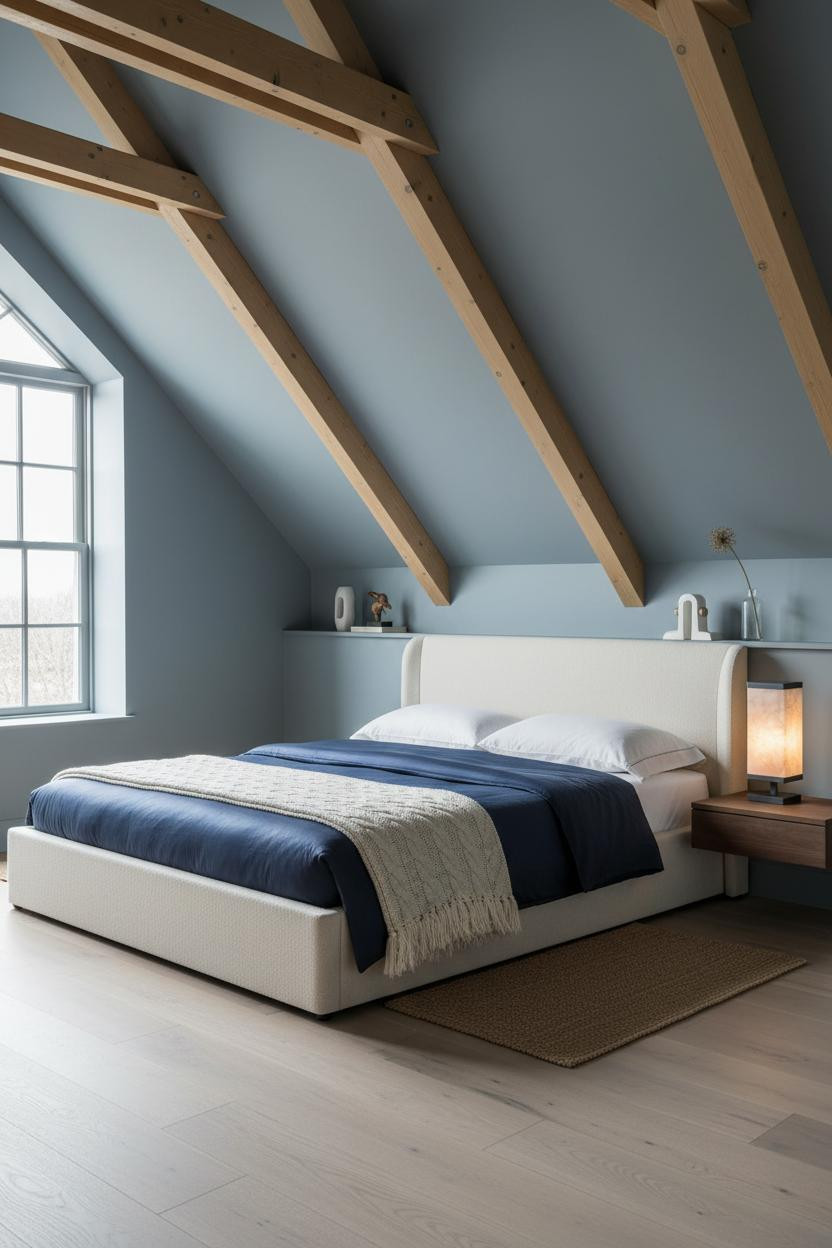
This one surprised me. The proportions shouldn't work but they do.
Design logic: Raw honey-toned wood beams against dusty blue plaster walls create a warm-cool contrast that makes the low attic ceiling feel like a canopy rather than a constraint. The bleached oak flooring running toward the dormer pulls daylight into the room from the ground up.
The easy win: Navy sateen bedding with a cable-knit cream throw keeps the cool palette from going flat. That contrast in texture is what the room feels balanced on.
Whitewashed Beams and Late Afternoon Amber: The Warmest Low Ceiling Setup
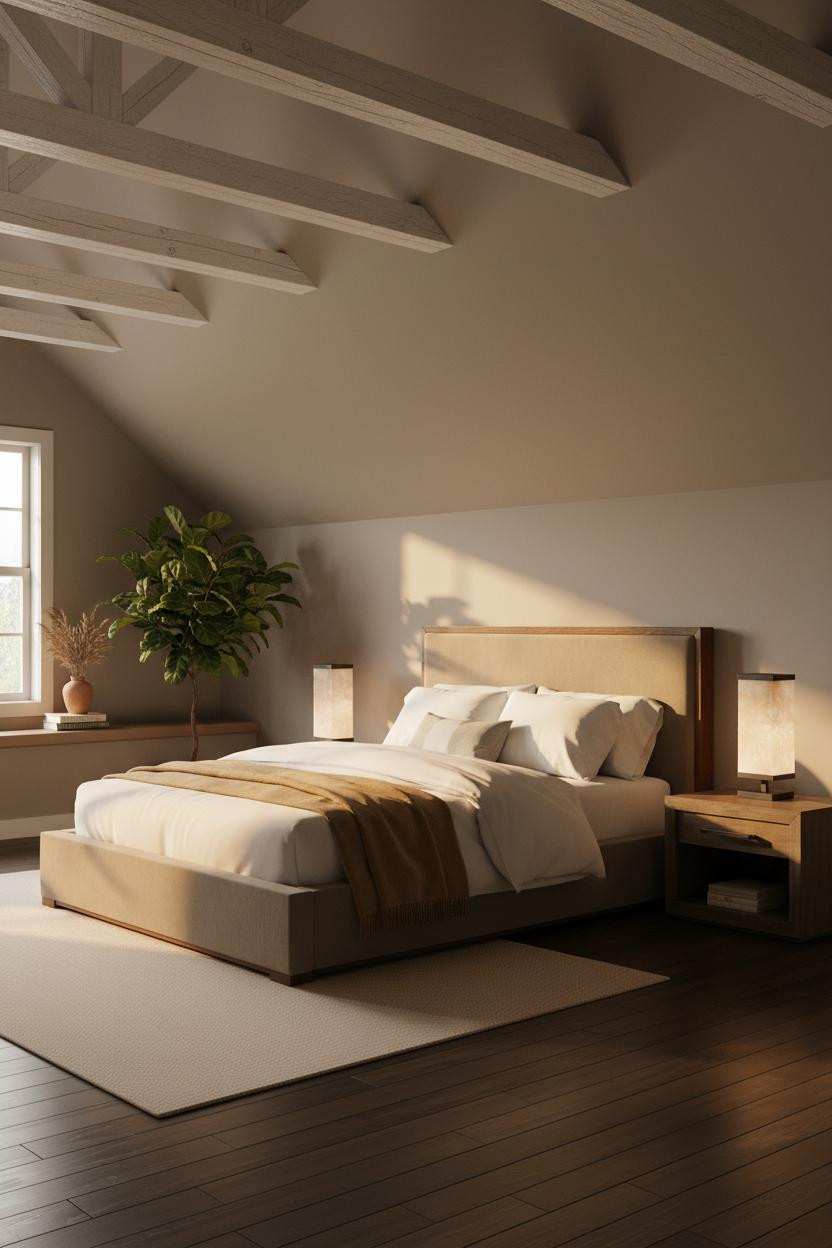

This is the cozy attic bedroom version I'd actually build.
What creates the mood: Whitewashed timber beams spanning the full width catch late-afternoon light on their upper edges and drop shadow into the grooves below. Paired with dark walnut flooring and warm greige plaster, the room feels amber from floor to ceiling by 4pm. And honestly, that warmth is the whole point.
Try this: A large potted ficus in the dormer corner brings life into the eave without adding furniture. It fills dead corner height and keeps the room from feeling too spare.
Raw Larch Rafters Against White Plaster: The Scandi Attic That Always Works
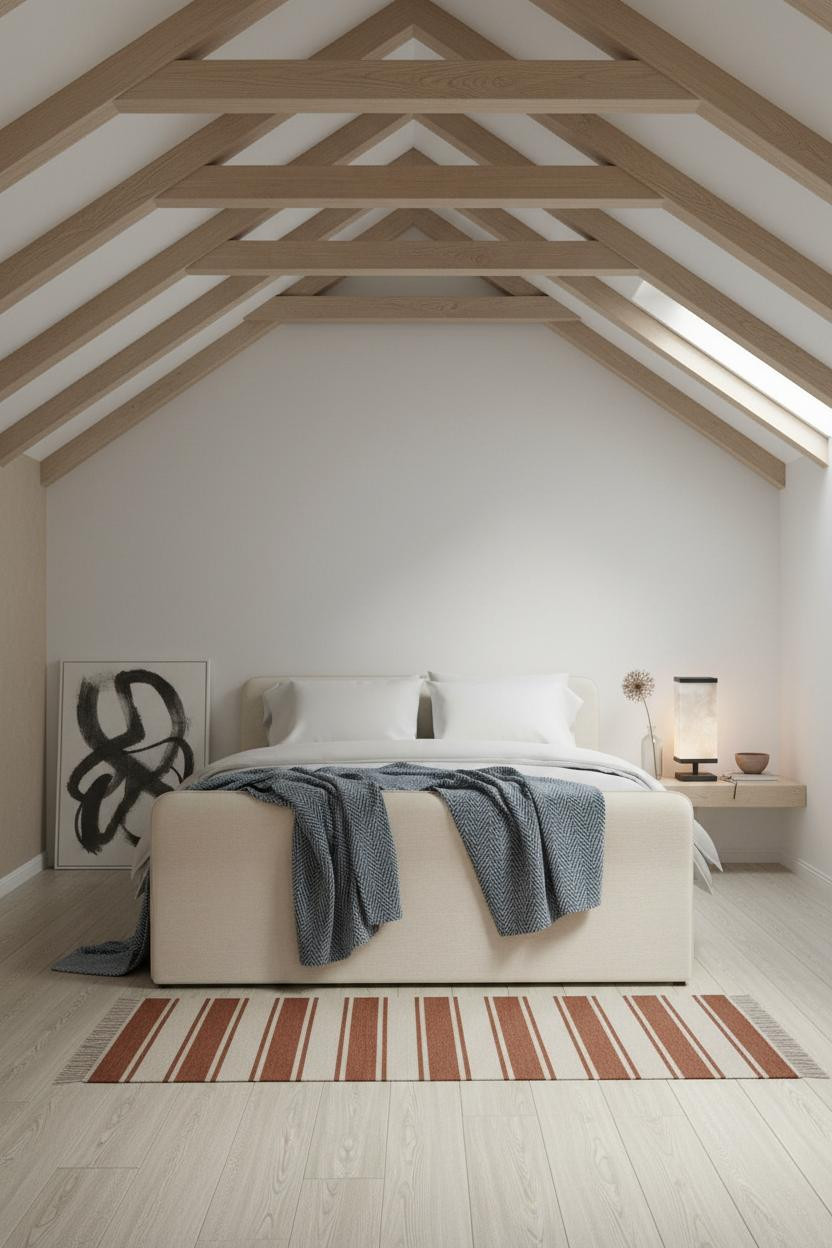
There's a reason this Scandi-farmhouse approach keeps showing up. It works every time.
Raw natural larch rafters with visible grain and knot detail against white matte plaster give the pitched ceiling a presence that painted timber can't match. The knots and grain variation mean no two shadow lines look the same, which keeps the room from feeling too composed. Mushroom-toned plaster on the walls (rather than stark white everywhere) is the detail that separates the good versions from the great ones.
What to copy first: A large leaning charcoal-ink canvas against the low gable wall solves the "what do I do with that angled corner" problem without any hanging hardware.
 Our #1 Pick
Saatva Classic Mattress
America's best-selling online luxury innerspring. 365-night trial, lifetime warranty, free white glove delivery.
Shop Saatva Classic
Our #1 Pick
Saatva Classic Mattress
America's best-selling online luxury innerspring. 365-night trial, lifetime warranty, free white glove delivery.
Shop Saatva Classic
The Foundation Of Every Beautiful Bedroom
Walls get repainted. Linen gets swapped out. The mattress stays. And in a room this carefully considered, the bed deserves the same attention as everything around it.
The Saatva Classic is the one I'd put under all of this. Dual-coil support that holds its shape year after year, a breathable organic cotton cover that doesn't trap heat in a low-ceiling room, and a Euro pillow top that feels genuinely soft without losing any of the support underneath.
Good design ages well because it's made well. Start with the bed.

The rooms people save are the ones where nothing looks like an accident. These 12 attic bedrooms work because every slanted wall, every exposed beam, every low eave was treated as a reason to commit harder to the design. That's the whole lesson.