
13+ Gray Bed Frame Ideas That Keep the Room From Feeling Cold
04 april 2026Think your bedroom looks cold because of the gray bed frame bedroom ideas you've been saving? It's actually the opposite. Gray frames work in almost any room. The trick is everything around them.
Walls, flooring, textiles. Get those right and gray stops feeling clinical. It starts feeling calm.
The Japandi Room That Actually Feels Warm
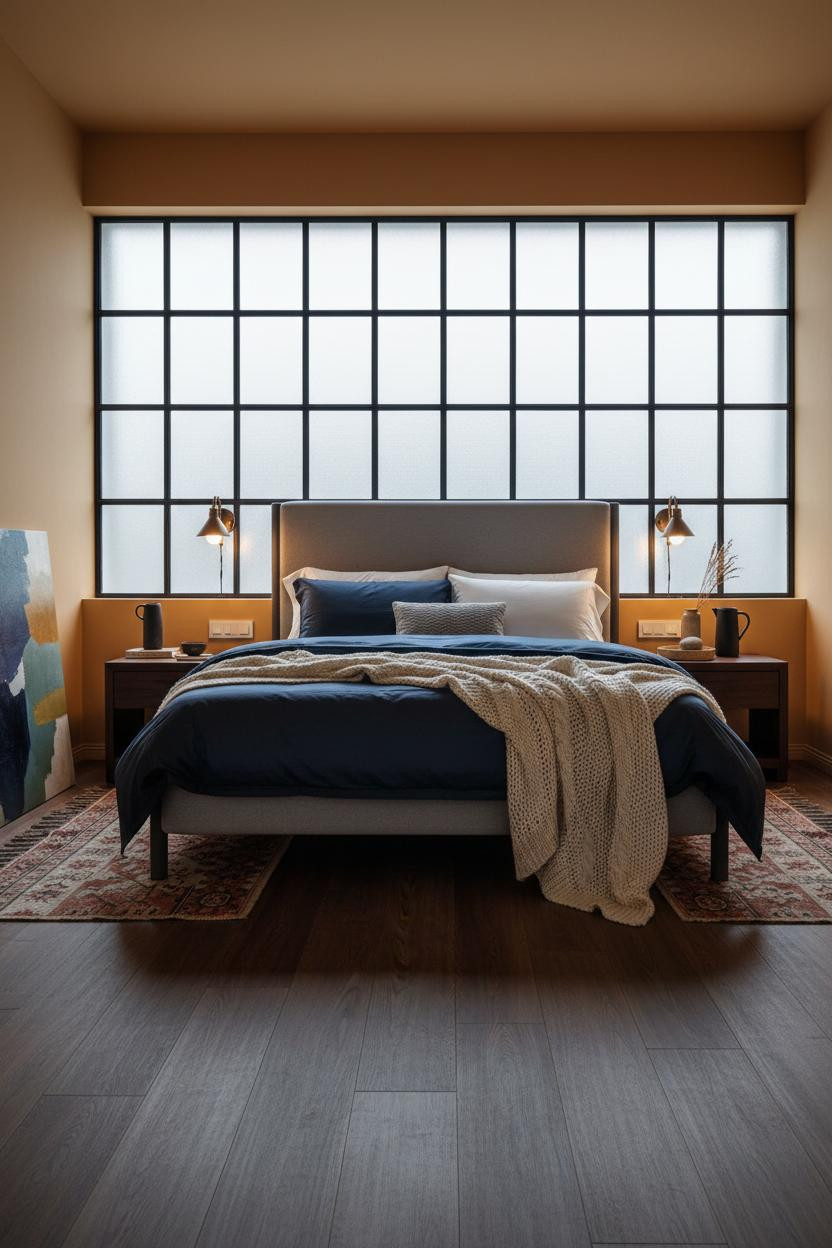

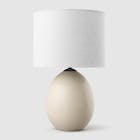
I keep coming back to this one. The steel-frame windows shouldn't make a room feel cozy, but somehow they do.
Why it works: The honey amber walls absorb the grey daylight from the Crittall grid, keeping the room from tipping into cold. Warm against cool. That contrast is the whole formula.
Steal this move: Pair matte black window frames with amber or walnut tones on every other surface and the room holds together.
Gallery Walls That Don't Look Chaotic
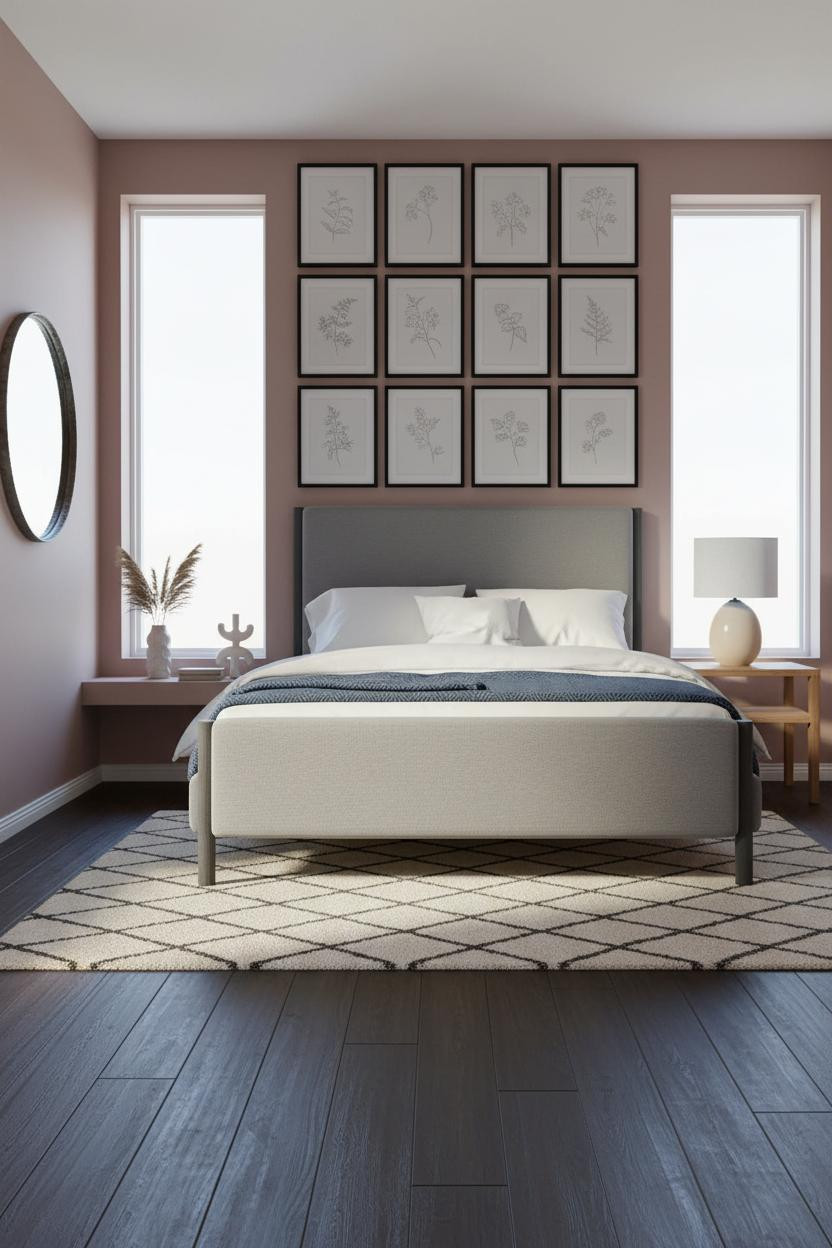
Floor-to-ceiling gallery walls read as busy in most rooms. This one doesn't.
What makes it work: Thin black frames with minimal botanical line drawings keep the vertical rhythm graphic, not decorative. The dusty rose flanking walls do the warming work so the gallery stays clean.
The detail to keep: One warm light source beside the bed cuts the blue-hour chill that a north-facing gallery wall tends to collect.
Why Exposed Brick Never Goes Out of Style
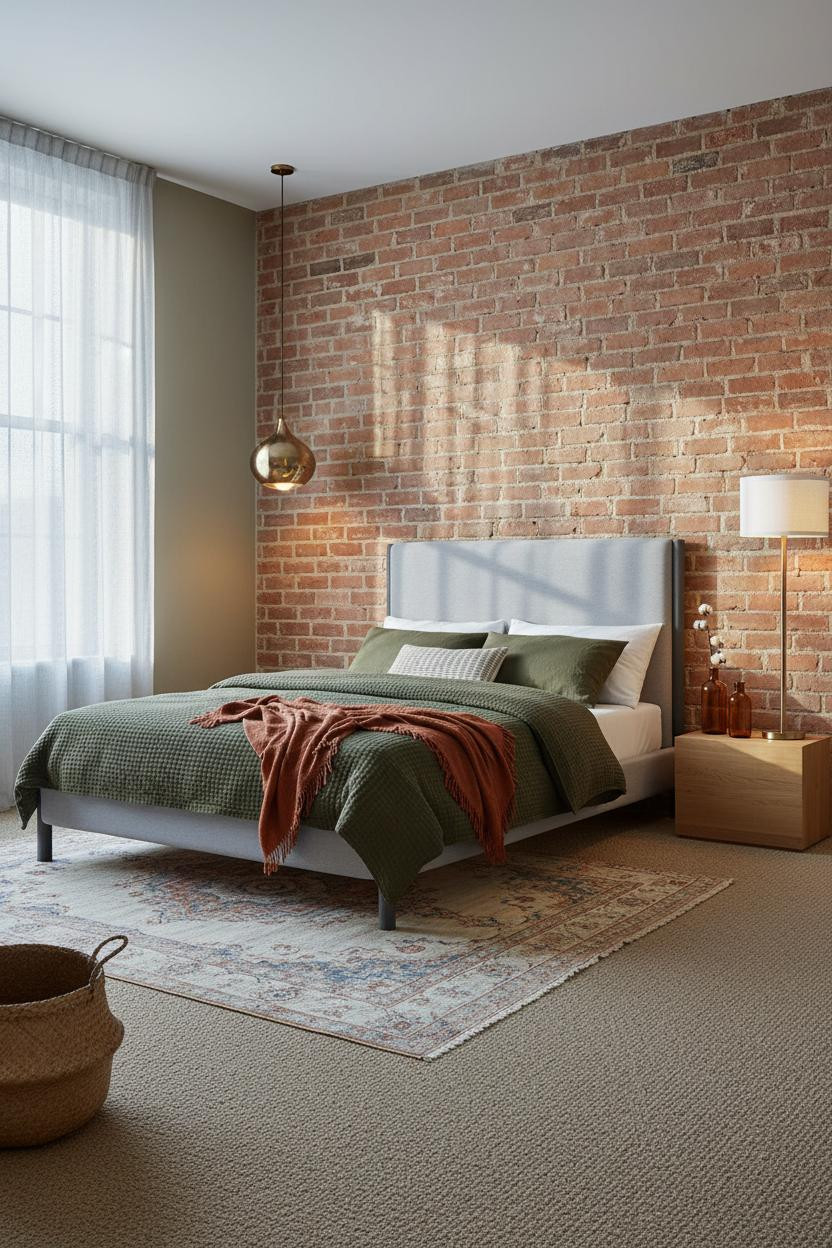
Aged terracotta brick behind a gray frame is one of those combinations that just works, even if you can't explain exactly why.
The matte brick surface catches directional light in a way smooth plaster never does, giving the room organic texture that warms the grey metal without competing with it. Muted khaki flanking walls let the brick do all the talking.
The easy win: Add a brass pendant overhead and the whole coastal-industrial balance locks in.
A Coffered Ceiling Changes the Whole Game
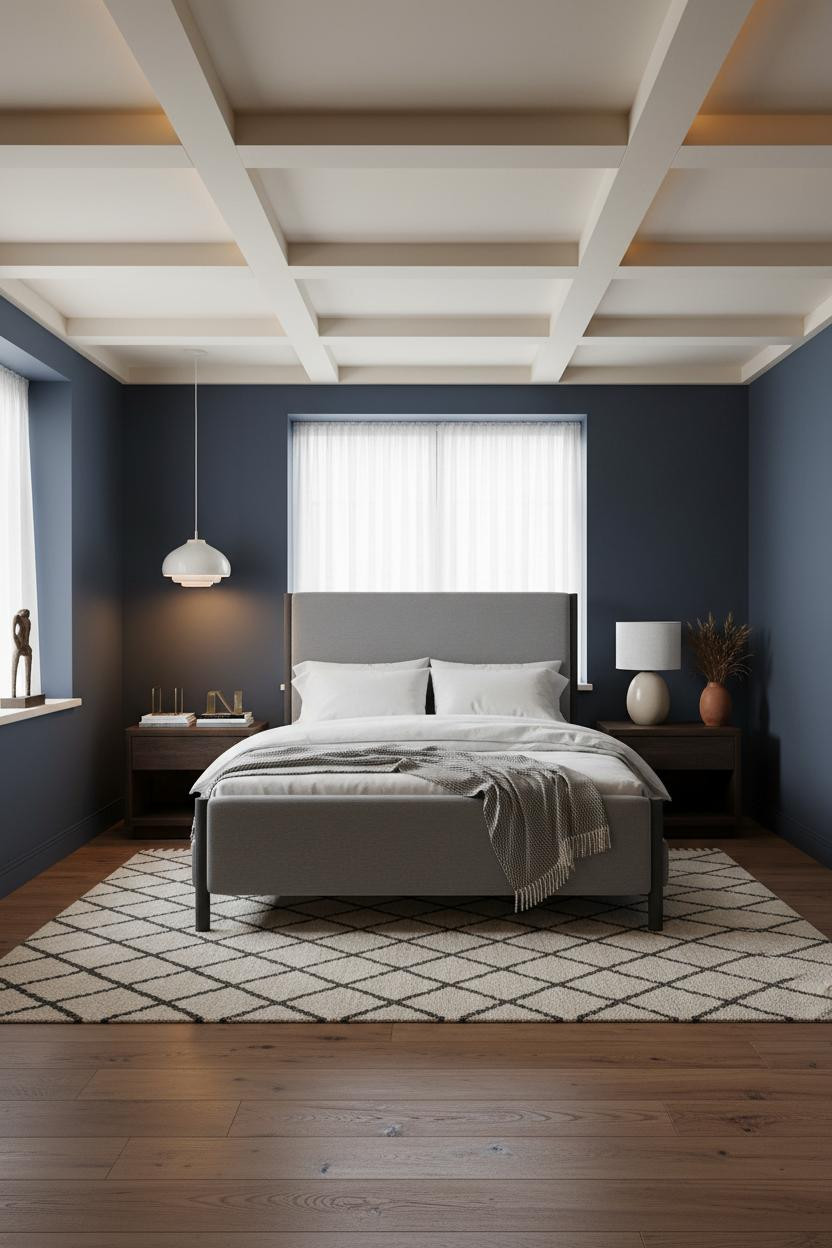
Bold choice. Deep indigo walls with a coffered ceiling aren't for the timid.
But rooms that commit to this kind of architectural weight feel genuinely finished. The warm putty coffered grid overhead casts crisp grid shadows that add depth without darkening the ceiling further, which keeps indigo from feeling like a cave.
Why it looks custom: Reclaimed chestnut plank flooring grounds the drama below while the ceiling rhythm pulls the eye upward.
Avoid this mistake: Don't paint the coffered beams the same shade as the walls. The contrast is the whole point.
Forest Green and Gray Make a Surprisingly Good Pair
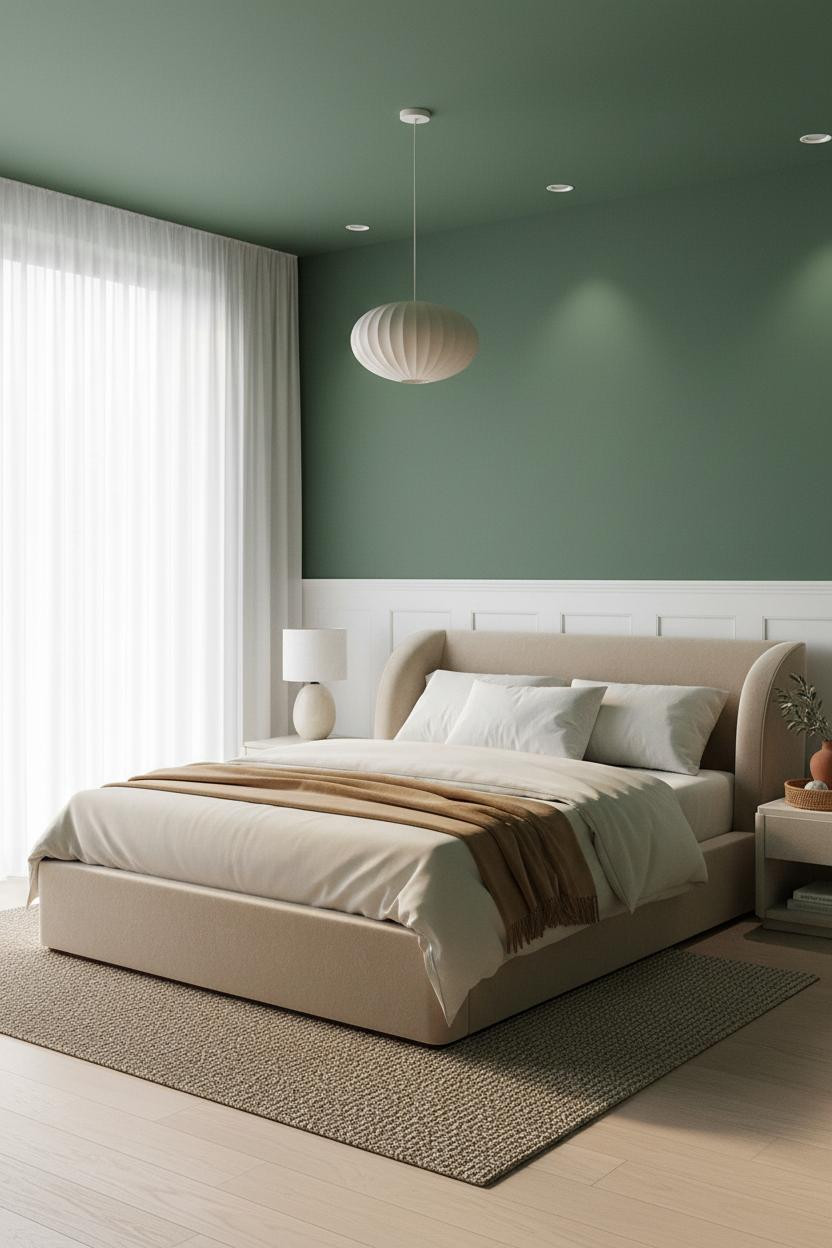

I wasn't sure about forest green and gray together. Now I'm completely convinced.
Why the palette works: White wainscoting at chair-rail height divides the wall into two distinct zones, so the forest green upper half reads as a design decision rather than an accident. The pale birch floor keeps it breathing.
A chunky jute rug beneath the bed ties the natural tones together. Just enough texture to keep things interesting.
Shiplap Behind the Bed Is Still Worth Doing
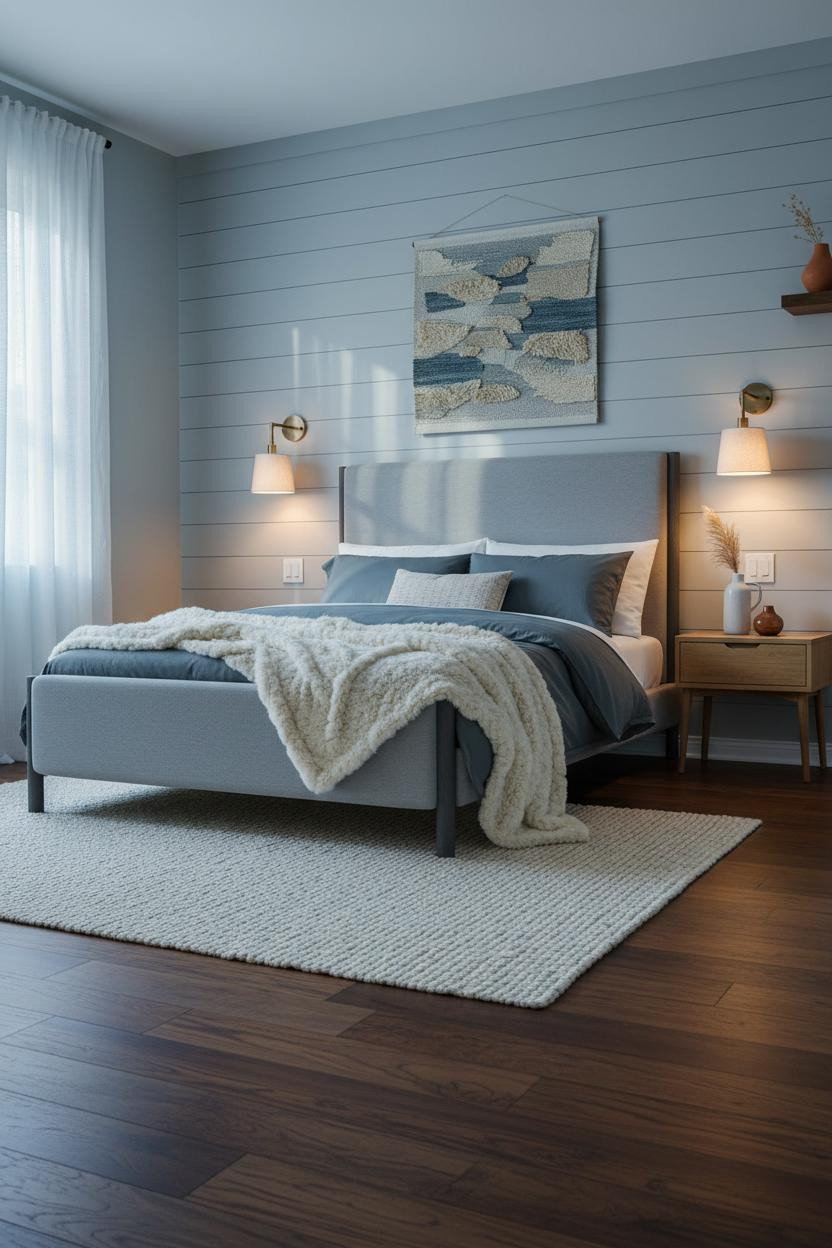
Fair warning. Shiplap is divisive right now, but done this way it sidesteps the farmhouse cliché entirely.
The real strength: Painting dove grey shiplap planks the same family as the flanking walls makes the horizontal groove lines read as architectural texture rather than a style statement. Subtle and genuinely effective.
Pro move: Pair sconces that cast warm amber pools directly onto the shiplap surface. The raking light makes every groove visible, and the room feels warm and cohesive well into the evening.
Fluted Plaster Walls Outperform Every Trend
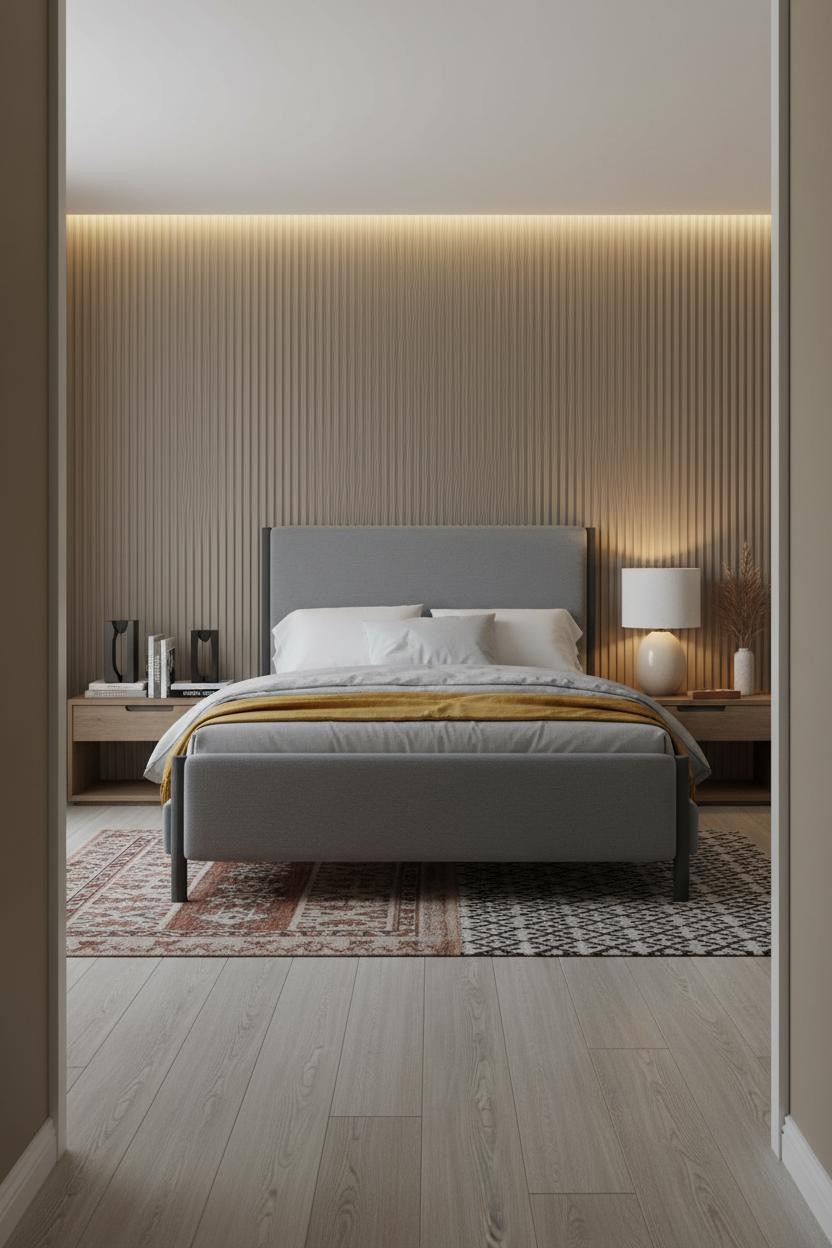
Nothing fancy. That's sort of the whole appeal of vertical fluted plaster.
In a small room, the smarter choice is surface texture over loud color. The warm greige fluted panel creates rhythmic shadow lines that flat paint physically cannot replicate, while still feeling quiet. Camel flanking walls keep the palette from going cold.
What to borrow: A mustard wool blanket folded at the foot adds one warm hit of color without pushing the room into a different direction entirely.
I Honestly Didn't Expect Herringbone Wood to Feel This Good
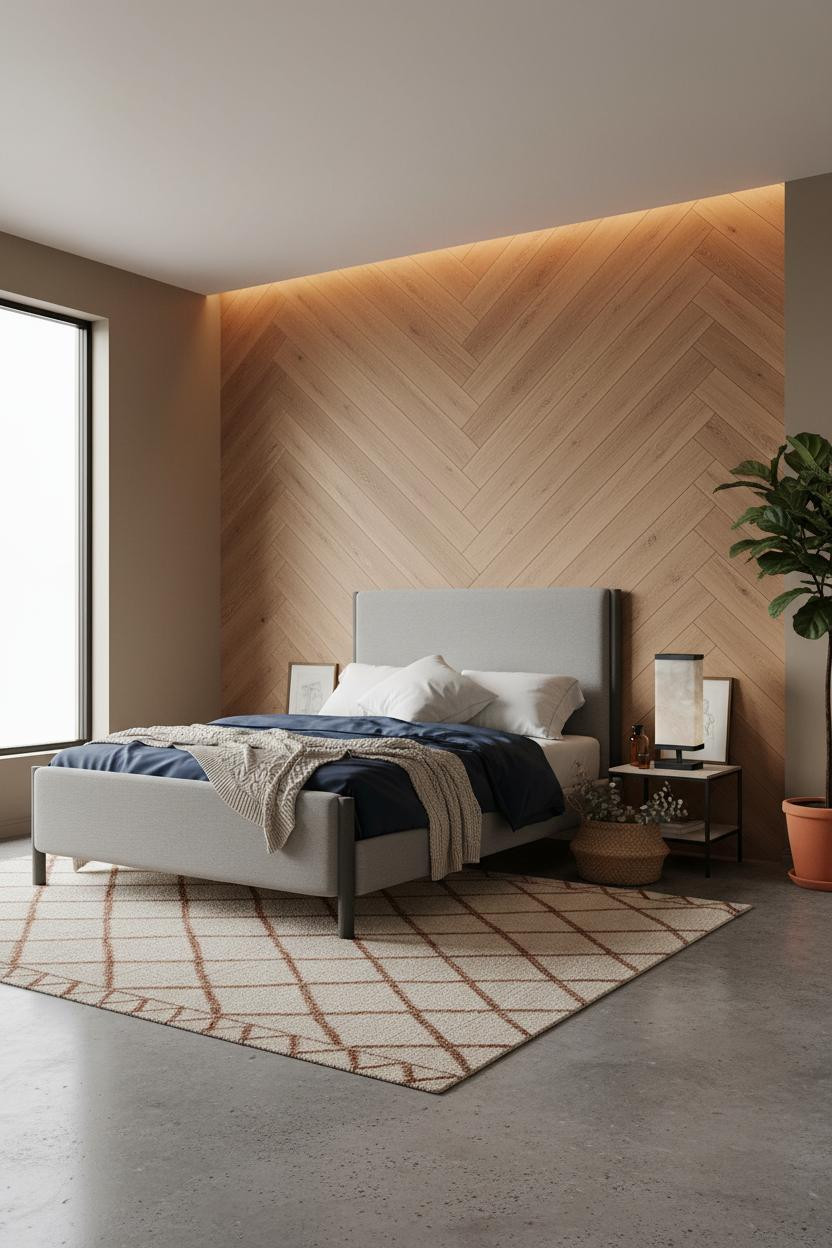
This is the kind of room that makes you slow down when you walk in.
Design logic: The diagonal oak herringbone pattern on the headboard wall creates subtle movement in a way that plain board cladding doesn't. Warm taupe walls flank it so the wood reads as texture, not contrast. The room feels collected rather than decorated.
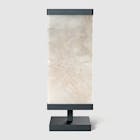
Worth copying: Polished concrete floors pair better with warm wood wall features than hardwood does (the materials don't compete). Layer a Nova Lamp in antique brass nearby to warm the concrete's grey edge.
An Arched Niche Is More Achievable Than You Think
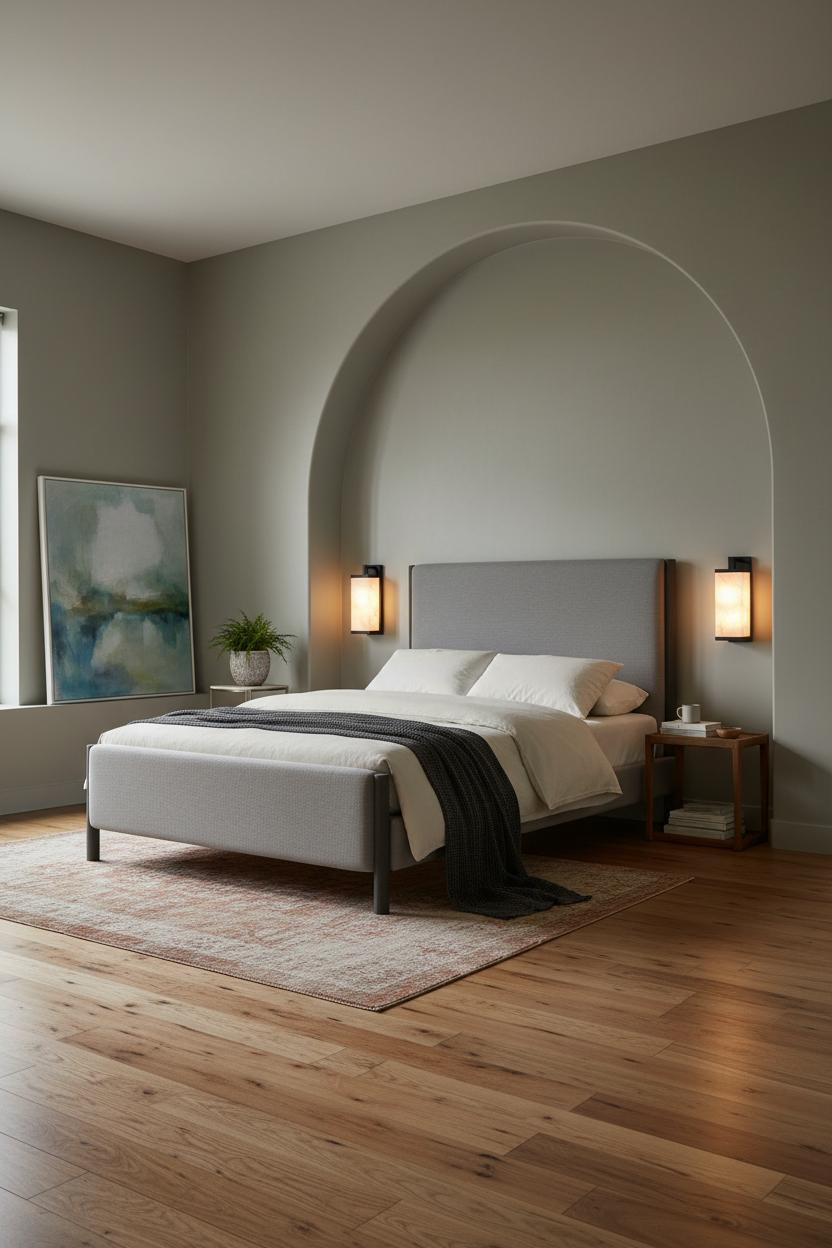
A plastered arch behind the bed is one of those moves that looks expensive and isn't, if you're willing to put in the weekend.
Why it feels expensive: Matte dove grey plaster inside the arch catches raking light at the curved edges and drops into shadow at the crown, giving the wall three-dimensional geometry that no painted rectangle can replicate. Sage-washed greige walls outside the arch help the niche feel intentional.
The key piece: Paired wall sconces flanking the arch frame the whole composition so it reads as designed, not accidental.
Built-In Shelving Pulls Its Weight in a Gray Bedroom
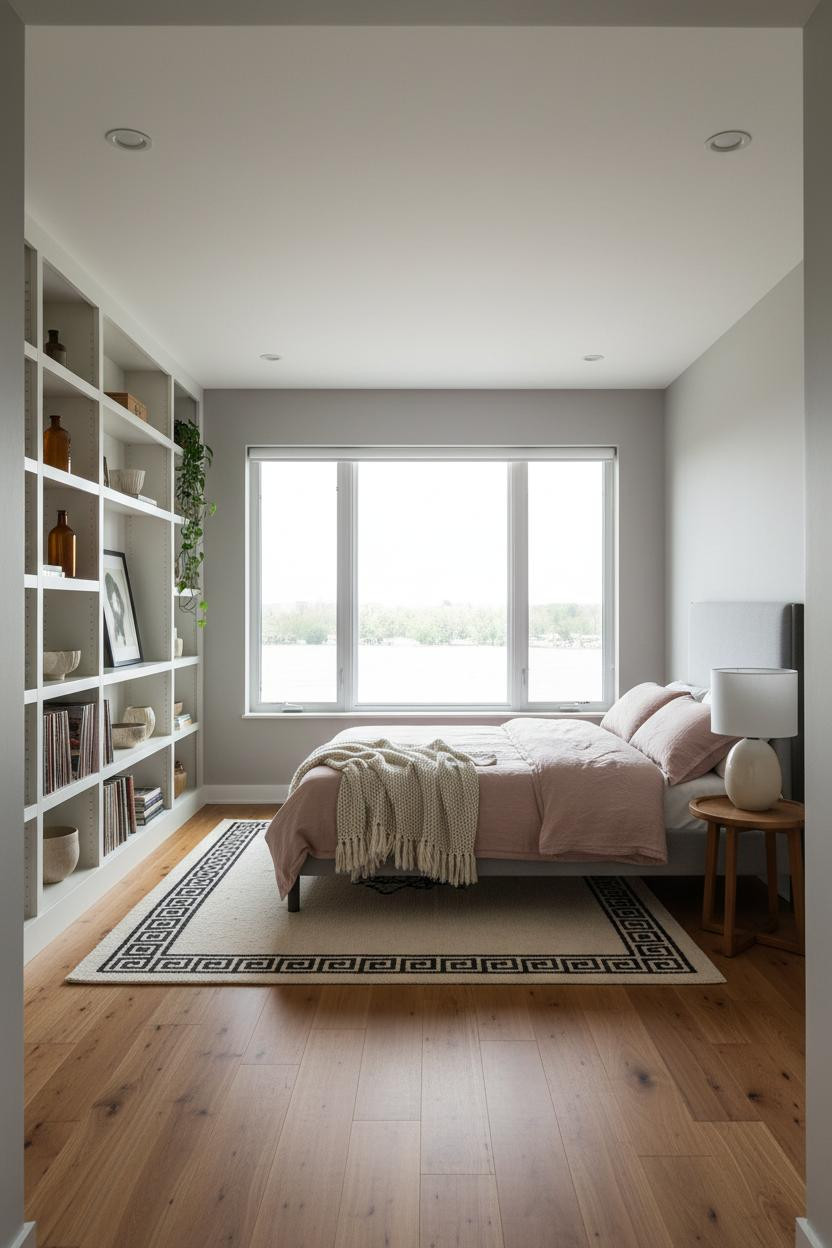
Having floor-to-ceiling shelving on one wall changes how you actually use the room. It becomes a place to be, not just sleep.
The pale painted shelves against stone grey walls keep the visual weight neutral, so the shelf content (books, ceramic objects, trailing greenery) adds life in a way that feels collected rather than busy. Nothing too matchy.
Where to start: A dusty pink linen duvet against the stone grey walls adds warmth without requiring a full repaint. Start there and build outward.
Board and Batten Makes Any Wall Look Intentional
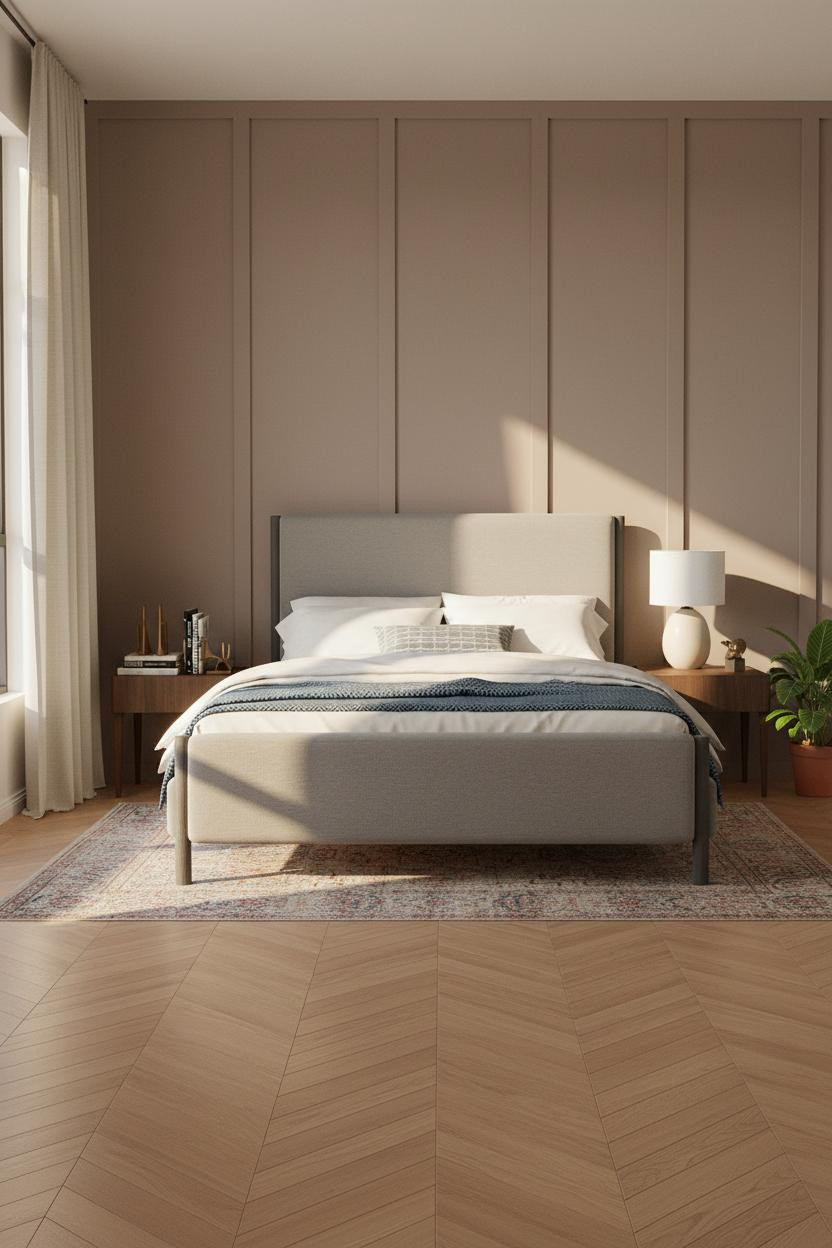
Admittedly, board and batten belongs to the farmhouse moment. But this room proves it ages well when you lean modern.
Why it holds together: Soft mushroom board-and-batten in a tone that matches the walls makes the vertical battens feel like shadow lines rather than trim, which is the difference between architectural and decorative. The herringbone parquet oak floor does the heavy visual lifting below.
One smart swap: Floor-to-ceiling ivory linen curtains beside the window stop the late-afternoon amber light from going orange. The gray frame stays clean against the warm backdrop.
Textured Plaster Walls Do What Paint Cannot
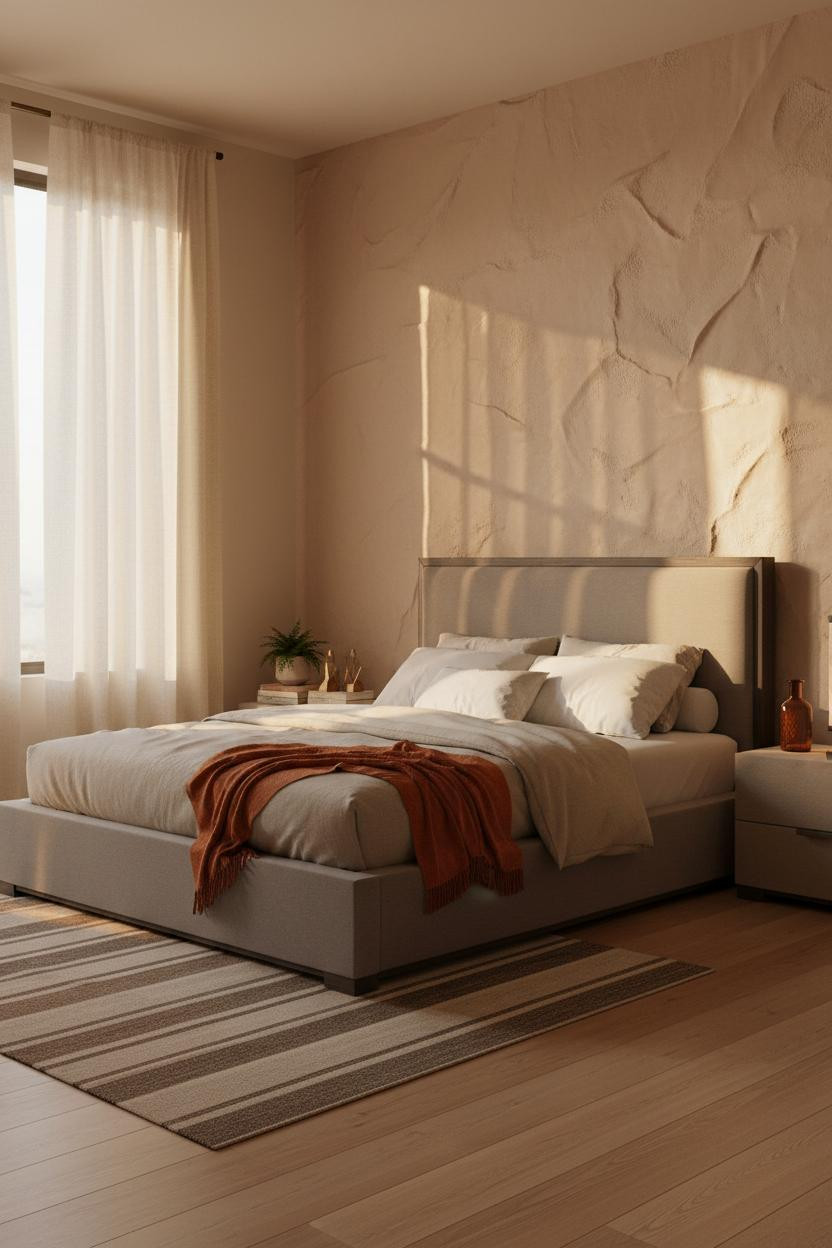

This is actually my favorite combination in the whole roundup. Hand-applied plaster plus a gray frame plus warm clay walls.
What gives it presence: The textured plaster surface catches directional afternoon light across uneven ridges, making the wall glow amber in the evening rather than sit flat. The bleached oak flooring below keeps the warmth from getting heavy.
The finishing layer: A burnt orange mohair throw at the foot of the bed connects the warm clay wall to the bedding in a way that feels natural, not color-coordinated.
Dusty Blue-Gray Walls With Cream Linen Curtains
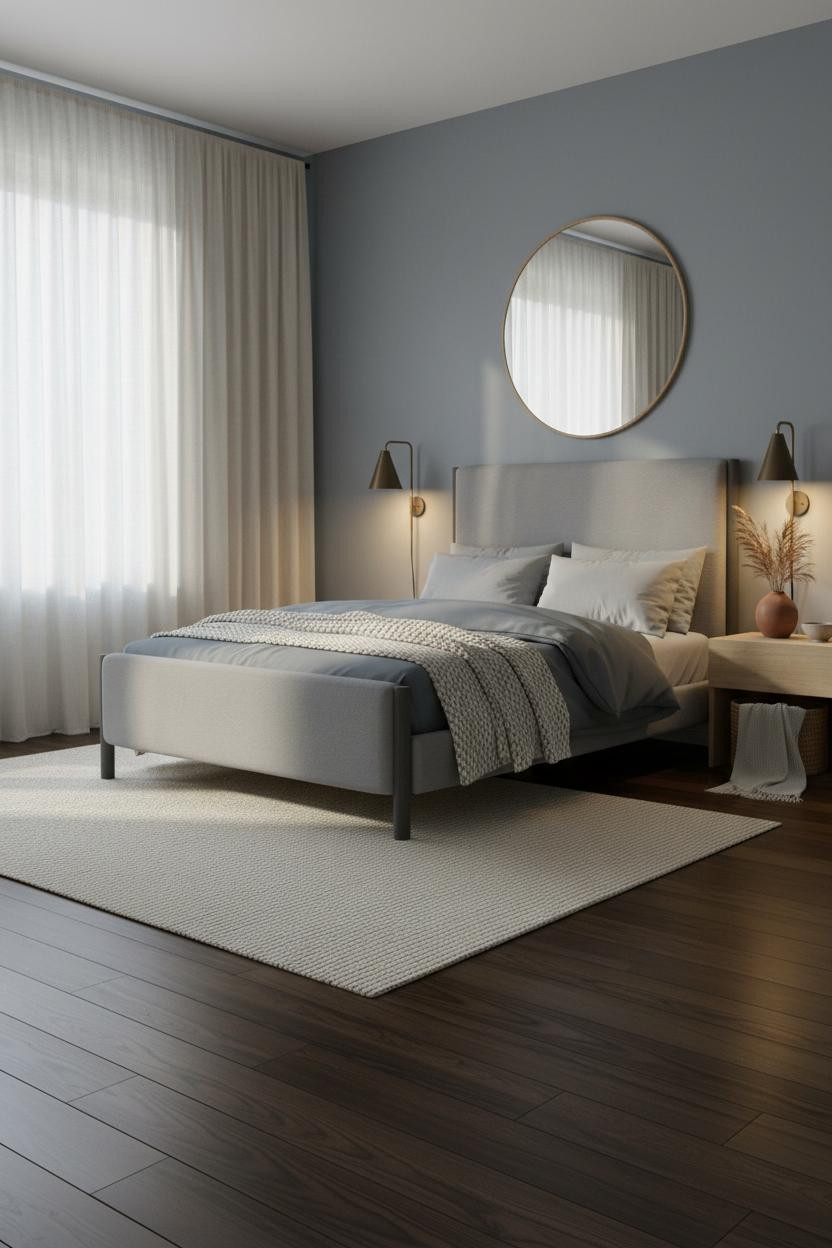
I almost skipped this one. Too quiet, I thought. But the room feels more resolved the longer you look.
Why the materials matter: Floor-to-ceiling cream linen curtains pooling at the base diffuse morning light across dusty blue-grey walls in a way that feels warm, in a way that feels genuinely still. The oversized round mirror leaning against the far wall layers the light back without adding any furniture mass.
What to copy first: The paired sconces flanking the headboard cast amber pools that counter the cool wall tone every evening. That one move changes the whole feel of the room after dark.
 Our #1 Pick
Saatva Classic Mattress
America's best-selling online luxury innerspring. 365-night trial, lifetime warranty, free white glove delivery.
Shop Saatva Classic
Our #1 Pick
Saatva Classic Mattress
America's best-selling online luxury innerspring. 365-night trial, lifetime warranty, free white glove delivery.
Shop Saatva Classic
The Foundation Of Every Beautiful Bedroom
All of these rooms have something in common beyond the gray frames. The beds look genuinely good to sleep in. And that starts with what's underneath the linen.
The Saatva Classic is what I'd put in every one of these rooms. Dual-coil support that holds its shape over years, a breathable organic cotton cover that doesn't trap heat, and a Euro pillow top that feels right from the first night. Walls get repainted. The mattress stays.

Good design ages well because it's made well. Start with the bed and the rest of the room follows.