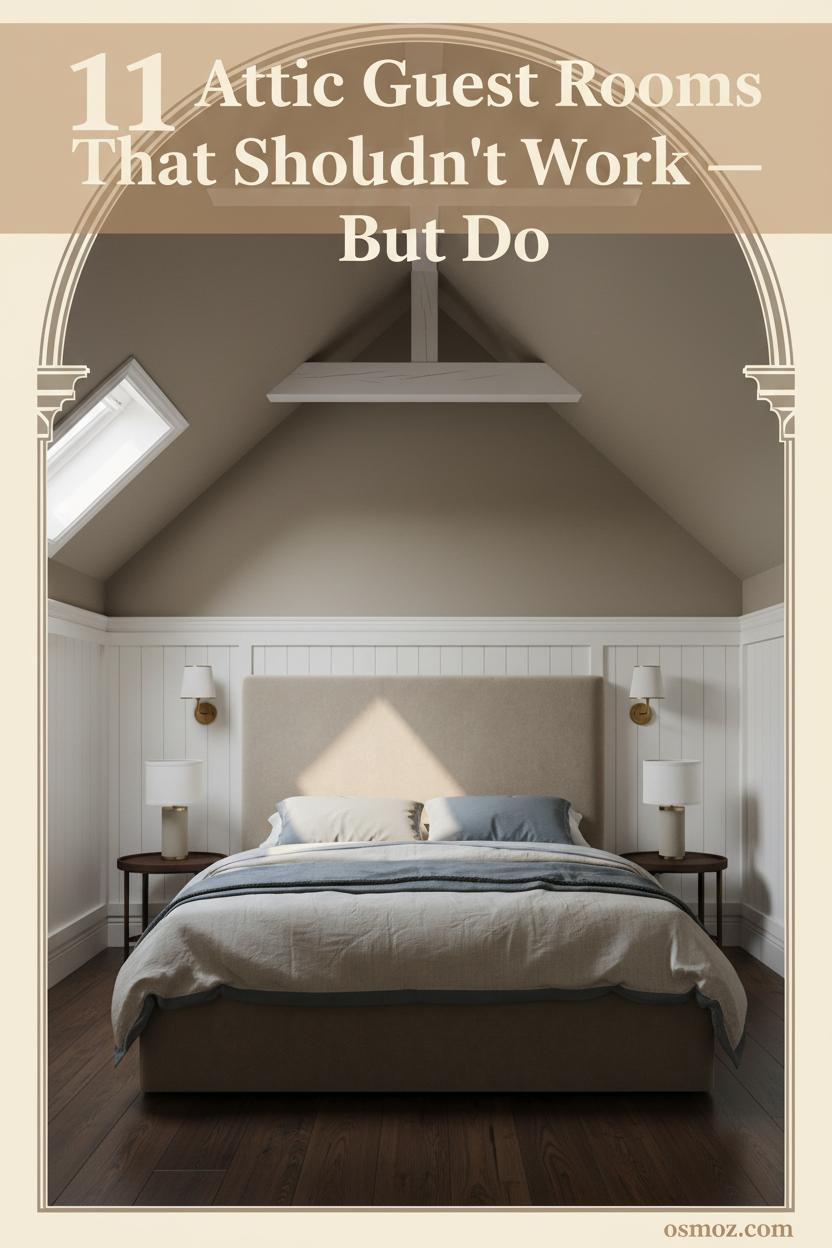
11+ Attic Guest Room Ideas That Make Low Ceilings Feel Intentional
02 april 2026The first thing you notice in a well-done attic guest room isn't the sloped ceiling. It's how warm the room feels despite it. Low ceilings don't have to be a problem you design around.
They can be the whole point.
The Whitewashed Wall That Makes Morning Light Feel Earned
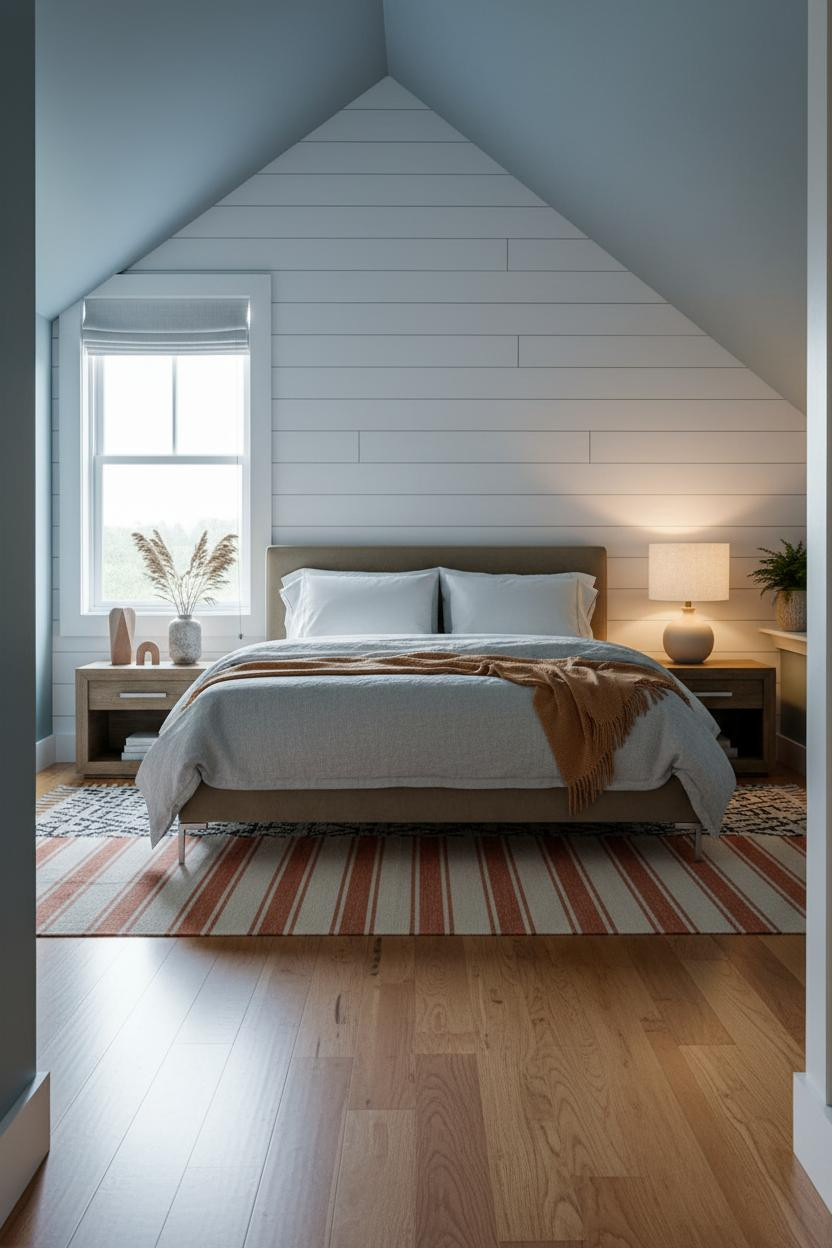


I keep coming back to rooms like this one. There's a calm here that you actually feel.
Why it works: The whitewashed shiplap behind the bed catches light across each horizontal plank, which makes the wall read as texture instead of decoration. It earns its place in a compressed space because it pulls your eye forward, not upward.
Steal this move: Pair shiplap with soft blue-grey plaster walls and a terracotta runner to keep the palette warm without tipping into rustic.
How a Single Beam Can Anchor an Entire Room
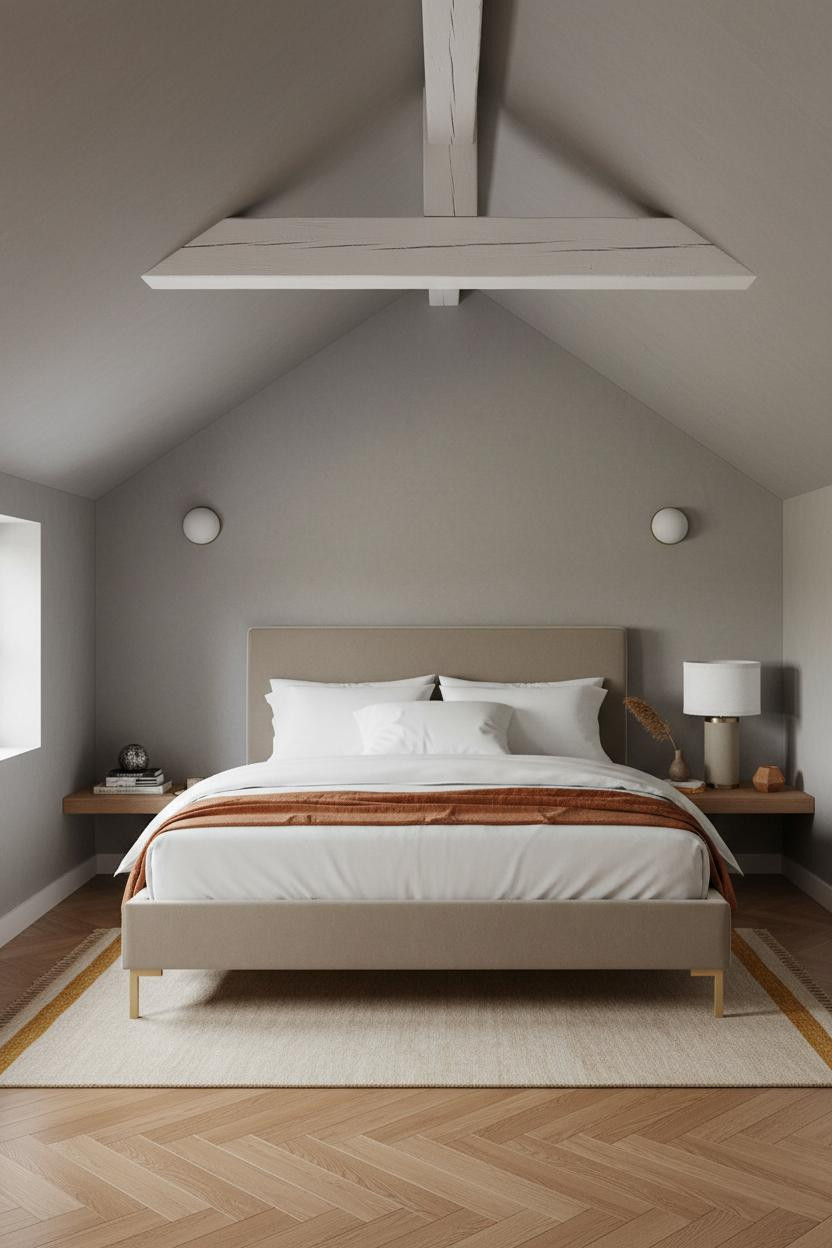


A white-painted ridge purlin running the full width of the ceiling apex shouldn't be the thing that makes a room. But here it is.
The painted timber beam creates a clean horizontal line that bridges both roof slopes, which gives the compressed ceiling a sense of structure rather than claustrophobia. The room feels settled because of it.
Pro move: Mount paired ceramic sconces on the upper slope and let the dormer light layer cool over warm. The contrast keeps it from feeling like a cave.
Board-and-Batten as Architecture, Not Just Decoration
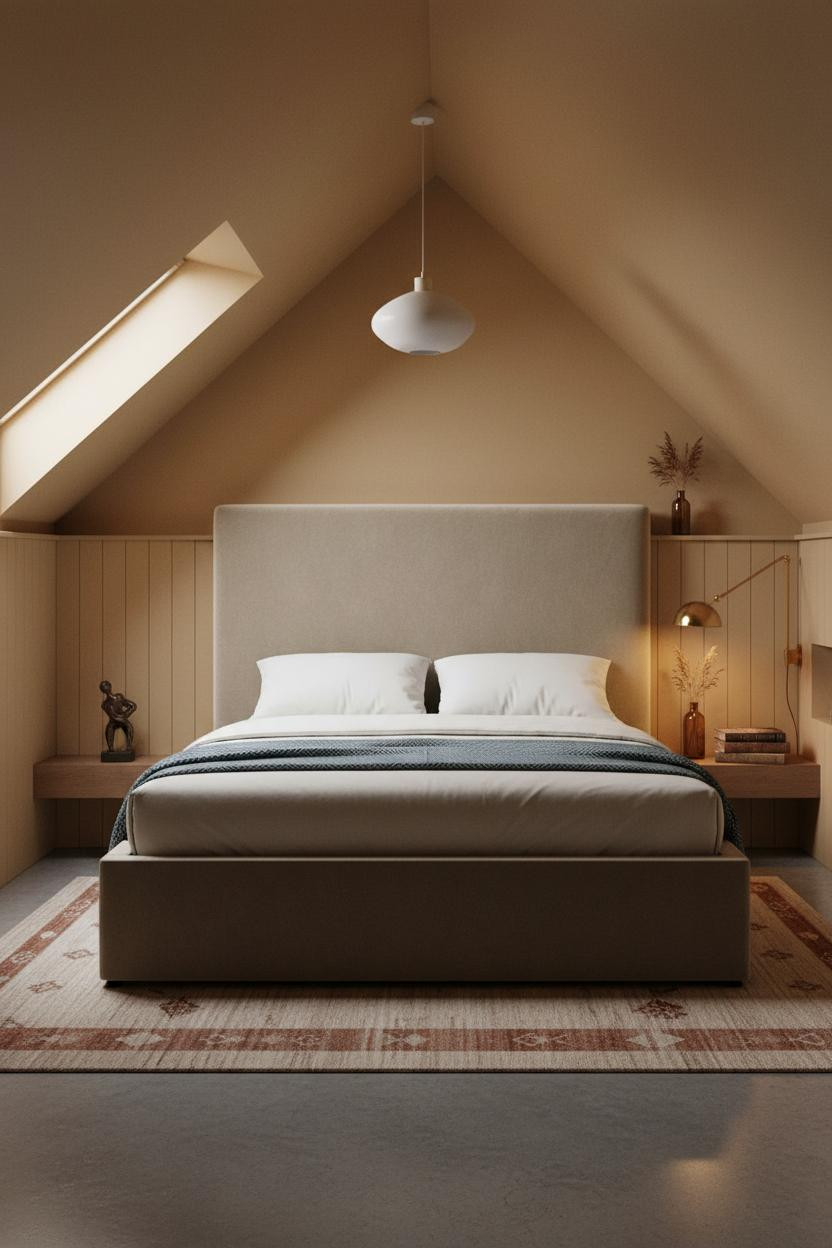

Quiet confidence. That's the whole mood here.
A horizontal board-and-batten panel running the length of the sloped wall at shoulder height does two things at once: it anchors the low pitch and creates a natural visual break between wall and ceiling. The ochre plaster above it reads warm without fighting the geometry.
What to borrow: Hang a sculptural pendant from the ridge apex so the eye has somewhere to travel upward. It works, especially in Japandi-leaning rooms.
Avoid this mistake: Don't bring the panel all the way to the floor. Shoulder height is the sweet spot here.
The Wainscoting Move That Actually Works Under Eaves
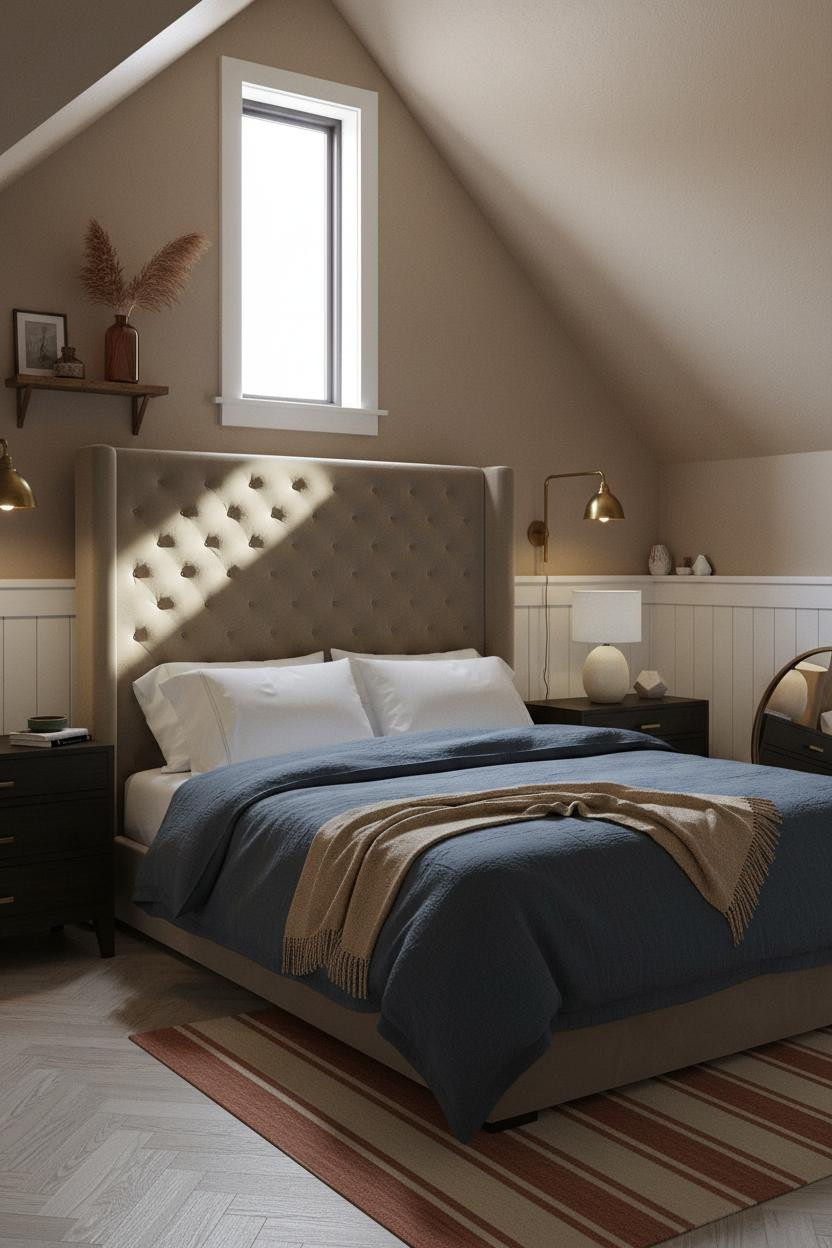


Honestly, half-height wainscoting in an attic feels like it shouldn't work. But get it right and it changes the whole proportion.
Design logic: Whitewashed tongue-and-groove boards along the lower sloped wall catch raking light between each plank, which grounds the pitched ceiling geometry in a way that flat paint simply can't. The lower section reads solid; the upper section reads open.
Lean an oversized round mirror against the eave slope. One large object in a small attic room always lands better than three small ones.
Exposed Trusses That Feel Modern, Not Rustic
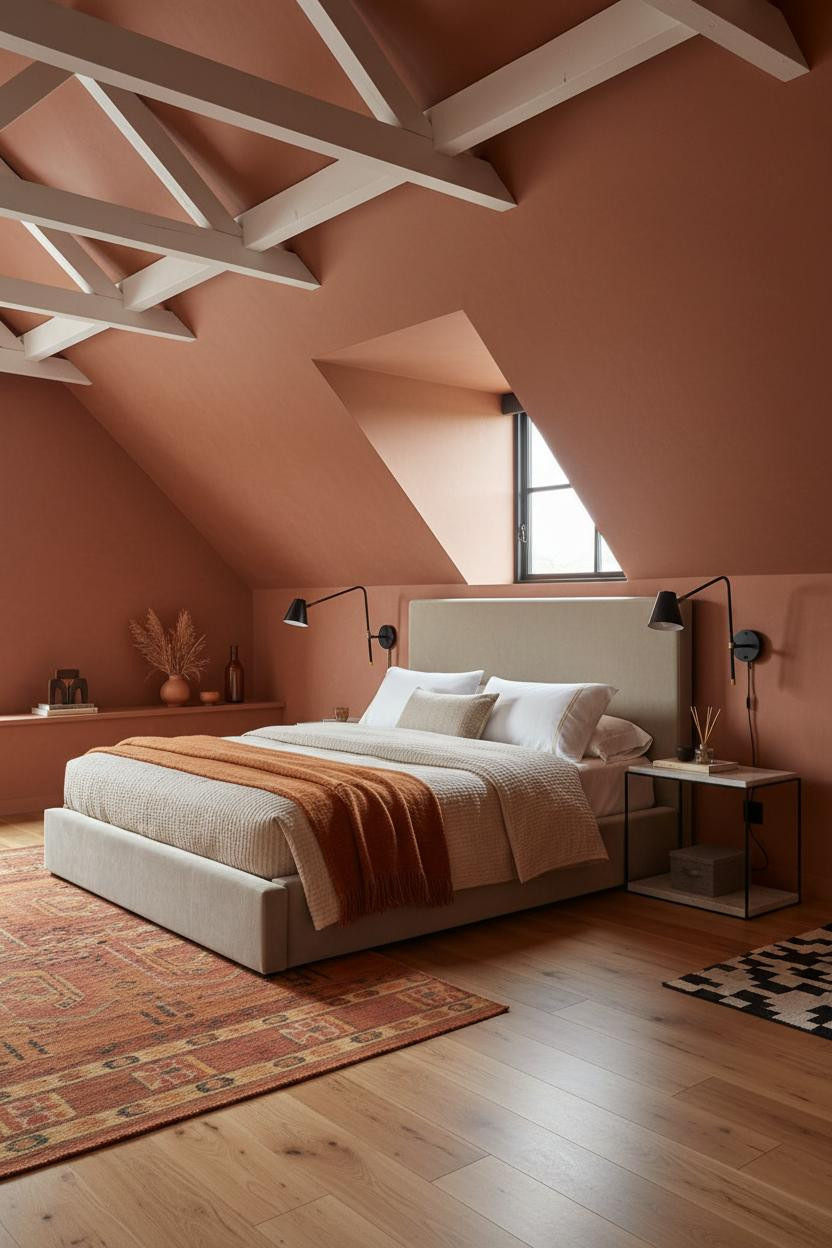


White-painted roof trusses running laterally across a low-pitched ceiling are a small move with a big return. The room feels resolved.
What makes this work is the repetition. Each collar tie casts a clean shadow line across the plaster, which defines the compressed geometry instead of hiding it. The eye reads structure, not limitation.
The easy win: Terracotta plaster walls with a kilim runner and a burnt orange throw pull the whole palette together. Nothing too matchy.
Built-In Shelving That Follows the Roofline
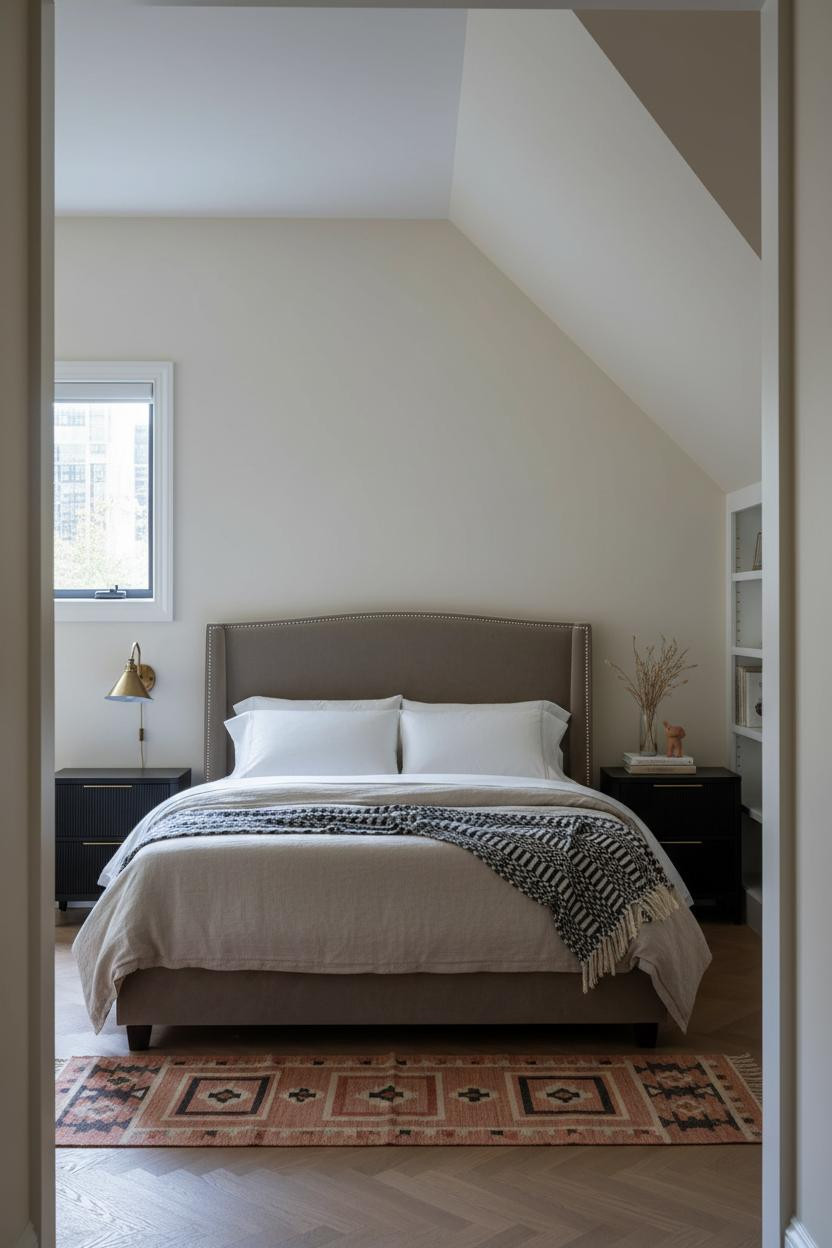


I almost skipped past this idea. The built-in bookshelf filling a deep eave nook sounds fussy on paper.
The real strength: Shallow shelves that step down with the roofline turn dead eave space into storage while still feeling intentional. The crisp white-painted wood against warm ivory plaster keeps it from reading as clutter. It looks custom because it works with the slope instead of against it.
The finishing layer: Stack linen-bound volumes and add a narrow glass vase with dried grasses. Two things. Not six.
Slate-Blue Curtains That Make a Low Ceiling Disappear
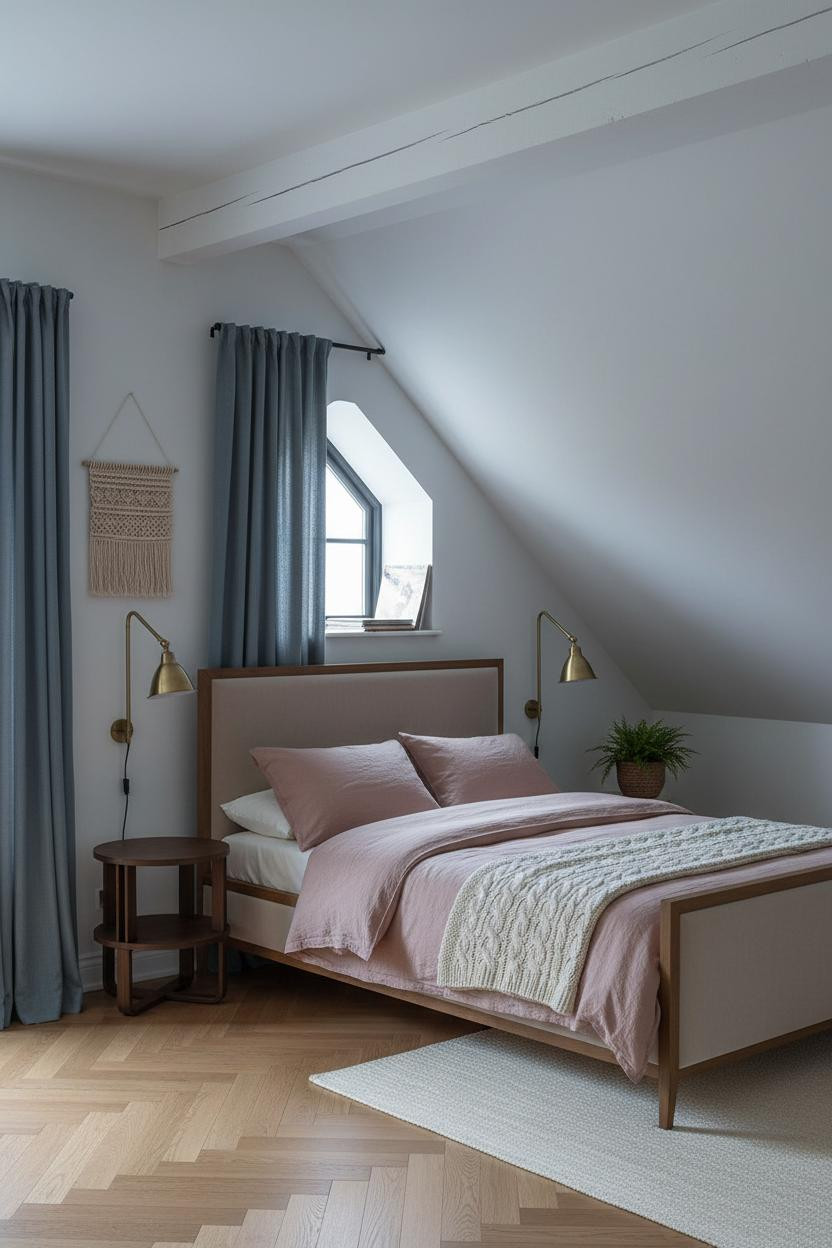


Floor-to-ceiling curtains in a low attic room feel counterintuitive. They're actually the move.
Dramatic slate-blue linen panels hung as close to the ceiling slope as possible pull the eye vertically in a room where the architecture wants to push it down. The hem pooling asymmetrically on herringbone parquet makes the whole thing feel collected rather than decorated.
What not to do: Don't hang them at window height. That's what makes ceilings feel low.
A Nordic Room That Gets the Dark-and-Cozy Balance Right
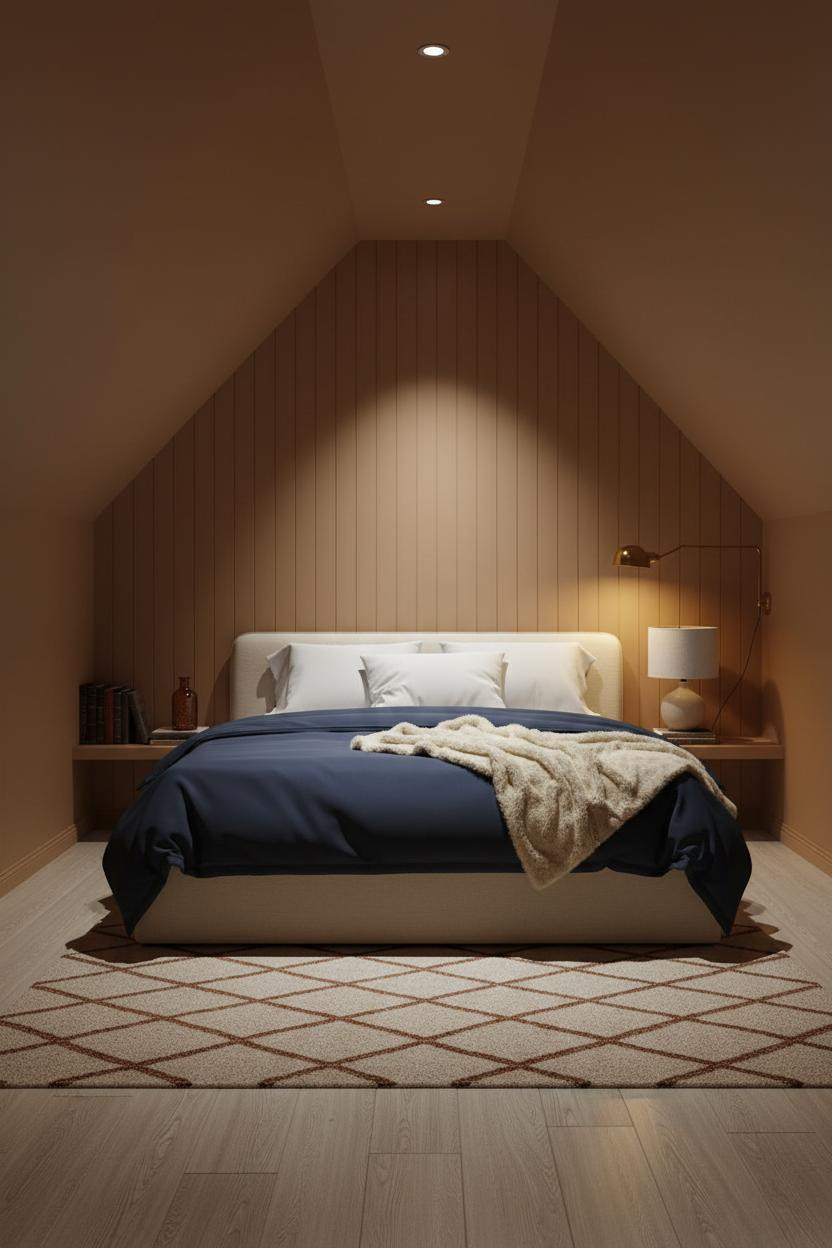

This is divisive. Navy bedding in a low-ceiling attic with warm clay walls sounds like a lot. But the room feels intimate rather than heavy.
The three evenly spaced board-and-batten panels on the sloped wall create vertical groove lines that a brass swing-arm lamp picks up beautifully at night. The compressed eave volume actually helps here: the light stays contained, which means warmer pools.
The smarter choice: A Moroccan diamond-pattern wool rug in rust and cream grounds the dark bedding in a way that feels warm, not cold.
What White Rafter Tails Do for a Scandi Attic Room
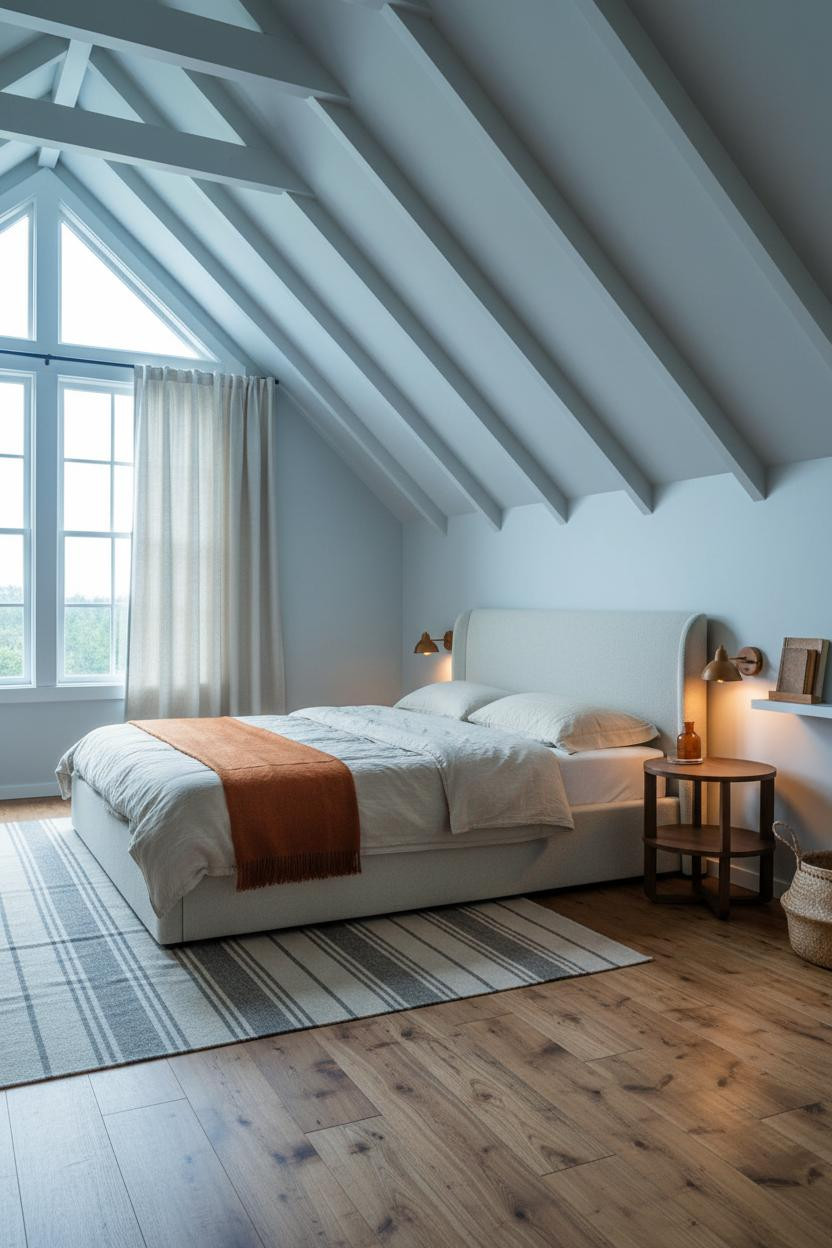

Nothing fancy here. And that's exactly the point.
White-painted rafter tails converging toward the ridge create parallel geometry that diffuse morning light turns into a quiet pattern across the ceiling. The reason the room feels architectural rather than cramped is that pale blue-grey walls follow the slope without competing with it.
Worth copying: A single floor-to-ceiling cream linen curtain panel framing the gable window (slightly off-center) adds softness while still feeling calm. One curtain. Not two.
Sage Green Walls in a Sloped Bedroom That Somehow Works
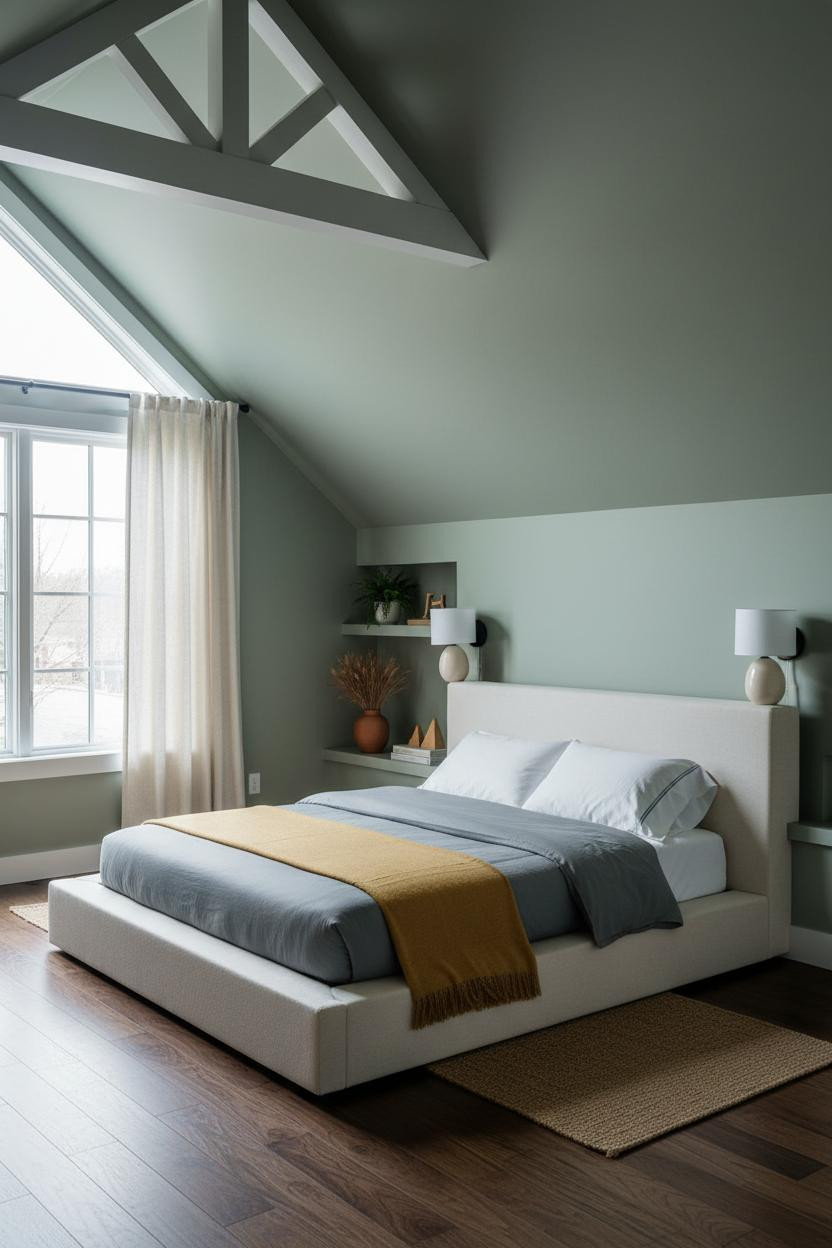

I was skeptical about sage in a low attic room. It can easily go flat. But paired with dark walnut flooring and a white collar tie at the apex, it holds together well.
The exposed white collar tie breaks the sage expanse at the peak and gives the pitched ceiling a strong horizontal graphic line. Paired sconces flanking the bed keep the warmth near eye level, which helps balance the cool wall tone.
The part to get right: Use a natural jute runner and a terracotta vase with dried grass. The room feels calm and cohesive when the warmth comes from the floor, not the walls.
When a Raw Timber Beam Is All the Style You Need
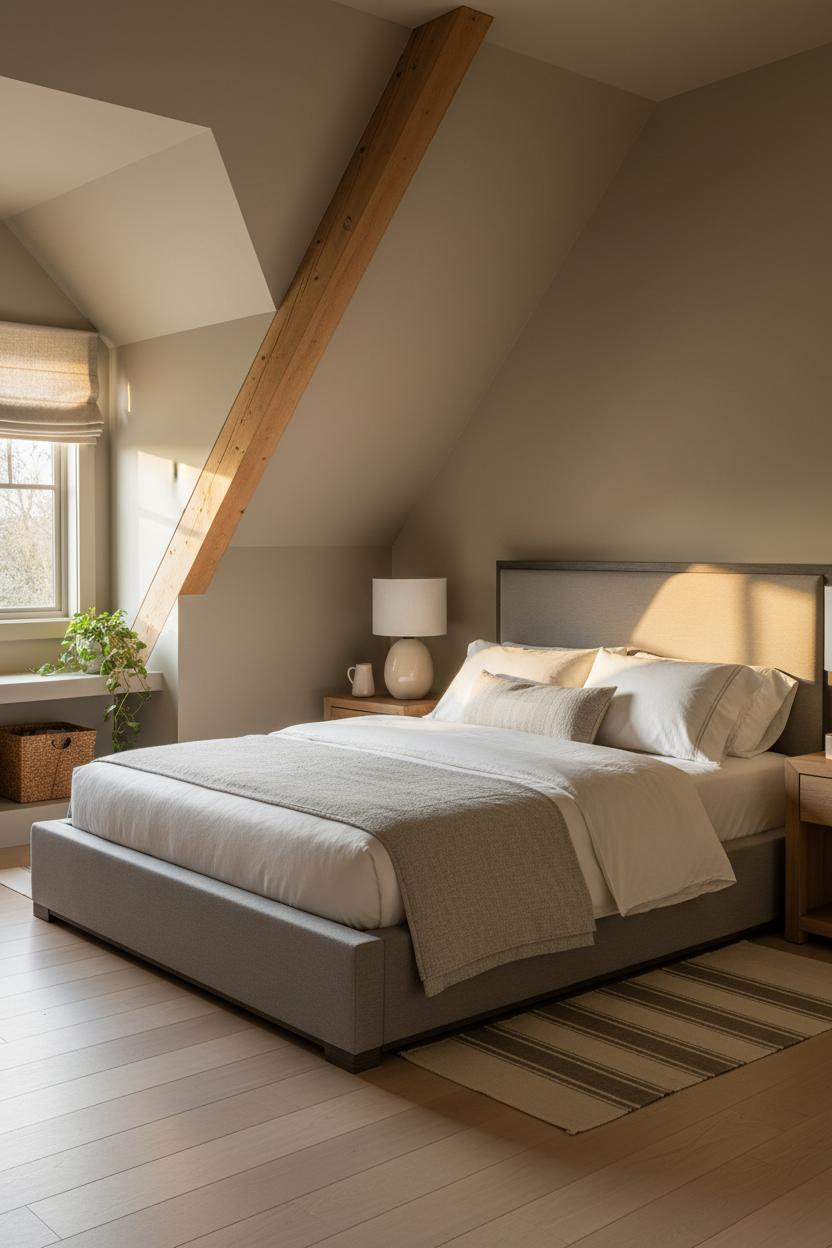

A single raw timber beam running diagonally across a pitched ceiling is enough. The room doesn't need another statement.
The natural wood grain catches afternoon light from the dormer and anchors the warm greige plaster walls in a way that feels structural, not decorative. And a storage bed frame in an attic guest room (admittedly, a practical call) means the eave space stays clear and the room reads larger for it.
 Our #1 Pick
Saatva Classic Mattress
America's best-selling online luxury innerspring. 365-night trial, lifetime warranty, free white glove delivery.
Shop Saatva Classic
Our #1 Pick
Saatva Classic Mattress
America's best-selling online luxury innerspring. 365-night trial, lifetime warranty, free white glove delivery.
Shop Saatva Classic
The Foundation Of Every Beautiful Bedroom
Walls get repainted. Linen gets swapped out. The mattress stays. And in an attic guest room where every choice has to pull its weight, that's worth thinking about.
The Saatva Classic is what I'd put under all of this. The dual-coil support system holds up through years of actual use, the breathable organic cotton cover keeps things comfortable in rooms with complicated airflow (attics included), and the Euro pillow top still feels right without going soft over time.
Good design ages well because it's made well. Start with the bed.

The rooms that guests talk about aren't the ones with the most going on. They're the ones where everything feels like it was chosen on purpose. An attic guest room with low ceilings can do that better than most, because the architecture forces you to edit. And editing, it turns out, is the whole job.