If Your Kids Share One Closet, These 15 Pottery Barn Teen Finds Help
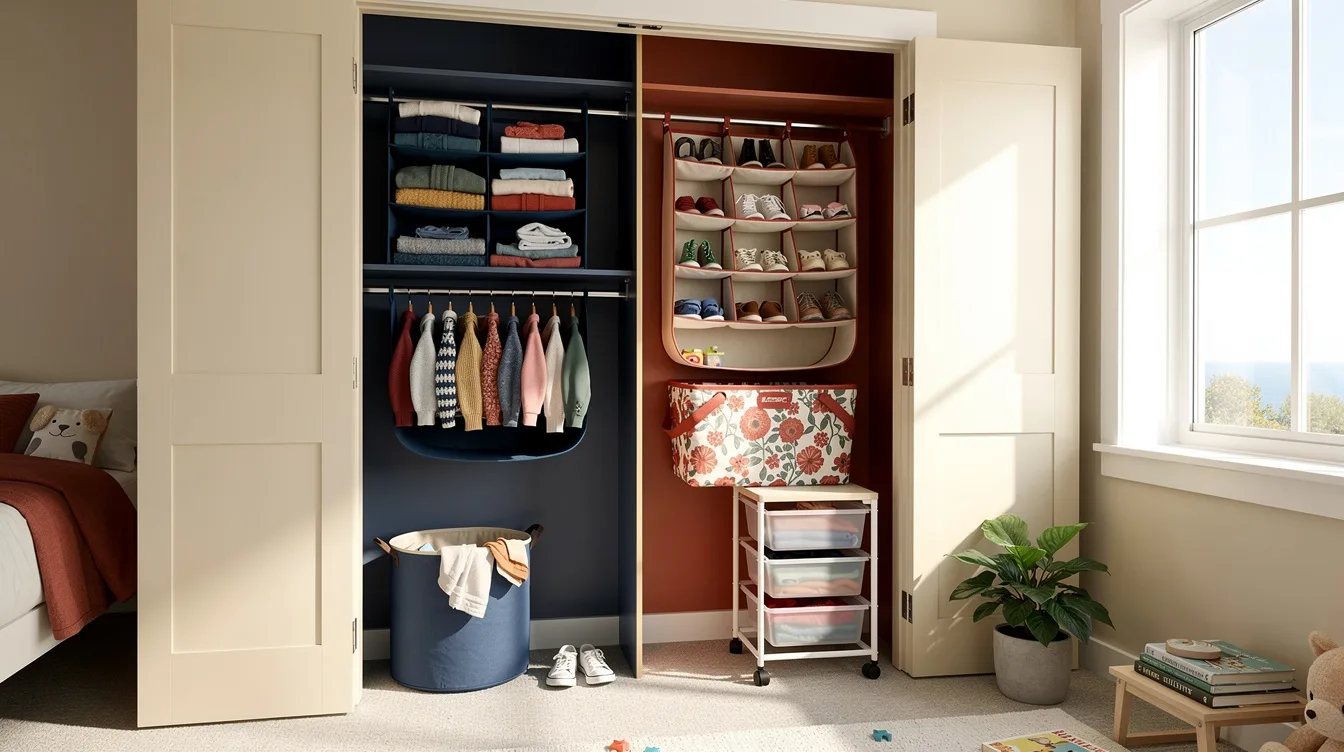
29 november 2026A shared kids' closet can turn a school morning into a negotiation when two children reach for the same shelf. We started with an about 12-inch-wide hanging organizer, then built separate zones around soft storage instead of expensive furniture.
Pottery Barn Teen's closet finds under $200 are mainly modular polyester pieces: bins, hampers, shoe slings, and sweater organizers. The system works when every item has one child, one job, and one clear place to return.
What you will find inside
- Map Two Closet Lanes Before Buying
- Give Each Child a Storage Bin
- Use Pattern to Mark Ownership
- Hang Shoes in Sixteen Sections
- Stack Sweaters by Season
- Collapse the Hamper Between Washes
- Roll a Five-Drawer Cart Into the Gap
- Verify the Six-Drawer Cart Dimensions
- Reserve the Cube Trunk for Bulk
- Assign a Color to Each Laundry Zone
- Use the Door for Overflow Storage
- Keep Shoes Off the Shared Floor
- Pair Organizers With Two Dressers
- Keep Furniture Outside the Budget Plan
- Check Stock Before Building the Layout
Map Two Closet Lanes Before Buying
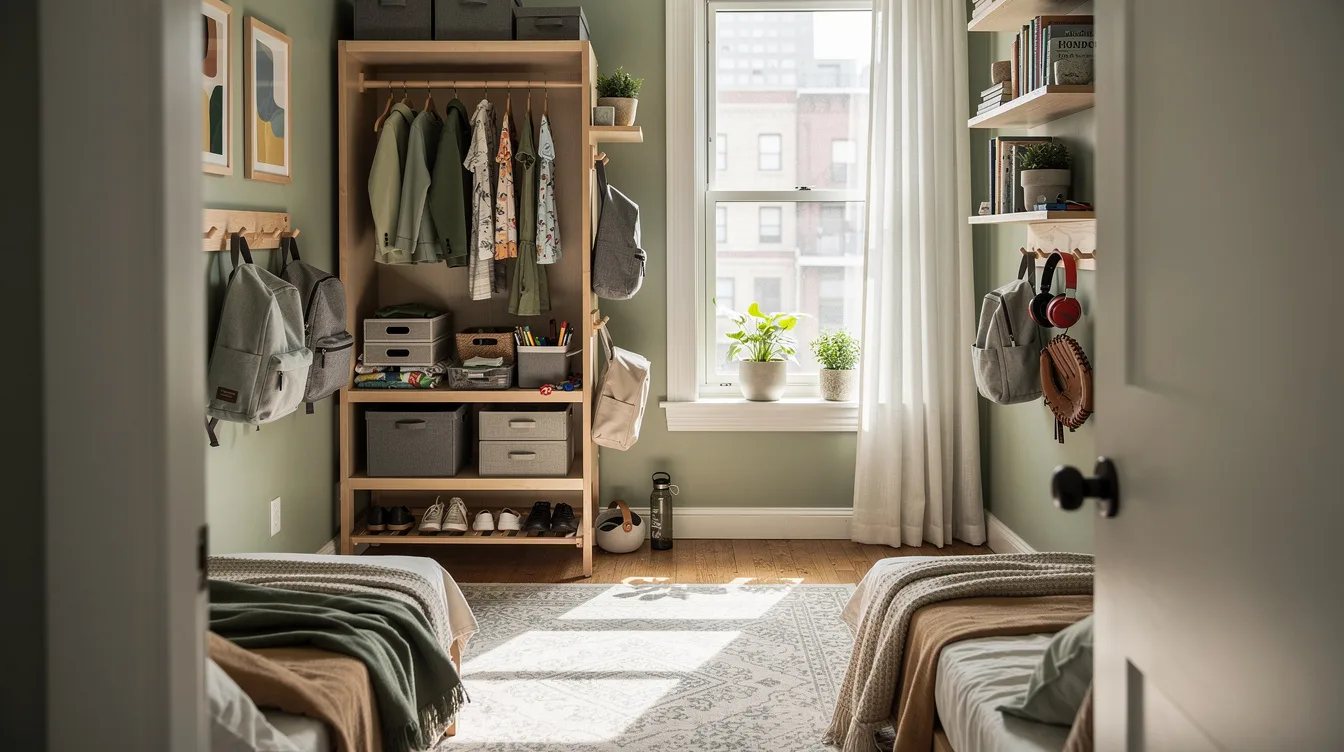
We started by dividing the closet into two visible lanes, one for each child, before choosing a single product. A narrow shelf, a hanging rod, or even a strip of wall can establish the boundary, which prevents every bin from becoming communal storage.
Pottery Barn Teen's soft organizers work best when each child gets a defined group. Keep one side for daily clothes and the other for shoes, laundry, and seasonal extras, then leave enough room to open doors and pull drawers without collisions.
Give Each Child a Storage Bin
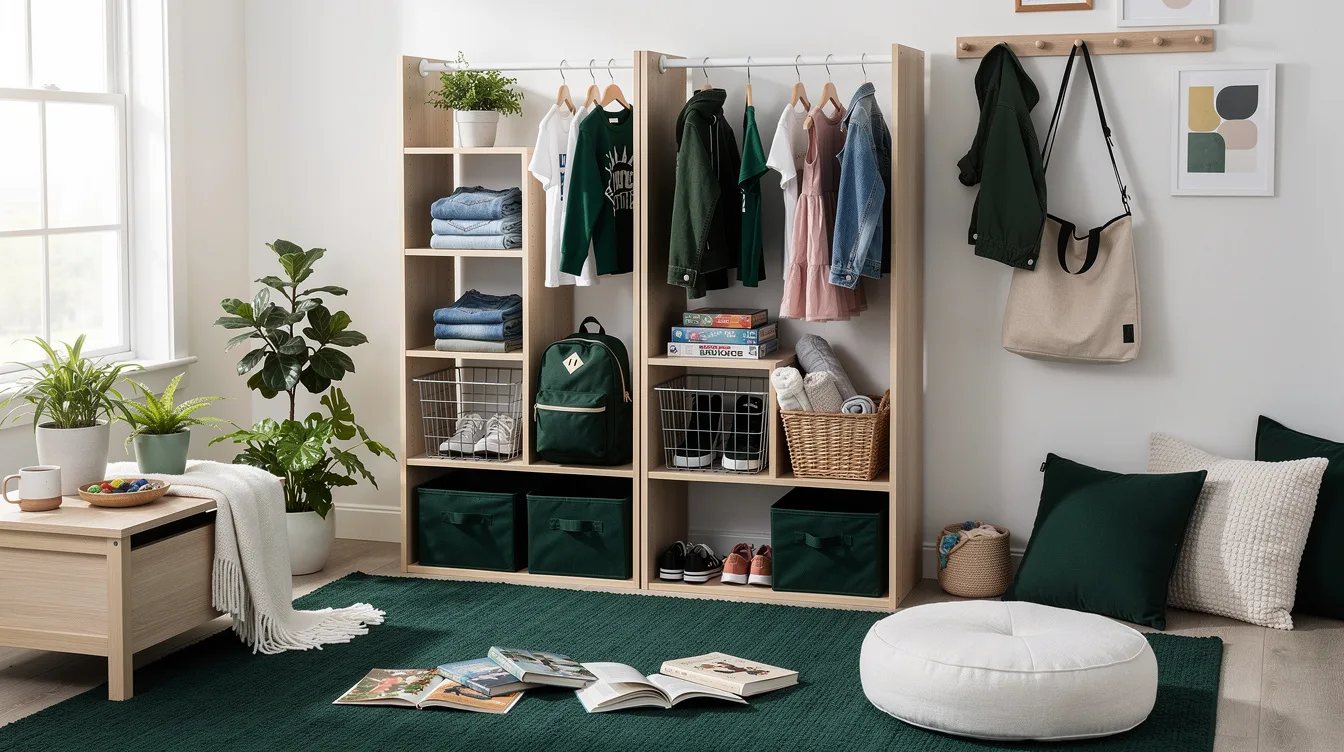
The basic polyester storage bin is the most flexible starting point in the Build Your Own Closet Storage line. Its listed size is about 11 inches square by 8 inches high, and it holds up to about 21 pounds, enough for folded pajamas, swimwear, or accessories.
Use one bin per child for items that normally drift across the room. The cardboard fill helps it keep its shape, while the soft exterior is more forgiving near a bed or shared walkway than a rigid plastic box.
Use Pattern to Mark Ownership
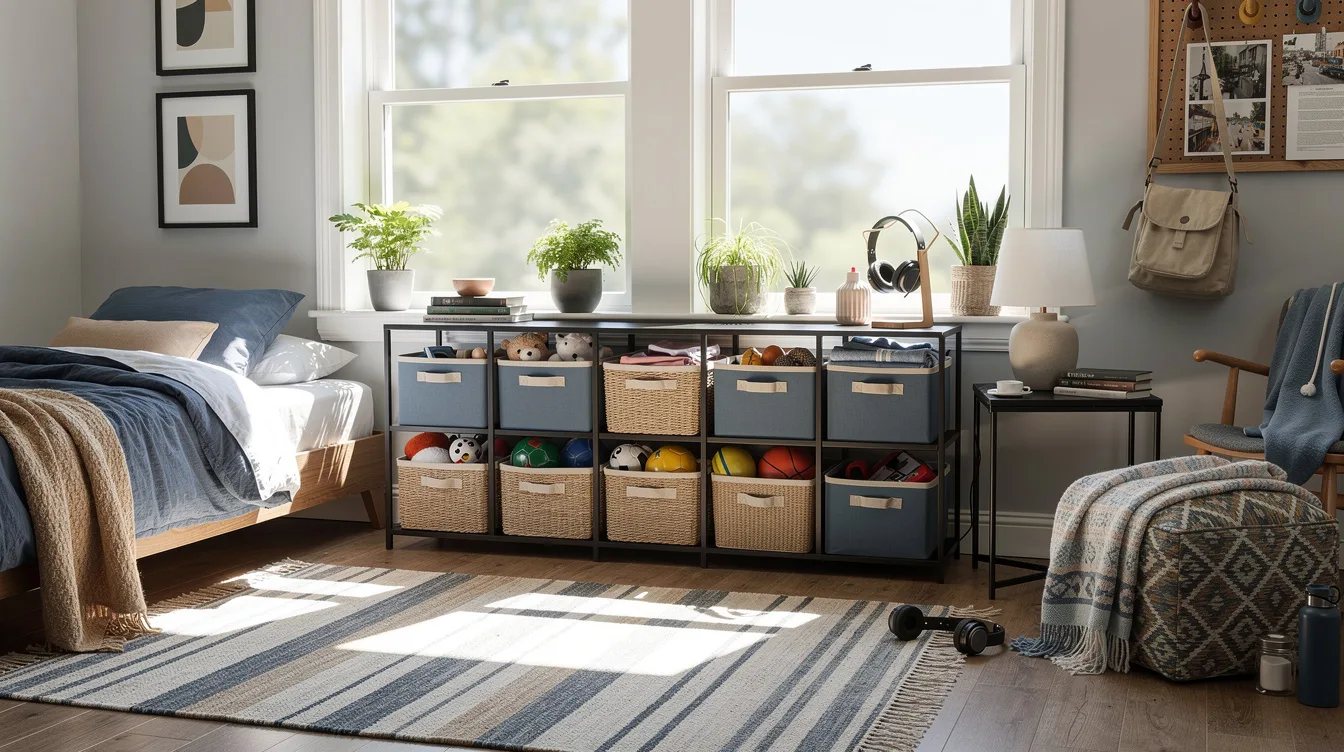
The LoveShackFancy collection gives the shared room a simple ownership system: one child gets the floral pattern, while the other uses a solid or contrasting finish. That distinction matters when both children have the same size bin and the same busy morning schedule.
Listings placed the collection at about $25 to $199 on sale, with regular pricing around $29 to $229 and discounts reaching roughly 42 percent. Because the sale range is broad, choose the pattern first and confirm the current product price before building the rest of the setup around it.
Hang Shoes in Sixteen Sections
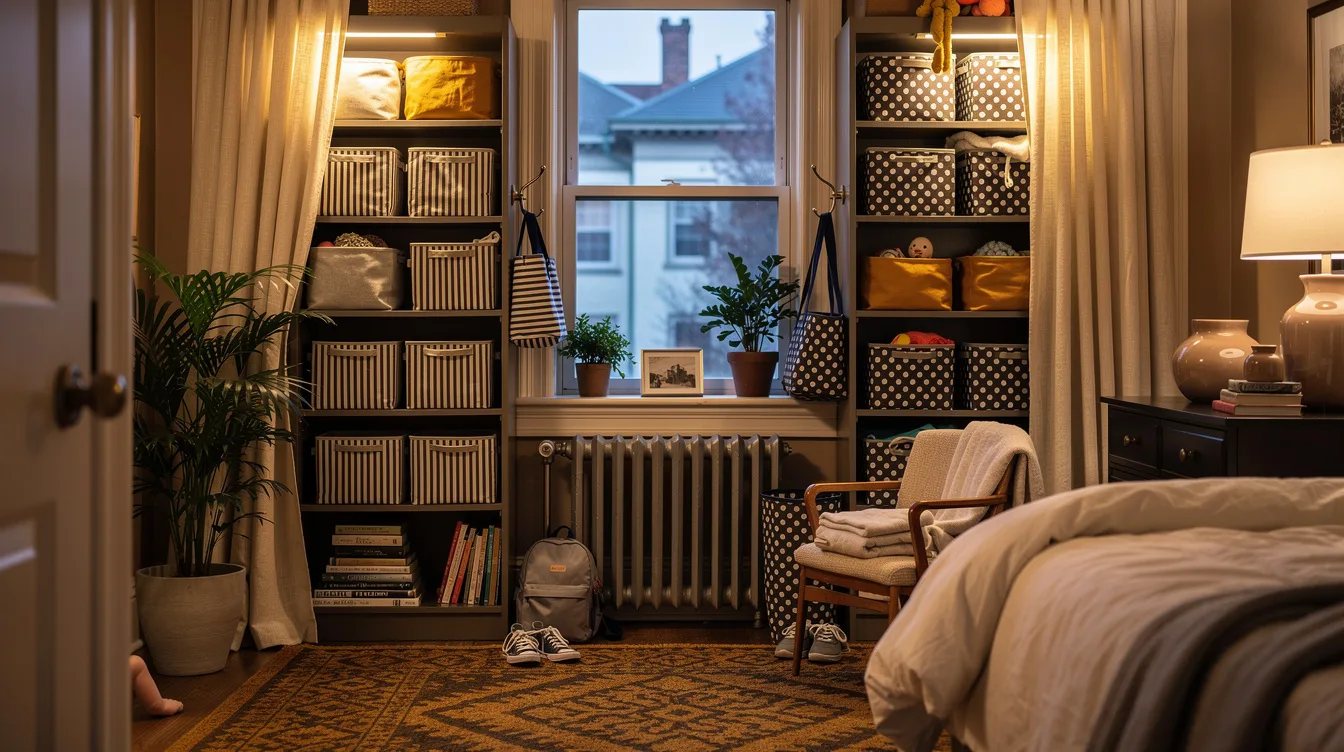
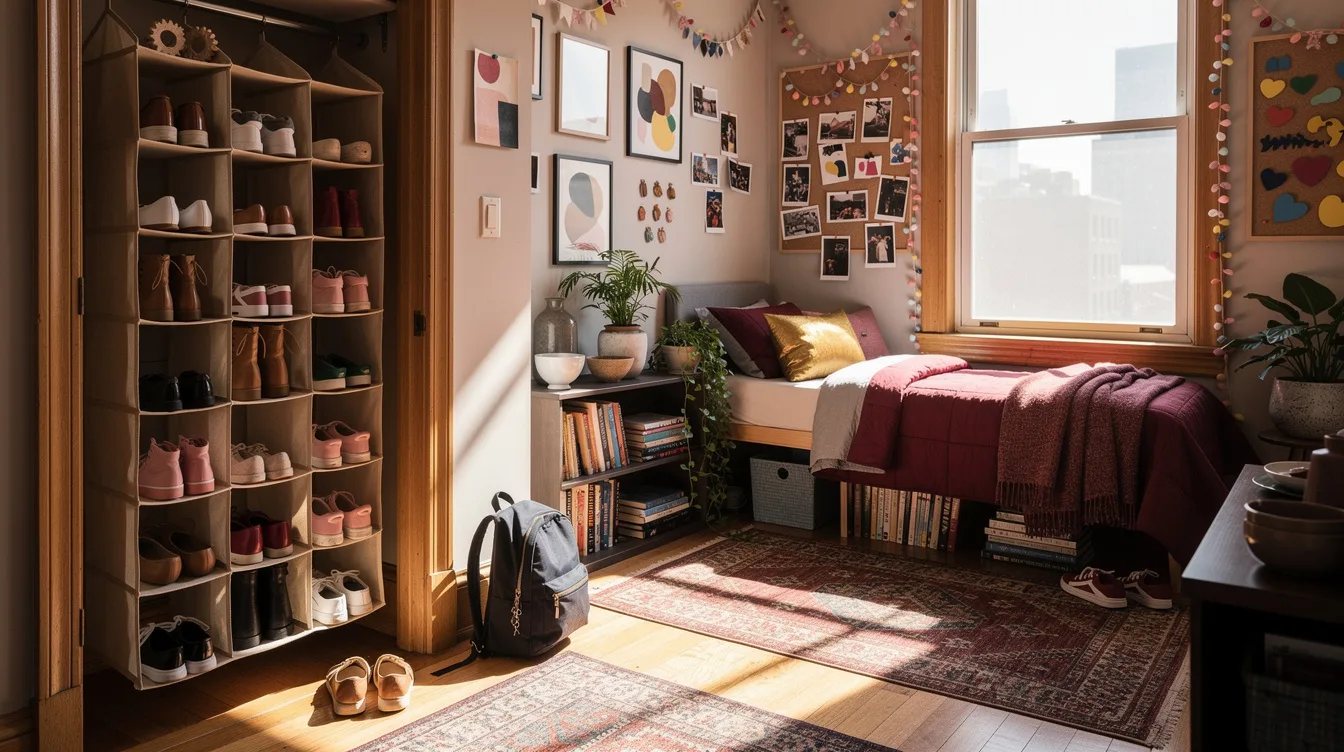
A recycled-polyester hanging shoe sling uses vertical space that a shared closet usually wastes. It has 16 sections, measures about 12 inches wide by 52 inches high, and gives each child a predictable place for sneakers, sandals, slippers, and small bags.
Assign the upper sections to the taller child or to less frequently used shoes, then reserve the lower pockets for daily pairs. Each pocket is listed at about 5.25 inches by 12 inches, so bulky boots and high-top shoes should stay on the floor or on a separate rack.
Stack Sweaters by Season
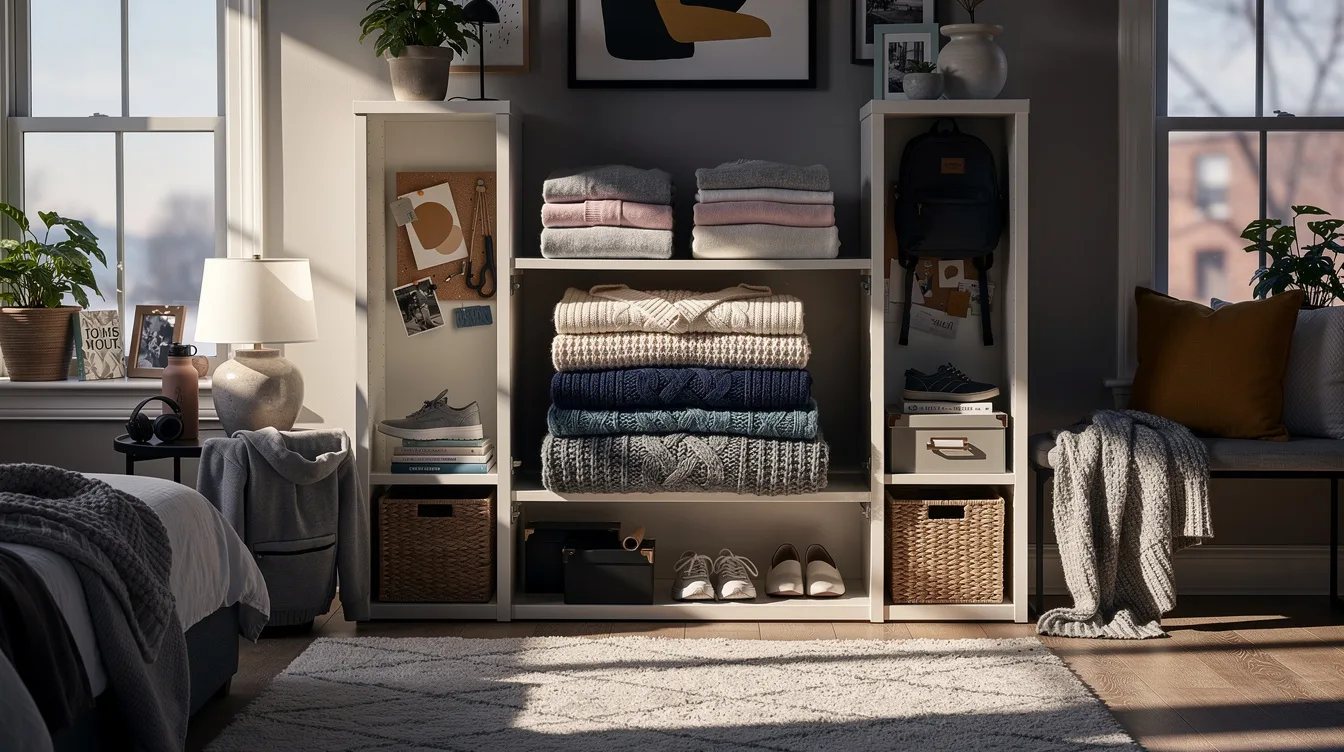
The six-section sweater organizer is a strong choice when two children share one short shelf. Its recycled-polyester body, paperboard fill, and listed dimensions of about 12 inches wide by 12 inches deep by 57 inches high create a tall column for hoodies, cardigans, folded jeans, or winter layers.
Give each child three sections instead of mixing both wardrobes in every compartment. Put current-season pieces at eye level, and use the highest sections for clothing that will not be needed for several weeks.
Collapse the Hamper Between Washes
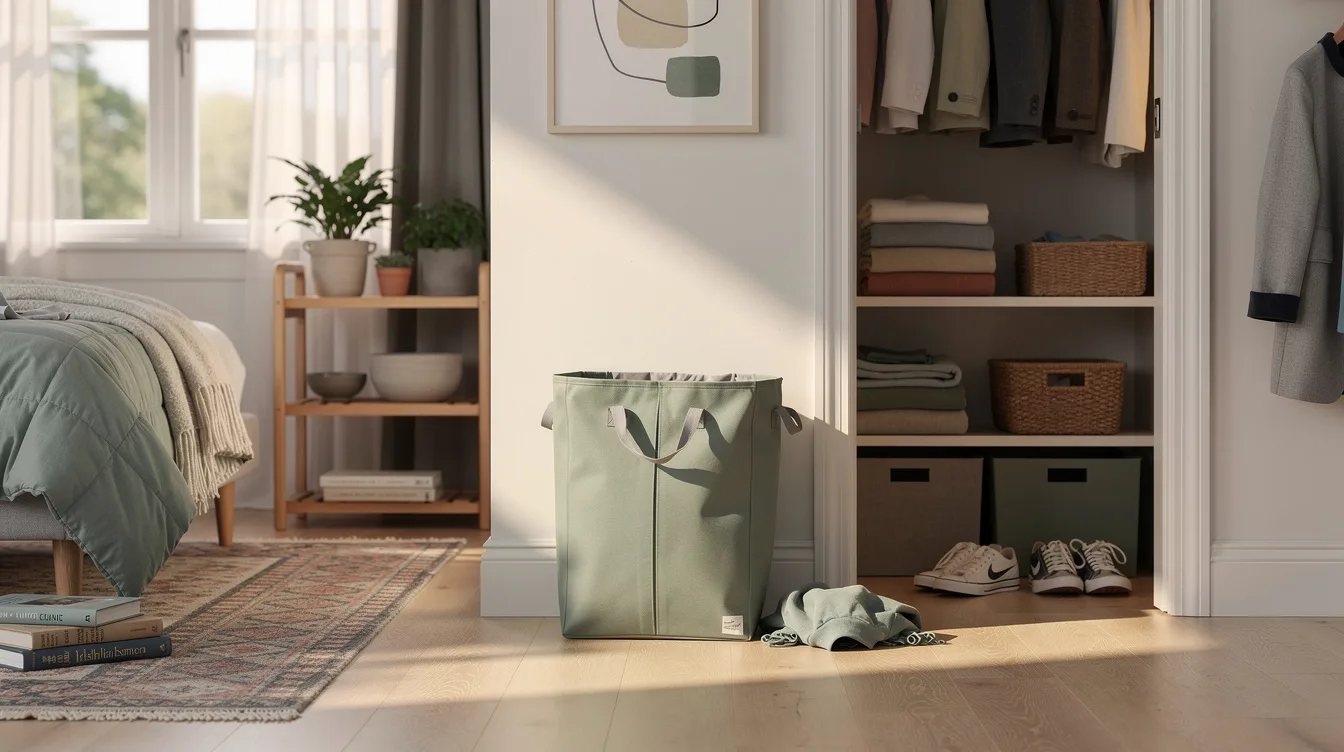
A recycled-polyester pop-up hamper keeps laundry contained without claiming permanent floor space. It measures about 17 inches across and 26 inches high when open, then folds to about 1 inch, which makes it useful in a tight shared room.
Place one hamper near the closet entrance or let siblings share one only when the household already sorts laundry by color or wash cycle. The attached straps make it easier to move, but the slim folded shape is the real advantage when floor space is limited.
Roll a Five-Drawer Cart Into the Gap
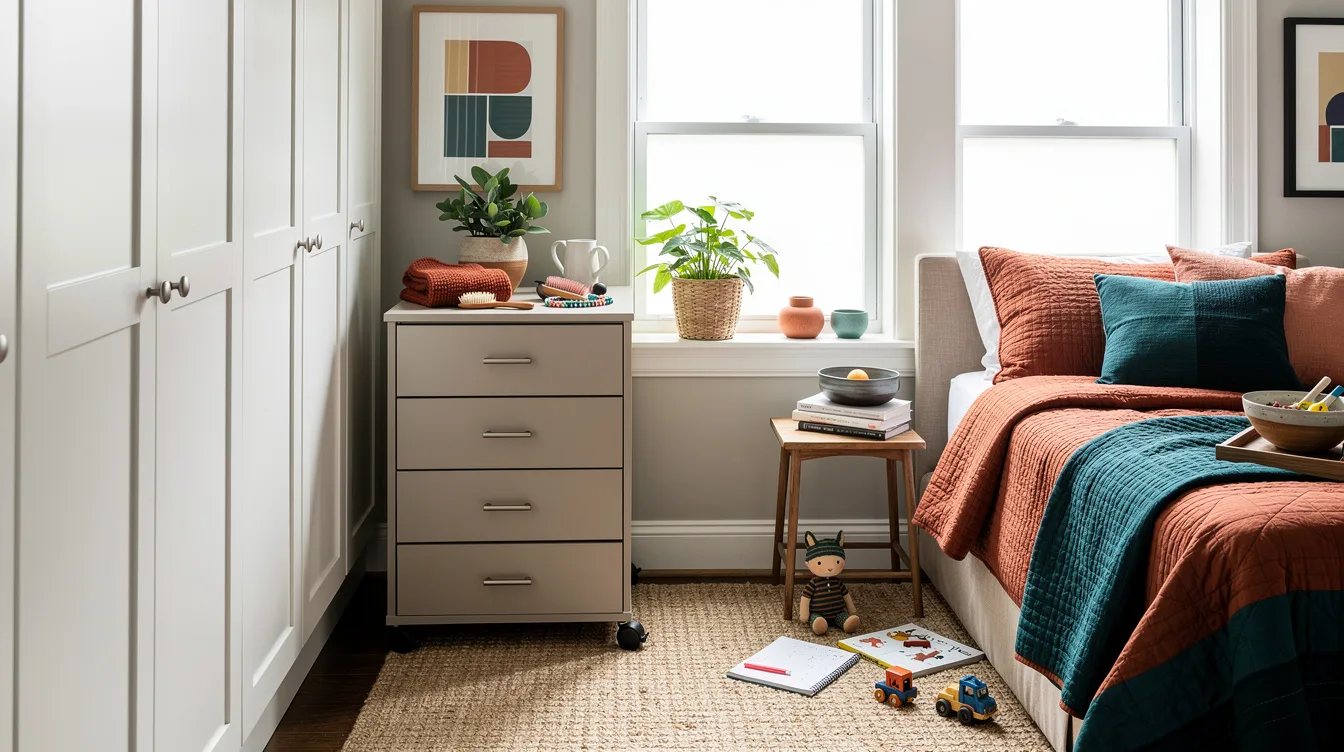
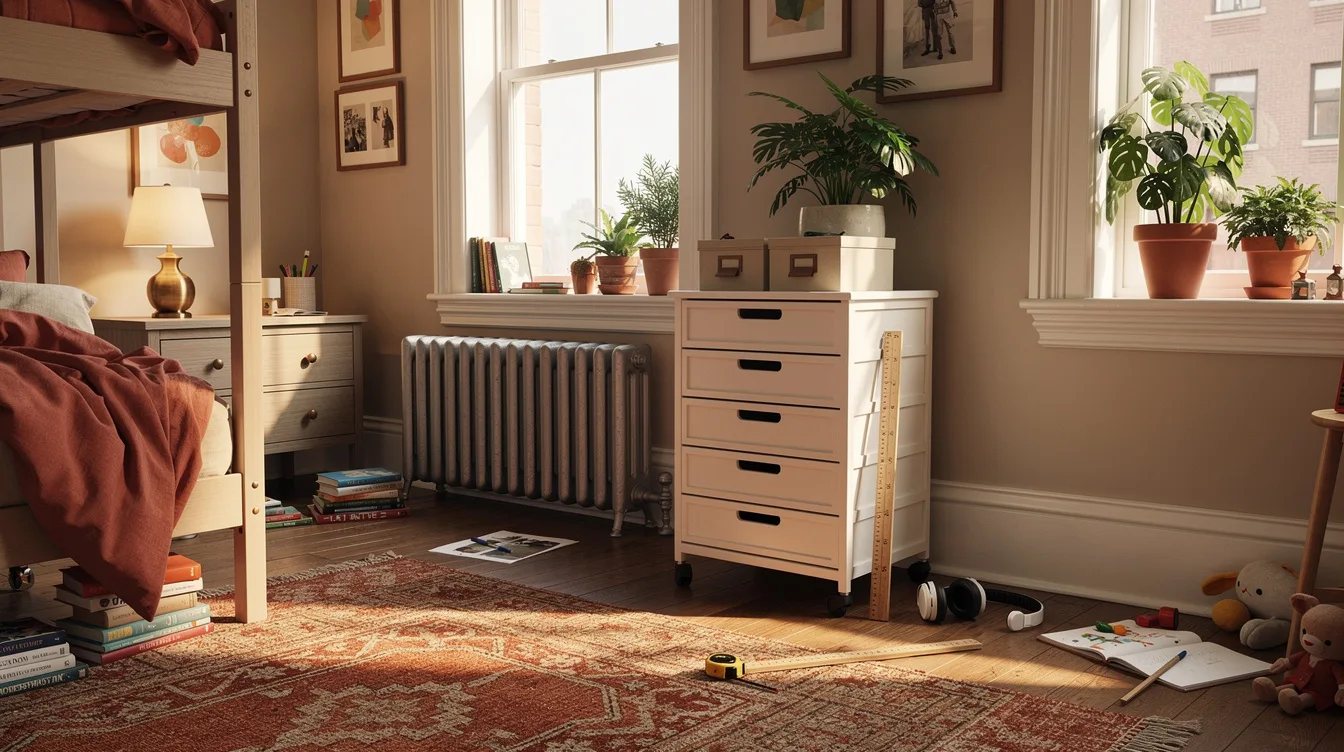
The LoveShackFancy five-drawer cart adds small-item storage where a fixed dresser will not fit. Its listed footprint is about 9.5 inches by 15 inches, with a height near 35 inches, so it can slide beside a wardrobe, desk, or narrow wall.
Use the upper drawers for hair accessories, socks, and school-day extras, then keep larger soft goods in the lower drawers. The cart combines MDF, fabric, cardboard, and iron, giving the room more structure than a loose stack of bins without requiring a built-in closet system.
Verify the Six-Drawer Cart Dimensions
The LoveShackFancy six-drawer cart is listed at about 14.75 inches wide by 11.5 inches deep and 39.25 inches high. Its taller profile can serve one child while the shorter five-drawer cart serves the other, creating separate storage without matching furniture.
The listing labels were truncated in the available results, so verify which dimensions belong to which cart before ordering. The casters include two that lock, and that small detail is worth using near a bed, since a cart that rolls during dressing quickly becomes a daily nuisance.
Reserve the Cube Trunk for Bulk
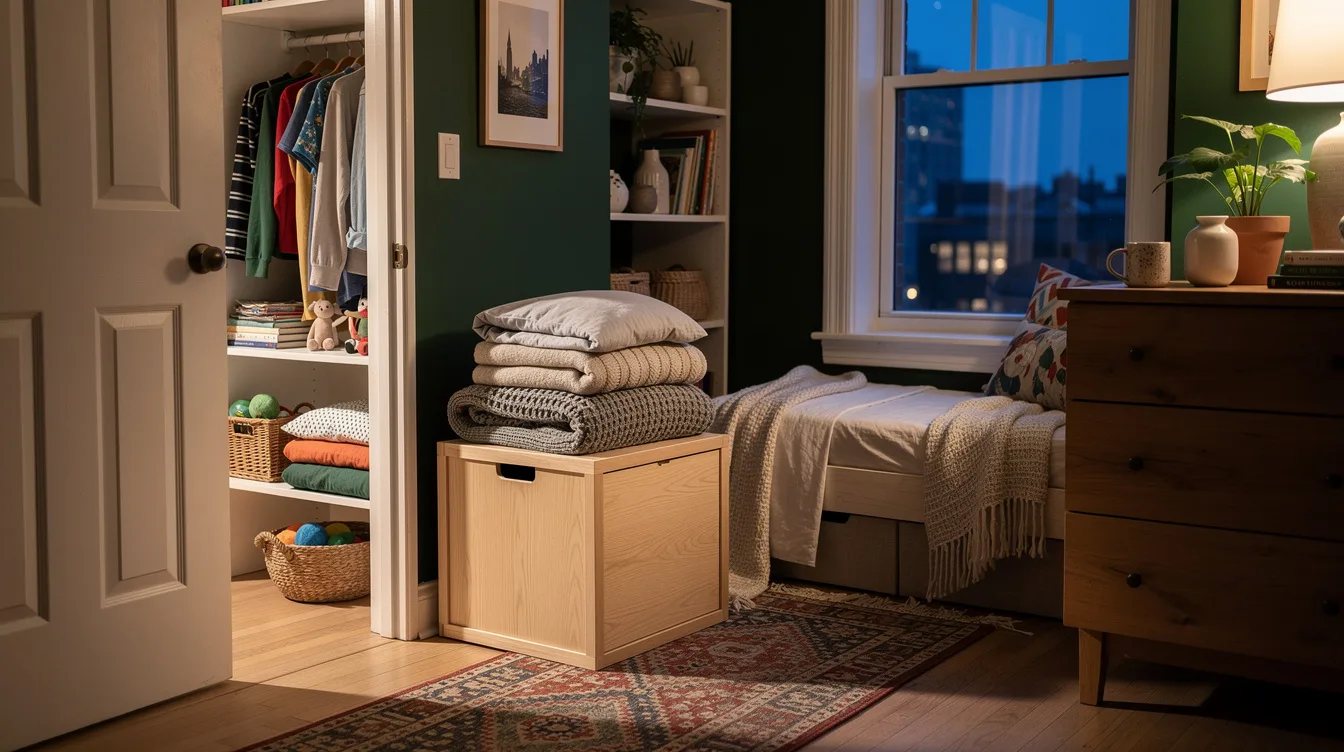
A birch-frame cube dorm trunk is the sturdier option for bedding, costumes, sports equipment, or off-season clothing. Its listed size is about 18 inches by 18 inches by 20 inches, and it holds up to roughly 200 pounds, although its real value is the closed storage.
The frame uses birch hardwood, while the exterior combines 1000-denier coated nylon with steel hardware. Put the trunk at the foot of the bed or under a sturdy surface, and avoid filling it with everyday clothes that children must dig through each morning.
Assign a Color to Each Laundry Zone
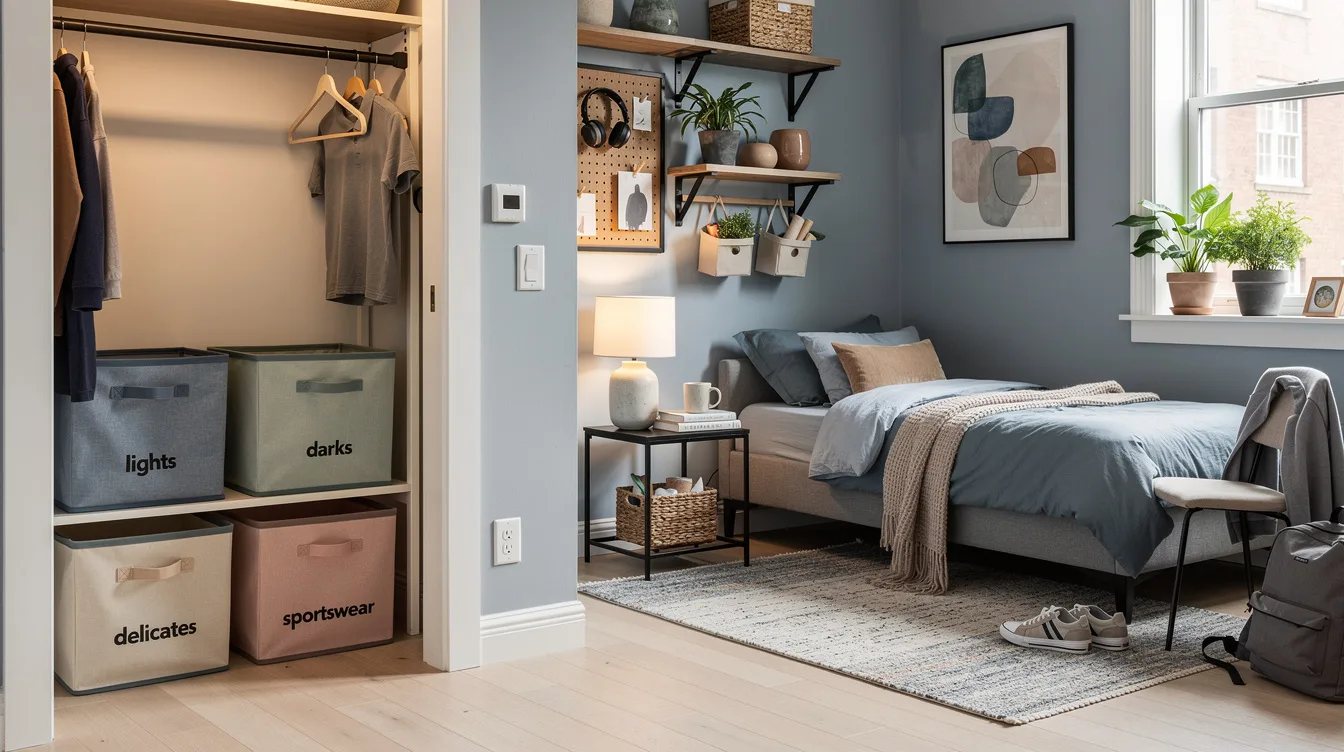
Separate colors or patterns make shared storage work faster than labels alone. Give one child the floral fabric bin and matching hamper, then use a different finish for the other child so clean clothes can return to the right zone without a sorting debate.
Keep the color system consistent across the closet. A bin, shoe sling, and laundry hamper that belong together create a visual shortcut, while unrelated colors scattered across both sides make the closet look shared again.
Use the Door for Overflow Storage
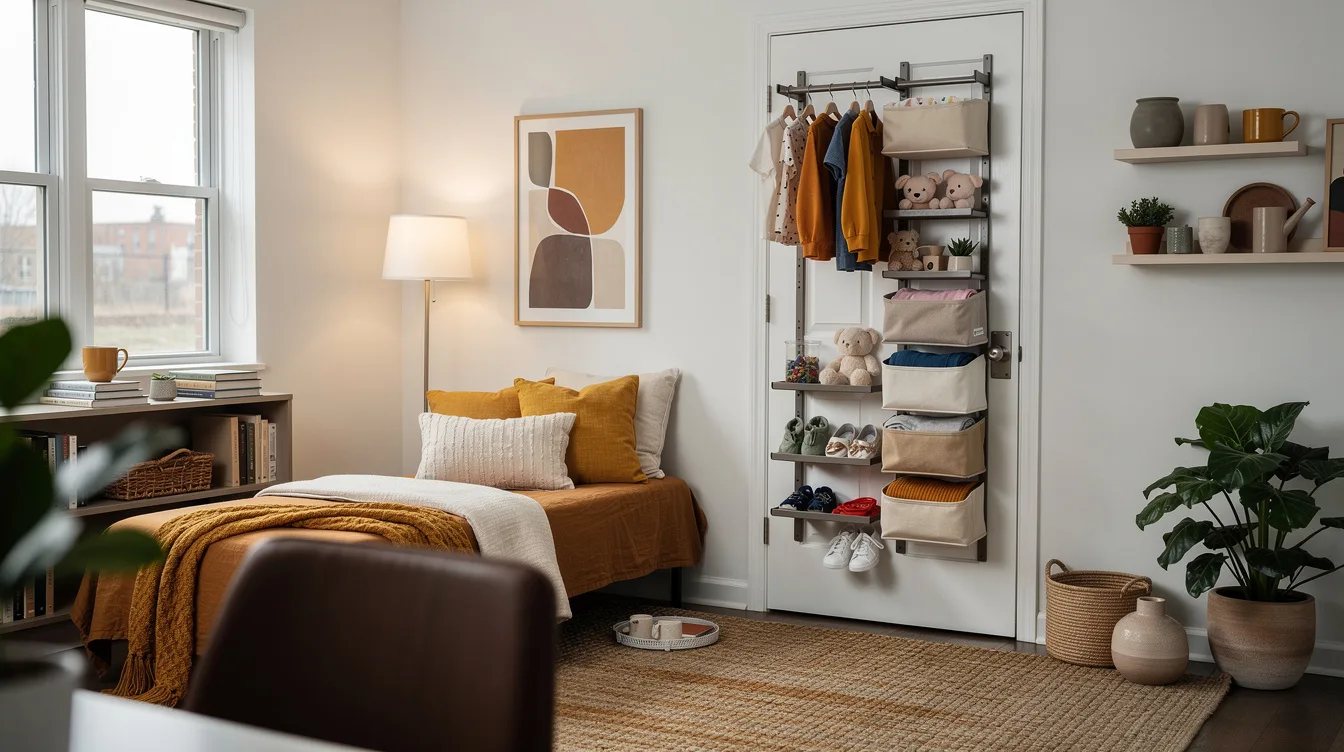
When the hanging rod and shelves are full, Pottery Barn Teen's over-the-door modular storage can handle the overflow without taking floor space. Use it for caps, small purses, hair tools, or lightweight accessories that tend to collect on a shared dresser.
Keep the door-mounted section limited to soft or compact objects. Heavy shoes and crowded bags can strain the hardware, while a small group of daily accessories stays easy to reach and leaves the main closet available for clothing.
Keep Shoes Off the Shared Floor
A separate shoe rack can make sense when both children own larger footwear that will not fit the hanging sling. Place it along one wall and give each child a fixed row, leaving enough clearance for the closet door and for the pop-up hamper to move.
The hanging sling should handle the light, frequently worn pairs, while the rack holds boots and bulkier shoes. This two-level approach keeps the most-used items visible without forcing every shoe into one crowded container.
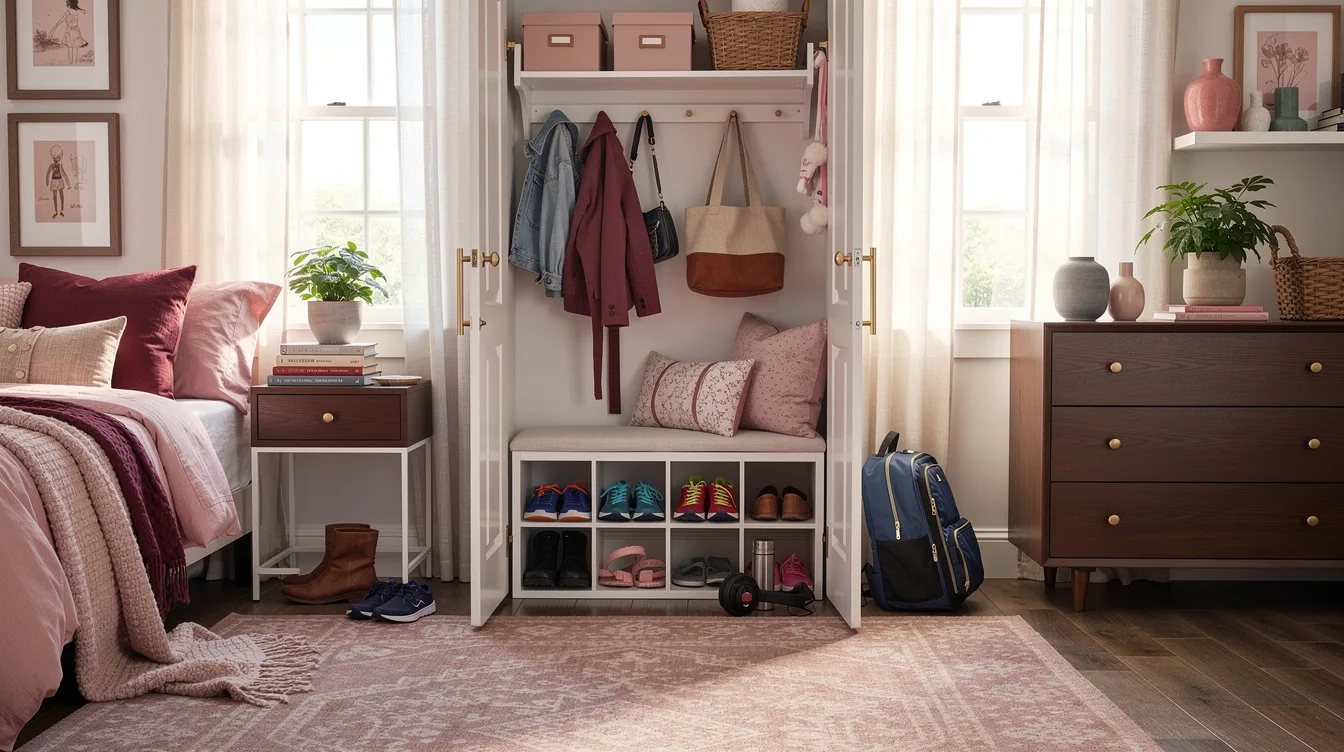
Pair Organizers With Two Dressers
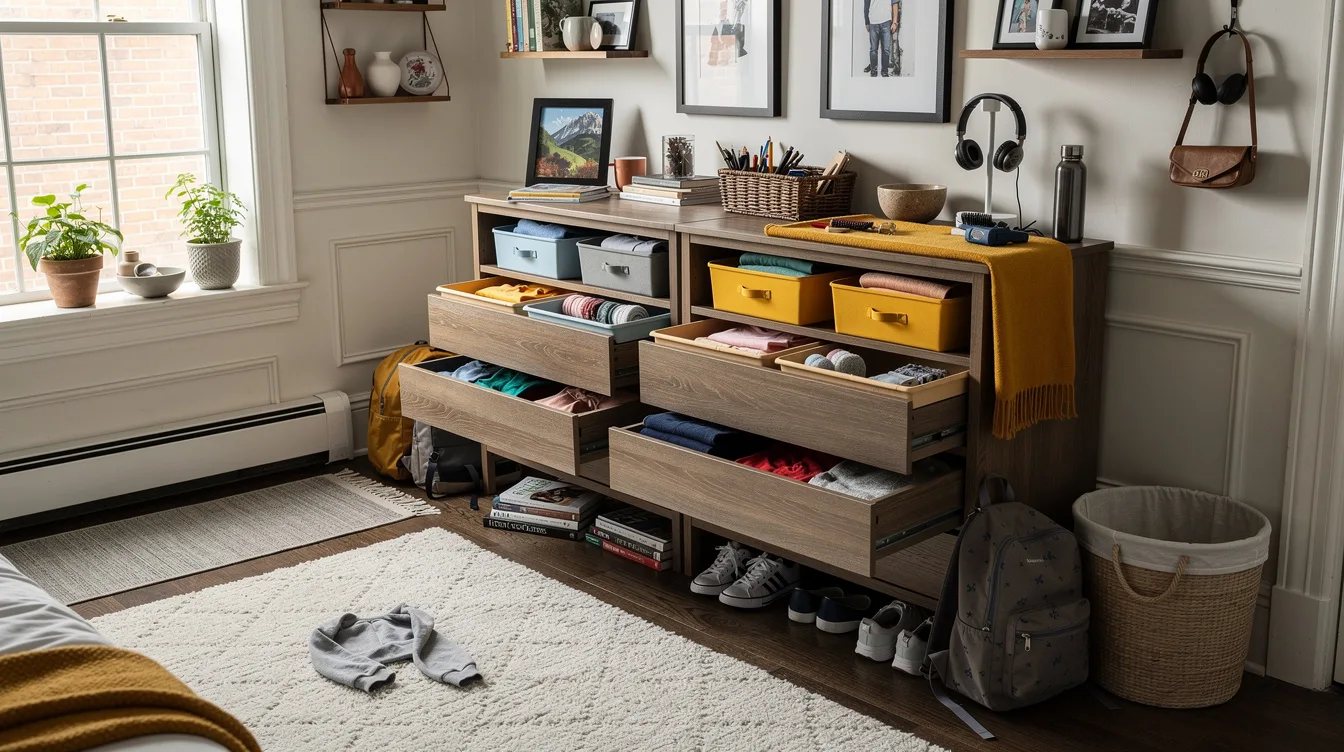
Pottery Barn Teen's shared-room guidance favors giving each child personal closet space and using two modestly sized dressers when possible. That split keeps folded daily clothing out of the hanging organizers, which can then handle accessories, shoes, laundry, and seasonal layers.
Place one dresser on each side of the room rather than creating a single oversized clothing wall. The arrangement costs more floor space, but it reduces mix-ups and lets each child maintain a smaller, more manageable storage zone.
Keep Furniture Outside the Budget Plan
Under $200, the realistic Pottery Barn Teen strategy is soft organization and accessories, not a complete bedroom suite. Recent shared-room pricing placed a full-over-full bunk bed around $2,600, a tall dresser around $1,200, and a nightstand around $400.
The lower-priced examples were a charging bedside caddy at about $99 and an organic sheet set at about $99. Those prices make the boundary clear: use the budget for bins, slings, hampers, and small carts, then treat large furniture as a separate purchase.
Check Stock Before Building the Layout
The Build Your Own Closet Storage page showed the selected item as unavailable when it was checked, so stock may change quickly. Measure the closet first, save the product dimensions, and keep a second configuration ready in case one organizer disappears.
Pottery Barn Teen also sells a larger closet storage set with racks, bins, and shelves, but its price was not confirmed in the available information. Check the live product page for current stock, sale terms, and the exact size before counting it toward an under-$200 plan.
Keep reading
- Target Closet Drawers Screaming for Help? 12 Threshold Finds
- Small Bedroom Closet Screaming for Help? 12 Kohl's Finds
- Small Apartment Feeling Cramped? 13 Pottery Barn Finds Under $500
Start by measuring the closet and choosing the two ownership colors before shopping. Spend the first dollars on separate bins and laundry storage, then add vertical organizers only where the measurements prove they will fit.