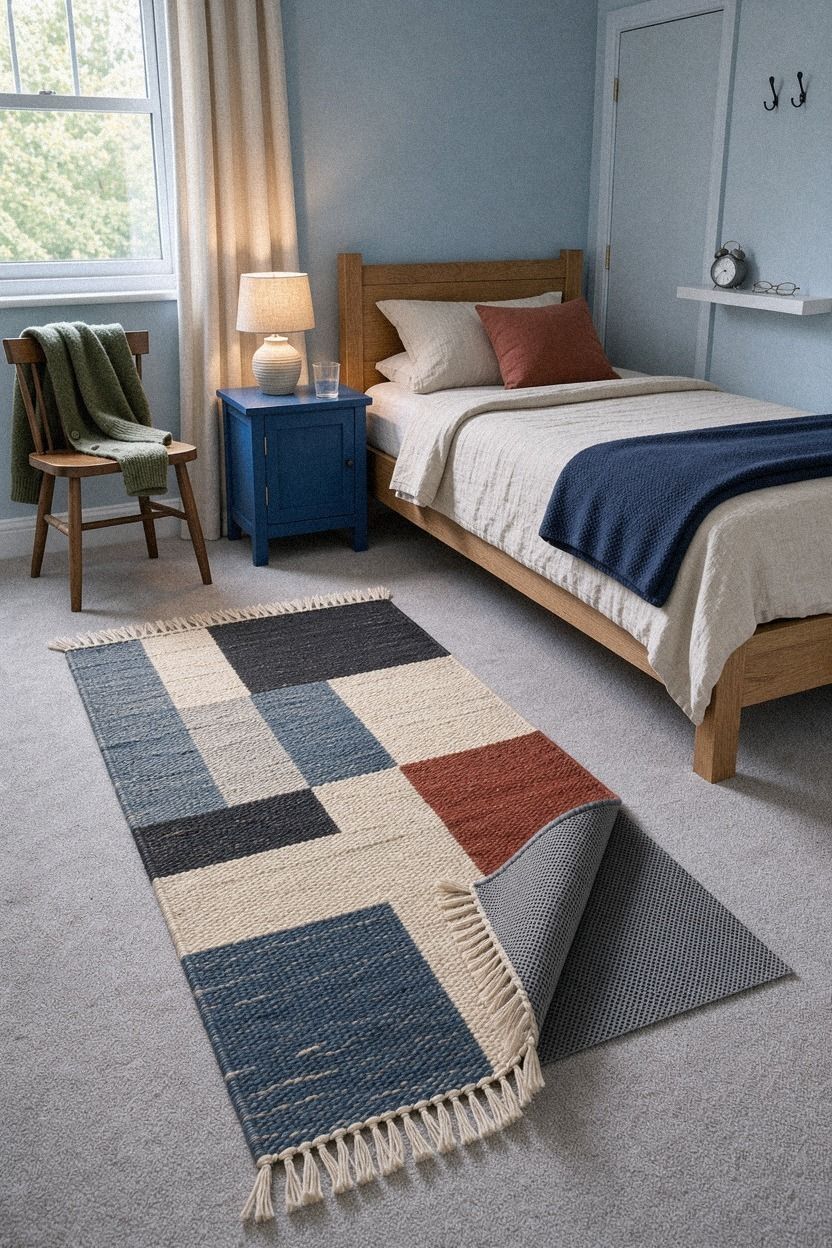
17 Ways to Put a Rug on Carpet in a Bedroom Without It Sliding, Finally
23 november 2026To put a rug on carpet in a bedroom without it sliding, you need grip between both layers, a rug sized past the bed, and a flat edge. I learned that after chasing a runner across the floor at 2 a.m. The fix isn't glamorous, but it works. Your bedroom can feel warm and settled again.
- Anchor the Rug With the Two-Surface Grip
- Why Does a Low-Pile Rug Behave Better?
- The Border Rule Around the Bed
- Swap Plush Carpet Padding for a Flatweave Topper
- Footboard or Open Edge?
- Tape the Pad Carefully
- A Runner Pair for Narrow Rooms
- Paint First, Then Size the Rug
- Build the Three-Height Light Stack
- Where Should the Nightstand Sit?
- Build the Soft Square Method
- Turn the Rug Sideways for Better Weight
- Use the Contrast Test
- Can You Walk the Rug Before You Style It?
- Hide the Edge Under a Bench
- Warm Harmony or Too Much Matching?
- Protect the Setup With a Monthly Reset
1Anchor the Rug With the Two-Surface Grip
The fastest fix is a washed Belgian linen rug paired with a rug pad made for carpet, rather than a smooth pad designed for hardwood. Choose a felt-and-rubber rug pad with a textured underside that grips the carpet fibers while the upper side holds your rug. Cut it slightly smaller than the rug so nobody catches a toe on the edge.
You'll notice the difference as soon as you step beside the bed.
For a queen bed, remember that the mattress is 60 by 80 inches. Your rug should extend 18 to 24 inches past the bed wherever possible, giving you a soft landing on both sides.
I wouldn't use a thin shelf liner here. It bunches, smells odd, and won't stay flat.
The floor will feel more comfortable when the rest of the room supports it. This guide to the 40 humidity rule for dry bedroom skin is a useful companion if you're also making the air feel gentler.
One layer under the rug, one calmer step under your feet. That first stable step feels like a small victory!
2Why Does a Low-Pile Rug Behave Better?
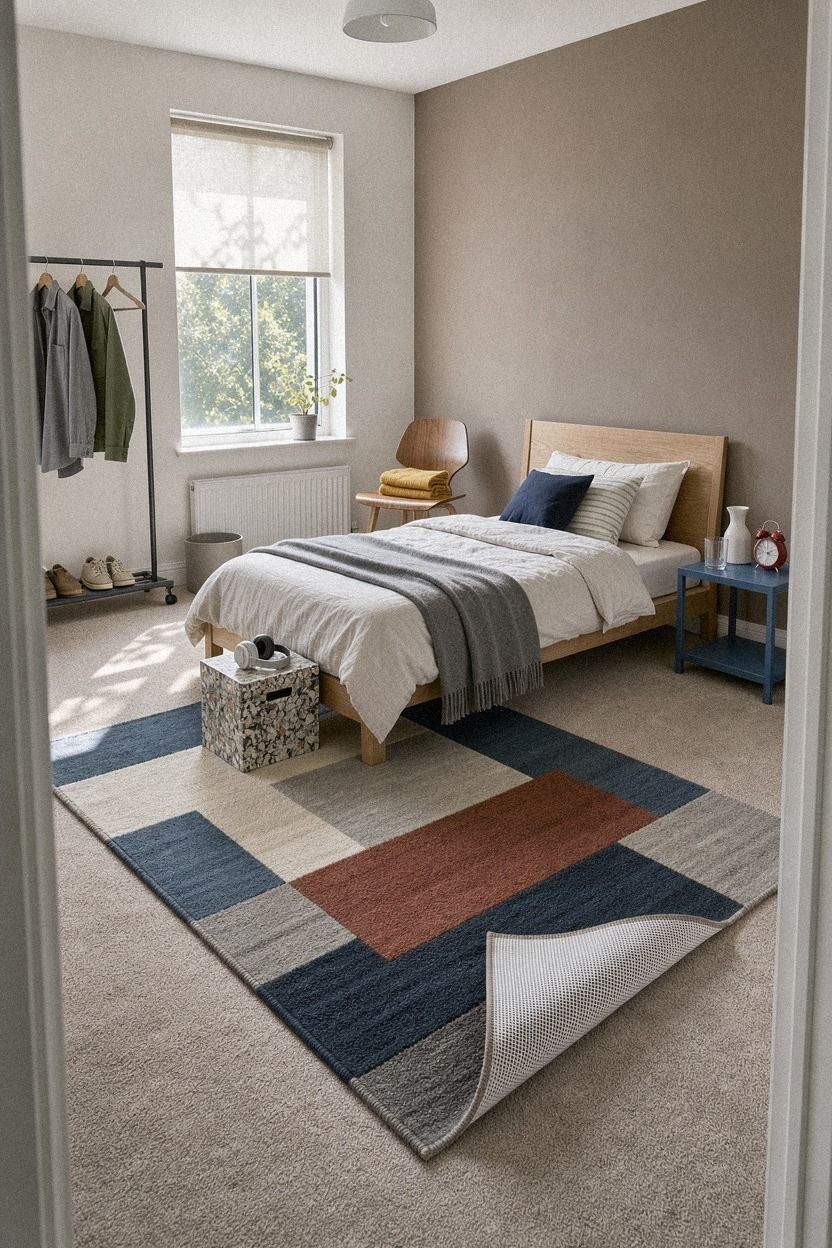
A low-pile rug behaves better over carpet because there's less material shifting beneath it.
3The Border Rule Around the Bed
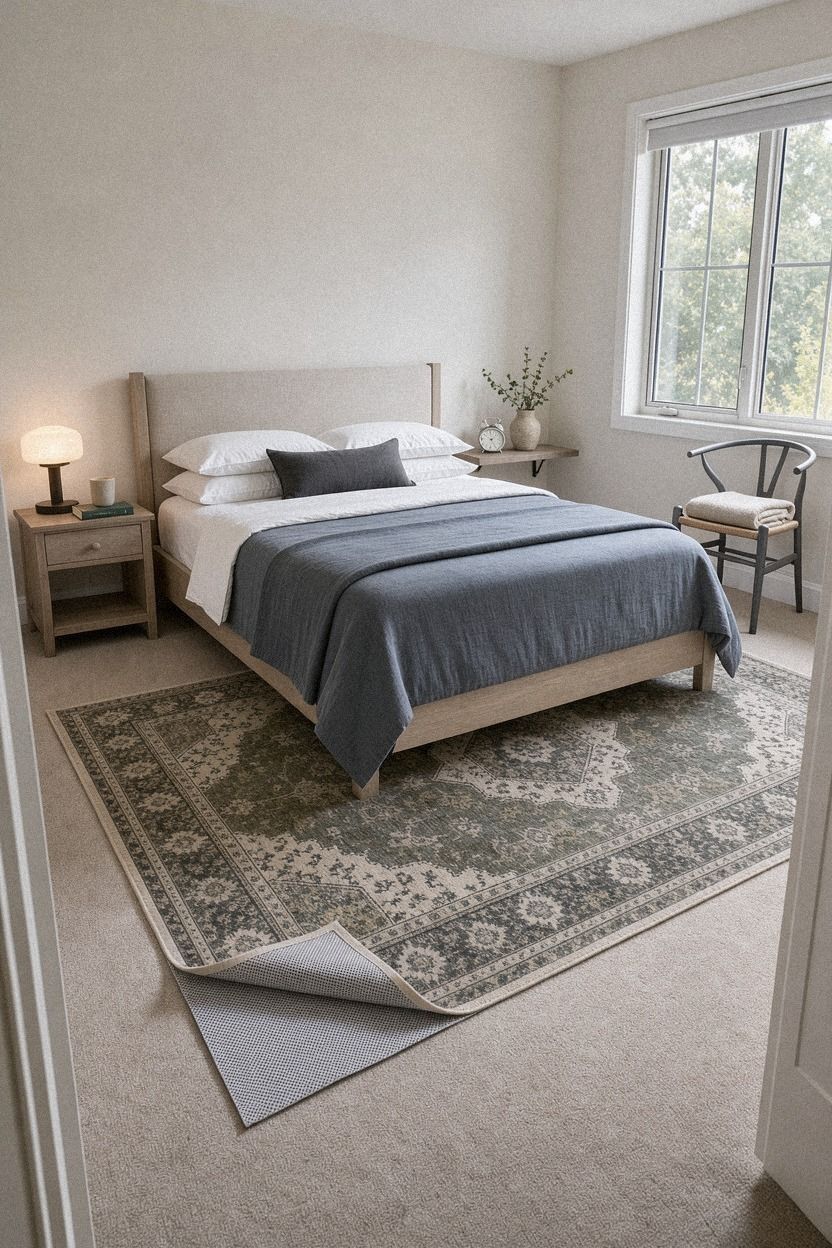
The Border Rule is simple: let the rug extend visibly beyond the bed on both sides and at the foot. That border gives your eye a clean boundary, and it also makes the rug harder to kick out of position. A shagreen-accented bedside runner in warm white or camel can reinforce the line without competing with the main rug.
You'll want the exposed rug area to look deliberate, rather than like a postage stamp. Place both front legs of a nightstand on the rug if the room allows it, but don't force heavy furniture onto a rug that's too small. I made that mistake with an 8 by 10 wool rug, and the corner folded every time I opened the drawer.
For a layered bedroom routine, this dermatologist-backed minoxidil guide offers another example of practical step order. Your floor benefits from the same thinking: establish the base, then add the attractive layer.
4Swap Plush Carpet Padding for a Flatweave Topper
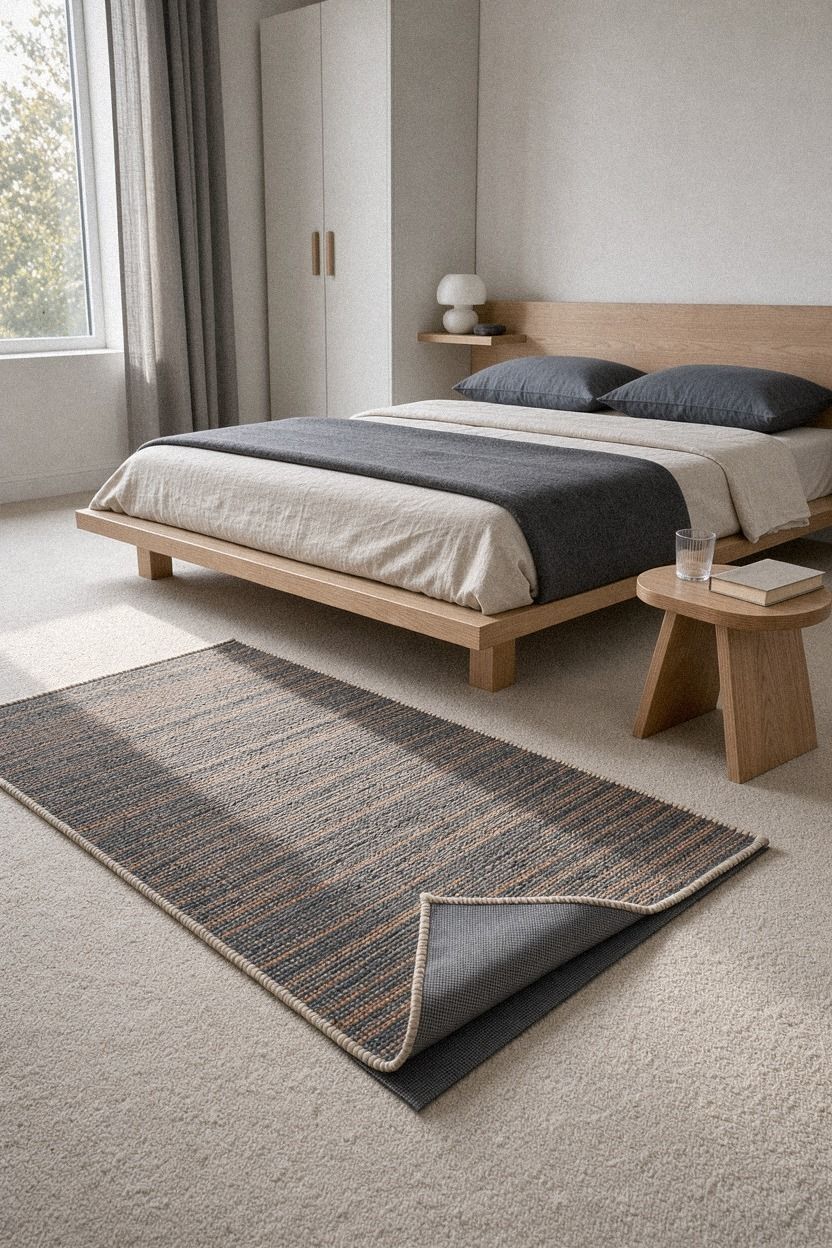
If your carpet is very plush, choose a rug with enough body to bridge the soft surface. A solid wool rug has more structure than a flimsy printed cotton mat, and a book-matched walnut bench at the foot of the bed can add useful weight without crowding the room. You won't need to pin every corner if the rug has a firm weave and the pad underneath has grip.
A flatweave can still feel warm beside book-matched walnut. Try midnight-blue bedding, a copper lamp, or an ivory throw near the headboard. The floor should support your room's mood, but it shouldn't become a thick pile sandwich that traps dust.
If you're setting up a bedroom for better rest, this 25 candle brand room guide has atmospheric ideas for scent and lighting. I’d skip a slippery polyester rug here. It looks crisp for a week, then wanders.
5Footboard or Open Edge?
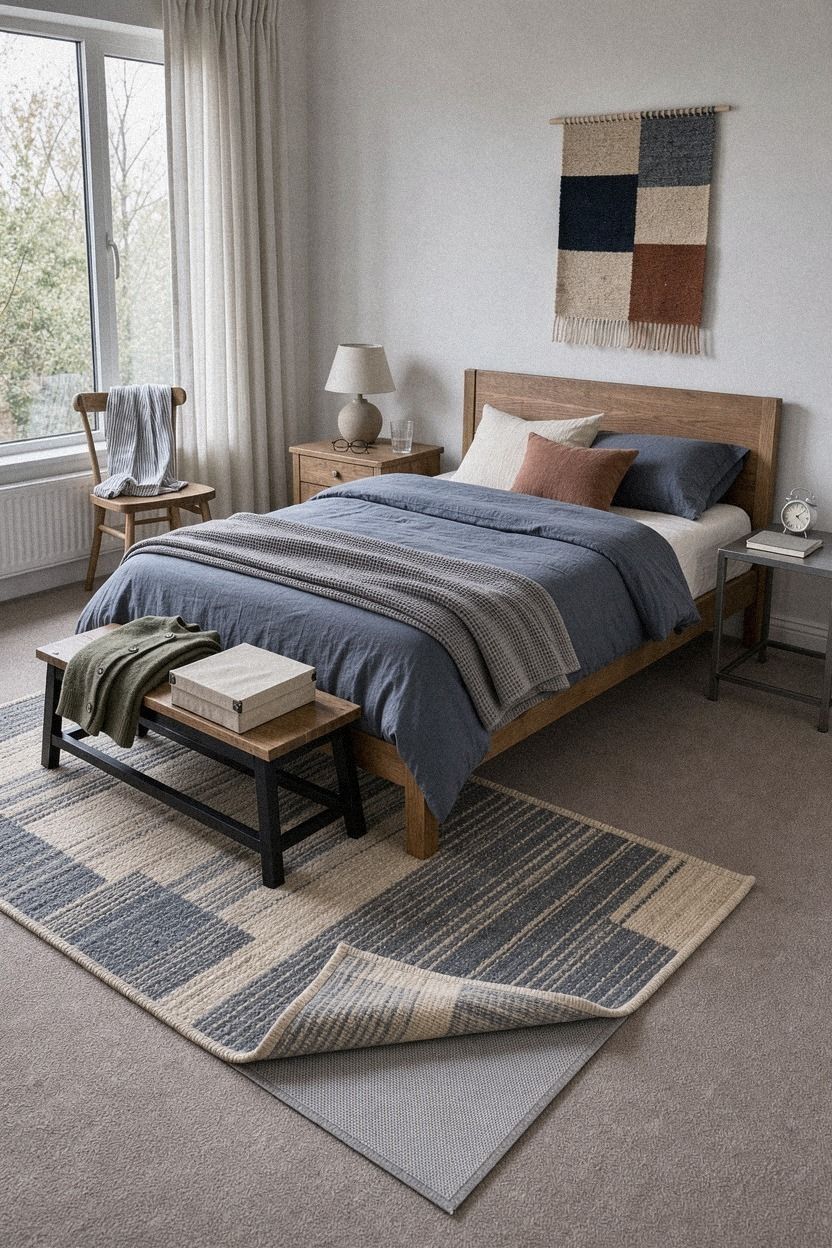
When the bed has a footboard, tuck the rug under the lower third of the frame instead of forcing it beneath the entire bed.
6Tape the Pad Carefully
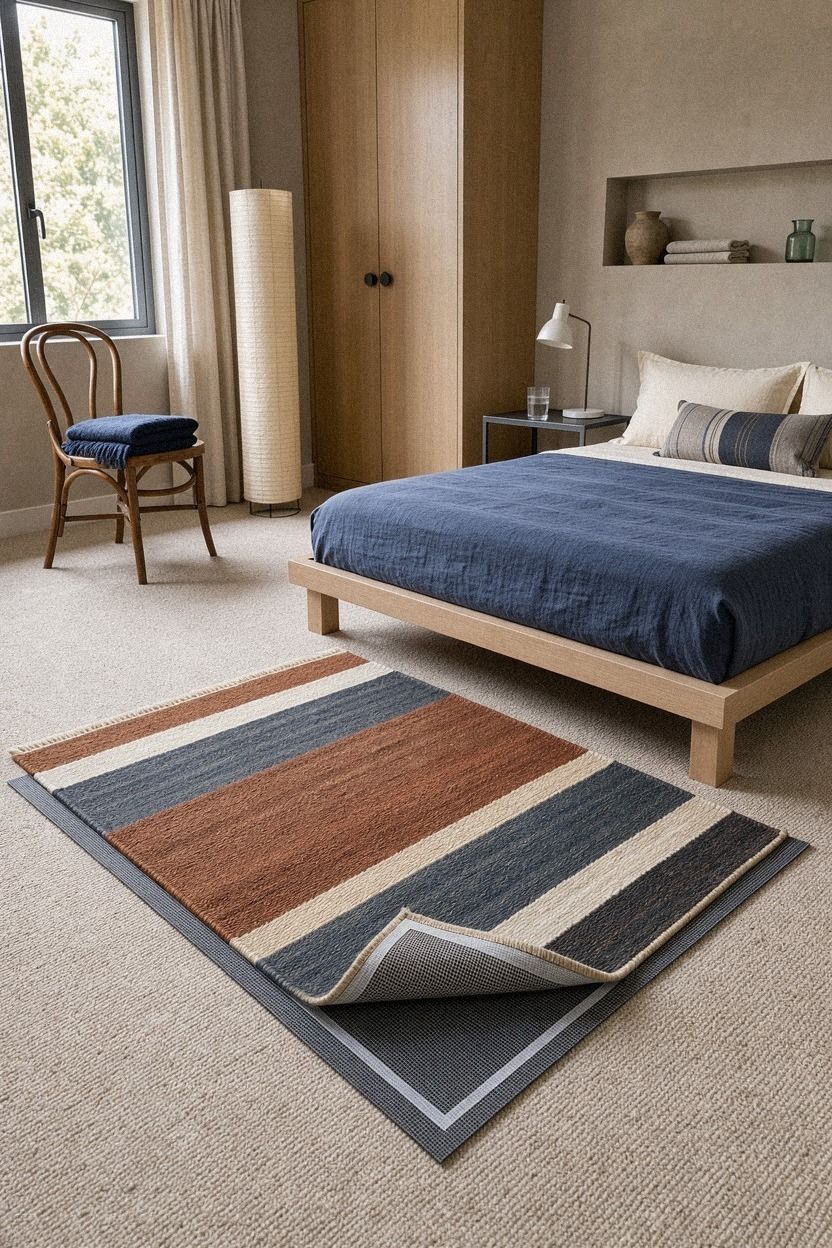
For a rental or a temporary arrangement, use carpet-safe double-sided tape on the underside of the rug pad. A low-residue carpet tape can stop corner lift without bonding your rug to the floor. Test a hidden patch first because carpet finishes vary, and you don't want a pale rectangle after removal.
Apply short strips near the corners and along the center edges rather than covering the entire pad. You’ll get enough hold while keeping the rug breathable.
If your carpet is delicate, skip tape and use a heavier felt pad instead. An unlacquered brass lamp or tray nearby can add warmth as its finish develops patina.
Your nightstand may sit near the taped edge, so check that drawers open freely. For a small bedroom, this natural facelift hairstyle story carries a similar idea: a small, controlled adjustment can change the whole look.
7A Runner Pair for Narrow Rooms
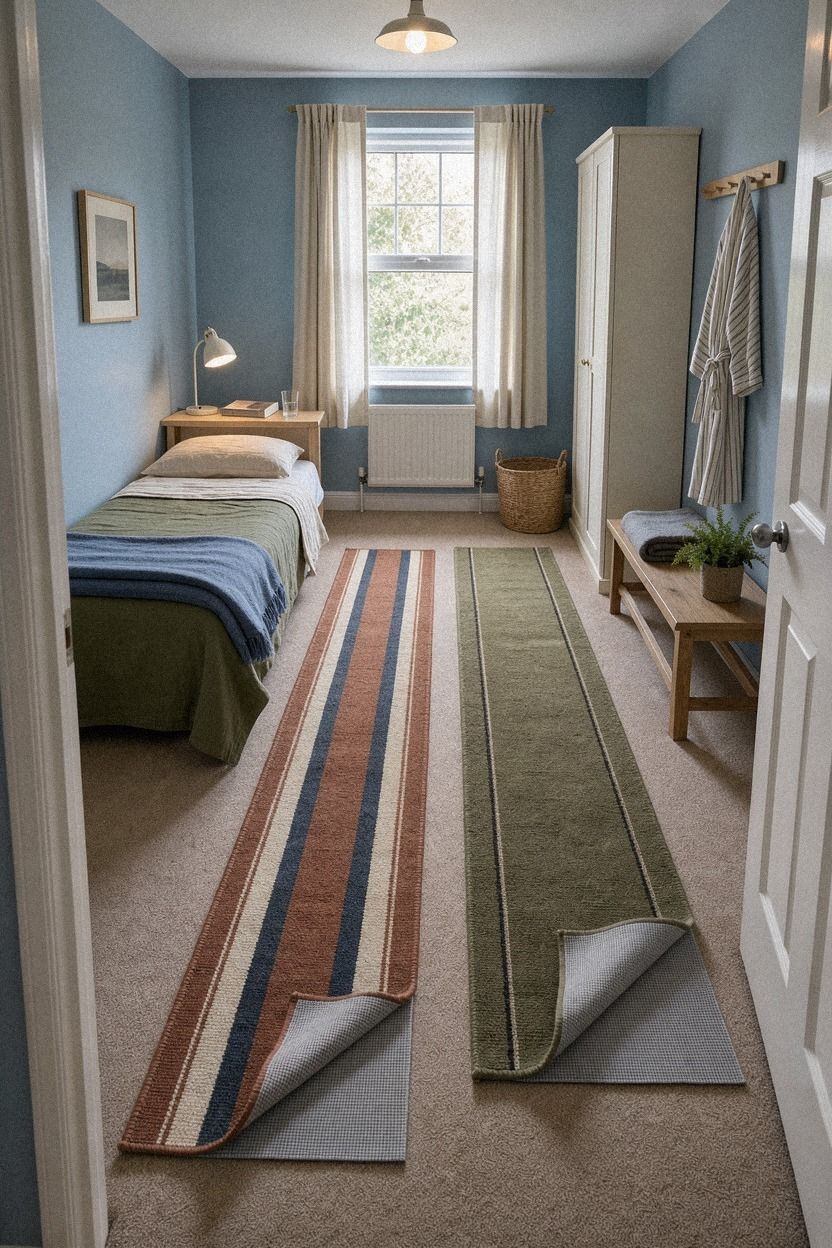
Two runners can work better than one large rug when your bedroom is narrow. Place one deep-pile mohair velvet runner on each side of the bed, aligned with the nightstands. Each runner gives you a stable landing zone without forcing a large rectangle beneath furniture that can't move.
You’ll want both runners to match in height and direction. If one has a raised pattern and the other is flat, your eye will catch the imbalance before you notice the sliding. I like a muted geometric pattern in clay, linen, and aged brass because it hides small shifts and doesn't make the room feel busy.
If you’re pairing the layout with a slow morning ritual, this matcha experiment makes a pleasant companion read. Meanwhile, Farrow & Ball Setting Plaster No. 231 brings a soft pink-beige cast that works with oatmeal, rust, and faded blue.

8Paint First, Then Size the Rug
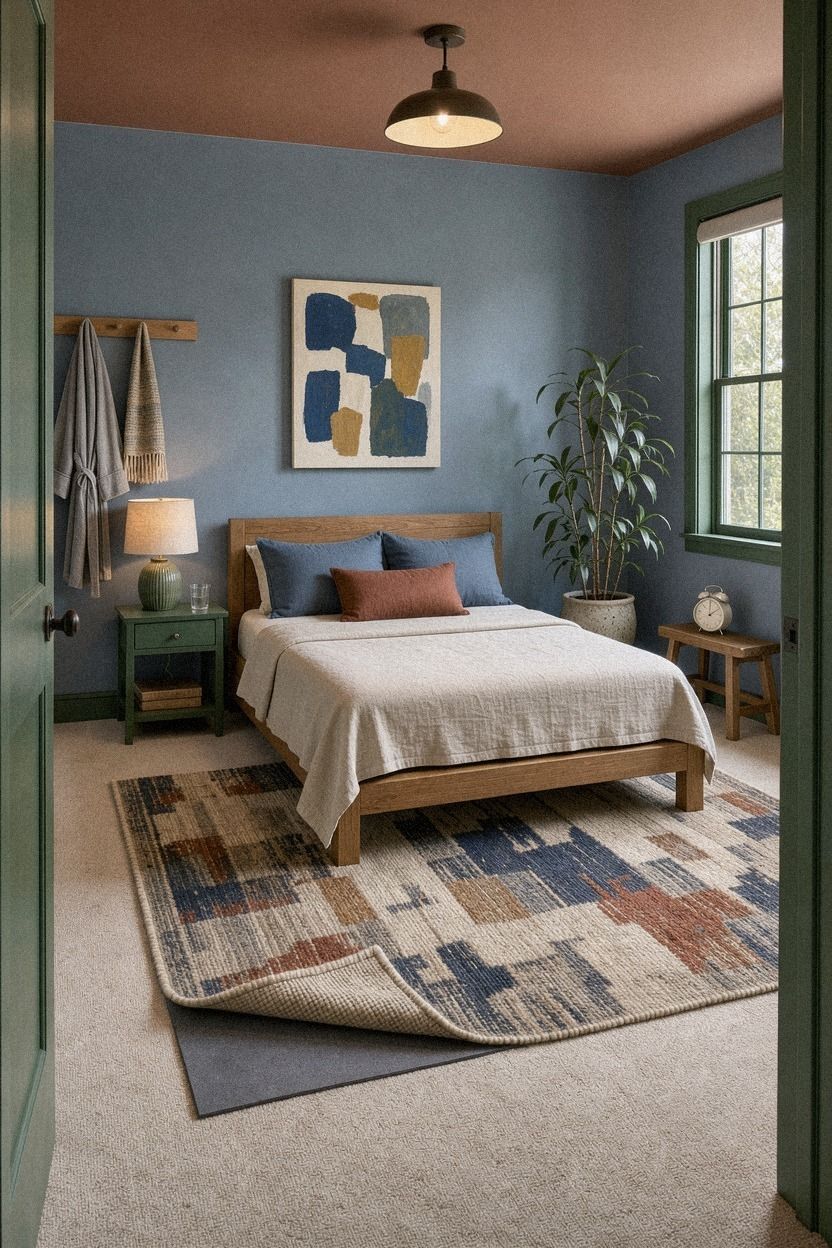
A rug can seem like the sliding problem when the real issue is a room with no visual anchor. Paint the walls first, then check how the carpet and rug colors relate. A hand-applied Venetian plaster finish in a soft plum-grey tone keeps a small bedroom grounded, while a medium taupe rug adds enough contrast to make the bed zone readable.
You'll want to view the wall finish and rug samples in morning and evening light. I wouldn't choose a pale rug beside pale carpet unless the textures differ clearly. The room may look calm, but the edges vanish, and the rug begins to feel like a loose blanket on the floor.
Dry air can also make a bedroom feel less comfortable than it looks. If that is part of your renovation, the bedroom humidity guide belongs on the same planning list as finish samples and rug measurements.
9Build the Three-Height Light Stack
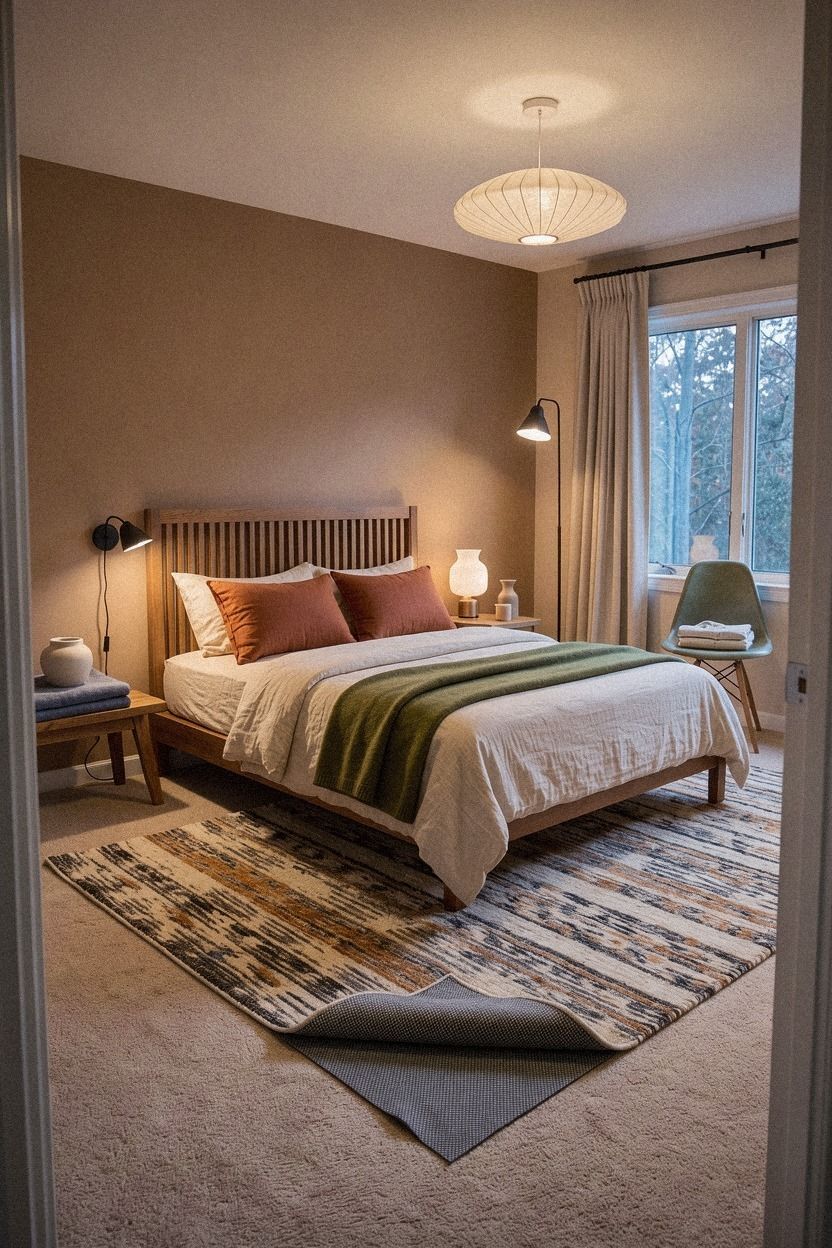
The Three-Height Light Stack keeps your eye moving from floor to bedside to ceiling. Start with a low-pile rug, add a nightstand in reclaimed weathered teak, then finish with a pendant or ceiling fixture. The layered vertical rhythm makes the rug feel attached to the room instead of dropped onto carpet.
You’ll get better results if the light has a warm color temperature and the rug repeats one tone from the bedding. I prefer a quiet navy thread beside white bedding and walnut because it feels earthy without shouting. A bright white lamp on cool gray carpet can make your rug seem dirtier than it is.
Your rug still needs a pad, though. Design won't stop movement.
For scent and evening atmosphere, this candle room guide can help you finish the light stack. The room should feel inviting before you even turn down the bed.
10Where Should the Nightstand Sit?
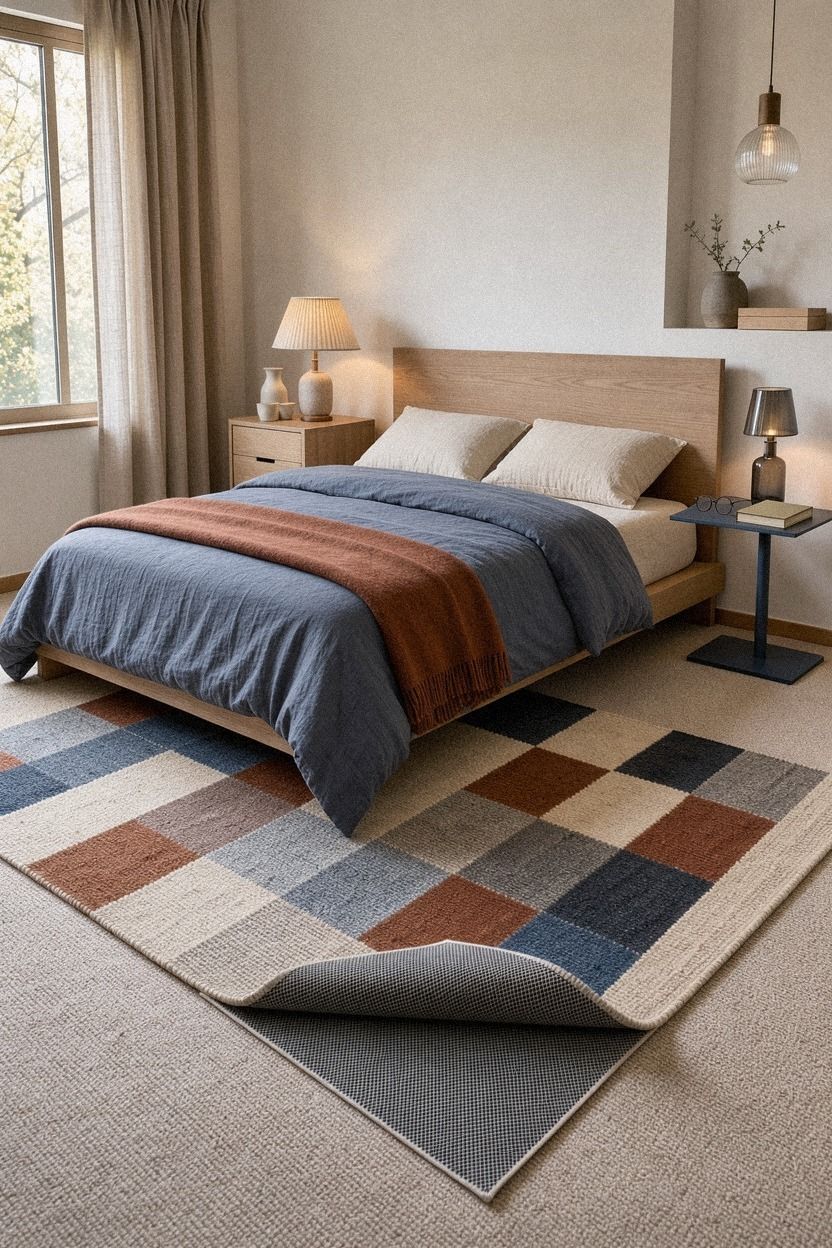
A rug becomes much steadier when one or two heavy pieces sit on it.
11Build the Soft Square Method
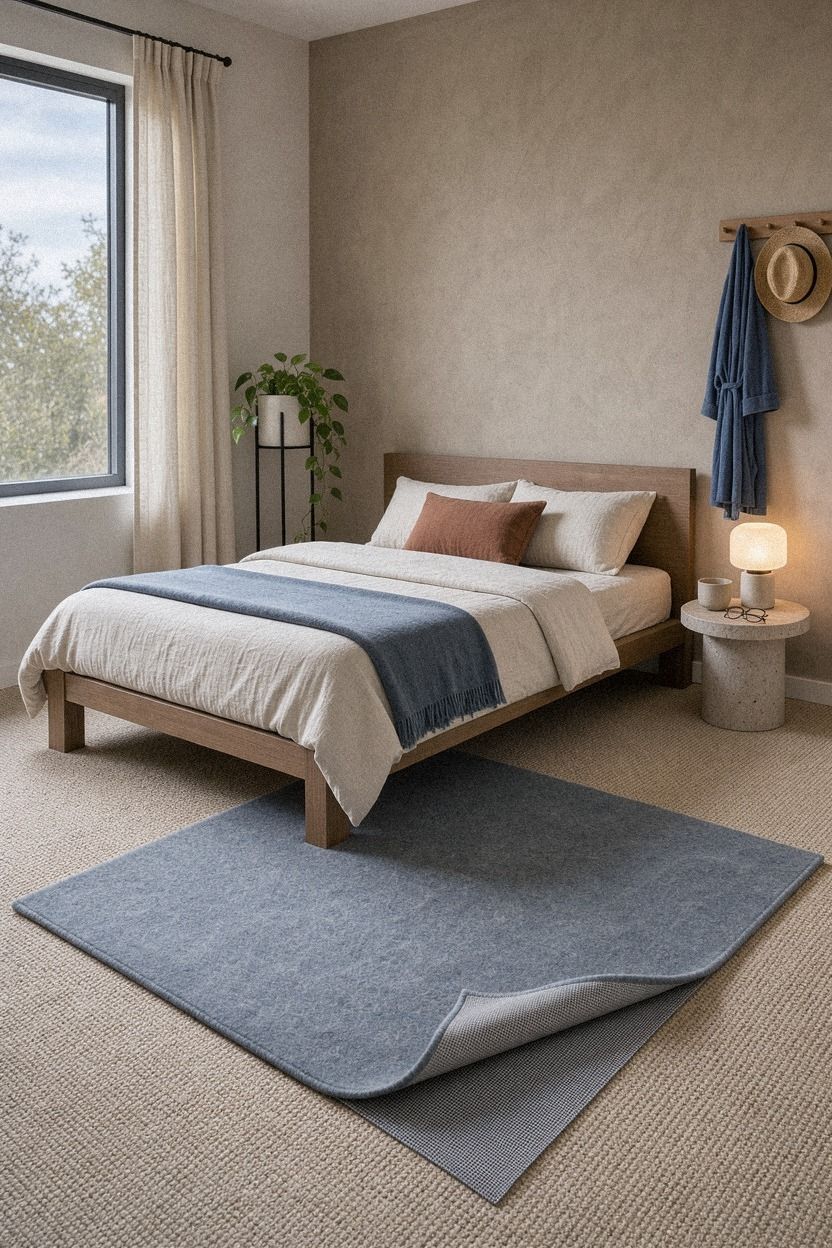
The Soft Square Method uses a small square rug beside the bed instead of a long runner. Choose a dense woven square beside a cerused white oak nightstand, then place it where your feet land first. The shape works especially well in a guest room where a full-size rug would crowd the walkway.
You’ll want the square to sit completely flat before adding furniture. Roll it in the opposite direction for a few hours if the corners curl, then set a stack of books on the edges. I don't recommend placing a small rug halfway under the bed.
It tends to become a loose triangle after a few nights.
The room can still feel warm if the bedding carries the larger pattern. Farrow & Ball Studio Green on a small accent wall would make the square feel richer, but I'd use it only where you want drama. For an evening reading ritual, this bodybuilder diet experiment adds a gentle pause to the routine.
12Turn the Rug Sideways for Better Weight
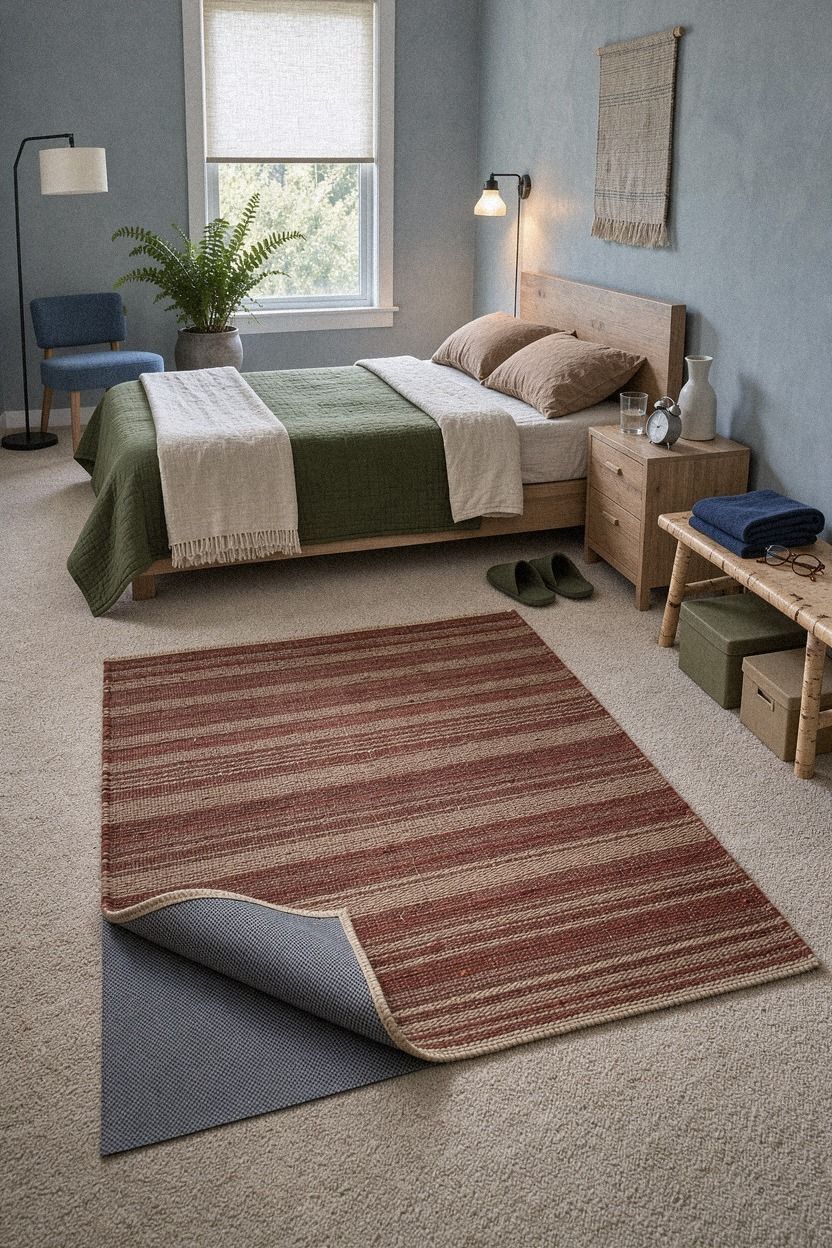
Sometimes the rug slides because its longest edge runs in the direction of foot traffic. Turn the shagreen-accented 8 by 10 rug sideways so the bed crosses more of its width. That orientation can put more carpet and furniture weight along the rug's vulnerable edge, especially in a room where you walk from the door straight to the bed.
You’ll need to measure before moving everything. Leave the recommended 18 to 24 inches past the bed where the room allows, then check that the rug doesn't block the closet or door swing. A queen bed's 60 by 80-inch footprint gives you a useful starting point for that layout.
I tested this with a dusty-rose and charcoal rug with brass accents and found that the sideways placement looked calmer, too. It made the bed feel centered without adding another object.
A tiny orientation change can be remarkably effective! If dry air is bothering your sleep, this humidity guide is worth saving alongside your measuring notes.
13Use the Contrast Test
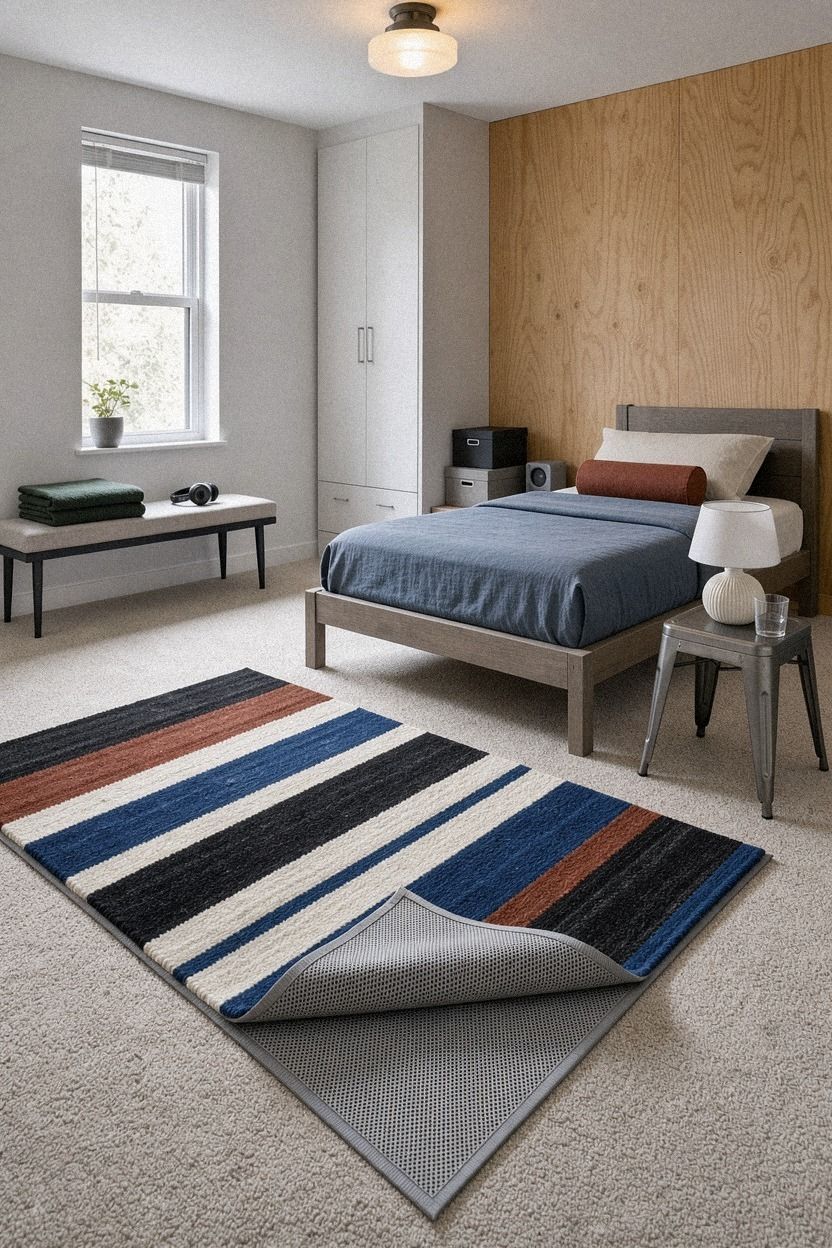
The Contrast Test means comparing the rug, carpet, and bed frame before you commit. Put a book-matched walnut tray on the nightstand and a rug sample on the floor, then compare the arrangement from the doorway.
If the rug disappears, choose a darker or warmer version. If it jumps out, soften the pattern.
You’ll see sliding more easily when the rug contrasts slightly with the carpet. A warm white rug over warm white carpet can hide movement until the edge buckles. A camel rug against warm white carpet, with black accents nearby, gives you enough visual information to catch a shift quickly.
If you’re deciding whether a low pile is too plain, remember that texture carries the interest. Try Belgian flax linen bedding, a ribbed cotton blanket, and a subtle rug border. This natural facelift story is a reminder that structure often matters more than decoration.
14Can You Walk the Rug Before You Style It?
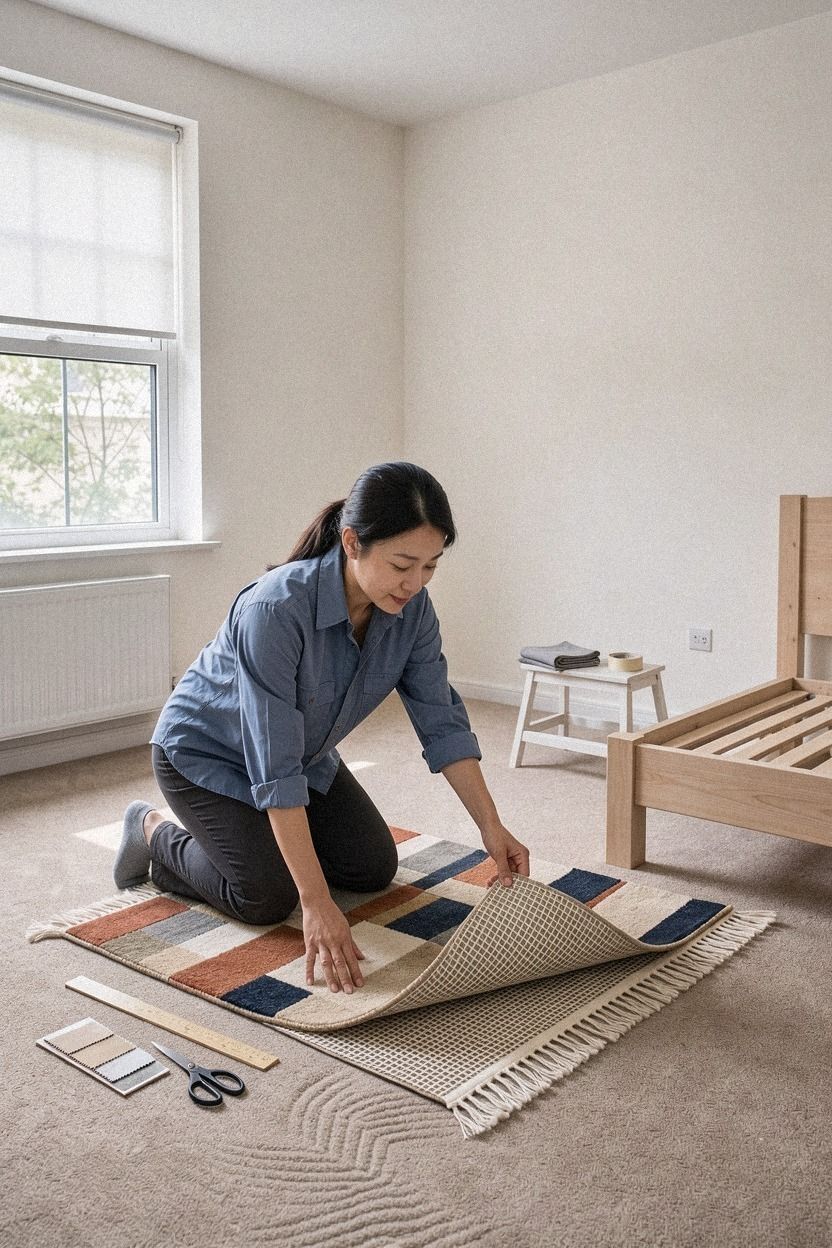
Before adding baskets, benches, or layered throws, walk across the rug in bare feet. The rug's organic bouclé surface should feel flat, with no soft wave beneath your heel.
Walk from the door to the bed, turn near the nightstand, and step off at the closet. Those are the places that reveal movement.
You’ll save time if you test the pad first. Put the rug over it, leave the furniture off for a while, then return and inspect every corner.
If one edge lifts, trim the pad or shift the rug before adding weight. I’ve learned that styling over a problem only hides it until bedtime.
Would you rather discover a crooked edge before or after making the bed? Your answer is the whole point of this test. If you want a quiet evening atmosphere afterward, this sensory room guide has a few useful lighting cues.
15Hide the Edge Under a Bench
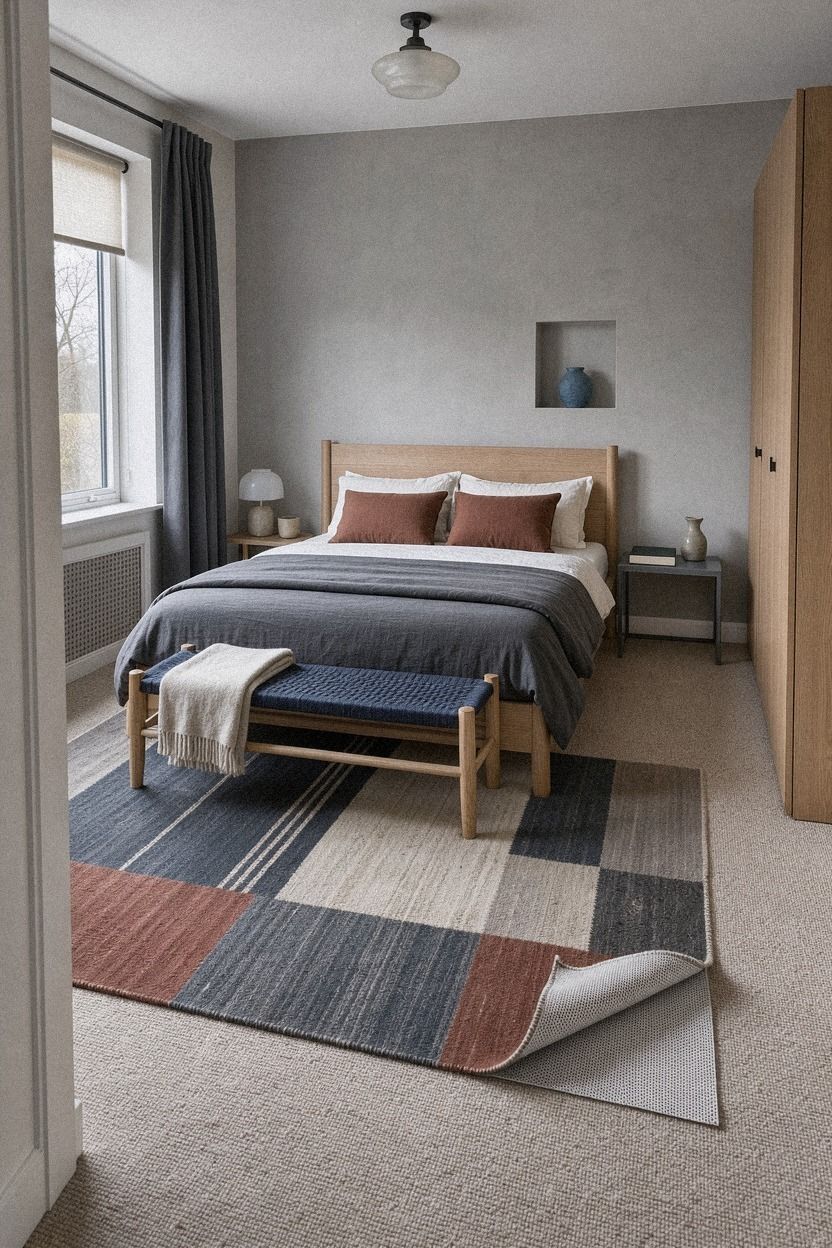
A bench at the foot of the bed can hold the rug edge while giving you a useful place to sit. Choose a bench with unlacquered brass details that can develop patina rather than thin legs that barely touch the rug. The weight should sit across the rug, not press one tiny point into it.
You’ll want to leave enough room to walk around the bench. In a small bedroom, a narrow bench is more practical than a deep one, especially if your bed already occupies most of the floor.
I’d skip a loose basket here. It can catch the rug edge and pull it out every time you reach for a blanket.
If the bench has sage or warm cream upholstery and the room includes natural wood, the whole zone feels more gathered. Sherwin-Williams Accessible Beige SW 7036 can bridge beige carpet, flax linen, and faded terracotta without making the room dull. Your feet get a stable rug, and your morning routine gets a useful seat.
16Warm Harmony or Too Much Matching?
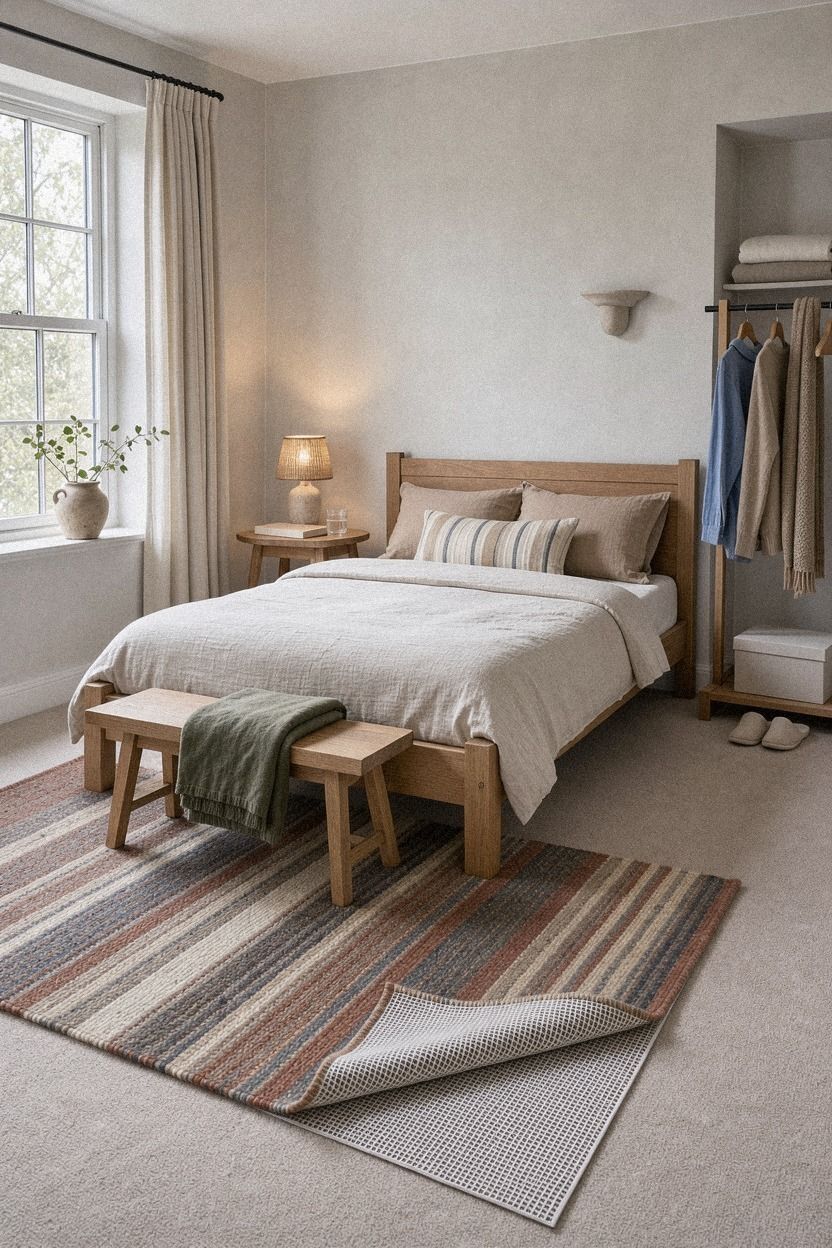
Color harmony helps the rug look settled, even when the surfaces differ. Pair a deep-pile mohair velvet accent rug in terracotta with beige carpet, cream bedding, and a muted clay pillow.
You don't need an exact match. You need one shared undertone that keeps the layers from arguing.
You’ll want to avoid matching the carpet too literally. A rug that copies the carpet's color and texture can disappear, while a strong contrast may make the floor feel chopped up. My favorite balance is warm carpet, a slightly darker rug, and pale bedding above it.
If your bedroom also serves as a dressing area, keep the walkway clear and let the rug define only the sleep zone. This bedroom humidity article fits that practical, comfort-first approach. The floor should support your routine, not become another thing to manage.
17Protect the Setup With a Monthly Reset
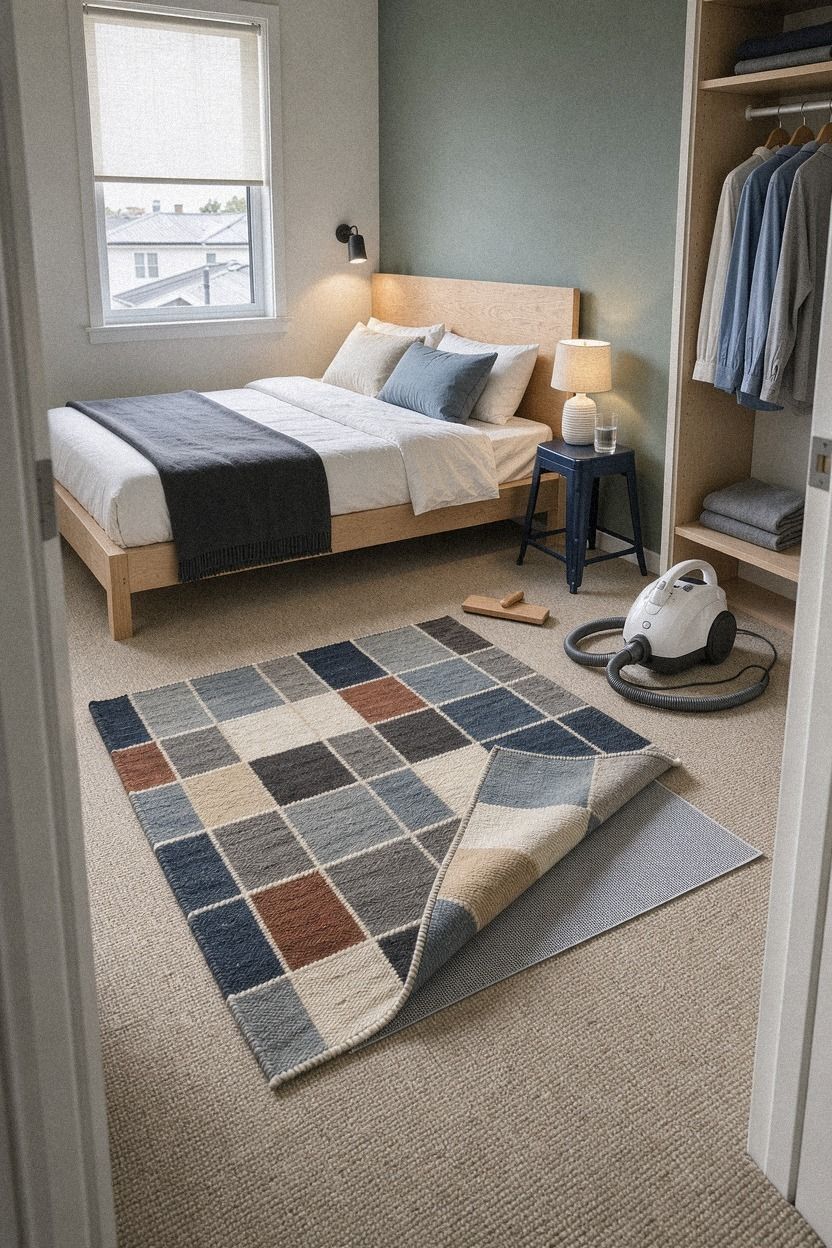
Even a stable rug can shift when carpet fibers compress.
The Honest Cost of a Bedroom Rug Setup
A rug project can stay modest if your existing carpet, bed, and nightstands are usable. The most important purchase is usually the pad, rather than a decorative object. You can spend nothing by repositioning furniture and using a rug you already own, then add a better pad when the room proves the layout works.
For broader bedroom planning, these typical US figures give you context. They aren't a promise for your exact project, but they help you see where a rug setup sits inside a larger refresh. If you're pairing the project with a morning routine, this matcha article offers an easy companion read.
A wool rug itself can account for a meaningful portion of a budget. A typical wool rug 8 by 10 costs $400 to $1,500, while washed-linen bedding often runs $150 to $450. If you're choosing where to put your money, I’d prioritize the pad and the rug's size before decorative lighting.
Your feet notice stability every night.
Why This Bedroom Fix Keeps Working
I used to think a rug on carpet was mostly a styling decision. It isn't.
It’s a movement problem, a proportion problem, and sometimes a texture problem wearing one pretty disguise. Once I started checking the pad, the rug border, and the furniture weight together, the room became easier to arrange.
The best setups don't rely on one product doing all the work. A dense rug helps. A grippy pad helps.
A bed positioned over the right section helps more than either one alone. And if your carpet is already plush, adding another thick layer may feel luxurious at first but become awkward around every door and drawer.
You’ll also notice that a stable rug changes how you use the room. You can step out of bed without searching for a soft spot.
Your nightstand can stay aligned. The room feels calmer because your eye isn't registering a crooked rectangle every time you walk in.
That matters more than chasing a particular trend.
A Few Things Worth Answering
What is the best rug on carpet bedroom solution for a small bedroom?
A low-pile rug over a carpet-safe felt-and-rubber pad is usually the best choice. Keep the rug under the lower two-thirds of the bed and let it extend 18 to 24 inches beyond the sides when possible. A stable landing zone matters more than a thick pile.
Where can I buy bedroom rugs on carpet on a budget?
Look at IKEA, Target, Wayfair, Facebook Marketplace, and local thrift shops. You don't need a designer label to get a dense weave and useful size. Second-hand wool rugs can offer strong value, but inspect the backing and clean them before placing them in your bedroom.
If you're organizing the rest of a personal-care routine too, this minoxidil guide may be useful.
How much does a rug and carpet bedroom makeover cost?
A basic setup can cost about $200 to $800 if you include bedding, paint, shades, and art, though the rug and pad may use only part of that budget. Repositioning furniture is free, so test your layout before buying anything.
Can I create a rug in a carpeted bedroom on a budget?
Yes, and you can start with three low-cost moves: rotate the rug, place furniture feet over the edge, and use a dense pad cut slightly smaller than the rug. You’ll get better grip without replacing the carpet. A measured layout saves money before you shop.
Is a rug on carpet worth it in a small space?
Yes, if the rug defines the bed zone without blocking the door or closet. A small room can benefit from that visual boundary. Choose a low-pile style and keep the exposed border consistent so the floor feels intentional rather than crowded.
Is a rug on carpet a good idea for a rental?
Yes. Use a removable rug pad, avoid permanent adhesive, and test any carpet tape in a hidden spot. You can also use a tension rod for curtains and removable wall pieces elsewhere.
Reversible layers give your bedroom warmth without risking the deposit. For another small, temporary refresh, this hairstyle story has a similarly low-commitment approach.
The Rug Choice I'd Make First
If I had to pick one, I'd start with a dense low-pile rug on a carpet-safe felt-and-rubber pad. It solves movement without adding bulk, and the 18 to 24-inch border makes the bed feel anchored. Pin this guide for later, then test your layout before you shop.
For a finishing touch, this room guide can help you think about the bedroom's evening atmosphere after the practical work is done. The right setup feels quiet, generous, and pleasantly stable.