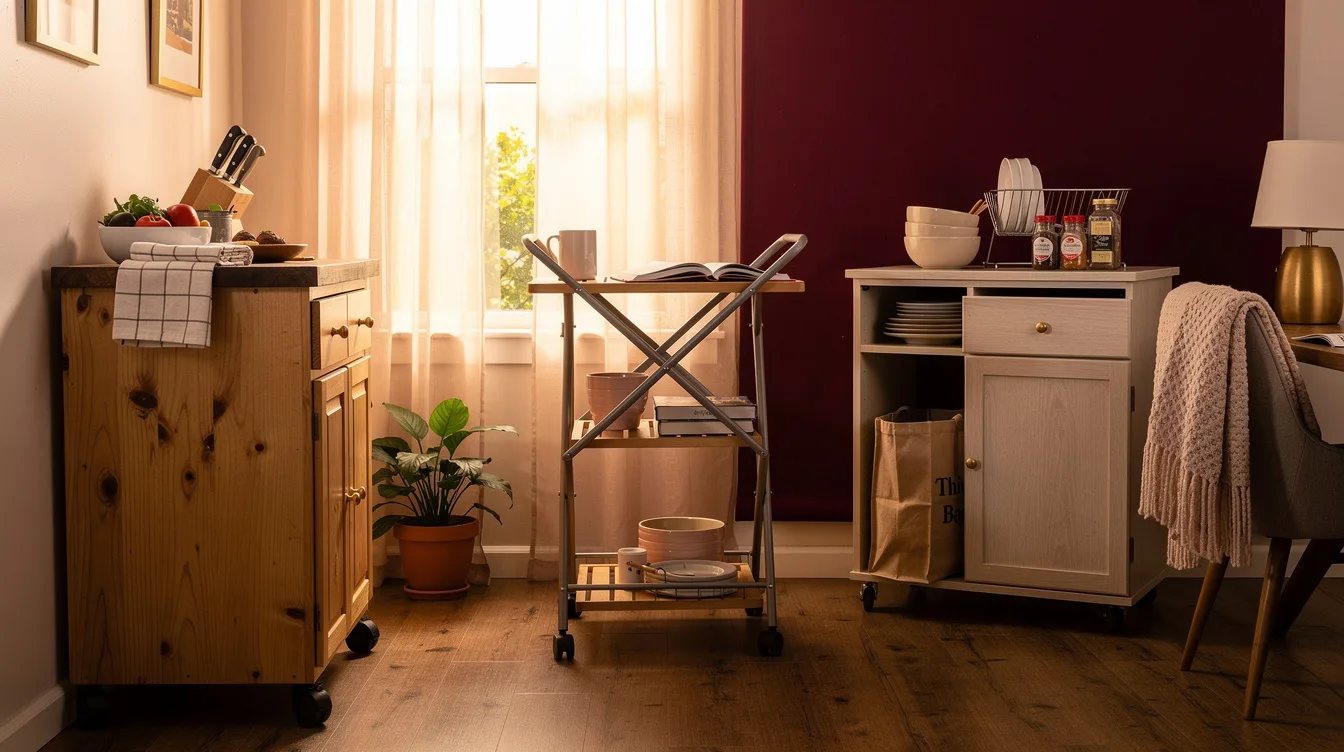
Studio Kitchen Eating Your Prep Space? 12 Wayfair Carts Under $200
16 november 2026A studio kitchen can lose its only workable surface to one cutting board, one bowl, and a few ingredients. A 30-by-18-inch cart top changes that equation, but only if the cart fits the room's traffic pattern as well as the cooking task.
Wayfair's under-$200 options split into clear roles: the Raabe for a permanent station, the Origami for floor space you need back, and the Arthalia for the tightest corner. The Lotosha is worth considering, though its published dimensions need confirmation before it enters a close-fitting gap.
What you will find inside
- Claim 30 Inches of Prep Width with Raabe
- Fold Origami Before the Studio Takes Over
- Put Arthalia in the Narrowest Working Zone
- Challenge Lotosha's Conflicting Footprint
- Anchor Raabe Against the Wall
- Roll Origami Out Only When Cooking
- Give Arthalia's Drawer a Daily Job
- Read Lotosha's Outside Edges
- Keep Raabe's Countertop Free for Prep
- Match Origami's Depth to the Parking Spot
- Compare Storage to the Actual Footprint
- Buy for the Studio's Weekly Rhythm
Claim 30 Inches of Prep Width with Raabe
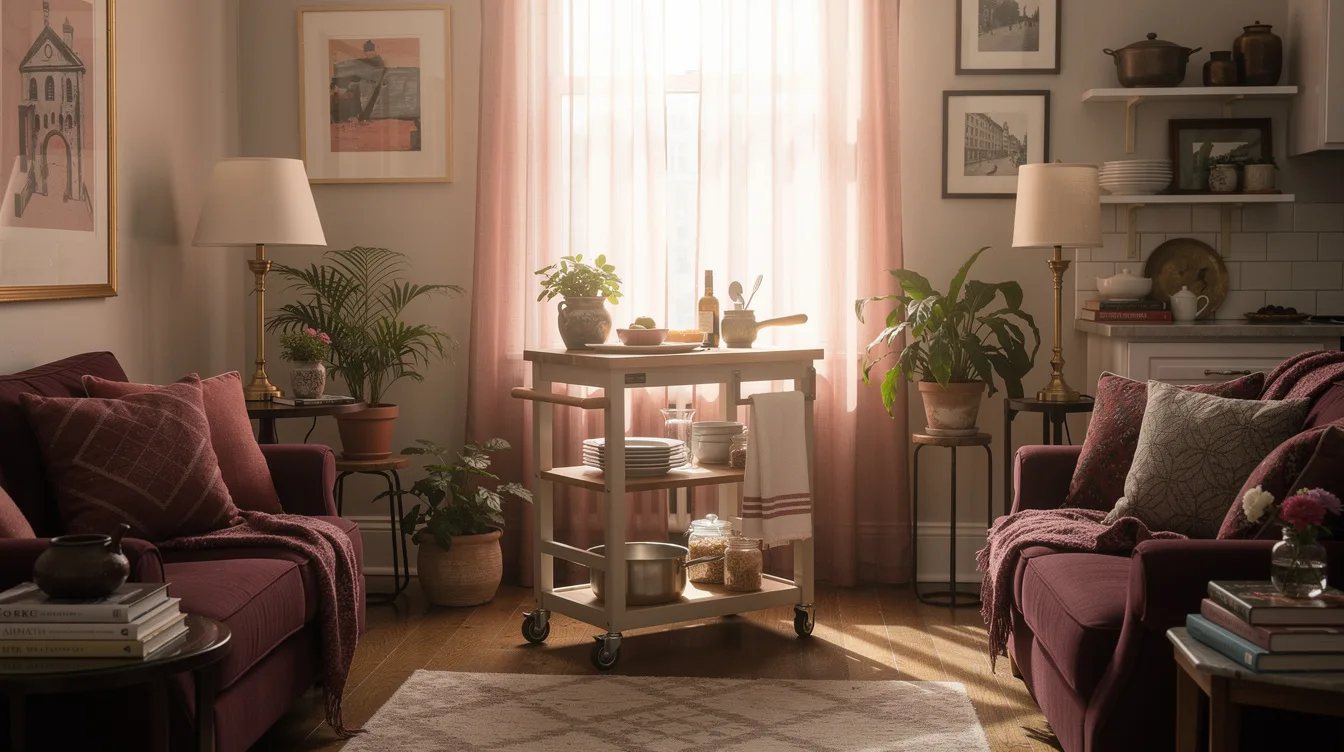
When a studio has no usable counter, the Andover Mills Raabe earns its place as a permanent prep station. Its listed 30-by-18-inch countertop and 35-inch height give you more side-by-side room than the smaller options, while the solid pine top brings a real work surface to an otherwise improvised kitchen.
At about $170, it stays under the $200 ceiling in the supplied Wayfair listing snapshot. Set a cutting board near one side, leave room for a mixing bowl, and use the two shelves for pantry bins or cookware instead of crowding the countertop.
Fold Origami Before the Studio Takes Over
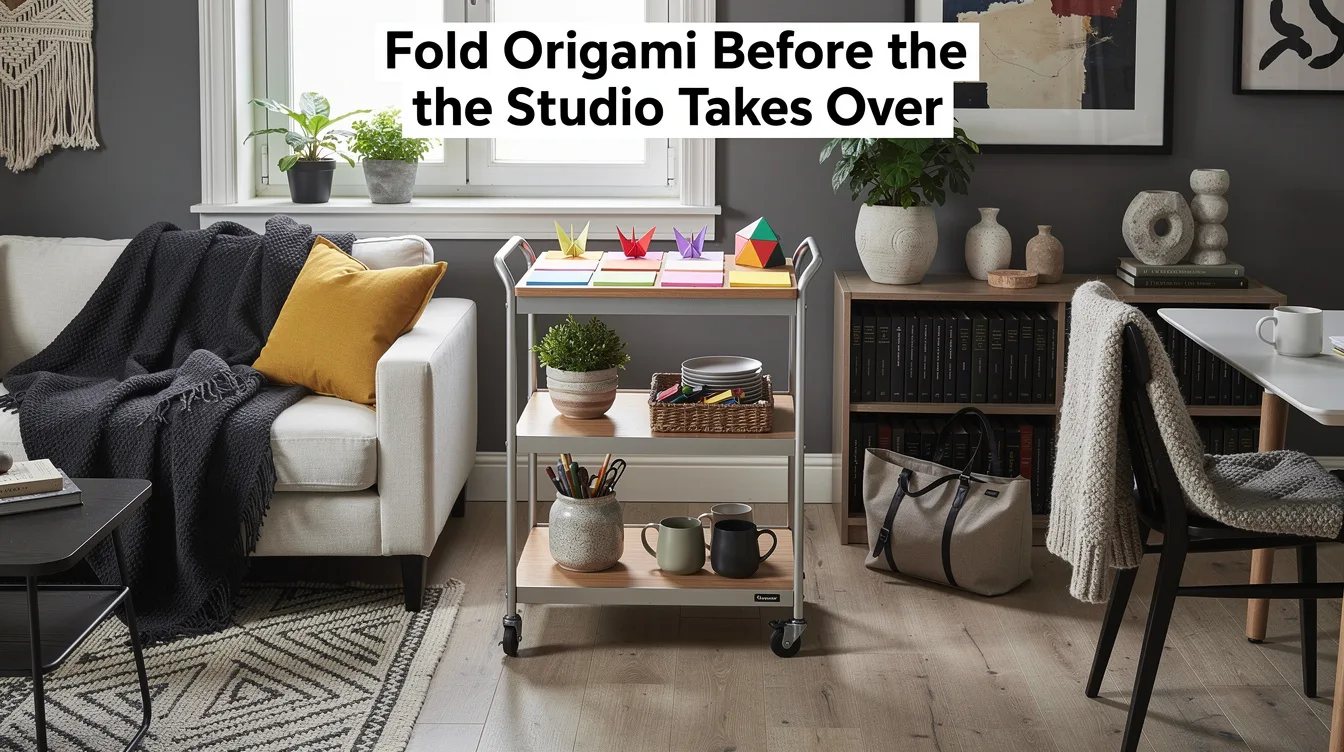
The Origami Foldaway is the practical choice when the floor has to perform double duty. Wayfair lists it at 20 by 24.02 by 36.02 inches, with a rubberwood butcher-block top and a powder-coated steel frame.
Observed listings place it at about $140 to $161, depending on the listing and finish. Roll it out for chopping or serving, then fold it when the studio needs a clear path, but check the dimension diagram carefully because the width and depth orientation may not match your intended parking spot.
Put Arthalia in the Narrowest Working Zone
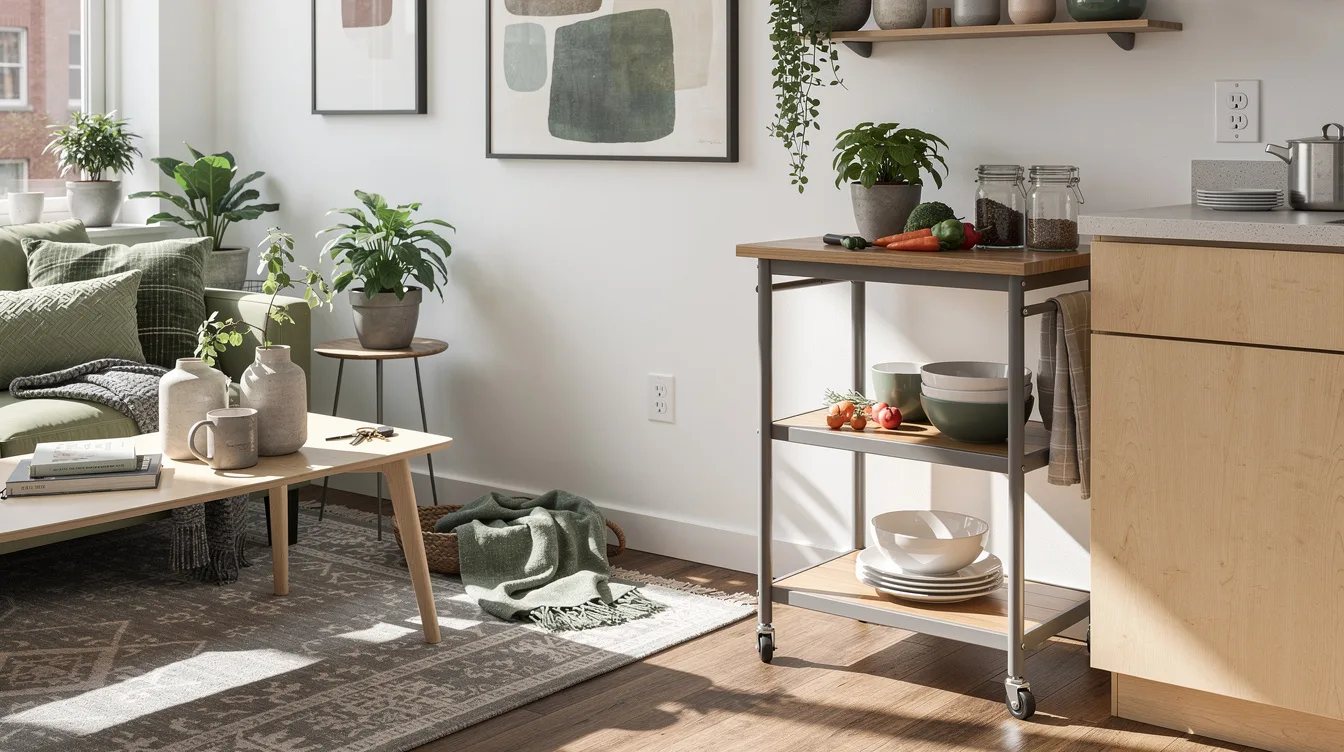
For a genuinely tight corner, the Wade Logan Arthalia makes the strongest spatial argument. Its listed footprint is 21.65 by 17.7 inches with a 35-inch height, giving you a small prep surface without taking over the room.
At about $95, it also leaves the most room in the budget for a cutting board or storage bins. The drawer, cabinet, and open shelf create useful separation, but its base and top are listed as solid plus manufactured wood, so do not treat the countertop as a confirmed all-solid-wood butcher block.
Challenge Lotosha's Conflicting Footprint
The Winston Porter Lotosha deserves a measurement pause before purchase. Its listing gives a 33-by-17.9-inch countertop and a 35.8-inch height, yet the stated overall width is 25.6 inches, and those measurements cannot both describe the cart's maximum outside width.
The observed price is about $118 to $125, with a solid-wood top and manufactured-wood base. The deal is attractive when enclosed storage matters, but budget space for at least the stated countertop width and ask Wayfair to confirm the assembled footprint, including the towel and spice racks.
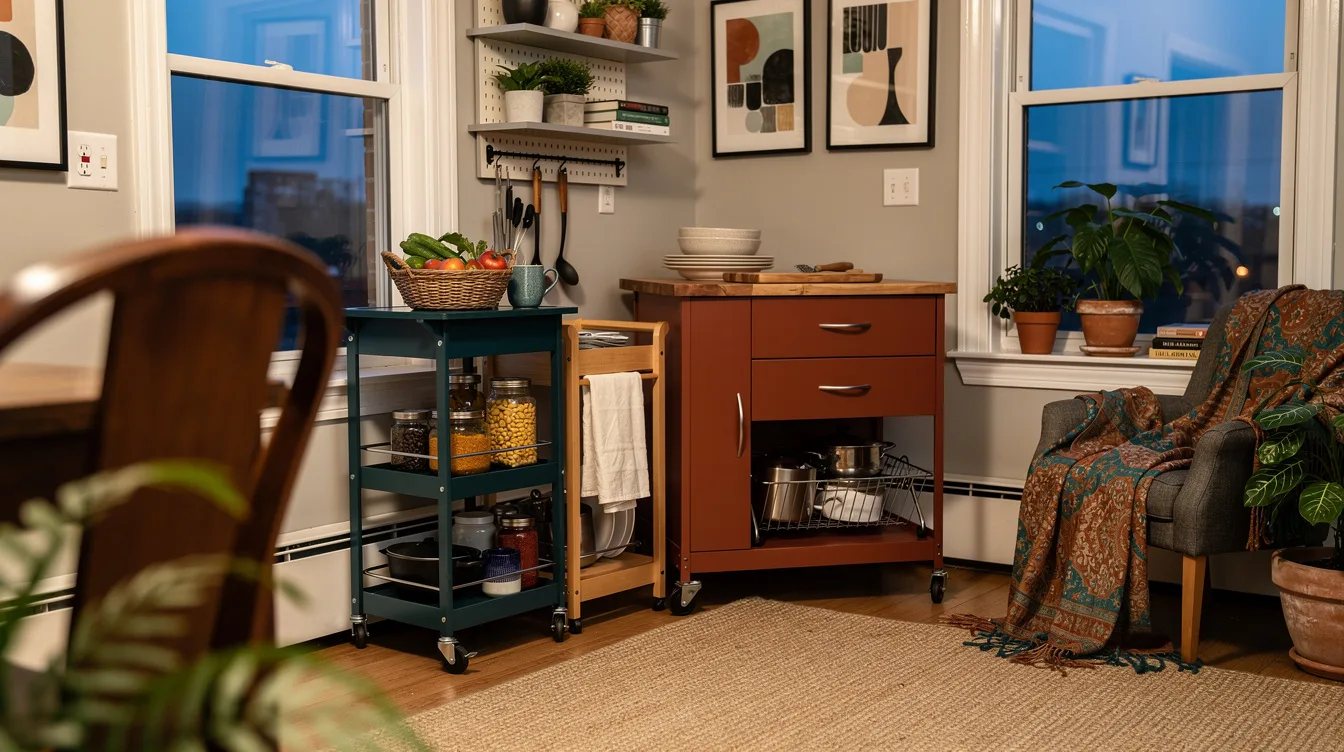
Anchor Raabe Against the Wall
Use the Raabe solid pine top as a wall-side work surface rather than pretending the cart is a full freestanding island. That placement gives the 30-inch width a clear job: chopping, mixing, and setting down a hot pan while the room's main walkway stays open.
A wall position also makes the two shelves easier to organize because their contents stay within one working zone. Keep the most-used items in the upper shelf and reserve the lower shelf for heavier cookware or pantry containers that do not need to move every day.
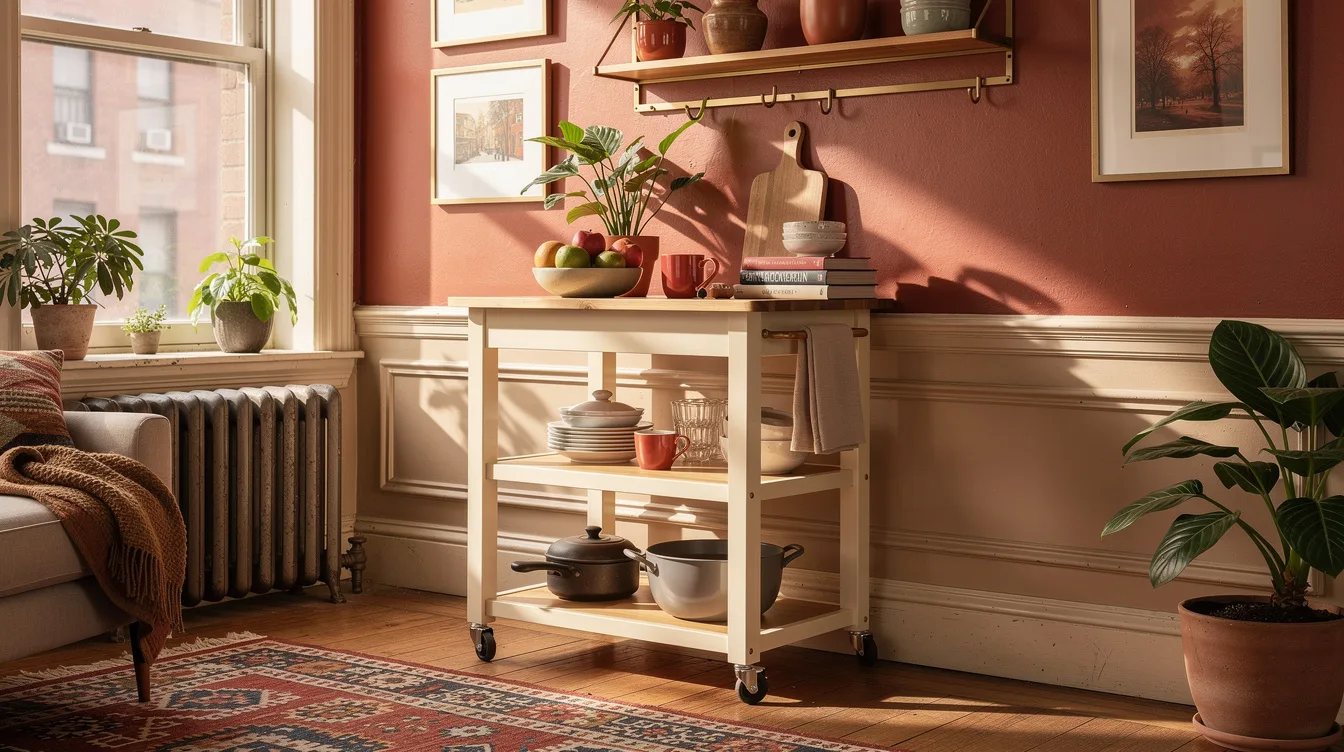
Roll Origami Out Only When Cooking
The Origami rubberwood butcher-block top works best when the cart has a schedule. Keep it folded or parked during noncooking hours, then roll it into position when you need a temporary chopping surface, a place for ingredients, or a serving station.
That routine protects the studio's open floor without asking one piece of furniture to remain permanently in the middle of the room. Leave the top clear after cooking so the cart can fold without a pile of bowls, appliances, or pantry goods blocking the frame.
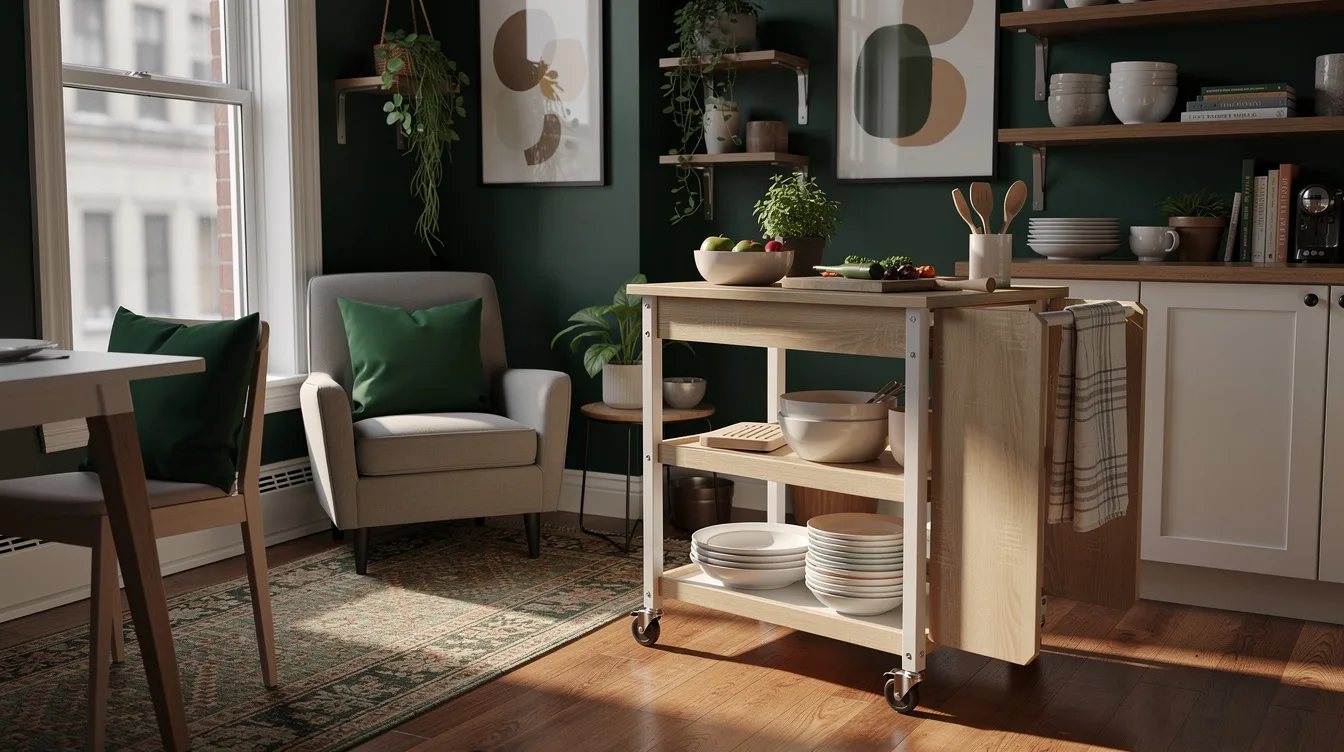
Give Arthalia's Drawer a Daily Job
The Arthalia drawer should hold the tools you reach for constantly, such as measuring spoons, peelers, and a can opener. Its cabinet can take less attractive supplies, while the open shelf keeps one basket or a compact stack of pans visible and easy to grab.
This division matters more in a studio because every exposed object competes with the cooking surface. Keep the small footprint focused on daily tasks, and move backup supplies elsewhere rather than turning the cart into a miniature warehouse.
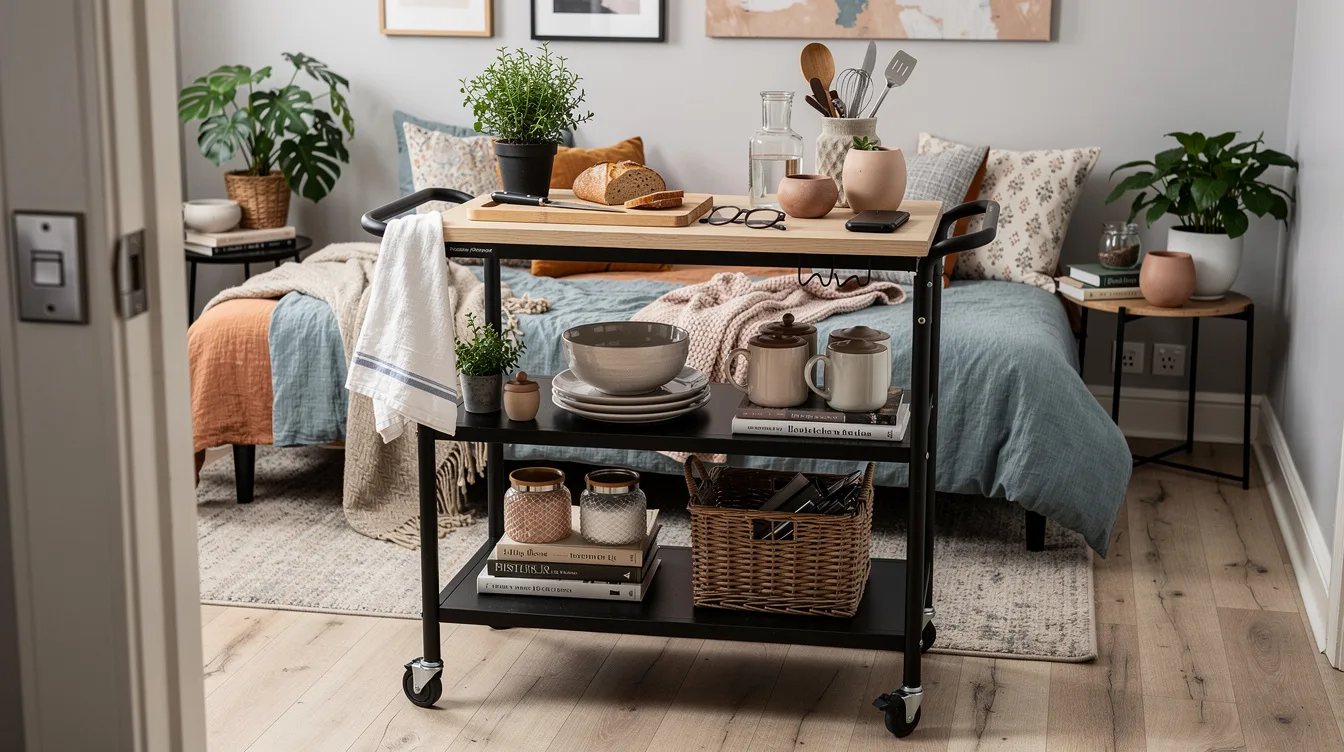
Read Lotosha's Outside Edges
Measure the Lotosha countertop first, then account for the hardware that extends beyond the base. The towel rack and spice rack may affect where the cart can sit, especially beside a refrigerator, a doorway, or a narrow apartment galley.
Use painter's tape on the floor to mark the listed 33-inch countertop width before ordering. That simple test will show whether the cart can open drawers, clear the cooking path, and leave enough room for a person to pass without relying on the conflicting overall-width number.
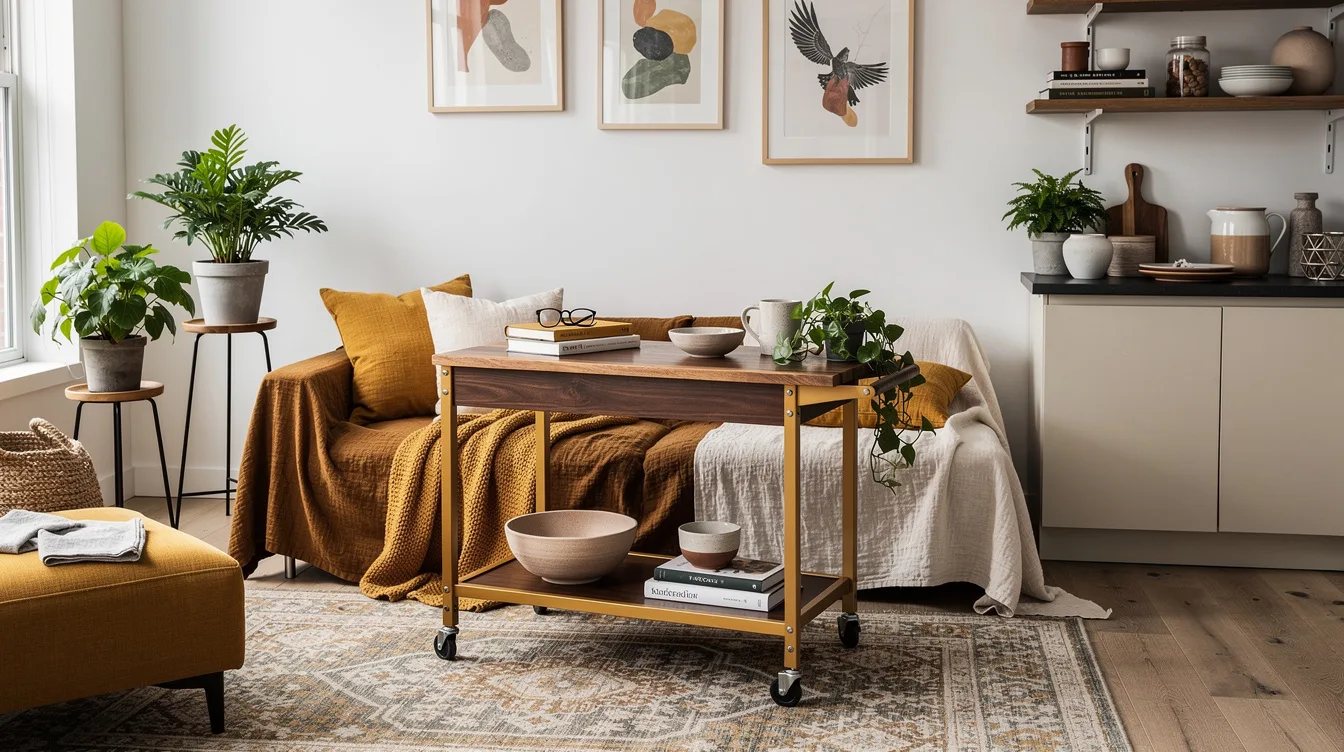
Keep Raabe's Countertop Free for Prep
When the Raabe solid pine countertop is your only real work surface, appliances should not claim it permanently. A toaster or coffee maker can live on the cart during a task, but returning the surface to open prep space gives the studio more flexibility.
Use the lower shelves for appliances that are not needed every hour. A cutting board, a mixing bowl, and one colander can then share the countertop without forcing ingredients onto the floor, a chair, or the top of another piece of furniture.
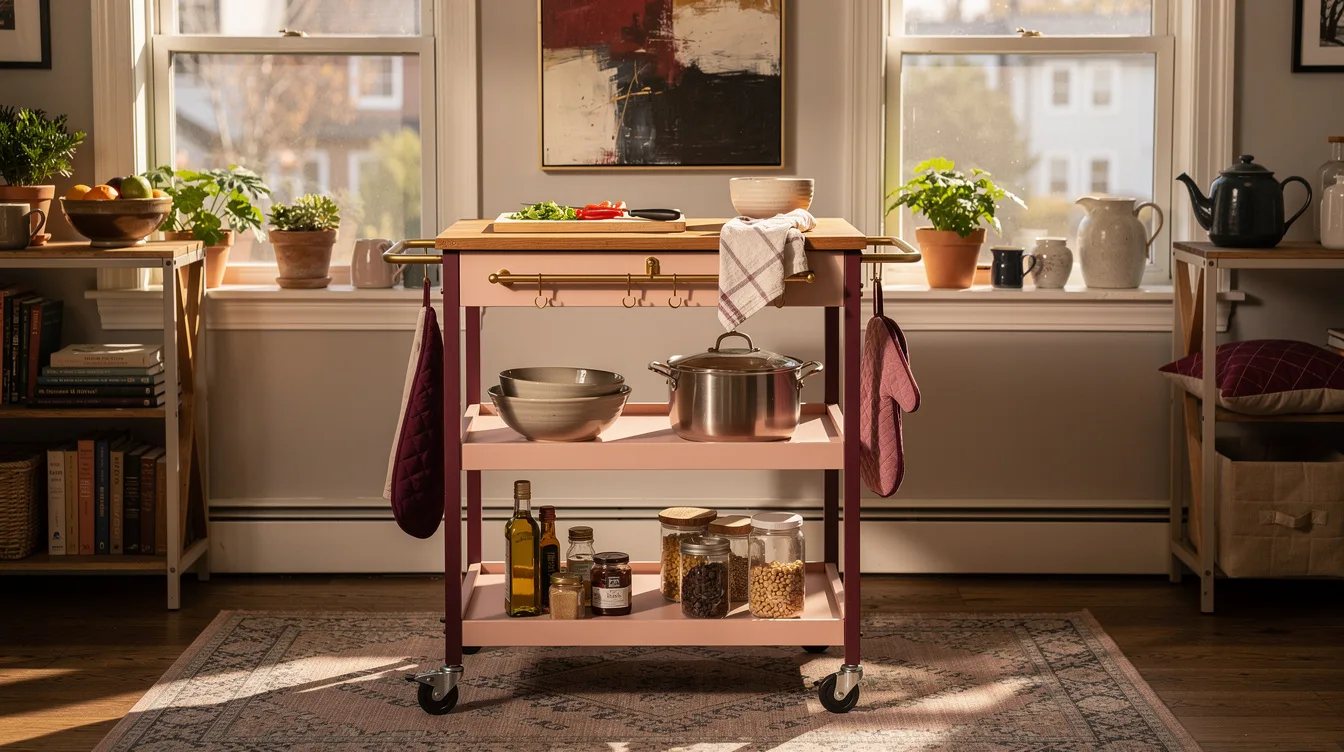
Match Origami's Depth to the Parking Spot
The Origami powder-coated steel frame has a listed depth of 24.02 inches, which is the measurement to test against the place where the folded cart will live. In a studio, a cart that technically fits can still make a doorway, closet, or bed-side route feel blocked.
Measure the parking zone in its normal condition, including nearby stools, cabinet doors, and the swing of the front door. The cart earns its keep only when folding it away restores usable floor space rather than creating a second obstacle.
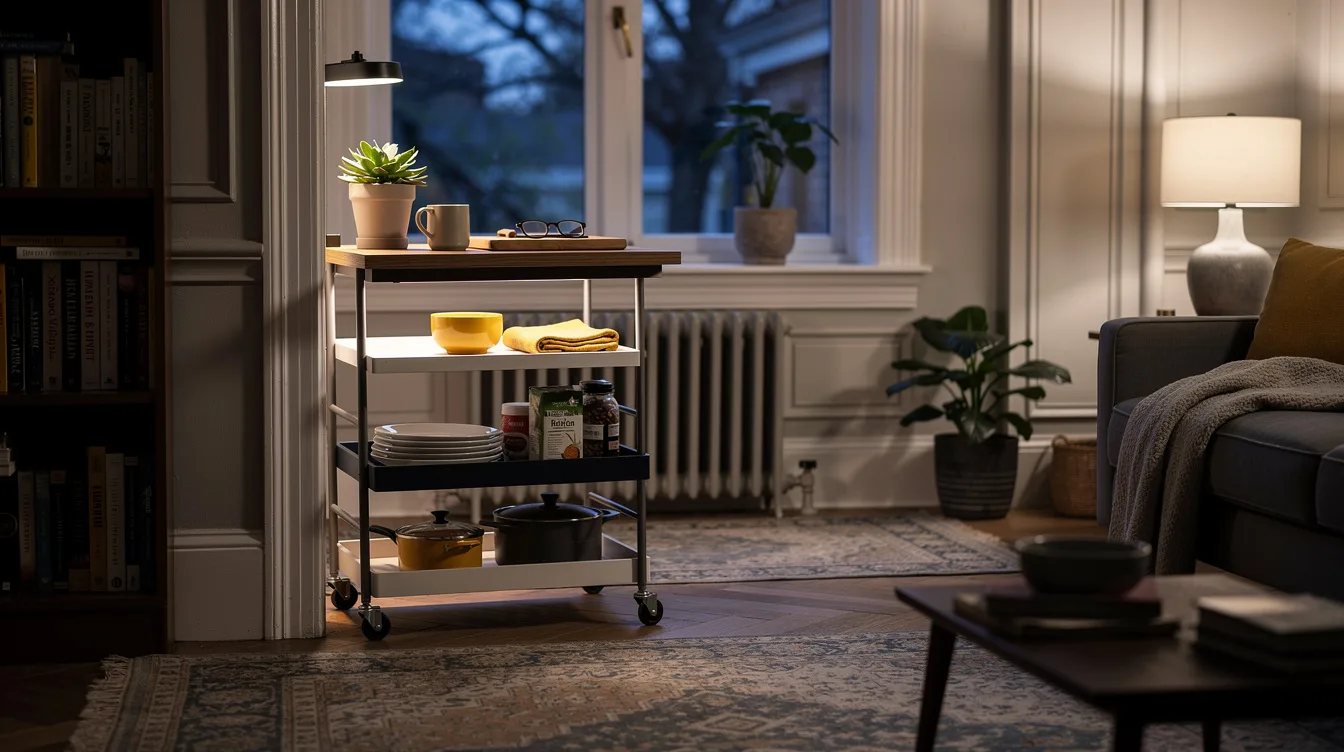
Compare Storage to the Actual Footprint
The Wade Logan Arthalia cabinet gives up some prep width in exchange for a compact storage mix. That trade makes sense when a drawer, enclosed compartment, and open shelf solve problems that a larger bare countertop would leave untouched.
Choose the Andover Mills Raabe when side-by-side prep is the daily priority, and choose Arthalia when storage separation matters more than width. Both decisions are sound under $200 in the supplied listings, but they serve different studio routines.
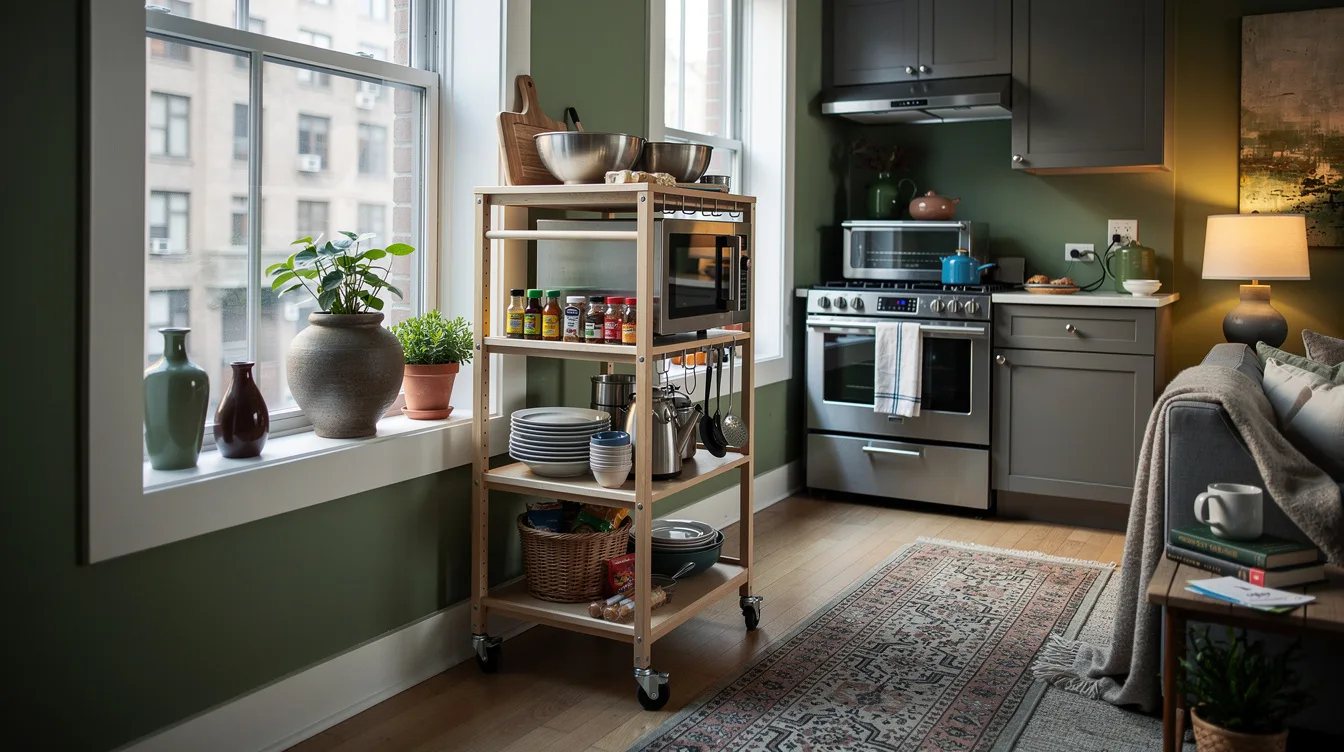
Buy for the Studio's Weekly Rhythm
Use the Wayfair rolling kitchen cart that matches how often the room changes jobs. Raabe is the strongest permanent station at about $170, Origami is the flexible foldaway option at about $140 to $161, and Arthalia is the small-footprint choice at about $95.
Lotosha can be the value pick at about $118 to $125 when its footprint is confirmed, particularly if enclosed storage and accessories matter. Prices can change by finish and promotion, so treat every amount as an observed US-dollar item price rather than a guaranteed checkout total.
Keep reading
- No Counter Space to Prep On? These 9 IKEA Carts Fix It
- Awkward L-Shaped Closet Eating Your Space? Wayfair Systems Help
- Small Kitchen Eating Your Counter? 14 Target Christmas Trays
Start by taping the cart's largest listed footprint on the floor, then choose the model that leaves a clear route after the cooking is done. In a counterless studio, usable space is the feature that matters most.


