Small Living Room, Big Lamp? 12 Ways to Make the Scale Look Intentional
13 november 2026In a living room of roughly 130 to 170 square feet, one lamp about 16 inches wide can easily become the room’s strongest shape. The difference between a smart focal point and a crowded corner comes down to its role: beside the sofa, on a usable table, or overhead with the floor left open.
Designers treat oversized lamps as lighting and sculpture, but the supporting furniture still has to work. These arrangements show how to make one large fixture replace visual clutter instead of becoming another object squeezed into it.
What you will find inside
- Place a Rounded Lamp Outside the Sofa Arm
- Match the Shade Width to the Table Depth
- Let a Pale Shade Carry the Volume
- Use a Marble Base as the Sculpture
- Hang Paper Above the Seating Zone
- Test the Scale with an Affordable Shade
- Keep the Pendant’s Floor Footprint at Zero
- Use the Sofa as the Lamp’s Visual Anchor
- Build Around a Substantial Side Table
- Contrast a Dark Reflector with a Light Wall
- Replace the Candle-and-Vase Cluster
- Choose One Lighting Role and Commit
Place a Rounded Lamp Outside the Sofa Arm
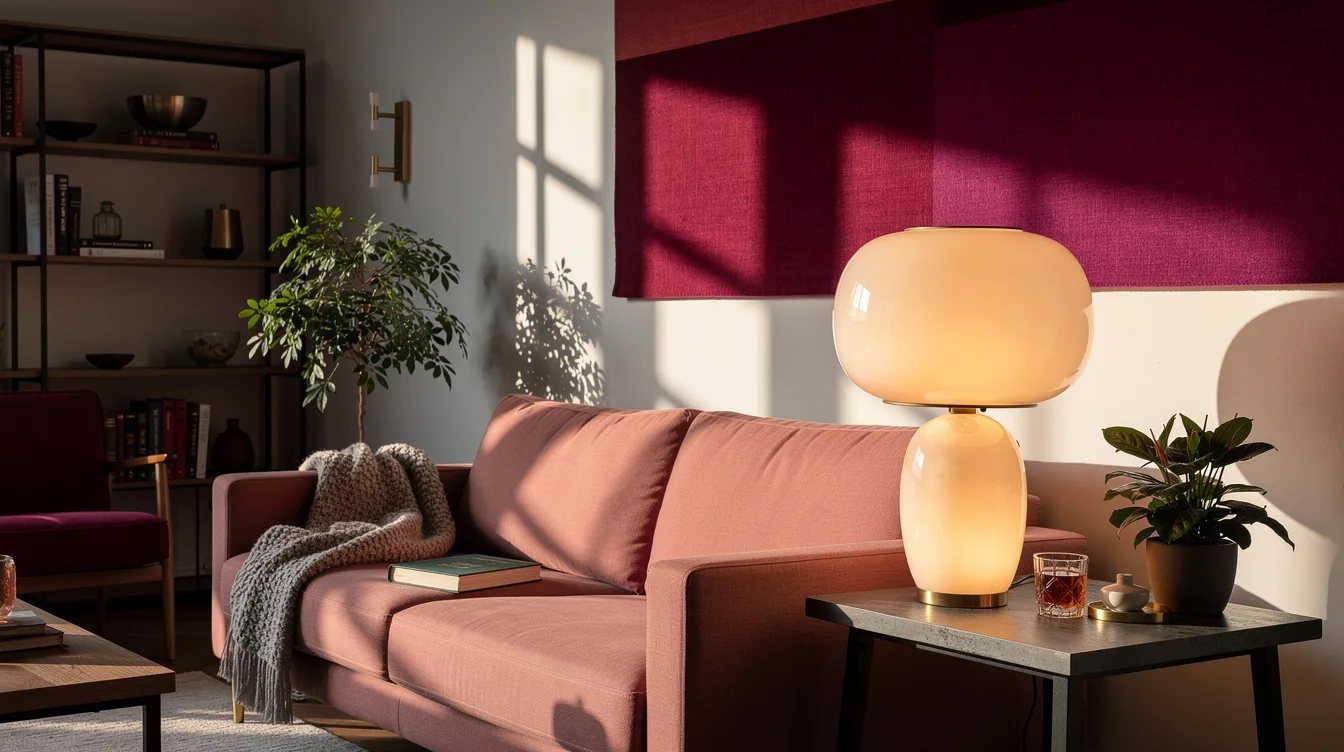
Put a broad, rounded table lamp at the sofa’s outer end, where it can glow beside the seating without interrupting the main walking route. The Louis Poulsen Panthella 400, with its opal acrylic shade and molded polymer base, is about 16 inches wide and 21 inches tall, so it reads as a deliberate shape beside a compact sofa.
Use a side table about 20 to 24 inches wide and roughly 16 to 18 inches deep, then remove the candles, vase, and small accent light that would usually crowd the surface. The lamp should own that corner completely, with enough open space for a drink or book.
Match the Shade Width to the Table Depth
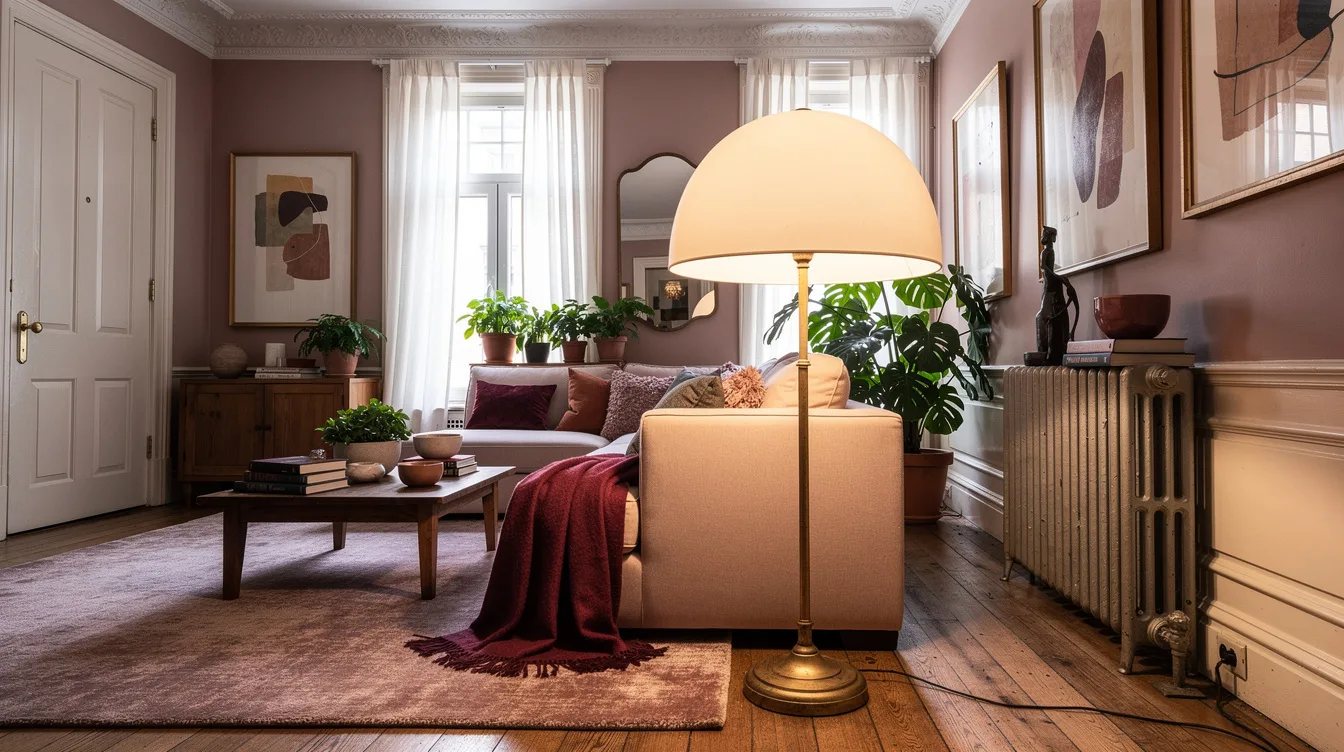
An oversized lamp needs a supporting table with usable proportions. Keep the shade no wider than the table depth, a practical relationship that prevents the lamp from feeling unstable or swallowing the surface below.
The Flos Snoopy is about 15.5 inches wide and 14.5 inches tall, with an enameled aluminum reflector and white Carrara marble base. Its listed US price is about $1,840, so the table beneath it deserves careful attention rather than a last-minute squeeze between the sofa and doorway.
Let a Pale Shade Carry the Volume
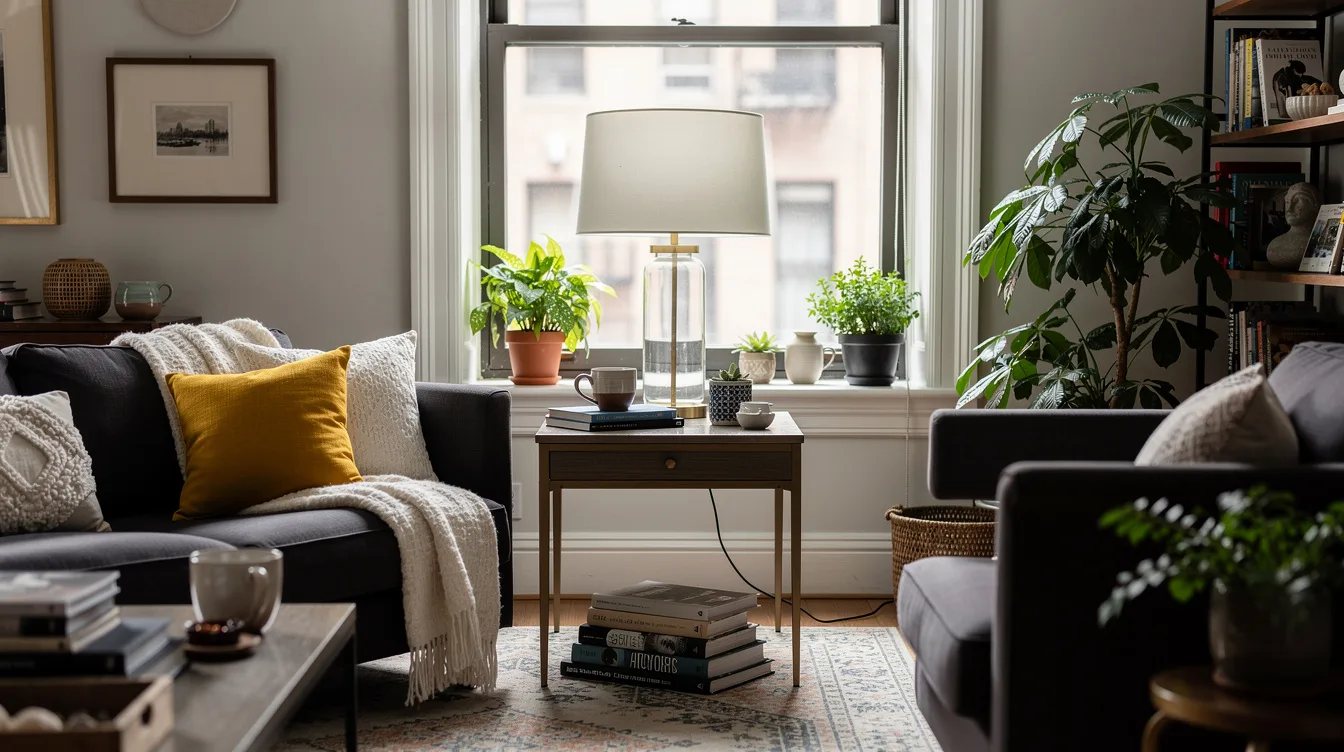
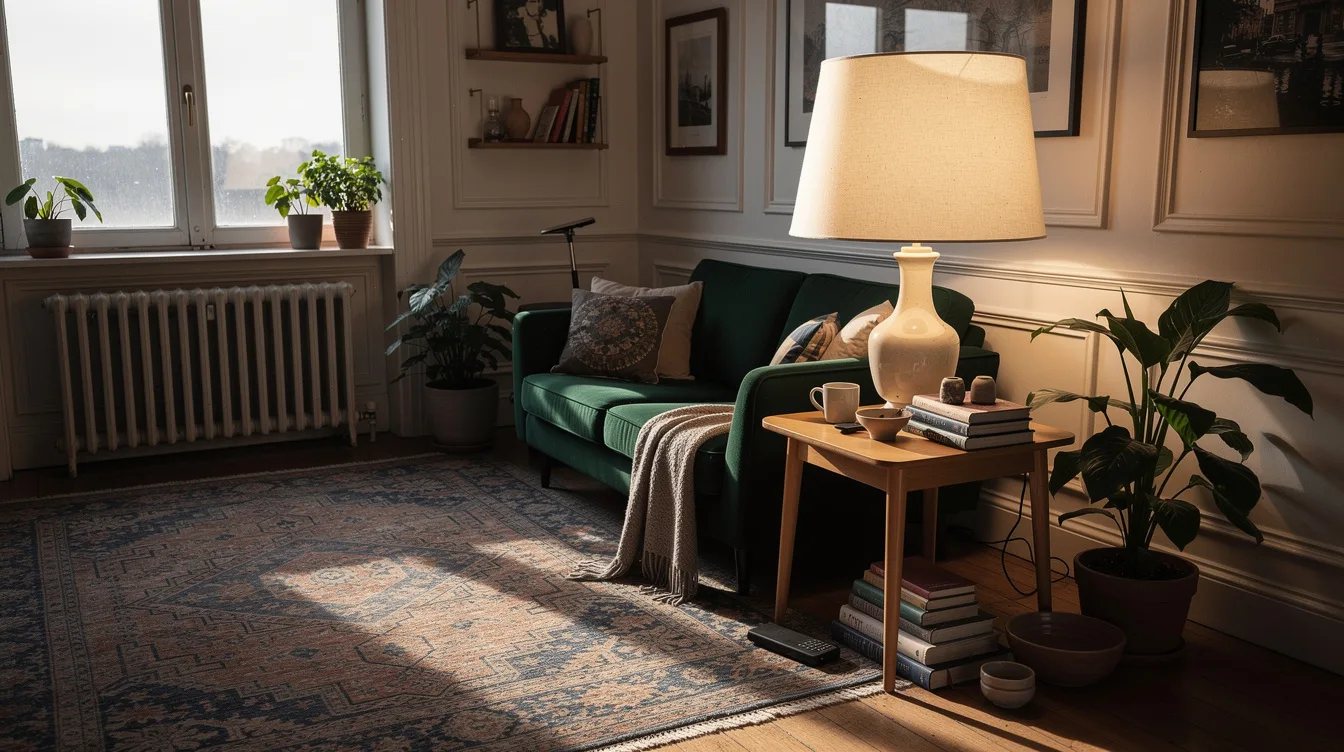
Choose a pale, diffusing shade when the room already has heavy furniture or dark flooring. A translucent surface spreads the lamp’s visual weight and creates a softer glow, which is more forgiving in a small living room than a dense opaque block.
The Panthella 400 works especially well beside a compact sofa because its opal acrylic shade lets light move through the upper form. Keep the wall behind it quiet, then allow the lamp to replace several smaller decorative objects instead of adding another layer beside them.
Use a Marble Base as the Sculpture
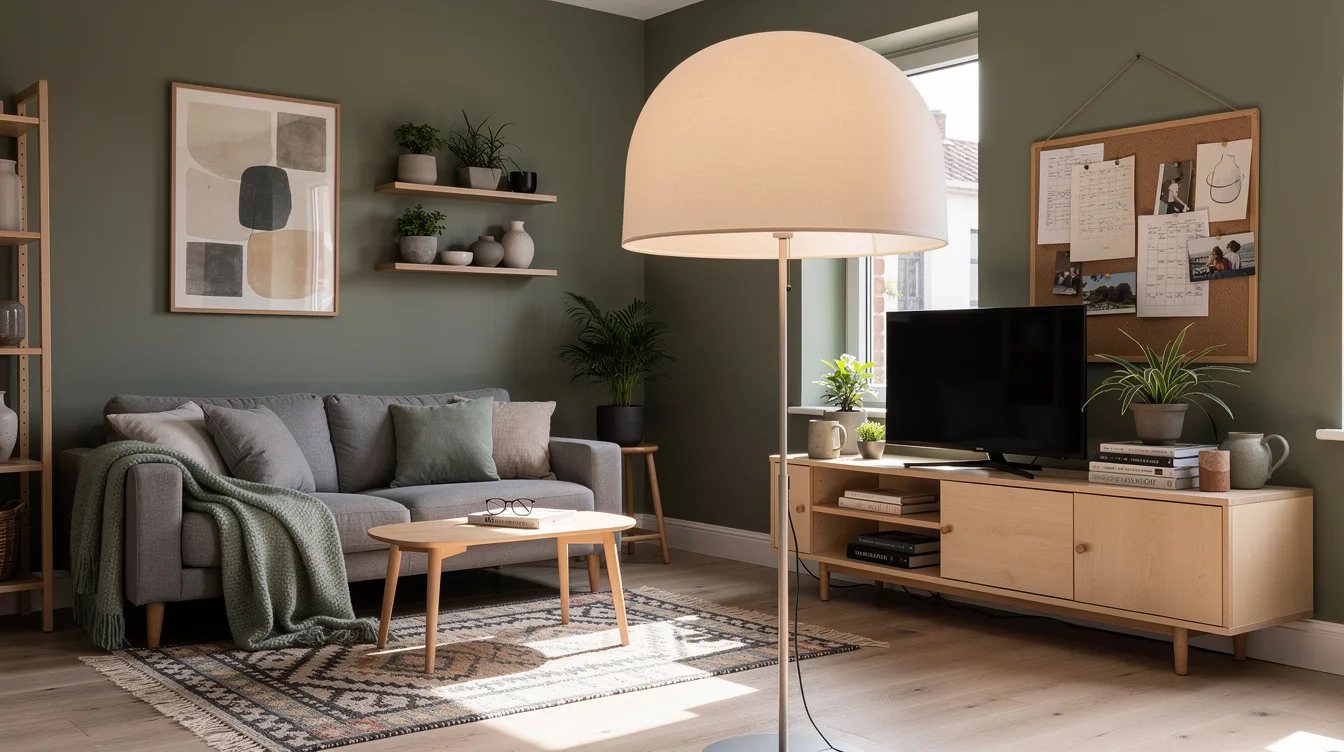
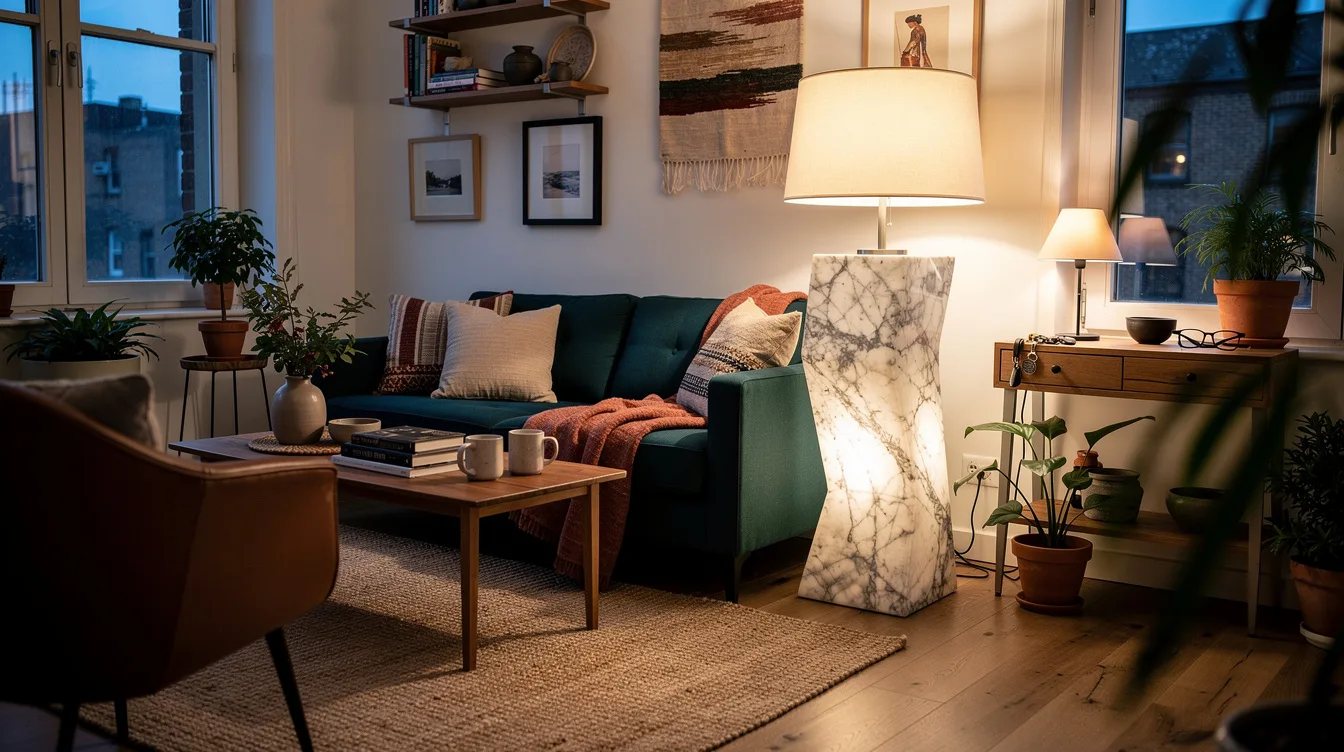
A large lamp can supply the room’s sculptural moment when its base has enough material presence. The Flos Snoopy pairs a white Carrara marble base with a dark reflector, giving a small seating area a crisp focal point without requiring wall art, a large vase, or a floor sculpture.
Place it on a substantial side table at the sofa’s outside edge and leave the marble visible from the main entrance. The built-in touch dimmer makes the piece more useful at night, but its graphic silhouette should remain the reason it stays in the room.
Hang Paper Above the Seating Zone
When the floor cannot spare a lamp base or side table, move the oversized shape overhead. A large paper pendant creates visible volume above the sofa while keeping the circulation path open and the floor visually calm.
The IKEA PS 2026 shade is about 35.5 inches wide and uses rice paper with galvanized steel; its US shade-only price reference is about $35, with the cord set and bulb purchased separately. Hang it over the seating zone rather than directly in front of a doorway.
Test the Scale with an Affordable Shade
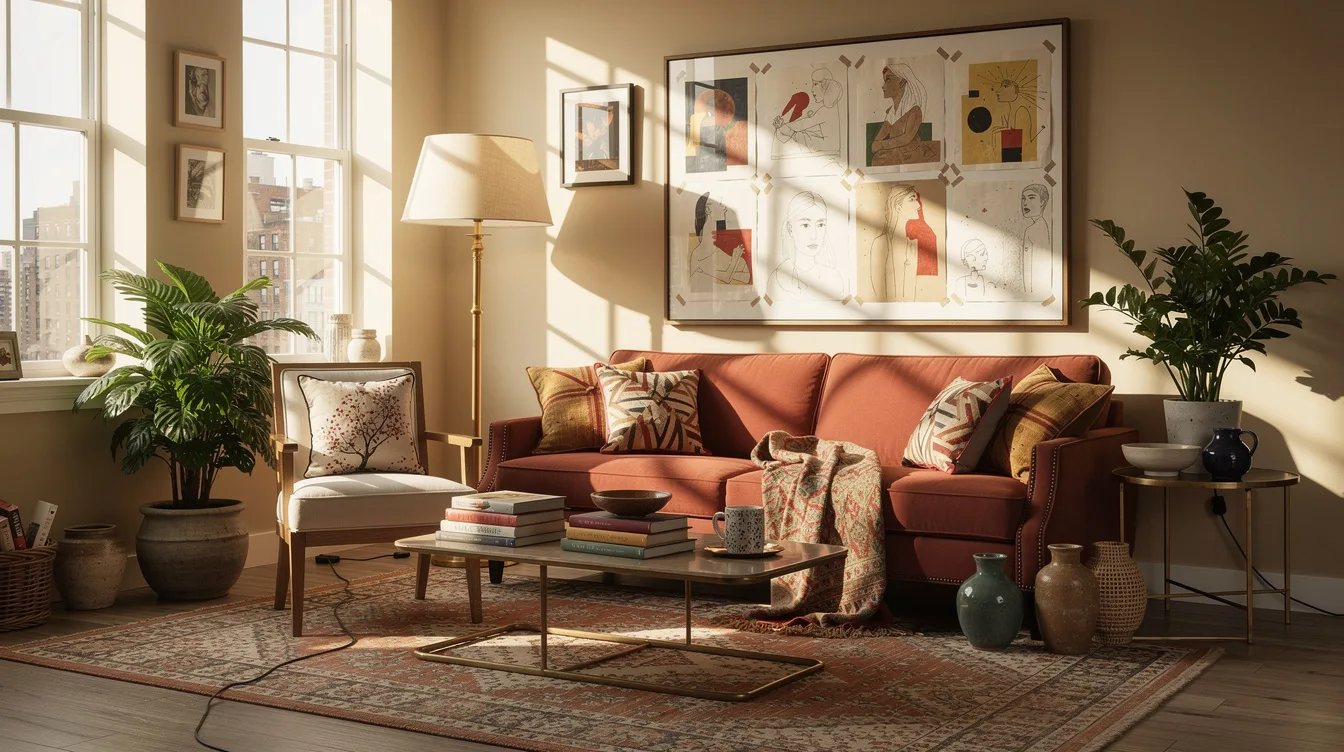
Paper is the sensible way to test whether a large lamp suits the room before committing to a premium designer piece. The IKEA GULLSUDARE shade is about 27.5 inches wide, made from handmade rice paper, and listed at about $10 for the shade alone.
Use it above a compact sofa, then watch how the diameter relates to the room’s width and ceiling height. The low cost leaves room for a better cord set and bulb, while the large silhouette still proves whether one strong light can replace a cluster of smaller accents.
Keep the Pendant’s Floor Footprint at Zero
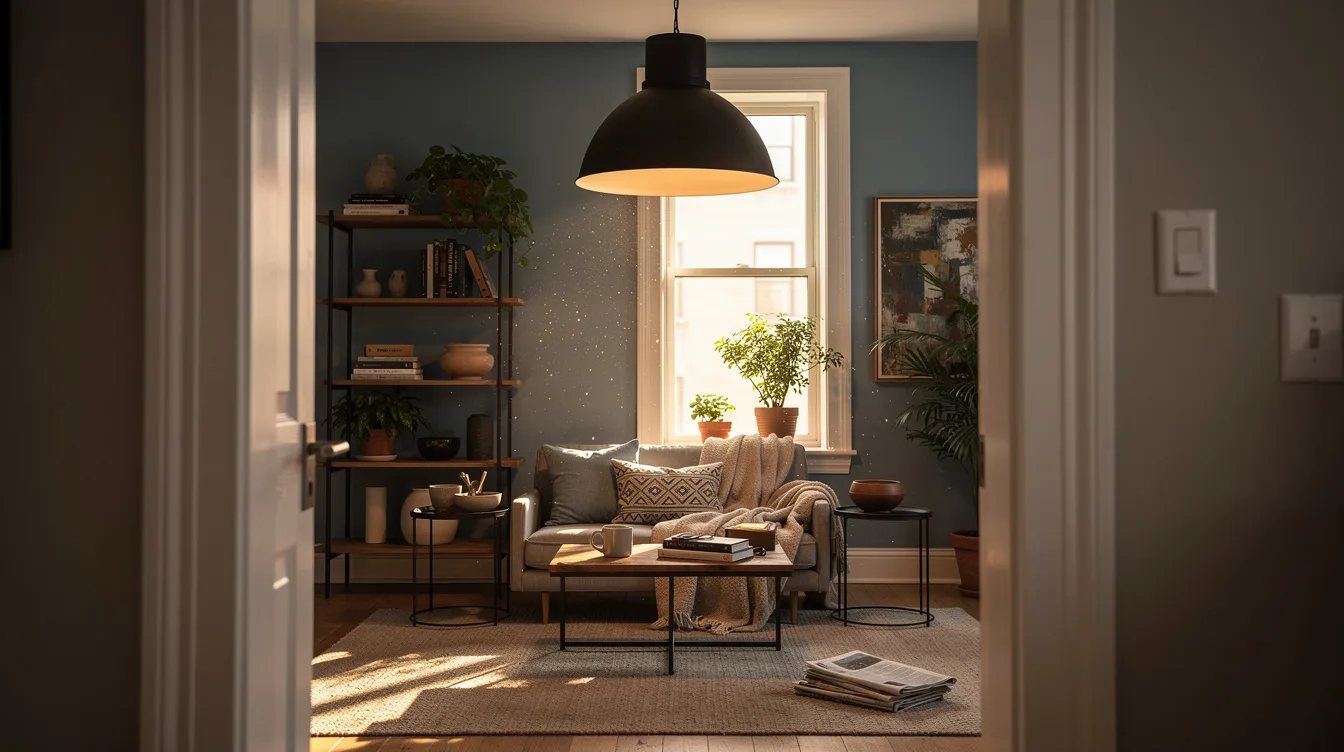
A pendant works best when the room feels crowded at ground level. The IKEA REGNSKUR with SUNNEBY cord set measures about 20 inches wide and 18 inches tall, giving the seating area a substantial overhead form without adding another base, table, or wire across the floor.
Its listed shade-and-cord price is about $68, with the bulb extra, so it offers an accessible way to create a single focal light. Center it over the sofa or slightly toward the conversation area, leaving the entry route completely clear.
Use the Sofa as the Lamp’s Visual Anchor
Oversized lighting looks intentional when another large horizontal form gives it context. In a room with a sofa roughly 71 to 83 inches wide, place the lamp close enough to the outer arm that the two shapes read as one composed seating zone.
A compact sofa can handle a broad lamp because the light gains scale from the furniture beside it. Keep the opposite end quieter, with no matching lamp or tall plant competing for attention, and let the single oversized form carry the room’s vertical emphasis.
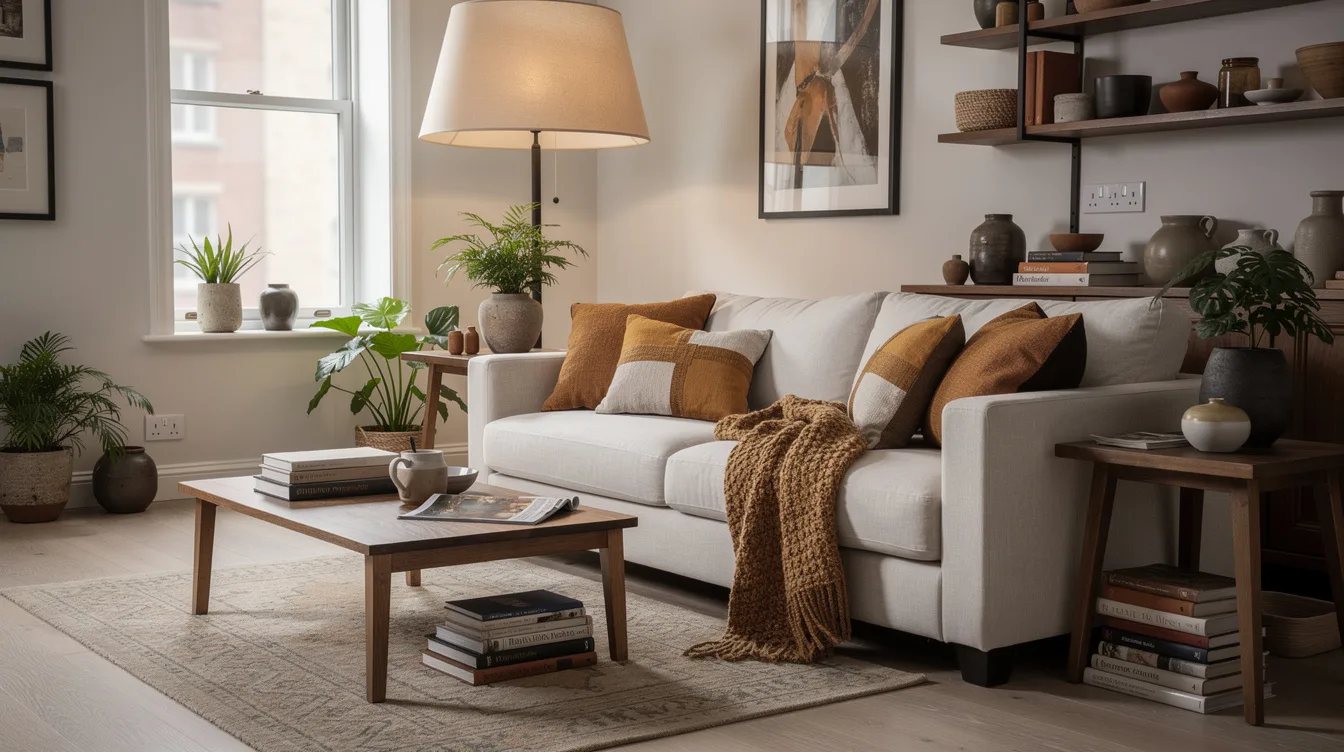
Build Around a Substantial Side Table
A tiny accent table makes an oversized lamp look accidental, even when the lamp itself is excellent. Choose a table with enough depth for the base plus a clear landing area for a book or glass, then keep the tabletop free of decorative extras.
The marble base of the Flos Snoopy needs a surface that feels visually grounded, while the rounded Panthella benefits from a simpler table with less contrast. The supporting furniture should feel sturdy and useful, because the lamp is already doing the expressive work.
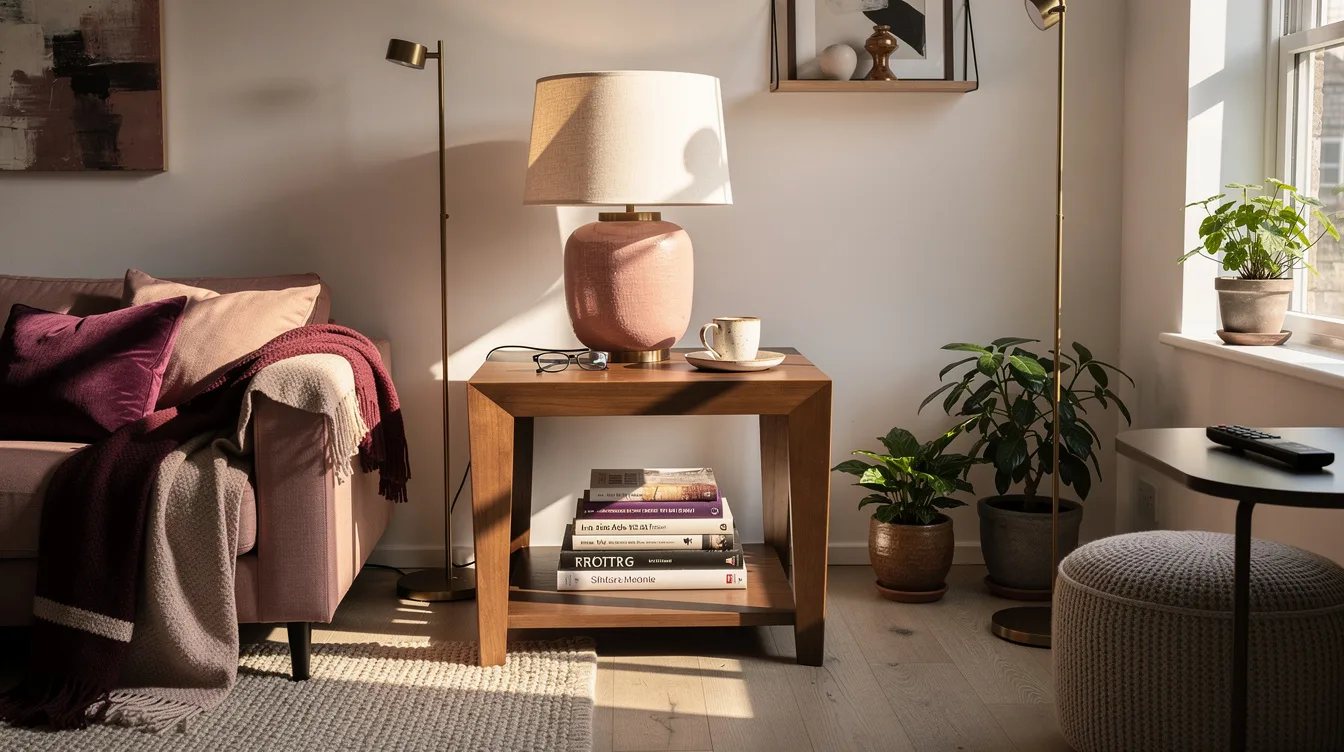
Contrast a Dark Reflector with a Light Wall
A dark reflector gives the oversized lamp a sharper outline, which can help the object read clearly in a pale room. Place the Flos Snoopy against a soft white or warm gray wall, where its dark upper shell can act as graphic punctuation beside the sofa.
Keep nearby accessories restrained so the contrast remains legible from across the room. This arrangement is stronger than scattering several black accents around the space, because one controlled shape creates a cleaner visual destination.
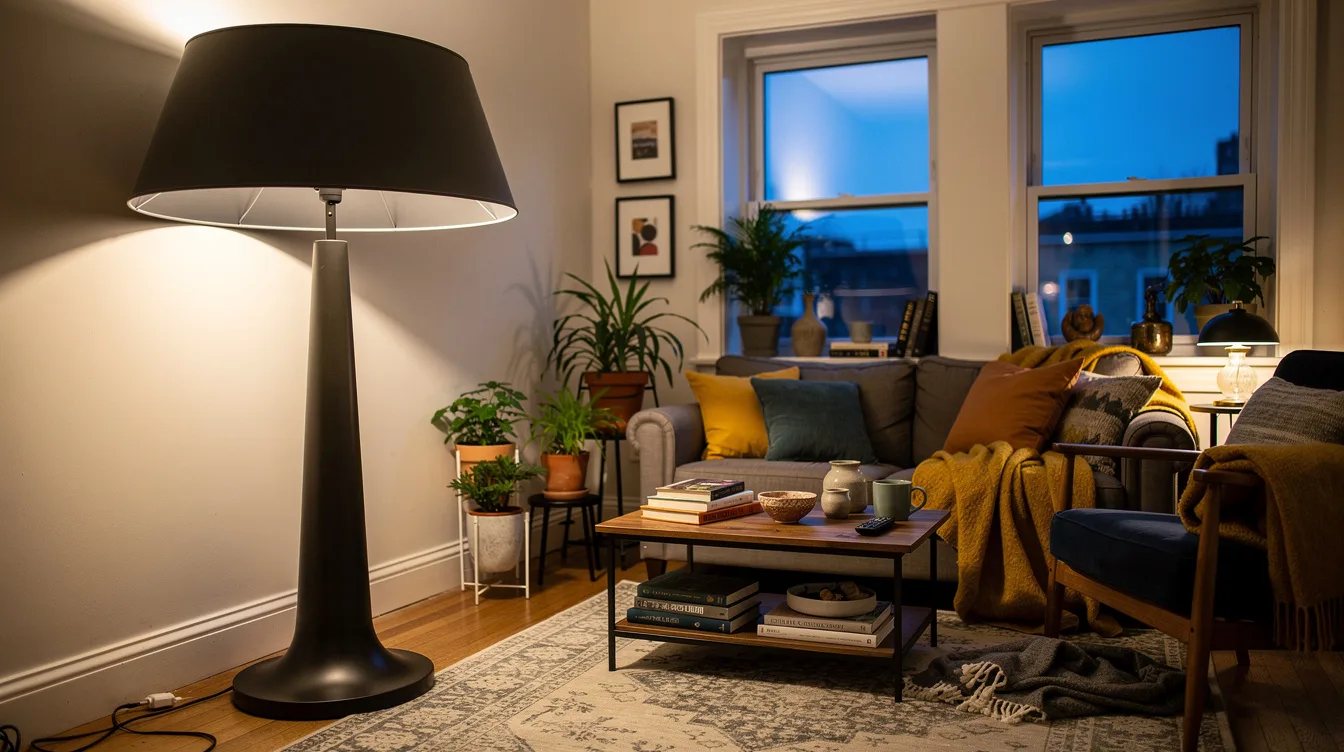
Replace the Candle-and-Vase Cluster
One oversized lamp works when it takes over a job that several small objects were trying to perform. Clear the side table of candles, bud vases, picture frames, and smaller lights, then use the opal acrylic shade as the only prominent object on that surface.
The result should feel edited but still practical, with room for a drink and a book beside the base. A lamp that leaves no usable tabletop space has missed the assignment, regardless of how sculptural it looks.
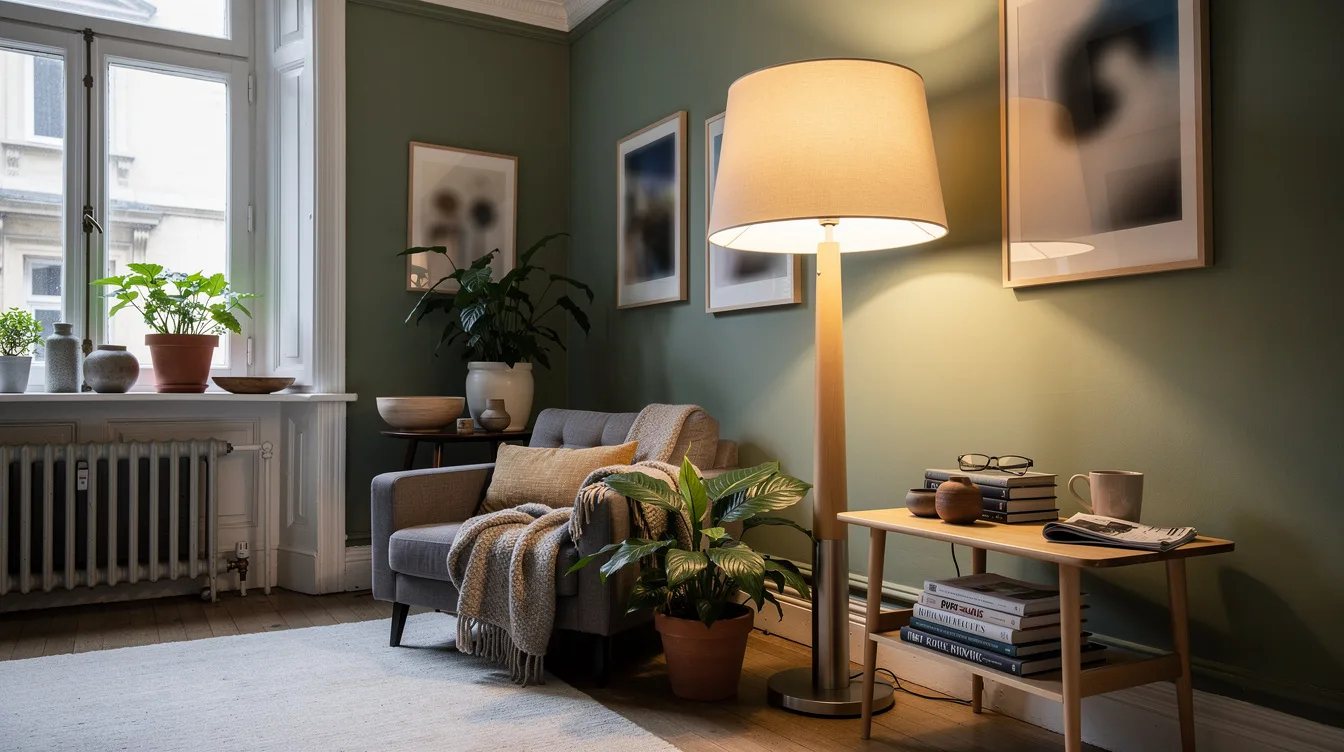
Choose One Lighting Role and Commit
Decide whether the lamp is meant to glow beside the sofa, act as a tabletop sculpture, or hang overhead with no floor footprint. The rice-paper shade suits ambient volume, while the Panthella offers a softer table lamp and the Snoopy delivers a more graphic direct-light accent.
Once the role is clear, remove competing objects and avoid adding a second statement fixture nearby. One oversized lamp feels intentional when every surrounding piece supports its light, scale, and position.
Keep reading
- 13 TV Wall Mistakes That Make Your Living Room Look Unfinished
- 12 Ways to Style a Statement Floor Lamp in Your Living Room
- Want a West Elm Look? These 15 Living Room Ideas Start at $80
Start by clearing one side of the sofa completely, then test whether a table lamp or pendant gives the room better breathing room. Protect the usable surface, keep the walking route open, and let that single light define the corner.


