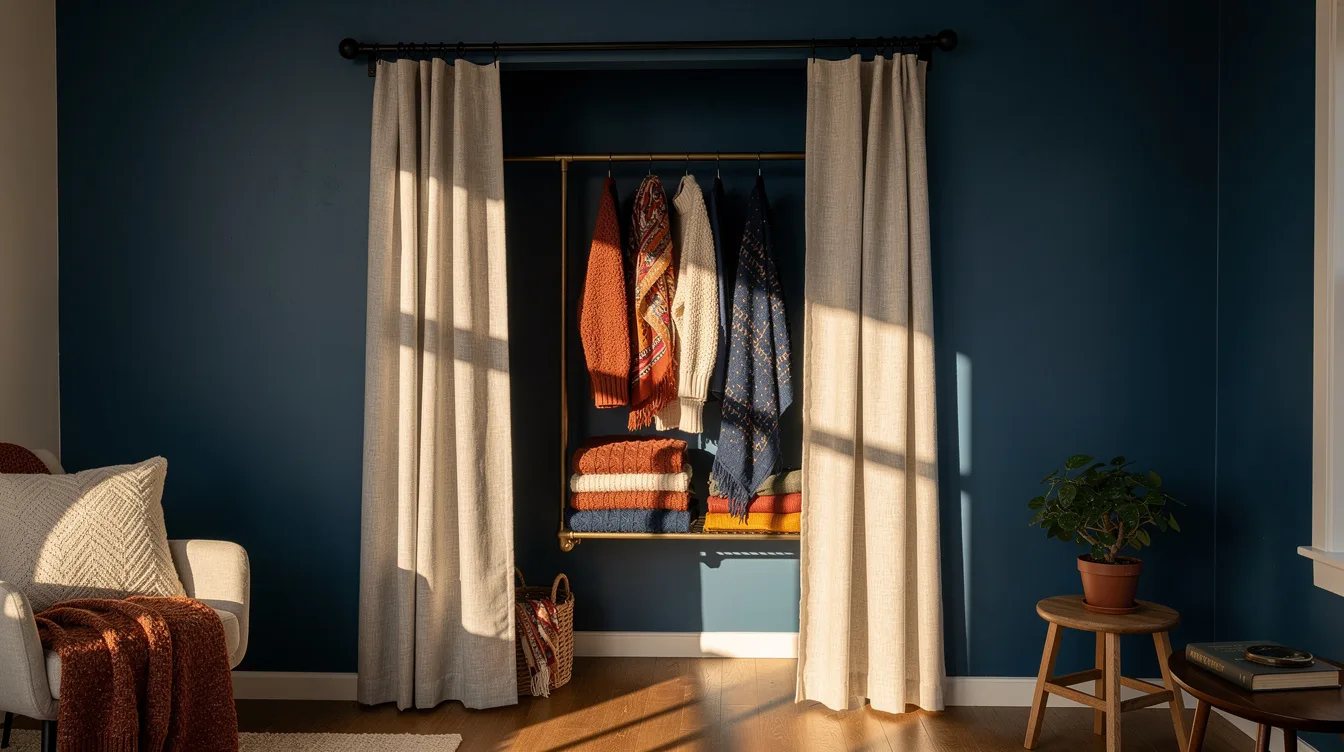
Short Rental Closet Eating Your Storage? 12 Lowe's Tension-Rod Fixes
12 november 2026Our rental closet was less than 72 inches wide, but the real problem was asking one no-drill rod to hide the opening, hold clothing, and create storage at once. The practical options we found at Lowe’s range from about $8 for a basic accessory rod to roughly $16 for a curtain setup.
That price gap is small, but the load expectations are not. Here is how we would separate curtain, accessory, shelf, and clothing uses without drilling into the rental walls.
What you will find inside
- Measure the Opening at Its Narrowest
- Hang the Curtain With Kenney
- Keep the Curtain Load Light
- Add Accessories With Project Source
- Stop Before It Becomes a Clothing Rail
- Fit UUDULY Inside a Short Compartment
- Check UUDULY's Real Dimensions
- Reserve Aoibox for Narrow Storage
- Treat Missing Load Data as a Stop Sign
- Divide the Closet by Job
- Test Pressure Before Loading
- Start With the Cheapest Useful Fix
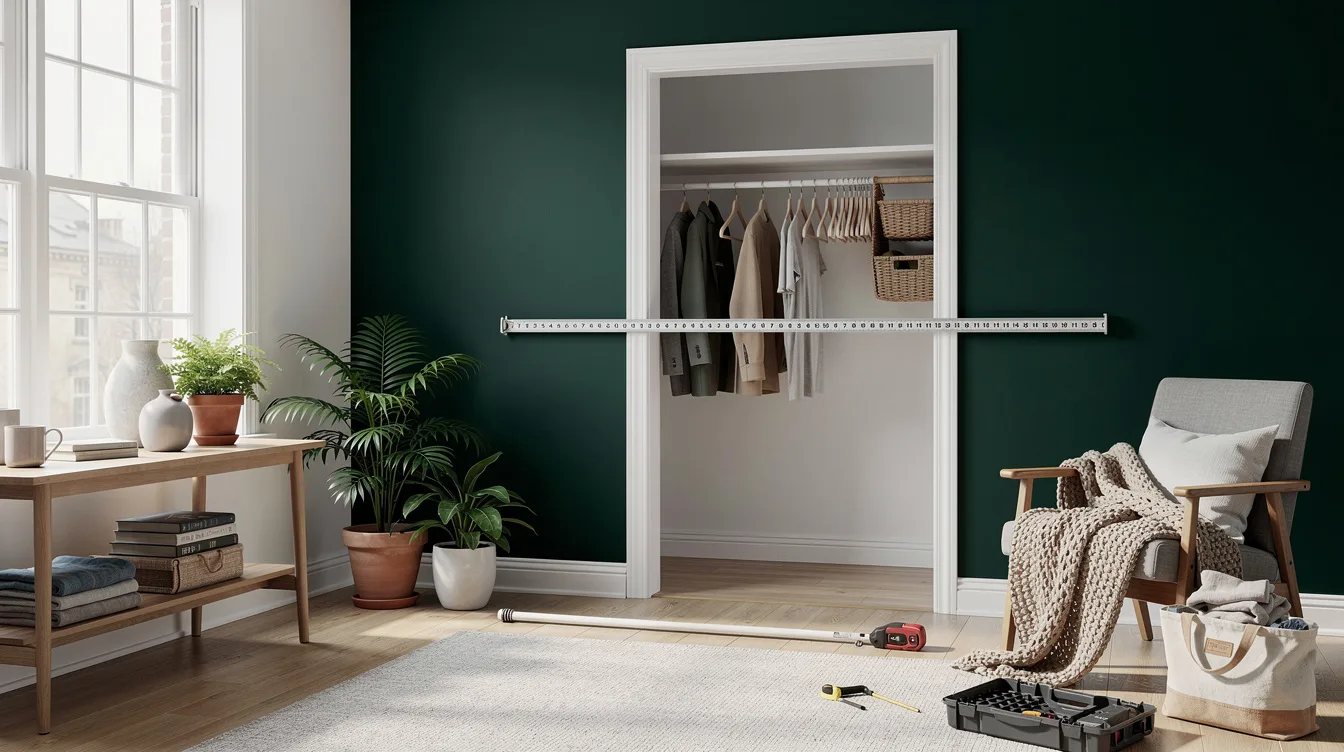
Measure the Opening at Its Narrowest
Our first move was measuring the actual closet opening, not trusting the room’s rough dimensions. A closet opening under 72 inches wide can still vary from one side to the other, and that difference decides whether a tension rod sits securely.
Write down the narrowest measurement before shopping. The useful range here is roughly 48 to 71 inches for a curtain, while smaller sections can support a separate accessory rail or shelf.
Hang the Curtain With Kenney
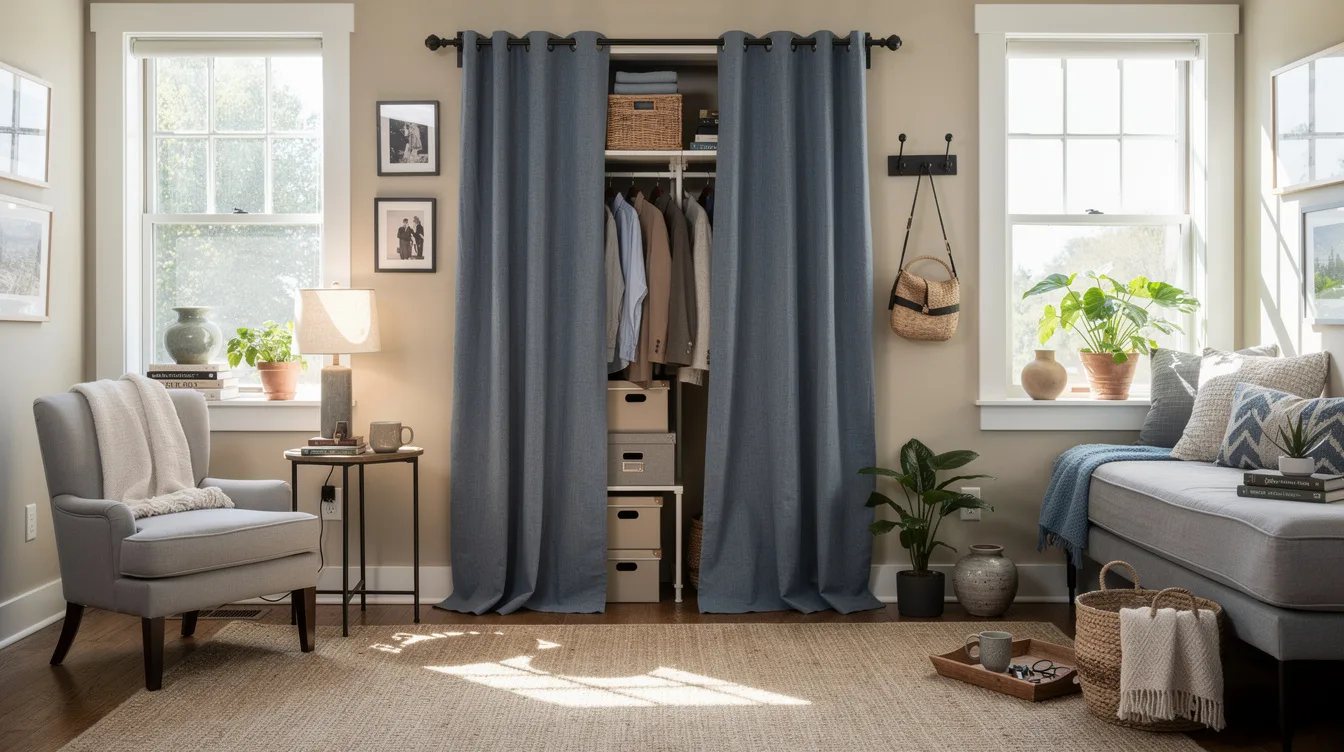
The clearest no-drill solution is the Kenney Rogers Twist & Fit rod, a black steel model with a listed 48-to-84-inch adjustable span. The displayed price was about $16 before tax, and that range covers a closet opening from 48 inches to just under six feet.
We would use it across the front of the closet with a light-to-medium curtain. Its purpose stays straightforward: hide the contents and soften the opening without asking a curtain rod to carry a wardrobe.
Keep the Curtain Load Light
A light curtain belongs on the Kenney rod, not a row of clothing hangers. The manufacturer recommends light-to-medium window treatments, so a thick lined drape or heavy textile panel adds unnecessary pressure.
Choose a single fabric panel with an easy glide and leave room for the rod to remain fully seated. This arrangement gives a rental closet a cleaner face while preserving the no-drill advantage.
Add Accessories With Project Source
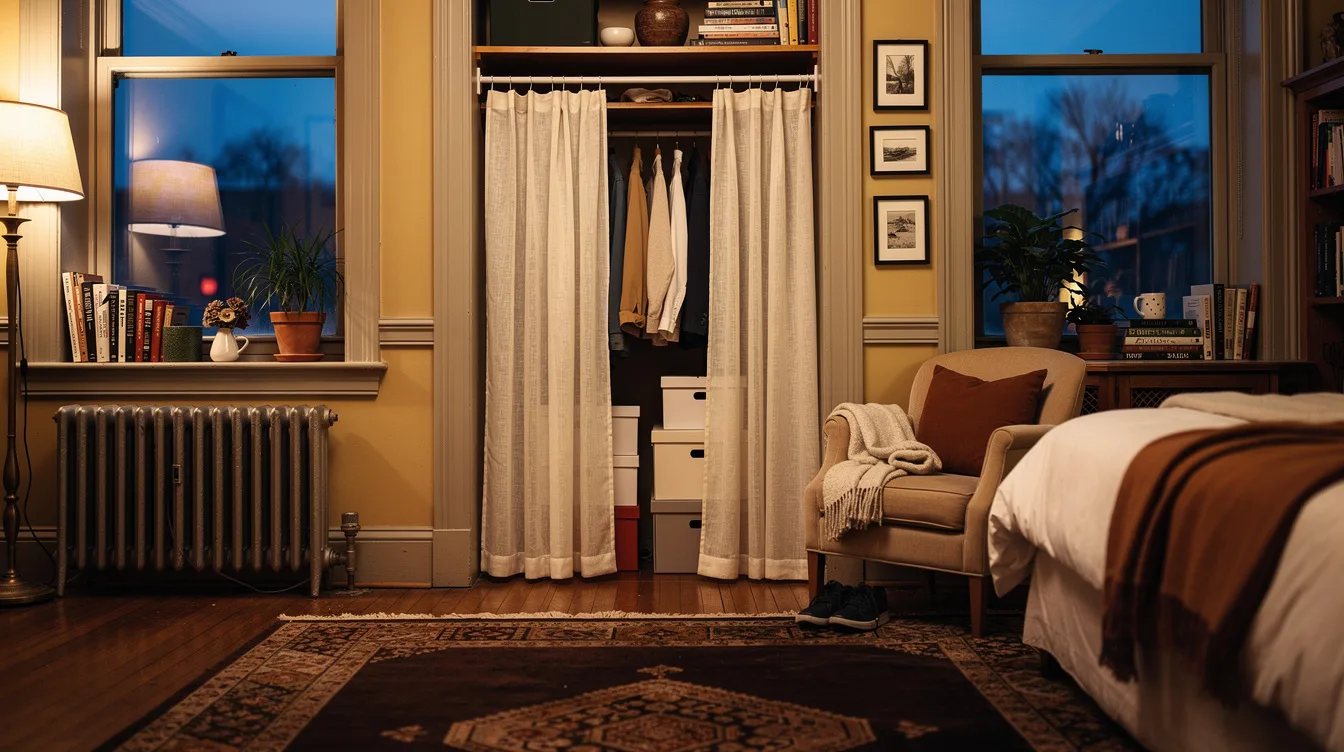
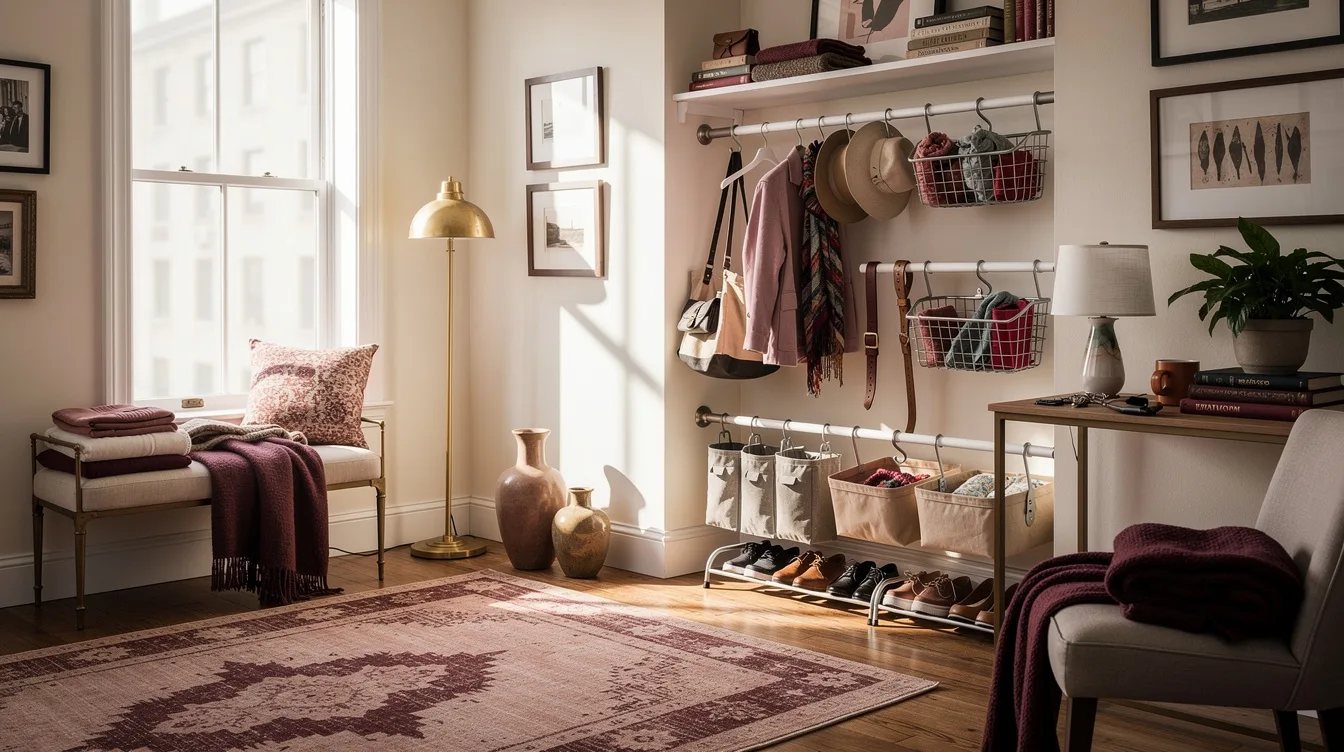
For a smaller section, the Project Source bronze tension rod adjusts from about 28 to 48 inches and uses a steel body with a bronze finish. The displayed price was roughly $8, and Lowe’s lists a 3-pound safe working load.
That makes it useful for a few scarves, belts, or other light accessories in a narrow compartment. We would place it where those items can hang visibly instead of allowing them to disappear into a crowded pile.
Stop Before It Becomes a Clothing Rail
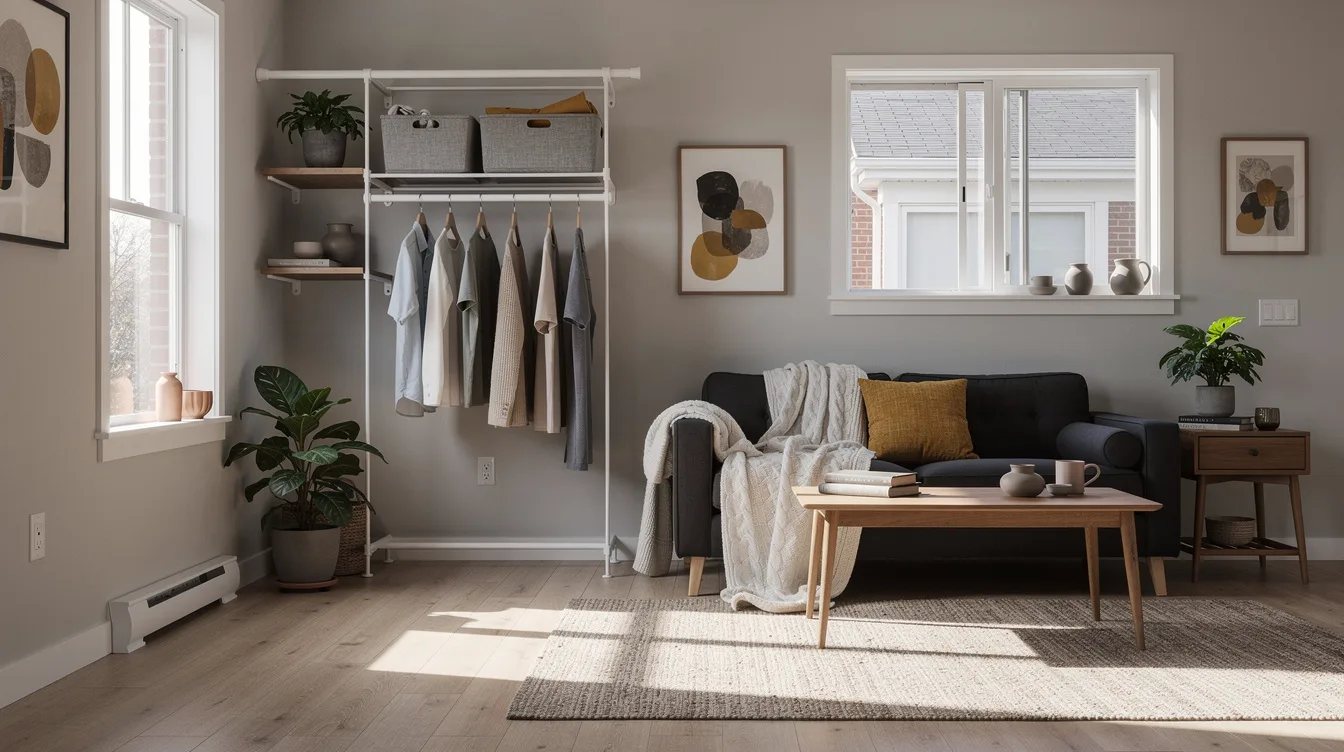
The steel rod is not a substitute for a full closet rail. A 3-pound working limit leaves very little room for multiple hangers, denim, coats, or a loaded clothing organizer.
Use the Project Source model for lightweight accessories or as a small visual divider. Calling it an accessory rail keeps the setup honest and protects the rental wall from an avoidable overload.
Fit UUDULY Inside a Short Compartment
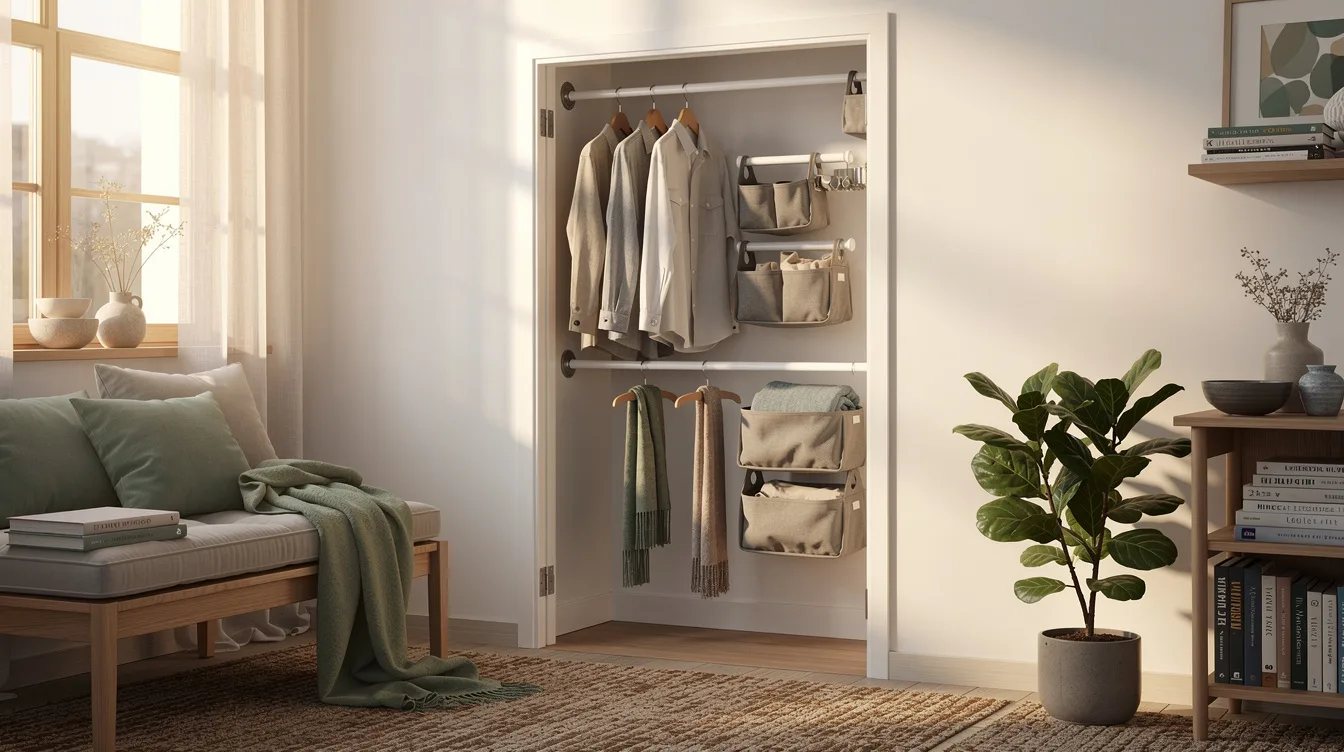
The UUDULY expandable tension shelf is a different category of solution, with polypropylene and steel tubes and a listed span of about 19.7 to 31.5 inches. Its displayed price was roughly $97, and the listing claims support of up to about 44 pounds.
We would use it inside a narrow closet compartment as an added shelf, not across the entire opening. Folded sweaters, bags, or shoes can benefit from that extra level while the main closet remains available for lighter hanging storage.
Check UUDULY's Real Dimensions
Before ordering the UUDULY shelf, read the dimension diagram carefully. The specification table gives a depth of about 20 inches and a height of roughly 1 inch, while the description is inconsistent about the number of telescoping tubes.
That discrepancy matters in a rental closet with shallow side sections. Confirm the usable depth and tube arrangement from the diagram before paying the higher specialty-product price.
Reserve Aoibox for Narrow Storage
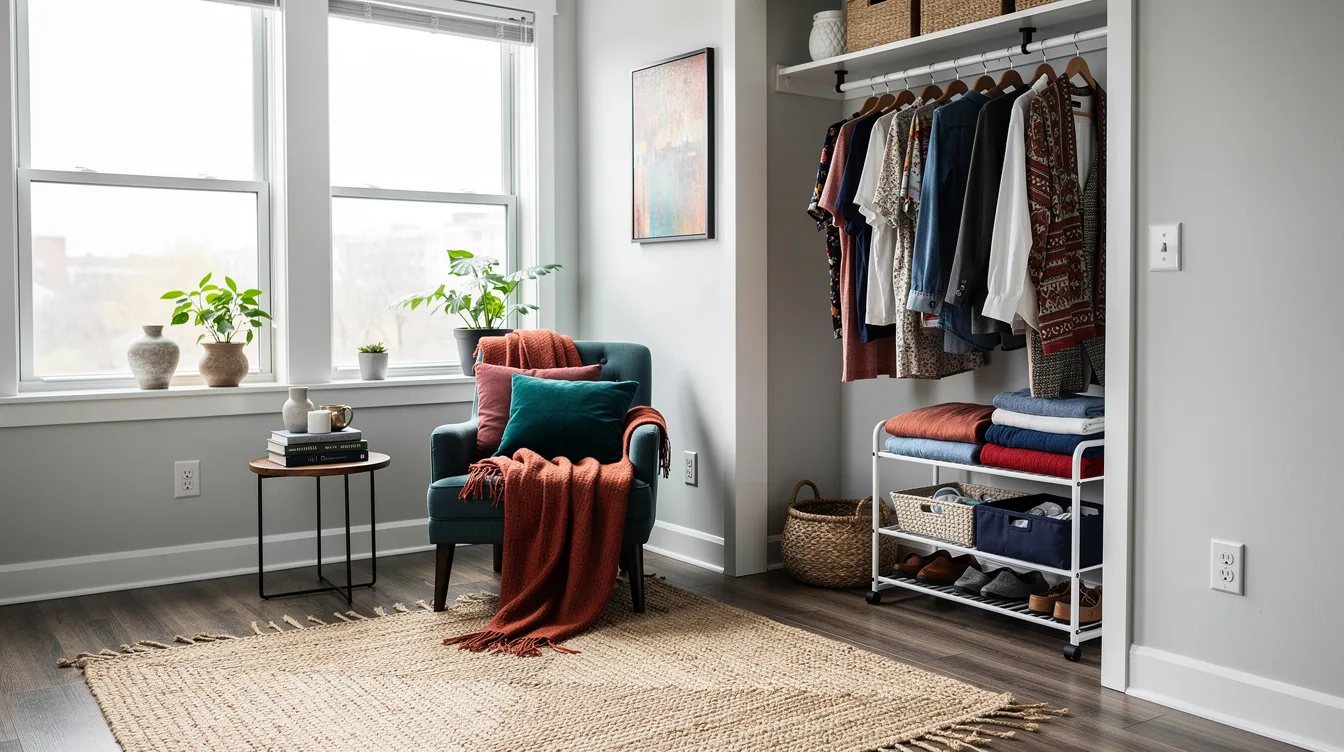
The Aoibox no-drill tension rod uses 304 stainless steel, a twist-lock design, and a listed adjustable span of about 35.5 to 62.5 inches. The displayed price was roughly $137, making it a specialty purchase for a narrower closet opening.
Its size makes more sense for a dedicated storage section than for a closet curtain under six feet. We would consider it only when the opening falls within its range and the added cost solves a specific layout problem.
Treat Missing Load Data as a Stop Sign
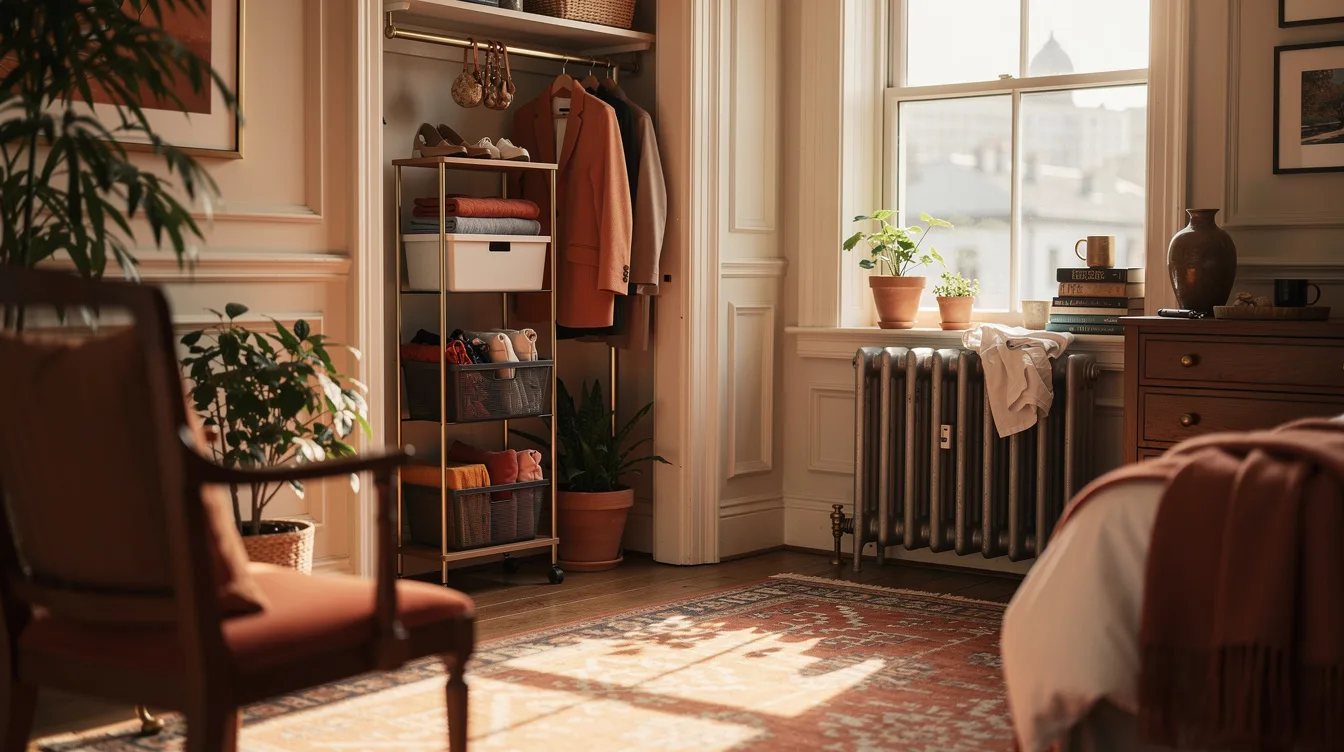
The Aoibox rod listing checked for this article showed the product as unavailable, and the retrieved details did not provide a verified load rating. That removes the justification for treating it as a dependable full wardrobe rail.
Keep the use conservative until the current listing supplies clear capacity information. A no-drill claim describes installation, not automatic permission to load the rod with clothing.
Divide the Closet by Job
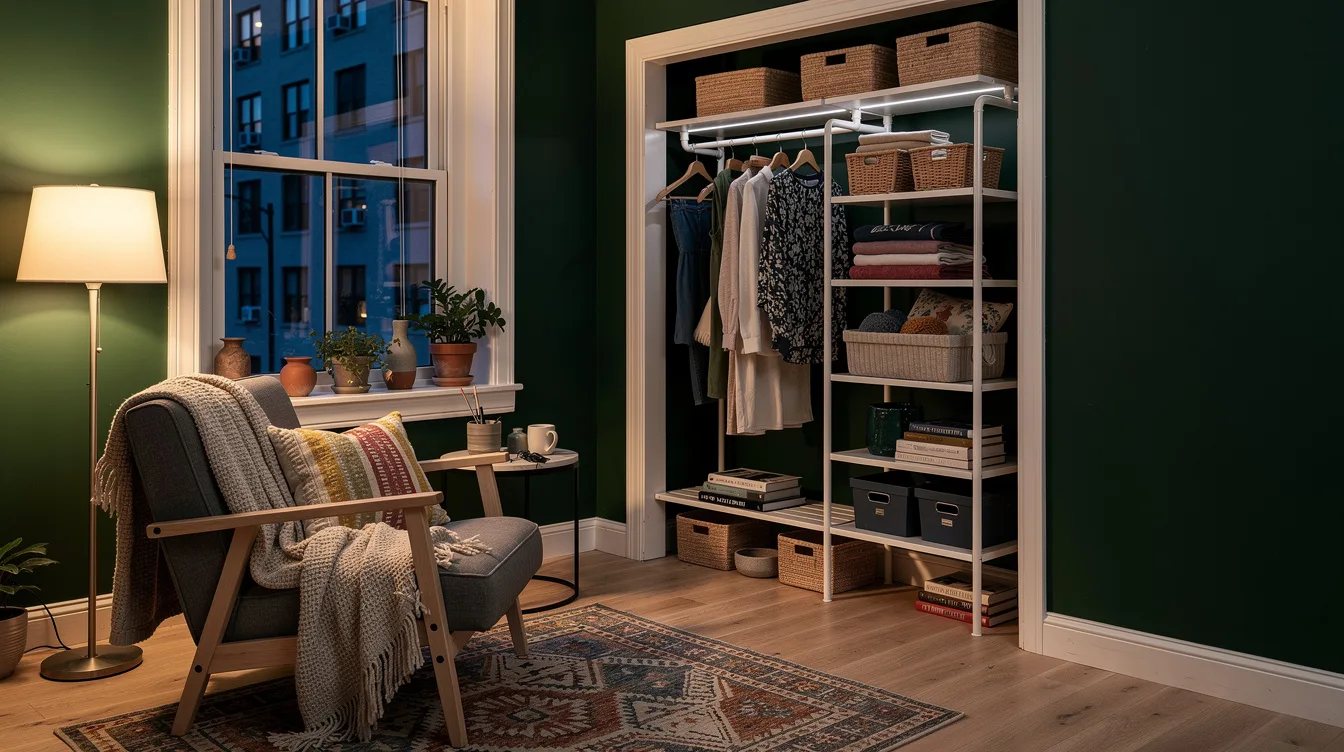
Our most workable layout assigns each product one responsibility: the Kenney rod covers the opening with a light curtain, while a smaller Project Source rod handles accessories in a side section.
The UUDULY shelf can add a separate folded-storage level where its dimensions fit. This division prevents one tension product from carrying every function and makes the under-72-inch closet easier to use.
Test Pressure Before Loading
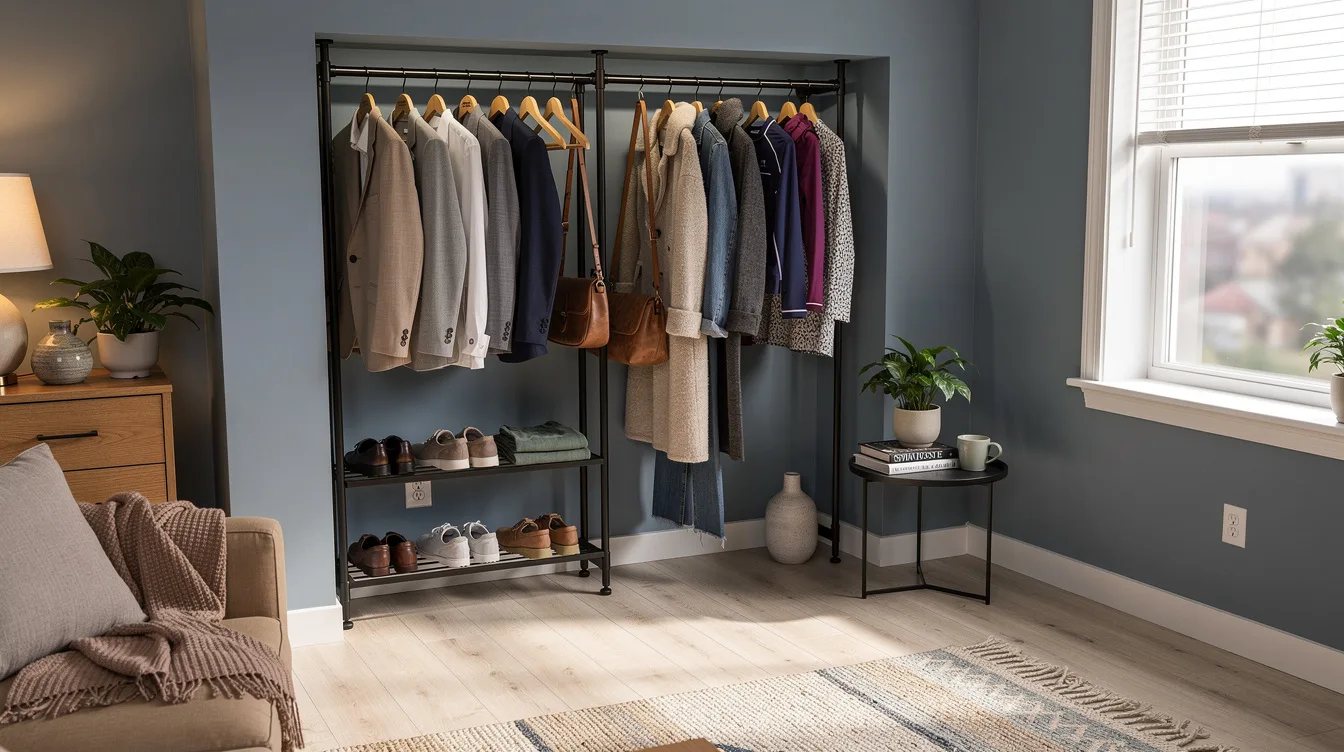
Install the tension rod at the intended span while the closet is empty, then check that both ends sit evenly and firmly against the side surfaces. The first test should involve a curtain or one light accessory, not a complete wardrobe.
Watch for shifting before adding anything else. If the rod moves during ordinary use, reduce the load or change the job it performs rather than forcing it to carry more.
Start With the Cheapest Useful Fix
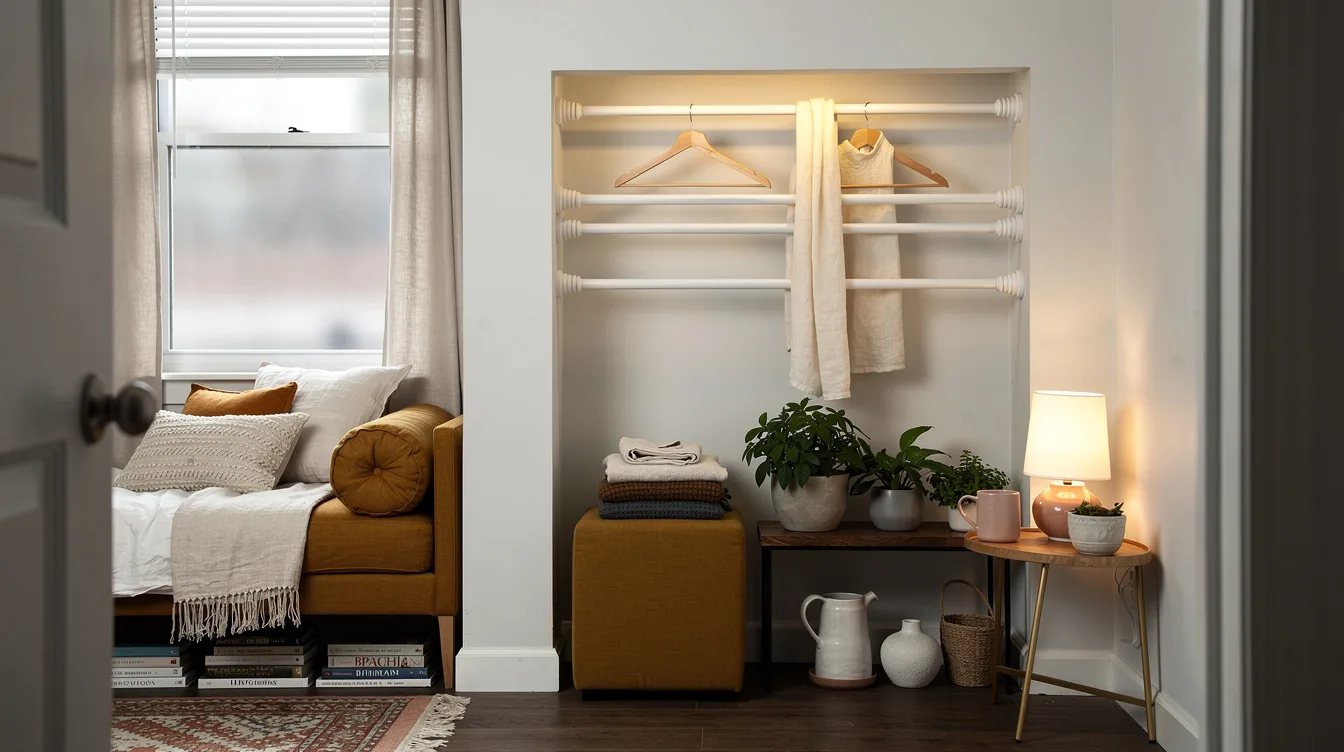
For a covered opening, the Kenney rod costs about $16 at the displayed price, while the Project Source model costs about $8 for a light accessory zone. Those are the sensible starting points when the goal is a quick rental improvement.
Move to the roughly $97 UUDULY shelf only when a compartment genuinely needs another level, and approach the approximately $137 Aoibox option with extra scrutiny. Lowe’s prices and availability vary by location, so confirm the current listing before buying.
Keep reading
- No Closet in Your Rental Bathroom? 12 Lowe's Fixes Under $200
- Coat Closet Eating Your Gift-Wrapping Space? 14 Smart Fixes
- Hanger-Eating Closet? 12 ClosetMaid Fixes Starting at $22
Start by measuring the narrowest point, then choose the lightest job that solves the immediate problem. A curtain rod for the opening and a small accessory rail inside the closet will usually make more sense than forcing one tension product to become a full clothing system.


