Landlord Said No Holes? 15 Christmas Card Displays Start at $6
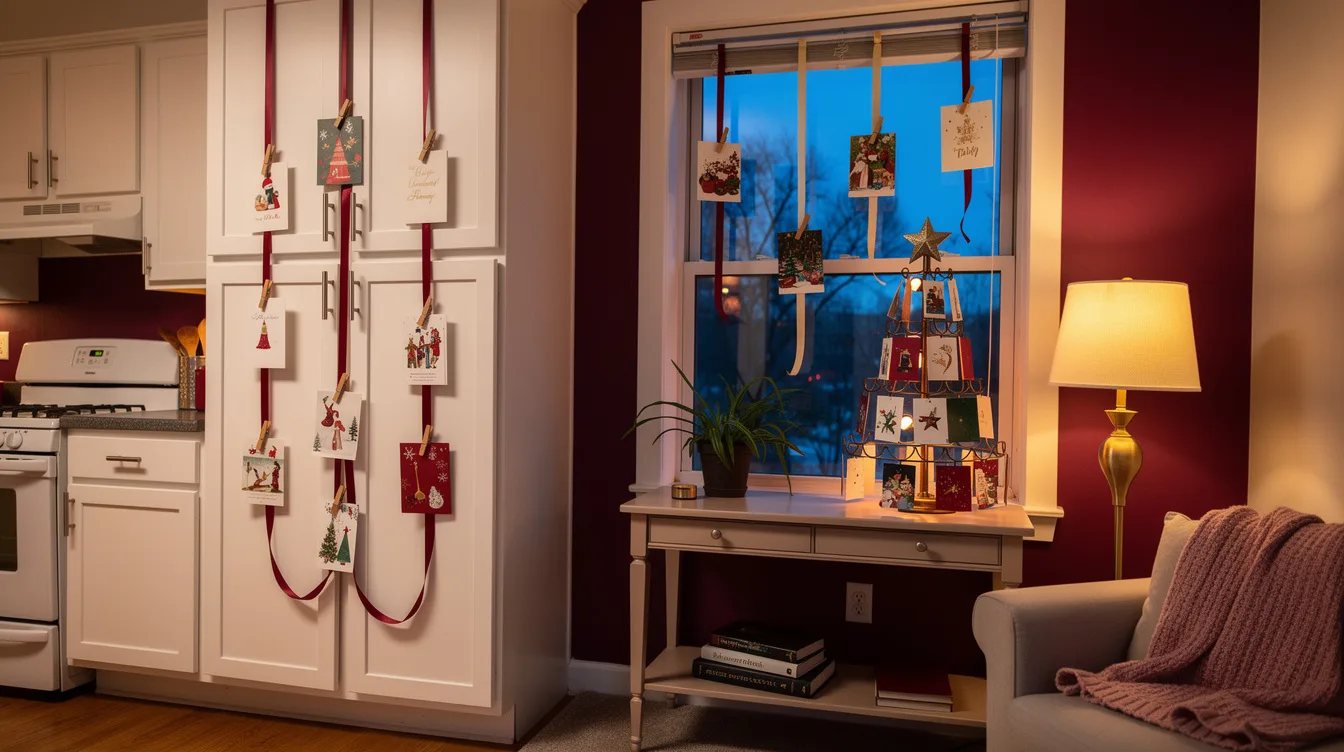
31 october 2026Christmas cards have a habit of taking over the one surface renters cannot afford to lose: the kitchen counter. On a cupboard door about 30 inches high, a complete ribbon loop can hold several cards without nails, tape, or adhesive hooks.
The best displays work with the room's existing structure. Ribbon loops, a tension-rod curtain, and freestanding card holders keep the tradition visible while protecting the finish underneath.
What you will find inside
- Loop Ribbon Around the Door Instead of Sticking It
- Keep Knots Clear of Hinges and Door Seams
- Match Ribbon Length to the Cabinet Height
- Limit Each Door to a Manageable Card Load
- Choose Ribbon With Enough Body to Hold Its Shape
- Fit a Tension Rod Inside a Recess
- Size the Rod Before Buying the Ribbons
- Keep the Tension Display Lightweight
- Avoid Café Rods That Require Screws
- Check the Paint Before Tightening Hardware
- Use a Freestanding Tree When Surfaces Are Scarce
- Measure the Tree Before Giving It a Home
- Count Every Clip Before Filling the Holder
- Protect Traffic Paths With a Shallow Footprint
- Choose the Display by Collection Size
Loop Ribbon Around the Door Instead of Sticking It
Adhesive hooks and tape are the first things to ban when a display needs to disappear cleanly in January. Wrap 1½-inch satin ribbon vertically around a cupboard door, tie the ends together on the inside, and clip cards to the front.
That complete loop carries its own weight, so the door itself becomes the support. A flat knot keeps the arrangement tidy and leaves no sticky residue behind.
Keep Knots Clear of Hinges and Door Seams
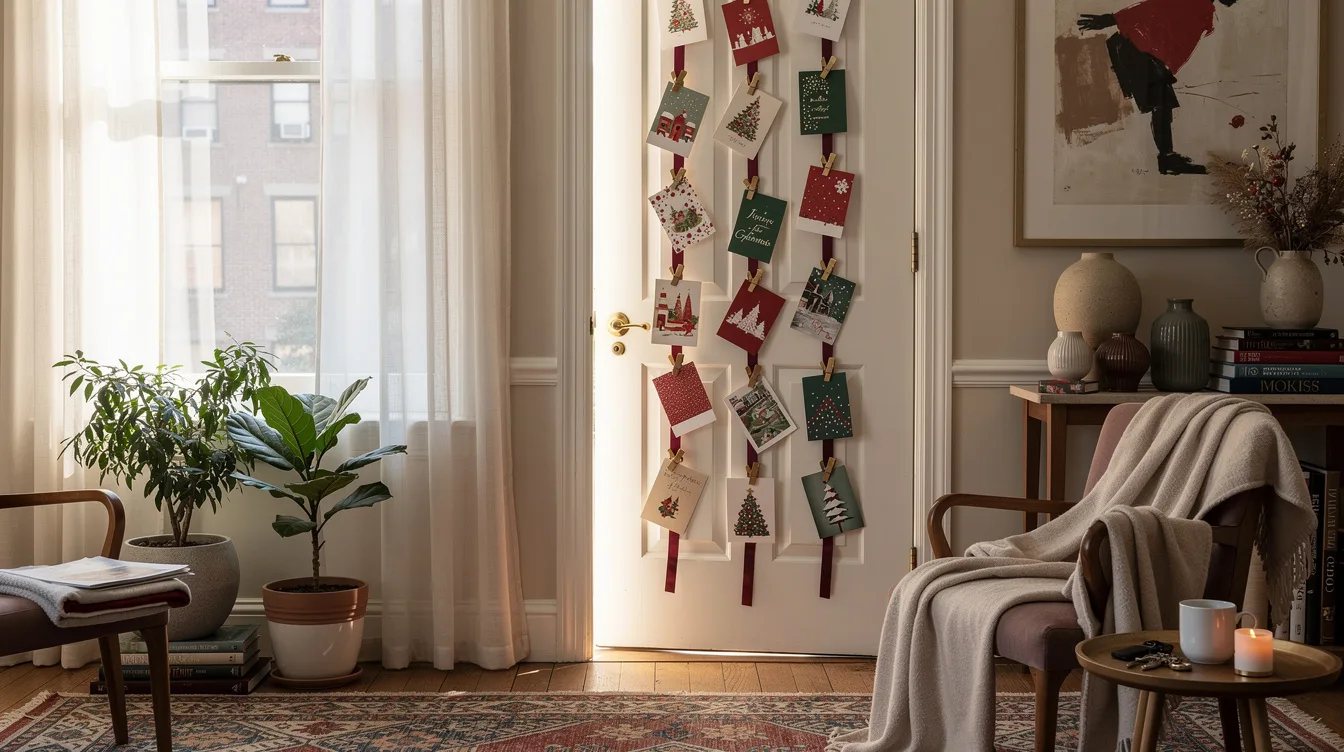
A ribbon loop can still make a cupboard frustrating if its knot sits across a hinge or thickens the closing edge. Tie the ends on the inside near the door's upper corner, then open and close the door before adding cards.
Wooden clothespins add a useful grip without adhesive, but keep them small enough that the door closes naturally. This detail matters more than decorative perfection in a working kitchen.
Match Ribbon Length to the Cabinet Height
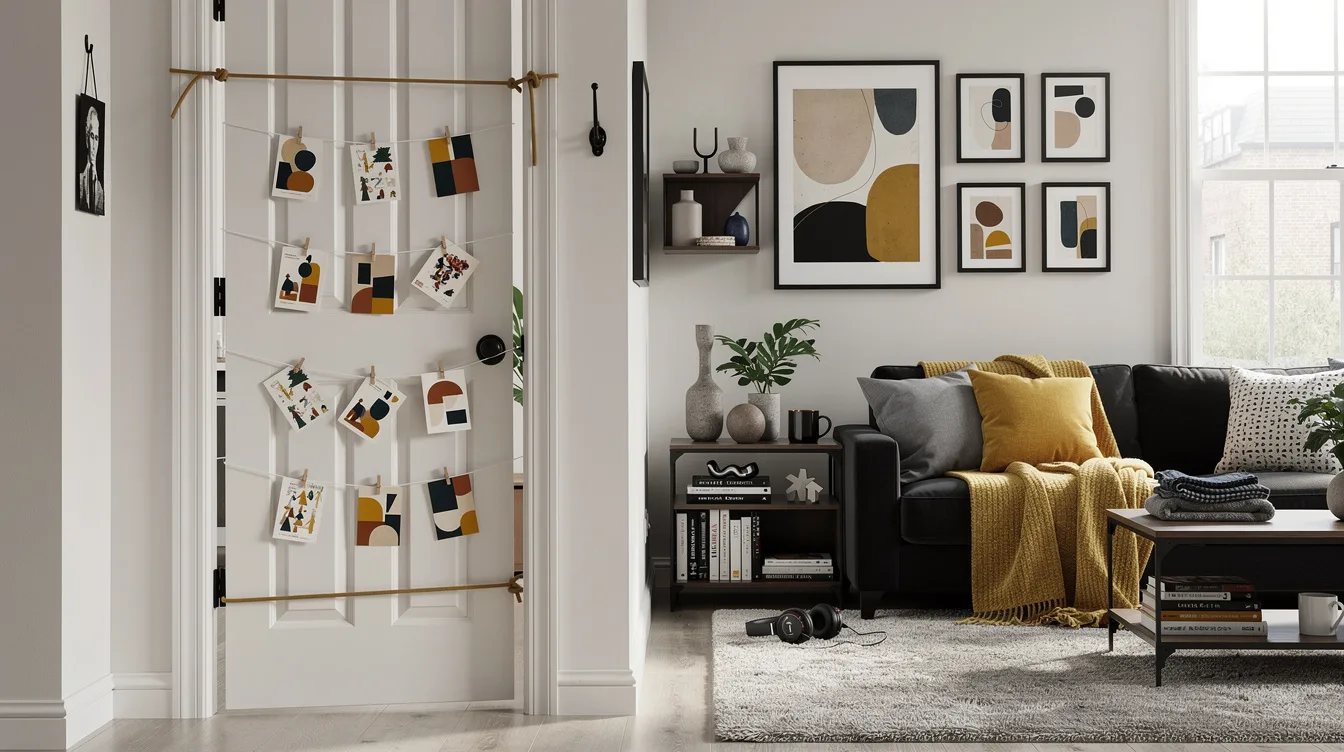
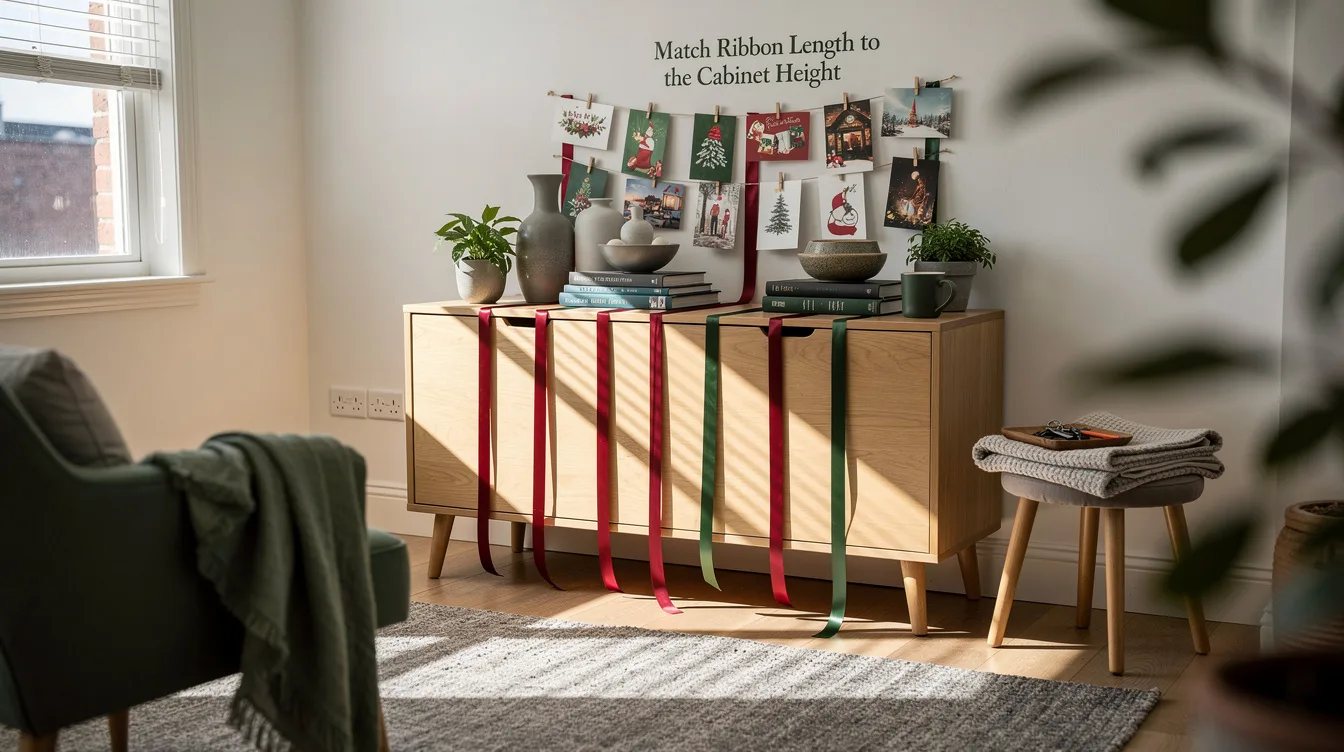
Using a random cut often leaves a loop too tight to tie or so loose that it slides down the door. For a cupboard door about 30 inches high, allow roughly 70 to 75 inches of ribbon per loop, including the knot.
A 12-foot roll of Walmart satin ribbon should cover roughly two doors with modest knots. Measure the first loop against the cabinet before cutting the rest.
Limit Each Door to a Manageable Card Load
A door covered edge to edge quickly turns into a paper curtain that blocks handles and hides the ribbon. Aim for about four to six cards per door, depending on the card sizes and how much overlap feels comfortable.
Leave a little open space around the handle and lower edge. The display should read as a deliberate vertical accent, not as a stack of mail waiting for attention.
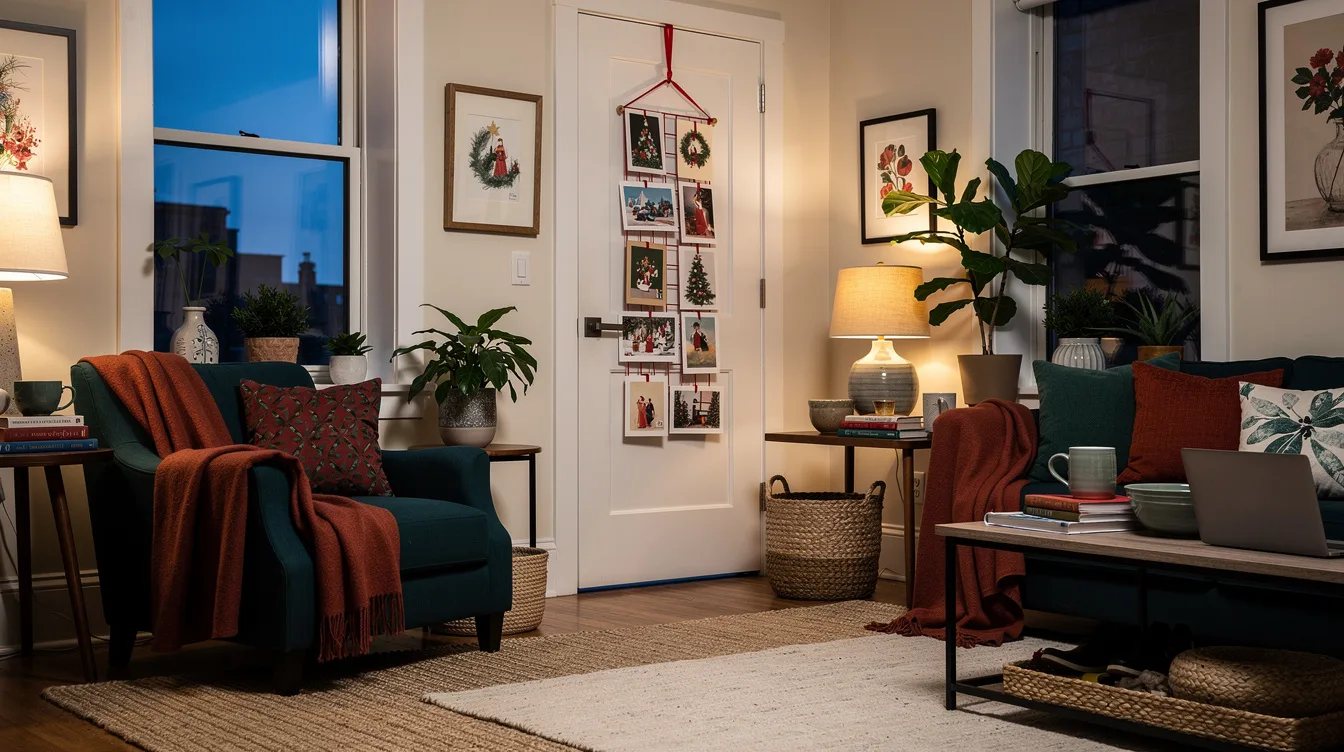
Choose Ribbon With Enough Body to Hold Its Shape
Very thin curling ribbon looks festive in a package but tends to twist when cards are clipped onto it. Grosgrain ribbon or flat satin with a firm edge gives each card a stable surface and keeps the loop visually straight.
Skip metallic strands that shed glitter onto the cabinet finish. A single calm color makes the cards, rather than the support system, carry the seasonal variety.
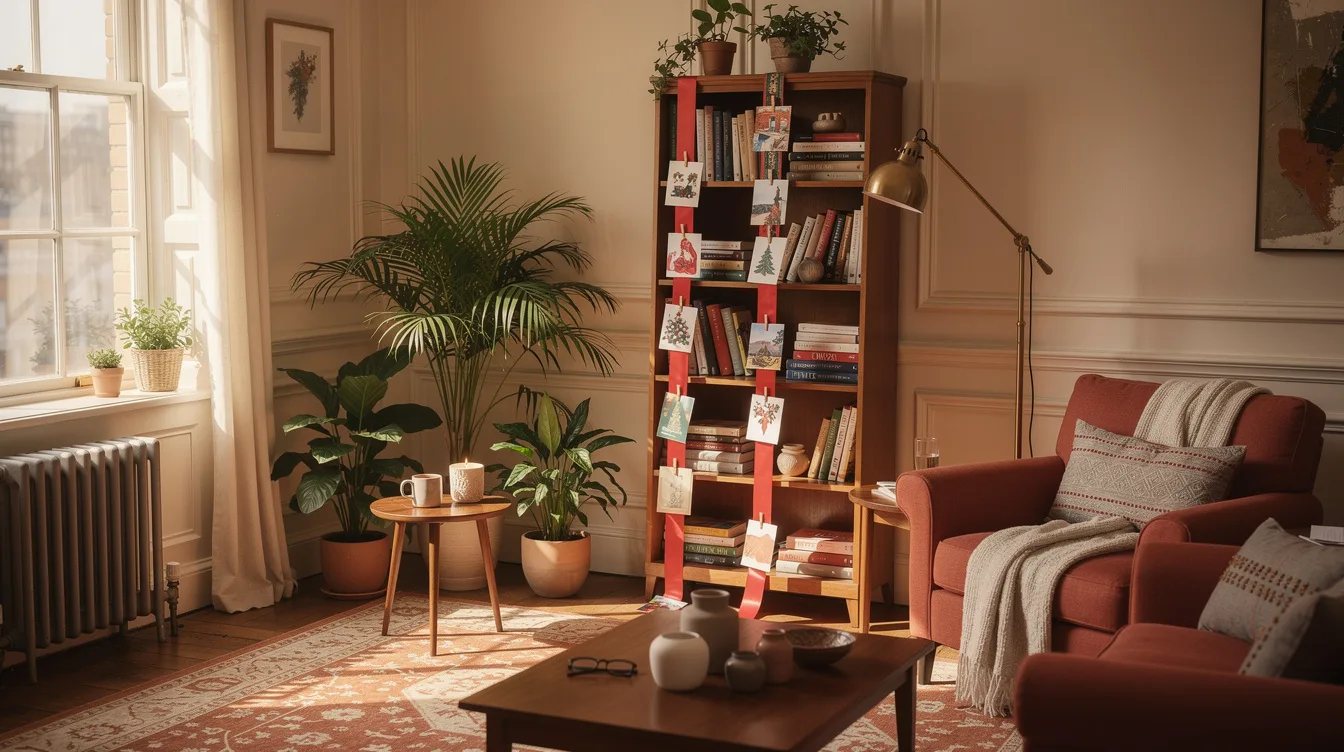
Fit a Tension Rod Inside a Recess
When cupboard space is limited, use a genuine Target tension rod inside a window recess or between the sides of an alcove. Tie ribbons to the rod and clip cards down each vertical drop.
A 28- to 48-inch recess works well with three ribbon drops measuring approximately 30 to 36 inches each. This arrangement uses empty vertical space while keeping the wall completely free of nails and tape.
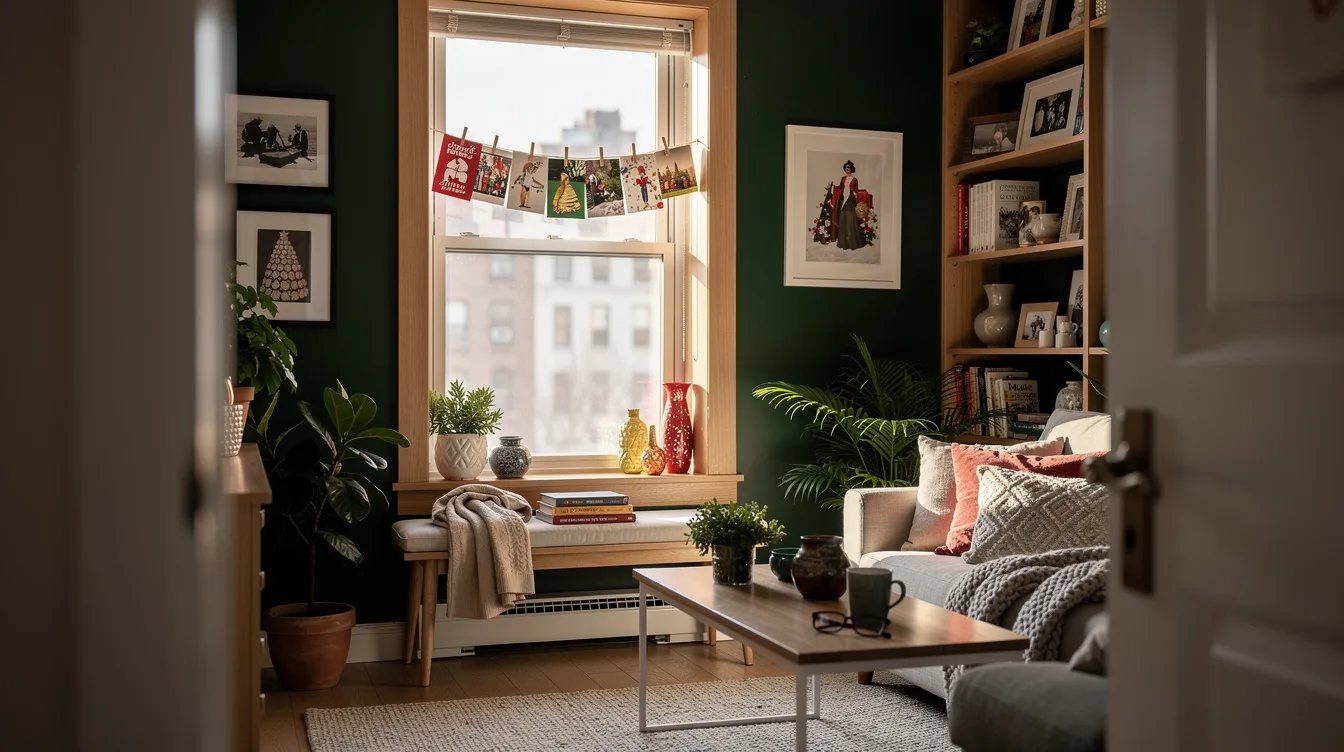
Size the Rod Before Buying the Ribbons
Measure the opening first, because a rod that barely reaches the sides can slip while a rod that is too long will not mount correctly. Target's round tension rods are listed in about 28- to 48-inch and 48- to 84-inch ranges.
The smaller rod is listed at about $6, while the wider version is about $7. Choose the shortest size that fits securely, then plan the ribbon drops around the available width.
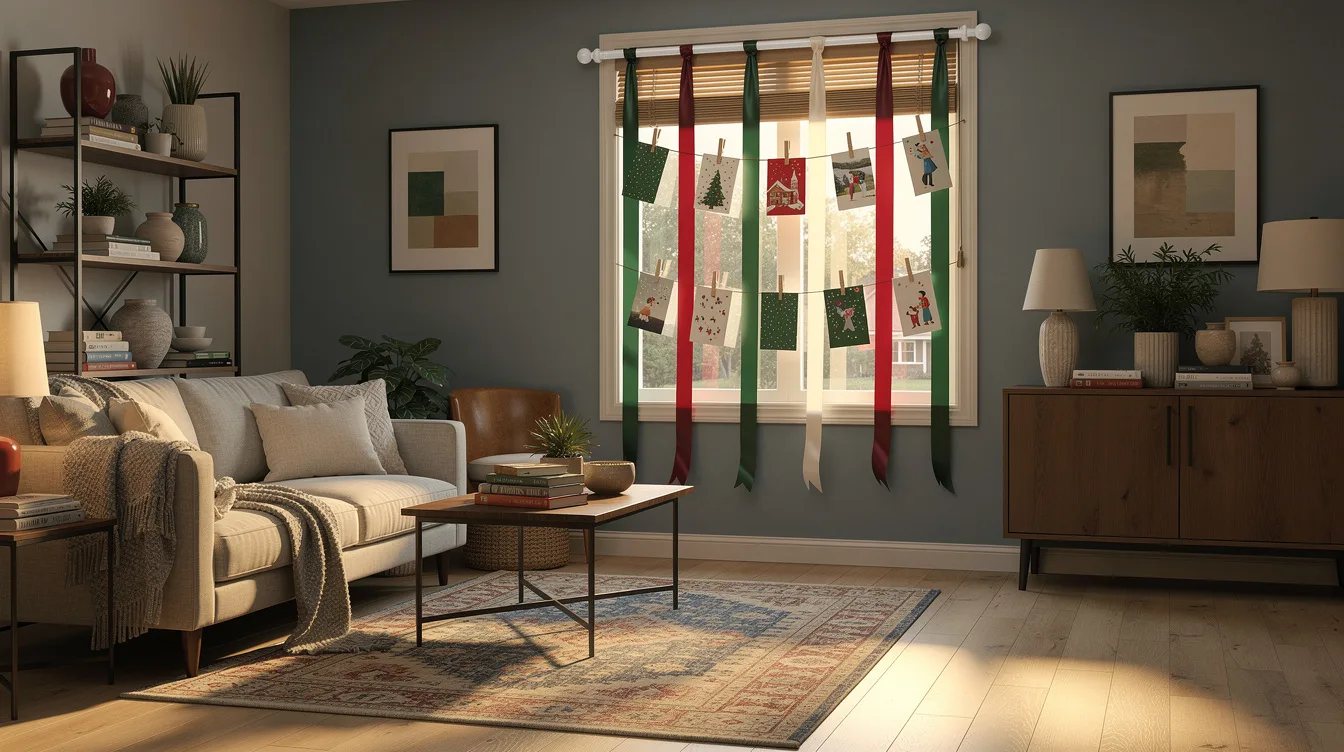
Keep the Tension Display Lightweight
A tension rod is designed for a modest paper display, not a dense garland loaded with ornaments. The metal Target tension rod option is listed at about $10 and has a maximum diameter of 1 inch, but its support still depends on the condition of the surrounding surface.
Use cards and lightweight clips only. A complete ribbon-and-clip setup typically lands around $13 to $22, depending on the rod and materials, so there is no reason to overload the hardware with heavy decorations.

Avoid Café Rods That Require Screws
Some small curtain rods look similar to tension rods but rely on screw-in brackets. They may be useful elsewhere, yet they violate the brief when the display must leave a rental untouched.
Check the mounting language before purchasing, and choose a true tension-mounted rod with rubberized ends when possible. Press it firmly into a sound recess, then inspect the paint and wall surface before tightening further.
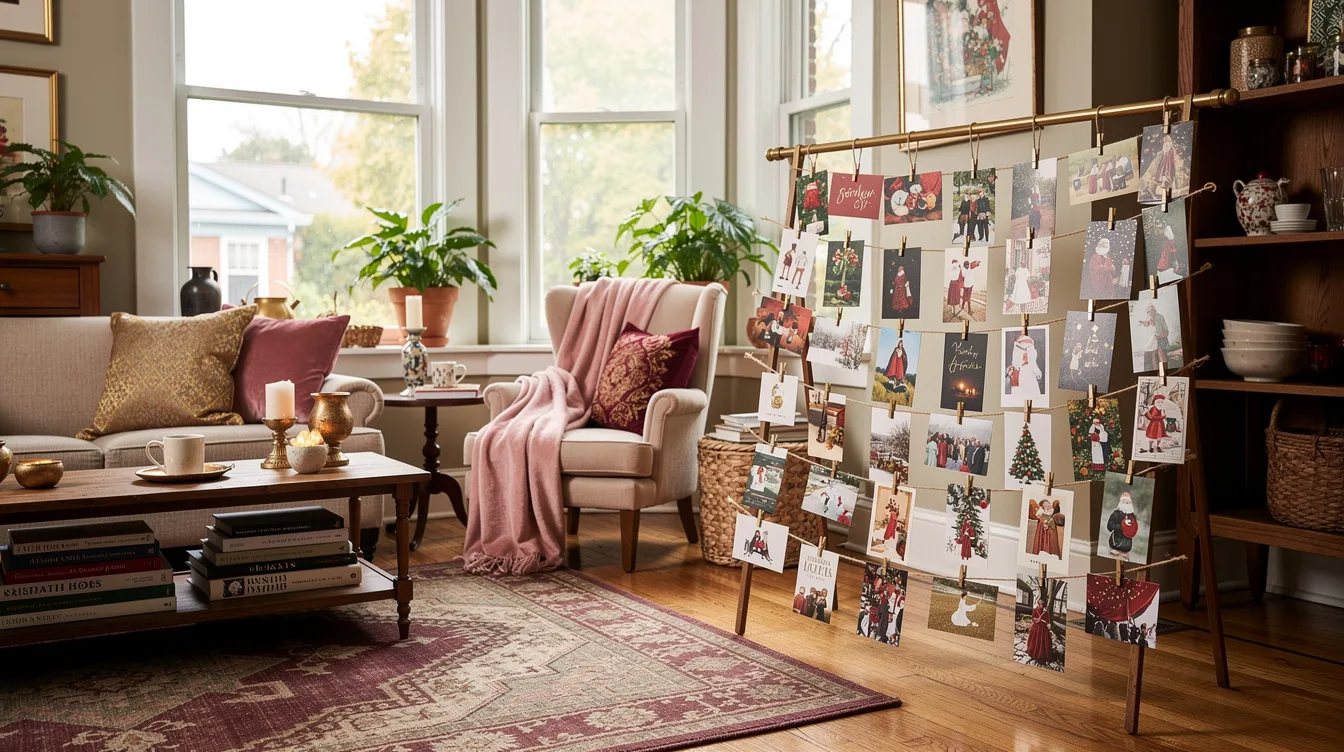
Check the Paint Before Tightening Hardware
No drilling does not mean no possible marks. A tension rod can leave pressure points on fragile, flaking, or recently painted surfaces, especially when it is tightened too aggressively.
Test a discreet section first and use a clean, dry surface for the rod ends. This small inspection protects the rental finish and prevents a festive display from becoming a repair conversation.
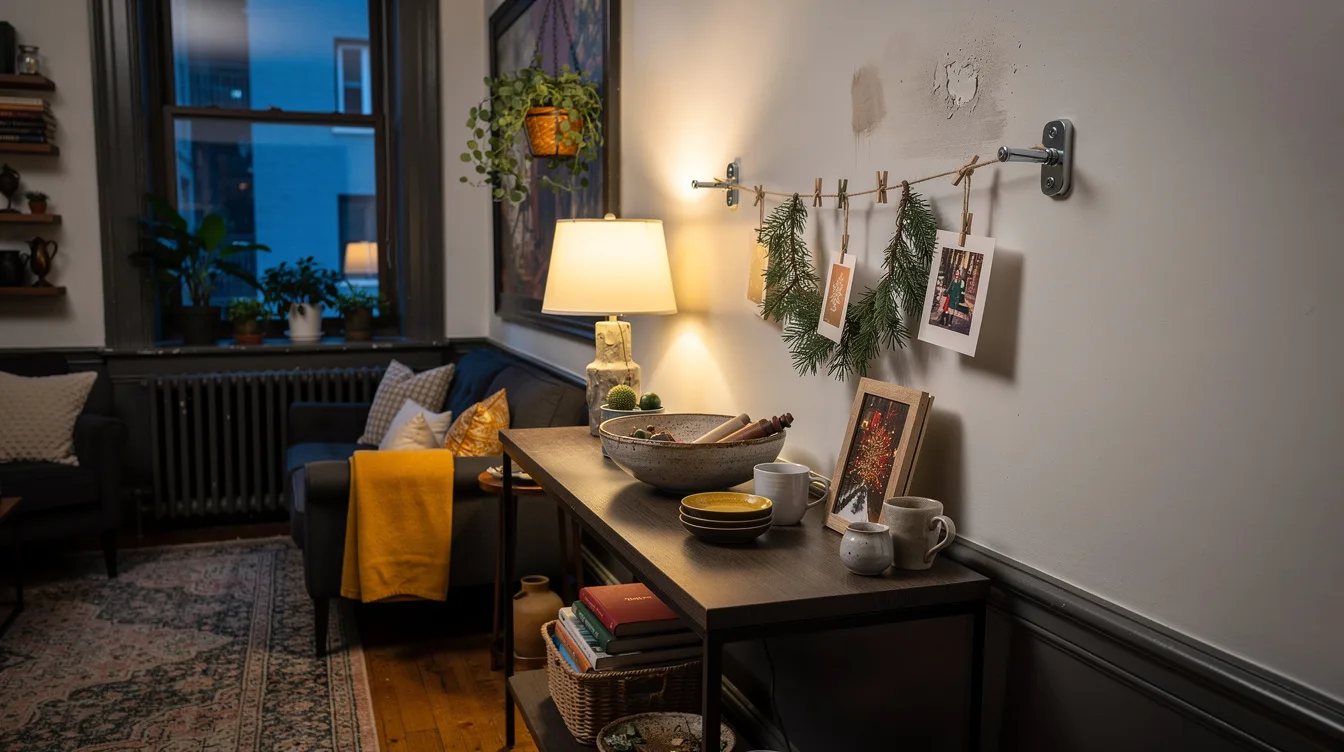
Use a Freestanding Tree When Surfaces Are Scarce
A freestanding metal Christmas card tree solves the problem when cupboard doors, windows, and alcoves are already occupied. The two-pack listing is priced at about $52.99 and includes bases, so the holders need no wall mounting.
The metal card-holder trees require assembly, but they can stand on a console, entry table, or broad shelf. They are the cleanest ready-made choice for renters who want a display that can move from room to room.

Measure the Tree Before Giving It a Home
The larger tree measures about 22 inches wide, 5½ inches deep, and 44½ inches high. The smaller one measures about 15 inches wide, 4½ inches deep, and 30 inches high, so neither should be treated like a tiny desk ornament.
Reserve a stable floor or tabletop zone before ordering. The taller Christmas card tree is nearly 3 feet 9 inches high and needs clearance from cabinets, ceiling trim, and busy walkways.
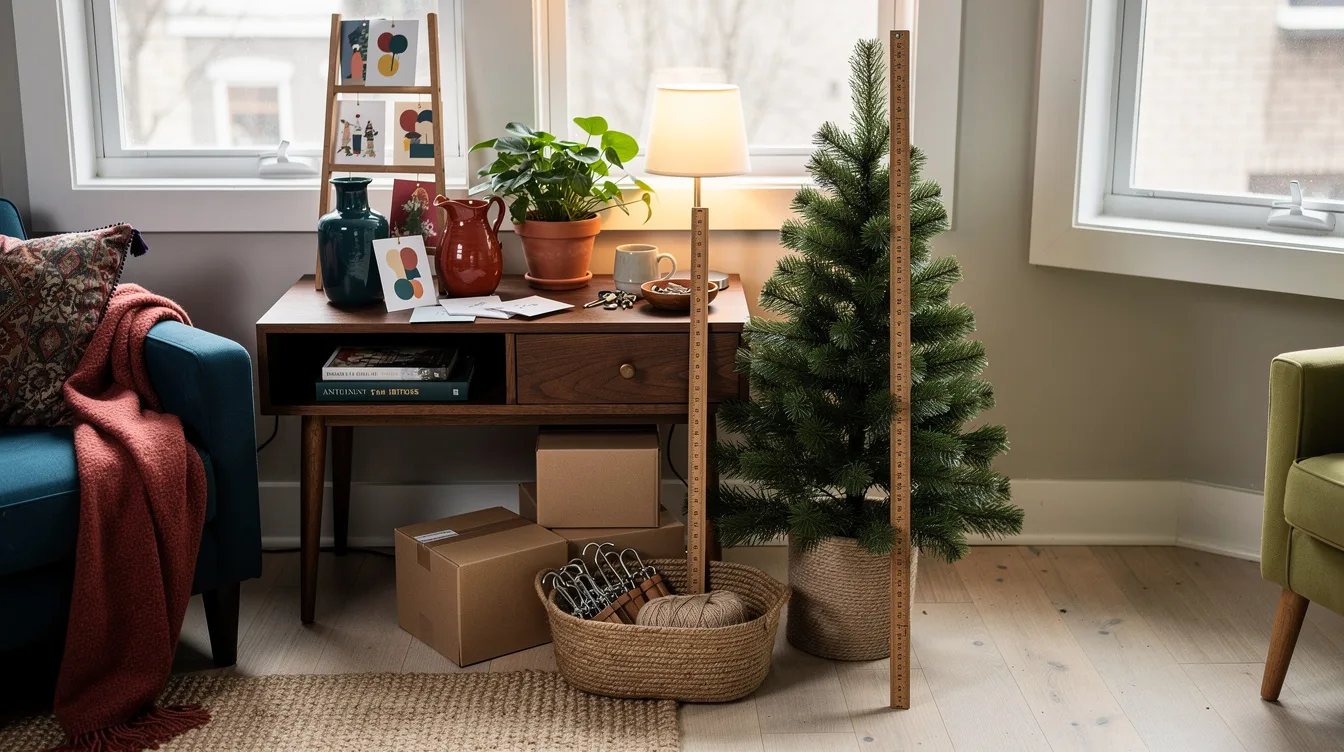
Count Every Clip Before Filling the Holder
Capacity changes how a card display should be planned. The larger tree has 21 clips and the smaller one has 15, giving the pair 36 card positions altogether.
That count works for a growing holiday collection, but it does not mean every clip needs a card on day one. Leave room for new arrivals and spread larger folded cards across both trees instead of crowding one side.
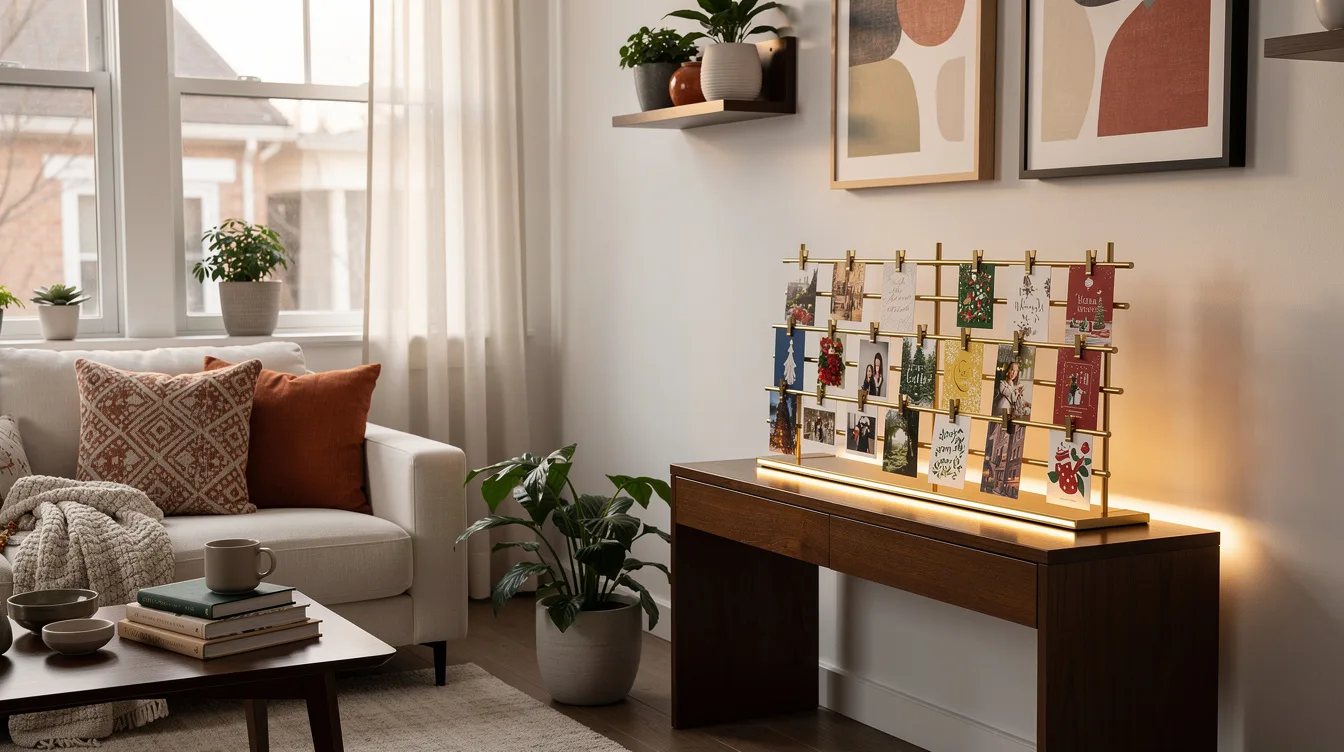
Protect Traffic Paths With a Shallow Footprint
A freestanding holder can be renter-friendly and still be badly placed. Keep the base away from a doorway swing, pet route, or narrow passage, especially when the larger tree occupies about 5½ inches of depth.
Place freestanding metal bases on a level surface and check them after the first few cards are clipped on. A display that stays upright and easy to walk around will look intentional throughout the season.
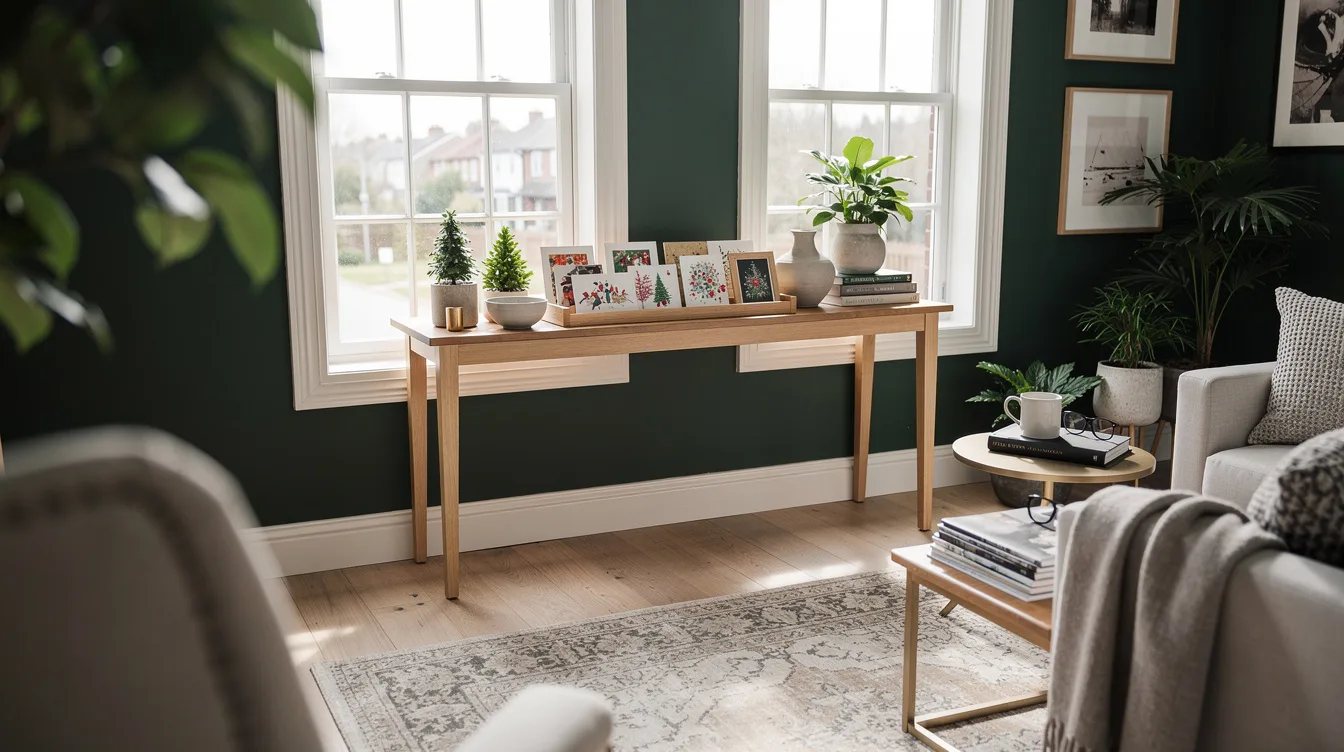
Choose the Display by Collection Size
Small collections rarely need a tall tree, while a full household exchange can outgrow two cupboard loops. The ribbon approach costs about $7 to $12 for ribbon and clips, the tension-rod curtain is roughly $13 to $22, and the two-tree option is listed at about $52.99.
Start with the surface you already have and the number of cards you expect, then buy only the support that fits. For most renters, a ribbon loop on one cupboard is the least expensive test before committing to a larger display.
Keep reading
- Landlord Said No Holes? Walmart Christmas Lights Hang Without Drilling
- No Nails Needed: 12 Christmas Staircase Garland Ideas That Look Custom
- Landlord Said No Holes? These 12 Ace Hardware Spice Racks Work Anyway
Measure one cupboard, recess, or tabletop today, then choose the smallest support that fits your collection. A clean loop or stable freestanding holder will keep every new card visible without turning move-out day into a repair project.


