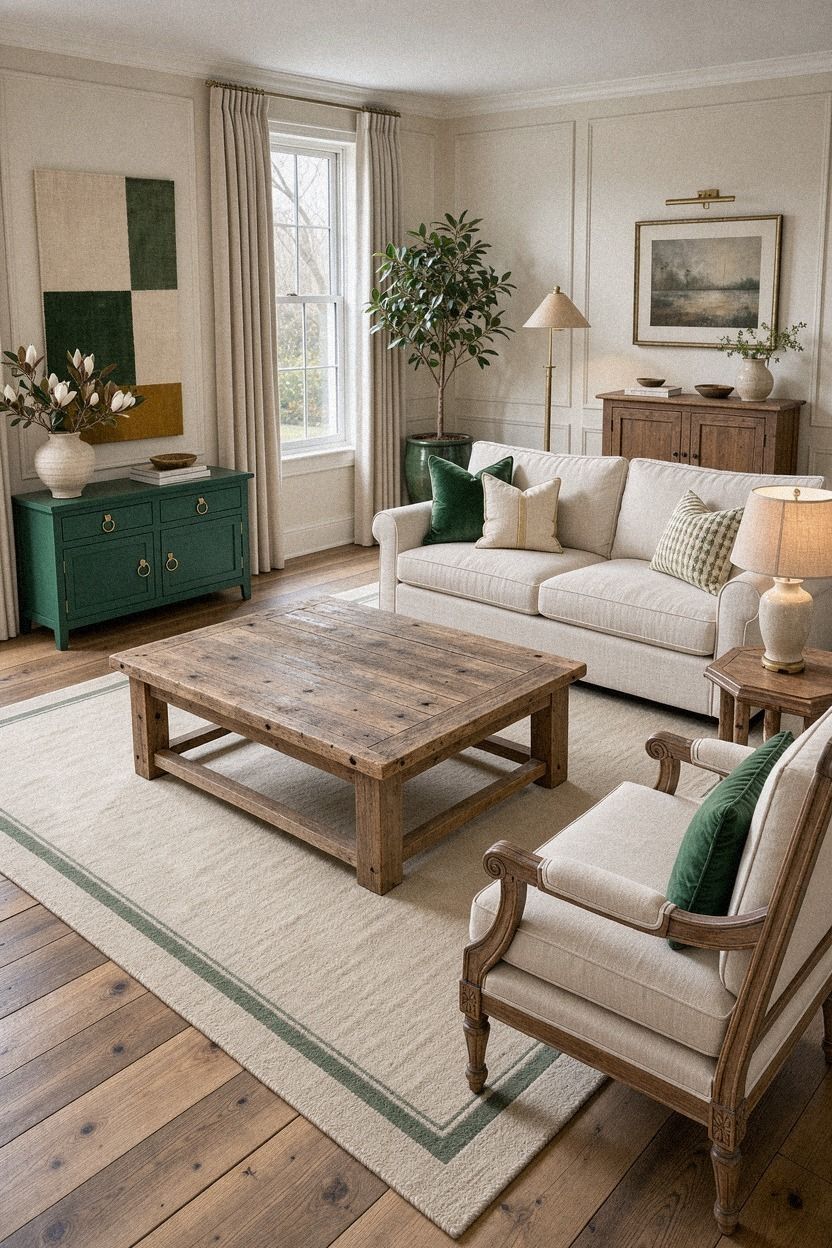
I Struggled to Style My Coffee Table Until I Found the 5 Object Formula Designers Swear By
31 october 2026I styled my coffee table three times before it looked warm instead of crowded. The breakthrough was using five object types, not five random things, with a 16 to 18 inch table height and enough empty space to set down a mug. I was surprised by how airy and inviting the room felt. And yes, I stopped moving everything around!
If you’re starting from scratch, begin with clearing the table, then build the arrangement around one low anchor and three visible heights. It worked!
Here's what it looked like before
The table was covered with objects I liked separately, but the arrangement had no rhythm. A candle sat beside a remote, two small bowls touched the edge, and a stack of books leaned toward the sofa like it was tired.
I had a glass coffee table, a beige sofa, and a rug that was too small for the seating. Your eye landed on every object at once, so nothing felt important.
I kept adding pieces because I thought the room needed more warmth. It needed fewer, better decisions.
The first change was clearing the surface completely. Your table needs a quiet starting point before you can see its shape, scale, or relationship to the sofa. I left the surface empty overnight, and the room felt calmer before I bought anything.
- Clear the Table Before You Style It
- Anchor the Arrangement with a Low Bowl
- Use the Three-Height Rule
- Layer the Soft Object First
- Choose Books That Give You a Point of View
- Add One Living Shape
- Keep the Tray Smaller Than You Think
- Mix Warm Wood Over Shiny Glass
- Let the Empty Space Work
- Build the Two-Wood Rule
- Frame the View from the Sofa
- What Does Your Table Need at Night?
- Place the Useful Object Where You Reach
- Skip Symmetry and Repeat One Color
- Make a Rental-Friendly Coffee Table
- Edit the Arrangement for Fall
- Photograph the Table from Sitting Height
- Keep the Formula, Change the Feeling
1Clear the Table Before You Style It
I started with the most boring step, and it made the biggest difference. Remove every remote, receipt, coaster, and decorative object from your coffee table. Your eye needs to read the tabletop as one shape before it can understand a grouping.
A reclaimed weathered teak tabletop shows this especially well because its varied grain becomes part of the composition.
The table should sit about 16 to 18 inches tall, and your sofa should have enough breathing room around it for easy movement. I measured before styling because my first arrangement looked crowded from the seat. A low table can feel airy, but a deep pile rug can make it feel visually lower.
And don’t rush to refill the surface. Give yourself ten minutes with nothing on it, then notice where your eye rests. That pause is useful.
If the table still feels too busy, return to the empty-space test before buying anything.
2Anchor the Arrangement with a Low Bowl
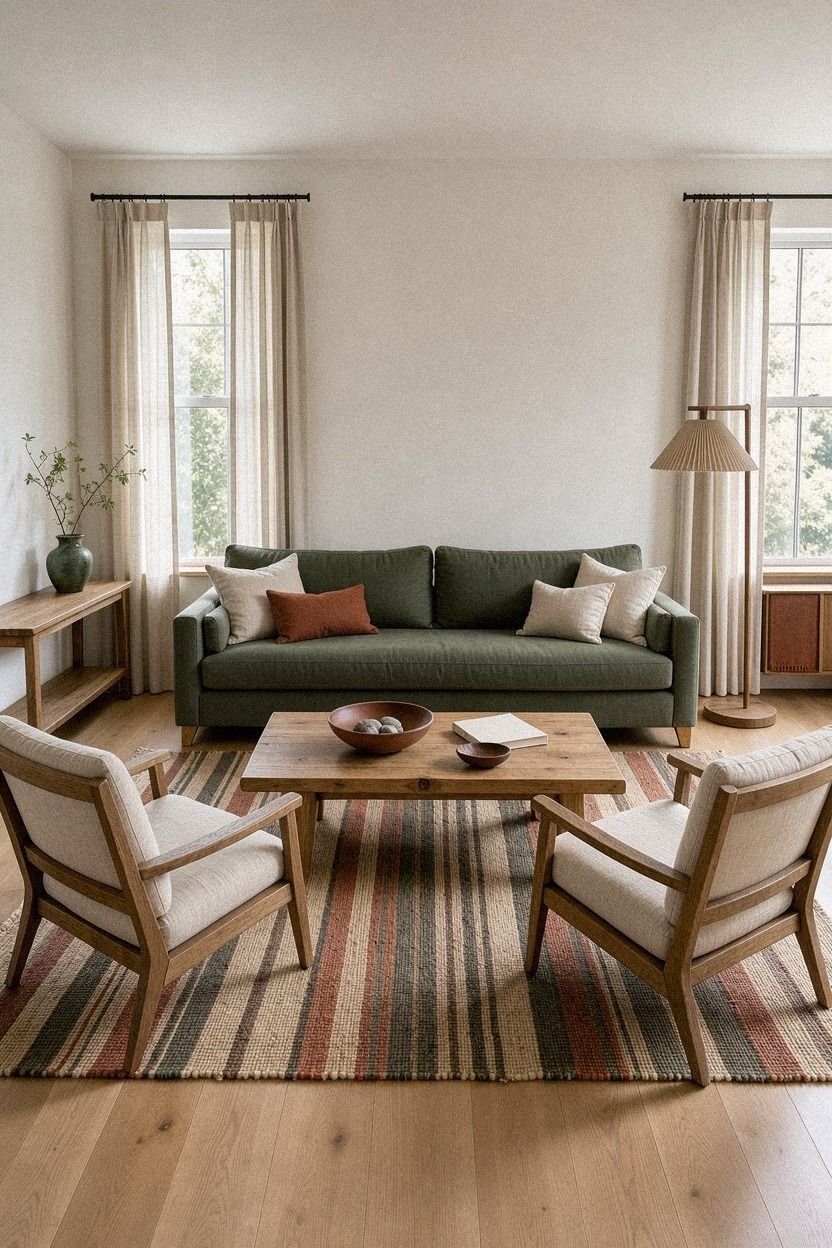
The first object in my formula is a broad, low bowl. It creates a visual anchor without blocking conversation across the room.
I chose a natural oak bowl softened by a fold of washed Belgian linen, with forest green and rust nearby. Your version could be carved wood, aged bronze, or matte ceramic.
The important part is a wide footprint and a low profile.
I placed mine slightly off-center instead of directly in front of the sofa. That small shift made the arrangement feel organic rather than staged. You’ll want the bowl close enough to reach, especially if you use it for keys or remotes, but it shouldn’t dominate the whole tabletop.
A West Elm Anton bowl gives you a clean starting point if your room leans modern. I’d skip a tiny round dish because it disappears beside books and lamps. The bowl should hold the composition together, not look like an afterthought.
3Use the Three-Height Rule
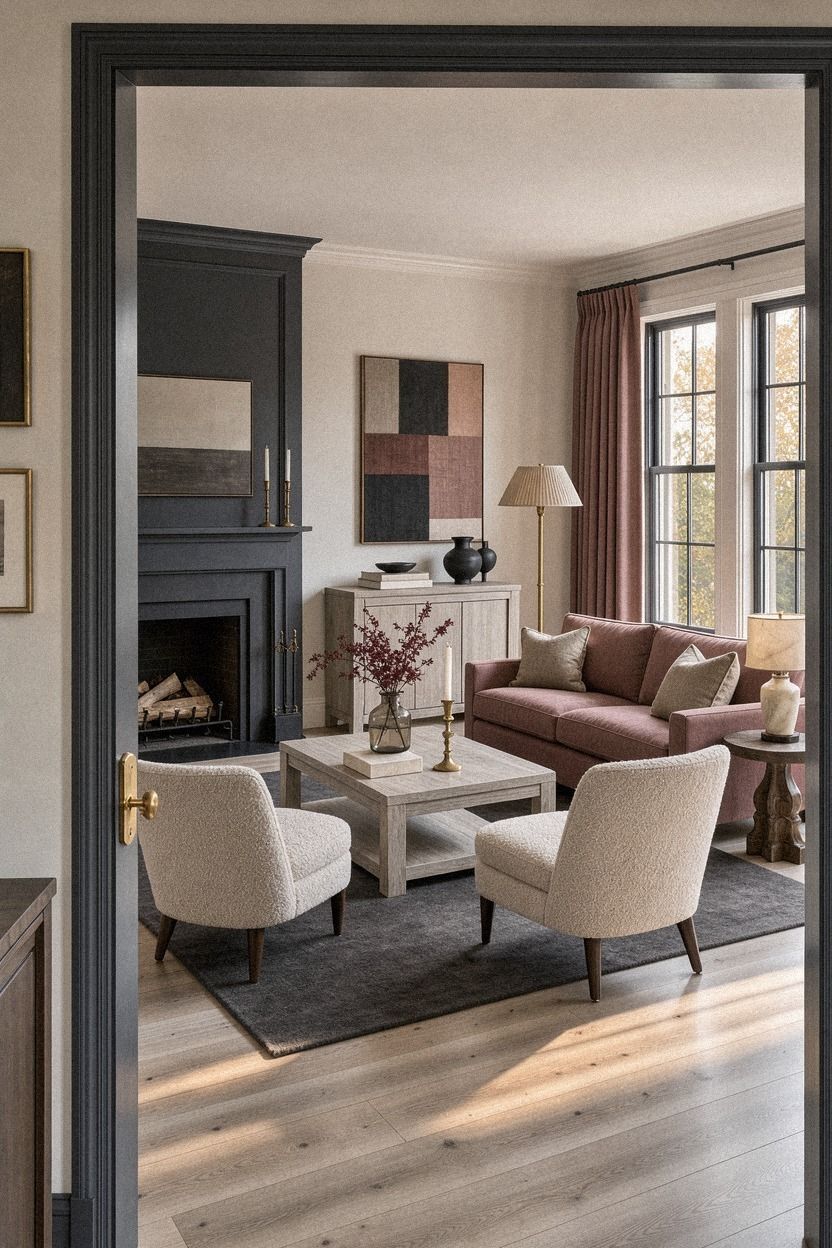
Designers often build a coffee table arrangement around three visible heights. I used a low bowl, a medium stack of books, and one taller object, such as a vase or candleholder.
Your eye moves between those levels, which keeps the display lively without making it busy. The result felt harmonious almost immediately.
My taller piece was a cerused white oak vase filled with one branch of olive foliage. It rose high enough to create contrast against dusty rose, charcoal, and brass accents while staying below the sightline between two chairs. If your table sits in front of a television, you’ll want to keep the highest object especially restrained.
But the heights shouldn’t look like steps in a school project. Vary the spacing, then let one object overlap another slightly.
I tested the arrangement from the sofa, the doorway, and the side chair. Each view matters.
That was the first real win!
4Layer the Soft Object First
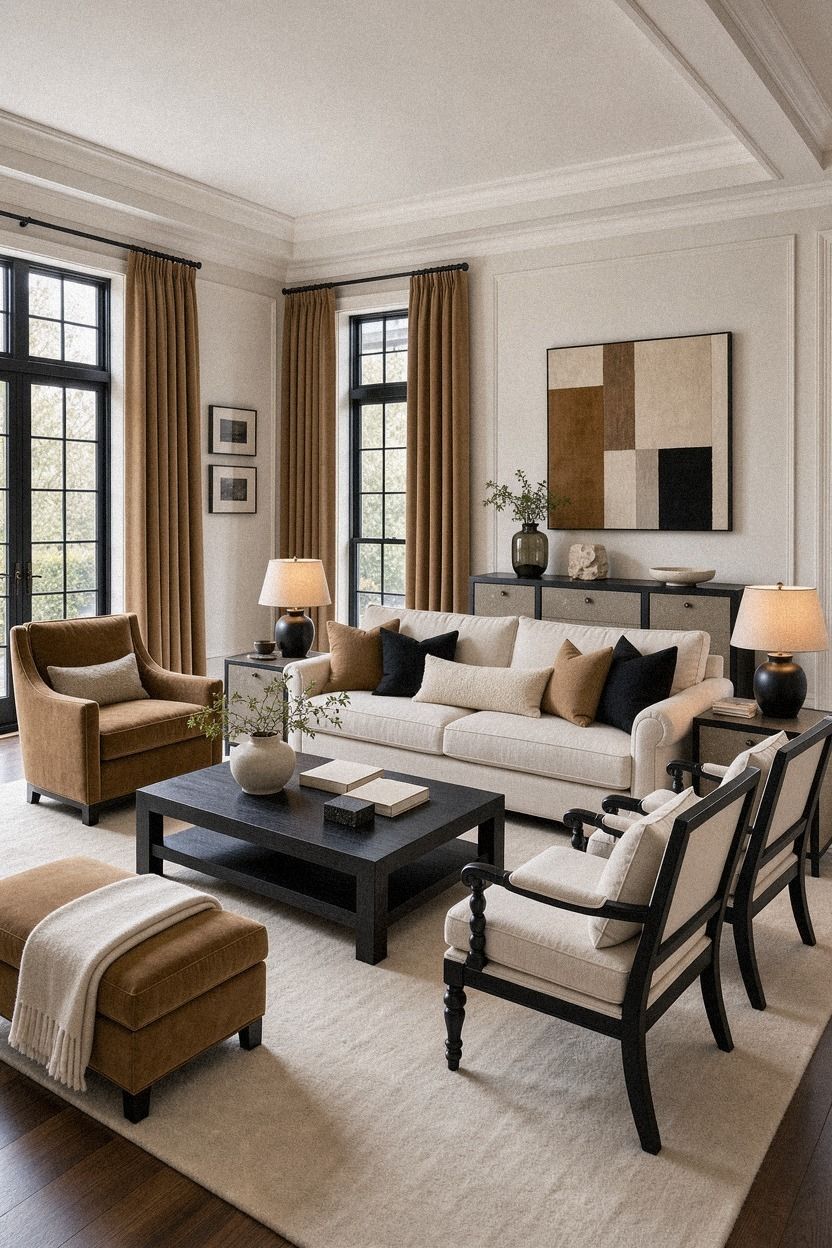
A coffee table needs one soft note, or the whole surface can feel hard and showroom-like. I used a small shagreen accent against warm white, camel, and black details. That contrast kept the arrangement tactile without adding another bulky object.
5Choose Books That Give You a Point of View
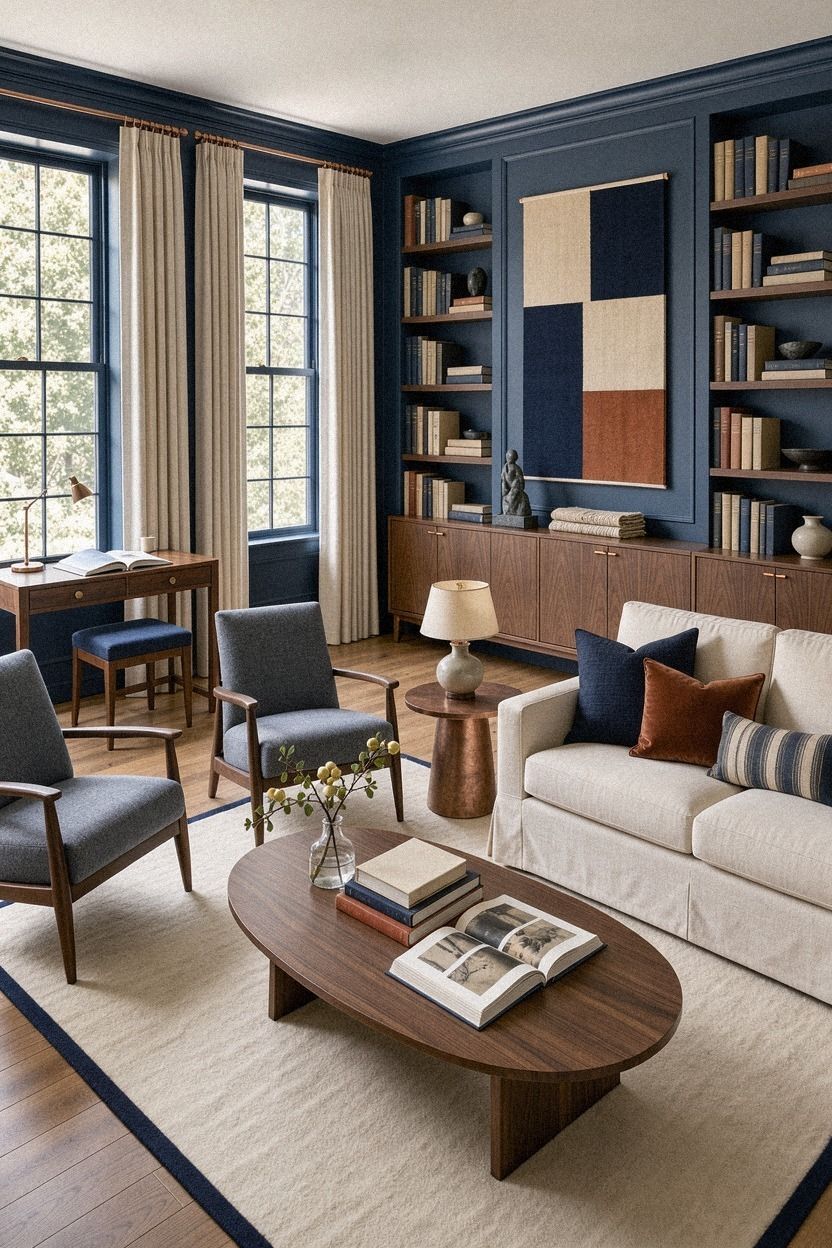
Books became my second anchor because they add color, height, and personality at the same time. I chose two large art books with midnight blue, copper, and ivory covers and stacked them horizontally under the bowl. Your books should relate to something already in the room, such as the Farrow & Ball Hague Blue wall or a book-matched walnut cabinet.
I kept the stack to two books because my table is narrow. A larger table might handle three, but more than that can feel heavy unless the covers are unusually quiet.
Search your shelves first. The best titles are often the ones you’ve read, marked, or genuinely want to open.
A CB2 Primitivo bouclé sofa can handle more graphic books because the upholstery is soft and textural. If your seating already has bold pattern, choose calmer covers. Your coffee table should tell a small story, not shout five different ones.
6Add One Living Shape
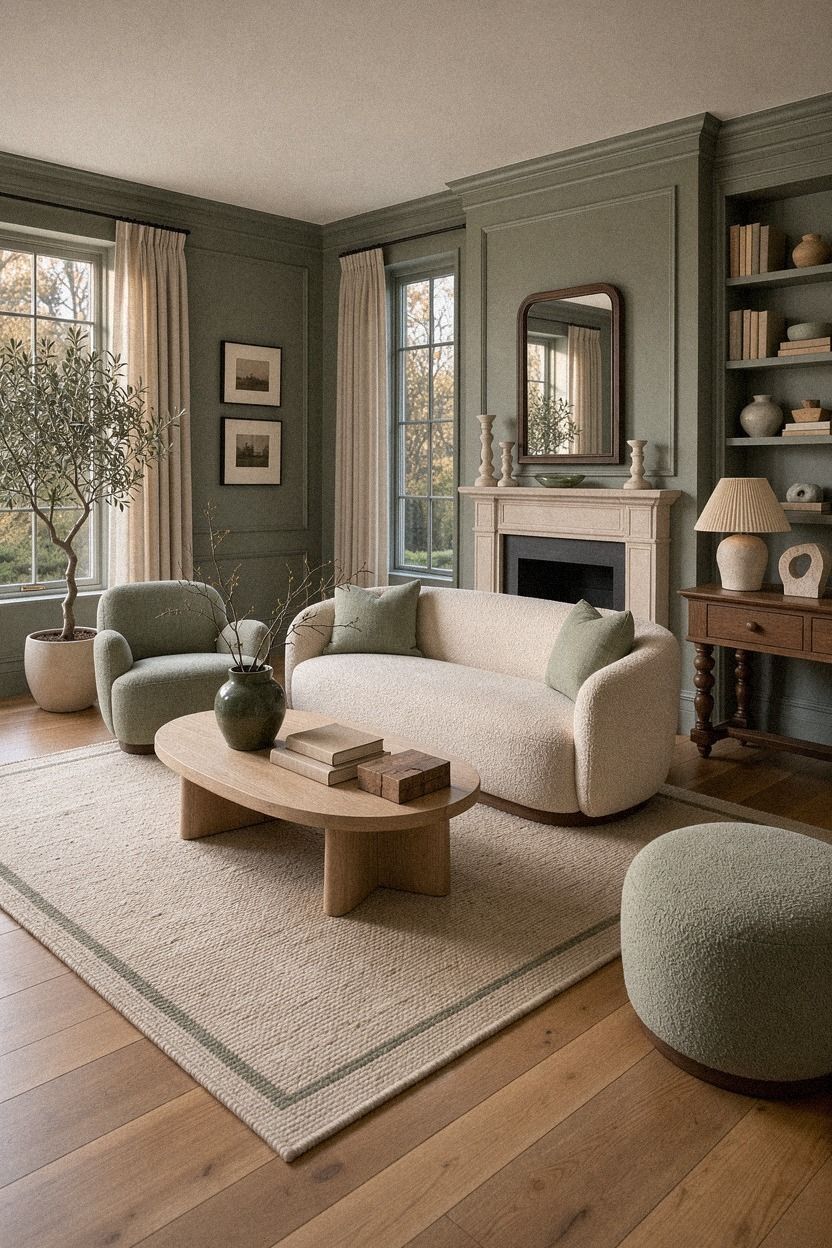
The third object type is something alive or shaped like it could grow. I used one simple branch rather than a full arrangement, leaving the natural shape visible without crowding the bowl or books.
7Keep the Tray Smaller Than You Think
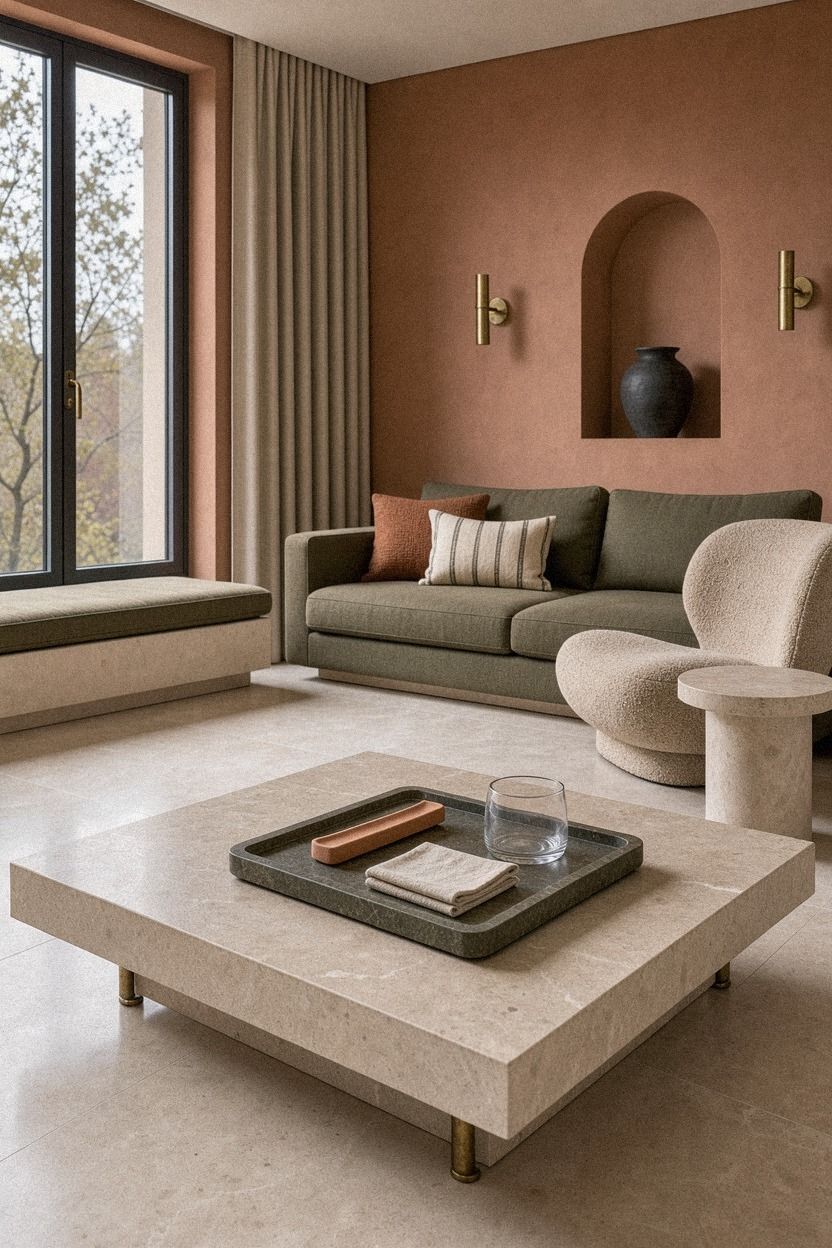
A tray is useful when your table doubles as a serving surface, but the wrong size turns the whole top into a box. I chose an unlacquered brass tray developing a soft patina, leaving a generous border around it. Terracotta, stone, and olive tones kept the metal from feeling too formal.
The tray held the bowl, one candle, and a small dish. It didn’t hold every remote, magazine, and pair of glasses in the room.
That distinction matters. You want your hand to move one group when guests arrive, not carry a pile that has become permanent clutter.
A vintage brass tray can give you the same function at a lower cost. I’d skip mirrored trays because they reflect every lamp and window, which makes a small room feel busier.
A patinated finish is warmer, quieter, and easier to live with. For more help, compare this with the useful-object rule.
8Mix Warm Wood Over Shiny Glass
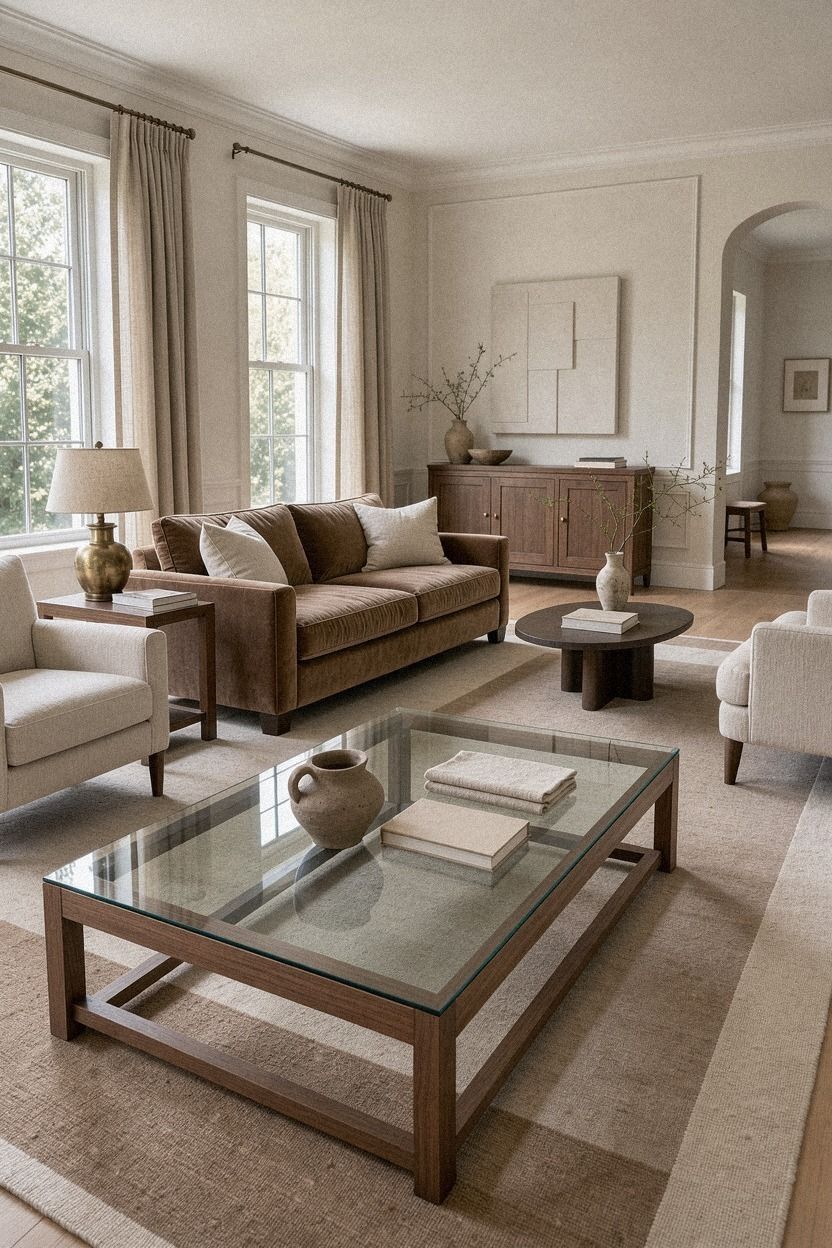
My original glass table made every object look separate. I changed the feeling by adding a warm wood tray and a small aged brass box, then repeated the texture in a deep-pile mohair velvet cushion nearby. Clay and linen tones kept the arrangement grounded without making the glass disappear.
This is one of those choices where I’d pick a warm wood accent beside deep-pile mohair velvet over a collection of polished surfaces for a bright living room. Aged brass adds a quieter glow, while clay and linen keep the palette relaxed. If your walls are Farrow & Ball Setting Plaster, those materials feel especially gentle together.
But don’t mix four wood tones on one surface. Two is enough. Your table can use oak, while a nearby cabinet uses walnut, as long as one tone repeats in a frame or bowl.
That small connection makes the room feel intentional without matching everything.
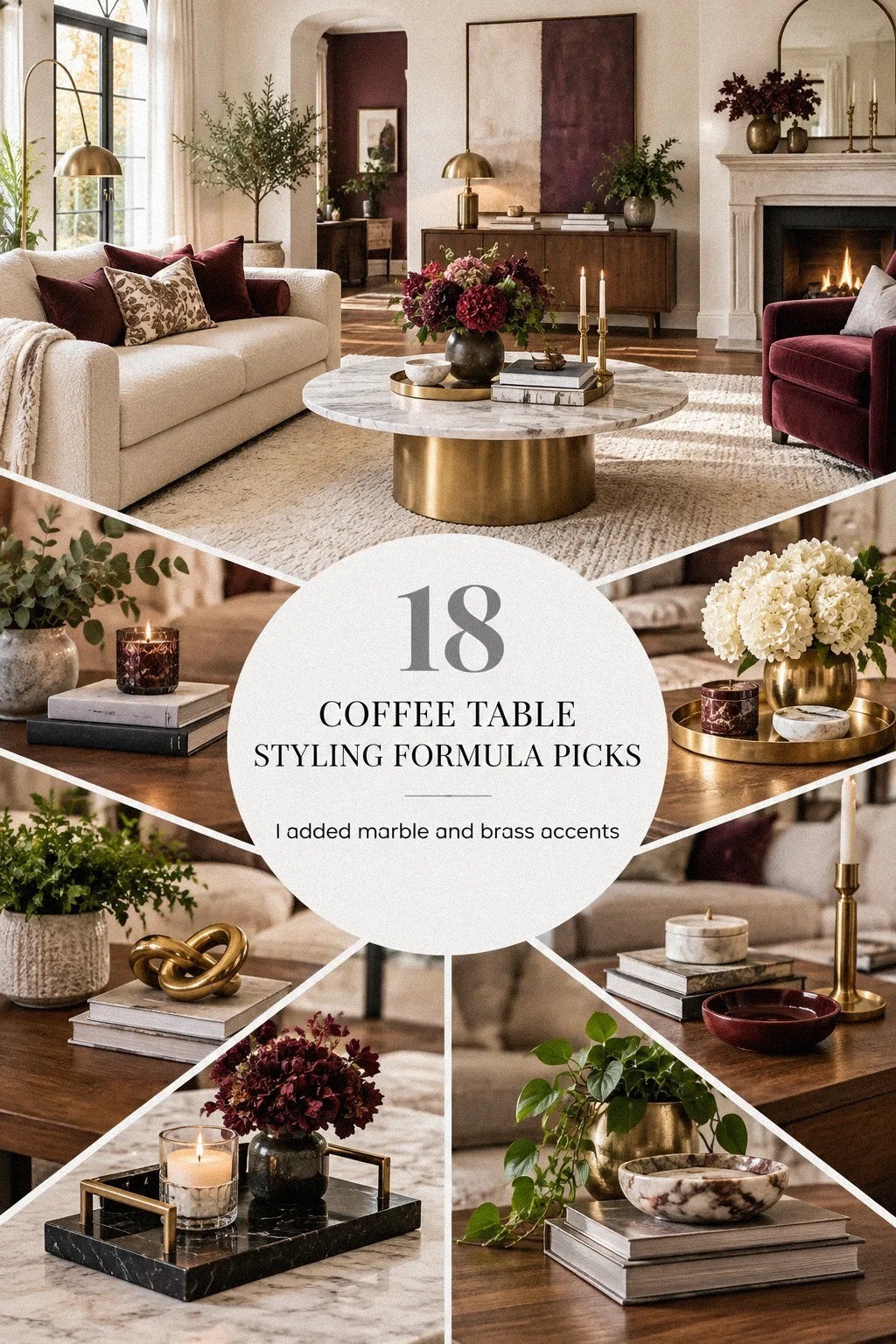
9Let the Empty Space Work
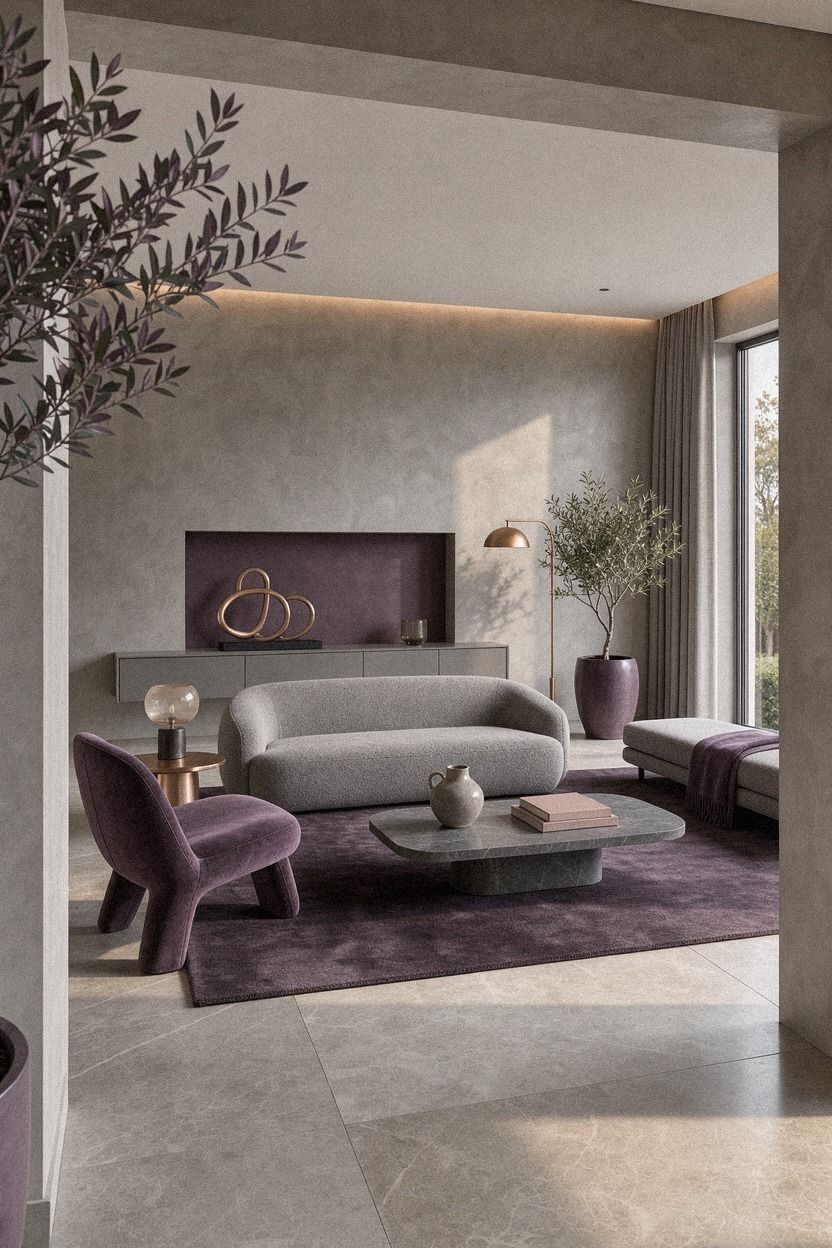
The most surprising part of my makeover was leaving open space around the objects. The plum, grey, and rose-gold palette felt more considered once the hand-applied Venetian plaster remained visible around the arrangement.
10Build the Two-Wood Rule
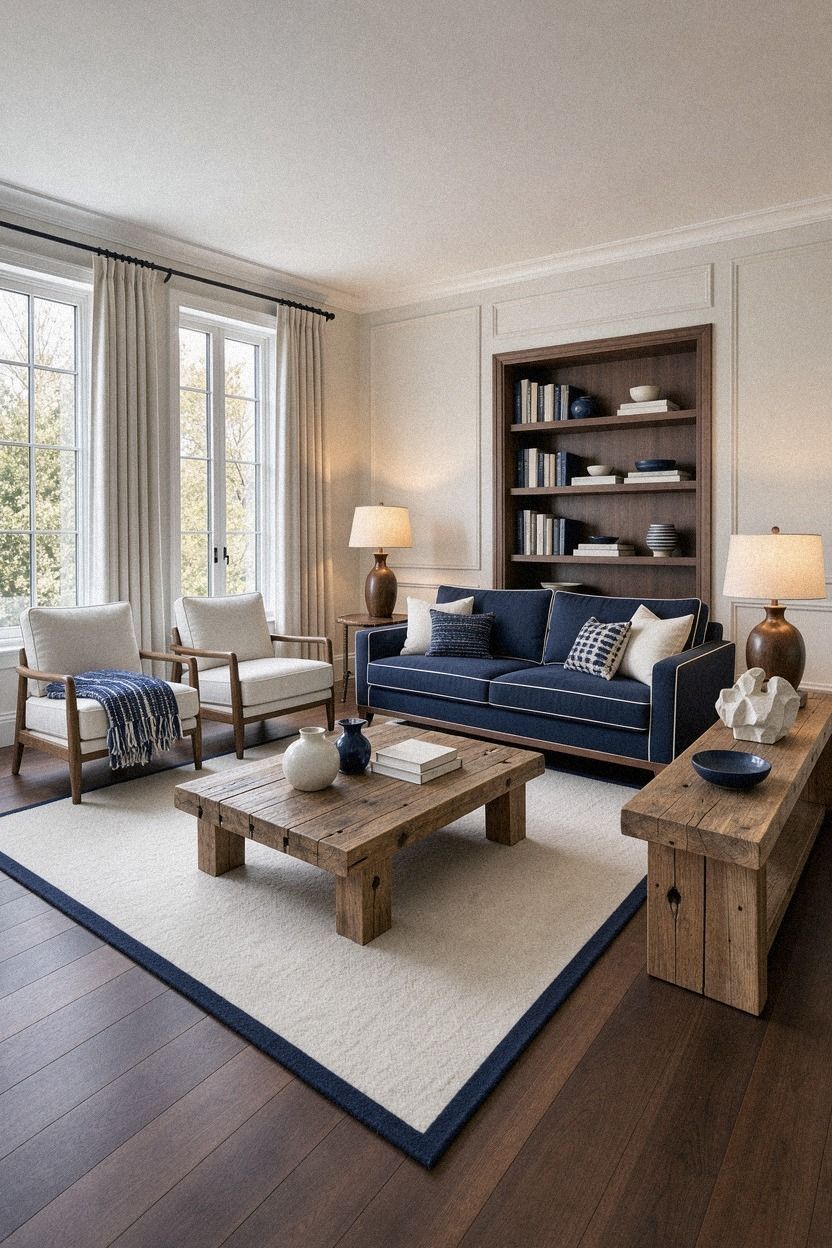
I created my own Two-Wood Rule after noticing that the table felt flat beside the sofa. The arrangement now uses one piece of reclaimed weathered teak and one deeper walnut tone, with the second tone appearing only once nearby. Navy and white keep the contrast crisp without making the room feel cold.
The pale piece is a reclaimed teak pedestal bowl, while the darker note comes from a walnut side table. I didn’t add a walnut tray, frame, and candleholder too.
Repetition works best when it’s selective. Your room needs a quiet echo, not a wood catalog.
And if your furniture is already dark, choose a cane webbing box or ash object for contrast. I’d avoid matching a dark coffee table with dark books and black accessories. That combination can feel moody, but it often loses texture by evening.
11Frame the View from the Sofa
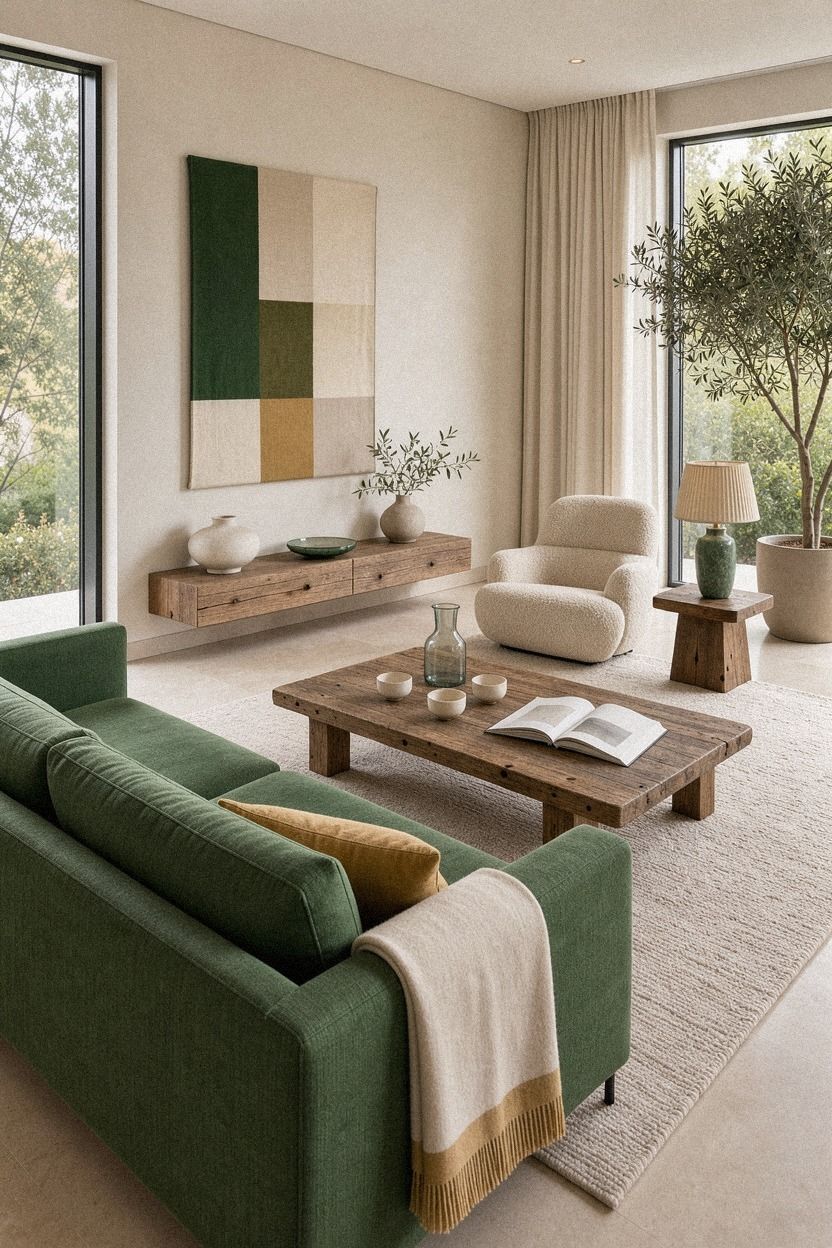
I styled the table from the seat where I spend the most time, not from a standing position. The emerald, gold, and cream palette worked especially well with the grain of reclaimed weathered teak, which brought warmth without requiring another decorative object.
12What Does Your Table Need at Night?
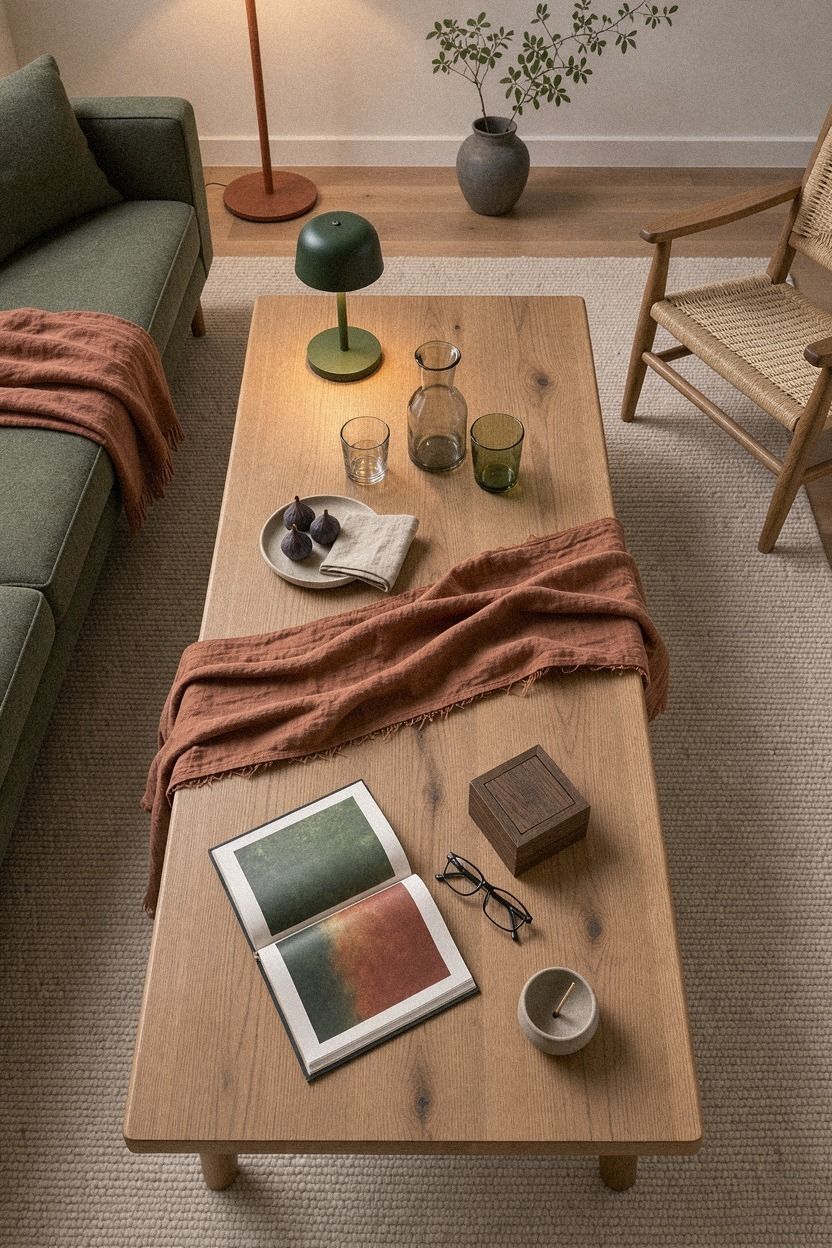
At night, my table needed light more than another object. I added one small candle over a natural oak tray, with washed Belgian linen softening the surface beneath it. The forest green and rust accents made the glow feel warmer without making the room feel formal.
I’d choose warm candlelight or a dimmable lamp nearby over a bright overhead fixture. The overhead light flattened the textures I had worked to build, while the softer glow made the linen and wood feel gentle. If you’re styling for fall, this is where a warm, comforting mood earns its place.
But don’t cluster several candles unless you’re hosting. One is enough for daily life, and it leaves room for your mug.
The best arrangement still works when you’re tired, barefoot, and reaching for the remote. That small glow changes everything!
13Place the Useful Object Where You Reach
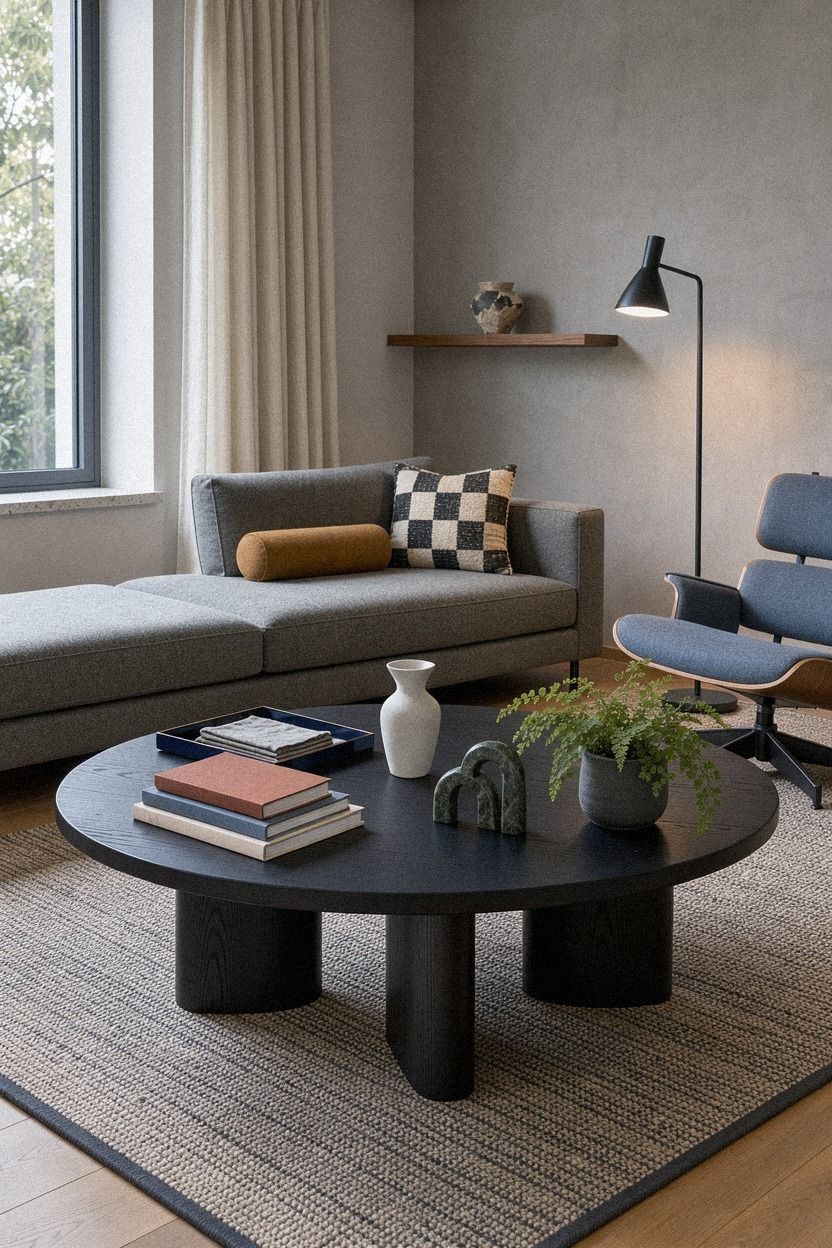
The fourth object type is practical. I used a shallow cerused white oak catchall for the remote and a pair of reading glasses, with a small brass detail nearby. That small decision kept the table looking polished after real life happened.
Your useful piece should be easy to reach, not hidden behind decorative objects.
I placed it on the side nearest my usual chair. Guests can find it without asking, and I don’t have to lean across the table.
A practical object can still be refined, especially in pale wood, stone, or aged metal. You’ll use it more if it feels good in your hand.
I’d skip a lidded box for remotes because the lid becomes one more thing to move. An open dish is faster. The arrangement stayed elegant because the clutter had a home, not because the room was never used.
14Skip Symmetry and Repeat One Color
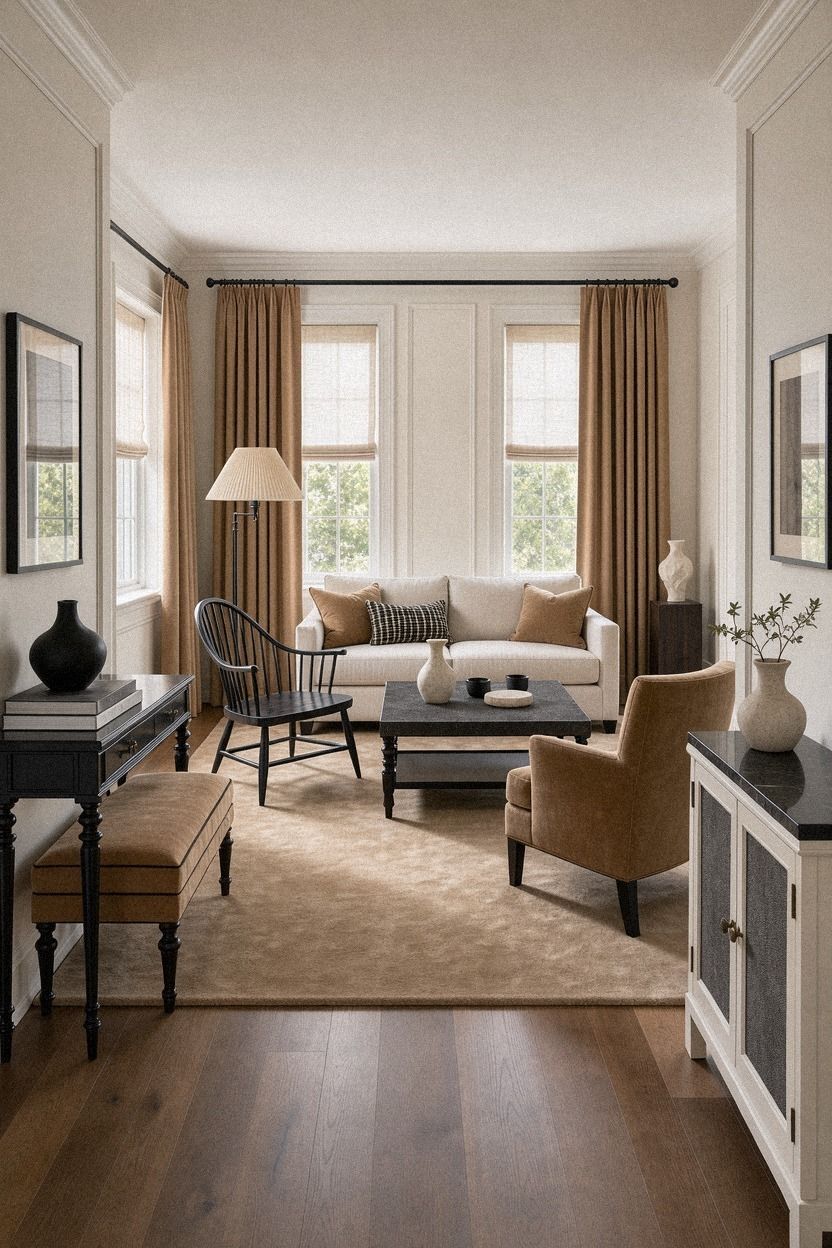
Symmetry was my first instinct because it felt safe. Two matching vases looked tidy, but they also made the table feel like a hotel lobby. I replaced them with one shagreen accent and repeated warm white, camel, and black in a book spine near the sofa.
Your eye needs one color echo, not a matching set. If you use Benjamin Moore White Dove on the walls, try a camel cover, warm white cushion, or small black ceramic detail. The repetition should be subtle enough that you notice it after a moment.
And don’t force the color if your room has no natural connection to it. I tested a bright blue bowl and removed it because it pulled attention away from the art. A restrained palette can be bold when the shape and material are strong.
15Make a Rental-Friendly Coffee Table
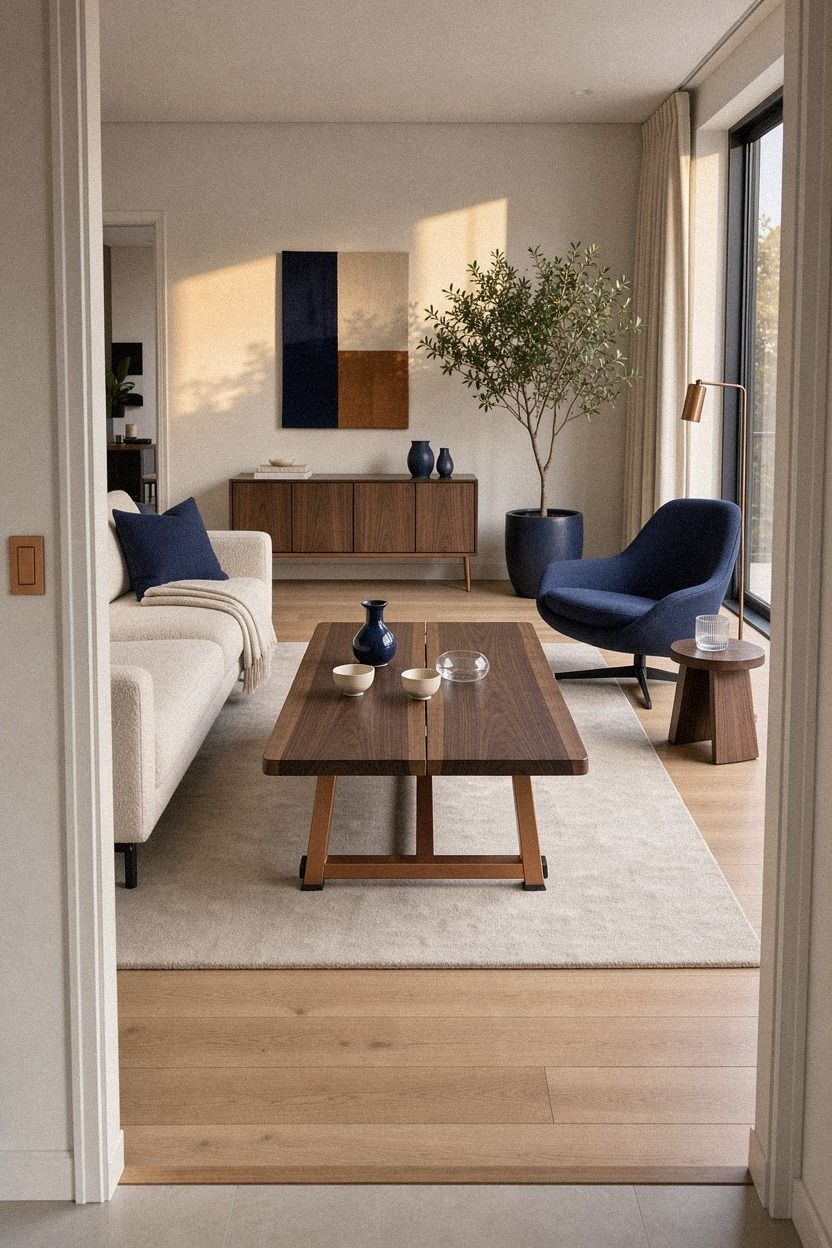
I styled this formula without changing the walls, drilling into anything, or buying a new table. Portable pieces, removable textiles, and a small tray gave the arrangement enough structure to move with me.
16Edit the Arrangement for Fall
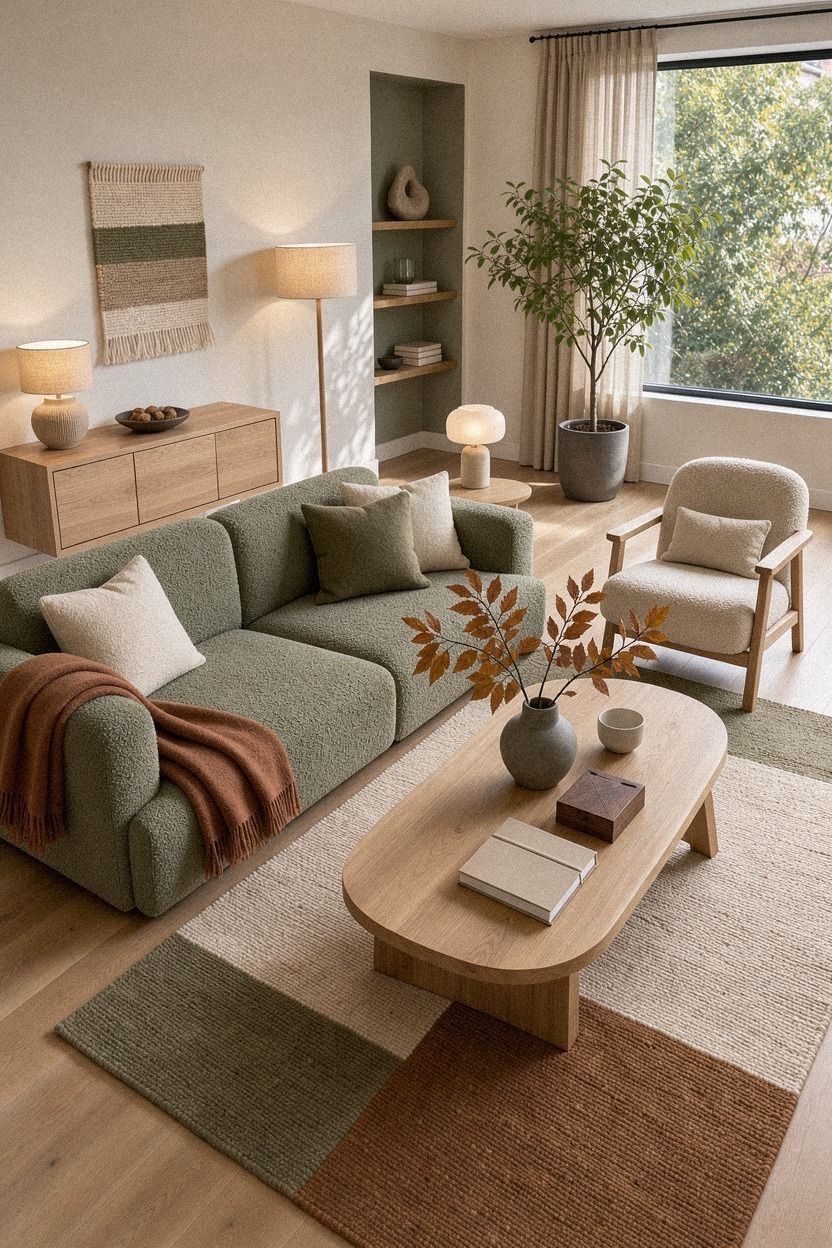
For fall, I changed only three textures, not the whole room. I swapped the linen for an organic bouclé throw, added a small natural wood vessel, and brought in one branch with a dry, sculptural shape. Your coffee table can feel seasonal without becoming a pumpkin display.
The room became warm and rustic beside the existing wood, but it didn’t lose its airy quality. I kept the colors muted so the arrangement worked with sage green, warm cream, natural wood, and the natural rug. If your walls are lighter, terracotta and tobacco tones can create more contrast.
But don’t store every summer object in a closet. Keep the bowl and books, then change one soft layer and one living shape. That approach saves money and keeps your table feeling collected rather than decorated for a single weekend.
17Photograph the Table from Sitting Height
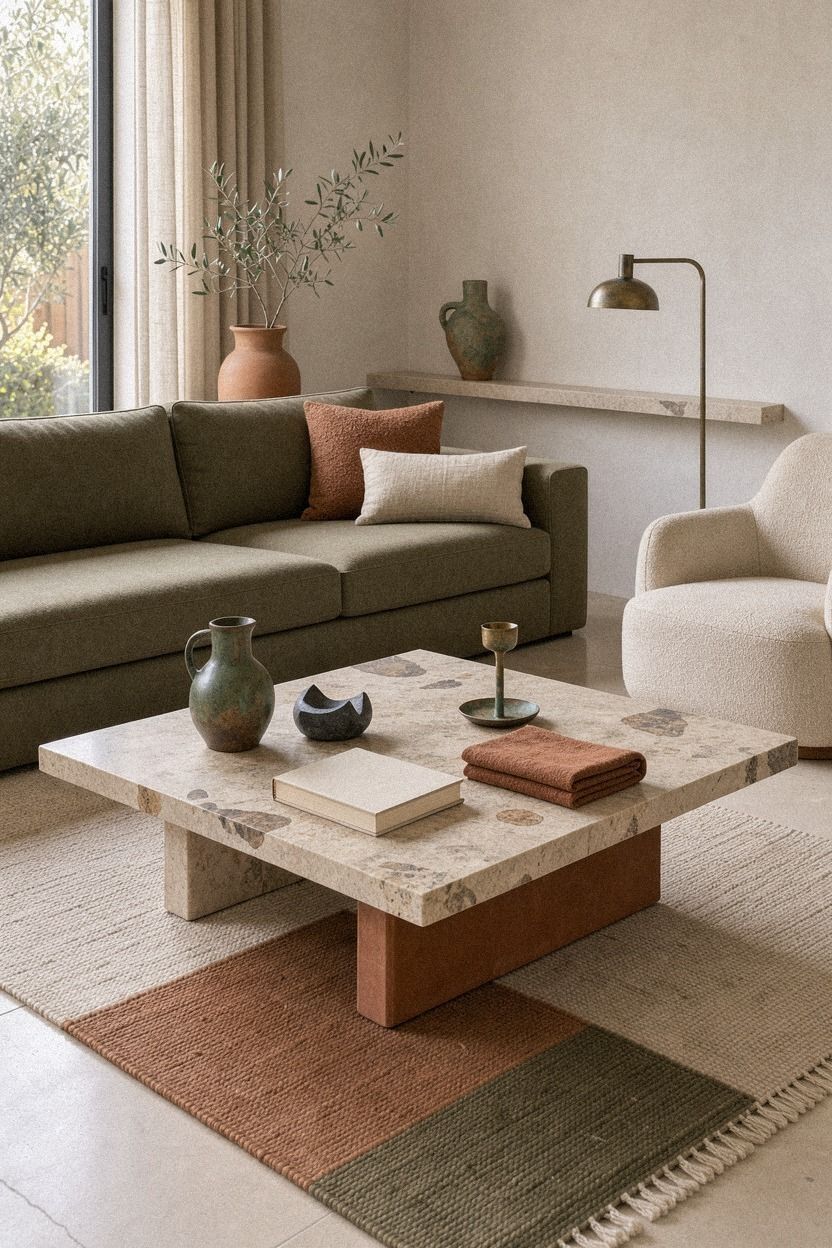
The final check was the table’s balance from my sofa. The terracotta, stone, and olive palette felt grounded by an unlacquered brass detail that had developed a gentle patina.
18Keep the Formula, Change the Feeling
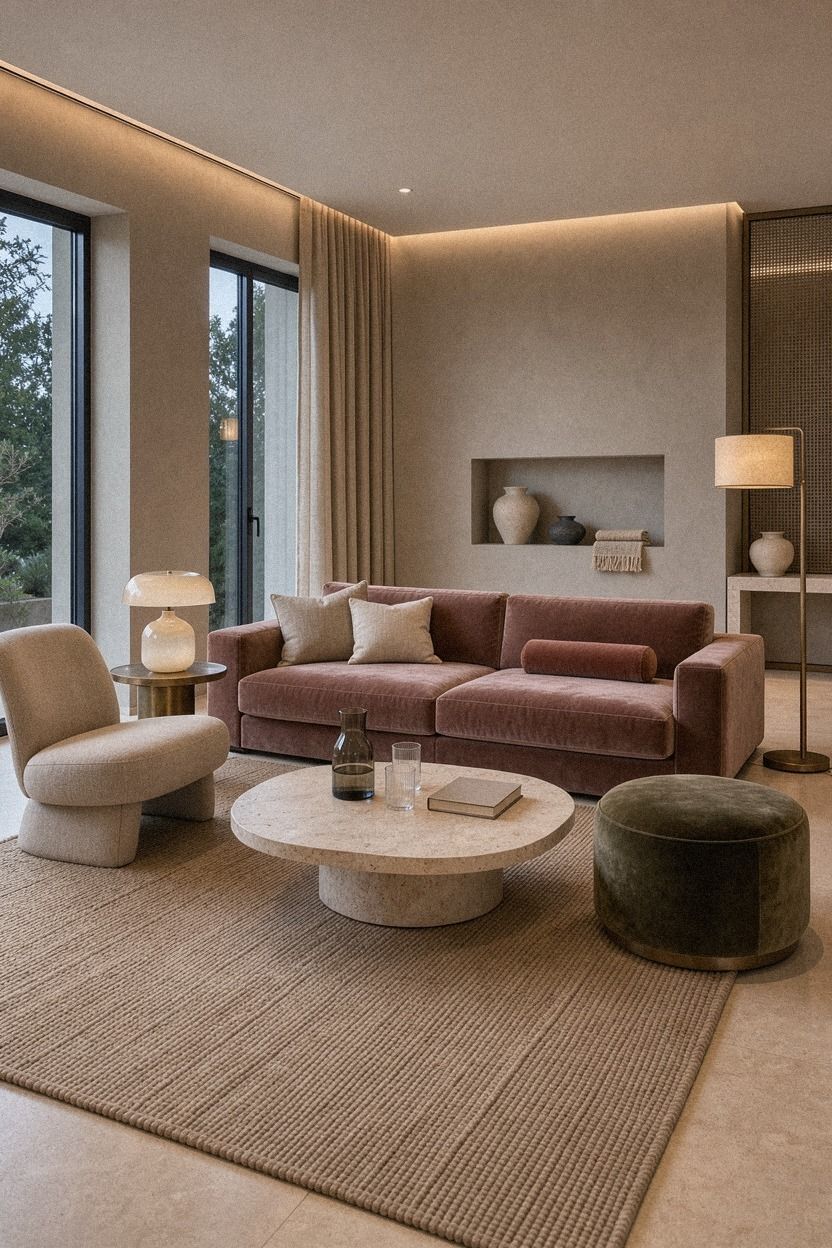
The five object types gave me structure, but they didn’t dictate one style. Your version can be bright and modern with glass, pale oak, and cream ceramic. Mine became more intimate with clay, linen, aged brass, and deep-pile mohair velvet.
The formula is simple: anchor, books, living shape, soft texture, and useful object. I’ve used it on a round table, a narrow rectangular one, and a West Elm Streamline coffee table. The proportions changed, but the reasoning stayed steady.
You don’t need to buy five new pieces. Start with what you own, then replace only the object that feels too small, too shiny, or too similar to its neighbor.
That’s where the arrangement starts to feel sophisticated instead of assembled. The same idea works with a smaller table or a rental setup.
How Much It Cost: The Typical Living Room Range
I treated this makeover as a styling refresh, not a furniture replacement. Your cost will depend on what you already own, especially the table, books, rug, and soft textiles. The table below gives typical US ranges for a living room, so you can see where a small update fits beside a larger redesign.
For the five-object formula, I’d begin with pieces you already have and spend first on scale. A useful bowl, a sturdy tray, or a better soft layer can change your table without pushing you toward a full-room budget. The common material ranges below help you compare larger purchases.
I didn’t replace the sofa or rug for this makeover. Your best first purchase is the one that solves a visible problem, such as a surface that’s too small or a room that lacks texture. If the table itself works, invest in one substantial wool rug before collecting more accessories.
Why I Stopped Chasing a Perfect Arrangement
I used to think a styled coffee table should look untouched, as if nobody had ever set down a cup or opened a book. That idea made me keep polishing the arrangement instead of living with it.
The turning point came when I left one book open and placed the remote in the catchall. The room looked more inviting because it admitted that someone lived there.
My strongest opinion is that a coffee table shouldn’t be a tiny sculpture garden. It should support the room’s daily rhythm.
You need a place for a drink, a hand, a book, and a little visual calm. If every object is precious, you’ll avoid using the surface, and the arrangement will feel stiff no matter how refined the materials are.
I also learned that scale matters more than price. A low bowl in inexpensive ceramic can look more elegant than a costly miniature vase that disappears. A 9x12 wool rug can make the same table feel grounded, while a small rug can leave every piece floating.
Your eye reads proportion before it reads the label.
The formula works because it gives you five jobs to assign, not five products to purchase. Anchor the surface, add a point of view, bring in something alive, soften one edge, and solve one daily nuisance.
I’d rather see a scratched oak tray and a real paperback than a flawless display nobody touches. That’s where the warm, lived-in feeling starts.
The Questions Worth Answering First
What is the best formula for a small living room?
The best formula uses one low anchor, two books, one small living shape, one soft texture, and one useful catchall. A low ceramic bowl and an IKEA KALLAX piece work well because they keep the display compact while giving your eye height, texture, and a practical landing spot.
Where can I buy coffee table pieces on a budget?
Look at IKEA, Wayfair, and Target first, then check Facebook Marketplace or a local thrift shop for bowls, trays, and art books. Your best value is often a second-hand wooden tray with a solid shape. Skip anything chipped, unstable, or too small for your table.
How much does a coffee table makeover cost?
A styling refresh can fit inside the typical $300-$1,200 budget tier when it includes pillows, throws, a rug, art, or paint. Your cost may be lower if you already own books, vessels, and textiles. Start with free rearranging before buying anything.
Can I create this look on a budget?
Yes, and you can begin with what you own. Stack two books, fold a throw, use a bowl from the kitchen, and gather one branch from outdoors. A ceramic catchall or second-hand tray can add structure without requiring a full room purchase.
Is this worth it in a small space?
Yes, because a small table benefits from editing. Use a low bowl, one compact vase, and a shallow tray so your surface stays usable. Your limited square footage makes proportion easier to notice, so remove anything that blocks the view or crowds the seating.
Is this a good idea for a rental?
Yes, because the formula requires no permanent changes. Use a removable rug, a tension-mounted lamp, or a portable side light, then style your table with objects you can move later. A small oak tray gives you warmth without paint, drilling, or built-in storage.
Where I’d Start First
If I had to pick one, I’d start with the low bowl. It gives your table a grounded center without blocking conversation, and every other object can orbit it.
Use what you own tonight, then leave enough room for your mug. That empty space is what makes the formula livable!