18 Ways to Hang Curtains on a Bay Window Without a Custom Rod, No Guesswork
29 october 2026You can hang curtains on a bay window without a custom rod by combining standard rods, brackets, and panels around the angles. I learned that after buying one rod that looked right in the package and completely wrong on the wall. Measure first. Then let the architecture do some of the decorating.
- ✓ Measure each angle before you buy anything
- ✓ Float one straight rod across the whole bay
- ✓ Join three rods around the corners
Start with these bay window measurements, then compare the clean look of a straight-rod arrangement with the more architectural options below.
- Measure each angle before you buy anything
- Float one straight rod across the whole bay
- Join three rods around the corners
- Try the Two-Wood Rule for warmer contrast
- Mount inside shades and frame them with panels
- Layer side curtain rods in the living room
- Install a flexible ceiling track around the curve
- Hang cafe curtains for privacy without losing light
- Build a center-first curtain layout
- Paint the hardware to disappear
- Choose linen panels with extra width
- Mix fixed panels with Roman shades
- Use tension rods for a rental-friendly solution
- Stack light with the Three-Height Light Stack
- Swap center panels for woven shades
- Mount return rods instead of wrapping the corners
- Hang panels higher and longer than the frame
- Spend on structure and save on fabric
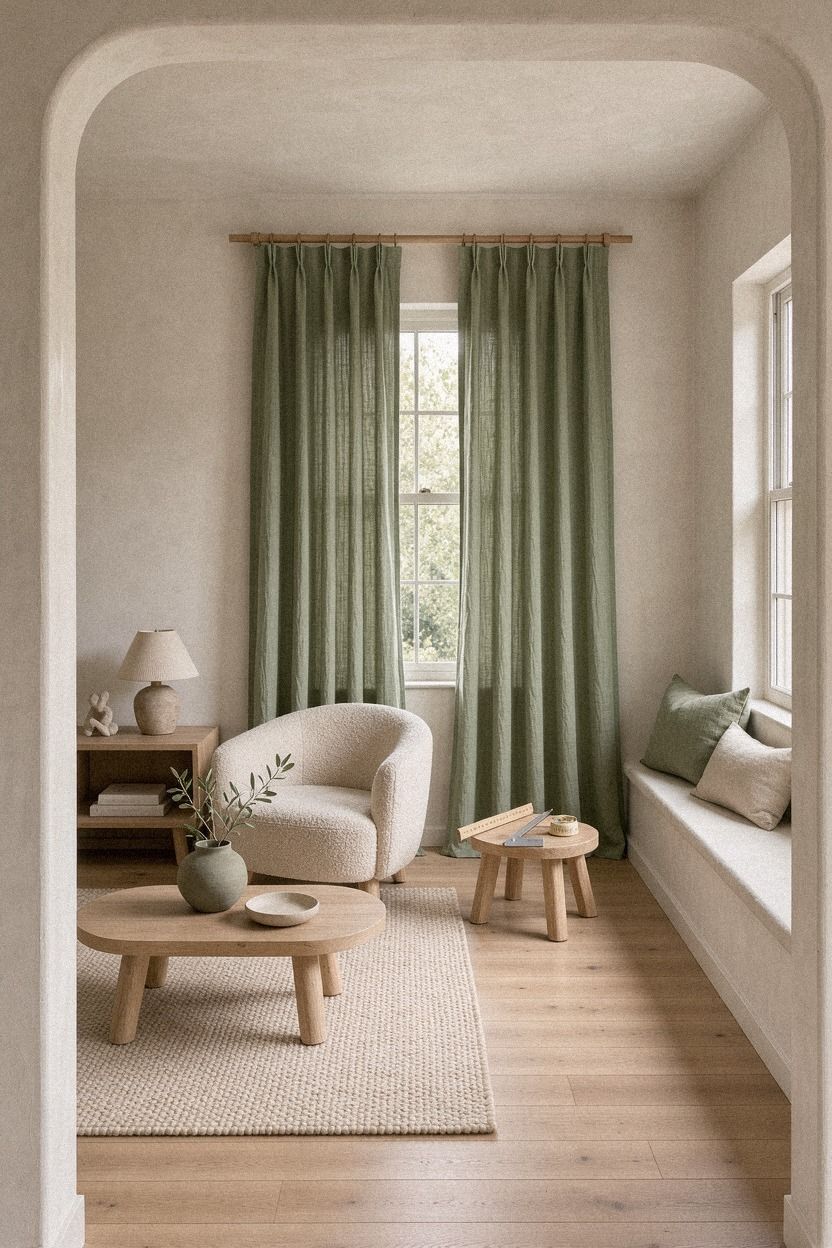
1Measure each angle before you buy anything
Start with three measurements: the left return, the center window, and the right return. Your bay window might look symmetrical, but many aren’t, especially in older homes.
Measure from frame to frame, then note where the wall continues past each side. You’ll want those numbers before choosing a straight rod, three short rods, or a ceiling track.
For a closer look at planning, start with this center-first layout.
Use a pencil mark for the rod height, ideally 4 to 6 inches above the frame. If your panels reach the floor, measure from that mark down to the floor and account for the header style.
I’d skip guessing based on package dimensions. A bay window curtain rod that’s two inches short can leave an awkward gap, while an overlong rod can crowd your trim.
Write every measurement in one place. You’ll thank yourself when you’re comparing brackets at the hardware store. A steel tape measure gives you a cleaner reading than a soft sewing tape, especially across a deep return.
Before you order anything, hold a ruler against the wall and mark the bracket positions. Your eye will catch an awkward corner immediately. That small check can save you an expensive, frustrating return!
A pencil layout, window frame, and wall return give you a more reliable starting point than the package dimensions alone. You’ll avoid a surprisingly messy installation with this simple, practical step.
2Float one straight rod across the whole bay
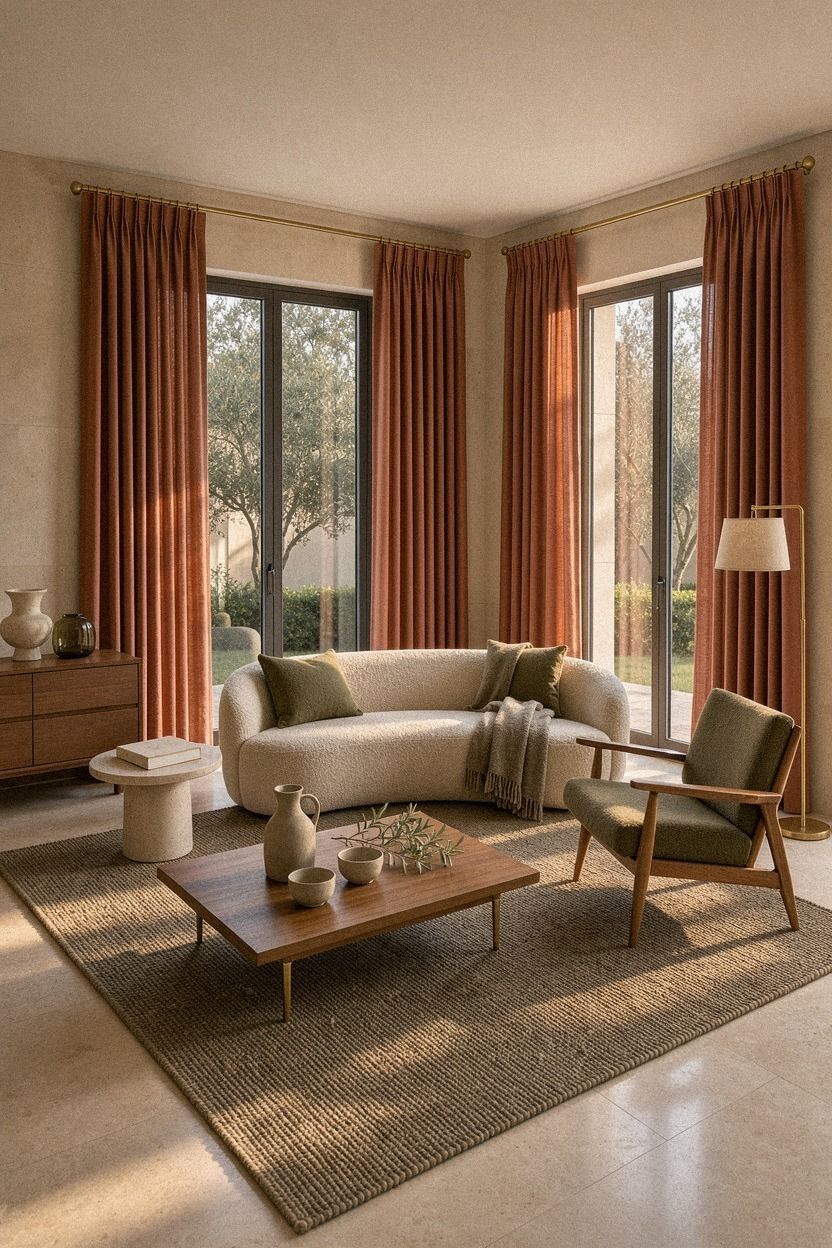
A single straight rod works when the bay is shallow and the side walls give you enough clearance. Mount it several inches beyond the window on both sides, then let the curtains hang in front of the glass as one wide frame. This approach looks calm and airy, especially with organic bouclé panels in terracotta, stone, and olive tones.
You’ll need sturdy brackets and a rod long enough to span the full opening without sagging. West Elm sells substantial metal and wood options, but a standard adjustable rod can work if your curtains aren’t heavy.
I wouldn’t use this setup for thick velvet. It’ll pull in the center and make the bay look tired instead of intentional.
If you want the window to feel broader, extend the rod beyond each outer frame. Your curtains will stack against the wall, and the glass will appear more generous when they’re open.
Choose a double rod only when you truly need a second layer. Extra hardware can make a small bay feel crowded.
This is a particularly graceful choice for a rental living room. You get a clean, bright frame, and you won’t have to solve three difficult corners. A single curtain rod, wide window frame, and organic bouclé panel create a wonderfully uncomplicated effect.
3Join three rods around the corners
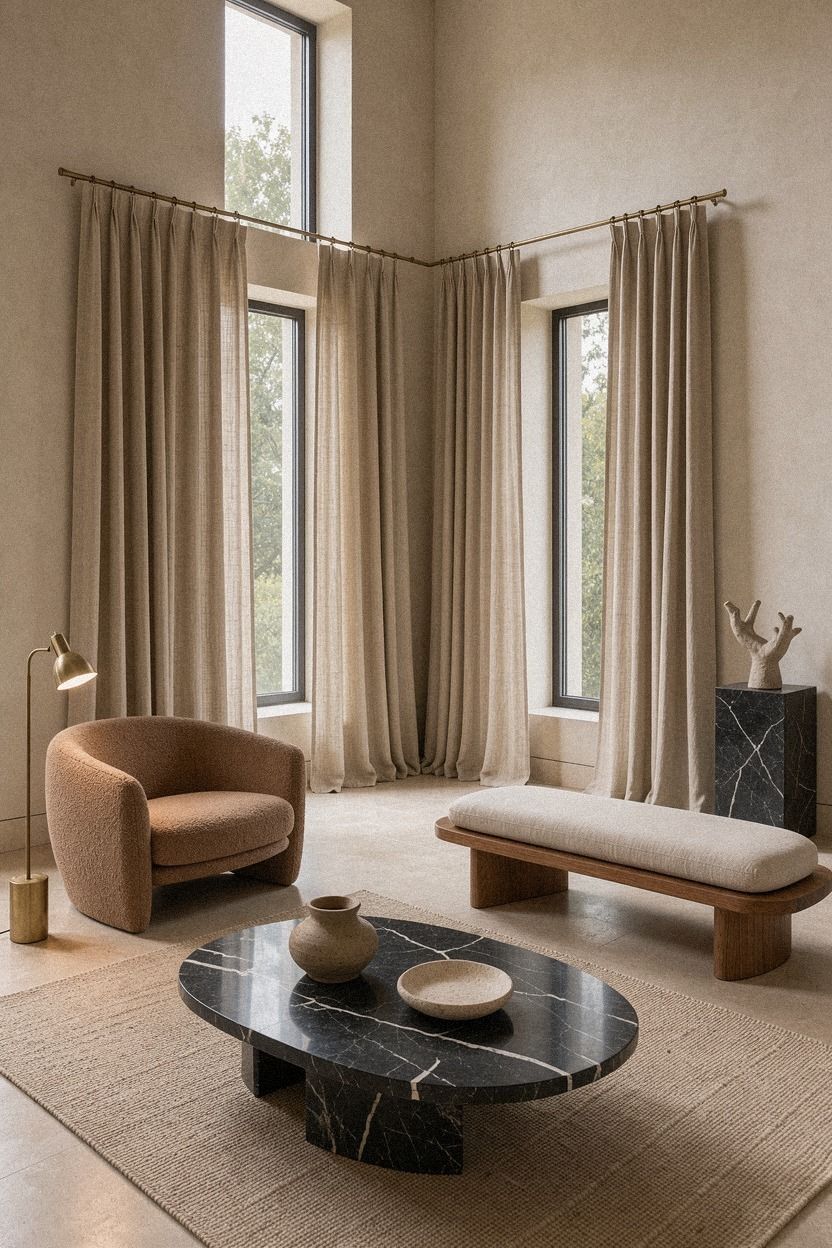
Three standard rods can imitate a custom wrap around curtain rod in a living room when you connect them with corner hardware. Use one rod per window plane, keeping the center rod visually dominant and the side rods slightly shorter.
The result follows the bay instead of flattening it. See the related return-rod approach if your side walls are tight.
Choose aged brass if you want the hardware to sit comfortably with clay and linen tones, or matte black if your window trim is crisp and modern. A nearby Nero Marquina black marble surface with white veins can add a handsome architectural note.
The corners need to meet cleanly, so you’ll want to test the rods on the floor before drilling. But don’t force a perfect angle if your walls are uneven.
A tiny overlap is less noticeable than a bracket that sits under constant pressure.
I’d assemble the whole arrangement before you lift a drill. You can rotate each corner connector, check the curtain clearance, and decide whether the side returns need extra support. That small rehearsal makes the final installation feel much more confident.
Your panels should open toward the outer walls whenever possible. This keeps the center view clear and gives the bay a handsome, architectural outline. The Two-Wood Rule can add another layer of warmth if the room already has natural finishes.
4Try the Two-Wood Rule for warmer contrast
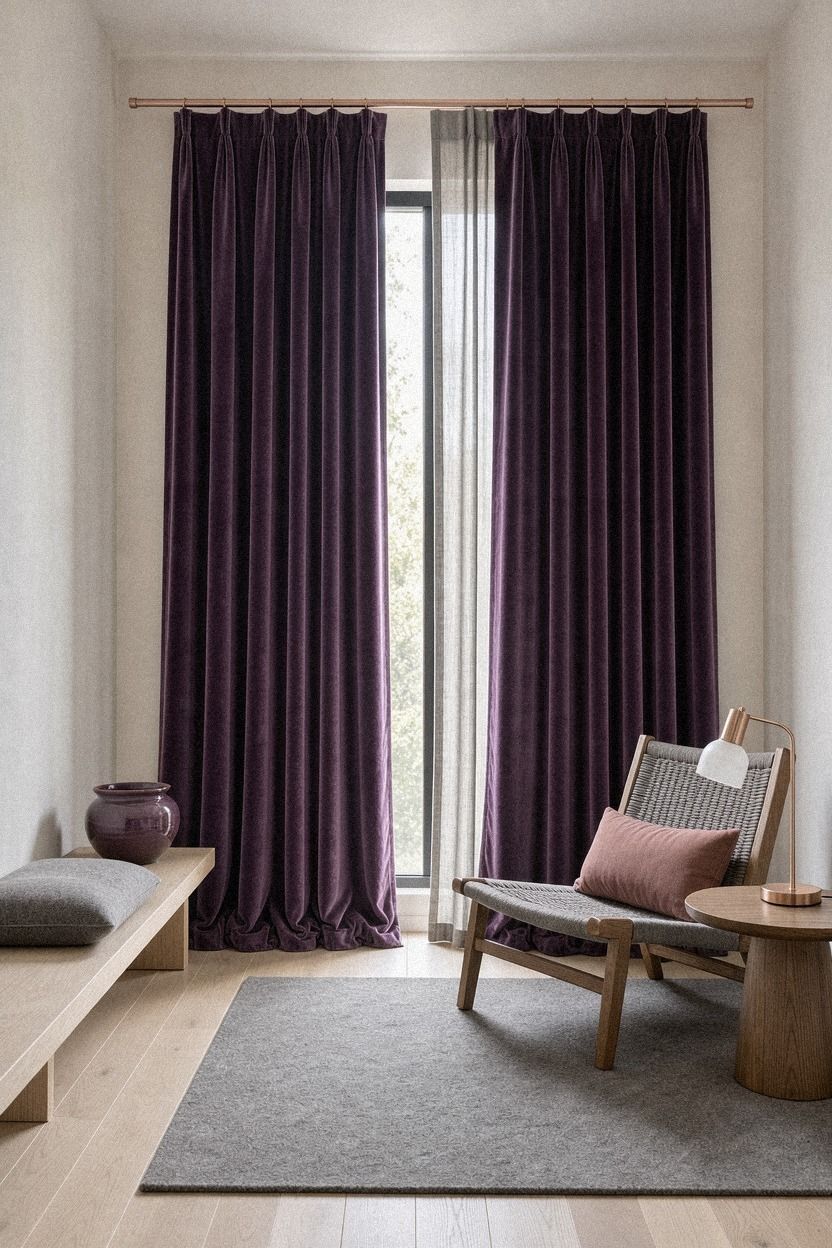
The Two-Wood Rule uses one wood tone for the rod and another, slightly different tone in the room.
A plum, grey, and rose-gold palette works beautifully with deep-pile mohair velvet, especially when the two wood tones keep the room from feeling flat.
5Mount inside shades and frame them with panels
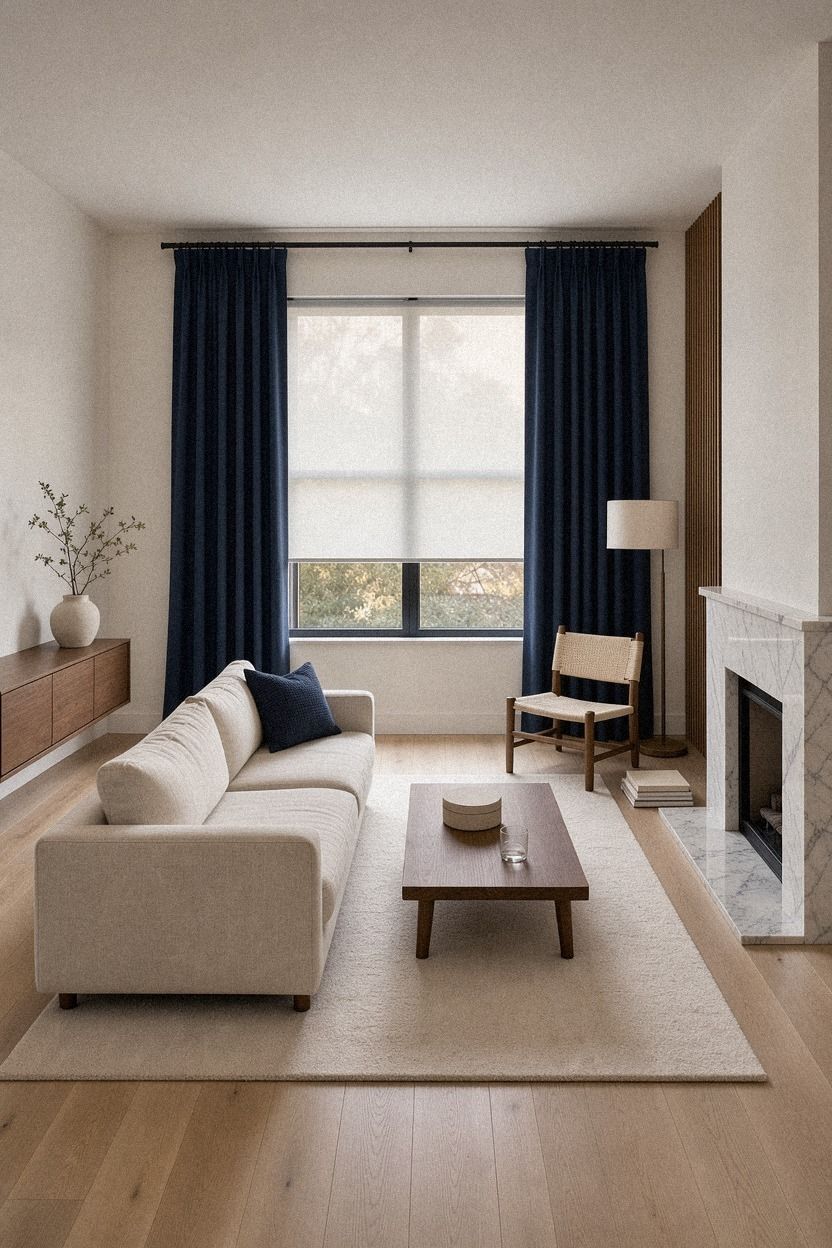
If rods feel complicated, install inside-mount shades on each window and add two stationary curtain panels outside the bay. The shades handle privacy, while the panels create height and softness.
This is one of the easiest ways to keep your curtains off the glass without giving up the dressed-window look. You can compare it with mixing fixed panels and Roman shades.
A simple woven shade paired with Carrara marble with subtle grey veining brings texture without making the room feel busy. Your panels can stay fixed at the sides, so they don’t need to move across every angle.
And if you’re working with a narrow bay, that matters. I’d choose this over full panels on all three windows when furniture sits close to the glass.
Install the shades as evenly as you can. Your bay may have slightly different frame widths, but the top lines should still feel deliberate. A consistent head height creates a polished rhythm across the whole wall.
Choose a soft ivory or warm flax fabric for the outer panels. It’ll catch afternoon light beautifully, and you’ll still have enough contrast to see where the window treatment ends. Inside-mount shades, stationary side panels, and warm flax fabric make an especially elegant combination.
If you need more privacy after dark, add a discreet shade liner. It’ll preserve the calm daytime look while giving the room a reassuring sense of enclosure at night. This is a remarkably flexible solution.
6Layer side curtain rods in the living room
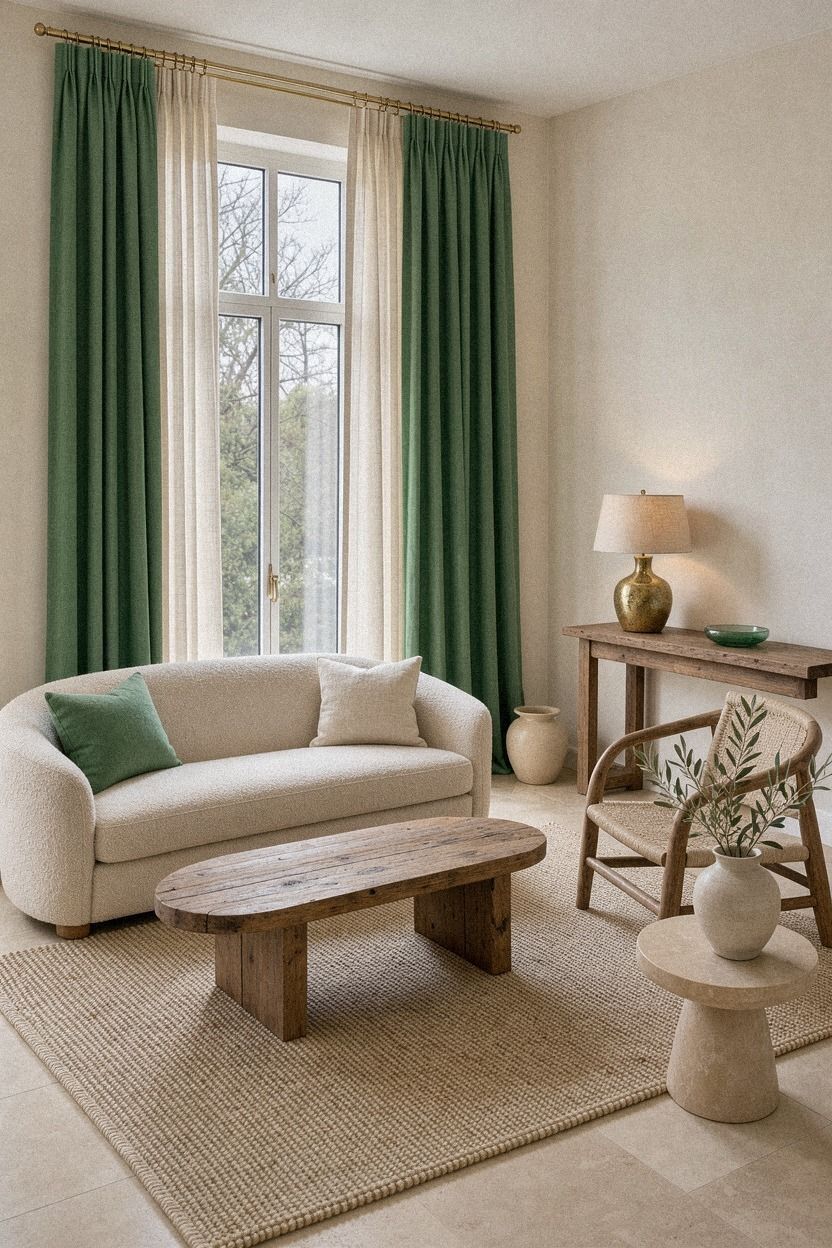
Side curtain rods can frame a bay window without covering the center glass. Mount one short rod on the left wall and one on the right wall, then hang panels that stack outside the opening. This creates the feeling of a larger window while keeping daylight visible in the middle.
Use 18 oz cotton velvet only if you have enough wall depth for the fabric to stack neatly. Lighter linen or cotton canvas is more forgiving in a small room.
Reclaimed weathered teak nearby can add warmth, particularly with emerald, gold, and cream accents. Your panels should reach the floor, and you’ll want the hems to skim rather than puddle.
A puddle can look relaxed in a bedroom, but beside a bay window it often catches dust and blocks a walkway.
I’d measure the stackback before buying fabric. You need enough room for each panel to rest beside the glass without swallowing the view. If the wall is narrow, choose a single generous panel on each side instead of several narrow ones.
This arrangement feels especially elegant when your sofa sits opposite the bay. The curtains create tall vertical lines, and your eye moves naturally from the furniture to the light. Side-mounted brackets, floor-length panels, and stackback space are the details that keep this arrangement feeling intentional.
For a soft, romantic room, try a washed cotton curtain. For a sharper look, choose a tailored linen blend with a simple header. Both can feel inviting when the proportions are generous.
7Install a flexible ceiling track around the curve
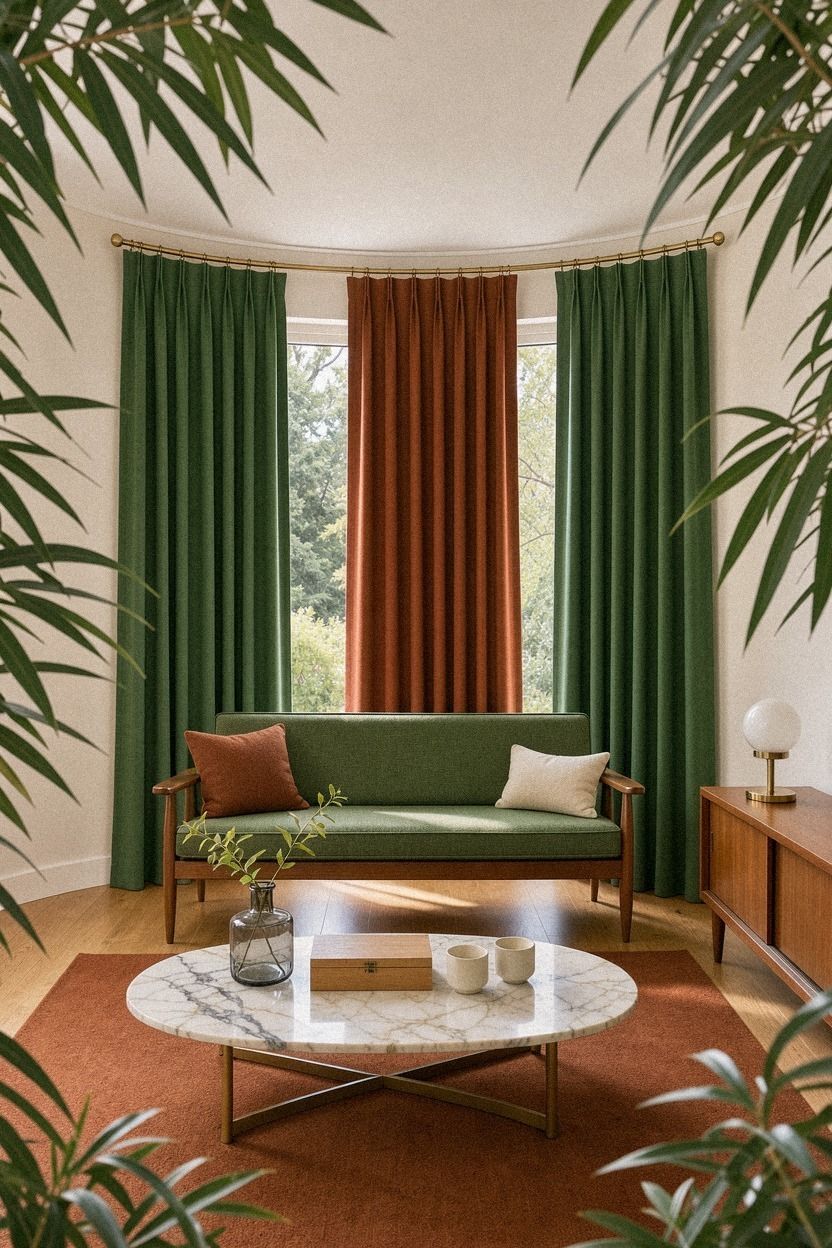
A ceiling-mounted track is useful when the window has sharp angles or very little wall space.
Forest green, rust, and natural oak give the track a warmer setting, while a little Calacatta marble with gold veining can echo the architectural lines without competing with the curtains.
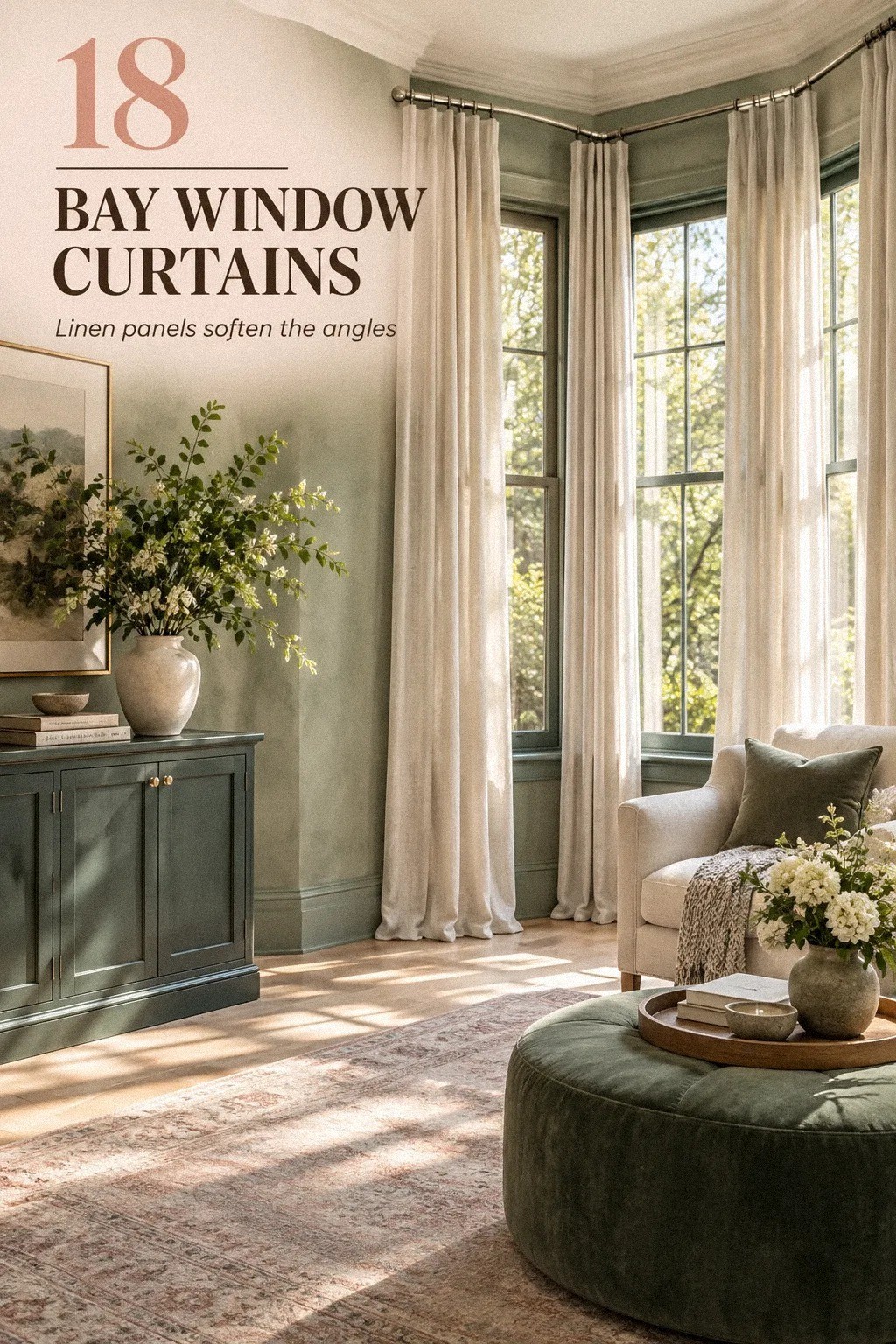
8Hang cafe curtains for privacy without losing light
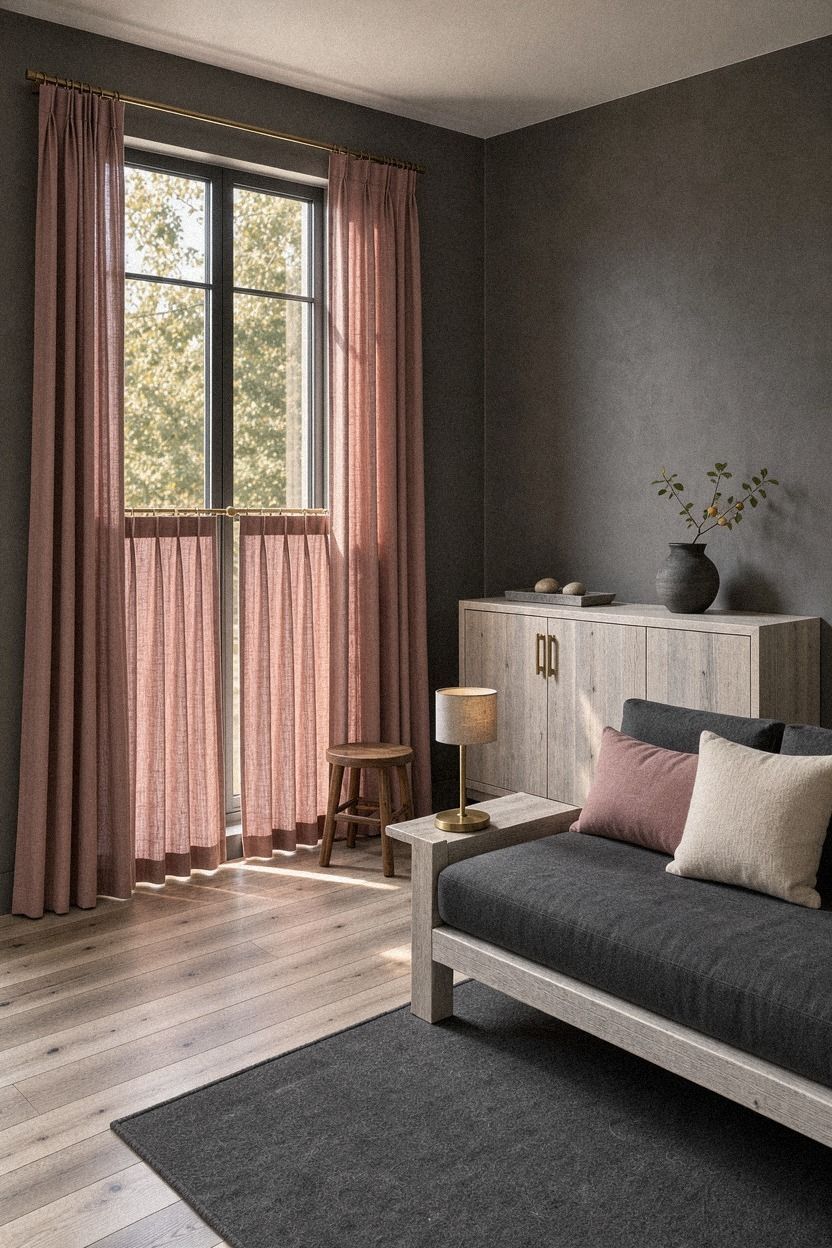
Cafe curtains cover the lower half of each window and leave the upper glass open. They’re a smart choice for a breakfast nook or a street-facing living room where you need privacy but don’t want to lose daylight. Use a small tension rod inside each frame, or mount simple brackets if the window trim allows it.
A 600gsm Turkish cotton fabric gives the panels enough body without turning the bay dark. Choose dusty rose instead of stark white if your room has charcoal and brass details or cerused white oak nearby.
Your eye will read the whole area as softer. I’d skip cafe curtains in a formal room with tall ceilings, though.
They can make a grand bay feel visually chopped in half.
Keep the lower edge at one consistent height across all three windows. If your frames vary, follow the lowest comfortable line rather than forcing every hem to match the sill. The effect will look intentional and charming.
You can add a narrow scalloped edge or a simple café rod for personality. Keep the pattern restrained, because your bay already supplies plenty of visual structure.
A scalloped hem, café rod, and warm cotton fabric can make a breakfast nook feel cheerful without becoming precious. This is a bright, friendly option for anyone who wants privacy and daylight together!
9Build a center-first curtain layout
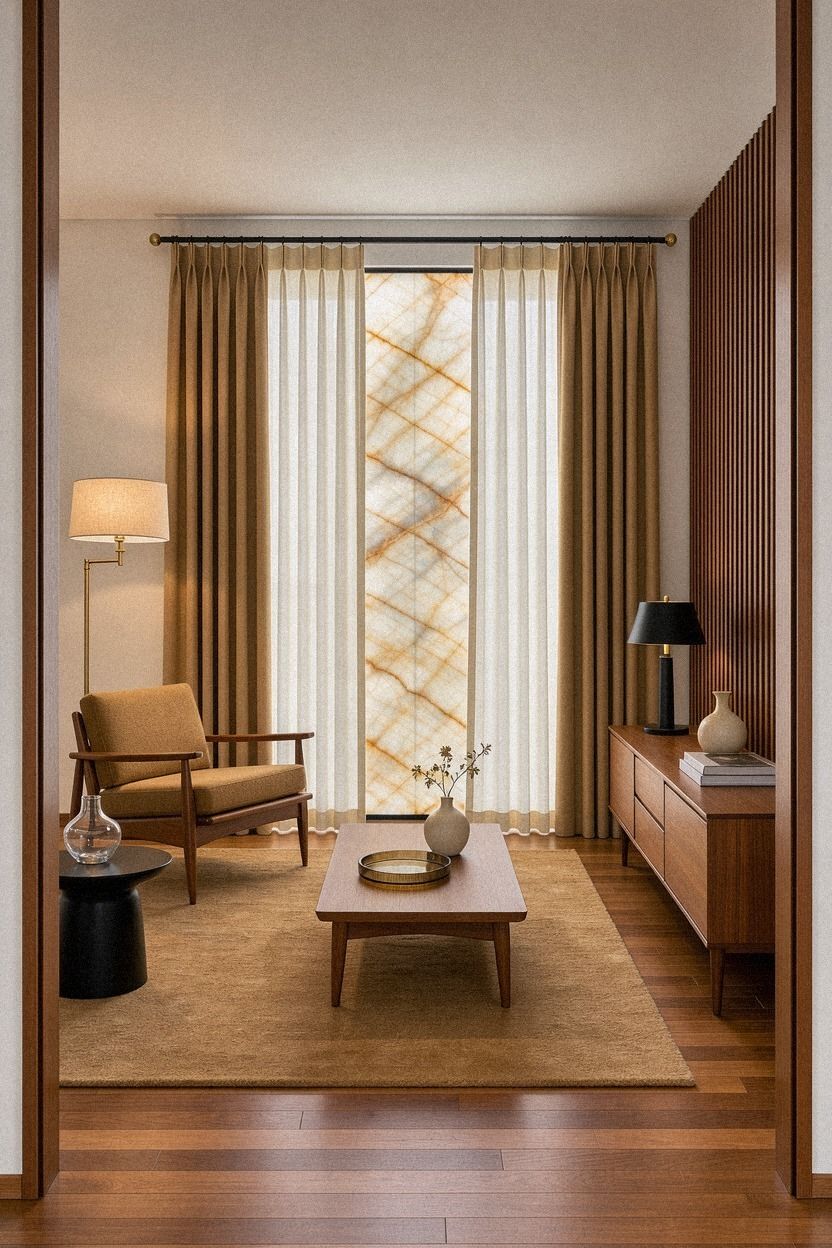
Start with the center window, then make the side windows support it.
A warm white base with camel and black accents gives the arrangement a clear center. If the room includes backlit translucent onyx, repeat its glow with a soft lining or pale curtain fabric rather than adding more pattern.
10Paint the hardware to disappear
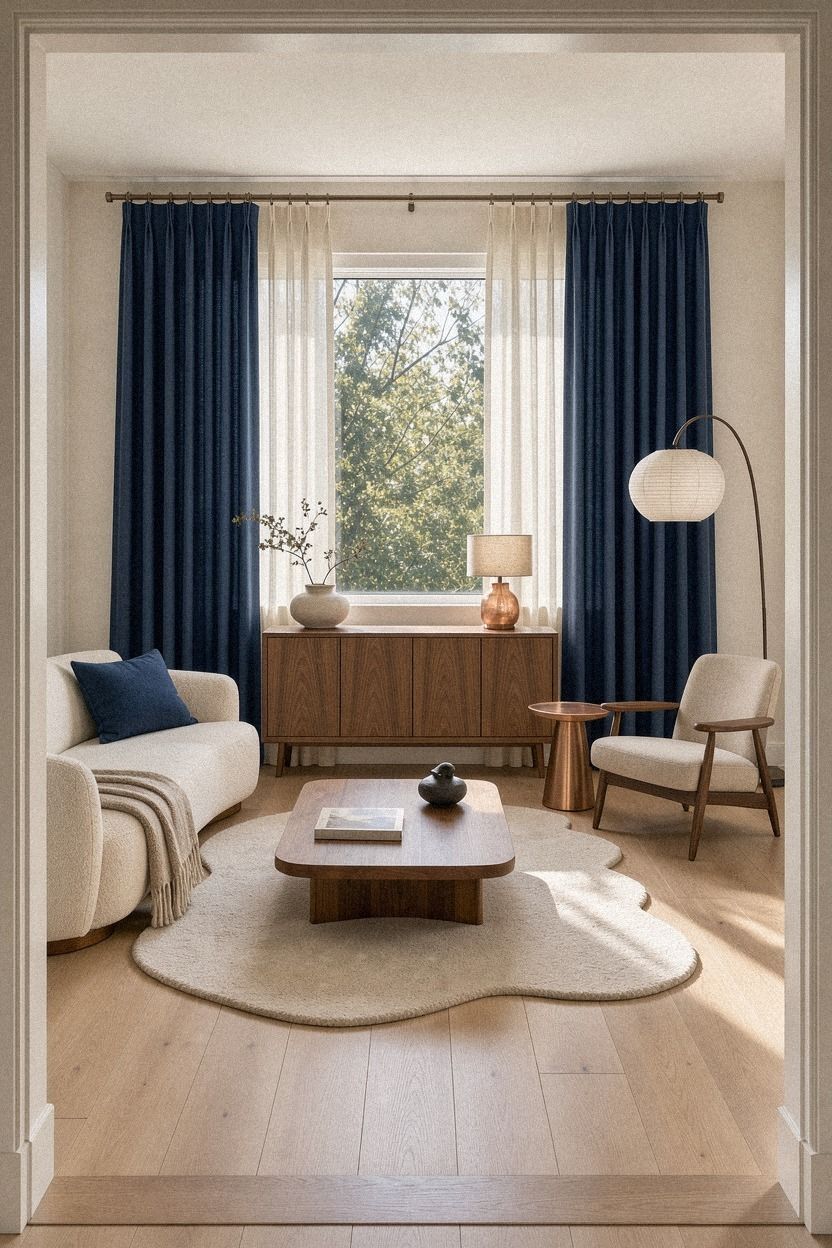
Painting the rod and brackets the same color as the wall can make a standard setup feel custom. Use a finish designed for the material, then let it cure fully before hanging your curtains. This works especially well when midnight blue, copper, and ivory already appear in the room.
Try Sherwin-Williams Agreeable Gray SW 7029 if you want a soft neutral backdrop, or keep the hardware white with Benjamin Moore White Dove. Your curtains become the main texture instead of the rod.
A nearby piece of book-matched walnut can add warmth without making the hardware more noticeable. But don’t paint over moving joints or threaded parts.
I made that mistake once, and the connection seized before the first panel went up.
Clean the hardware thoroughly first. A smooth, grease-free surface gives you a more durable finish and prevents those annoying little chips. You’ll get a much more polished result with two thin coats than one heavy coat.
Use a small artist’s brush around the brackets. That detail work can make an inexpensive rod feel surprisingly refined!
A matte wall finish, painted metal bracket, and matching curtain rod help the hardware recede gracefully. This is a clever solution when the available rods are practical but visually distracting.
11Choose linen panels with extra width
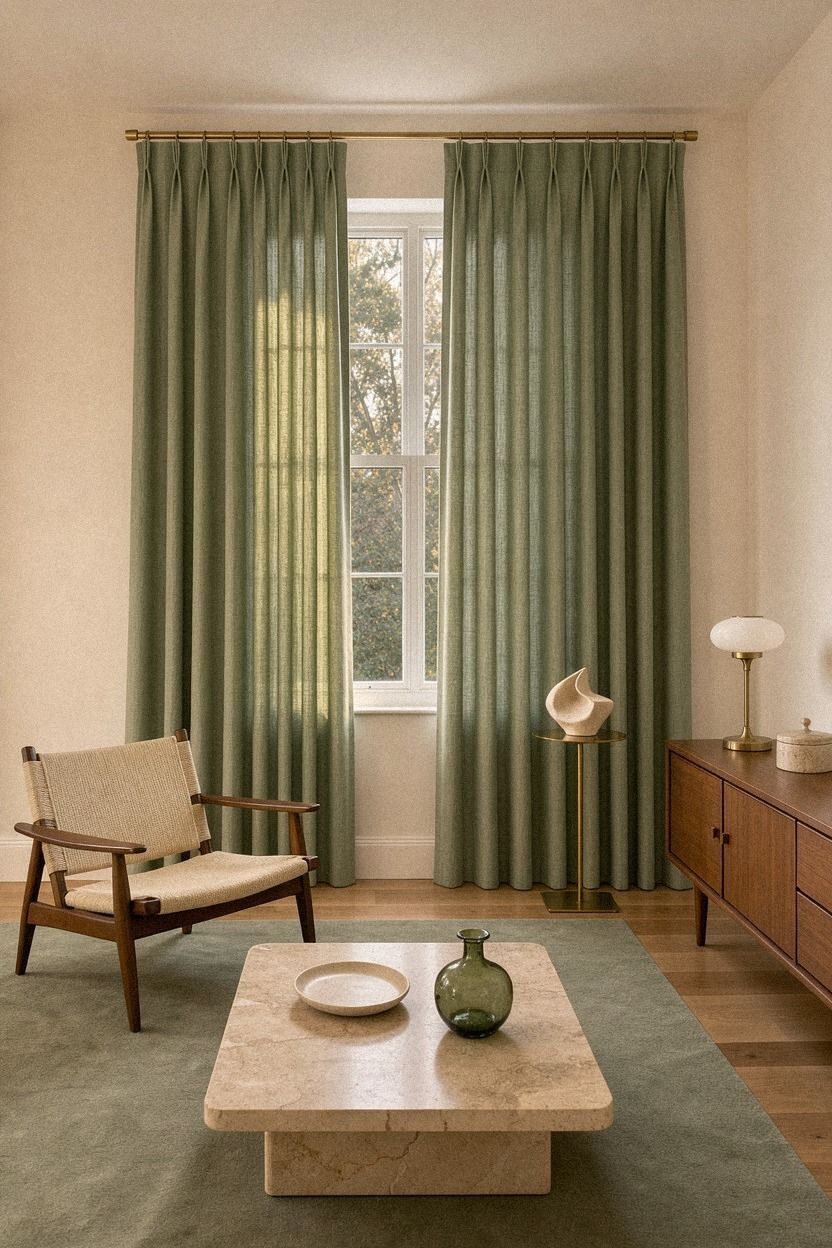
Linen panels make a bay window feel relaxed because the fabric catches light unevenly across the folds. Choose panels with enough width to stack outside the glass when open.
If the panels are too narrow, they’ll look stretched and stingy instead of generous. For more texture, compare them with woven center shades.
Look for Belgian flax linen with a visible slub and a washed finish. Sage green, warm cream, natural wood, and warm travertine create an easy palette around it.
Your best color depends on the room, but oatmeal, flax, and soft mushroom tend to sit comfortably with wood floors. The curtain rod can be simple because the material carries the visual interest.
I’d avoid bright synthetic white here. It can look harsh against warm trim and make the bay feel disconnected.
Aim for roughly one-and-a-half to two times the finished window width when the curtains will close. Your folds will look fuller, and the fabric will hang with a more luxurious rhythm. If the panels are stationary, you can use slightly less fullness.
Wash or steam the linen before hanging it. You’ll see its true drape, and you won’t mistake packaging creases for a disappointing fit. Washed linen, oatmeal fabric, and full-width curtain panels create an inviting, tactile finish.
For an especially graceful result, let the hem just kiss the floor. It’ll look polished without the fussy maintenance of a puddled curtain.
12Mix fixed panels with Roman shades
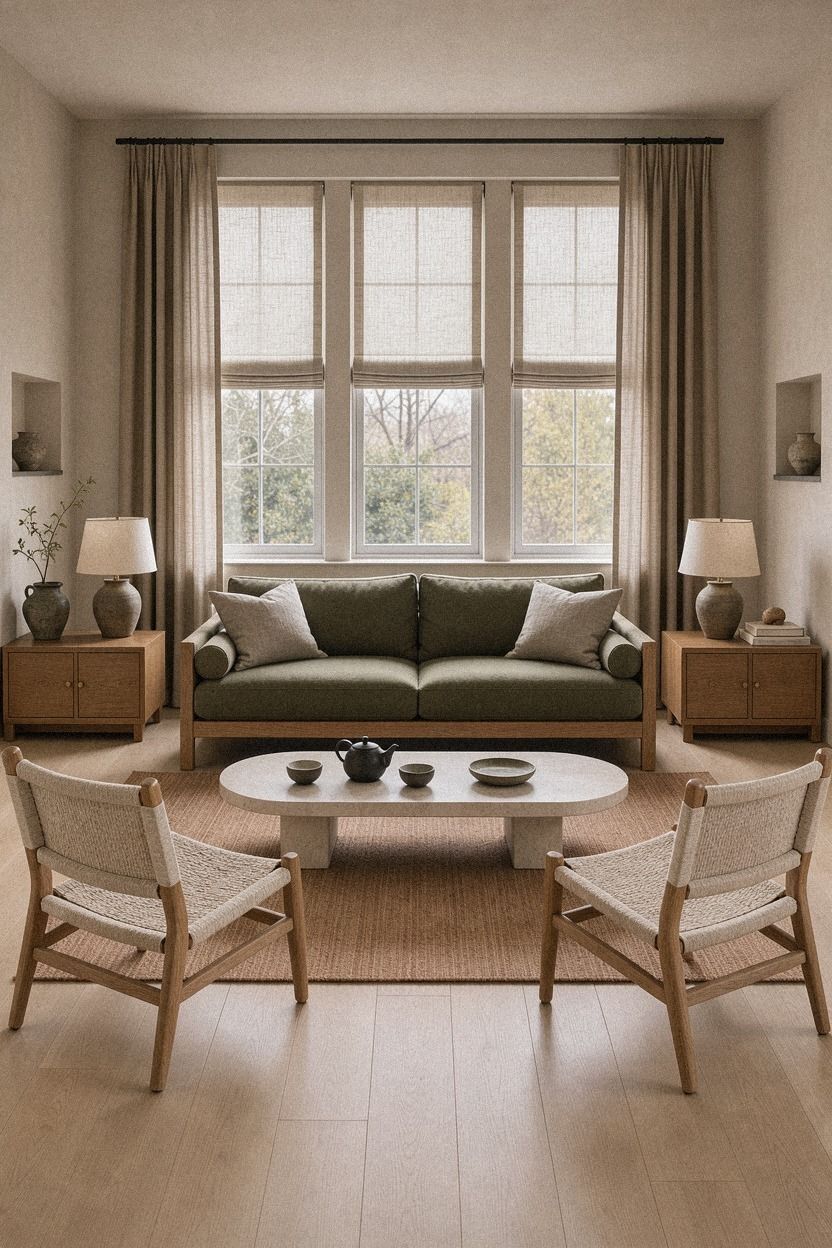
Fixed side panels and Roman shades let you control the bay in layers. Use shades on the center windows for privacy, then place stationary panels at the outer edges. This makes the layout look finished even when the curtains don’t travel around every corner.
A sageless Roman shade in woven cotton works with relaxed interiors, while a flat linen shade feels more tailored. You’ll want the shades to sit inside the frames so the window lines remain visible.
And if your room gets strong afternoon sun, choose a lined material. Unlined fabric can fade quickly, especially in a south-facing room with pale walls.
Keep the Roman shades at a consistent head height. Your bay will look calmer when the fabric folds align across the window wall. I’d choose a subtle texture rather than a busy print, since the architectural angles already create movement.
This combination is wonderfully flexible. You can lower the shades for privacy, leave the side panels open for light, or close everything when you want a quiet evening atmosphere.
The strongest version uses woven cotton shades, lined Roman fabric, and stationary linen panels in related tones. Terracotta, stone, and olive work especially well with unlacquered brass developing patina nearby. The result feels layered, luminous, and pleasantly tailored.
13Use tension rods for a rental-friendly solution
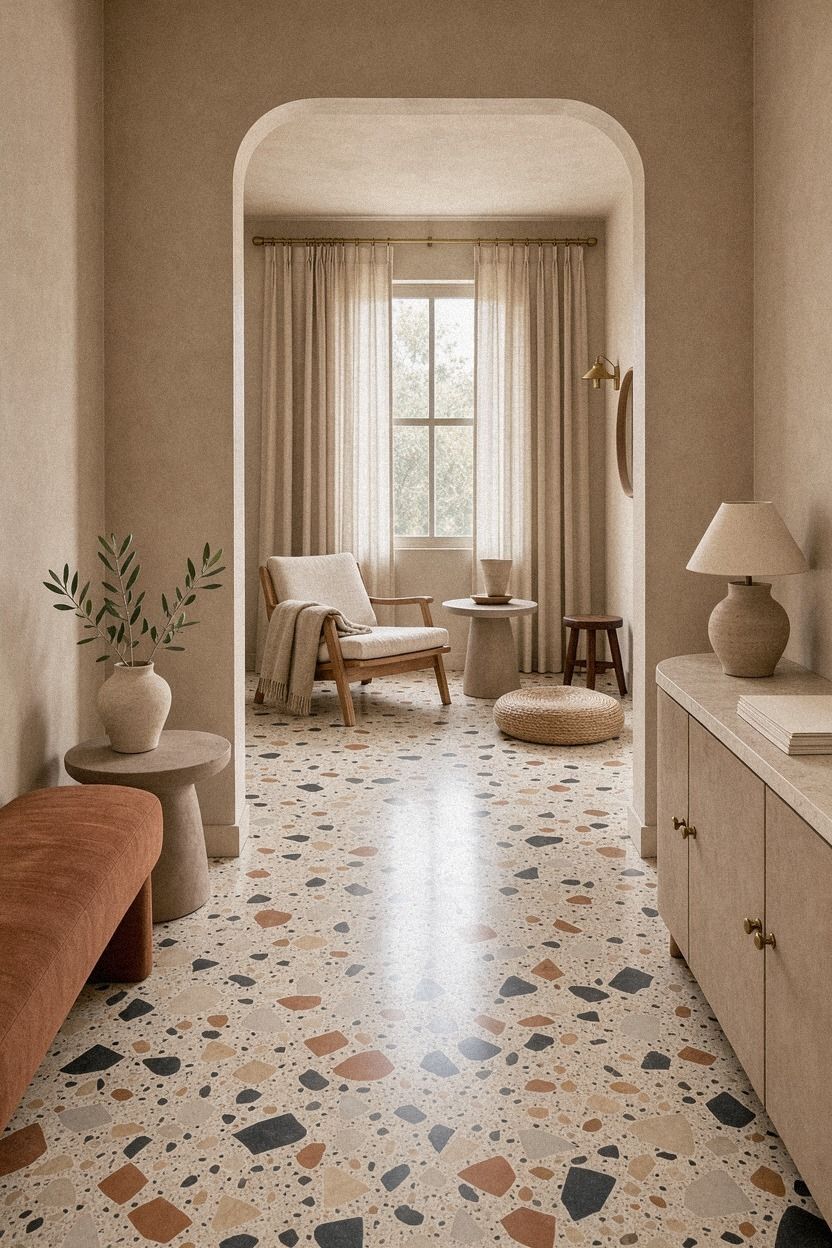
Tension rods can work inside each window frame when drilling isn’t an option. They’re best with lightweight curtains, cafe panels, or sheer fabric. Measure the inside width carefully and choose rods that sit firmly without bowing the frame.
For a rental, pair removable adhesive hooks with stationary side panels mounted outside the bay. A clay, linen, and aged-brass palette keeps the solution warm rather than temporary.
You can also repeat oversized-chip terrazzo on a nearby surface. Your landlord may allow those small changes, but check the lease before installing anything.
A tension rod won’t carry heavy lined drapes, so don’t ask it to do that job. I’d rather see a simple cotton panel that hangs cleanly than an oversized curtain sagging in the middle.
Test one rod for a full day before installing the others. You’ll learn whether the frame holds securely and whether the curtain clears the handle. That simple trial can prevent a frustrating morning of fallen fabric.
Choose a soft cotton voile or lightweight muslin for the most forgiving result. Your room will keep its daylight, and the treatment will feel airy instead of makeshift.
A no-drill curtain rod, rental-safe hook, and lightweight voile can solve the practical problem beautifully. This is an inexpensive, flexible starting point, and you can upgrade the hardware later if your lease changes.
14Stack light with the Three-Height Light Stack
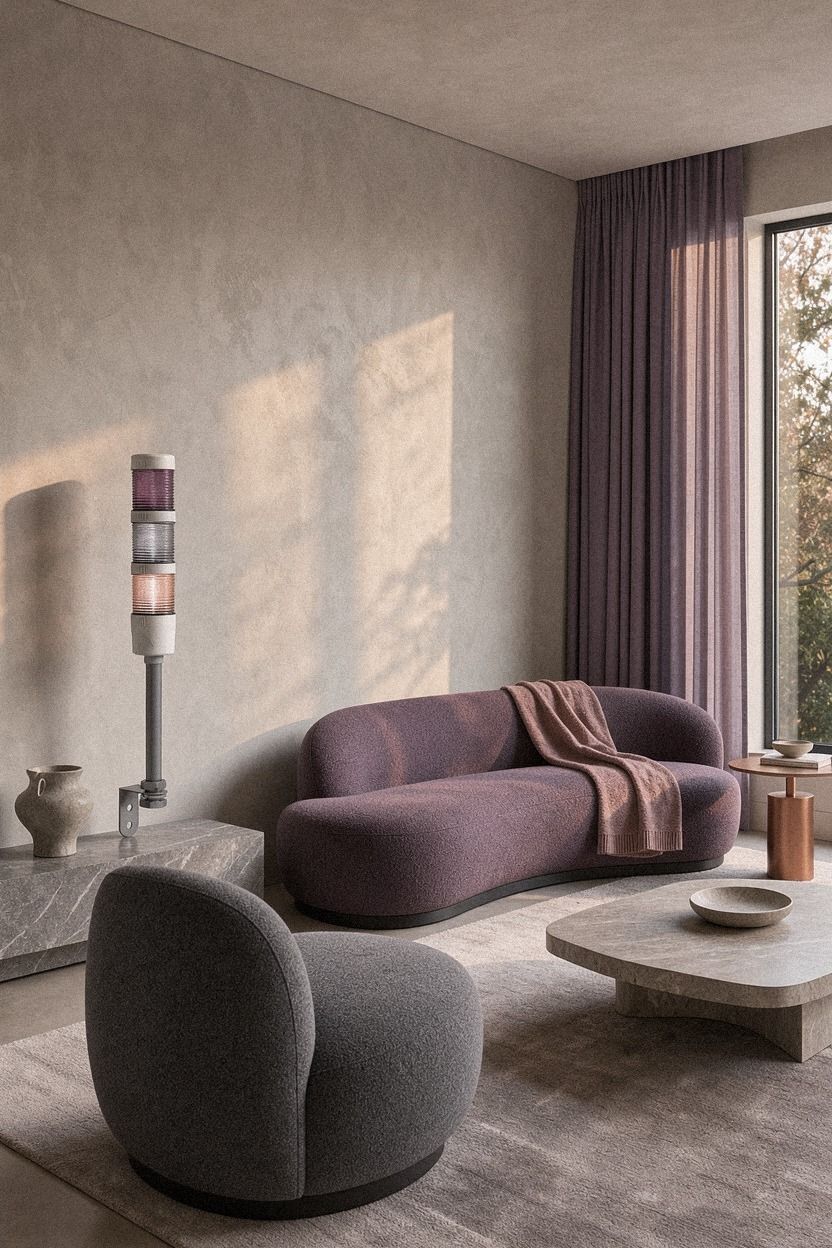
The Three-Height Light Stack places light at three levels: overhead, task, and ambient.
In a room with plum, grey, and rose-gold accents, hand-applied Venetian plaster gives the wall enough texture to make each layer of light feel intentional.
15Swap center panels for woven shades
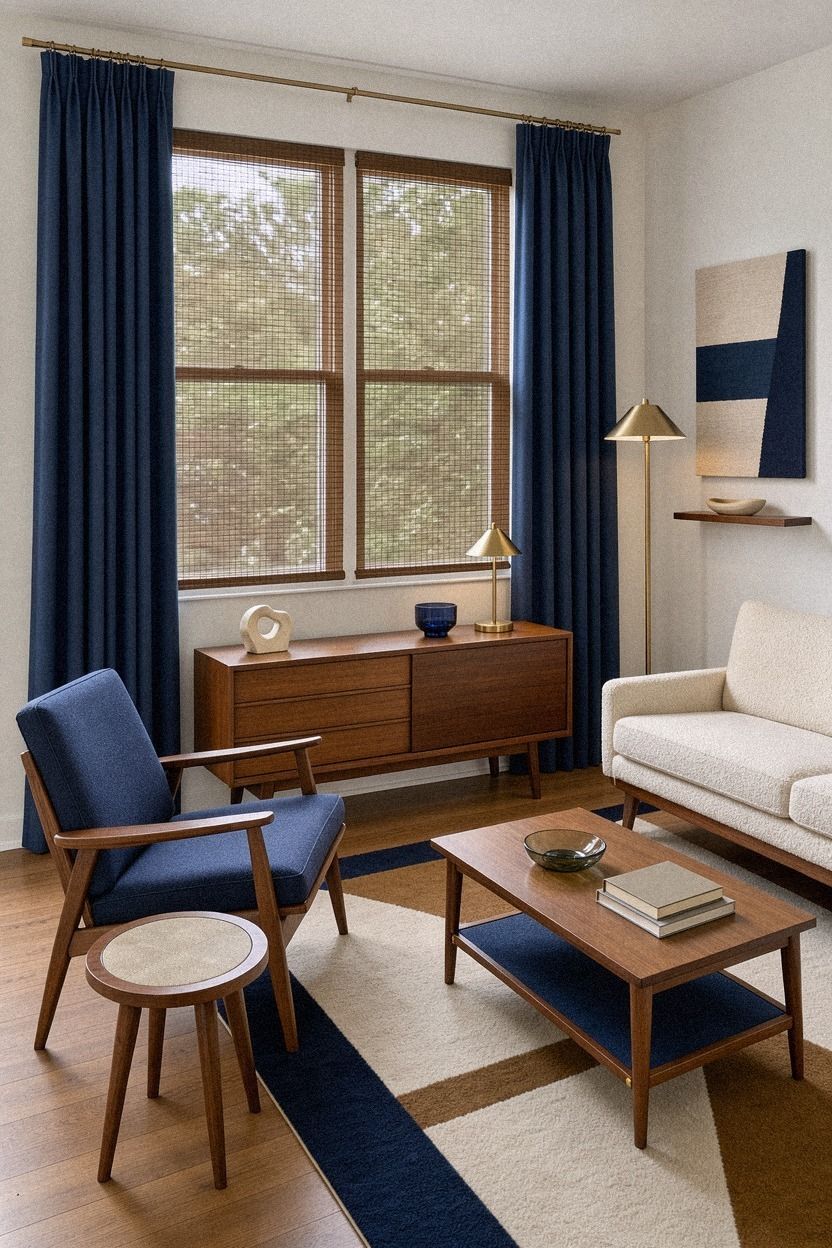
Woven shades can give the center window a strong texture while side curtains soften the outer edges. This contrast works beautifully in a room with simple furniture and natural materials. Use shades across the center panes, then repeat the shade color in the side panels or nearby upholstery.
Choose a tightly woven shade and repeat shagreen accents if your room leans organic. A navy, white, and walnut palette will keep the combination crisp. Your side curtains can be a plain cotton-linen blend so the texture doesn’t compete with the weave.
I’d skip a bold printed shade here unless the room is otherwise quiet. A bay window already has several lines, and adding a busy print can make the architecture feel fussy.
Let the shade texture carry the visual interest. You won’t need patterned panels, decorative tiebacks, and ornate rods all at once. One confident material usually looks more luxurious than five competing details.
If privacy is important, add a liner or choose a denser weave. Your room will still feel natural, but evening light won’t turn the window into a bright rectangle.
The combination of woven shades, cotton-linen curtains, and natural upholstery feels collected and serene. It’s especially beautiful in a living room with walnut, pale walls, or warm stone.
16Mount return rods instead of wrapping the corners
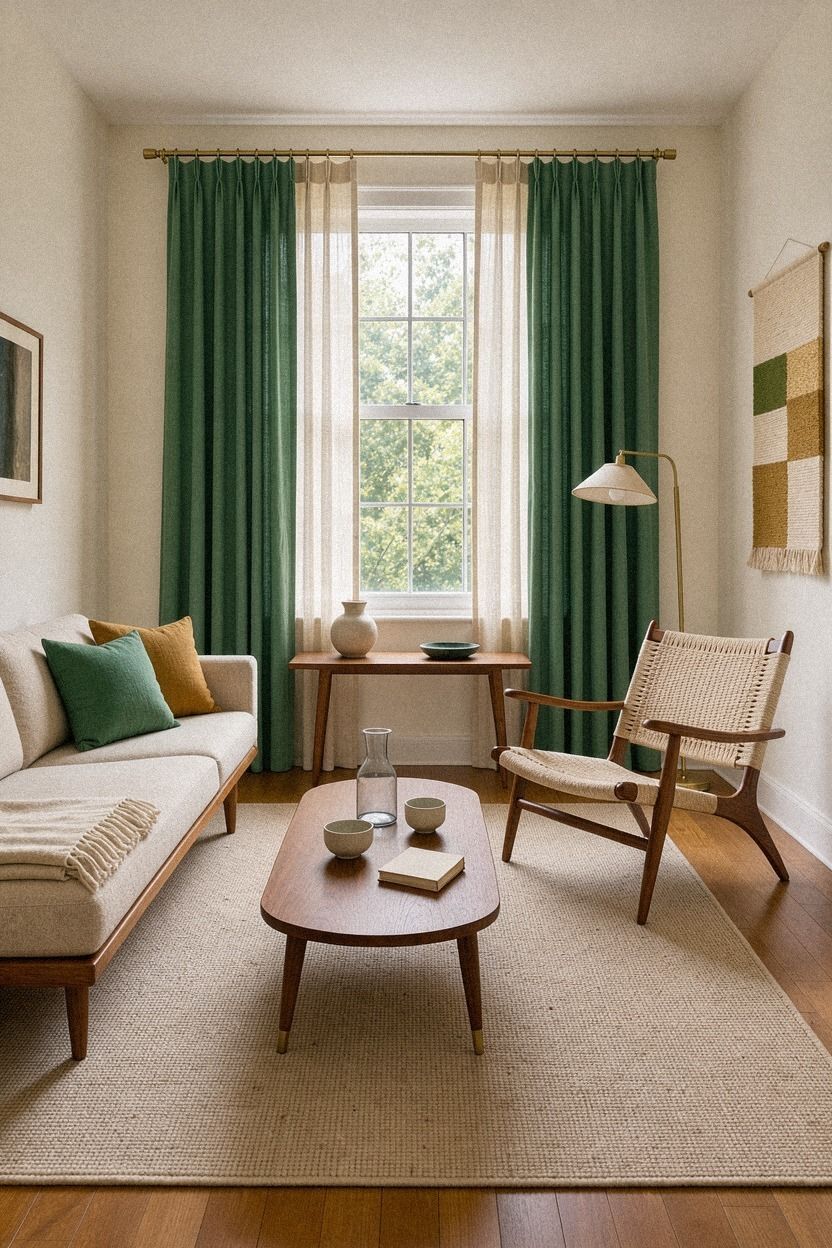
Return rods curve back toward the wall at each end, so the curtain closes the side gap without a custom corner connection. Use one long rod across the center and return-style rods on the sides, or use returns only where privacy is a problem.
This setup is practical with matte black steel, especially when balanced by emerald, gold, and cream accents. Washed Belgian linen panels soften the hardware and let the curtains wrap toward the wall without feeling heavy.
Make sure the return doesn’t collide with trim or a nearby bookcase. I’d choose this arrangement over a complicated multi-rod system when your bay has limited wall depth.
Measure the return length before buying the curtains. You’ll need enough fabric to travel around the curve without pulling the panel away from the wall. A generous hem and flexible header will help the curtain settle naturally.
This is a particularly clever solution for bedrooms and street-facing rooms. It gives you stronger privacy while keeping the installation visually simple. Return brackets, curved rod ends, and flexible curtain headers make the arrangement feel seamless.
If your room has dark window trim, the black hardware can look crisp and dramatic. With pale trim, choose a soft bronze or painted finish for a gentler effect.
17Hang panels higher and longer than the frame
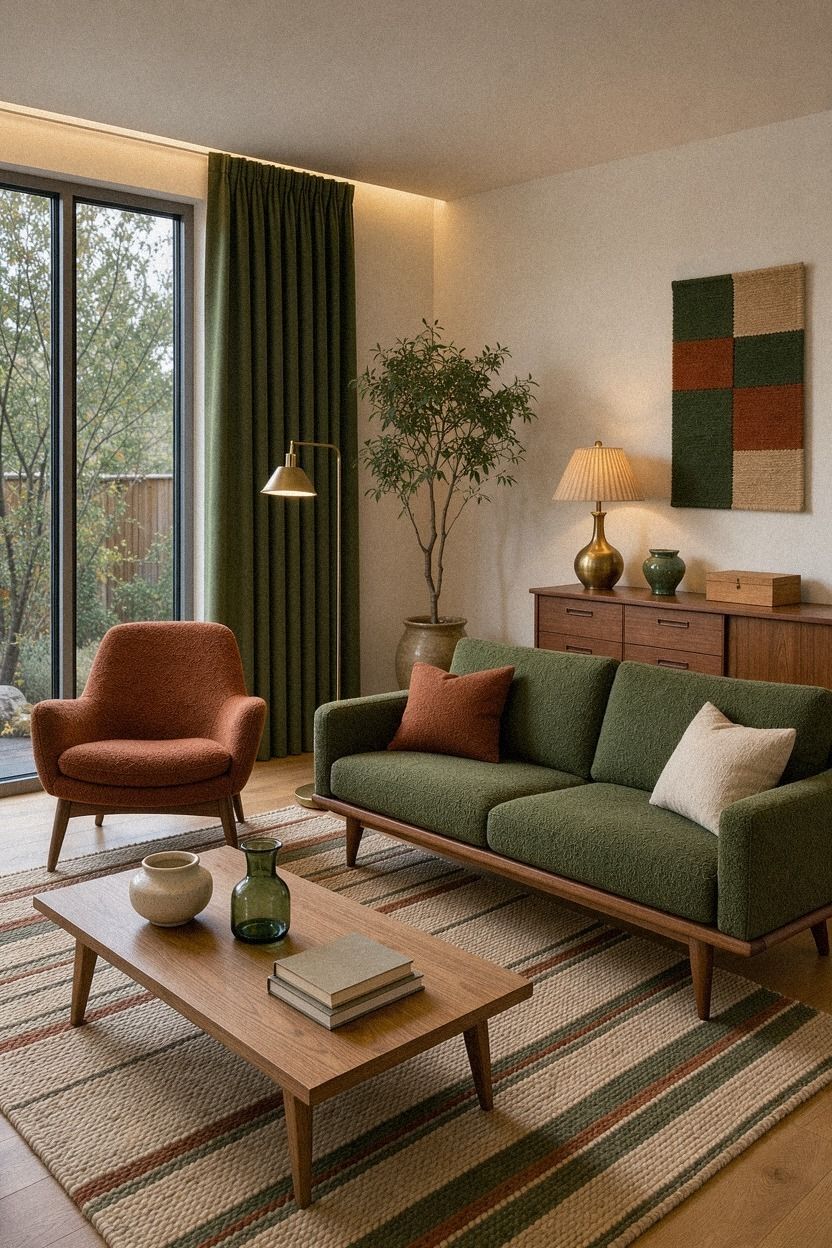
Raising the rod 4 to 6 inches above the frame and carrying the curtains down to the floor makes the bay feel taller.
Forest green, rust, and natural oak create a grounded palette, while organic bouclé gives the longer panels a soft, substantial fall. Keep the colors related so the extra length feels elegant rather than theatrical.
18Spend on structure and save on fabric
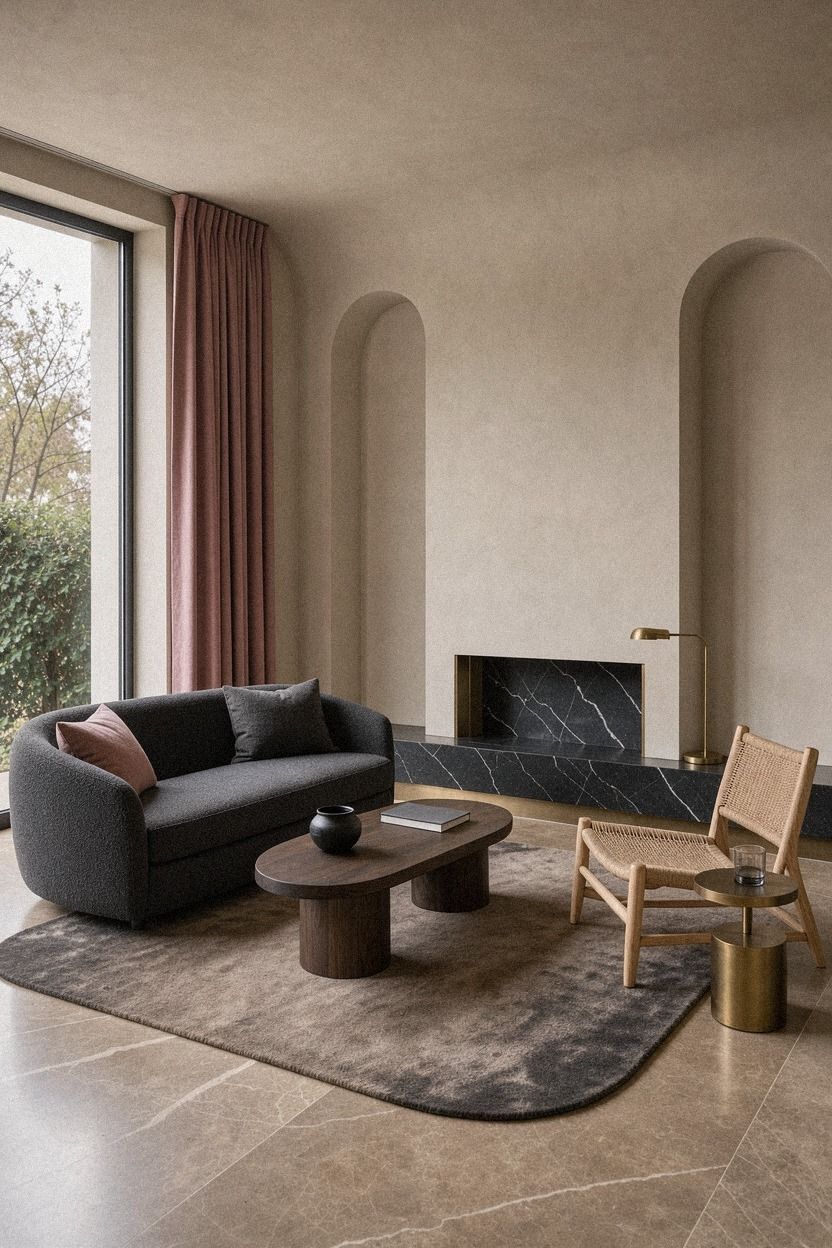
The hardware deserves the most attention because it carries everything and determines whether the layout feels stable. Your fabric can be simple if the rods, brackets, and spacing are right. A plain curtain in washed cotton canvas can look especially polished beside dusty rose, charcoal, brass, and Nero Marquina black marble with white veins.
Use this table as a typical US planning guide for the wider room budget around your bay window. It isn’t a quote for one curtain setup, but it helps you decide whether to save, wait, or invest.
And don’t assume the high tier is automatically better. If you’re updating only the window, a thoughtful rod layout and properly measured panels can do more than custom millwork. I’d spend on strong brackets first, then choose fabric that gives your room the right amount of light.
Prioritize solid mounting hardware, smooth connectors, and correctly sized supports. You’ll notice those details every time you open the curtains. Cheap fabric can still look beautiful when it hangs evenly and moves easily.
If your budget is tight, start with the center window and add the side treatment later. Your room will still feel finished while you save for the final layer. The higher-and-longer approach can also make inexpensive panels feel dramatically more polished.
A sturdy curtain bracket, smooth connector, and properly sized support are worth the investment. The structure determines how calm and dependable the entire installation feels.
The Bay Window Rule I Keep Coming Back To
I’ve changed my mind about bay windows more than once. At first, I thought the goal was to make the curtain treatment disappear.
Then I tried a completely bare bay, and the room felt unfinished every evening when the glass turned black. The better answer sits between those extremes.
Your window needs daylight during the day and a soft boundary at night.
The most successful layouts respect the angles instead of fighting them. A straight rod can look clean, but three short rods can make the architecture feel intentional.
Inside shades can be practical, while side panels add the softness your furniture may lack. I’d skip any setup that forces one heavy panel across a complicated bay.
It rarely glides well, and you’ll notice the struggle every time you close it.
Your measurements matter more than the label on the package. A rod 4 to 6 inches above the frame, floor-length fabric, and enough stacking space will give you a stronger result than a trend-driven color.
If you’re choosing between extra fullness and better hardware, pick the hardware. The curtains should move easily, sit evenly, and make the room feel warm without announcing how they got there.
What makes this worth doing? You’re not just covering glass.
You’re deciding where the room’s eye should rest, how much evening privacy you need, and whether the bay feels connected to the rest of your furniture. That’s why a simple cotton panel can beat a costly custom treatment.
It answers the room instead of competing with it.
I’d begin with the three-rod method if your bay has clear angles and enough wall depth. If the room is narrow, I’d choose the inside-shade solution. Both can look beautiful when you measure carefully and give the fabric room to breathe.
A Few Things Worth Answering
What is the best way to hang curtains on a bay window in a small living room?
The best option is usually a straight rod with side panels or inside shades with fixed outer curtains. Lightweight linen keeps the room open, while a center-first layout gives your eye one clear anchor. You’ll want the fabric to stack outside the glass so your small room keeps as much daylight as possible.
Where can I buy bay window curtain pieces on a budget?
Check IKEA, Wayfair, Target, Facebook Marketplace, and local thrift shops. Standard adjustable rods are often enough for a shallow bay, especially with cotton or linen-blend panels. You can also compare prices across several stores before committing, then use your measurements to avoid buying the wrong length.
How much does a bay window curtain makeover cost?
A simple makeover can cost about 100 to 300 dollars, depending on the hardware and fabric. Free changes include moving furniture, raising an existing rod, and washing or hemming panels you already own. Your cost rises when you need several rods, lined curtains, or professional installation.
Can I create this look on a budget?
Yes, and you can start with three inexpensive moves: reuse your current panels, paint visible hardware, and use tension rods inside the frames. A measured layout matters more than a premium label. If you’re buying new fabric, begin with the center window and add the side panels later.
Is a bay window curtain treatment worth it in a small space?
Yes, because the right treatment makes a small bay feel taller and more connected to the room. Floor-length panels draw the eye upward, while inside shades protect the daylight. You’ll want to avoid bulky furniture directly in front of the glass, since it limits both movement and light.
Is this a good idea for a rental?
Yes. Use tension rods, removable adhesive hooks, inside shades, or lightweight stationary panels where your lease permits.
No-drill options work best with cotton voile or cafe curtains, rather than heavy lined drapes. If you’re unsure about wall damage, choose a tension setup and keep the fabric short.
Where I’d Start First
If I had to pick one, I’d start with three standard rods joined around the bay. You’ll get cleaner corner coverage than one straight rod, without paying for custom hardware. Pin this layout for later and measure each window plane before you shop.


