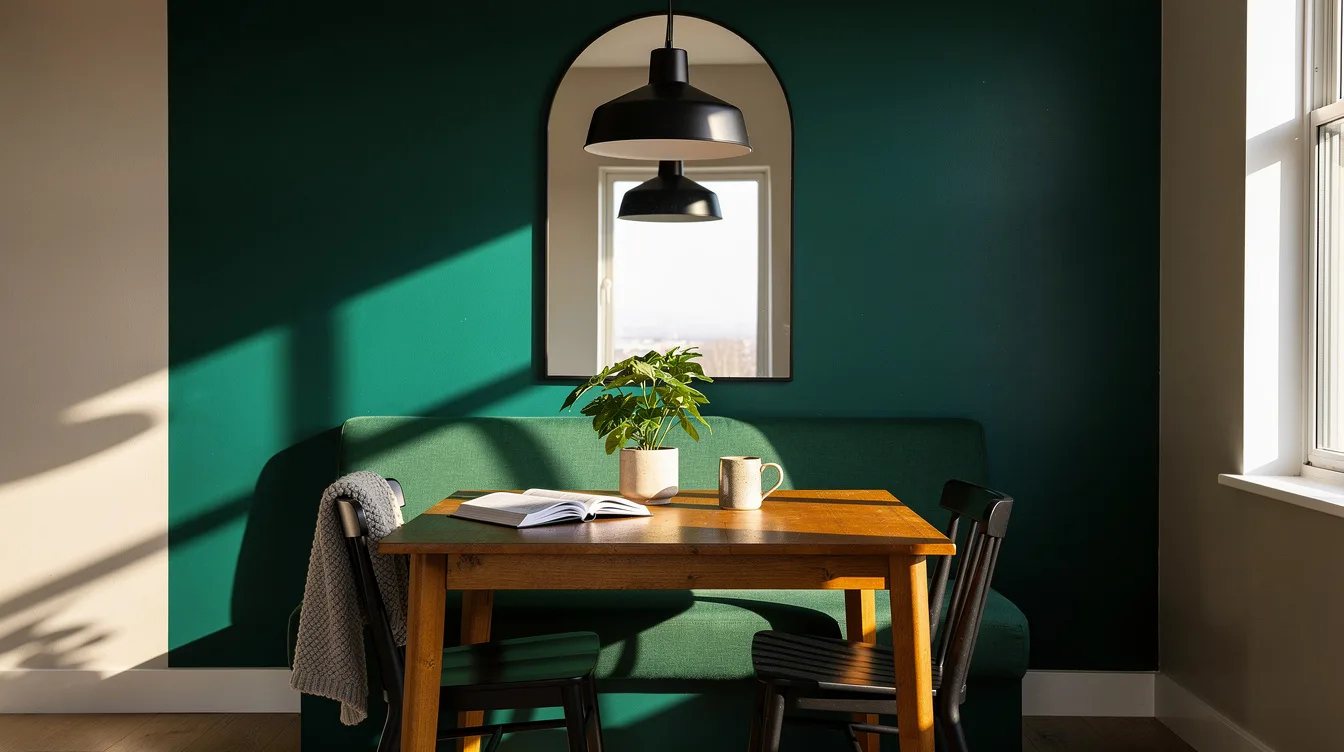
Small Dining Area Feeling Boxed In? 13 Mirror Placements Add Depth
27 october 2026The best mirror in a small dining area earns its wall by extending a view. In a 290-square-foot studio, a narrow panel can reflect the dining zone opposite, while a larger room may need only one carefully aligned piece beside a window.
Designers place mirrors above sideboards, across from banquettes, and inside cabinetry for the same reason: the reflection should make the dining area feel more connected, not simply fill an empty wall.
What you will find inside
- Center the Mirror Above a Sideboard
- Borrow Daylight Beside a Window
- Face the Narrow Wall Toward the Nook
- Check Comfort Above a Banquette
- Align Panels With the Window Opening
- Reflect the Pendant Above the Table
- Fit the Mirror Inside Cabinetry
- Turn a Corner Return Into Depth
- Place Glass Across From the Table
- Extend a Narrow Dining Wall
- Reflect the Best View From the Door
- Use a Mirror Behind Open Shelves
- Stop the Reflection Before the Kitchen
Center the Mirror Above a Sideboard
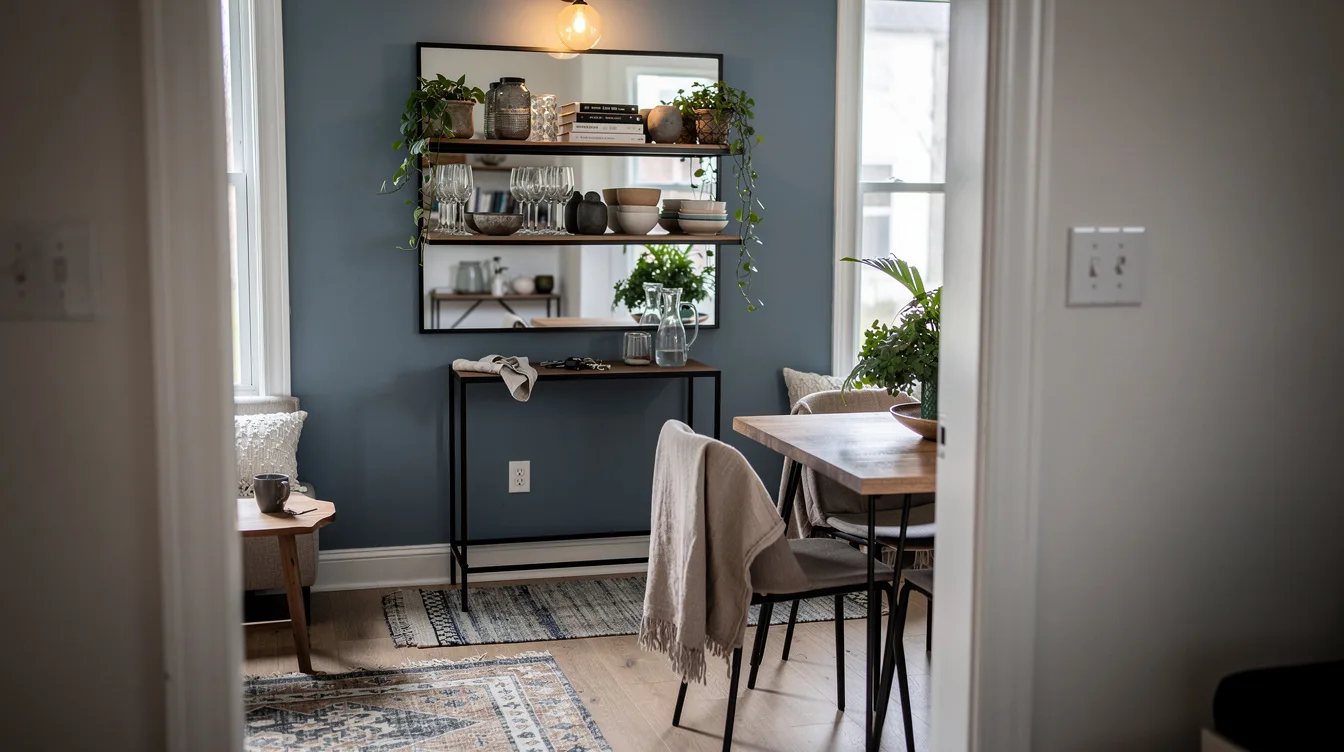
A landscape mirror above a buffet gives a compact dining area a clear visual anchor while reflecting daylight, the pendant, or the table setting. The strongest placement leaves enough wall around the frame to keep the furniture from feeling crowded.
Use roughly 60% to 75% of the sideboard’s width as a starting point, with approximately 4 to 8 inches between the furniture and frame. Over a 48-inch sideboard, test a mirror around 30 to 36 inches wide before drilling.
Target’s Threshold Taper Metal Mantle Mirror measures 42 by 30 inches and is listed at about $100. Its width makes more sense above a roughly 60-inch sideboard than over a very narrow cabinet.
Borrow Daylight Beside a Window
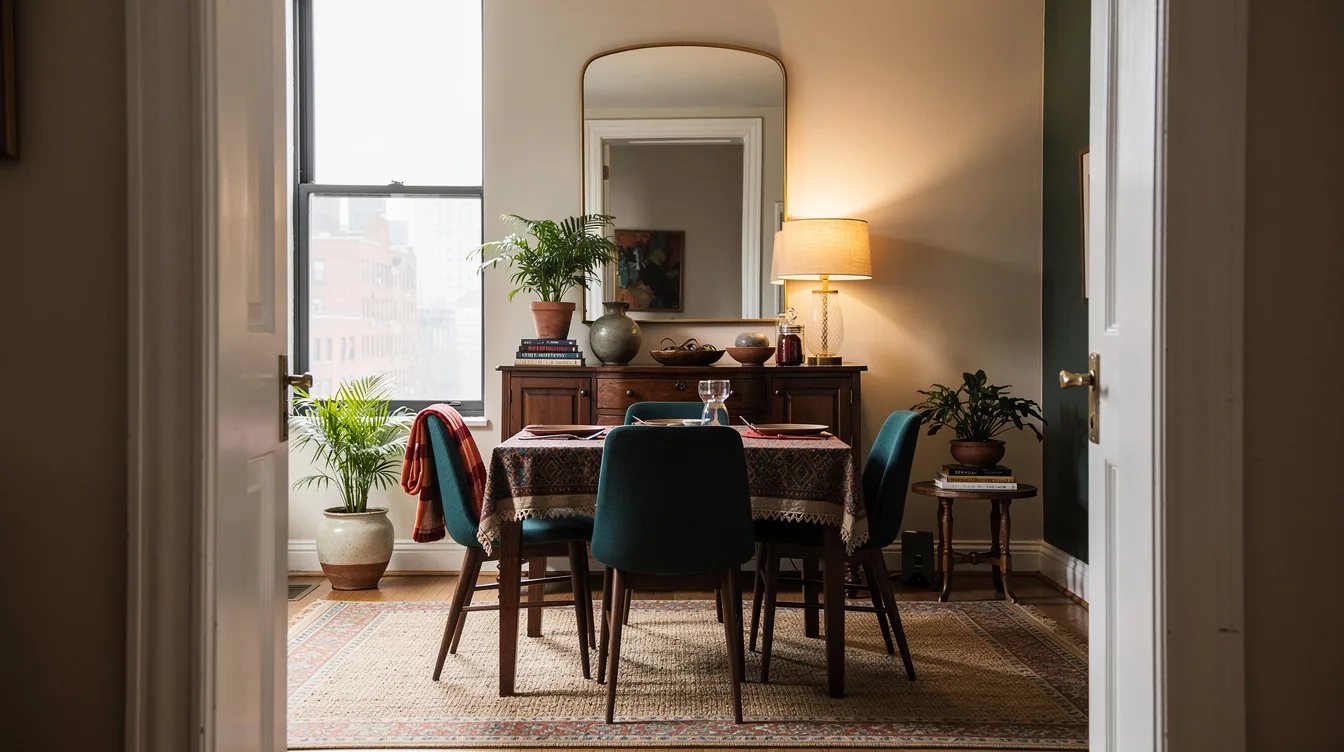
A mirror beside a window can extend the apparent opening without covering the glass or competing with the view. Place it on the narrow wall return between the window and the dining bench when that strip of wall currently feels wasted.
Duny Architecture used this idea in a Luxembourg apartment in Paris, where three mirror panels align with the window and extend the apparent opening beside the dining bench. The reflection earns its space because it continues a real architectural view.
Measure the wall return, the window trim, and the bench clearance before ordering anything. The published project gives no panel dimensions or installation price, so a glazier’s quote should come after the site measurement.
Face the Narrow Wall Toward the Nook
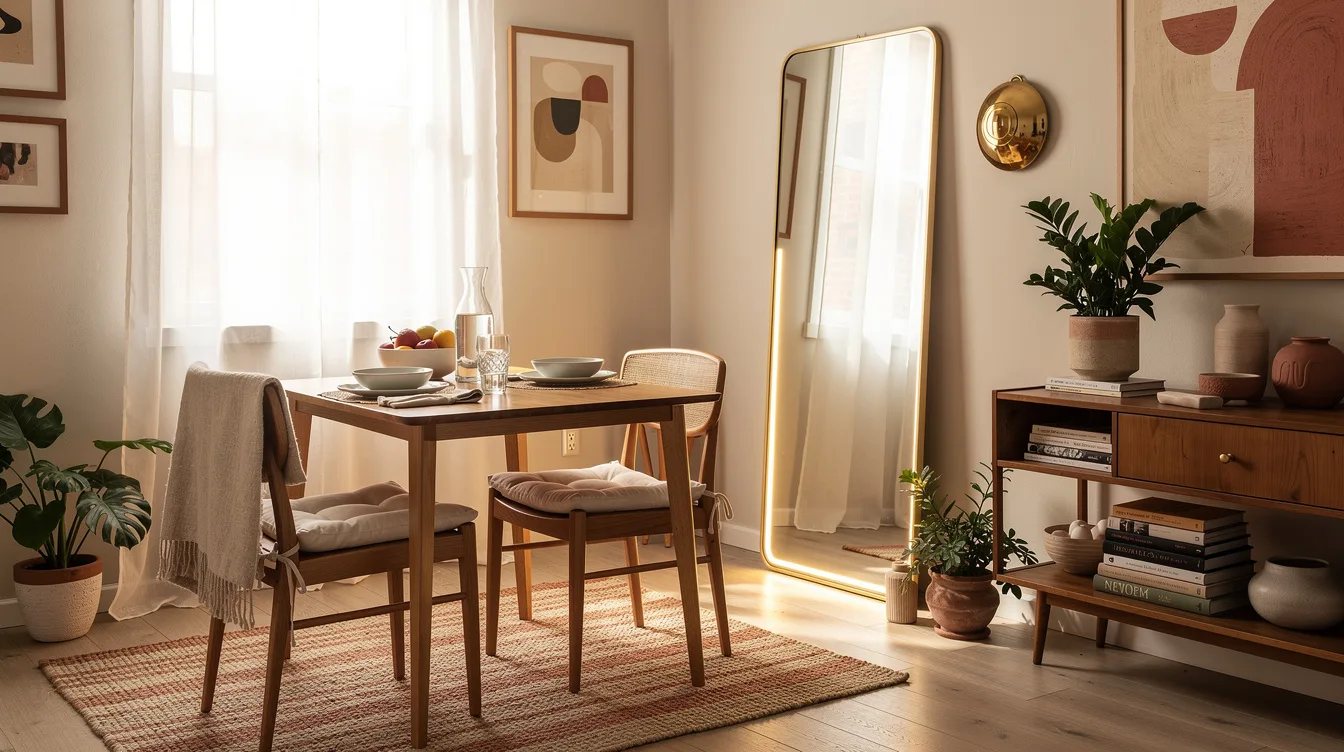
A tall mirror on a narrow wall facing the dining nook can reflect the table across the room and add depth without turning the whole wall into a glossy surface. This placement works especially well in open apartments where the dining zone has no spare corner.
In Eleanor Peres’s Darley Studio, the entire home measures about 290 square feet, yet a narrow mirrored panel reflects the dining area opposite. The lesson is simple: a focused reflection can do more than a larger decorative object.
For a ready-made version, consider Target’s Threshold Arch Ribbed Wall Mirror, listed at 24 by 36 inches for about $90. The antique-brass finish adds warmth, but it does not prove solid-brass construction.
Check Comfort Above a Banquette
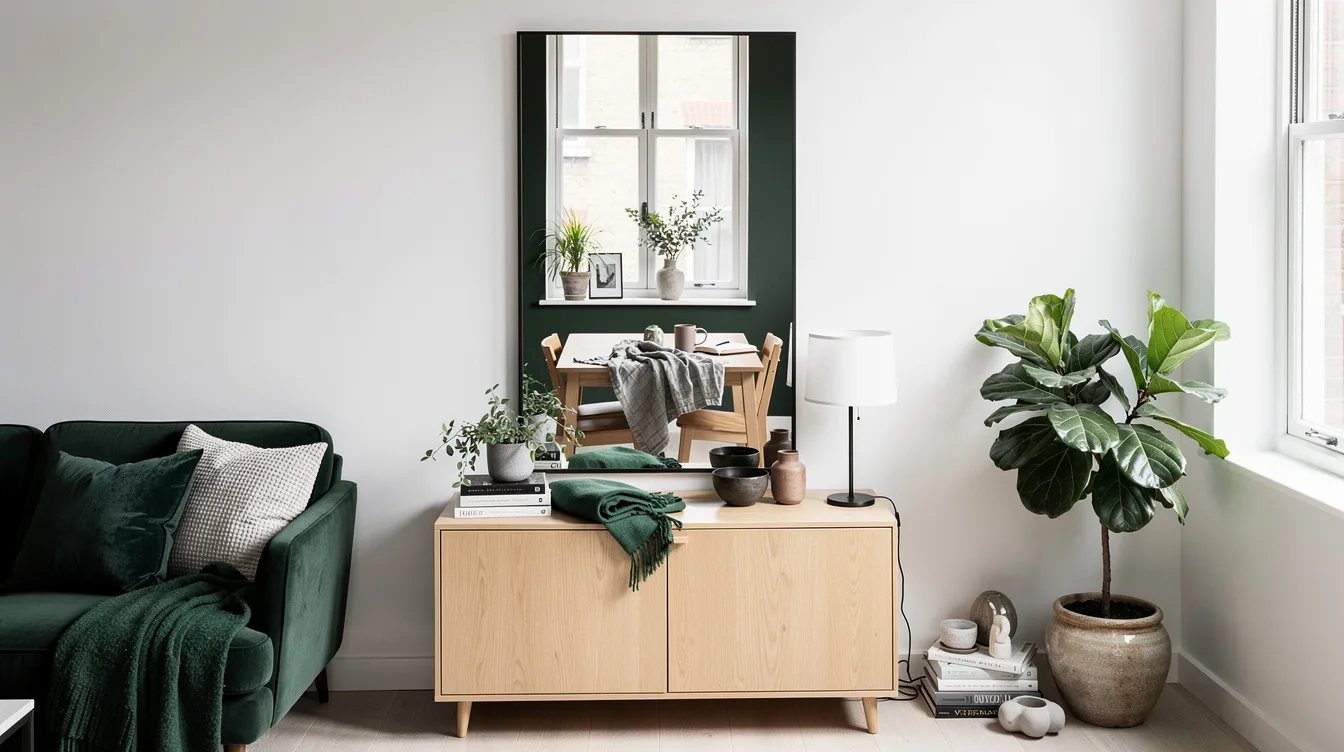
A mirror above banquette seating can open the wall behind a compact table, especially when the bench sits against a solid partition. Round glass softens the arrangement, while a wide horizontal format echoes the table and bench.
Keep head clearance and the fixing method in view before choosing the frame. Rapport advises caution with heavy mirrors directly above seated people because the position can feel uncomfortable even when the installation is secure.
Our preferred test is temporary: hold a paper template at the intended height and sit on every part of the bench. If the reflection feels intrusive or the frame seems too low, move it higher or shift it to the adjacent wall.
Align Panels With the Window Opening
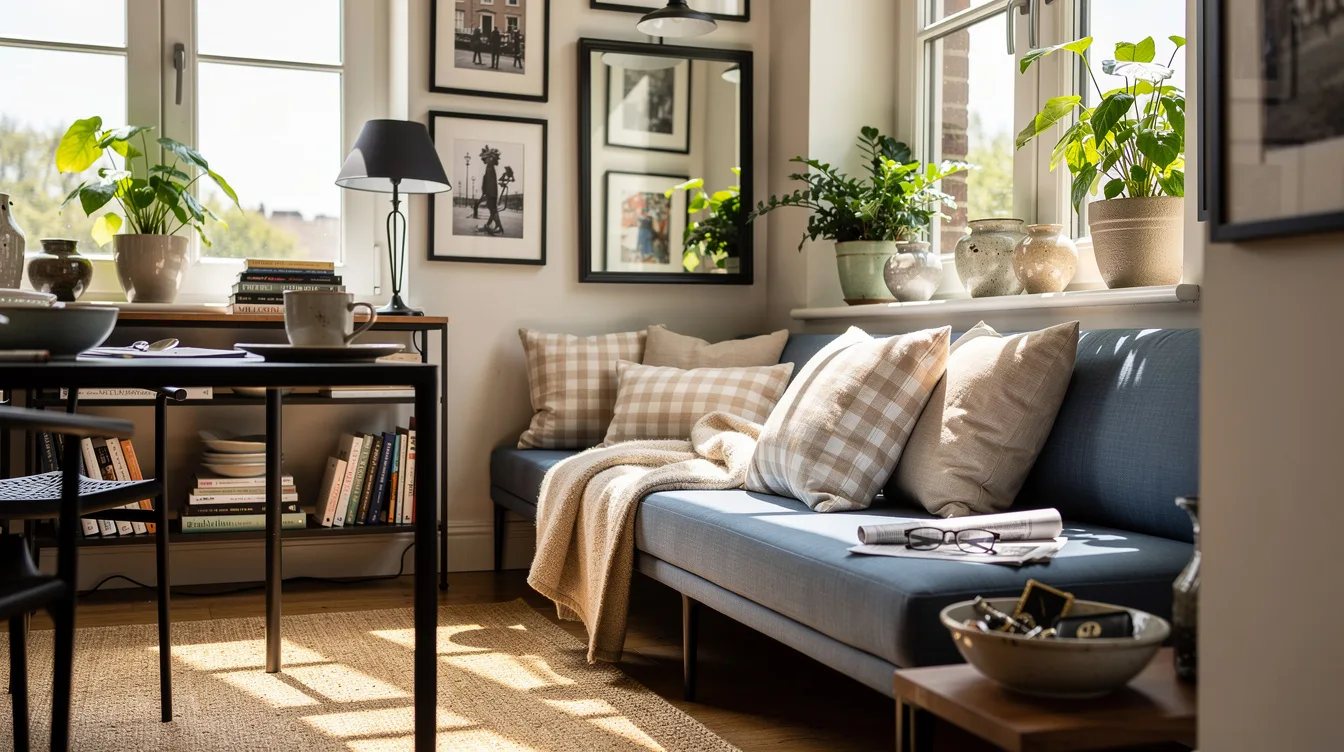
When a dining area sits beside a window, several slim panels can repeat the window’s vertical rhythm more convincingly than one oversized framed mirror. Align the top and side edges with existing trim so the reflection feels built into the room.
Clear mirror panels work best when they reflect daylight, wall depth, or a calm section of the table. Avoid aiming them at a cluttered entry, a television, or a busy kitchen counter.
This is a custom placement, so the final cost depends on measurements, edge treatment, mounting, and local labor. Treat the layout as an architectural decision first and a shopping decision second.
Reflect the Pendant Above the Table
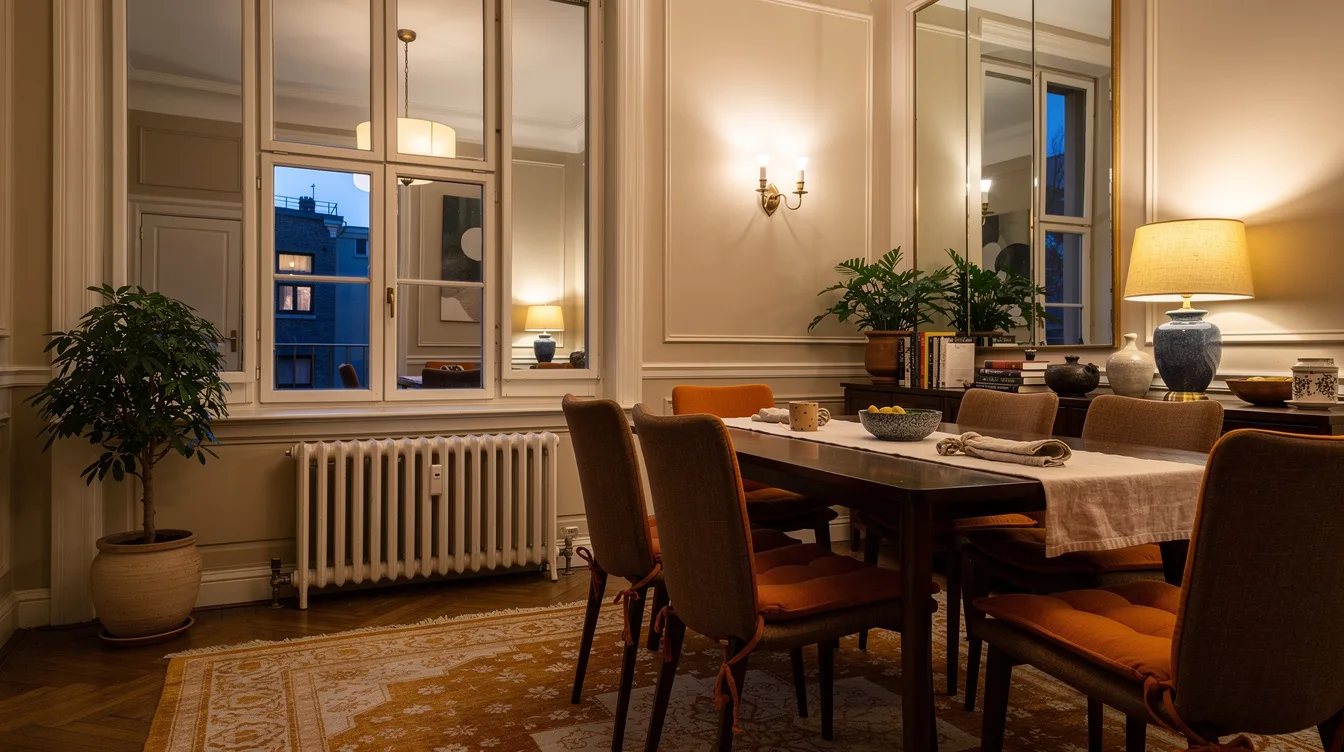
A mirror positioned across from a dining pendant can repeat the light source and make a small eating area feel more layered after dark. The reflection should show the fixture at a comfortable angle rather than placing a bright bulb directly at eye level.
Test the sightline from every seat before choosing the final height. A warm-metal frame or a thin black edge can connect with the pendant without making the mirror compete with the table.
Black metal is the practical choice when the room already has dark window trim or chair frames. Keep the surrounding wall quiet, because the reflected light is already doing enough visual work.
Fit the Mirror Inside Cabinetry
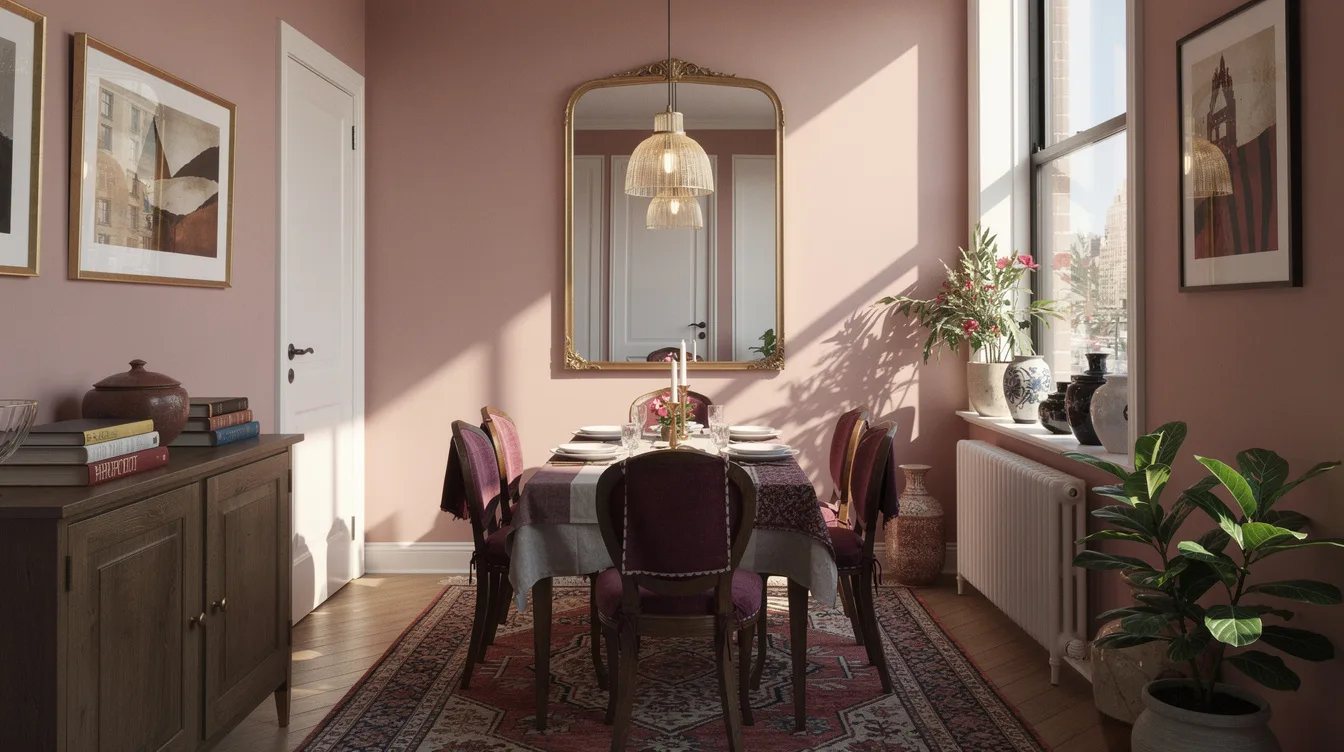
Integrating a mirror into dining cabinetry keeps the reflective surface flush with storage instead of adding another object to a tight wall. Use it behind open shelves, inside a glass-front section, or across the back of a shallow bar cabinet.
The reflection should extend the room or pick up the table setting, not expose every item stored inside. Keep the display edited and place heavier serving pieces on lower shelves so the mirrored background does not multiply clutter.
Wood cabinetry gives the mirror a useful boundary and keeps the dining area from feeling overly polished. A narrow inset usually looks more intentional than a full cabinet door covered in reflective glass.
Turn a Corner Return Into Depth
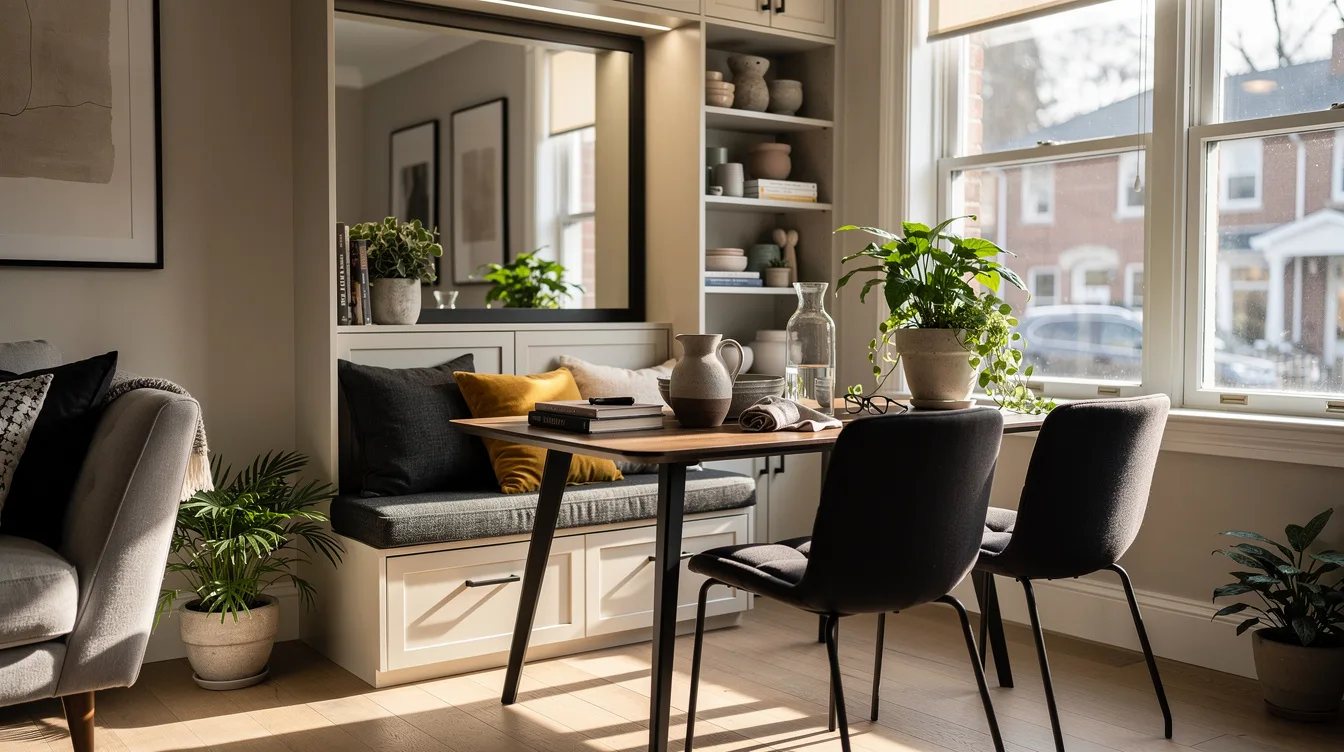
A short wall return at the edge of a dining nook is often wide enough for a mirror but too small for furniture. Covering that return can visually push the corner back and reflect the table without interrupting circulation.
Choose a narrow vertical format when the nook has a low ceiling or a small round table. Leave the adjacent wall matte so the reflective surface stays legible from the main seating position.
Fluted wood beside smooth glass creates useful texture when the corner already feels flat. Skip an ornate frame if the return is only a few inches wider than the mirror.
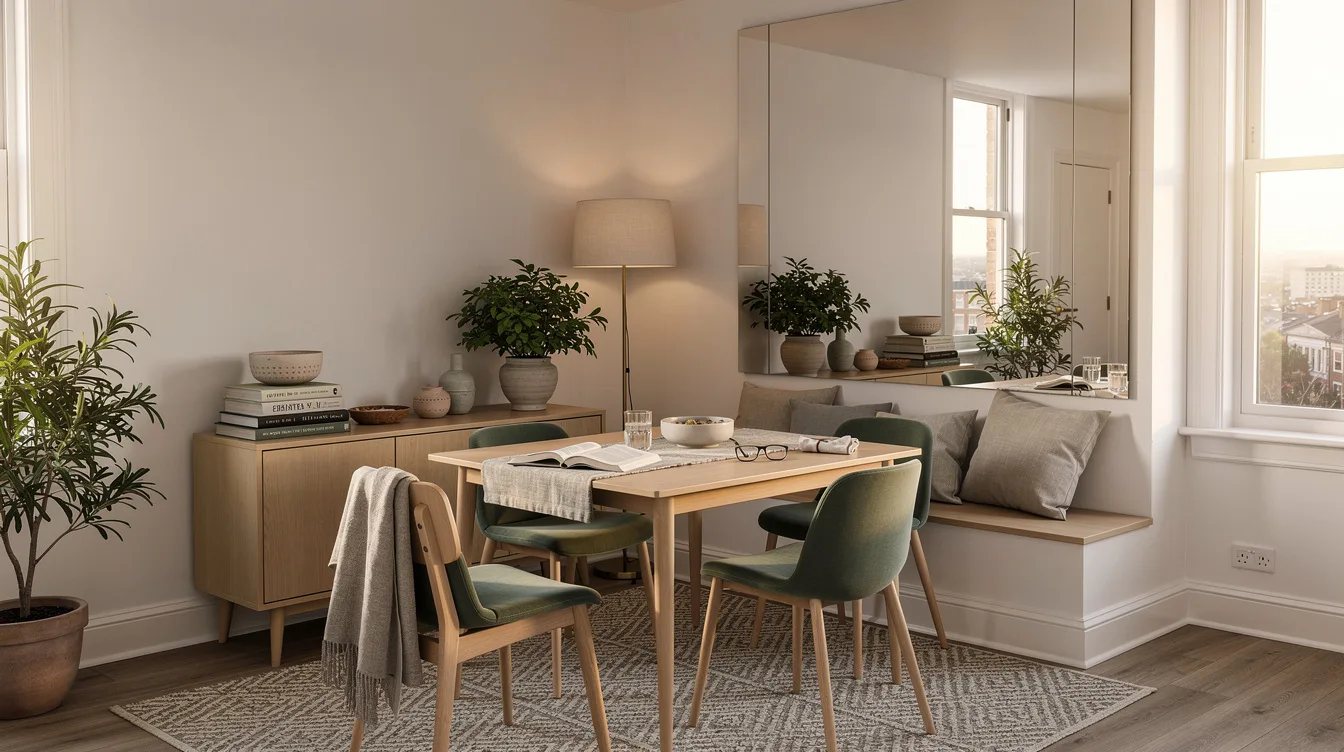
Place Glass Across From the Table
A wall directly across from the dining table is valuable when it reflects the table arrangement rather than an empty passage. The right placement can double the visual presence of a pendant, centerpiece, or textured wall behind the chairs.
Keep the reflection composed by choosing a view with one strong focal point. A table with a simple bowl, a low arrangement, or a clean wood surface will read better than a wall crowded with art and storage.
Round mirror glass is a smart counterpoint to a rectangular table because it breaks up hard lines. Center it on the table rather than automatically centering it on the wall.
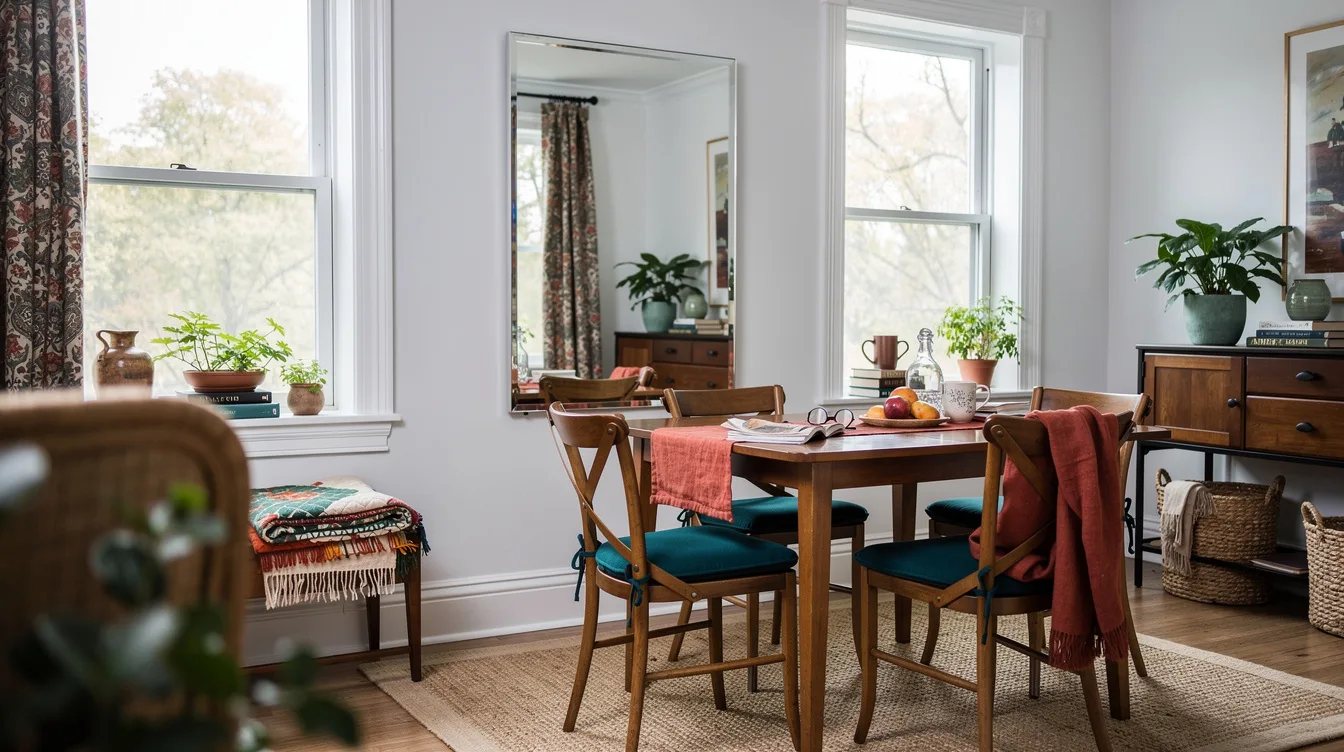
Extend a Narrow Dining Wall
Long, slim dining walls benefit from a mirror that follows the room’s direction instead of a small piece stranded in the middle. A horizontal frame can visually lengthen the nook, while a vertical panel can emphasize ceiling height when the table is very compact.
Use the furniture below as the measuring reference, even when that furniture is only a bench or a narrow console. The mirror should relate to the dining zone’s width and leave enough breathing room at both ends.
Antique-brass finish adds warmth to pale walls, but use it selectively when the room already has brass lighting or hardware. Too many reflective finishes can make a small area look busy.
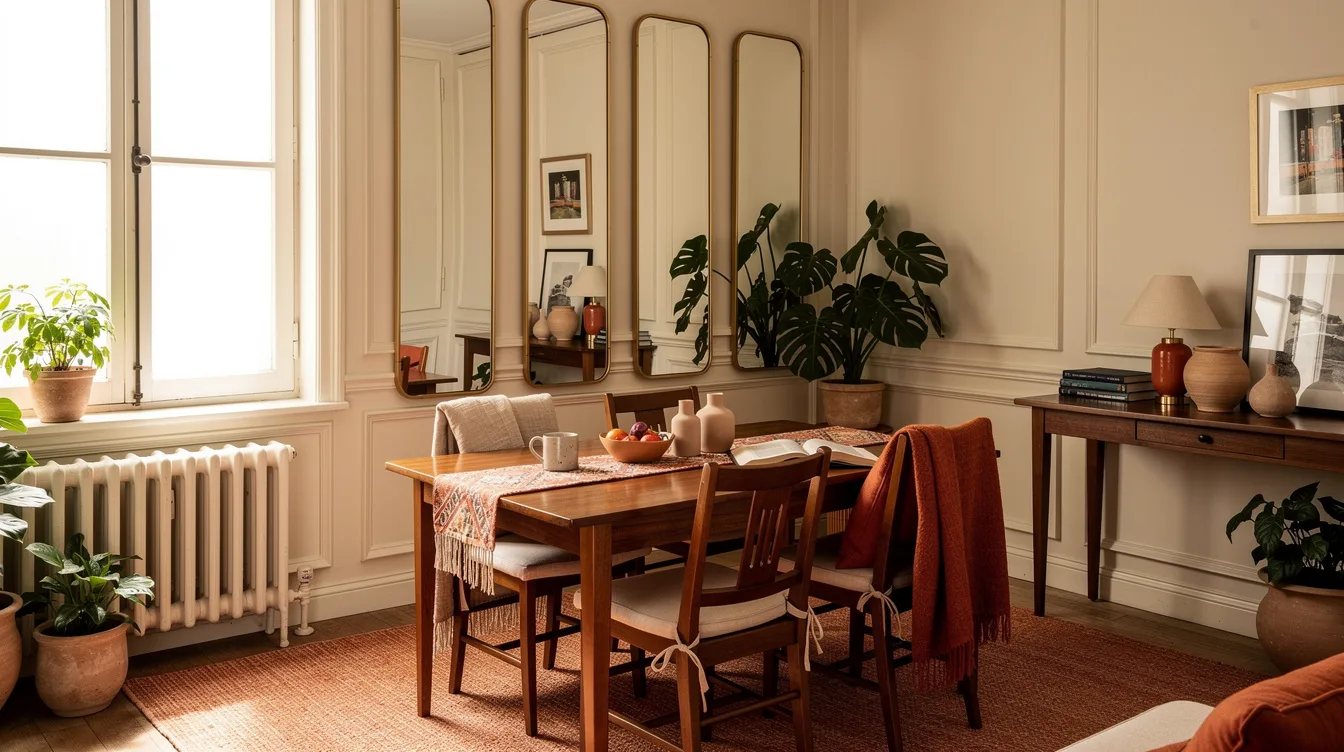
Reflect the Best View From the Door
The mirror should reward the first sightline into the dining area, which may begin at the doorway rather than at the table. Position it so the reflection shows daylight, the dining surface, or a useful architectural feature as soon as someone enters.
Walk through the room and mark the sightlines with painter’s tape before shopping. This quick test prevents the common mistake of placing a mirror where it reflects the back of a chair or a stack of mail.
Thin framed glass suits this placement because it keeps the entry view open. Choose a frame color already present in the room instead of introducing a disconnected accent.
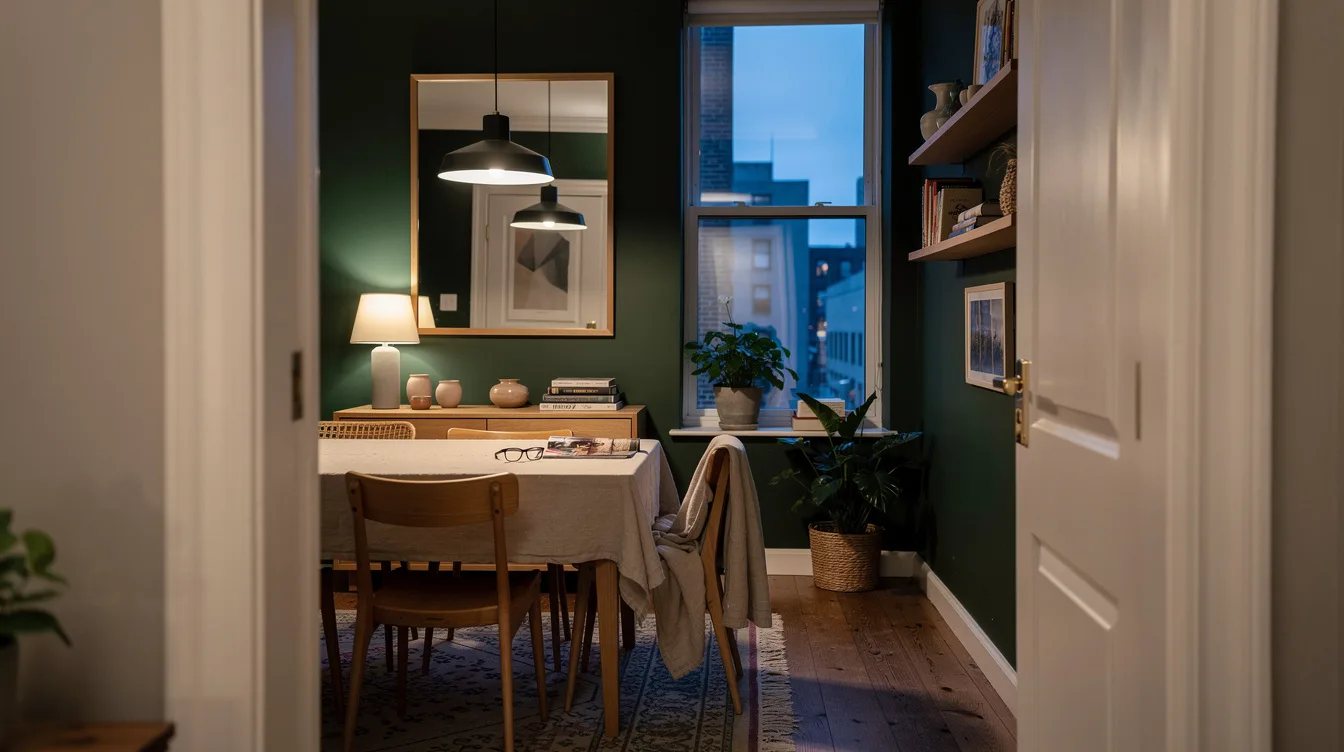
Use a Mirror Behind Open Shelves
A mirrored back inside open dining shelves can add depth while keeping the reflective surface contained. It works for a compact serving station, a shallow built-in, or shelving beside a banquette.
Place everyday objects at different depths so the reflection creates dimension rather than a repeated row of identical items. Leave some sections open, because a completely filled shelf will look twice as crowded.
Clear glass shelving keeps the installation light, while darker wood makes the reflection feel more grounded. This approach is best when the shelves are already part of the dining area’s architecture.
Stop the Reflection Before the Kitchen
In an open-plan home, mirror placement should strengthen the dining zone without doubling the busiest part of the kitchen. Aim the glass toward the table, a window, or a quiet wall, and stop the reflection before it reaches counters full of appliances.
This rule matters more in a small room because every reflected object carries extra visual weight. A mirror that shows the dining nook feels intentional; one that shows dishes and cords makes the entire space feel less settled.
Matte painted walls around the mirror provide a calm frame for the chosen view. Before installation, stand at the table and inspect the reflection during both daylight and evening lighting.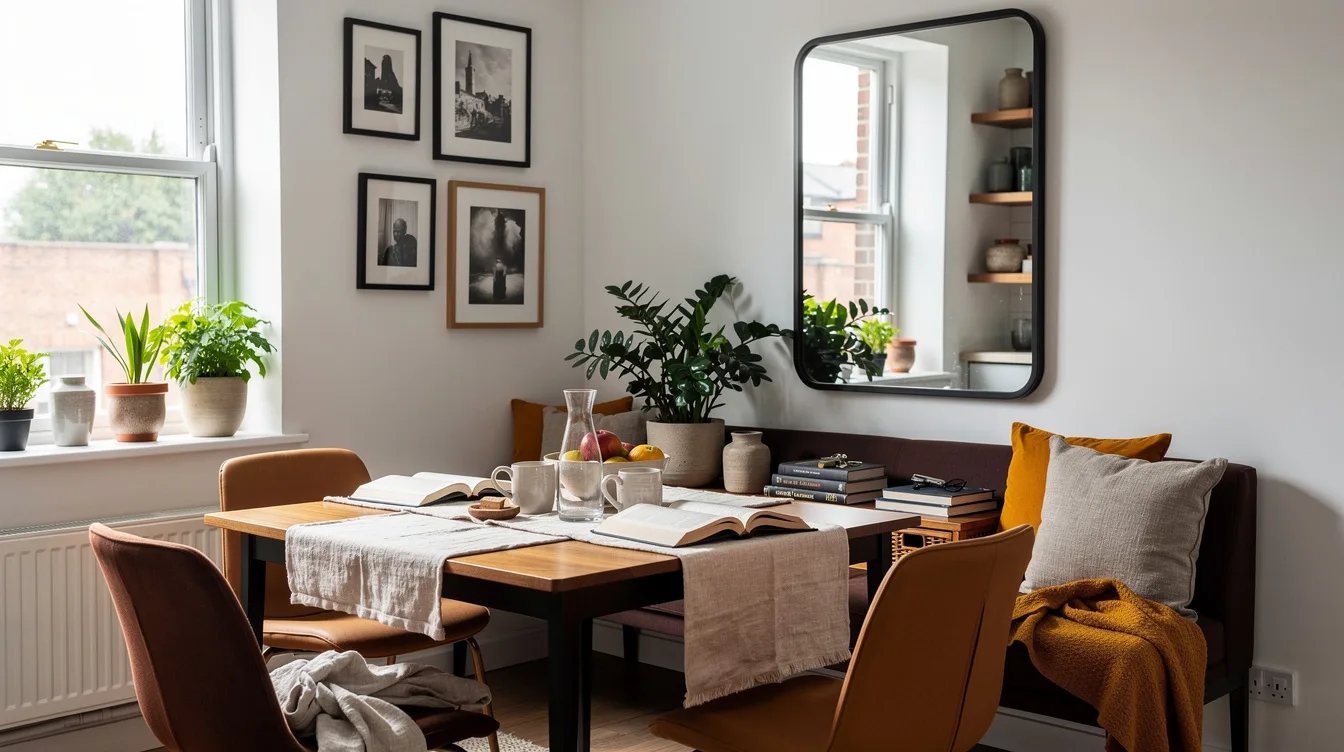
Keep reading
- Small Room Feeling Dim? These 12 Costco Mirror Tricks Bounce More Light
- Small Living Room Feeling Cramped? 12 At Home Mirrors Under $80
- Small Porch Feeling Swallowed? 12 Lowe’s Christmas Decor Finds Under $80
Start with the view you want to repeat, then mark the mirror’s edges with paper before buying the frame. That small test usually reveals the right wall, height, and scale faster than shopping by appearance alone.


