I Reworked My January Table and Here's What Actually Helped
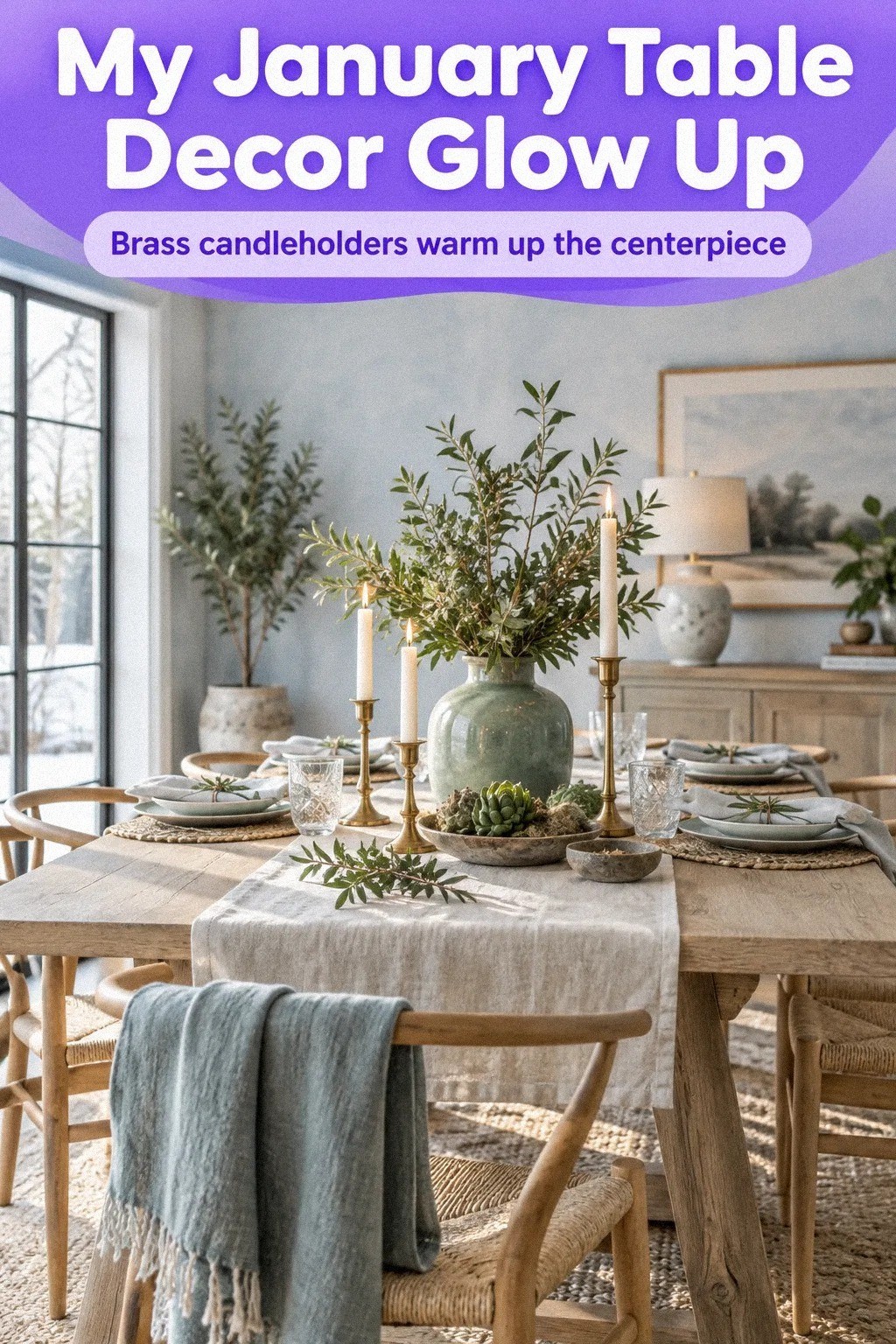
27 october 2026My January table reset cost less than a full room refresh, but it changed the way I use the room every day. After Christmas, I removed the red, glitter, and extra layers, then rebuilt the table around Farrow & Ball Pigeon No.25, soft linen, and branches from the yard. The room felt warm again.
Short version: clear the Christmas layers, choose two wood tones, lower the centerpiece, and protect one open everyday zone. The reset works because it edits the room before it decorates it.
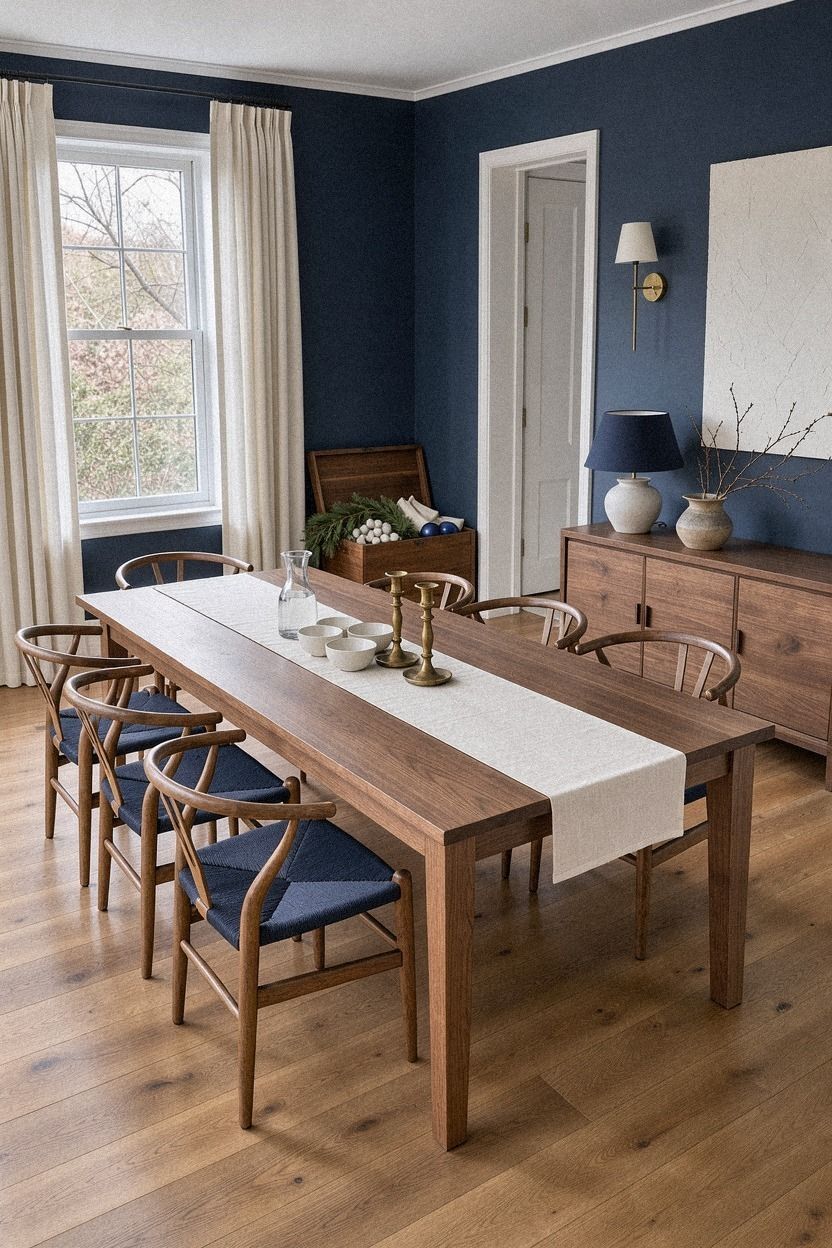
Here's what it looked like before
The table had the full holiday aftermath: red napkins, shiny ornaments, a candle collection, and a centerpiece tall enough to interrupt every conversation. I’d kept everything in place because taking it down felt like admitting winter had arrived, but you couldn’t set down a plate without moving something first. The Christmas ornaments were the first things to go.
The table itself was fine. The problem was that your eye had nowhere quiet to land.
I left the chairs, rug, and pendant exactly where they were, then cleared the surface so you could see the awkward scale and crowded arrangement without a long explanation. That made the need for a clear center obvious.
- Clear the Christmas layers before adding anything
- The Two-Wood Rule for a warmer winter table
- Can a low centerpiece still feel special?
- Farrow & Ball Pigeon made the backdrop quieter
- Linen instead of shine
- The Three-Height Light Stack
- A winter runner, but an everyday table
- Frame the wall with art instead of more objects
- Mix winter table settings with everyday dishes
- What the Three-Texture Test revealed
- A merino wool layer for the bench
- Leave one everyday zone completely open
1Clear the Christmas layers before adding anything
I started with the least exciting step, which turned out to be the most useful. Every ornament, red ribbon, metallic pick, and novelty sign left the table. I kept one white stoneware bowl because its chalky surface still worked for January, but everything else went into storage.
You’ll notice the room feels larger before you buy a single new piece.
And I didn’t replace the empty space immediately. I lived with the bare table through one breakfast and one dinner, which helped me see where your daily habits were fighting the old arrangement.
If you need a quick reset, clear the center first, then keep only the item you’d carry into February. That was the first real win!
The temptation is to add winter decoration because the table looks stark. I’d skip that impulse. A clear walnut tabletop with one low vessel feels more calming than a crowded seasonal display, and you’ll have room for homework, groceries, and an actual meal.
A small unlacquered brass detail can stay if it has begun developing a soft patina. That aged finish works beautifully beside navy and white, while shiny gold would pull the table back toward Christmas.
Once the surface was quiet, I could judge the proportions more honestly. The table didn’t need a dramatic makeover; it needed a warmer wood relationship and a lower centerpiece.
2The Two-Wood Rule for a warmer winter table
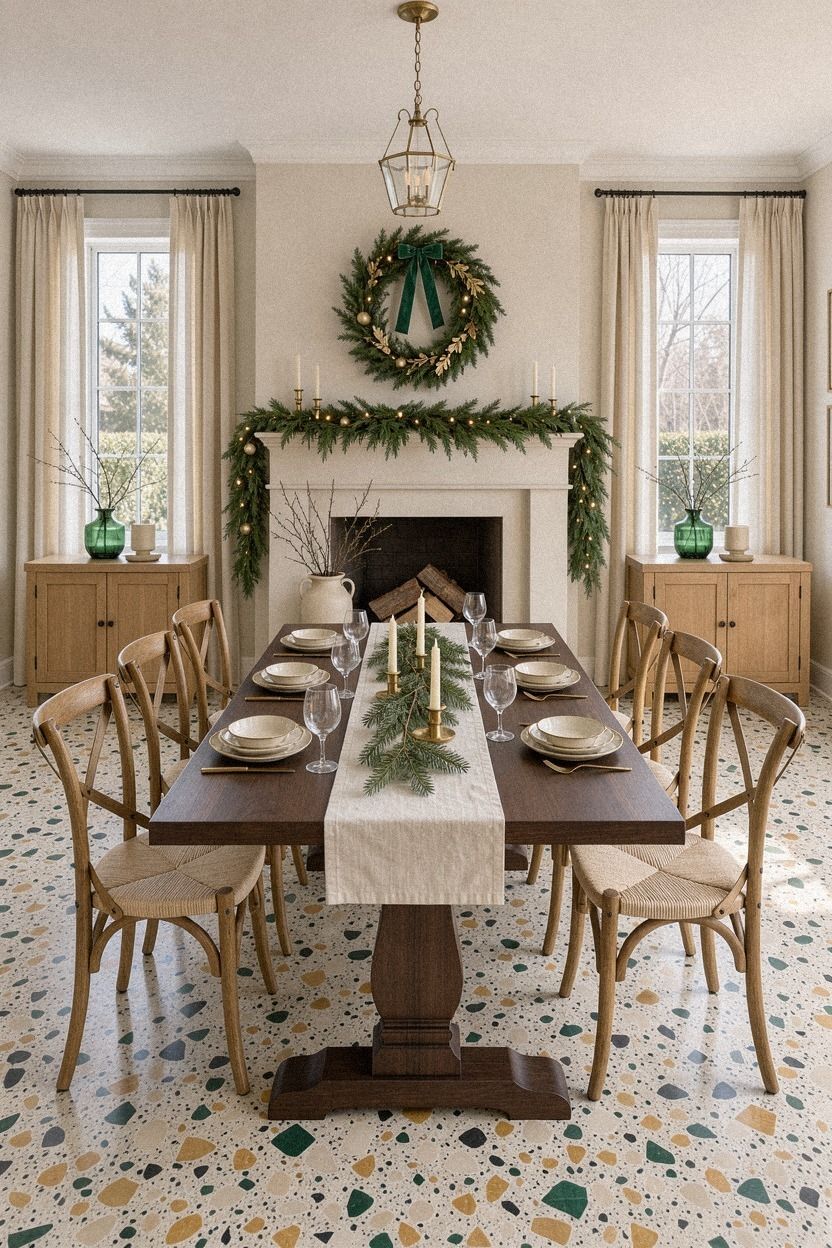
My table needed texture, but it didn’t need more color. I used the Two-Wood Rule: one wood tone for the table or main furniture, and one smaller wood accent for contrast. A light oak accent brought pale grain into the room, while a walnut bowl gave your eye a grounded point.
The rule works because January light can be flat. Wood adds variation without making the table feel themed, and the grain changes as daylight moves across it. I’d choose a tray with an oversized-chip terrazzo surface over glossy lacquer because the chips add interest without introducing another seasonal pattern.
You can use what you own here. Your cutting board might work better than a decorative tray if its edges are clean and its surface isn’t deeply scarred.
I tried a black-painted board first, but it looked heavy against the cream and emerald accents. The terrazzo tray won, and the whole arrangement felt more organic.
Keep the two tones close in warmth, not identical in color. My pale oak and brown walnut felt intentional beside the cream dining chairs, while emerald napkins and one warm gold detail supplied enough contrast.
The best version feels quietly elegant, not overly coordinated. A restrained wood pairing gives the table a calm, collected quality, especially when emerald, cream, and warm metallic accents are already carrying the room.
3Can a low centerpiece still feel special?
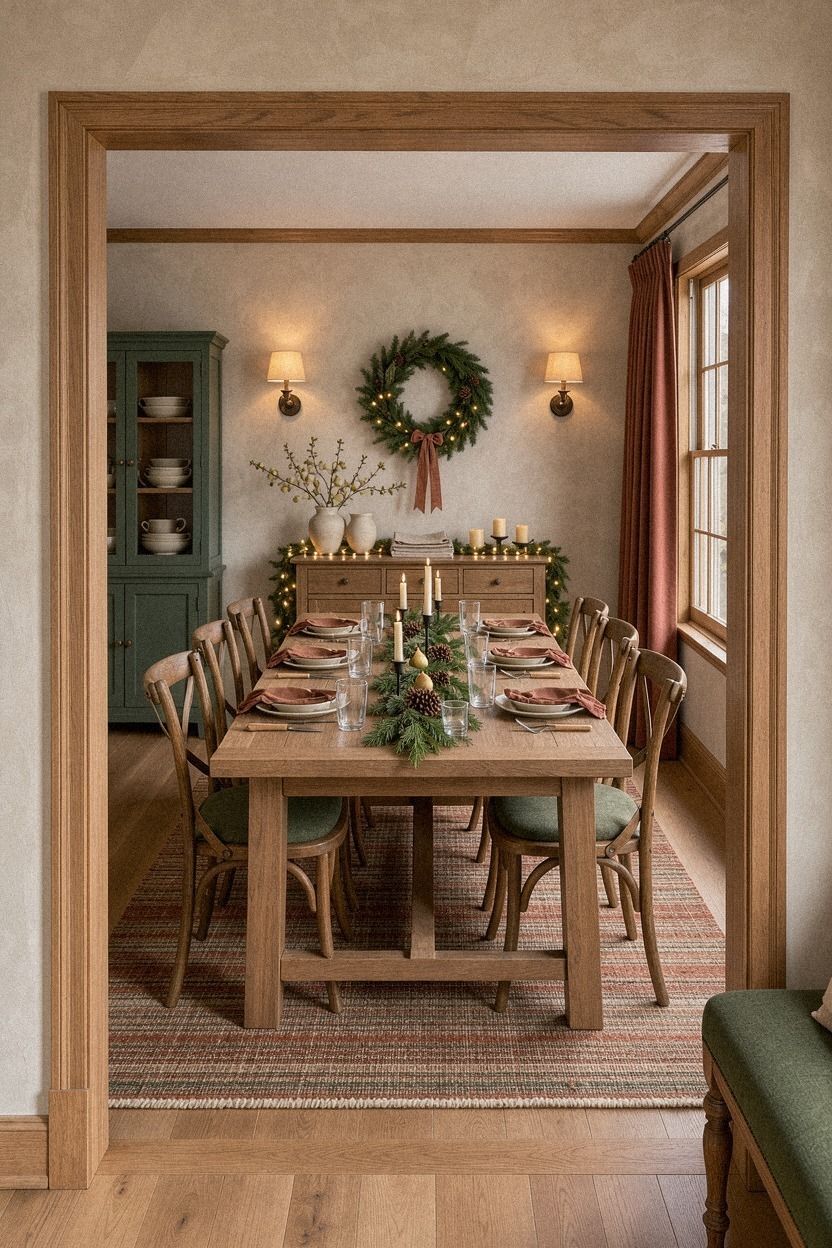
I wanted a centerpiece that looked inviting without making you lean around it. My answer was a low hand-glazed ceramic bowl filled with green pears, a folded napkin, and one rust-colored branch. The arrangement stayed below eye level, so you could see across the table while eating.
The bowl is doing more work than the contents. Its uneven glaze catches the morning light, and the forest-green and rust accents keep the table from becoming another beige winter scene. Behind it, the hand-applied Venetian plaster adds quiet variation without demanding another decoration.
But don’t fill every inch. I left the natural oak visible on both sides of the bowl, and that negative space made the whole room feel airy. A large bouquet would have been more dramatic, but it would’ve forced your conversation around the decoration instead of across the table.
I also tested the arrangement from a seated position, not only from the doorway. That matters. A centerpiece can be graceful at standing height and completely annoying once you’re looking over a dinner plate.
The low arrangement works because it feels generous rather than precious. You get the soft, special moment without sacrificing the useful table underneath it. I’d keep the bowl slightly off-center and leave one end open for everyday life.
4Farrow & Ball Pigeon made the backdrop quieter
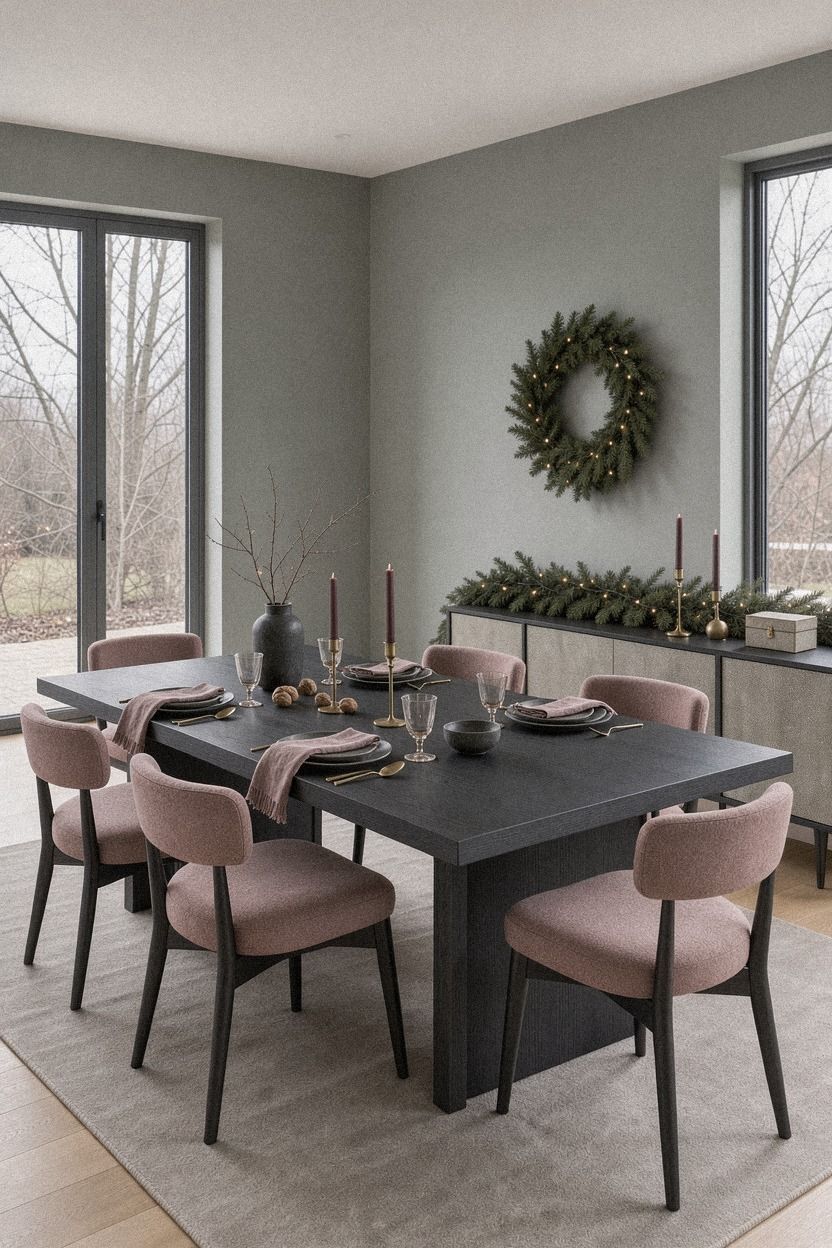
The room needed a quieter wall color, not another table accessory. I balanced the soft backdrop with dusty rose, charcoal, and a restrained brass accent so the dining area felt warm without becoming sugary.
A small shagreen detail added useful texture. It gave the room more depth than another ceramic object would have, while the charcoal notes kept the palette grounded.
5Linen instead of shine
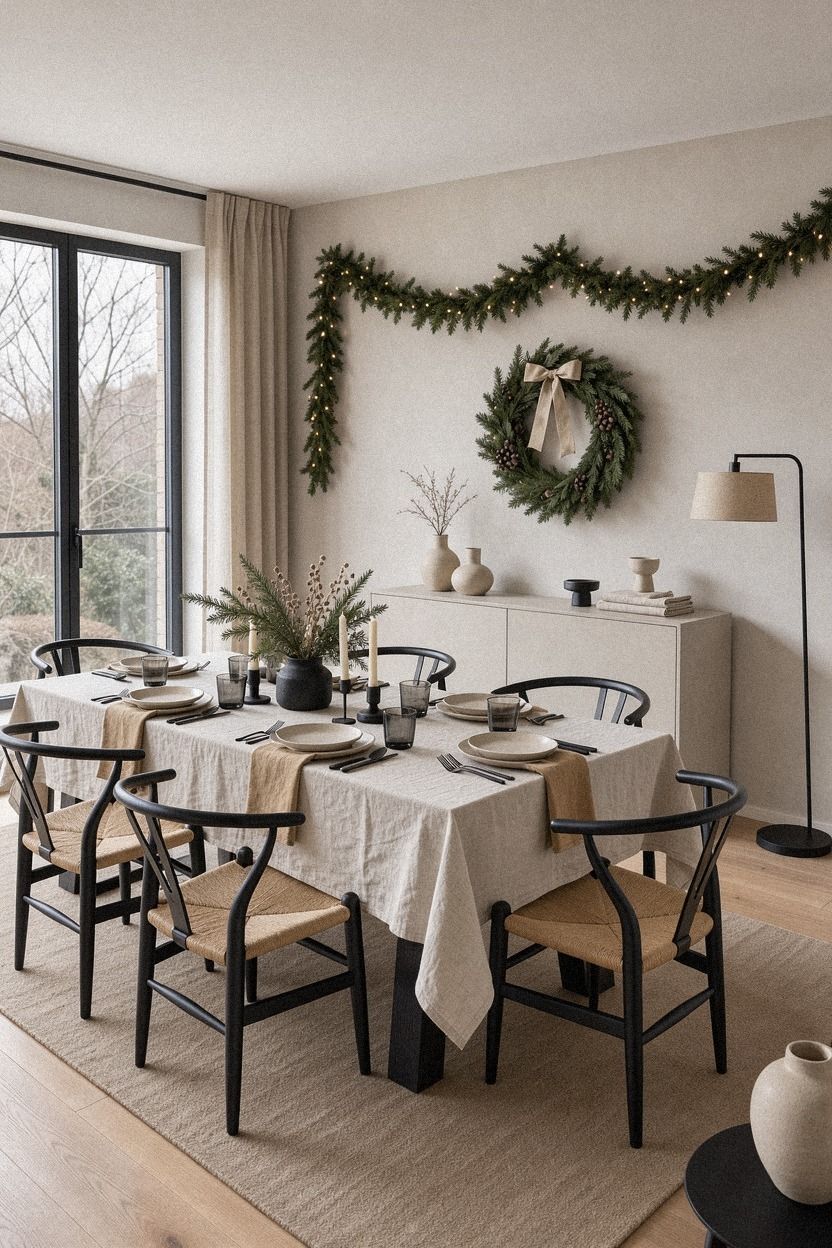
My Christmas table had too many reflective surfaces. I swapped the metallic runner for a warm-white, washed Belgian linen cloth with visible slubs, then added one charcoal stone coaster beneath the bowl. You’ll see the change most clearly at night, when the fabric absorbs glare instead of throwing it around the room.
The linen doesn’t look precious. That mattered because your January table still needs to handle soup, toast, and a damp mug. I chose a loose runner rather than a full cloth, leaving the wood exposed at each end so the table didn’t become one large pale rectangle.
A glossy polyester runner would have cost less, but I’d avoid it here. It catches the pendant light in little hard flashes and makes the room feel more formal than it is. The linen gave me that soft, comforting texture I wanted without adding another seasonal pattern.
The best part is that the washed runner can stay through February and March. Nothing about it announces a holiday, so the room keeps its relaxed character after the branches are gone.
That subtle texture also keeps the table from feeling flat. It’s an easy, beautiful layer, and it connects naturally to the everyday runner I added later.
6The Three-Height Light Stack
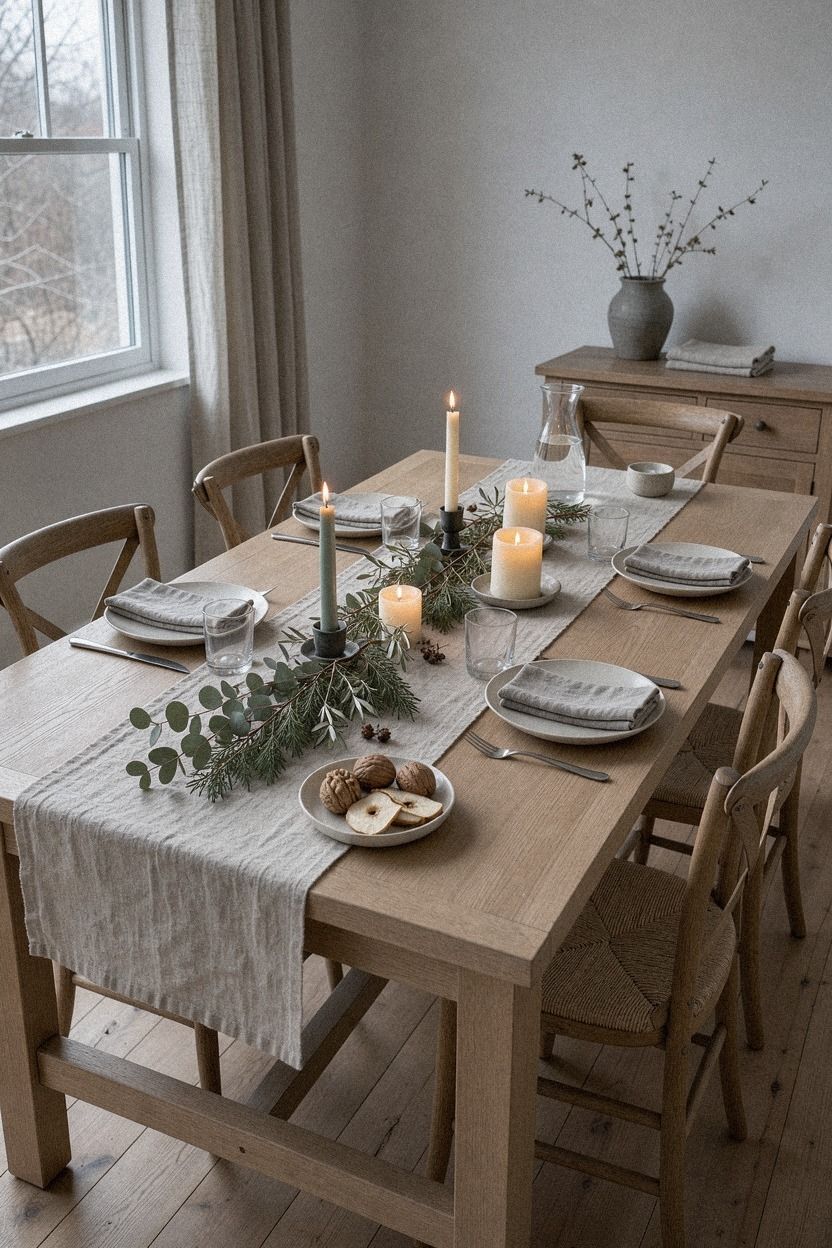
Lighting made the biggest emotional difference. I built a Three-Height Light Stack with the pendant, a small table lamp on the nearby console, and candles at the table. The three sources created the warm, intimate glow I’d been missing after the Christmas lights disappeared.
Your room doesn’t need a new fixture for this to work. The standard goal is three light sources, using general, task, and ambient light. I kept the pendant dim, turned on the lamp before dinner, and used one beeswax candle in a copper holder.
And I moved the lamp closer to the table instead of leaving it in the far corner. That small shift pulled the light into the eating area, where you spend your time. Blue-white bulbs would’ve ruined the mood, so I’d stay with a warm bulb and let the shadows remain.
What a difference! The 2700K LED bulb gave the ivory bouclé nearby a honeyed cast and made the midnight-blue accents feel deeper. It was a cheap adjustment with an unusually generous payoff.
The light is especially important after the table has been edited. With fewer objects, every glow feels more deliberate. The result is restorative rather than theatrical, and you can still see the dishes in front of you.
7A winter runner, but an everyday table
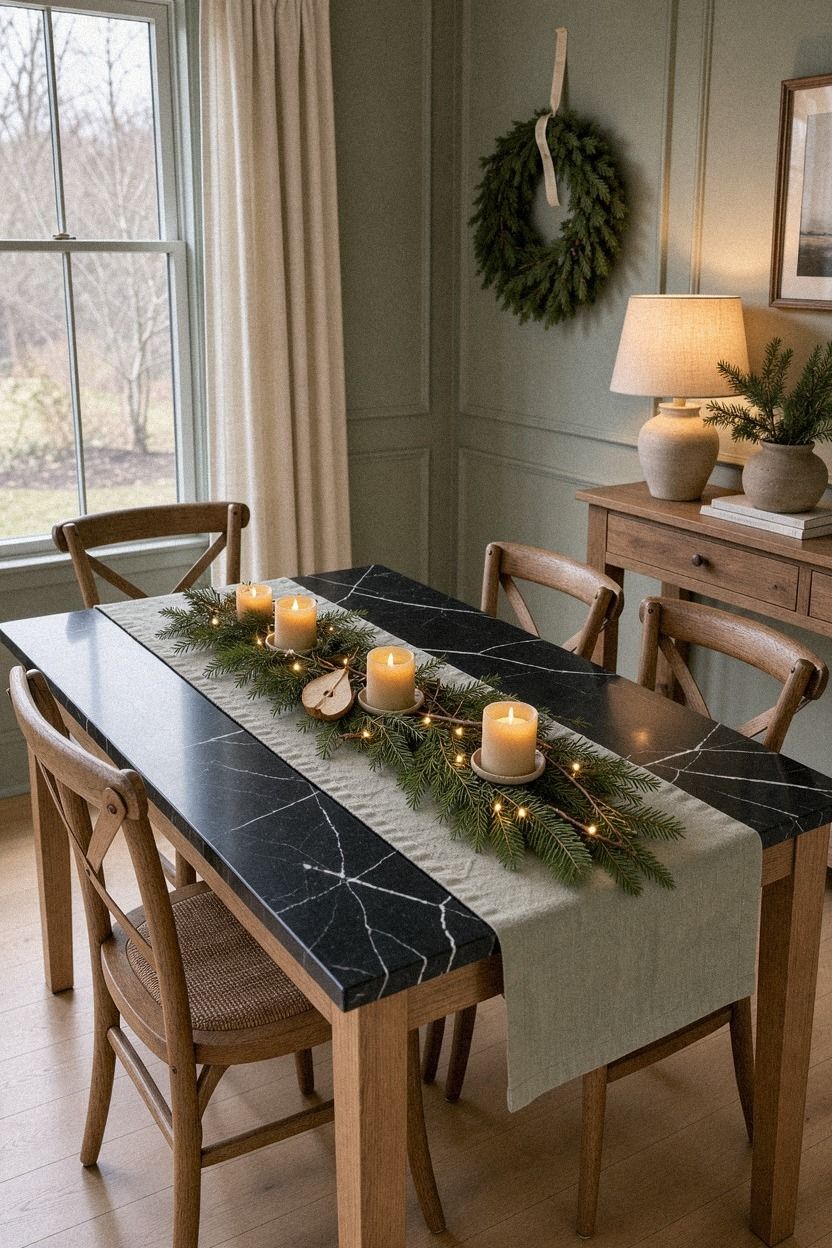
The table looked unfinished after I removed the holiday cloth, so I added a narrow runner in sage green. Its warm-cream edge connected the natural wood, the wall, and the seating without announcing a theme. You can still place everyday dishes directly on the surface.
I chose a runner with enough length to fall naturally at each end, but I didn’t want a formal drop. A shorter linen piece feels more relaxed and won’t catch on your sleeves.
My first choice was too narrow, and the bowl looked stranded in the middle. Wider fabric fixed the proportion.
For your version, texture matters more than pattern. A checked winter runner can be charming, but it may keep your table locked in January. I’d choose a subtle weave instead, especially if you’re also using a Nero Marquina marble serving board nearby.
If the table is small, skip the runner entirely and use a single woven placemat under the bowl. The principle is the same: add a tactile layer without covering the surface you actually use.
That balance is the point. The table should feel fresh and welcoming, but it shouldn’t become too precious for an ordinary Tuesday.
8Frame the wall with art instead of more objects
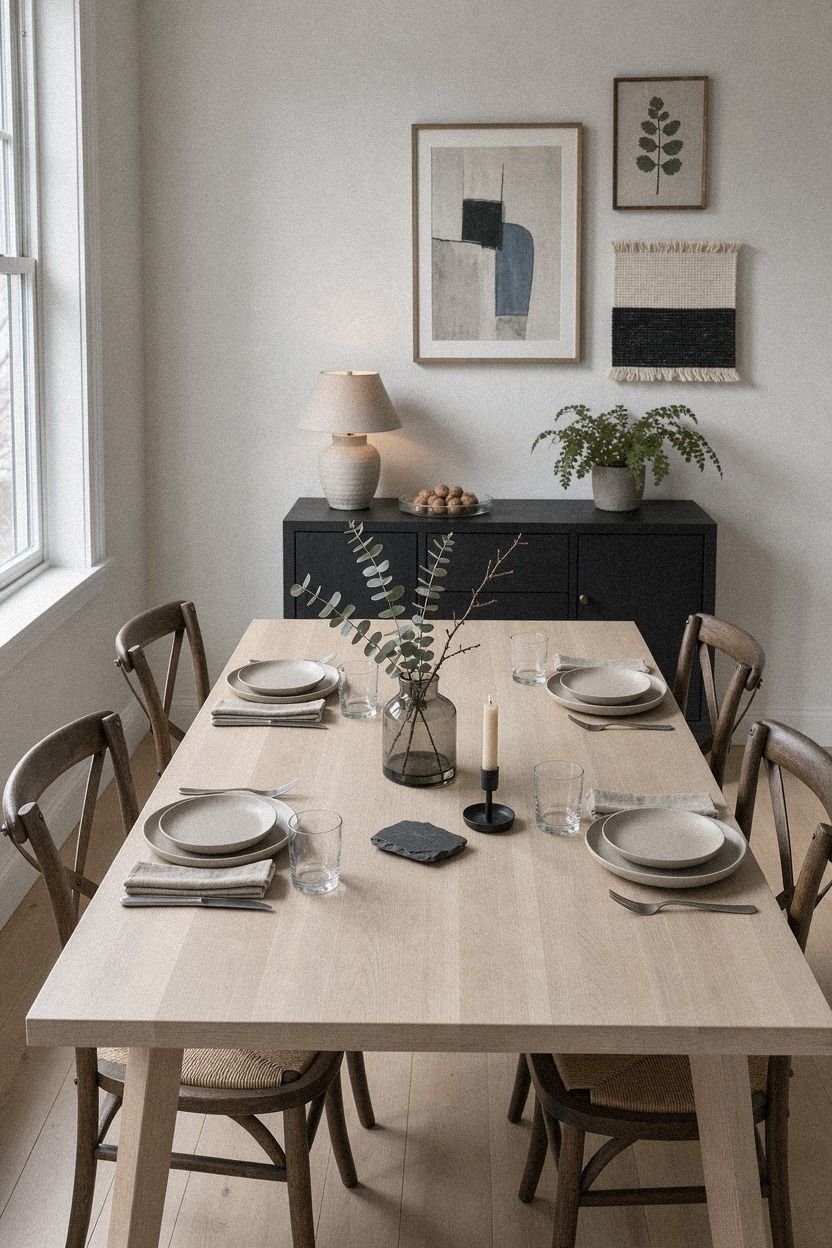
The wall behind the table still felt bare, but I didn’t want to fill it with another collection. I hung one landscape artwork in terracotta, stone, and olive, keeping its center about 57 to 60 inches from the floor. That height gave your eye a destination without making the art compete with the pendant.
The artwork is quiet: muted earth tones, a little olive, and enough stone color to settle the room. You can use a print you already own, a thrifted piece, or a child’s drawing if the colors support your room. I’d rather see one personal piece than three generic winter signs.
But measure before you make holes. I held the artwork in place with paper first, then stepped back from the doorway. It looked balanced beside the table, and it made the setting feel lived-in rather than staged for one photograph.
The deep-pile mohair velvet on the nearby bench also created a useful pause between the table and the adjacent doorway. That was enough. I didn’t need a gallery wall or a second shelf.
One thoughtful piece can feel more luxurious than a crowded arrangement. It gives the room personality without adding another distracting object to the table.
9Mix winter table settings with everyday dishes
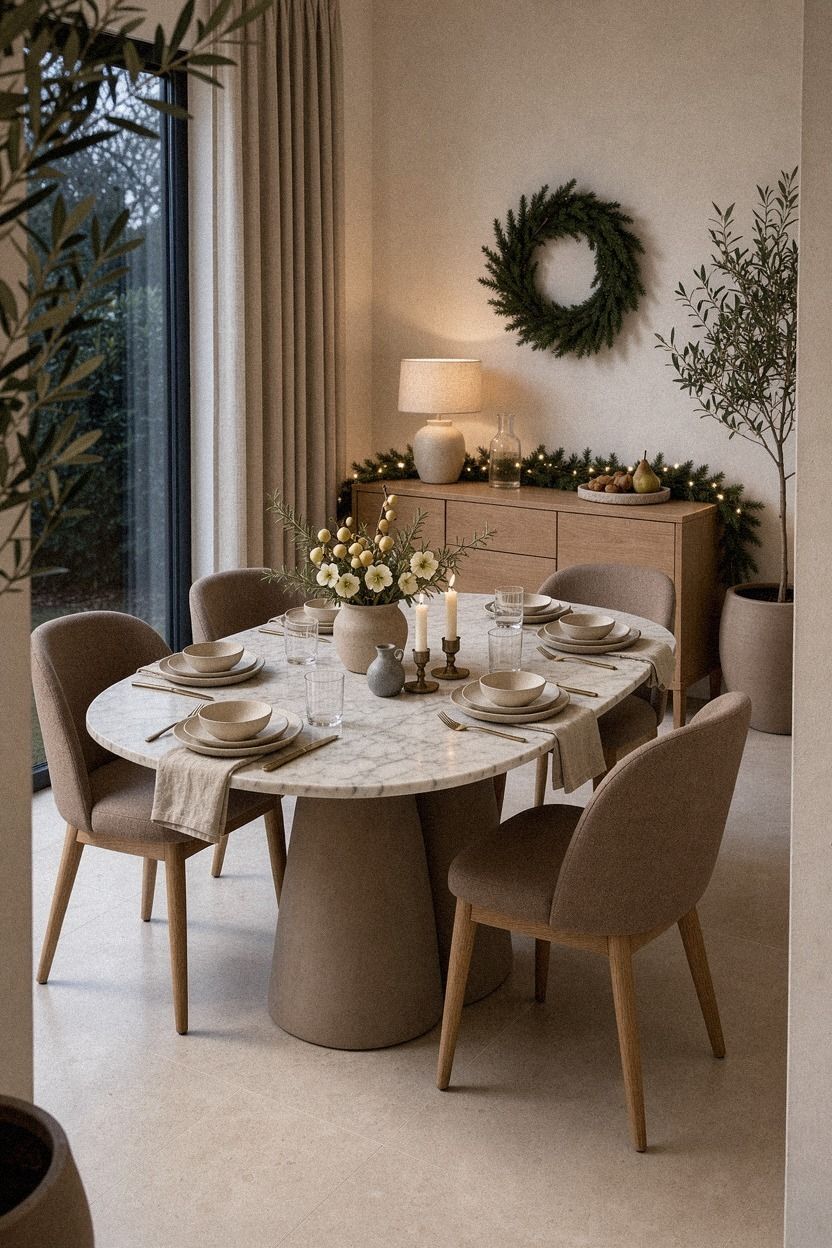
I wanted the table to feel special at dinner without requiring special dishes. I mixed clay-toned stoneware with linen napkins, aged-brass napkin rings, and one Carrara marble charger with subtle gray veining. Your everyday plates can look intentional when the textures vary.
The marble charger is the only strong contrast, and that restraint keeps the setting from becoming busy. I placed it beneath a bowl rather than using it at every seat, so the color reads as an accent. You’ll get the same effect from a small wood charger or a folded napkin.
I’d skip matching winter dishes. They’re cheerful for a few weeks, but they can make your table look like a display window. A mixed setting feels more personal, and you won’t have to pack it away when February arrives.
The linen napkins were especially useful because they kept the table visually soft. Bright glass would’ve been beautiful, but it would have added another hue to an arrangement that already had enough going on.
That restraint felt wonderfully liberating! I could set the table for guests without creating a second seasonal storage problem.
10What the Three-Texture Test revealed
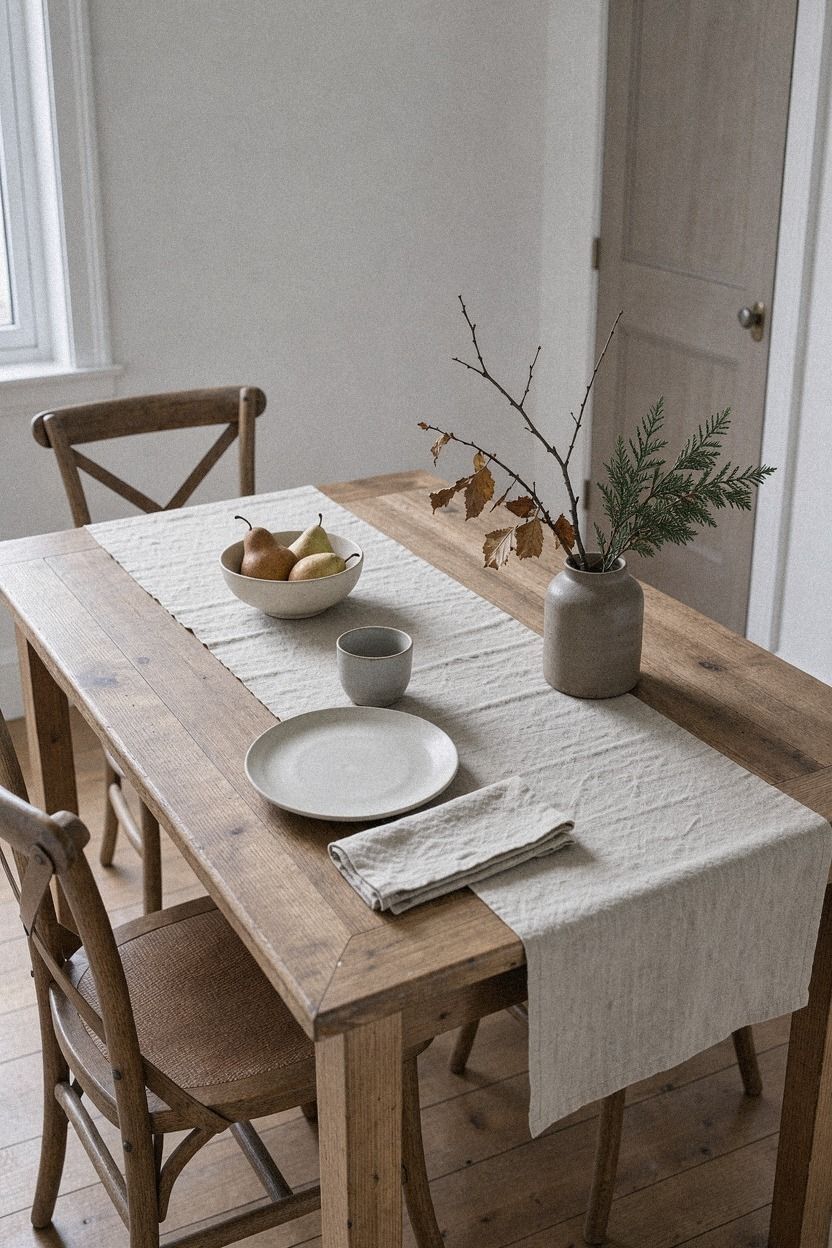
I placed a low arrangement in a plum ceramic vessel, then checked it using the Three-Texture Test: something matte, something rough, and something reflective. The vessel was matte, the reclaimed weathered teak supplied the rough layer, and a small rose-gold accent caught the light.
You don’t need a florist or a large bouquet. Your yard, a grocery bundle, or one fallen branch can work if the shape is clean and the container is weighted. I trimmed mine low enough that you could still see across the table, then removed two branches that made the arrangement look fussy.
And I left the branches natural. Painted branches and glitter would’ve pulled the room back toward Christmas, while the plum, gray, and rose-gold palette felt gentler. If you’re styling a small table, one branch in a narrow vessel may be enough.
The reclaimed weathered teak added warmth without creating another polished surface. Its worn grain made the rose-gold detail feel less formal and kept the arrangement connected to everyday life.
The result is quietly beautiful! The arrangement feels alive, but it doesn’t compete with the bowl, dishes, or open tabletop.
11A merino wool layer for the bench
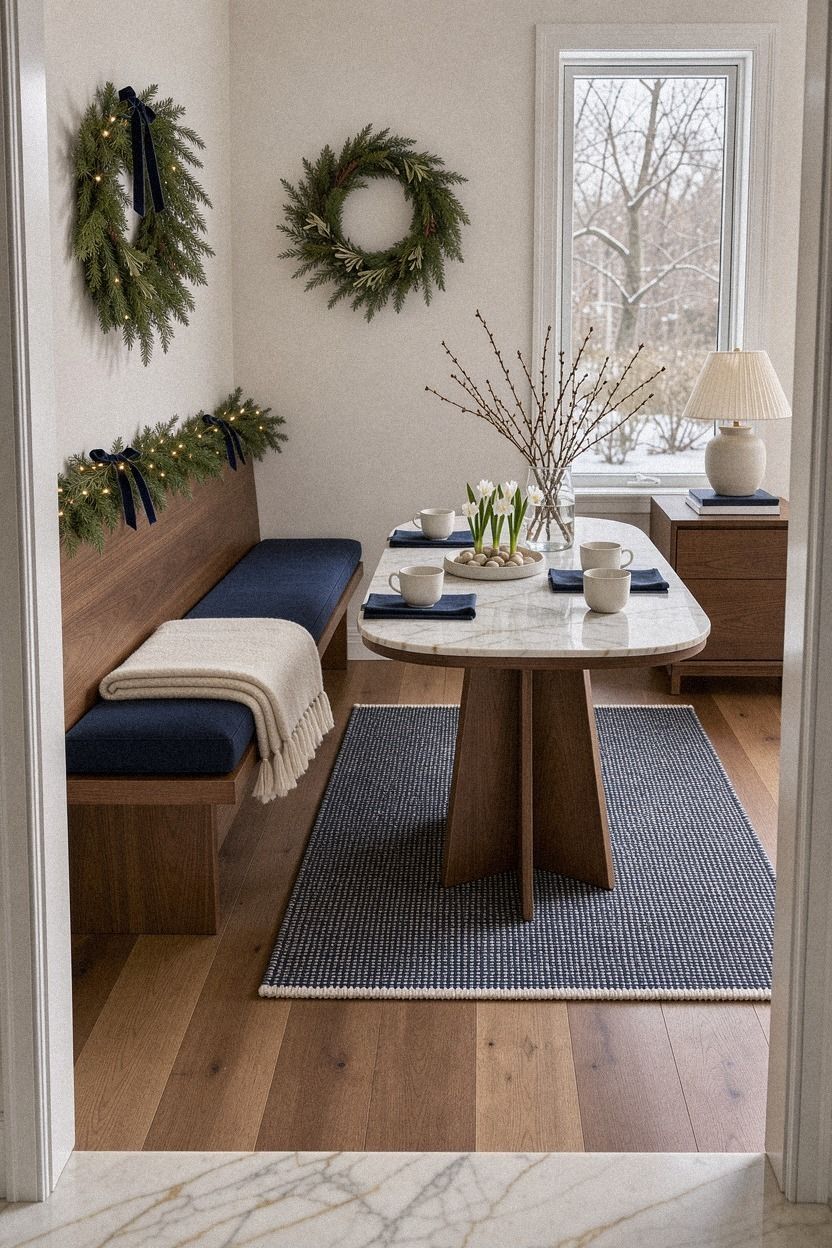
The table looked better, but the seating still felt cold. I added a folded navy merino wool throw to the walnut bench, keeping it loose instead of draping it like a showroom prop. You’ll notice the texture from across the room, and you can pull it over your lap after dinner.
The throw is practical, which is why it stayed. I chose a soft white cushion and kept a small Calacatta marble side table nearby, its gold veining echoing the warmer details in the room. If your chairs are upholstered, one cushion in 18 oz cotton velvet can add softness without crowding the tabletop.
I’d avoid covering every chair. Too much fabric makes the room feel cramped and gives your eye another pattern to process. One tactile layer is enough to make the dining area feel comforting, especially when the floor and walls are already quiet.
The walnut bench became the bridge between the table and the rest of the room. It softened the hard lines without making the dining area look overly decorated.
This is one of those satisfying changes that feels small but improves the entire room. The seating looks more welcoming, and the materials feel connected instead of carefully matched.
12Leave one everyday zone completely open
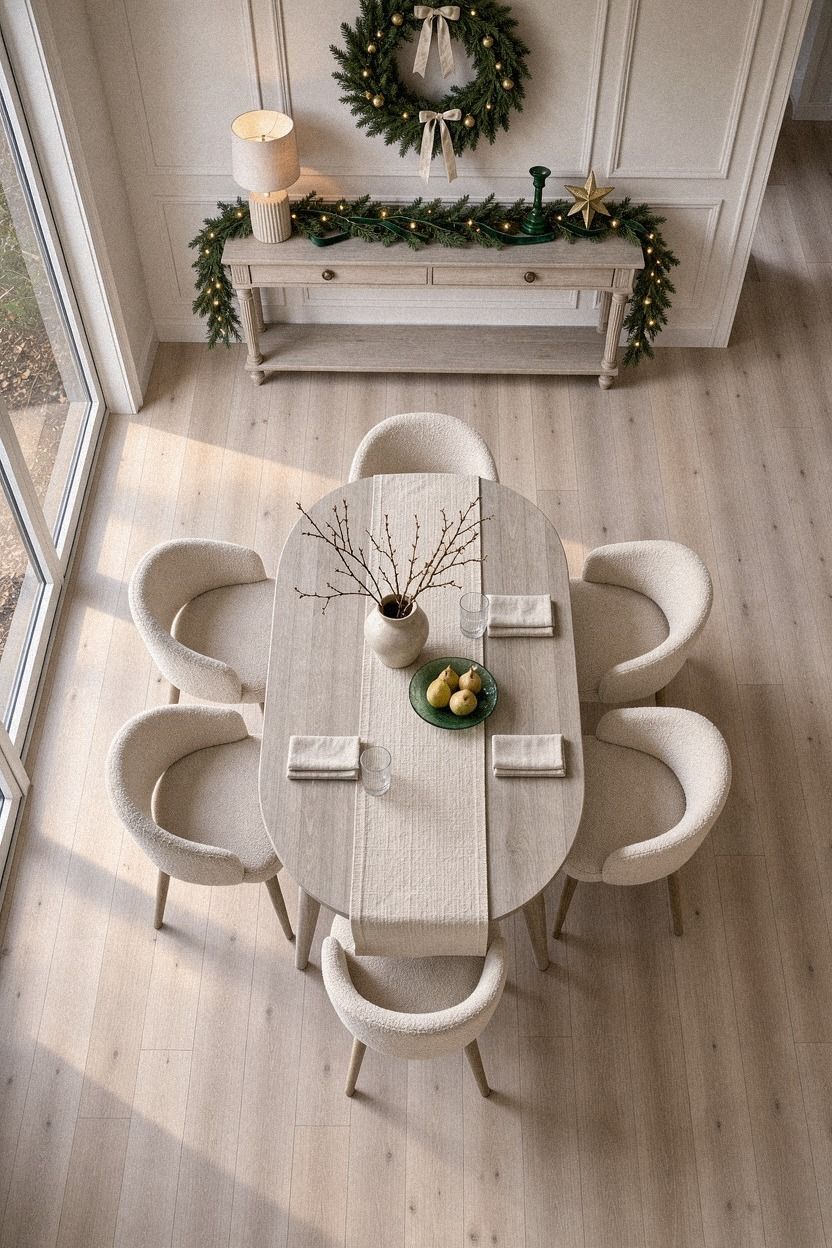
The last change was the one I almost skipped: I left one end of the table empty. That open zone holds mail, a laptop, or a bowl of fruit, and it keeps your January table connected to real life. The arrangement looks polished, but you can still use it.
I placed the centerpiece slightly off-center so your serving dishes have a landing spot. You’ll want at least one clear area if the table doubles as a work surface. A decorative setup that can’t survive breakfast isn’t helping your home, no matter how refined it looks.
My final opinion is firm. I’d rather have one beautiful cerused white oak serving tray and useful empty space than six small objects arranged with perfect symmetry. The room feels more peaceful because you’re allowed to interrupt it.
That open area is also where I put the mail tray each morning. It isn’t glamorous, but it keeps daily clutter contained and lets the rest of the table stay calm.
I also kept the winter runner short enough that the open zone still felt generous. The bare branches added height without taking away that useful breathing room.
How much it cost: the honest January table budget
My reset stayed focused on paint, textiles, art, and organization rather than new furniture. That’s why the same approach can work at several spending levels.
If you already own a bowl, tray, and vase, your cost may sit near the low end. If you need a rug or statement light, your budget moves quickly.
For individual pieces, a wool rug typically runs $400-$1,500, linen drapes cost $120-$400 per pair, a statement light fixture ranges from $150-$800, and paint for a room-sized DIY project is commonly $200-$600. You don’t need every category for this table reset.
I’d put your first dollars into paint and lighting. A new accent chair won’t fix a room that still has harsh glare, and expensive furniture can’t make a crowded table easier to use. Start with the surface you touch and the light you live with.
The most generous version of this project is the one that uses what you already have. Borrow a lamp, thrift a piece of art, cut branches from the yard, and test the three-height lighting idea before buying a fixture. A single artwork may do more for the room than a cart full of accessories.
Why this January reset is worth doing
January has a particular design problem: your home still needs warmth, but it no longer needs celebration. I’ve learned that the answer isn’t stripping every room bare. It’s choosing fewer materials and allowing each one to carry more weight.
Farrow & Ball Pigeon No.25 gave the wall a winter mood, while oak and linen kept it from feeling chilly.
I also stopped chasing a finished arrangement. A table should hold a bowl, a stack of mail, and the occasional half-finished craft project.
If your arrangement can’t survive those things, it’s decoration for the camera, not a useful part of your home. That distinction changed how I edited the table.
The most surprising improvement came from the empty space. I expected the branches or the new wall color to create the result, but the room felt better once I removed the pieces that demanded attention.
Your eye needs a quiet patch between the textures. Without it, even warm materials start to feel noisy.
I’d choose this restrained approach over a new seasonal collection every year. It costs less, creates less storage, and gives you a table that can shift with the room.
By February, I won’t need to redo everything. I can replace the pears, fold the throw, and keep the structure.
The edit feels restorative because it gives the room permission to be useful again. Start by clearing the holiday layers, then protect one open everyday zone. Those two changes will tell you what the table actually needs.
The Questions I Get Asked Most
What is the best centerpiece for a small January table?
The best choice is a low bowl with a matte ceramic finish and one short branch. It keeps your sightline open and works with existing storage or an everyday dining set. A narrow linen runner, one candle, and an empty end give you warmth without taking over the table.
Where can I find January table pieces on a budget?
Look for simple trays, linen-look textiles, and small lamps at general home retailers, then check Facebook Marketplace or a local thrift store for wooden bowls and artwork. Your best savings usually come from buying one useful piece, not a matching collection.
How much does a January table makeover cost?
A typical budget refresh falls within the $200 to $800 range when it includes paint, textiles, art, and organization. You can spend less if you already own a vase, bowl, and runner. A new rug, accent furniture, or lighting can move the project into the mid-range budget.
Can I create this look without buying anything?
Yes, and you can begin with three low-cost changes: clear the Christmas pieces, rearrange what you own, and cut branches for a vase. Add washed linen, thrifted art, or a small lamp only when your room shows you what’s missing. A garden branch may be all the decoration you need.
Is this January reset worth doing in a small space?
Yes, because a small table benefits from editing more than adding. Keep your centerpiece low, leave one work zone clear, and choose one warm material for texture.
Your room will feel calmer when every object has enough breathing room around it. Start with the open tabletop.
Is this a good idea for a rental?
Yes. Use removable picture strips for artwork, a freestanding lamp instead of hardwired lighting, and a tension rod for linen panels.
Peel-and-stick color samples can help you test a wall mood without committing to paint, and you can return the table to its original state later. A removable wall hook is enough for the artwork.
Where I’d Start First
If I had to pick one, I’d start with the low centerpiece. It gives you the biggest visual change without paint, wiring, or new furniture, and it leaves your table usable. Pin this January table reset for later, then clear one surface tonight and see what the room asks for.


