11 Master Dressing Room Layouts That Feel Like Your Own Private Boutique
21 october 2026The best master dressing room layouts give every garment a place, keep the walkway clear, and make getting dressed feel warm instead of rushed. I learned that after cramming too much furniture into one narrow closet. A boutique feeling doesn’t require a huge room. It requires better zones, better light, and fewer things fighting for attention.
- Layer the Three-Height Light Stack
- Float an Island for the Centerline
- Build the Double-Hang Dressing Wall
- Choose Drawers Over Open Shelves
- Frame a Soft Seating Moment
- Paint the Walls Before Buying Baskets
- Hang Mirrors Across From the Light
- Swap a Cold Cabinet for the Two-Wood Rule
- Could a Corner Cabinet Work Harder?
- Use Closed Storage Over Pretty Piles
- Style the Open Master Closet by Color
1Layer the Three-Height Light Stack
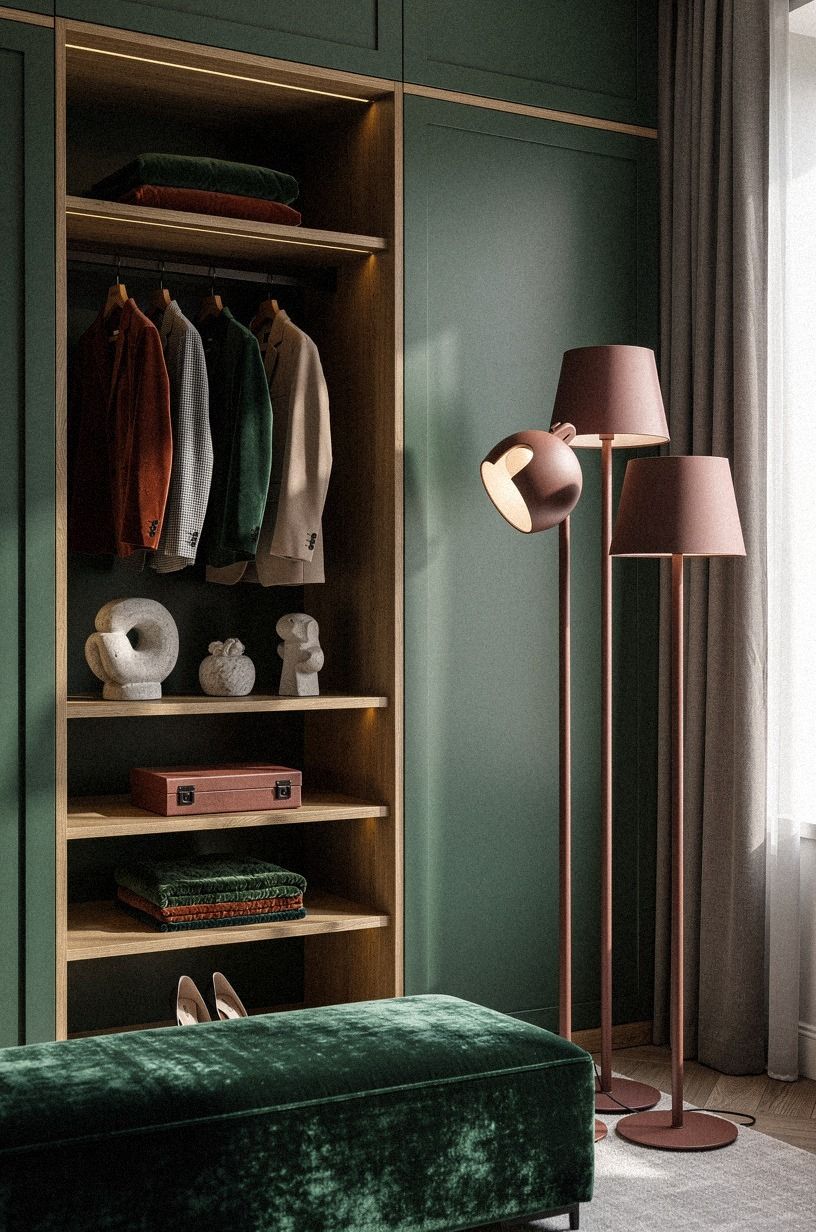
Start with lighting at three levels: ceiling, eye height, and low cabinet height. A flush mount handles general light, a pair of rust-toned sconces lets you see your face without harsh shadows, and a slim LED strip under each shelf keeps dark corners from swallowing black clothing.
You’ll notice the difference before you notice the fixtures. Your closet should feel calm at 7 a.m., not like a warehouse.
I’d skip a single bright ceiling fixture. It flattens every color and throws shadows across your clothes, while layered lighting gives your eye somewhere to rest. Choose warm bulbs, then add LED rod lighting where your hands reach most often.
If you’re changing the whole bedroom too, these bedroom lighting ideas can help you keep the glow consistent.
Aim for bulbs around 2700K to create a soft, inviting atmosphere. A dimmer makes the room more flexible, especially when you’re getting dressed before sunrise or checking an outfit at night. Good light is a quiet luxury!
2Float an Island for the Centerline
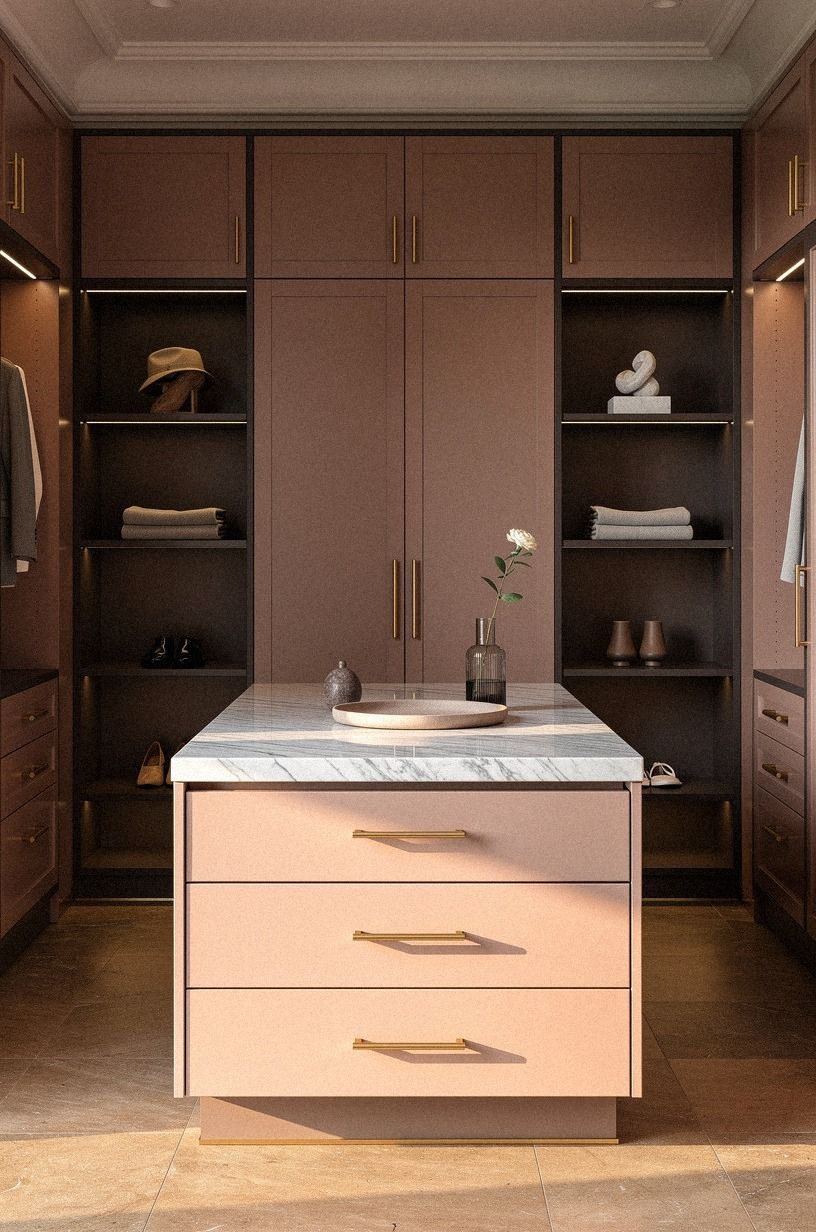
A dressing room island works best when it gives you storage without blocking your route. Keep the center piece between 24 and 36 inches wide, leaving enough room for doors, drawers, and your own elbows. A Carrara marble island with subtle grey veining feels more like furniture than closet equipment, especially when the surface catches the morning light.
Measure before you buy. You don’t want to discover that your favorite drawer opens directly into the wardrobe door.
Yes, I’ve made that mistake. A compact charcoal island with a Carrara marble top can create the same central anchor for less, but I’d add a fitted top so it doesn’t look temporary.
Your jewelry tray, folded denim, and daily bag should land there naturally.
Keep the walking lanes at least 30 inches wide wherever possible. If the room is tight, use a narrow console instead of a full island. A small closet organization guide can help you decide whether the center deserves furniture or open floor space.
3Build the Double-Hang Dressing Wall
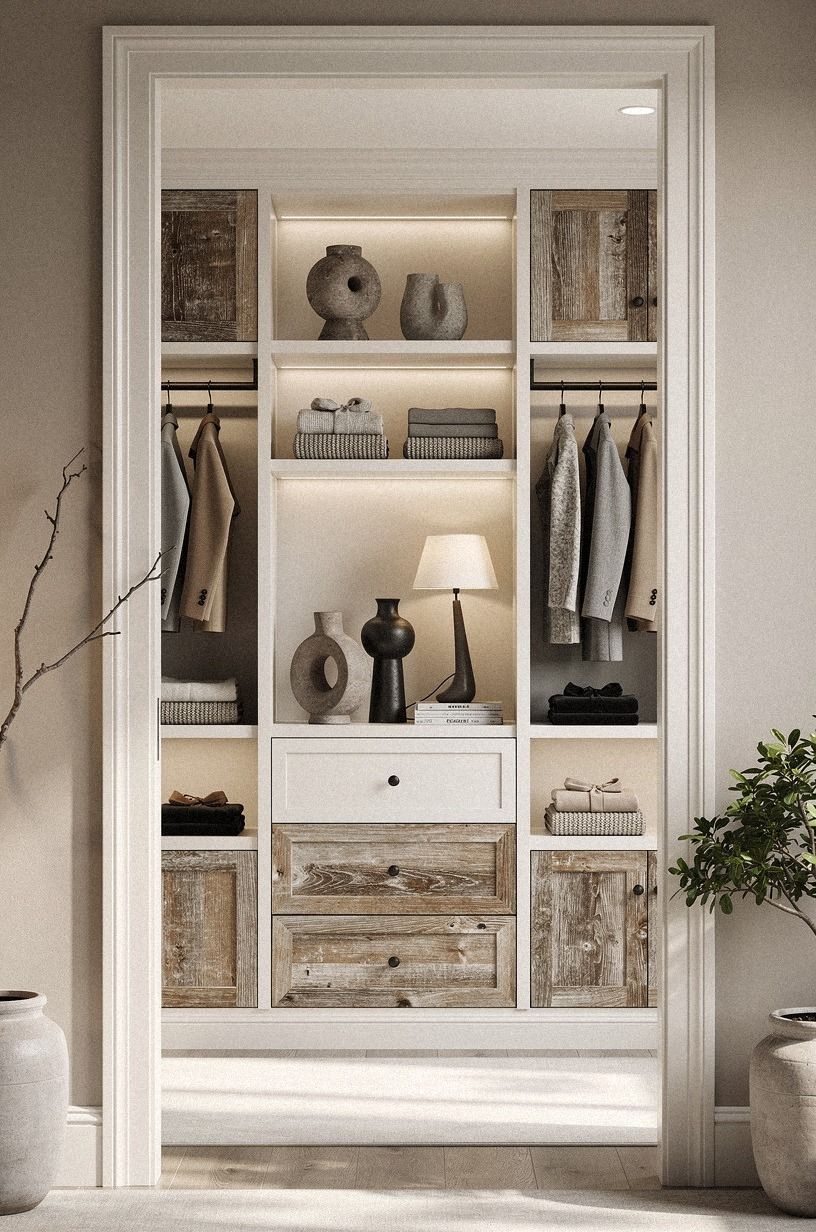
The double-hang wall is the workhorse of a boutique-style closet. Use one rod around 42 inches high for shirts and another around 84 inches for longer garments, then reserve one small bay for dresses and coats. Your clothes will stay visible, and you won’t waste valuable height above a single crowded bar.
I prefer black rods against warm white walls, with reclaimed weathered teak shelving to soften the arrangement. Farrow & Ball All White No. 2005 keeps the room bright without making it feel icy.
But don’t pack every inch with clothing. Leave a little breathing space between hangers, or your eye will read the wall as clutter no matter how expensive the pieces are.
A narrow room benefits from consistent rod spacing and simple hardware. If you’re organizing a difficult layout, these walk-in closet ideas can help you choose which wall deserves the rods. Your clothes should feel easy to scan, with enough room to pull one hanger forward without disturbing six others.
4Choose Drawers Over Open Shelves
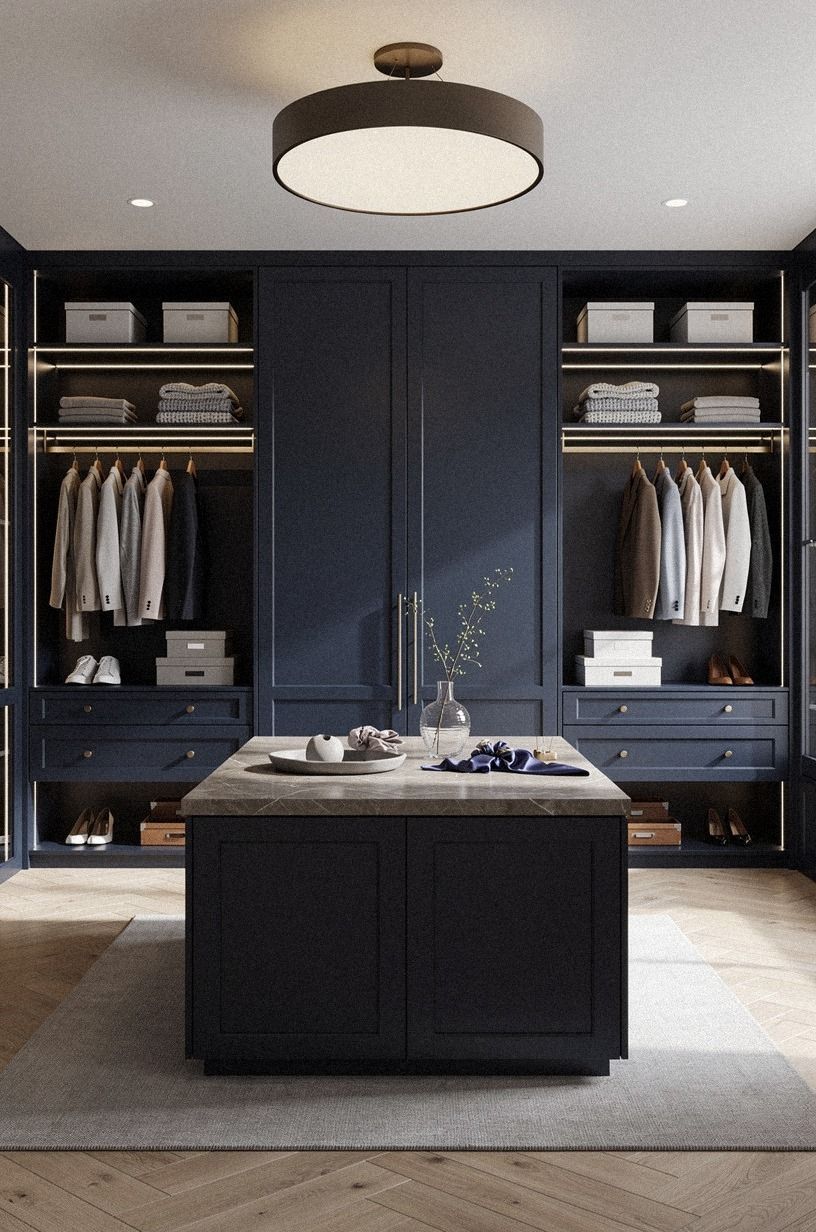
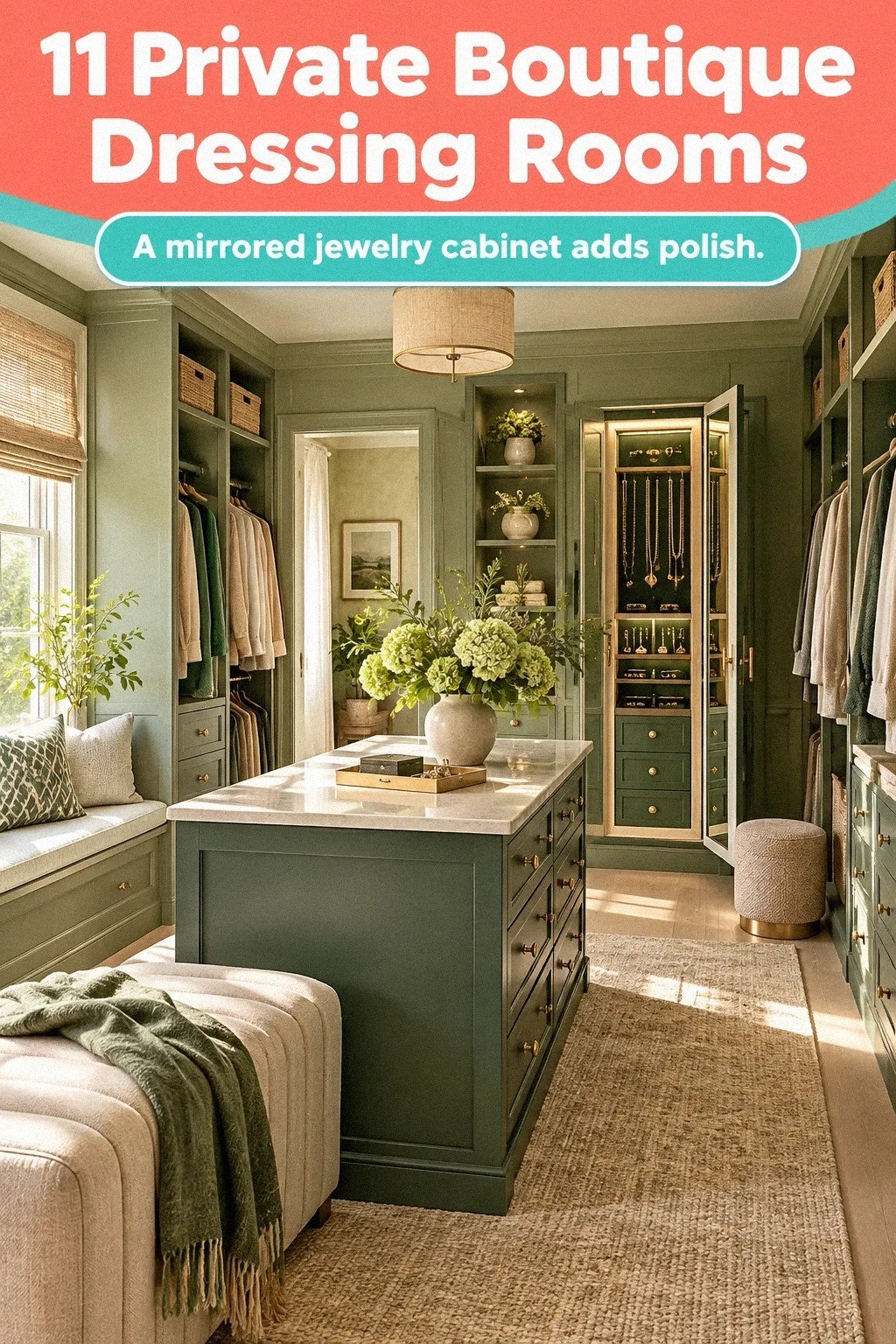
Open shelving looks airy at first, but drawers protect the things you actually reach for every day. Use them for knitwear, undergarments, scarves, and anything that becomes a messy pile after two mornings. A midnight-blue drawer bank with a Calacatta marble top and gold veining keeps sunglasses and small jewelry from sliding into a dark back corner.
I learned this after giving an entire shelf to folded sweaters. The stack looked tidy for about four days, then the sweater I wanted sat at the bottom. Your best arrangement puts daily items between waist and shoulder height, while seasonal pieces can move higher.
A copper-toned six-drawer chest adds warmth if you have room for freestanding furniture, but a modular drawer bank will give you more usable storage for less money. If you need additional planning help, these bedroom storage ideas cover freestanding and built-in options.
5Frame a Soft Seating Moment
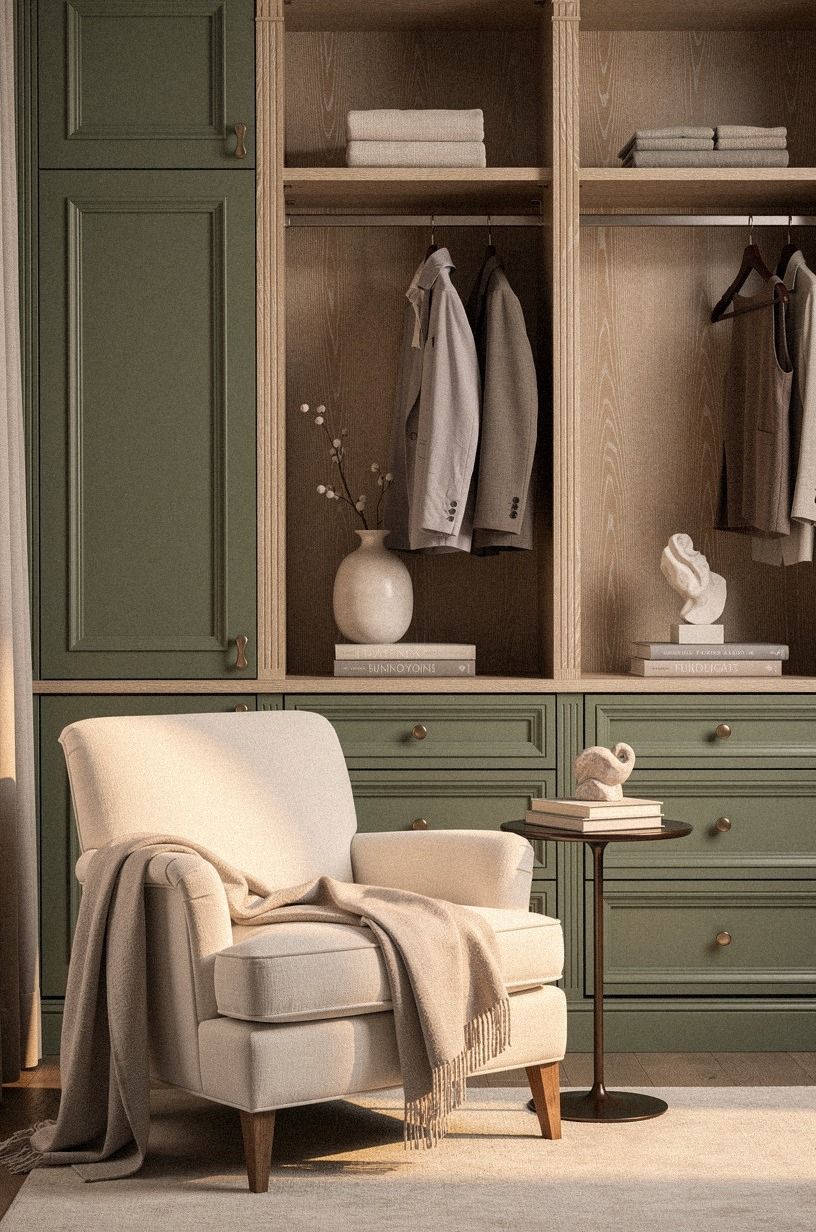
A small seat changes how your dressing room functions. You can sit to put on shoes, sort laundry, or pause before deciding that yes, those two pieces work together. Choose a narrow bench in cerused white oak, or use a simple wood stool if your room already has plenty of texture.
The seat doesn’t need to be expensive. A Target Threshold upholstered bench can look polished when you place it beneath a window or at the end of a cabinet run. I’d avoid a deep armchair unless your room is unusually generous, because it steals turning space and gathers clothes.
You’ll want at least one surface that isn’t storage. Otherwise your private boutique starts feeling like a supply closet. A slim woven wool runner can make the seating area feel warmer underfoot, especially in a room with hard flooring.
6Paint the Walls Before Buying Baskets
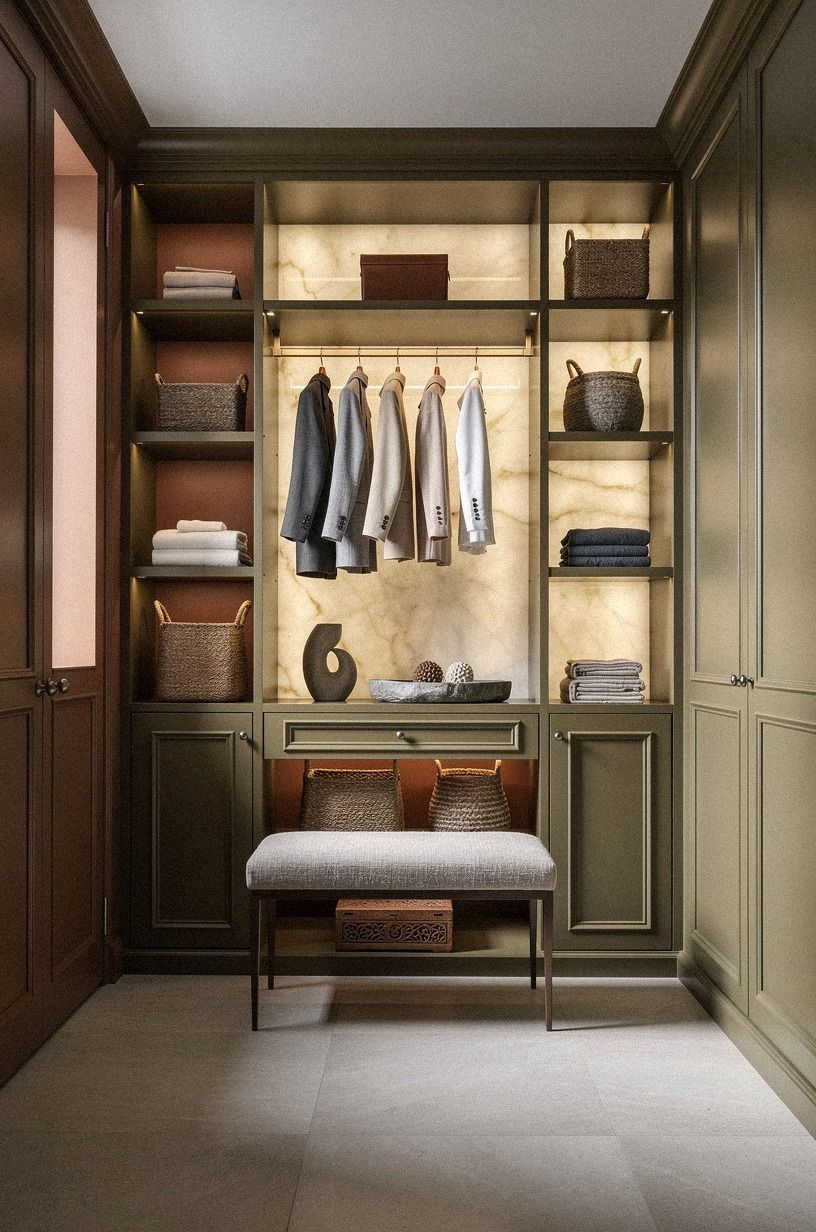
Paint sets the temperature of the room, so choose it before you fill the space with containers.
7Hang Mirrors Across From the Light
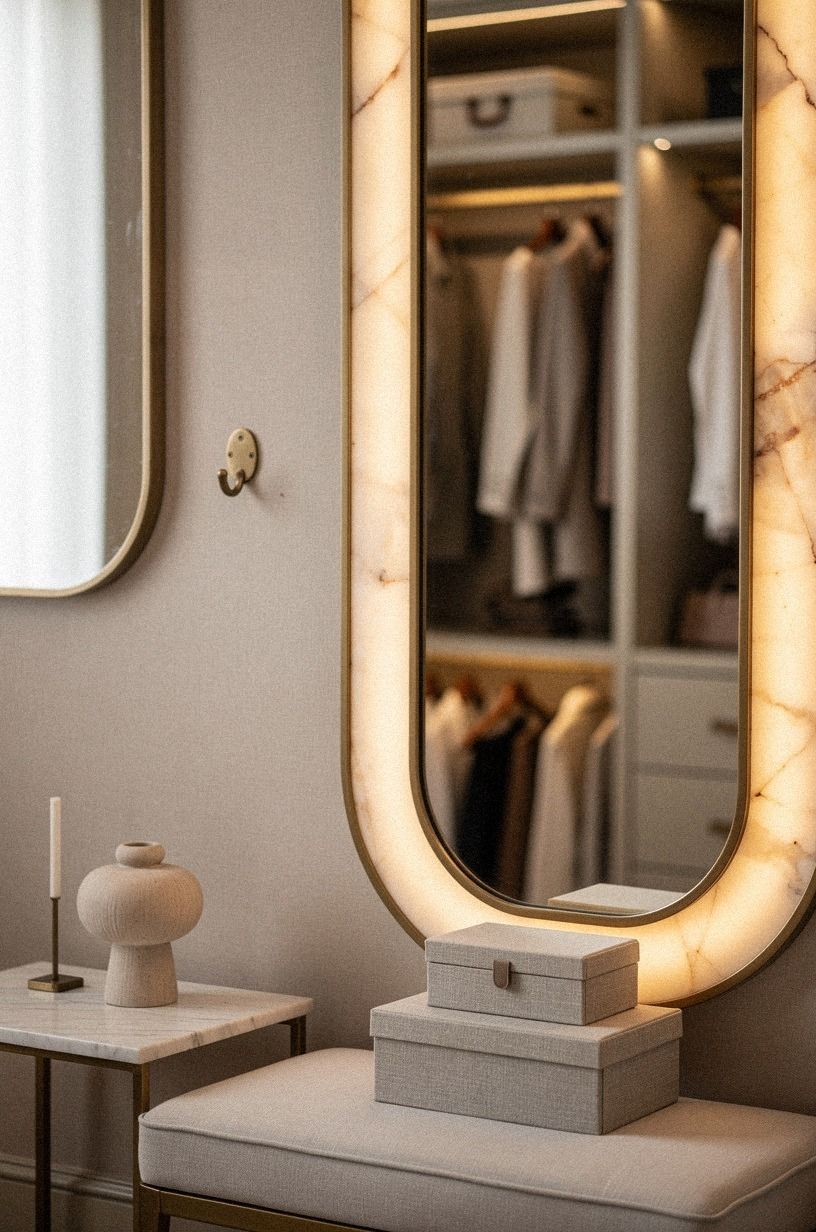
A full-height mirror belongs where daylight can reach it, not behind the door where you’ll fight with your own reflection. A 24-inch-wide mirror is enough for a narrow wall, while a larger framed piece can become the room’s main visual anchor. Backlit translucent onyx framing adds texture without turning the mirror into a shiny rectangle.
Place your mirror so you can step back several feet, then keep a small landing spot nearby for shoes or a handbag. You’ll use it more when the route feels easy. A discreet antiqued brass hook beside the frame gives tomorrow’s outfit a home.
I’d skip a cluster of tiny mirrors here. They break up your view and make a compact dressing room feel busy. Your bedroom mirror placement ideas can help if the closet shares space with your sleeping area.
8Swap a Cold Cabinet for the Two-Wood Rule
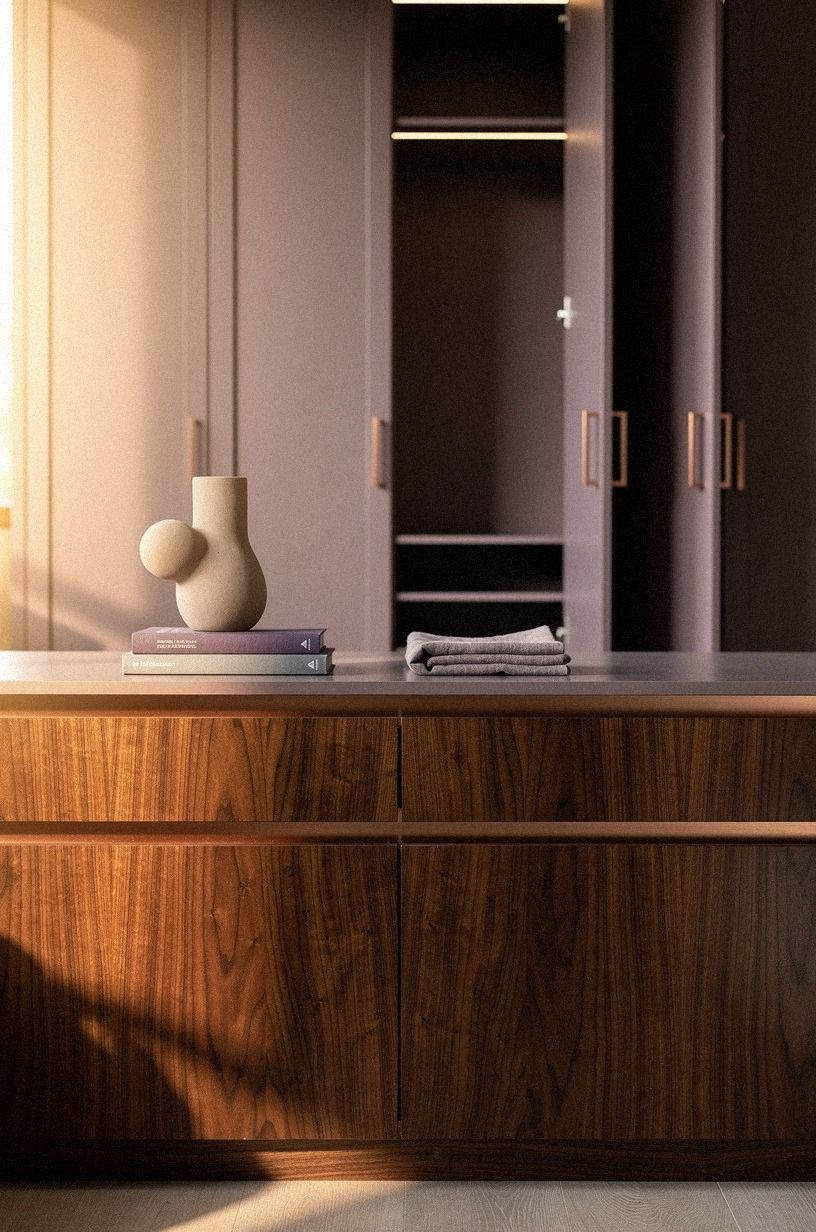
Mixing wood and metal can make built-ins feel collected instead of showroom-perfect. Use one dominant tone for the cabinetry, then bring in a second finish through a bench, island top, or framed mirror. Book-matched walnut with a rose-gold accent gives you contrast while keeping the palette warm.
The rule is simple: repeat each finish at least twice. Your eye will understand the relationship, and the room won’t look like leftover samples. I’d avoid matching every cabinet, shelf, and accessory in one finish because the result can feel flat.
A rose-gold stool beside walnut drawers adds another layer, but you don’t need a full furniture set. A little variation makes the dressing room feel lived-in and sophisticated. For more palette guidance, browse these bedroom color ideas before ordering permanent cabinetry.
9Could a Corner Cabinet Work Harder?
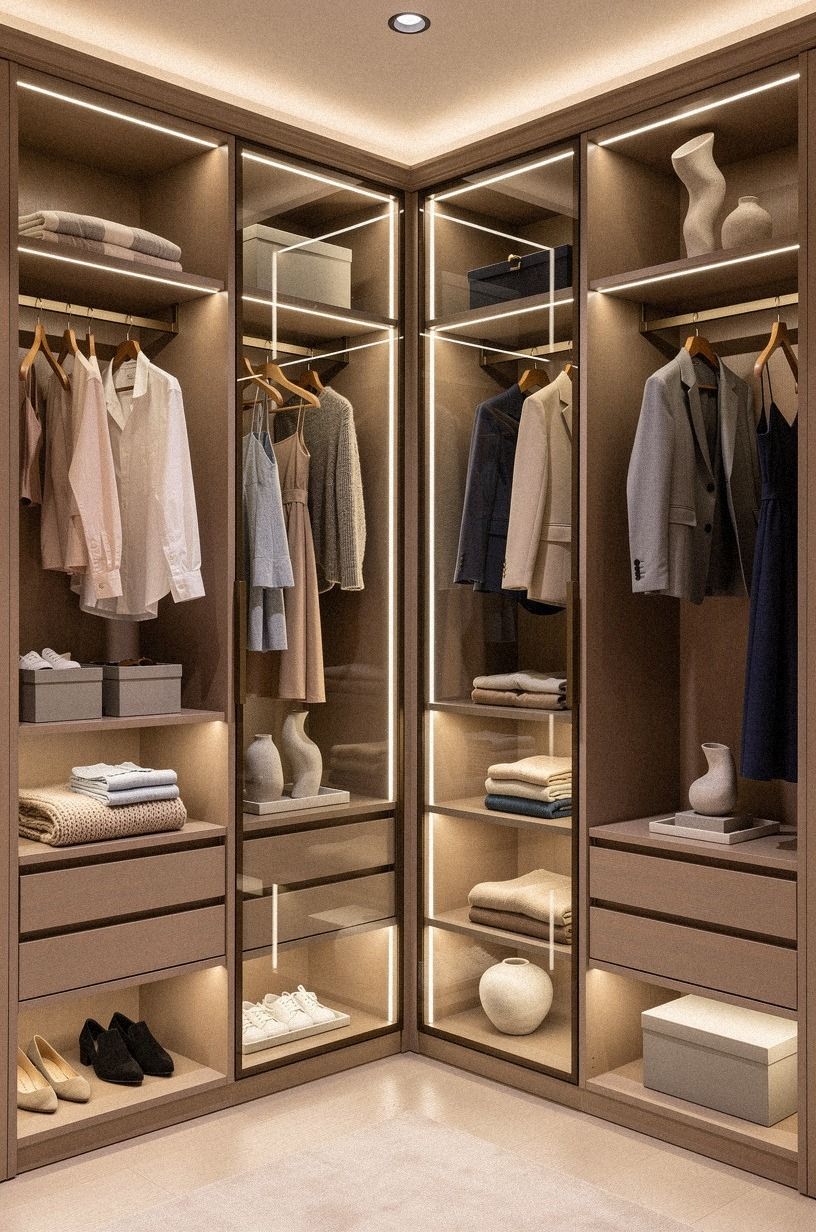
Yes, if you treat the corner as a storage zone instead of a dead end. A shallow corner cabinet can hold handbags, folded denim, or a tall laundry hamper, while angled shelves make the contents easier to see. A navy cabinet with walnut trim and a warm travertine top softens the hard cabinet lines and gives the corner a grounded finish.
Measure your corners carefully before ordering anything, because a few inches can decide whether the doors open comfortably. Your cabinet shouldn’t force you to twist sideways every time you enter. I’d choose a closed corner over open shelves when you have lots of small accessories; visual noise builds quickly in tight rooms.
Use 14-inch-deep shelves for folded pieces and bags, then reserve deeper storage for bulky coats. A narrow navy freestanding cabinet can work as a starting point if you add wall anchoring and replace the pulls. These closet organization ideas include more ways to make awkward corners useful.
10Use Closed Storage Over Pretty Piles
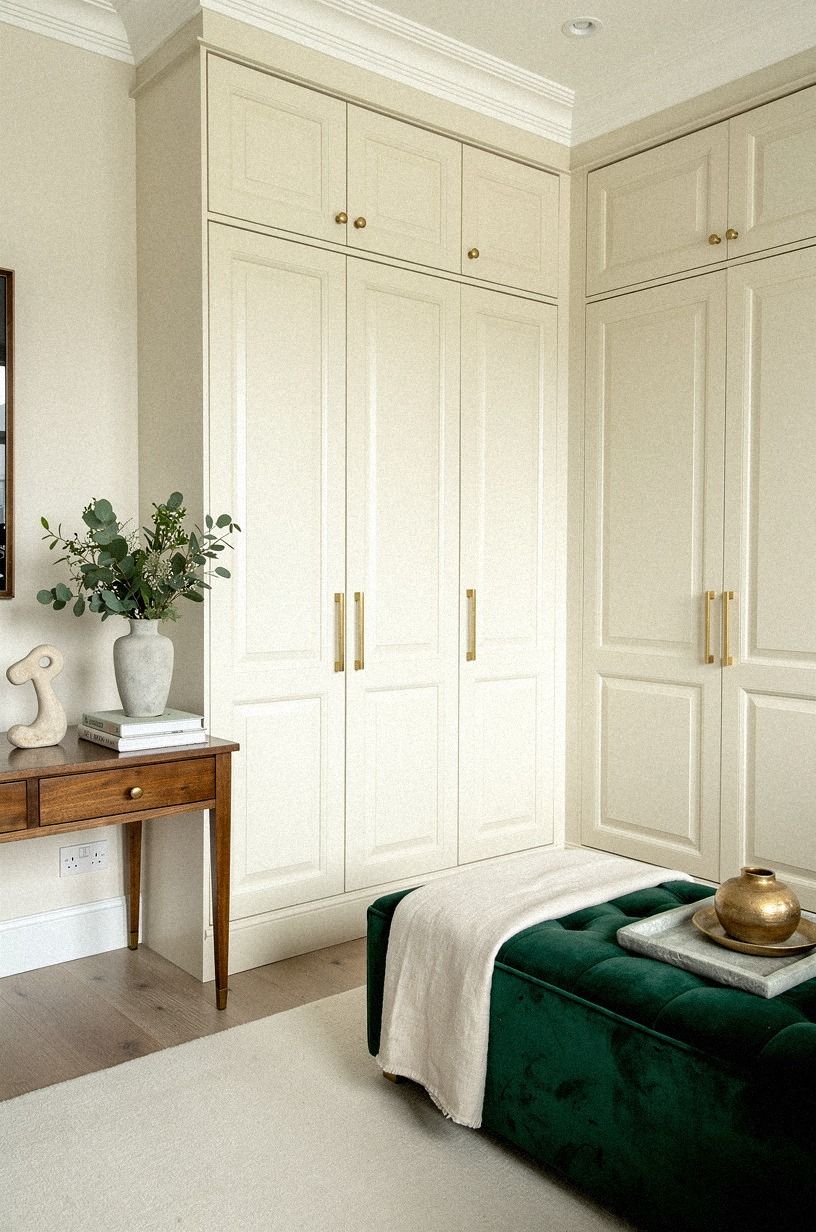
A boutique room still needs somewhere to hide the unglamorous things. Put laundry, spare hangers, travel bags, and off-season shoes behind doors so your daily wardrobe stays visually quiet. Matte ivory laminate with unlacquered brass hardware gives modular cabinets a cleaner appearance and won’t compete with patterned clothing.
Use open shelves for items that deserve to be seen, such as shoes, folded cashmere, or a small tray of perfume. Everything else can disappear. You’ll feel the room settle when fewer loose objects are exposed.
I’d rather have six useful closed drawers than twelve decorative baskets that collect dust. An unlacquered brass accessory tray keeps small pieces contained without adding visual noise. Your hidden storage ideas for bedrooms can give you more ways to conceal bulky pieces without adding another cabinet wall.
11Style the Open Master Closet by Color
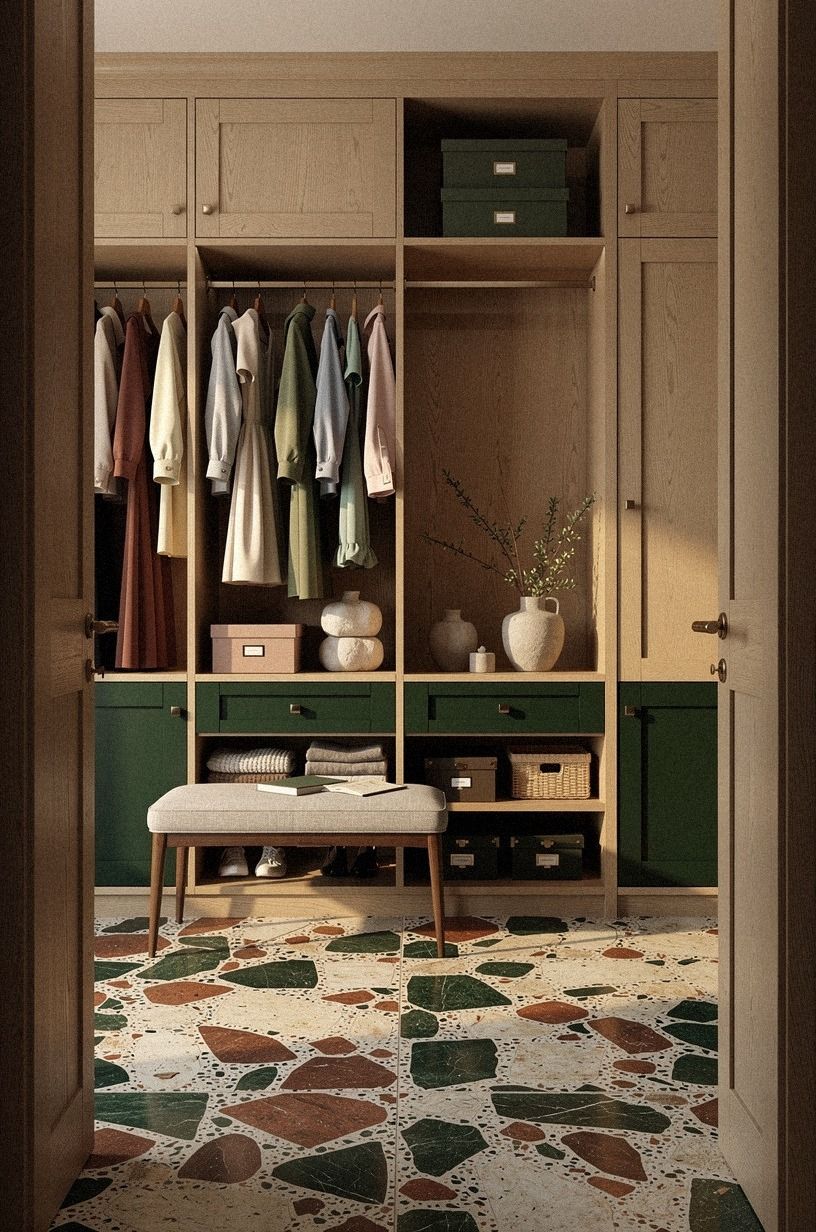
Color grouping makes an open master closet feel deliberate in minutes. Move from light neutrals to warm colors, then darker shades, with denim and prints placed where they break up the sequence. Forest-green garments, rust accents, and natural oak details create a soft visual rhythm that feels more boutique than a random row of hangers.
Don’t arrange everything by garment type if that makes dressing harder for you. Your real routine matters more than a perfect arrangement. Keep work clothes together if you reach for them every weekday, then place weekend pieces nearby.
I’d choose a calm color flow over matching hangers, because the clothing itself creates the strongest display. A few natural oak hangers will keep slippery fabrics in place, and the whole wall will look quieter without feeling precious. Add a small oversized-chip terrazzo tray for a fresh, practical detail that protects seasonal woolens.
The Boutique Detail That Makes the Room Yours
A dressing room becomes memorable when one detail feels personal. It could be a framed sketch, a small antique dish, or a linen hamper tucked beneath a counter.
The object doesn’t need to match the cabinetry perfectly. A little contrast keeps the room expressive.
Choose one finish that appears in several places, such as an antique brass pull repeated on drawers, hooks, and the mirror. That small connection makes the room feel intentional without making it rigid. It’s the kind of quiet detail you notice after the larger decisions are finished.
What Does a Walk-In Dressing Room Really Cost?
A master dressing room can be a $150 refresh or a $25,000 custom project, depending on whether you’re adding simple rods or commissioning built-in millwork. These are typical US cost ranges, so use them as planning markers rather than promises. Your room’s size, labor, wiring, and finish choices will change the final number.
For a smaller budget, focus first on the items you touch every day: rods, lighting, and drawers. Velvet hangers typically run $20-$60 per set, while a closet island can cost $800-$3,000.
A modular closet system may land around $1,000-$5,000, and LED rod lighting commonly costs $30-$150. If you’re planning a broader bedroom update, this bedroom makeover budget guide can help you decide what deserves the money.
Why This Boutique Feeling Works
The appeal isn’t really luxury. It’s relief.
When your clothing is visible, your shoes have a home, and the lighting doesn’t make every corner gloomy, getting dressed takes less effort. A comfortable dressing room can be as small as 6 by 8 feet, with 4 by 4 feet as a practical minimum for a compact setup.
I think the trend is moving away from showroom perfection and toward rooms that feel personal. Warm walnut veneer, framed art, a small dish for earrings, and one slightly imperfect vintage stool tell a better story than a wall of identical white cabinets. You don’t need every surface filled.
Leave one area quiet, and your favorite things will look more important.
The most successful layouts also support the way you move. A useful bedroom design guide can help you connect the dressing room to the bed, bath, and laundry route. When those transitions feel natural, the entire suite becomes more generous.
My Honest Take on Open Shelves and Custom Built-Ins
I’ve gone back and forth on open shelving because it looks airy at first, but it asks more from you every morning. Dust shows.
Folding has to stay reasonably neat. If you’re naturally organized, the openness can feel airy and welcoming; if you’re not, closed storage will make your life easier.
Custom millwork is worth considering when the room has awkward corners, sloping ceilings, or a layout you’ll keep for years. It isn’t automatically the better choice. Painted maple cabinetry can look refined, but a modular system lets you change your storage as your wardrobe changes.
I’d invest in good lighting before premium doors because you’ll notice the light every time you enter. And if your room is rented, removable solutions can still feel surprisingly polished! These rental bedroom ideas include tension rods, freestanding storage, and low-commitment finishes.
The Two-Hundred-Dollar Priority List
If you’ve got about $200, don’t spread it across ten tiny upgrades. Start with lighting, matching hangers, and one surface that gives your room a landing zone. A warm LED fixture, a set of black velvet hangers, and a thrifted wood stool can change the room’s function without touching the walls.
Your free upgrades matter too. Pull everything out, group garments by how often you wear them, and return only what belongs in the room.
You’ll discover that the empty space is useful. I’d donate or relocate anything you haven’t worn in a year before buying another bin, because more containers won’t solve an overloaded closet.
A small woven seagrass basket can hold scarves, but only after you’ve reduced the pile. For a more complete reset, these bedroom decluttering ideas will help you decide what stays visible and what leaves the room. That tiny change feels almost ridiculous until it works!
A Few Things Worth Answering
What is the best master dressing room layout for a small closet?
A single-wall wardrobe with a narrow bench is usually the best choice because it preserves a clear walkway. Use IKEA KALLAX storage for folded items and a full-height mirror on the opposite wall. Your room will feel more open when daily clothes stay between waist and eye level.
Where can I buy master dressing room pieces on a budget?
Look at IKEA, Wayfair, and Target for modular storage, rods, mirrors, and lighting. You can also find solid wood benches and cabinets through Facebook Marketplace or a local thrift shop. Your best savings usually come from buying used furniture and replacing the pulls, not from filling the room with more baskets.
How much does a master dressing room makeover cost?
A basic refresh often runs about $150 to $800, while a modular system may cost $2,000 to $6,000. Free decluttering, rearranging, and reusing hangers can change the room before you spend anything. Your first investment should usually be lighting or storage that solves a daily problem.
Can I create a master dressing room on a budget?
Yes, and you can begin with three low-cost moves: edit your wardrobe, group clothing by color or routine, and add warm lighting. A Target Threshold bench, simple shelf boards, and $20-$60 velvet hangers can give your room structure without a full renovation.
Is a master dressing room worth it in a small space?
Yes, because a small room forces you to choose storage more carefully. Use vertical rods, 14-inch-deep shelves, and one narrow mirror instead of bulky furniture. Your dressing area will work harder when every item supports a real routine rather than filling an empty wall.
Is a master dressing room a good idea for a rental?
Yes. Use tension rods, freestanding wardrobes, peel-and-stick wallpaper, and removable hooks to create zones without permanent damage. Your landlord may not allow built-ins, but a freestanding oak garment rack and battery LED strips can still give the room a warm, boutique-like rhythm.
The Opinion I’d Keep
I don’t think a dressing room should look untouched. Mine works better when one basket is slightly full, a scarf is waiting on the bench, and the mirror catches the late afternoon light. You’re designing a room for your real mornings, not a showroom.
Choose storage that reduces friction, keep the lighting warm, and let one personal object stay visible. That small bit of imperfection is what makes the space feel like yours. A vintage linen scarf on the bench can do more for the mood than another decorative box.
Where I’d Start First
If I had to pick one, I’d start with the layered lighting. Your clothes can’t look their best under one harsh ceiling bulb, and better light changes the room before new cabinetry does. Pin the lighting plan for later and build the rest around what you can finally see.
A dimmable brass ceiling fixture gives you a strong starting point, while sconces and shelf lighting add the flattering layers that make the room feel luminous. When the light is right, even a modest wardrobe system can feel elegant.


