17 Home Gym and Yoga Rooms Worth Stealing
19 october 2026Home gym and yoga room ideas work best when you reserve a clear floor zone before buying equipment. I learned that after filling one room with gear I rarely used. Your space needs breathing room, soft light, and storage that hides the noisy parts. Start with the floor. Then build upward.
A good starting point is the three-zone layout, followed by lighting, flooring, and storage that support how you actually move. The goal isn't a showroom. It's a room you'll want to enter on an ordinary Tuesday.
- Build the Three-Zone Rule for a home yoga room
- Could a mirror wall improve your wellness room?
- Layer the Three-Height Light Stack in your fitness area
- Sherwin-Williams Iron Ore for a dramatic training room
- Let the CB2 Primitivo bouclé bench soften the room
- Stack the Three-Height Light Stack beside your home yoga room
- Rubber or pretty wood in a wellness room?
- Frame the window with a soft recovery corner
- Mix an Article Sven corner with practical storage
- Hang equipment on a vertical pegboard
- The Mirror Horizon Method in your home yoga room
- When should you add a rack?
- Benjamin Moore Kendall Charcoal or a lighter contrast?
- Build a hidden towel station for your fitness area
- Swap open shelving for closed storage
- What should a small wellness room do first?
- Finish with the Two-Wood Rule for your home yoga room
1Build the Three-Zone Rule for a home yoga room
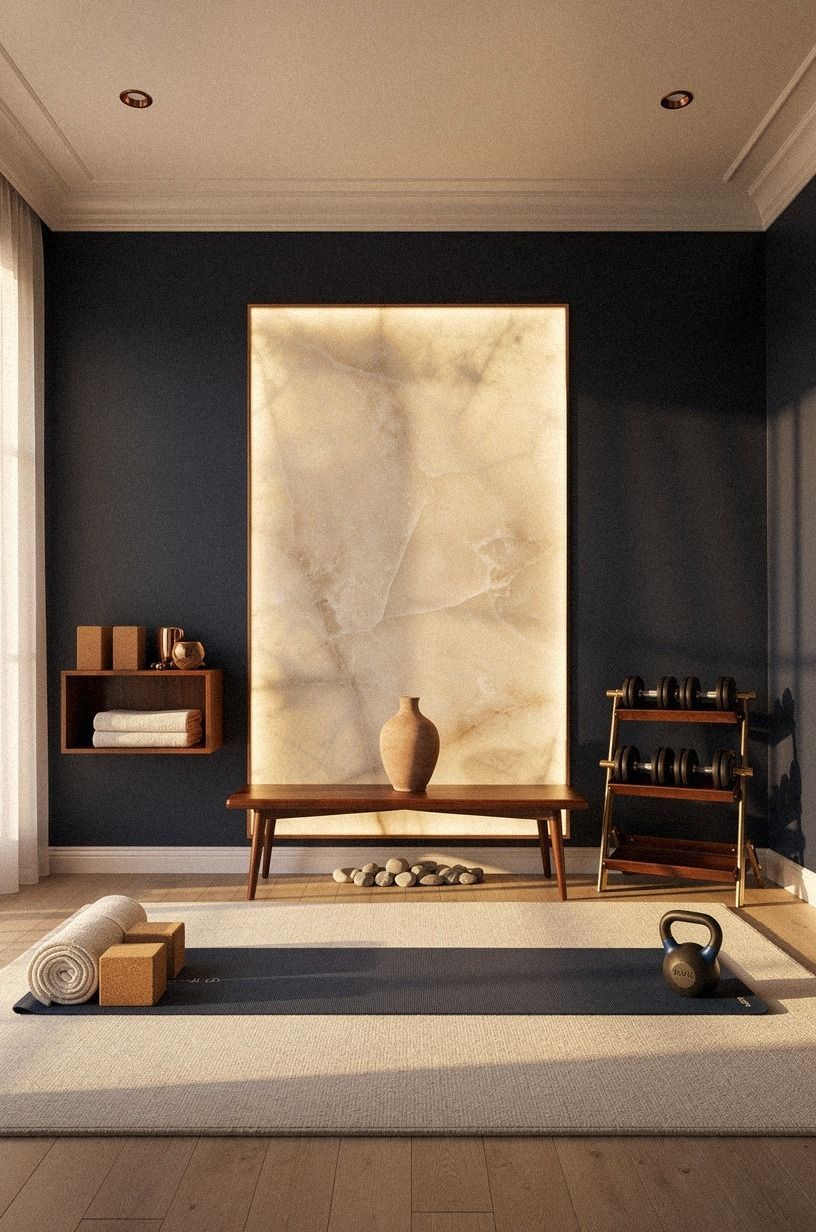
Divide your room into three visible zones: movement, strength, and recovery. Your movement zone needs a clear 8-by-10-foot rubber mat area, while your strength zone can hold a rack, adjustable dumbbells, or a compact bench.
The recovery corner gets the soft chair, folded blanket, and water bottle. That separation feels calming because your eye knows where each activity belongs.
I like a midnight-blue cabinet between the zones because it gives the room a steady anchor while copper hardware adds warmth. A small panel of backlit translucent onyx can define the recovery area without filling the floor.
Keep your yoga mat rolled vertically, not draped across the floor. That small change keeps the room inviting and makes it easier for you to begin.
Don't push every item against the walls. A little open space makes the room feel airy, and you'll use it more often when you aren't stepping over equipment. Your best layout should let you move from stretching to lifting without rearranging the entire room.
Leave at least one uninterrupted path from the door to the mat. It sounds minor, but a clear arrival route makes the room feel immediately usable.
Add closed storage once the zones are working, not before. Storage should support the layout rather than dictate it.
2Could a mirror wall improve your wellness room?
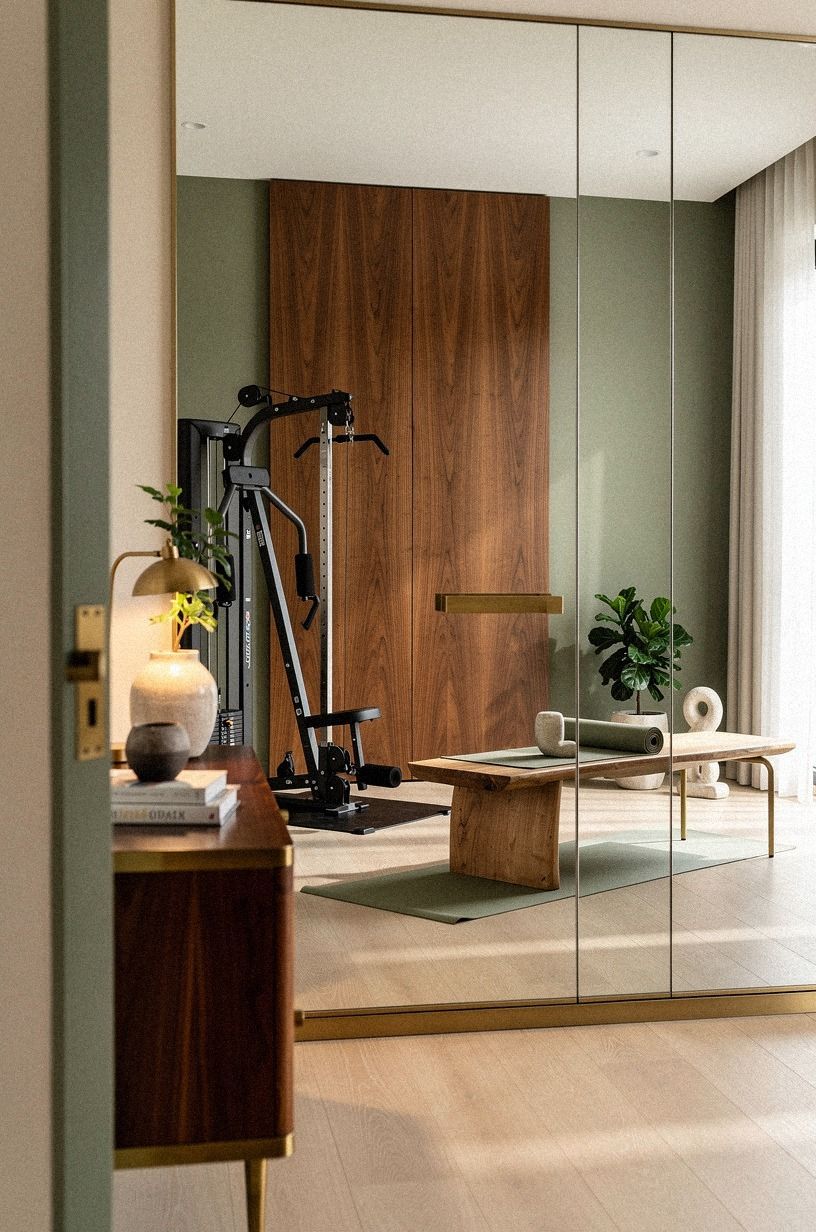
A mirror wall set against sage green gives you useful feedback during squats, lunges, and yoga poses, but it also doubles the light.
Warm cream and natural wood keep the room from feeling clinical, while a book-matched walnut detail adds depth without competing with the mirror.
3Layer the Three-Height Light Stack in your fitness area
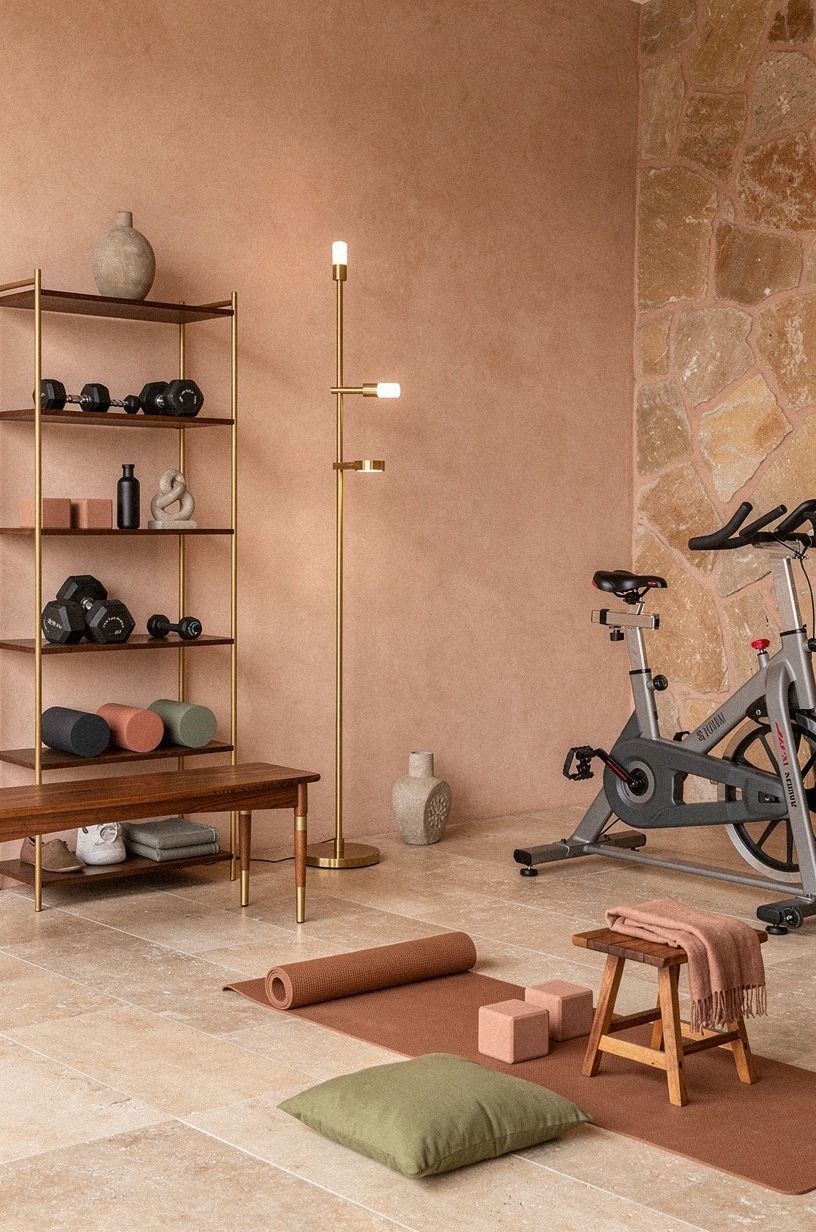
Use three light levels: ceiling light for cleaning, wall or floor light for training, and a low lamp for stretching. This Three-Height Light Stack keeps your room from feeling like a garage. Your ceiling fixture can be bright and practical, but your evening light should be softer and warmer.
A warm travertine lamp base beside the recovery chair gives you a gentle pool of light that stops near the rug. Terracotta, stone, and olive keep the palette grounded.
Add a dimmable wall sconce near the mirror if wiring allows it. If you're renting, a plug-in sconce can give you the same visual rhythm without cutting into the wall.
Don't train under one harsh overhead bulb if you can avoid it. I made that mistake, and the room felt clinical by 7 p.m.
Your body notices that atmosphere. A warm color temperature makes slow mobility work feel less like a chore, and you'll stay longer.
Use daylight as the first layer whenever possible. Sheer curtains soften glare without making the room gloomy, while a blackout shade helps if you practice early or late. For a complete evening setup, connect the main light stack with the focused yoga lighting plan.
4Sherwin-Williams Iron Ore for a dramatic training room
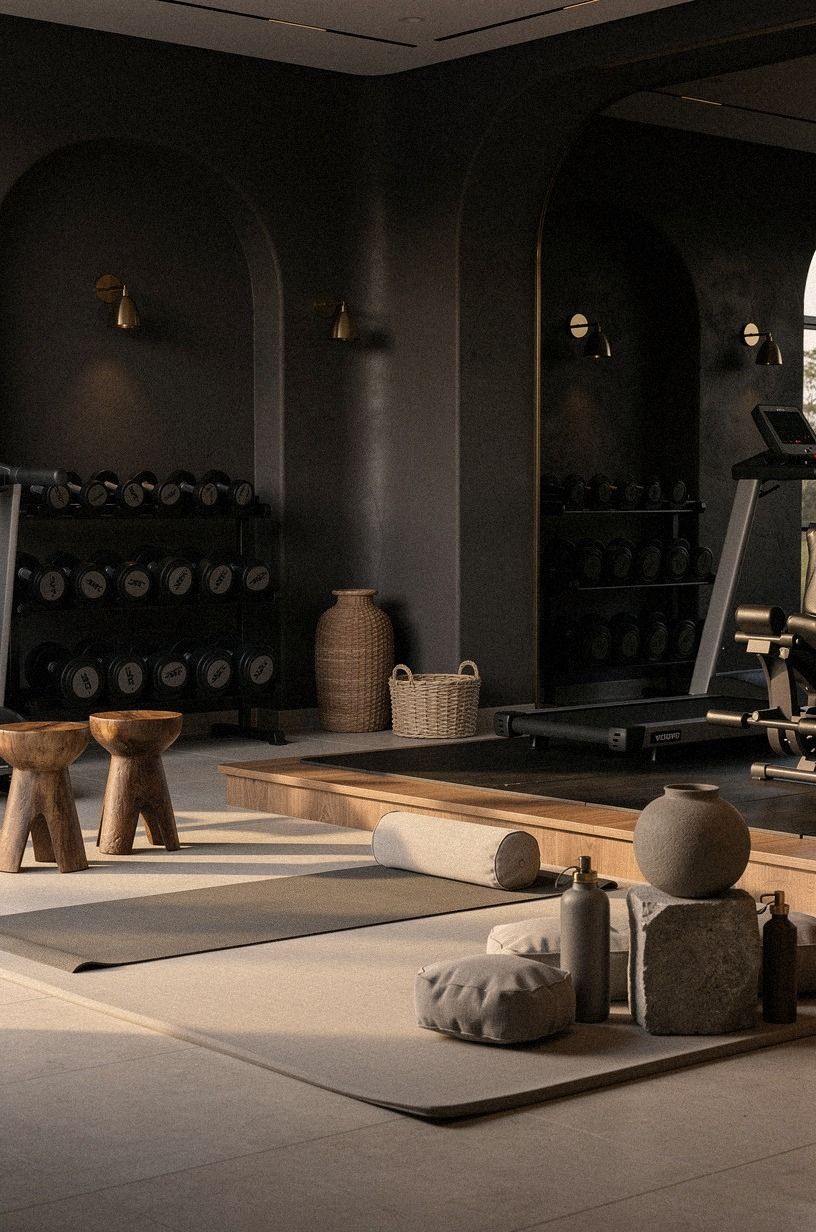
Deep paint can make a home gym feel dramatic, especially when the room uses clay tones, linen textiles, and aged-brass details. Sherwin-Williams Iron Ore gives the walls a charcoal depth without making every surface feel black.
Use a clay tone on one main wall or around a built-in storage zone. Pair it with linen and aged brass so the room still feels warm and connected to the rest of your home. The contrast is moody without becoming oppressive.
A dark wall can also make a mirror look more deliberate. It frames the reflective surface and gives plain equipment a richer backdrop. If your room has limited natural light, paint only the wall behind the bench or storage instead of enclosing the whole space.
For a gentler version of the same idea, compare it with Benjamin Moore Kendall Charcoal. Both colors create depth, but the undertones produce different moods.
5Let the CB2 Primitivo bouclé bench soften the room
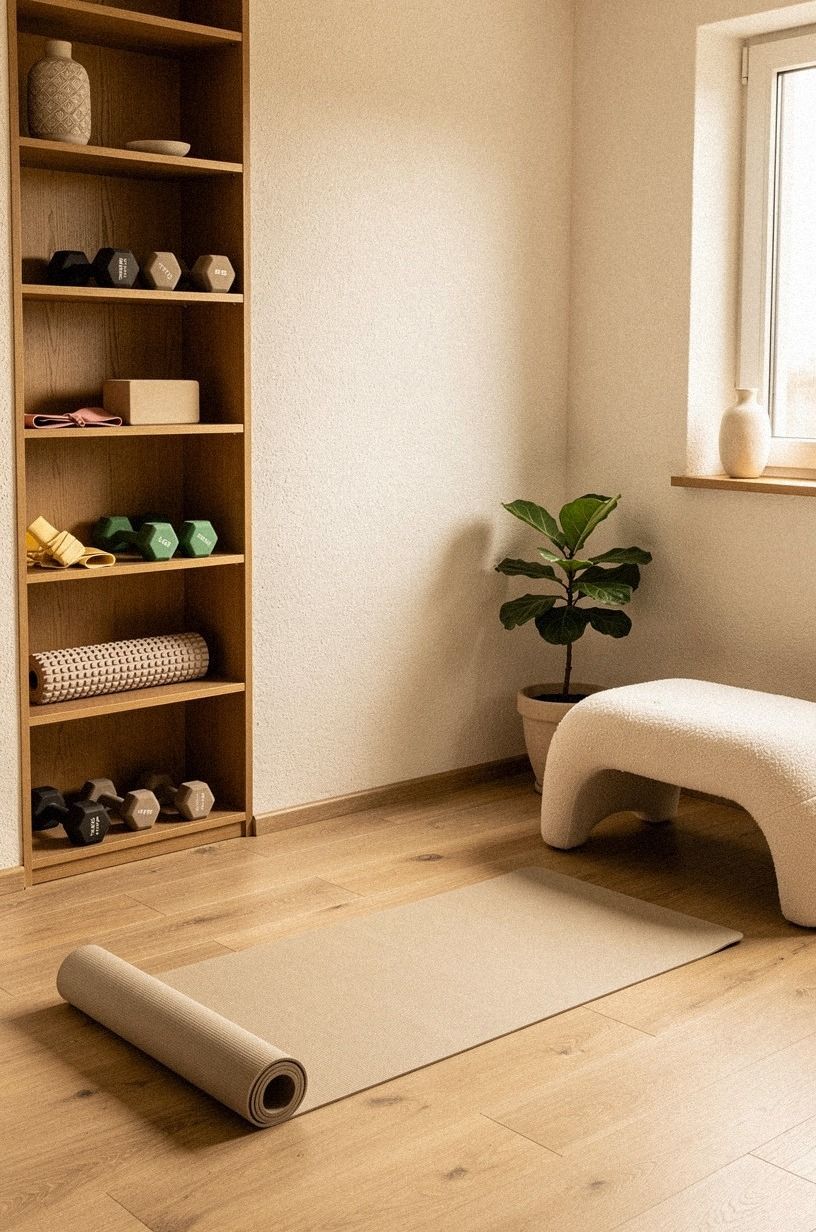
A bench gives your room a landing spot for shoes, towels, and the five-minute pause before you start.
An oversized-chip terrazzo surface adds texture, especially when paired with a plum, grey, and rose-gold palette. Keep the finish substantial but easy to wipe clean.
6Stack the Three-Height Light Stack beside your home yoga room
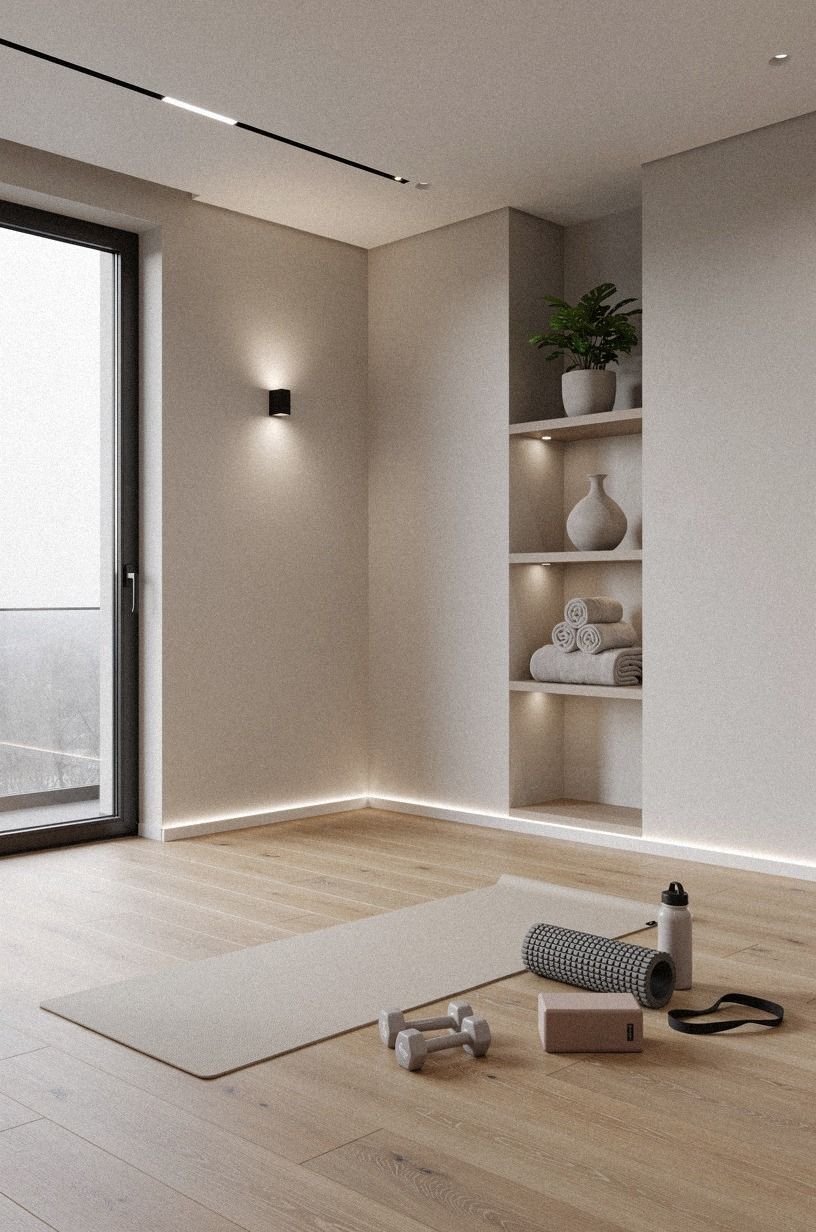
Repeat the light idea in a more focused way around your yoga mat. Use a ceiling source, a middle-height lamp, and a low candle-like glow.
The goal isn't decoration for its own sake. Your eyes need layers so the room feels peaceful during breathing work and bright enough during balance poses.
A navy-and-white palette with walnut gives the room a calm foundation. A table lamp against hand-applied Venetian plaster can provide the middle glow.
Keep the shelf above shoulder height and away from your mat so you won't bump it. A dimmable LED bulb lets you shift from bright mobility practice to a softer evening stretch without replacing anything.
And don't place a lamp directly behind your head. The glare will distract you when you're lying down. Put it to the side, where the light can skim across the wall and make the room feel warm, organic, and quietly intentional.
Candles can create a beautiful atmosphere, but flameless options are easier around blankets, bands, and active movement. A small amber lamp or shaded lantern gives you the same intimate feeling without adding another safety concern.
You'll notice the difference after one session. See how it connects with the main light stack.
7Rubber or pretty wood in a wellness room?
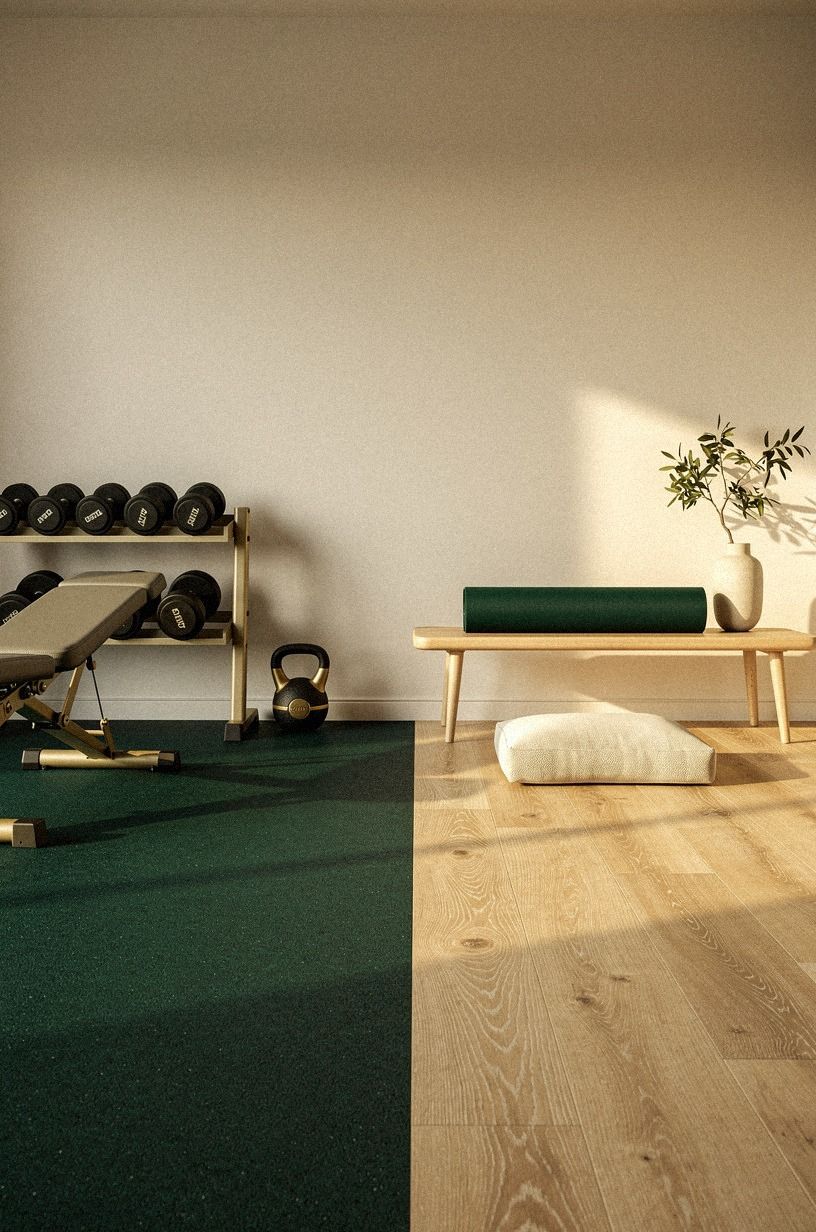
Rubber flooring wins in a workout room because it absorbs impact, protects the subfloor, and gives your feet reliable traction.
If you want the room to feel more decorative, balance the practical floor with emerald, gold, and cream accents. A small shagreen detail can add texture without compromising the clear movement zone.
8Frame the window with a soft recovery corner
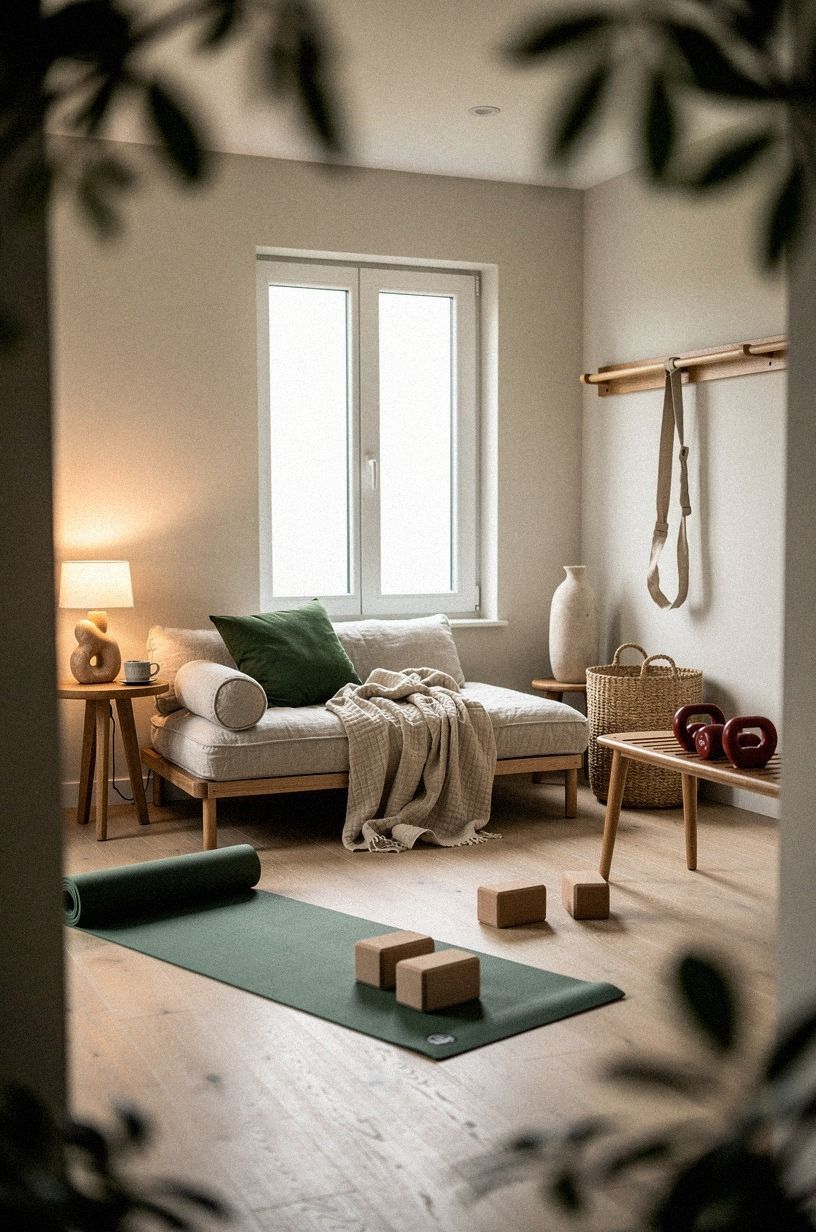
Your recovery corner should face daylight whenever possible. Put a chair, low stool, and small side table near the window so you can stretch, journal, or cool down without staring at a wall. The arrangement feels serene because your body gets a clear visual exit after effort.
Use washed Belgian linen on one cushion, then balance it with a rust throw and a natural oak side table. The combination feels soft without becoming overly sweet. Keep the table light enough for you to move when the room needs a wider training path.
But don't turn the window area into a storage pile. Your resistance bands and towels can live in a basket, while your water bottle gets one deliberate place. I’d choose a low-profile chair over a deep lounge chair because the latter can steal valuable floor space.
A small plant can soften the corner, but choose something that tolerates the room's light and temperature. One sculptural pot is enough. Too many plants turn a recovery area into a maintenance project.
Let the window corner serve a real ritual. You might sit there for two minutes after practice, drink water, or take a few slow breaths.
That simple pause gives the room an emotional purpose beyond equipment. For more practical storage, connect it with the hidden towel station.
9Mix an Article Sven corner with practical storage
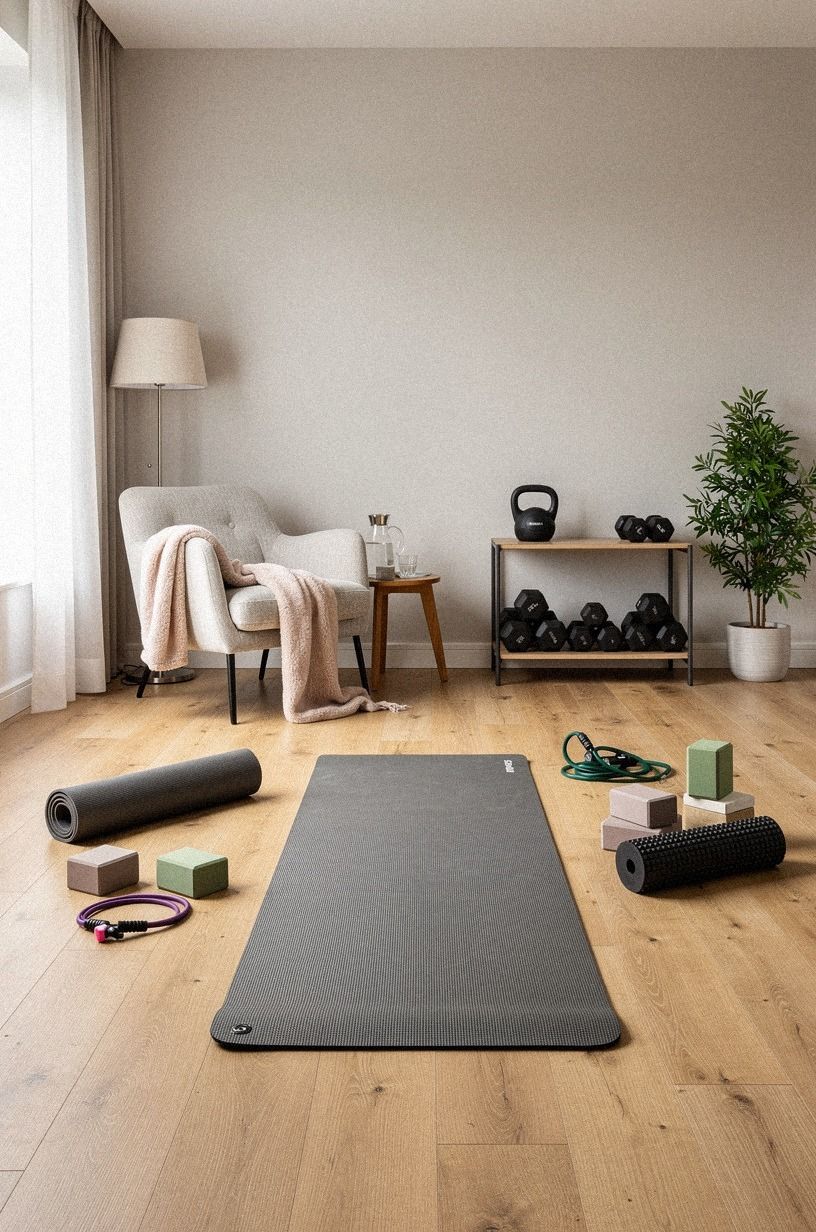
A compact seating corner can make your home gym feel like part of the house rather than a spare room filled with equipment. An organic bouclé chair in dusty rose gives you a soft note, while charcoal and brass keep the palette grounded.
Place it beside a narrow cabinet with brass hardware for headphones, towels, and recovery tools. Your cabinet should have doors, because open cubbies quickly become a visual catalog of half-used gear. Add one framed print above it, but leave the rest of the wall quiet.
You'll want the chair close enough to the mat for a post-workout pause, but not so close that it blocks your movement path. A six-by-six-foot floor area per machine is a useful planning guide. If your room can't provide that clearance, choose fewer machines and review the closed-storage approach.
The chair also gives the room a place to land between activities. You can tie your shoes, read a training note, or simply sit before deciding whether you have energy for another set. That domestic pause makes the space feel generous rather than aggressively functional.
10Hang equipment on a vertical pegboard
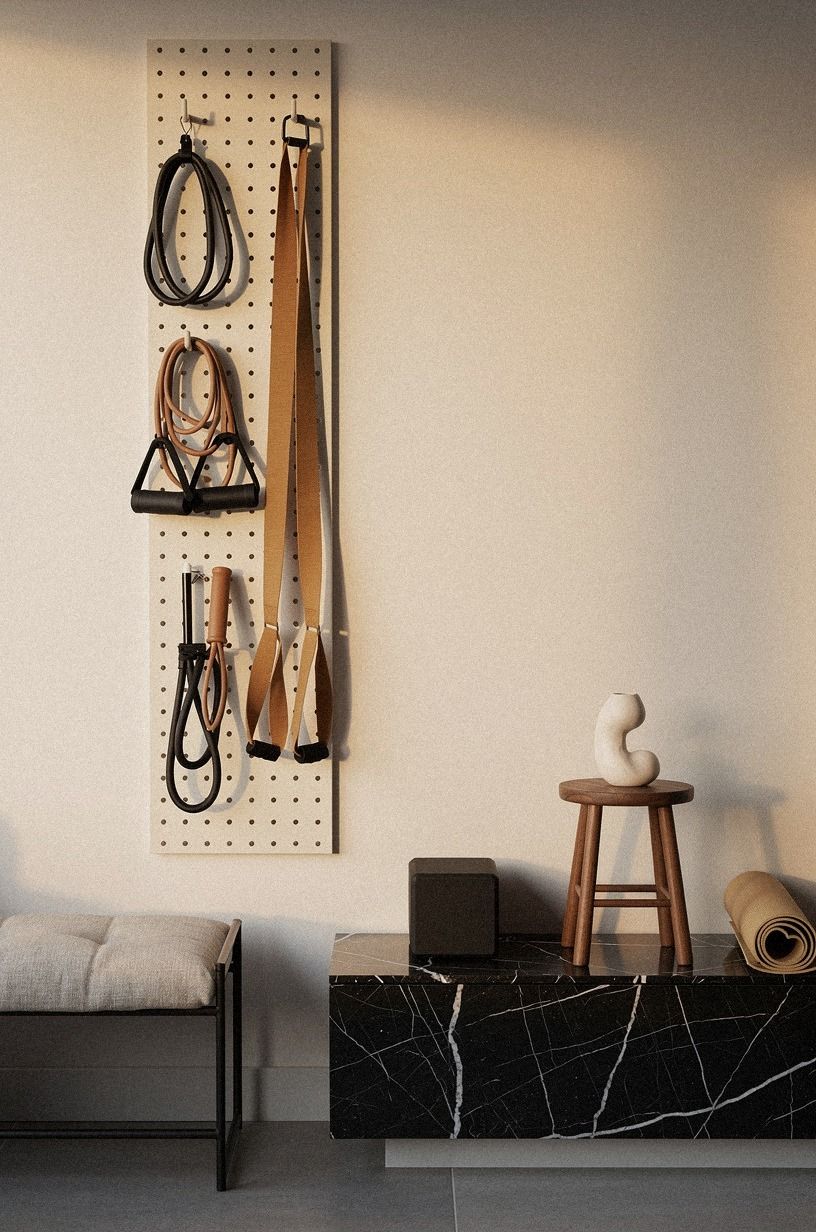
A vertical pegboard uses the wall instead of your floor, which is valuable in a small room. Hang resistance bands, jump ropes, and lightweight blocks between shoulder and waist height.
Keep heavier equipment low and away from the main movement path. Camel-toned wall hooks can soften the utility-room feeling, while a simple label system helps you reset the room quickly. Keep the center open.
Use only the hooks you need. A completely covered pegboard can become another form of visual clutter, especially when every strap and accessory remains on display. Leave generous gaps between the useful pieces and store duplicates behind doors.
A warm-white pegboard with black accents can blend into the wall, while a small Nero Marquina black marble ledge adds contrast through its white veining. Choose one finish that supports your room's palette. The best organization should feel nearly invisible when you aren't exercising.
Pair wall storage with the closed shelving strategy so frequently used equipment stays accessible and everything else disappears.
11The Mirror Horizon Method in your home yoga room
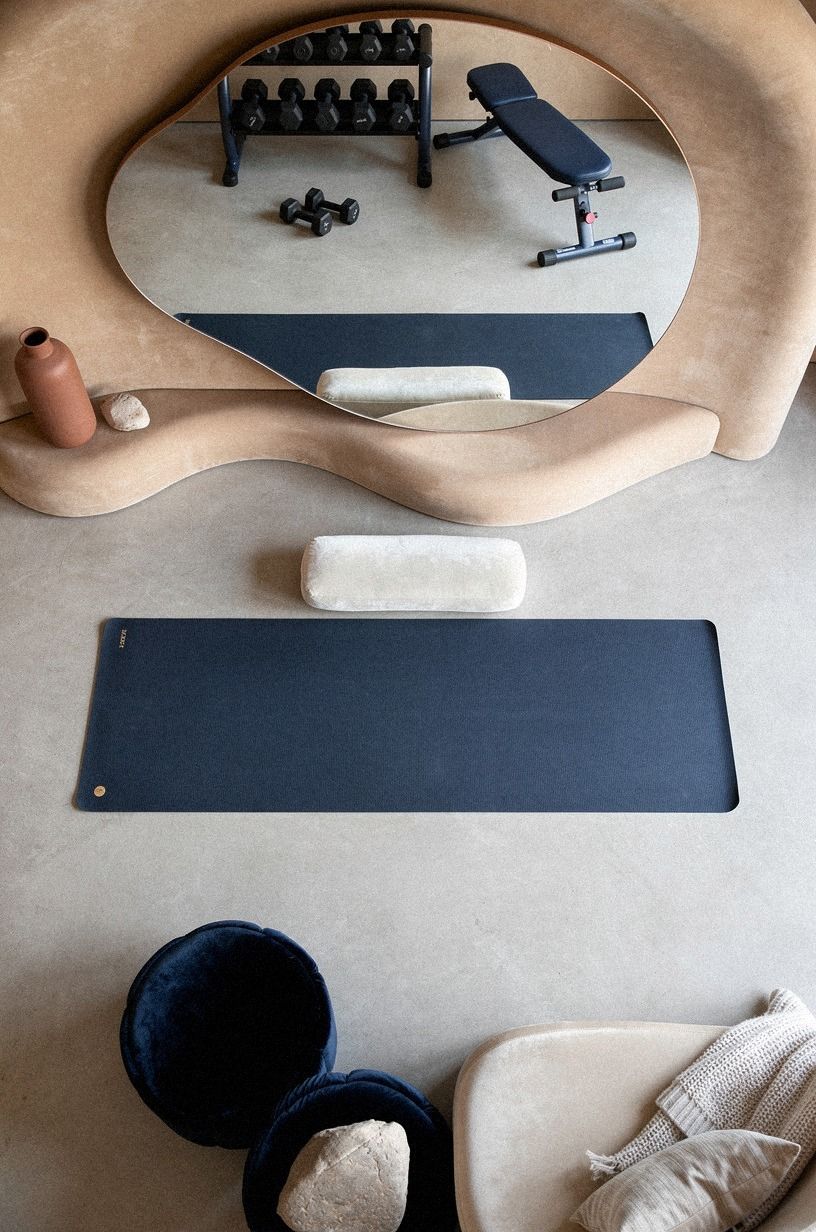
The Mirror Horizon Method places the top of your main mirror close to a consistent visual line, usually around eye level.
In a midnight-blue, copper, and ivory room, a deep-pile mohair velvet cushion can soften the mirror wall without interrupting the clean sightline.
12When should you add a rack?
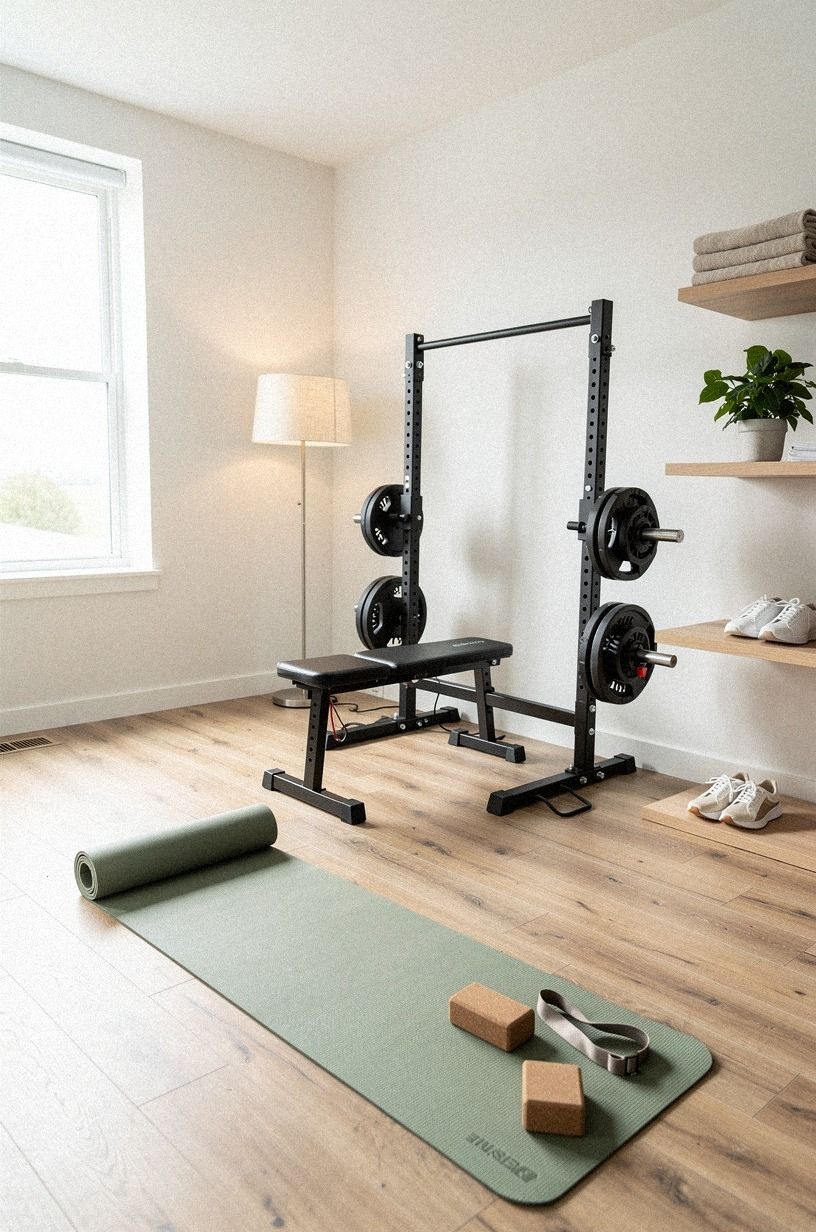
Measure before buying a rack, especially if your ceiling is 8 to 9 feet high. You need enough clearance for overhead movement, safe storage, and your own reach. Your rack should serve the room's routine, not force the routine around a piece of steel.
A wall-mount rack typically costs $150 to $600, while adjustable dumbbells often run $200 to $700. Those figures help you decide whether your room needs a complete strength setup or a smaller collection. Start with the equipment you’ll use at least twice a week.
A sage-green, warm-cream, and natural-wood palette can keep the equipment from dominating the room. If you add a small Carrara marble surface with subtle grey veining, keep it outside the active movement area.
Think about the full footprint, not just the rack itself. Include the bar length, plate storage, walking clearance, and the space needed to load equipment safely. A rack that fits on paper can still make the room feel cramped once you add a bench.
Flooring should come first, as explained in the rubber-versus-wood comparison. You can always add a rack later. It is much harder to recover a room that feels crowded from day one.
13Benjamin Moore Kendall Charcoal or a lighter contrast?
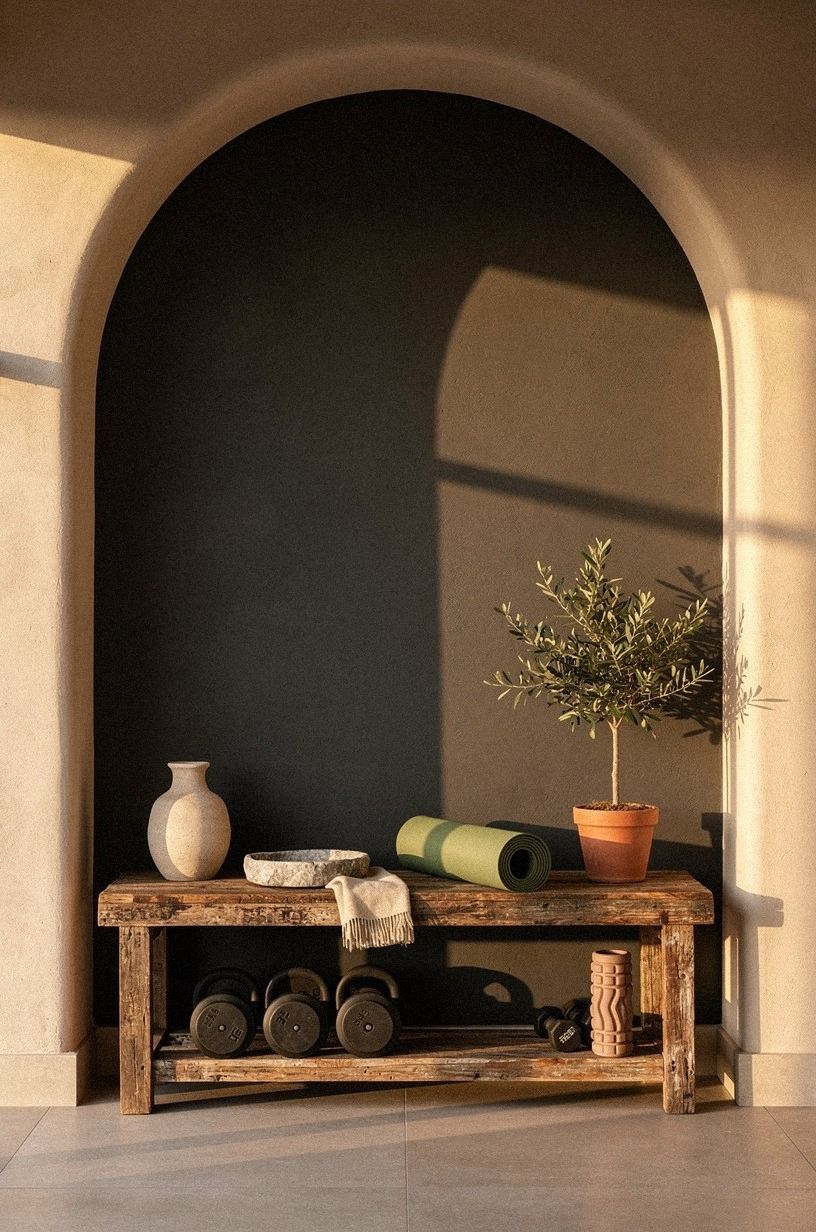
If one dark wall feels too dramatic, use terracotta, stone, and olive as a quieter contrast.
Reclaimed weathered teak brings warmth to that palette without making the room feel overly polished. Keep the equipment neutral so the natural grain remains the detail that draws the room together.
14Build a hidden towel station for your fitness area
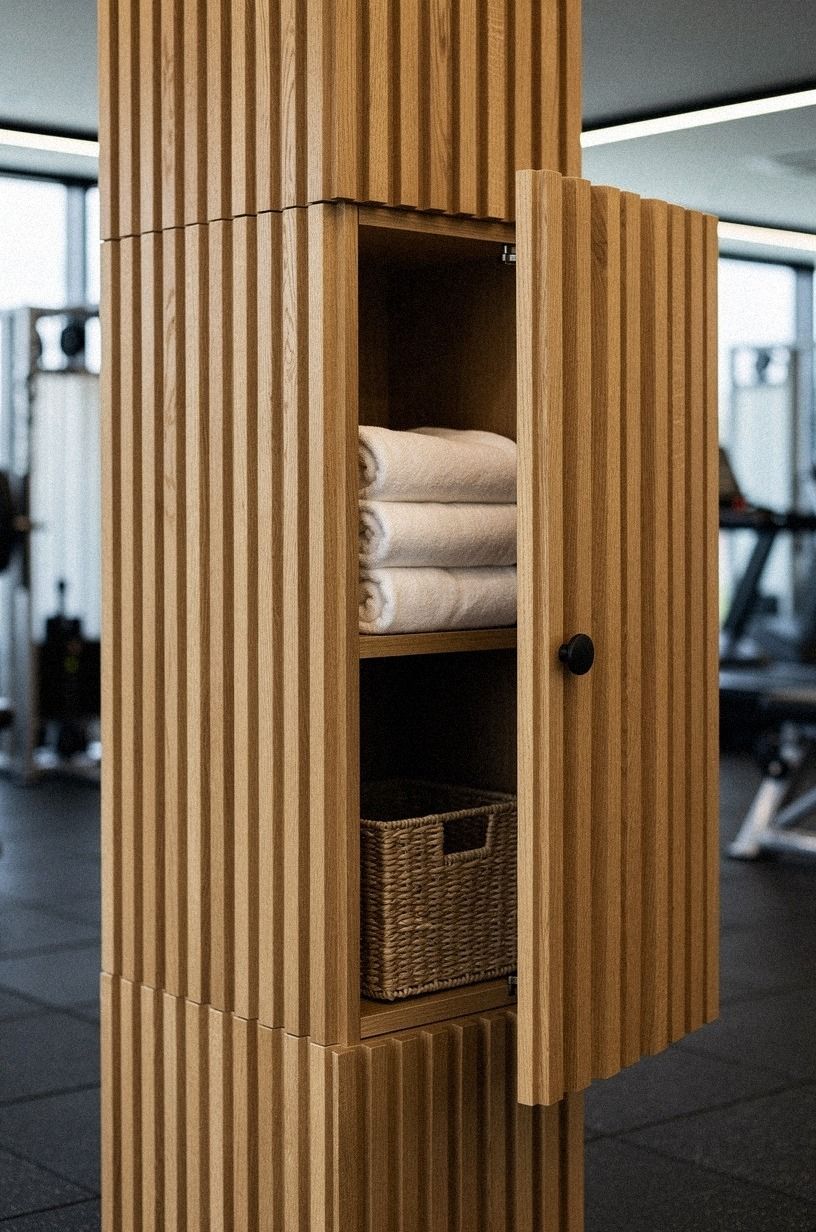
A towel station turns an ordinary workout room into a more comfortable one. Store clean towels on one shelf, used towels in a linen-lined basket, and cleaning spray in a closed cabinet. Your room will smell fresher, and you won't need to walk through the house after every session.
Use soft linen towels with a Calacatta marble shelf or ledge, whose gold veining adds quiet warmth. A small aged-brass wall rail can hold one towel during practice. Keep the rail away from electrical equipment and give damp towels room to dry.
And don't store wet towels in a sealed box. That creates a musty corner fast. I prefer a breathable basket because the open texture lets air move through.
Your supplies stay visible enough to use, but the room still feels soft and tidy.
Keep this station close to the closed cabinet zone, but not directly beside your mat. You want towels within reach without creating a visual obstacle. A shallow cabinet, one basket, and one rail are usually enough for a single household.
15Swap open shelving for closed storage
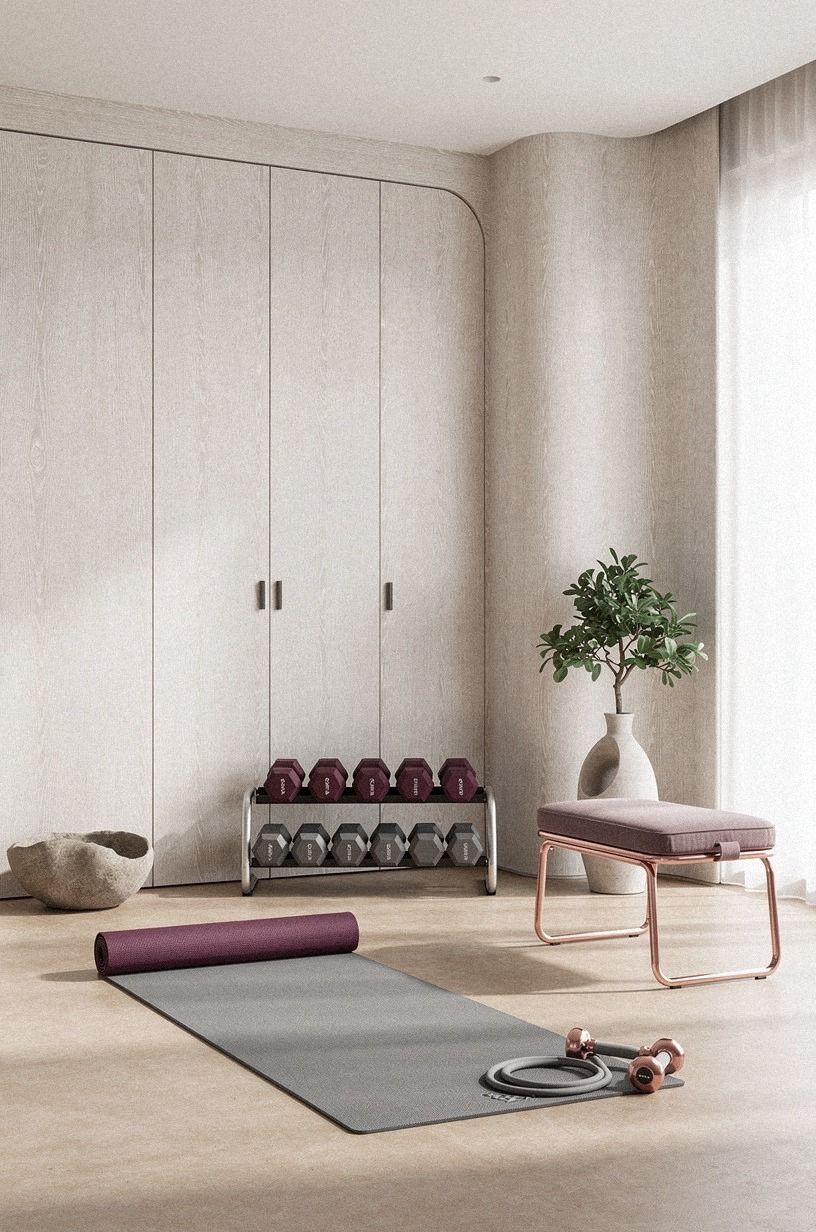
Closed storage is the difference between a calm wellness room and a room that always looks mid-cleanup. Use closed storage for weights, straps, and spare equipment, then leave one open shelf for a plant or folded mat. Your eye needs one quiet display area, not ten.
A cerused white-oak cabinet adds texture while hiding the practical pieces. Bring in plum, grey, and rose-gold accents through a cushion, tray, or small lamp.
If you use an IKEA unit, choose matching doors and anchor it securely. Keep heavy dumbbells low, and store lighter blocks or towels above them.
You'll make the room safer and easier to reset.
I’d avoid tall, narrow shelving if your workout path runs beside it. A bumped shelf can send objects onto the floor during a lunge or jump. Choose low storage whenever possible, then let your wall mirror and paint provide the vertical interest.
Create one small “reset basket” for stray bands, socks, clips, and chargers. At the end of a session, everything goes there until you have time to sort it. That modest habit protects the room's peaceful feeling without demanding a perfect routine.
The pegboard solution can handle the items you reach for most. Everything else should have a door, drawer, or basket.
16What should a small wellness room do first?
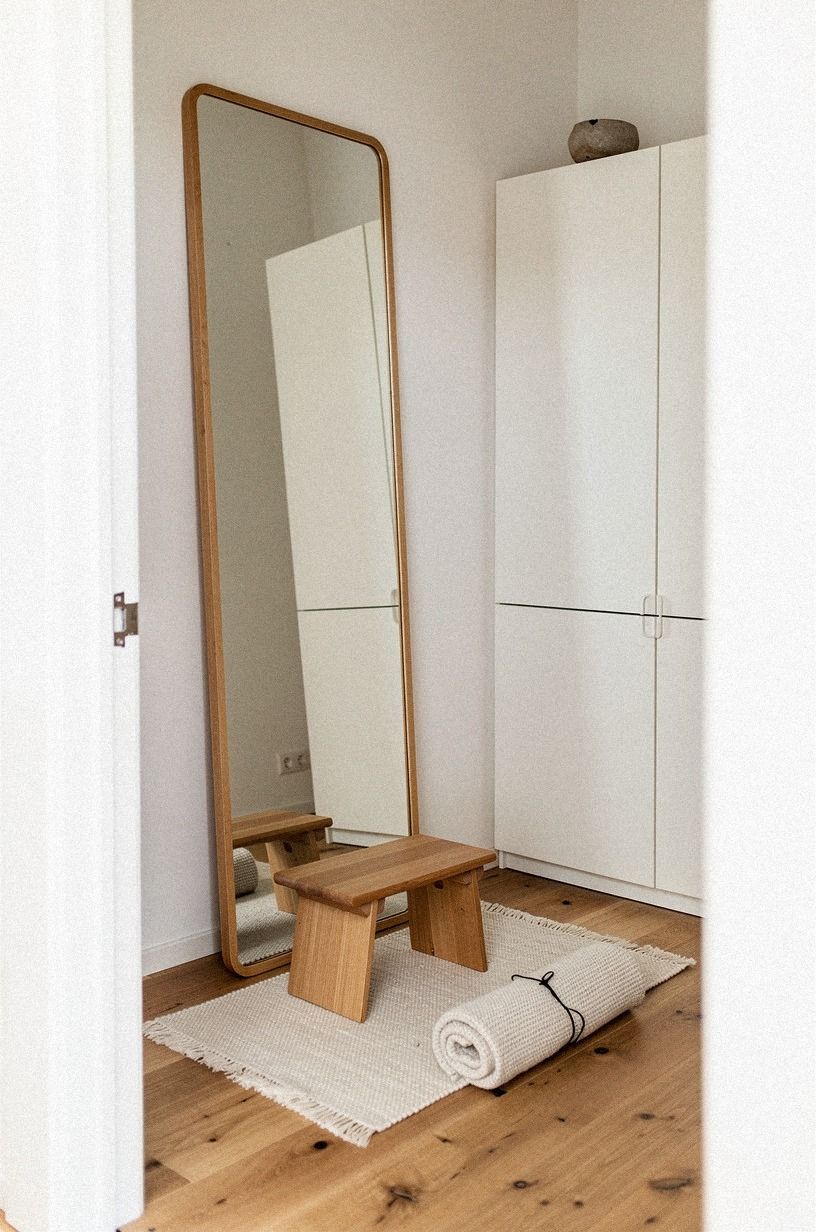
What does your room need to do first?
Start with a clear center, then build a navy, white, and walnut foundation around it. A detail of backlit translucent onyx can give the room a gentle focal point without taking valuable floor space.
17Finish with the Two-Wood Rule for your home yoga room
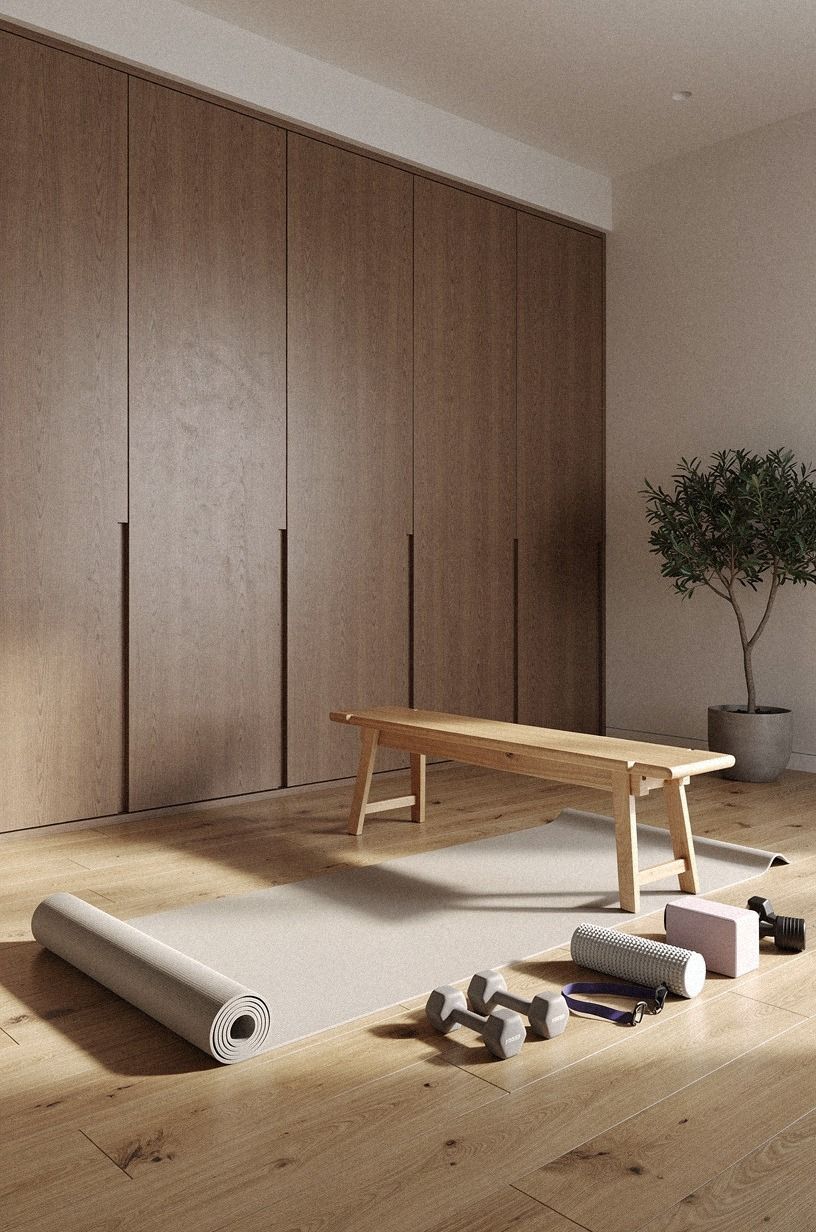
The Two-Wood Rule keeps your materials from becoming scattered. Choose book-matched walnut as the darker anchor, then pair it with one restrained pale wood. An emerald, gold, and cream palette will feel collected without looking matched.
Use the walnut for a bench or cabinet and the lighter wood for a stool or frame. Add a muted gold detail only if your room needs a little glow. Keep the finish soft rather than overly shiny.
But don't add wood everywhere. Too much grain can compete with the mirror and equipment.
I’d let one piece carry the strongest pattern, then keep the furniture quiet. Your wellness room should feel warm and grounded, with enough blank space for your next session.
If your flooring is rubber, bring in wood through a small stool, framed artwork, or cabinet fronts. If you already have a dramatic wood floor, use painted storage and woven textures instead.
Material restraint gives the room a polished, breathable quality. Pair it with the rubber flooring plan.
Why This Kind of Room Is Worth Making
I used to think a home gym needed to look serious to be useful. That meant dark rubber everywhere, a wall of equipment, and almost no softness.
I was wrong. The rooms I return to are the ones that let me switch modes without making me feel as if I’ve entered a commercial facility.
A yoga room needs calm, but it also needs honesty. You’ll still drop a towel, leave a band on the floor, and skip a session now and then.
I don't want a precious room that punishes ordinary life. I want storage that forgives clutter, flooring that handles work, and light that makes five minutes of stretching feel worthwhile.
The best investment is usually the part you touch every day. A good mat, dependable flooring, and comfortable light matter more than a dramatic equipment wall. If your budget is limited, spend first on the surface beneath you.
A beautiful mirror won't fix a slippery floor, and a designer chair won't make a cramped layout easier.
I also believe the room should connect to the rest of your home. A West Elm oak console, a framed photograph, or a familiar woven basket can make the space feel yours.
You don't need to hide every sign of domestic life. The goal is a room where movement belongs, not a showroom where nobody wants to breathe deeply.
Start with the practical question in what a small wellness room should do first, then add beauty where it supports that answer. A room becomes special when its details make your habits easier.
A Few Things Worth Answering
What is the best Home Gym and Yoga Room Ideas for the Ultimate Wellness Space for a small home gym?
The best choice is a clear mat zone paired with compact storage, such as an IKEA KALLAX unit and adjustable dumbbells. You’ll gain room for yoga, stretching, and strength work without filling every corner. Keep the center open and move larger equipment to one wall.
Where can I buy Home Gym and Yoga Room Ideas for the Ultimate Wellness Space pieces on a budget?
Look at IKEA, Wayfair, and Target for storage, mats, lamps, and benches. You can also check Facebook Marketplace or a local thrift shop for mirrors and solid wood furniture. Your best savings usually come from buying durable storage second-hand and keeping the layout simple.
How much does a Home Gym and Yoga Room Ideas for the Ultimate Wellness Space makeover cost?
A basic setup typically costs $300 to $1,200 for mats, a mirror, bands, and a single rack. A mid-range room runs $2,000 to $8,000, while a full setup can reach $10,000 to $30,000.
Free floor planning and furniture you already own can reduce the cost. The cost table gives you a useful starting range.
Can I create a Home Gym and Yoga Room Ideas for the Ultimate Wellness Space on a budget?
Yes, and you can start with a clear floor, a used mirror, and resistance bands. Paint one wall, repurpose a basket for towels, and use a chair you already own.
Your first version doesn't need every machine. Build the routine first, then add equipment you’ll use.
Is a Home Gym and Yoga Room Ideas for the Ultimate Wellness Space worth it in a small space?
Yes, because a small room forces you to choose equipment carefully. Reserve one 8-by-10-foot rubber flooring zone, use wall storage, and select foldable pieces.
You’ll spend less time organizing and more time moving. A compact room can feel inviting when the floor stays open.
Is a Home Gym and Yoga Room Ideas for the Ultimate Wellness Space a good idea for a rental?
Yes. Use removable hooks, a tension rod, peel-and-stick flooring where permitted, and freestanding mirrors.
A plug-in sconce can replace hardwired lighting, while a closed cabinet hides equipment without changing the walls. Your rental can still feel warm, personal, and practical.
Where I'd Start First
If I had to pick one, I'd start with the rubber mat zone. Your room can't feel good to use if the floor slips or echoes under every movement. Give yourself an 8-by-10-foot foundation, then build storage and lighting around it.
After that, choose one lighting layer and one closed storage piece. Those three decisions will make the room feel more usable before you buy a rack, bench, or decorative accessory. Begin with the surface you’ll touch most, then let the room grow around your actual routine.


