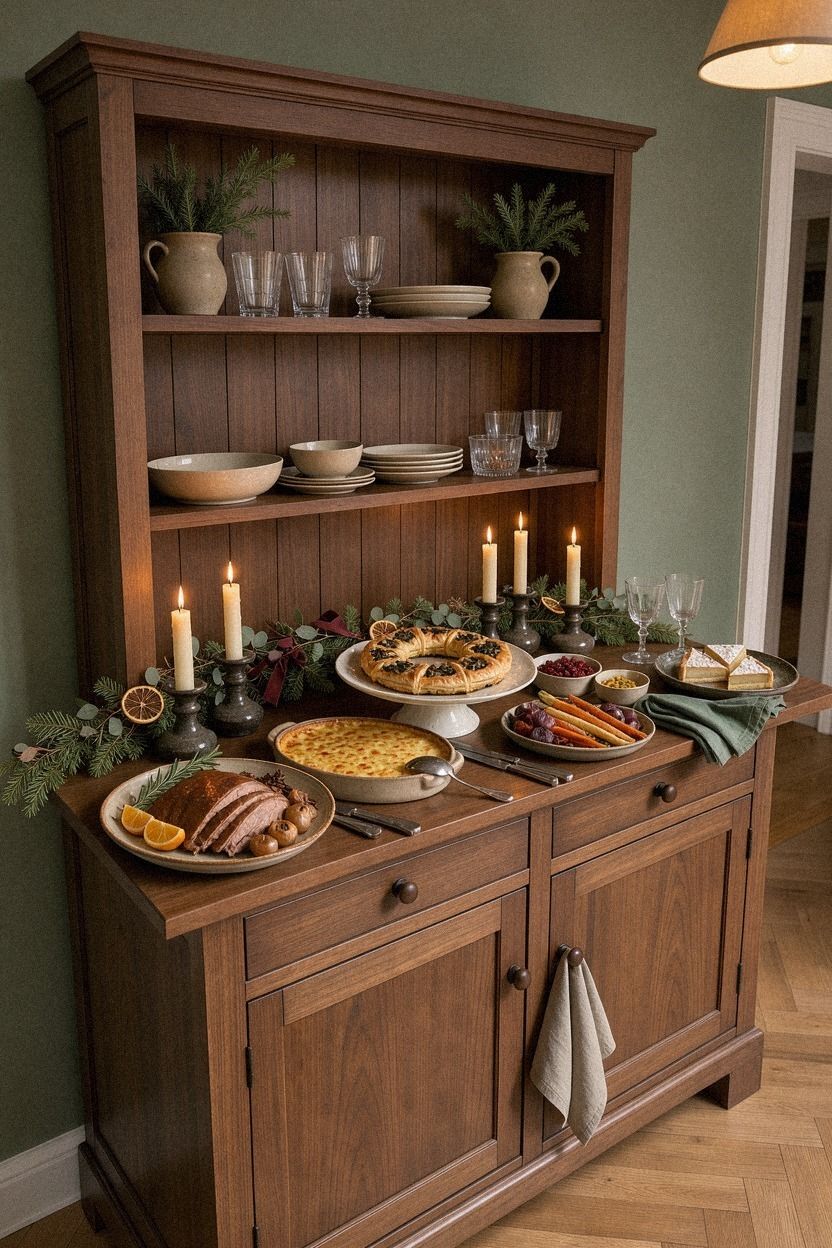
11 Ways to Dress a Christmas Buffet When There Is No Dining Table, Without Clutter
19 october 2026To dress a Christmas buffet when there is no dining table, give the buffet three jobs: food service, candlelight, and one memorable focal point. I used to pile every holiday object onto the surface and wonder why it felt cramped. Now I leave breathing room, repeat two materials, and keep the floor useful. Your buffet can feel warm, festive, and inviting without becoming a Christmas warehouse.
Editor's note: Start with the room’s limitations. Measure the walking path, decide where guests will reach for food, and choose one visual idea you genuinely love. For the strongest results, begin with the three-height light stack, then consider the painted backdrop, the serving zones, and the open floor plan.
- Build the Three-Height Light Stack for Christmas Buffet Tablescapes
- Layer a Runner Instead of Covering Everything
- Frame the Food with the Candle Halo Method
- Paint the Wall Behind It, Then Let the Buffet Breathe
- Float a Garland Above the Surface
- Follow the Two-Wood Rule for a Warmer Buffet
- Mix Christmas Party Buffet Tablescapes Around One Color
- Choose a Question Worth Asking: Can the Buffet Serve and Decorate?
- Swap More Decor for a Single Oversized Piece
- Create a Budget-Friendly Serving Zone
- Hang the Light and Keep the Floor Open
1Build the Three-Height Light Stack for Christmas Buffet Tablescapes
Start with three visible levels: something low, something medium, and one tall piece behind everything else. A shallow serving piece in translucent onyx can hold cookies or wrapped chocolates, while a 12-inch taper holder and a slim branch-filled vase create the height your buffet needs. You’ll see the arrangement from across the room, so the vertical shape matters more than the number of decorations.
I’d skip a row of identical Christmas trees. They’re cute, but they make your buffet look like a shop display. Use one tall vessel, one medium candle grouping, and one low serving piece instead.
If you’re working with an IKEA KALLAX sideboard, leave at least one full cube visually empty beneath it. That open square gives your eye somewhere to rest.
The low piece should be easy to reach. Try a bowl of clementines, a cake stand with shortbread, or a shallow dish of sugared nuts.
Your medium level can hold candles, napkins, or a small arrangement of winter stems. The tall piece should stay narrow enough that guests can see around it.
I like this method because it gives you a clear stopping point. Once the low, medium, and tall shapes are working, remove everything that doesn’t improve the composition. That one decision changes everything!
The best light stack isn’t complicated. It’s just varied enough to feel collected, luminous, and relaxed. If the surface still looks busy, use the single oversized piece as your edit.
Let the Light Carry the Mood
A buffet doesn’t need many decorations when the light is thoughtful. Place one warm lamp nearby, use unscented tapers around the food, or add a small battery candle inside an opaque vessel. Soft light makes ordinary black candlesticks look atmospheric and gives pale serving pieces a gentle glow.
Keep open flames away from trailing greenery, napkins, and children’s hands. Battery candles are especially useful at the front edge, where guests may reach across the surface. The result can still feel intimate, polished, and quietly magical.
2Layer a Runner Instead of Covering Everything
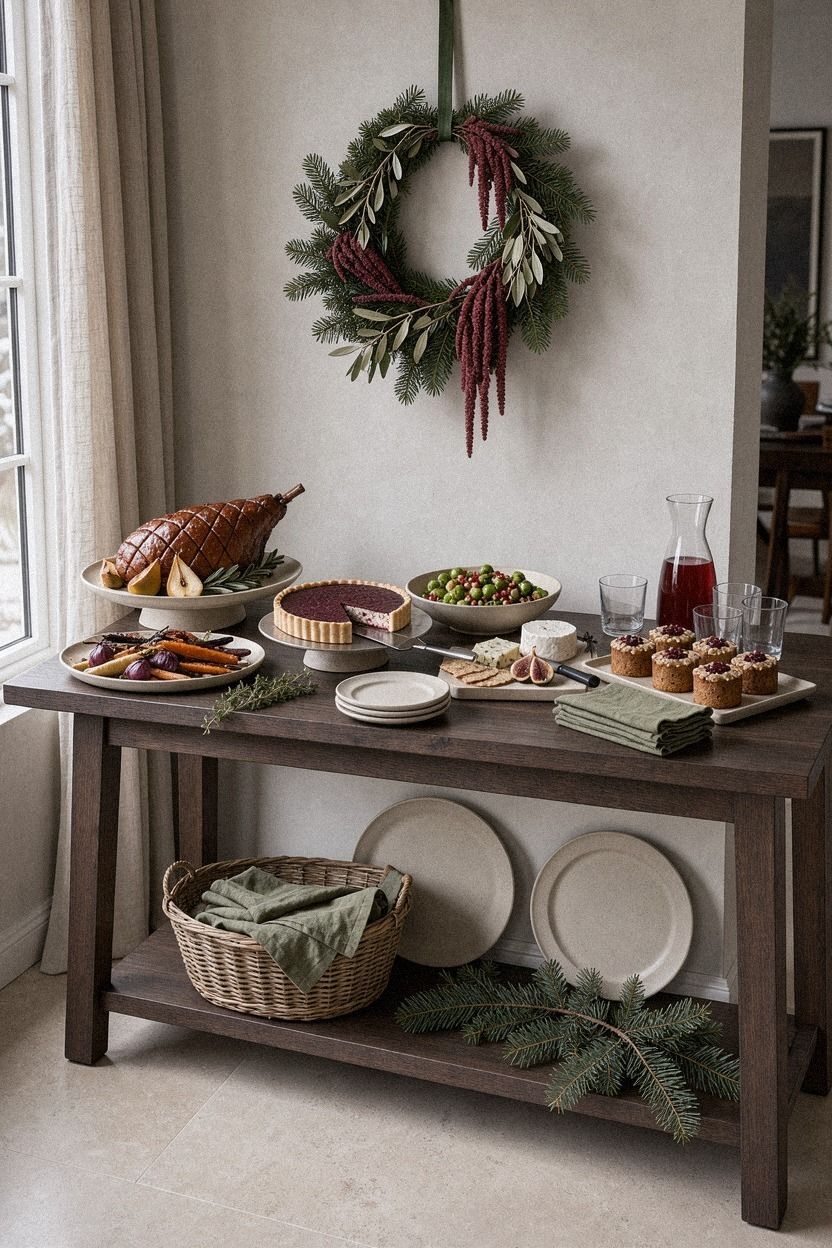
A narrow runner gives your Christmas buffet table decor a defined center without hiding the book-matched walnut underneath. Choose midnight-blue linen in a deep, inky shade, then let the walnut show at both ends. You’ll get softness and color, but the room won’t lose its architectural shape.
A full tablecloth is the weaker choice here. It can make a buffet feel like a temporary folding table, especially when there’s no dining table nearby to balance all that fabric.
I’ve tried one during a crowded holiday gathering, and the corners caught every sleeve that passed. A runner stays put and lets you serve food without wrestling the cloth.
Try this simple combination: linen runner, copper tray, green branches, and one bowl of clementines. If your room already has patterned curtains, you don’t need another print. The buffet will feel calmer when the textile is quiet and the food supplies the color.
Pay attention to the runner’s width. It should frame the arrangement without swallowing the serving area.
For a narrow piece, a 12- to 16-inch runner usually leaves enough exposed surface for plates and serving spoons. If the fabric slides, place a thin non-slip mat underneath where guests can’t see it.
You can also fold a wider textile lengthwise. I’ve done this with an ivory vintage tablecloth, and the thicker fold looked intentional rather than improvised.
Press the fabric, soften the ends, and let one small crease remain. A little texture makes the scene feel welcoming and lived-in.
Keep the Serving Strip Visible
The center of the buffet should remain useful, not merely attractive. A clear strip beside the serving zones gives guests room to set down a plate, scoop potatoes, or pass a dish without knocking over a decoration.
Choose washable textiles if the buffet will carry gravy, mulled cider, or chocolate desserts. Cotton canvas is more forgiving than delicate velvet, while linen becomes increasingly charming as it softens. Practical texture can still look refined.
3Frame the Food with the Candle Halo Method
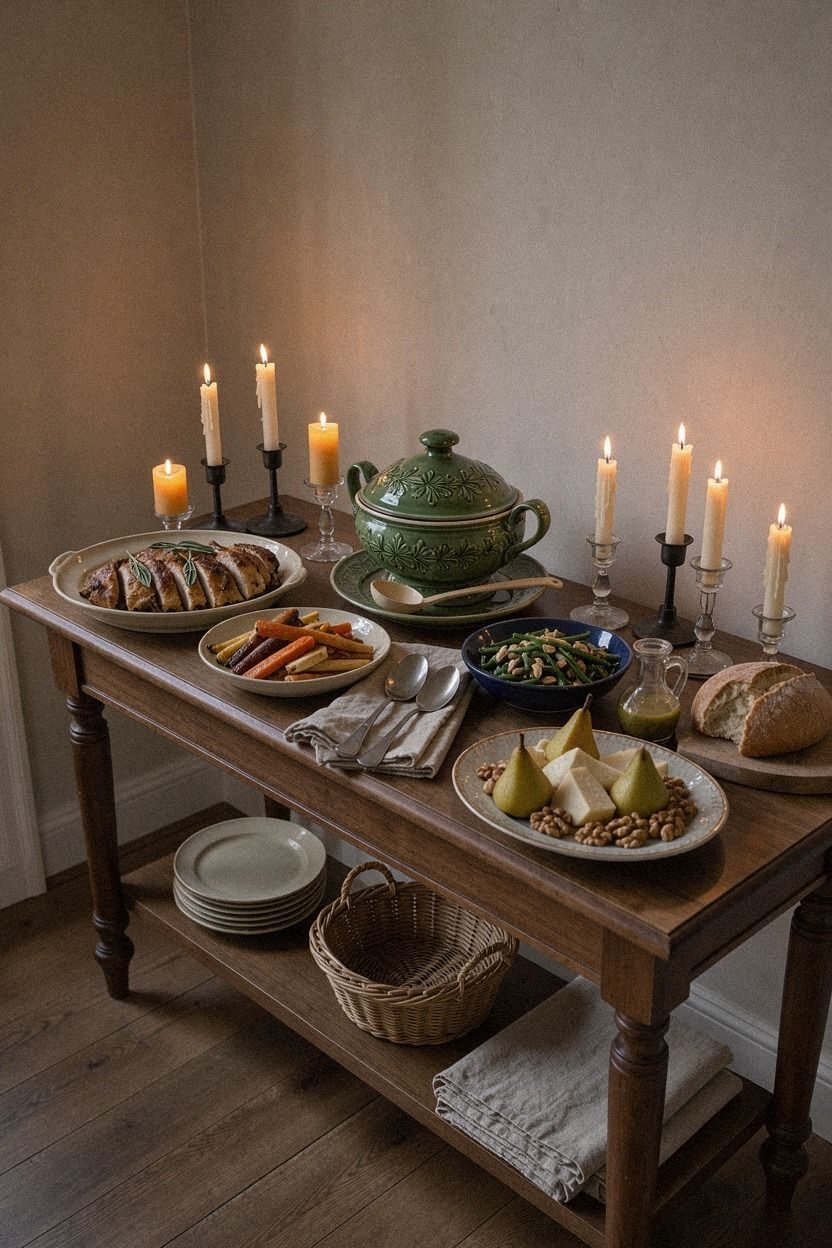
Place candles around the food rather than directly in front of it. A few warm-cream candles beside a warm travertine serving riser can define the food without hiding it.
Build a Clear Sightline
Guests should be able to see the food as soon as they approach. Keep tall objects toward the wall, medium objects beside the dishes, and low objects at the front. This simple arrangement connects the light stack to the practical needs of the buffet.
Avoid tall greenery directly in front of the main dish. A narrow sage-green branch arrangement at one end can add movement without turning the surface into an obstacle course. The display will feel more graceful when the food remains obvious.
4Paint the Wall Behind It, Then Let the Buffet Breathe
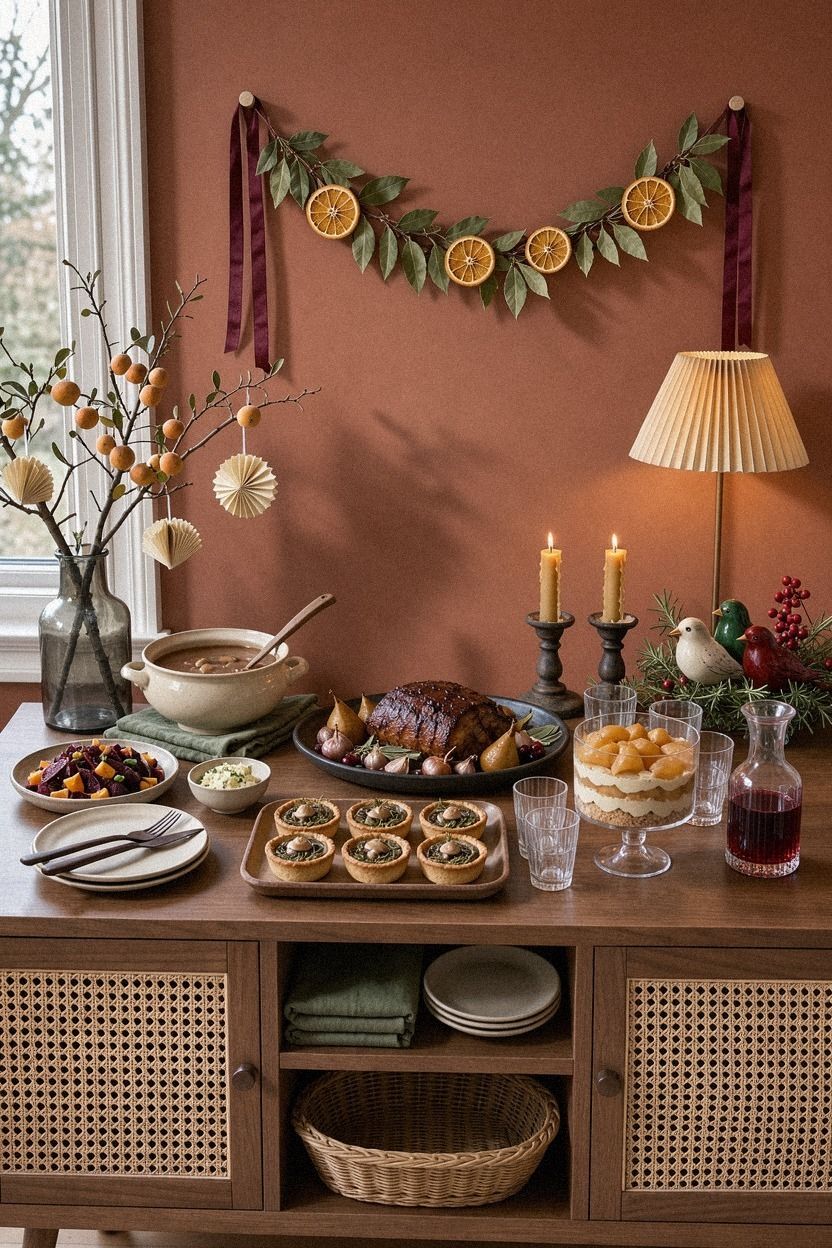
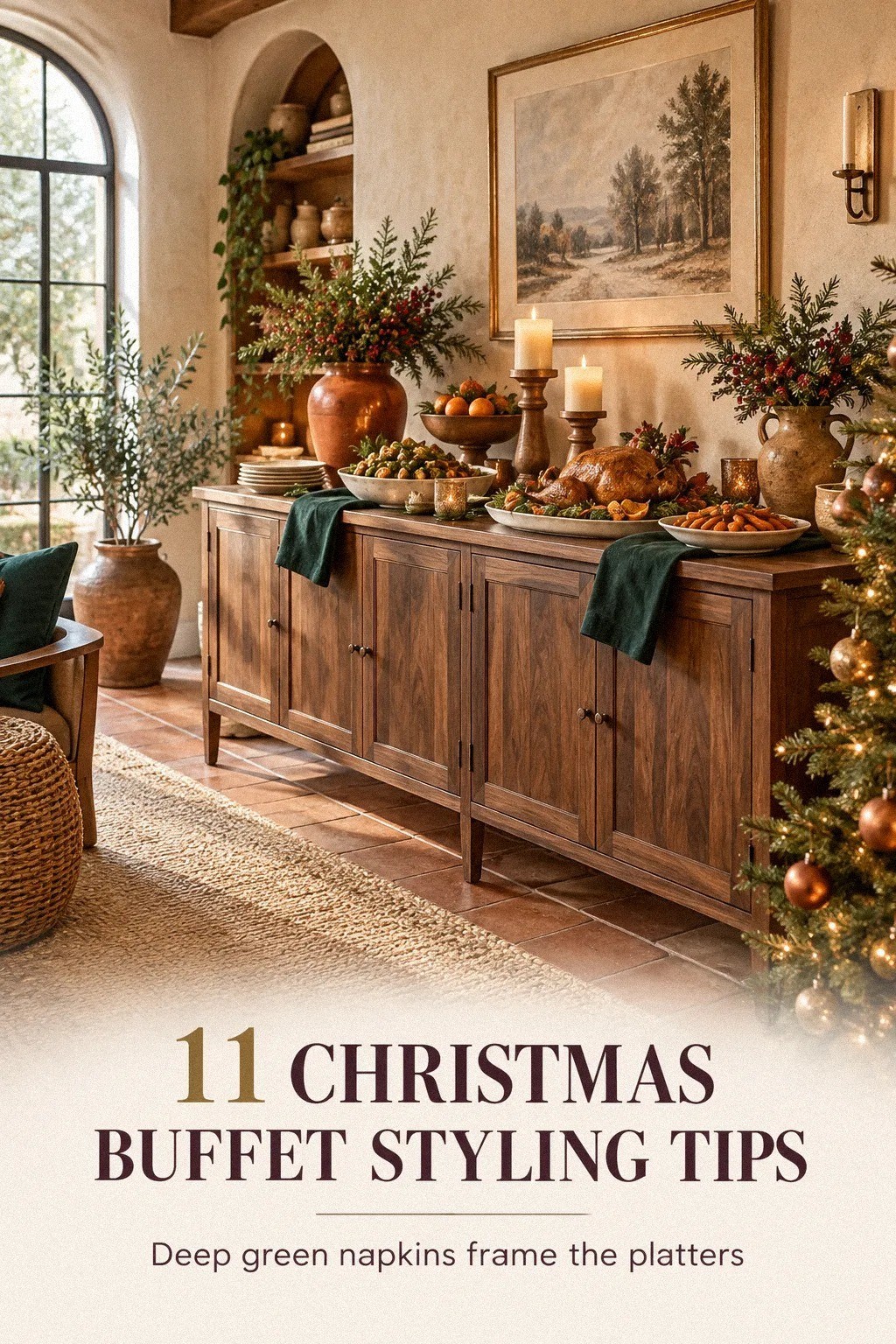
A painted backdrop can make a small Christmas party buffet tablescape feel intentional, even when the buffet is the only substantial furniture in the room. Farrow & Ball Red Earth No. 64 gives terracotta depth without turning the wall brown, while Benjamin Moore Saybrook Sage HC-114 feels calmer and more olive-toned. You don’t need to repaint the whole room if a single accent wall will do the work.
I’d avoid hanging a crowded gallery wall directly behind the food. Frames compete with serving platters, especially when guests are moving through the space.
Instead, use one oversized mirror with an unlacquered brass frame or a single piece of winter landscape art. The brass will develop a gentle patina, and the reflective surface will bounce candlelight around without adding another lamp.
If you’re renting, removable wallpaper or a large textile can create the same backdrop. Your goal isn’t permanent renovation. It’s giving the buffet a visual boundary so the decorations don’t seem to float against an empty wall.
Before you commit to a strong color, test it beside your greenery and serving dishes. A deep terracotta can look elegant beside stone ceramics and olive branches, yet muddy beside gray metal.
I always check paint in morning light, afternoon light, and candlelight. The right color will feel rich after sunset rather than merely dark.
You can also use the wall as a quiet contrast. A warm terracotta backdrop makes pale plates look crisp.
A chalky stone wall makes olive greenery and aged brass feel cheerful. The buffet will appear more finished when the wall supports the arrangement instead of competing with it.
Use One Backdrop Element
A mirror, textile, or broad painting is enough. More than one large backdrop element can create a busy vertical field behind the food, especially when the buffet already has branches and candles.
A weathered landscape print adds depth without demanding attention. If the room is already dark, choose a reflective mirror with unlacquered brass or a warm stone textile instead. The backdrop should make the buffet feel grounded, serene, and deliberate.
5Float a Garland Above the Surface
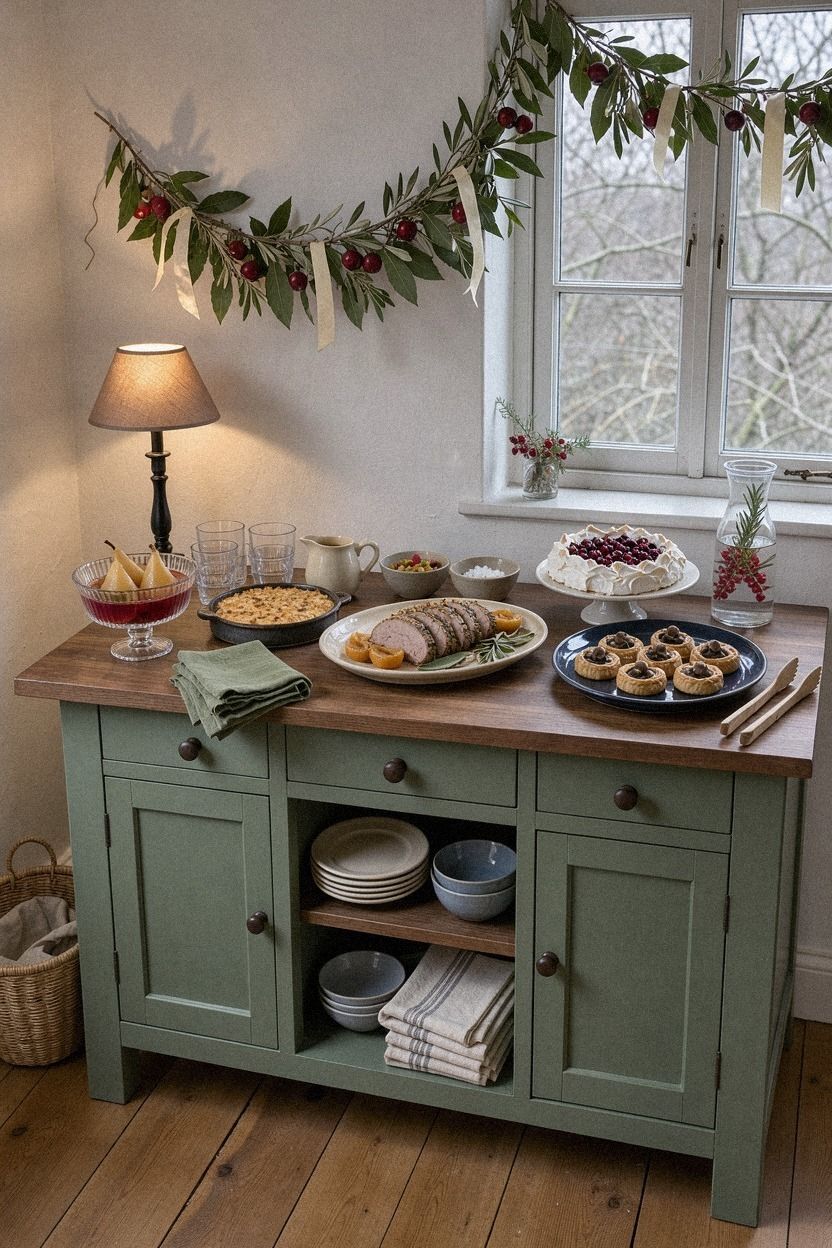
A garland doesn’t have to sit on the buffet. Hang one several inches above it and keep the full serving area clear for your Christmas food table display.
A slim branch of cedar, eucalyptus, or faux pine can run beneath a mirror or an oversized-chip terrazzo ledge. You’ll get seasonal texture without sacrificing space for plates.
Choose cedar garland with wired stems if you want a shape that stays lifted. It can be bent into a gentle line instead of falling in a heavy green mound.
I’d skip thick tinsel here. It catches the light, sure, but it can make a small room feel visually noisy and dated.
If you’re using fresh greenery, protect the wall with a discreet hook and keep the cut ends away from painted surfaces. Your buffet should feel easy to use, not like a display you’re afraid to touch. A little droop is fine.
Perfect symmetry would look less lived-in.
For a more refined effect, let the garland dip slightly toward one side. That small change gives the arrangement movement and keeps it from looking like a straight border. You can repeat one detail from the surface, such as a clay-toned linen ribbon, but use it sparingly.
If your room has low ceilings, keep the garland close to the wall and avoid a bulky swag. If the ceiling is tall, a slightly longer line can balance the vertical space. I’d rather see one beautiful branch with visible shape than a thick mass that hides the wall.
Give the Greenery Somewhere to Go
The most successful garland has a visual destination. Let one end finish near a mirror, painting, or hanging light, while the other end fades naturally above the buffet. This makes the line feel intentional rather than abruptly cut.
A slender eucalyptus branch works well in a smaller room because its gray-green leaves are airy. Cedar feels fuller and more traditional. Add one aged-brass detail only if the colors and textures support one clear direction.
6Follow the Two-Wood Rule for a Warmer Buffet
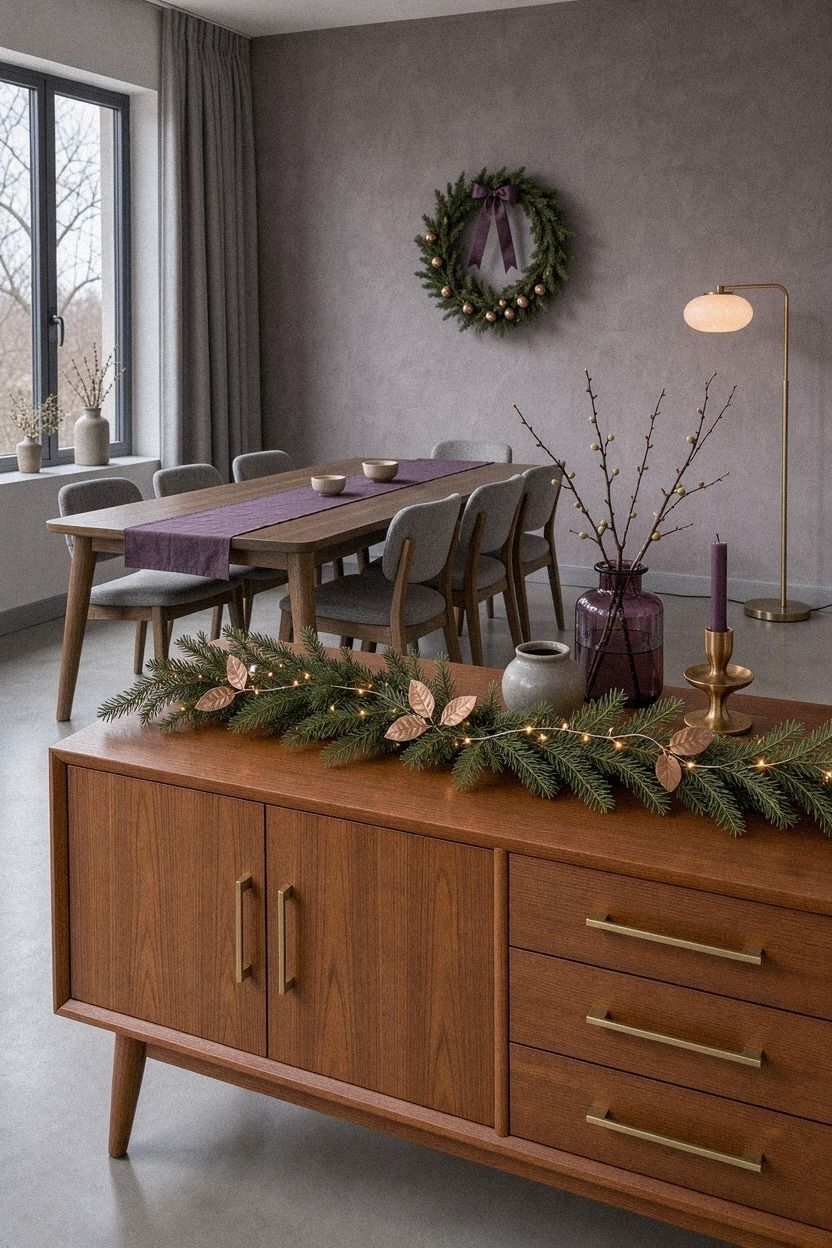
Repeat two wood tones against a hand-applied Venetian plaster backdrop and stop there. A grey-toned oak tray can echo a darker walnut frame, while a small rose-gold bowl bridges the colors. This works because your eye recognizes a relationship instead of sorting through six unrelated finishes.
The rule is simple: one light wood, one dark wood, and no third competing stain. I learned this after combining red oak, honey pine, and a gray-washed ornament stand.
Nothing was terrible by itself, but together the buffet looked accidental. If you’ve got an IKEA HEMNES sideboard in a warm finish, add pale birch or a grey textile rather than another orange-toned object.
You don’t need a full wood collection. Your cutting board, tray, bowl, or framed art can carry the second tone. That small repetition will make the arrangement feel more sophisticated and earthy, even when most of the decoration came from a storage bin.
Wood also softens the harder surfaces that usually gather around holiday food. Glass, metal, and ceramic can look crisp, but too much of them may feel cold. A grey-washed serving board gives the buffet a grounded, generous quality and makes even simple bread or fruit look special.
When you’re unsure which wood to keep, remove pieces one at a time and photograph the surface from the doorway. The strongest combination usually becomes obvious from a distance. Your buffet should read as calm and deliberate before anyone examines the individual objects.
Material repetition feels more natural than matching ornaments. Let the hand-applied Venetian plaster establish the tactile quality behind the buffet, then echo its quiet grey tone in a tray or textile.
Leave the rest of the objects varied. The relationship will register quietly.
This approach also helps when you’re decorating with what you own. A walnut bowl, a pale wooden board, and a plum linen runner can create a warm, cohesive foundation without a shopping trip. It’s restrained, tactile, and surprisingly luxurious.
7Mix Christmas Party Buffet Tablescapes Around One Color
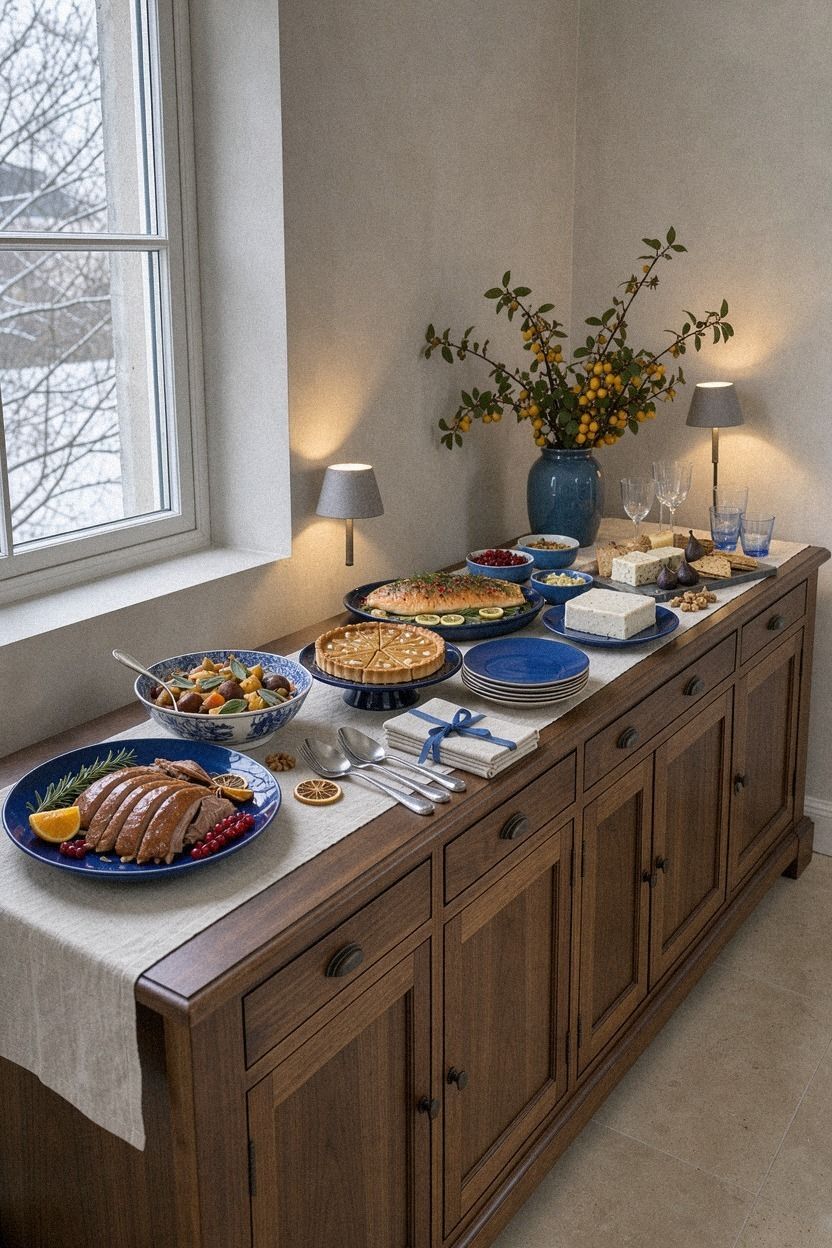
Pick one strong holiday color and let the rest support it. Navy works with white, walnut, and muted brass.
A soft white can sit beside dark wood without feeling stark. Benjamin Moore Hale Navy can handle walnut, cream, and natural greenery without looking too bright.
I’d avoid mixing red, silver, gold, blue, and green equally. That combination can be festive, but it rarely feels peaceful in a room without a dining table to anchor it.
Choose navy linen ribbon for napkins or branches, then repeat that shade in only two other places. Your eye will read the color as a thread rather than a pile of unrelated decorations.
But don’t make every item match. One checked textile or hand-painted ornament gives the display a little personality. If you’re styling with children, let their handmade piece be the odd note.
That’s often the object guests remember, and it won’t cost you anything.
You can build a quieter palette around winter white, walnut, and natural greenery. That combination feels soft, calm, and slightly nostalgic.
For something more dramatic, add a small shagreen accent in navy or charcoal. The key is choosing one emotional direction before you shop.
I also like using food as part of the palette. Red apples, pale pears, oranges, figs, and rosemary can provide beautiful color without looking overly decorated. Your buffet will feel more generous when the festive shades are edible, useful, and easy to replenish.
Let Food Become Part of the Palette
Food brings life to the arrangement. A bowl of pale pears can soften a navy-and-walnut display, while rosemary creates a fresh, abundant look. Edible color feels less staged and more welcoming.
Use the same restraint with serving ware. One patterned platter is enough if the rest of the dishes are quiet. A white stoneware bowl lets the food look vibrant and keeps the overall mood soft.
8Choose a Question Worth Asking: Can the Buffet Serve and Decorate?
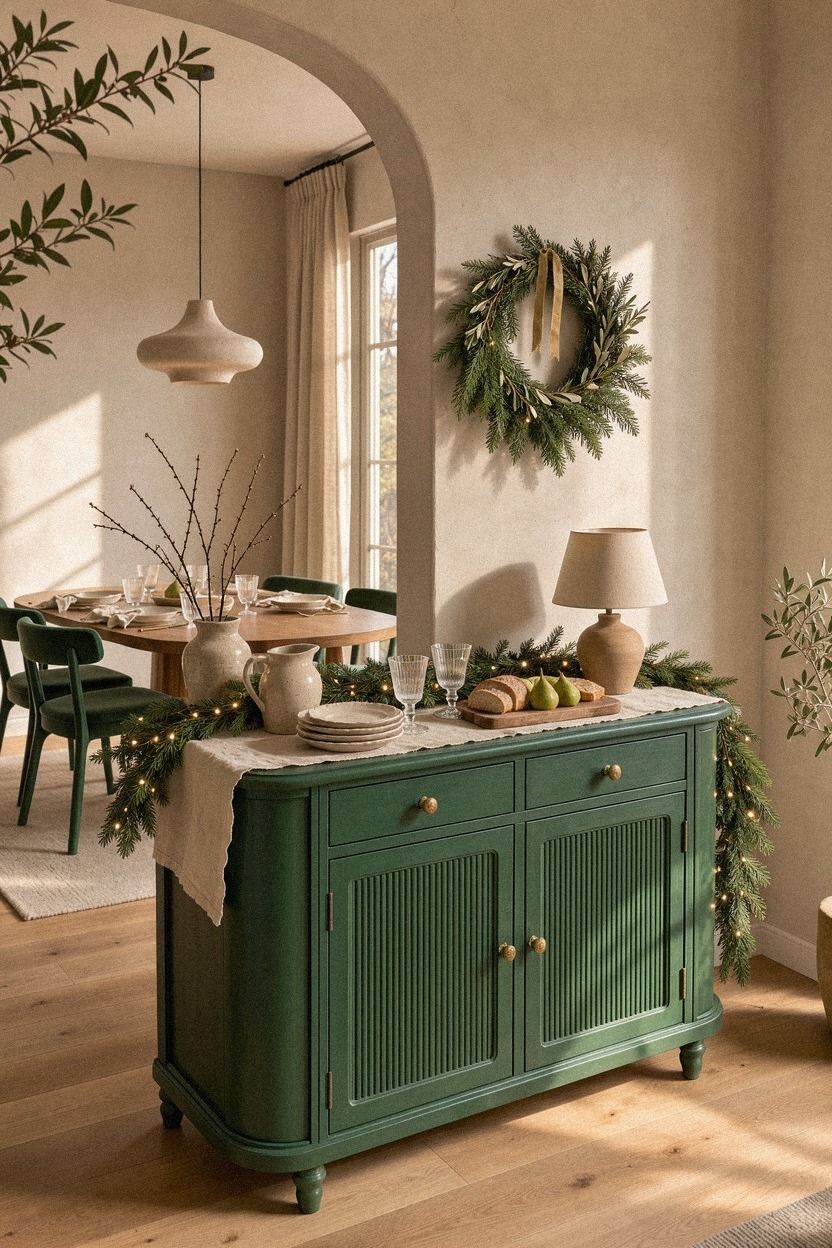
Yes, but only if you divide the surface into zones. Keep the center open for the main food or drink station, place napkins and utensils at one end, and reserve the opposite end for decoration. Your guests will understand the arrangement without needing a sign.
Use washed Belgian linen beneath a bowl or cake stand to create a soft, tactile zone. Its relaxed texture brings warmth to the display without making the serving area precious. I’d skip delicate stacked books under food, because spills and crumbs will turn the styling into a cleanup problem.
Leave at least one clear landing place for a serving spoon or hot dish. You’ll thank yourself when people arrive. A buffet is still working furniture, and the prettiest arrangement is the one your guests can use without apologizing every time they reach across it.
I usually divide the surface into three practical areas. One holds the main dish.
One holds plates, napkins, and utensils. The third carries the decorative moment, such as an emerald-glazed vessel or a low bowl of fruit.
These zones can overlap slightly, but they shouldn’t compete.
Think about traffic, too. If guests approach from both sides, keep tall objects toward the back and place handles toward the room.
If everyone approaches from one end, put plates first, food in the middle, and drinks or napkins at the far side. Your layout should quietly answer the question, “What do I do next?”
Make the First Reach Obvious
Put plates before food, then utensils, then napkins if guests approach from one direction. A low gold tray can group the small items and prevent them from drifting across the surface.
When people can understand the sequence instantly, the buffet feels generous instead of chaotic. That small bit of hospitality makes the whole room feel easier.
9Swap More Decor for a Single Oversized Piece
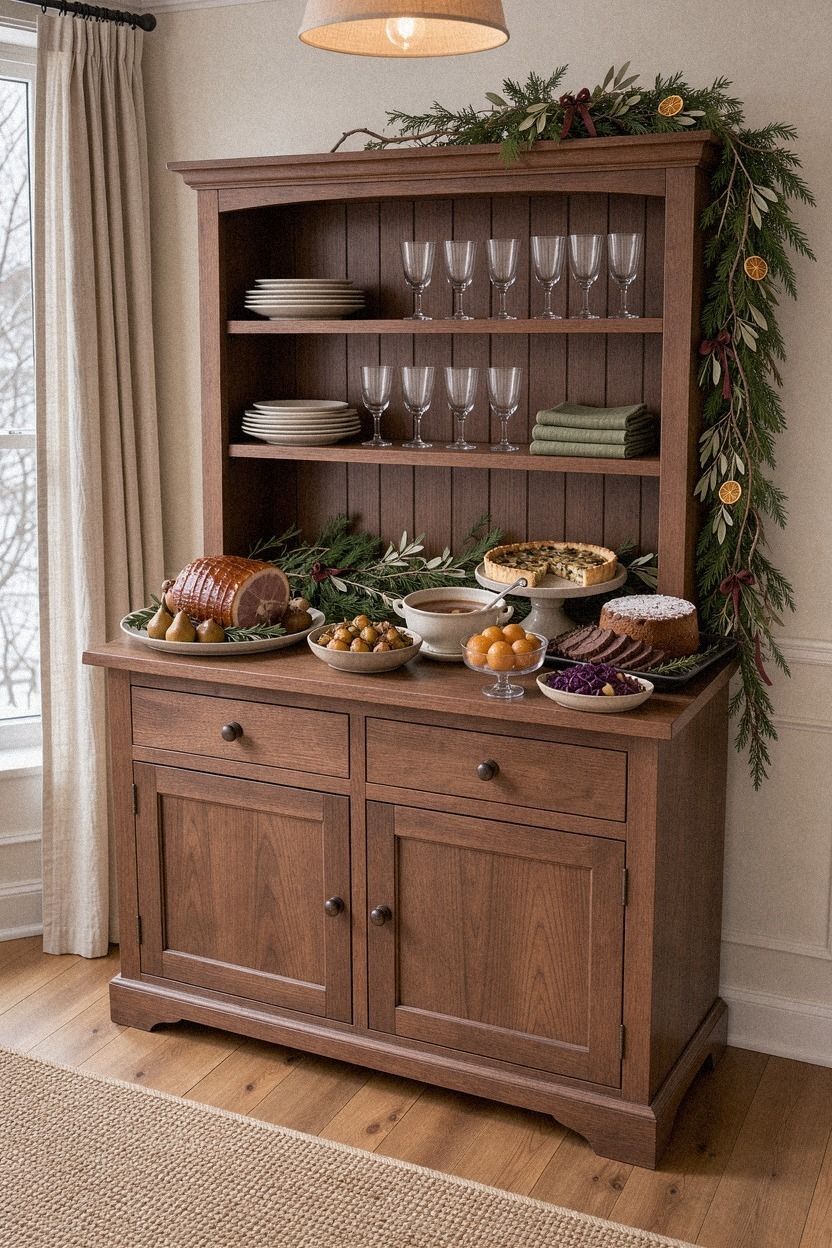
One oversized object can carry the visual weight that six small objects can’t. Try a large natural-oak vessel filled with bare branches, a tall framed print, or a broad wooden bowl of pinecones.
Add one small organic-bouclé textile nearby if the surface needs softness. You’ll create a focal point, and the rest of the surface can stay quiet.
This is especially useful when your buffet is less than 60 inches wide. Small decorations quickly become a line of clutter, while one substantial piece gives the arrangement a clear center. I’d choose a matte natural-oak finish rather than glossy ceramic, because it looks richer beside candlelight and doesn’t compete with glass serving pieces.
If you’re shopping your house, look at floor vases, umbrella stands, or a large basket. Your holiday styling doesn’t need a holiday label on every object. A useful everyday piece can feel festive once it holds cedar, paper stars, or a few bare magnolia branches.
Scale matters more than price. A secondhand vessel with a generous silhouette can feel far more impressive than several expensive little ornaments. I’ve found that an oversized oak basket often gives a narrow room warmth without making the surface feel precious.
Choose one object with an interesting shape, finish, or history. Then let it remain visible. Your eye needs somewhere to land, and guests will appreciate the confidence of an arrangement that doesn’t keep asking for attention.
Give the Focal Point Room
Move small objects away from the oversized piece instead of clustering them around it. Negative space makes the main object feel intentional, substantial, and special.
A natural-oak bowl works beautifully when the buffet already has a tall branch arrangement. A small organic-bouclé textile nearby adds warmth without competing with the bowl. The result is quiet, balanced, and memorable.
10Create a Budget-Friendly Serving Zone
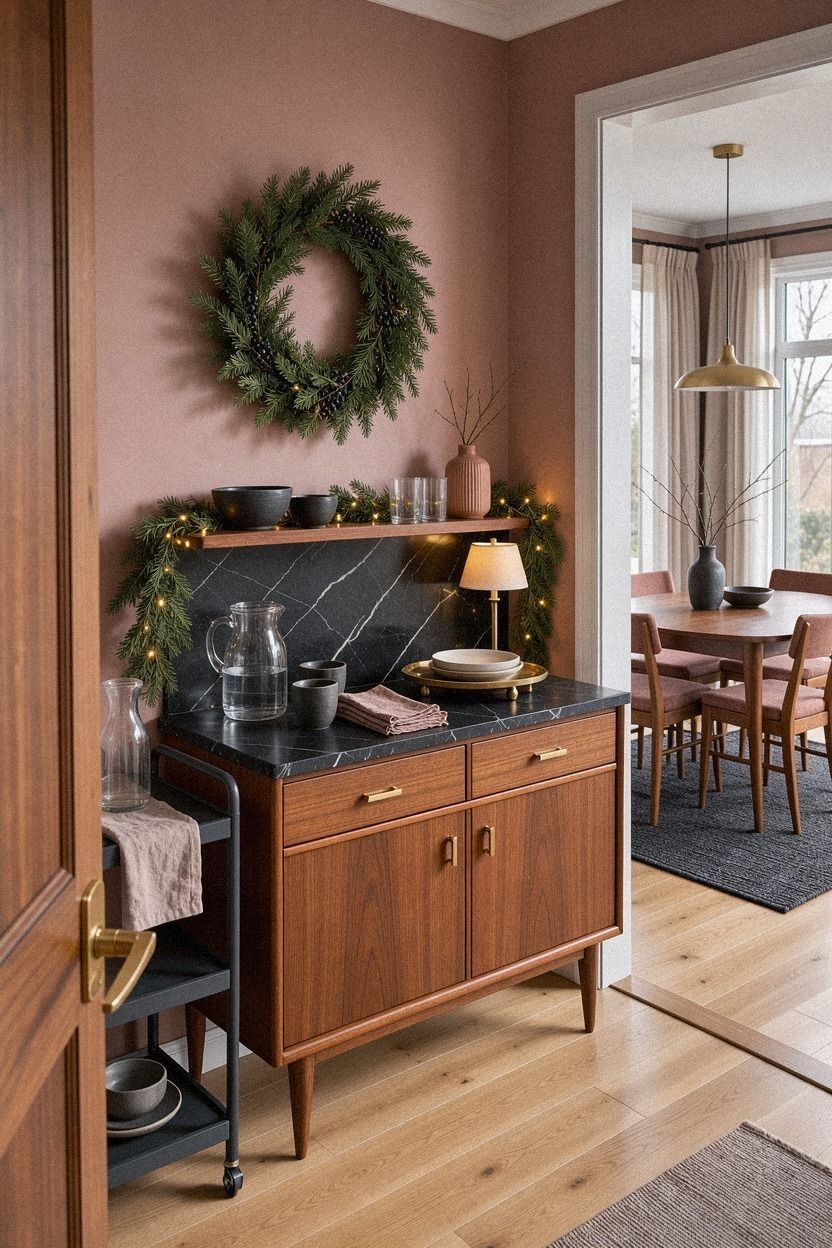
You can dress the buffet with a modest budget if you spend on the pieces guests touch and reuse what you already own for atmosphere. A thrifted tray, borrowed candlesticks, and grocery-store greenery can cover the visual foundation, while one good serving bowl carries the food.
Here are typical US room-furnishing costs for context. They’re broader than a seasonal buffet refresh, but they help you see where a purchase sits financially.
For your buffet, I’d stay close to the budget end and put the money toward a small Nero Marquina black marble serving board with white veins or a serving piece you’ll use beyond December. Zero cost: branches, books, bowls, and ornaments you already have.
Budget-friendly: thrifted brass, Target textiles, and a secondhand tray. Your arrangement will feel more personal when every object doesn’t come from the same aisle.
A small budget rewards editing. Wash the bowls you own, polish one candlestick, and group similar items together before you buy anything. You may discover that the room needs only a vintage brass tray or a fresh bunch of greenery.
If you do shop, choose objects that can work after the holidays. A handsome pitcher, linen runner, black marble board, or wooden bowl can serve you through birthdays, spring lunches, and ordinary weekends. I’d rather purchase one durable item with a beautiful finish than six seasonal pieces that need storage.
You can also make the food part of the styling. A bowl of oranges, a loaf of crusty bread, or a plate of cookies feels abundant and cheerful. Your guests will notice the generous welcome before they notice whether the candlesticks match.
Spend on What Guests Touch
Serving pieces deserve the budget because they work hard. A Nero Marquina marble board or a well-made platter will be used throughout the year, while seasonal ornaments may spend eleven months in storage.
Look for durable materials with forgiving finishes. Stoneware, linen, black marble, and aged brass become more beautiful through ordinary use. It works!
11Hang the Light and Keep the Floor Open
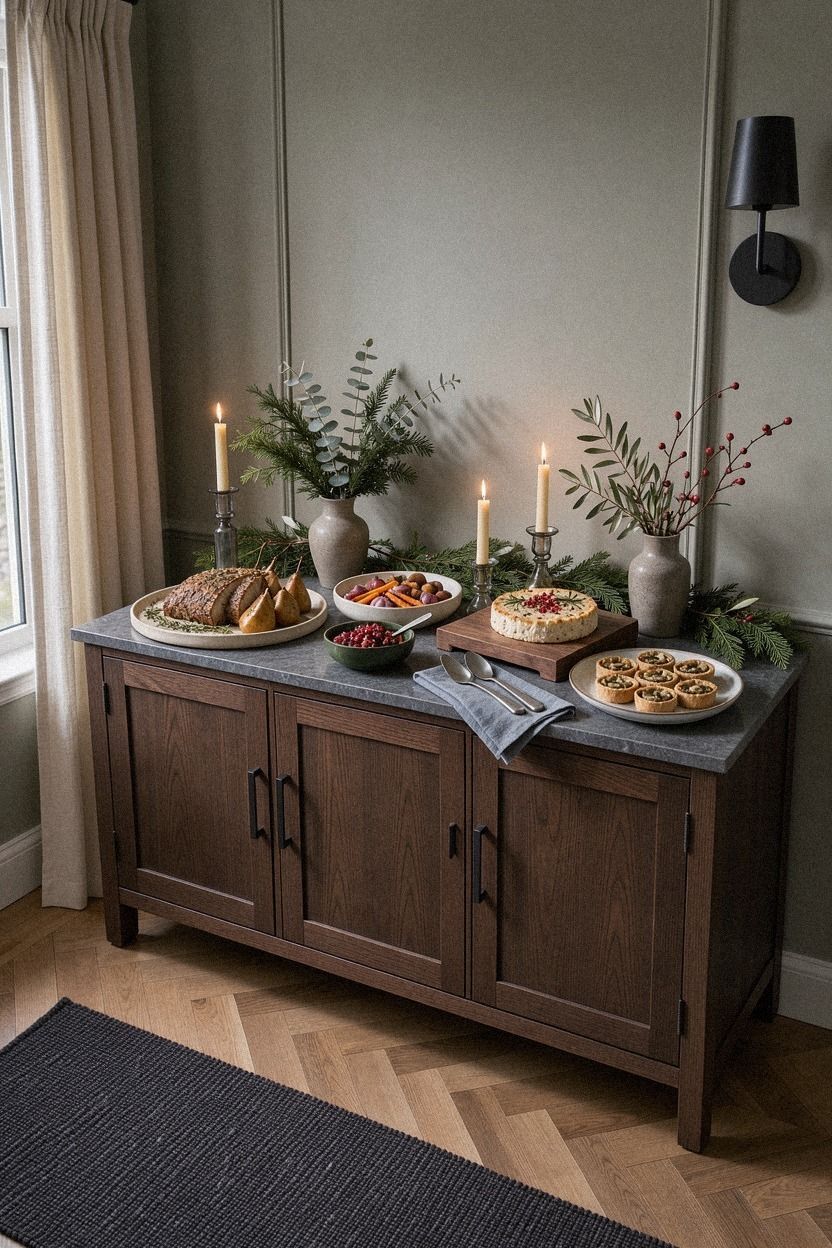
When there’s no dining table, the floor often becomes the forgotten part of the room.
Check the Room from Every Approach
Stand at the entrance, the serving position, and the place where guests will sit or gather. Look for blocked handles, glare on glass, and any tall object that interrupts conversation.
A deep-pile mohair velvet stool can make the entire corner feel finished while giving guests somewhere to sit briefly. If you can see the food, reach it comfortably, and walk around the buffet without hesitation, the room is ready.
The Design Choice I’d Make After Styling Eleven Buffets
I used to believe a Christmas buffet needed more decoration because it didn’t have a dining table nearby. The opposite is usually true.
Without a table, the buffet becomes the room’s main horizontal surface, so every extra object shows. The arrangement needs a stronger edit, not a bigger collection.
My favorite version uses one tall branch arrangement, one low serving piece, and a warm light source. That’s enough structure to feel festive, but it still leaves room for food, napkins, and the inevitable bowl someone brings at the last minute.
I’ve learned that the practical pieces shouldn’t be hidden. A cake stand, a stack of plates, and a handsome pitcher can be the decoration when their materials are right.
I’d choose a warm white wall with camel textiles and black accents over a bright red wall because the softer palette gives the greenery somewhere to settle. I’d choose deep-pile mohair velvet over shiny polyester, aged brass over matching gold, and one handmade ornament over twelve identical ones.
Those choices aren’t about being precious. They make the buffet feel like part of your home instead of a seasonal set.
The most successful Christmas party buffet tablescapes also leave room for imperfection. A branch leans. Someone moves the candle.
The cookies disappear. That movement is the point.
Your display should support the gathering, and nobody should feel nervous about using it.
If your budget is tight, start with the light and the backdrop. If your buffet is narrow, start with the vertical shape.
If your room feels busy, remove one object before you buy another. A little restraint will make the materials, color, and food feel more generous.
A Few Things Worth Answering
What is the best Christmas buffet setup for a small dining room?
The best setup uses one narrow buffet, a vertical mirror or branch arrangement, and a clear serving zone. An IKEA KALLAX or Article Sven piece can work if you keep the styling shallow. Open surface space matters more than extra decoration, so leave the center usable for food.
Where can I buy Christmas buffet pieces on a budget?
Look at IKEA, Wayfair, and Target for runners, trays, and simple serving pieces. Facebook Marketplace and thrift stores are better for brass candlesticks, wood bowls, and mirrors. You’ll often find more character secondhand, and your display won’t look like every other holiday arrangement.
How much does a Christmas buffet makeover cost?
A seasonal refresh usually costs about $100 to $300 if you already own the buffet and serving dishes. Fresh greenery, candles, textiles, and one new vessel make the biggest difference. You can spend nothing by using branches, bowls, books, and ornaments you already have.
Can I create a Christmas buffet on a budget?
Yes, and you can start with three free moves: rearrange existing bowls by height, gather branches from your yard where permitted, and use a lamp or candles you already own. Add a thrifted tray or linen runner only if the surface still needs texture.
Is a Christmas buffet worth it in a small space?
Yes, because a small room benefits from one organized focal point. Keep the buffet shallow, use vertical decoration, and protect a clear walking path. You’ll gain a serving station and seasonal atmosphere without bringing in a dining table that the room can’t comfortably hold.
Is a Christmas buffet a good idea for a rental?
Yes. Use removable hooks, peel-and-stick wallpaper, tension rods, and freestanding mirrors instead of drilling or painting permanently. A plug-in sconce can add warmth, and a removable cable cover keeps the cord tidy.
Your rental can feel personal without creating a repair project later.
Where I’d Start First
If I had to pick one, I’d start with the three-height light stack. A low platter, medium candle, and tall branch arrangement make even a narrow buffet feel deliberate, and the varied levels keep you from filling every inch. Clear one surface tonight and test it with what you own.
Then step back. Look at the buffet from the doorway, from the entrance guests will use, and from the place where you’ll serve food. Remove anything that blocks the light, interrupts the color story, or makes reaching uncomfortable.
The goal is a warm, practical, memorable Christmas corner. When the food is easy to find, the floor stays open, and the decorations feel personal, the whole room becomes more welcoming. That’s the kind of festive atmosphere worth creating.


