Narrow Hallway Eating Your Entryway? 13 elfa Kits Fix It
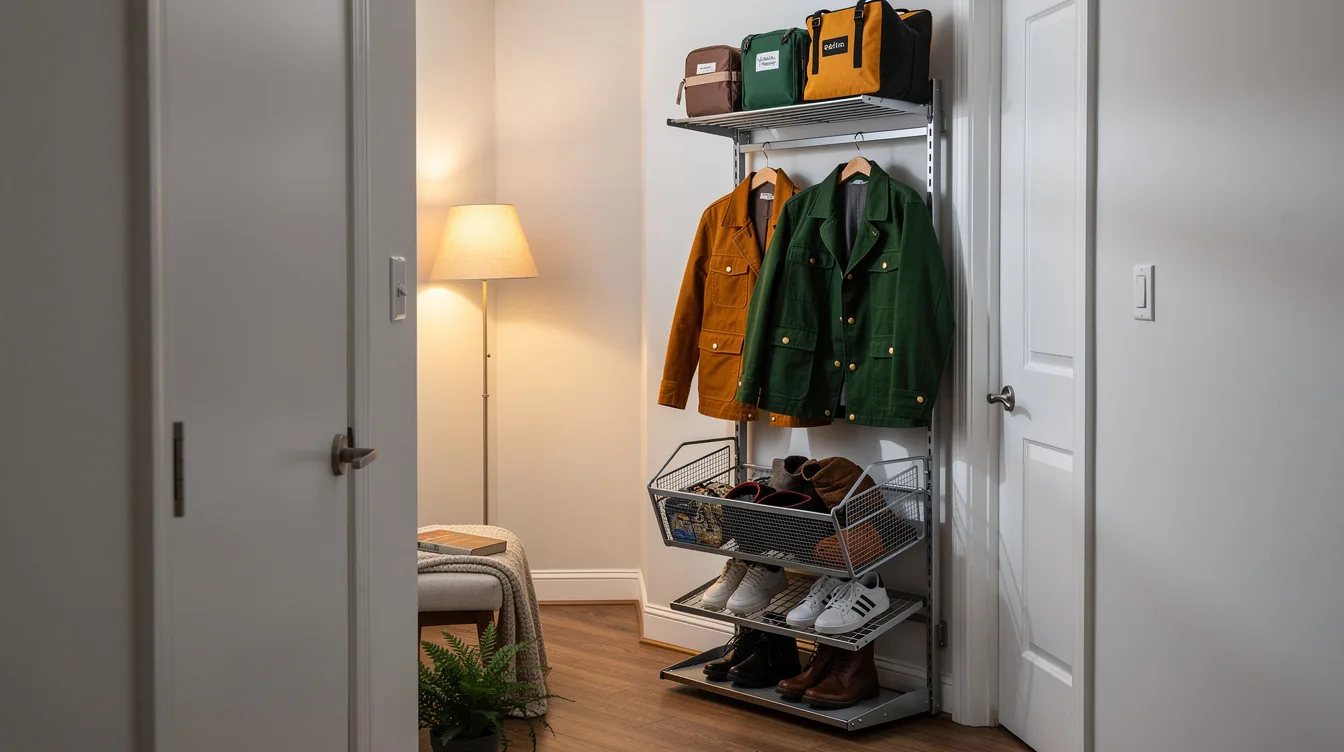
05 october 2026A hall only about 15 inches deep can hold coats, shoes, and daily bags, but a standard closet rod will quickly make the passage feel blocked. Elfa works best here as an open landing zone: front-facing hooks above shallow shoe storage, with one high shelf for seasonal overflow.
The right layout depends on the wall width and the depth you can spare. These rules sort the practical single-bay wall from the larger two-bay and family setups, with realistic capacity and typical U.S. Pricing.
What you will find inside
- Measure for a 15-Inch Landing Zone
- Choose Hooks Over a Side-Hanging Rod
- Build One Continuous Top Shelf
- Angle the Shoe Shelves Forward
- Add a Floor Tray for Wet Footwear
- Reserve a Mesh Basket for Small Gear
- Use the 49-Inch Two-Bay Layout
- Upgrade a Compact Home with Décor+
- Move Deep Storage into a Recess
- Give Family Storage Its Own Wall
- Separate Daily Coats from Seasonal Items
- Price the Kit Before Ordering
- Keep the Walking Route Uninterrupted
Measure for a 15-Inch Landing Zone
A genuinely narrow hall needs an Elfa layout about 15 inches deep, with the storage mounted to the wall instead of projecting into the walking route. Aim for roughly 47 to 49 inches of width, about 84 inches of height, and a clear passage near 32 inches whenever the floor plan allows it.
This shallow footprint handles everyday outerwear and shoes without pretending to be a full closet. Designers would rather see a compact setup that stays usable than a deeper installation that makes every trip through the hall feel cramped.
Choose Hooks Over a Side-Hanging Rod
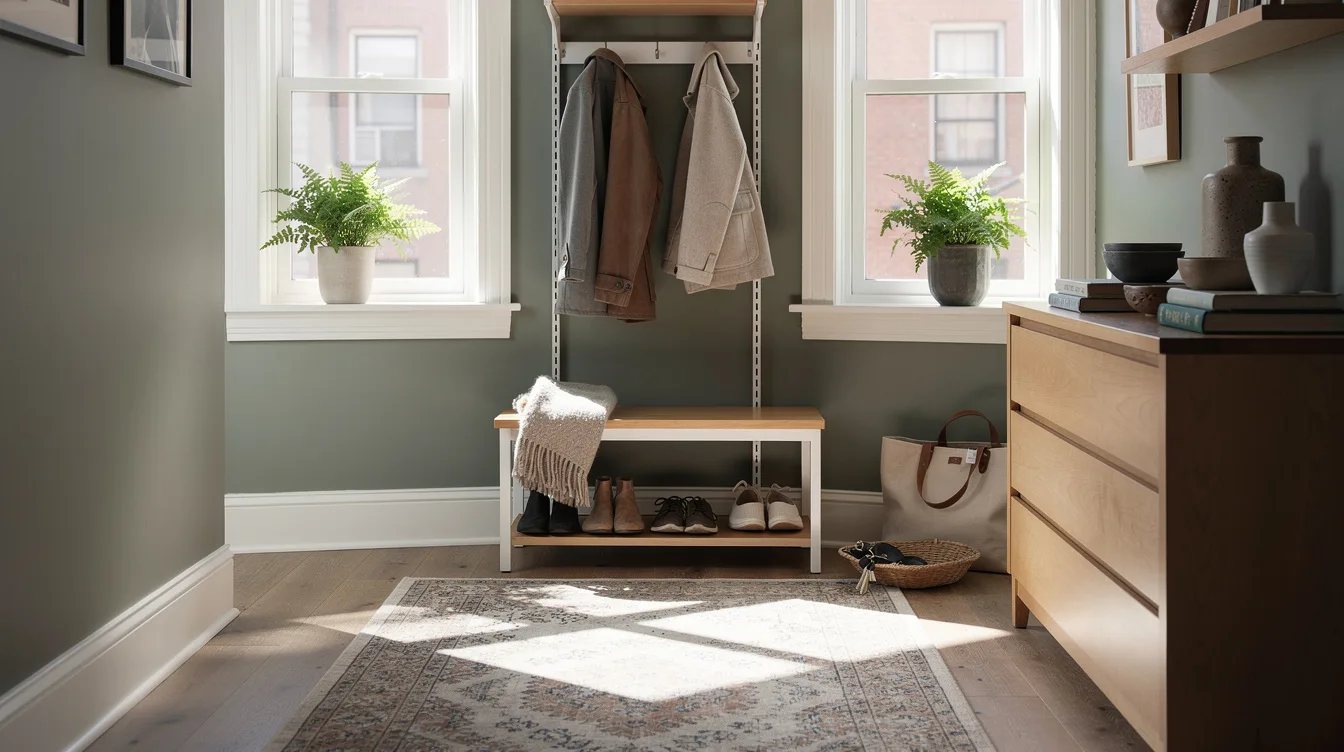
A conventional coat rod with hangers usually needs about 14 to 15 inches of depth before the coats even begin to swing into the room. In a narrow hall, use front-facing hooks or a front rail so jackets sit against the wall rather than turning the passage into an obstacle course.
Place five to eight hooks below the upper shelf, depending on household size and wall width. Hooks are the right daily solution for school coats, light jackets, and bags, while a deeper wardrobe belongs in a recess or a separate room.
Build One Continuous Top Shelf
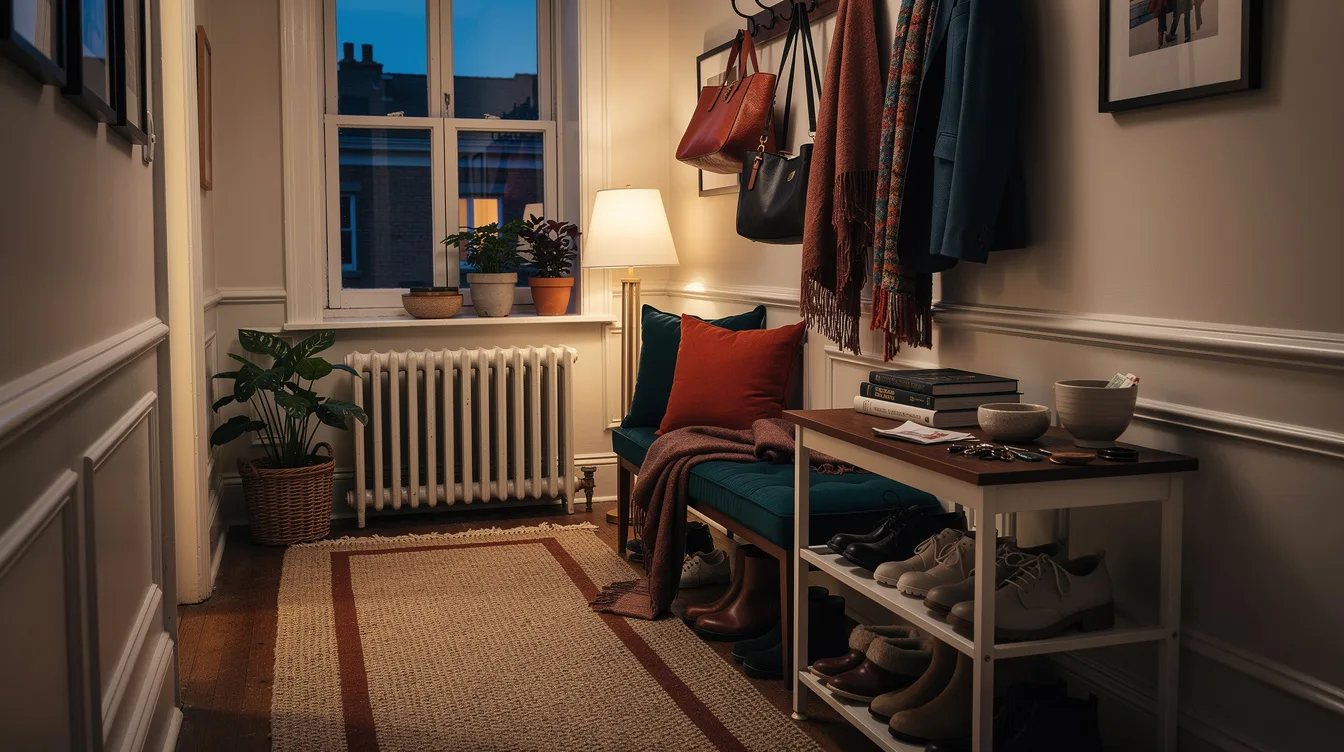
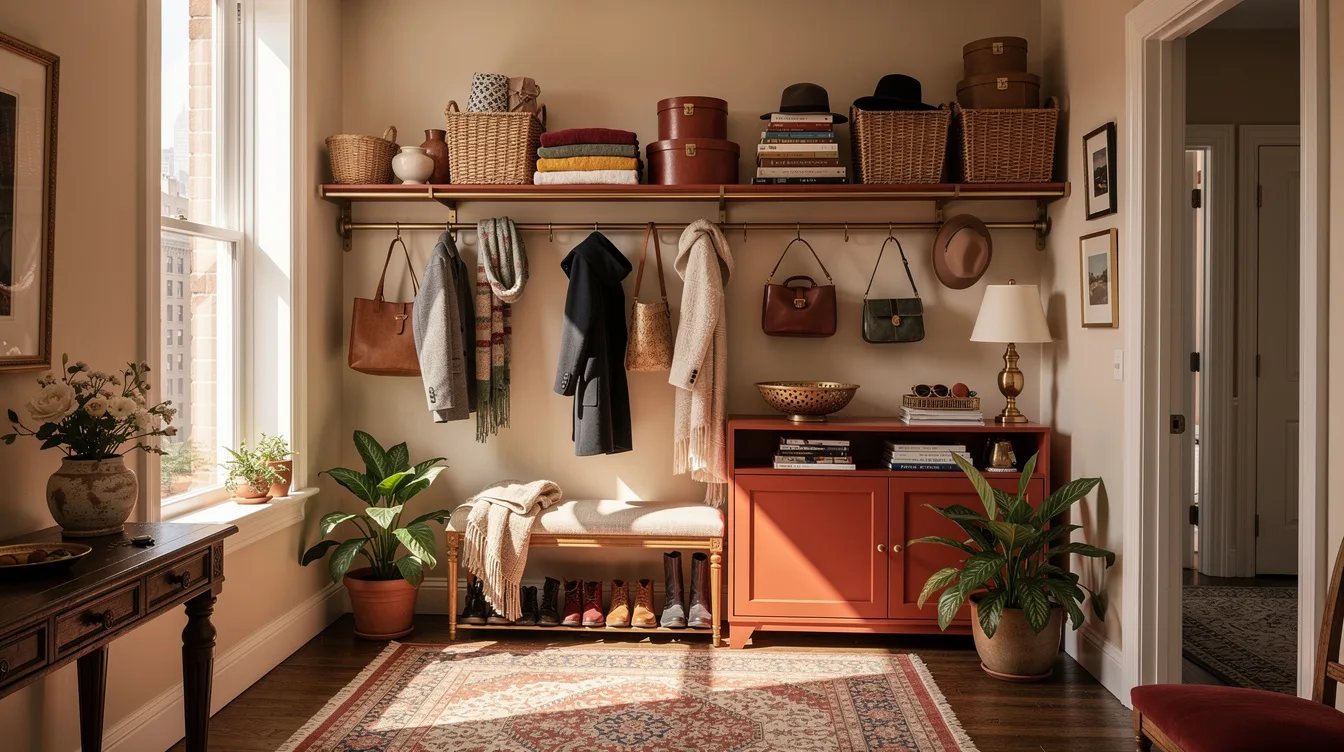
A single wire shelf running across the installation gives the wall a strong visual line and keeps infrequently used items above eye level. Mount it about 77 to 81 inches high, leaving enough room below for hooks and keeping the highest storage within reach of a small step stool.
Use the shelf for seasonal bags, helmets, scarves, and labeled boxes instead of daily shoes. The open wire construction also keeps the upper zone from looking like a heavy cabinet pressed into a tight corridor.
Angle the Shoe Shelves Forward
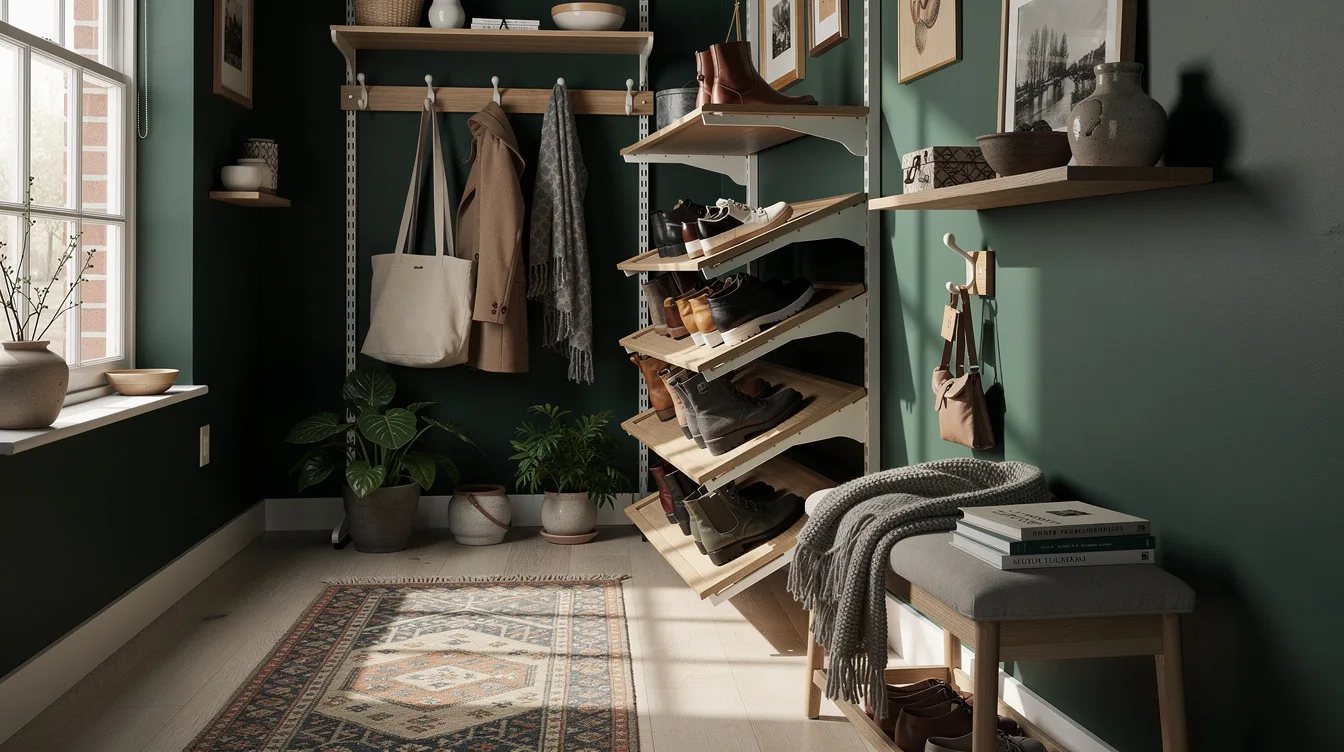
Two or three angled metal shoe shelves make better use of a shallow wall than flat shelves with a deep front edge. Their forward tilt keeps pairs visible, reduces the chance of forgotten shoes piling up, and makes a 15-inch-deep arrangement practical for about six to ten pairs.
Keep the lowest shelf close to the floor for everyday sneakers, then reserve the higher level for dress shoes or sandals. Skip oversized boxes here, because they consume the shallow depth that makes this entry plan work.
Add a Floor Tray for Wet Footwear
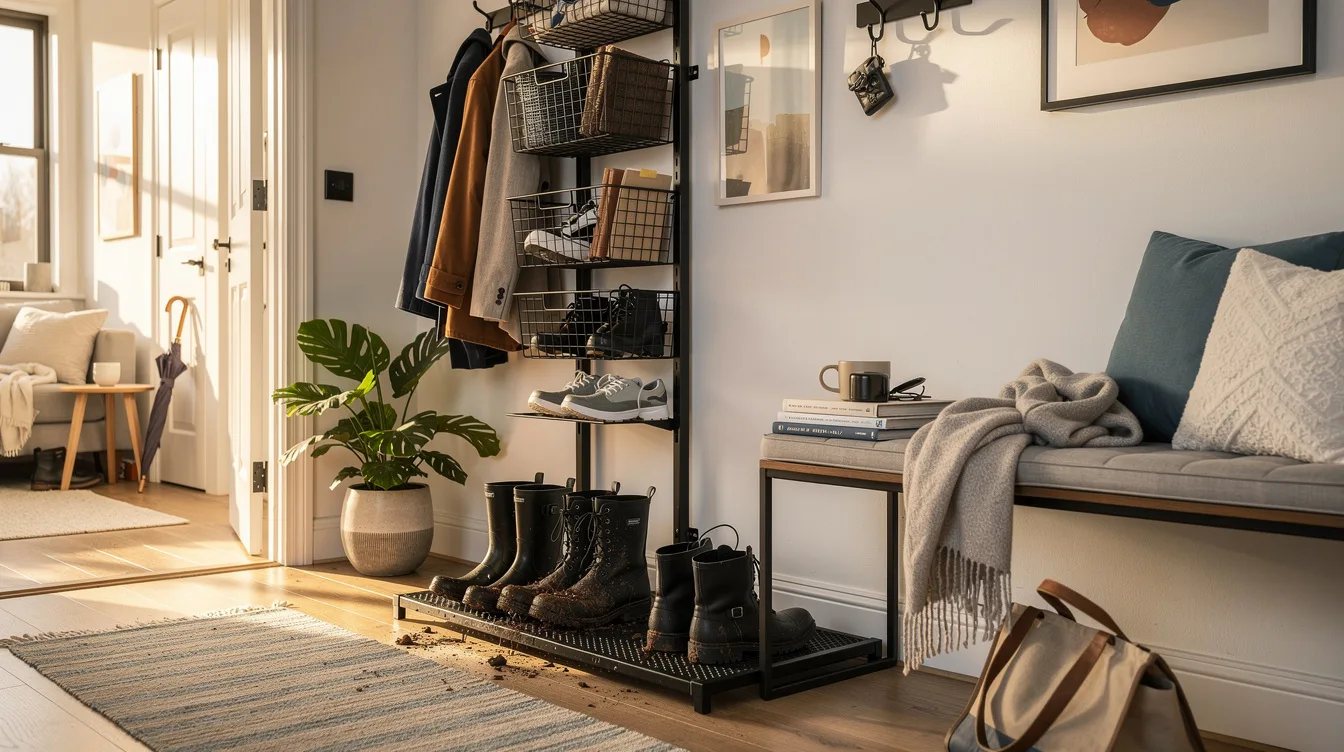
A removable boot tray belongs directly below the shoe shelves, especially in homes where rain and snow regularly enter through the front door. Choose a slim tray that can slide out for cleaning without forcing the entire storage wall to move.
Leave enough clearance for boots to dry without touching the bottom shelf. This small detail protects the wall and floor while keeping wet footwear from spreading across the walking route.
Reserve a Mesh Basket for Small Gear
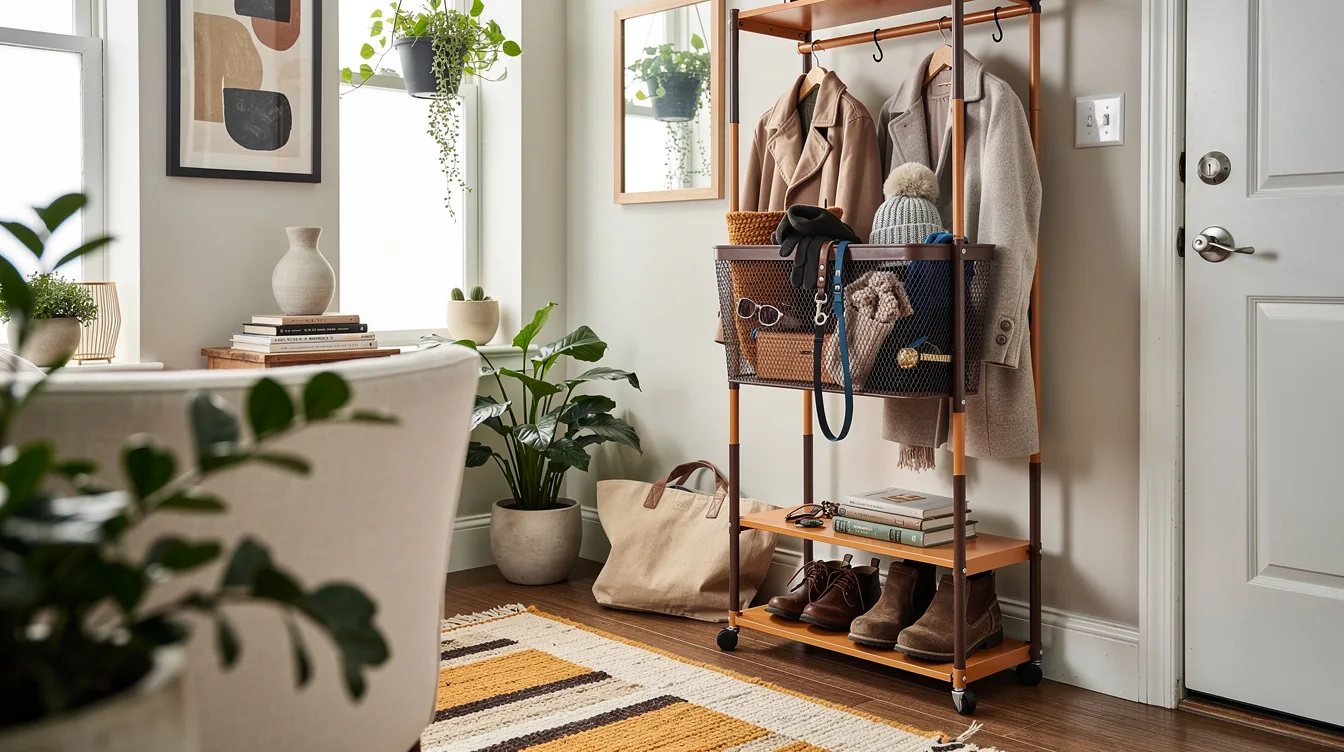
A gliding mesh basket gives gloves, dog leads, reusable bags, and children’s accessories a defined landing spot. Install one below the coat hooks or beside the shoe shelves, where it can be reached without opening a door.
One basket is often enough for a narrow hall because extra containers quickly become a second clutter problem. For a household with sports equipment, add a second basket only after measuring the remaining shoe and coat capacity.
Use the 49-Inch Two-Bay Layout
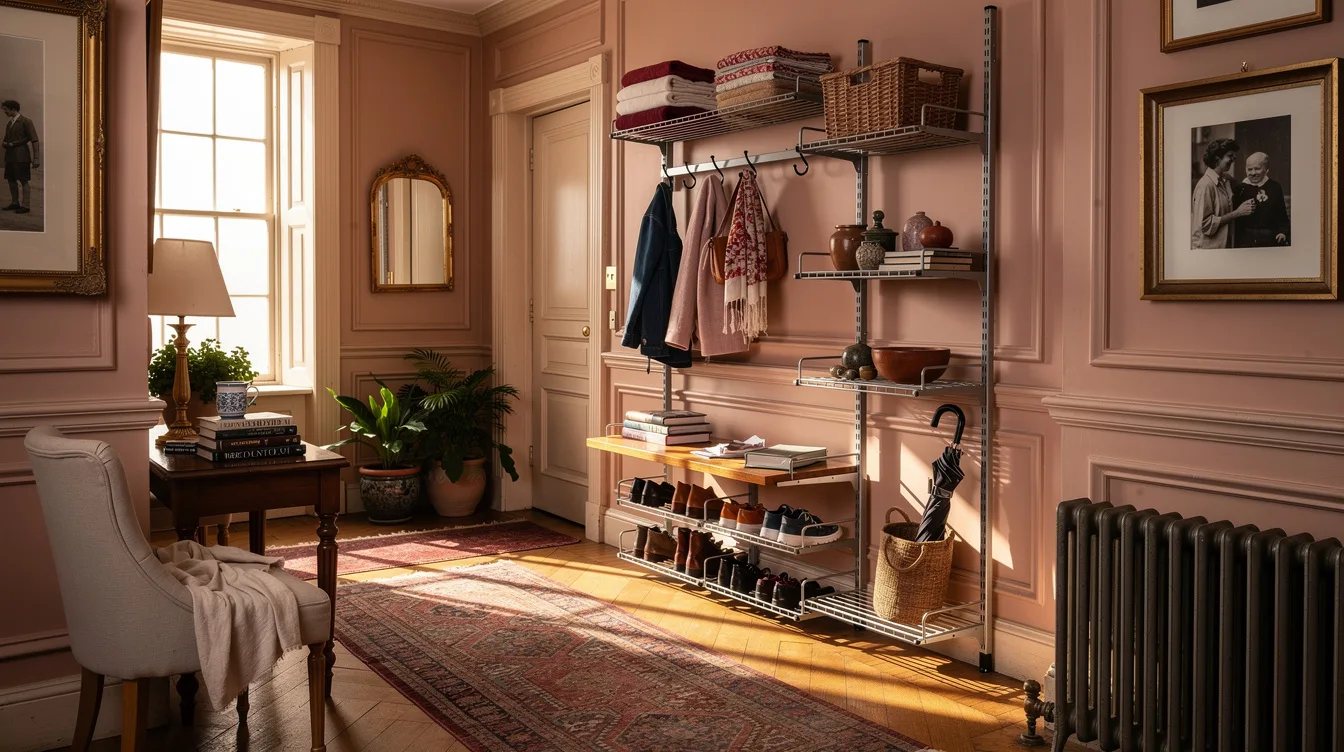
A wall about 47 to 49 inches wide can support a two-bay Elfa Classic arrangement with a wire top shelf, front-facing coat storage, angled shoe shelves, and a basket zone. This configuration typically holds about six to ten coats, twelve to twenty pairs of shoes, and the hats or bags used throughout the week.
The two-bay format works best when the hall is around 15 inches deep and the wall is uninterrupted by a switch, radiator, or door swing. Keep the coat zone together instead of scattering hooks across both bays, so the entry reads as one purposeful station.
Upgrade a Compact Home with Décor+
For a more finished installation, the roughly 28-inch-wide Elfa Décor+ Entry Closet System costs around $650 in the United States. Its narrow format can include a coat rail, a gliding shoe rack, and solid trim that gives a small entry a more furniture-like presence.
This is the premium choice for a compact household that needs everyday storage without filling an entire wall. The higher price makes sense when the trim and smoother presentation matter, but a basic open layout delivers more capacity per dollar.
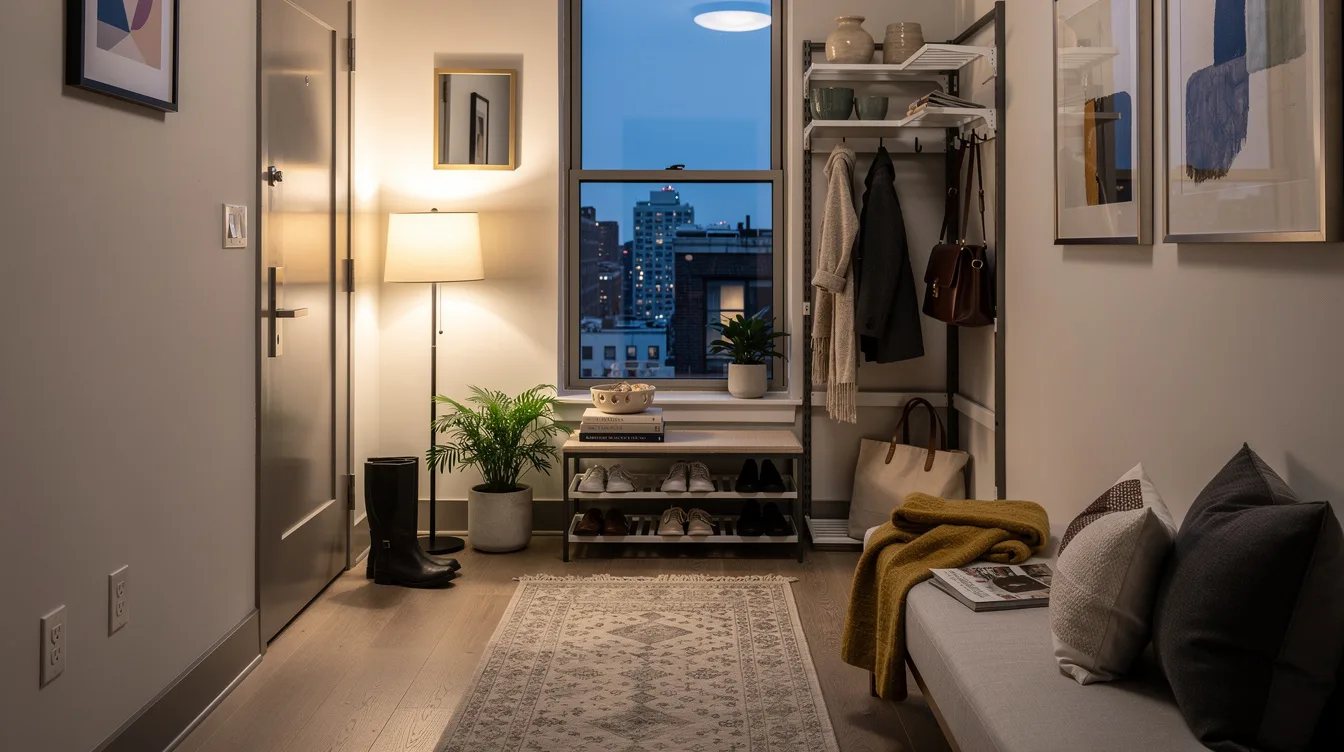
Move Deep Storage into a Recess
A 23-inch-deep side-hanging coat rod belongs in a recess, wide vestibule, or hallway that can preserve a generous walking route. That depth supports regular hangers and works much better for long winter coats, tailored clothing, and guest outerwear.
Use a two-bay installation about 47 to 49 inches wide when the space allows it, then combine the rod with wire shelves, shoe storage, and baskets. A basic system in this size typically costs about $300 to $600 for a DIY setup, depending on finish and components.
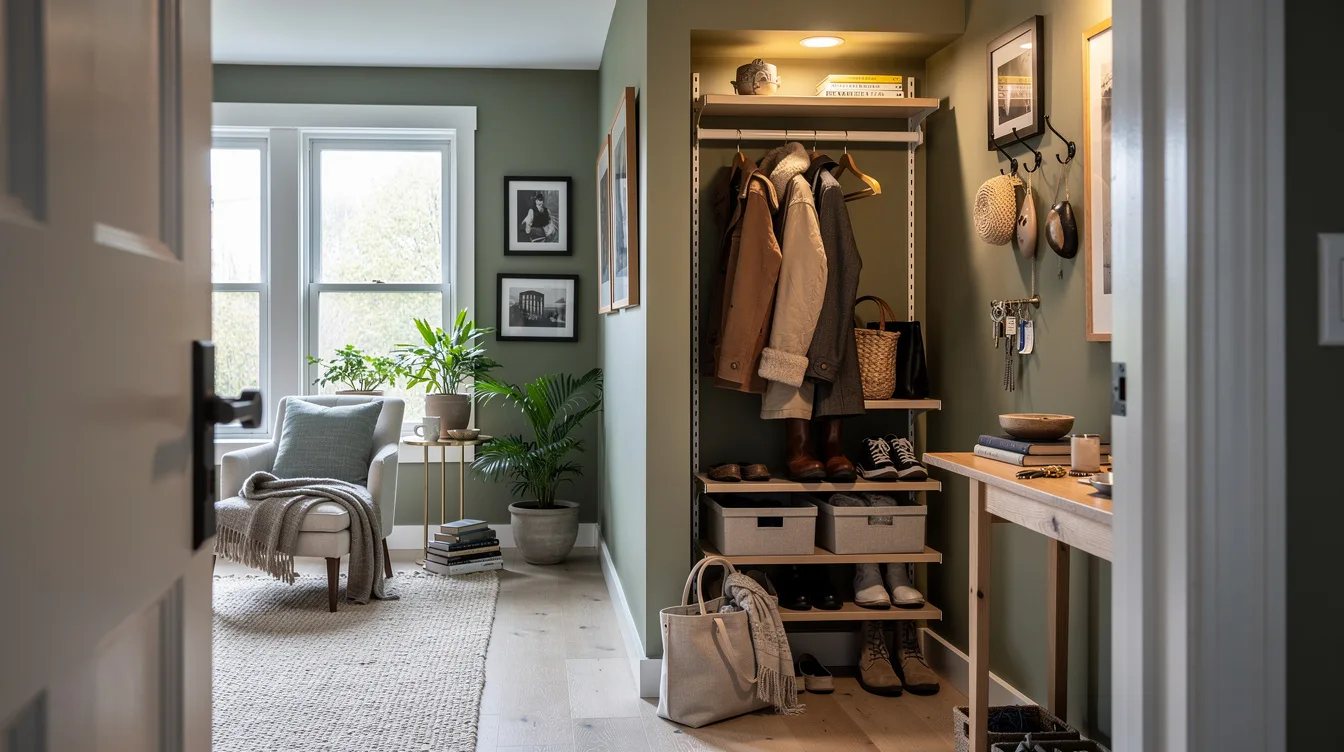
Give Family Storage Its Own Wall
A full family entry wall about 73 inches wide and 23 inches deep can carry three bays of Elfa storage with hanging space, baskets, drawers, and a dedicated shoe area. With sensible shelf spacing, it can hold family coats, sports bags, and roughly 25 to 35 pairs of shoes.
This footprint needs a wider hall or a wall outside the main traffic path. In a tight corridor, forcing family-scale capacity into a shallow single bay creates daily friction, so use the larger plan only where the floor area can support it.
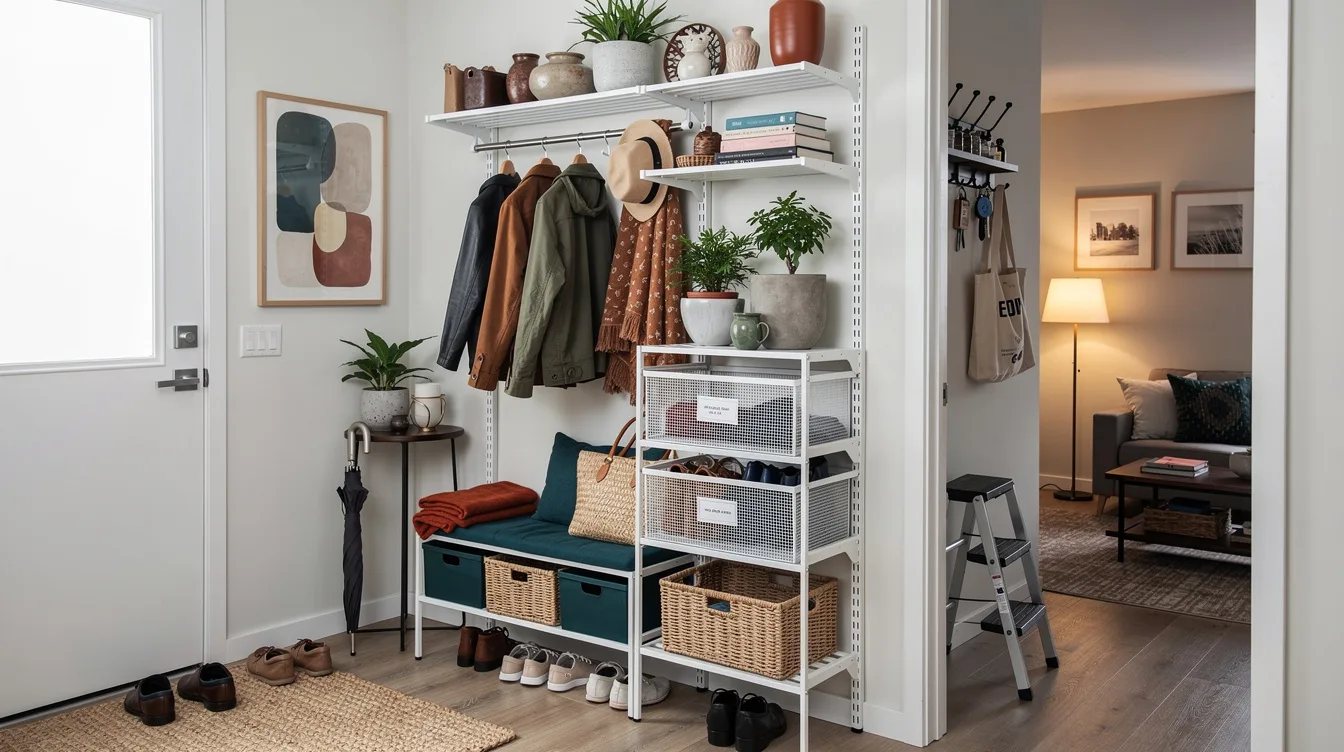
Separate Daily Coats from Seasonal Items
Keep the hooks at shoulder height for the coats worn most often, then place seasonal items on the top wire shelf. The vertical split prevents the daily zone from carrying every jacket in the household and leaves the lower shelves available for shoes.
Rotate heavier coats when the weather changes, using labeled soft bags or boxes above. A narrow entry stays calmer when the storage reflects the current season instead of displaying every option at once.
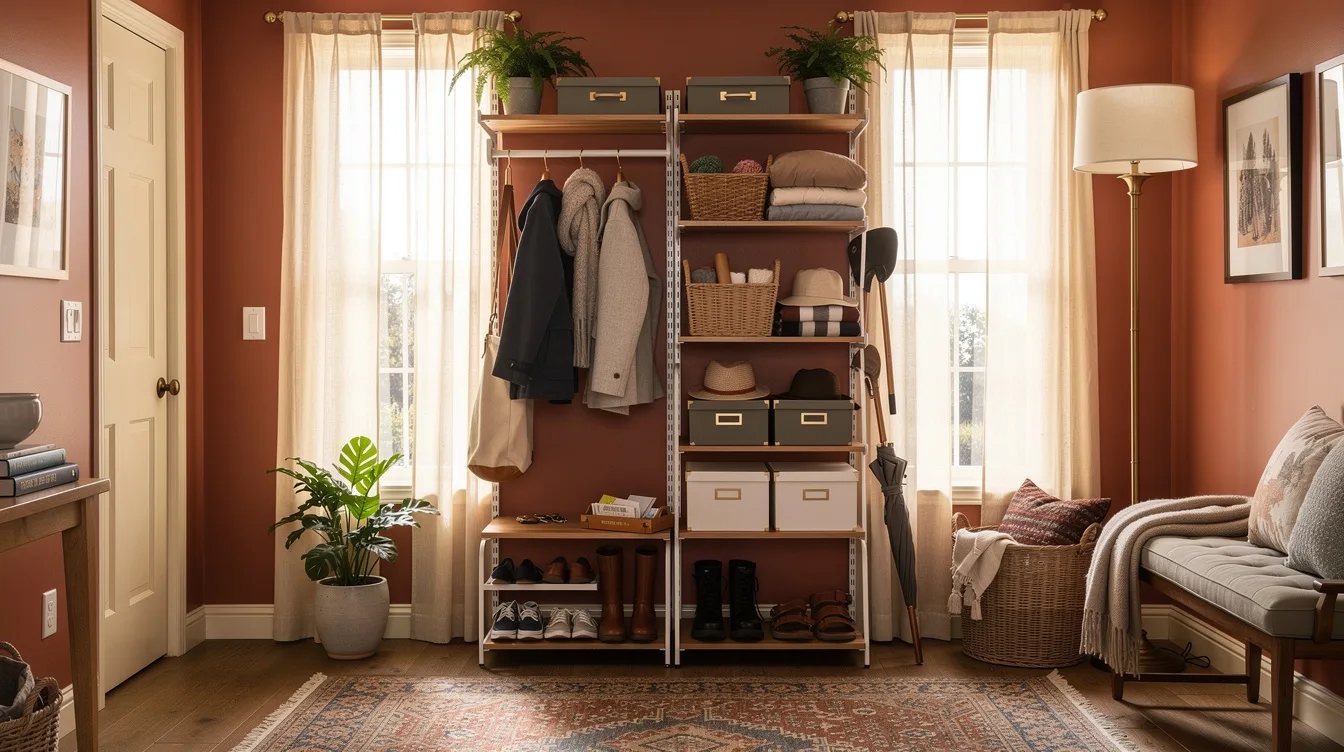
Price the Kit Before Ordering
Start with the actual wall width, depth, and height before adding accessories to the cart. A narrow DIY coat-and-shoe wall usually lands around $300 to $600, while a more finished 28-inch Elfa Décor+ unit costs about $650 before any delivery or installation charges.
Elfa planner prices are approximate, and the final total can shift with finish, promotions, delivery, and installation. Budget for the shelf, hooks, shoe storage, basket, and floor tray together, because a low base price can become misleading once the daily-use pieces are added.
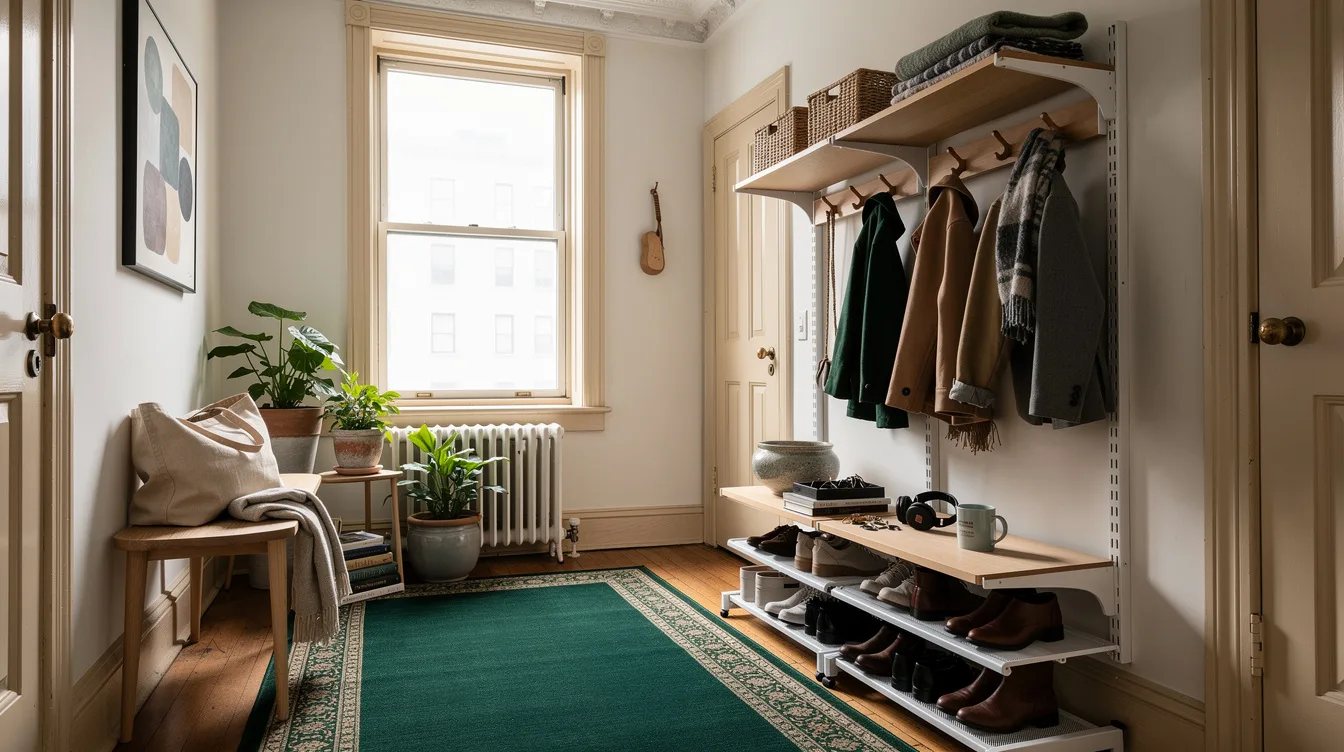
Keep the Walking Route Uninterrupted
Once the storage is installed, open the front door fully and walk through the hall carrying a bag or coat. If a hook, basket, or shoe projects into the route, shorten the component before adding more capacity.
The best front-facing coat rail is the one that keeps outerwear close to the wall and leaves the passage easy to use. Begin with the 15-inch-deep plan, then move to deeper storage only when the room can protect a comfortable walking path.
Keep reading
- Narrow Hallway Eating Your Entry Space? 14 Lowe's Benches Under 36 Inches
- Your Narrow Castlery Console May Be Eating Your Monitor Space
- Forget a $3,000 Closet: Elfa's Under-$350 Kits Are the Smarter Buy
Begin by marking a 15-inch-deep rectangle on the wall, then reserve the lowest zone for shoes, the middle for hooks, and the top for bags. That order gives the narrow hall a usable daily rhythm before you spend on extra baskets or trim.