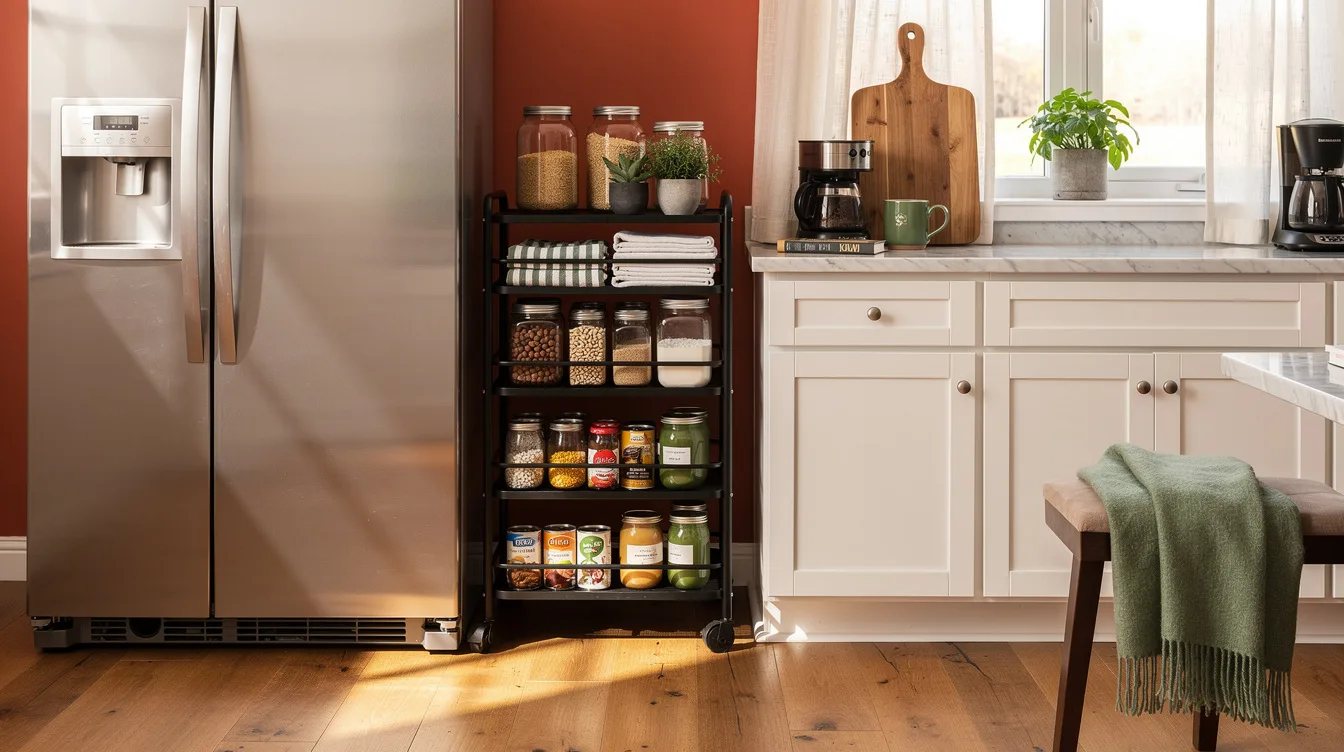
That 6-Inch Gap Beside Your Fridge Is Prime Kitchen Storage
05 september 2026A kitchen cart only earns its spot if you can still walk past it holding a sheet pan in both hands.
That's why we keep landing on the slim ones, roughly 6 to 12 inches deep, instead of the wide prep islands that photograph beautifully and then eat the aisle by Tuesday.
Slim utility carts on Wayfair typically run somewhere around $25 to $115, and that band buys more storage than most people expect.
Here's how we'd spend it.
What you will find inside
- Tape the Aisle Before You Fall for the Cart
- Park a 6-Inch Cart in the Gap Beside the Refrigerator
- Send Pantry Overflow to the Rebrilliant 6-Tier Slim Cart
- Run a Coffee Station on the VASAGLE Rolling Cart
- Slide the Red Barrel Studio 3-Tier Into a Cabinet Gap
- Spend Up on the 17 Stories 4-Tier When the Cart Stays Visible
- Roll the Ebern Designs Butcher-Block Island Out Only to Cook
- Grab the Latitude Run Aro-C Trolley for a Rental Kitchen
- Hold 36 Inches of Clear Passage in a One-Cook Aisle
- Give Every Cart a Parking Spot Before You Buy It
- Lock the Casters and Load From the Bottom Up
- Count the Door Swing, Not Just the Footprint
- Buy Height Instead of Width When the Floor Runs Out
- Skip the Island Cart Entirely in a True Galley
- Drop In Matching Bins so Open Shelves Read as Storage
- Set the Budget by the Job, Not the Product Photo
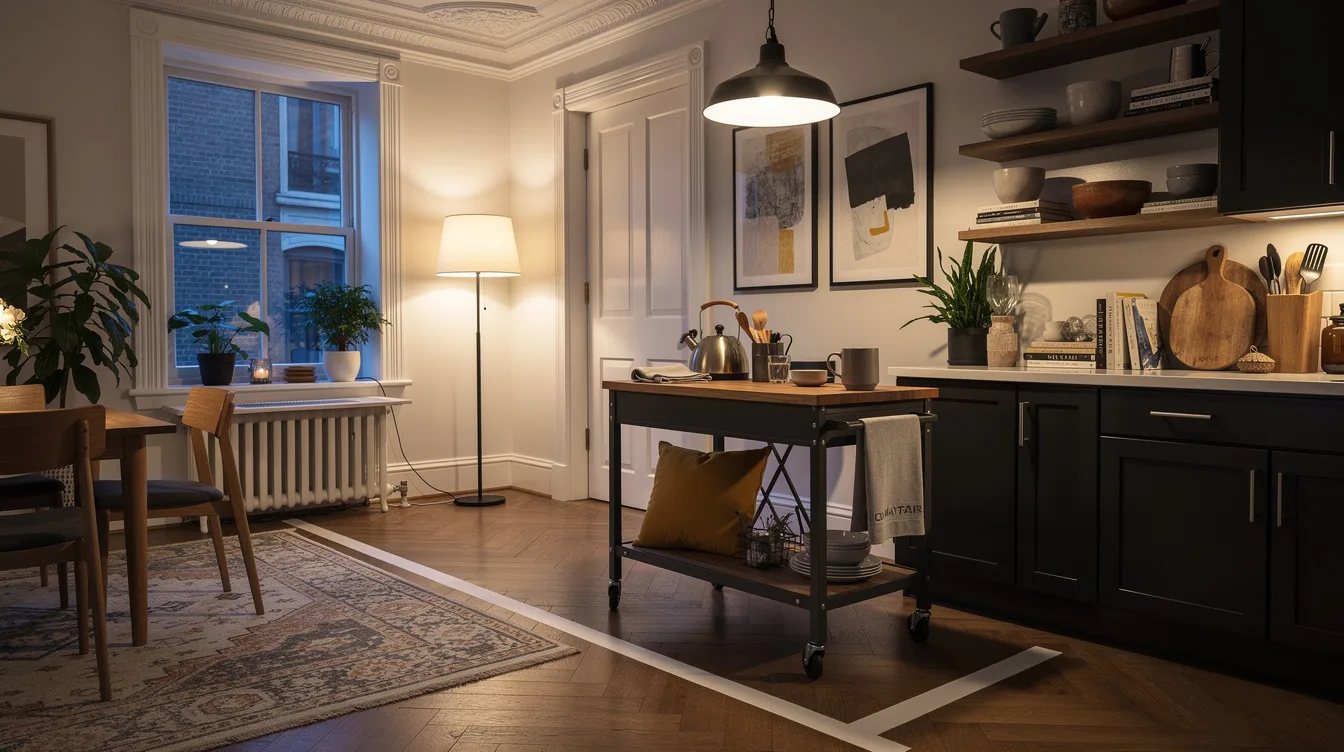
Tape the Aisle Before You Fall for the Cart
A cart doesn't fit just because its footprint fits on the floor plan.
Run painter's tape on the floor at the cart's real depth, stand in front of it the way you would while unloading groceries, then add whatever drawer or door swings into that same zone.
Roughly half the carts we've considered for tight kitchens died at this step, which is a lot cheaper than a return label.
Do it before you read a single review.
Park a 6-Inch Cart in the Gap Beside the Refrigerator
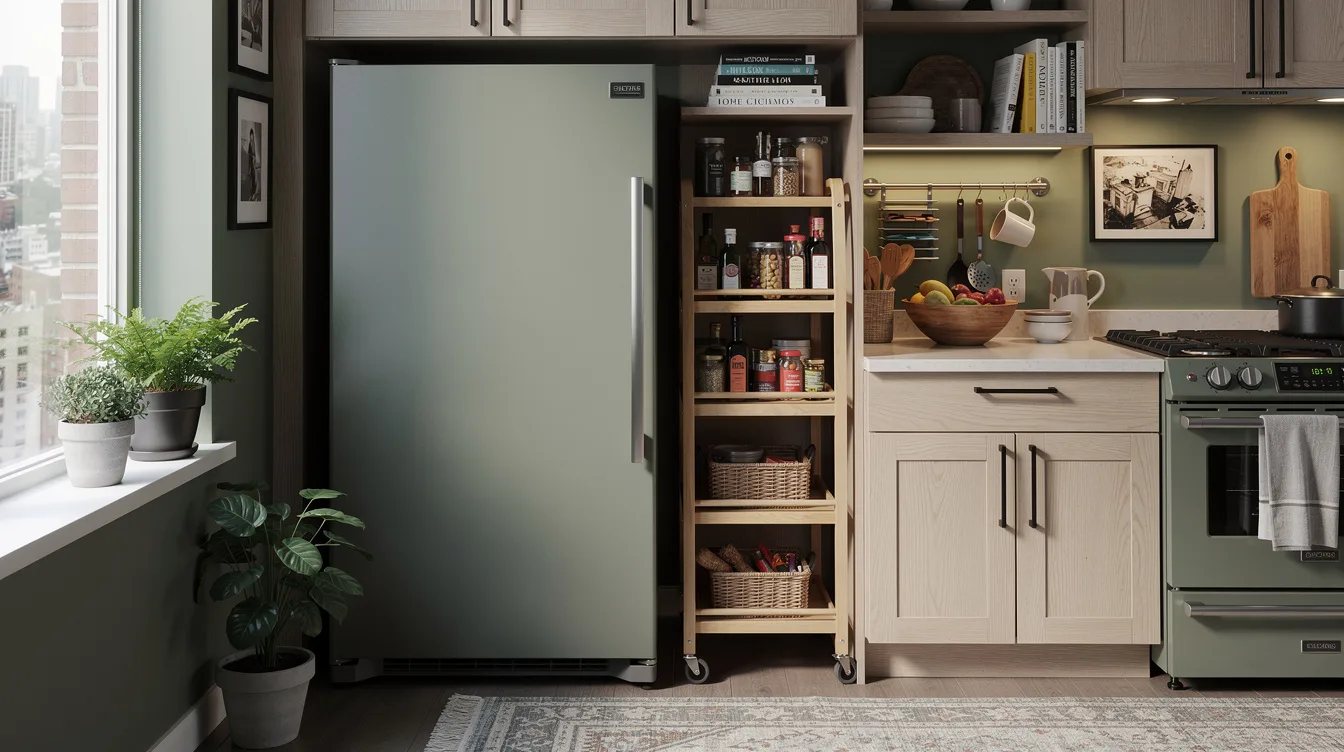
The sliver between a fridge and the wall is dead space in almost every kitchen, and a cart around 5 to 6 inches deep drops into it without touching the walkway.
Load it with oil bottles, vinegar, and aluminum foil boxes, then roll it out only while you're actually cooking.
This is the highest-return cart placement we know because it costs you zero usable floor.
Measure the gap at the baseboard, not at counter height, since the trim usually steals half an inch.
Send Pantry Overflow to the Rebrilliant 6-Tier Slim Cart
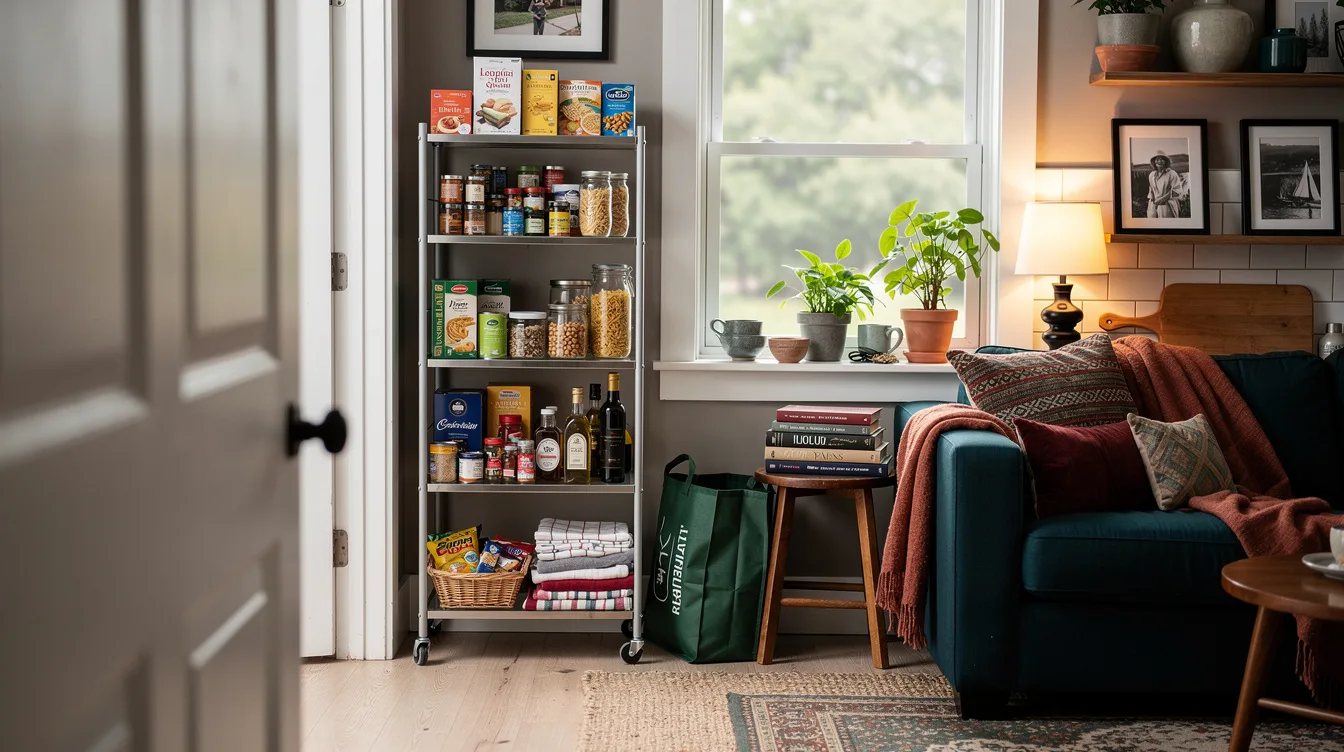
The Rebrilliant 6-Tier Slim Rolling Storage Cart is what we suggest when the pantry has officially quit.
It's listed at about 61 inches tall by 24 wide and only around 10 inches deep, so it claims vertical space instead of aisle space, and it typically sells for roughly $50.
Six shelves take cans, jars, wraps, spice bins, and cleaning supplies, all riding on four locking 360 degree wheels.
That's a closet you can push out of the way, which is worth more in a rental than any built-in.
Run a Coffee Station on the VASAGLE Rolling Cart
Coffee gear spreads across a countertop unless you give it an address.
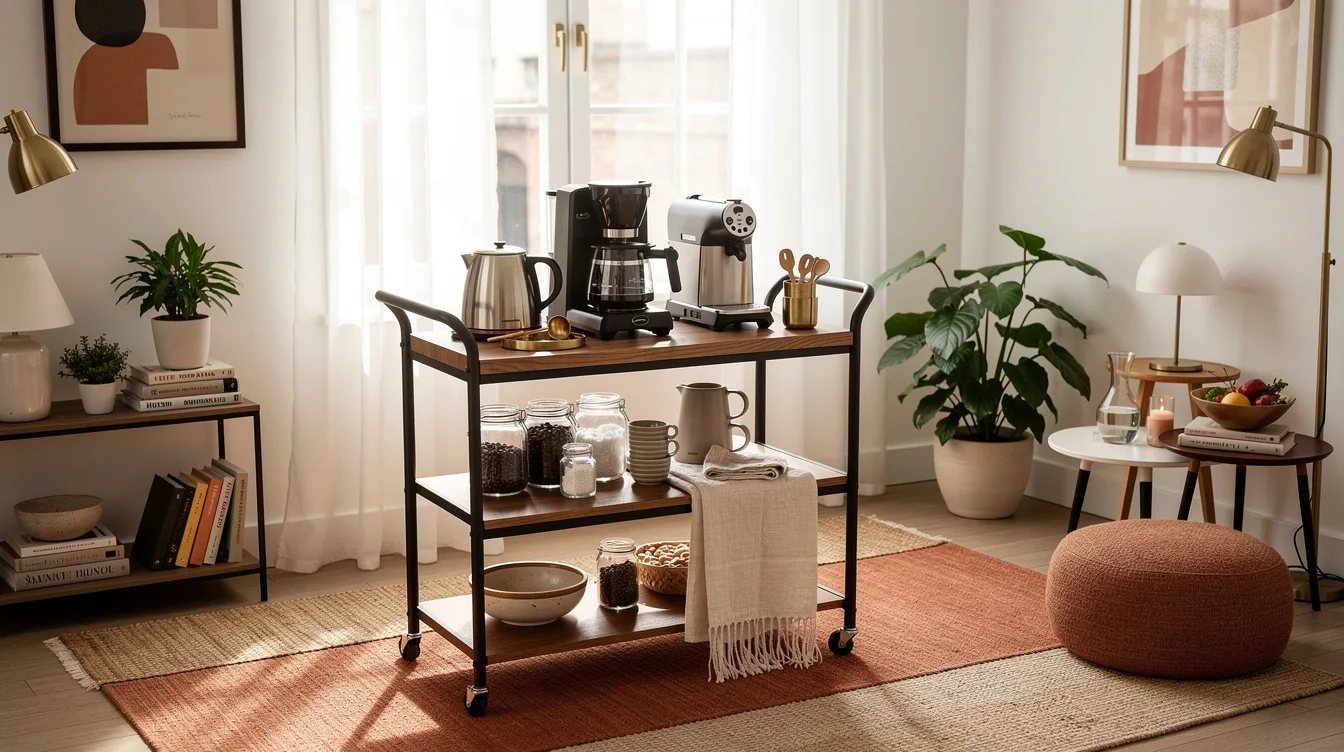
The VASAGLE Rolling Storage Cart measures about 30 inches tall, 18 wide, and under 9 deep, with rustic brown wood-look shelves on a classic black metal frame.
It holds a grinder, a bag of beans, mugs, and a stack of dish towels, and we've seen it listed around $40 in narrow-cart searches.
That's roughly what a decent countertop organizer costs, except this one moves and doesn't hog prep space.
Slide the Red Barrel Studio 3-Tier Into a Cabinet Gap
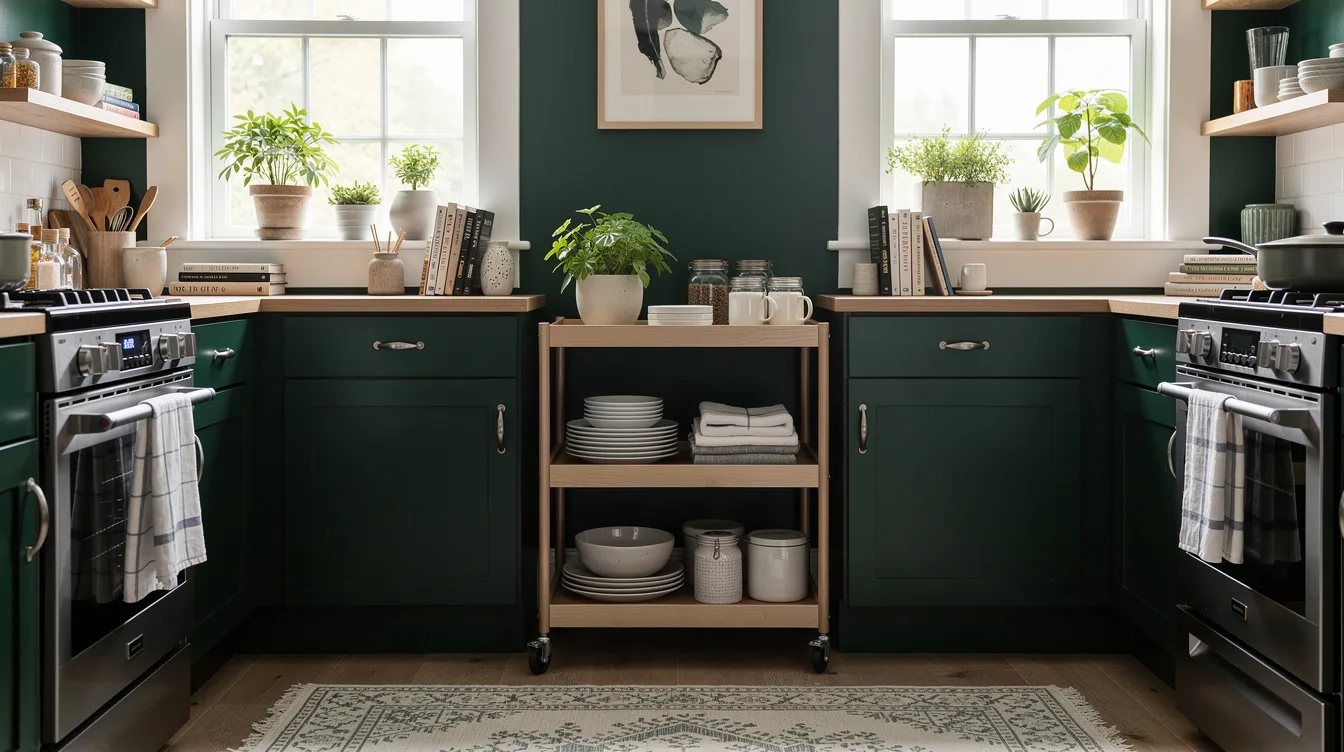
The Red Barrel Studio 3-Tier Slim Rolling Cart is the value play, usually somewhere in the $25 to $90 range depending on finish and sale cycle.
Its manufactured wood base carries a listed 88 pounds, and the casters are removable, so it can live as a fixed shelf until the day you need it to roll.
One honest caveat: dimensions shift by variation on these listings, so confirm the exact one in your cart before checkout.
At this price it's fine to buy two and split them between the kitchen and the laundry room.
Spend Up on the 17 Stories 4-Tier When the Cart Stays Visible
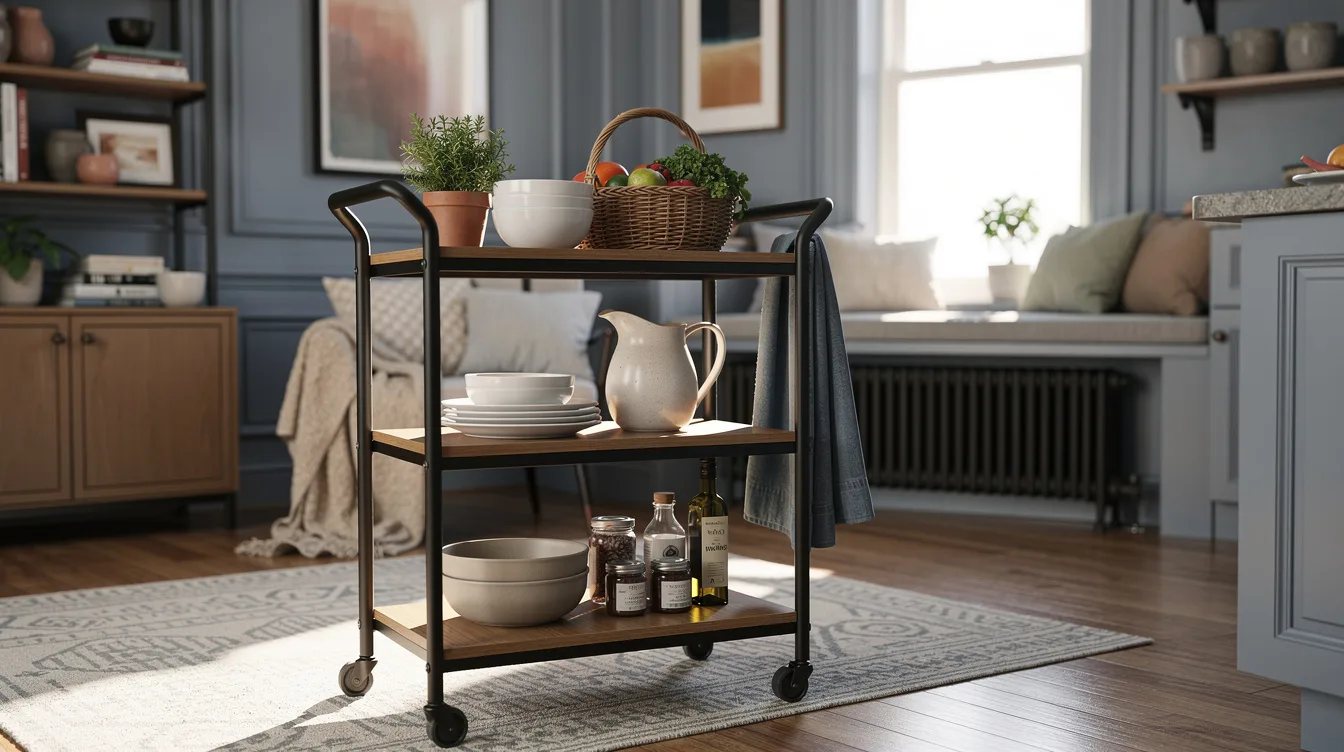
Some carts never get hidden, and that's where the 17 Stories Slim 4-Tier Cart with its wooden top earns the jump to roughly $104 to $115 in current listings.
Open shelves and baskets under a real wood surface read as a piece of furniture instead of a supply rack.
Pay the premium only if the cart lands in a sightline from the dining table or the living room.
Tucked beside a fridge, it does exactly what the $50 metal version does.
Roll the Ebern Designs Butcher-Block Island Out Only to Cook
A prep island cart works when it has a wall to go back to, and fails when it becomes permanent furniture in the middle of the room.
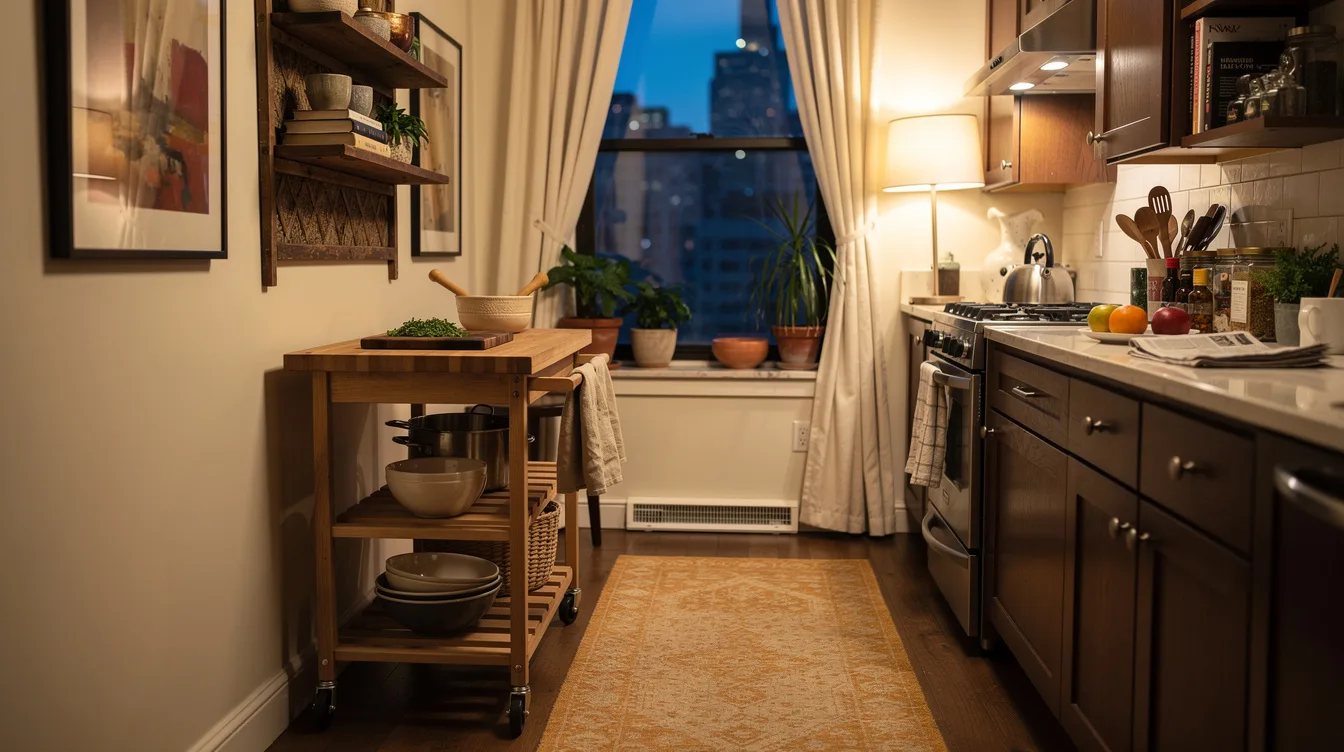
The Ebern Designs Rolling Island pairs a butcher-block-style top with locking, removable casters and a listed 300 pound capacity, so it takes a stand mixer and a full grocery haul without complaining.
Pull it out to chop, push it back to the wall before anyone sits down to eat.
Product and assembly pricing vary by variant, so read the selected option carefully.
Grab the Latitude Run Aro-C Trolley for a Rental Kitchen
Renters, this is your cart.
The Latitude Run Aro-C 3-Tier Kitchen Trolley is listed at about 29 inches tall, 18 wide, and 13.5 deep, and we've seen it on sale near $34 against a list price closer to $65.
Three tiers handle produce, a bread box, and the small appliance you use twice a week.
It fits in a car trunk, which matters more than it sounds when the lease ends.
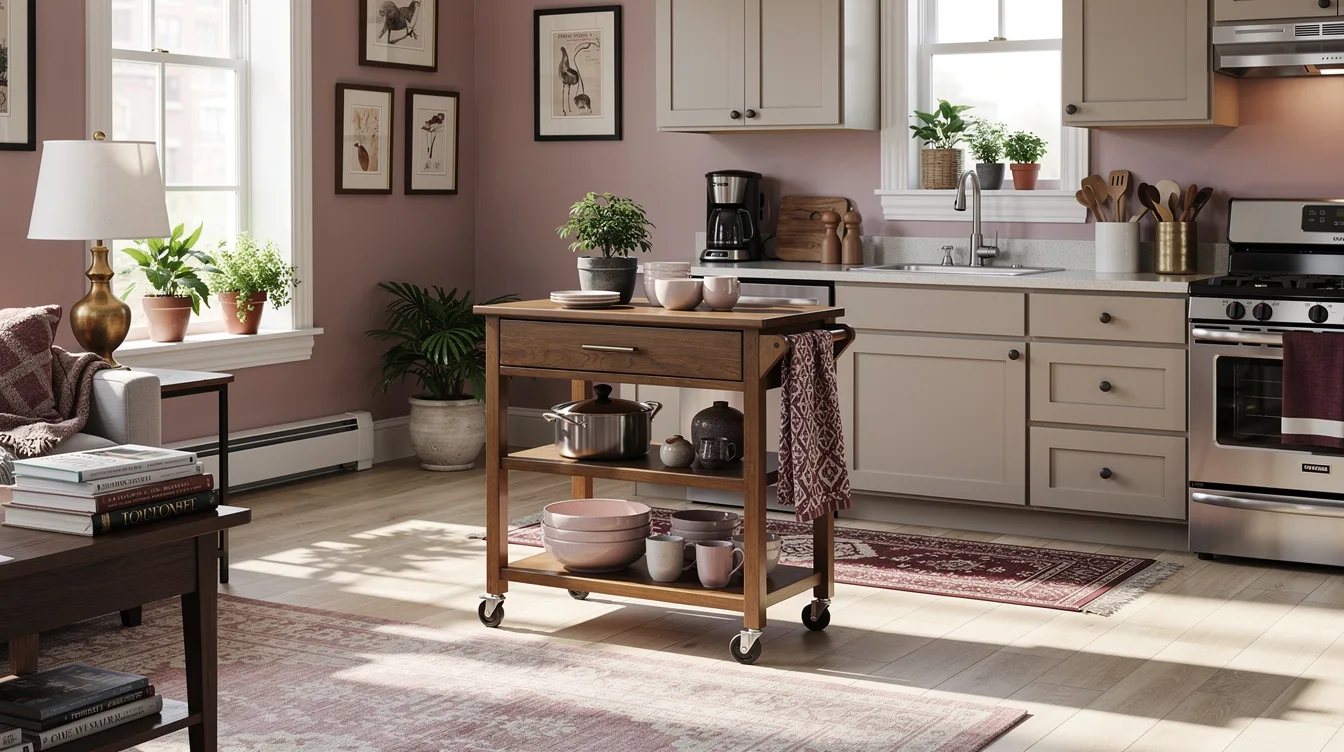
Hold 36 Inches of Clear Passage in a One-Cook Aisle
Plan on about 36 inches of clear passage for a single cook, and closer to 42 inches between opposed cabinet runs or on a route the whole household uses.
Measure to the widest part of the cart, handles included, plus any wire basket that hangs past the frame.
If the numbers don't clear, the fix isn't a slightly smaller island cart.
It's a wall cart, and the sooner you accept that, the better your kitchen works.
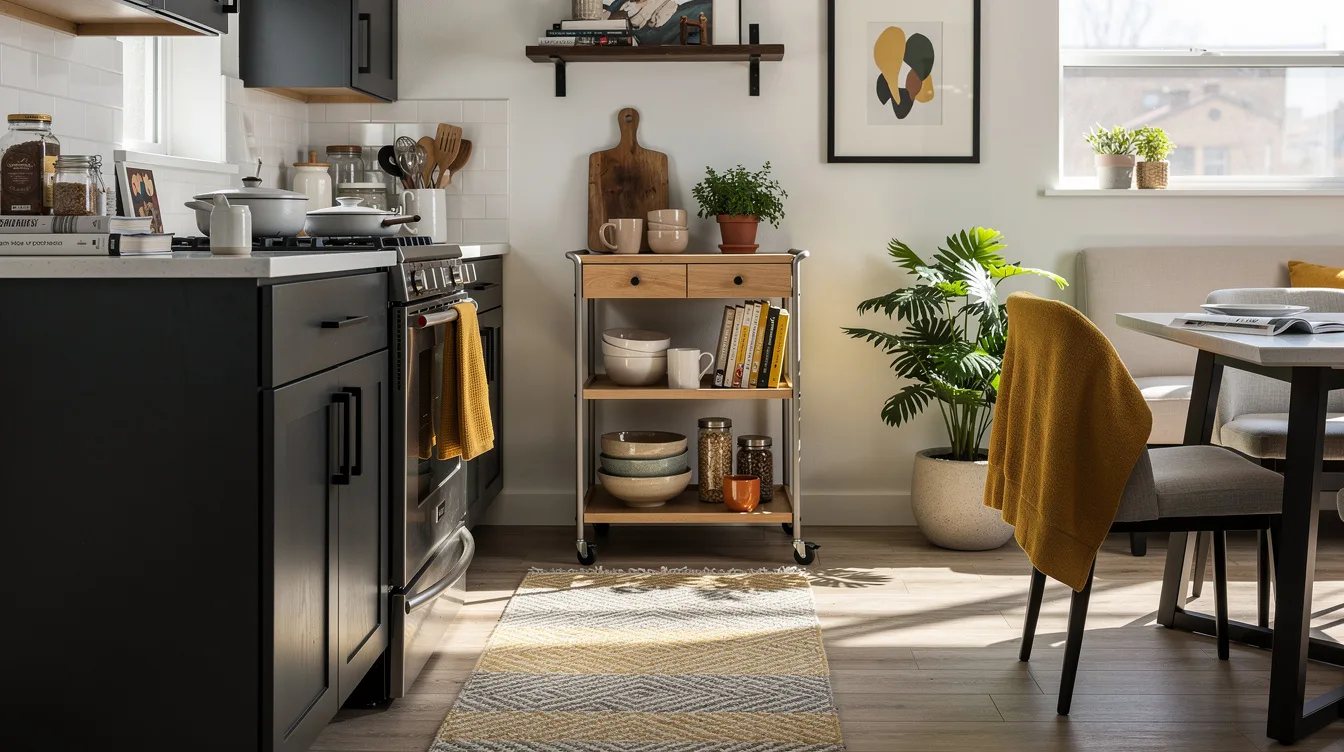
Give Every Cart a Parking Spot Before You Buy It
A cart without a home drifts into the aisle and stays there.
Choose the spot first, whether that's the end of a cabinet run, the pantry edge, or the blank wall beside the range, then buy to that exact depth.
An 18 to 22 inch cart is fine against a wall and a genuine problem parked anywhere else.
The carts that end up on the curb by spring are almost always the ones bought before the spot was picked.
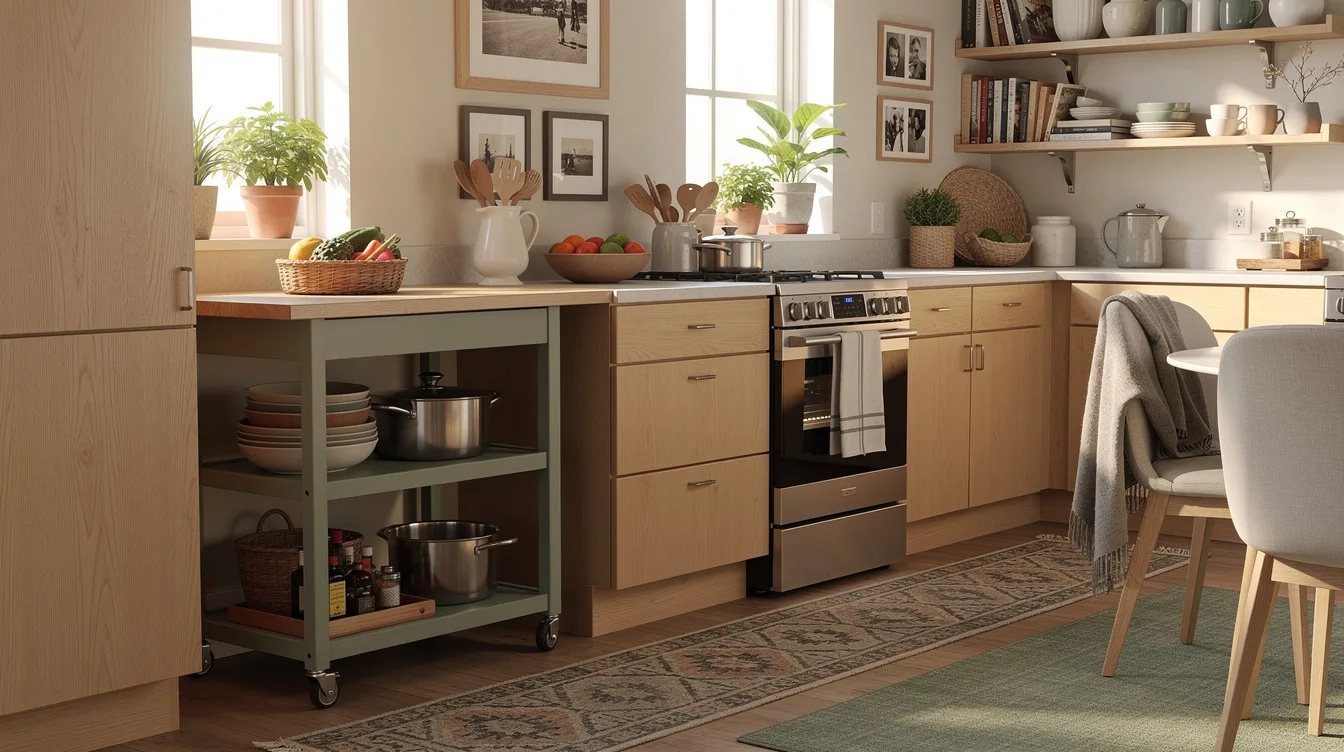
Lock the Casters and Load From the Bottom Up
Tall slim carts tip, and they tip loaded.
Put canned goods and bottles on the lowest two tiers, ceramic canisters in the middle, cereal boxes and paper goods up top.
Lock the wheels before you fill the highest shelf, and keep them locked in daily use, unlocking only when you actually roll it.
On tile, an unlocked 61 inch cart will drift every time you tug a jar off it.
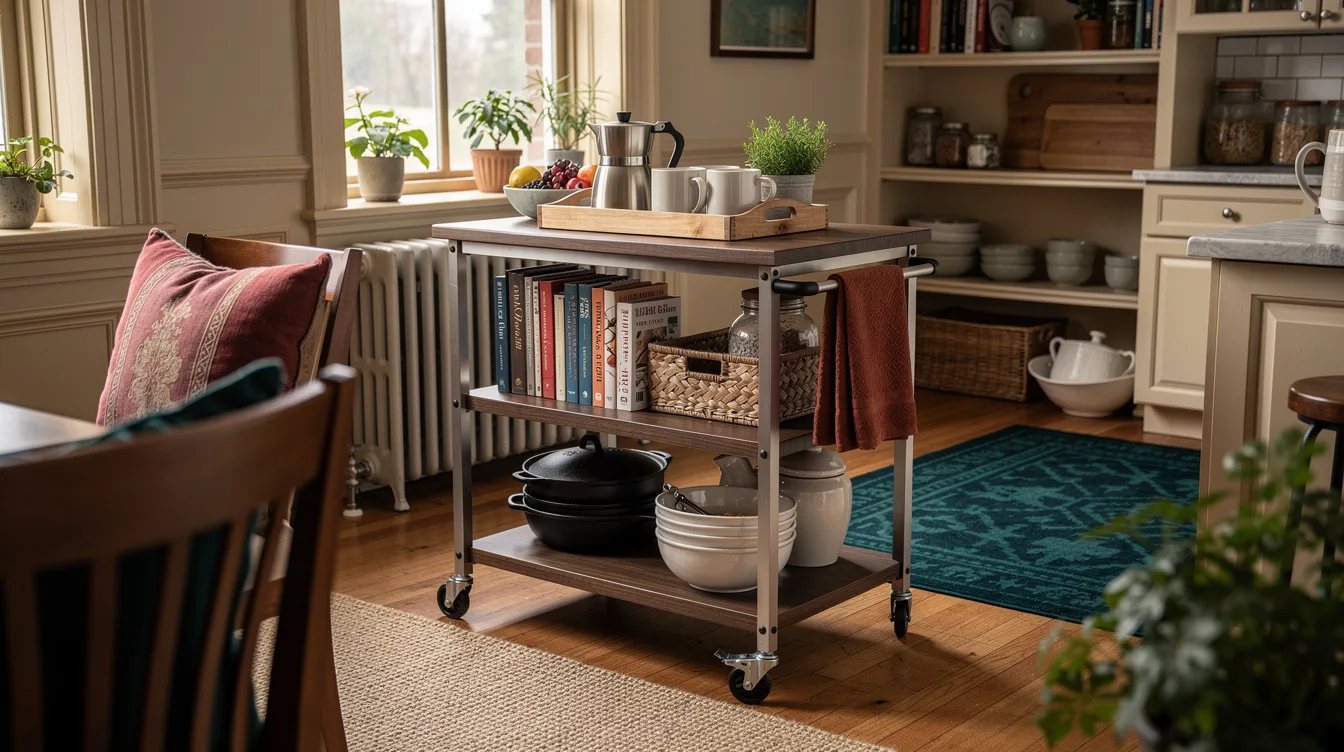
Count the Door Swing, Not Just the Footprint
Footprint is half the story, and what opens is the other half.
A cart beside a dishwasher is useless once you learn the door can't drop, and the same trap waits at the oven, the trash pull-out, and the refrigerator swing.
Set the cart in place, then open every single door in that zone before you assemble anything else.
Fifteen minutes of this saves a weekend of rearranging.
Buy Height Instead of Width When the Floor Runs Out
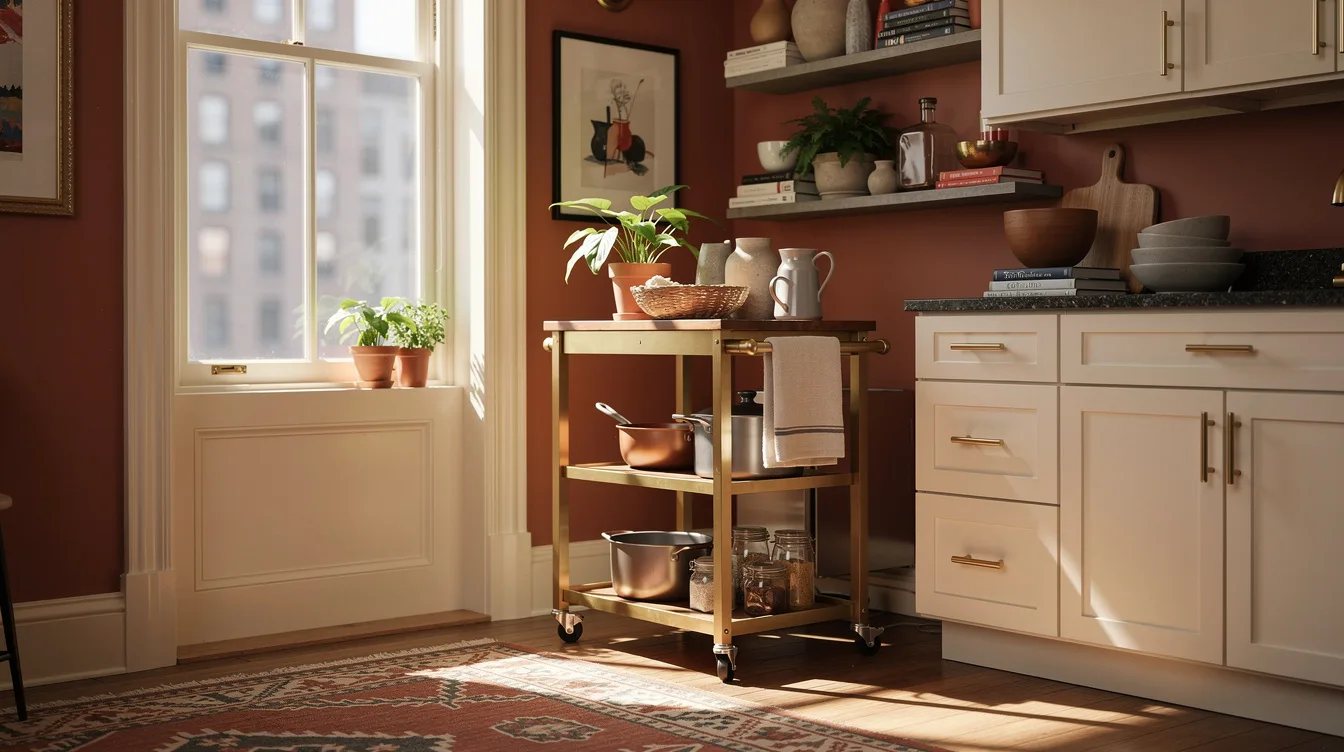
Six shelves at 10 inches deep hold more than three shelves at 18 inches, and only one of those options widens your aisle.
Go vertical first in any kitchen under about 100 square feet.
Anchor anything over roughly 55 inches tall to the wall if kids or a large dog share the room, using a furniture anchor strap from Home Depot or Lowe's for a few dollars.
The strap costs less than a bag of dog food and removes the only real risk here.
Skip the Island Cart Entirely in a True Galley
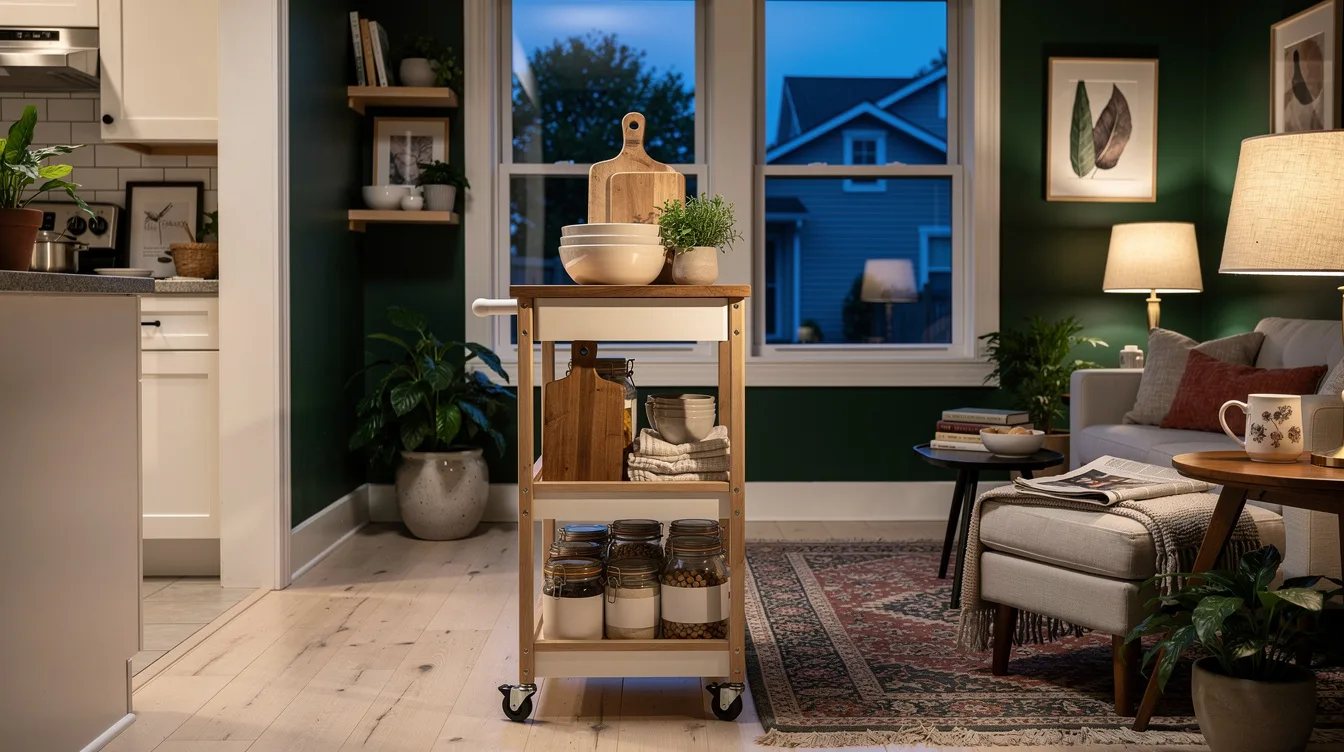
In a galley, a center island cart is a trip hazard with shelves on it.
Two cabinet runs with 40 inches between them leave nothing usable once a 20 inch deep cart lands in the middle and somebody opens the oven door.
Run two slim carts along opposite walls instead: same storage, no obstacle, and both stay out of the traffic line.
We've restyled enough narrow kitchens to say this one isn't negotiable.
Drop In Matching Bins so Open Shelves Read as Storage
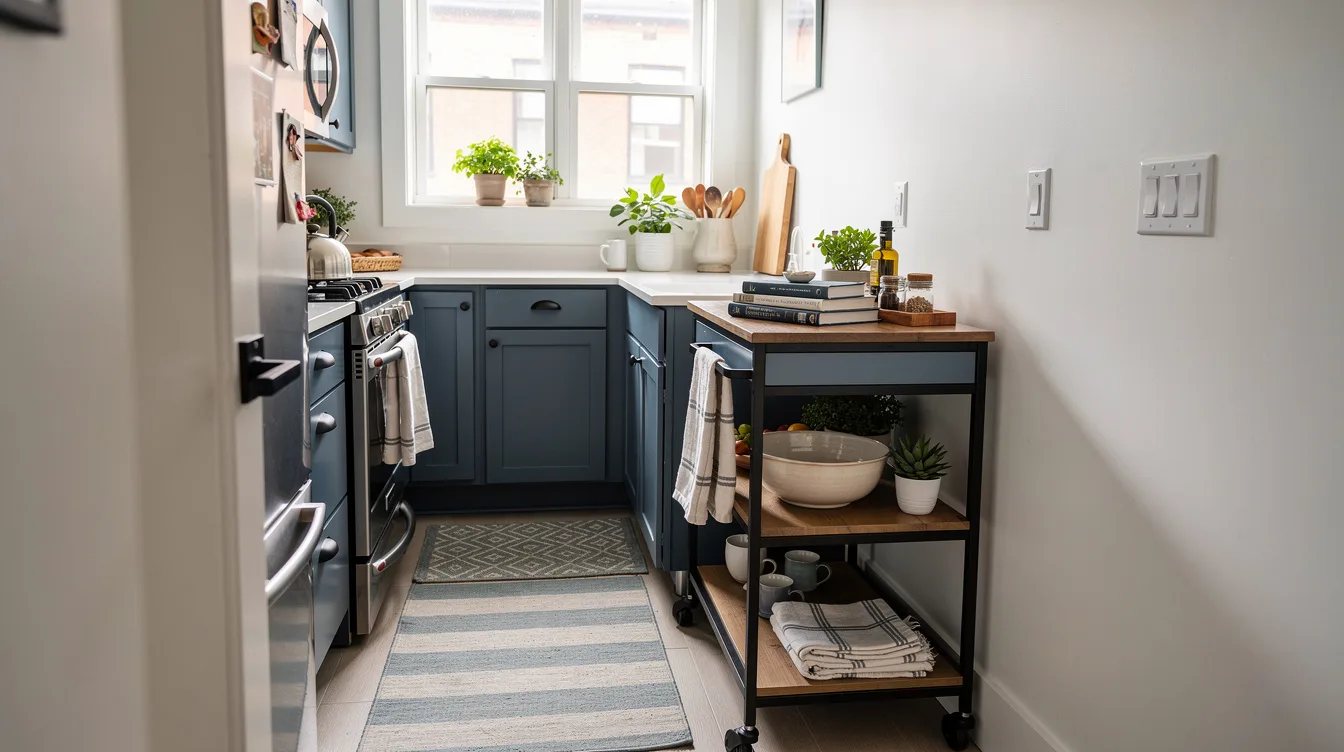
Exposed cart shelves turn into visual noise within about a week.
Add matching containers, either seagrass baskets or plain white plastic tubs from Target or IKEA, typically under $10 each, and label the ones holding small items.
Two sizes maximum, one color across the whole cart.
That single constraint is the difference between a cart that looks intentional and one that looks like a pile with wheels.
Set the Budget by the Job, Not the Product Photo
Slim utility carts on Wayfair typically land in the $25 to $115 range, and fuller prep-island carts generally start in the low hundreds while demanding far more clearance.
If your aisle is tight, the expensive cart is the wrong purchase no matter how good the butcher block looks.
Listings and pricing move quickly by finish, seller, and sale cycle, so check the selected variation before you commit.
Buy the depth your kitchen allows, then spend whatever's left on bins.
Keep reading
Start with tape on the floor, then a 10 inch deep cart beside the fridge for around $50, then bins.
That order fixes more kitchens than a $300 rolling island ever has.