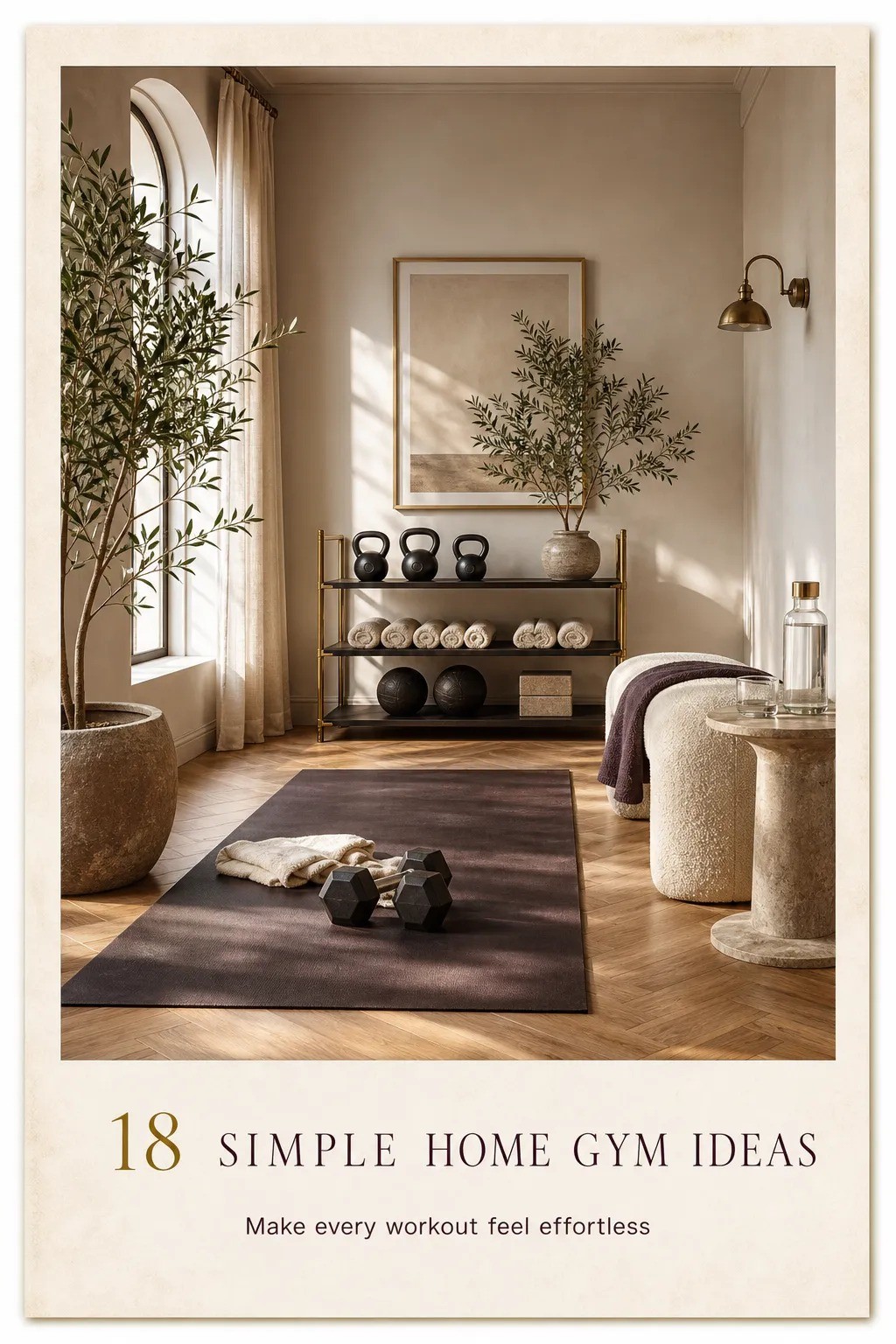
18 Simple Home Gym Ideas to Stay Minimal, Functional, and Clutter-Free
03 september 2026Simple home gym ideas work best when you give every item one job and one home. I once packed a spare room with gear I barely used, then wondered why I avoided it. Less equipment, better layout. You can build a calm workout room without turning your house into a crowded commercial gym.
- Map the 8x10 ft movement zone first
- Float a wall-mount rack in a simple workout room
- Use The One-Bench Boundary
- Hang a mirror where your eyes need it
- Can a calm color make you train more?
- Build The Closed-Storage Rule
- Roll your equipment away after training
- Choose adjustable dumbbells over a crowded rack
- Map the 8x10 ft movement zone first
- Float a wall-mount rack in a simple workout room
- Use The One-Bench Boundary
- Hang a mirror where your eyes need it
- Can a calm color make you train more?
- Build The Closed-Storage Rule
- Roll your equipment away after training
- Choose adjustable dumbbells over a crowded rack
- Frame the room with warm wood
- Try The Three-Height Light Stack
- Swap a giant treadmill for the routine you keep
- Create a recovery corner with one honest chair
- Paint the ceiling line with Down Pipe
- Make The Doorway Reset Station
- Put one machine on a 6x6 ft island
- Use soft textiles without making it a bedroom
- Choose matte hardware over flashy finishes
- Keep the last wall intentionally empty
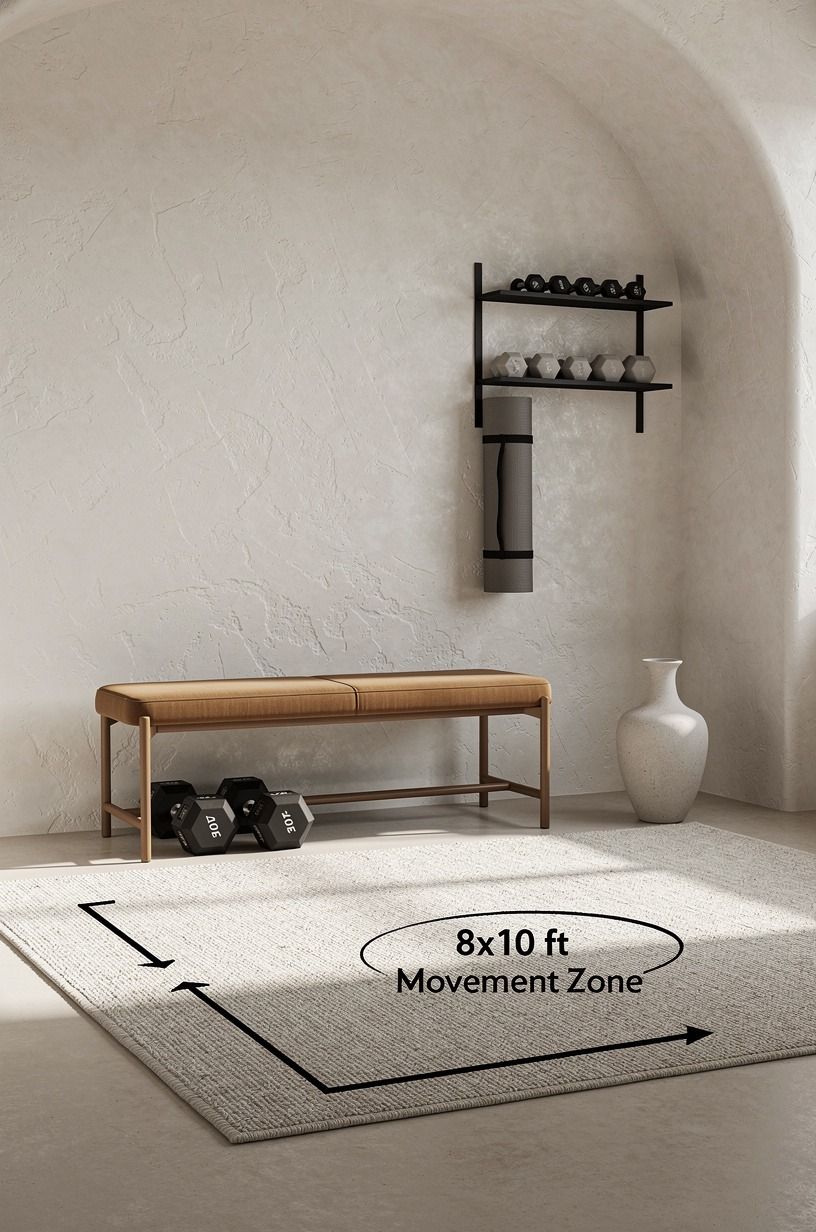
1Map the 8x10 ft movement zone first
Start with an 8x10 ft rubber mat zone before you buy a bench, bike, or rack. You need a clear patch where your body can move without clipping a dresser, and your workouts will feel far less chaotic when the floor has a boundary.
Choose interlocking rubber flooring with a dense, matte finish instead of bright foam tiles. I’d skip the puzzle-piece colors, because they make even a tidy room look like a daycare.
Warm-white Venetian plaster around the zone keeps the room softer and more settled. Keep your water bottle and towel outside this zone.
2Float a wall-mount rack in a simple workout room
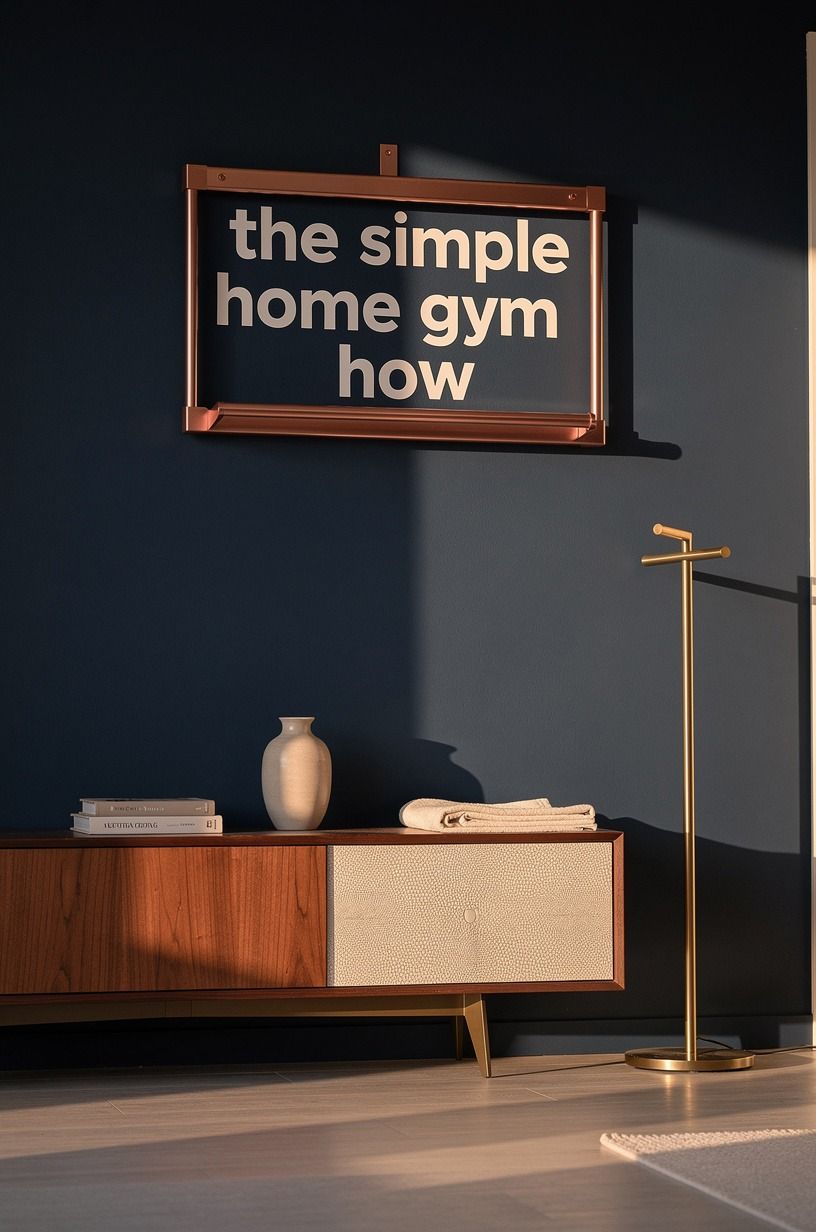
A wall-mount rack gives you strength-training function without swallowing the room. Most typical options run $150-$600, and you’ll reclaim the floor beneath it for lunges, mobility work, or a folded mat.
Mount it only where you can use the full height safely. With an 8-9 ft ceiling, you’ve got better clearance for overhead work and jumps.
I’d choose an ivory rack with restrained copper hardware over shiny chrome every time, especially with a few shagreen accents nearby. Clean lines matter here!
3Use The One-Bench Boundary
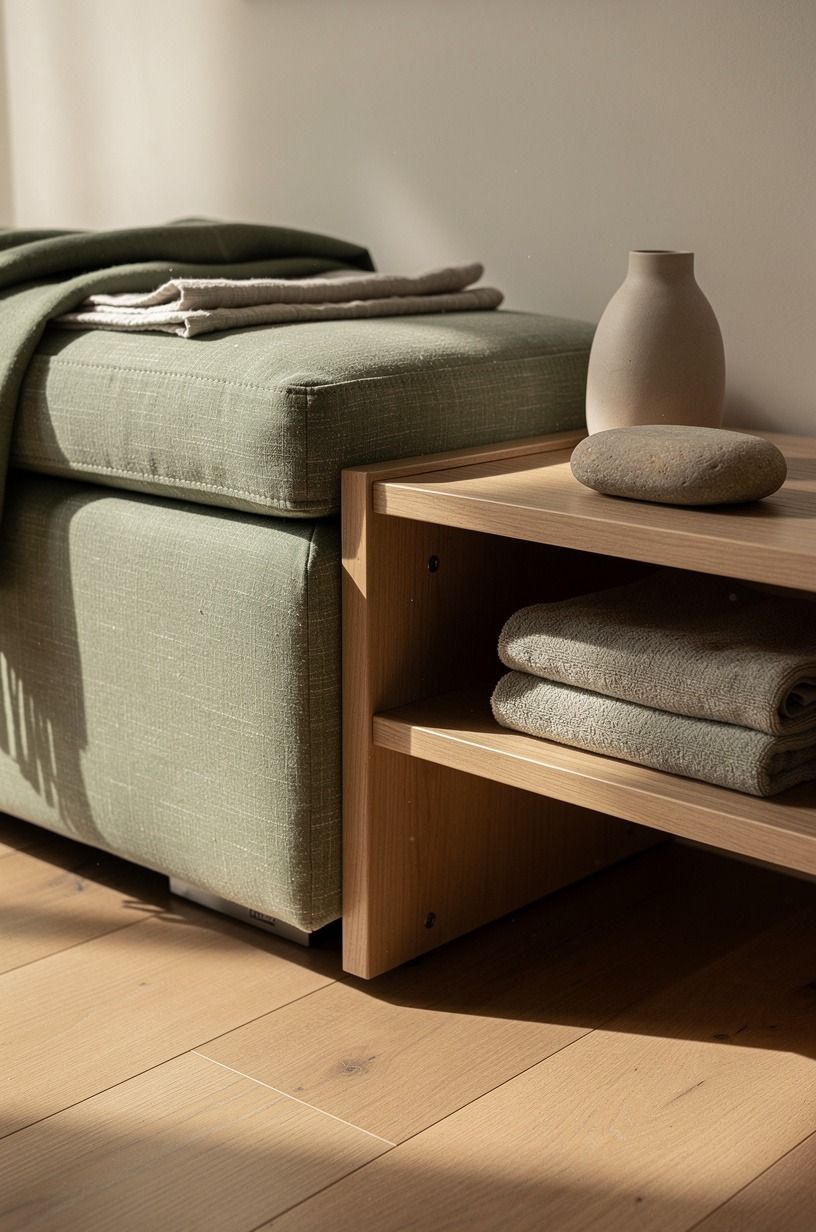
Pick one adjustable workout bench and let it define what your gym can do.
4Hang a mirror where your eyes need it
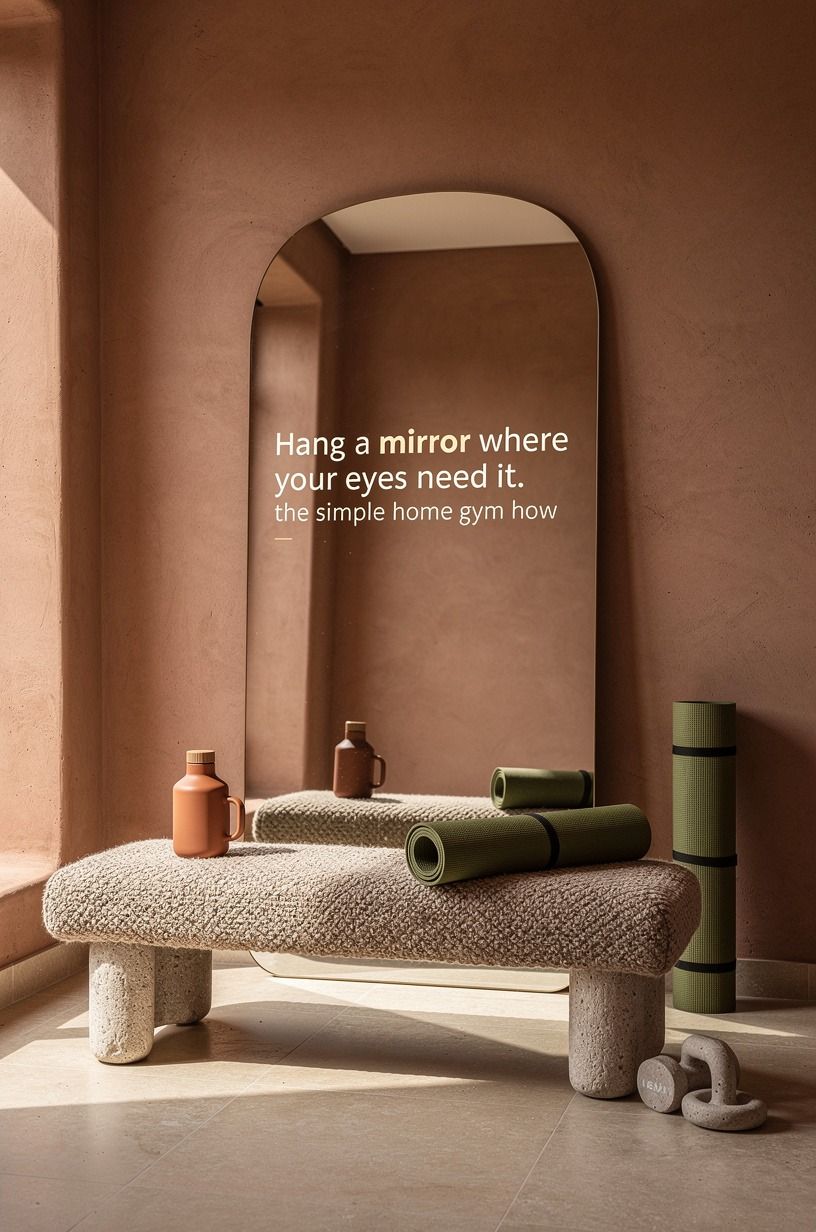
A gym mirror belongs at eye level, across from your main training position. A typical gym mirror costs $100-$400, which is less glamorous than new dumbbells but more useful than most people expect. You’ll catch your form before a bad habit settles in.
Don’t cover every wall. One clean mirror panel makes the room feel bright and gives your eye somewhere to rest between sets. Frameless tempered glass feels especially refined beside an organic bouclé accent, and it won’t fight with your other finishes.
5Can a calm color make you train more?
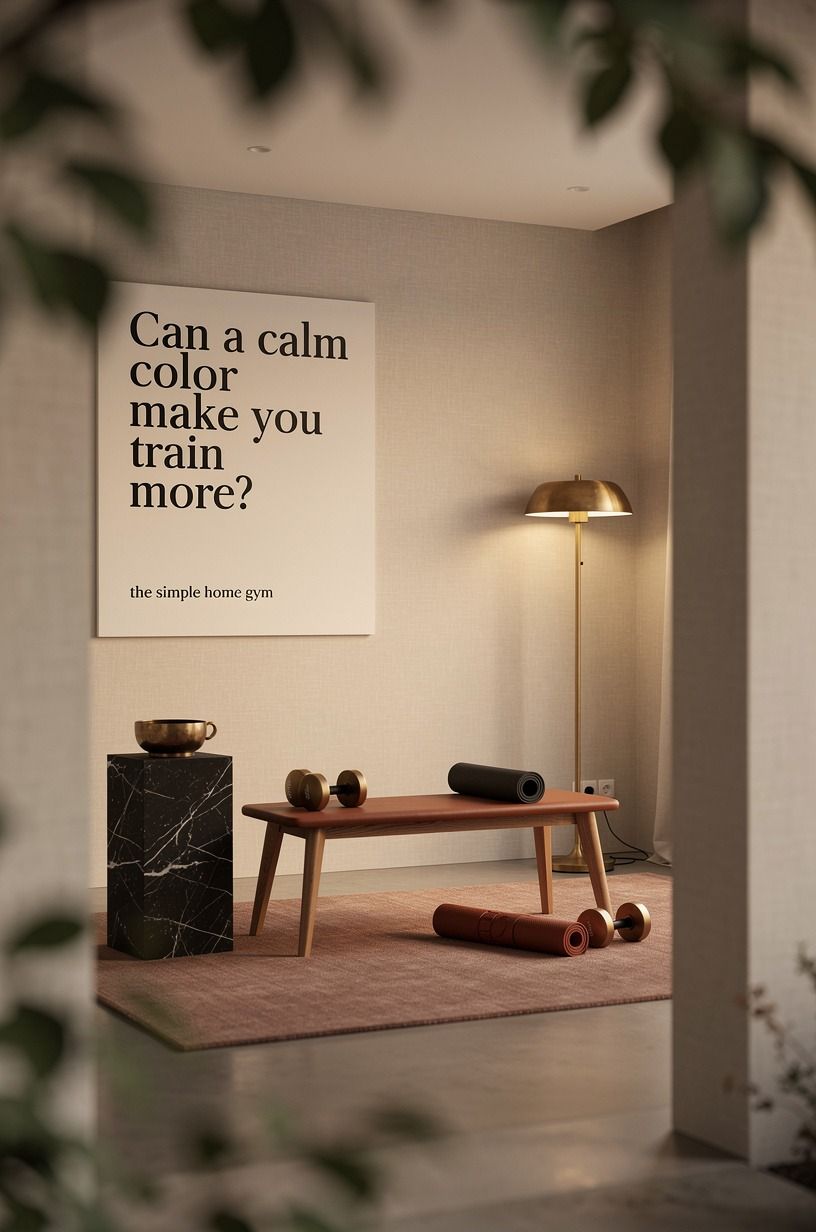
Yes, because your room doesn’t need to shout at you before sunrise.
6Build The Closed-Storage Rule
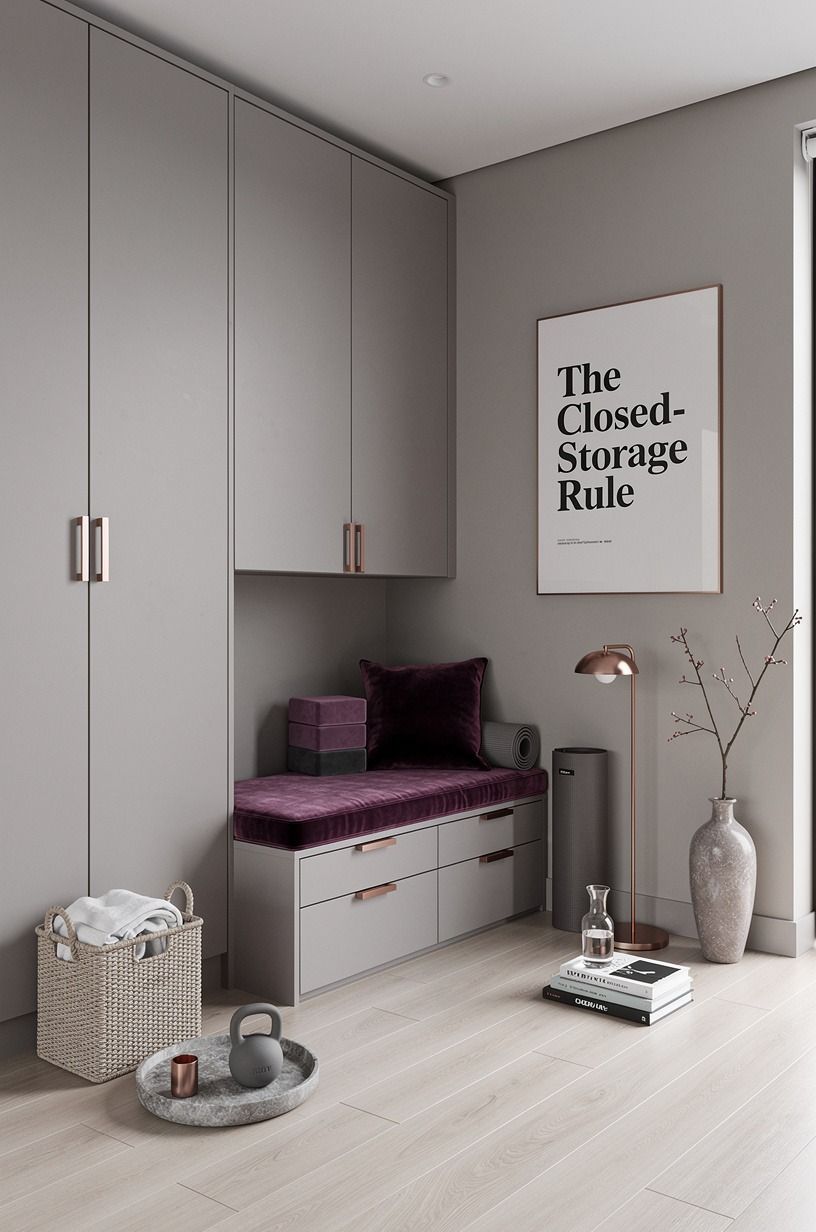
Every loose item needs closed storage within two steps of where you use it. Bands, wraps, sliders, chargers, and yoga blocks get messy fast, so give your small pieces a drawer rather than a decorative basket that spills over by Wednesday.
An IKEA KALLAX birch-effect unit with fabric inserts earns its footprint here. I’d skip open shelving for tiny accessories, since you’ll see every tangled resistance band from the doorway. A plum wall and a small touch of deep-pile mohair velvet can make that storage feel intentional.
Your gym can look lived-in without looking abandoned.
7Roll your equipment away after training
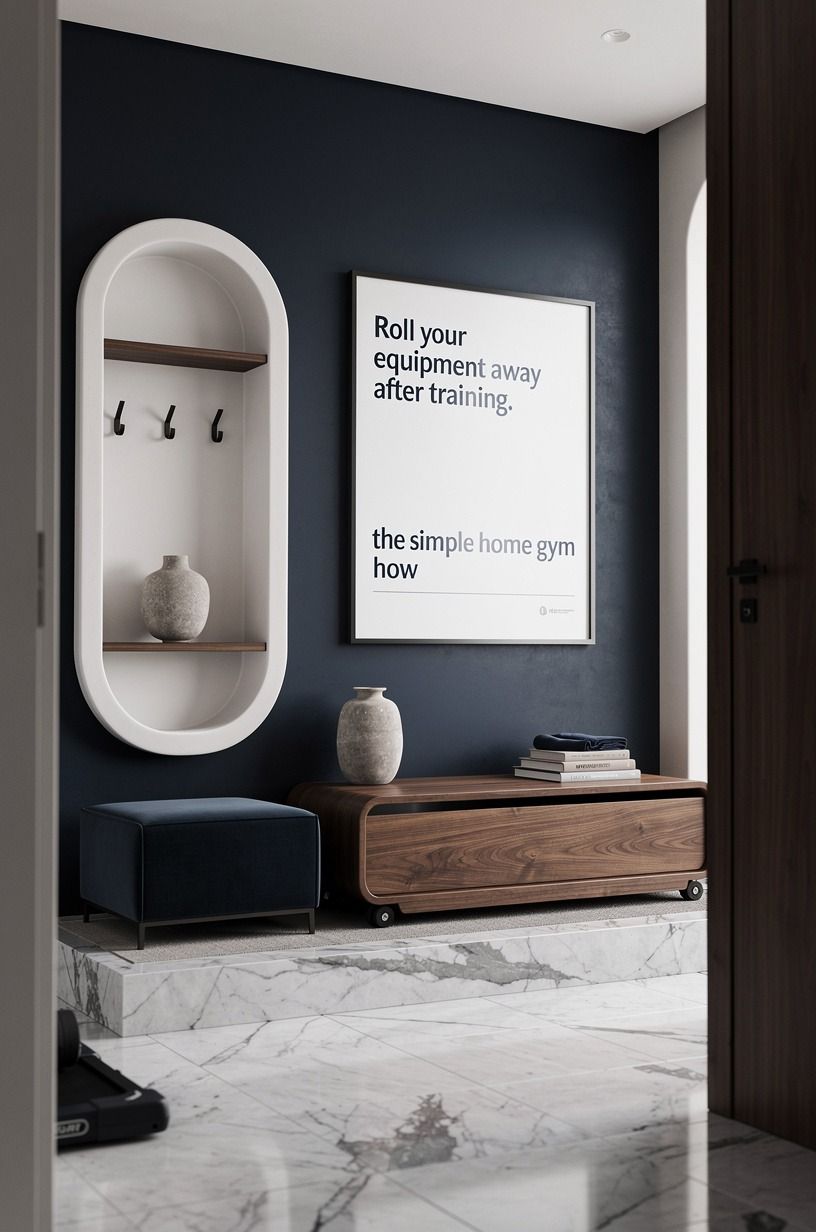
A slim rolling cart can hold bands, a timer, chalk, and your headphones without becoming another permanent obstacle. Choose a walnut cart with a Carrara marble top, then park it inside a closet or beside the KALLAX after training.
You don’t need a cart for everything. That’s where minimal rooms go wrong.
Keep only the things you reach for during nearly every session, and let the rest stay put in closed storage. Your room will feel more peaceful before you even start.
8Choose adjustable dumbbells over a crowded rack
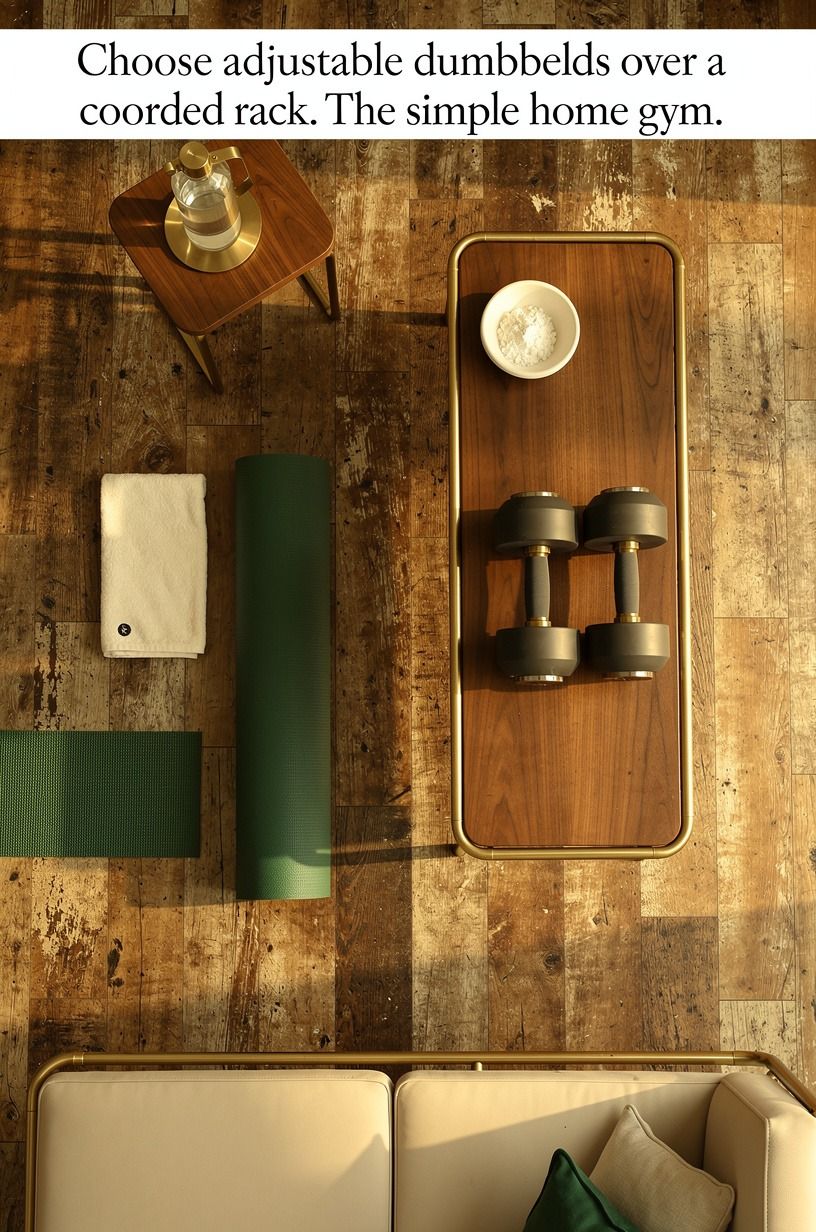
Adjustable dumbbells save a shocking amount of floor space in a home gym design.
9Frame the room with warm wood
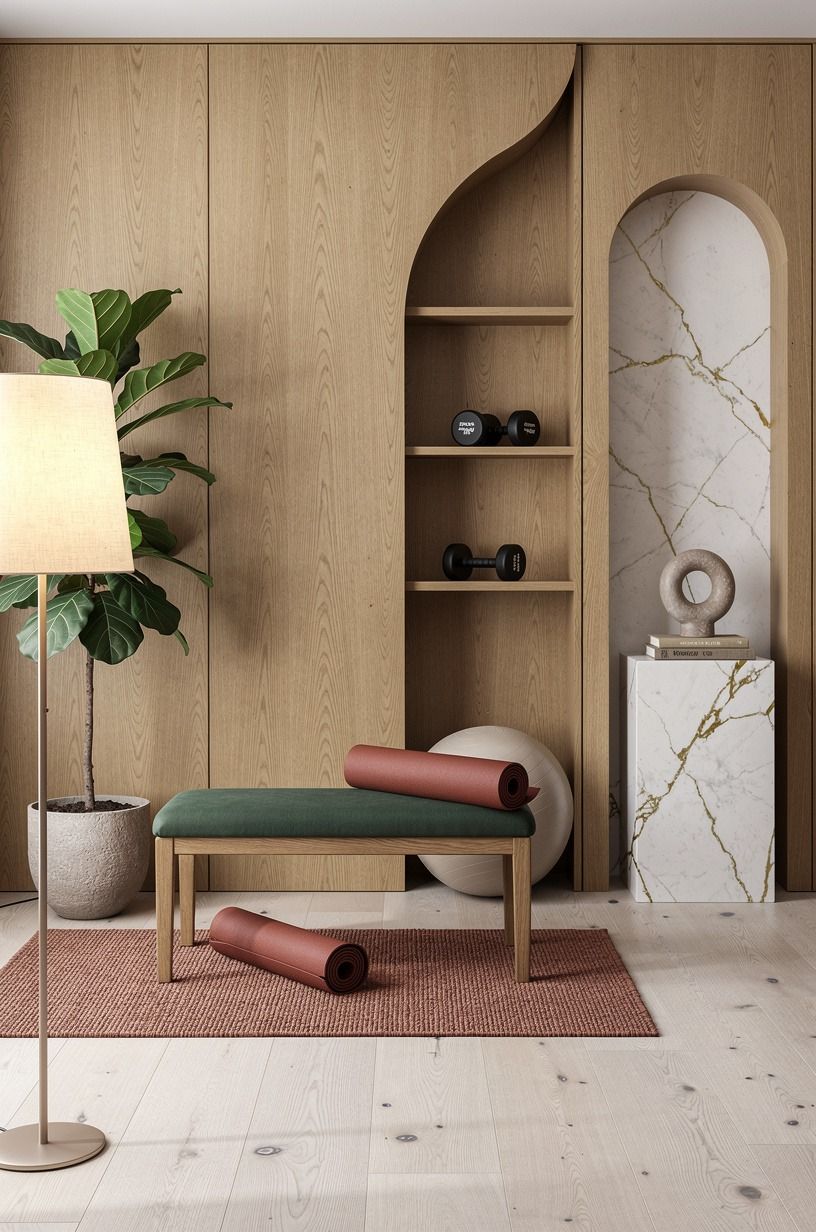
Bring in one wood element so your gym doesn’t feel like a storage unit with a treadmill. A 3/4-inch solid natural oak shelf above a mirror can hold a small speaker, timer, and one trailing plant without inviting clutter.
Keep the wood pale and matte, then use a little Calacatta marble with gold veining only where it earns its place, such as a narrow ledge or small tray. I’d avoid orange stain, because it makes black flooring look dated in a hurry. No trophy display required.
10Try The Three-Height Light Stack
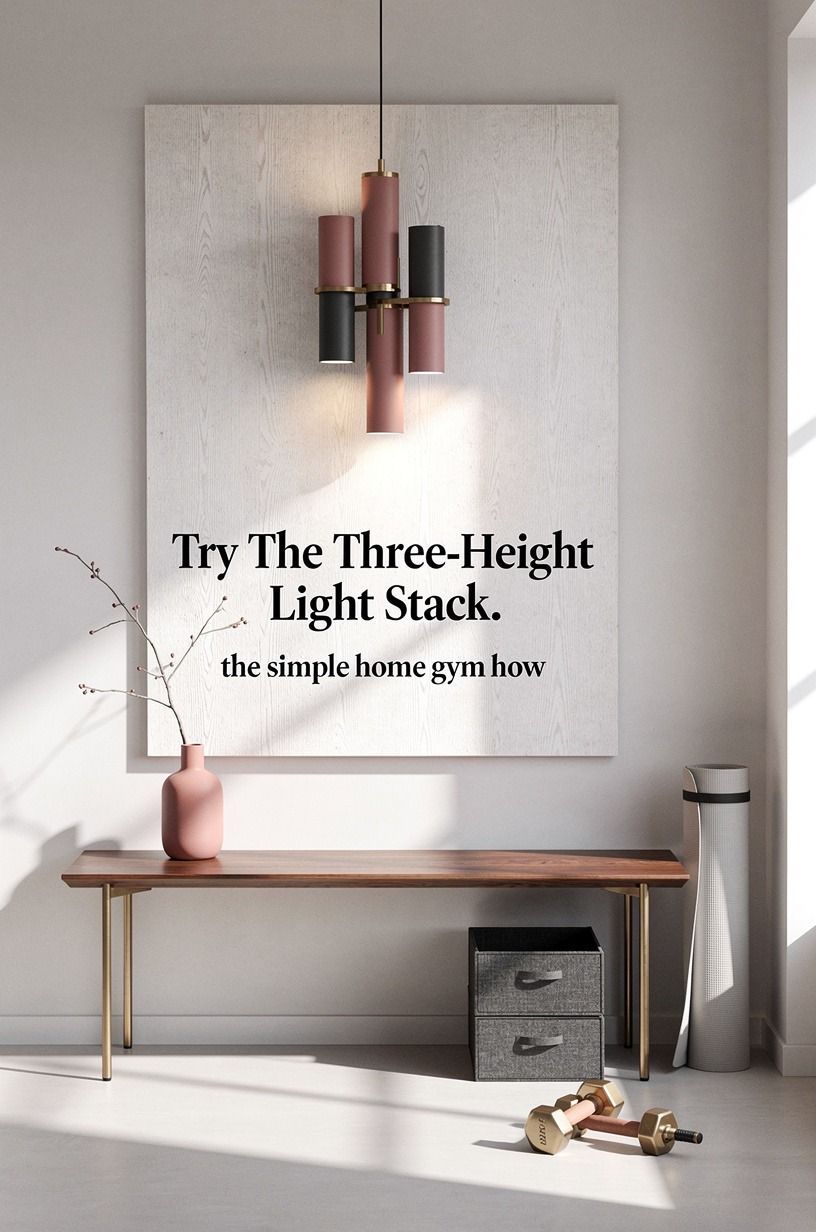
Use three heights of light: overhead, wall level, and low ambient glow. Your workout needs clear visibility, but you don’t want the room blazing like a dentist’s office at night. A dimmable LED ceiling fixture handles training, while a small lamp softens the room afterward.
Add cerused white oak only if the rest of your house leans warm. It’s an unexpected touch, and it stops the gym from feeling too technical.
And yes, a lamp in a workout room sounds fussy until you use it during a late stretch. Then it makes sense.
11Swap a giant treadmill for the routine you keep
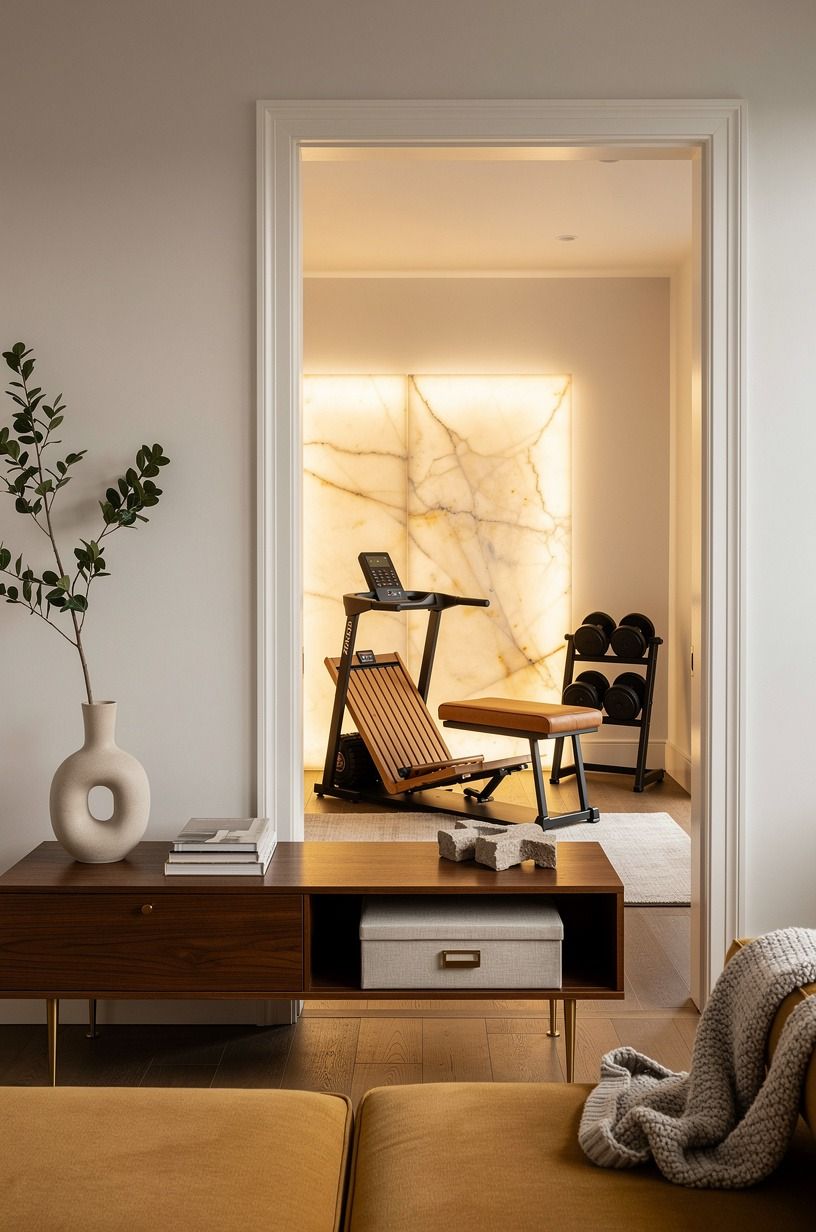
Buy for the workout you repeat, not the version of yourself who runs marathons twice a year.
12Create a recovery corner with one honest chair
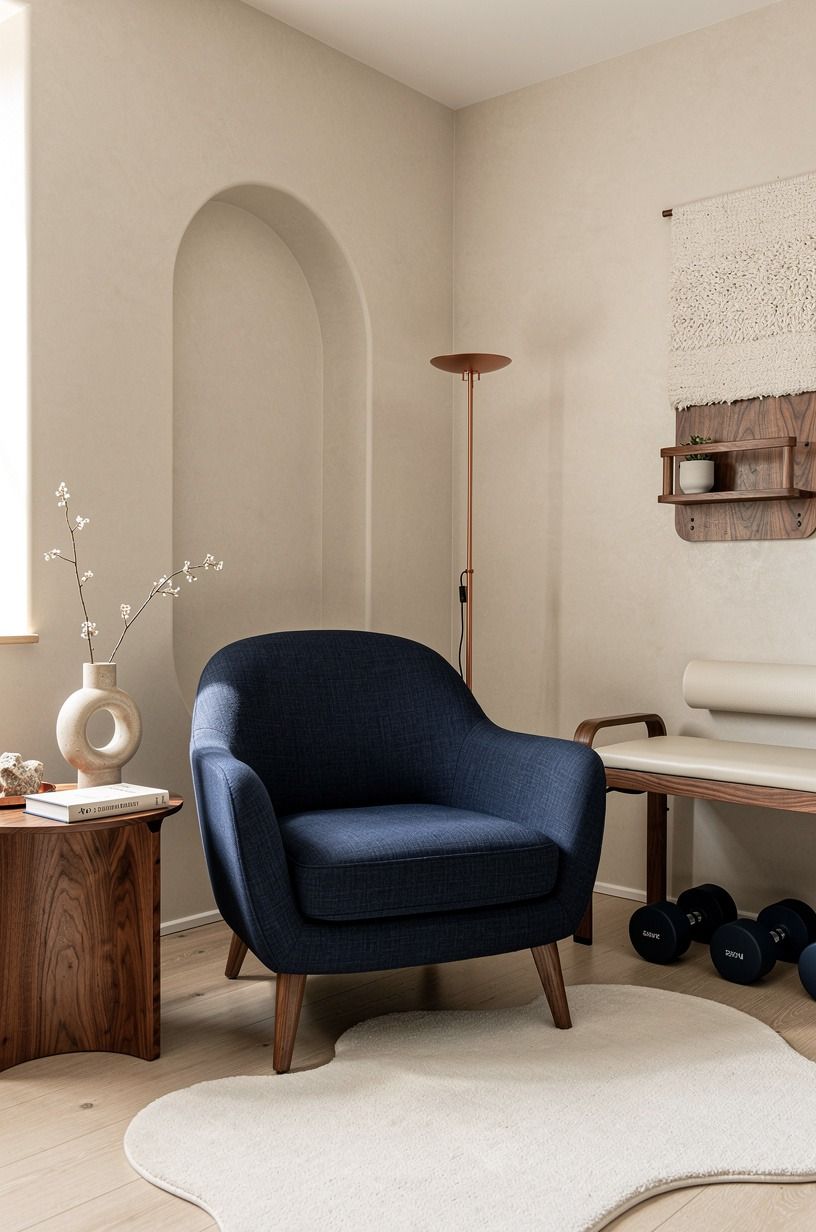
A recovery corner needs one seat, not a whole lounge. Put a compact book-matched walnut chair near the window if you have the room, or choose a simple folding stool if you don’t. Your gym should invite you in, not demand perfection.
Add a 600gsm Turkish cotton towel and a small basket for a foam roller. This is where you sit for two minutes after training, breathe, and decide you’re done.
Don’t turn it into a reading nook with six pillows. The room still has a job.
13Paint the ceiling line with Down Pipe
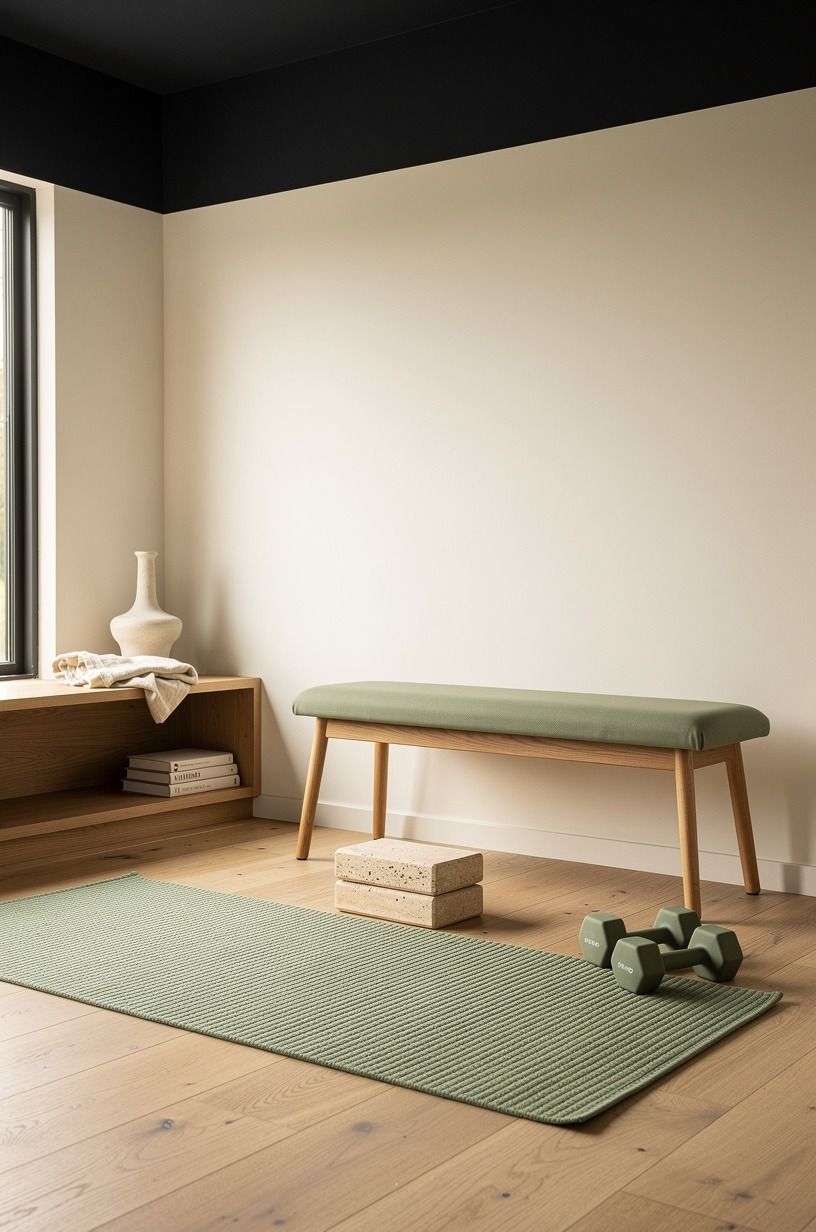
Use Farrow & Ball Down Pipe No. 26 on a single wall or lower trim line when your equipment is pale or oak-toned. Let warm travertine and sage-green accents keep the deep paint from making the room feel heavy.
Your gym doesn’t need motivational decals screaming from every surface. I’d take a moody paint color over “No Pain No Gain” lettering every single time! The paint gives you atmosphere without adding one more object to dust or move.
14Make The Doorway Reset Station
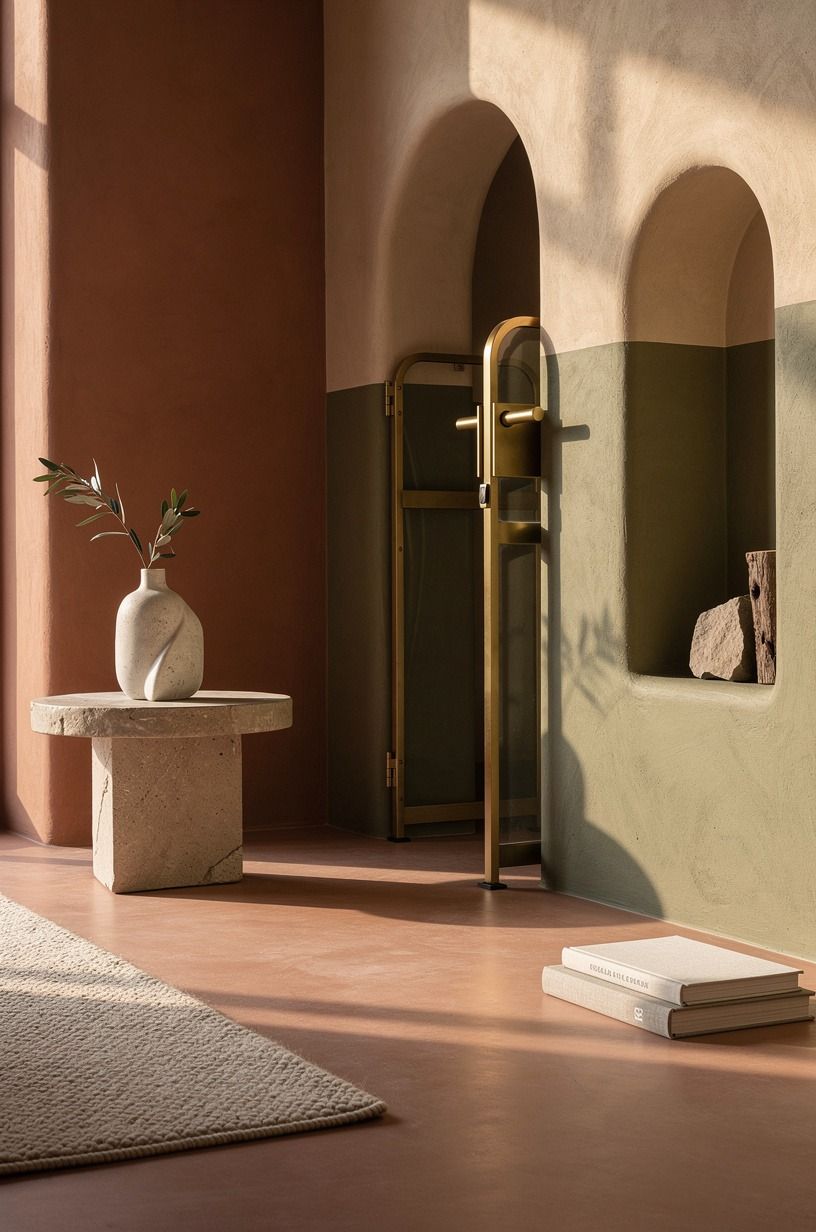
Set up a small reset spot near the door so your gear doesn’t migrate into the house. An unlacquered brass catchall can hold keys, earbuds, and a hair tie, while a hook keeps your gym bag off the floor.
You’ll use the room more when leaving it is easy. Put a hamper nearby for used towels, and keep your shoes in one contained tray. But don’t install ten hooks just because there’s wall space.
Too many visible hooks create the same clutter you’re trying to prevent.
15Put one machine on a 6x6 ft island
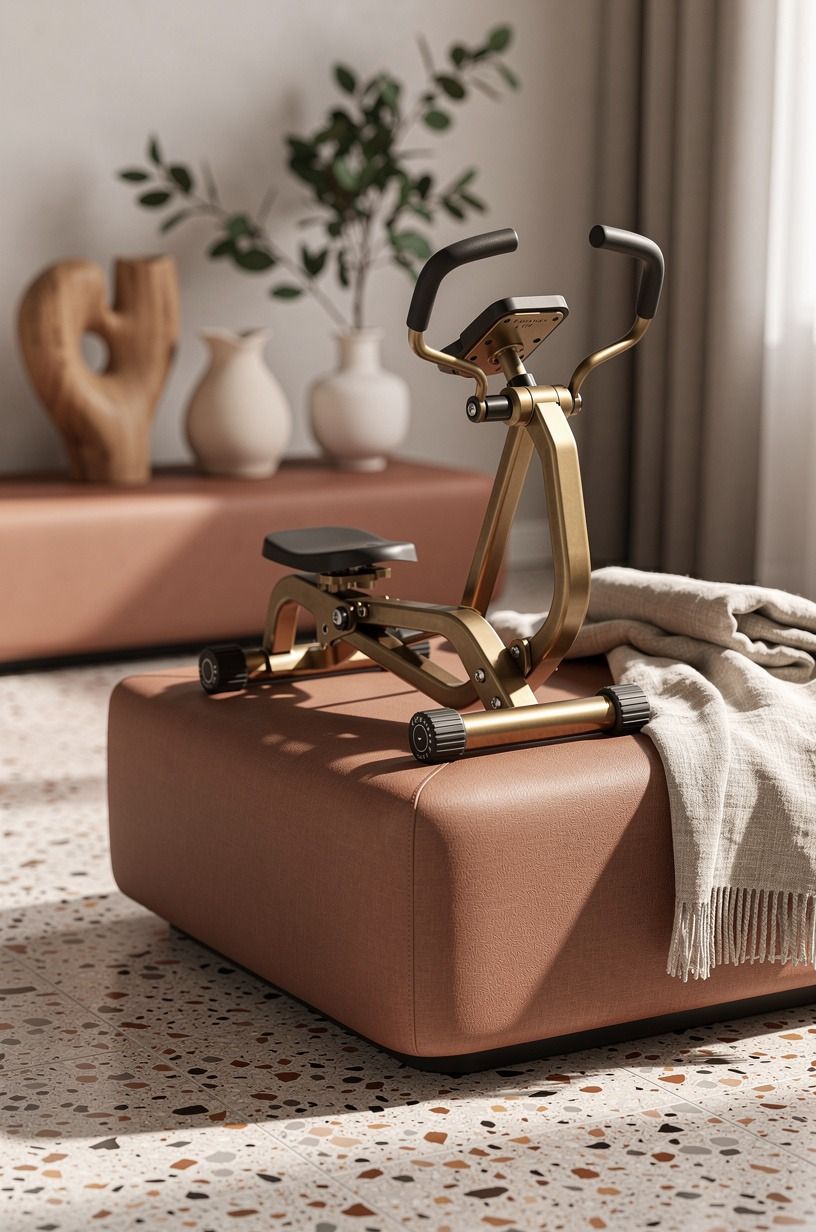
If you want a machine, give it a real footprint. Plan roughly 6x6 ft of floor per machine so you can step around it, clean beneath it, and avoid knocking into walls mid-workout. An oversized-chip terrazzo surface gives that island a durable, deliberate feel.
A compact stationary bike is usually easier to live with than a giant multi-gym station. I’d skip anything with permanently flared arms in a small room, because those shapes steal circulation space all day.
Measure first. Then measure again (I mean it).
16Use soft textiles without making it a bedroom
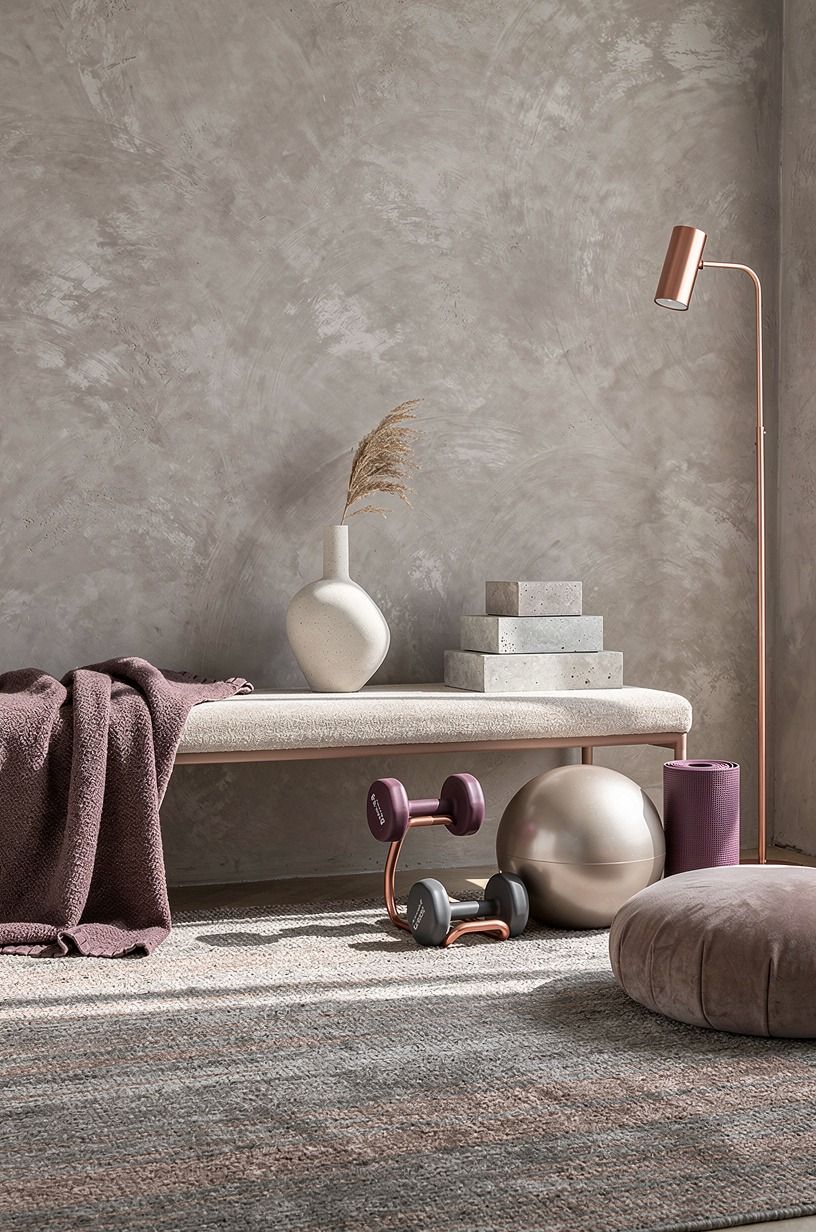
A gym can be warm without being draped in blankets.
17Choose matte hardware over flashy finishes
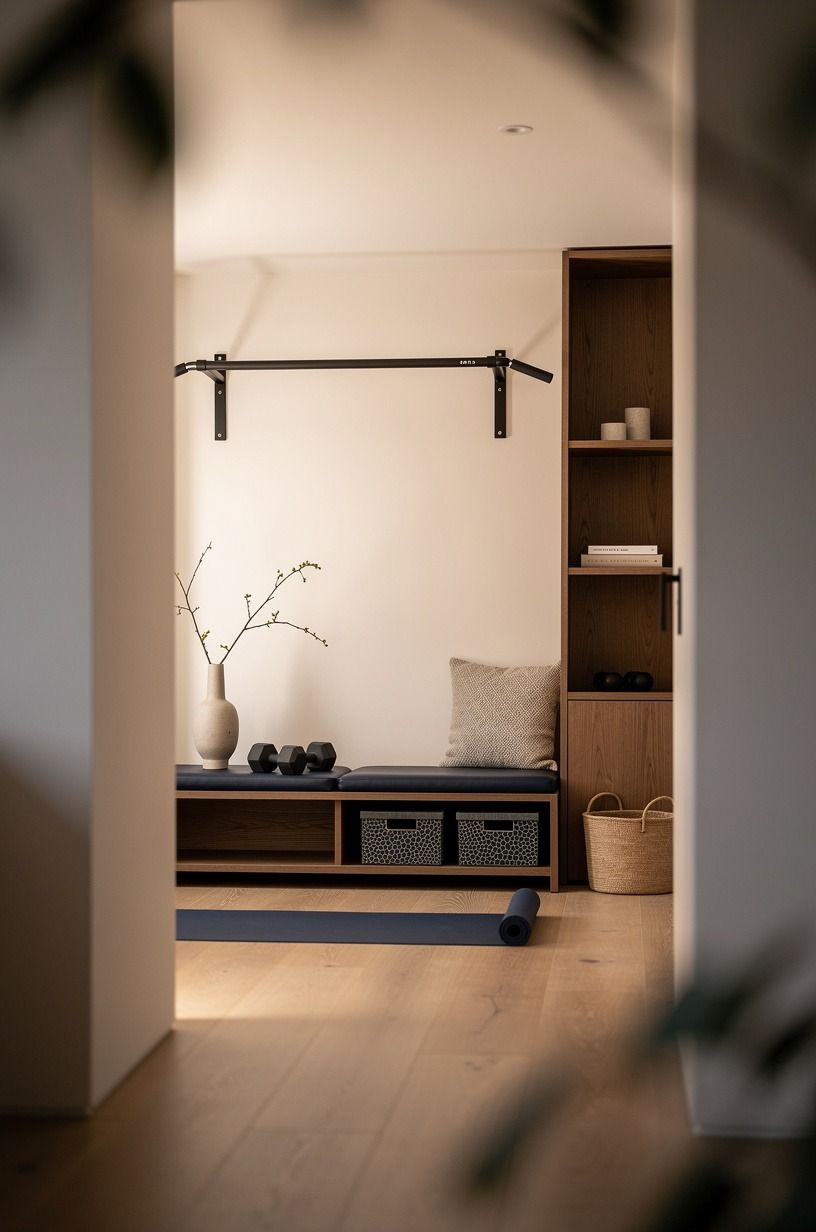
Matte finishes calm a room because they don’t bounce every reflection back at you. Use matte black wall hooks, black dumbbell cradles, and a dark metal shelf bracket if your gym sits near a living area.
I went back and forth on brass hardware in a black-and-charcoal room, but matte black won. A small shagreen-accented tray adds texture without making the room feel dressed up beside rubber flooring. Your equipment will still be the focal point, just not the only thing your eye notices.
18Keep the last wall intentionally empty
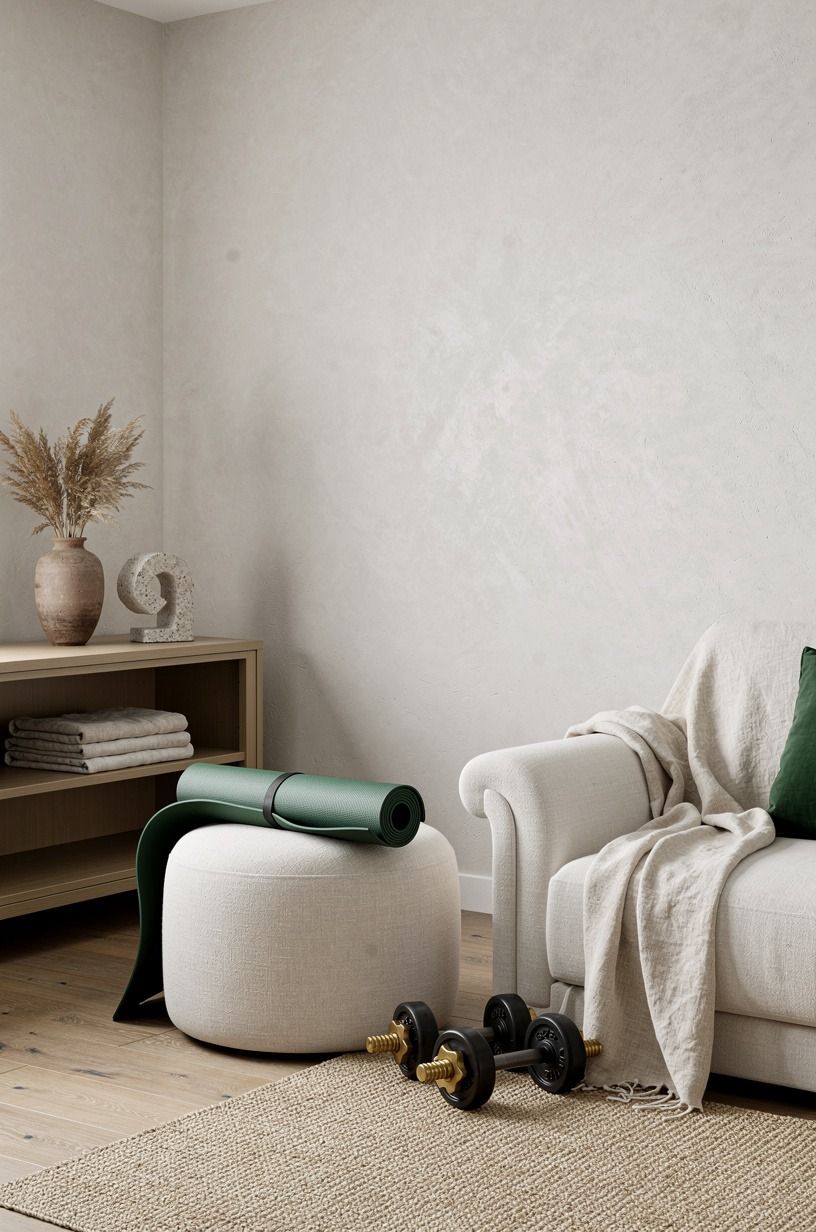
Leave one wall open on purpose. It gives you room for mobility drills, checking form, or simply seeing that your simple home gym is under control. A blank surface can be functional when you’ve decided what it’s for.
If you need visual interest, use a single washed Belgian-linen wall hanging instead of a collage. I’d avoid a wall of fitness quotes, because they create noise you stop seeing after a week. Your open wall is breathing room.
Let it stay that way!
What a minimal home gym typically costs
You can spend less by choosing one training lane, then adding only what your routine proves you need. The budget tier is enough for a functional room, while the high tier makes sense only if your space supports a full setup.
Why I think minimal gyms work better
I used to believe a home gym had to look committed before it could make me committed. More weights. More machines.
More things that proved I was serious. The result was a room that felt faintly guilty every time I opened the door, because each unused purchase sat there making a little accusation. You know the feeling.
A fancy machine becomes part of the furniture, and suddenly the room is about avoiding evidence rather than using it.
What changed for me was treating the gym like a good kitchen. You don’t need every gadget in the store.
You need the knife you reach for, enough counter space to work, and a place to put everything afterward. In a gym, that means a clear floor, a handful of tools you trust, and lighting that doesn’t make you want to leave.
The best simple in home gym isn’t the one that looks like a showroom. It’s the one where you can start a workout in thirty seconds.
I’d put money into flooring and storage before decorative signs, fancy wall art, or an oversized machine. Flooring protects your home and makes the room feel intentional under bare feet. Storage removes the tiny frictions that turn “I’ll lift for twenty minutes” into “I’ll do it tomorrow.” And tomorrow has a way of becoming next month.
There’s also something comforting about seeing less. You can notice your progress, your posture, and your own habits without a circus of equipment in the room.
That’s not deprivation. It’s a room making a clear promise: whatever kind of workout you have in you today, there’s space for it.
A Few Things Worth Answering
What is the best option for a small home gym?
The best choice is an adjustable dumbbell set with a clear mat zone. Adjustable dumbbells replace a crowded rack, while your open floor handles strength work, yoga, and mobility.
One bench. One mirror.
Enough room to move.
Where can I buy home gym pieces on a budget?
Start with IKEA, Target, and Wayfair for storage, lighting, and simple accessories. Facebook Marketplace is useful for benches and mirrors if you inspect them carefully. Your best secondhand finds are usually boring, sturdy, and easy to clean.
How much does a simple home gym makeover cost?
A small makeover can cost about $300-$1,200, depending on flooring and equipment. Rubber flooring is often the line item that changes the total most. Clear out the room yourself, reuse storage, and spend where your body meets the space.
Can I create a simple home gym on a budget?
Yes, and you can begin with what you already own. A clear workout zone costs nothing. A mat, resistance bands, and a secondhand mirror can cover a surprising amount of training without filling every corner.
Is a minimal home gym worth it in a small space?
Yes, because a small room forces better choices. A defined layout keeps your equipment useful instead of decorative. Put your largest item against one wall, preserve a central movement zone, and don’t buy tools you can’t store.
Is a simple home gym a good idea for a rental?
Yes, if you keep the changes removable. Tension-rod curtains, peel-and-stick hooks, and freestanding storage give you function without permanent damage. Use rubber mats over existing flooring, and take the improvements with you when you leave.
Where I'd Start First
If I had to pick one, I’d start with the 8x10 ft rubber mat zone. You can’t build a useful workout around a floor you’re scared to drop a weight on. Pin the mat zone for later and let the rest of your gym earn its place.