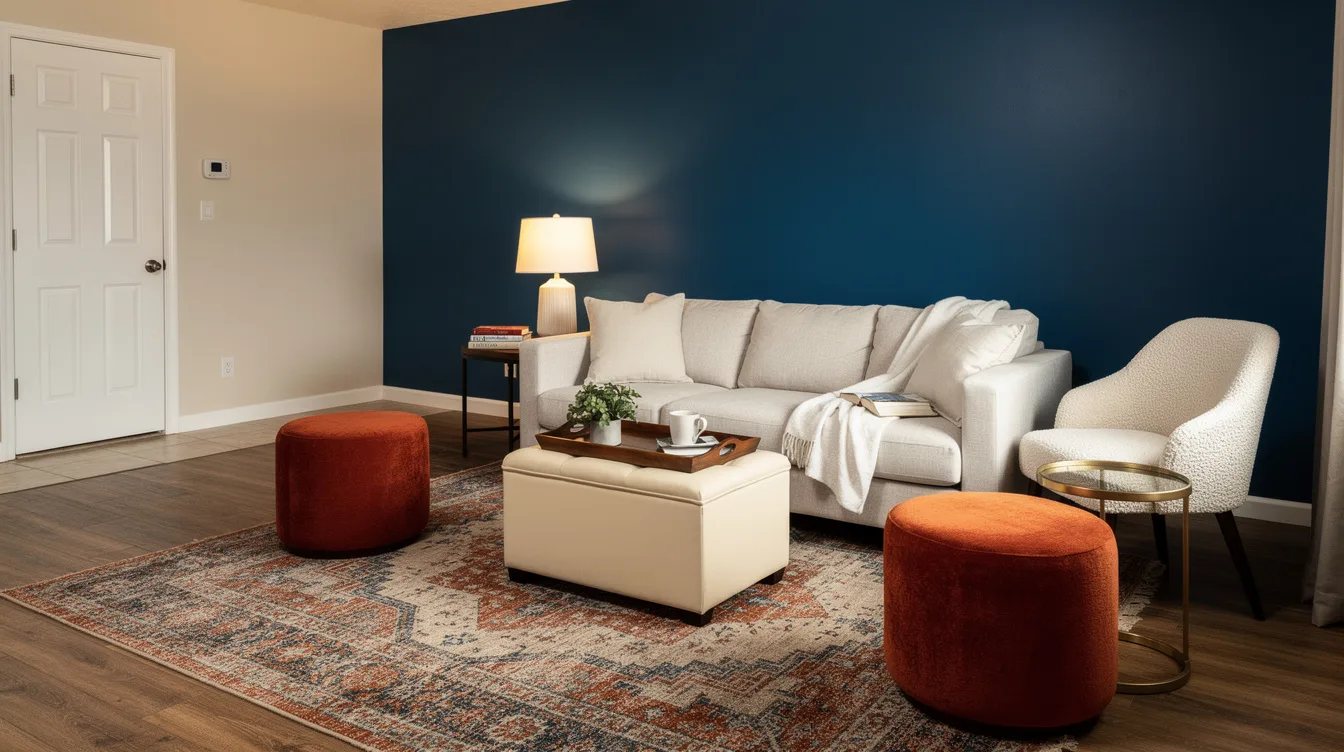
14 Wayfair Small-Space Seating Arrangements Designers Actually Use
02 september 2026A small living room can feel cramped long before every seat is taken. In a room with a 60-inch loveseat, the difference between a workable layout and a daily obstacle course is usually the open path around it.
Designers don’t simply buy the tiniest sofa available. They build a flexible seating system with one restrained anchor, movable companions, and storage that earns its footprint.
What you will find inside
- Anchor the Longest Wall With a Compact Loveseat
- Float a Light-Legged Loveseat Off the Wall
- Turn a Dead Corner Into a Petite Sectional
- Choose a Standard-Depth Sectional
- Make an Ottoman the Flexible Third Seat
- Use Two Poufs Instead of a Bulky Accent Chair
- Park a Slim Bench Behind the Sofa
- Break Up a Modular Sofa Into Useful Pieces
- Face Two Small Seats Across a Round Table
- Add One Bouclé Chair, Then Stop
- Use a Sleeper Sofa Where Guests Actually Sleep
- Choose Matte Vegan Leather for Dining-Lounge Zones
- Keep One Armless Seat Ready to Move
- Protect a Clear Route With a Narrow Side Table
Anchor the Longest Wall With a Compact Loveseat
Choose a Wayfair loveseat around 60 to 72 inches wide and place it on the room’s longest uninterrupted wall. That scale seats two while leaving room for a chair, a pouf, and a real walking route.
A 58-inch-wide black vegan-leather option can work in a studio, while a roughly 68-inch blue linen loveseat gives a narrow living room more softness. Skip the standard three-seat sofa unless the room has enough depth to keep circulation clear.
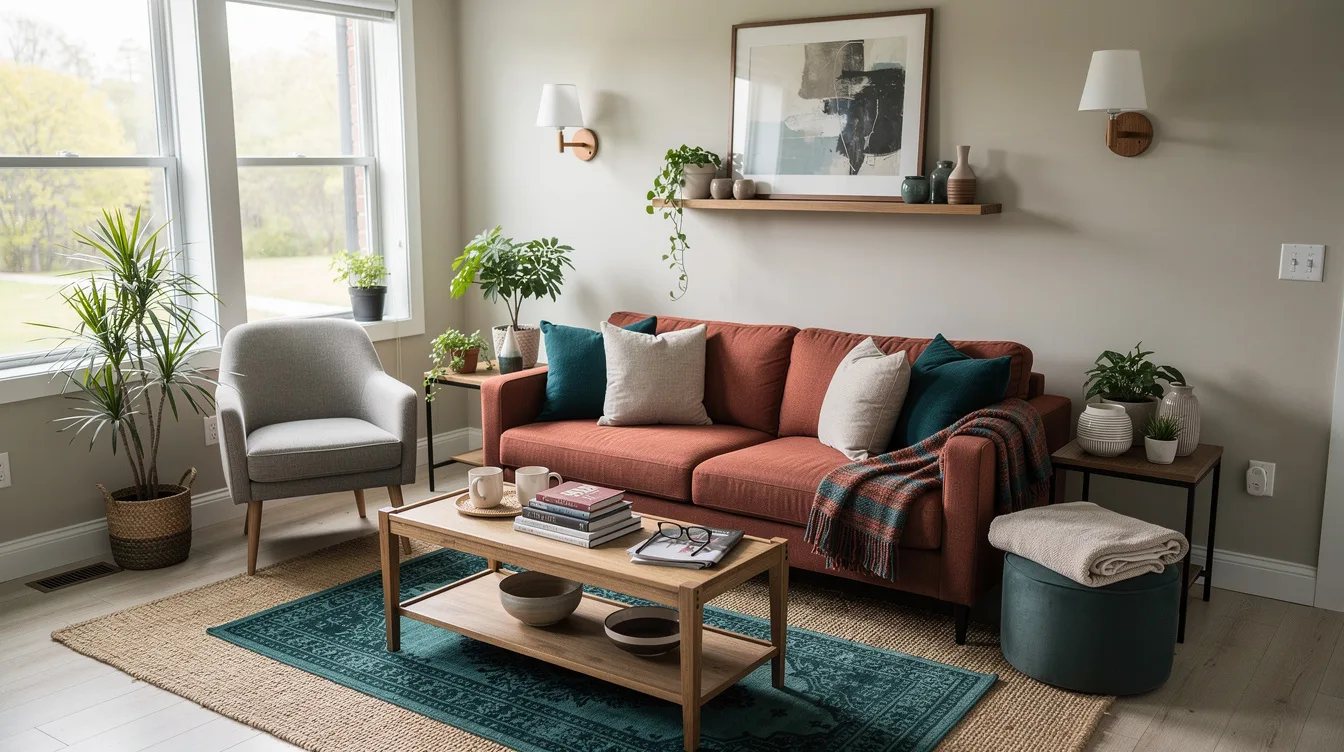
Float a Light-Legged Loveseat Off the Wall
In a rectangular room, pull a compact linen-look polyester loveseat a few inches away from the wall instead of pressing every piece against the perimeter. The small shadow line makes the layout look considered and keeps cords from becoming a visible mess.
Use this only when a clear route still remains behind or beside it. A loveseat around 32 to 36 inches deep is usually easier to float than a deep lounge sofa.
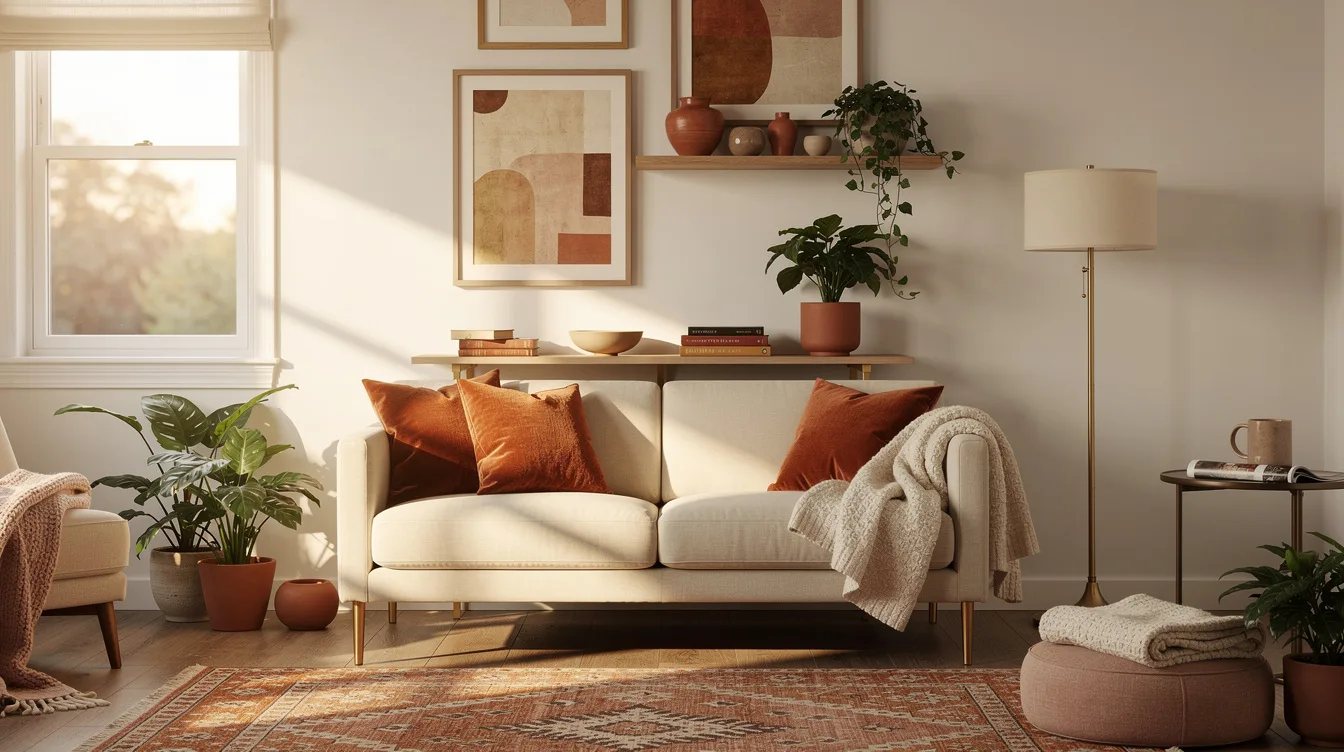
Turn a Dead Corner Into a Petite Sectional
An L-shaped arrangement works when its chaise occupies a corner that would otherwise collect bags or unused décor. A reversible chaise sectional around 70 inches wide and roughly 57 inches deep can replace both a sofa and a separate chair.
Keep the open side facing the main route into the room. A chaise pointed into traffic looks cozy in a listing photo and irritating in real life.
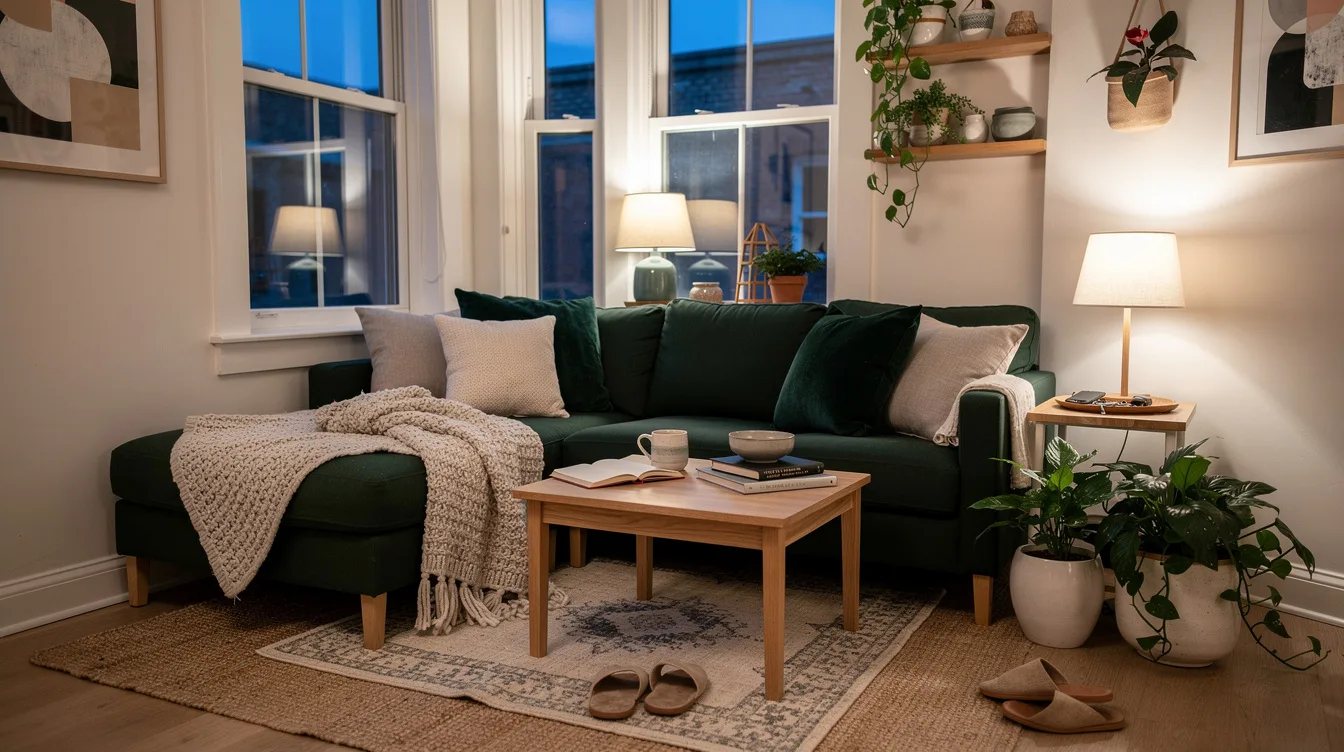
Choose a Standard-Depth Sectional
Filter compact sectionals by seat depth before falling for the silhouette. A chenille sectional with a standard seat depth of roughly 21 to 28 inches gives guests a comfortable perch without pushing the coffee table into the aisle.
Deep seats, around 28 to 35 inches, suit a larger lounge zone but can consume a small room fast. In tight quarters, upright comfort wins over a sink-in profile.
Make an Ottoman the Flexible Third Seat
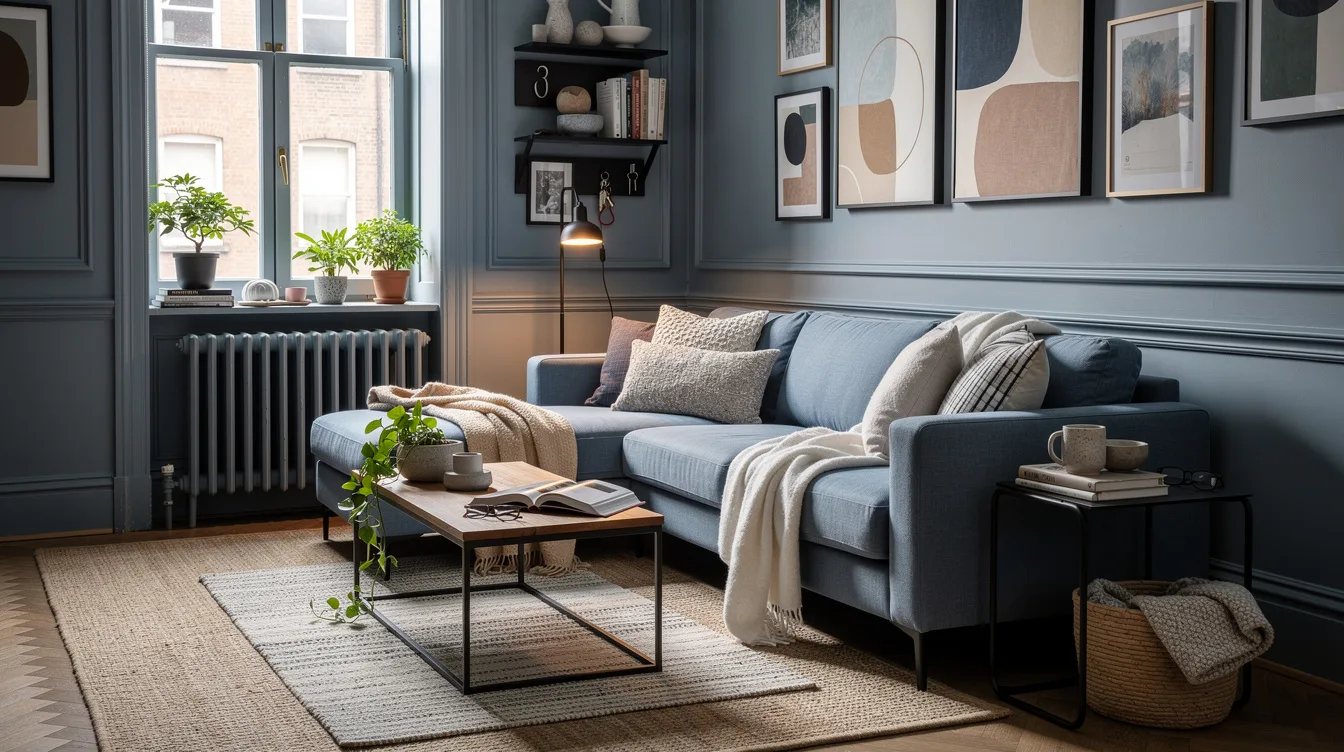
Put a firm storage ottoman in front of the loveseat and let it do two jobs. It works as a coffee table most days, then becomes an extra seat when company arrives.
Choose a flat, upholstered top rather than an overstuffed cube. Add a tray for drinks, then remove it in seconds when the room needs seating.
Use Two Poufs Instead of a Bulky Accent Chair
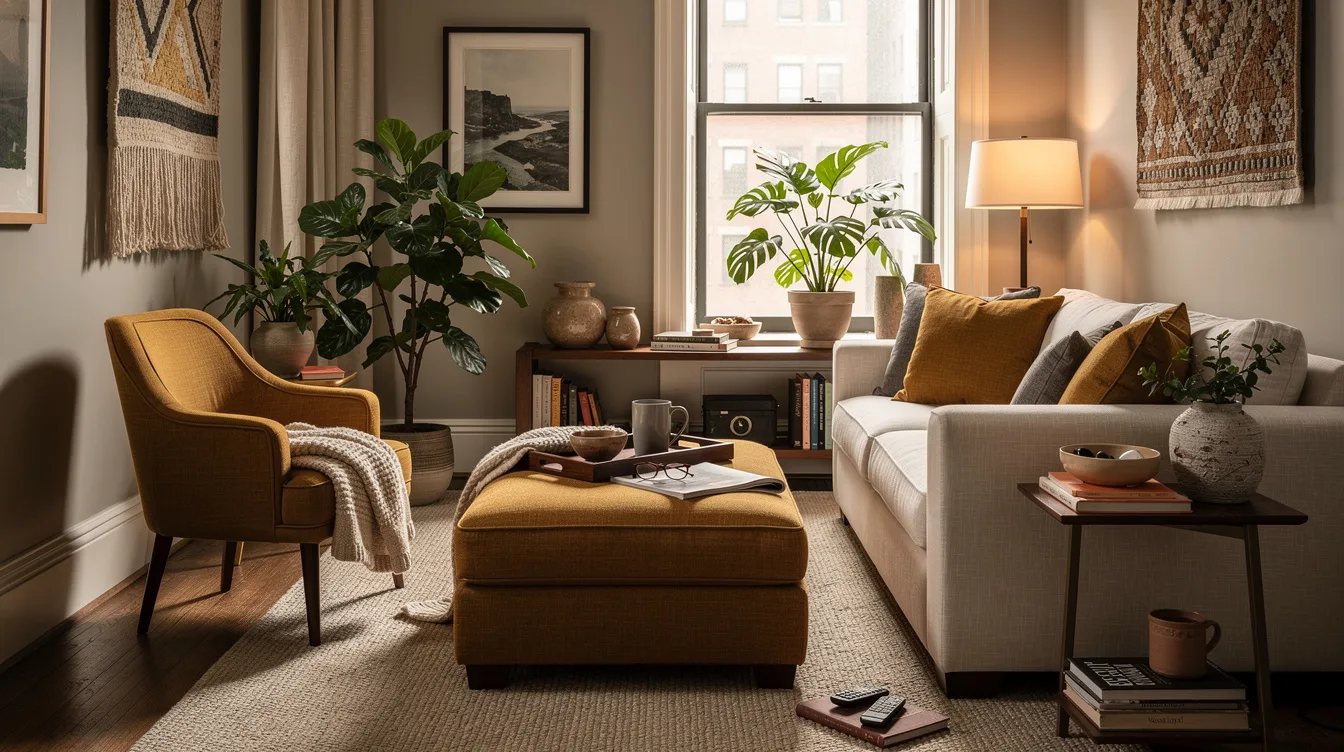
Two low upholstered poufs deliver more flexibility than one large occasional chair. Tuck them under a console or window when the room is quiet, then pull them into the conversation area.
This arrangement is especially useful opposite a 60-inch loveseat. Poufs keep sightlines low, which matters when the living room also functions as an entry or dining space.
Park a Slim Bench Behind the Sofa
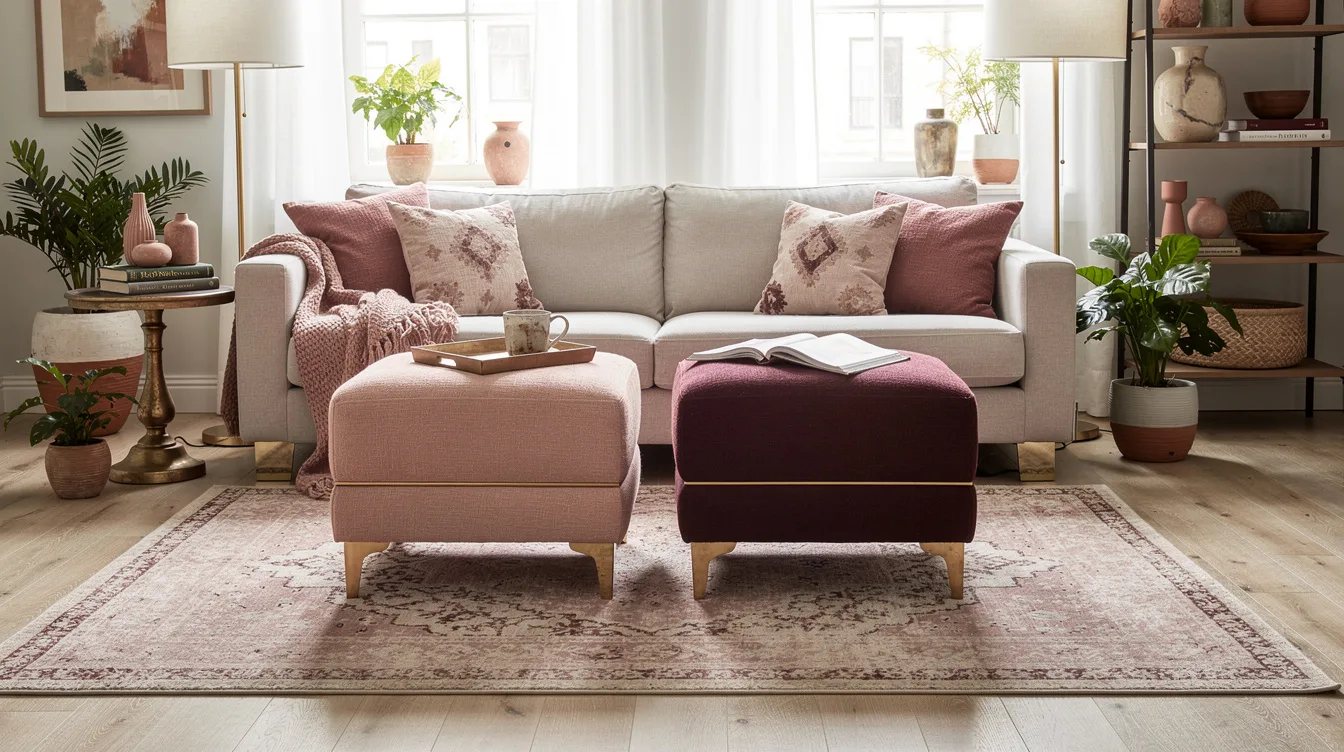
A narrow upholstered bench behind a floated loveseat creates bonus seating without asking for another visual block. It also gives the layout a finished back view in an open-plan apartment.
Keep the bench roughly sofa-height or lower, and leave enough clearance for people to pass. A bench with hidden storage is even better for throws, board games, or chargers.
Break Up a Modular Sofa Into Useful Pieces
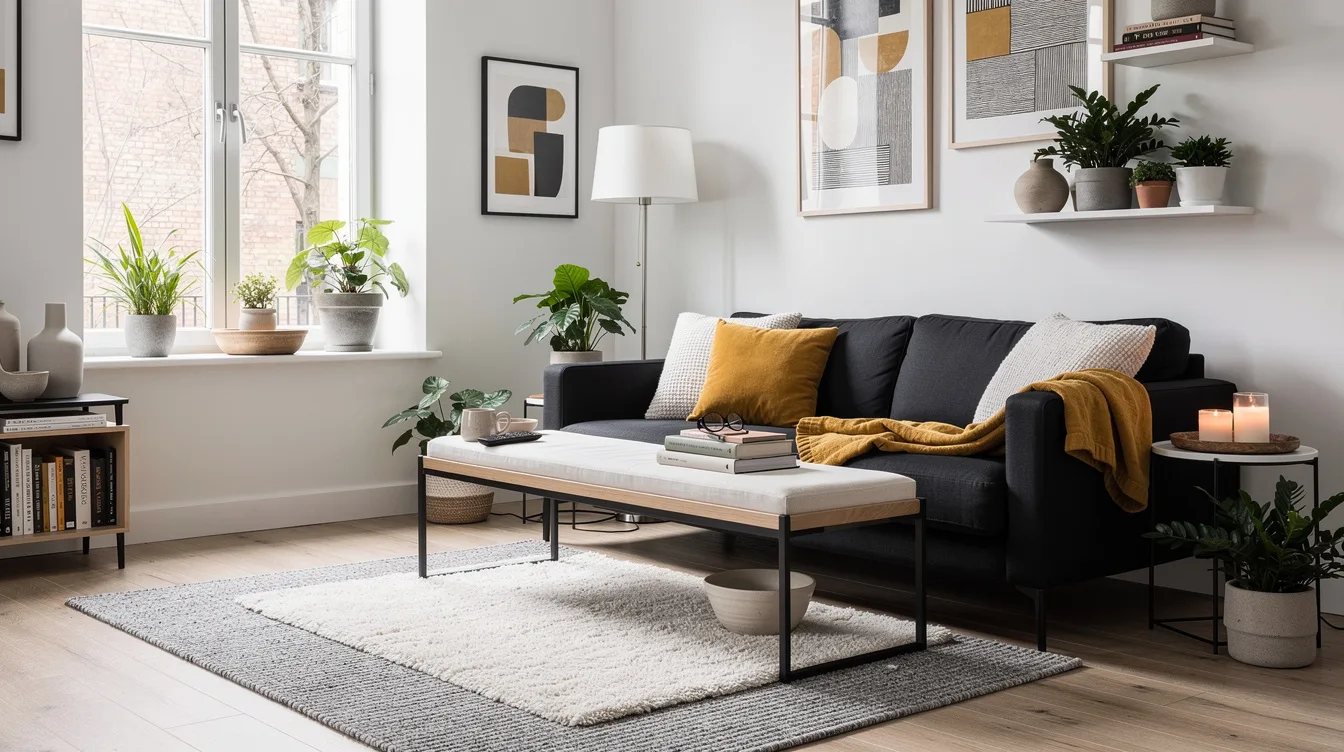
Modular seating should stay modular after delivery. A Wayfair modular component can work as part of a compact sofa during the week and move beside a window as a guest chair when the room needs a new function.
Brown corduroy modules around 74 inches wide can suit a long narrow room, but use the texture sparingly. Too much corduroy makes a small footprint feel visually padded.
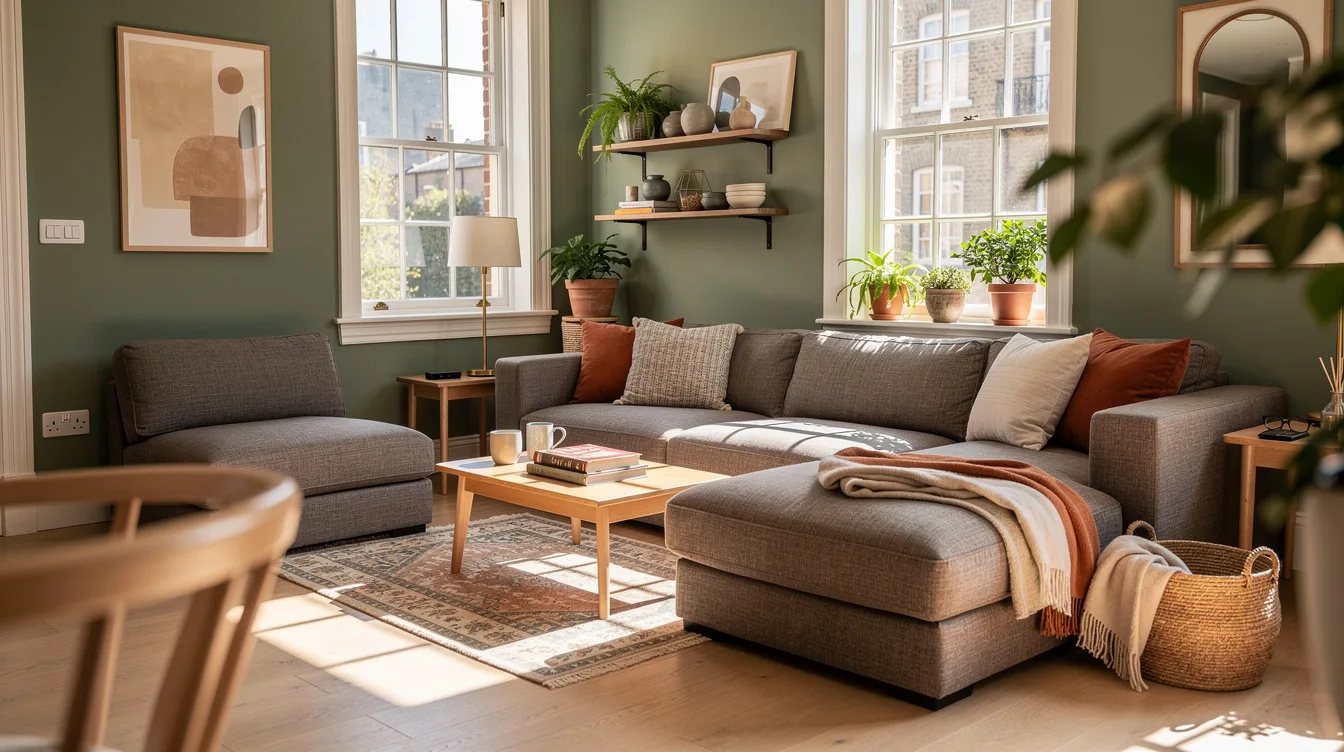
Face Two Small Seats Across a Round Table
For a room without television-first priorities, use two compact accent chairs facing each other across a round ottoman or small table. The arrangement creates a clear conversation zone and leaves the rest of the room open.
Choose chairs with exposed wood or metal legs. Solid skirted chairs visually widen the floor mass and make a modest room feel more crowded.
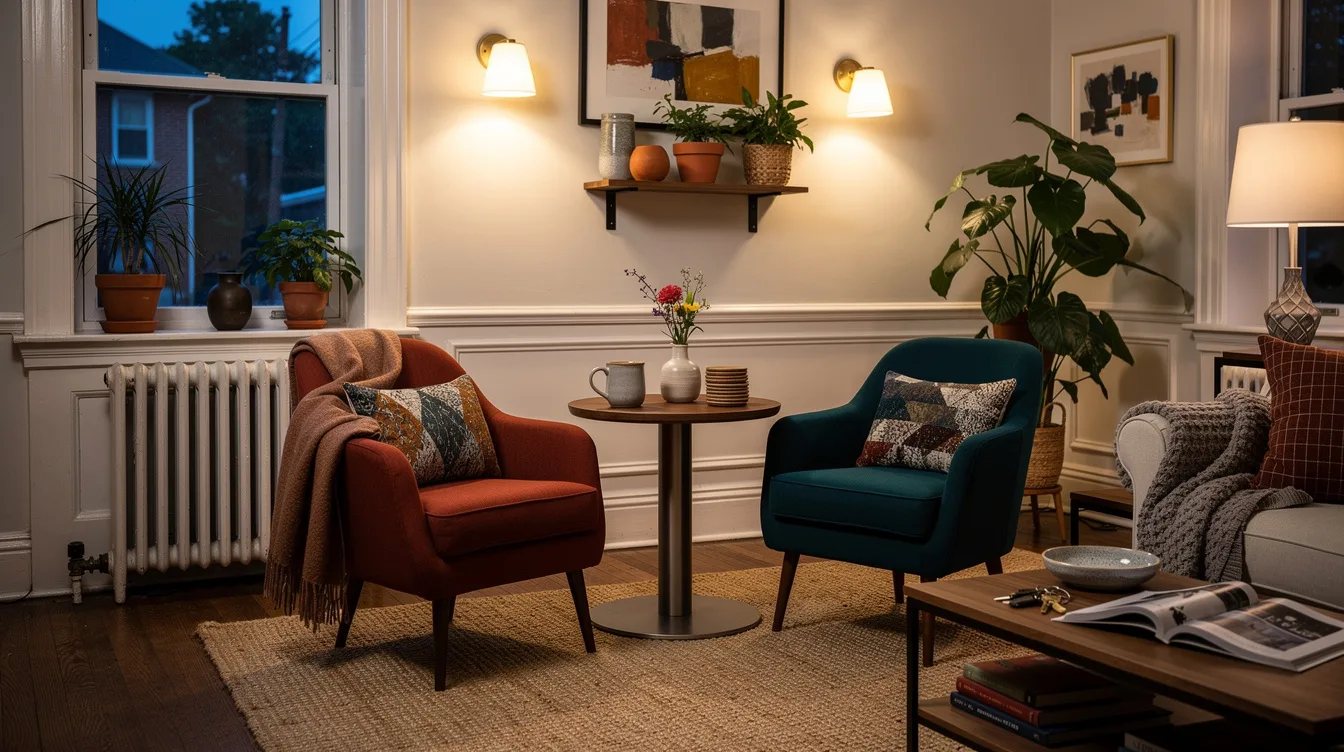
Add One Bouclé Chair, Then Stop
A single bouclé accent chair can soften a tailored loveseat and give a small room a tactile focal point. Keep it as the exception, not the whole seating collection.
Pair it with smoother chenille, matte vegan leather, or linen-look upholstery. Repeating nubby fabric across every seat can make the room read like one oversized cloud.
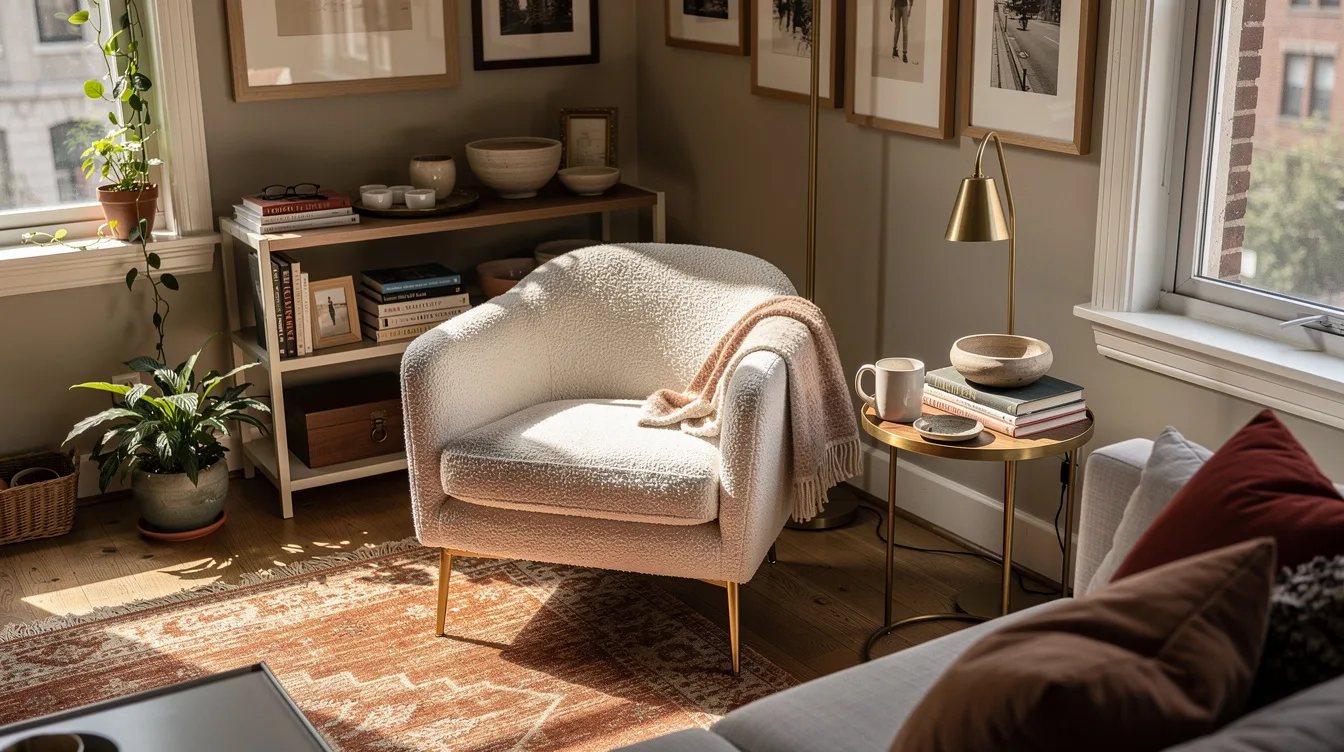
Use a Sleeper Sofa Where Guests Actually Sleep
A compact convertible sleeper makes sense in a studio or office that truly hosts overnight guests. It is a stronger choice than filling a living room with a permanent sofa and a separate guest bed.
Measure the fully opened sleeping position before buying, not just the closed width. The important question is whether someone can still reach the bathroom after the bed is open.
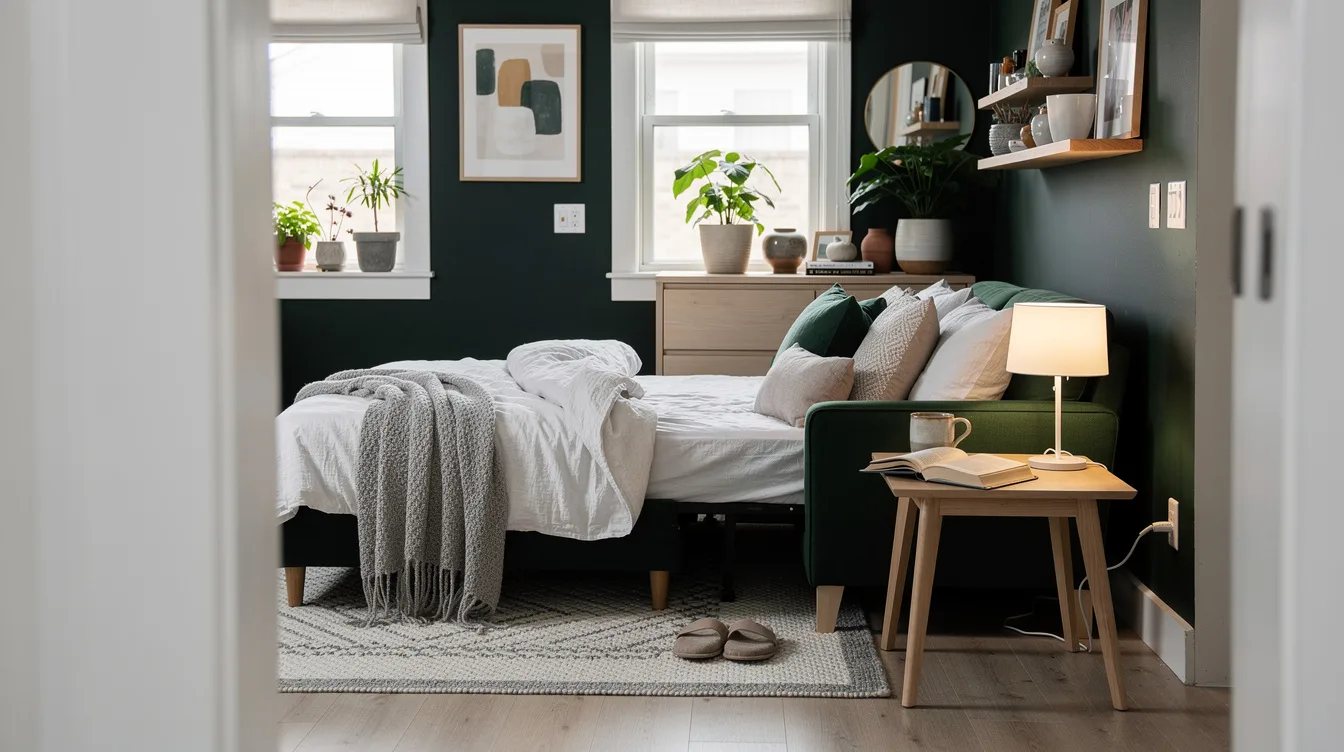
Choose Matte Vegan Leather for Dining-Lounge Zones
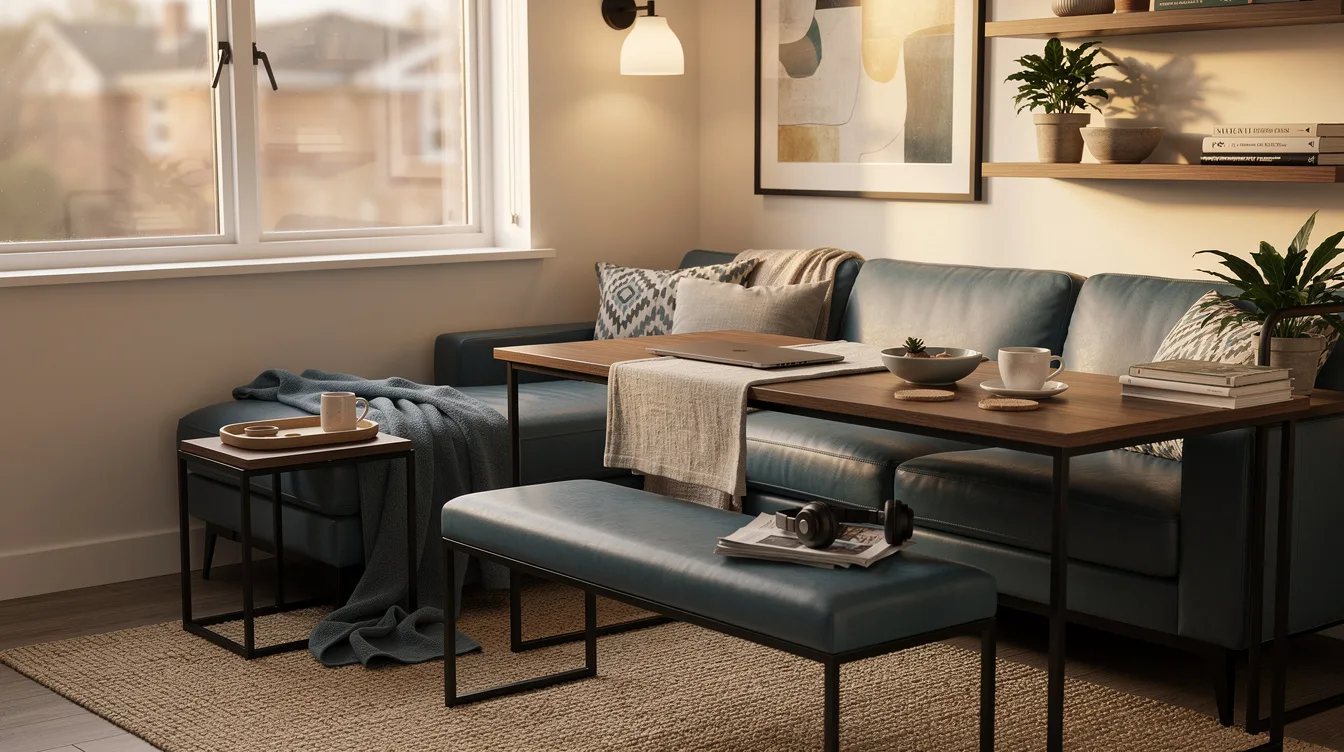
In a combined dining and living area, a matte vegan-leather loveseat handles splashes and takeout more gracefully than delicate upholstery. A dark finish can also ground pale walls and a light rug.
Avoid glossy finishes. They catch every overhead reflection and can make even a well-proportioned small-space arrangement look less expensive than it is.
Keep One Armless Seat Ready to Move
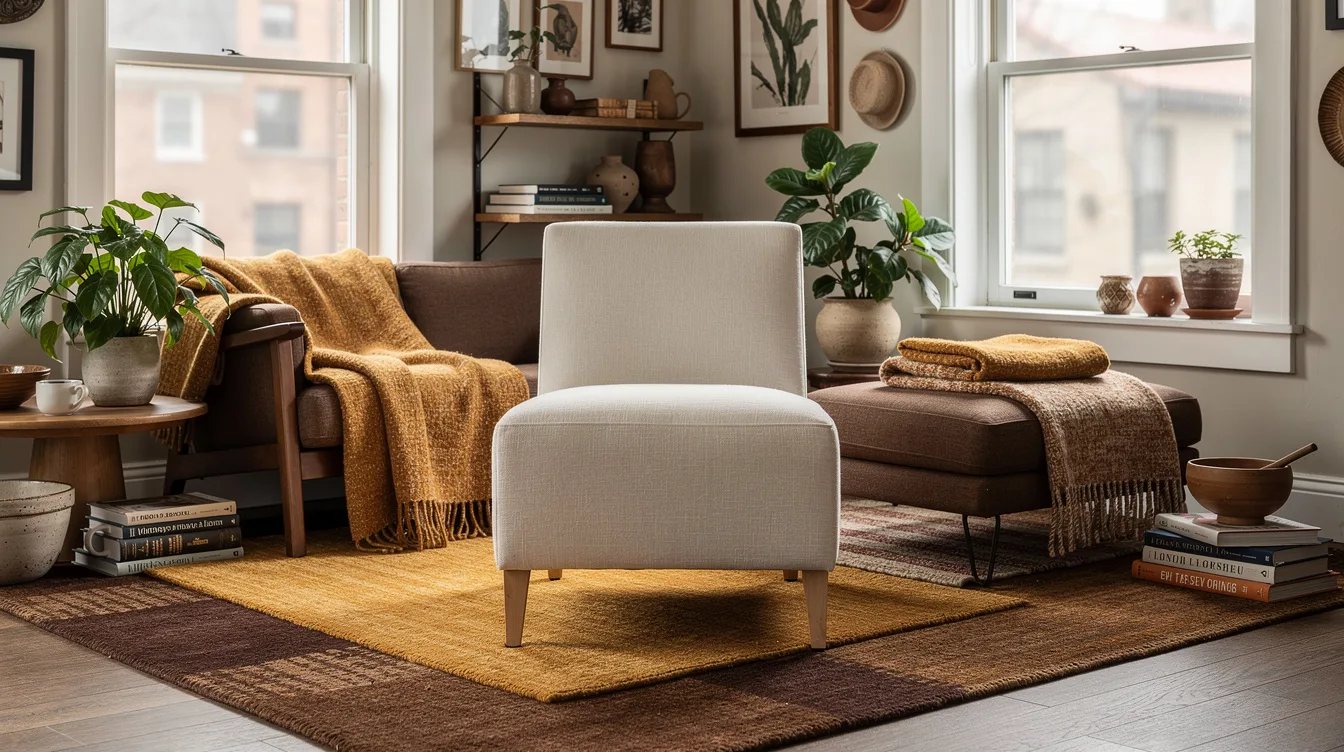
An armless modular chair is the quiet workhorse in a flexible system. Slide it against the loveseat for movie night, angle it toward visitors, or use it as an end seat at a dining table when needed.
It should be light enough for one person to reposition without ceremony. This is the piece that keeps a small room from becoming locked into one layout.
Protect a Clear Route With a Narrow Side Table
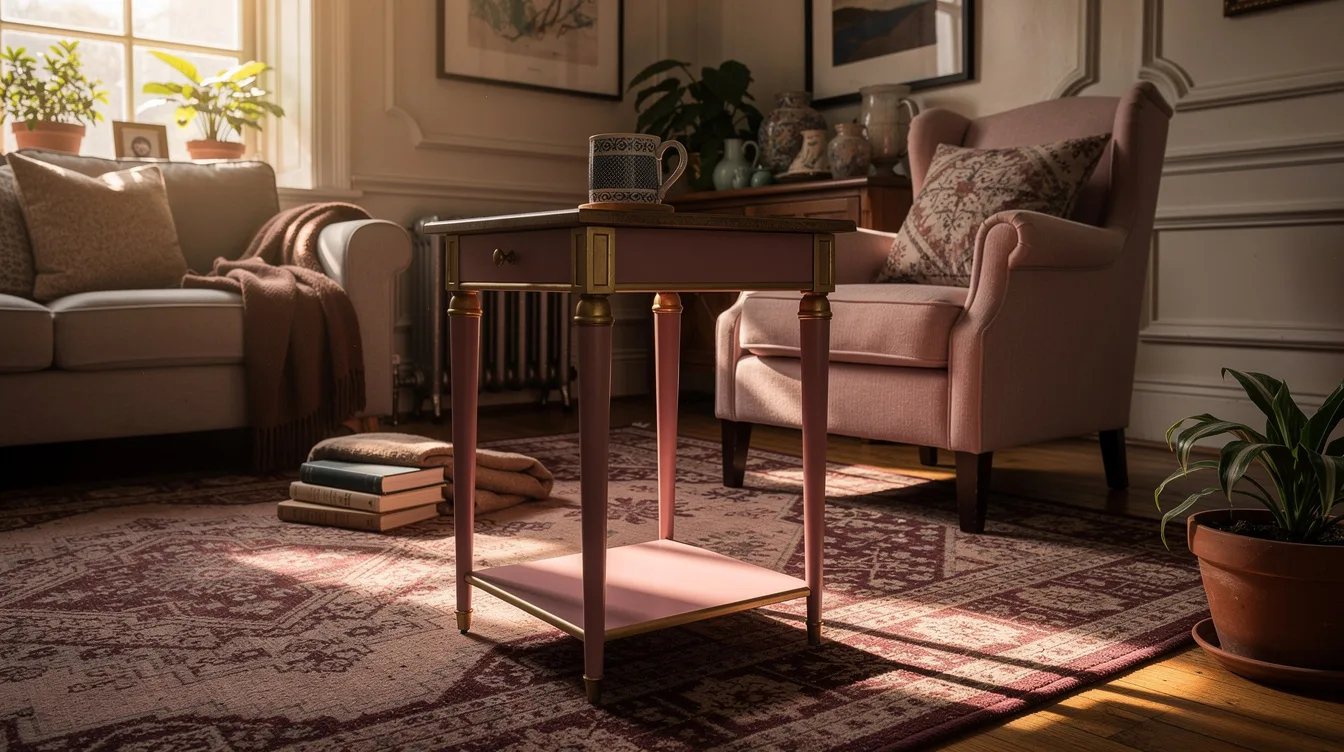
Finish the arrangement with a slim C-table or compact side table rather than a wide end table. It gives the loveseat user a spot for a drink while preserving the space that people actually need to walk through.
Designers protect circulation first, especially around entrances and kitchen paths. An average small room benefits more from an uncluttered route than from another decorative surface.
Keep reading
- 12 Best New Costco Small-Space Home Essentials Designers Recommend
- Is Your Living Room Rug Too Small? Designers See This Mistake Most
- 13 Small-Space Color Palettes That Make Rooms Feel More Open
Start with the anchor piece, then mark the walking path with painter’s tape before ordering anything else. Once that route stays open, add the movable seats that solve your real day-to-day needs.