Is Your Living Room Rug Too Small? Designers See This Mistake Most
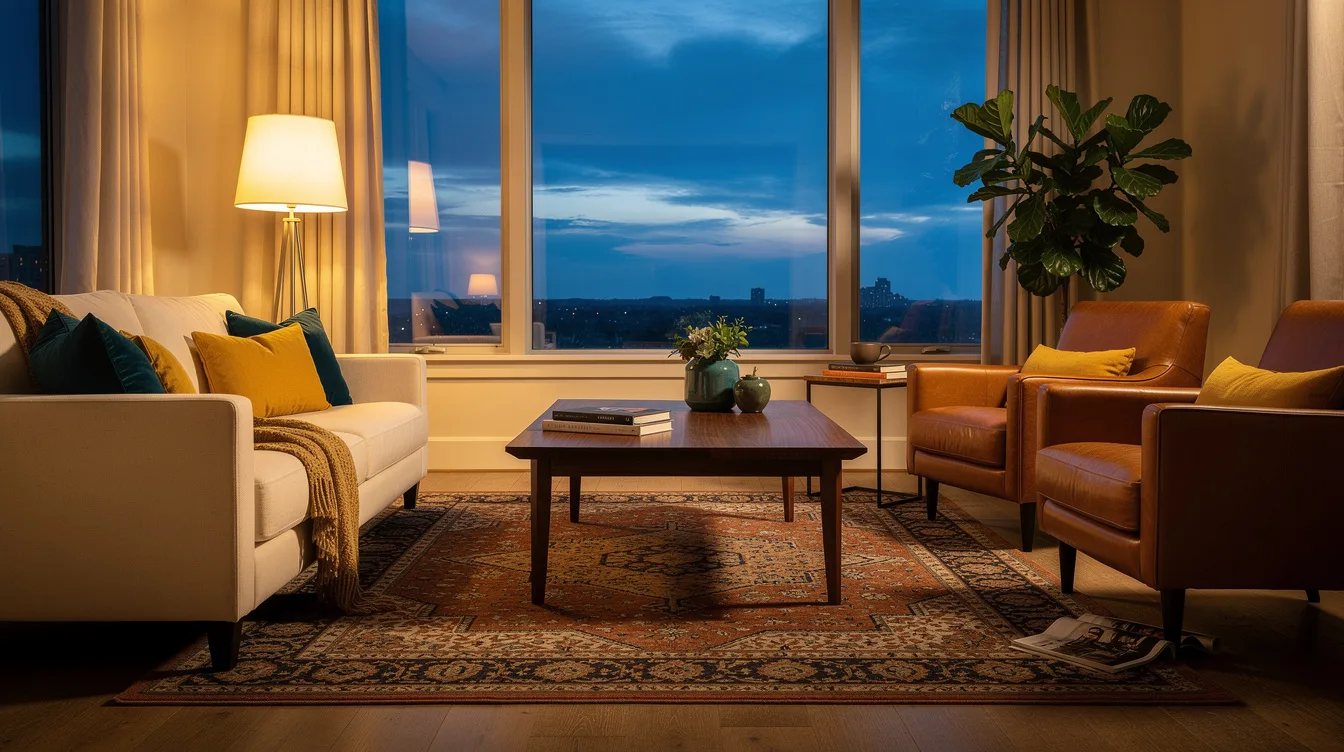
02 september 2026A 5-by-8-foot rug under only the coffee table can make a well-furnished living room feel oddly disconnected. The issue is rarely the sofa or chairs, it is the tiny island of rug between them.
Designers consistently see the same problem: the rug decorates empty floor instead of anchoring the full seating group. Start by planning for furniture legs, walking clearance, and the actual footprint of the arrangement.
What you will find inside
- Stop Letting a 5-by-8 Rug Float Under the Coffee Table
- Tape the Full Furniture Zone Before You Order
- Pull the Sofa's Front Legs Onto the Rug
- Give the Sofa Some Rug Beyond Each Arm
- Center the Rug on the Conversation Area
- Choose an 8-by-10 Rug for the Typical Sofa Setup
- Upgrade Large Sofa-and-Chair Layouts to 9-by-12
- Measure the Chaise, Not Only the Straight Sofa Run
- Use 10-by-14 Rugs for Big Sectionals
- Keep a Clear Border Along the Walls
- Put Every Major Leg Down in Open Rooms
- Treat a 5-by-8 Rug as a Small-Room Exception
Stop Letting a 5-by-8 Rug Float Under the Coffee Table
A 5-by-8-foot rug is often the source of the most common living room sizing mistake. When it holds only a coffee table, every chair and sofa reads as a separate island.
Use that size for a genuinely compact loveseat zone, not a standard sofa-and-chairs arrangement. A rug needs to connect the conversation area before it adds pattern or color.
Tape the Full Furniture Zone Before You Order
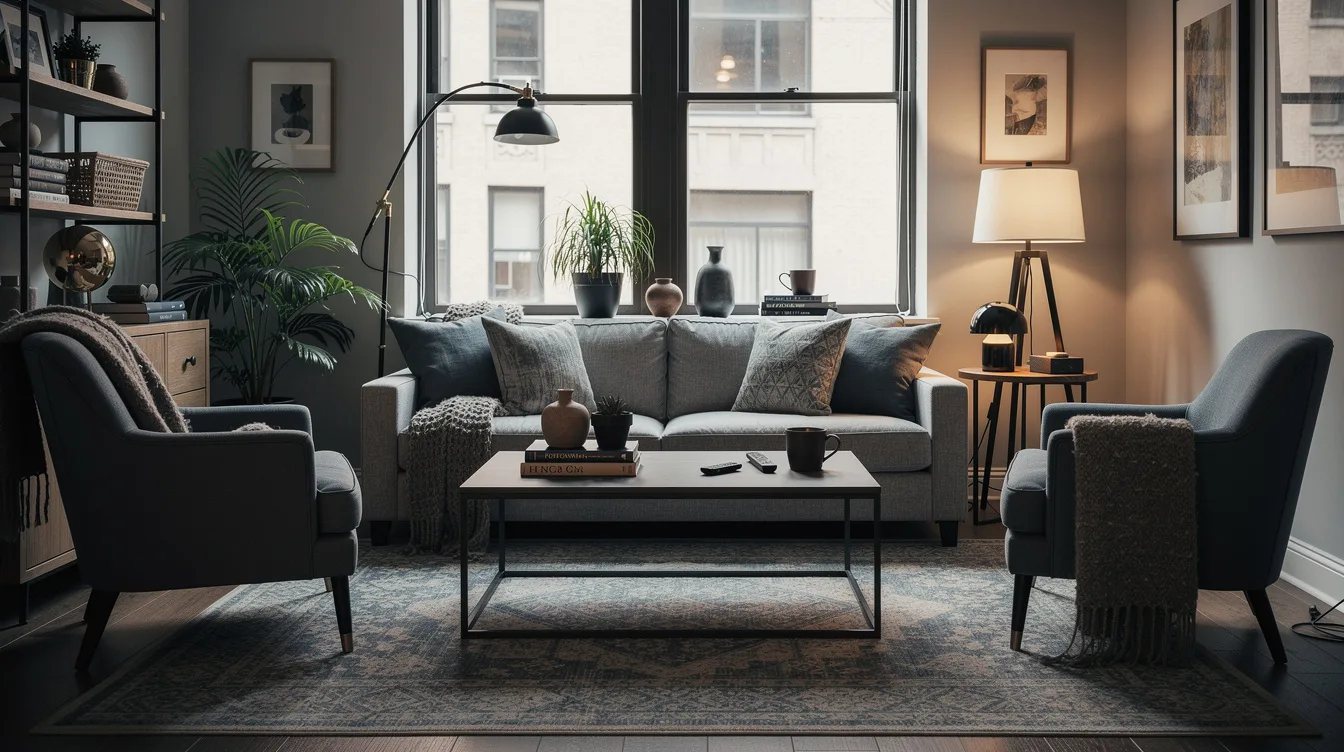
Use painter's tape to mark the proposed rug outline directly on the floor. This five-minute test exposes a too-small choice long before a bulky package arrives.
Place the sofa’s front legs, chair fronts, and coffee table within the taped shape. If the seating group cannot read as one zone, move up to the next rug size.
Pull the Sofa's Front Legs Onto the Rug
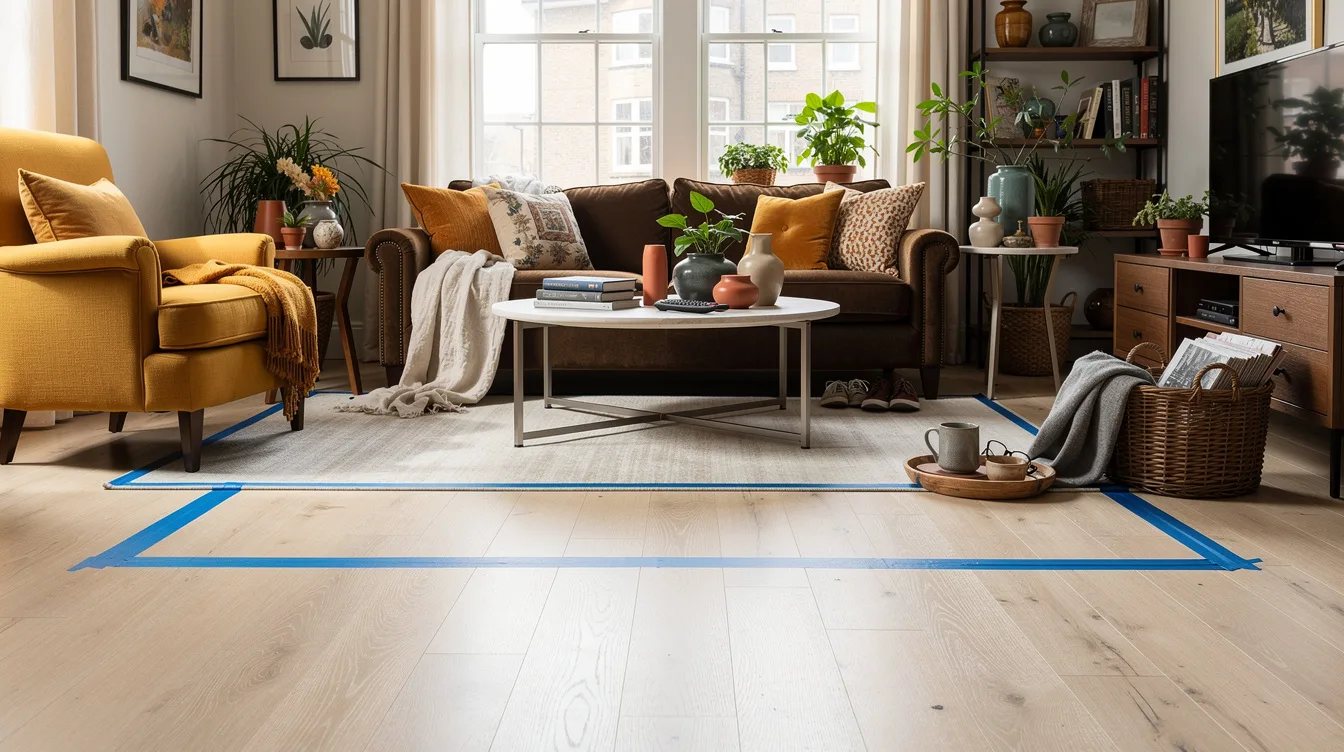
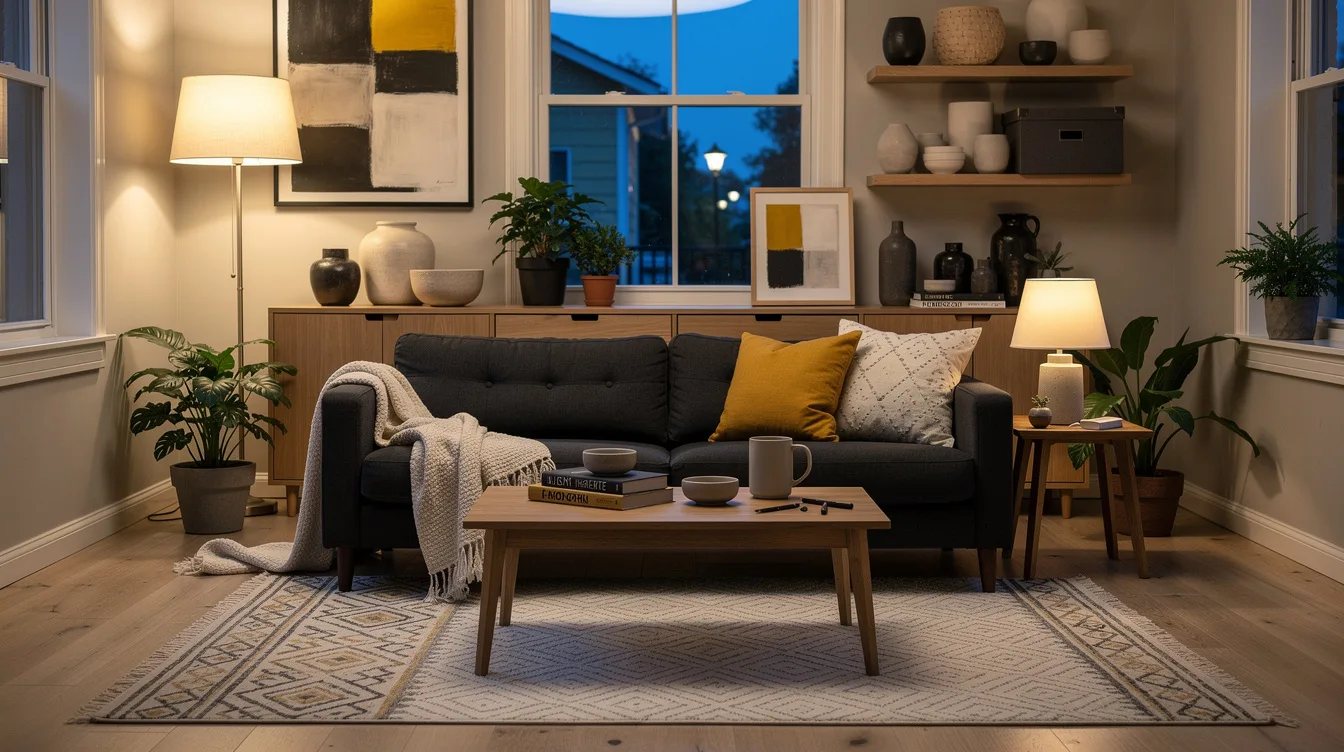
The reliable layout puts both front sofa legs on the wool rug, while the back legs remain on the floor. It creates a joined arrangement without demanding an oversized room-filling rug.
This is usually the smartest placement for a three-seat sofa with two compact armchairs. A typical 8-by-10-foot rug gives this setup enough visual authority.
Give the Sofa Some Rug Beyond Each Arm
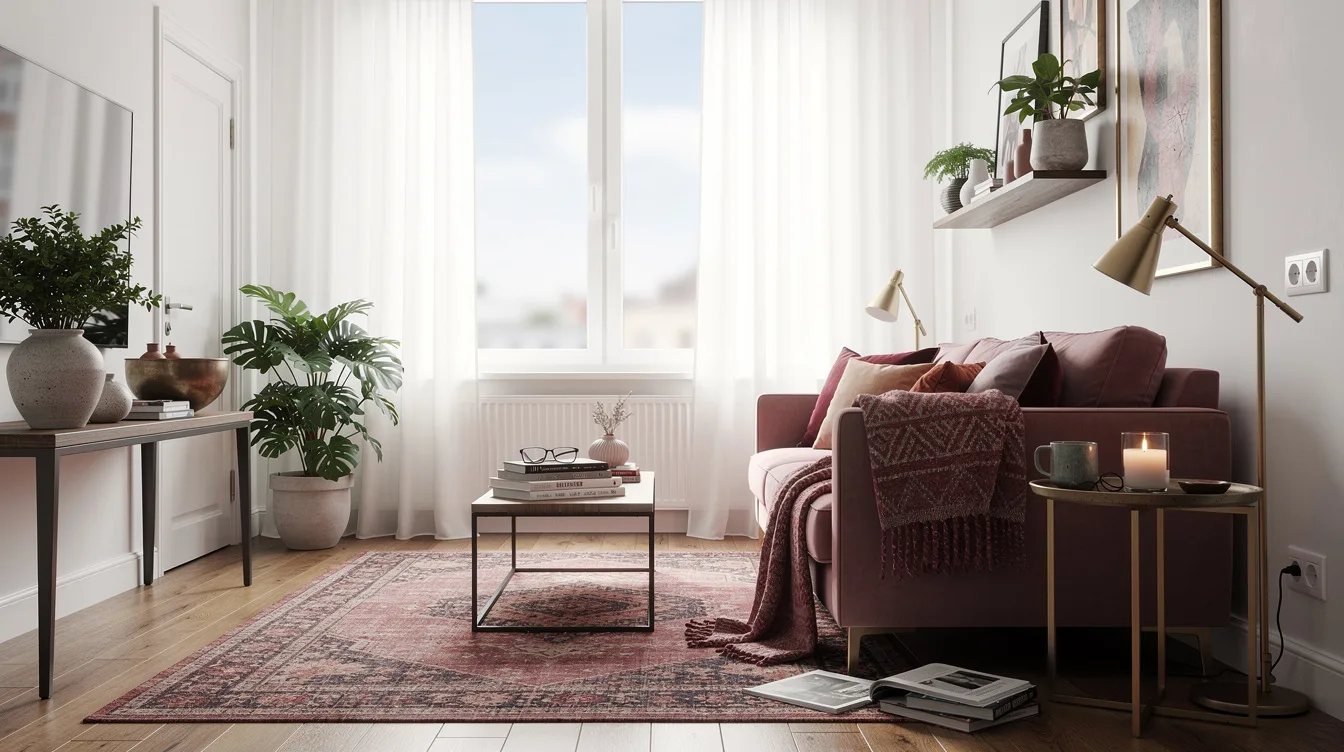
Let the rug extend roughly 6 to 12 inches beyond both ends of the sofa. Closer to 12 inches looks more generous when the room allows it.
A flatweave rug that stops exactly at each sofa arm looks accidental, even when its pattern is expensive. That small amount of extra border makes the seating wall feel intentional.
Center the Rug on the Conversation Area
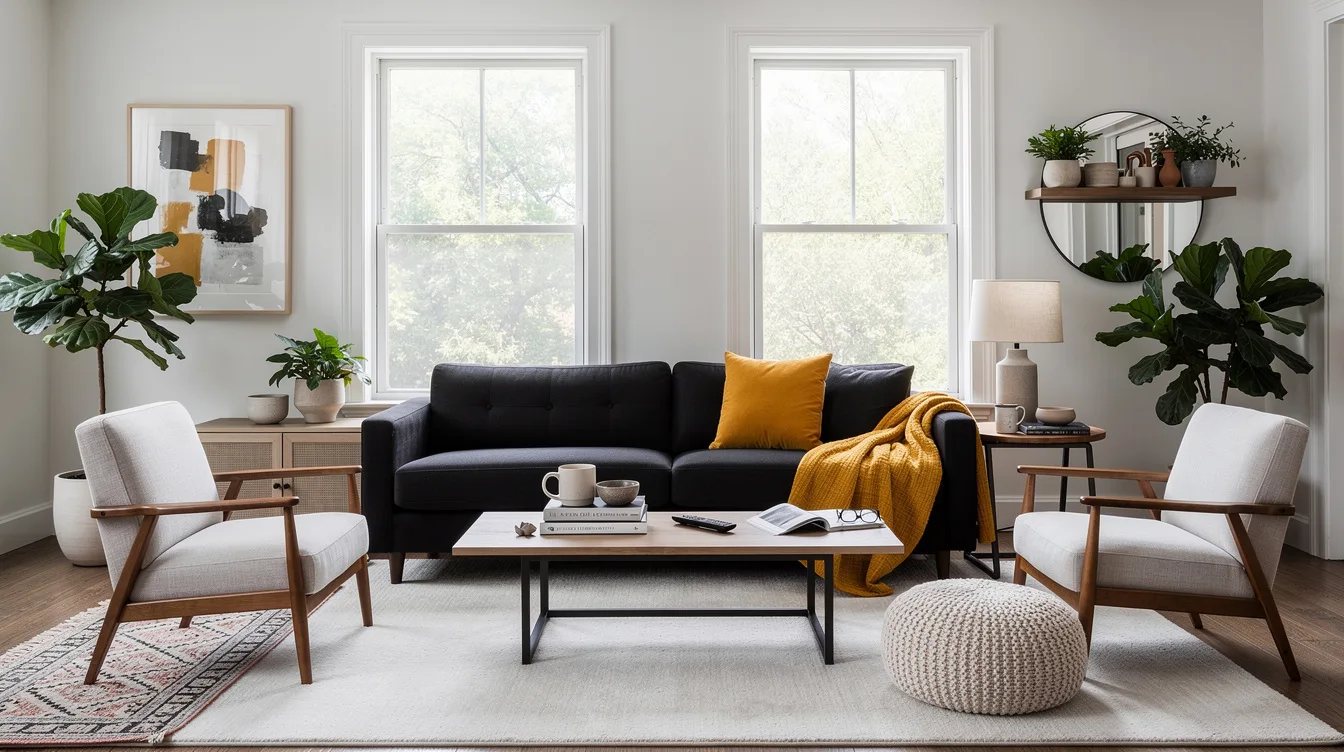
Center the rug on the furniture grouping, not automatically on the ceiling fixture or the room’s overall dimensions. Open-plan rooms especially need this distinction.
A sectional sofa angled toward a fireplace may sit off-center within the full room, and the rug should follow the seating. The goal is a clear place to gather, not a mathematically centered rectangle.
Choose an 8-by-10 Rug for the Typical Sofa Setup
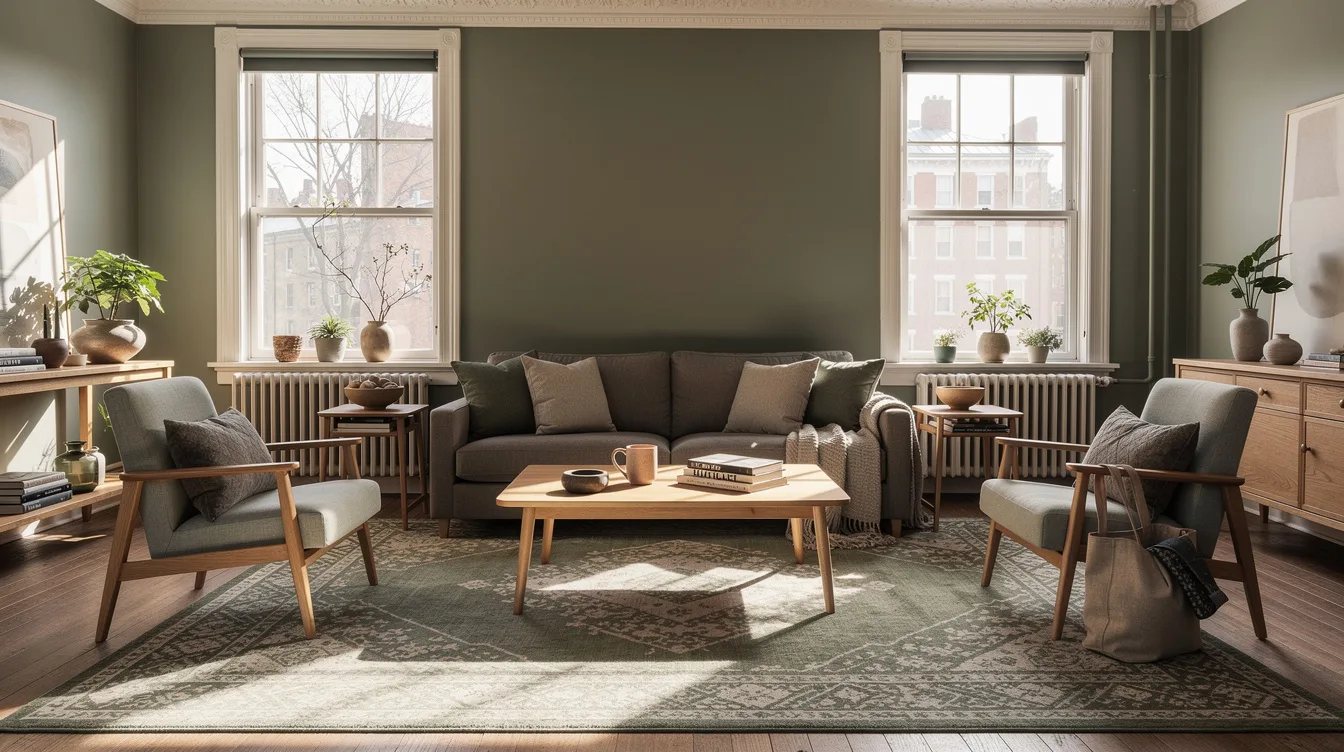
For a standard sofa roughly 72 to 84 inches long, a 8-by-10-foot rug is often the practical starting point. It usually accommodates sofa front legs, a coffee table, and the front feet of nearby chairs.
A 6-by-9-foot option can work in a tight layout, but it often feels cautious rather than composed. Spend on scale before spending on a busier motif.
Upgrade Large Sofa-and-Chair Layouts to 9-by-12
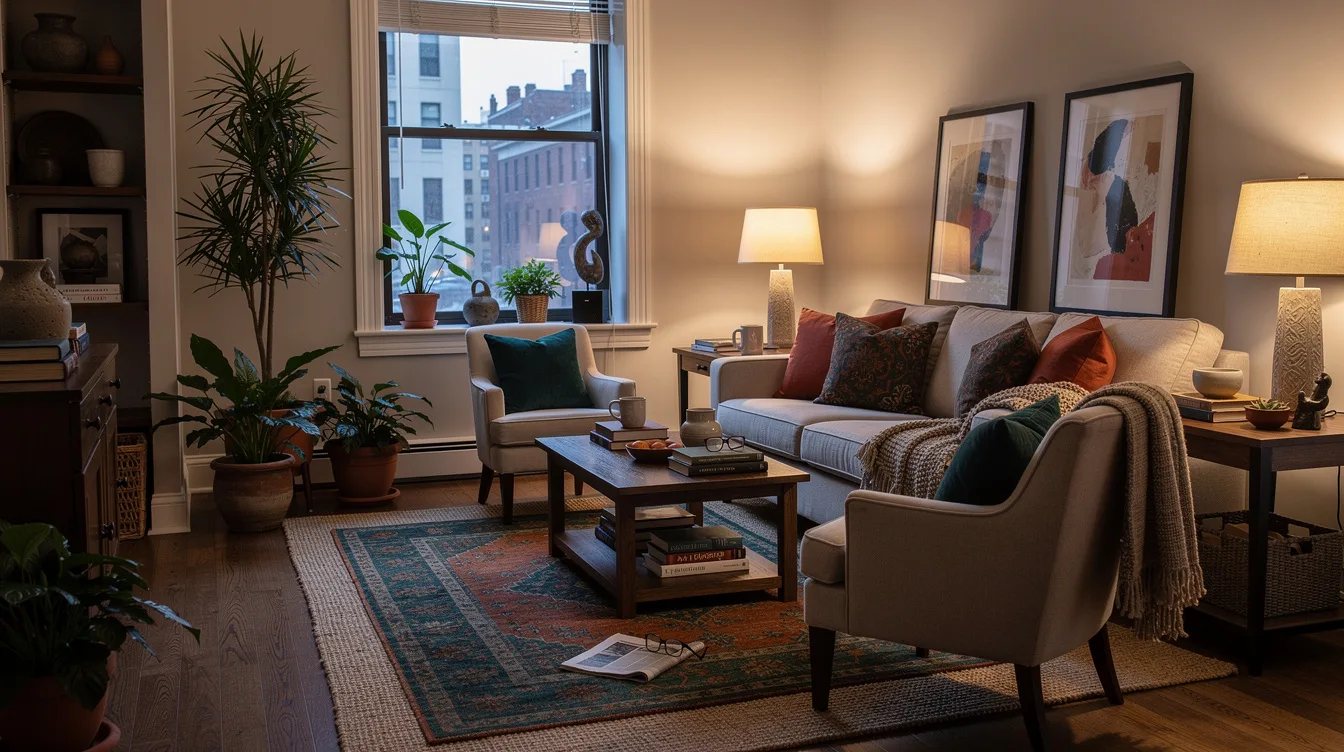
A larger sofa with a pair of chairs usually needs a 9-by-12-foot rug to stop the seating from drifting apart. This is often the size that makes a conventional living room finally look settled.
In a room around 14 by 18 feet, it is a stronger target than an 8-by-10 when furniture placement supports it. A bigger rug is more noticeable than another small accent pillow.
Measure the Chaise, Not Only the Straight Sofa Run
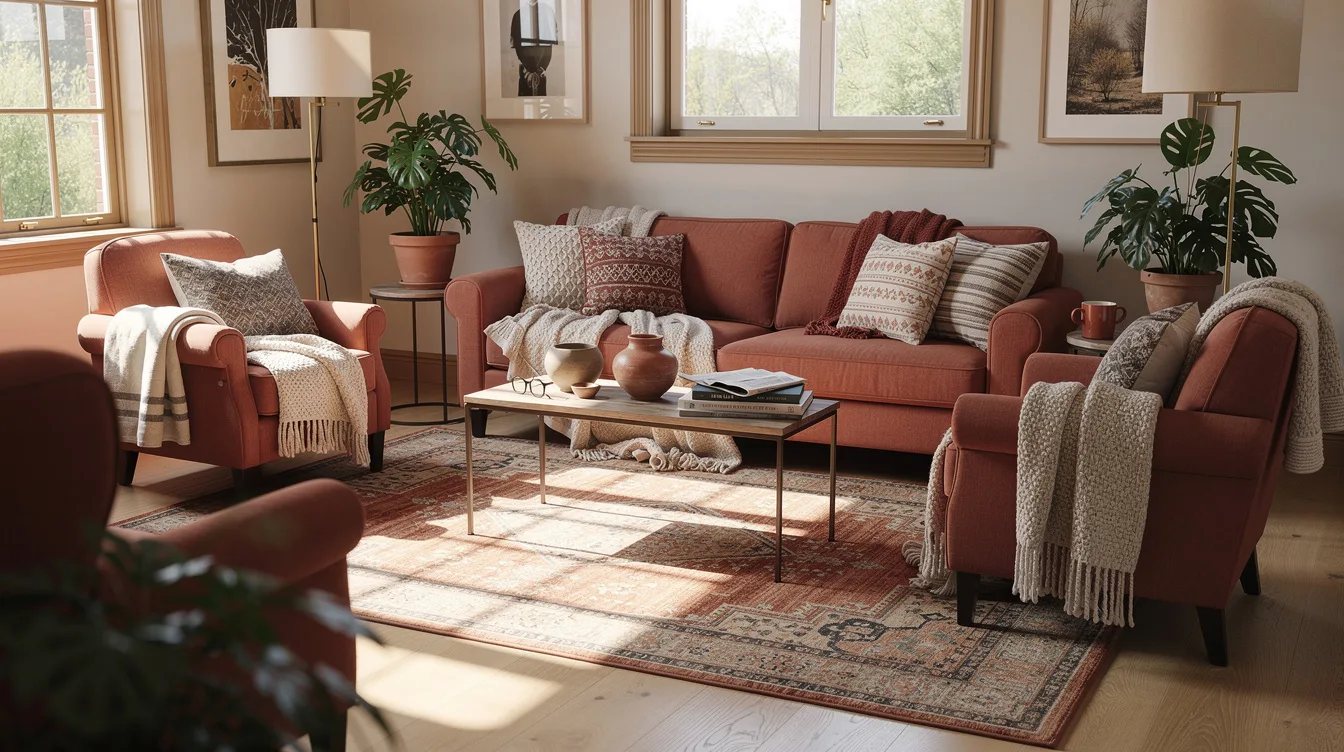
An L-sectional has a bigger footprint than its straight sofa section suggests. Measure the complete shape, including the full chaise projection, before choosing a rug.
A 9-by-12-foot rug is a functional baseline for many L-sectionals. A rug that ends halfway beneath the chaise makes the room look like the furniture outgrew its plan.
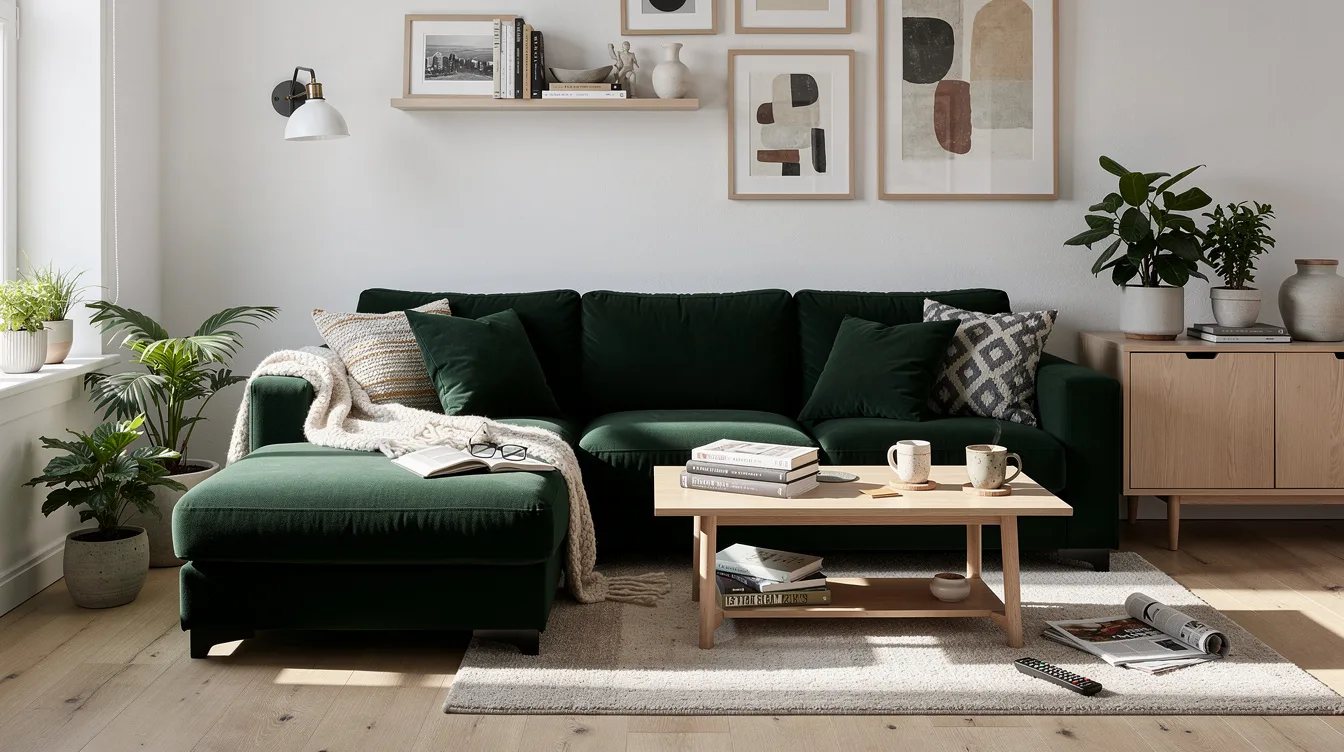
Use 10-by-14 Rugs for Big Sectionals
Large sectionals need room around their outer edges, particularly in a family room with a deep chaise or recliner ends. A 10-by-14-foot rug often gives a generous sectional the scale it needs.
For a wide U-shaped configuration, a 12-by-15-foot rug may be the more convincing choice. Small rugs under large sectionals make even expensive upholstery look undersized.
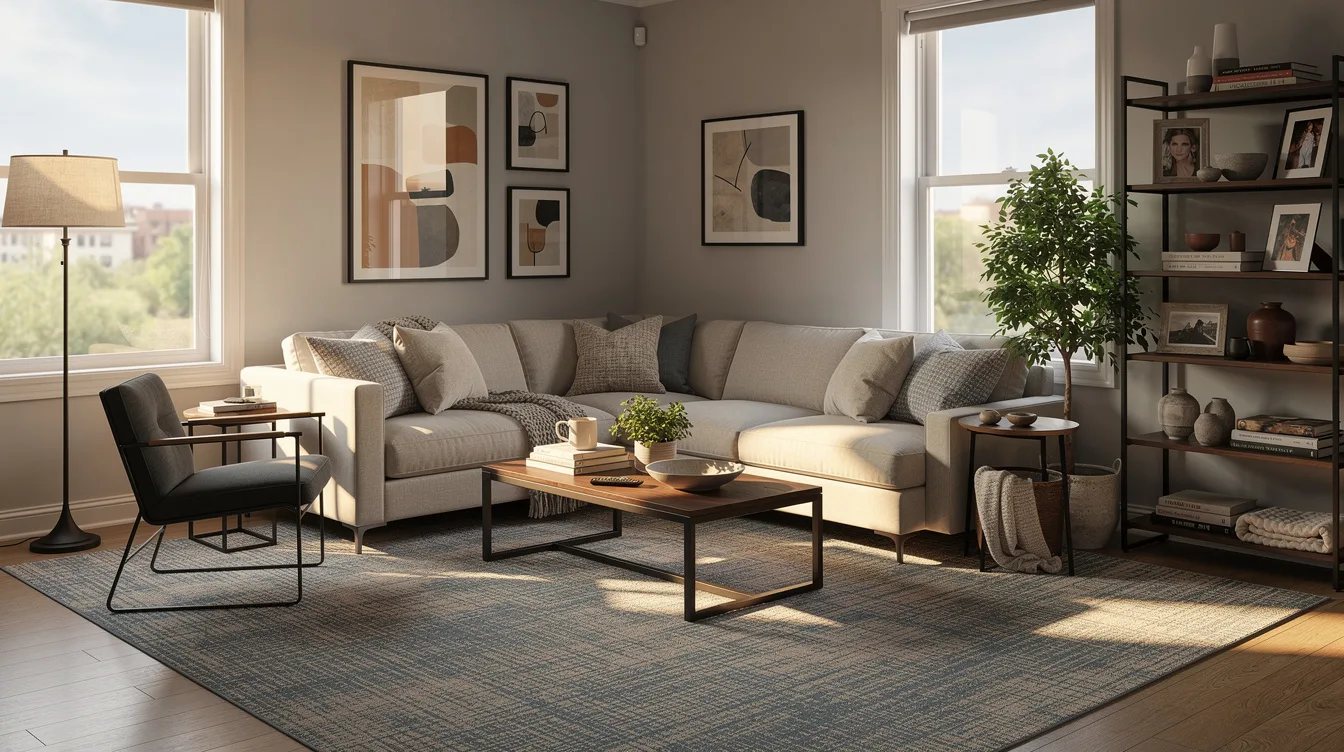
Keep a Clear Border Along the Walls
When the rug is intended to fill most of the room, leave roughly 12 to 18 inches of visible floor before the walls. That border lets the rug look planned instead of squeezed into place.
Hardwood flooring deserves some breathing room, especially in larger rooms. More exposed floor can look deliberate when door swings, vents, or circulation routes need it.
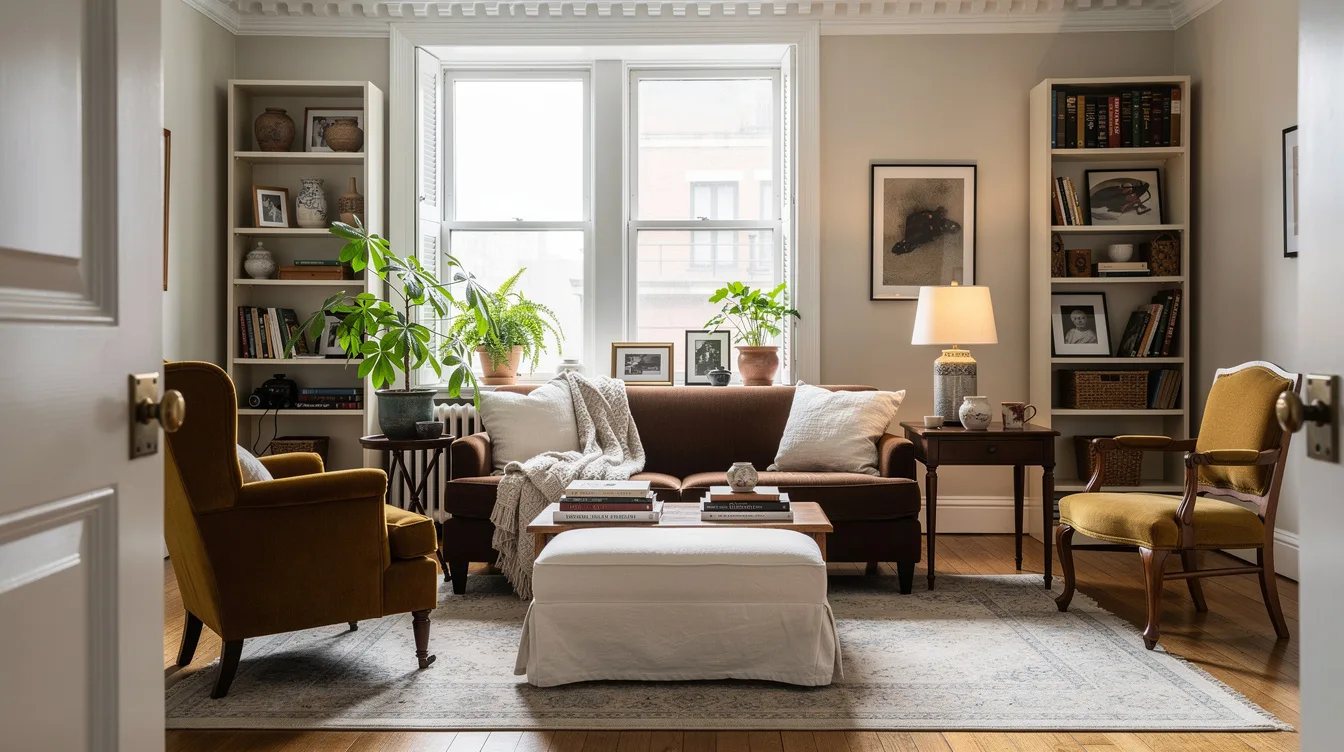
Put Every Major Leg Down in Open Rooms
An open-plan living area can support the all-legs-on arrangement, with every main seating leg resting on the rug. It has a polished lounge feeling, but only with enough clearance behind the furniture.
Choose a substantial hand-tufted rug in 9-by-12 or 10-by-14 dimensions for this approach. A cramped all-legs-on layout is worse than a comfortable front-legs-on plan.
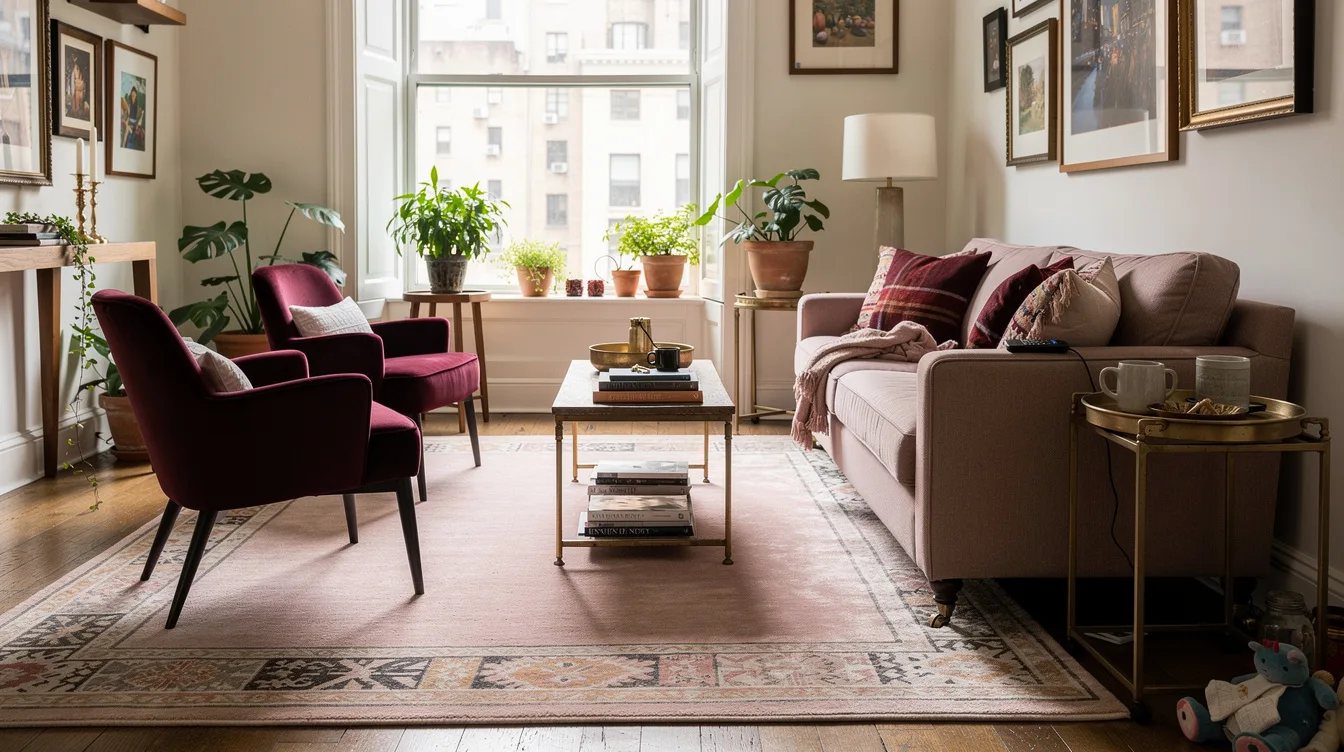
Treat a 5-by-8 Rug as a Small-Room Exception
A 5-by-8-foot rug is not automatically a bad purchase. It works beneath a true loveseat arrangement, a pair of petite chairs, or a small apartment sitting corner.
The key is proportional furniture, such as a compact IKEA loveseat and a narrow round table. Never ask a small rug to carry a full-size sofa, two lounge chairs, and an ottoman.
Keep reading
- 12 Small Living Room Furniture Finds That Double as Storage
- 12 Ways to Style a Statement Floor Lamp in Your Living Room
- 12 Best New Costco Small-Space Home Essentials Designers Recommend
Mark out an 8-by-10-foot rectangle first if your room has a standard sofa and chairs. Seeing the footprint at full scale will make the right rug size obvious before you shop.