How to Style a Floating Mantel Under a TV for a Clean Modern Look
04 july 2026Floating mantel under a TV for a clean modern look works best when the wall reads as two calm lines, not one giant black rectangle with decor scattered under it. I learned that after hanging a shelf that was too thick, too low, and way too busy. The screen looked heavier by the hour. The shelf looked shorter than it was. If your fireplace wall feels tense, this is the order I'd use to calm it down.
Before You Start: What Does the Two-Line Setup Cost?
Before you buy a single vase, get clear on whether you're doing a styling reset or a room refresh. For most people, the floating mantel wall lands inside the budget tier first, because paint, art, lighting, and shelf styling do more than you think when the proportions are right. I've learned that the shelf line and the TV gap matter more than adding extra objects.
You will also want a tape measure, painter's tape, a pencil, and one sample board in cerused white oak or your chosen shelf finish. If your seating is already in place, keep standard room numbers nearby too: sofa depth usually lands at 35 to 40 inches, coffee tables sit around 16 to 18 inches high, and TV distance feels easiest around 1.5 to 2.5 times the screen diagonal.
- Start with a slim white oak floating mantel
- Measure the TV gap before styling anything
- Anchor the wall with a low linear firebox
- Paint the surround a warm plaster white
- Build shallow niches beside the television
- Run the mantel past the TV edges
- Center a ribbed stone tray below screen
- Layer flat linen books under ceramic bowls
- Hang micro sconces beside the black frame
- Tuck LED strip lighting beneath the shelf
- Place matte black vases near one end
- Float a pale artwork below the bezel
- Add glass hurricanes in uneven low heights
- Hide cables behind a painted vertical channel
- Soften the hearth with boucle floor cushions
- Repeat walnut tones in frames and boxes
- Style remotes inside a fluted wood caddy
- Balance the screen with one sculptural branch
- Finish with warm lamps flanking the fireplace
1Start with a slim white oak floating mantel
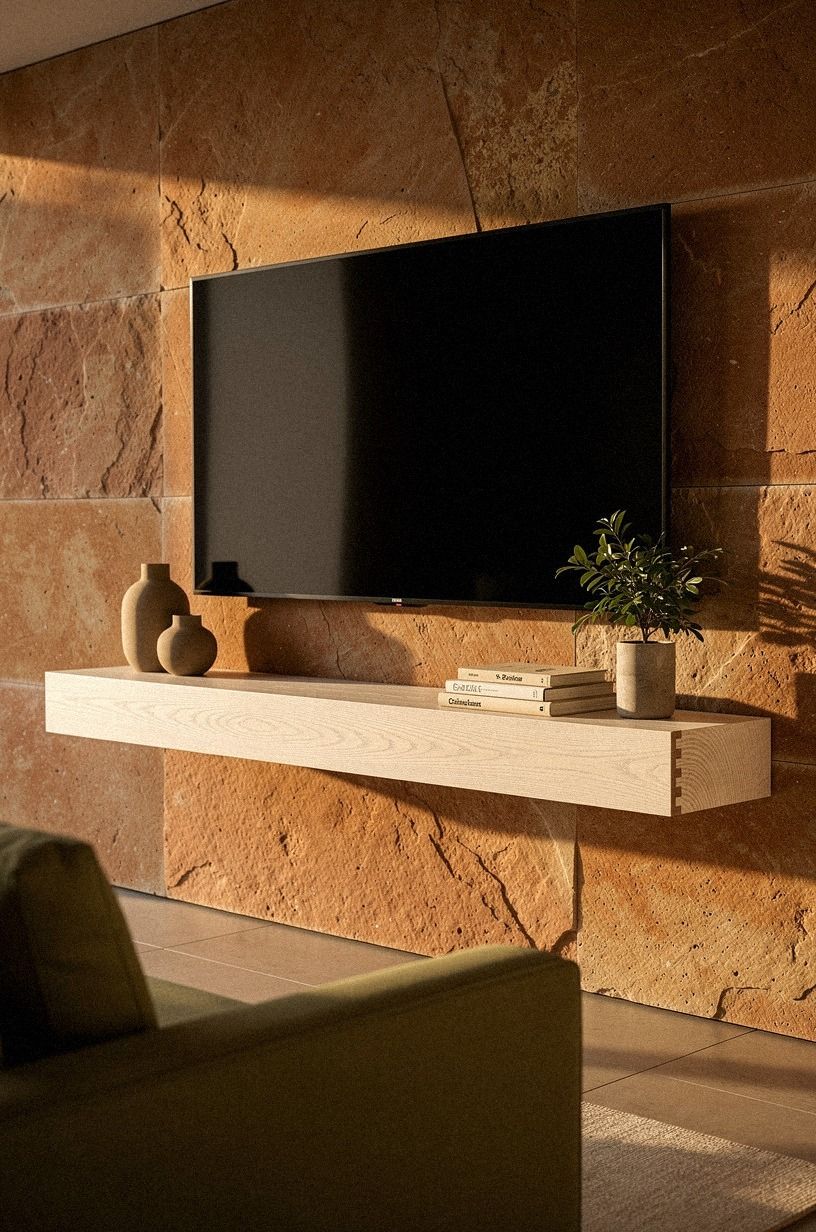
Start with the shelf, because you can't style your way out of a heavy profile. A slim cerused white oak mantel gives you that clean line under the screen while still showing real grain, and the exposed dovetail detail in the photo is exactly the kind of craftsmanship that keeps the wall from feeling flat.
I would not start with a chunky beam here. Under a TV, thick almost always reads clumsy.
You want a profile that looks architectural from the sofa, not showy from six inches away. I like seeing a dry finish, a sharp front edge, and just enough depth for a tray or low stack of books. If you're comparing wood tones in the room, oak kitchen cabinet ideas for a warm modern look is useful for reading how honeyed oak plays with black and plaster.
That's the relationship you want.
2Measure the TV gap before styling anything
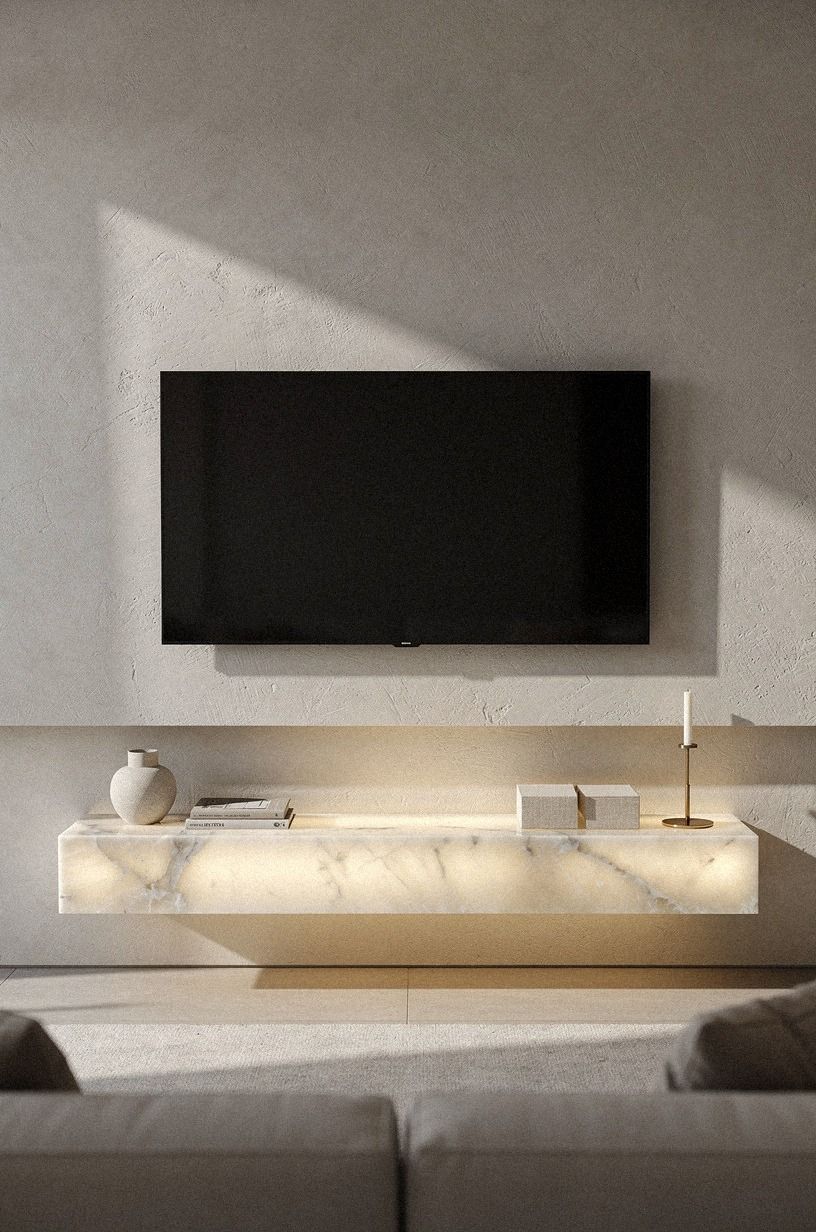
Before you style one object, measure the gap between the bottom of the TV and the top of the shelf zone. This is where most walls go wrong. If the gap is too tight, the mantel and screen feel cramped.
If it's too tall, they drift apart. I mark the distance with painter's tape first, then walk back to the main seat and check it again because your eye catches tension faster than a level does.
The photo's first-person view makes that point perfectly: you're stepping toward the wall, tape in hand, and reading the space the way you'll live with it. Keep your numbers visible, then compare them against how far the sofa sits from the TV.
How to decorate a fall mantel with a TV above it is worth opening if you need another spacing reference. But trust the sightline more than guesswork.
3Anchor the wall with a low linear firebox
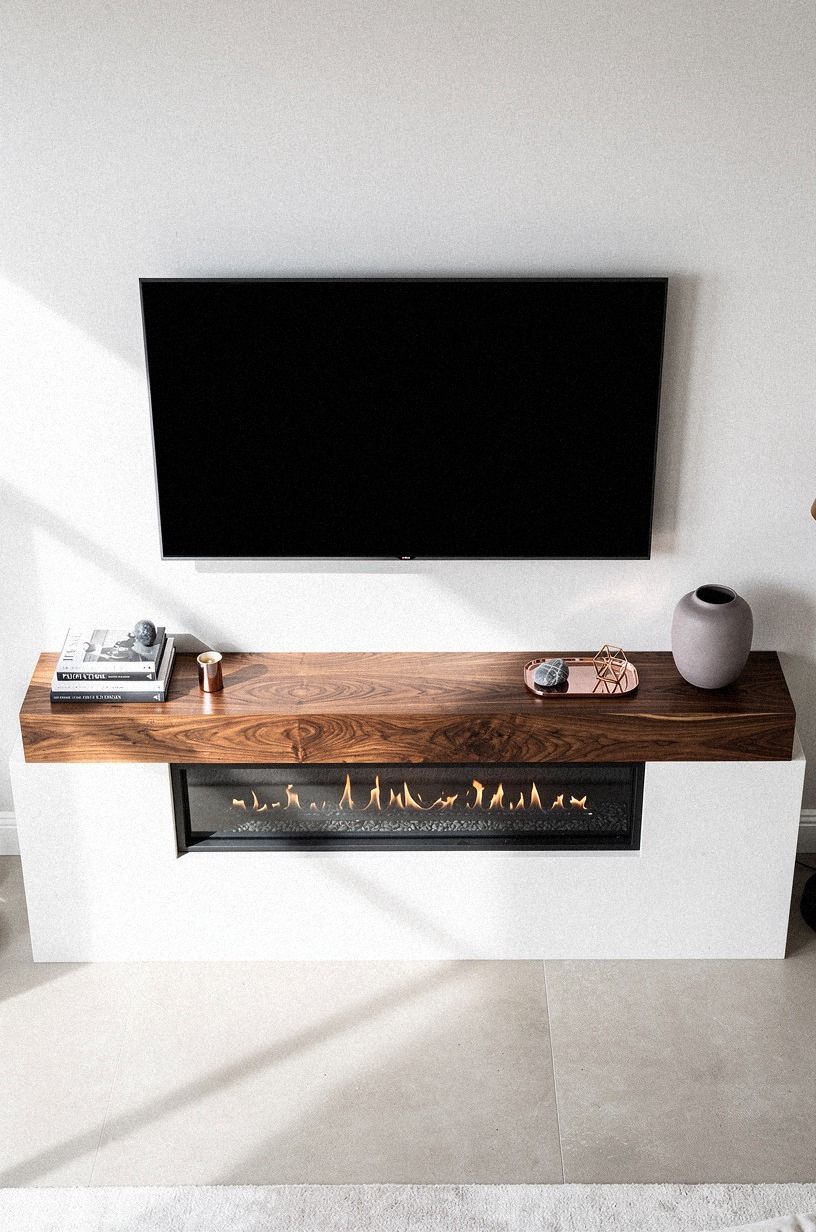
If you have a fireplace below the TV, let the firebox do the grounding. A low linear firebox creates the strong horizontal line this kind of wall needs, and it gives the mantel a reason to exist beyond decor. I've seen people try to fake the whole look with only a shelf and screen, and the wall usually feels top-heavy because nothing is holding the lower half down.
The overhead flatlay in the image shows how well a long opening pairs with a walnut shelf and open floor area. Keep the surround quiet so the firebox stays crisp.
And if you're deciding between a traditional box and a long linear insert, I'd skip fussy trim every time for a modern room. Modern mantel decor ideas for a clean minimal fireplace shows why the long, low line works so hard for you.
4Paint the surround a warm plaster white
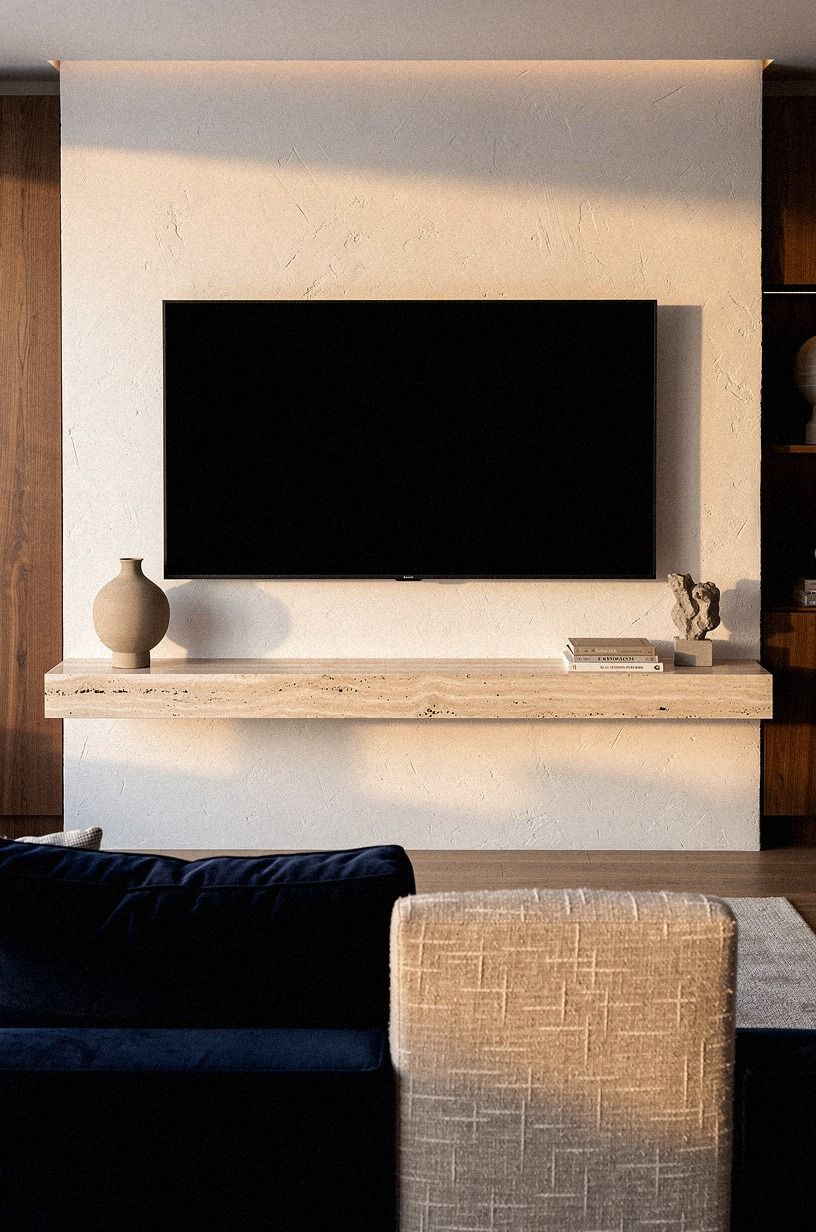
Paint is the cheapest reset on this wall, and you feel it right away. A warm plaster white surround softens the black screen, makes travertine look richer, and stops the whole setup from turning cold. I would not jump to bright white unless the room already has a lot of sun.
Under a television, stark white can make the screen look even harsher by contrast.
Look for a chalky, quiet tone rather than a sterile one. Benjamin Moore Revere Pewter HC-172 is a good bridge if your room leans warm neutral, while Sherwin-Williams Evergreen Fog SW 9130 works beautifully in nearby textiles if you want a muted green note. 14 warm minimalist bedrooms that feel lived-in not staged is a helpful color read because the success comes from softness, not brightness.
That's your goal here, and you can feel it fast!
5Build shallow niches beside the television
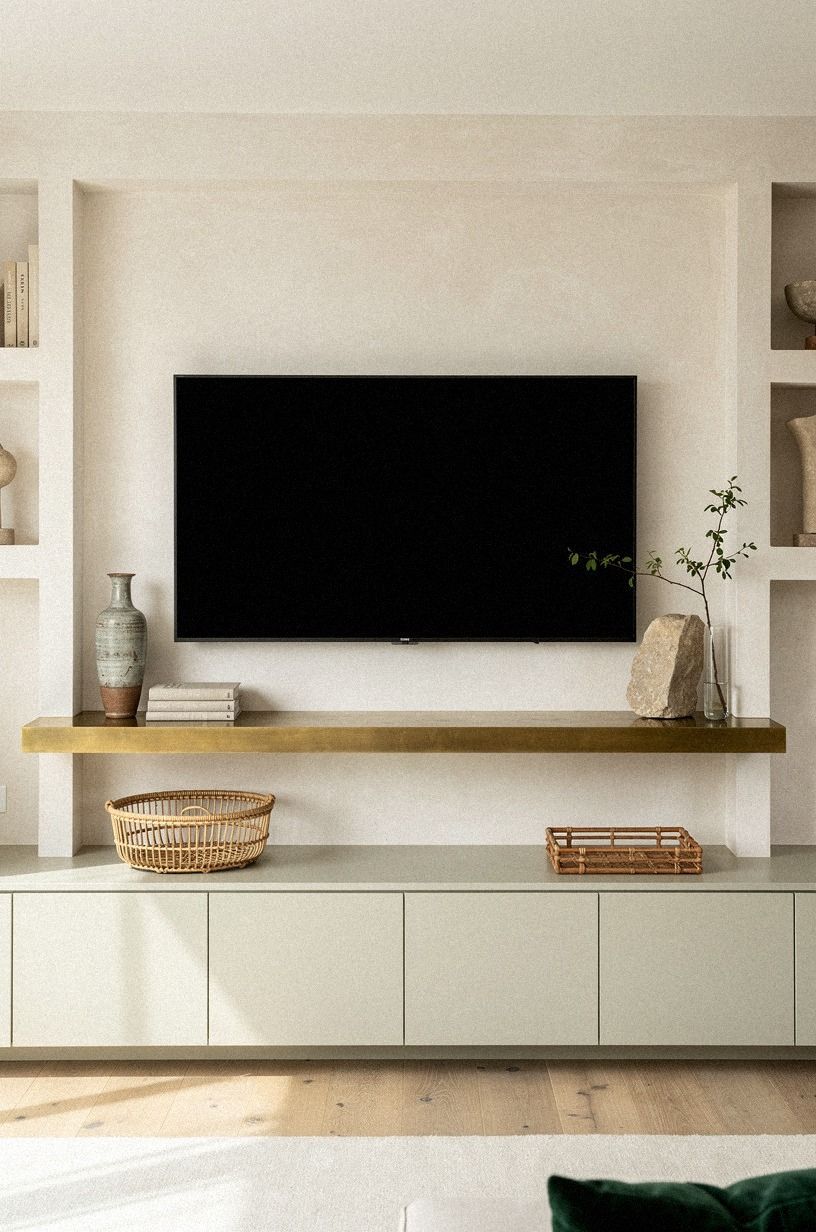
Shallow side niches make the wall feel built in without crowding the screen. Keep them slim, keep them vertical, and use them as quiet storage or display rather than as mini shelves for random filler. The image shows unlacquered brass shelf accents and wabi-sabi pottery, which is a smart combo because the brass adds a soft gleam while the pottery keeps the wall grounded.
I like niches here only when they're truly shallow. Deep cubbies start competing with the mantel, and then you have three focal points instead of one.
A couple of books, one vessel, maybe a box. Done. If your room is short on floor space, these small bedroom ideas for tighter layouts shows the same idea in another format: recess what you can so the main line can breathe.
6Run the mantel past the TV edges
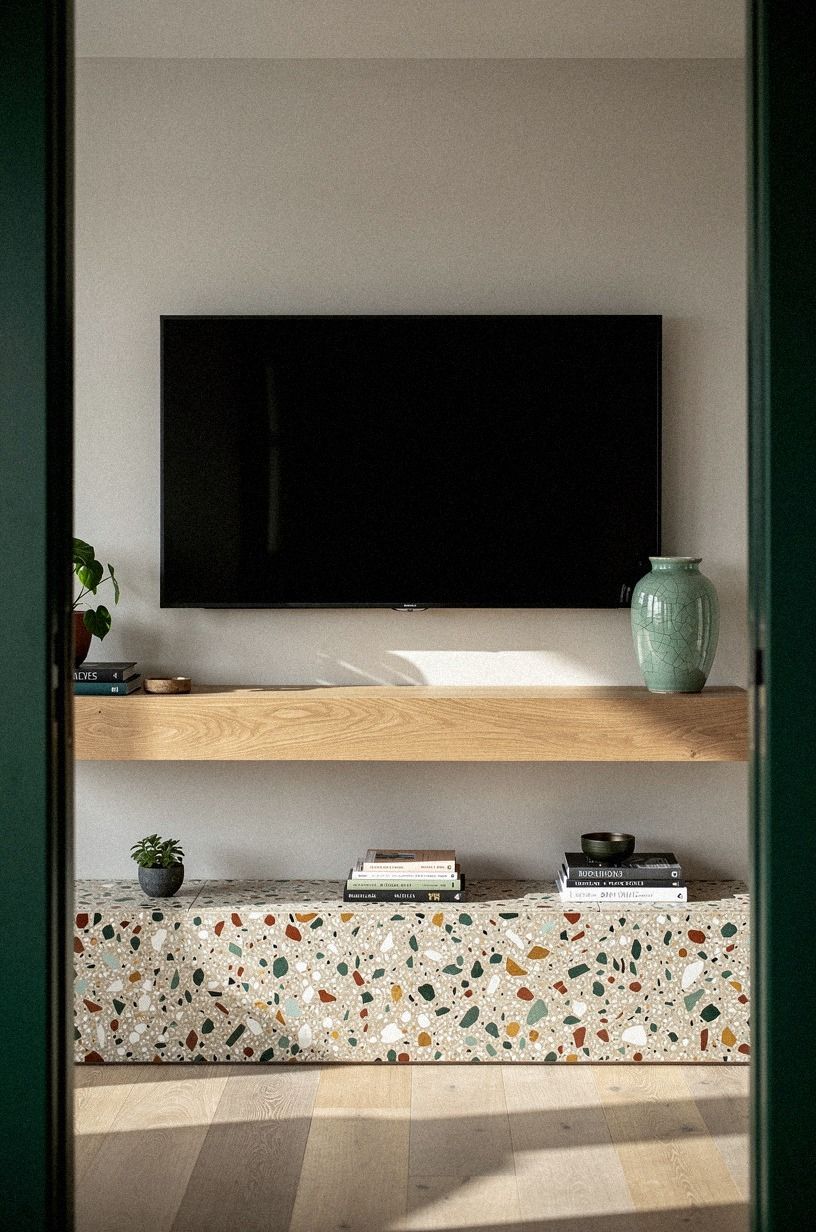
Let the shelf extend past both sides of the TV.
7Center a ribbed stone tray below screen
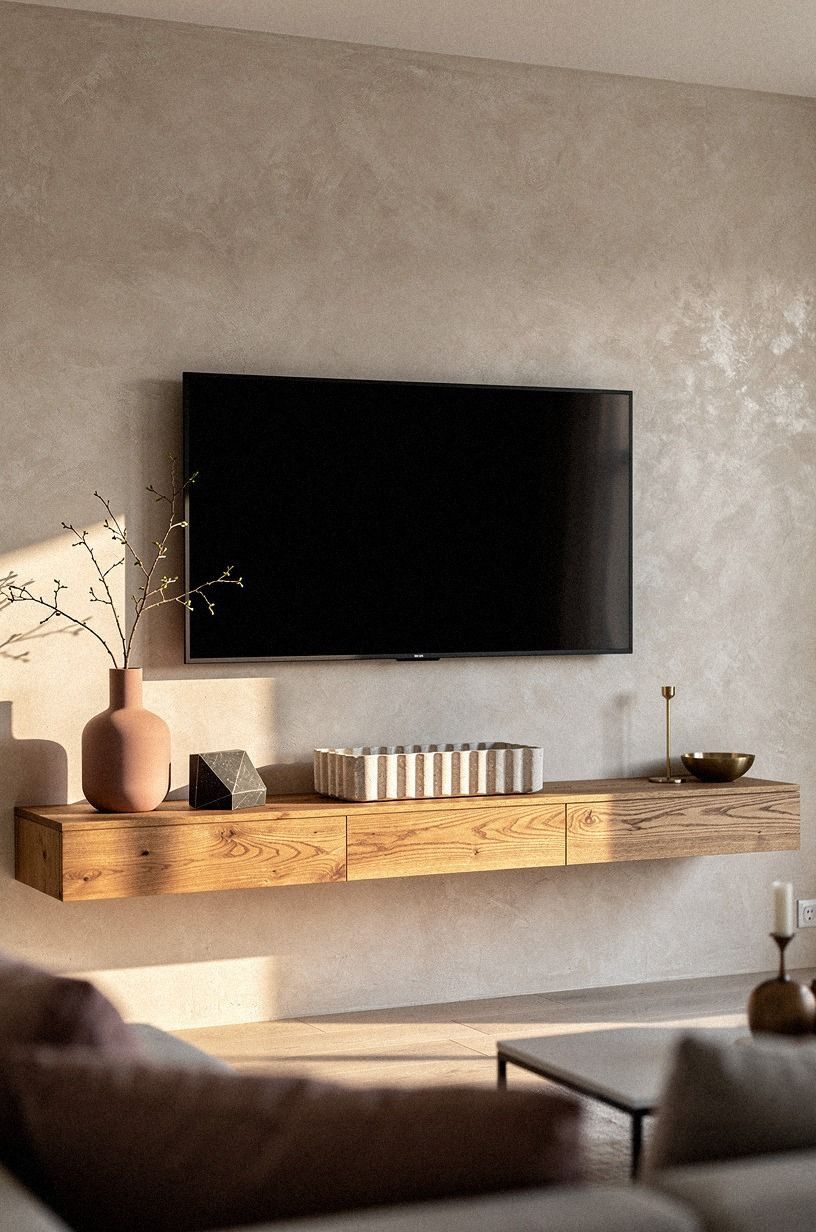
A single tray is better than a scatter of little objects. Center a ribbed stone tray under the screen and let it gather whatever small pieces need a home.
The ribbing matters because it brings texture without visual clutter, and the stone weight helps the shelf hold its own against a black rectangle above it. One clear base. That's enough.
Keep the tray low and broad so it doesn't rise into the TV gap. I prefer stone over shiny metal in this spot because the wall already has contrast from the screen.
The oak grain in the photo and the hand-applied plaster behind it need something quieter. If you struggle with scale on horizontal surfaces, this nightstand guide for cleaner bedside surfaces helps with that same low-center reading.
It translates well.
8Layer flat linen books under ceramic bowls
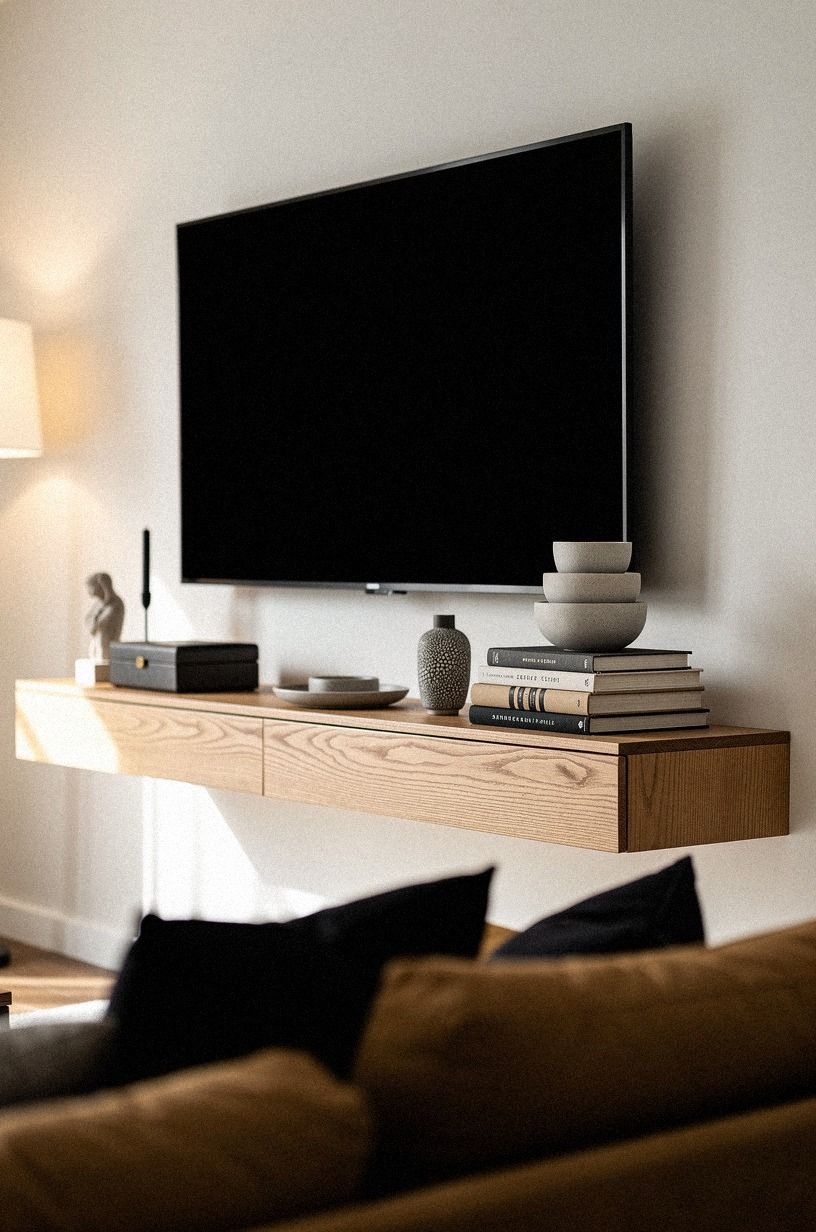
Books should flatten and warm the composition, not turn it into a library corner. Use a short stack of flat linen books, then top them with one or two ceramic bowls so the grouping stays low and tactile.
I like this on one end of the shelf because it gives you asymmetry without chaos. And yes, the fabric wrap matters.
Paper jackets look noisy under a television.
The photo's shagreen accent and pale bowls show the right mood: quiet, matte, and a little dry. Don't overstack. If the books get tall, the whole shelf starts fighting the TV bezel.
23 terracotta sofas and sun-soaked corners that feel like coming home is useful here because the best rooms repeat that low, earthy layering instead of using slick decorative piles. You want warmth, not clutter.
9Hang micro sconces beside the black frame
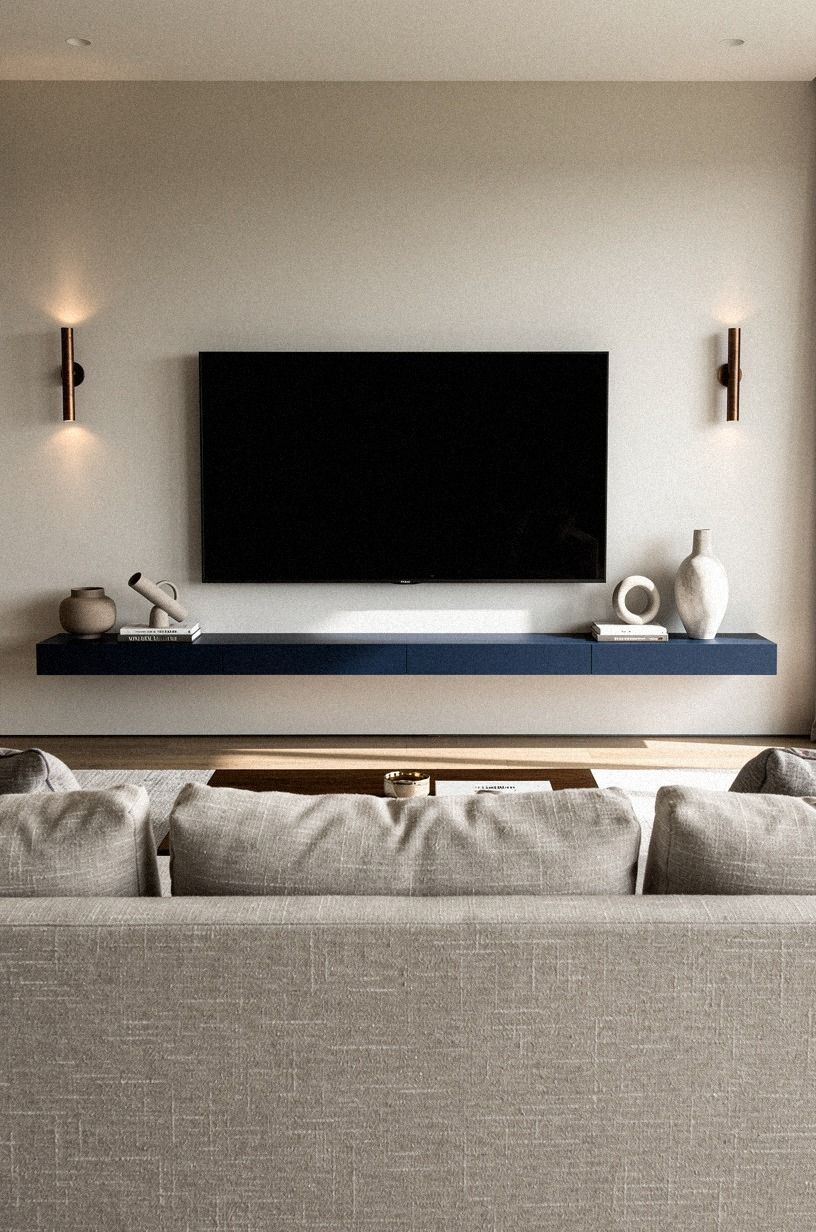
Micro sconces are one of the smartest ways to soften a TV wall, because they throw light outward without adding bulk. Mount them close to the edges of the screen so the black frame feels integrated into the composition.
The image shows aged bronze with that brown-gold shift I love, and I would choose that over polished brass every time. Polished reads too sharp next to a screen.
Keep the fixtures narrow and the light warm. You are not trying to spotlight the TV.
You are giving the wall side glow so it feels alive after sunset. Bedroom lighting guide is a solid refresher on why perimeter light feels calmer than overhead-only light.
And if the wall already has niches, micro sconces help tie the outer edges back to the center line. Huge difference!
10Tuck LED strip lighting beneath the shelf
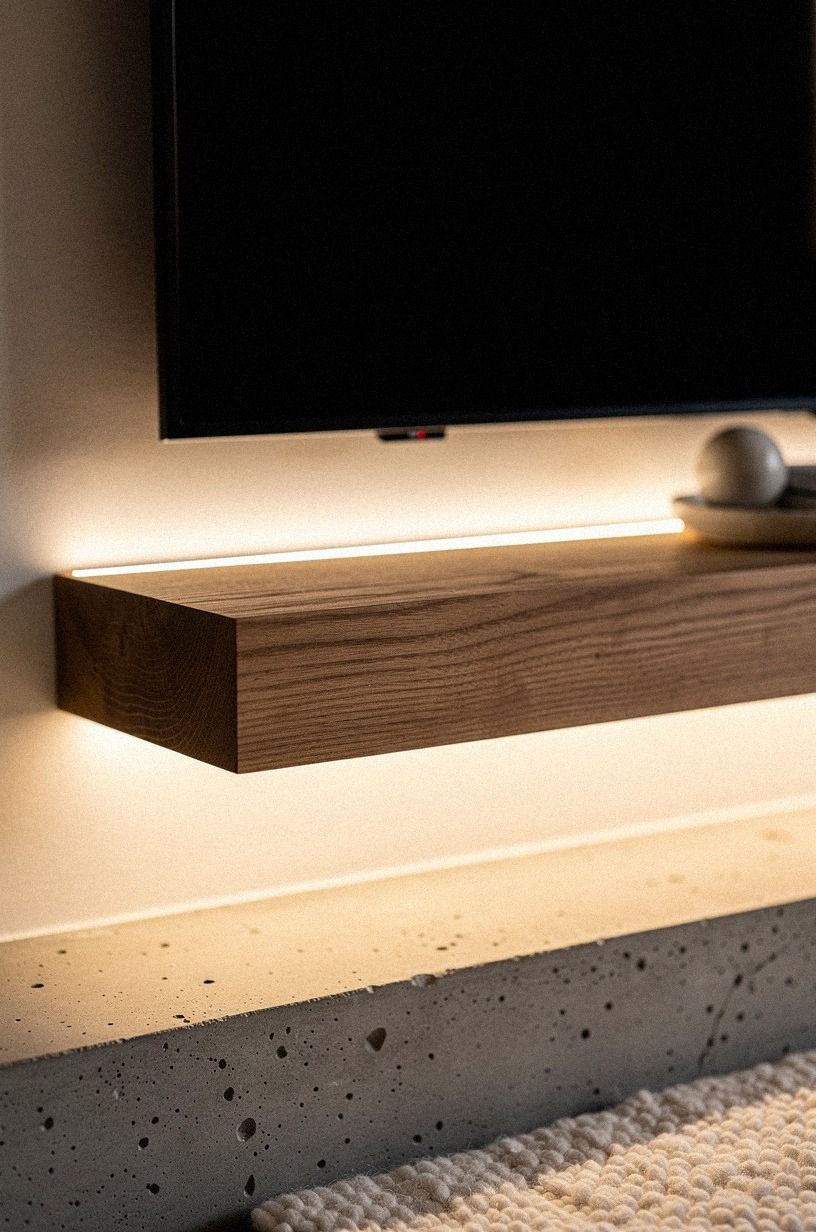
Under-shelf light is the move people skip, then regret. A hidden LED strip under the mantel throws a warm line onto the plaster and makes the shelf truly float after dark.
I would only use warm output here. Cool white turns the whole wall corporate fast, especially near natural oak and bone-colored ceramics.
Tuck the strip far enough back that you don't see the source from standing height. You want glow grazing the wood, not a visible tech detail.
The macro shot in the brief matters because it shows how subtle this can be when it's done right. this bedroom lighting guide is worth borrowing from, since the principle is the same: warm hidden light makes hard lines feel human.
11Place matte black vases near one end
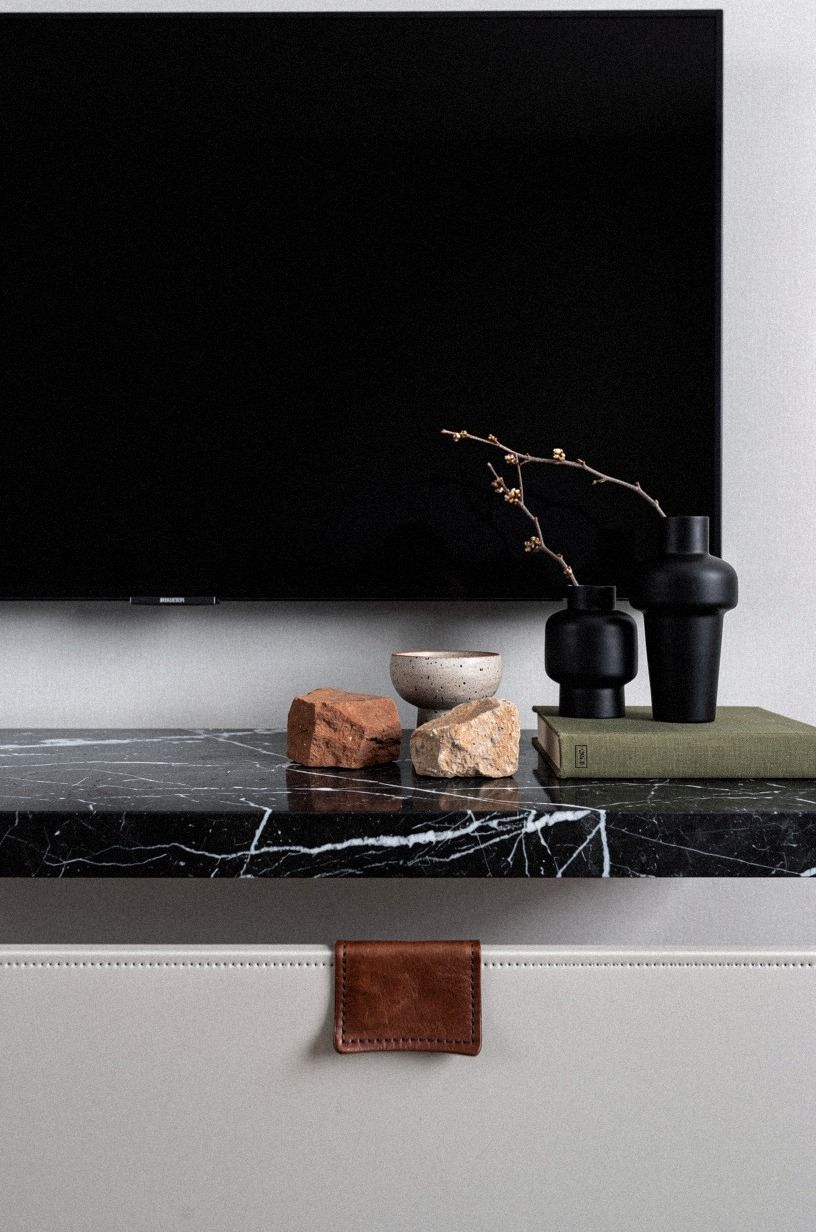
One cluster of matte black vases can balance the screen without mimicking it.
12Float a pale artwork below the bezel
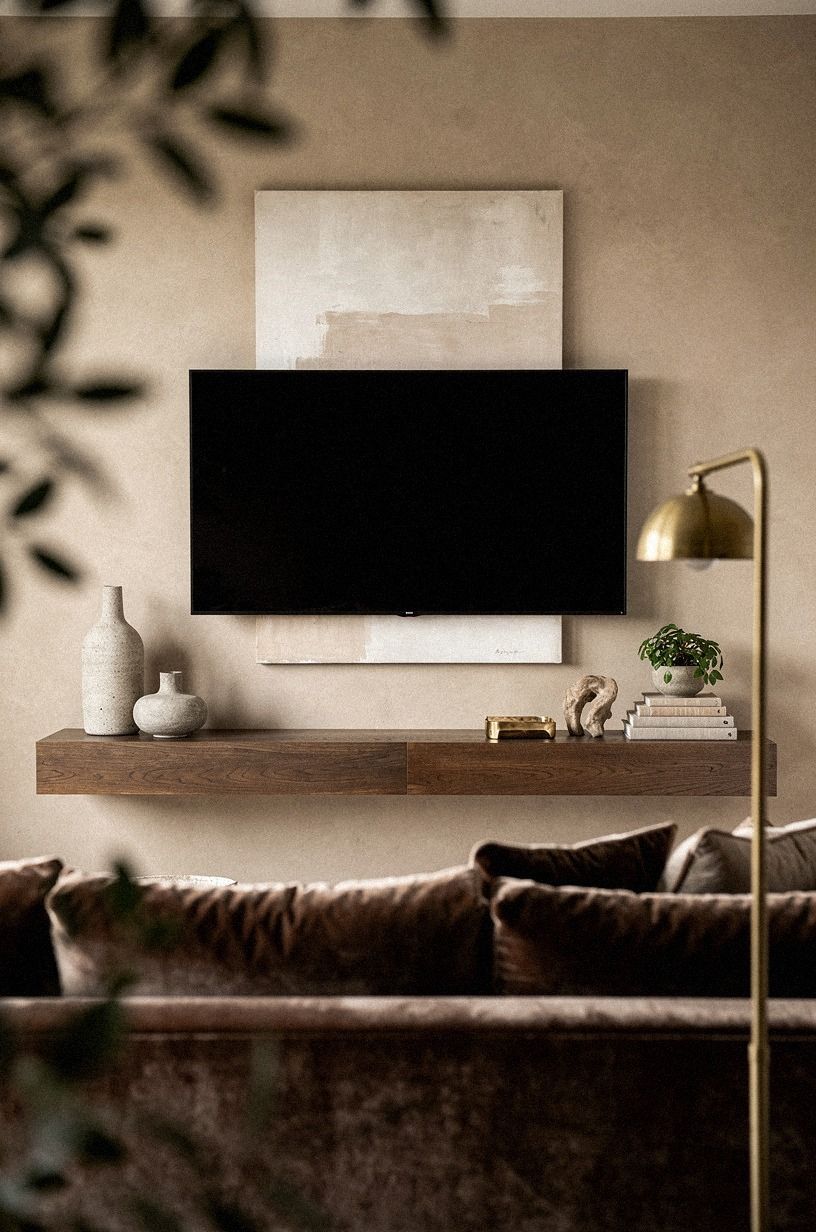
This is the step that surprises people. Yes, you can use art below a TV if it stays pale, low, and quiet enough. The artwork in the image sits just below the bezel and acts almost like a visual buffer between the screen and the shelf.
I like that move because it breaks up the black without forcing more objects onto the mantel itself. But keep the palette washed and soft.
Think limestone, chalk, fog, or faded linen rather than high contrast. And keep the frame slim. A bulky frame makes the gap feel crowded again.
Mantel mirror ideas, round arched layered for designer depth helps if you're deciding whether a pale panel or reflective piece makes more sense for your wall. For me, pale art wins because it calms instead of bouncing more light around.
13Add glass hurricanes in uneven low heights
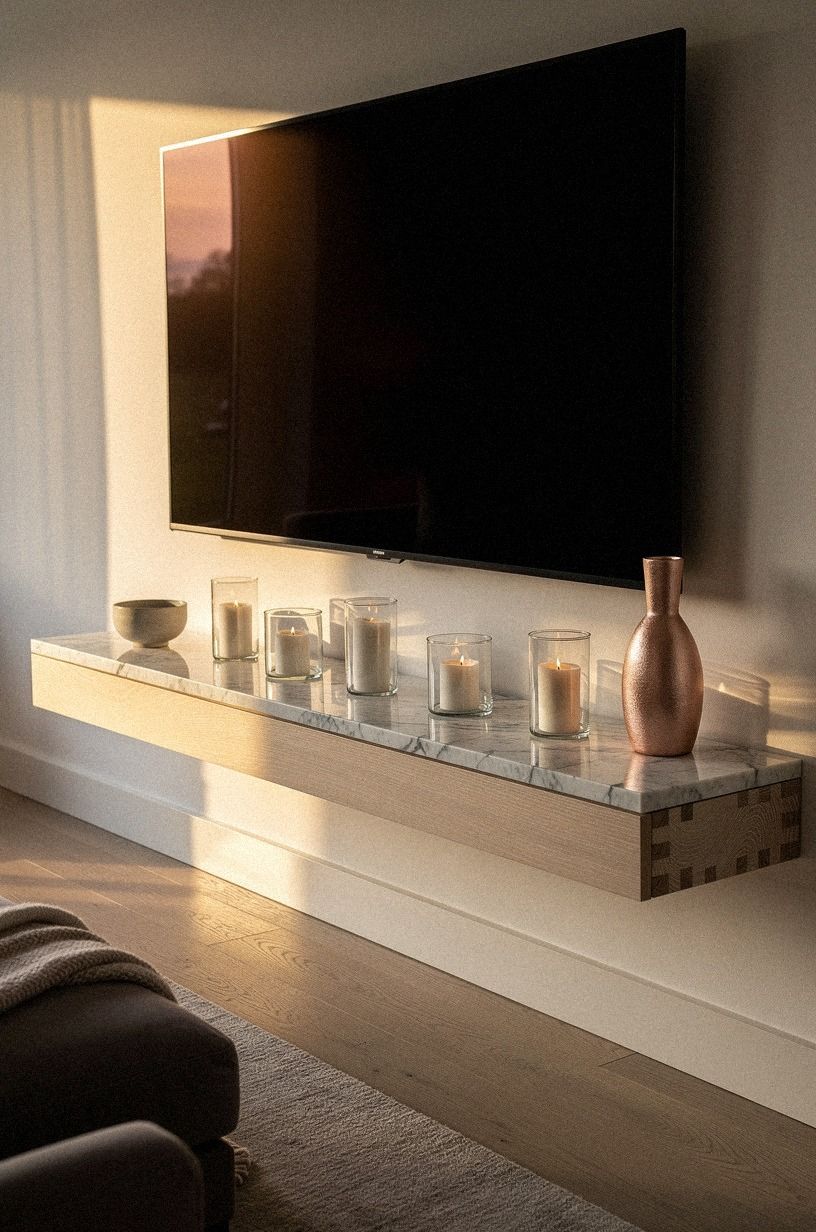
Glass hurricanes are useful here only when they stay low and uneven. That is the whole point.
A run of identical tall cylinders would feel stiff under a TV, but a loose grouping of low glass hurricanes on Carrara gives you sparkle and reflection without vertical competition. I keep them empty most of the time, then drop in candles only when I want the wall to feel a little warmer at night.
The exposed grey veining in the photo matters too, because stone plus glass can get chilly if the heights all match. Break the line.
Let one sit slightly forward. Brass candle fall mantel ideas for a warm firelit glow is helpful for reading how much flicker a shelf can handle before it starts looking busy. Less is better here.
Much better.
14Hide cables behind a painted vertical channel
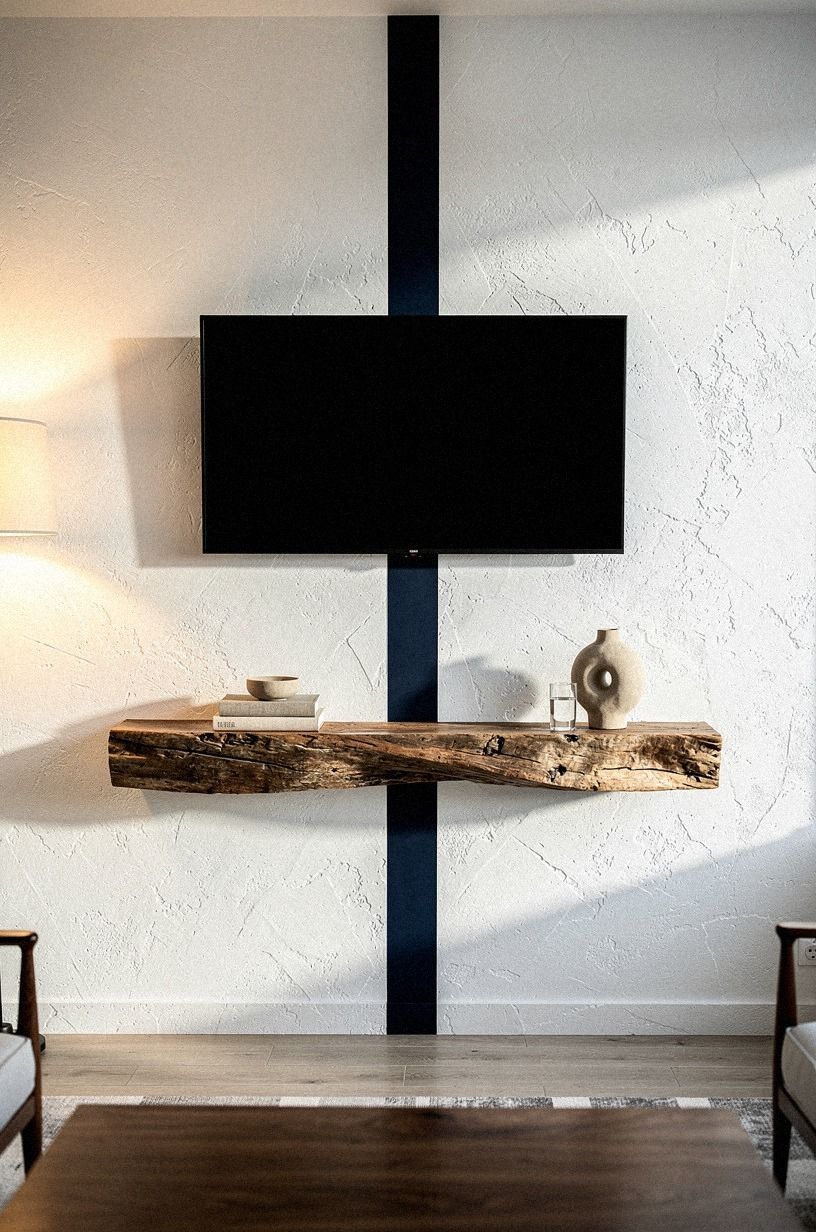
If the wires are visible, the whole wall loses authority. Full stop.
Hide them inside a painted vertical channel that blends into the plaster between the screen and the mantel. You can buy kits for this, but what matters most is paint matching and placement. The channel should read like part of the wall plane, not like a plastic strip you gave up on halfway through.
The weathered teak shelf in the photo proves how forgiving real materials are when the tech details disappear. Once the cable line is quiet, your eye goes back to the wood and plaster instead of getting snagged by cords.
Modern kitchen cabinet ideas for a sleek clean look sounds unrelated, but it nails the same lesson: clean surfaces only feel expensive when the utility lines vanish. You will notice the relief immediately.
15Soften the hearth with boucle floor cushions
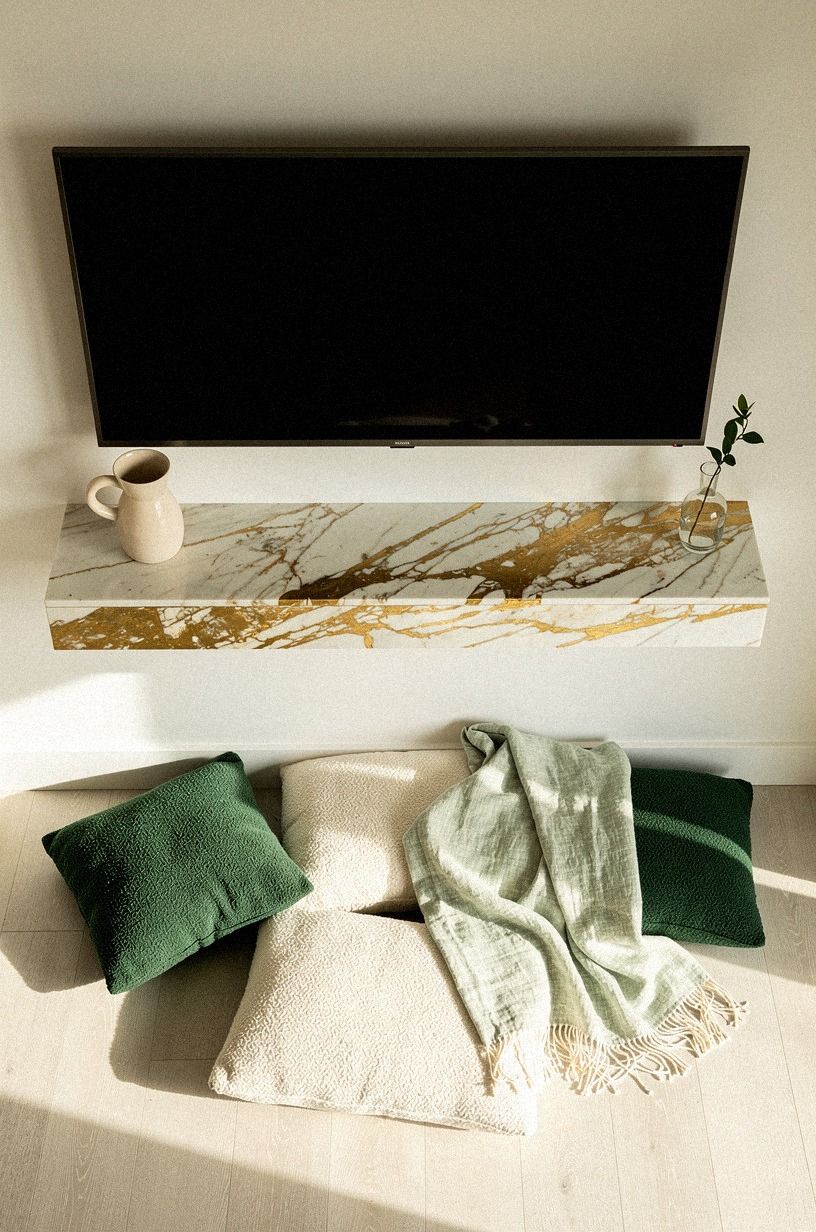
The hearth can't stay hard if the wall above it is all stone, screen, and shelf. Add boucle floor cushions to soften the base and make the fireplace zone feel usable, not just staged.
I like one or two with enough body to hold shape, especially if the mantel is Calacatta and the wall leans pale. The boucle texture is the point.
It turns the lower half into a place you might linger.
Keep the cushions off to one side rather than lined up like props. And don't buy floppy ones. A firmer fill looks cleaner.
these warm neutral bedroom ideas with softer texture is good inspiration for this kind of floor softness because it shows how texture can warm a tight footprint without adding heavy furniture. That same softness helps a hearth feel lived with.
16Repeat walnut tones in frames and boxes
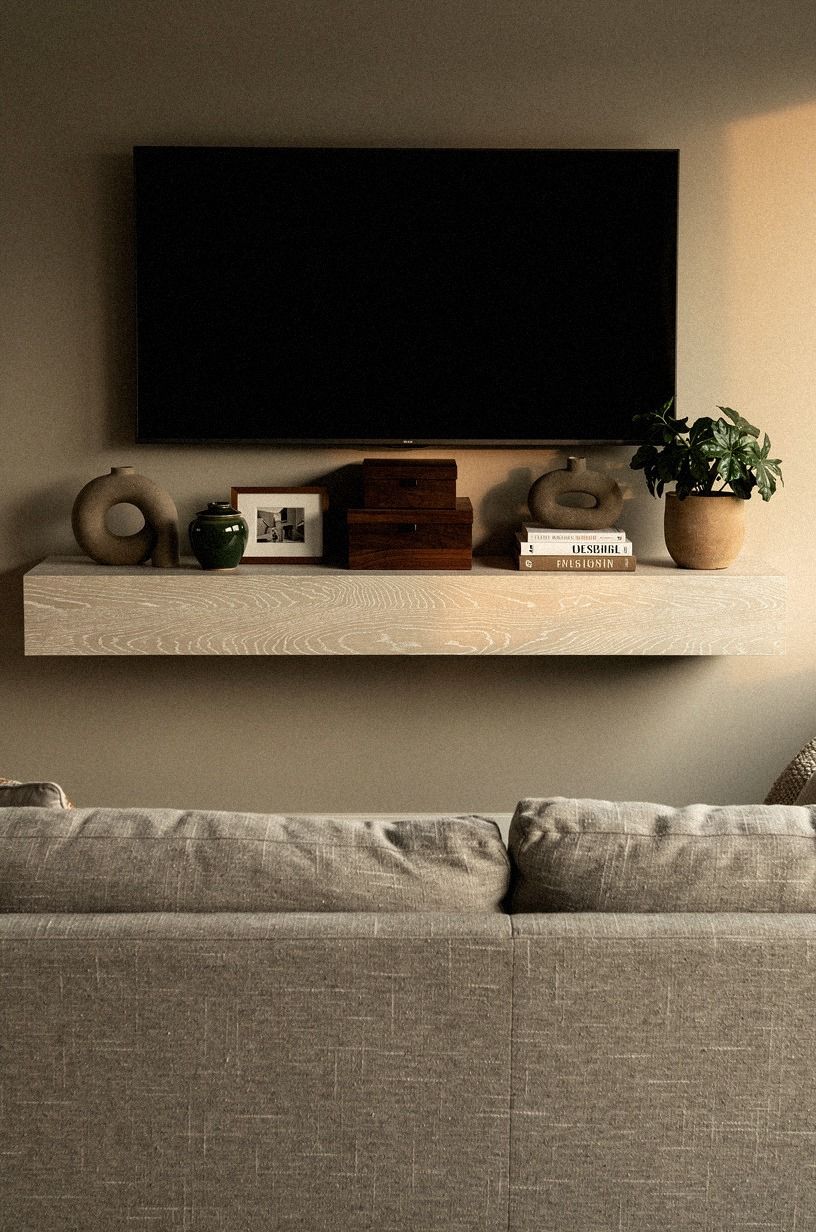
One wood tone rarely looks accidental when you repeat it on purpose. If your shelf or nearby built-ins lean walnut, echo that tone in slim frames, boxes, or even a remote caddy so the wall feels tied together. The image shows walnut frames and storage boxes below the screen, and that repetition is what keeps the composition from feeling like shelf plus TV plus random accessories.
I don't mean perfect matching. I mean family resemblance.
A book-matched walnut shelf can sit happily with medium walnut boxes and slightly softer frame tones as long as the undertone stays warm. 14 vintage modern bedrooms that feel collected not decorated is a smart reminder that repeated wood notes build calm faster than repeated objects do. That's the grown-up version of coordination.
17Style remotes inside a fluted wood caddy
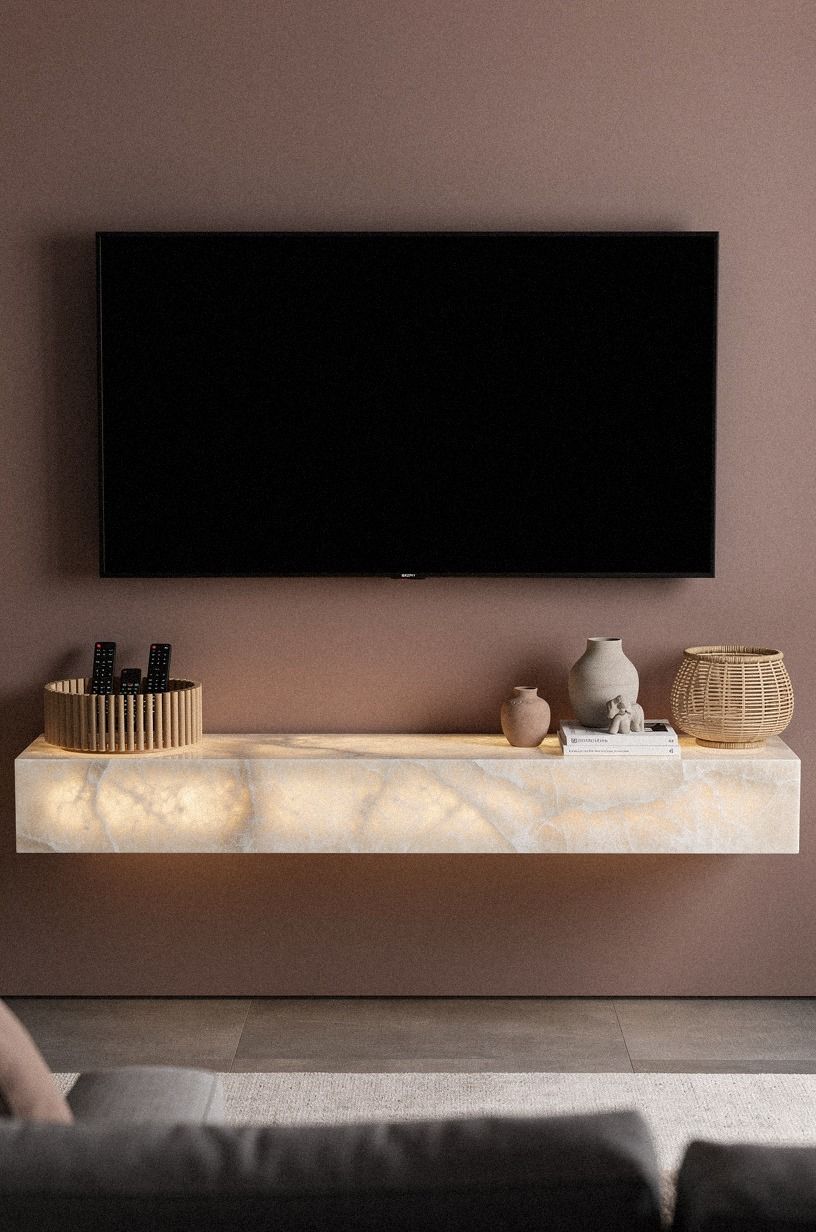
This step is practical, and that's why it matters.
18Balance the screen with one sculptural branch
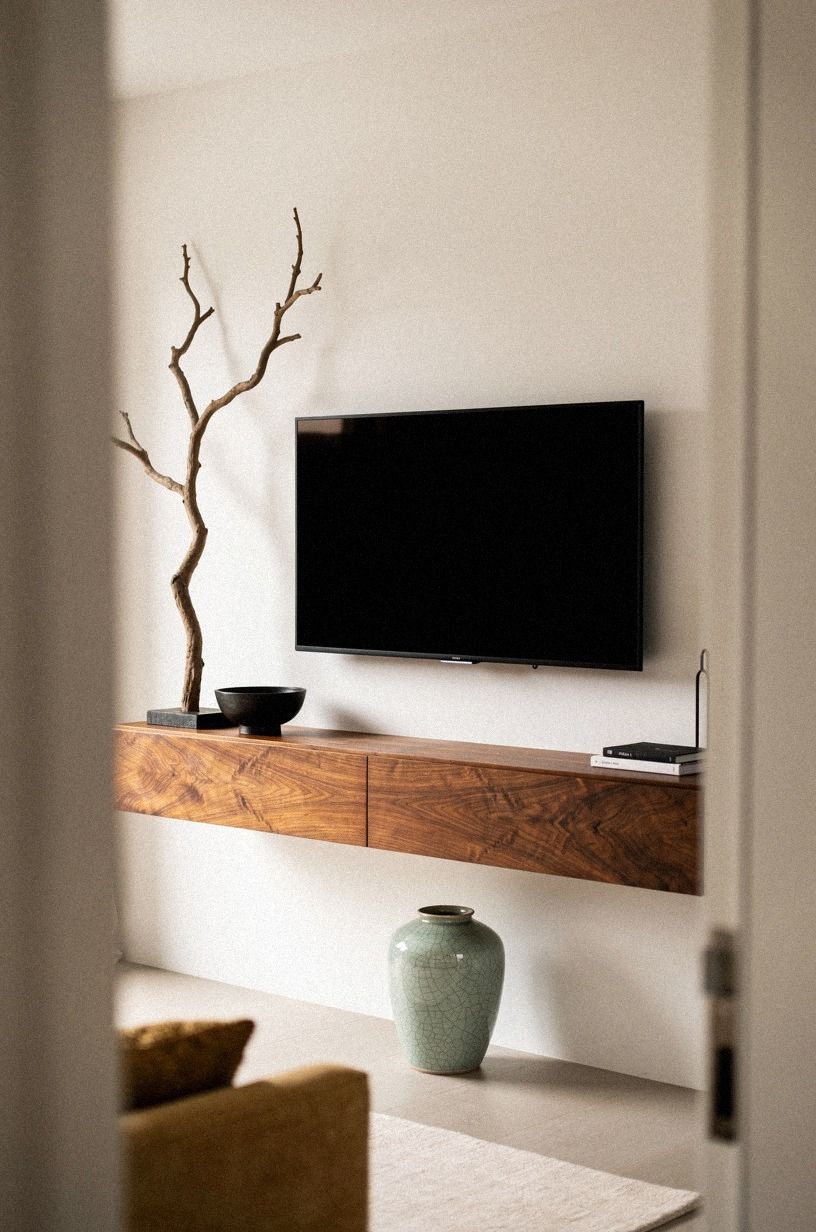
When the wall still feels too static, one branch is enough. Just one. A sculptural branch placed off to the side of a walnut shelf gives you height, movement, and a natural irregular line that keeps the screen from feeling severe.
I love this move because it looks personal without looking busy, and the cracked celadon ceramic in the photo gives the branch a grounded base.
Choose a branch with bends, not a fluffy spray. The room needs line more than volume. Why does one crooked branch work so well?
Because it interrupts the TV's perfect rectangle with something alive. 22 mantels that made me fall in love with spring all over again is useful if you want more examples of branches carrying mood without crowding the shelf.
It is a very small move. It works every time!
19Finish with warm lamps flanking the fireplace
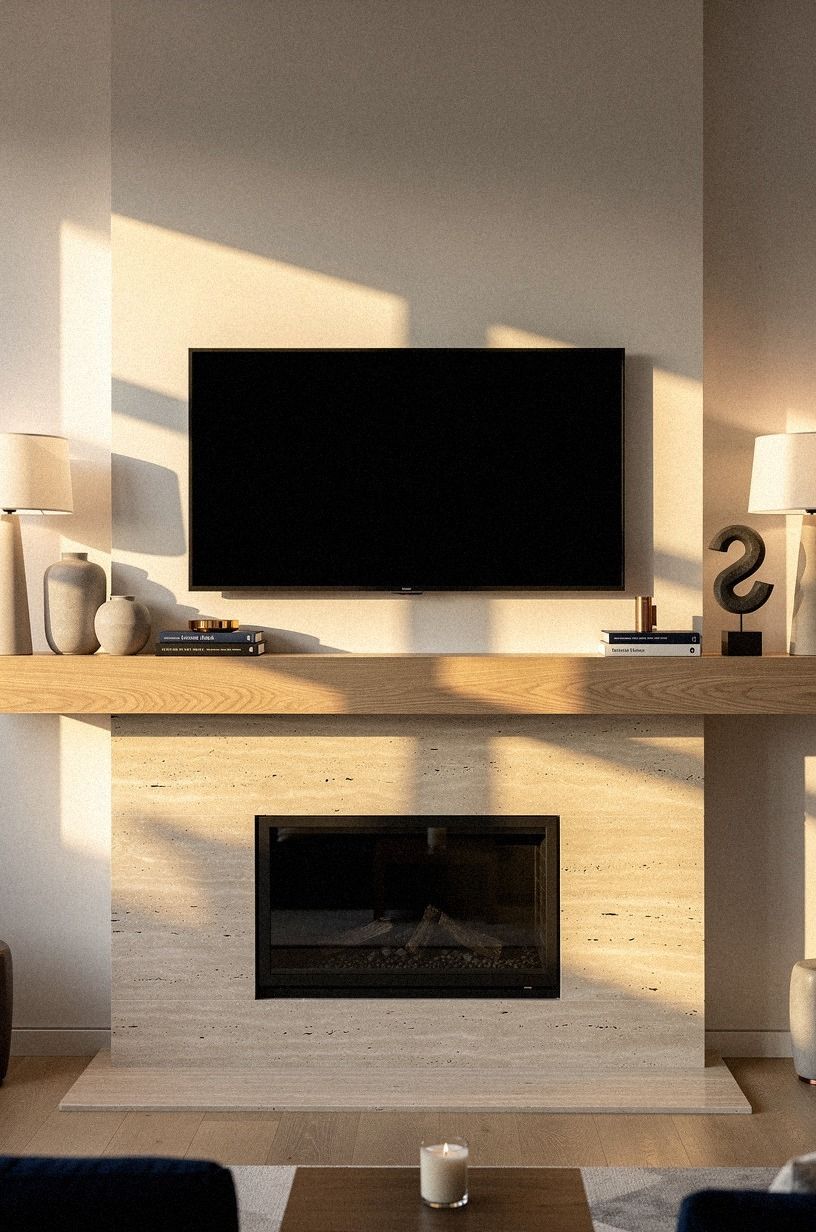
Finish the whole composition from the room, not just from the mantel. Warm linen-shaded lamps flanking the fireplace bring the wall into conversation with the seating area, and that is what makes the TV stop feeling like a separate zone. The travertine shelf in the image glows because the lamps are doing their job from the sides, not because the shelf suddenly changed shape.
Use warm bulbs only, and keep the shades low enough that the light pools around the fireplace rather than blasting upward. But don't let the lamps crowd the hearth opening. They should support the wall, not frame it like a stage set.
17 cozy backyard lighting ideas string lights beyond is a surprisingly good reminder that atmosphere comes from layers of side light. That's true indoors too.
Firebox First Over Shelf Clutter: The Quiet Gap Rule
The lesson I keep coming back to with TV-and-mantel walls is that most people try to decorate their way out of a proportion problem. I've done it too.
I bought a thicker shelf once because I thought more wood would make the wall feel richer. It didn't.
It made the screen feel lower, the gap feel tighter, and every object I added afterward had to work twice as hard just to calm the setup back down.
What helps is what I call the Quiet Gap Rule. Let the TV be one line.
Let the mantel be the second line. Then protect the breathing room between them.
Once that gap feels deliberate, almost everything else gets easier. You can use onyx, travertine, walnut, plaster, bronze, even a little black marble, and the wall still reads calm because the two main horizontals are doing the heavy lifting.
I also think this is why so many modern mantel walls look colder online than they do in person. People keep styling the shelf and forget the lower room.
The hearth needs softness. The side tables need lamps. The seating needs to sit in the same warm family.
12 modern neutral bedrooms that feel warm without trying too hard gets that right, and the principle carries over cleanly. Warmth is rarely one object.
It's the conversation between surfaces.
And if you're stuck choosing where to spend, spend on line and light first. Not more decor. A slimmer shelf, a cleaner cable solution, a warmer bulb, a better gap.
That order has saved me money more than once, and it keeps the room from drifting into showroom territory (which is always a little dead to live with).
A Few Things Worth Answering
What is the best Floating Mantel Under a TV for a Clean, Modern Look for a small living room?
The best version for a small room is a slim white oak shelf with one low tray and one side branch, because that keeps the wall open while still giving you texture. If you're worried about crowding, these small bedroom ideas is a good scale gut-check.
Where can I buy Floating Mantel Under a TV for a Clean, Modern Look pieces on a budget?
Start with IKEA, Target Threshold, and Wayfair for books, bowls, lamps, and simple frames, then check Facebook Marketplace for wood shelves or stone trays. Used pieces often have better texture anyway. 11 sun-soaked spaces where terracotta tiles meet honey-toned wood and everything feels warm underfoot is a nice mood reference before you shop.
How much does a Floating Mantel Under a TV for a Clean, Modern Look makeover cost?
A styling-led reset usually runs about $300 to $1,200, especially if you keep the existing TV and firebox and spend on paint, lighting, and shelf styling first. Free wins count too: measuring the gap, hiding cords, and removing half the objects you don't need.
Can I create a Floating Mantel Under a TV for a Clean, Modern Look on a budget?
Yes, and you can do a lot with cheap or free edits. Paint the wall, edit the shelf down to one tray and one accent, hide the cables, and swap random remotes for a wood caddy. If your room needs more softness, 14 neutral bedrooms that feel warm without feeling heavy shows how far texture can carry a space.
Is a Floating Mantel Under a TV for a Clean, Modern Look worth it in a small space?
Yes, because small rooms reward cleaner lines faster. A slim shelf and controlled gap make the wall feel less top-heavy, and the longer mantel helps the TV read as part of the architecture. Keep the objects low, then let the room breathe.
Is Floating Mantel Under a TV for a Clean, Modern Look a good idea for a rental?
Yes, if you focus on low-damage swaps. Use a removable cable channel, lean art instead of drilling when you can, choose plug-in sconces, and use floor cushions or lamps for warmth. these small bedroom ideas for awkward layouts is helpful because awkward walls always reward restraint.
Where I'd Start First With the Quiet Gap Rule
If I had to pick one step to start with, I'd start with measuring the TV gap. A bad gap makes a good shelf, good paint, and good styling all feel wrong because the wall never settles. Fix that first, then everything else starts agreeing with you.