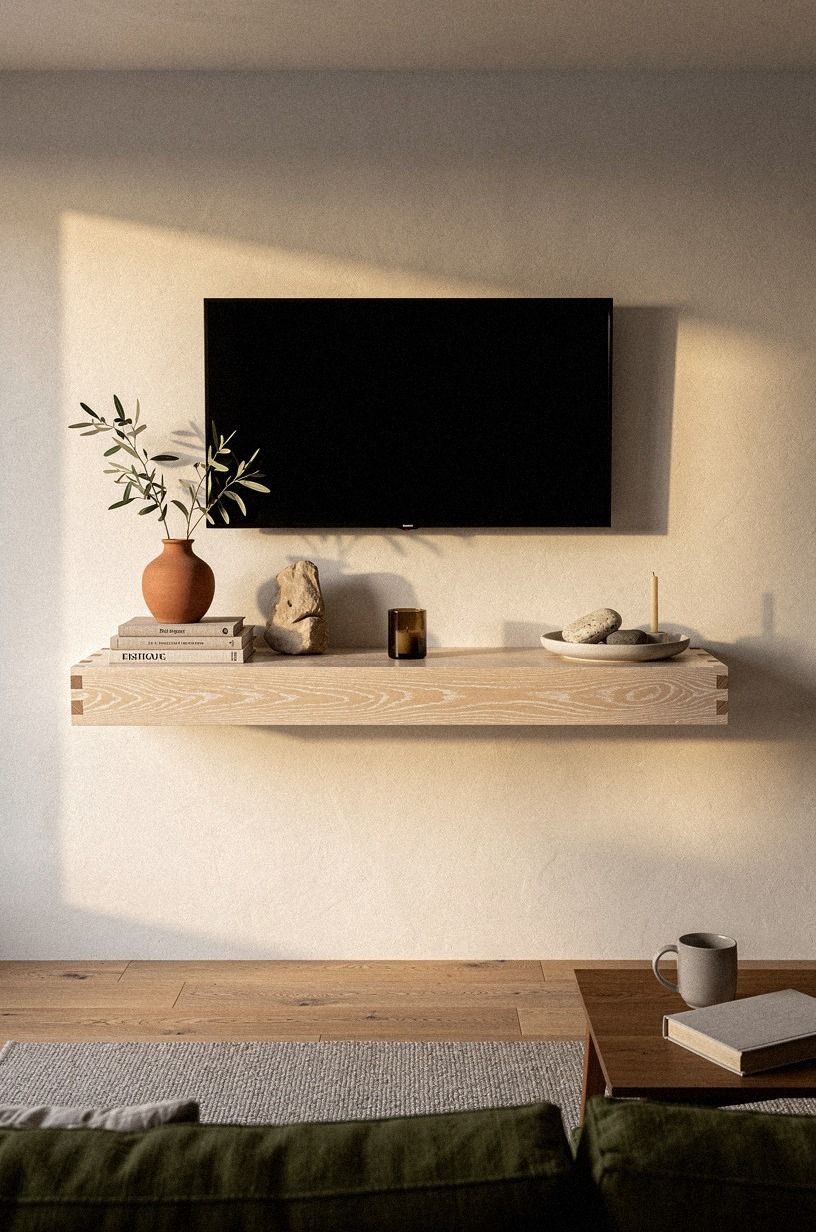
How to Style a Mantel So the TV Does Not Take Over
04 july 2026How to style a mantel so the TV does not take over starts with the wall and the shelf line, not more objects. I've restyled this kind of fireplace enough times to know the screen only calms down when the contrast around it drops, and a calmer wall saves you a renovation that isn't worth the cost. Most rooms settle into the right feel after $400 to $900 in edits, not $4,000 in new furniture, and that's the line I want you to remember as you read.
- Start with a bare mantel and measured gap
- Choose a slim frame that matches the firebox
- Paint the TV wall a soft mushroom tone
- Anchor one side with a tall ceramic vase
- Build the opposite side with stacked linen books
- Layer a low landscape print beneath the screen
- Hang petite sconces just outside the TV frame
- Add taper candles in uneven brass heights
- Tuck trailing eucalyptus along the mantel edge
- Place a shallow stone bowl at center
- Style the hearth with boucle floor poufs
- Lean narrow art against each mantel post
- Repeat the TV black in tiny gallery frames
- Soften the surround with woven log baskets
- Float one sculptural branch beside the screen
- Hide remotes inside a ribbed wood box
- Finish with warm lamps beside the fireplace
- Take down one object before you add anything else
- Set the screen to a wallpaper when you're not watching
1Start with a bare mantel and measured gap
Clear the shelf first. You can't judge proportion through clutter, and you shouldn't buy a single vase until you've looked at the raw relationship between the cerused white oak mantel and the screen.
From the sofa, check the wall at 1.5 to 2.5 times the screen diagonal. Anything tighter than that and the TV starts to feel like it owns the room before you've styled a thing.
Then study the gap itself. If it feels random, the room will keep reading as TV above, fireplace below, no matter how pretty the objects are.
I made that mistake before, and it cost me a weekend of edits and a return trip to the store. If the whole seating plan still feels off, this living room layout guide helps you judge the wall in context. Take the measuring tape to the sofa before you move a single vase, and you'll skip the part where you decorate blind.
2Choose a slim frame that matches the firebox
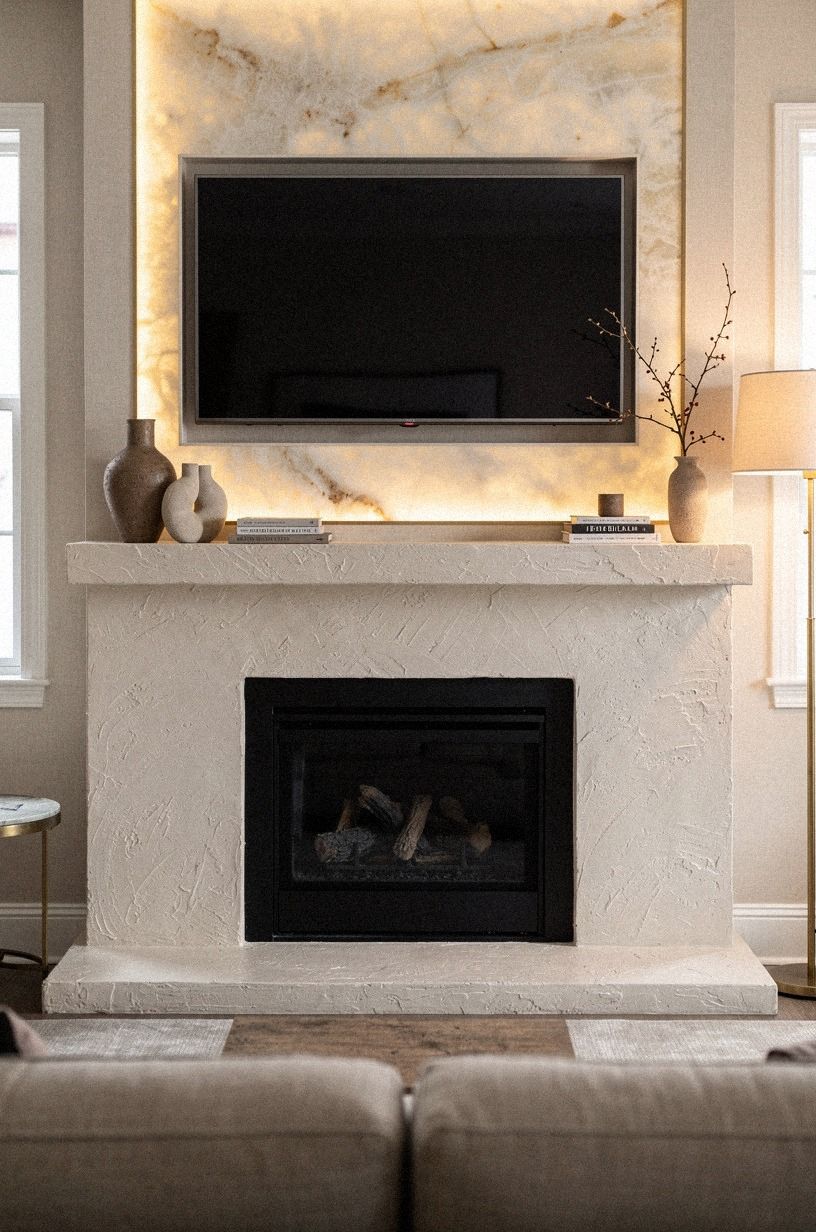
A slim frame works because it repeats the dark weight of the firebox without adding another loud border. You want the frame to feel related to the opening below, whether that opening reads matte black, smoked bronze, or soft charcoal. Skip ornate profiles here, and fancy edges make the TV feel fussier than it already is on a busy wall.
Keep the finish dark and warm, not shiny. On a pale travertine surround, that quiet line is enough to connect the screen and fireplace without turning the TV into a feature piece. You'll feel the difference the first evening when the lamps come on and the frame stops competing for attention.
3Paint the TV wall a soft mushroom tone
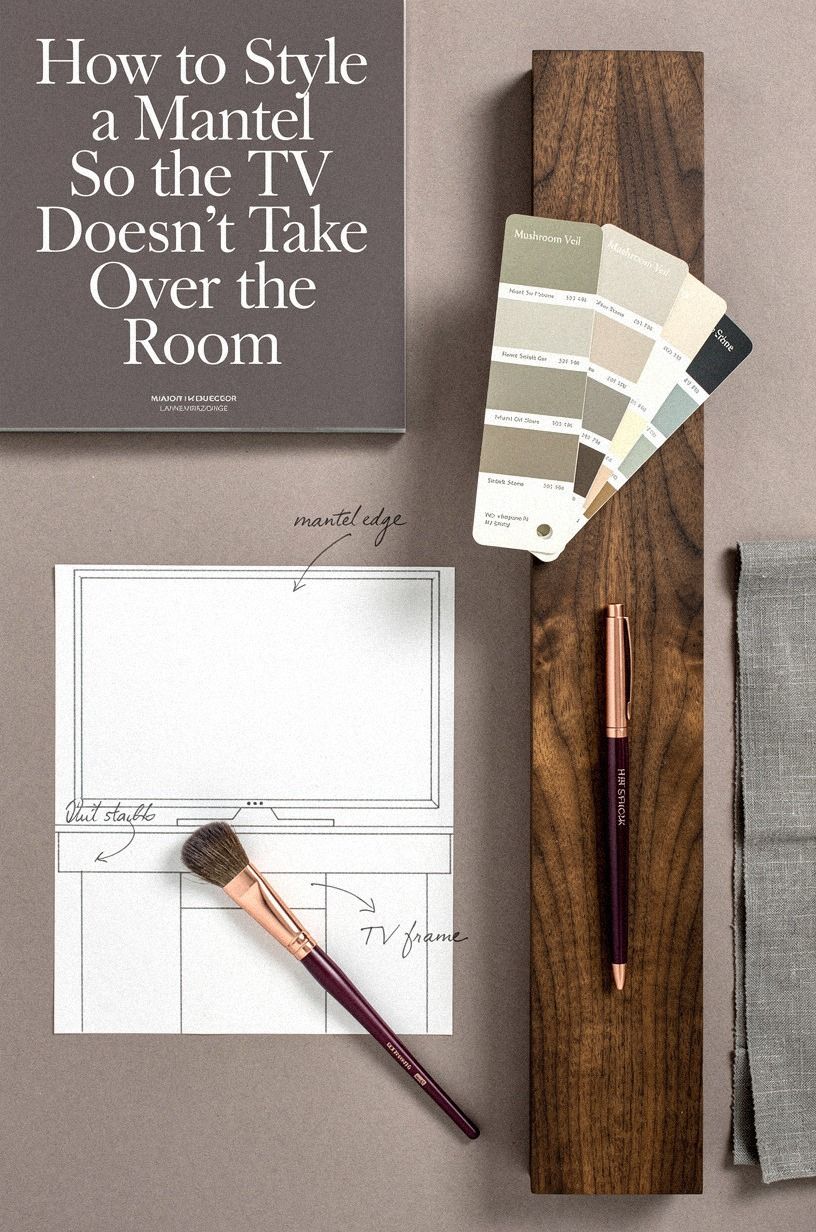
Paint is still the cheapest big win on this wall. A soft mushroom tone cuts the black-on-white contrast fast, and that's what makes the screen stop shouting.
In a room with warm oak and cream upholstery, I'd take Benjamin Moore Revere Pewter HC-172 over a cool gray every time, while Behr paints a similar tone if you want a more affordable gallon. The undertow of warmth in Revere Pewter is what keeps the screen from looking like it landed on a different wall.
You don't need a dramatic color here. You need a forgiving field.
Sherwin-Williams Evergreen Fog SW 9130 also works once the lamps are on, especially if your fireplace stone pulls green, and you'd rather lean into that note than fight it. Test the swatch at three times of day before you commit, because the screen will only look as calm as the color behind it.
4Anchor one side with a tall ceramic vase
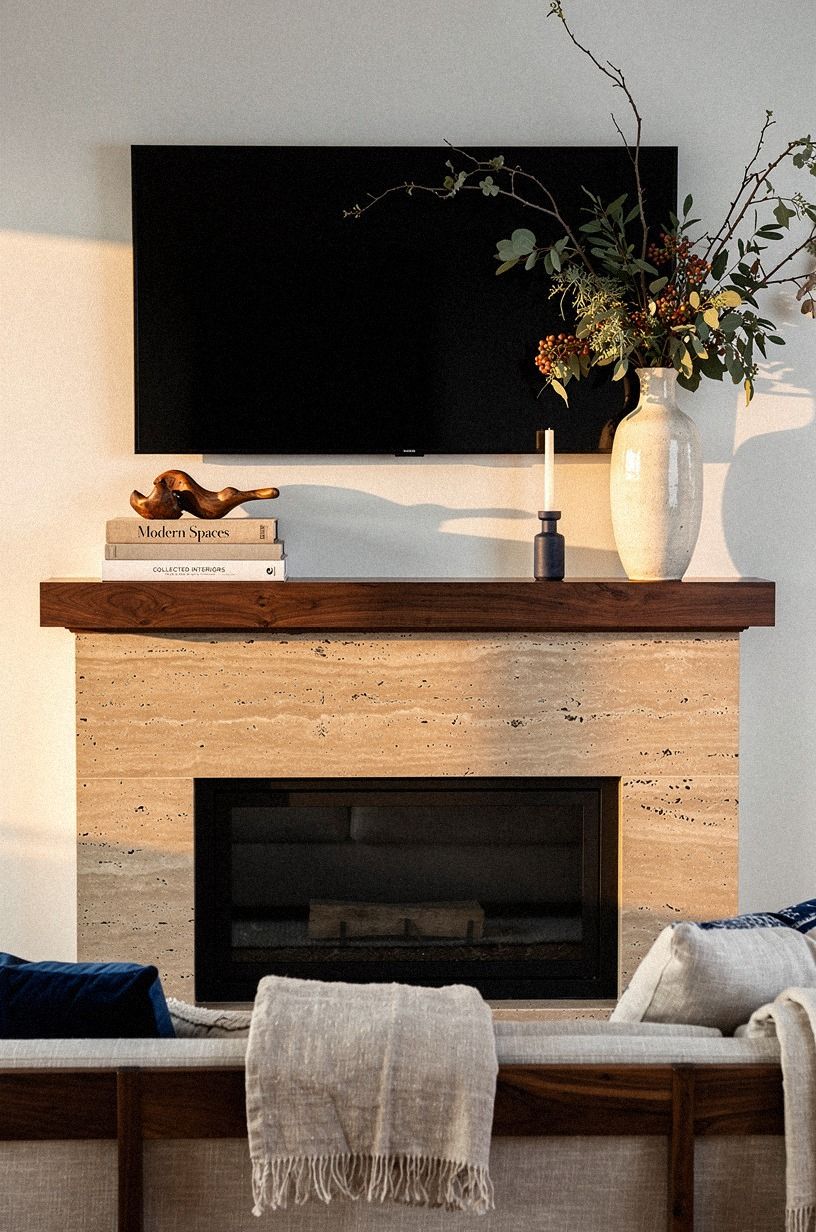
Once the wall tone is right, bring in one vertical move.
5Build the opposite side with stacked linen books
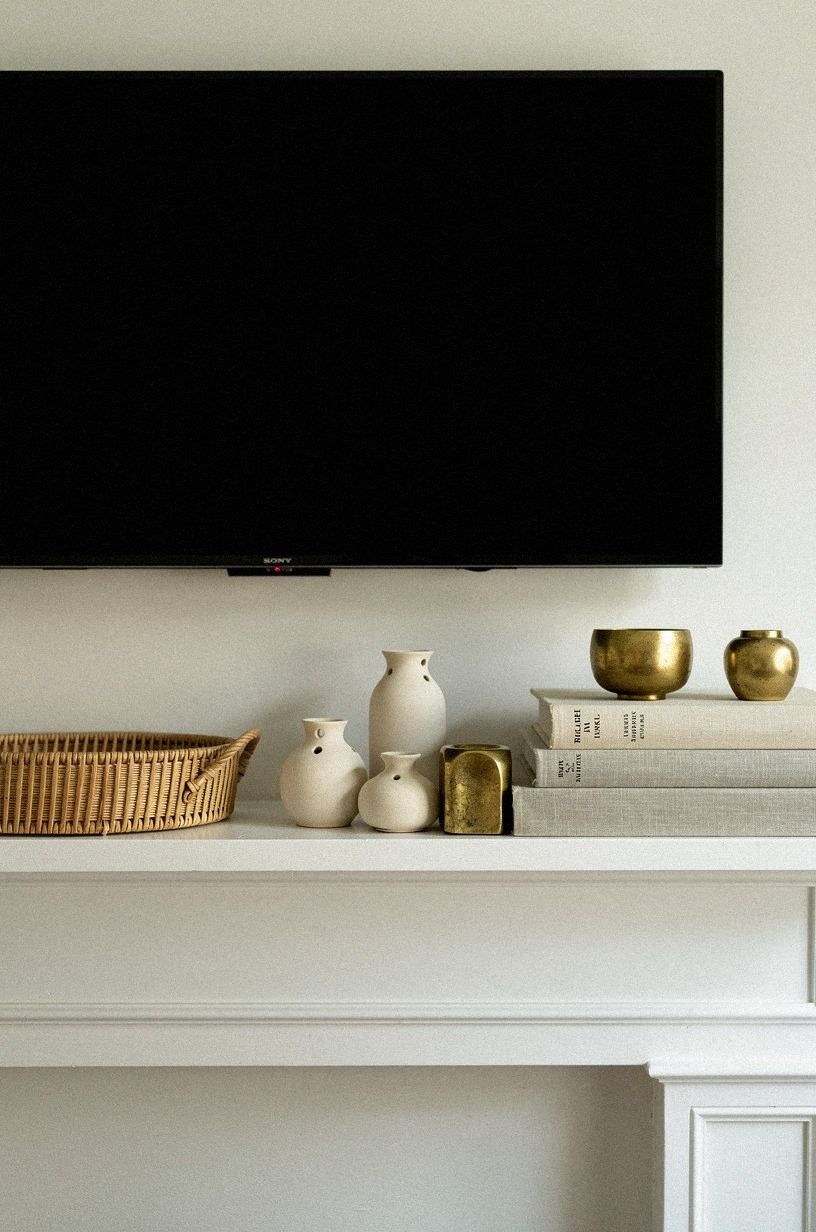
Books are the quieter answer to a second vase because they add weight without another tower. Stack two or three Belgian flax linen hardbacks on the opposite side and keep the palette dusty cream, oat, or tobacco. Bright jackets pull your eye down for the wrong reason, and that's exactly what you're trying to avoid with a screen that already pulls the eye up.
What works here is width. The TV already gives you height, so the shelf needs a low horizontal answer.
Top the stack with one small ceramic or one shallow brass note, and stop there. The book side starts competing with the vase side if you keep layering.
The total spend is usually under $30 if you shop your own shelves first, and you'll save yourself the regret of buying props you don't need. This coffee table styling guide uses the same low-weight idea elsewhere in the room, and the principle holds anywhere a focal point is fighting your decor.
6Layer a low landscape print beneath the screen
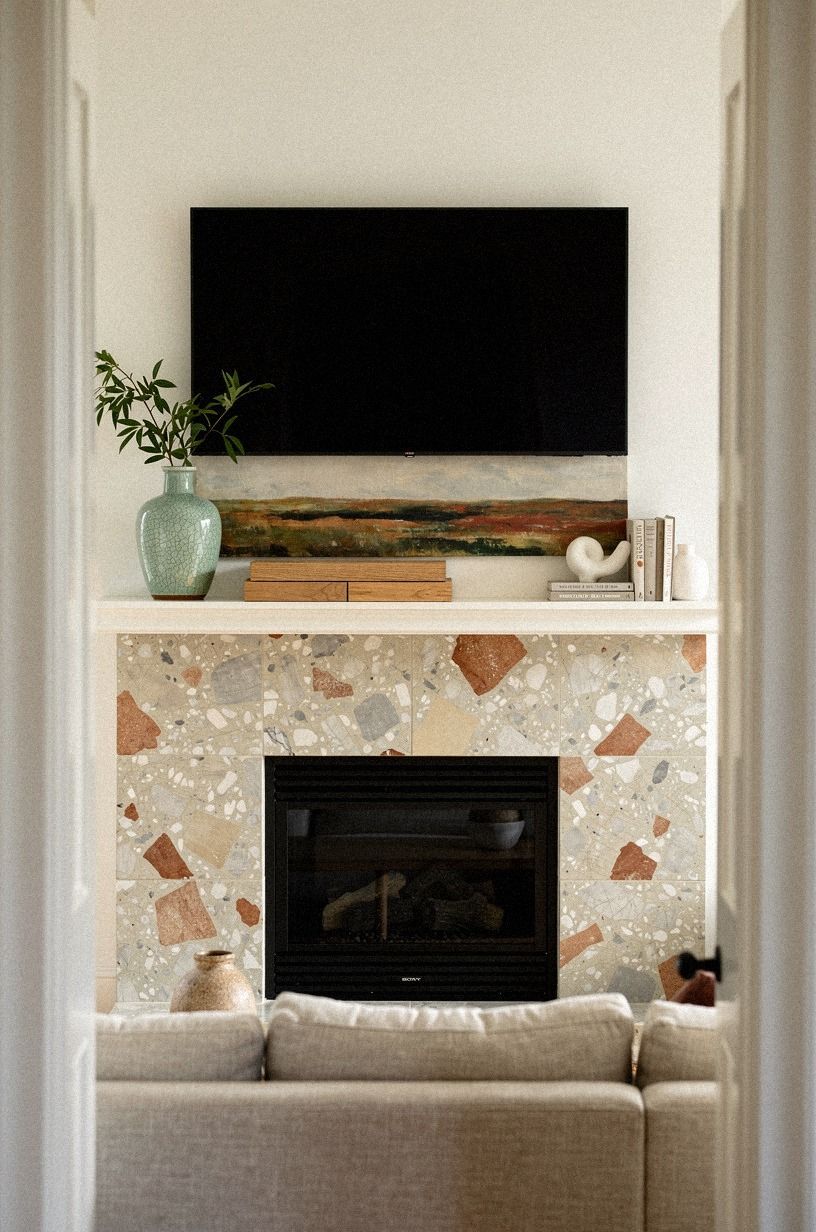
A low landscape print is the bridge move.
7Hang petite sconces just outside the TV frame
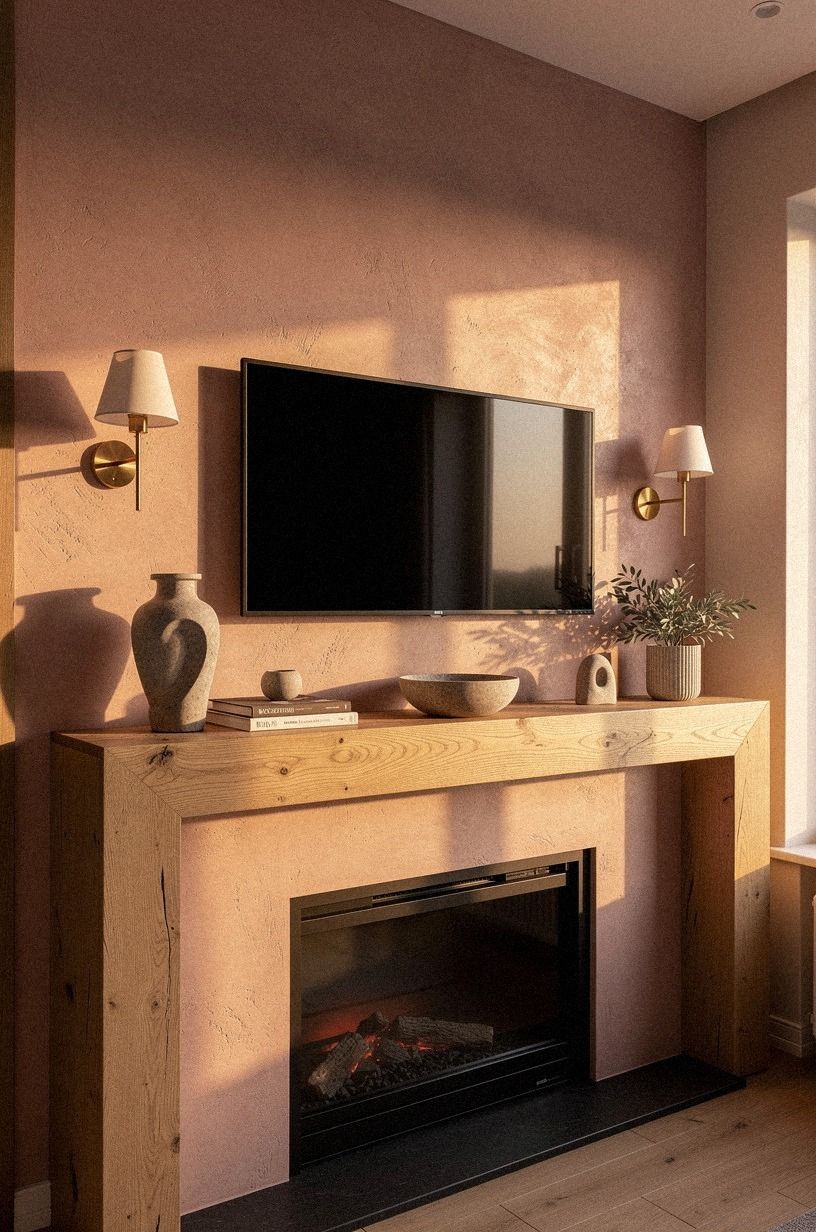
Petite sconces pull attention outward, which is exactly what a TV wall needs. On a Venetian plaster chimney, they widen the rhythm of the composition and give the wall depth after dark. The value of that single upgrade is bigger than anything else you can hang, and you'll notice it the first evening you sit down without flipping on the overhead.
Stay small on purpose. A huge sconce turns the fireplace into a stage set.
A pair of aged brass picture lights or small shaded sconces with warm bulbs is the right call. Plan on $90 to $220 per sconce if you go hardwired, closer to $40 to $80 for quality plug-in versions, and you'll find that the warm 2700K bulb does more work than the fixture itself.
This warm lighting guide is worth opening while you choose bulb tone, because the warmth is what quiets the whole wall.
8Add taper candles in uneven brass heights
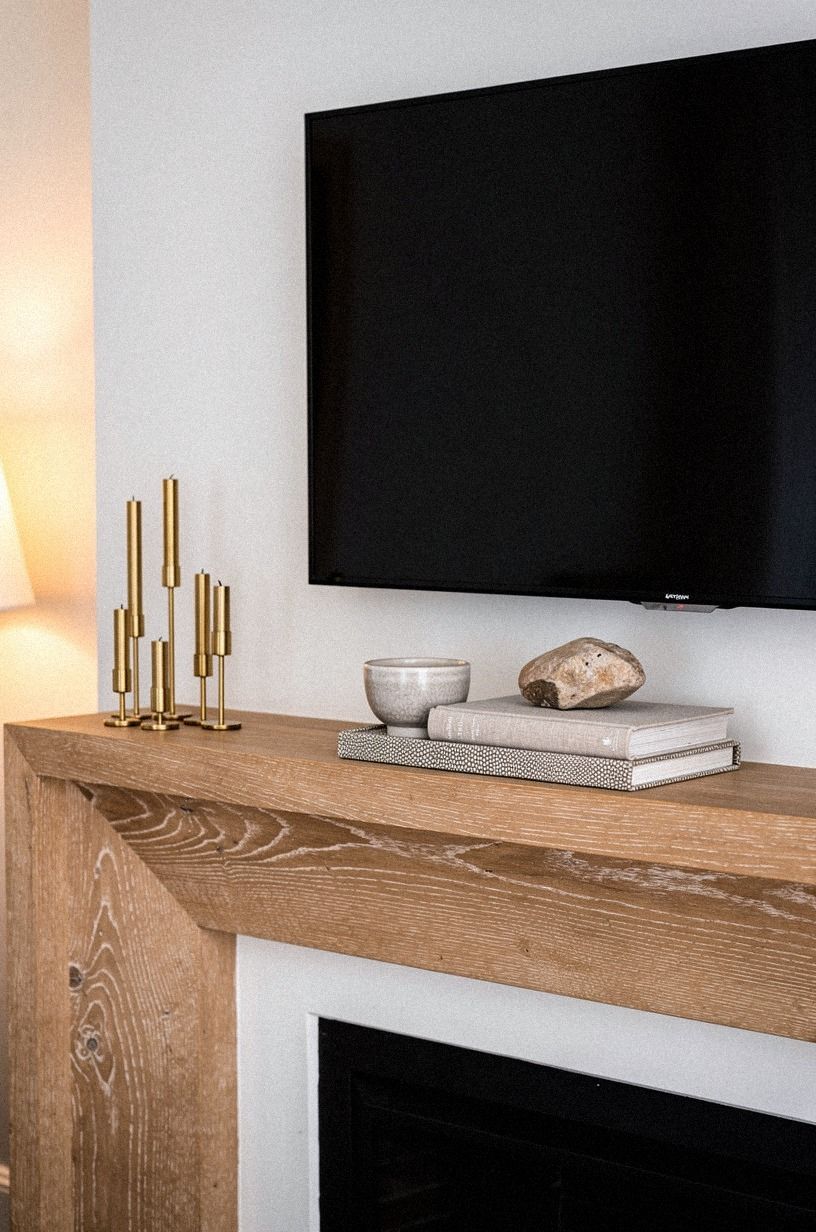
Candles interrupt the hard rectangle of the screen with a few warm verticals that still feel controlled. Uneven unlacquered brass tapers work because the metal softens with age, and you want materials that get better over a season, not worse. A pair at different heights reads more intentional than a matched row, and that's the visual point of the whole mantel.
Cluster them on the book side or just off center, not in a neat straight row. You want drift, not ceremony. A giant candelabra turns the mantel into a theme.
A pair of solid brass tapers lands at $35 to $70 and lasts for years. Iris Hantverk beeswax tapers are my current favorite, because the beeswax throws a softer, warmer pool than paraffin. If you want more warm-metal examples that stay restrained, this metal finish guide is the better reference.
9Tuck trailing eucalyptus along the mantel edge
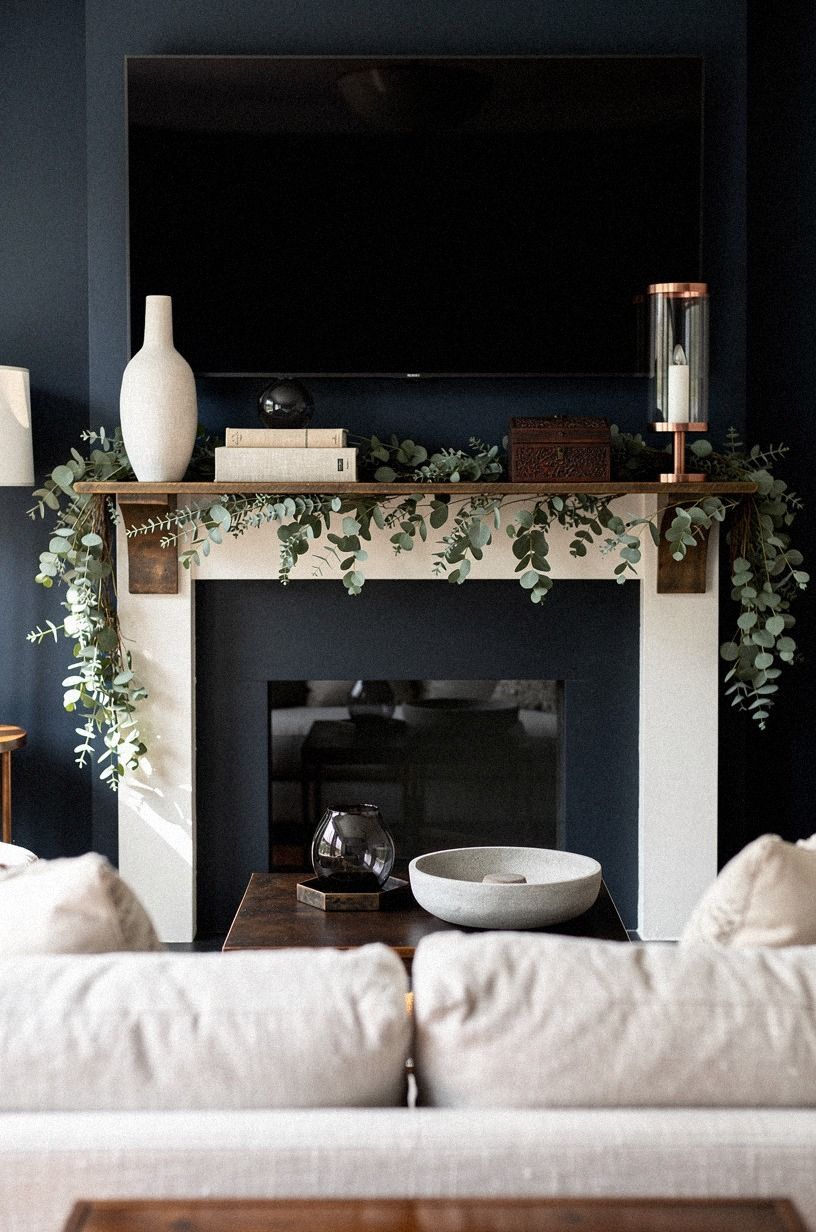
A little eucalyptus helps when the shelf line feels too hard.
10Place a shallow stone bowl at center
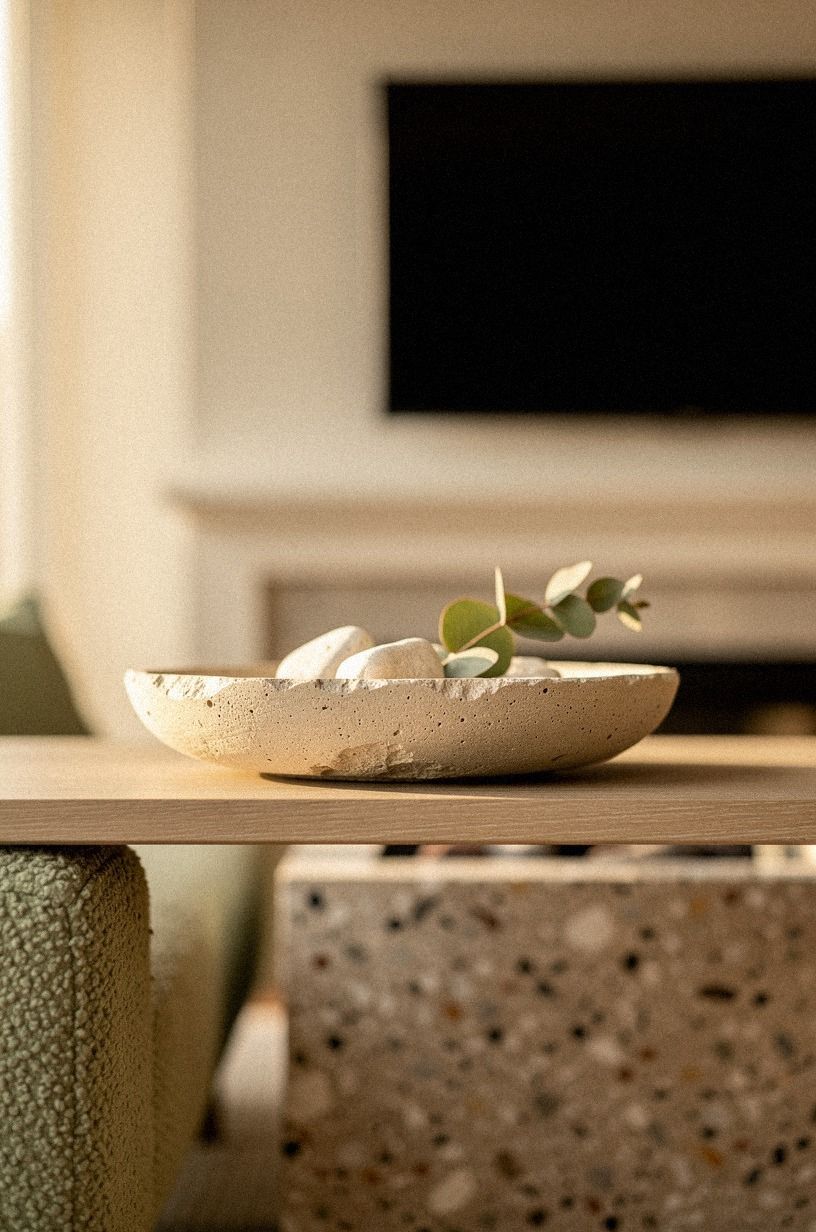
A shallow bowl gives the center of the shelf purpose without creating another upright object under the TV. That's why Calacatta Gold marble with amber veining belongs here. It brings weight, but it stays low, and the warm veining reads as a quiet glow even when the room is dim.
Keep it nearly empty. One bead strand.
Maybe one small match cloche. Done. A full bowl reads like storage, and a TV wall cannot survive that kind of confusion.
Quality stone bowls run $60 to $200, and Crate & Barrel's marble platters do this exact job for the lower end of that range. If you want another example of one low object calming a focal wall, this mantel pull-together guide reinforces the point.
11Style the hearth with boucle floor poufs
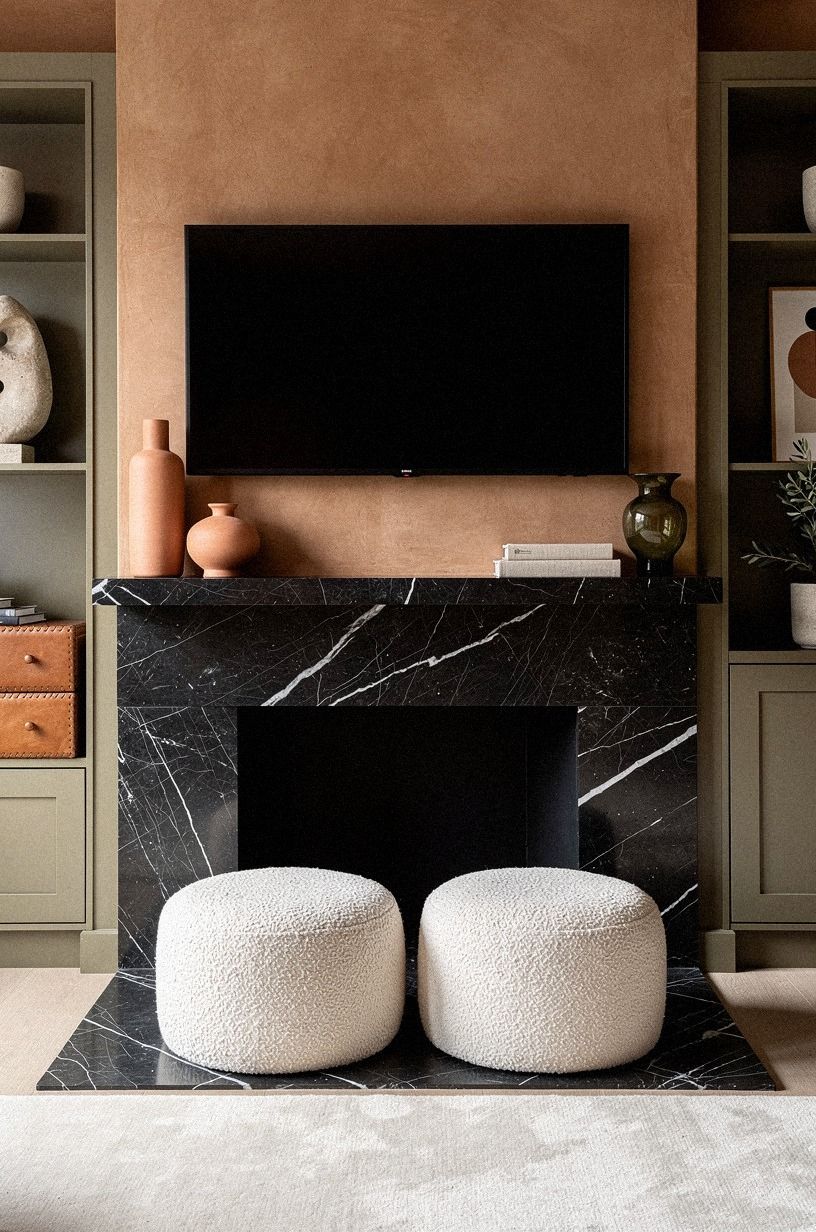
The hearth has to help, because the TV always risks making the composition top-heavy. A pair of bouclé floor poufs or low stools pulls visual weight down, softens the stone, and makes the fireplace zone feel used instead of staged.
On a Nero Marquina marble surround, that cream texture is a gift. You'll feel the warmth every time you walk past it!
If you're thinking about the whole room budget, these ranges usually matter most for the mantel zone:
You don't need the high tier to calm this wall. You need texture, repetition, and better placement.
A pair of solid bouclé poufs runs $180 to $450, which is a real spend but a fair value when you use them as seating, footrests, and side tables. Under $200 gets you into the look if you shop vintage or wait for a sale. That's the table's real lesson, and you'll feel it the first time you sit down by the fire instead of on the sofa.
12Lean narrow art against each mantel post
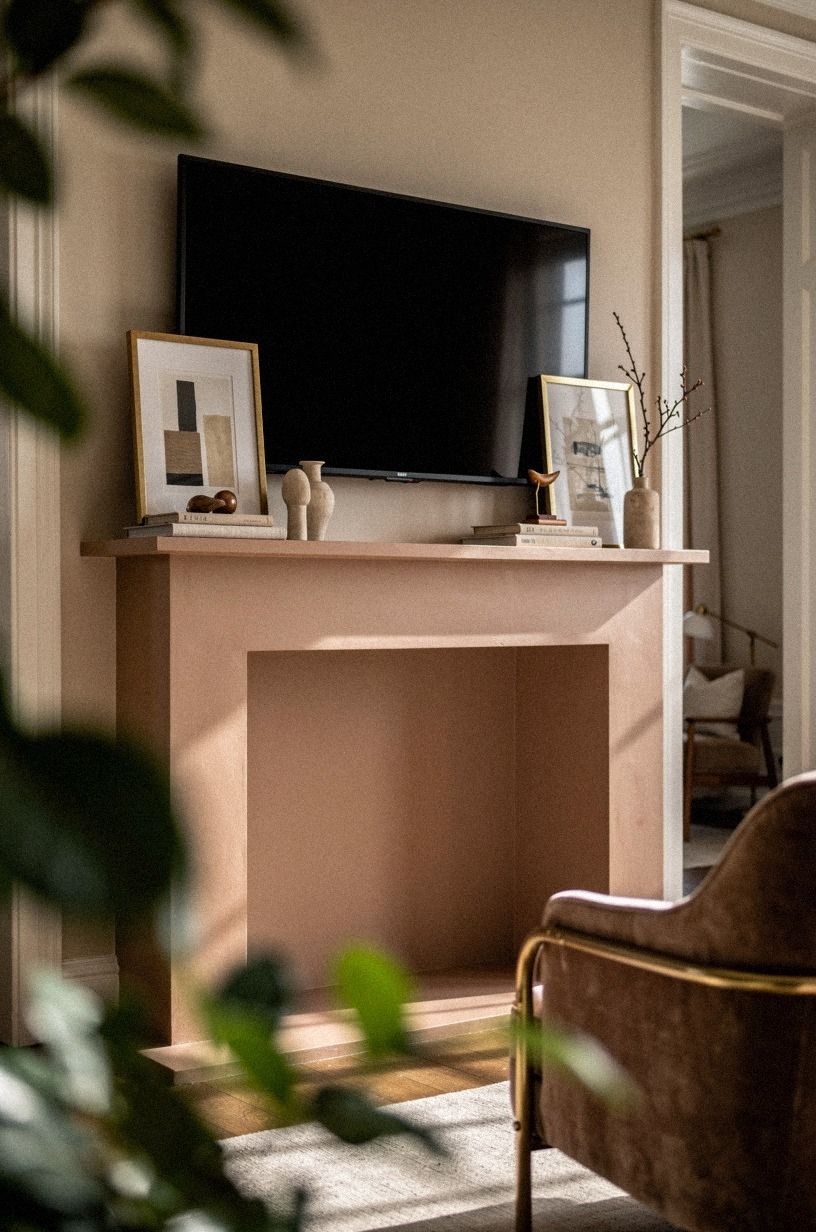
Narrow art at the posts widens the arrangement without waking the center up again. Lean one slim piece against each mantel post and keep the tones related, even if the frames are not identical. The posts are the visual stops of the mantel, and giving them their own small notes tells the eye where the composition ends.
Thin black or walnut frames belong here, especially when the firebox and TV already carry the dark note. The pieces should stay narrow enough that the posts still show, because the architecture should remain visible.
Article carries modern walnut pieces I trust, and West Elm's Threshold line runs a quiet frame that fits this scale. Lean art at this scale runs $40 to $150 per piece if you print at home, and you'll save money over framed-and-shipped gallery prints.
For spacing and balance help, this gallery wall layout guide is useful even when the art stays on the shelf.
13Repeat the TV black in tiny gallery frames
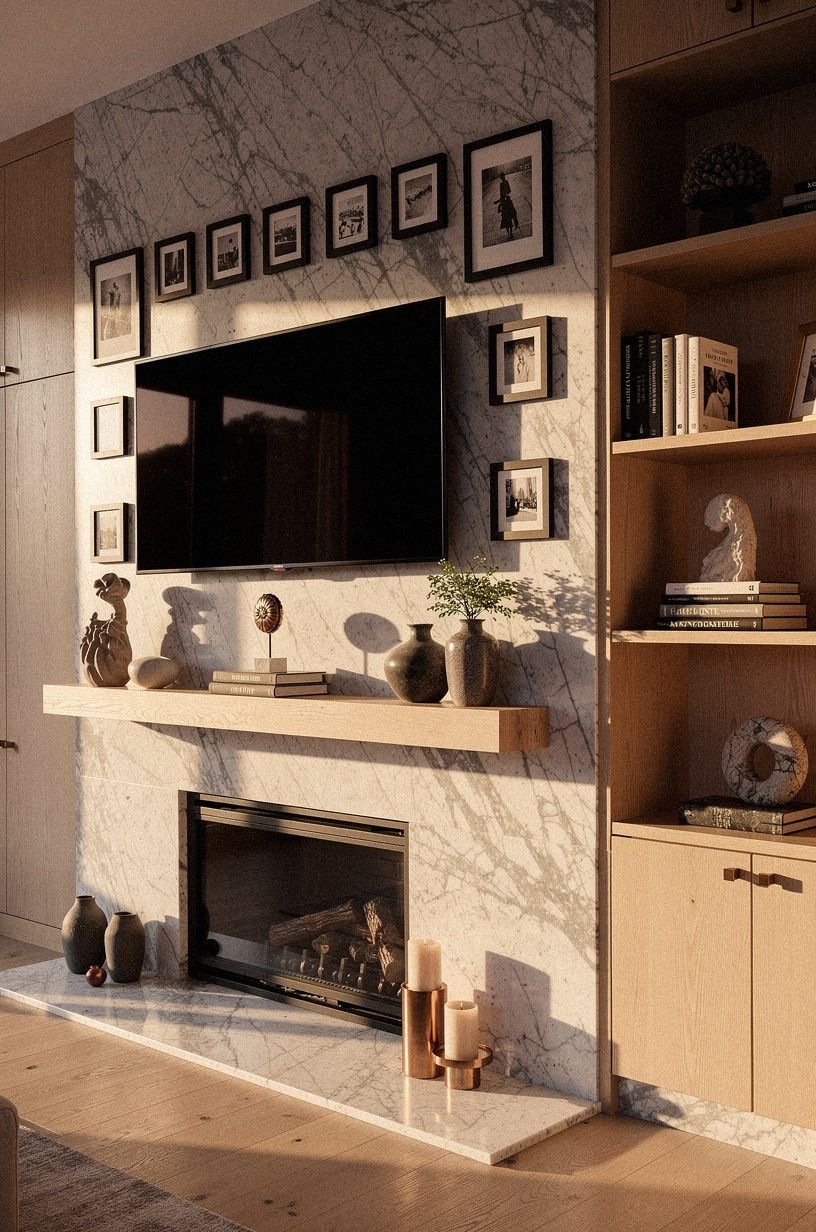
This is the repeat that makes the screen behave.
14Soften the surround with woven log baskets
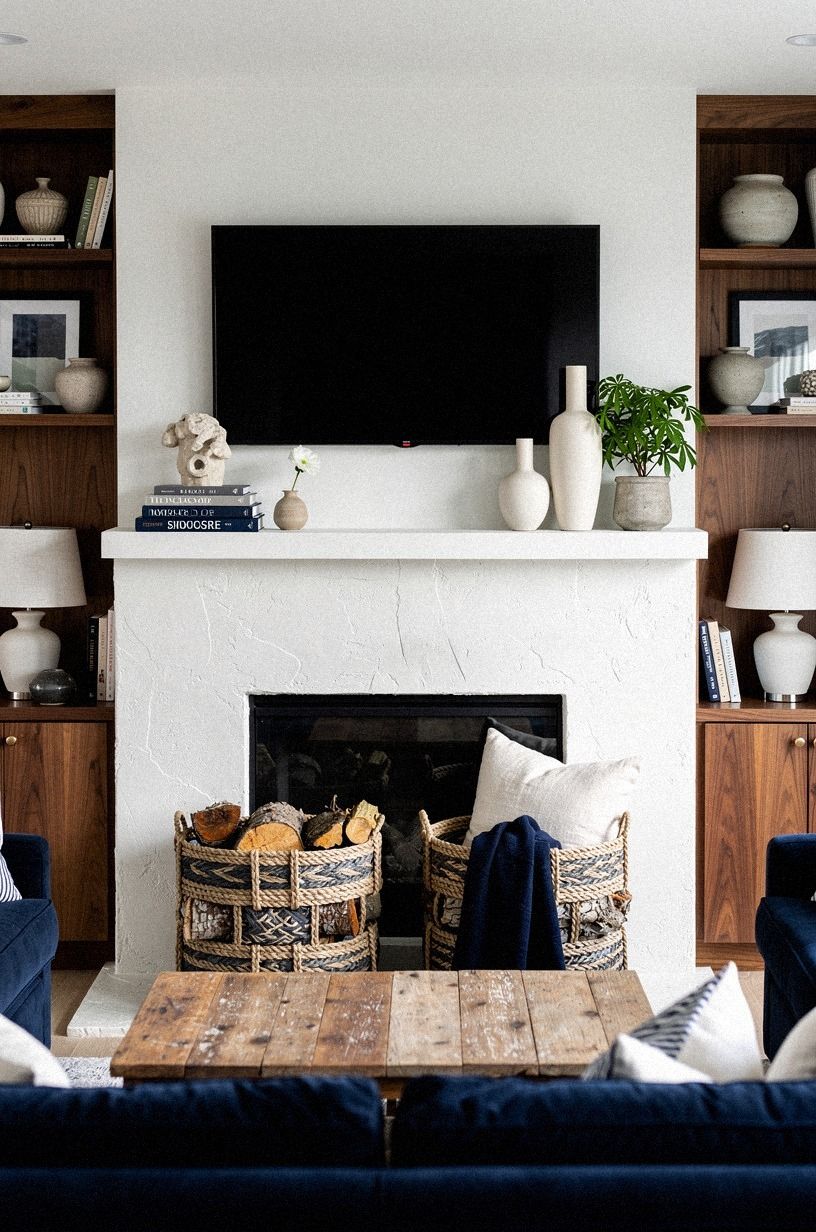
Woven baskets are one of the easiest ways to warm a fireplace wall without touching the TV at all. A pair of seagrass log baskets or one chunky basket near the surround adds natural volume low to the ground, and that softness matters when the wall already has hard stone and a hard screen. The baskets do for the hearth what the linen books do for the mantel, and that's the same principle: low, soft, horizontal.
Use them even if you don't burn wood every day. A basket holds logs, kindling, or a folded throw and earns its spot, and the hearth pulls the wall downward. Metal bins harden the wall again, so skip them unless the room is very industrial.
Most quality seagrass baskets run $45 to $130, and The Container Store stocks quiet woven versions at the smaller end of that range. If you're styling other low surfaces nearby, this console styling guide uses the same basket-plus-air balance.
15Float one sculptural branch beside the screen
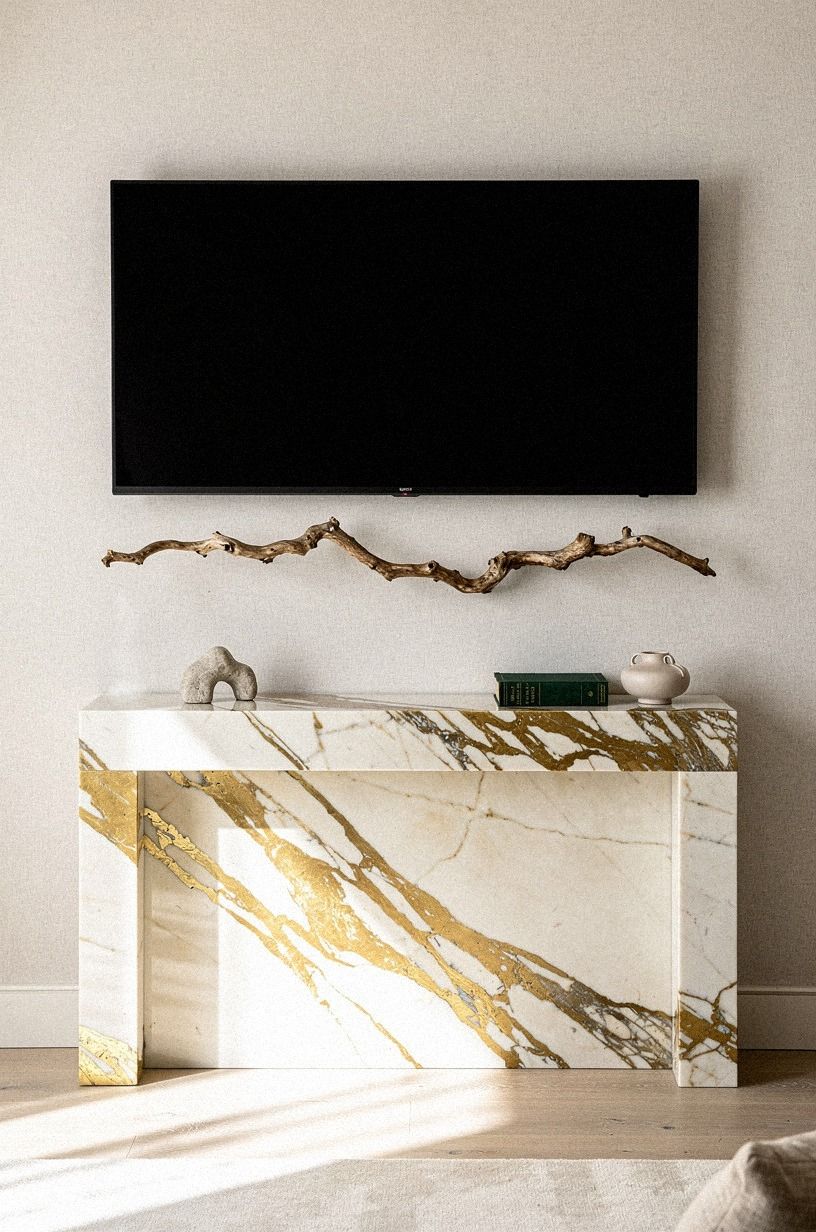
One branch is enough. A single sculptural olive branch or airy willow line beside the lower edge of the screen gives motion without making the shelf fluffy. On a mantel with pale oak or Calacatta marble, that one gesture does more than a whole bouquet ever will, and Florabundance ships dramatic stems at scale.
Set it so it rises just past the lower edge of the TV, not way above it. You want it to brush the composition, not stab through it.
I learned that the annoying way after a fuller arrangement that looked like hotel lobby styling. Olive branches at this scale cost $14 to $40 from a florist or market, and a faux olive stem from Afloral or West Elm runs $25 to $60 for a piece you can reuse.
The reading nook guide proves the same point with a single vertical gesture.
16Hide remotes inside a ribbed wood box
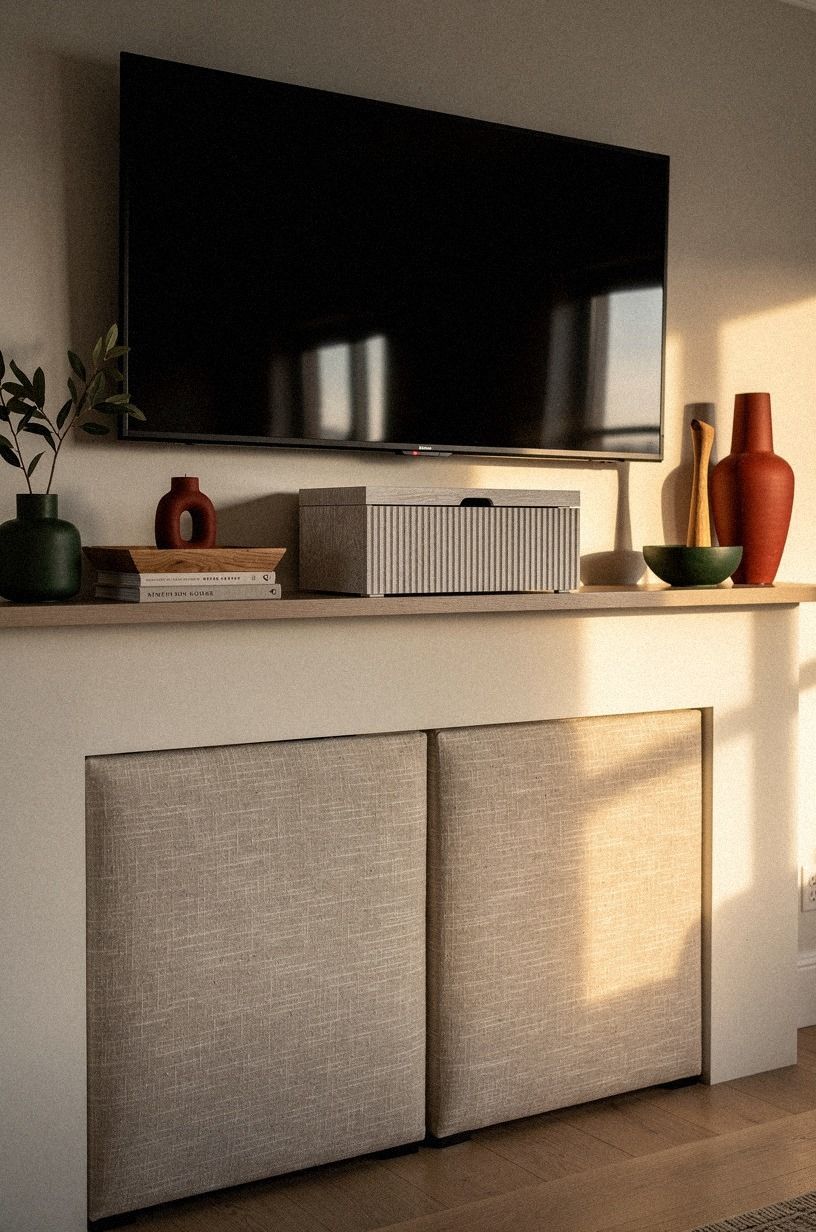
If the remotes stay visible, the TV still wins. A ribbed cerused white oak box solves that problem while repeating the material of the mantel below. The box is doing two jobs at once: hiding the everyday tech clutter, and echoing the warm wood note so the wall reads as one material story instead of three competing ones.
Center the box only if the bowl is offset. If the bowl is centered, slide the box aside so the shelf still has flow and the daily clutter stays out of sight.
Don't use a glossy black catchall here. It just creates a tiny second TV on the mantel, and that's the opposite of what you're trying to do.
Solid ribbed oak boxes run $80 to $200, and a well-made one is worth the spend because you will use it daily. The layered lighting guide is helpful for the same reason: fewer visible tech notes let the warm materials read better.
17Finish with warm lamps beside the fireplace
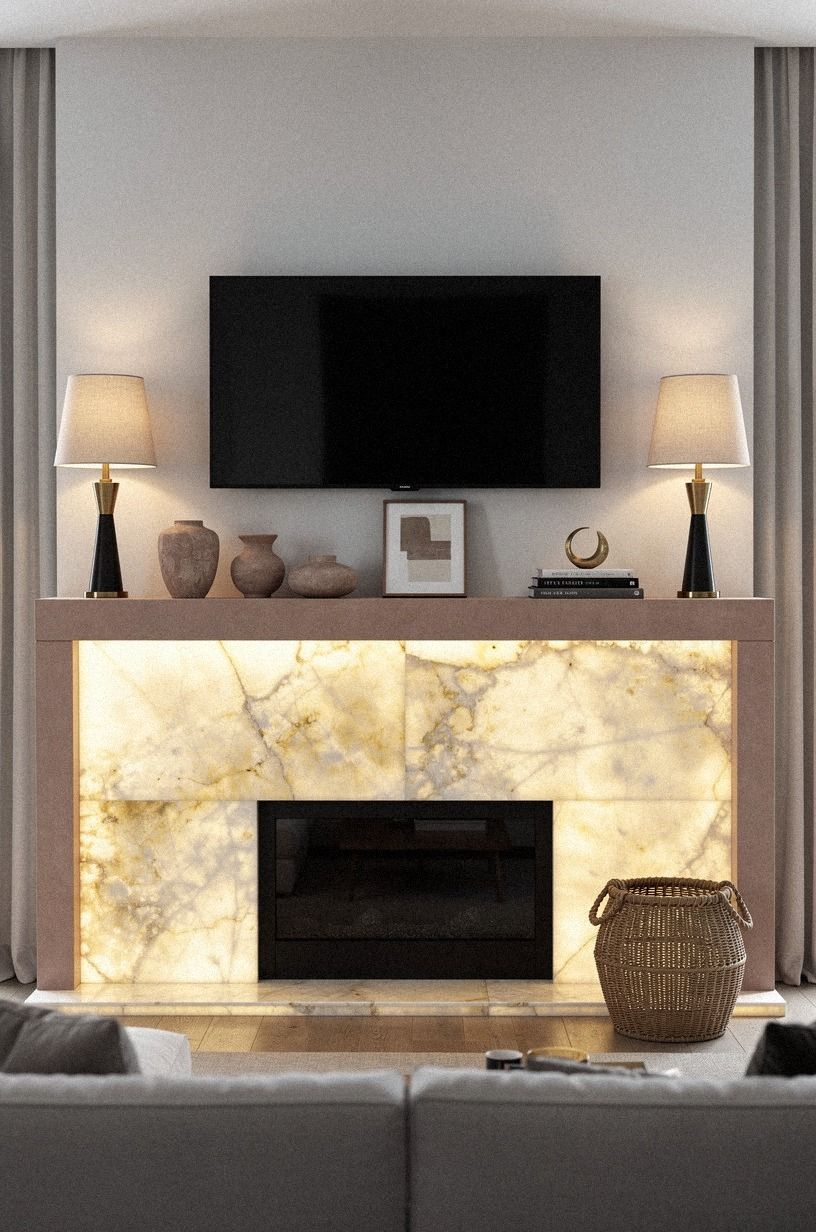
Lamps beside the fireplace tell your eye where the room lives after dark. Once you bring in warm pools of light near the hearth, the screen stops being the evening focal point by default. A lamp with translucent onyx does more for this wall than another shelf object ever will, and you'll feel that change every evening!
Place one lamp on a nearby console and another on a side table instead of jamming matching lamps against the surround. The goal is warm perimeter light, not showroom symmetry.
This is the step people skip, but it changes the room fast. Good linen-shade lamps run $120 to $280 each, and that's the entry price for a glow that feels like a room and not a hotel lobby.
If you're willing to source vintage, a single marble-base lamp from the 1970s in the same warm family costs $40 to $90 and looks more grounded than most new ones. This natural stone mantel guide pairs beautifully with the lamp-first approach, because stone and lamp glow are doing the same quiet work.
18Take down one object before you add anything else
This is the move nobody makes, and it's the move that fixes most walls. Once you've styled every prop, take one object off the shelf.
You'll feel the wall breathe, and you'll see what was actually doing the work. Most mantels look better with seven objects than with eight, and the difference is almost always the eighth.
I keep a small basket by the fireplace for overflow. If something doesn't earn its space after a week, it goes in.
The rule isn't minimalism for its own sake, it's pressure-testing every piece against the TV. If the prop is louder than the screen, it goes.
If it quiets the screen, it stays. You'll train your eye in a season, and you'll stop buying things that don't pass the test.
19Set the screen to a wallpaper when you're not watching
One last move, and it's the one that costs nothing. When the TV isn't in use, set it to a soft landscape wallpaper or a quiet photograph instead of leaving it on the black home screen.
The black rectangle is what makes the screen feel intrusive, and a muted image makes the TV behave like another piece of art on the wall. You'll notice the difference the moment you walk into the room at night!
Why does the Quiet-Field Rule work?
Because the TV is not only a styling problem. It's a contrast problem, and contrast is what costs you the room every time you decorate around a screen instead of styling a wall.
If the wall is light, the shelf is crowded, and the hearth is empty, the screen reads like a hard interruption. The Quiet-Field Rule is simple: lower the contrast around the TV, repeat its dark note in smaller doses, and let the warmer materials do the emotional work.
That is why mushroom paint, low art, tiny black frames, pale stone, and lamp glow help more than one giant centerpiece. You're not trying to out-decorate the screen.
You're giving it less reason to dominate. Most rooms settle into the right feel after $400 to $900 in edits, not $4,000 in new furniture.
That single line changes the conversation in any living room refresh, and you'll find it easier to talk about the room once the wall stops fighting you. For more architecture-first thinking, this built-in mantel guide is the closest cousin to this wall philosophy.
What did the Two-Weight Rule teach me after one bad mantel wall?
It taught me the shelf wasn't the real problem. I kept blaming the decor because decor is easy to move, easy to buy, and easy to fuss over.
But the wall kept looking wrong, and that's where the budget was leaking. The TV brought one kind of weight, hard, flat, black, reflective.
The mantel wanted another, oak grain, chalky paint, soft stone, linen, basket weave, brass. I was asking small objects to beat a rectangle built to command attention, and that's a fight the small objects will always lose.
Once I separated those two jobs, the wall got easier. The screen and firebox needed restraint. The room needed warmth.
That's it. I'd rather spend $400 on Benjamin Moore Revere Pewter HC-172, one good lamp, and a pair of woven baskets than keep collecting clever shelf fillers that don't earn their space, and that's the honest trade-off most rooms are asking you to make.
The other lesson is that the rest of the room either helps the TV wall or betrays it. If the rug is too small, if the metal finishes keep changing direction, or if the sofa palette ignores the fireplace, the screen feels louder.
When the room starts echoing the fireplace, warm wood, one brass family, soft neutrals, low art, the TV stops reading like an intruder. You'll feel the change within an evening, because the screen finally has company in the room instead of being the loudest thing in it.
The Questions Worth Answering First
What is the best setup for a small living room?
The best setup is a low landscape print, one tall vase, and shared dark notes repeated in small doses. This year-round mantel guide keeps the proportions disciplined, and you'll want to keep the mantel under six objects when the room is under 200 square feet.
Where can I buy the pieces on a budget?
Start with IKEA, Target Threshold, and Wayfair for baskets, lamps, frames, and boxes. Then check Facebook Marketplace or thrift stores for the vase and brass holders. Secondhand usually looks softer than a brand-new matching set, and you'll spend less for more character.
How much does the makeover cost?
Most versions land around $100 to $300 if you repaint, add art, and restyle what you already own. The wall doesn't need new furniture, and you'll be surprised how far editing alone takes you.
Can I do this on a tight budget?
Yes. Editing beats shopping, and it's the cheapest upgrade in the whole room.
Take everything off the mantel first, then put back only what earns its space. You'll see the wall change before you spend a dollar.
Is it worth it in a small space?
Yes, because small rooms punish visual noise fast, and a calmer mantel wall makes the whole seating zone feel more settled. You'll get more out of restraint in a small room than you'd ever get from buying one more thing.
Is this a good idea for a rental?
Yes, because most of the best moves are reversible. Paint, lean art, baskets, lamps, and remote boxes all come off without a trace when you move, and that's the kind of styling work any renter can do.
Start with the Wall-Blend Rule over more decor
If I had to pick one, I'd start with painting the wall a soft mushroom tone. You can't calm a hard black screen with objects alone, and you'll waste your budget trying.
Get the field right first. Then the mantel styling lands, and the room finally feels like yours instead of the TV's.