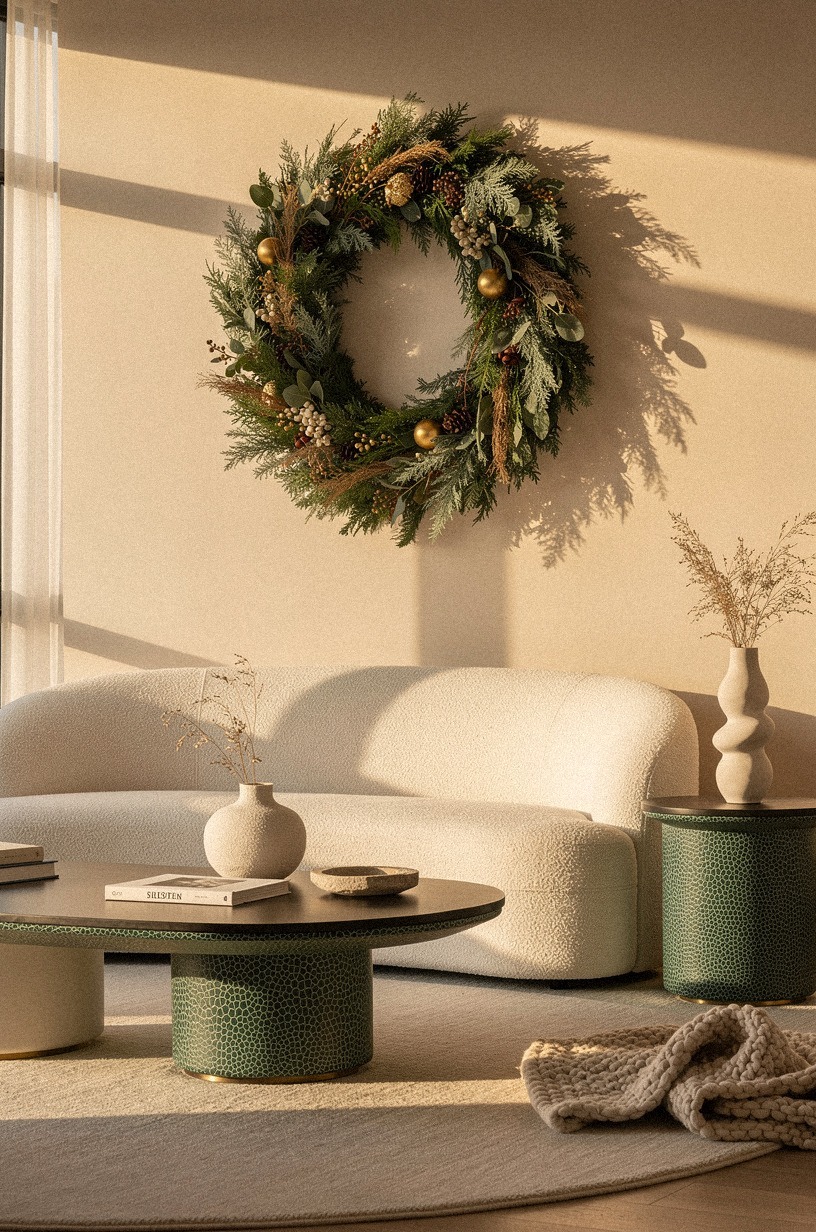
How to Anchor Your Fall Mantel Display With One Statement Wreath
26 june 2026The wreath is doing all the heavy lifting. Everything else on your mantel just gets out of its way. I've styled about a dozen fall mantels over the years, and the ones that feel like a magazine spread almost always start with one big, intentional wreath. Not five small things. One anchor piece, then the supporting cast. Here's the step-by-step: how to choose that wreath, hang it where it works in your room, and build a fall mantel display around it without the whole thing reading as craft-store chaos. If your wall behind the mantel is already a challenge, our statement wall decor guide will help you choose the right scale before you buy anything.
- Start With One Big, Intentional Wreath
- Pick the Spot Before You Hang Anything
- Use a Command Strip, Not a Nail (Especially in a Rental)
- Layer a Garland Across the Mantel First
- Anchor With a Pair of Tall Candlesticks
- Add a Stack of Vintage-Look Books on One Side
- Place Two Small Objects in the Negative Space
- Pick Two Tones, Not Three
- Should You Hang the Wreath Off-Center on an Asymmetric Mantel?
- Light It From Below, Not Above
- Build the Filler Around the Wreath, Not Around the Mantel
- Use Real or Faux Stems in the Bud Vases
- Add One Piece of Vertical Texture
- Should You Add a Mirror if the Wall Is Bare?
- Skip the Scented Candles on the Mantel
- What Things Cost (Real Numbers, No Inflated Ranges)
- Refresh Mid-Season Without Rebuilding It
- The Magnolia Home Two-Wood Rule (Keep Your Materials Honest)
1Start With One Big, Intentional Wreath
Skip the 18-inch door wreath. For a mantel anchor you want something between 22 and 30 inches across, ideally eucalyptus, preserved magnolia, or a faux maple-leaf base.
The size matters because your mantel is wide and the wreath has to compete with the wall behind it, not vanish into it. If you're starting from a totally blank mantel, our fall mantel styling guide walks through the whole setup from zero, and our cozy fireplace styling guide covers what to do when the hearth itself needs love too.
I've bought the cheap grapevine wreaths from the big-box craft aisle twice and both sagged by week three. Spend the $35 to $60 here.
Target's Threshold preserved eucalyptus wreath is the move if you want real-looking foliage without the maintenance of fresh. If you've got the budget, Magnolia Home by Joanna Gaines wreaths at Walmart run $45 to $90 and hold shape through November.
And the thing nobody tells you: faux doesn't mean ugly anymore. Most of the best-looking fall mantels I see on Pinterest run faux for the simple reason that real eucalyptus dries out and sheds brown leaves on your hearth by week two.
2Pick the Spot Before You Hang Anything

Measure your mantel. Then measure the wall above it. Then stand where you'll view the room from (usually the sofa) and picture the wreath at three heights: centered on the mantel, centered on the wall above the mantel, or offset slightly above one end.
The classic move is 6 to 12 inches above the mantel surface, dead center. That's safe. But if your mantel is below a tall window or under a TV, you'll want the wreath to sit where your eye lands, not where the math says it goes.
Don't hang it flush against the wall art if there's a piece there. Layering a wreath over a frame makes both look like they're fighting for the same square foot. If you've got a mirror, try anchoring the wreath directly on the mirror's center.
It doubles the visual weight without doubling the cost. If your mantel sits inside a tricky alcove, our alcove shelving styling guide covers the geometry when your walls don't behave.
3Use a Command Strip, Not a Nail (Especially in a Rental)
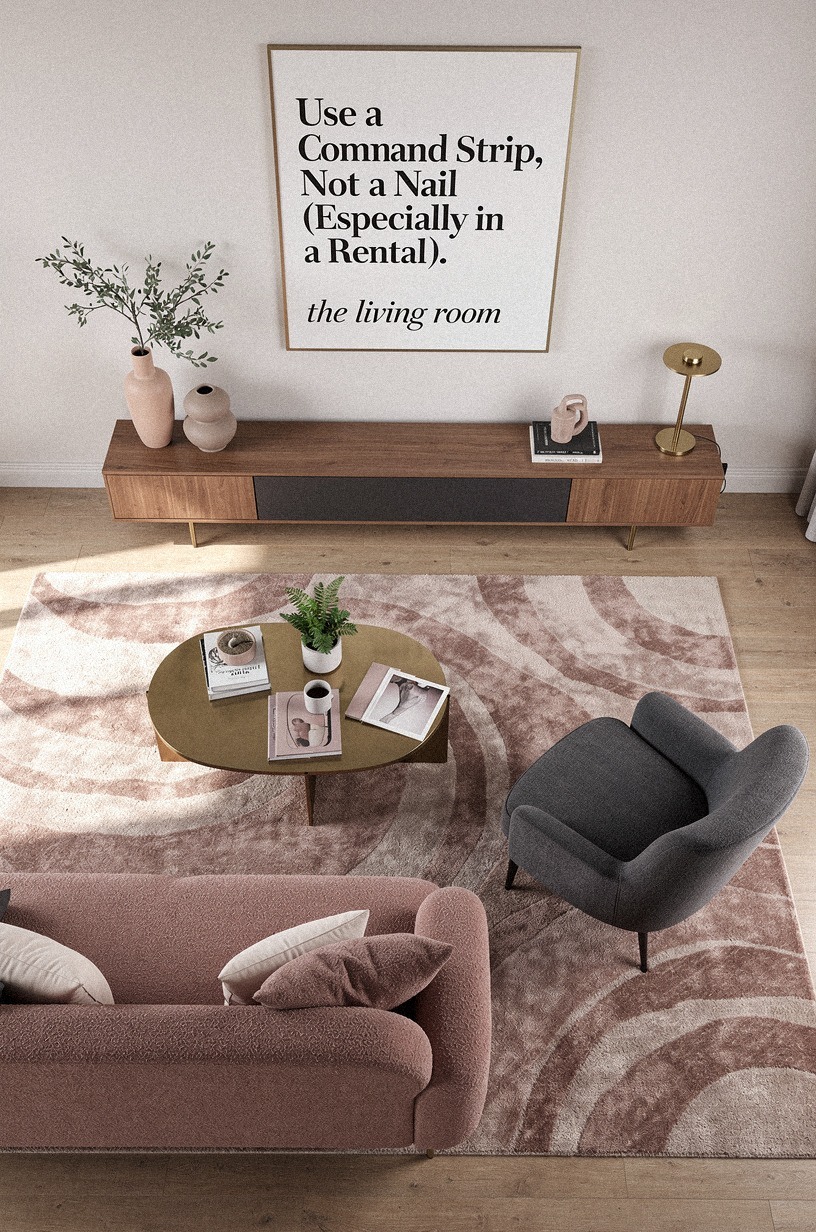
I've punched too many holes in drywall trying to "just test it here." Use a 3M Command Large Picture Hanging Strip rated for the wreath weight. One strip holds up to about 5 pounds, and most fall wreaths weigh between 1 and 3 pounds even with the heavier magnolia bases.
If your wreath has a thick grapevine back and the strip won't sit flat, screw a small sawtooth hanger into the wreath frame, then hang the whole thing from a single removable hook. Command Hooks in medium weight class work for wreaths up to 7.5 pounds and pull off clean with a hair dryer and a plastic scraper.
No spackle. No landlord email.
For more damage-free styling ideas that renters swear by, our renter-friendly wall decor guide covers picture strips, hooks, and tension rods for every room.
The rental-friendly version of this whole project is what makes it accessible to anyone in an apartment. There is no reason to drill.
4Layer a Garland Across the Mantel First
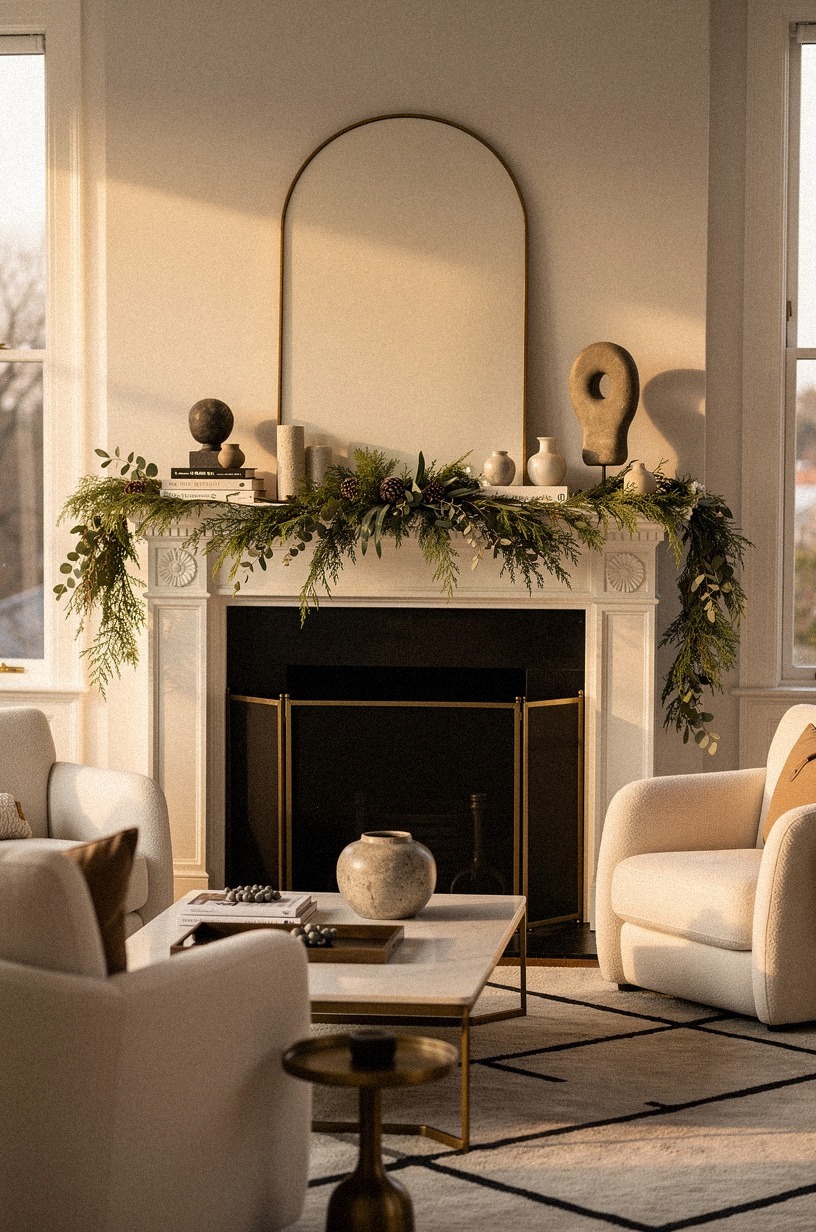
A wreath alone can read as a wall decoration. To make it feel like part of your mantel, you need a garland running the full length underneath it. Drape it in soft swoops so it puddles slightly at each end rather than laying flat.
If you are building out a whole fall vignette and want the garland to read as the second layer of the composition, our layered mantel styling guide shows how designers build that top-to-bottom visual weight.
For a fall look, faux eucalyptus mixed with mini pumpkins or a preserved oak leaf garland works. Target's Wondershop garland runs about $12 to $25 for 6 feet, which is enough for most mantels.
If you want real, fresh eucalyptus smells incredible but dries to a brittle tan in about three weeks. Plan to swap it mid-season or accept the patina.
The move is the swoop. Pull the garland forward at the corners so it spills over your mantel edge by 2 to 3 inches.
A flat garland looks like a vine someone forgot to remove. A swooped garland looks lived-in and intentional.
5Anchor With a Pair of Tall Candlesticks
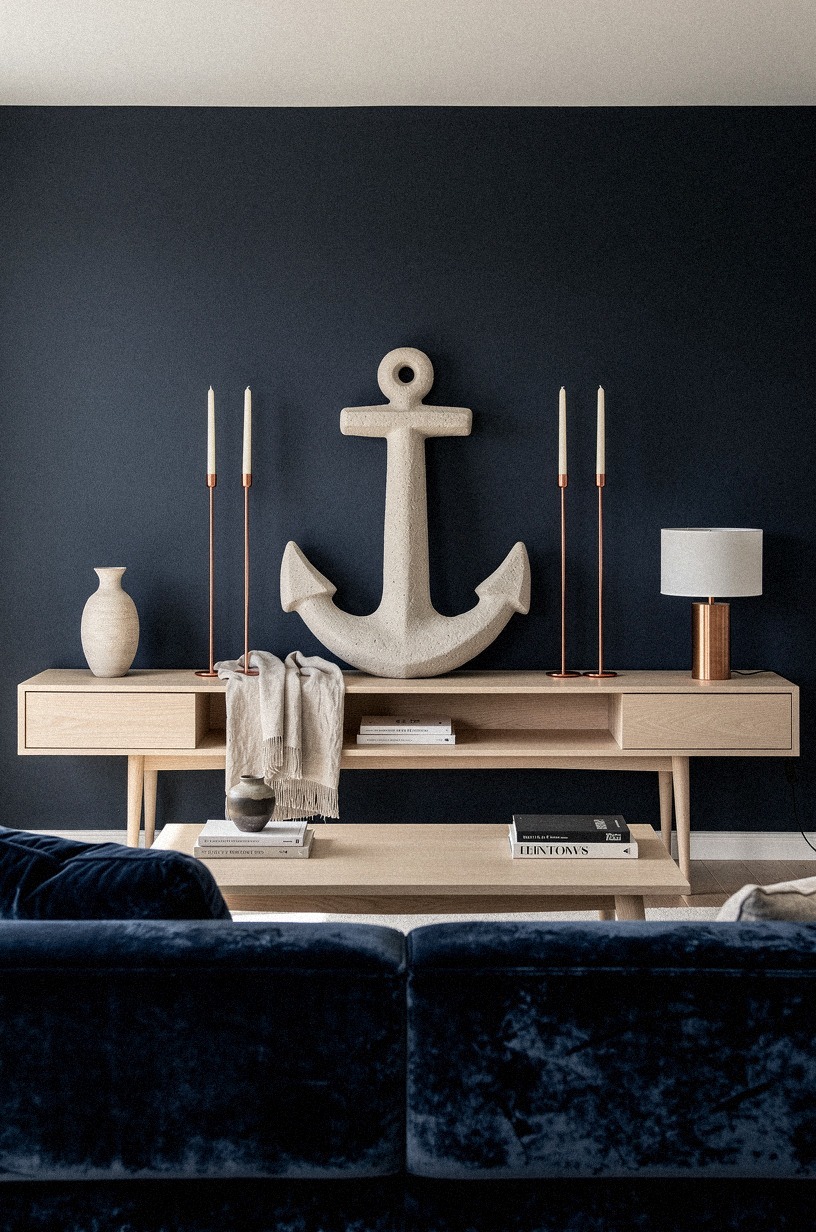
Candlesticks frame the wreath and give your eye two vertical stops on either side of it. They also let you light the whole display without overhead glare.
Unlacquered brass is the move here because it picks up the warm tones in a fall wreath and develops a soft patina over the season. A pair of 10 to 12-inch taper holders from CB2 or West Elm runs $40 to $90 a pair. If you're watching spend, IKEA VAPPEBY in brass-tone is about $15 a pair and looks better than the price suggests.
Skip the chunky pillar candles for the mantel. Tapers read taller, leaner, and they don't dwarf the wreath.
Go with unscented beeswax or soy tapers in cream or rust. And please don't light them unless you are home.
The insurance paperwork isn't worth the vibe.
If you're choosing between beeswax and soy, our best taper candles for the home guide compares burn time, drip, and scent throw across the brands you'll actually find on shelves.
6Add a Stack of Vintage-Look Books on One Side
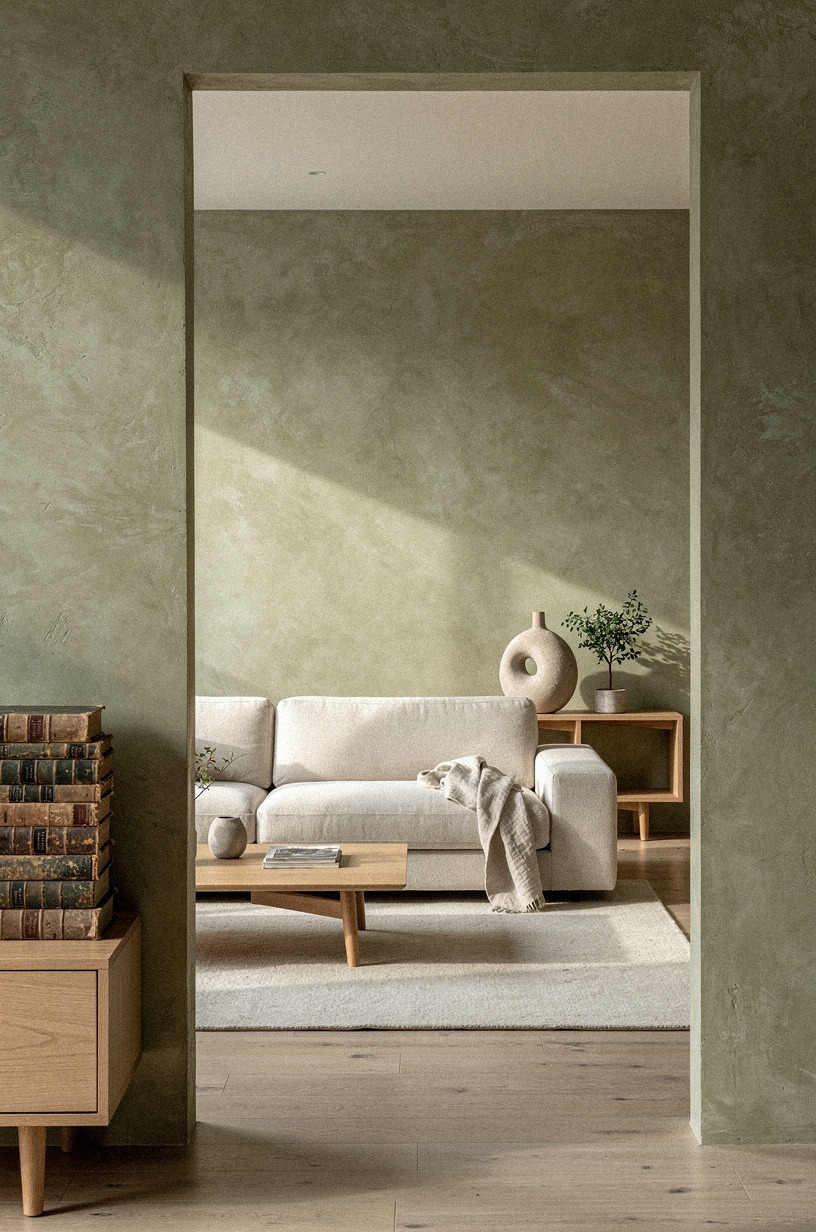
Books give your mantel weight. They sit low, which contrasts the tall candlesticks and balances the visual triangle with the wreath at the top.
Pull three to five books in warm neutrals, cream linen covers, or leather-bound spines with gilding. Stack two flat, then place one upright on top leaning against the wall. Avoid bright spines.
Nothing says "I bought this for the photo" like a fluorescent teal book cover under a moody wreath.
7Place Two Small Objects in the Negative Space
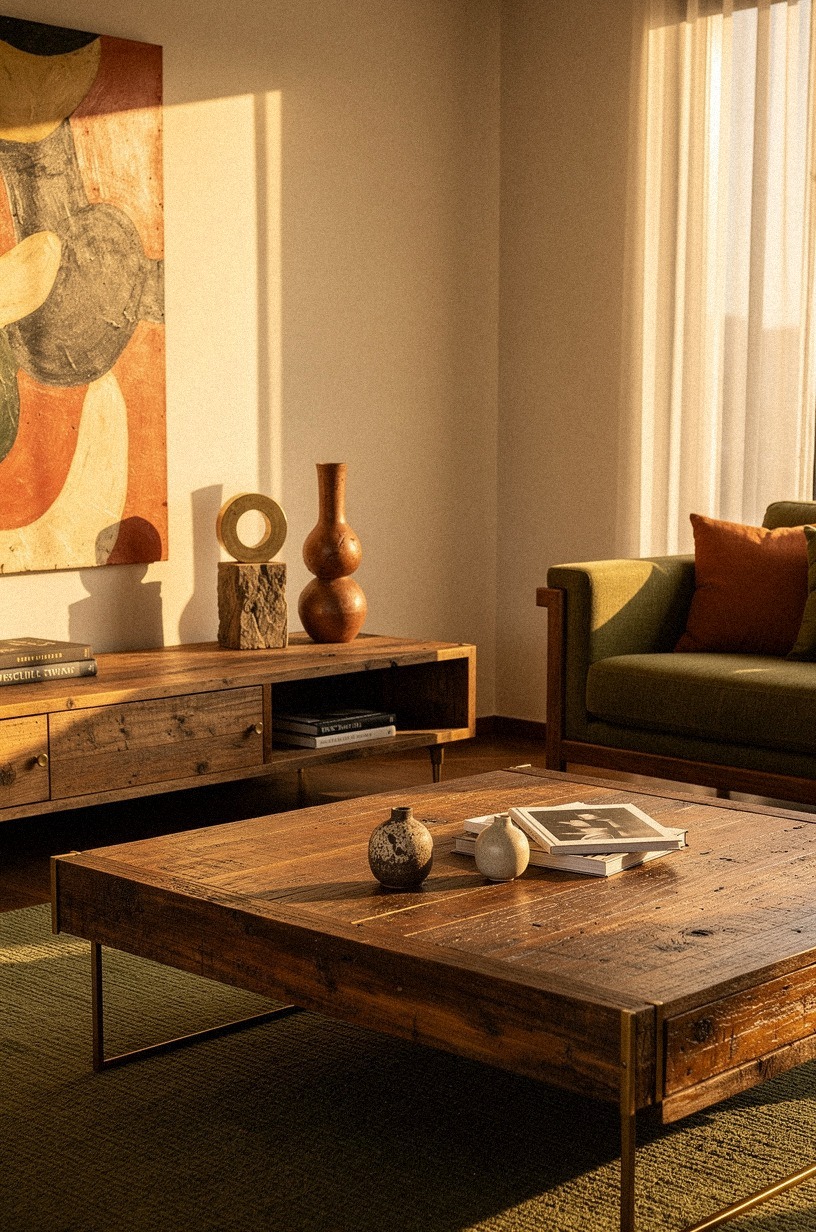
Negative space is the part that makes everything else look intentional. If your mantel is crowded, the wreath disappears. If it's empty, the wreath looks lonely.
The rule I keep coming back to: one small object on each side, low and quiet. A small ceramic pumpkin, a brass bell, a tiny stack of vintage postcards, a hand-thrown bud vase with one dried stem. Anything under 6 inches tall.
I've used Hearth & Hand with Magnolia bud vases from Target for this and they're perfect for the price ($8 to $14). West Elm's smaller ceramics are gorgeous but overkill at this scale.
The point is your eye moves from the wreath down to the candle, then across to the book stack, then lands on something small enough to feel like a discovery. For more on the rule of three in small-object styling, our vignette styling rules guide breaks down exactly how designers layer ceramic objects without crowding a surface.
8Pick Two Tones, Not Three
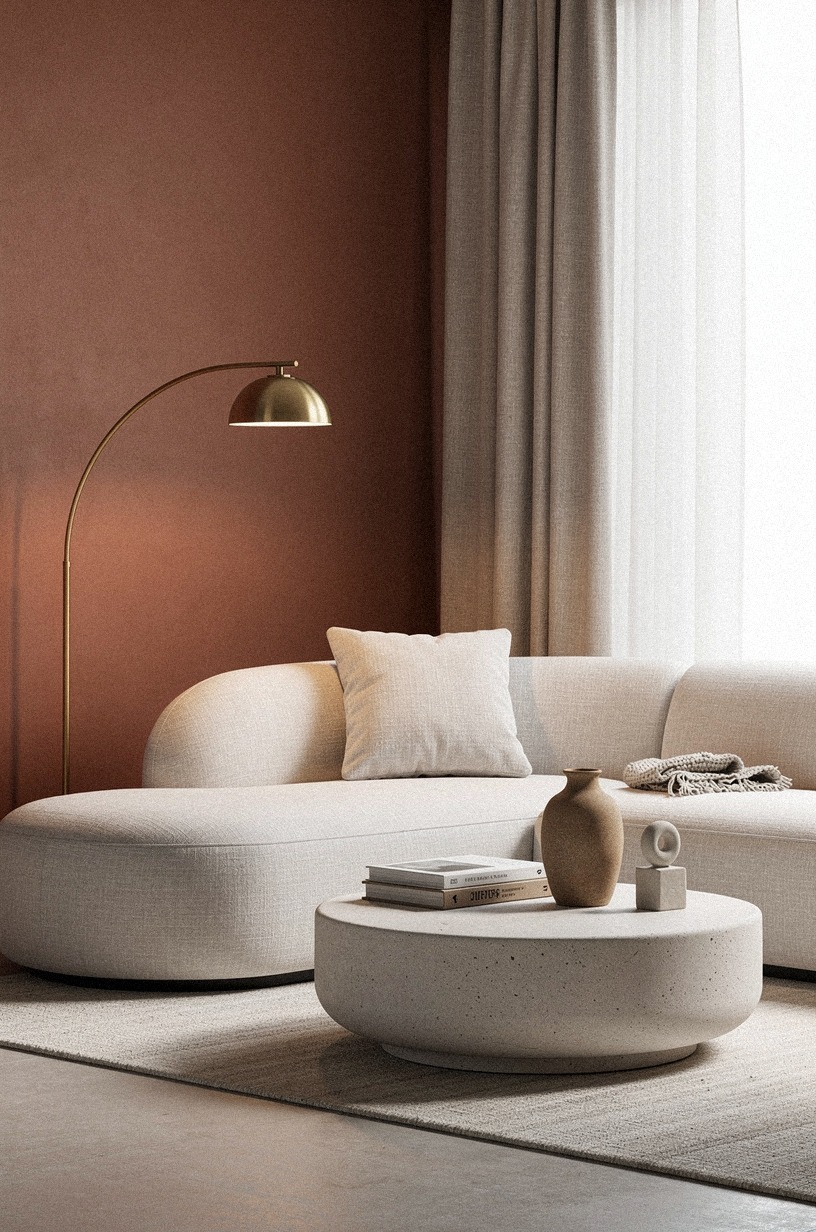
Most fall mantels fail because there are too many colors competing. Pick two and commit.
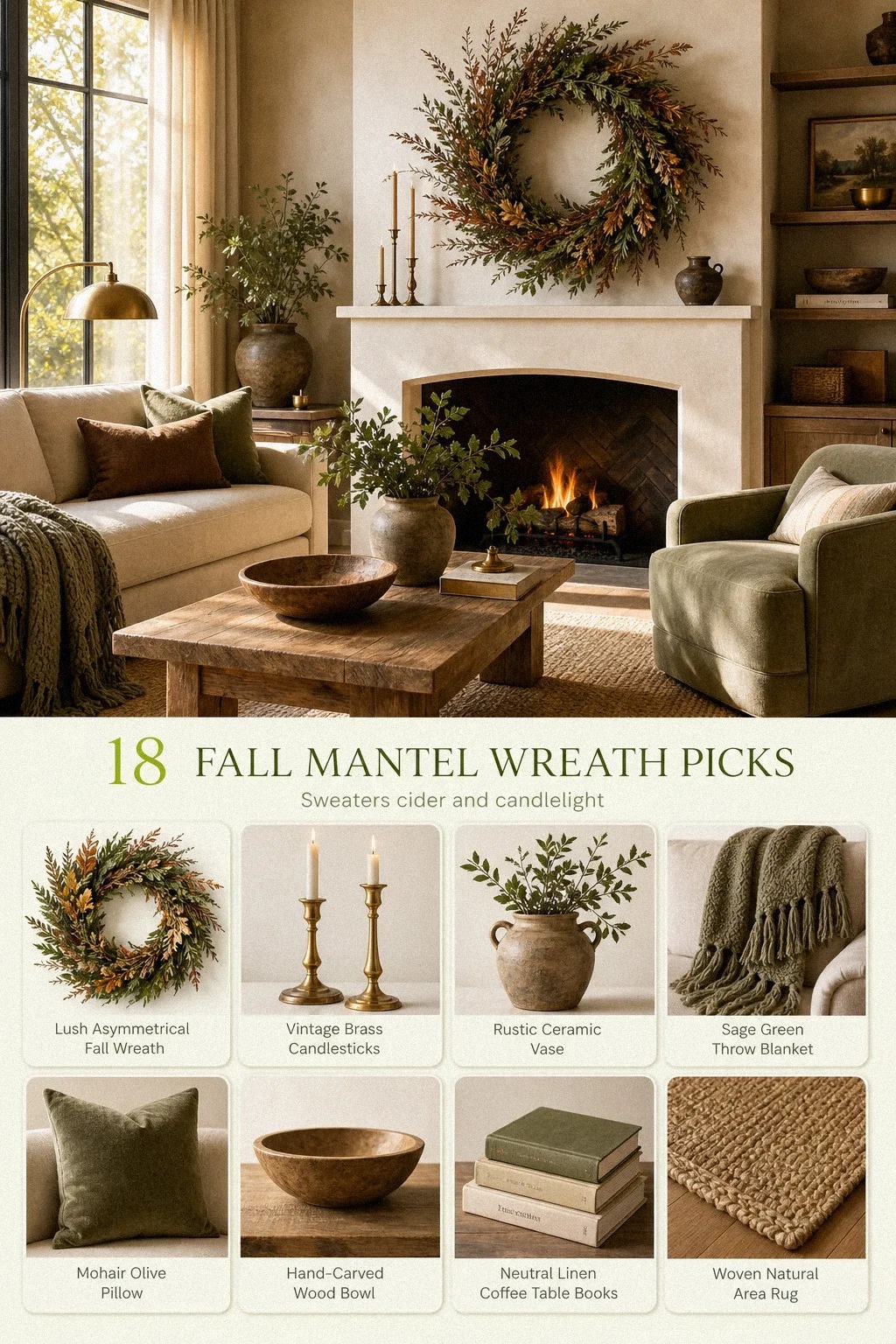
For fall, clay and aged brass is a hard combo to beat: both warm, both grounding, both forgiving when the afternoon light shifts through the room. Linen and aged brass reads lighter and airier if your room runs cool or your wall behind the mantel is already a strong color.
The third tone always shows up by accident (a candle, a book spine, a throw on the chair behind you) and once it's there you can't unsee it. Two tones, applied across the wreath foliage, the candle color, the book covers, and the small objects, reads as designed.
Three reads as collected.
9Should You Hang the Wreath Off-Center on an Asymmetric Mantel?
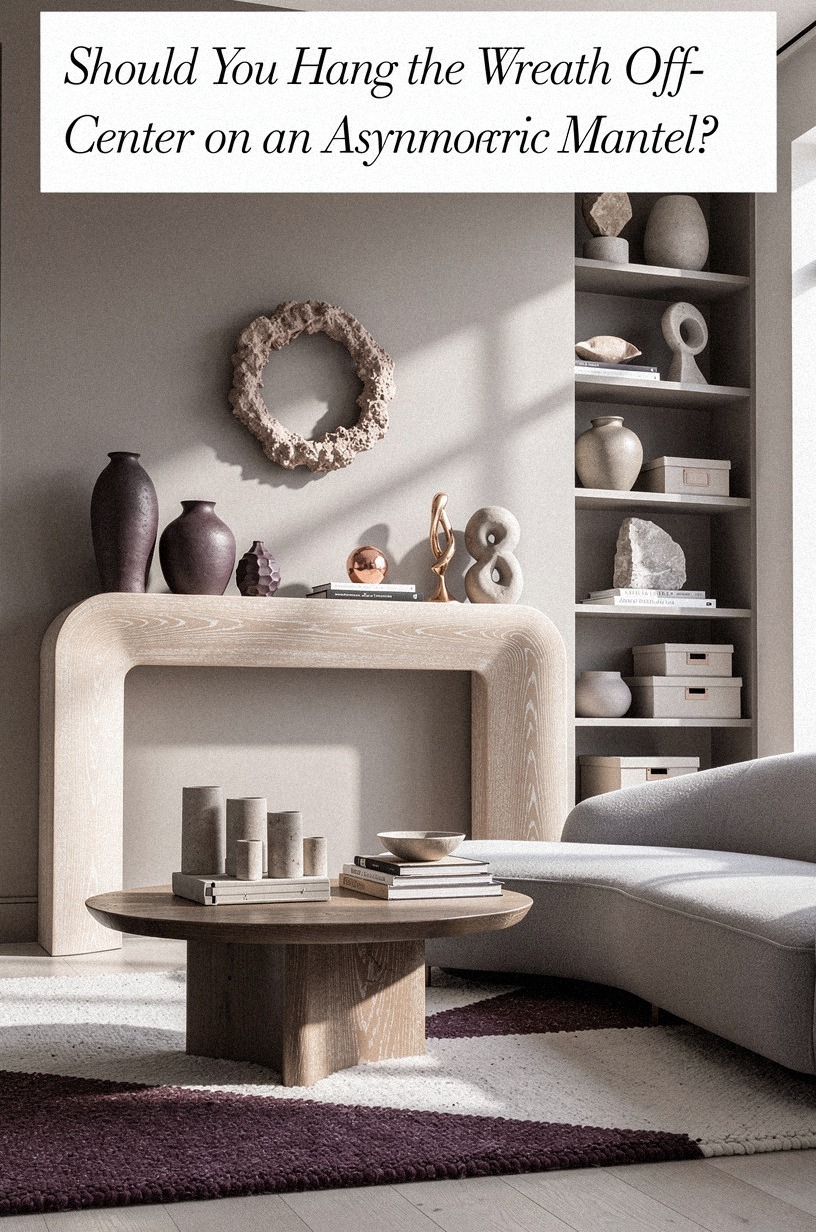
Not every mantel is centered on the wall. If yours sits to one side because of a window, doorway, or built-in, hang the wreath where the mantel visually begins, not where the wall measurement says it should go.
This is a habit I picked up watching designers shoot rooms for magazines. They photograph mantels at angles, and the wreath almost always lands a third of the way across rather than dead center.
It looks more natural because your eye doesn't look at the geometric middle of a mantel anyway. It looks at the part that's lit, or the part closest to the seating.
Try it. Take a photo with the wreath centered, then a photo with it offset. Move the wreath to wherever the photo looks best, not where the tape measure says it should be.
If you're working with a mantel that's already off-center on the wall, our asymmetric wall layout guide covers how to balance the whole wall composition when one side fights the other.
10Light It From Below, Not Above
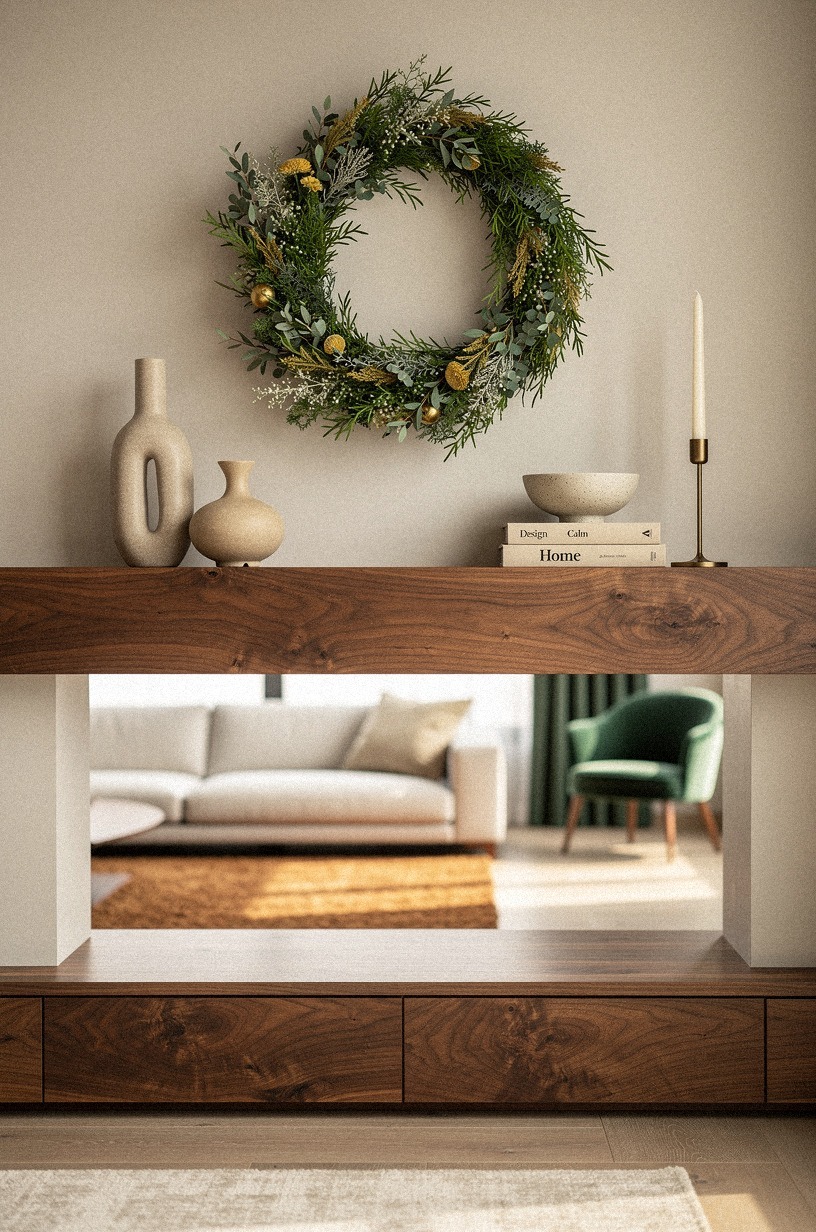
Lighting is the part everyone skips and then wonders why the mantel looks flat in photos. Mount a small picture light about 4 to 6 inches above the wreath, angled down at roughly 30 degrees, and the whole display comes alive. The light rakes across the texture in the foliage and catches any shagreen-wrapped boxes, picture frames, or decorative objects on the mantel surface, giving them a subtle shimmer you won't get from overhead ceiling light.
Warm 2700K bulbs only. Anything cooler reads as office lighting and makes the brass look green and the cream look gray. Amazon Basics picture lights in brass or black run $25 to $45, install in ten minutes, and plug into a standard outlet behind the mantel. If you want a hardwired look without an electrician, a cordless rechargeable picture light from Hausmont or SEEYE runs $35 to $70 and sits clean against the wall with no visible wire.
The other move: put a small warm-white uplight on the hearth, aimed at the wall behind the wreath. It bounces back through the foliage and doubles the glow without adding a visible fixture.
11Build the Filler Around the Wreath, Not Around the Mantel
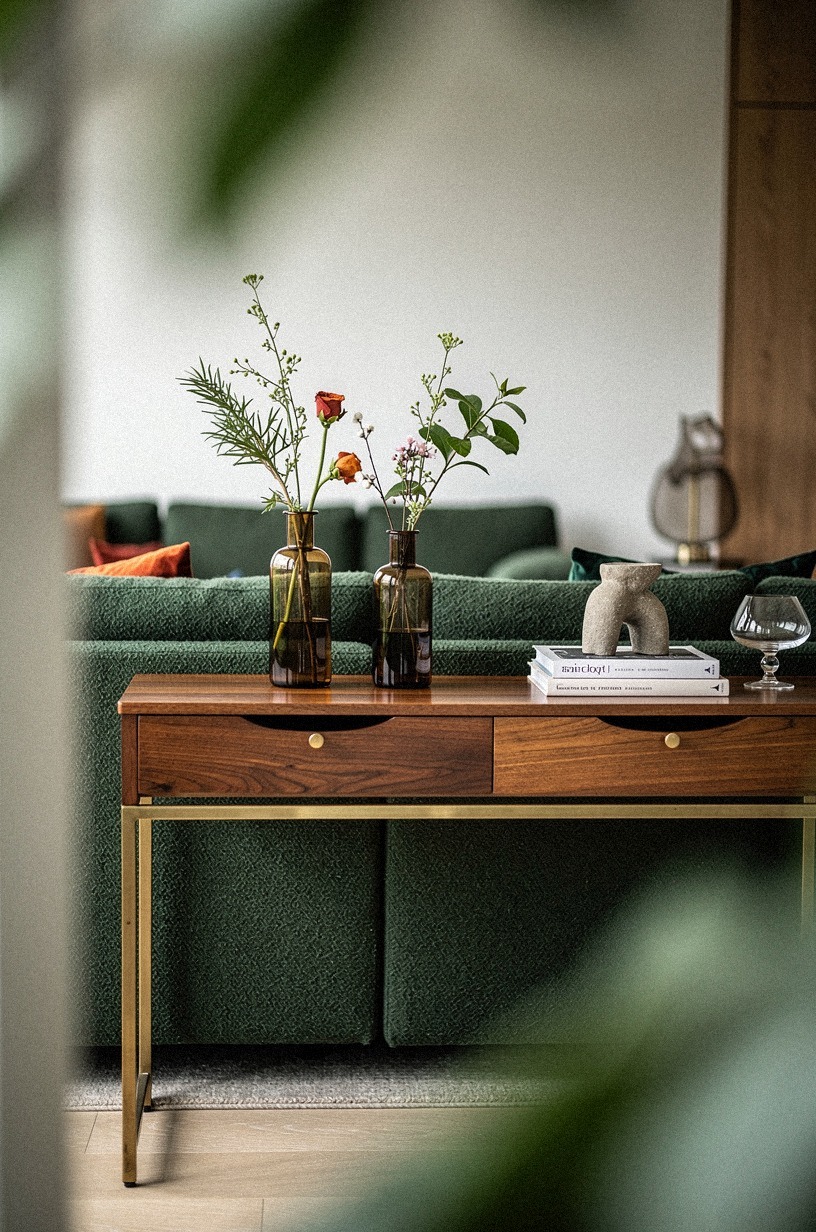
Beginners start by styling the mantel and try to fit the wreath in. Pros start with the wreath and build the styling around it.
The wreath is the largest single object. Everything else has to clear its visual path.
That means the garland stays below it, the candles stay to its sides, and the books and small objects stay closer to your mantel surface. If something is competing with the wreath for attention at the same height, move it down or remove it.
This is why magazine fall mantels look calm. They've removed three or four things you would have added.
12Use Real or Faux Stems in the Bud Vases
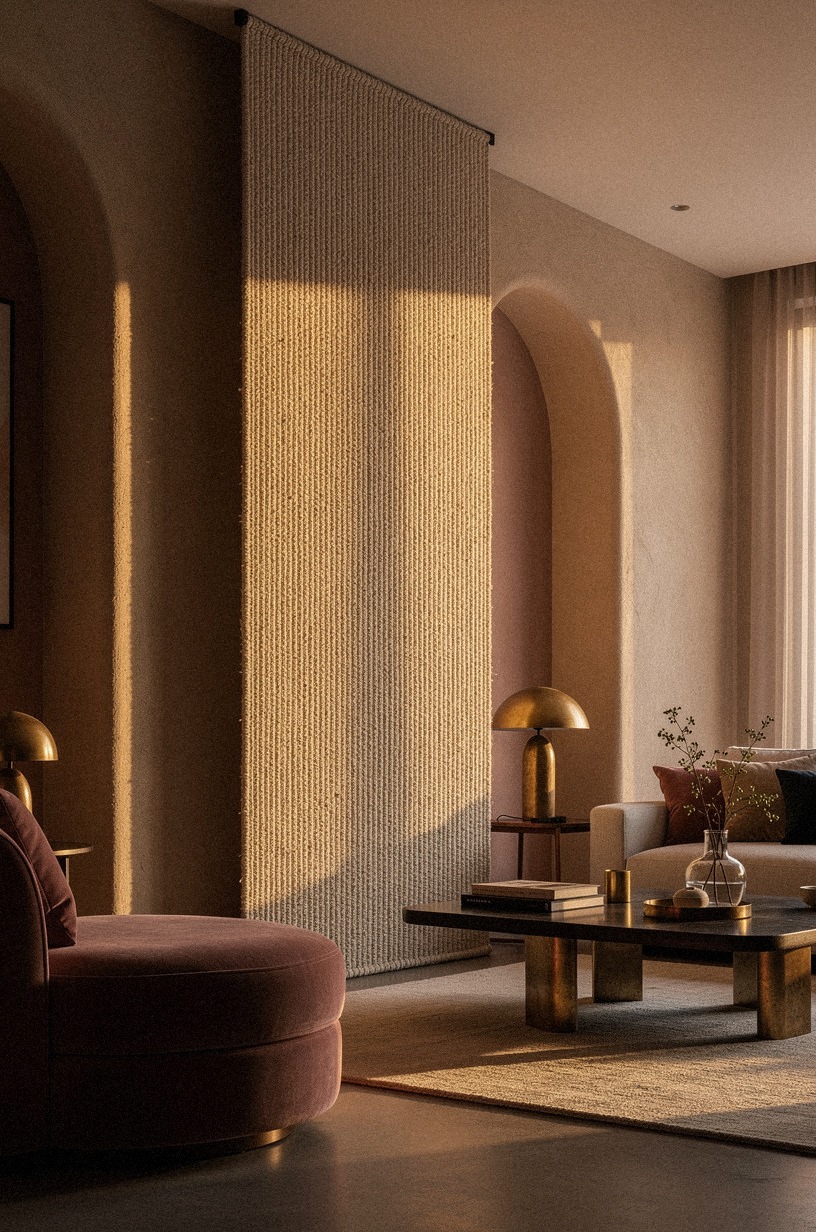
A bud vase with nothing in it reads as "I forgot to put flowers here." A bud vase with a single dried wheat stem, preserved thistle, or faux maple leaf branch reads as styled.
I keep a small jar of dried stems from the grocery store floral section for exactly this. Trader Joe's carries preserved eucalyptus bunches for about $4 and a single stem in a 4-inch vase looks intentional. If you don't have a TJ's near you, Michaels sells dried wheat bundles in the floral section for $3 to $6.
Don't overstuff the vases. One stem per vase.
Two max. Anything more and you've turned a quiet detail into a centerpiece.
Our dried stem arrangement guide shows the few stems that hold up through a full fall season without shattering into dust by Halloween.
13Add One Piece of Vertical Texture
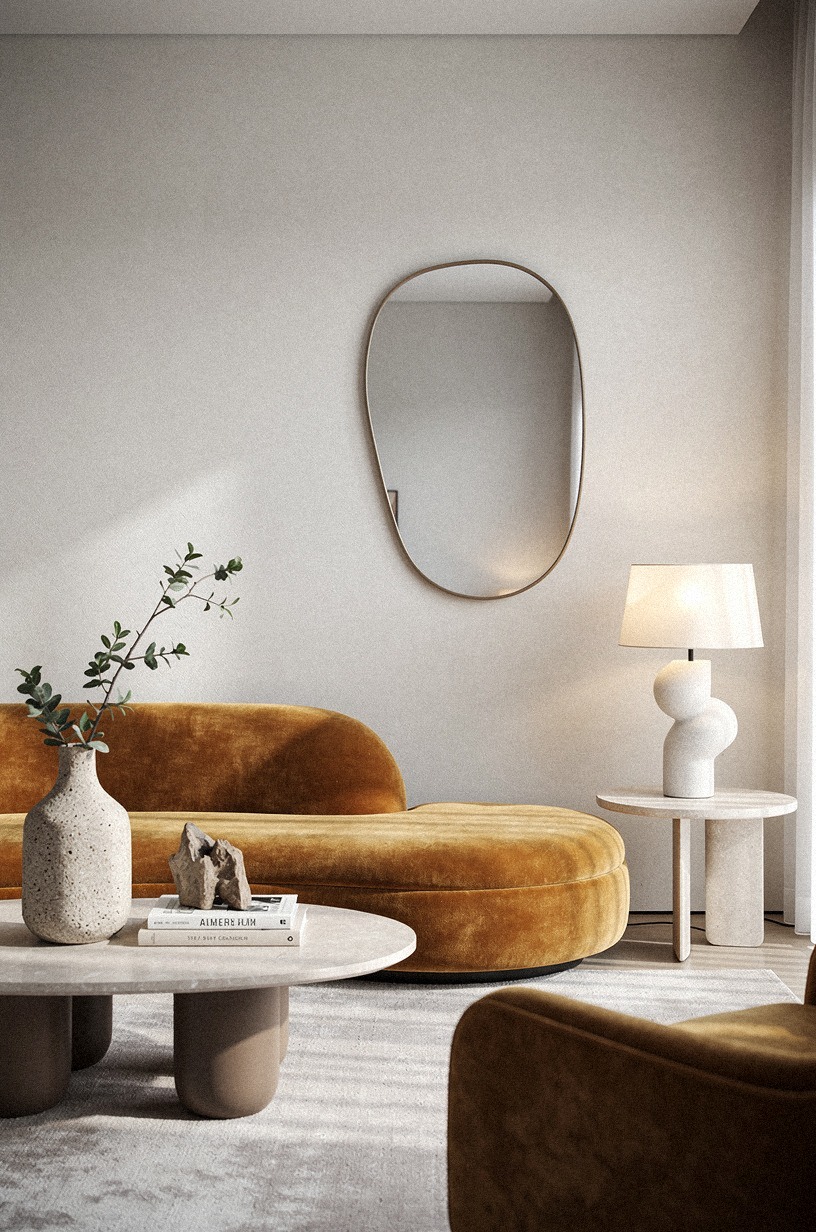
Wreaths are mostly round. Mantels are mostly horizontal. To keep your eye moving, you need one vertical element somewhere in the display.
A pair of tall candlesticks does this. So does a single dried branch in a tall floor vase next to the fireplace.
Olive branches are perfect because they're neutral and they don't scream "fall," they just feel seasonal. Faux olive branches from Target or IKEA run $8 to $20 and last forever.
I tried dried pampas grass once and it shed for a month. Don't.
14Should You Add a Mirror if the Wall Is Bare?
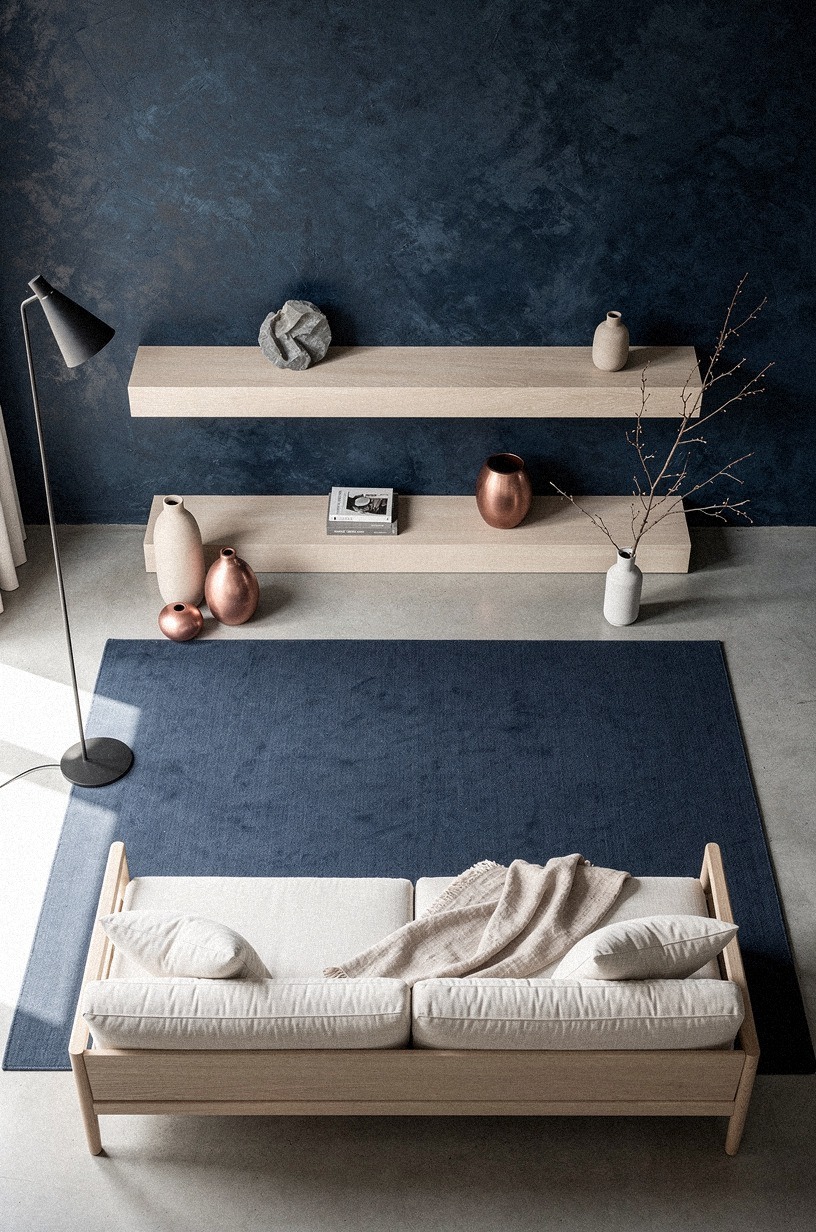
If your mantel sits under an empty wall with no art, fix it once and never think about it again. A simple round or arched mirror above the mantel doubles the wreath's visual impact and bounces warm light around the room.
The mirror doesn't have to match the wreath. It just has to be larger than the wreath so the wreath reads as in front of it, not on top of it. A 30-inch mirror with a 24-inch wreath is the safe ratio.
West Elm, CB2, and Article all carry arched mirrors in the $200 to $500 range. If you want a dupe, IKEA LINDBYN in the gold finish is about $80 and looks far more expensive than it is.
The frame is thin, which is exactly what you want under a textured wreath. For the math on mirror-to-wreath ratios (and what to skip when the proportions don't work), our mantel mirror size guide has the full chart.
15Skip the Scented Candles on the Mantel
I love a good Voluspa or Boy Smells candle as much as anyone. But on the mantel, scented candles compete with the wreath. Your nose adapts to fragrance in about fifteen minutes, which means you stop smelling it while your guests haven't, and the whole room starts reading like a candle shop.
Worse, scent throws off the wreath itself. A strongly fragranced candle next to natural or faux foliage makes the greenery smell fake, and your eye picks up on that mismatch even if you can't name it.
Keep your scented candles in the bathroom, the bedroom, or the entryway where they're the star. On the mantel, run unscented ivory tapers in brass or copper holders and let the room breathe.
The whole display reads more expensive when nothing is fighting for attention.
16What Things Cost (Real Numbers, No Inflated Ranges)
Because "it depends" is useless, here's what a real fall mantel anchor project runs in 2026. These are US averages across mid-range retailers. Adjust up or down based on your zip code and your patience for sales.
The Budget tier is genuinely enough. I've styled mantels that landed on the cover of home magazines that came in under $150 total. The High tier is mostly the mirror, which you will use every season for years.
If you're weighing the trade-offs between tiers, our budget vs splurge home decor guide spells out the exact lines where spending more shows, and where it doesn't.
17Refresh Mid-Season Without Rebuilding It
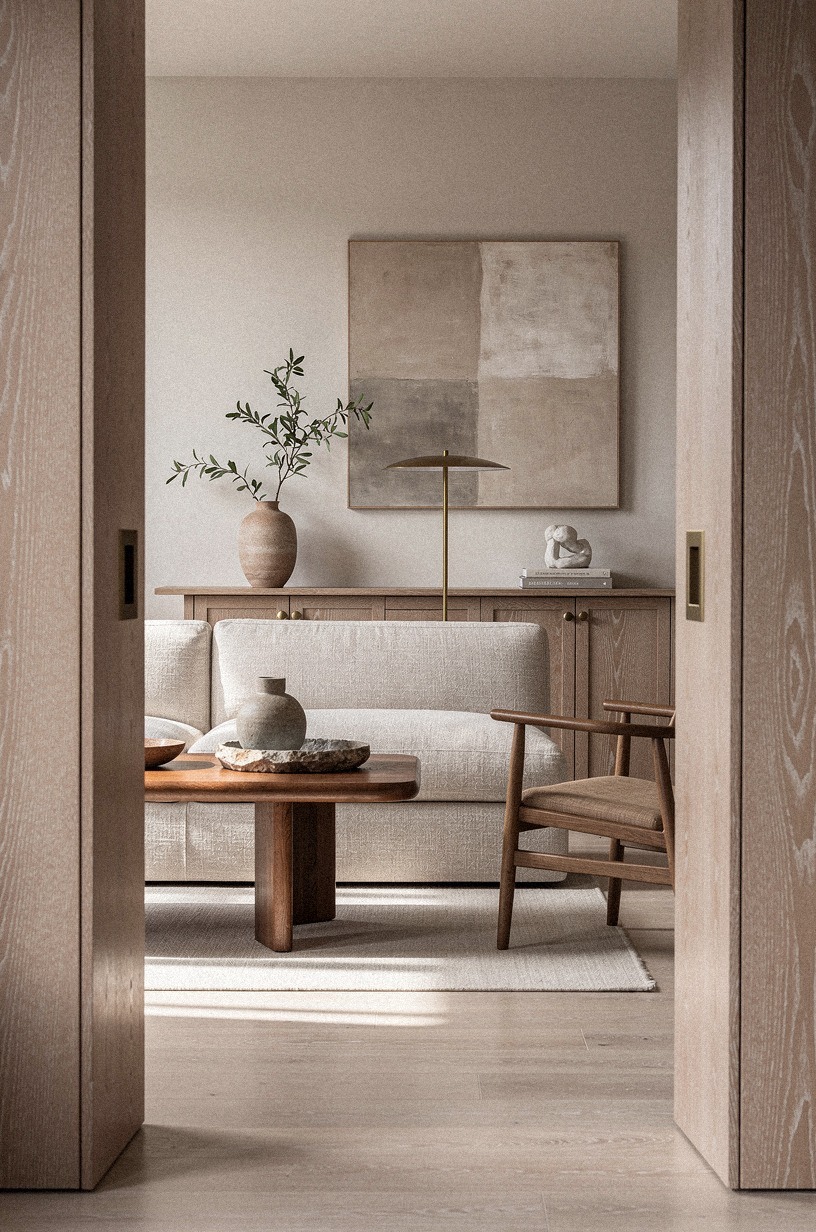
By week four, the garland has shifted. The candles have leaned.
The small objects have migrated. Don't rebuild it.
Refresh it.
Pull the garland down, fluff the leaves, re-drape. Push the candles back into upright position.
Rotate the small objects to a fresh spot so your eye sees them as new. That's a 10-minute job, not a Saturday.
And if you're swapping from early fall (warm greens, cream, soft rust) to late fall (deeper burgundy, brass, dried wheat), you only need to swap the small objects and the candle color. The wreath and the mirror stay. That's the whole point of building around an anchor: 80% of the work holds across the season, and you only touch the supporting cast.
For the full mid-season refresh sequence, our seasonal decor refresh checklist maps exactly which objects to swap and which to leave alone.
18The Magnolia Home Two-Wood Rule (Keep Your Materials Honest)
Here's the rule I keep coming back to for fall mantels, and it's one Joanna Gaines repeats in almost every Magnolia Home shoot: only two wood tones in the entire display. Not three, not "whatever I had on hand." Two.
If your mantel is warm oak, your candleholders should be brass or black metal, not a competing wood. If your candlesticks are walnut, the books should be leather or linen, not more wood. Mixing oak, walnut, and pine on one mantel is the fastest way to make the whole thing read as a garage sale.
The same rule applies to metals. Pick brass or black, not both.
The wreath anchors the materials the same way it anchors the colors. Two choices.
Stick to them. For the full breakdown on how to mix wood and metal without making a mantel feel like a thrift store, our wood and metal mixing rules guide is the cheat sheet.
Why a Single Anchor Wreath Works (The Design Logic Behind It)
I've been a home-decor writer for a long time, and the fall mantel is the one project where almost everyone overcomplicates it. The Pinterest boards are full of mantels with fourteen objects: a wreath, a banner, two garlands, three sign plaques, a row of pumpkins, a stack of plaid blankets, a scarecrow, and somehow a chalkboard sign that says "Give Thanks." That mantel is doing too much. Your eye lands on it and doesn't know where to settle.
The reason one statement wreath works is the same reason one large art piece works above a sofa. The human eye craves a single point of gravity in a room. When you give it one strong vertical object (the wreath), one strong horizontal line (the garland swooped across your mantel), and two supporting vertical stops (the candlesticks), the whole composition reads as designed rather than assembled.
There's also a practical reason. A single large wreath is easier to hang, easier to store, and easier to swap than a vignette of twelve small objects.
Next October, you pull the same wreath out of the closet, fluff the preserved eucalyptus, and the whole display comes back to life in fifteen minutes. A complex mantel takes an hour to rebuild and somehow never looks the same.
The other thing I've noticed: a statement wreath photographs better. If you're styling for Instagram, Pinterest, or just a phone photo to send your sister, the wreath becomes the unmistakable focal point.
Everything else fades into the supporting cast. That's the goal.
Not a mantel that shows off everything you bought. A mantel that shows off one great decision you made.
And honestly? The best fall mantels I've ever styled all came back to the same rule.
Anchor with one thing. Frame with two.
Fill the rest with quiet. That's the whole system.
For a room that pulls the whole fall feel together, not just your mantel, our cozy fall living room guide covers how to make the rest of the room earn the wreath.
The Questions Worth Answering First
What size should a fall mantel wreath be?
For a standard 5- to 6-foot mantel, 24 to 30 inches across is the sweet spot. Smaller than 22 inches and the wreath disappears against the wall.
Larger than 32 inches and it overwhelms your mantel and starts crowding the ceiling line. For more on sizing the focal point above a mantel, our mantel focal point sizing guide walks through the math.
Where should I hang a fall wreath above a mantel?
6 to 12 inches above the mantel surface, centered on the mantel width (or offset slightly toward the heavier visual side of the room). Avoid hanging it directly on top of existing wall art; pick one focal point per wall. If your mantel sits under a tall window, our tall window treatment ideas covers how to layer the wreath with curtains without crowding.
Can I hang a fall wreath without damaging the wall?
Yes. Use a 3M Command Large Picture Hanging Strip for wreaths under 5 pounds, or a Command Hook for heavier grapevine bases.
Both pull off clean with a hair dryer and a plastic scraper. No nail holes, no spackle, no deposit deduction.
How much does a statement fall wreath cost?
Realistic ranges in 2026: $25 to $50 for a quality faux wreath from Target or Michaels, $45 to $90 for a preserved eucalyptus or Magnolia Home wreath, $100+ for custom or artisan bases. Spend the money here; the rest of your mantel can be cheap.
What else goes with a fall wreath on a mantel?
A garland swooped across the mantel, a pair of brass or black candlesticks, a small stack of vintage books, and one or two small ceramic objects (bud vase, tiny pumpkin, brass bell). Skip the signs, banners, and "Give Thanks" plaques. They kill the composition.
How do I make a faux wreath look real?
Buy preserved-looking faux (Target Threshold, Magnolia Home at Walmart, or Pottery Barn's faux line). Avoid shiny plastic leaves. Style with warm light from below, never overhead.
Add a dried stem or two tucked into the wreath so your eye sees texture variety.
Should I use real or faux eucalyptus for fall?
Faux or preserved if you want it to look the same in week six as it does in week one. Fresh if you want that incredible smell for three weeks and you're okay with it drying to tan.
Most designers run faux for that reason. For a side-by-side comparison, our real vs faux greenery guide breaks down cost, longevity, and look.
Where I'd Start First
If I had to pick one step to start with, I'd start with the wreath itself. Everything else on your mantel can be thrifted, borrowed, or skipped, but the wreath is the anchor and a cheap wreath sinks the whole display.
Spend the $45 to $60 here, hang it centered above your mantel with a Command strip, and build the rest of the styling around it one piece at a time over the next week. Then pin this whole step-by-step for next October, when the garland is in pieces and you've forgotten what worked!