Buying the Same Sauce Three Times? These Bins Create Order
20 october 2026Buying a bulk pack of sauce feels efficient until three identical bottles occupy the pantry and nobody knows which one is open. A visible backstock lane, built around a BJ’s Sterilite seven-pack with seven small bins, turns that confusion into a countable system.
The key is matching the container to the bottle: shallow latching boxes for packets and open bins for upright sauces. The setup takes less room than a giant catch-all container and makes the next shopping decision obvious.
What you will find inside
- Create One Visible Unopened-Sauce Lane
- Use the Seven-Pack for Small Backstock
- Keep Tall Bottles in an Open Bin
- Separate Use-Next From Reserve Bottles
- Divide Sauces by the Way You Cook
- Face Every Label Toward the Aisle
- Mark Open and Sealed Bottles
- Measure the Shelf Before Buying Boxes
- Reserve Latching Boxes for Packaged Extras
- Move Overflow Out of Daily Reach
- Set a One-Bottle Purchase Threshold
- Reset the Lane After Every Haul
Create One Visible Unopened-Sauce Lane
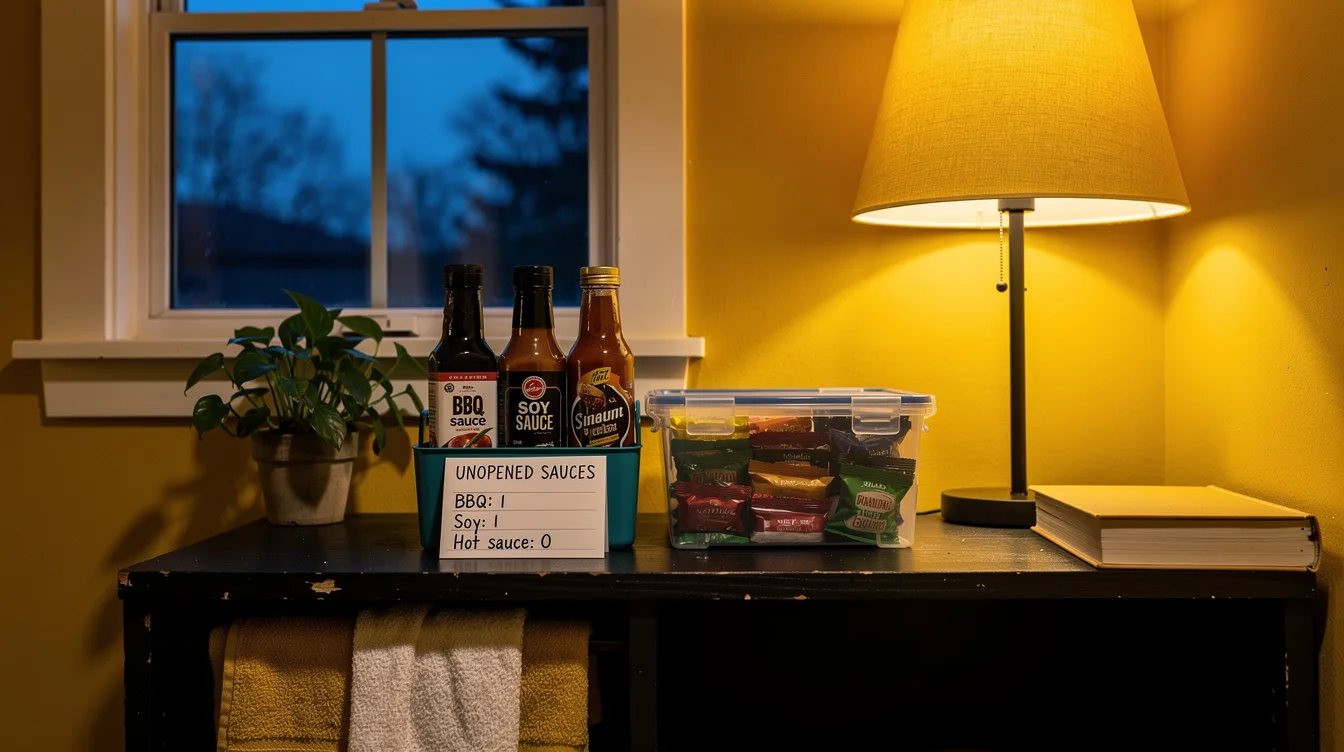
The most useful starting point is a clear, open lane labeled UNOPENED SAUCES. Keep the bottle currently in use where it normally lives, then place every unopened replacement together so a quick glance answers the shopping-list question.
Use a small note beneath the label: “BBQ: 1, soy: 1, hot sauce: 0.” The proposed count is a household system, not a manufacturer capacity claim, but it removes the vague category called “condiments,” which is where duplicate purchases hide.
Use the Seven-Pack for Small Backstock
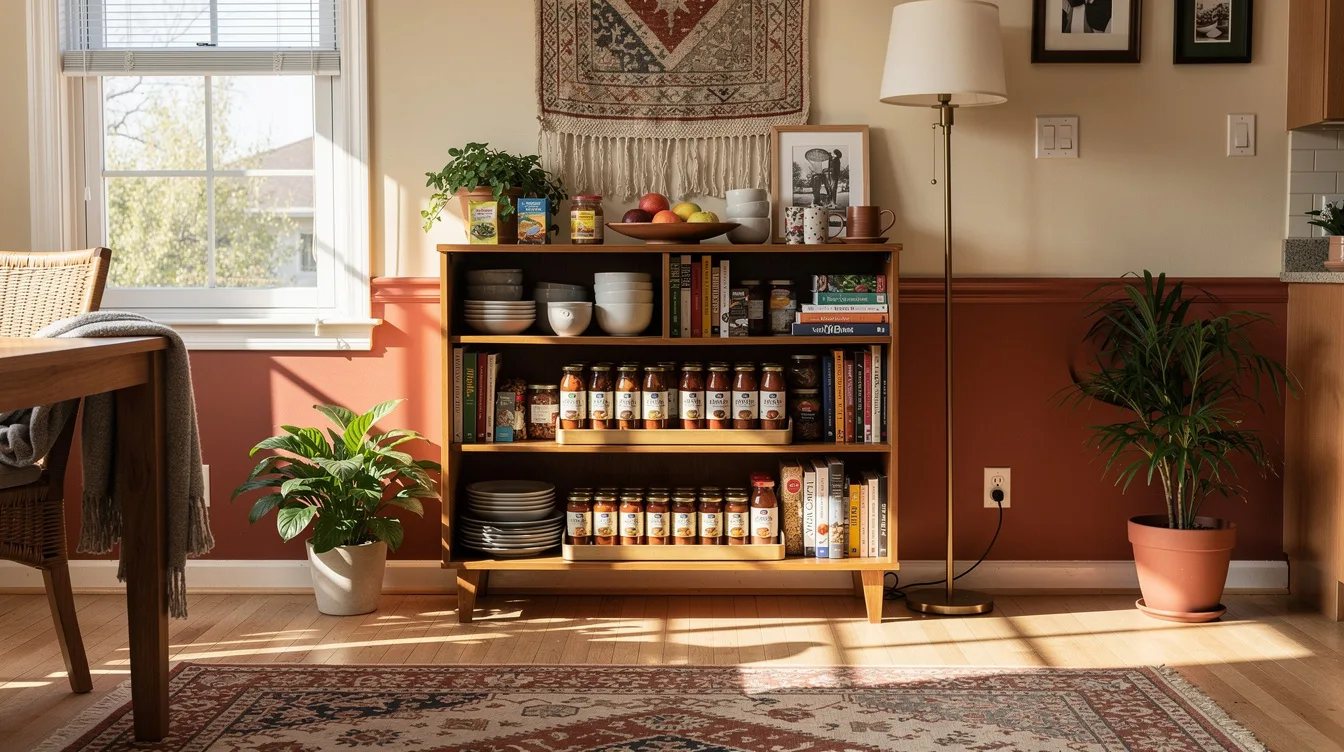
The Sterilite 6-quart seven-pack from BJ’s is currently listed at $16.99, or about $2.43 per bin. Each bin measures 14⅛ by 7⅝ by 4⅞ inches externally, making the set practical for sauce packets, seasoning envelopes, and small packaged extras.
The bottom interior is about 11½ by 6⅛ by 4½ inches, so treat these as shallow containers. Tall bottles should stay out of the lidded boxes unless you have measured them first.
Keep Tall Bottles in an Open Bin
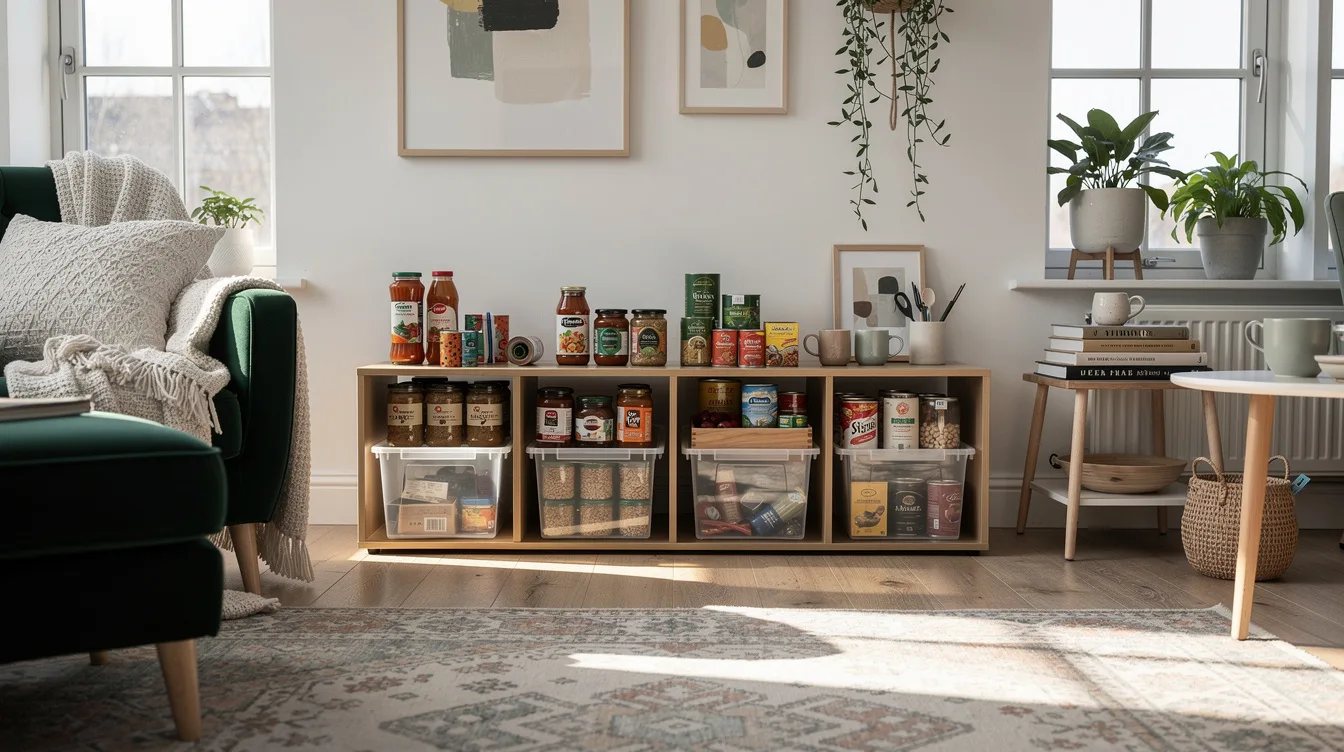
For upright bottles, an open bin is the safer format. The iDesign Linus recycled-plastic bin at Target is listed at $11.39 and measures 10 by 8 by 5 inches, giving labels room to project above the rim.
Place bottle labels toward the front and leave enough space to pull the container forward. The exact number of bottles depends on their footprint, so count visible items instead of trusting the advertised bin volume.
Separate Use-Next From Reserve Bottles
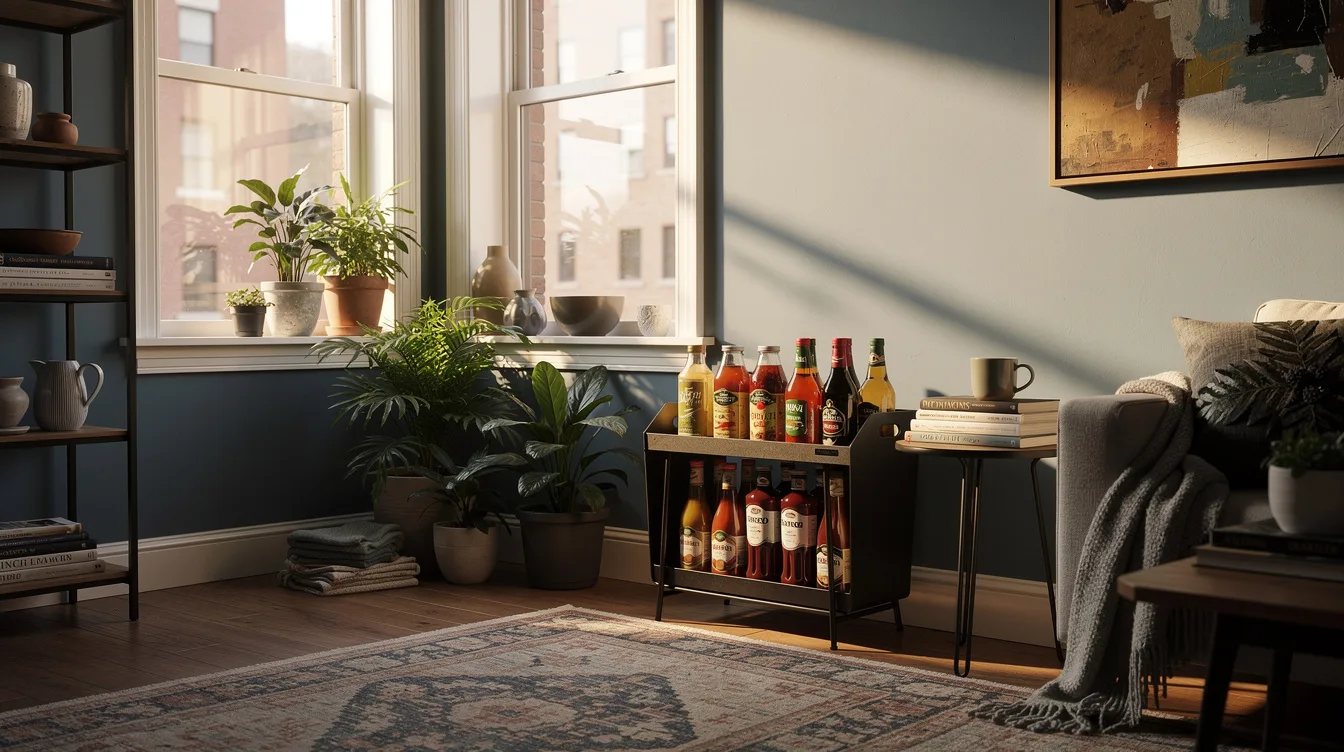
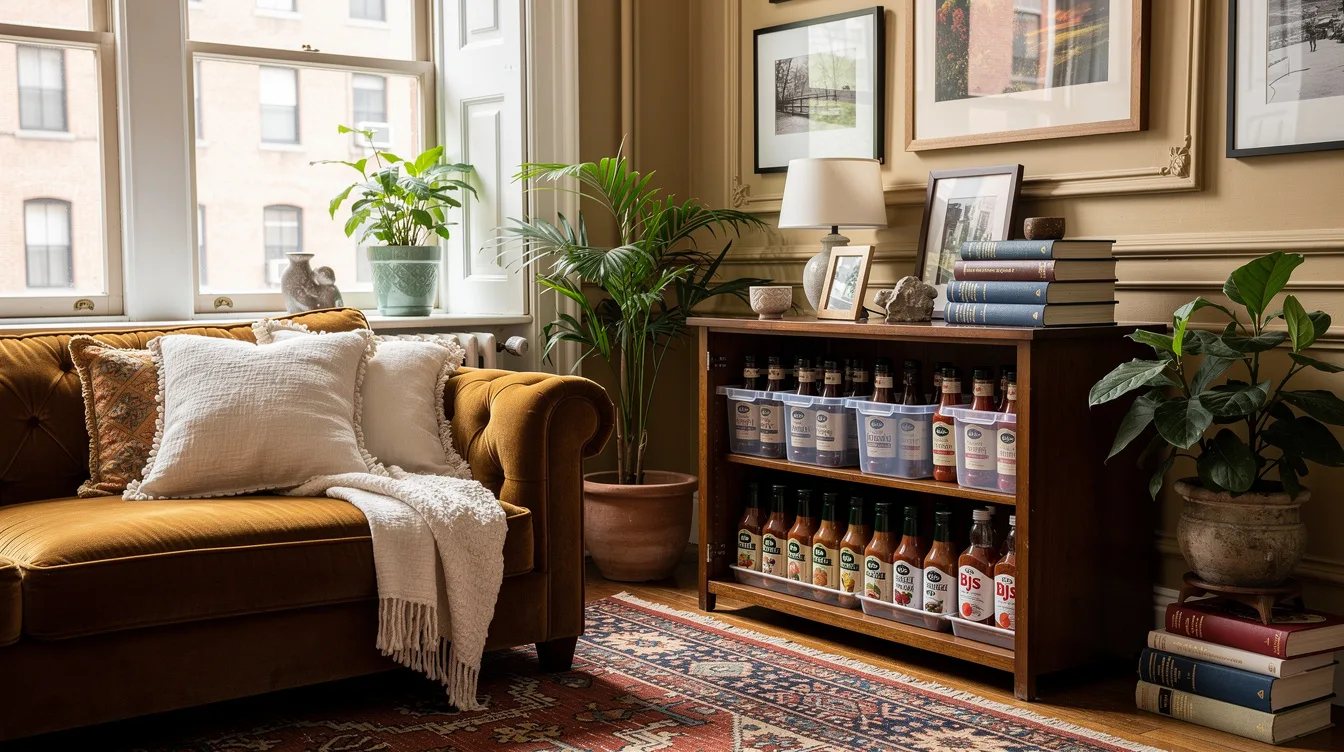
When a BJ’s multipack comes home, move one unopened bottle into a “use next” position and place the remaining bottles directly behind it. This creates a short queue instead of a pile that disappears behind newer purchases.
A narrow iDesign bin can hold the lane, while a handwritten reserve count records what is behind the front bottle. Move older stock forward before adding anything new.
Divide Sauces by the Way You Cook
Give each sauce family its own lane: barbecue, soy-based sauces, dressings, hot sauces, and tomato-based sauces are useful starting categories. The right category is the one that matches how your shopping list is written.
The six-piece iDesign organizer-bin set at Target is listed at $45.99, or about $7.67 per bin, with each bin measuring 10 by 6 by 5 inches. Use the narrow format for categories that tend to produce duplicates.
Face Every Label Toward the Aisle
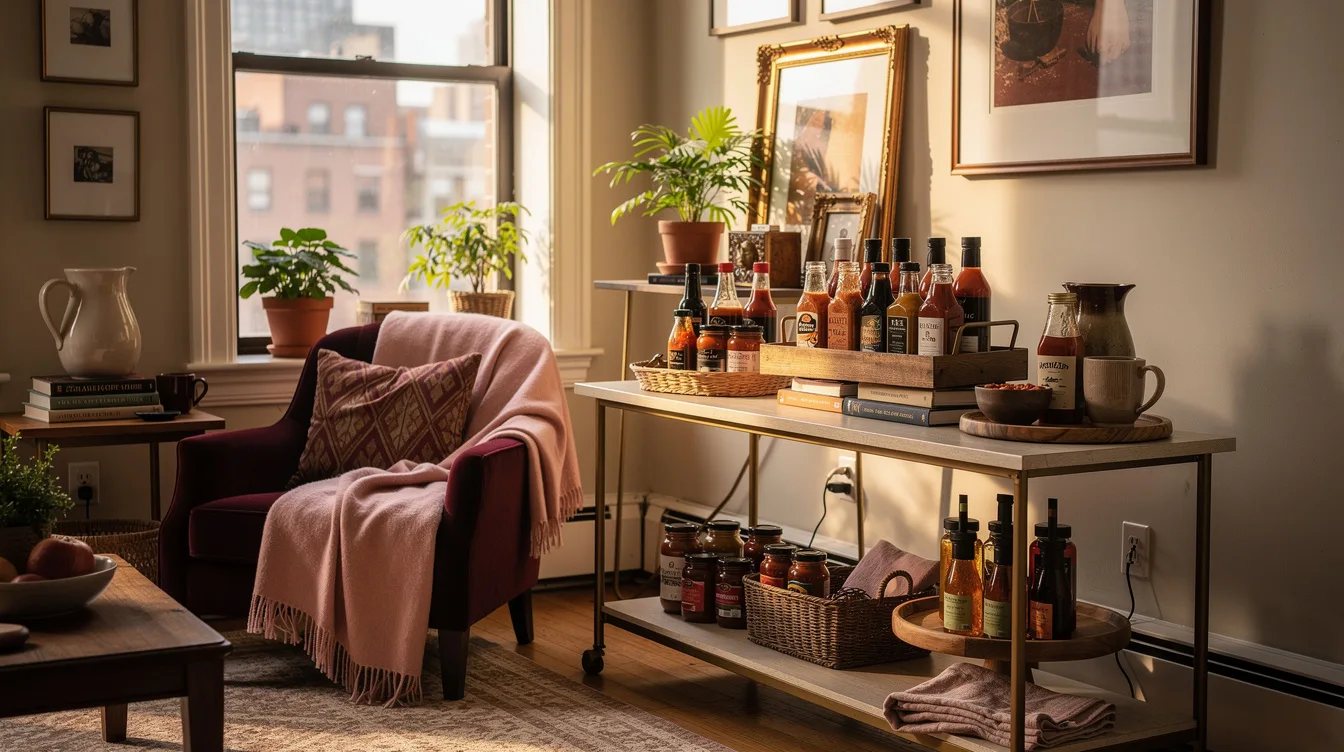
Store bottles with the front label facing outward, even when the bin sits inside a pantry. A clear Sterilite base helps, but label direction matters more when several bottles have similar shapes.
Leave the bin’s front edge visible rather than pushing it behind cereal boxes or appliances. A two-second scan should show the sauce name, brand, and whether the bottle is open or sealed.
Mark Open and Sealed Bottles
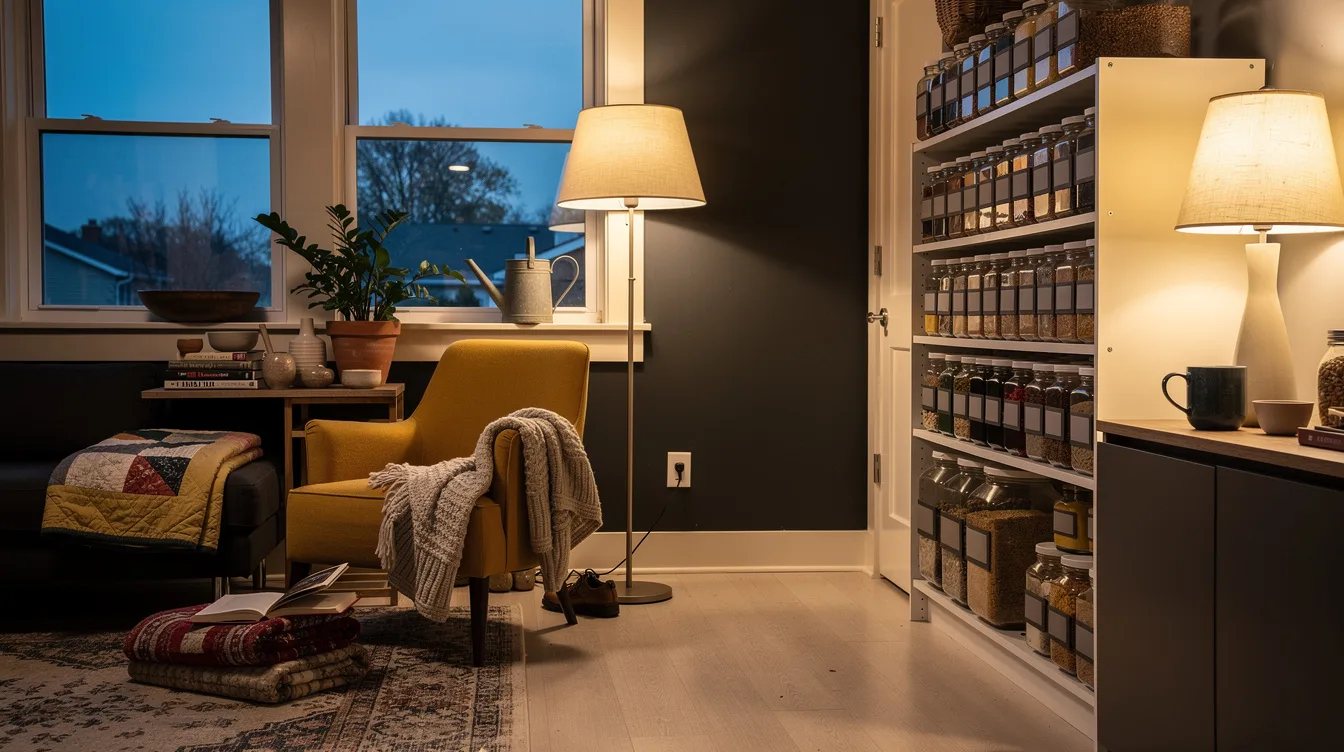
Use two small labels on the bin: “OPEN” for the bottle in active rotation and “SEALED” for replacements. This works especially well when a nearly empty bottle is still taking up space beside a full one.
For a simple physical cue, place the active bottle in front of the iDesign bin and keep sealed bottles inside it. The arrangement makes the next purchase decision visible before you reach the store.
Measure the Shelf Before Buying Boxes
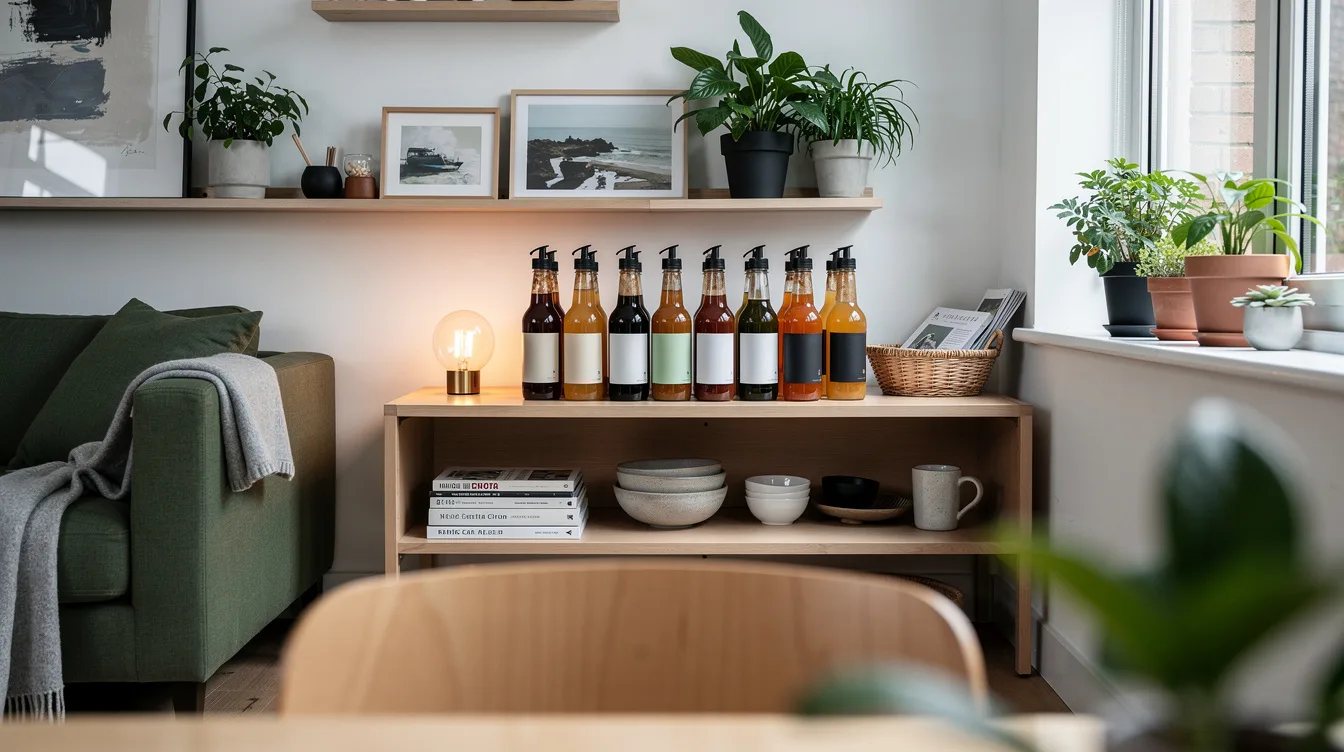
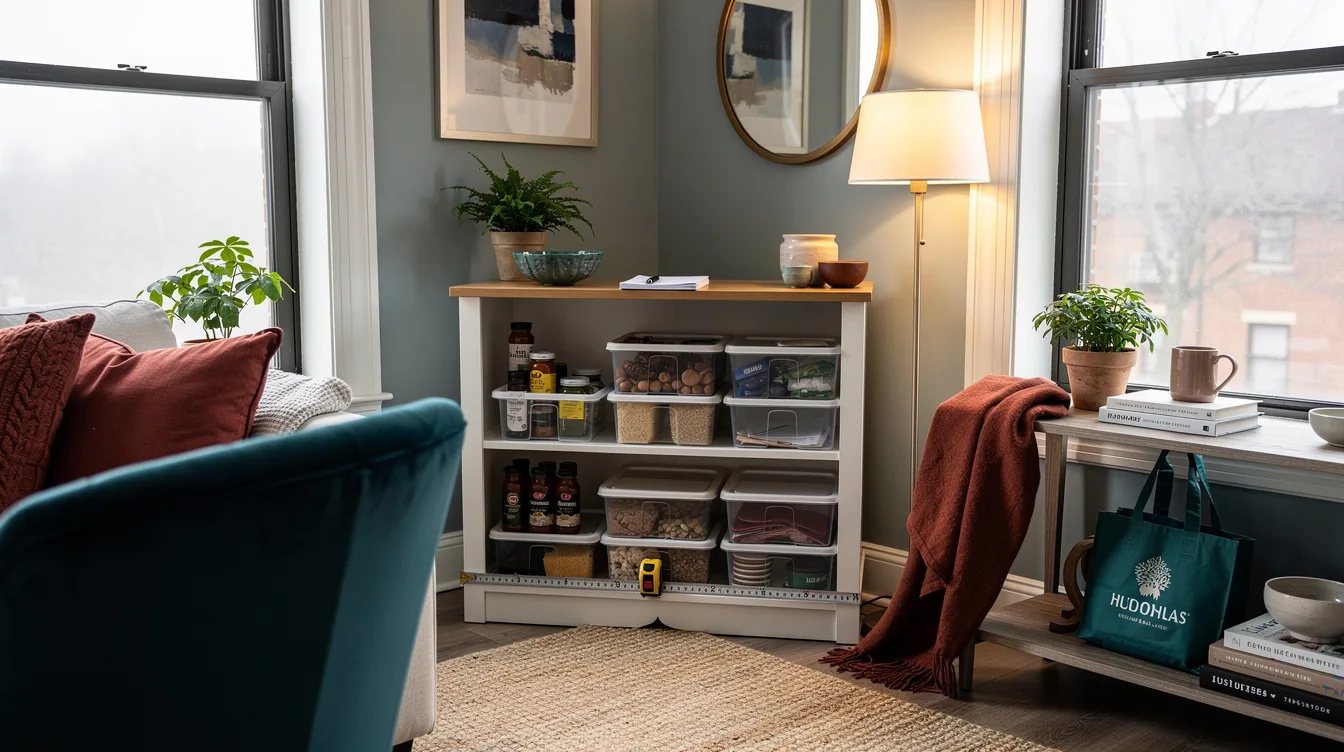
Measure shelf depth and bottle height before choosing a latching container. The Sterilite 15-quart two-pack from BJ’s measures about 16¼ by 11¼ by 6¾ inches per box, and the bottom interior is about 13½ by 9⅜ by 6½ inches.
That format can hold larger packaged backstock on a shelf at least 16¼ inches deep, but the listed dimensions do not guarantee that a tall bottle will fit. Keep the tape measure beside the pantry, not in a drawer across the house.
Reserve Latching Boxes for Packaged Extras
Latching boxes work best for sealed packets, small unopened packages, and items that do not need daily access. The clear Sterilite 6-quart box keeps loose extras contained while still letting you inspect the contents.
Do not make a shallow latching box the main home for upright sauce bottles. Opening a lid, lifting a stack, and checking beneath it adds enough friction to make the inventory system fail.
Move Overflow Out of Daily Reach
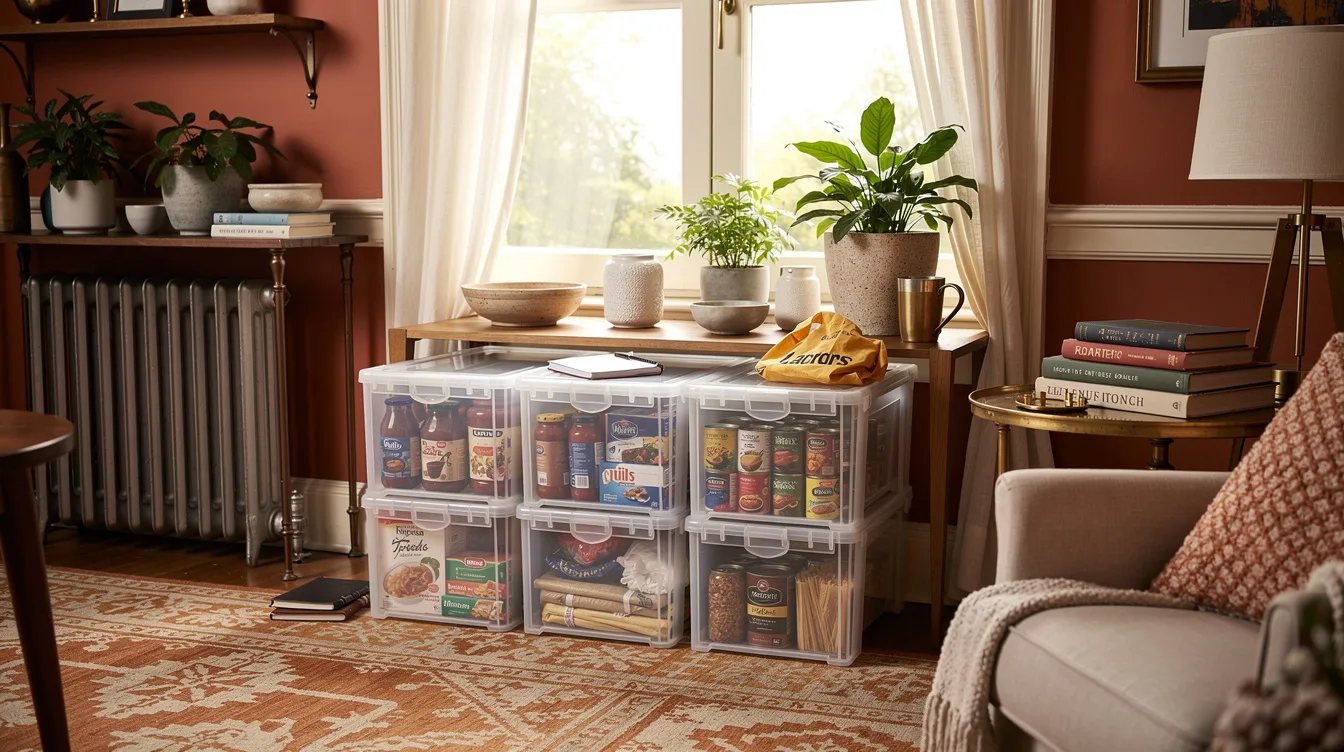
When the everyday lane is full, move sealed overflow to a separate storage area instead of cramming more bottles onto the active shelf. BJ’s currently shows the Sterilite 54-quart gasket box at $12.99 regular price, with a $10.99 promotion displayed in the supplied listing snapshot.
The box measures about 22½ by 16 by 12¾ inches, so it needs a substantial shelf or floor position. Use it for packaged overflow, not as the place where you search for tonight’s barbecue sauce.
Set a One-Bottle Purchase Threshold
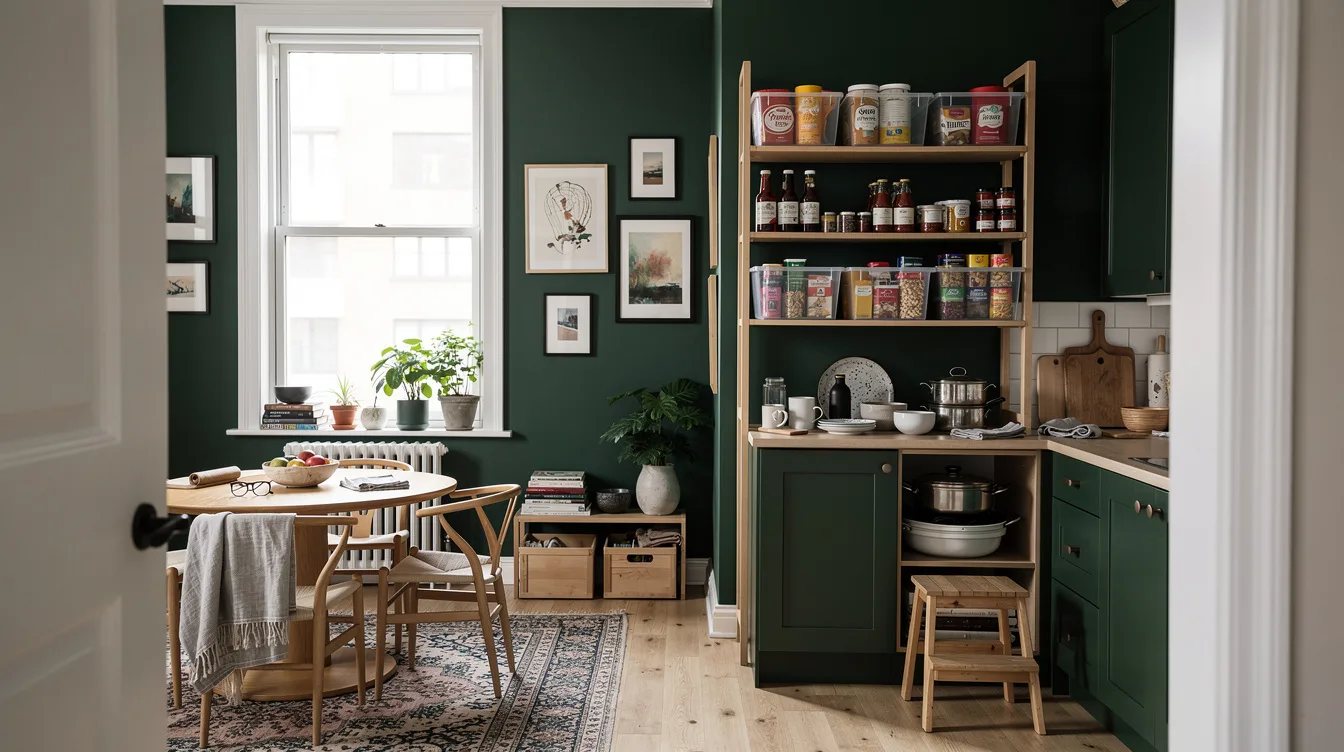
Choose a threshold before shopping: buy another bottle only when the active bottle is nearly empty and the sealed reserve count is zero. The threshold turns a crowded pantry into a simple decision instead of a memory test.
Write the rule directly on the iDesign bin label if more than one person shops. A visible instruction prevents well-meaning additions when the reserve bottle is hidden behind the front row.
Reset the Lane After Every Haul
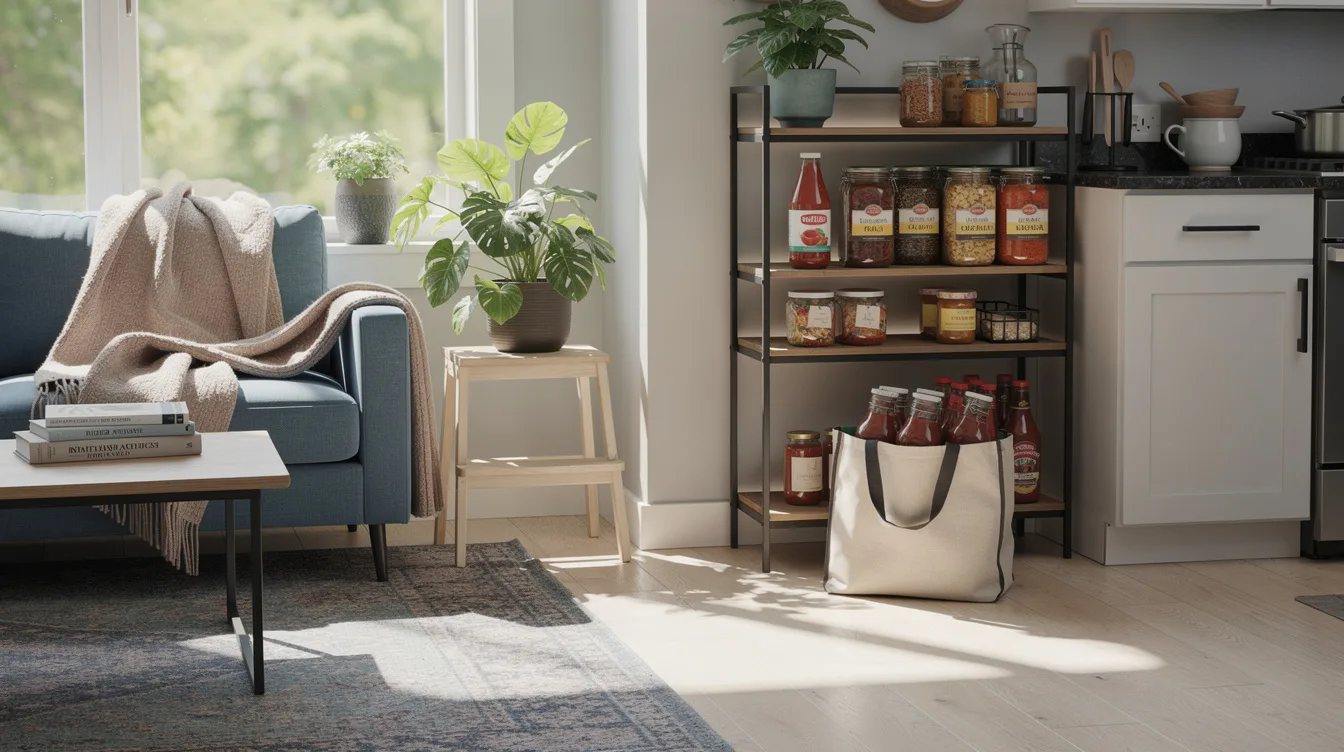
Spend a few minutes resetting the system as soon as groceries arrive. Put the oldest sealed bottle closest to the front, place the new bottle behind it, and update the count before the bulk packaging reaches the recycling bin.
Our preferred setup pairs an open iDesign bin for upright bottles with Sterilite boxes for packets and small extras. Start with the sauce category you duplicate most often, then give the rest of the pantry the same treatment only if the first lane stays easy to maintain.
Keep reading
Start with the sauce you buy twice by accident, give it one open bin, and write the sealed count on the front. Once that lane stays accurate through the next BJ’s haul, repeat the layout for the next problem category.


