12 Christmas Kitchen Decor Ideas for Cottage Kitchens with Open Shelves, Jars and Greens
07 october 2026Christmas kitchen decor for cottage kitchens works best with fresh greens, useful jars, and one strong color repeated across the room. I once filled every shelf and lost the cottage feeling entirely. Now I leave breathing room, keep the materials honest, and let the kitchen still function. It’s warmer that way!
- Layer the Three-Height Green Stack for Christmas Open Shelving
- Fill Clear Jars with a Red-and-Wood Pantry Mix
- Hang a Window Garland with a Soft Asymmetrical Sweep
- Why Does Open Shelving Need Empty Space?
- Paint the Back Wall in Farrow & Ball Studio Green
- Build the Cottage Countertop Candle Line
- Swap Shiny Plastic for the Two-Wood Rule
- Frame the Range with a Working Herb Wreath
Start with an inviting open-shelf rhythm, add one berry note, and save the most personal touch for a small breakfast corner. Those three moves can make a cottage kitchen feel festive, graceful, and collected without making it fussy.
- Layer the Three-Height Green Stack for Christmas Open Shelving
- Fill Clear Jars with a Red-and-Wood Pantry Mix
- Hang a Window Garland with a Soft Asymmetrical Sweep
- Why Does Open Shelving Need Empty Space?
- Paint the Back Wall in Farrow & Ball Studio Green
- Build the Cottage Countertop Candle Line
- Swap Shiny Plastic for the Two-Wood Rule
- Frame the Range with a Working Herb Wreath
- Use One Berry Note Instead of Red Everywhere
- Anchor the Island with a 42-Inch Passage
- Make a Small Breakfast Corner Feel Collected
- Which Christmas Kitchen Detail Will You Keep?
1Layer the Three-Height Green Stack for Christmas Open Shelving
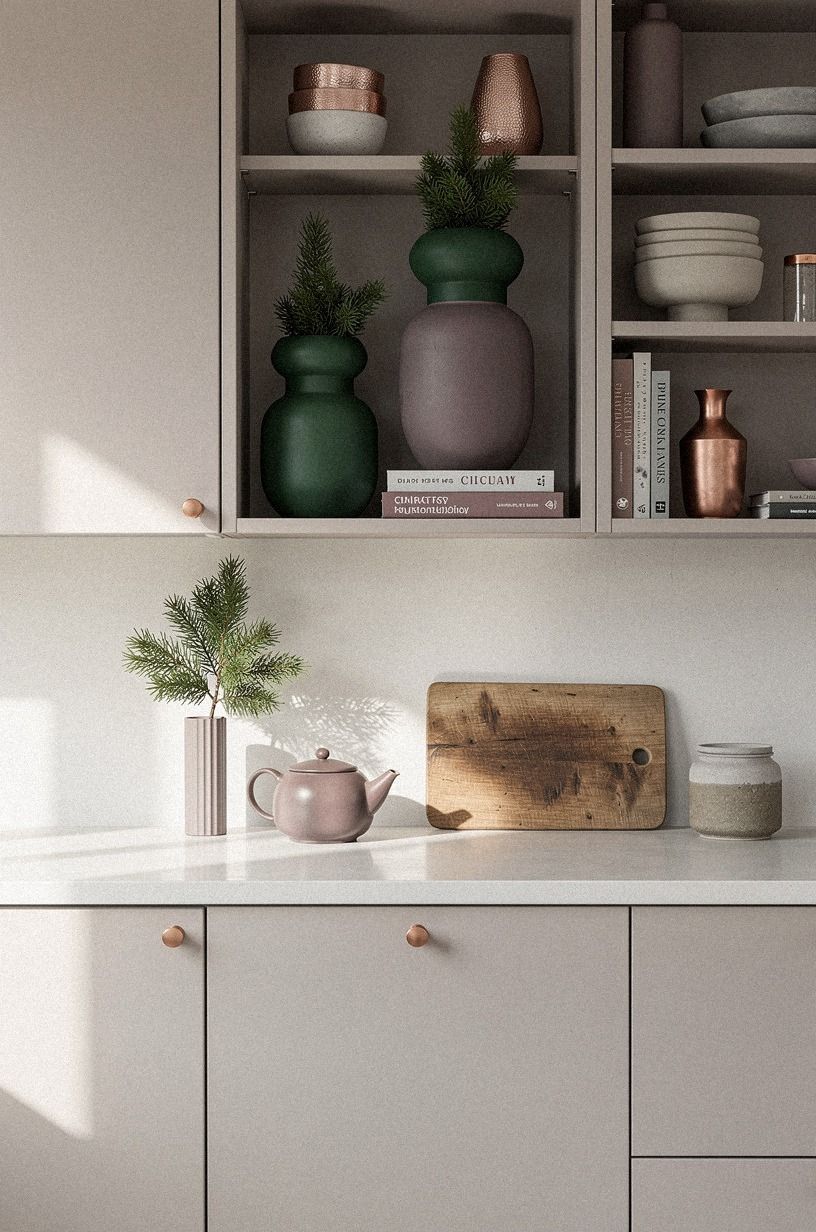
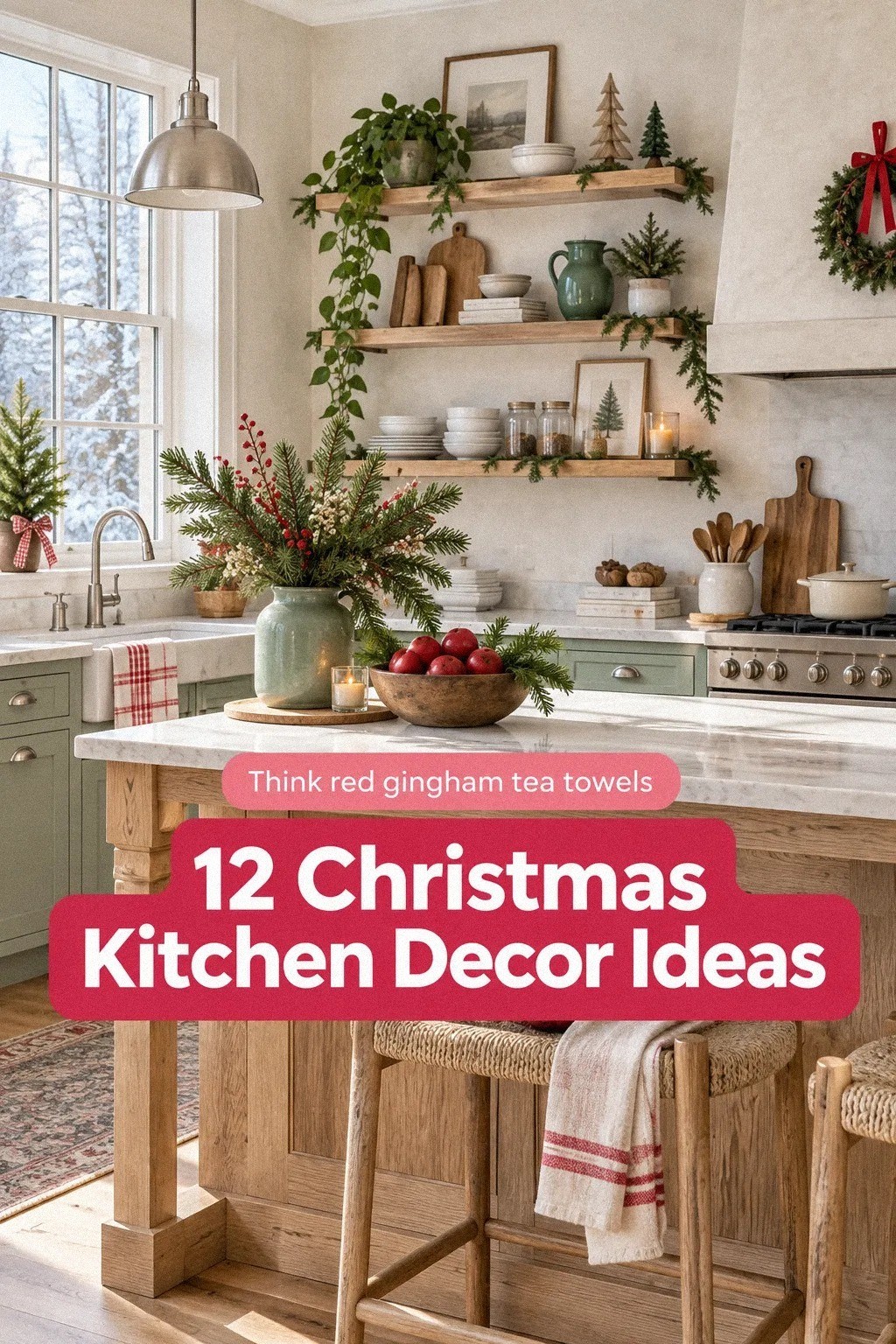
The three-height green stack keeps open shelves from looking flat. Start with a low bowl, add a medium jar, then finish with one taller branch in a crock. You’ll get shape without turning your kitchen into a florist’s display, and your everyday plates can stay within reach.
Use clipped cedar, rosemary, and eucalyptus rather than one thick bundle. The scent changes as you cook, which is part of the charm.
I’d skip artificial pine with shiny needles because it catches every bit of daylight and reads plastic beside old wood. Your better choice is a loose, lively mix with uneven tips.
- Low: grey stoneware bowl with walnuts. - Medium: IKEA KORKEN jar filled with dried orange slices. - Tall: weathered crock holding cedar.
Keep the tallest piece below the upper edge of the wall if you’re styling near a doorway. A kitchen should feel inviting, not crowded. And if you’re working with only one shelf, use one branch, one jar, and one small bowl.
Pair the stack with a clear-jars pantry mix or the empty-space rule if your shelves already feel busy. The best palette here is plum, grey, and rose gold, with small shagreen accents for texture.
It’s gentle, warm, and easy to live with after December. Your shelves won’t need a full reset when the holiday season ends.
2Fill Clear Jars with a Red-and-Wood Pantry Mix
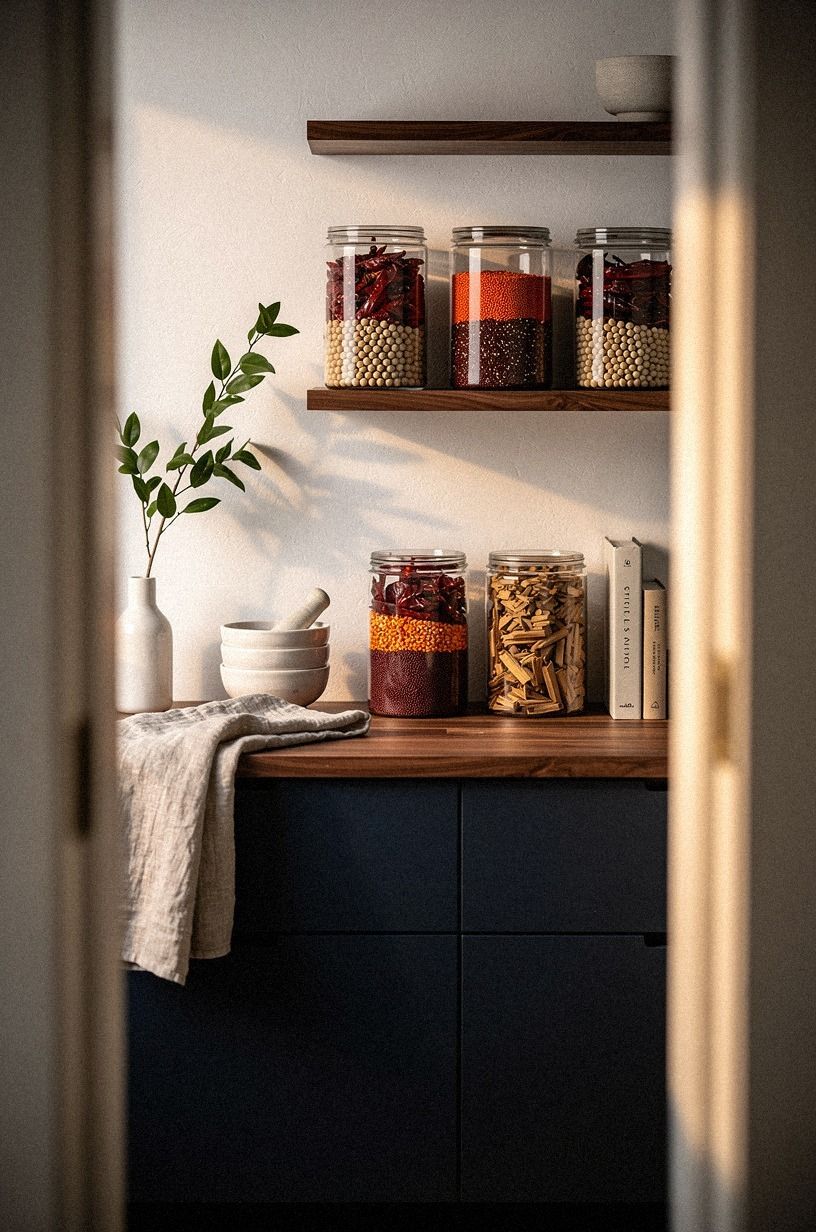
Glass jars make Christmas kitchen decor feel practical instead of theatrical. Fill two or three with cinnamon sticks, pale baking flour, or dried fruit, then line them beside the ingredients you already use. You’ll see the color immediately, and you won’t have to buy objects that sit untouched.
I prefer clear glass apothecary jars with simple lids over novelty containers. The glass catches a small reflection from the window, while the contents provide the decoration.
If you’re styling open shelves, label only what needs identifying. Too many labels can make your cottage kitchen look like a shop display.
Use a quiet rhythm:
- A navy vessel against a white wall. - Cinnamon beside a walnut spoon. - Flour under a washed Belgian linen napkin.
A red jar can be charming, but three red objects in one row become noisy. I’d keep any berry color restrained and let navy, white, and walnut carry the arrangement. Your eye needs somewhere to rest, especially if your shelves already hold patterned dishes.
For a lower-cost version, reuse Bonne Maman jars after washing off the label and soaking away the adhesive. They’re small, familiar, and useful. You’ll spend nothing, and the slightly mismatched sizes will make the arrangement feel lived-in rather than ordered by a catalog.
3Hang a Window Garland with a Soft Asymmetrical Sweep
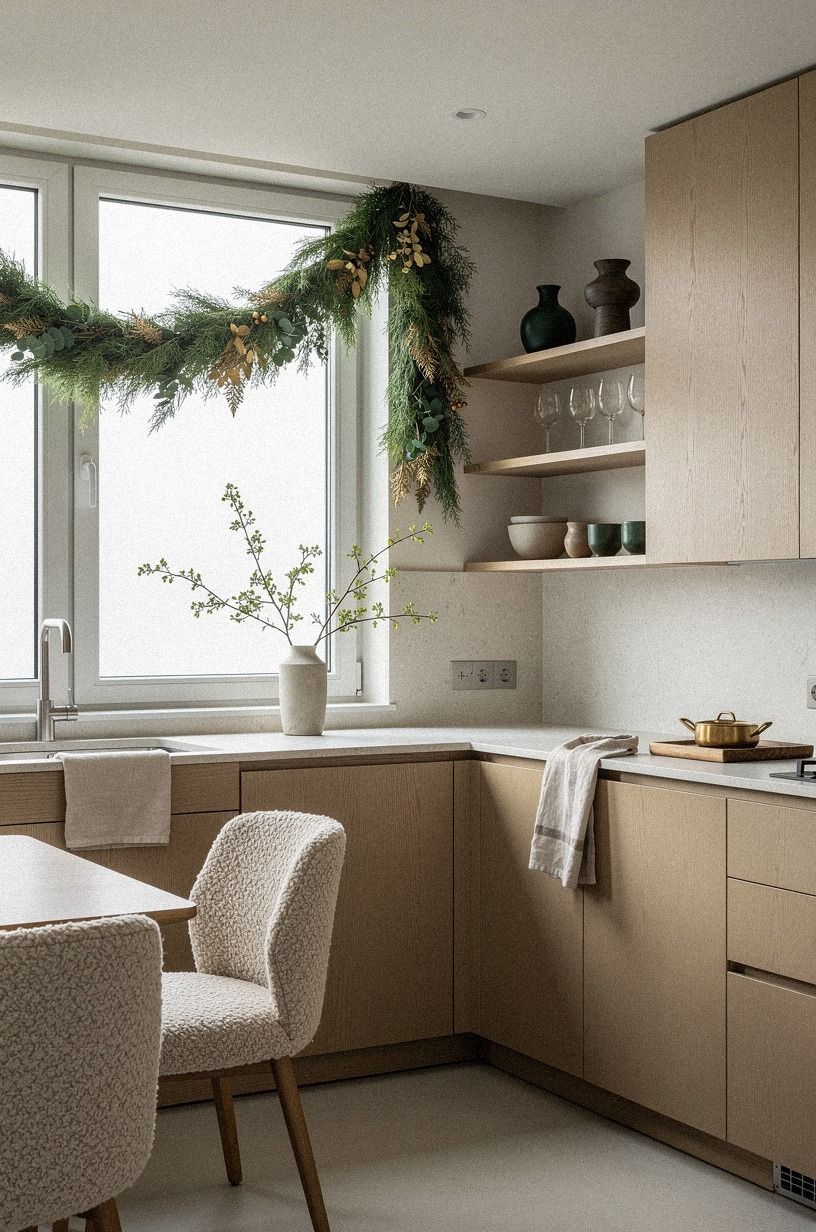
A window garland brings holiday kitchen ideas down to eye level, where you’ll notice them while washing dishes or waiting for the kettle. Let one side fall lower than the other. That uneven sweep feels relaxed, and your cottage kitchen won’t look like it’s wearing a stiff green frame.
Use fresh cedar garland only where you can tolerate a few dropped needles. Around a sink, preserved eucalyptus or a good faux branch is less demanding.
I made the mistake of hanging fresh fir above the faucet once, and the warm water dried it faster than I expected. It looked tired before the weekend ended.
Keep the garland narrow enough to preserve daylight. A small window usually needs only a loose branch and two lengths of cotton ribbon.
Choose emerald, soft gold, or cream rather than glittering metallic red. Your counter will still feel bright, and the greens will look connected to the garden outside.
A soft Studio Green backdrop can make the garland look richer, especially beside pale trim. And don’t block the opening handles.
Unlacquered brass hardware already brings a soft golden note, so you won’t need extra ornaments. Add one organic bouclé tie if you want texture, but skip anything that swings into the glass every time you open the window.
4Why Does Open Shelving Need Empty Space?
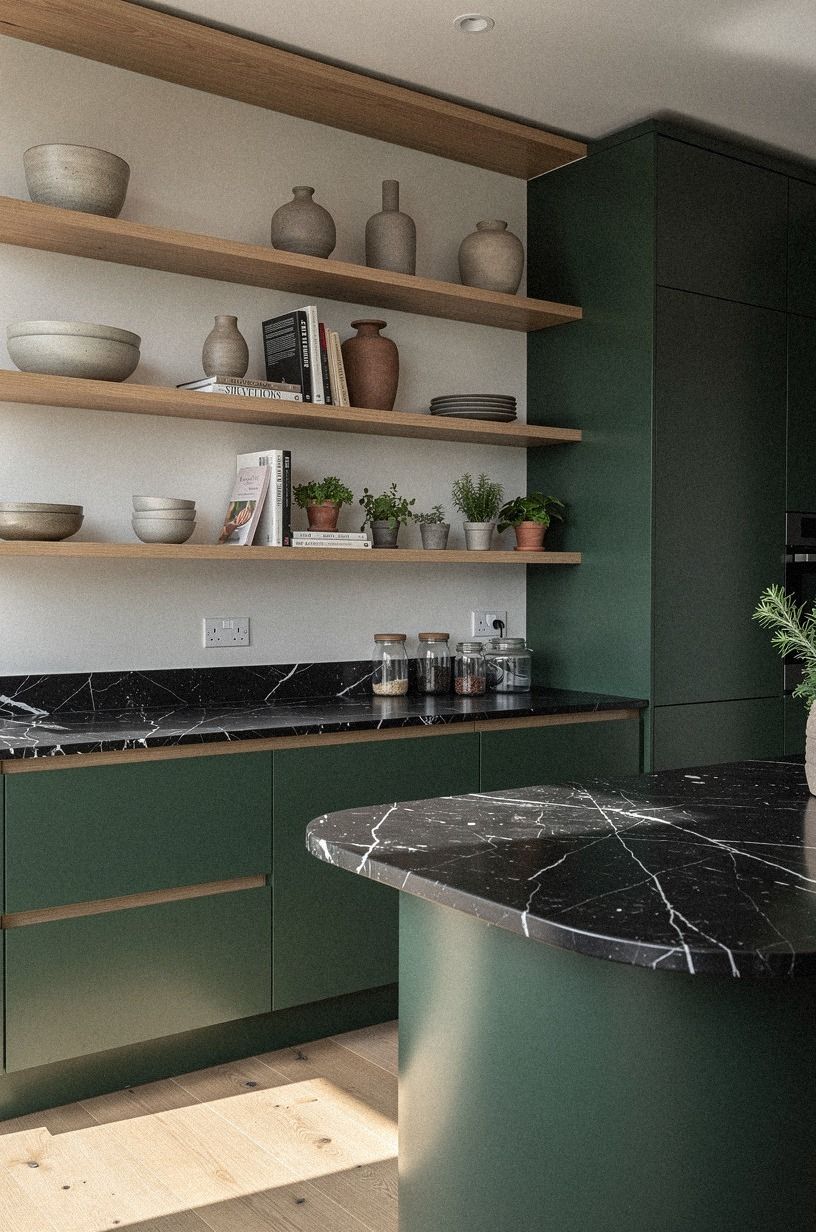
Open shelving needs empty space because the eye reads the wall, dishes, and greenery as one composition. Leave roughly one-third of each shelf visible if you can. Your plates will look intentional, and the holiday pieces won’t bury the objects you reach for each morning.
The strongest cottage Christmas kitchen usually has one quiet shelf. On that shelf, use a Nero Marquina black marble tray with white veins, one narrow stack of bowls, and a branch in a bottle. I’d skip filling every gap with ornaments.
They’re cute for an hour, then they make breakfast feel like a balancing exercise.
Try this sequence from left to right: stacked plates, open space, green branch, jar, then a small framed recipe card. The pause matters. If you’re styling two shelves, offset the empty sections so the wall doesn’t become a rigid checkerboard.
But empty space doesn’t mean the room should feel bare. A single natural oak pitcher can carry more warmth than six tiny decorations because its uneven grain catches the light.
Your kitchen will feel peaceful and useful at the same time. If you want a stronger focal point, connect the shelf to a working herb wreath.
5Paint the Back Wall in Farrow & Ball Studio Green
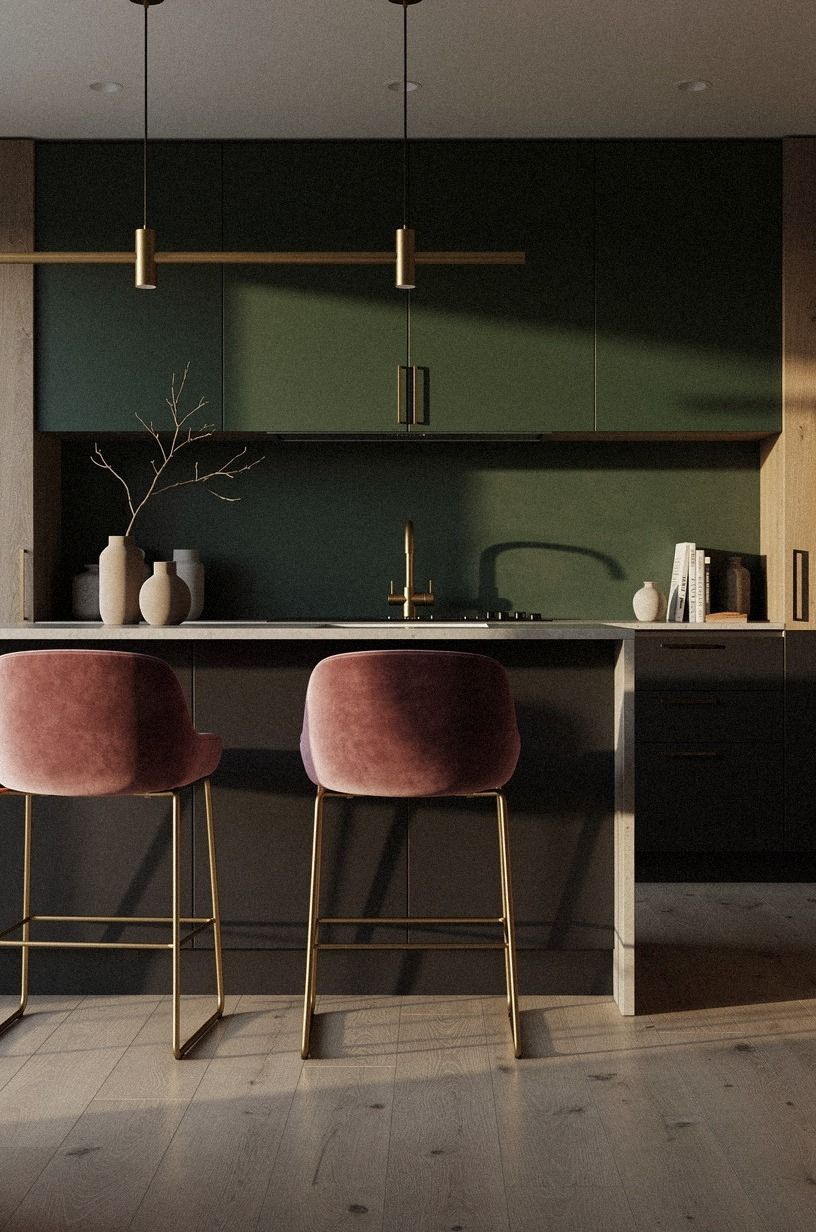
A dark shelf backing can make pale dishes and green branches look sharper, especially if your kitchen has warm wood floors. Farrow & Ball Studio Green No.93 is a moody choice with enough depth for winter, but you’ll want to test it on the actual wall before committing.
Paint a sample behind the shelves and watch it from morning to evening. North-facing light can make deep green appear cooler than expected.
I’d avoid painting every cabinet in the same shade unless the room gets plenty of sun. Your shelves need contrast, and pale crockery gives that color somewhere to land.
If a full paint job feels like too much, paint only the back panel behind the open shelving. A renter can get a similar effect with removable paper in a matte botanical pattern. It won’t have the same depth as paint, but it’ll give your Christmas open shelving a clear backdrop without permanent work.
Use charcoal, dusty rose, and aged brass nearby to soften the green’s intensity. A deep-pile mohair velvet cushion on a breakfast seat can add warmth without introducing another hard surface. You’ll get a refined, rustic room, and the green can remain after the ornaments come down.
For an easier rental update, combine this idea with the countertop candle line instead of repainting the whole kitchen.
6Build the Cottage Countertop Candle Line
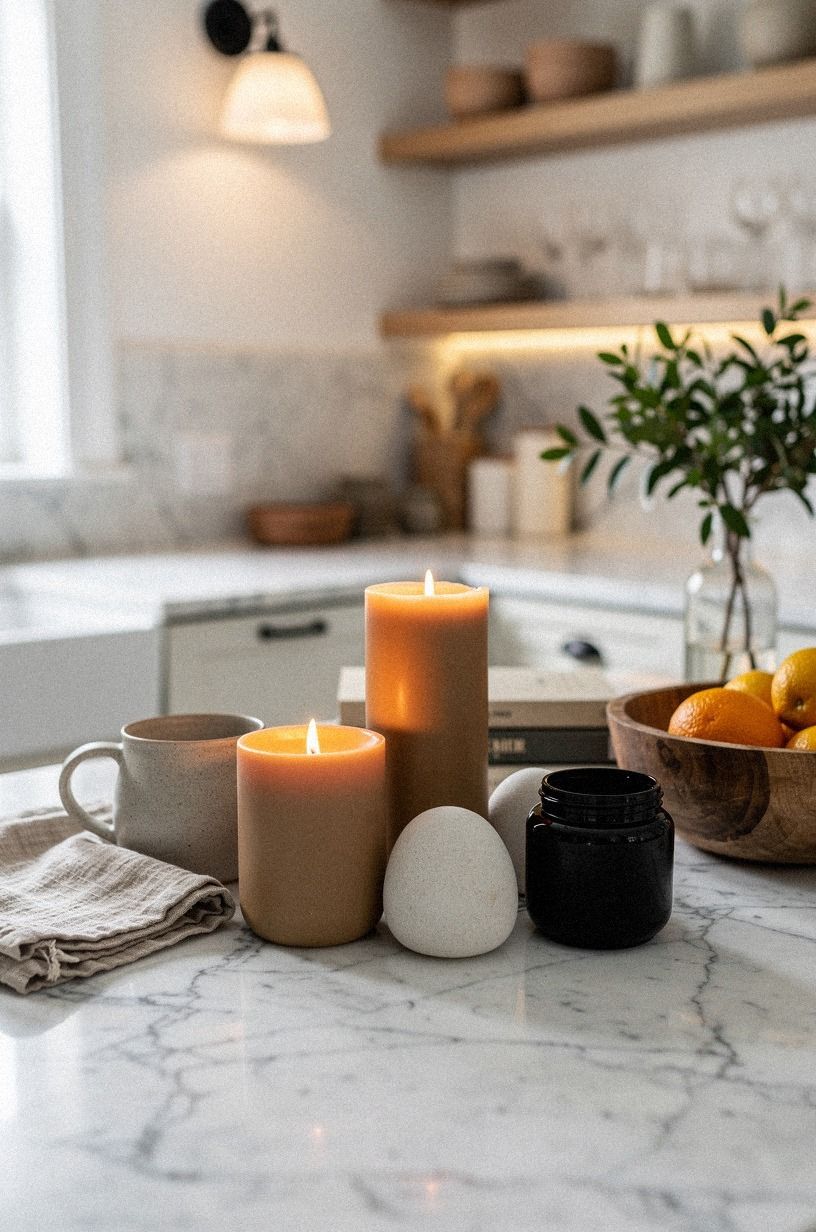
A countertop candle line gives your kitchen a low, warm glow after dinner.
7Swap Shiny Plastic for the Two-Wood Rule
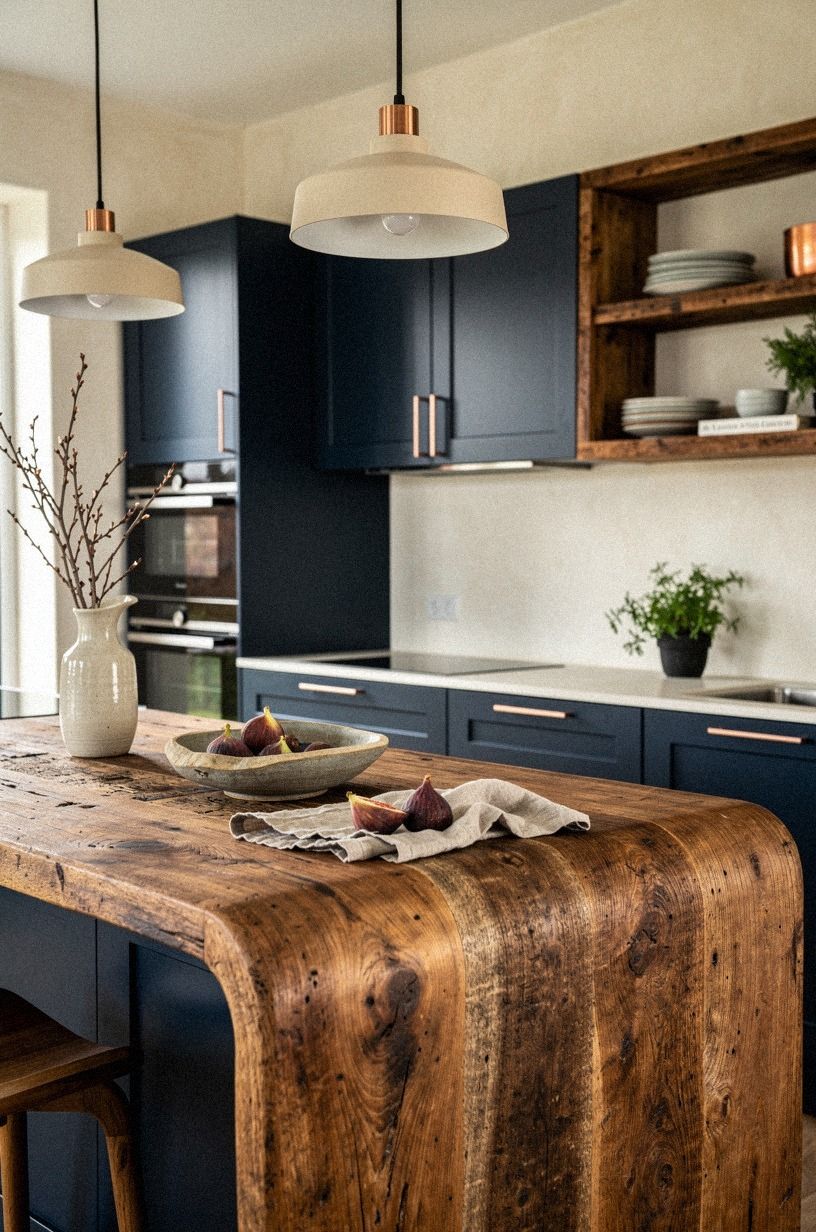
The Two-Wood Rule keeps cottage Christmas decor from becoming visually scattered. Choose one pale wood and one darker wood, then repeat them across the shelves and counter. I like reclaimed weathered teak with an ivory wood accent because the grain feels warm without looking rustic in a themed way.
Use the lighter wood for boards, spoons, and a small riser. Reserve the darker tone for one bowl or frame.
Your eye will connect those pieces even if the shapes differ. I’d skip red-painted wood because it tends to compete with berries, ribbons, and warm light.
If you already own a bamboo cutting board, keep it. You don’t need a new set to make this work.
Add a copper-handled spoon and let the existing board become the pale note. That’s enough contrast for most compact kitchens, especially when your shelves are already carrying glass and ceramic.
A weathered teak bowl can be the investment piece, but a thrifted hardwood bowl may have better character. Look for a surface with visible grain and a few honest marks.
Your cottage kitchen should feel used, not arranged for display. Repeat the darker wood beside a single berry note for a handsome, grounded finish.
8Frame the Range with a Working Herb Wreath
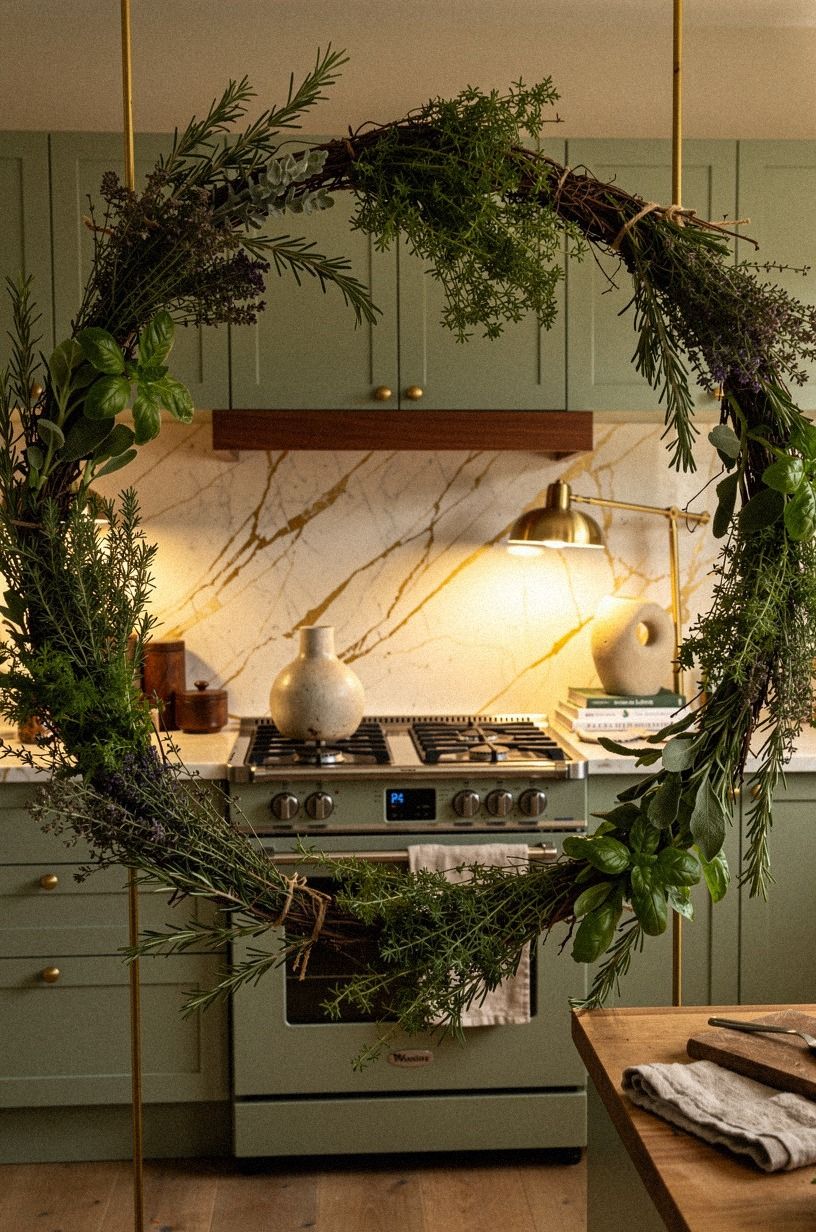
A herb wreath above the range marks the busiest part of the kitchen and gives your Christmas kitchen decor a useful detail. Choose bay leaves, rosemary, and thyme, then hang the wreath where heat won’t dry it instantly. You’ll smell the herbs when you walk past, which is a small daily pleasure.
Use dried rosemary stems tied with cotton twine instead of a glittered wreath. The texture is softer, and you can snip a sprig for cooking if the wreath stays clean. I’d avoid placing it directly above a gas flame.
Grease and heat will change the color quickly.
A compact wreath should leave space around the hood or shelf. If your range is narrow, use one wreath only.
If you’ve got a wide wall, add a wooden spoon rail beneath it rather than stacking more greenery above. Your room needs a focal point, not a green wall.
But the wreath shouldn’t be precious. Calacatta marble with gold veining on a nearby ledge can connect the sage green, warm cream, and natural wood palette without competing with the herbs. Keep the display close enough to use and far enough from splatter.
Practical beauty lasts longer than decoration that needs constant protection. For an even warmer evening mood, echo the wreath beside the candle line.
9Use One Berry Note Instead of Red Everywhere
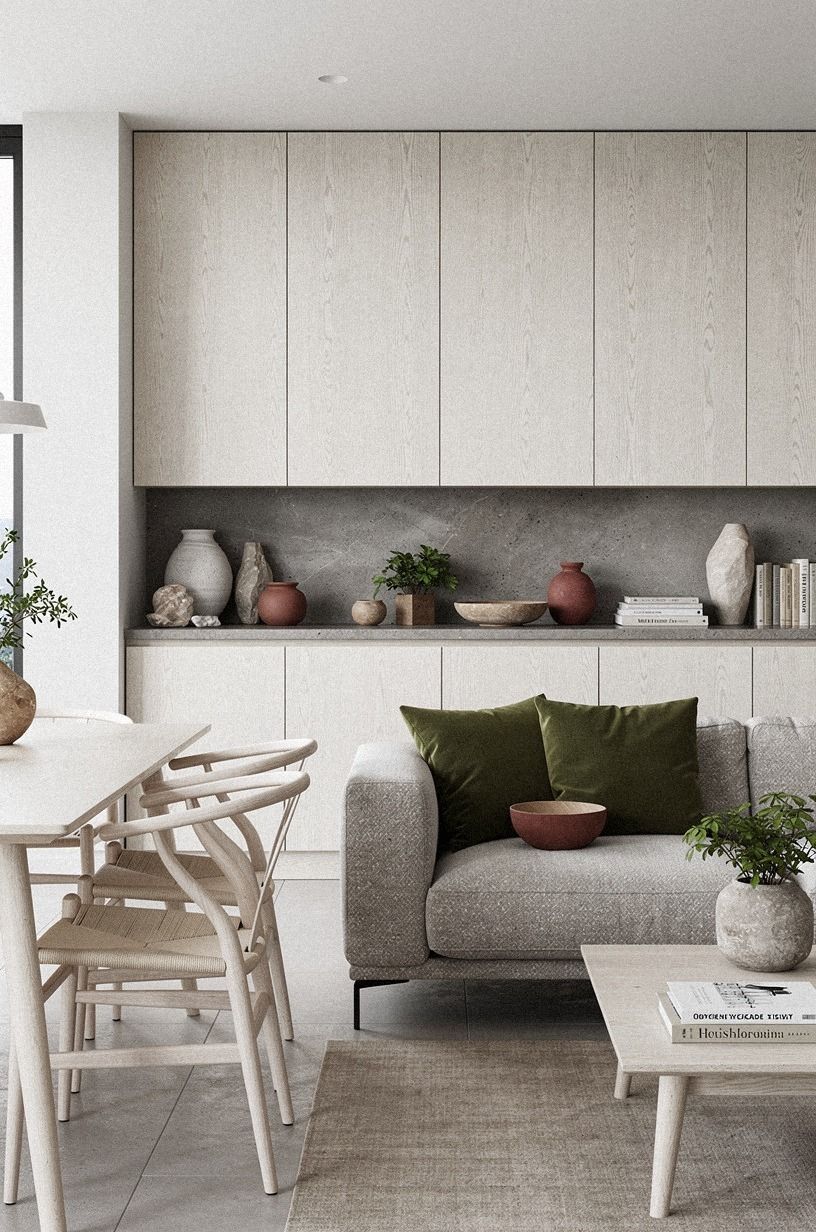
One berry note gives holiday kitchen ideas a clear pulse without covering the room in bright red. Repeat the color three times: perhaps in a ribbon, a dish towel, and dried cranberries. Your kitchen will feel cheerful, while terracotta, stone, and olive keep it grounded.
I’d choose muted terracotta linen over glossy polyester ribbon. The linen absorbs light and has a slightly irregular edge, so it looks more cottage than commercial. Tie it around a jar, a wreath, or a basket handle, but don’t use all three in the same sightline.
Try a restrained arrangement:
- Terracotta ribbon on one jar. - Olive stems in a crock. - One stone-colored tea towel near the oven.
Why should every Christmas room rely on bright scarlet? Cerused white oak has more depth and works with stone, olive, and a small berry accent. Your pieces can stay on display after the holidays if the color isn’t shouting its season.
Keep the rest of the palette quiet. A little terracotta, warm white, and olive green will support the berry note.
You’ll get a welcoming room that doesn’t need another ornament every time you look at it. That’s plenty!
10Anchor the Island with a 42-Inch Passage
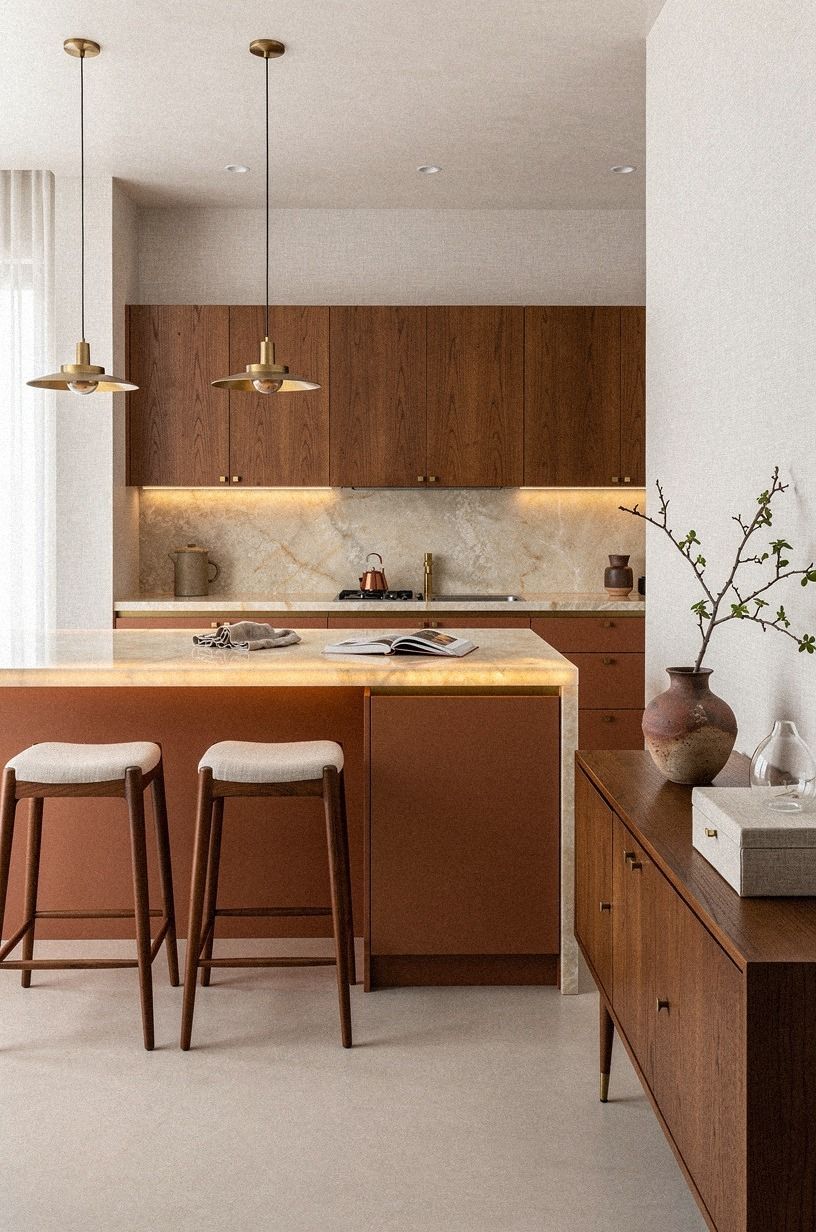
A decorated island still has to work. Leave a passage of 42 to 48 inches around it where possible, so your Christmas kitchen decor doesn’t interrupt cooking, opening drawers, or two people moving through the room. Your arrangement should make the kitchen easier to enjoy, not harder to use.
Use a shallow tray with a jar, a bowl, and one branch. Backlit translucent onyx makes a memorable tray material because the surface feels luminous and substantial beside wood. I’d skip tall arrangements in the center of a narrow island.
They block sightlines and collect flour.
If your island is small, decorate one end and preserve the rest as work space. A stack of linen napkins, a low bowl of pears, and a tiny evergreen clipping are enough. Your counter height may be the standard 36 inches, but even a low display can dominate the room if it spreads too wide.
And don’t add a runner that slides under appliances. Linen looks wonderful, but it needs a stable spot away from chopping and heat. Add a small aged-brass detail if the room needs warmth.
Your kitchen will feel more inviting when the decoration respects the work happening there. Keep this passage open before adding a collected breakfast corner.
11Make a Small Breakfast Corner Feel Collected
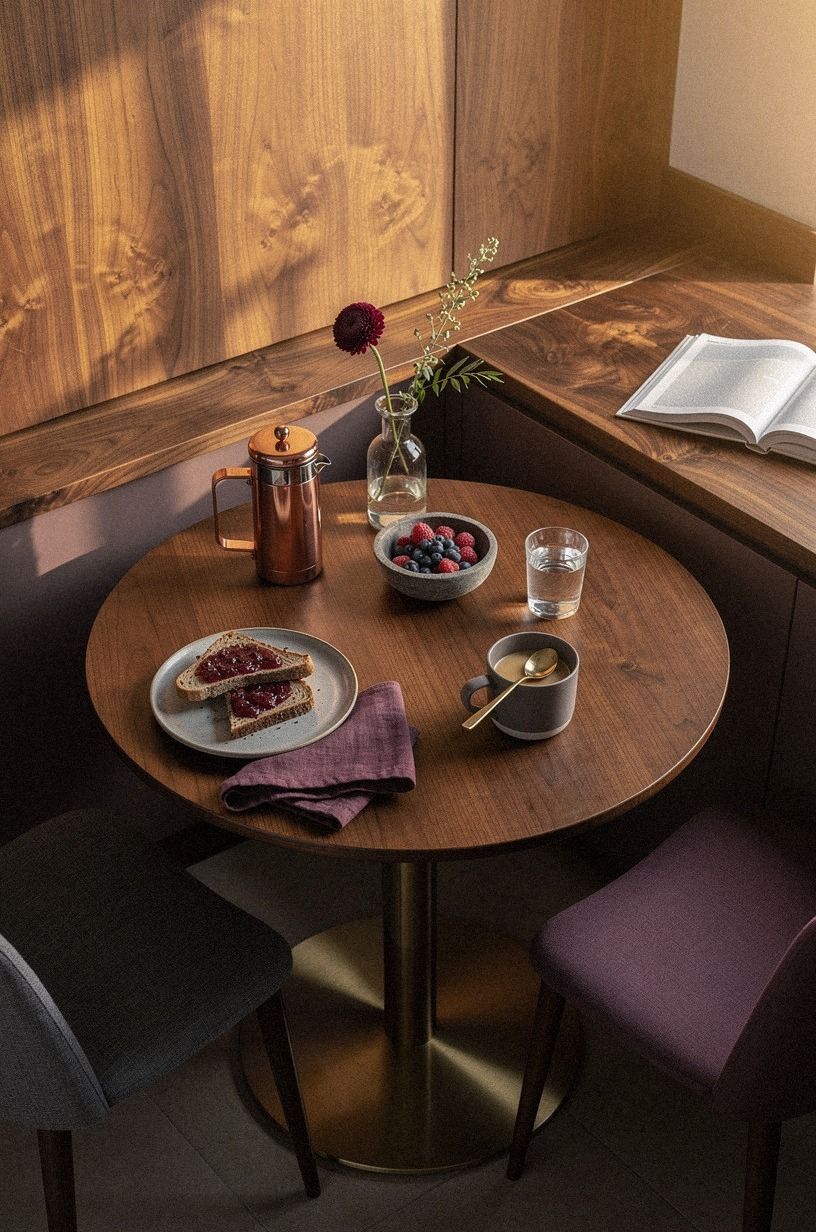
A breakfast corner gives your cottage kitchen a second holiday moment without asking the shelves to carry everything.
12Which Christmas Kitchen Detail Will You Keep?
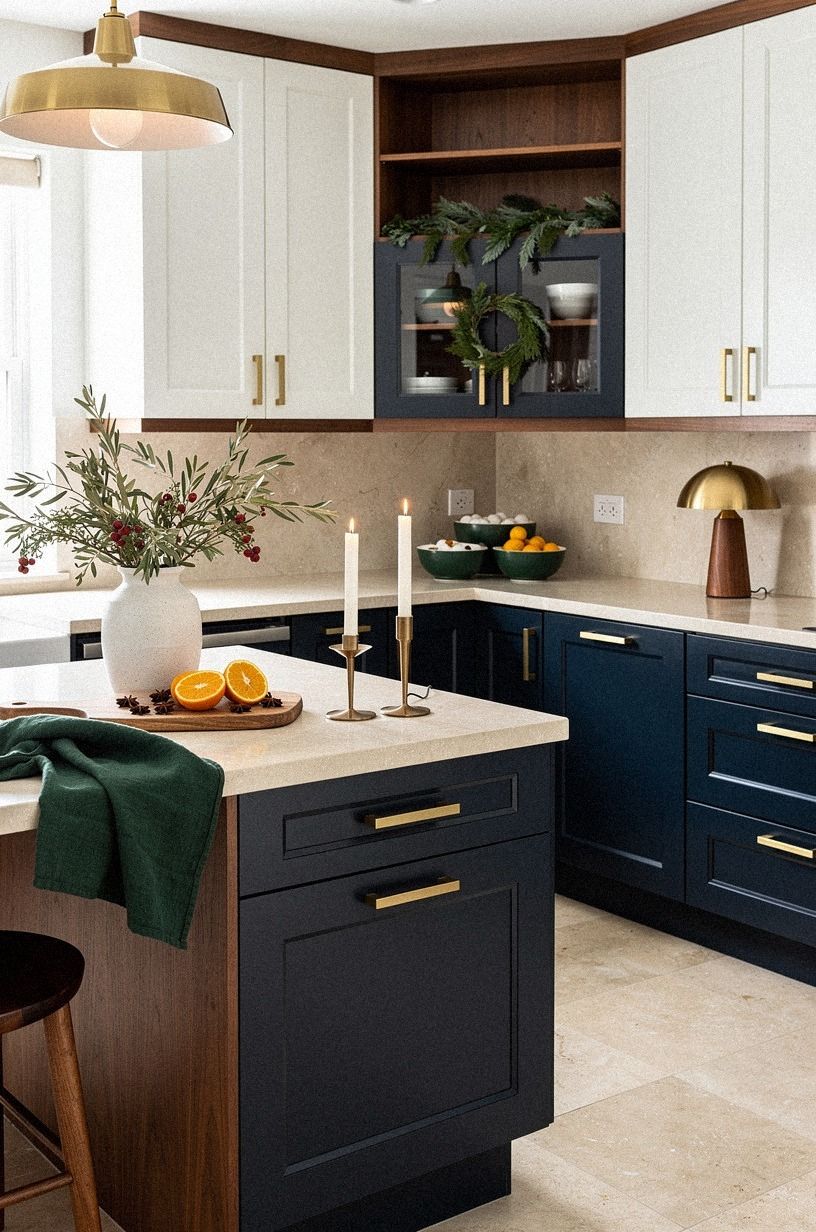
The strongest Christmas kitchen decor is usually the detail you can leave in place after the season. Choose one material or color that belongs to the room already, then repeat it with restraint. Your open shelves might keep the jars, while the greens and ribbon change in January.
I’d start with navy hand-glazed tile only if you’re already planning a backsplash update. The typical material cost can run $15 to $35 per square foot, so it’s a renovation decision, not a casual seasonal purchase. For decoration, use a small tile board or serving tray instead.
You can also create a lasting cottage feeling with a jar collection, a walnut bowl, or a better light. Warm travertine is another option if you want a natural surface beside navy, white, and walnut. Choose a piece with gentle variation rather than a heavily patterned finish.
And if your kitchen is rented, removable details are enough. A tension rod, peel-and-stick paper behind one shelf, and cotton ribbon can carry the mood. You won’t need to drill, repaint, or store a dozen holiday pieces when January arrives.
For more permanent inspiration, keep the honest take below nearby as you decide.
What These Materials and Updates Usually Cost
Seasonal styling can stay inexpensive, but kitchen renovation costs rise quickly once cabinets, counters, and appliances enter the plan. Use the figures below as typical US ranges, not a promise for your room. Your holiday display may cost almost nothing, while a permanent refresh needs a larger budget.
A cosmetic change is usually enough for Christmas open shelving. Peel-and-stick backsplash can give you a seasonal backdrop, while paint and reused jars keep your spending low. If you’re considering a permanent upgrade, compare the material cost with the amount of work your kitchen actually needs.
Standard dimensions matter too. A backsplash gap is commonly 18 inches between the counter and uppers, while upper cabinets are often 30 to 42 inches tall.
Your shelves should respect those proportions so the room remains comfortable to use. The Studio Green backing and wood rule can both be tested on a small scale before you spend heavily.
My Honest Take on Cottage Christmas Kitchens
I used to believe a festive kitchen needed more objects because the room was already practical and hard-edged. I was wrong. The best version I’ve lived with had fewer decorations, but each one carried a job: a jar held cranberries, a wreath gave me herbs, and a bowl stayed ready for fruit.
That changed how I shop. I don’t buy a red object just because it’s seasonal. I ask whether I’d keep it if the ribbon disappeared.
Unlacquered brass passed that test because it works in winter, spring, and every ordinary Tuesday. Plastic snowflakes did not, even though they looked cheerful in the store.
Your kitchen also needs honest limits. If you’ve got narrow shelves, don’t copy a wide farmhouse display.
If you cook every night, keep greenery away from heat and leave the main counter open. I once styled a full island centerpiece before hosting dinner, then moved everything into a laundry basket when the chopping began.
A quieter arrangement would’ve served me better.
The most worthwhile change is usually the one that improves the room beyond December. A better bulb, a useful jar, a well-placed branch, or a paint sample can show you what your kitchen wants. Farrow & Ball Studio Green may be the right answer in a bright room, while a warm white may be wiser in a darker one.
And there’s no prize for matching every surface. Your cottage kitchen should have a little friction: smooth glass beside rough wood, pale ceramic beside deep green, old utensils beside a new ribbon.
That tension is what keeps the room from feeling assembled. Keep the useful pieces.
Remove the filler. The result will feel warm because it belongs to your life.
A Few Things Worth Answering
What is the best Christmas Kitchen Decor for Cottage Kitchens: Open Shelves, Jars and Greens for a small kitchen?
The best choice is a small jar grouping with one low green branch. Compact layered styling gives your kitchen color and texture without stealing counter space. An IKEA KORKEN jar, a wooden bowl, and fresh rosemary will usually work better than a tall centerpiece.
Where can I buy Christmas Kitchen Decor for Cottage Kitchens: Open Shelves, Jars and Greens pieces on a budget?
Try IKEA, Wayfair, Target, Facebook Marketplace, and local thrift shops. Secondhand glass and wood often look more convincing than new seasonal pieces.
This site uses display advertising and doesn’t use affiliate links or commission-based product links. You can also revisit the clear-jars idea before buying anything.
How much does a Christmas Kitchen Decor for Cottage Kitchens: Open Shelves, Jars and Greens makeover cost?
A seasonal refresh can cost about $0 to $100 if you reuse jars, branches, bowls, and ribbon. A larger cosmetic kitchen update typically falls within the $300 to $1,500 US range.
Free greenery and reused containers will make the biggest difference. The cost guide gives a broader renovation range.
Can I create a Christmas Kitchen Decor for Cottage Kitchens: Open Shelves, Jars and Greens on a budget?
Yes, and you can start with three free moves: clip safe greenery, regroup your existing dishes, and fill reused jars with pantry ingredients. A restrained palette makes inexpensive objects look connected. Add one thrifted bowl or wooden board if you want more texture.
Is a Christmas Kitchen Decor for Cottage Kitchens: Open Shelves, Jars and Greens worth it in a small space?
Yes, because a small kitchen needs fewer pieces to create a visible change. Vertical shelf styling keeps the counters open while jars and branches add seasonal color.
Leave working space around the sink, stove, and main preparation area. The 42-inch passage is worth protecting.
Is Christmas Kitchen Decor for Cottage Kitchens: Open Shelves, Jars and Greens a good idea for a rental?
Yes. Use a tension rod, removable wallpaper behind one shelf, cotton ribbon, and freestanding jars.
No-damage seasonal details can create a cottage feeling without drilling or repainting. Keep fresh greenery away from heat and remove adhesive products slowly.
Where I’d Start First
If I had to pick one, I’d start with the three-height green stack. It gives your shelves shape, scent, and color without asking you to renovate anything. Pin this idea for later, then try it with one branch, one jar, and one bowl before buying more.
Start small, leave room to breathe, and let the useful pieces earn their place. Your kitchen will feel festive, welcoming, and beautifully yours!