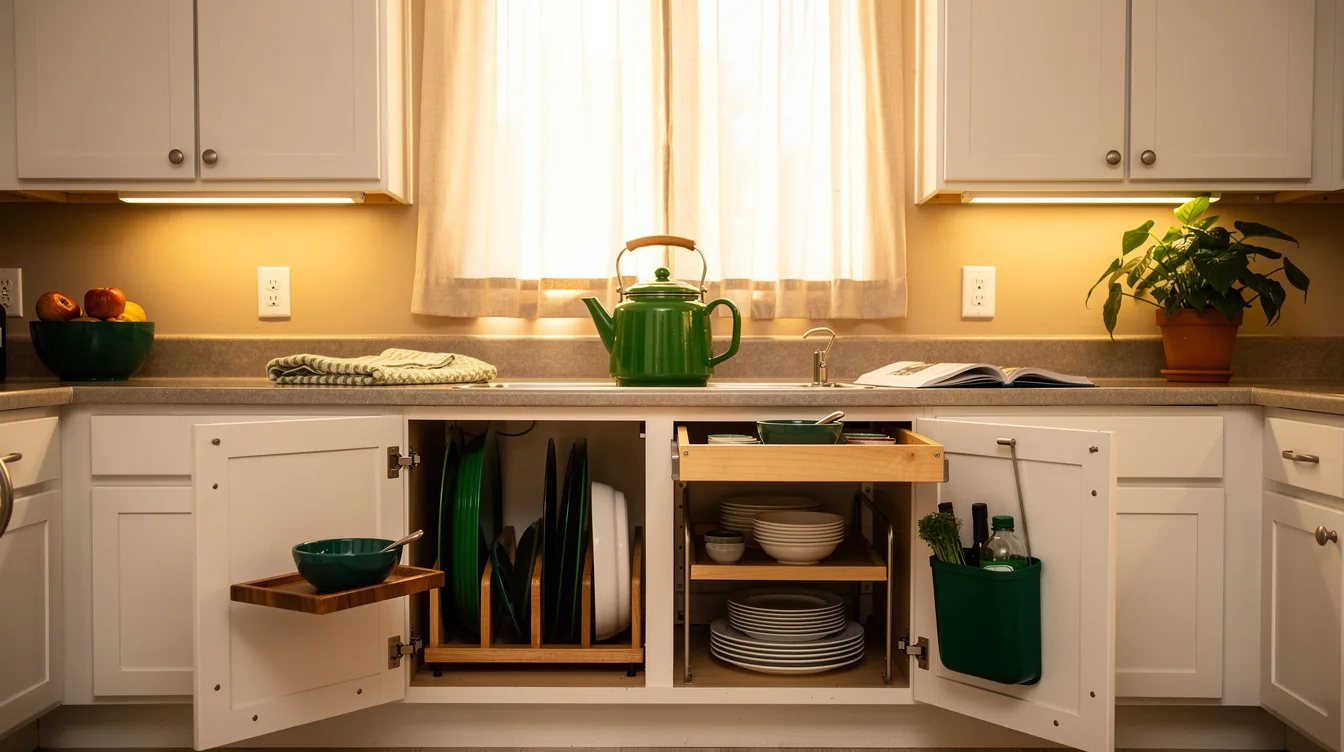
Builder-Grade Cabinets Eating Your Space? 14 Menards Organizers Under $75
06 october 2026A builder-grade kitchen can have a cabinet about 24 inches wide that still wastes half its storage. Deep shelves swallow pans, corner cabinets hide spices, and the sink base becomes a damp pile of bottles.
The fix is a focused set of cabinet organizers for less than about $75, chosen by opening size and daily use. These rules keep the upgrade practical, renter-friendly, and easy to find through major American retailers.
What you will find inside
- Measure the Cabinet Opening First
- Pull Out the Bottom Shelf
- Raise Plates With a Two-Tier Shelf
- Stand Baking Sheets on Edge
- Separate Pot Lids From Cookware
- Give the Corner Cabinet a Turntable
- Add a Door-Mounted Supply Rack
- Use a Sink-Cabinet Caddy
- Slide Cleaning Bottles Forward
- Divide Drawers by Function
- Stack Food Containers by Shape
- Create a Coffee Station Shelf
- Contain Spices on a Narrow Shelf
- Leave One Shelf Unfilled
Measure the Cabinet Opening First
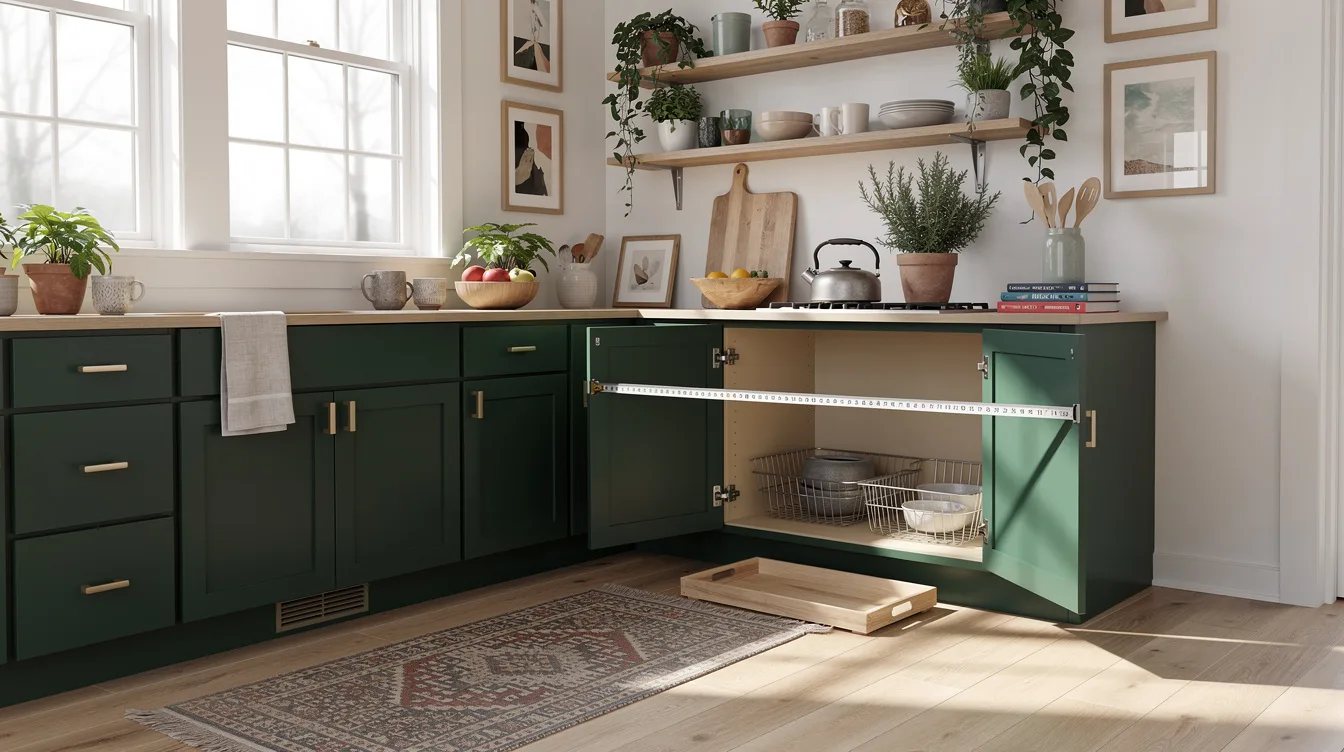
A tape measure decides whether an organizer earns its space. Record the opening width, depth, height, hinge position, and distance to the cabinet frame before shopping.
Leave about 1 inch of breathing room for shelves that slide or tilt. A steel tape measure and a quick cardboard template prevent the expensive mistake of buying a useful organizer that cannot clear the door.
Pull Out the Bottom Shelf
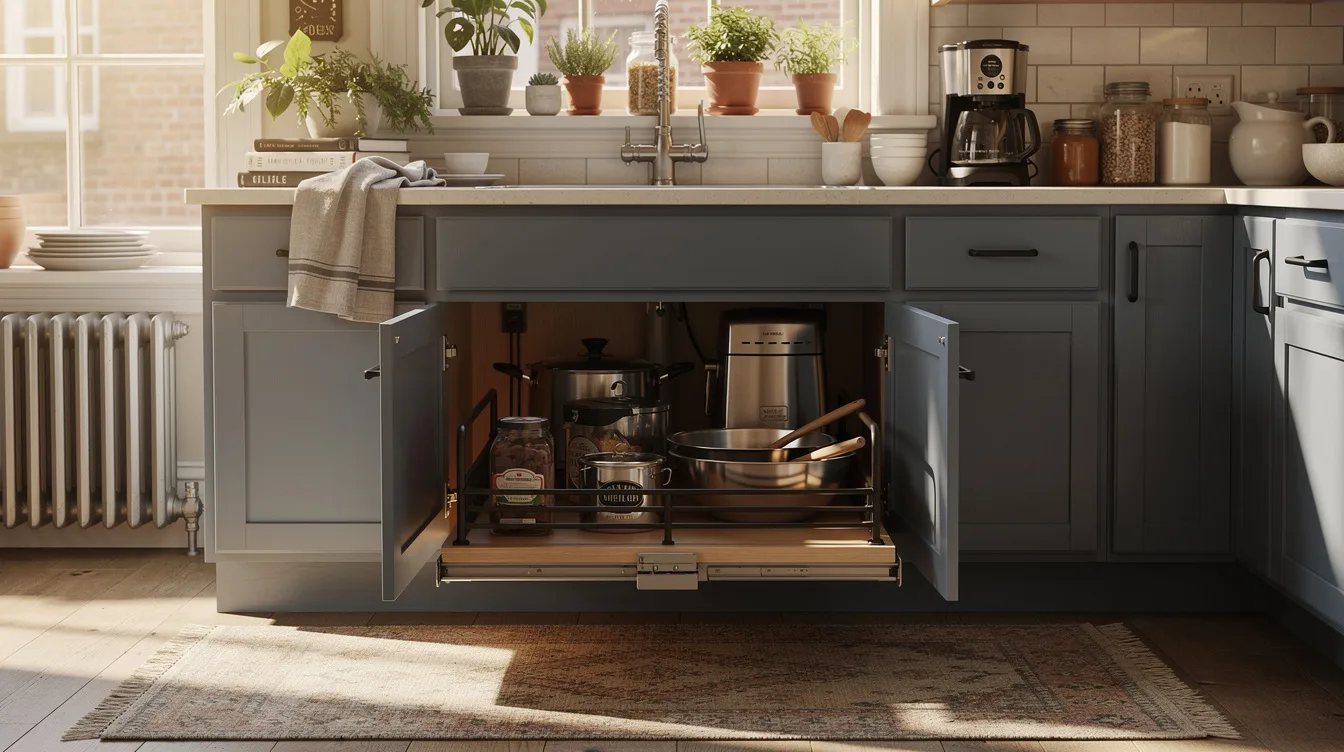
Deep base cabinets need a sliding shelf because the items in back disappear quickly. A wood or metal pull-out lets you bring pots, mixing bowls, and small appliances forward without kneeling on the floor.
Choose a model with a sturdy frame and a smooth track, then keep the heaviest cookware near the cabinet floor. Birch plywood holds up better than thin plastic when the shelf carries cast iron or a countertop appliance.
Raise Plates With a Two-Tier Shelf
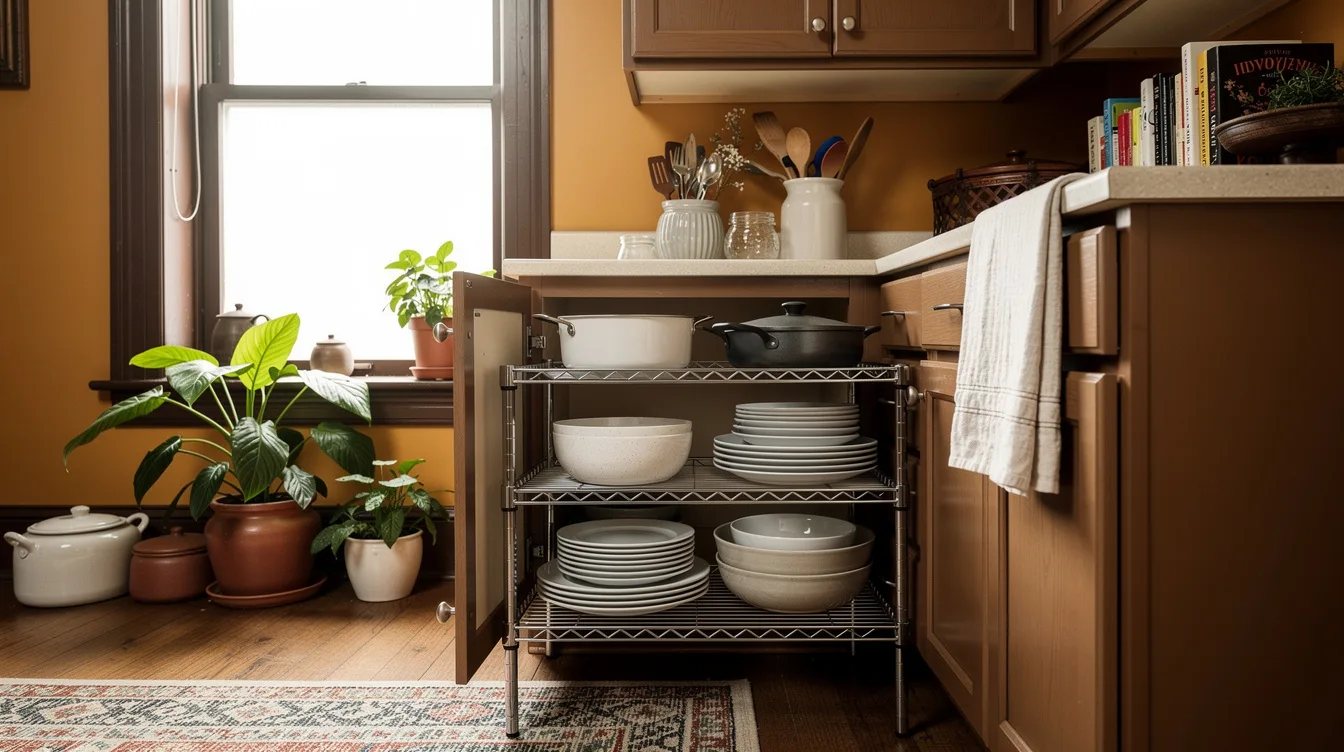
Builder-grade wall cabinets often waste vertical space above short stacks of dishes. A two-tier shelf creates a second level for bowls, saucers, or everyday plates while keeping everything visible.
Pick a shelf insert with a flat top and a firm base, not a delicate wire frame that flexes under weight. Powder-coated steel gives this small upgrade a cleaner, more stable feel than bargain plastic.
Stand Baking Sheets on Edge
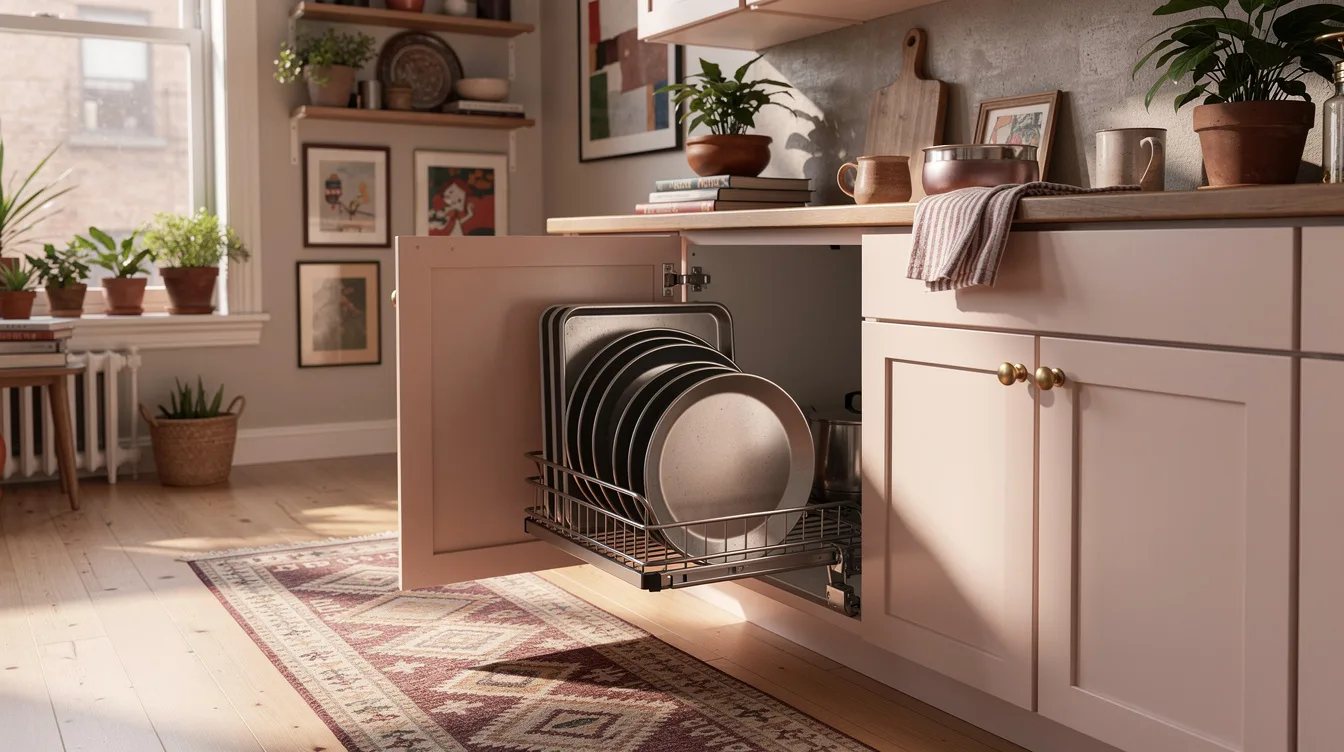
Flat pans become difficult to reach when they lie in a pile. A vertical divider turns a lower cabinet into a file system for cookie sheets, cooling racks, cutting boards, and pizza pans.
Keep each slot wide enough for one item, with enough clearance for handles and rolled edges. Bamboo dividers suit warm wood kitchens, while a coated metal rack works better beside a sink or range.
Separate Pot Lids From Cookware
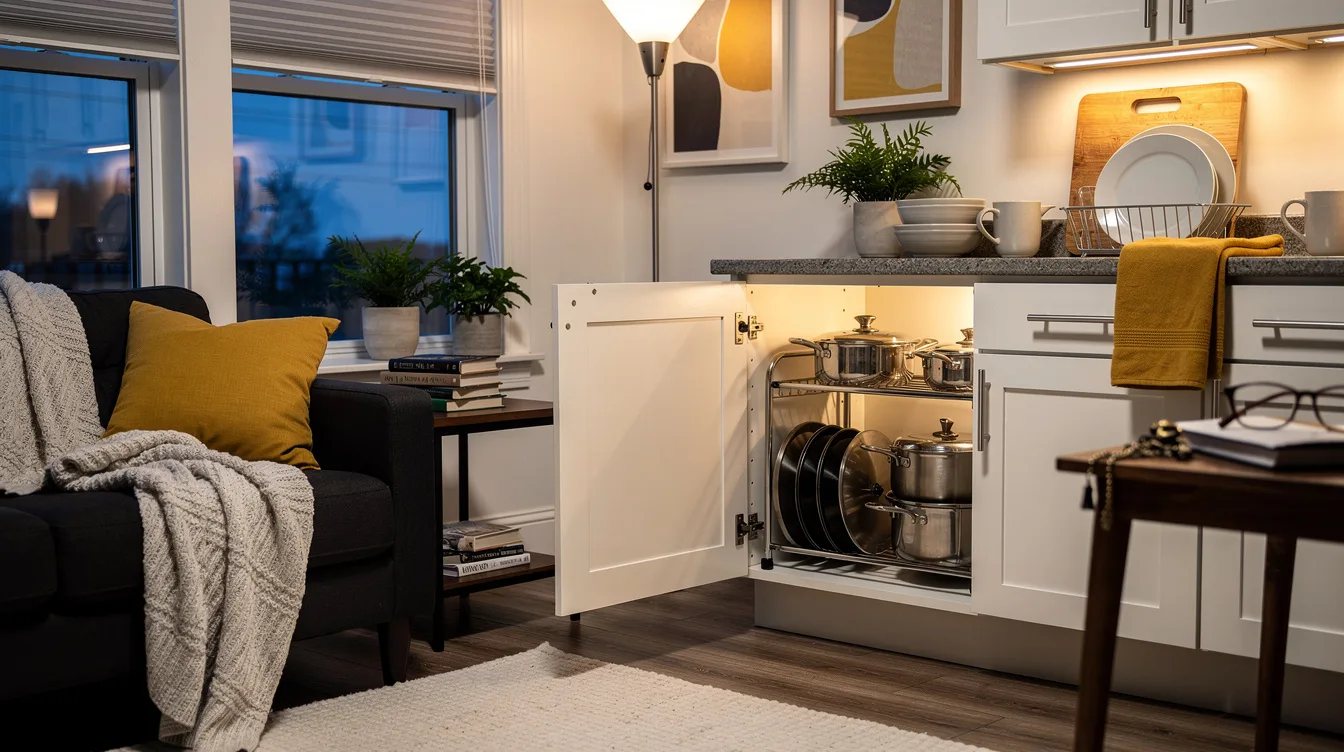
Lids deserve their own organizer because they slide, clatter, and occupy the most useful part of a cabinet. A narrow rack mounted inside the cabinet door or along the side wall keeps them upright and easy to grab.
Check the hinge clearance before installing anything on the door. Stainless steel handles steam and occasional splashes better than unfinished wood, especially in a busy cooking zone.
Give the Corner Cabinet a Turntable
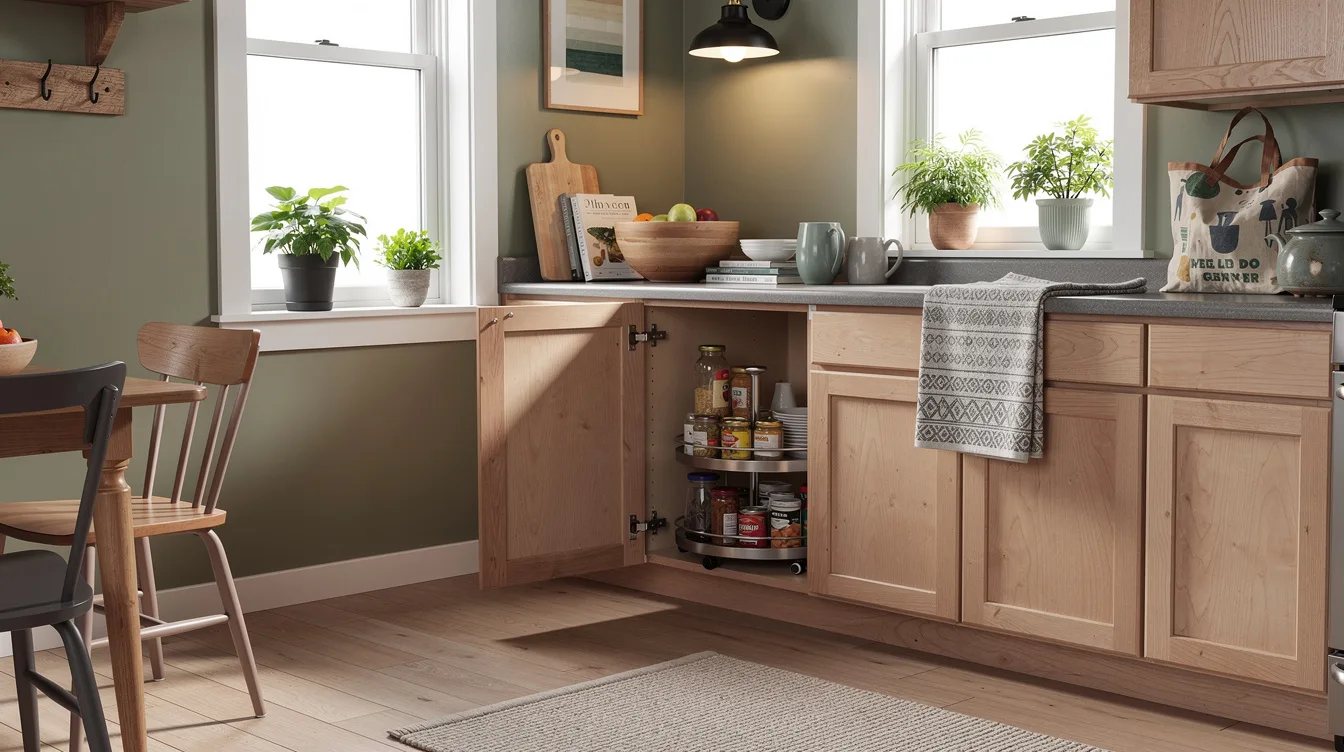
A corner cabinet becomes practical when every bottle can rotate into reach. Use a round turntable for oils, vinegars, spices, or baking supplies, and group items by task rather than by package height.
Measure the interior shelf before choosing the diameter, since the door frame can steal several inches. Clear acrylic makes labels easier to read, though a textured surface keeps slippery bottles steadier.
Add a Door-Mounted Supply Rack
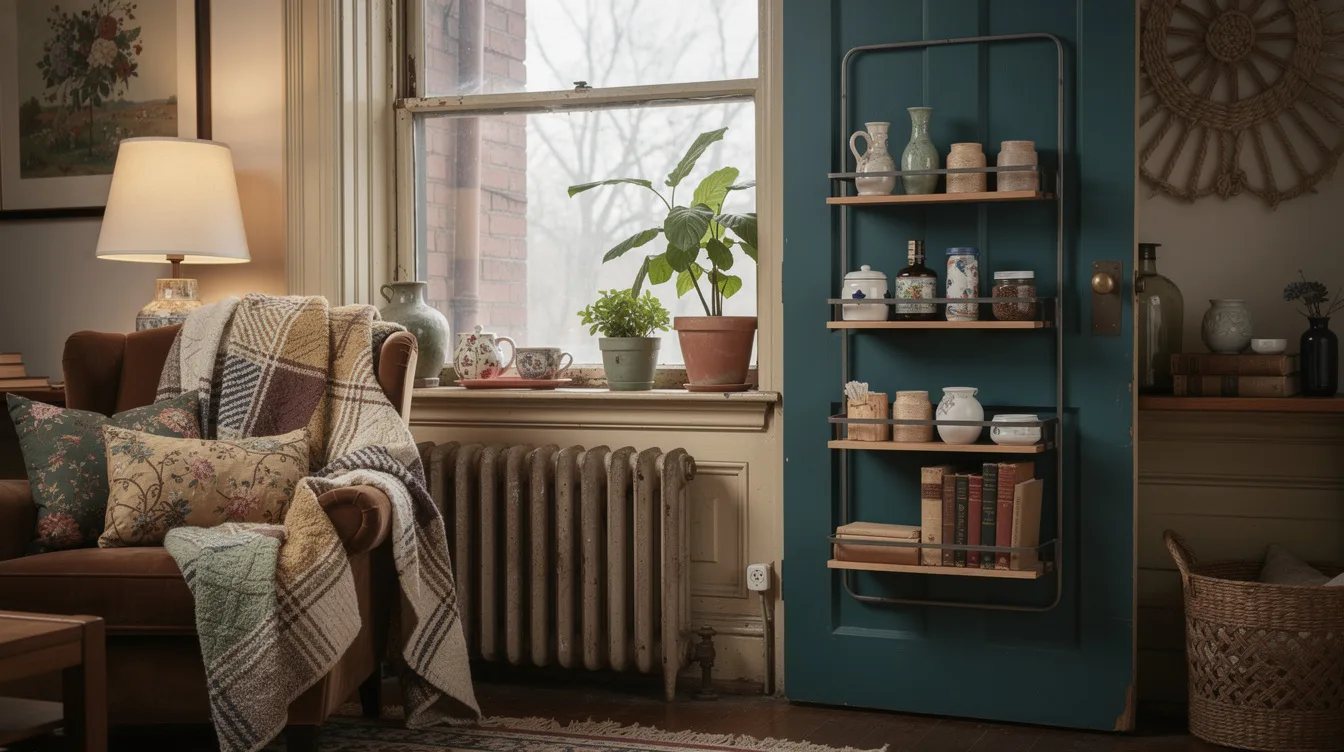
The inside of a cabinet door is valuable storage for lightweight items. A slim rack can hold wraps, parchment paper, measuring spoons, cleaning cloths, or small seasoning packets.
Use short screws only where the cabinet construction allows them, and keep the rack away from shelves that swing into the door. White wire blends with most builder-grade interiors and allows spills to be spotted quickly.
Use a Sink-Cabinet Caddy
The cabinet beneath the sink needs a compact caddy that works around plumbing. Store dishwasher tabs, sponges, gloves, and brushes in one removable container instead of scattering them across the floor of the cabinet.
Choose a design with a raised base and ventilation holes, then leave space around the shutoff valves. Recycled plastic is the sensible choice here because it tolerates moisture and wipes clean in seconds.
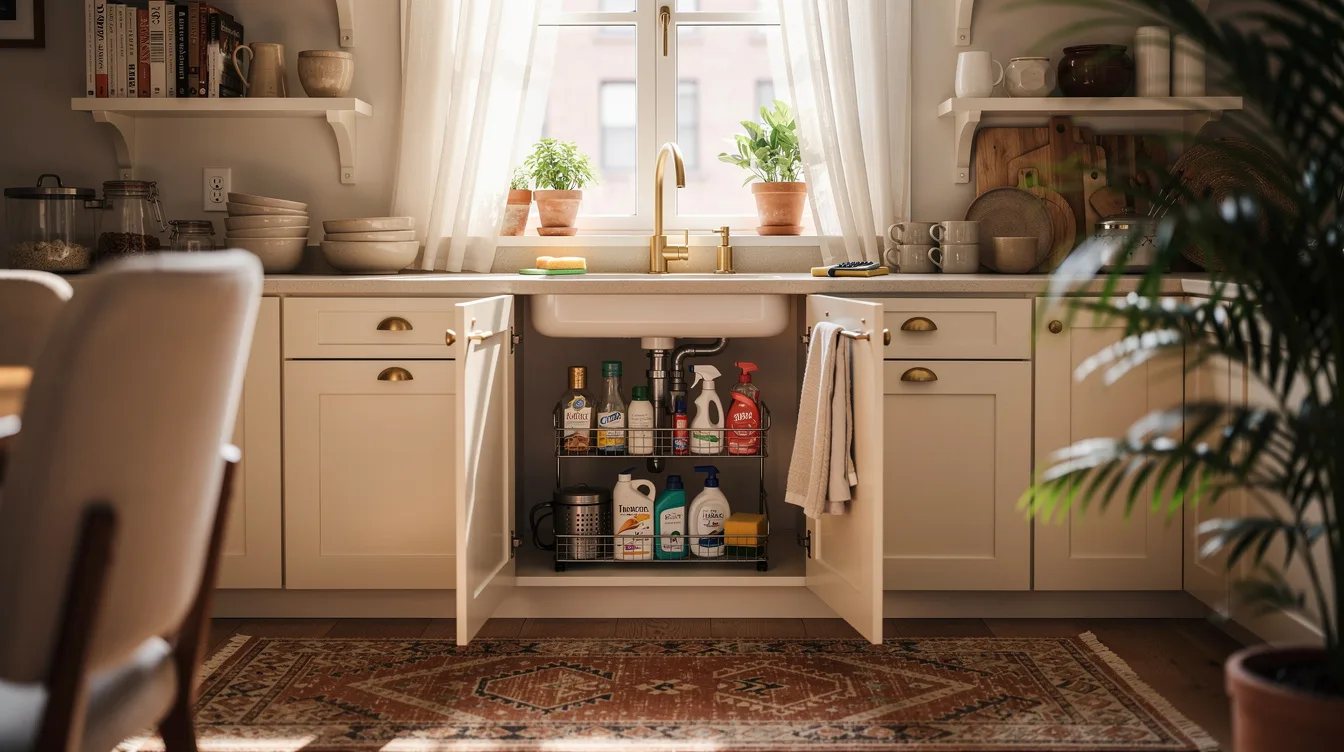
Slide Cleaning Bottles Forward
A shallow pull-out bin makes the back half of a sink cabinet usable. It keeps spray bottles upright and lets you see what remains before buying another bottle of cleaner.
Reserve one bin for daily supplies and another for refills so the cabinet stays easy to reset. Black metal looks deliberate against a white cabinet box, but the organizer should have a sealed finish near plumbing.
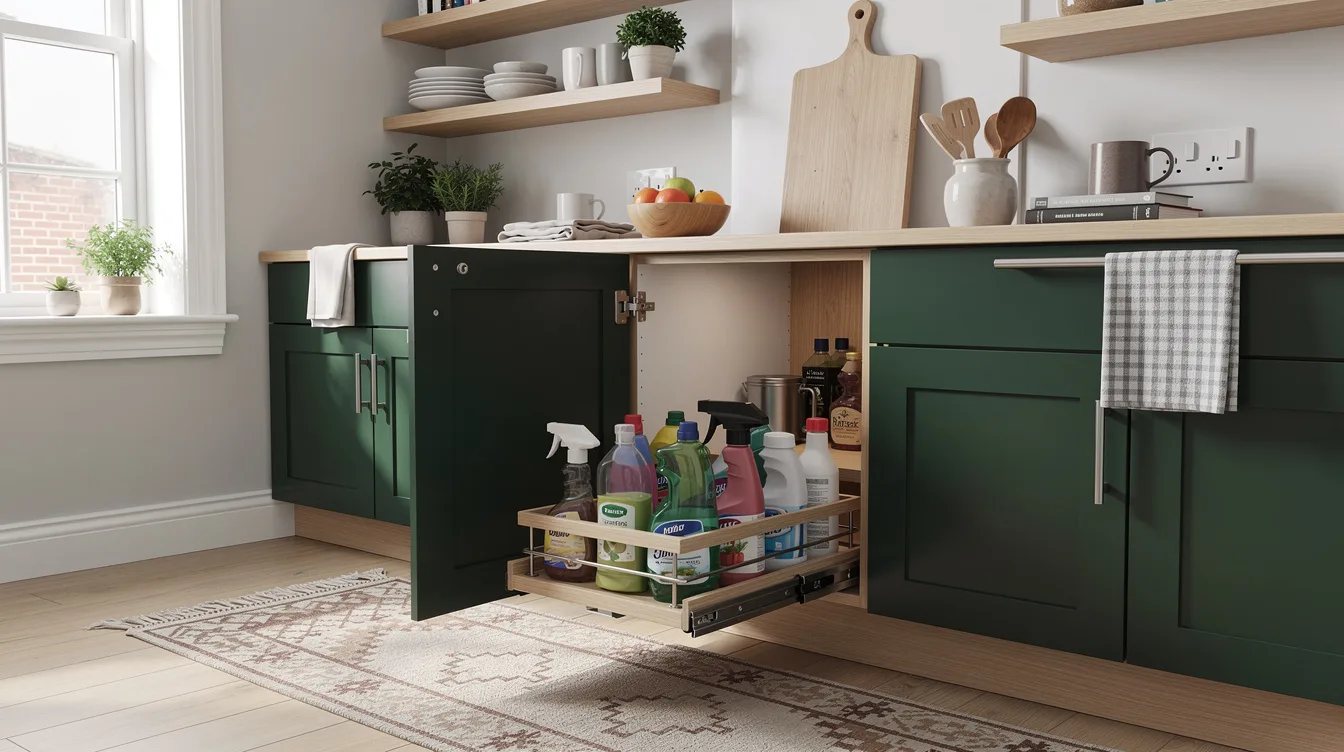
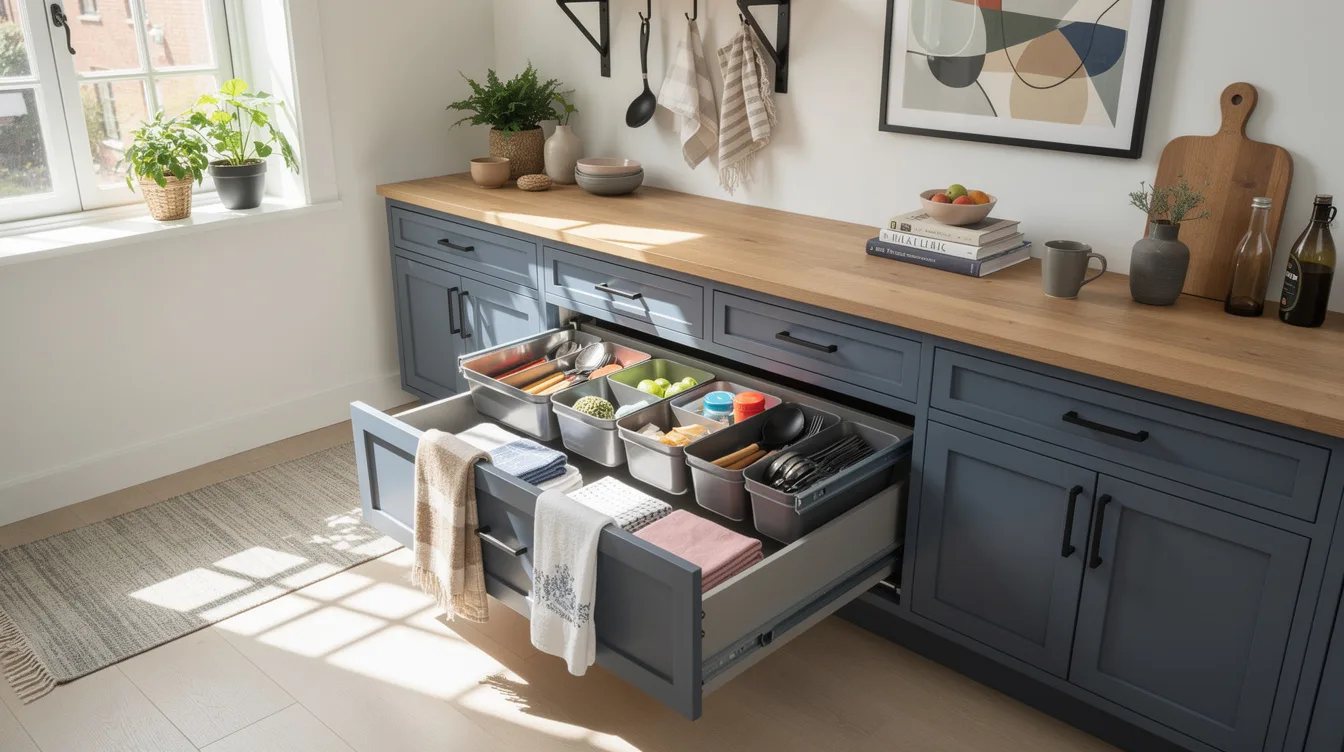
Divide Drawers by Function
One oversized drawer rarely organizes itself. Use separate sections for flatware, cooking tools, and small gadgets, with the most frequently used pieces closest to the front.
Adjustable dividers are worth choosing because builder-grade drawer widths vary. Natural maple adds warmth inside a plain white drawer, while nonslip feet keep each section from drifting.
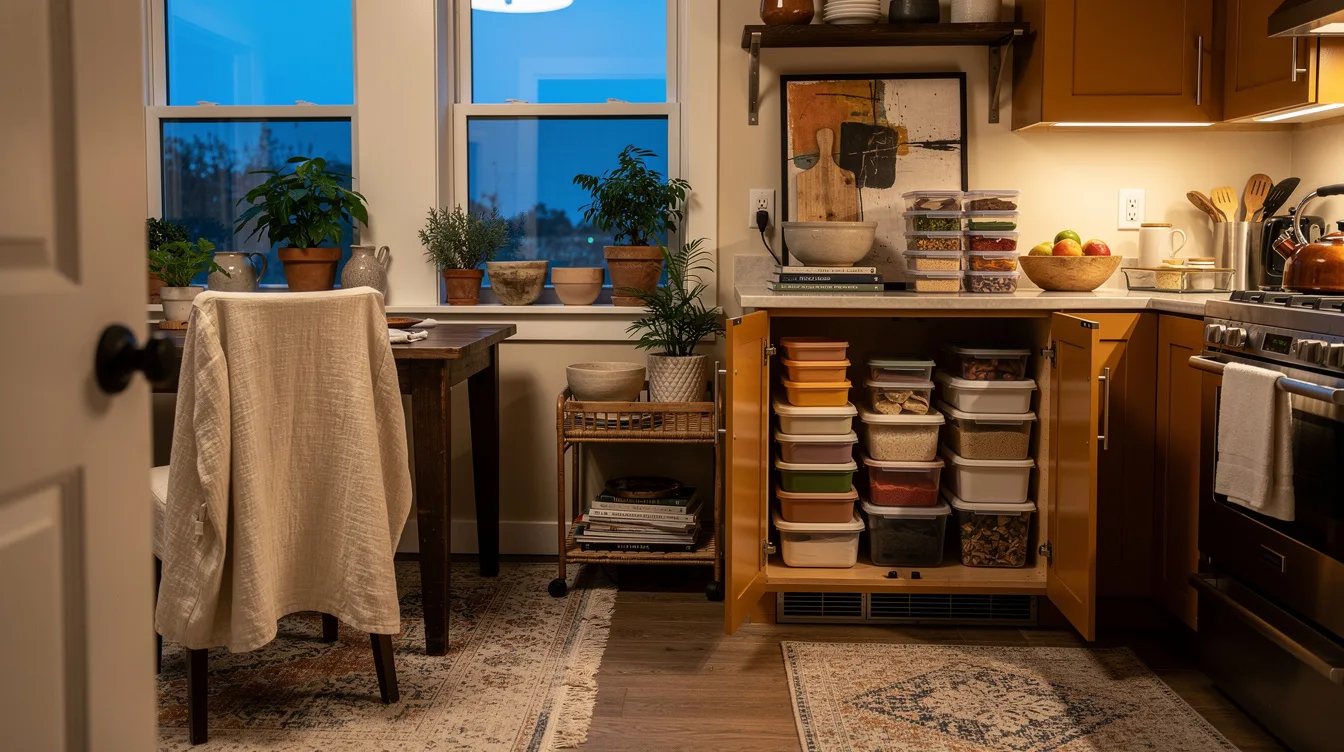
Stack Food Containers by Shape
Food-storage containers take over a cabinet when every lid and base lands in a different pile. Group square pieces together, nest matching bases, and place lids vertically in a narrow holder.
Use clear bins only when they fit the shelf without blocking the cabinet front. Clear polypropylene makes mismatched pieces easier to identify, but opaque bins hide visual clutter better in an open pantry.
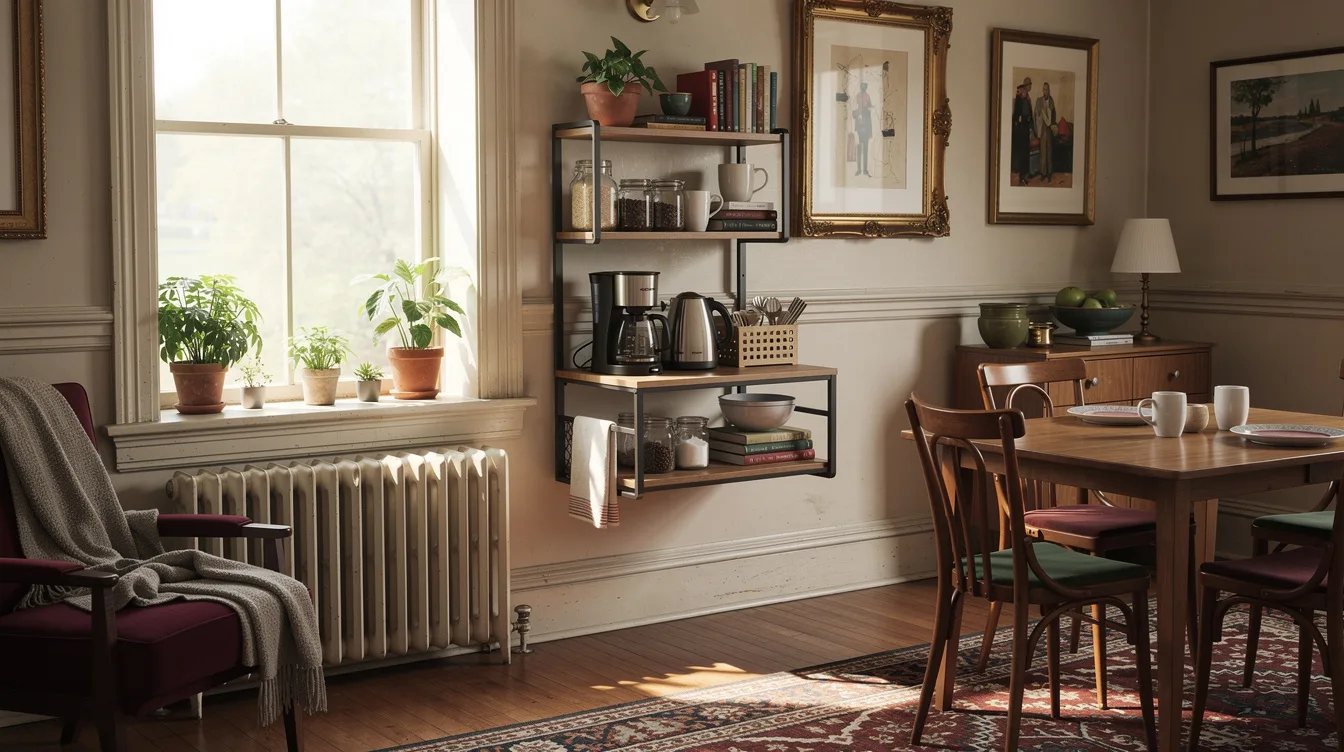
Create a Coffee Station Shelf
A small shelf insert can turn a crowded beverage cabinet into a usable station. Place mugs below, coffee or tea in a compact bin, and filters in a narrow tray that does not compete with the machine.
Keep the shelf close to the counter where the coffee maker sits, and leave room for handles to face outward. Acacia wood adds a warmer note than chrome and pairs well with everyday ceramic mugs.
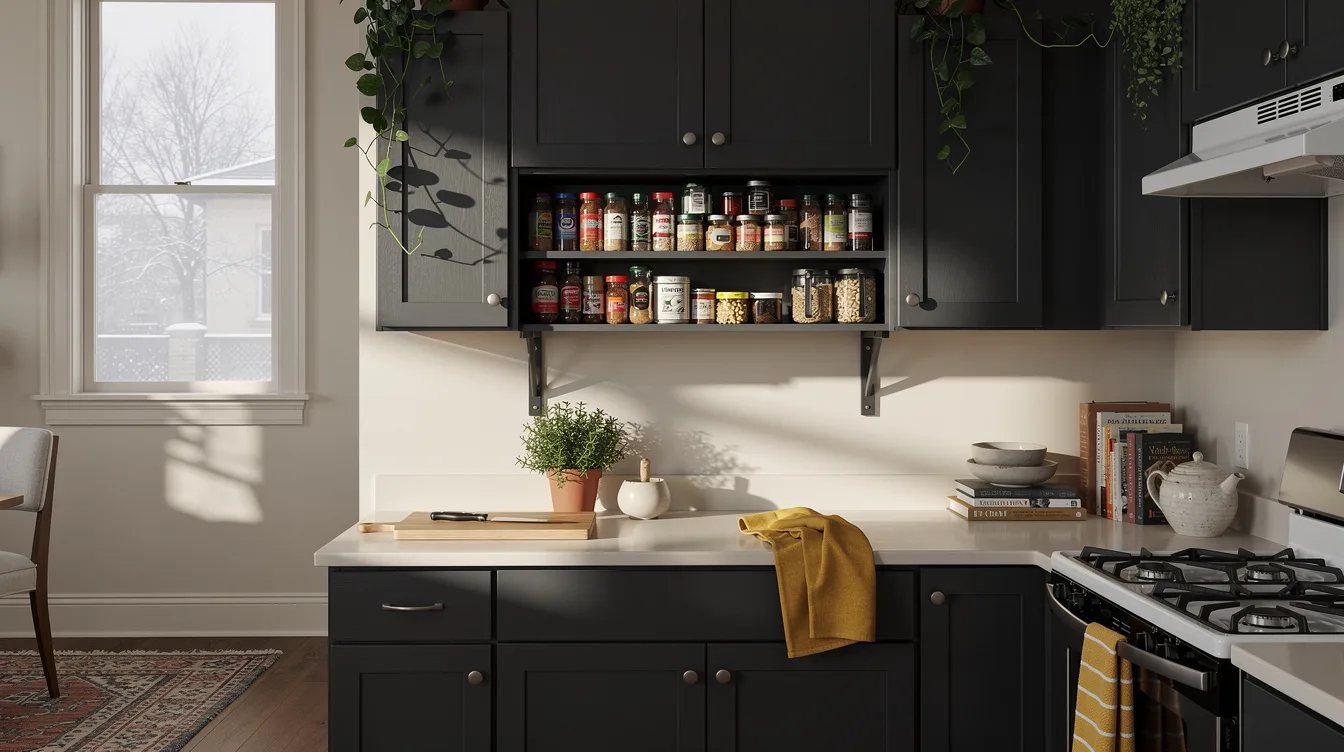
Contain Spices on a Narrow Shelf
Spice jars need shallow storage, not a deep shelf where labels vanish. A tiered riser lets you read the back row and keeps duplicate jars from hiding behind taller bottles.
Sort spices alphabetically only if that feels natural; grouping by cooking style is often faster. Powder-coated aluminum resists rust and gives a narrow cabinet shelf a cleaner, lighter profile.
Leave One Shelf Unfilled
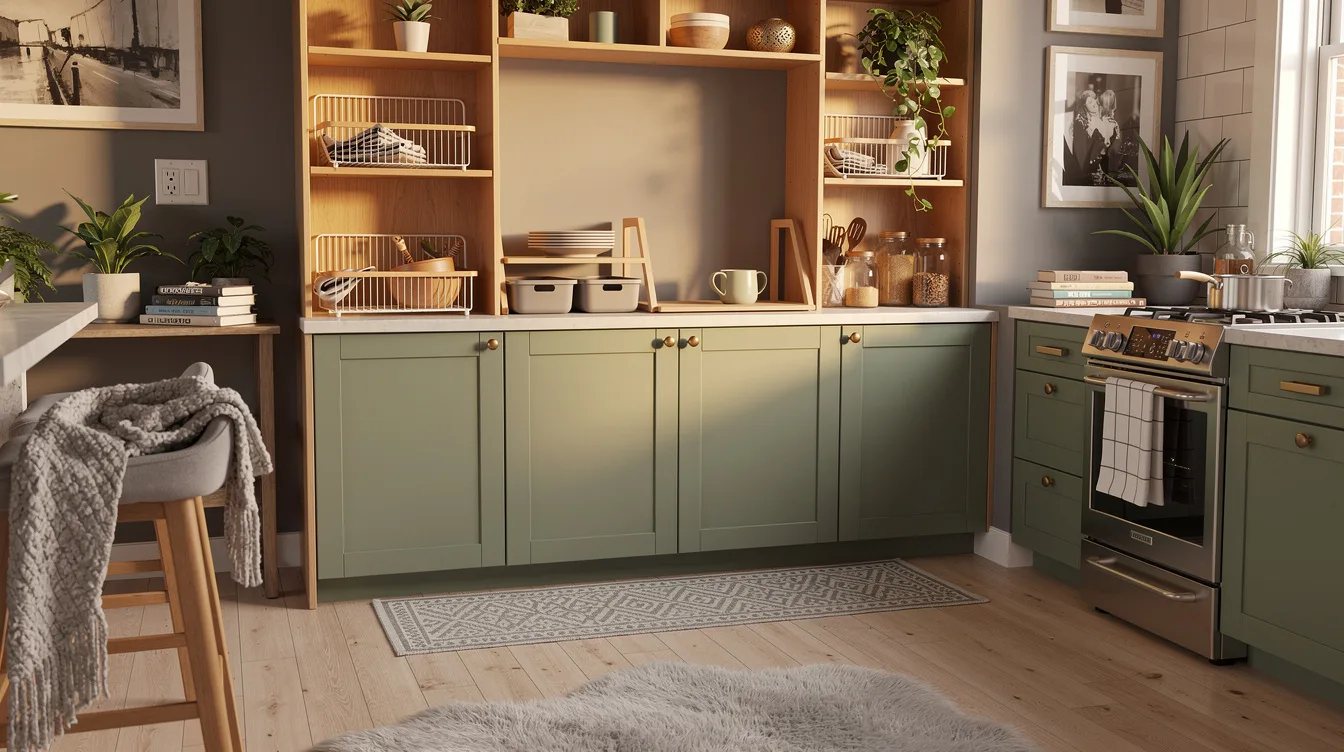
Every organizer needs a little empty space around it. Reserve roughly 15 percent of the cabinet for new groceries, oversized cookware, or the item that never fits the original plan.
Our preferred finish is simple: install the pieces that solve daily frustration, then stop when the cabinet works. A non-slip shelf liner can protect the cabinet box and quiet movement without adding another bulky container.
Keep reading
- Narrow Hallway Eating Your Entry Space? 14 Lowe's Benches Under 36 Inches
- Blind Corner Cabinet Eating Your Cookware? 12 Home Depot Pull-Outs
- Tiny Balcony Eating Your Floor Space? 14 IKEA Foldable Finds
Start with the cabinet that causes the most daily irritation, measure it carefully, and buy one organizer that fixes that exact problem. A single pull-out shelf or vertical divider can make the rest of the kitchen easier to manage.