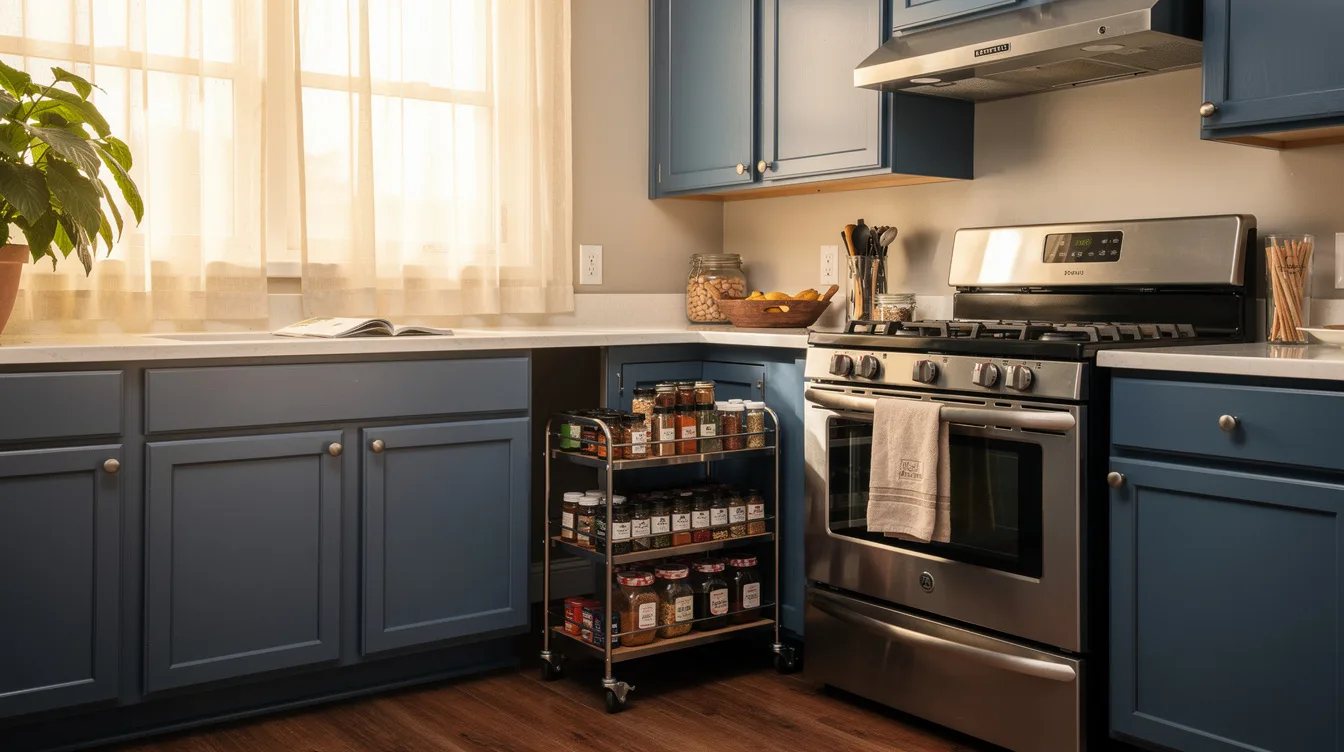
Awkward Stove Gap Eating Your Counter? Style Selections Spice Racks
27 september 2026A rack that measures about 10.5 inches wide can be a bargain beside the stove and still be useless in a true 3-to-6-inch filler gap. The right choice depends on the exact opening, the rack's full depth, and whether the space is a counter landing zone or a narrow strip between cabinets.
These 12 setups sort the options by real gap size, with the Lowe's Style Selections rack in its proper place: a compact countertop organizer, not a magic solution for every skinny void.
What you will find inside
- Measure the Gap Before Buying
- Roll a Cart Through a 3-to-4-Inch Gap
- Choose Tiered Storage for a 4.5-to-6-Inch Slot
- Use a Freestanding Rack in a 6-to-9-Inch Zone
- Set Style Selections on a Small Side Counter
- Fill a 9-to-12-Inch Side Zone with Three Tiers
- Turn a Cabinet Interior into a Pull-Out Pantry
- Align the Rack with Counter Height
- Keep the Small Rack Under Upper Cabinets
- Raise Labels with Stepped Shelves
- Assign the Bottom Tier to Tall Bottles
- Protect the Rack from Heat and Door Clearance
Measure the Gap Before Buying
Measure the clear space beside the stove at the front, middle, and back. Cabinets, handles, baseboards, and uneven walls can change the usable width, so shop for a rack about 0.5 to 1 inch narrower than the smallest measurement.
A slim steel rack also needs room for wheels and cleaning access. This step matters most because a 5-inch opening cannot accept a rack listed at 5 inches wide once its handle or frame is included.
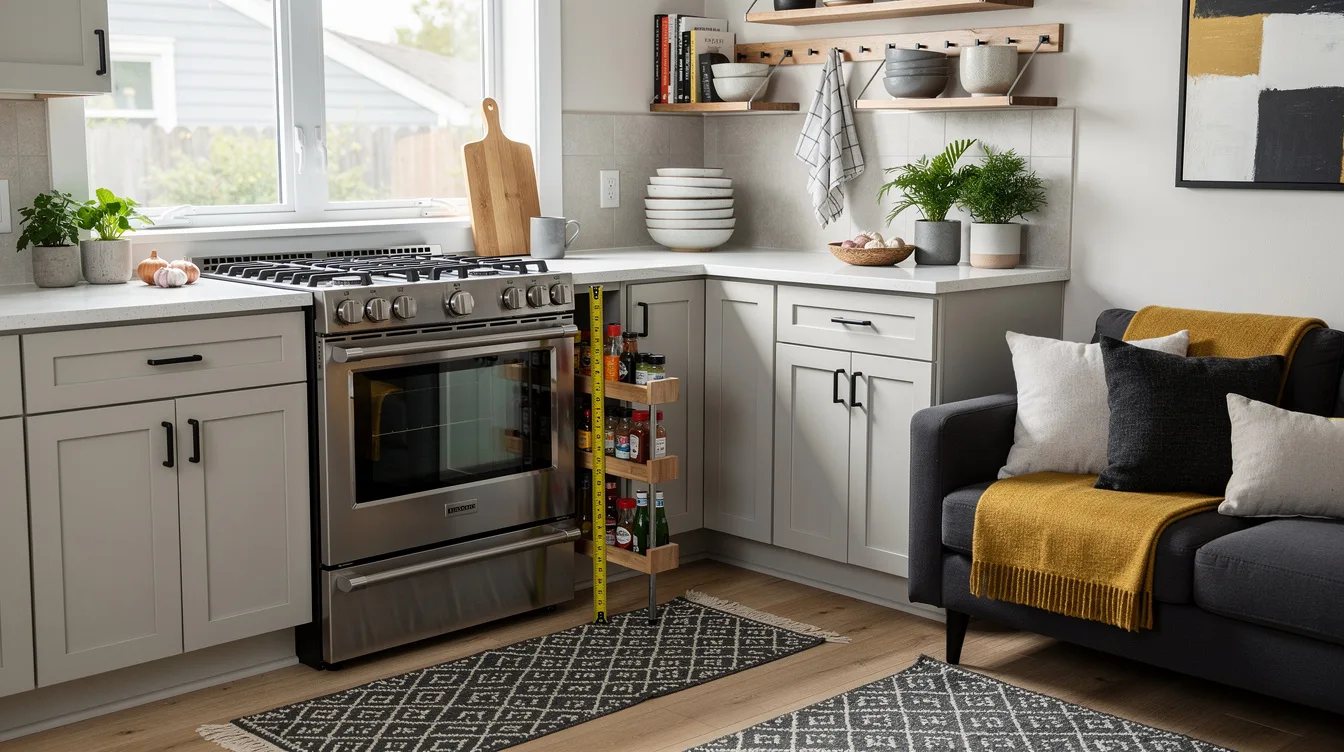
Roll a Cart Through a 3-to-4-Inch Gap
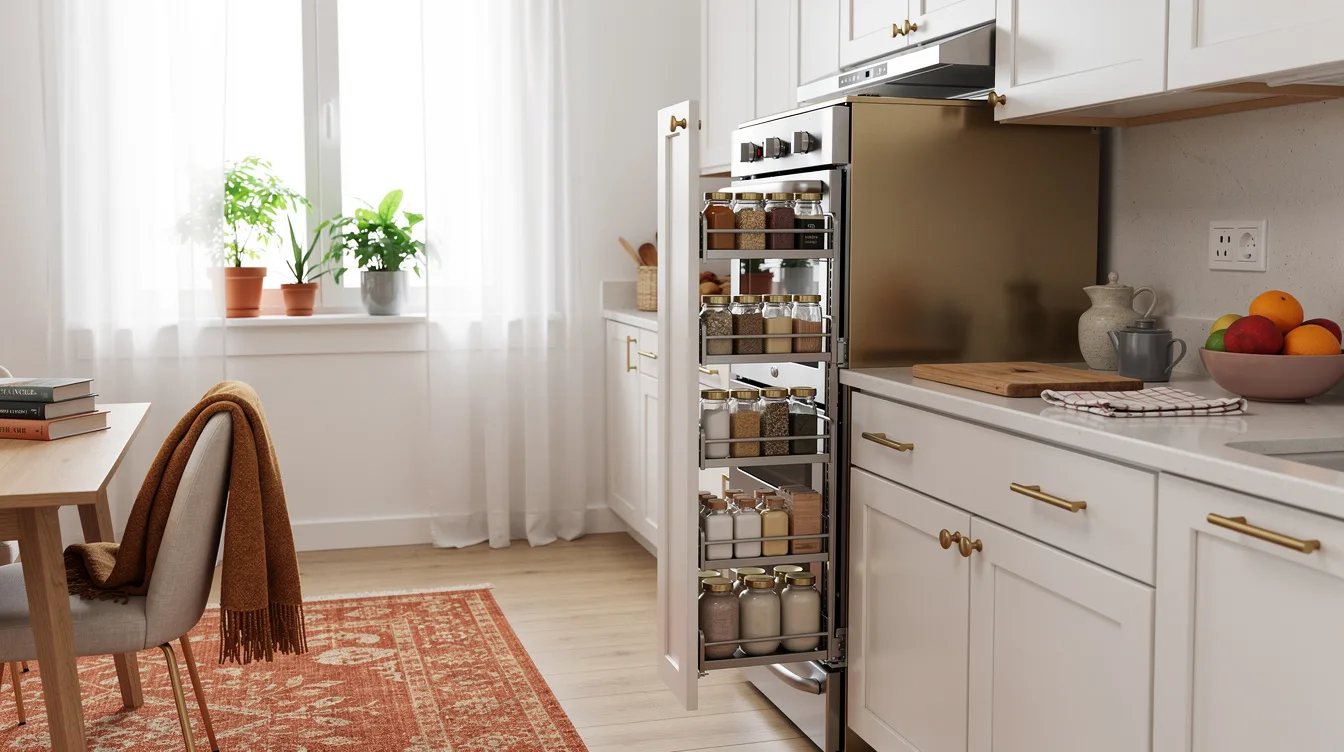
A true 3-to-4-inch opening calls for a narrow rolling gap-filler cart, usually priced around $25 to $55. Look for a simple powder-coated steel frame with shallow shelves rather than a bulky pantry cabinet.
Keep dry spices on the middle level, with foil, parchment, or trivets higher up. Measure the full cart depth too, since about 16 to 22 inches may be needed beside a lower-cabinet run.
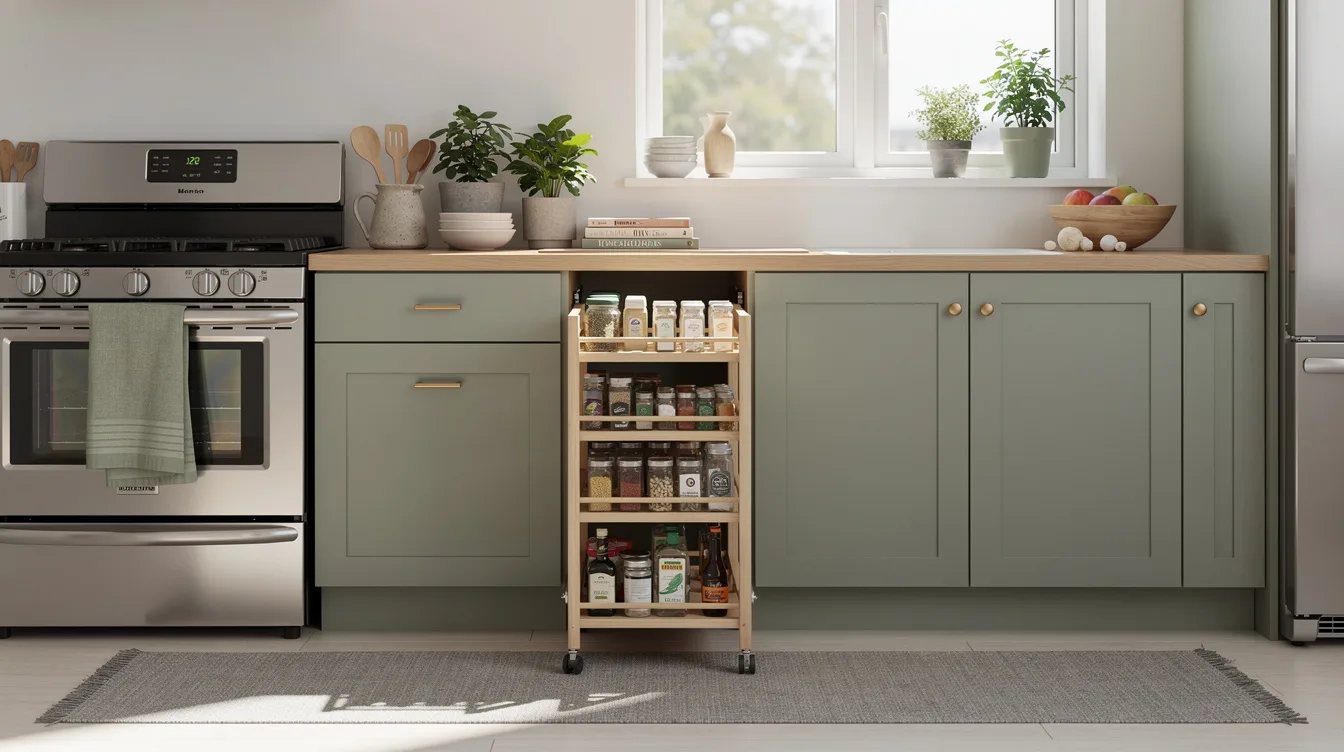
Choose Tiered Storage for a 4.5-to-6-Inch Slot
A 4.5-to-6-inch gap works well with a three- or four-tier rolling rack, typically around $30 to $70. A steel mesh cart handles oil splatter and routine wiping better than flimsy open plastic near a burner.
Use locking wheels if the cart sits near the oven door. The brake keeps the rack from shifting when you pull out a drawer or reach for a jar during cooking.
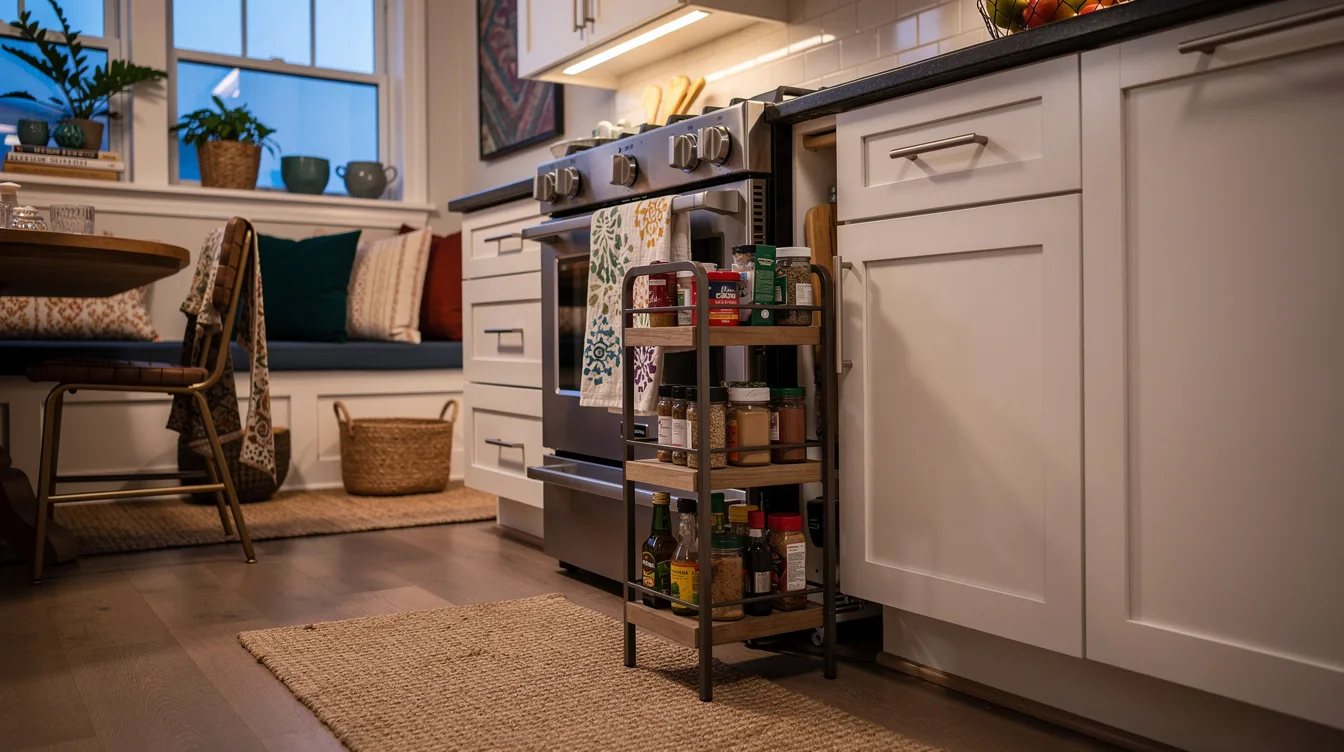
Use a Freestanding Rack in a 6-to-9-Inch Zone
Once the side opening reaches about 6 to 9 inches, a freestanding vertical spice rack becomes practical. A compact white metal organizer usually costs about $8 to $40 and can hold everyday jars without taking over the counter.
Choose open sides and a stable base so crumbs and grease do not collect in hidden corners. This format is especially useful when the rack must sit on the counter beside the range instead of sliding under it.
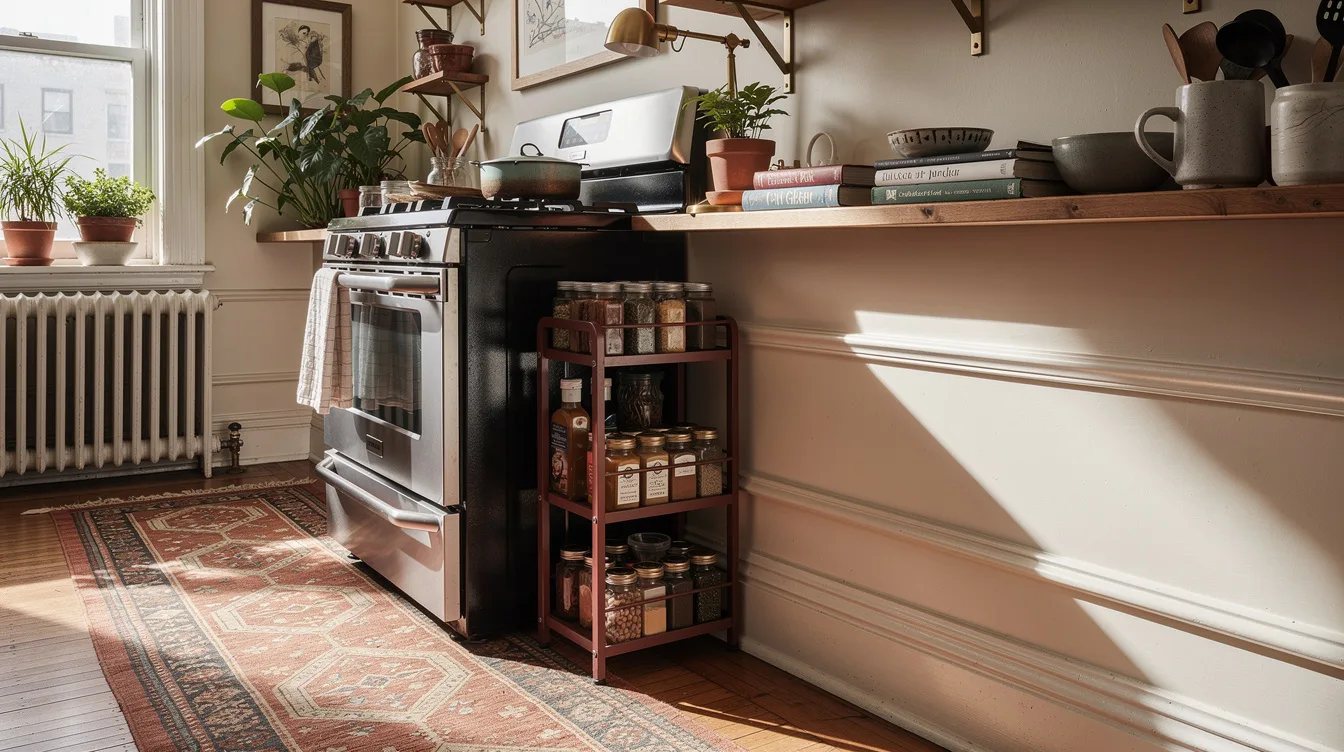
Set Style Selections on a Small Side Counter
The Style Selections three-tier freestanding rack at Lowe's measures about 10.5 inches wide by 9.37 inches deep and 4.53 inches high. Listed at about $7.98, it is an excellent value for a small countertop landing zone.
Its stepped shelves keep standard spice bottles, extracts, salt blends, and small sauces visible. The rack is too wide for a classic 3-to-6-inch filler gap, so it belongs beside the stove on a roughly 11-to-13-inch counter area, inside a cabinet, or in a pantry.
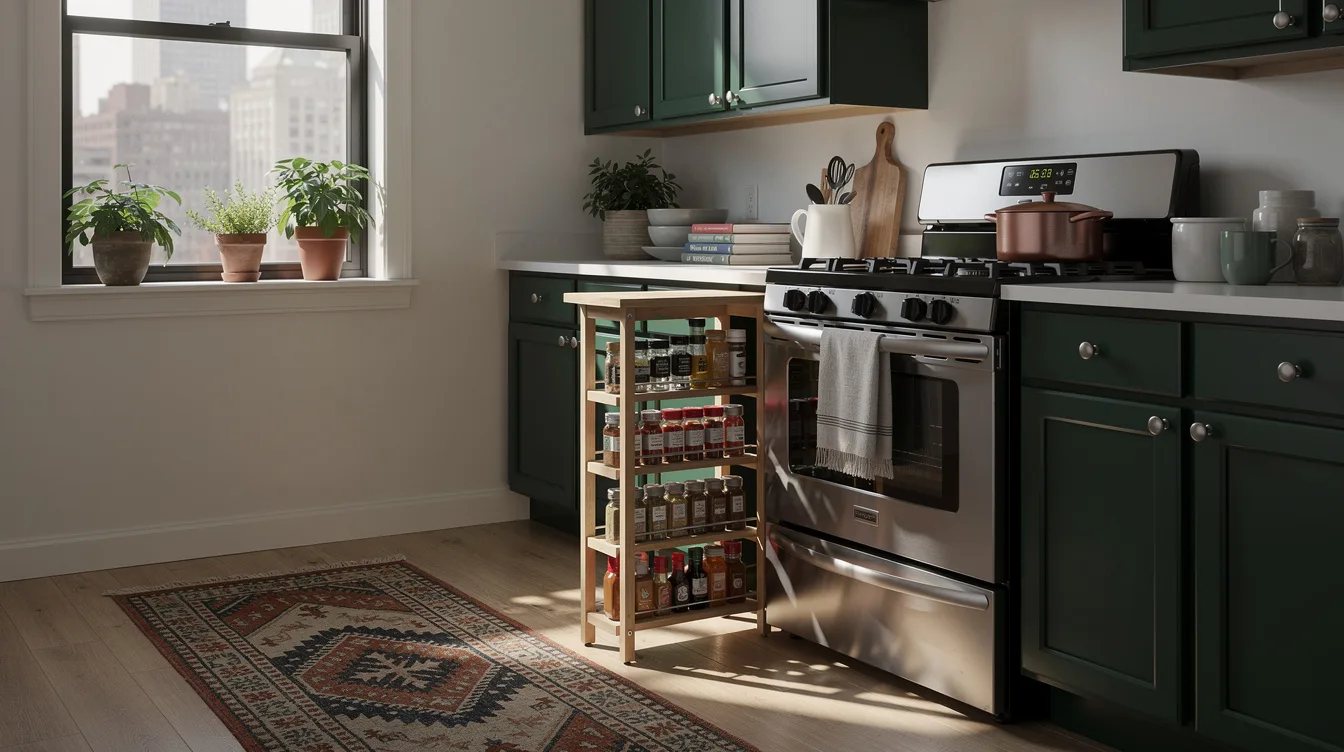
Fill a 9-to-12-Inch Side Zone with Three Tiers
A 9-to-12-inch opening gives you room for a larger three-tier shelf or cabinet-side organizer. A painted metal shelf in this range generally costs about $8 to $40 and leaves enough breathing room to remove jars without scraping the stove.
Use the back of the zone for less frequently used seasonings and keep daily staples at the front. The best shelf is the one you can wipe in one pass, so skip ornate frames that trap grease.
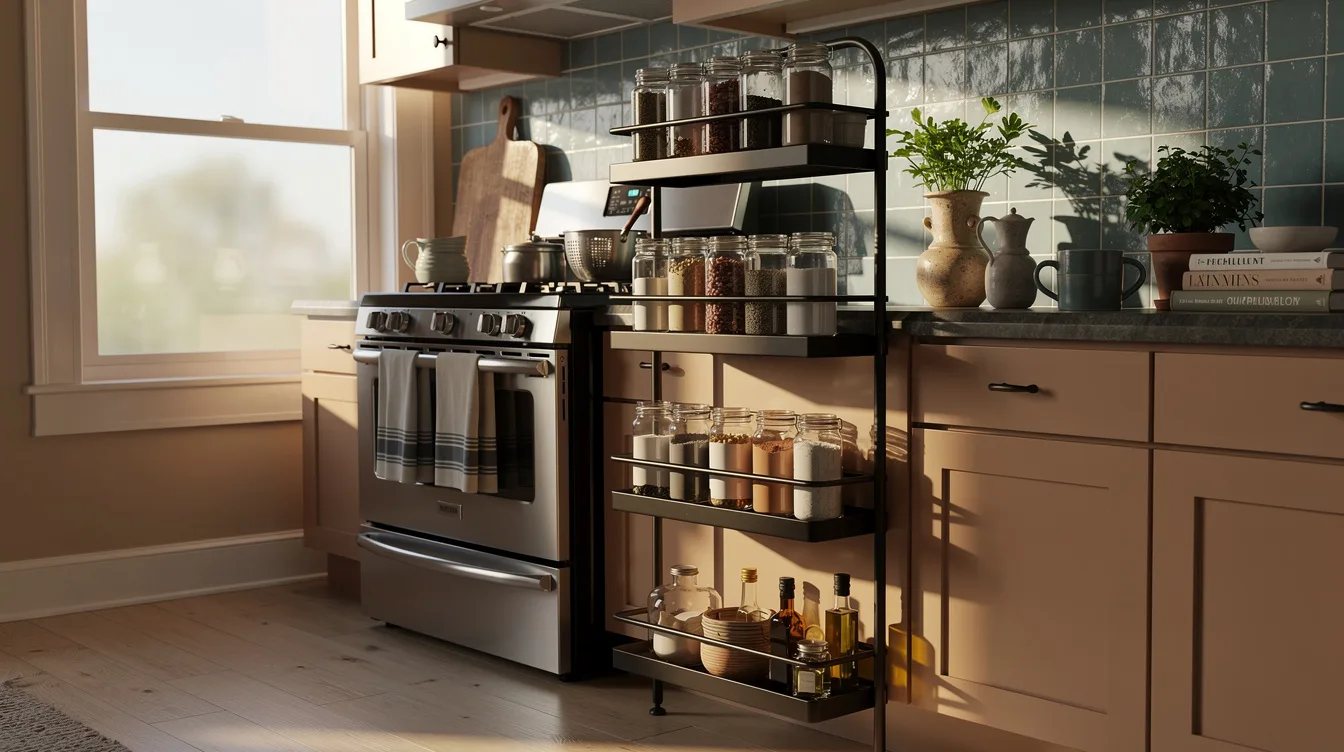
Turn a Cabinet Interior into a Pull-Out Pantry
If the gap beside the stove is part of a base cabinet, a narrow pull-out pantry can provide the cleanest storage. A wood-and-metal pull-out is useful for spices, oils, and cooking tools, though the cabinet width must be checked before ordering.
Leave enough clearance for the cabinet face and hinges, then keep the hottest ingredients farther from the range side. This setup costs more than a freestanding rack, but it gives the kitchen a quieter, built-in appearance.
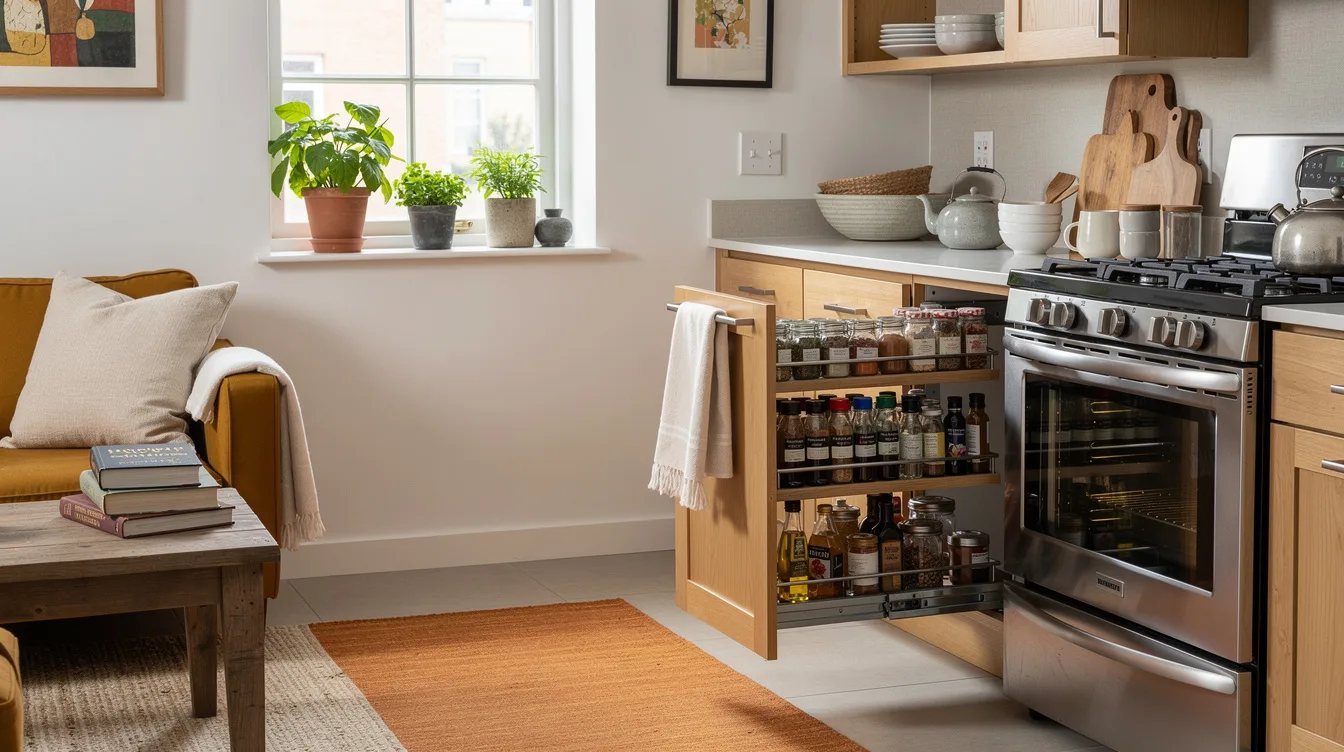
Align the Rack with Counter Height
For a cart that should sit visually beside the counter, look for a height of about 30 to 35 inches. A black metal cart at counter height makes the side gap feel intentional and keeps jars within reach while you cook.
Lower carts work better when a counter overhang or cabinet rail blocks the top. Do not force a tall rack into a short opening, because the upper frame can catch on the underside of the countertop.
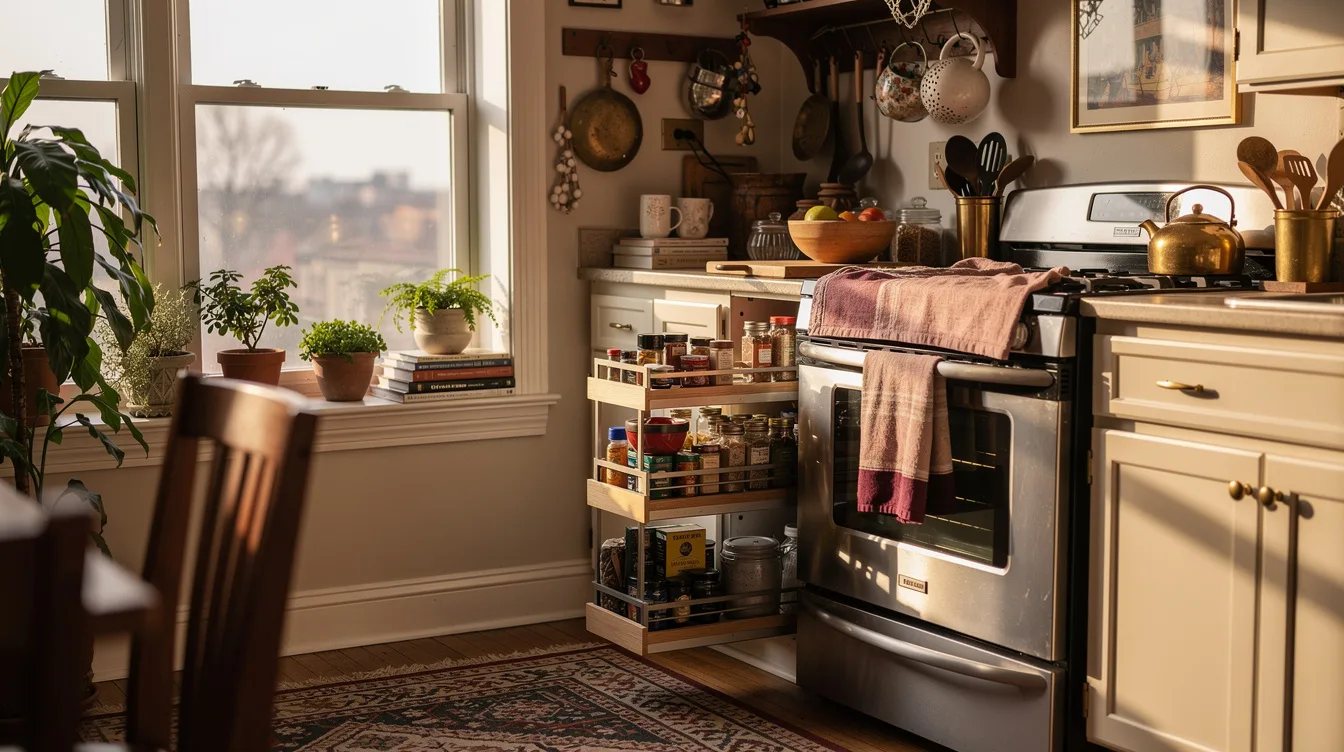
Keep the Small Rack Under Upper Cabinets
A low stepped rack works beautifully on a narrow counter beneath upper cabinets. The Style Selections rack is only about 4.53 inches high, so it keeps labels visible without crowding the space above the stove-side work surface.
Use uniform jars when possible, and group blends by how often you reach for them. A low profile is the right choice when the counter also holds a cutting board, coffee machine, or mixing bowl.
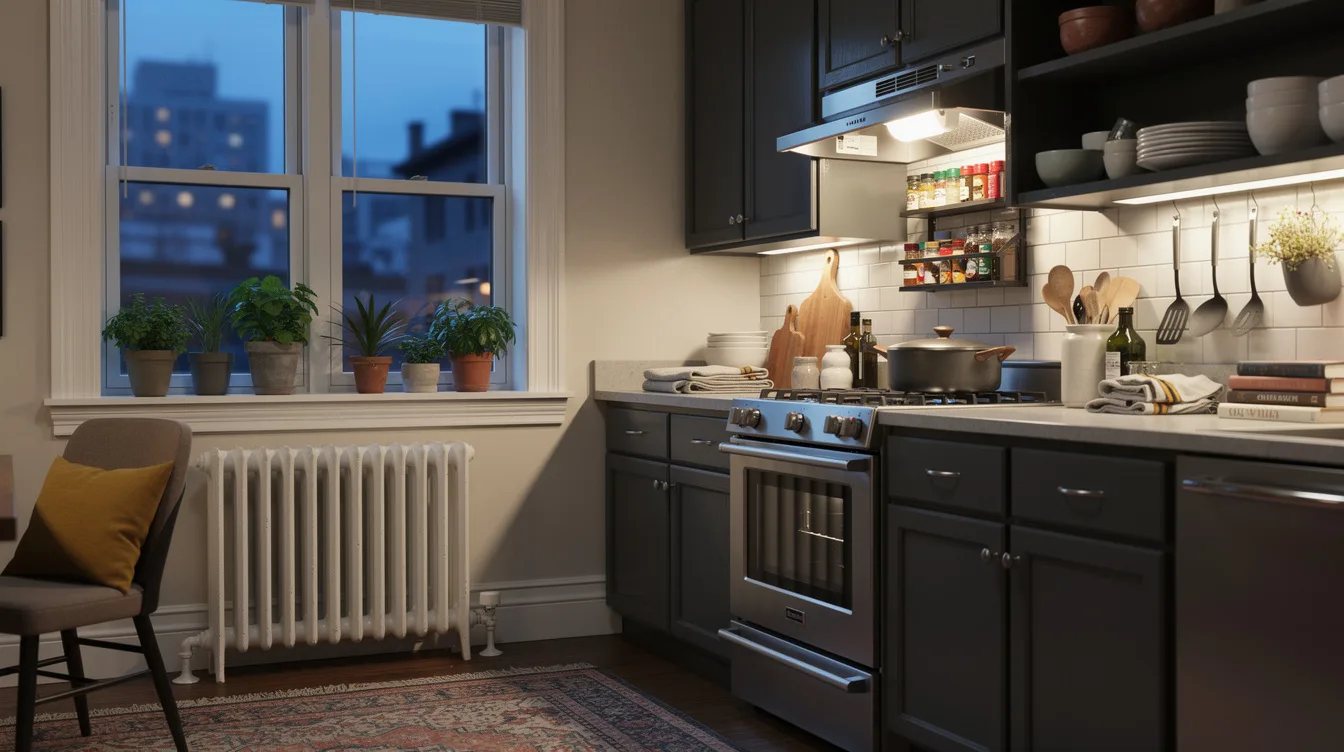
Raise Labels with Stepped Shelves
Spice jars disappear when they sit in a flat row, especially beside a deep range. A stepped metal shelf brings the rear labels forward and makes a narrow rack easier to scan during a busy meal.
Place the most-used jars on the front level and reserve the highest step for blends used less often. Avoid storing oversized oil bottles on the top tier, where they can become unstable when the rack moves.
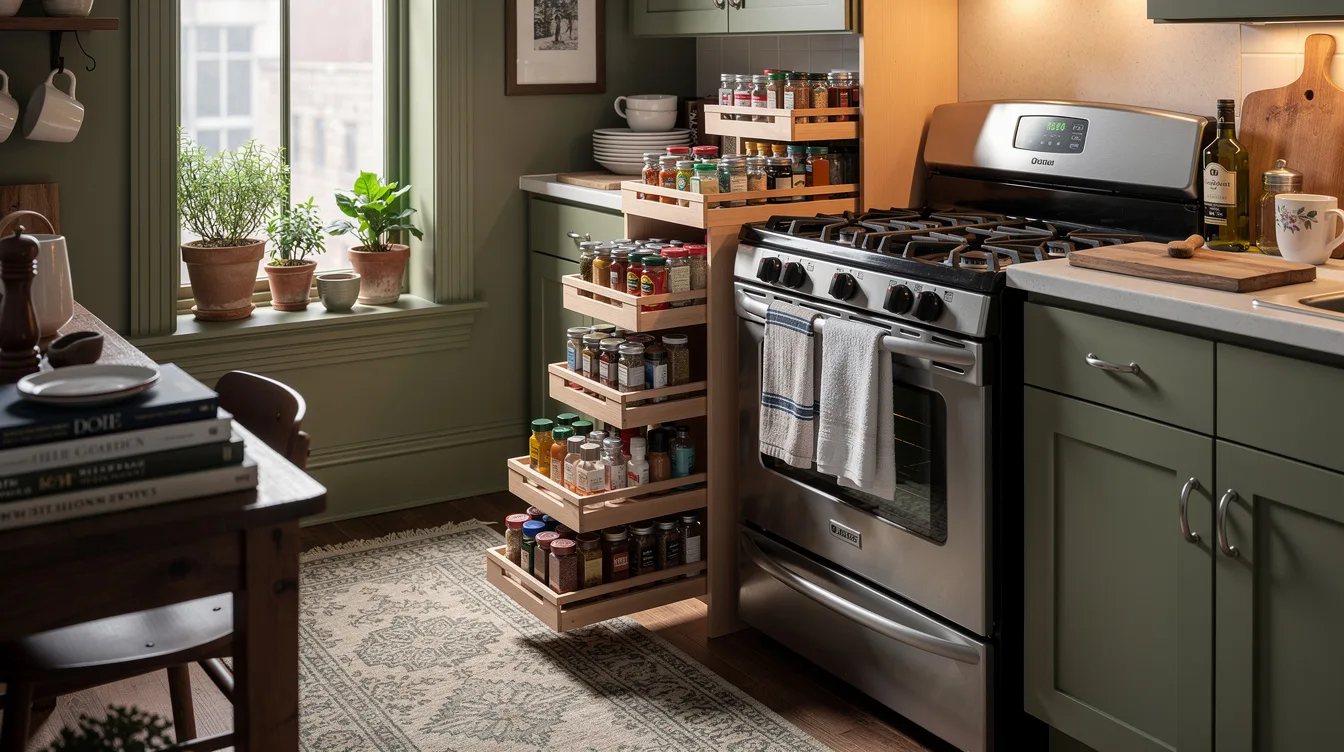
Assign the Bottom Tier to Tall Bottles
The bottom shelf should carry the tallest and heaviest items, including cooking oils, small sauces, and larger seasoning containers. A wire-frame cart is practical here because its open sides make bottle shapes easy to see.
Keep standard spice jars on the middle shelves, where they are lighter and easier to grab. Paper goods belong farther from the burner because heat, grease, and stray sparks are a poor combination.
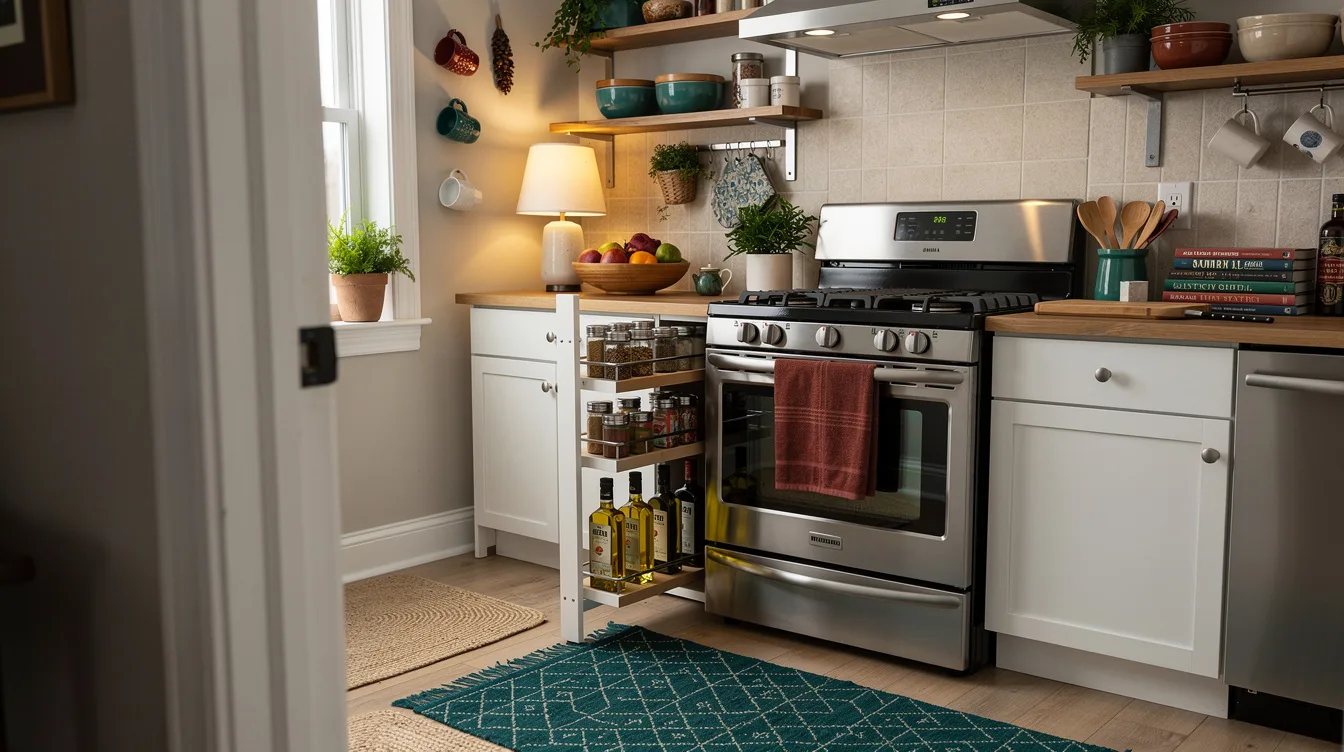
Protect the Rack from Heat and Door Clearance
Leave the stove's ventilation paths and oven-door swing unobstructed. A stainless steel shelf may tolerate routine kitchen heat, but every rack still needs distance from open flames, hot cookware, and direct burner output.
Keep the rack far enough away that a pan handle cannot strike it. If the side gap is too close to the range to store safely, use the counter area farther down the cabinet run instead.
Start with the smallest clear measurement, then choose a rack about 0.5 to 1 inch narrower and keep heat and door clearance open. That quick check will save the cost of a rack that never slides into place.