How to Transform Your Garage Into a Home Gym Without Wasting Space - 19 Ideas
24 september 2026Garage home gym ideas work best when you plan the room around movement, storage, and light before buying equipment. I learned that after squeezing a rack beside a freezer and spending every workout stepping over bands. Your garage can feel warm, calm, and inviting with an 8-foot clearance plan, an 8x10-foot mat zone, and a short equipment list. Start with the floor. Then build upward.
If you’re working with a particularly narrow footprint, these small-space home gym ideas can help you decide what deserves the room’s limited square footage.
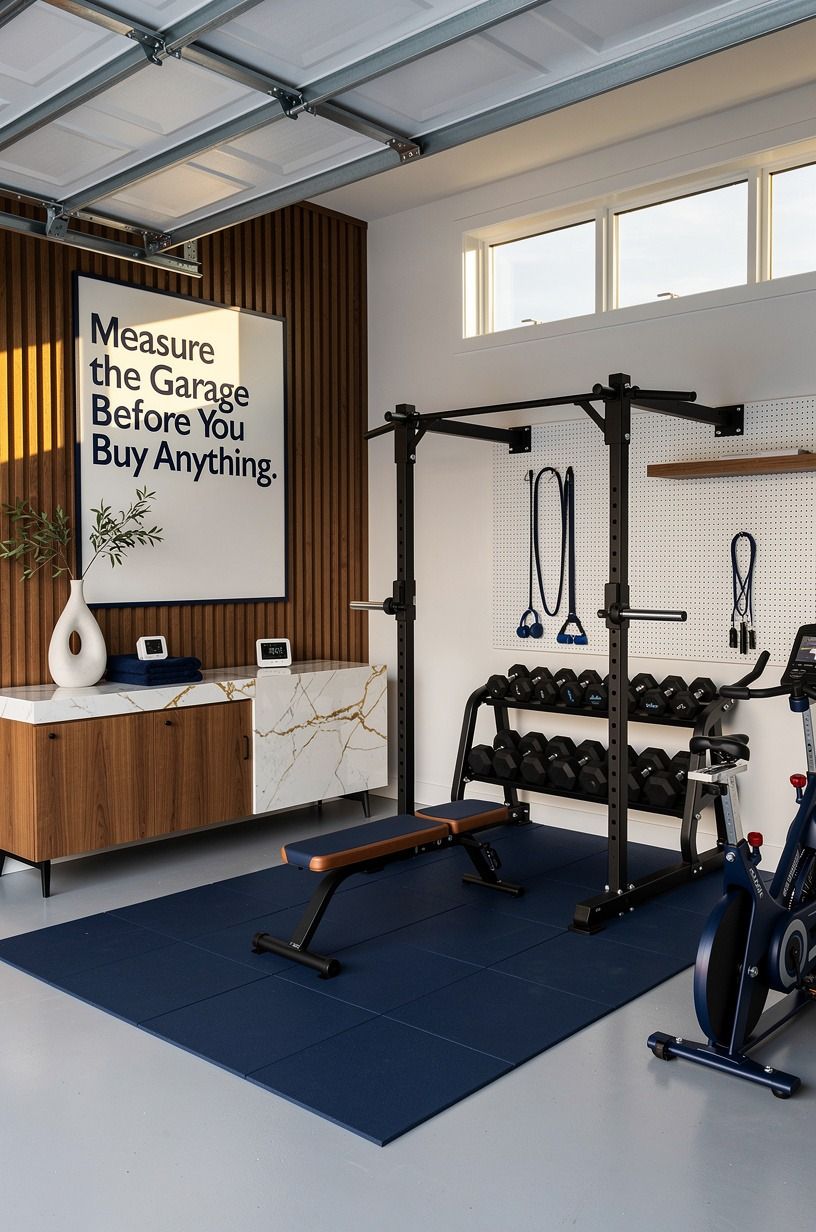
- Measure the Garage Before You Buy Anything
- Clear One Wall for the Garage Gym Set Up
- The Garage Grid Rule
- Price the Equipment Before Painting
- Protect the Floor With an 8x10 Mat Zone
- Where Should the Rack Go?
- Hang Weights Instead of Adding Cabinets
- Mix Strength Equipment With One Cardio Piece
- Paint the Walls for Depth
- The Three-Height Light Stack
- Frame a Mirror Wall at Eye Level
- Build a Warm Recovery Corner
- Open Shelves or Clear Containers?
- Use the Ceiling for Infrequent Gear
- Choose Paint Over Busy Wall Graphics
- Keep the Garage Door Zone Flexible
- Add Sound Without Losing Calm
- Before You Buy, Test the Room
- Finish With the Two-Wood Rule
1Measure the Garage Before You Buy Anything
Measure your garage with the door closed, then measure it again with the car parked inside. You’ll want the clear width, the distance from the door tracks to the back wall, and the ceiling height. An 8 to 9-foot ceiling gives you room for overhead movements, but you still need to check the lowest beam, opener, and light fixture.
Mark a rectangle with painter’s tape before you order a rack or machine. Give each large machine roughly 6x6 feet of floor space, and keep a clear walking lane beside it.
I’d skip buying a treadmill first. It’s bulky, loud, and often becomes the object everyone walks around.
Measure the swing of the garage door, too. Some doors need more overhead clearance than you’d expect, and a ceiling-mounted storage system can quickly become a collision point. Your tape plan should show the rack, bench, cardio piece, car doors, and the path you’ll use to carry equipment inside.
Measure twice before spending once. A dramatic rack can look reasonable on a showroom floor and completely wrong beside a water heater.
Your taped floor plan will show whether your garage can handle it. For more ways to use awkward footprints, browse these small garage ideas before committing to equipment.
2Clear One Wall for the Garage Gym Set Up
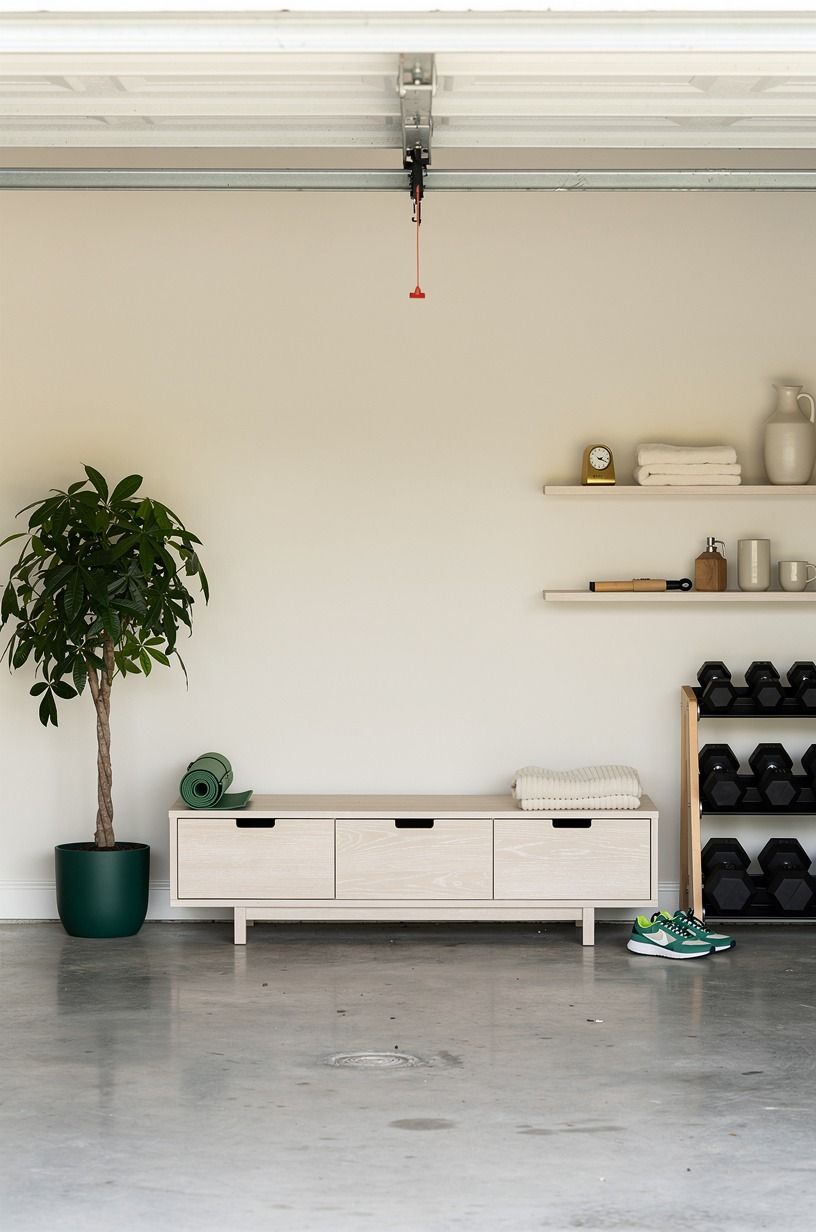
Choose one long wall as your equipment wall, and leave the middle of the garage open. You’ll get more usable space from a clear center than from three crowded walls. A wall-mounted rack, narrow shelf, and vertical storage rail can hold more than a row of freestanding cabinets.
I prefer cerused white oak for this zone because it feels warmer than bare drywall and can take repeated bumps. If you’re renting, use a freestanding pegboard instead of drilling into studs. Your wall should support the workout, not become another obstacle.
Keep the heaviest equipment closest to the structural wall. Plates, a rack, and a bench create a visual anchor, while lighter accessories can move toward the edges. That simple hierarchy makes the room feel intentional rather than improvised.
Leave a few inches between storage pieces when you can. The small gaps make cleaning easier, prevent the wall from feeling packed, and give you room to change the arrangement later. And yes, one empty wall can make the whole garage feel larger.
These garage storage ideas are useful if the wall must handle both exercise gear and household overflow.
3The Garage Grid Rule
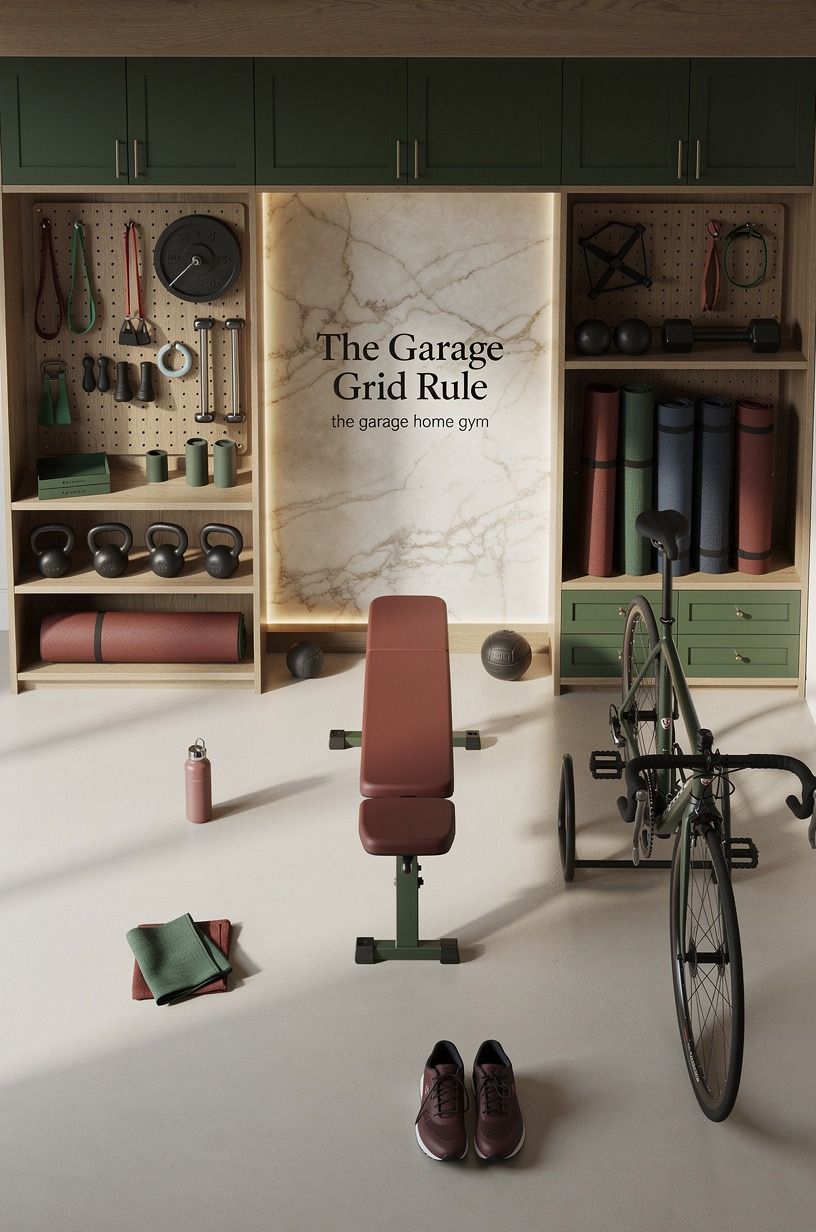
The Garage Grid Rule divides your room into three zones: strength, cardio, and recovery. Put your rack and weights along the strongest wall, place cardio equipment near an outlet, and reserve the quietest corner for stretching. You’ll know where everything belongs, so your garage gym set up won’t drift into clutter.
Use floor tape in three subtle colors, or choose one forest-green rubber flooring tone and mark the borders with thin white lines. I’ve found that a 6x6-foot machine zone feels usable, while a smaller rectangle makes your elbows and feet collide with nearby storage.
Your grid doesn’t need to look clinical. It needs to make the next decision obvious.
The strength zone should have the most generous clearance because bars and benches need room around them. Cardio can live closer to the wall, especially if the machine folds. Recovery needs less equipment but more visual calm, so keep it away from the garage door, tool clutter, and stacked bins.
A simple grid also helps when the room has two jobs. If the car needs to come inside, you’ll know which pieces can roll away and which ones must stay fixed. That flexibility is more valuable than filling every available inch.
A similar zoning approach appears in these home gym organization ideas.
4Price the Equipment Before Painting
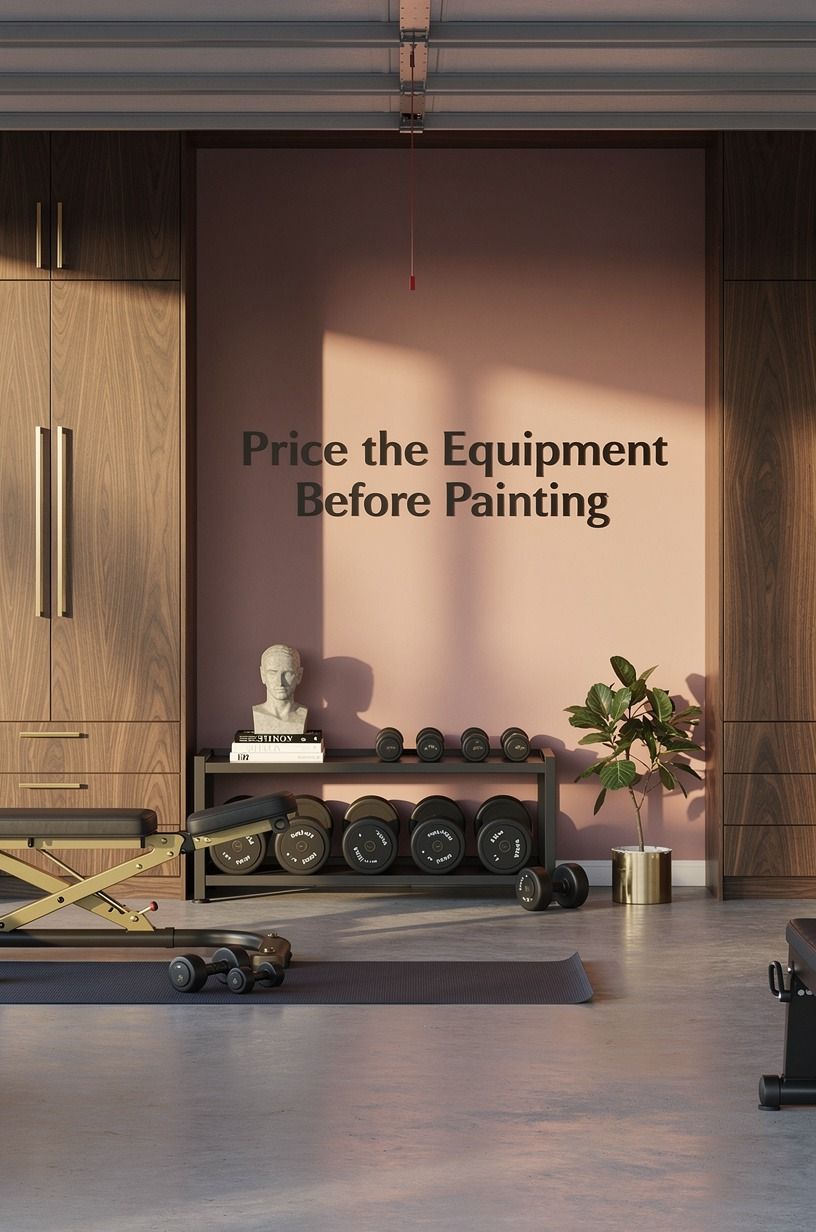
Budget your garage home gym before you choose a wall color. The typical US ranges below give you a realistic starting point, and they’re wide because the rack, flooring, lighting, and mirror can change the total quickly.
If your budget is tight, start with mats, bands, one adjustable weight set, and a wall-mounted rack. You don’t need a complete room on day one. I’d rather see your money go toward safe flooring and reliable lighting than decorative signs.
For a slower, staged approach, see these budget home gym ideas.
Divide the budget into four categories: training equipment, floor protection, lighting, and storage. Keep a small reserve for installation hardware and unexpected electrical work. Those practical expenses aren’t glamorous, but ignoring them can derail an otherwise thoughtful plan.
Buy equipment according to your actual routine. If you lift three times a week, prioritize a rack and weights. If you stretch, walk, or cycle, prioritize open floor and one compact machine.
Your space will feel more sophisticated when every item earns its footprint.
5Protect the Floor With an 8x10 Mat Zone
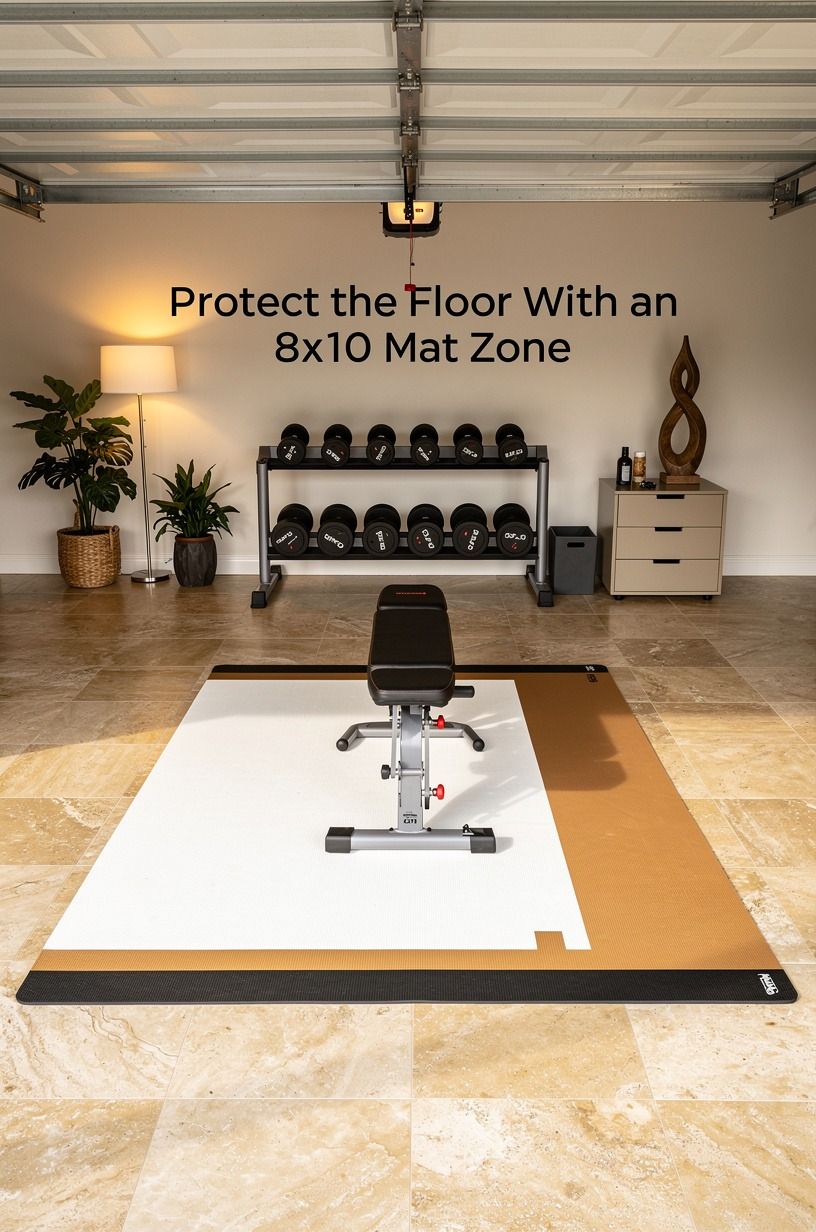
Create an 8x10-foot rubber mat zone where you’ll lift, stretch, and drop nothing heavier than your flooring can handle. Interlocking mats are easy to replace, but dense rubber rolls feel steadier under a rack. Choose a surface with enough grip that your feet don’t slide during lunges.
For a small garage, use rubber gym tiles only in the active zone and keep the surrounding warm travertine visible. That saves money and makes the room feel less boxed in.
Your flooring should absorb sound and soften the visual chill of a hard garage surface. These home gym flooring ideas can help you compare resilient surfaces before buying.
Check the surface before covering it. Look for damp patches, cracks, oil residue, and places where water enters after rain. Don’t cover damp flooring before checking moisture, or you’ll trap a musty smell below the mats.
A slightly cushioned surface feels welcoming for mobility work, but too-soft flooring can make heavy lifting unstable. Use denser material beneath the rack and softer material in the recovery corner if your budget allows. That small change can make the whole setup feel more considered.
6Where Should the Rack Go?
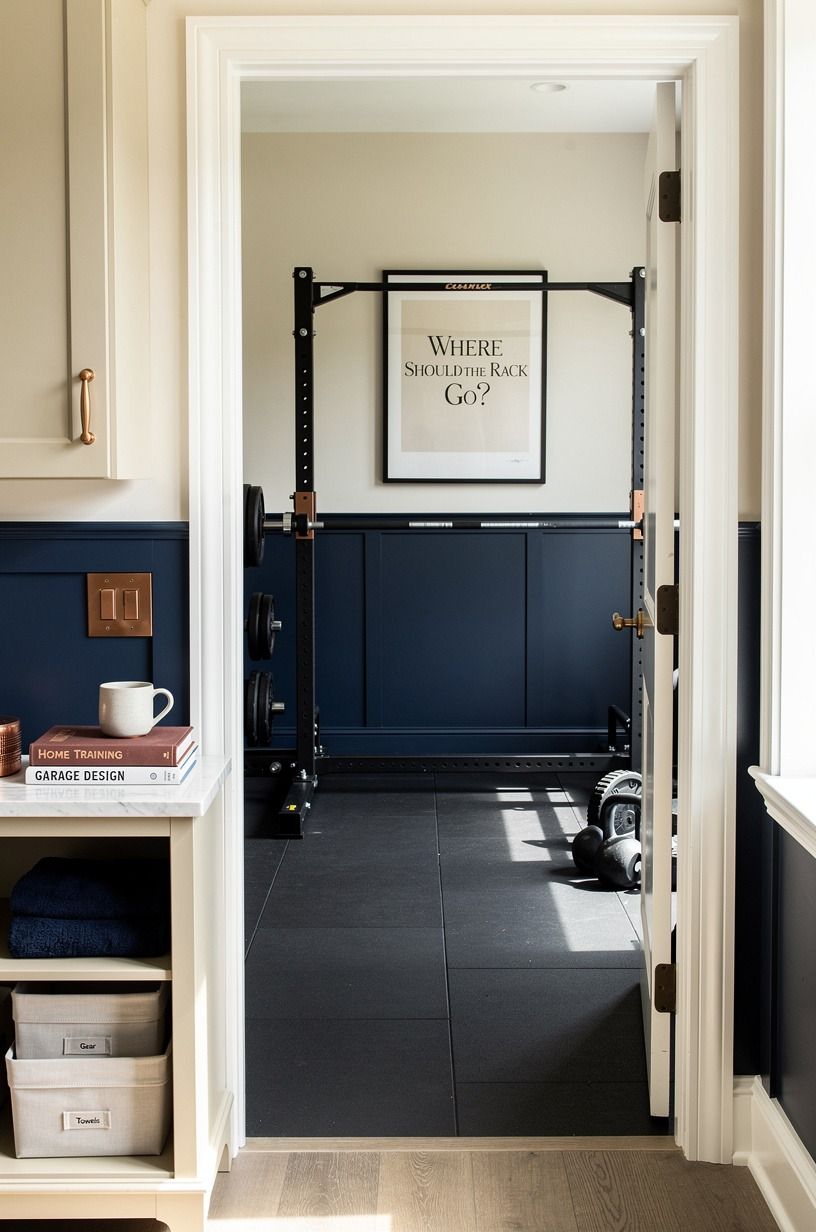
Anchor the rack to studs or use a stable freestanding model with enough clearance behind it. Add an unlacquered brass hook nearby for bands or a towel; it will develop a warmer patina over time.
7Hang Weights Instead of Adding Cabinets
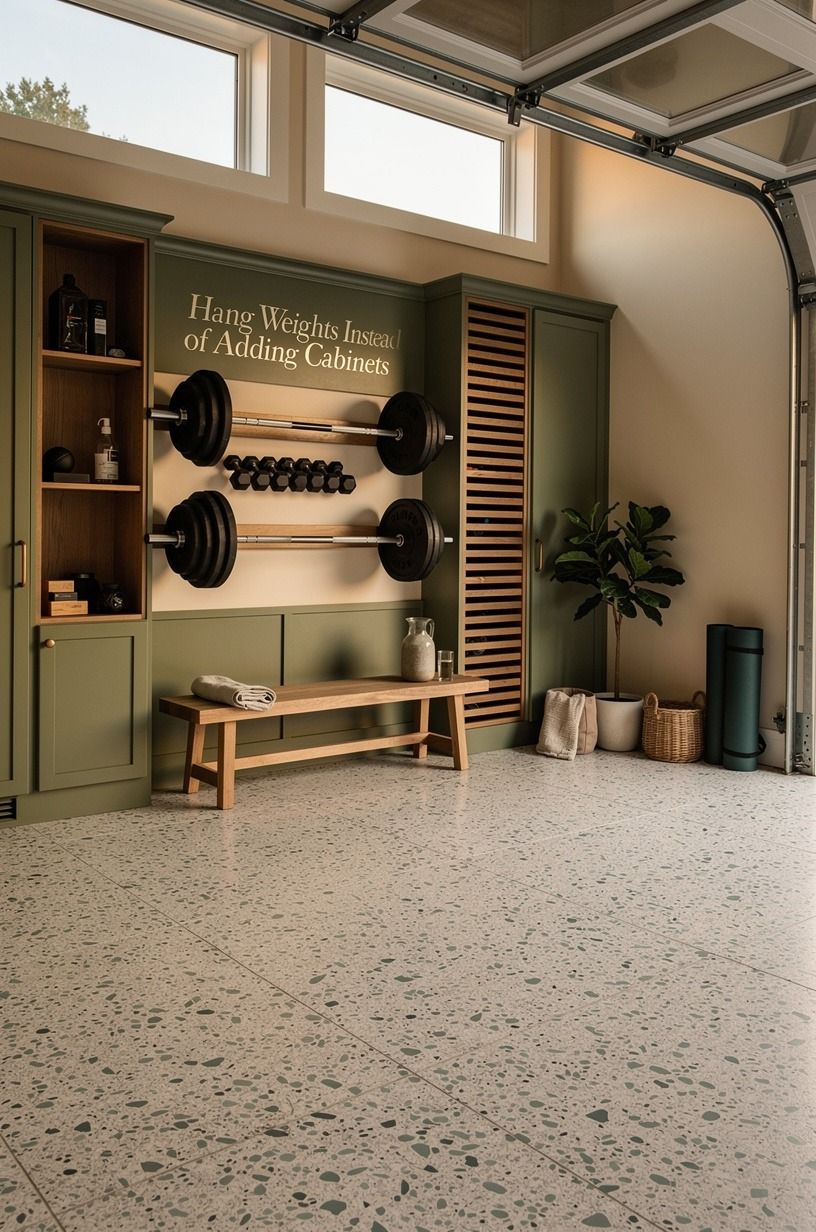
Use vertical storage for plates, resistance bands, jump ropes, and small handles. You’ll reclaim floor space immediately, and your garage organization and gym system will be easier to maintain. A narrow natural-wood rail can hold bands, while a wall pegboard keeps clips and collars visible.
Choose a natural wood rail for a warm, durable finish, then add one shelf with an oversized-chip terrazzo surface for towels and a water bottle. I’d skip deep cabinets unless you’ve got a real storage problem. They hide clutter, but they also swallow usable floor area and make small rooms feel heavy.
Keep the items you use every session between waist and shoulder height. Store occasional accessories higher, but don’t make basic equipment so difficult to reach that you leave it on the floor. Your best storage is the item you can reach and return in ten seconds.
Use one open basket for soft goods and one small tray for loose hardware. That little landing place prevents collars, clips, and bands from spreading across the workout zone. The system only works if putting something away takes less effort than leaving it out.
A visible plate tree, hook, or rack can become part of the room’s design. When storage looks deliberate, you won’t need extra decoration.
You’ll also notice quickly when something has no home. If the garage stores more than fitness equipment, combine this plan with these garage organization ideas.
8Mix Strength Equipment With One Cardio Piece
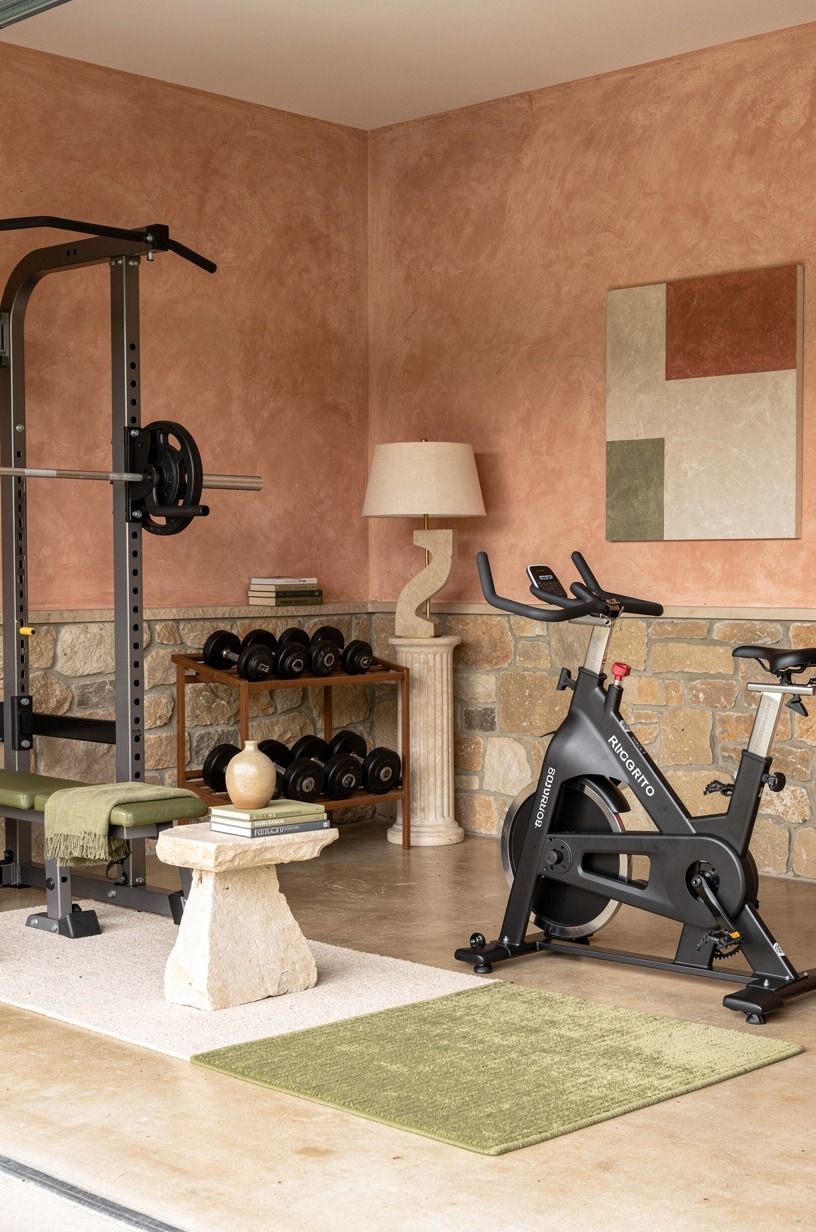
Pick one cardio machine that matches the way you train, not the machine that photographs best. A rower needs length, a bike needs less floor, and a treadmill needs a clear forward path. You’ll create a calmer room when you accept that one good machine is enough.
My choice for a compact fitness garage would be an adjustable bike or foldable rower, placed beside the outlet and away from the lifting zone. A shallow shelf with a hand-applied Venetian plaster finish can hold shoes and towels near that station, but keep it shallow.
Before buying, simulate the machine with painter’s tape. Mark the handles, pedals, seat, and the space needed to get on and off. A compact machine can still be awkward if it blocks the rack or leaves no place to step around it.
Avoid choosing equipment because it promises a more ambitious version of you. Choose the machine you’ll use on a tired Tuesday.
And if you’re not using it every week, sell it. Your garage shouldn’t store guilt.
A focused alternative to a crowded setup is outlined in these basement home gym ideas.
9Paint the Walls for Depth
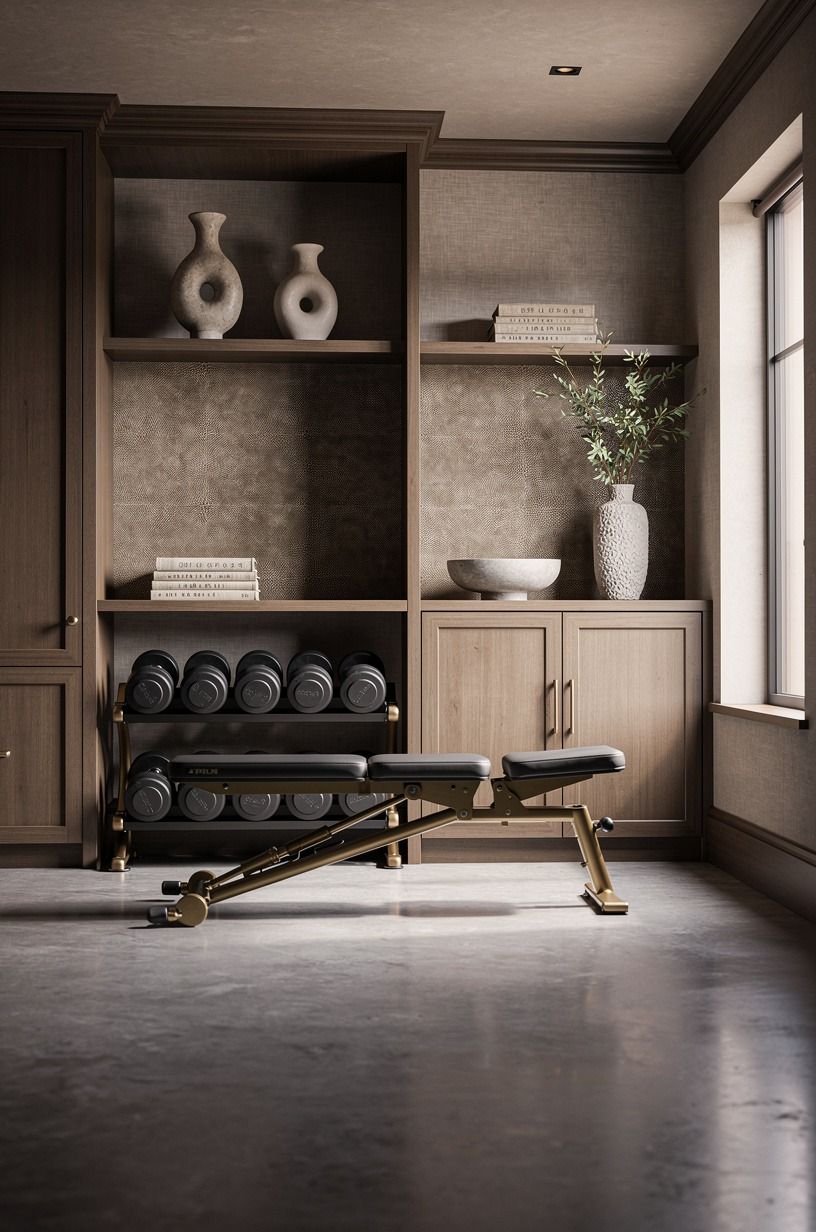
Paint the main wall in Sherwin-Williams Cavern Clay SW 7701 if you want an earthy, grounded backdrop for pale wood and bright equipment. It brings warmth without making the room feel closed in, especially when the ceiling stays light. You’ll notice the wall color most when the overhead lights are off.
For a softer room, try Benjamin Moore Natural Cream OC-14 on the equipment wall and a warm linen shade on the remaining walls. I tested warm paint in a garage with weak daylight, and the finish looked flat until we added aged-brass side lighting.
Your paint needs light to show its depth. Don’t choose color from a tiny card beside the garage door.
Test a large sample on two walls, then look at it in the morning, afternoon, and evening. These home gym color ideas offer more ways to build a grounded palette.
A satin finish or eggshell finish is easier to wipe than a very flat paint. Keep the ceiling lighter if the garage already feels low, and use a deeper clay color only where you want the equipment to feel grounded. The result can be intense and inviting rather than gloomy.

10The Three-Height Light Stack
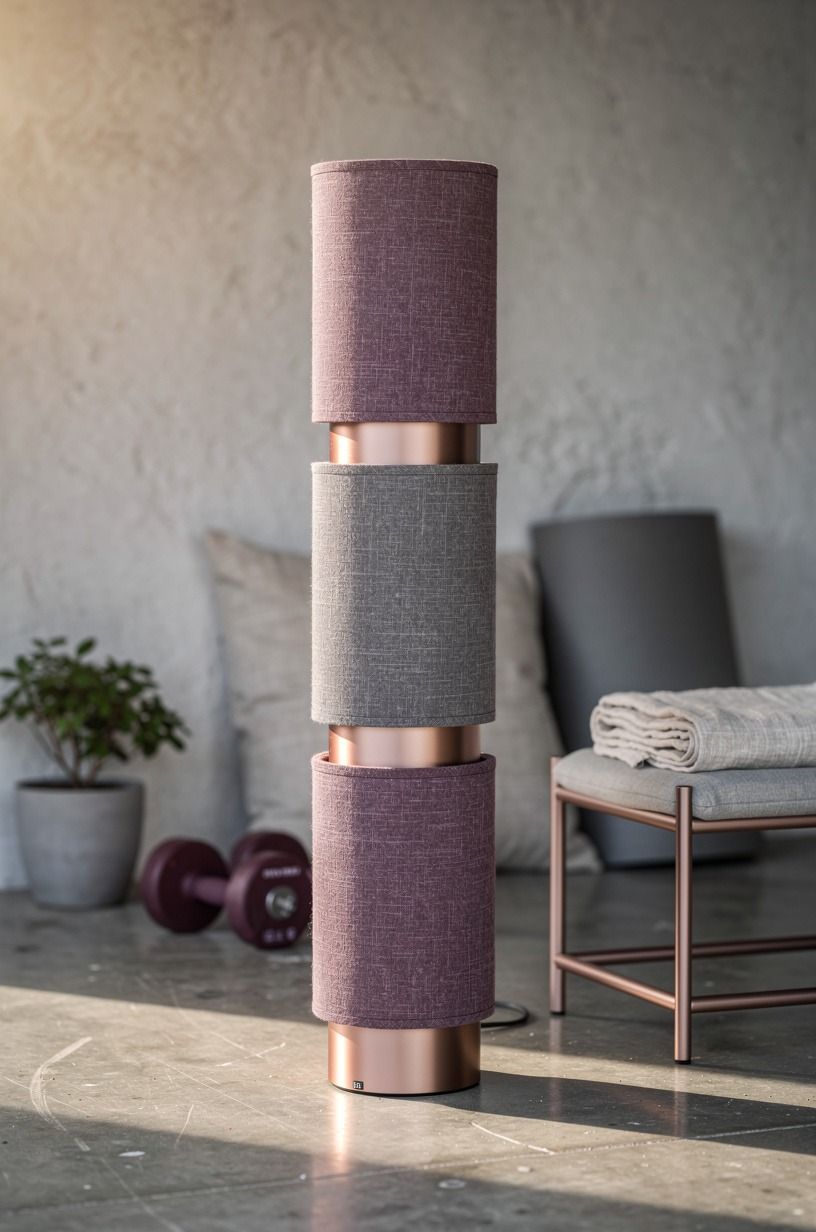
The Three-Height Light Stack uses ceiling light for safety, eye-level light for the mirror, and low light for recovery.
11Frame a Mirror Wall at Eye Level
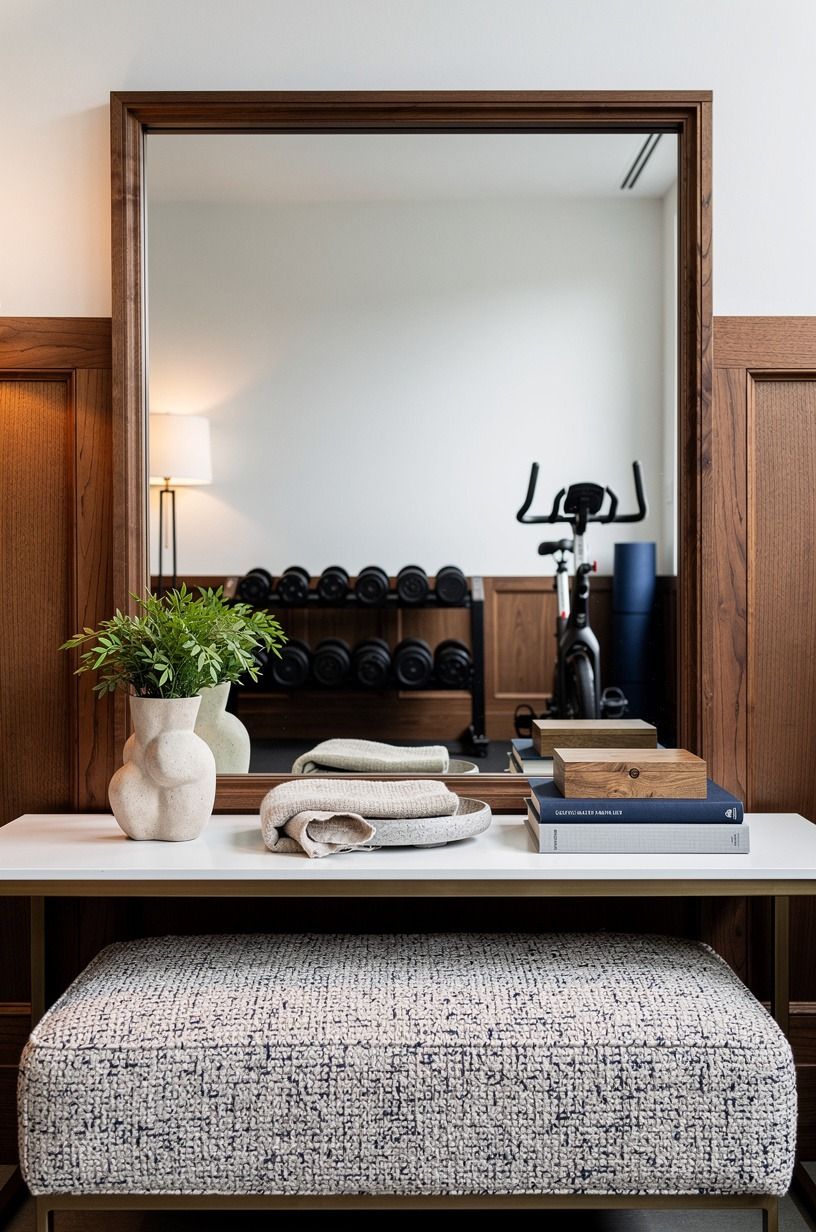
Install one wide mirror where you can check form without turning your garage into a dance studio. Place the mirror at eye level, and keep enough open floor in front of it for squats, rows, and mobility drills. You’ll need a clear reflection from feet to shoulders.
A gym mirror can cost $100 to $400, so start with one panel instead of covering the full wall. I like a slim walnut frame because it softens the hard equipment around it. Your mirror should help you move safely, not become a backdrop for every wall sign.
Choose tempered glass or safety-backed glass when possible, and fasten it properly to the wall. Never place it where a dropped weight could strike the glass. Check the reflection from several positions before final installation.
A mirror that shows only your shoulders won’t help with lower-body form.
Keep the area in front of it visually quiet. A clean reflection makes the garage feel larger, while a pile of bands and boxes doubles the sense of clutter. One restrained panel can be more useful and attractive than a full mirrored wall.
See these home gym mirror ideas for ways to frame the mirror without overwhelming the room.
12Build a Warm Recovery Corner
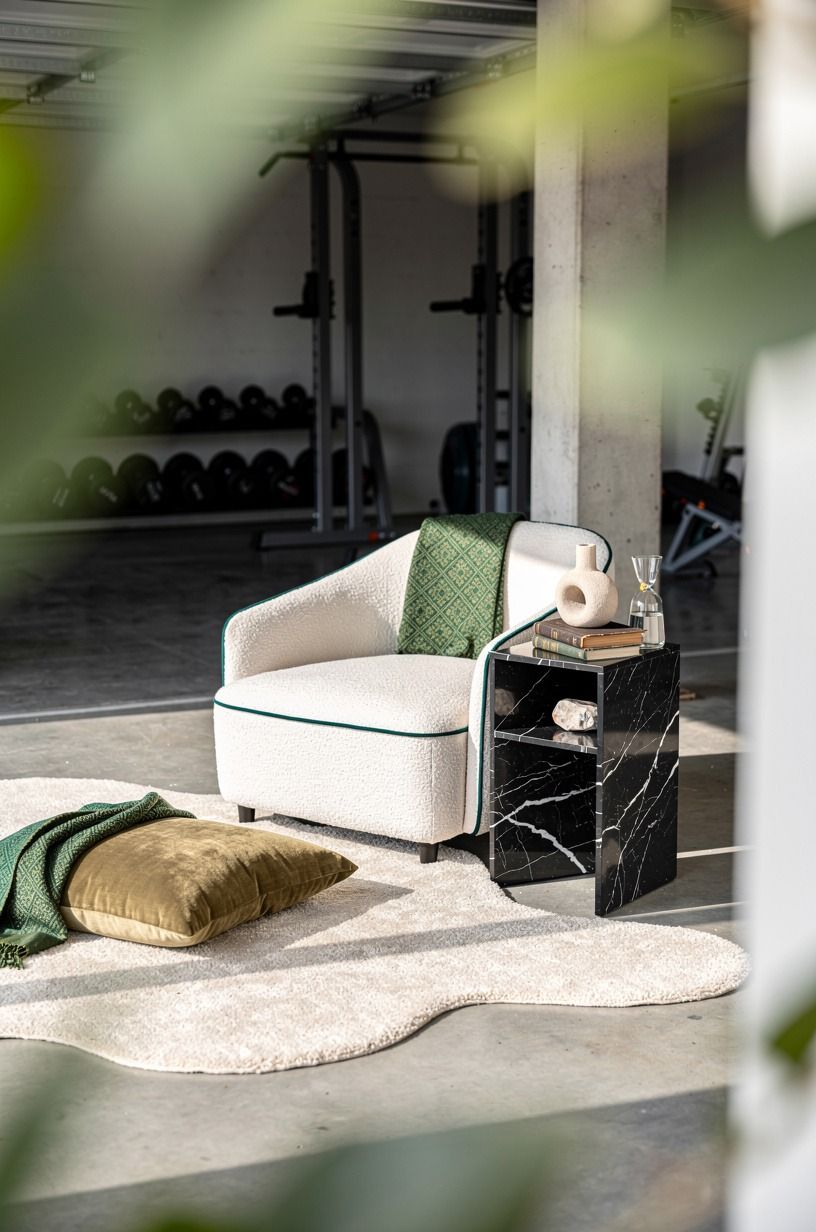
Set aside one small corner for stretching, breathing, and cooling down.
13Open Shelves or Clear Containers?
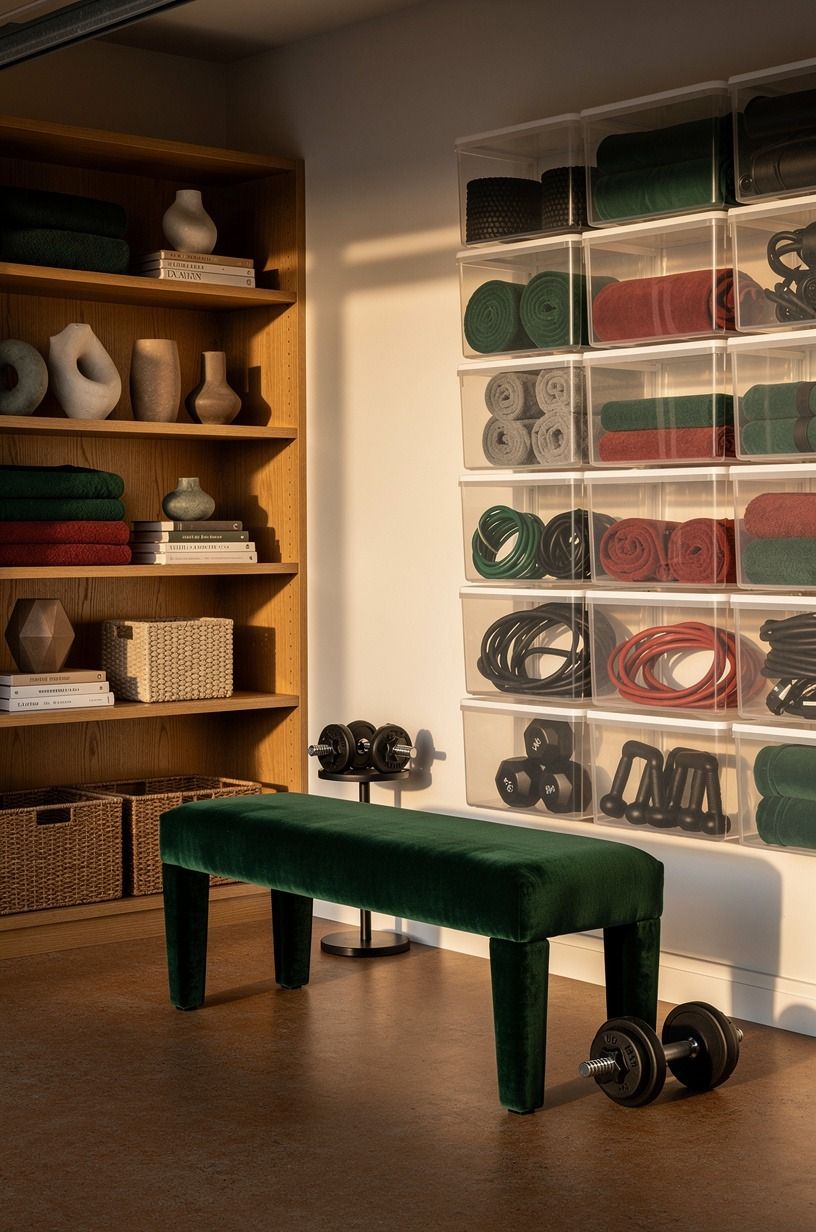
Group small pieces by use: mobility, strength, cardio, and cleaning. You’ll find what you need faster when every resistance band and handle has a home. Clear containers work well for accessories, while opaque bins hide visual noise near the garage door.
Use a small deep-pile mohair velvet cushion on a stool and label the bins with large, plain lettering. I’m not a fan of tiny labels or matching containers everywhere because they make a garage feel staged. Your storage should be obvious even when you’re tired.
Open shelves are useful when you reach for something daily. Clear containers are better for small parts that otherwise scatter.
Use matching sizes where possible, but don’t force every object into a container. Some equipment is easier to hang or leave visible.
Keep cleaning supplies separate from workout accessories. A small utility caddy can hold spray, cloths, and a brush without letting them drift into the recovery zone.
If a bin hasn’t opened in six months, it doesn’t belong in your active gym zone. For smaller rooms, these small space storage ideas can keep the system practical.
14Use the Ceiling for Infrequent Gear
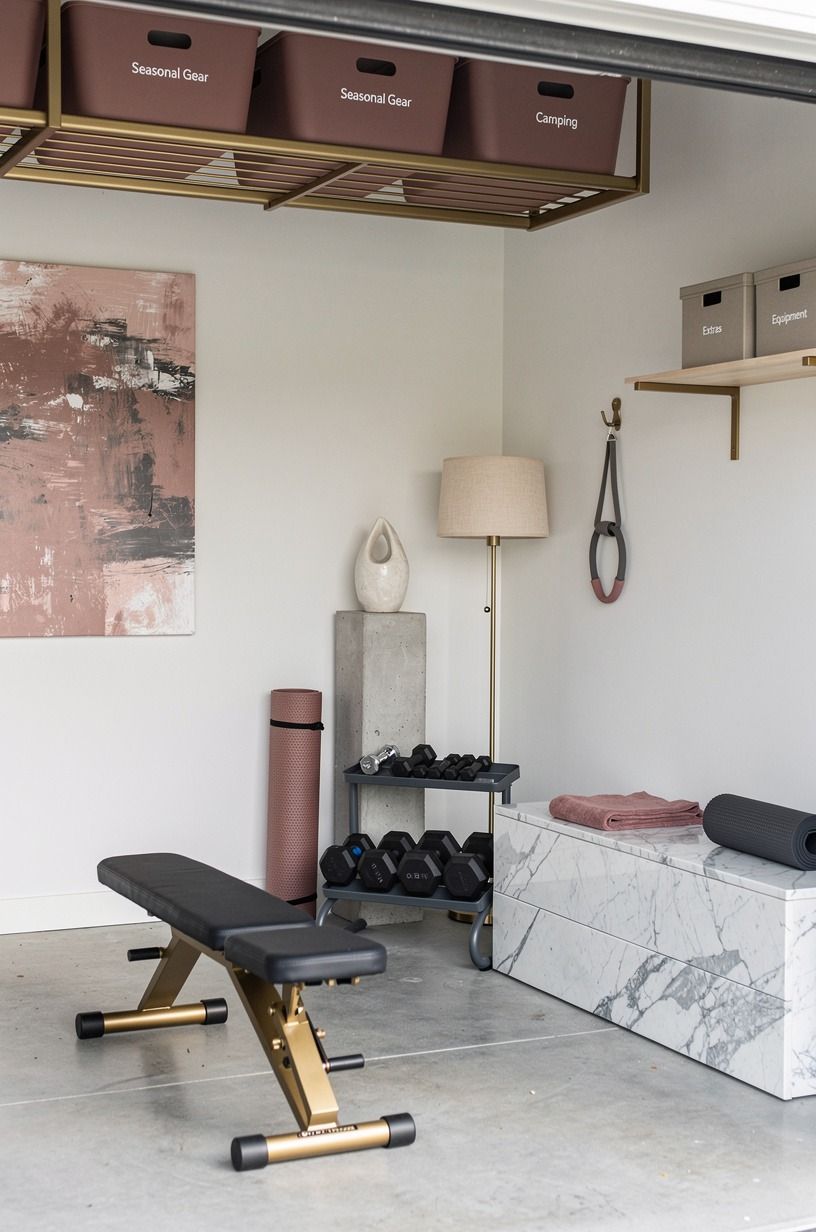
Store seasonal or bulky equipment above your usual sightline. A ceiling rack can hold camping bins, spare mats, or a folded ladder, leaving your wall and floor open for workouts. You’ll gain valuable space, but only if the overhead storage doesn’t interfere with the garage door.
Keep the frequently used items below shoulder height and the rarely used items high. Carrara marble on a small overhead shelf can add brightness, although I’d use it only where moisture is controlled.
Your ceiling storage must be rated for its load and fastened securely. Check the door tracks, opener, springs, and lighting before installation.
Never place heavy bins directly above the main training position. A pretty shelf that shifts above your head isn’t charming.
Use lightweight containers for seasonal gear and keep an inventory on the wall. That prevents you from opening every box when you need one item.
The best overhead storage is quiet, labeled, and rarely touched. These ceiling storage ideas can help you plan around the door mechanism.
15Choose Paint Over Busy Wall Graphics
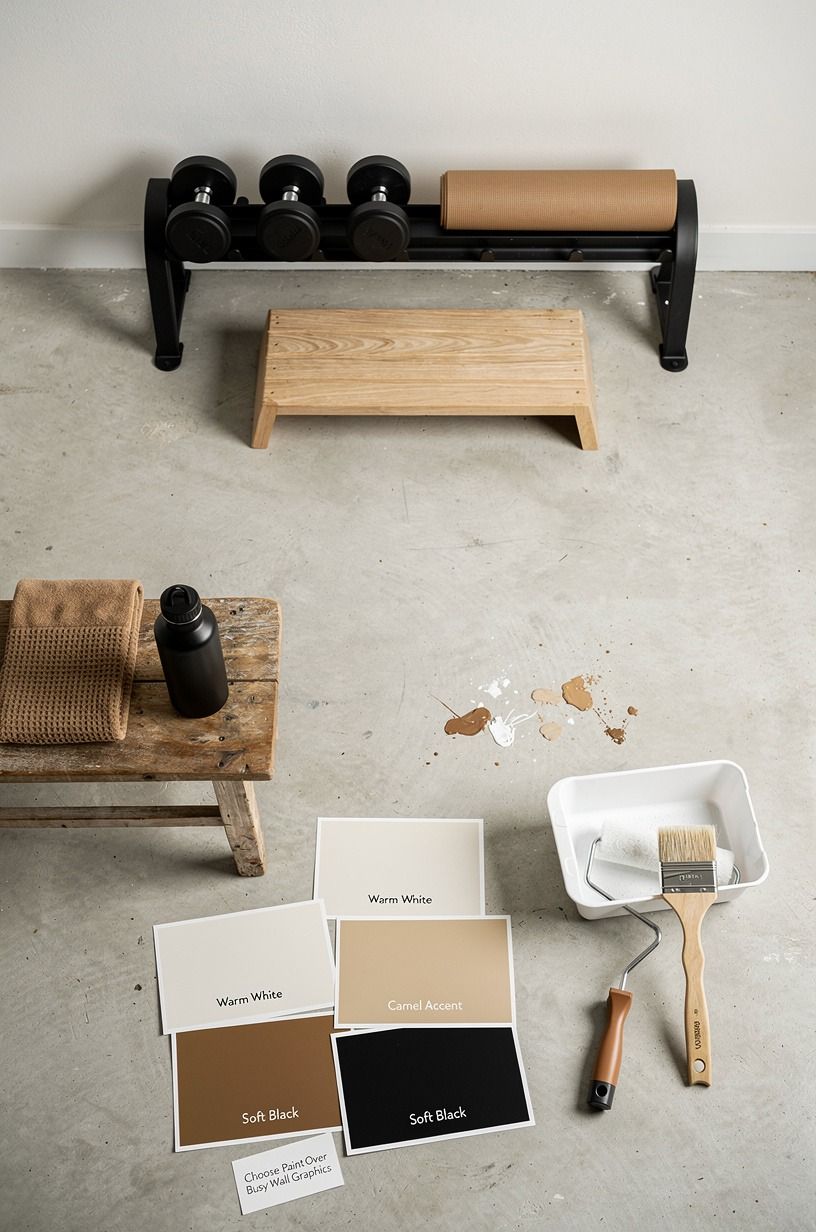
Use one painted focal wall instead of covering the garage with motivational signs. You’ll get a calmer background for the mirror, rack, and equipment, and the room won’t feel like a commercial studio. A small framed print can add personality without competing with your movement.
Try Farrow & Ball Pointing No. 2003 behind the rack if you want a warm, refined finish. It keeps the room light while letting black equipment stand out. I’d skip giant lettering because it dates the room quickly.
Choose artwork with the same restraint you’d use in a living room. A simple architectural print in reclaimed weathered teak, an abstract shape, or a framed training schedule can feel personal without shouting. Your taste may change, while a quiet wall gives you room to change equipment and routines.
Avoid covering the wall with slogans you’ll stop seeing after a month. A strong color, useful mirror, and beautiful material will create more atmosphere than ten pieces of graphic decor. For a more polished direction, see these quiet luxury home gym ideas.
16Keep the Garage Door Zone Flexible
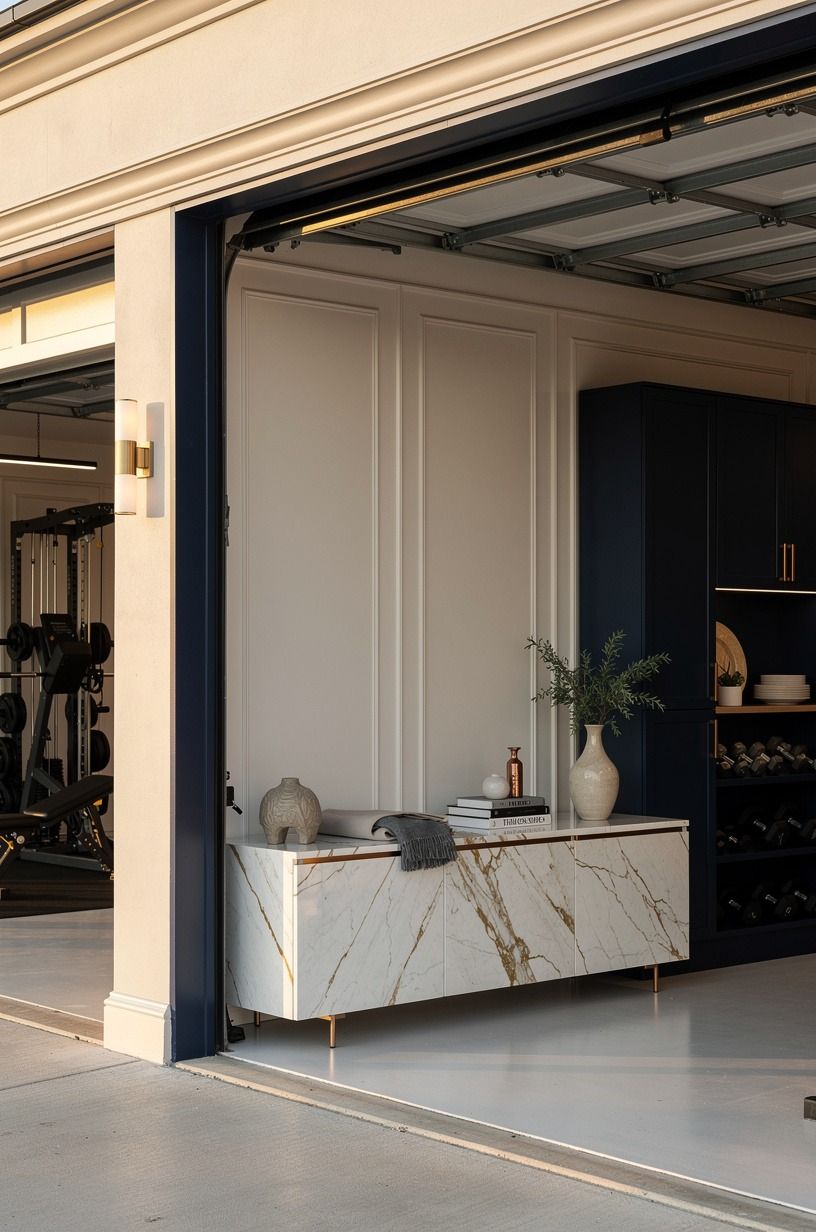
Leave the area nearest the garage door flexible for deliveries, cars, muddy shoes, and seasonal tasks.
17Add Sound Without Losing Calm
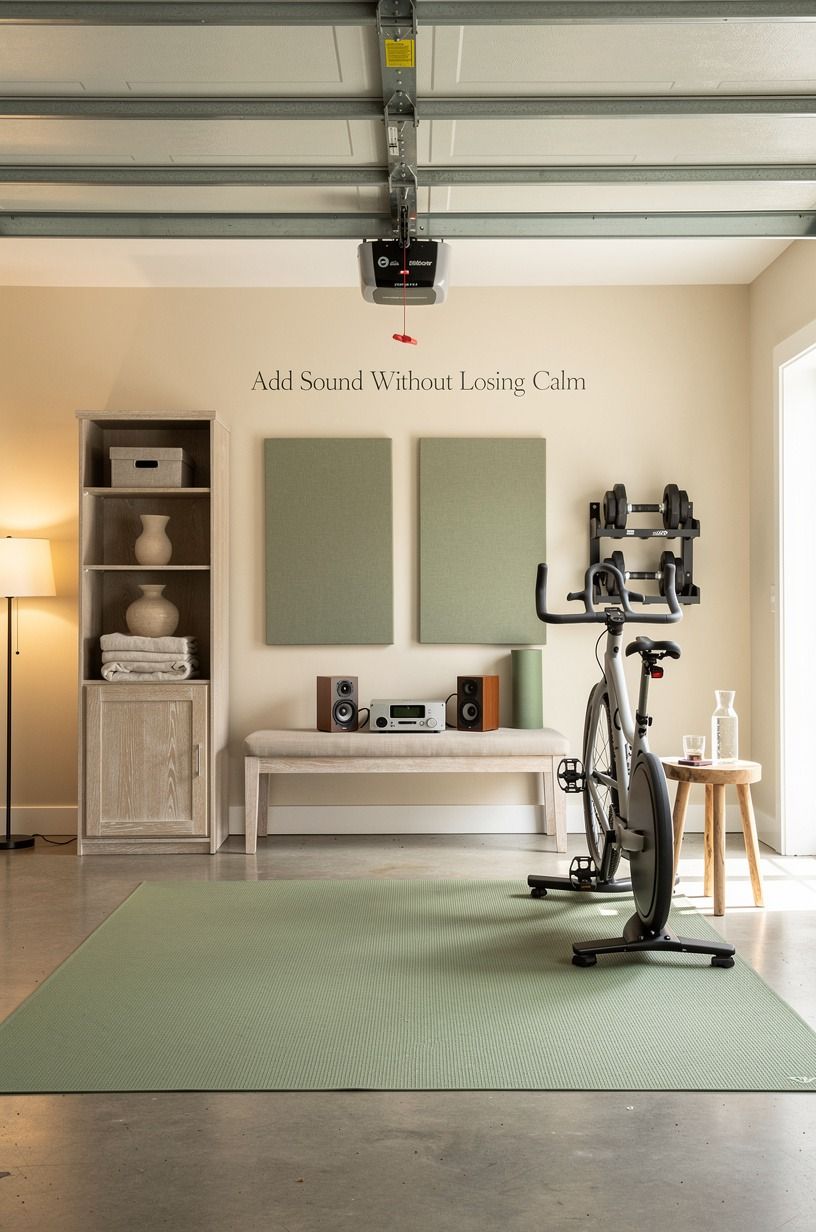
Place a small speaker on a high shelf and keep cords away from walkways. You’ll hear your workout clearly without turning the whole garage into an echo chamber. Rubber flooring, a cerused white oak acoustic panel, and a few storage bins can soften sound better than thin decorative foam.
A felt acoustic panel can add a gentle texture behind the bike or stretching area. I’d avoid covering every wall with foam because it looks busy and collects dust. Your music should support the mood, whether it’s energetic, peaceful, or quiet.
Seal obvious gaps around the garage door if outside noise and drafts are a problem. Better insulation can make the room feel more comfortable while also reducing the hollow quality of concrete walls.
Keep the volume considerate if the garage shares a wall with the house or neighbors. If the room only feels good with loud music, your lighting and materials probably need another look. A calmer material palette can also make a garage makeover feel more finished.
18Before You Buy, Test the Room
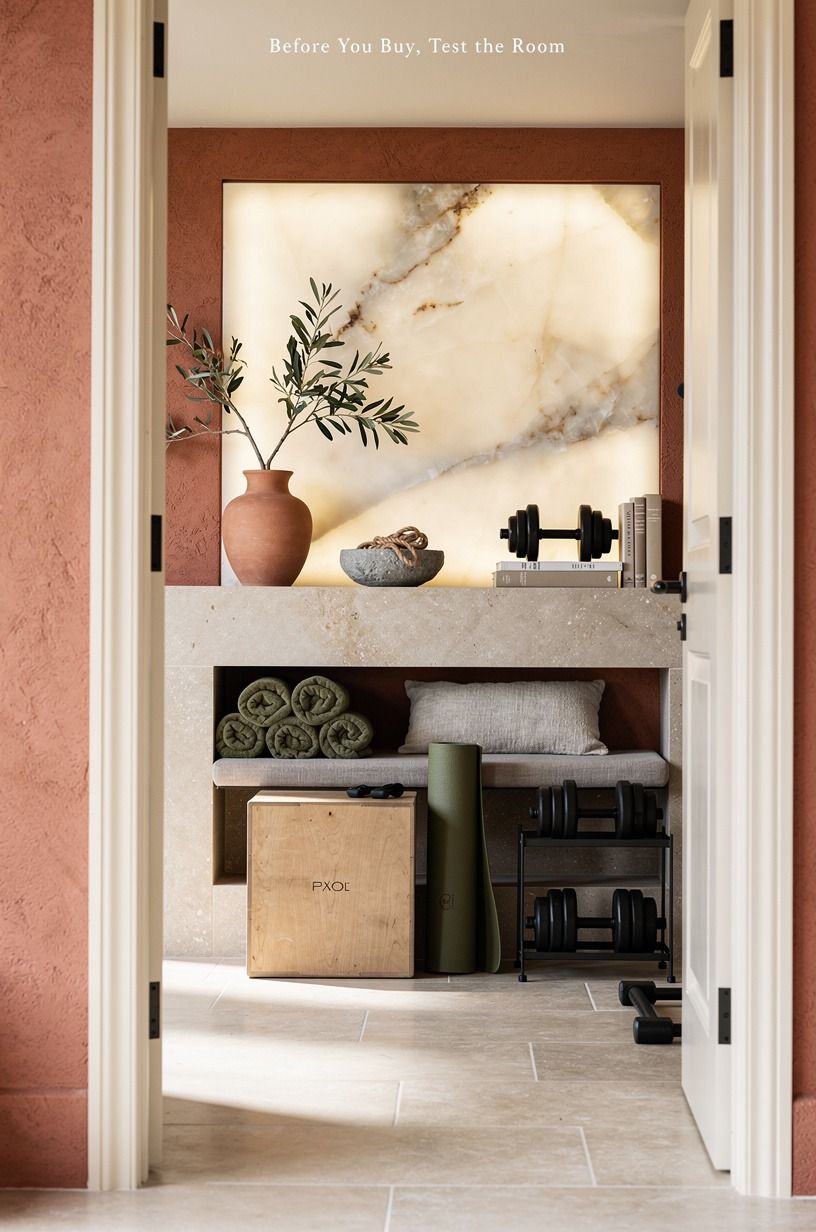
Do one complete workout before you buy the last accessories.
19Finish With the Two-Wood Rule
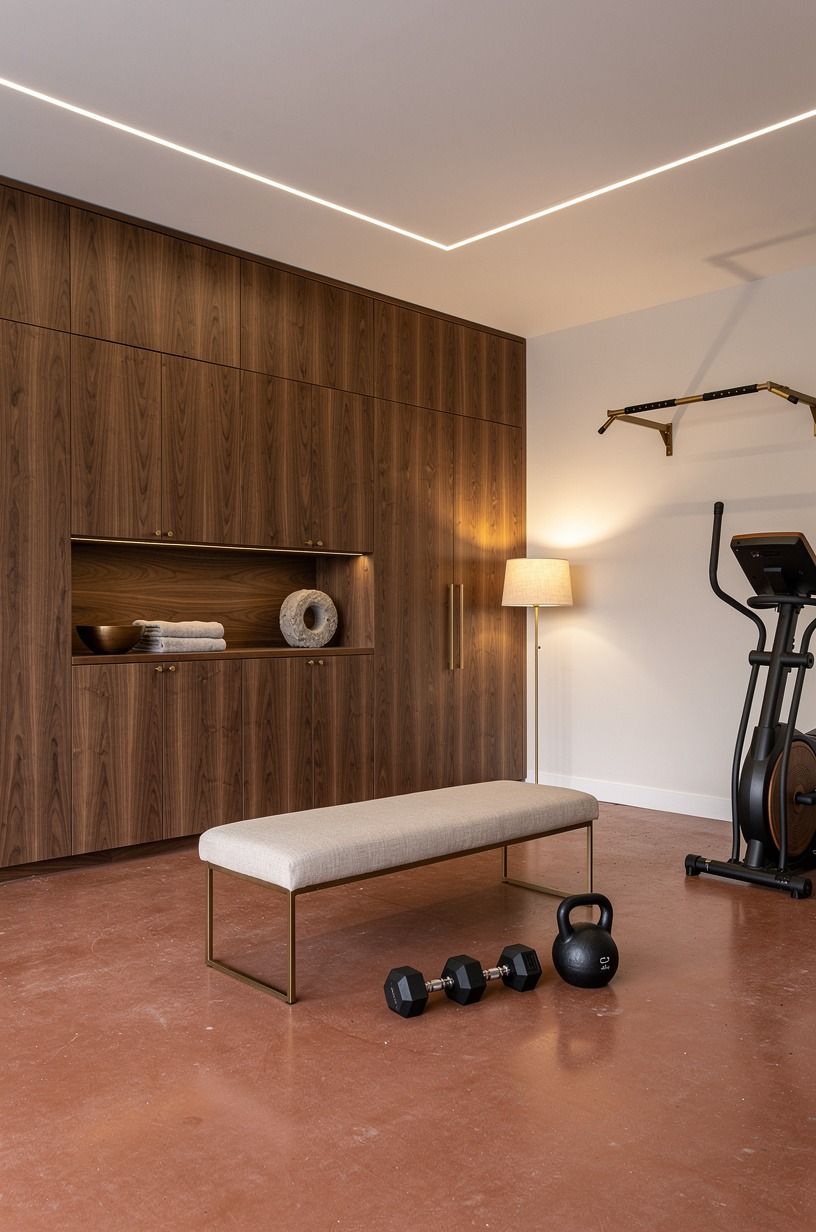
Use no more than two wood tones in the garage. The Two-Wood Rule keeps the room warm without making the equipment wall look accidental. Pair pale birch with medium oak, or use walnut with painted cabinetry, but don’t add five unrelated finishes.
Bring in book-matched walnut only as a small accent, such as a shelf or framed panel. I’d skip a full wood wall unless your garage is climate-controlled. Your floor, rack, mirror, and storage already create plenty of visual structure.
Let the metal finish repeat quietly. Aged brass, warm hardware, and clay-toned details can give the room a grounded rhythm, while linen keeps it from feeling severe. Add softness through a towel basket, mat, or canvas panel rather than another finish.
Add one plant, one towel basket, and one useful stool, then stop before the room becomes a showroom. The strongest garage gyms feel edited, practical, and slightly personal.
What I’d Change After Living With It
The most valuable garage gym decision is accepting that the room has two jobs. It needs to support your workout, but it may also hold bicycles, tools, holiday bins, or a car.
I’ve seen people spend $8,000 on equipment and then lose the room because nothing could move. That’s not a design success, even if the rack looks impressive.
I’d start with the floor, clearance, and lighting. Those three choices affect every workout, every storage decision, and every future purchase.
A clay wall can be warm and sophisticated, but it won’t solve a cramped layout. A mirror can be useful, but it won’t fix glare.
The smartest version of a small-space garage gym is flexible. Use a folding bench, a wall-mounted rack, adjustable dumbbells, and containers that can move.
Leave an 8x10-foot active zone if you can, then keep the edges quiet. If you only have a narrow strip, make that strip excellent rather than pretending you have a full studio.
And don’t wait for the entire budget. A few hundred dollars can cover basic mats, bands, and a mirror, while larger upgrades can happen later. I’d rather see you train consistently in a modest, clean room than admire expensive equipment covered in dust.
Your garage becomes valuable when it helps you show up.
The Questions Worth Answering First
What is the best garage home gym layout for a small garage?
A wall-mounted rack, one compact cardio machine, and an open 6x6-foot movement zone work best. Clear floor space matters more than extra equipment. Keep the rack on one wall, use vertical storage, and place a mirror at eye level where you can move without hitting a bench.
Where can I buy garage gym pieces on a budget?
Look at IKEA, Wayfair, and Target for shelves, baskets, mats, and compact furniture. You can also find racks and dumbbells through Facebook Marketplace or a local thrift shop. Your best savings usually come from used strength equipment, while worn flooring deserves a careful inspection.
How much does a garage home gym makeover cost?
A basic setup typically costs about $300 to $1,200, while a mid-range room can reach $2,000 to $8,000. A clear floor plan is free, and so is sorting equipment before you buy storage. Flooring, mirrors, and racks usually create the largest early expenses.
Can I create a garage gym on a budget?
Yes, you can start with one rubber mat zone, resistance bands, adjustable weights, and a used mirror. Paint one wall only, use shelves you already own, and keep the center clear. Your first setup doesn’t need a treadmill, television, or matching storage system.
Is a garage gym worth it in a small space?
Yes, if you protect the active floor area and choose equipment that can move or fold. A small room can feel more focused because every item has a job. Put your rack against the wall, keep one clear training rectangle, and store accessories vertically.
Is a garage gym a good idea for a rental?
Yes, with removable flooring, a freestanding rack, tension storage, and peel-and-stick lighting. Damage-free flexibility matters more than a built-in finish. Avoid drilling without permission, keep heavy equipment stable, and use freestanding shelves that can leave with you.
Where I’d Start First
If I had to pick one step, I’d start with the 8x10-foot rubber mat zone. It gives your workouts a clear home, protects the concrete, and exposes every bad layout decision before you spend on equipment. Mark it tonight, move one item out, and see how much room your garage really has.