No Foyer? These 12 Amazon Entryway Organizers Start at $30
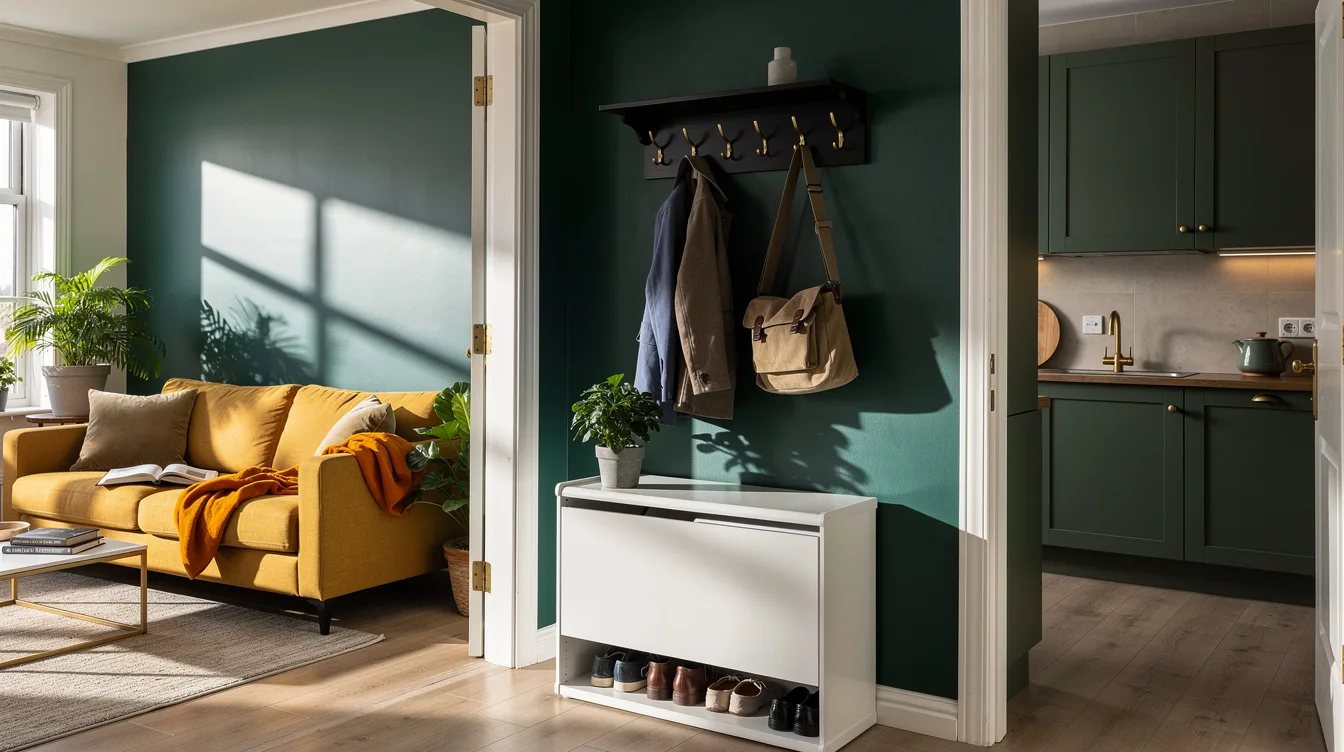
23 september 2026A front door that opens straight into a living room does not need a fake foyer. Start with a landing zone no deeper than about 10 inches, then give keys, coats, daily shoes, and a bag separate homes without blocking the route.
Amazon has useful slim organizers for this exact problem, from a $19 wall shelf to flip-down shoe cabinets around $85. The right choice depends on depth first, width second, and style third.
What you will find inside
- Drop Keys on a Lwenki Hook Shelf
- Hang Daily Gear on the HBCY Shelf
- Give Family Coats a Wider Rail
- Hide Shoes in a HOMCOM Flip Cabinet
- Keep a Small Shoe Collection in HOPUBUY
- Pair Hidden Shoes With a CARPETNAL Drop Top
- Use the Sweiko Cabinet as a Vertical Anchor
- Fit the Lisicues Cabinet Into a Studio
- Build a Drop Zone Around the VASAGLE Console
- Layer a Shelf Above a Slim Shoe Cabinet
- Keep a Passage Clear With Wall Storage
- Protect Open-Plan Sightlines With Hidden Shoes
Drop Keys on a Lwenki Hook Shelf
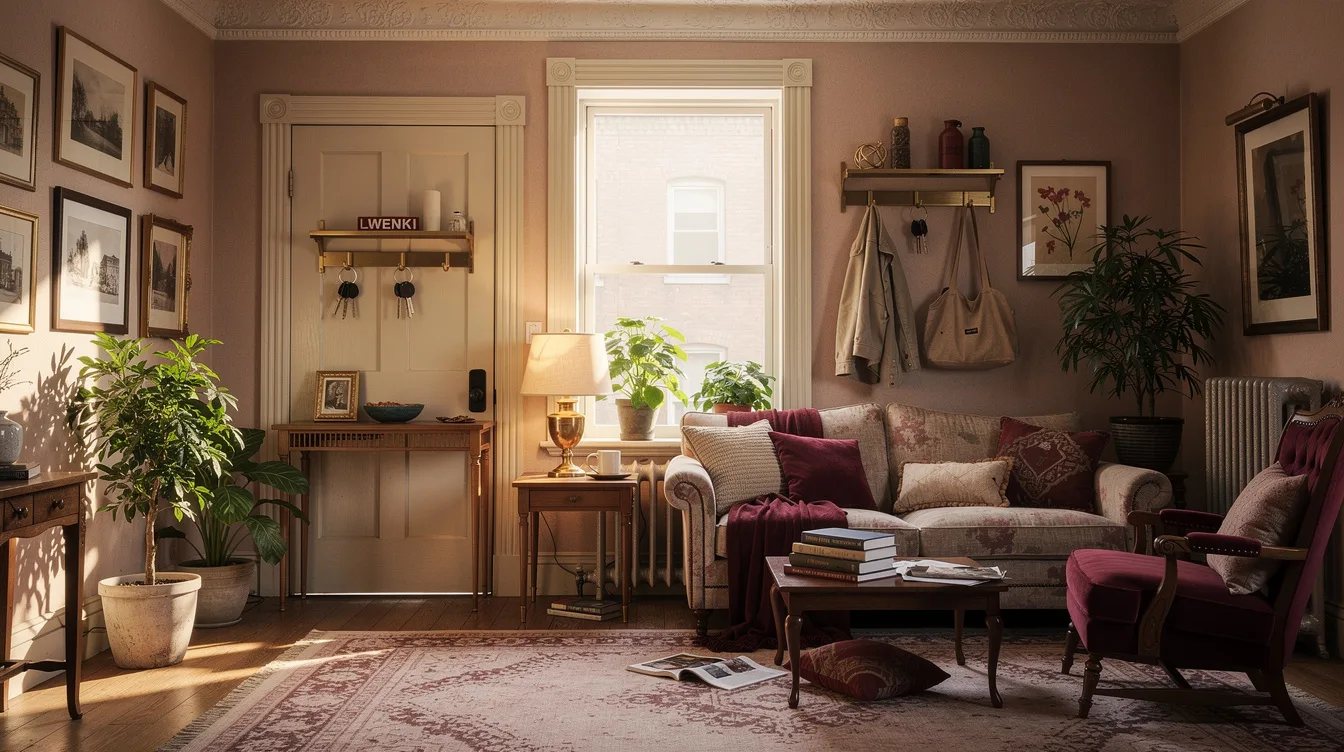
The Lwenki wall shelf with hooks creates the smallest useful landing zone for keys, sunglasses, a wallet, or a dog leash. Its listed depth is 2.9 inches, so it works beside a door that opens directly into a living room or along a tight hallway.
The black paulownia wood gives the wall a deliberate finish, while the five-inch shelf height keeps small items visible without creating a bulky ledge. At a typical price of about $19, this is the easiest starting point for homes that need organization more than furniture.
Hang Daily Gear on the HBCY Shelf
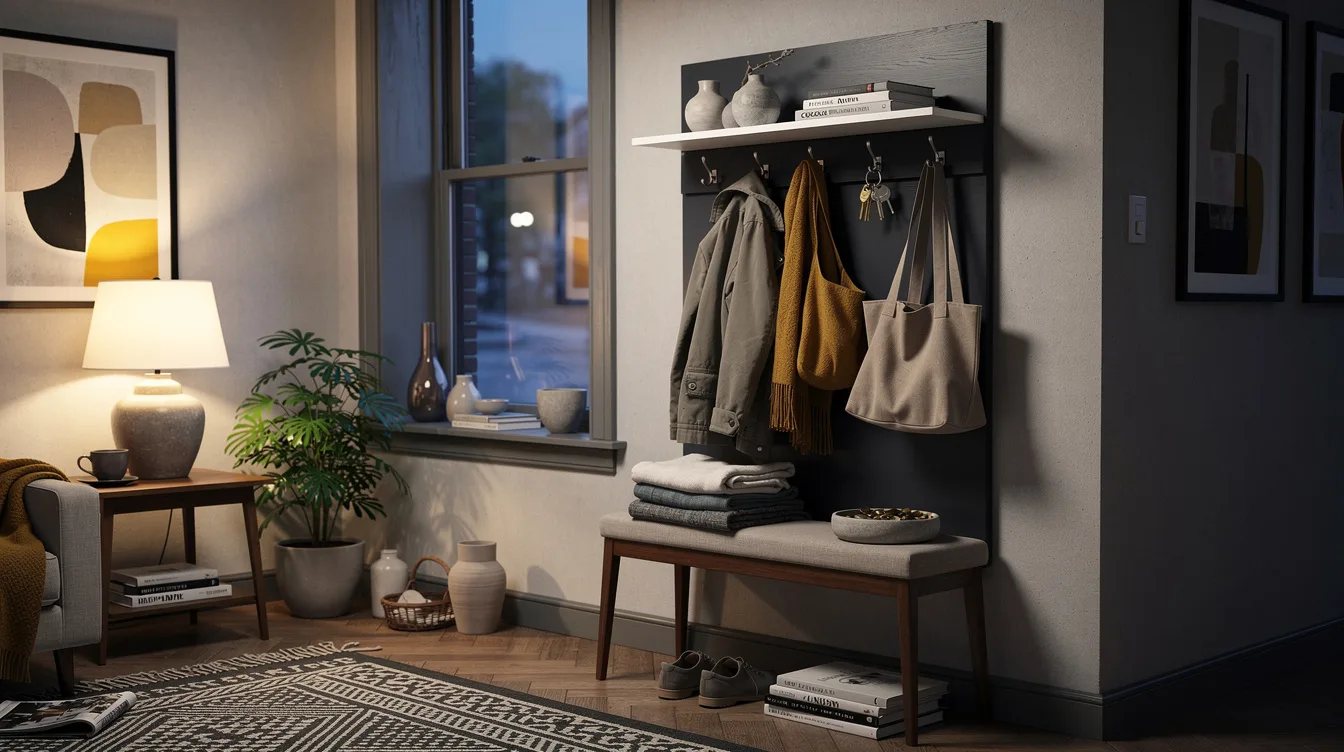
The HBCY Creations shelf with baskets and hooks handles the daily mix of coats, bags, mail, and small accessories in one wall-mounted unit. Its listed dimensions are 5.5 inches deep by 23.5 inches wide by 9.25 inches high, giving a narrow wall enough working space without taking over the passage.
Solid wood and a rustic brown finish suit a relaxed apartment or rental, especially when the floor needs to stay open. The usual price range is about $40 to $75, so this organizer makes sense when a single shelf must carry most of the entry routine.
Give Family Coats a Wider Rail
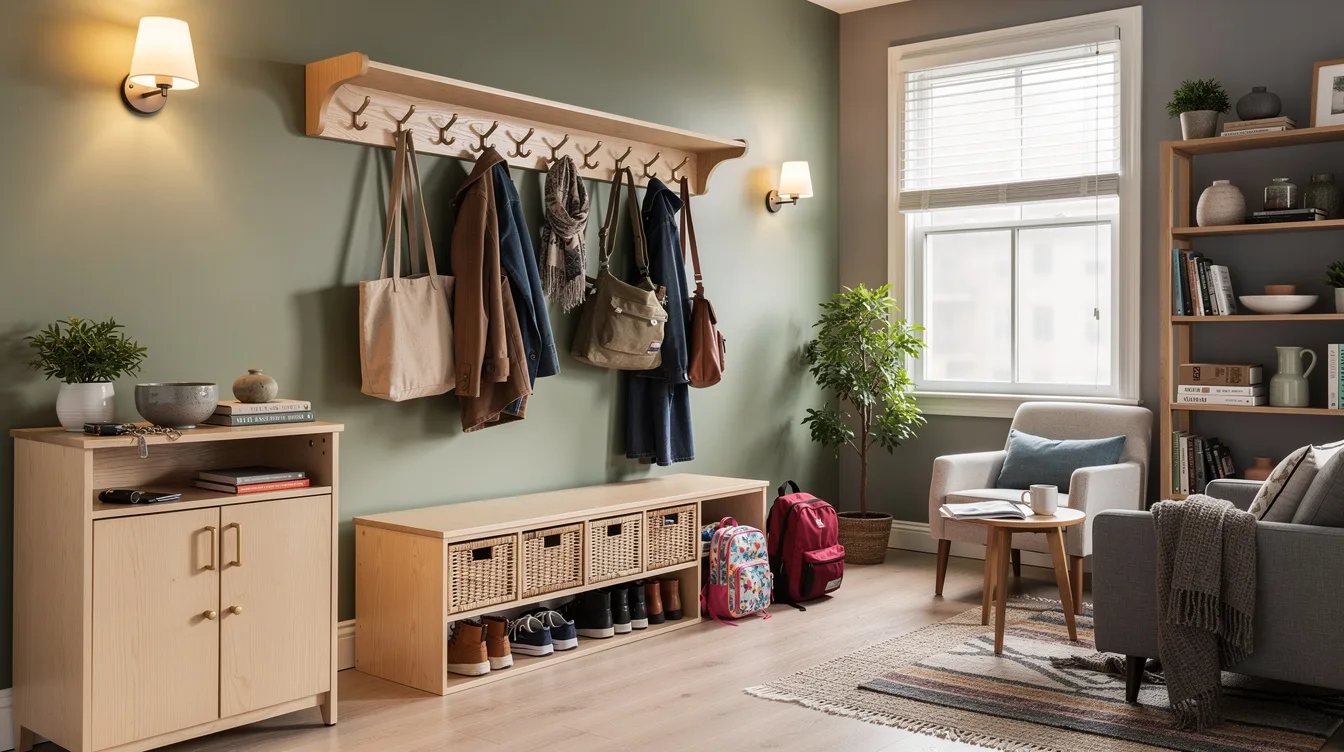
The AMBIRD 28.9-inch shelf with hooks is the better choice when several people need a landing spot for coats, hats, mail, and small baskets. The shelf is roughly 28.9 inches wide and 4.9 inches deep, a useful proportion for a blank wall near the door.
Its wood shelf and metal hooks read more cleanly than a freestanding rack in an open-plan room. At a typical price of about $25 to $45, it offers family capacity while keeping the floor projection shallow.
Hide Shoes in a HOMCOM Flip Cabinet
The HOMCOM 3-flip-drawer cabinet is designed for a narrow passage where open shoe storage would make every arrival look unfinished. It measures about 7 inches deep, 20.75 inches wide, and 42.75 inches high, so it uses vertical wall space while preserving the walking route.
Painted engineered wood and louvered doors conceal everyday shoes below the sightline. With a typical price of about $86 to $93, this is a strong fit for an apartment door that opens into a hallway or living area and cannot spare room for a bench.
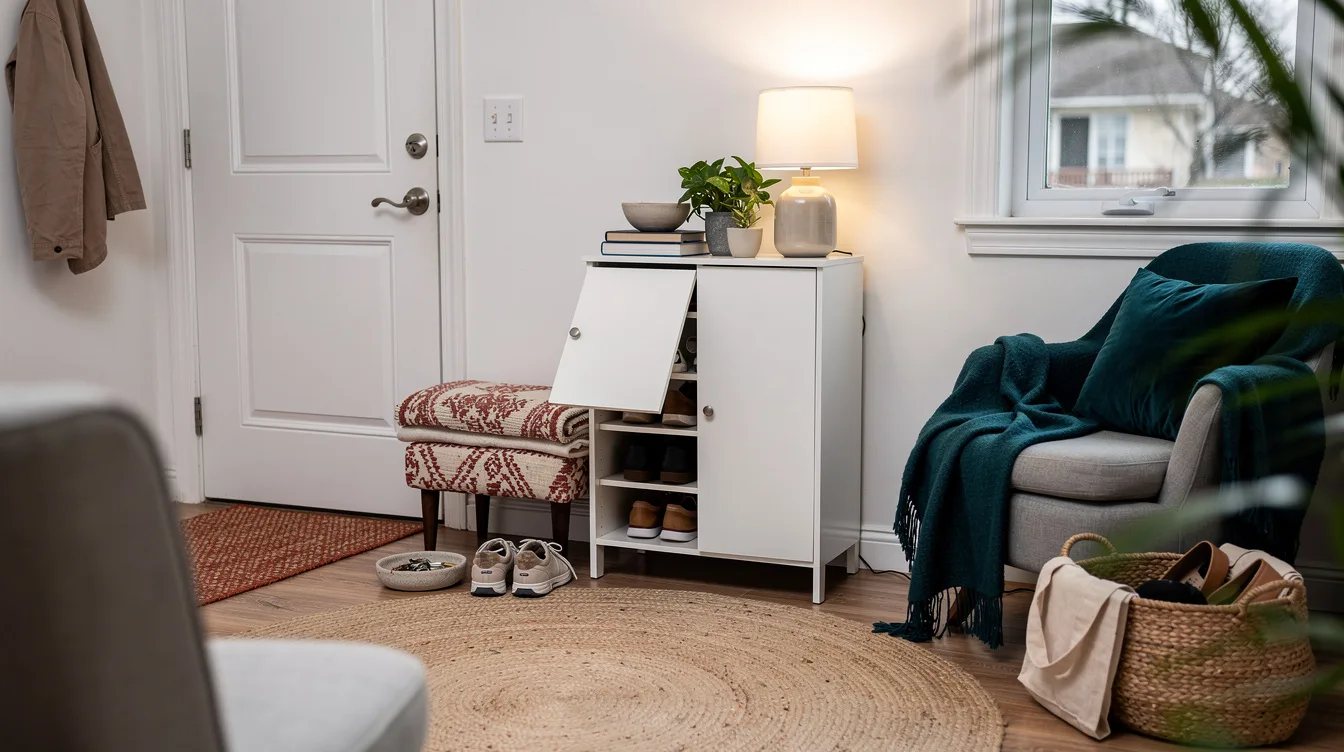
Keep a Small Shoe Collection in HOPUBUY
The HOPUBUY 3-tier flip shoe cabinet gives a one-person household a slim place to store daily footwear. Its listed depth is 6.7 inches, with a width of 22.9 inches and a height of 41.5 inches, making it especially useful beside an apartment door.
The white wood-based panel finish keeps the organizer visually quiet against a pale wall. The usual price is about $85, although promotions can bring it near $50, so check the current listing before treating it as a fixed budget number.
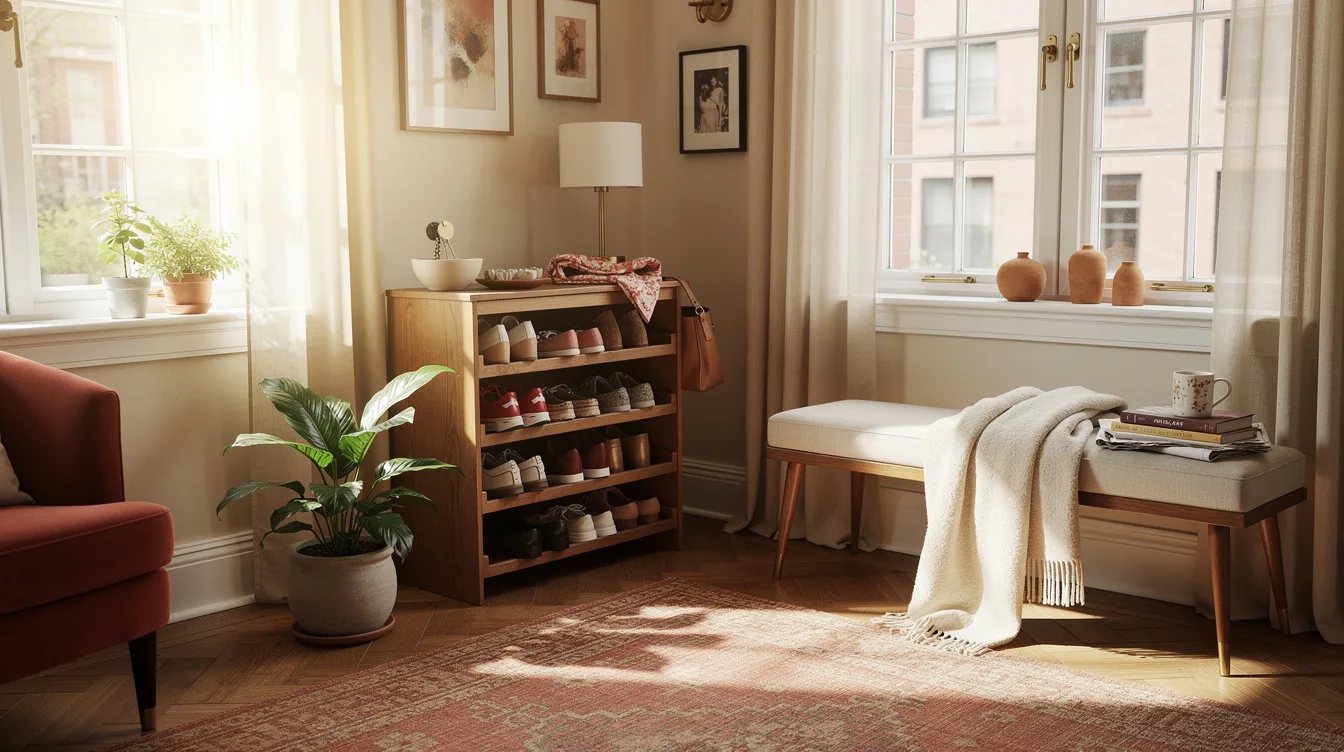
Pair Hidden Shoes With a CARPETNAL Drop Top
The CARPETNAL 2-flip-drawer cabinet gives shoes a concealed home and leaves a usable top for keys, a small bag, or a mail tray. At about 9.45 inches deep, 31.5 inches wide, and 43.31 inches high, it suits a small blank wall where a deeper console would crowd circulation.
White engineered wood keeps the piece easy to place near a kitchen, living room, or hallway. Prices have appeared around $85, with listings ranging from about $70 to $109, so the organizer is worth considering when concealed storage matters more than a low purchase price.
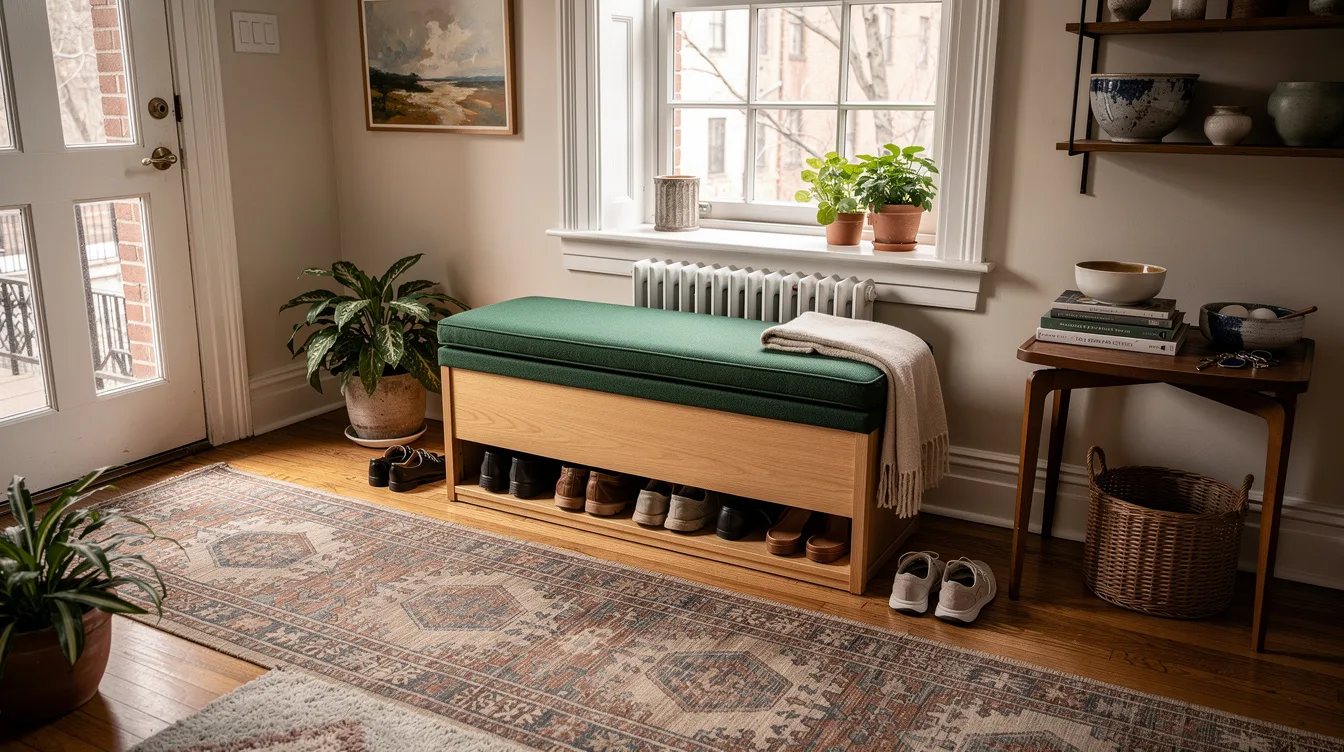
Use the Sweiko Cabinet as a Vertical Anchor
The Sweiko 2-flip-drawer shoe cabinet creates a more substantial entry zone without the footprint of a traditional console. Its listed depth is about 9.45 inches, while the 31.5-inch width and 43.3-inch height give the wall enough presence to hold the area visually.
Black engineered wood and wooden construction make this a better match for homes that already use dark frames, hardware, or lighting. At about $106, it costs more than a basic shoe rack, but the concealed front keeps the first view from the door orderly.
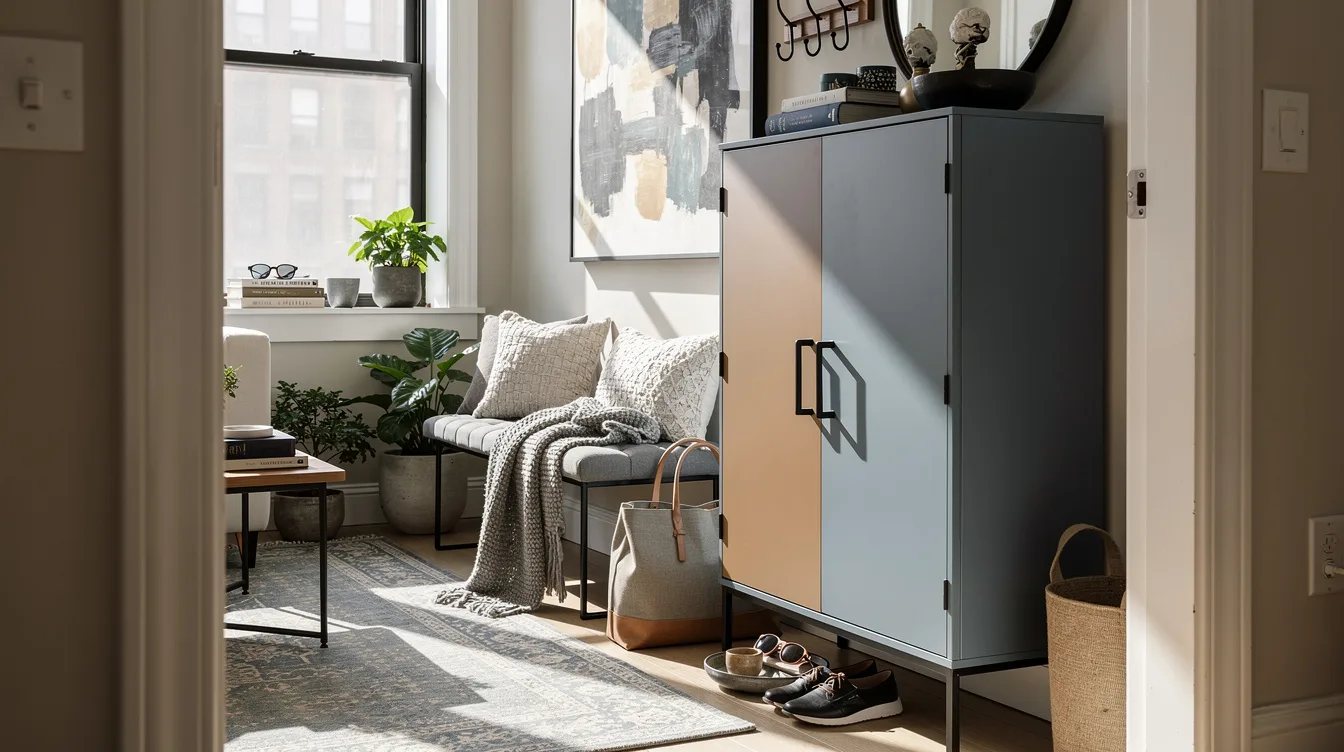
Fit the Lisicues Cabinet Into a Studio
The Lisicues 2-flip-drawer shoe cabinet works when a studio or small apartment needs shoe storage that feels compact rather than temporary. Its listed dimensions are 9.45 inches deep by 23.6 inches wide by 35.8 inches high, giving it a shorter profile than several taller cabinets.
The fluted engineered-wood panel adds texture near a plain door without requiring a large decorative arrangement. Prices are roughly $47 to $70 depending on the variant, making this one of the more approachable choices for a first landing zone.
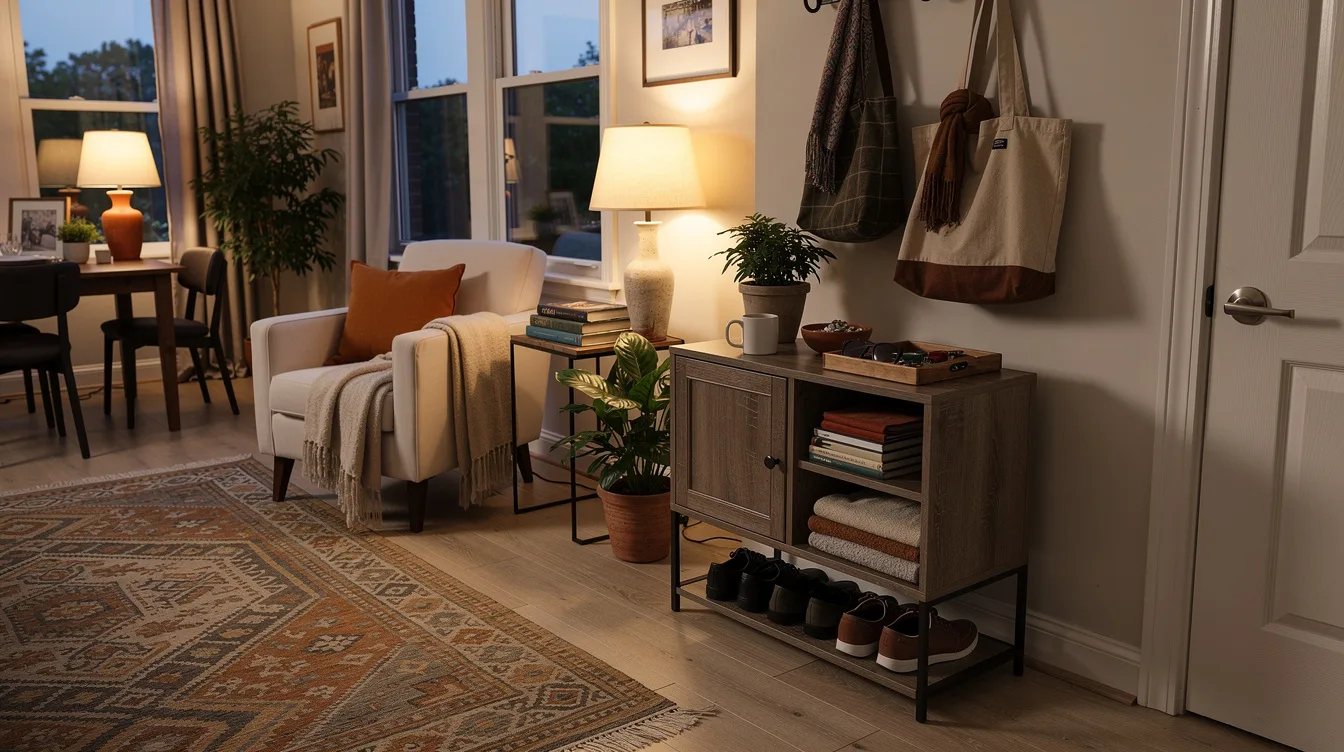
Build a Drop Zone Around the VASAGLE Console
The VASAGLE 2-tier console table is the option for a small blank wall that can accept a little more visual weight. Its listed depth is 7.9 inches, with a width and height of about 31.5 inches, enough room for keys, a lamp, a bag, and a small catchall tray.
Particleboard or engineered-wood shelves with a steel frame give the piece a light, open appearance. With a typical price of about $40 to $70, it can work near a living room entrance, but leave the lower shelf disciplined so the area does not become an exposed storage pile.
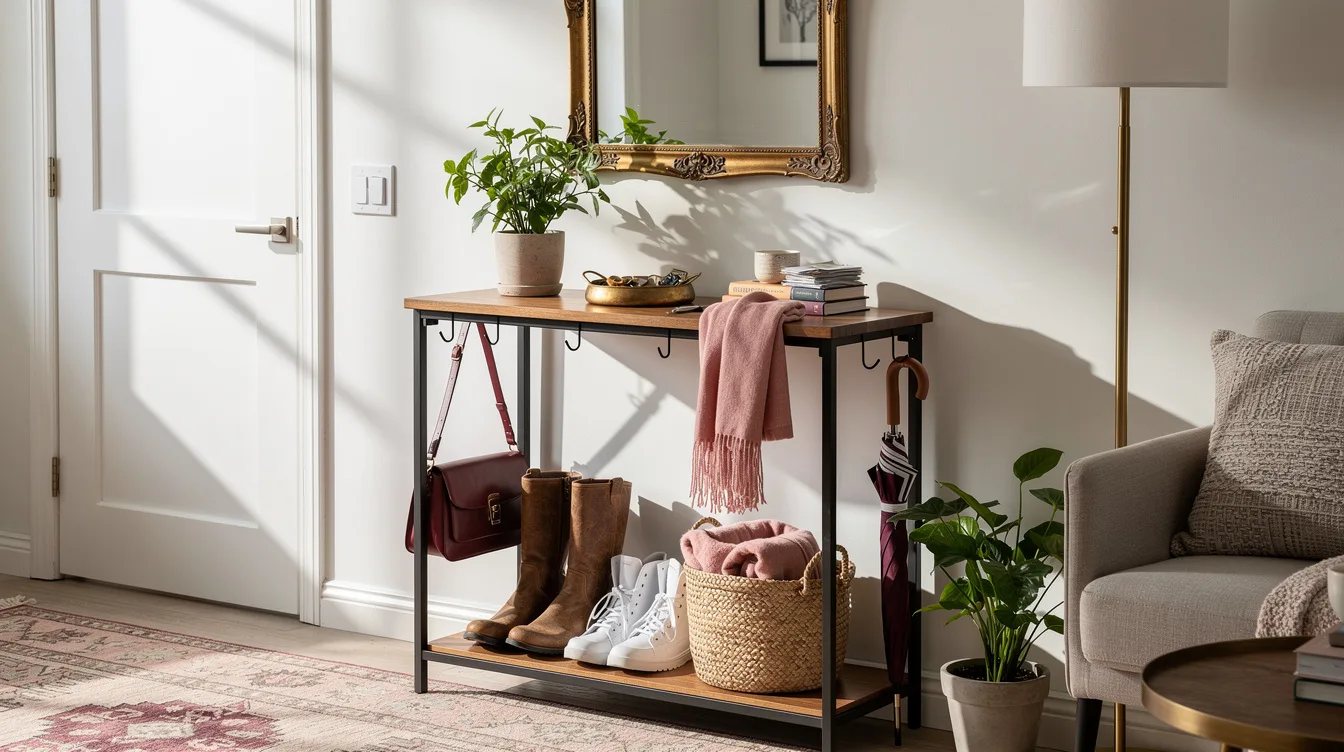
Layer a Shelf Above a Slim Shoe Cabinet
For a home that opens straight into a living room, combine a shallow flip-down shoe cabinet below with a narrow wall shelf above it. A HOMCOM cabinet can hide the footwear while a compact hook shelf handles keys and coats, creating separate homes for the four items that usually scatter first.
Keep the cabinet under about 10 inches deep when the route is tight, then mount the shelf high enough for coats to hang without brushing the shoes. This stacked arrangement uses wall height and keeps the floor projection controlled, which matters more than matching every finish.
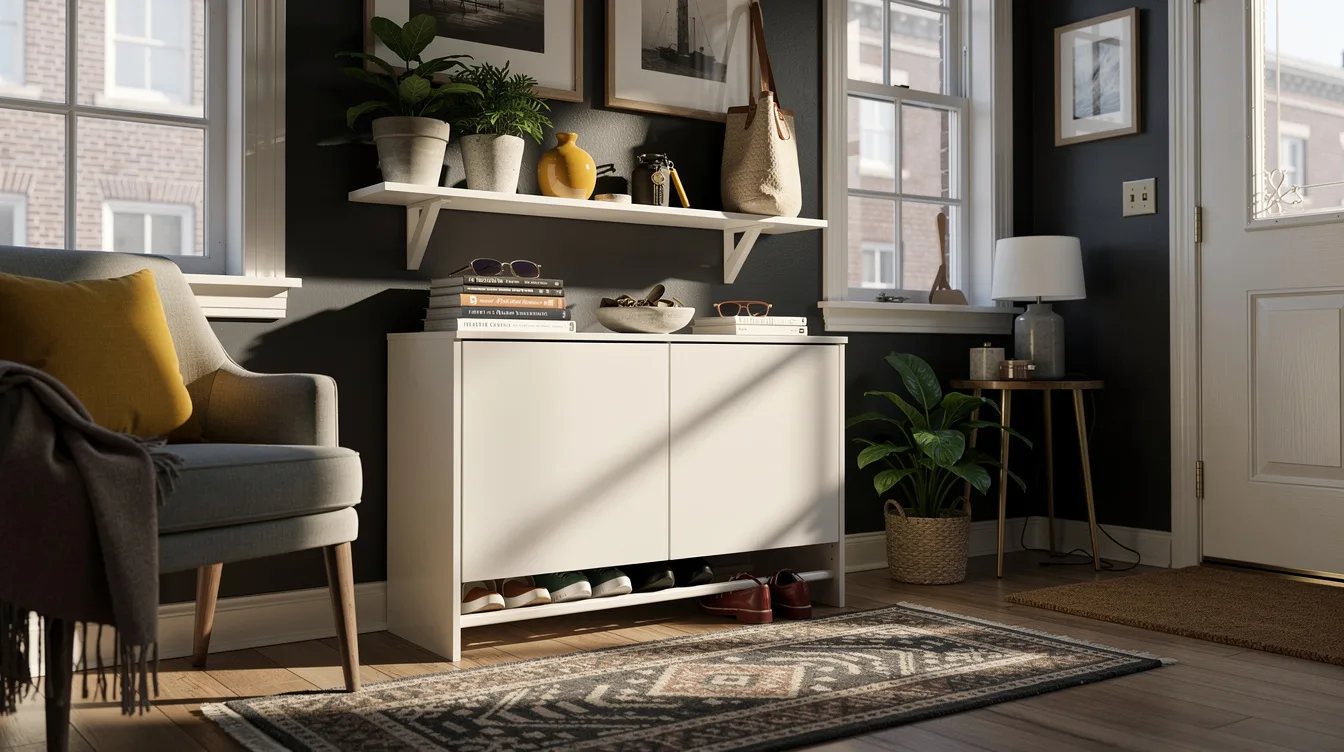
Keep a Passage Clear With Wall Storage
When the usable walking route is under about 36 inches wide, choose wall-mounted storage before adding a bench or hall tree. A Lwenki shelf for keys and a narrow hook rail for coats can handle the landing routine while leaving the passage open from the front door to the rest of the home.
Hallways generally favor organizers about 3 to 6 inches deep, so measure the wall, door swing, and trim before ordering. Skip open shoe racks in this location because their repeated rows create visual clutter at eye level and along the floor.
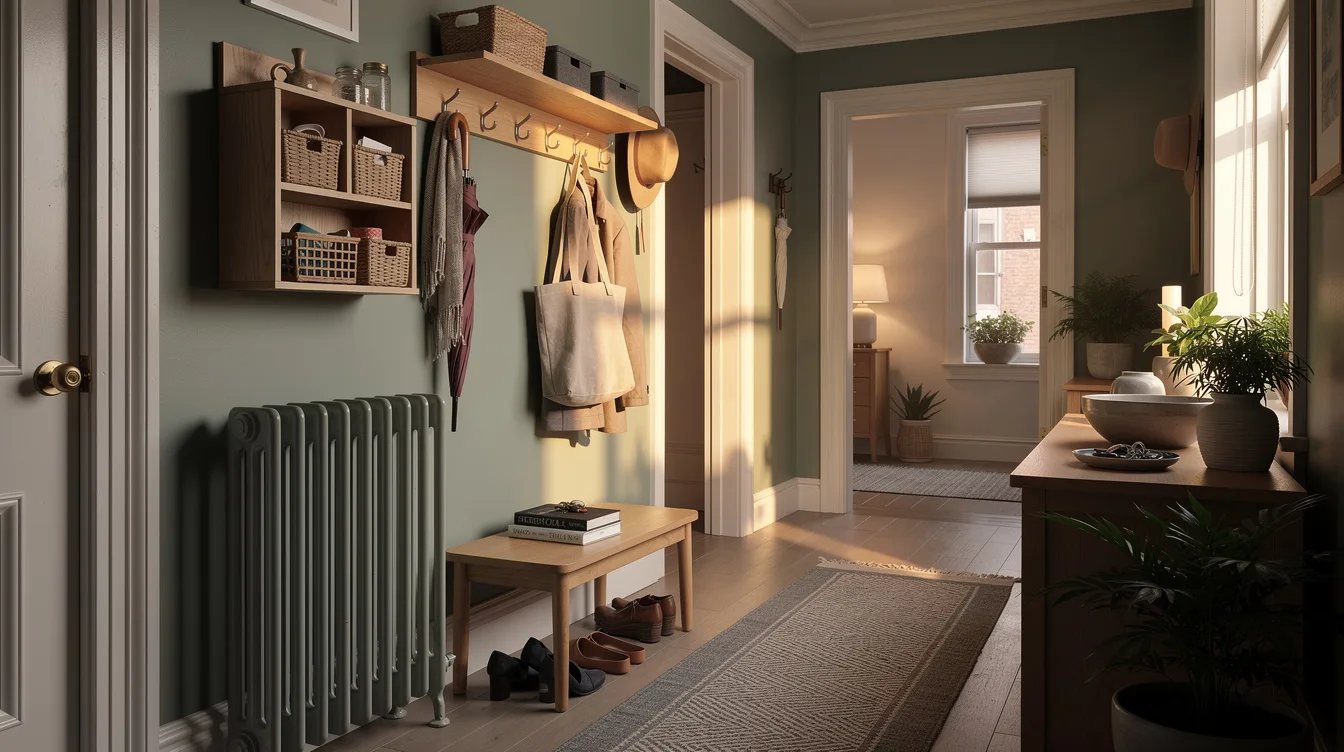
Protect Open-Plan Sightlines With Hidden Shoes
In an open-plan apartment, place a slim shoe cabinet on the wall nearest the door and reserve its top for one attractive tray or a small lamp. The CARPETNAL cabinet gives shoes a closed compartment while keeping the visible surface narrow enough to read as part of the room.
Choose a wall-mounted shelf for coats if a freestanding rack would interrupt the view toward the sofa or kitchen. After placement, keep at least about 30 to 36 inches of clear walking width, then remove anything that does not belong to keys, coats, daily shoes, or a bag.
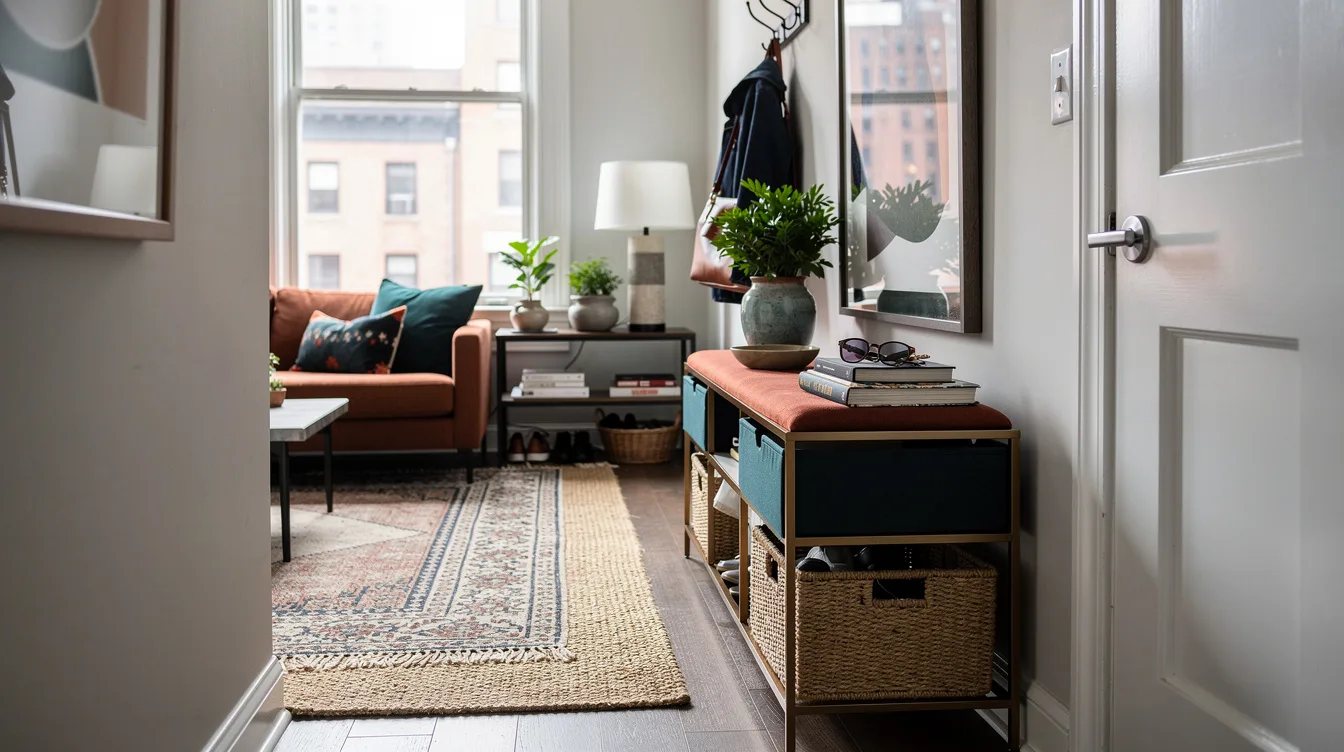
Measure the clear walking route before adding anything, then begin with the shallowest organizer that solves the most annoying daily pile. Once the floor stays open, add concealed shoe storage only if the wall still has room to breathe.