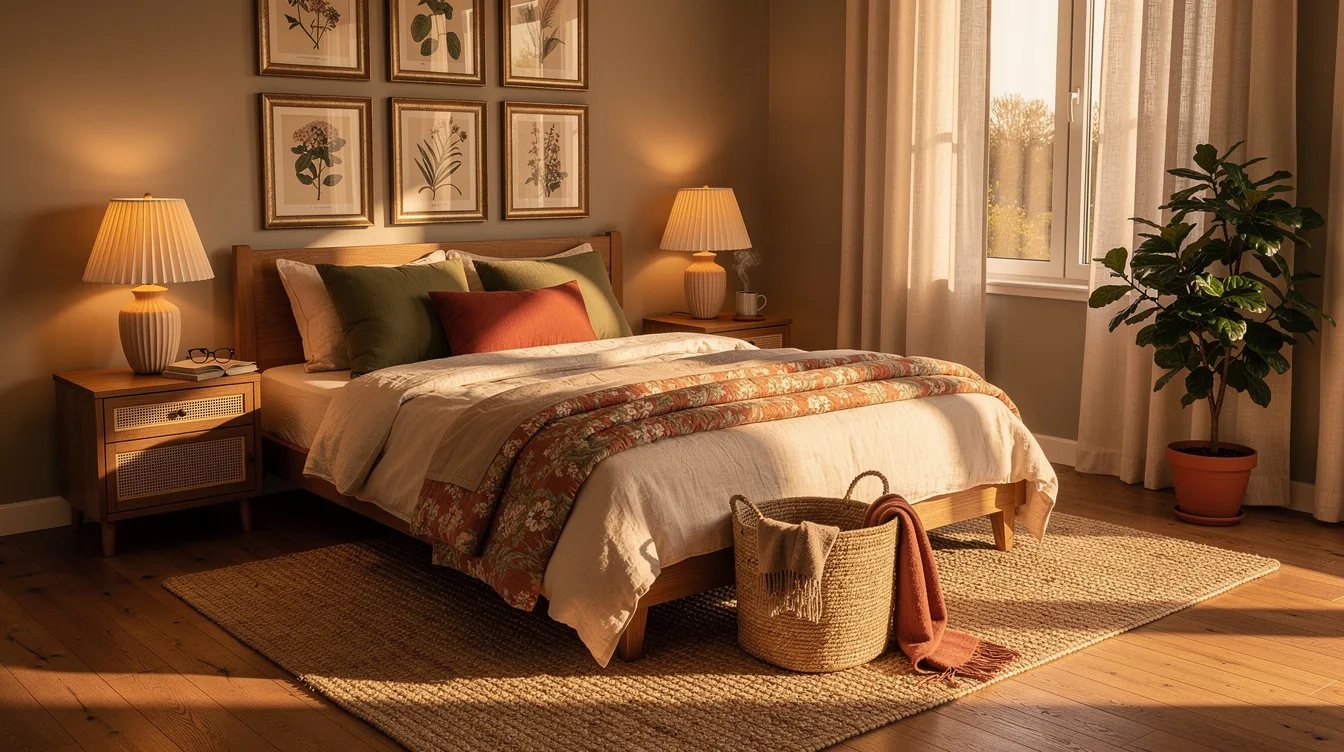
12 Bedroom Finds That Bring Anthropologie Style Without the Premium Price
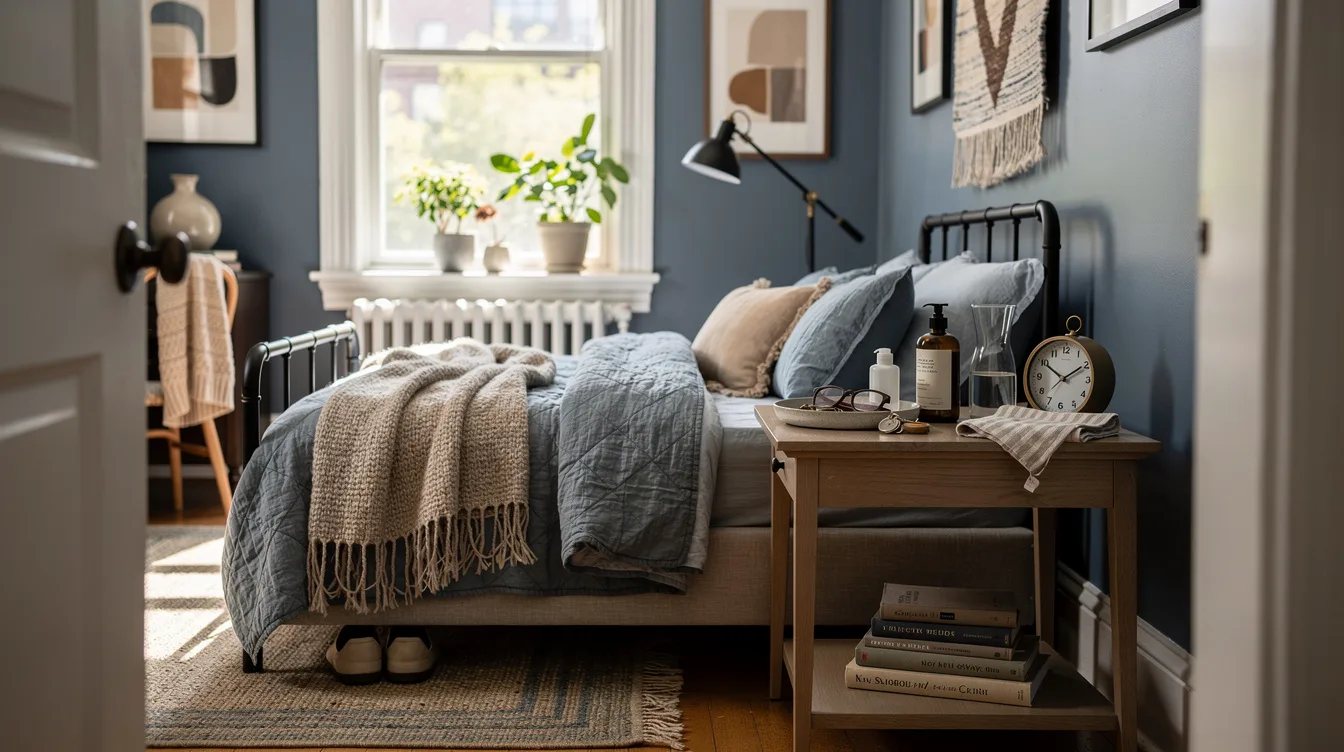
07 september 2026A plain platform bed can make the room feel temporary, even when the mattress is perfectly good. The warmer, collected bedroom look comes from contrast and layers, and a substantial refresh typically lands around $250 to $700 before a new bed frame enters the budget.
We'd spend on the surfaces your hands and eyes meet every day, then let a basic frame fade into the background. That approach captures the relaxed, whimsical mood without chasing a statement bed that can cost roughly $2,600.
What you will find inside
- Start With a Quiet, Warm Base
- Build the Bed With Touchable Layers
- Choose One Patterned Hero
- Mix Pillow Shapes With Restraint
- Ground the Bed With a Textured Rug
- Hang Curtains High and Full
- Bring In Wood With Some History
- Pair Imperfect Bedside Tables
- Add a Natural-Fiber Accent
- Replace Harsh Overhead Light
- Frame Botanical Art Like It Was Found
- Finish With Useful Small Objects
Start With a Quiet, Warm Base
Choose walls and bedding in oat, warm white, faded clay, muted olive, dusty rose, or deep indigo. A Target Threshold cotton duvet set in one restrained shade gives every patterned layer somewhere to land.
Skip stark white if the room has limited daylight, because it can turn blue and clinical. Cream or mushroom reads softer beside wood, brass, and woven fibers.
Build the Bed With Touchable Layers
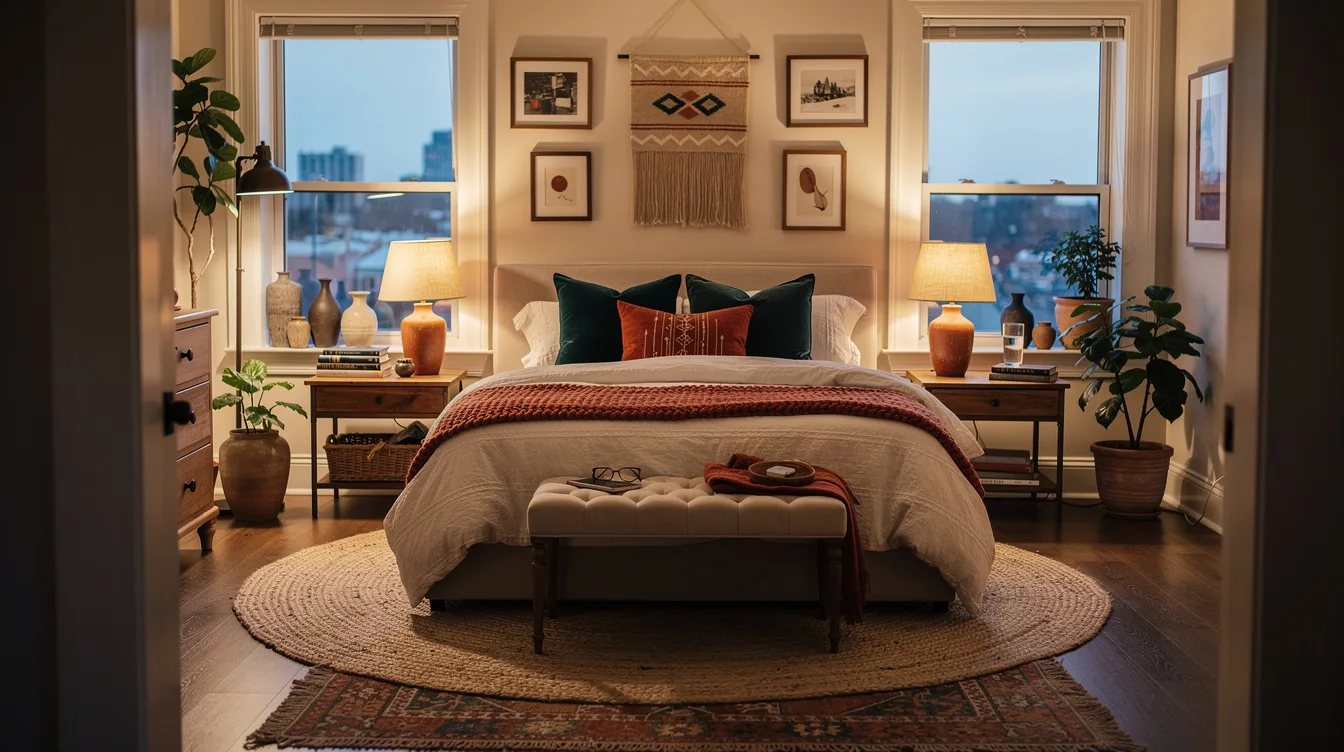
Use a cotton or linen-look duvet, then add a quilt or coverlet across the lower half of the bed. A IKEA cotton throw, roughly 50 by 60 inches, adds the rumpled texture this look needs.
Keep the base plain and let the top layer carry character. Crisp hotel bedding is the wrong mood here, so choose fabric that looks inviting when it isn't pulled perfectly smooth.
Choose One Patterned Hero
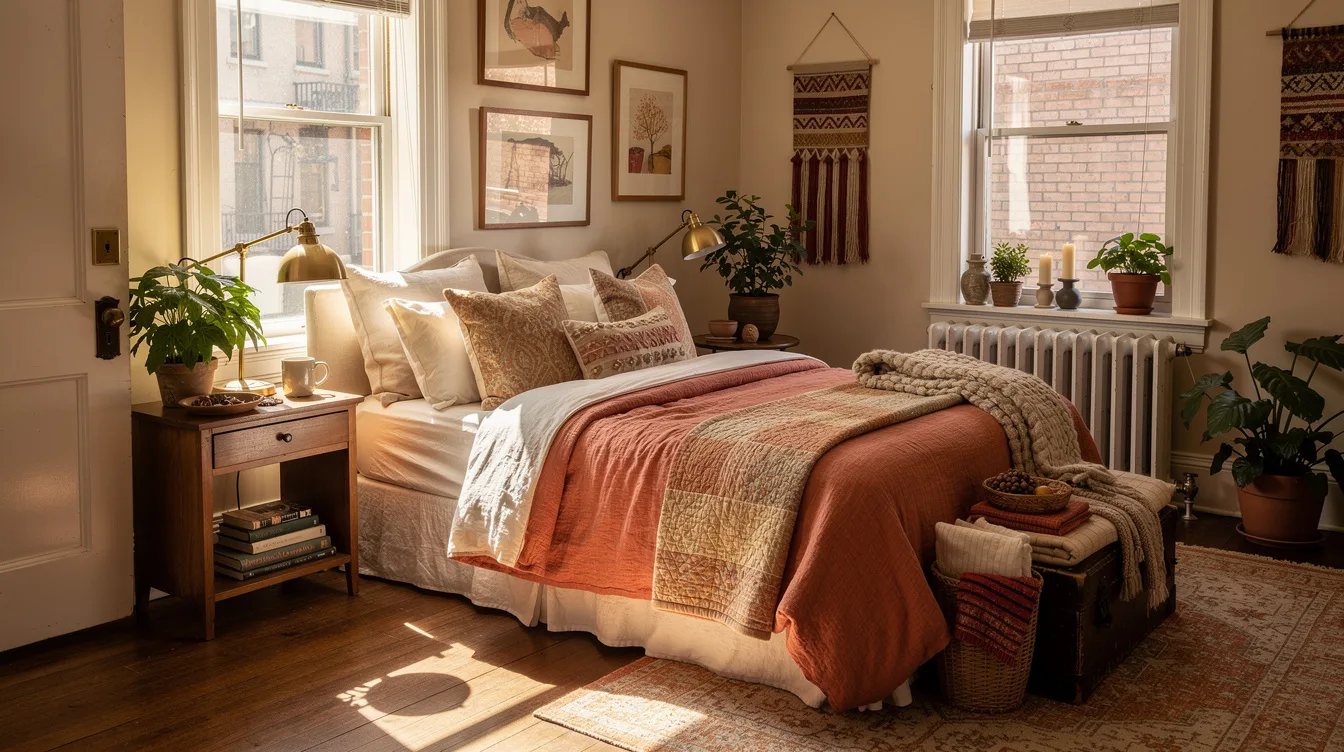
Give the bed one visual lead: a floral duvet, block-print quilt, tapestry, or botanical curtain. A Target Opalhouse floral quilt can do more for the room than several tiny decorative purchases.
Limit the large-scale pattern to one major surface. Competing prints make a small bedroom feel busy rather than collected.
Mix Pillow Shapes With Restraint
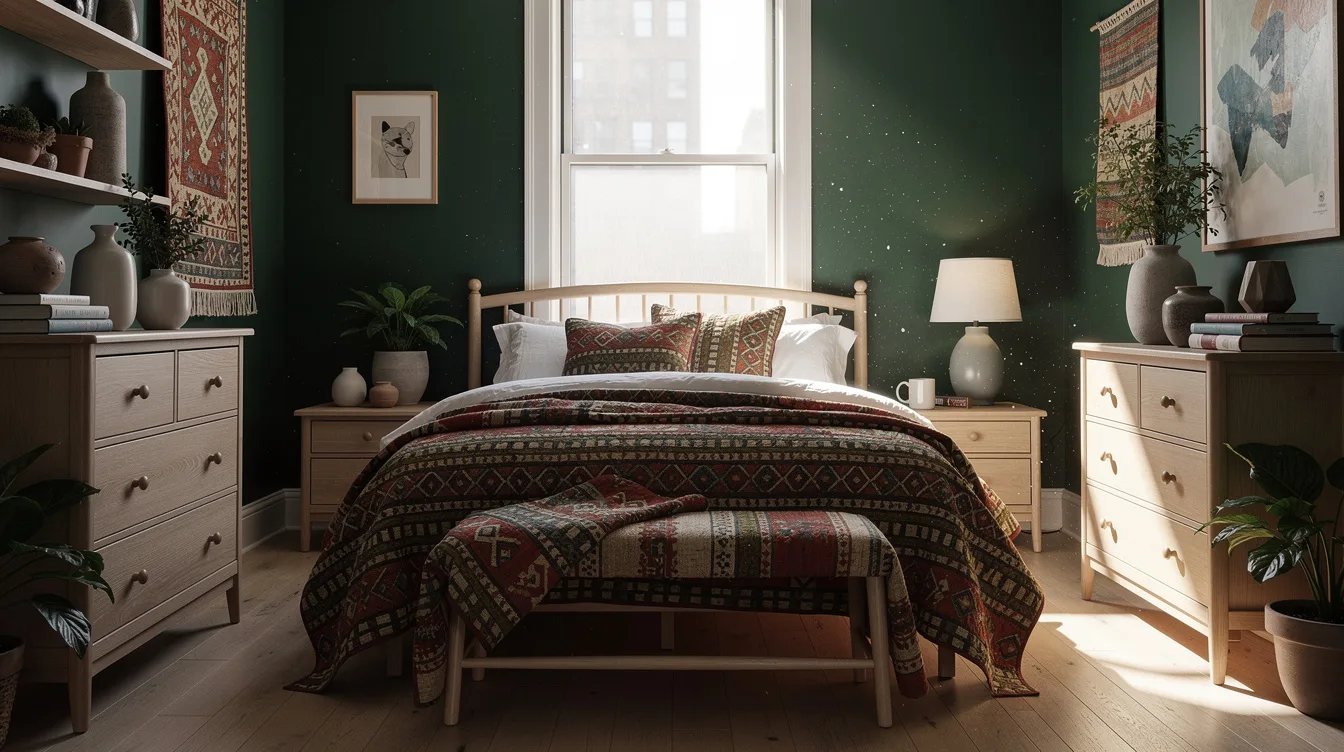
Use two roughly 20-inch square pillows and one lumbar pillow in front, then stop. A Walmart Better Homes & Gardens lumbar pillow in faded rust, moss, or embroidered ivory gives the bed a useful dose of softness.
Matchy sets look like they arrived in one box. Combine a quiet solid with a small-scale print and one nubby woven cover instead.
Ground the Bed With a Textured Rug
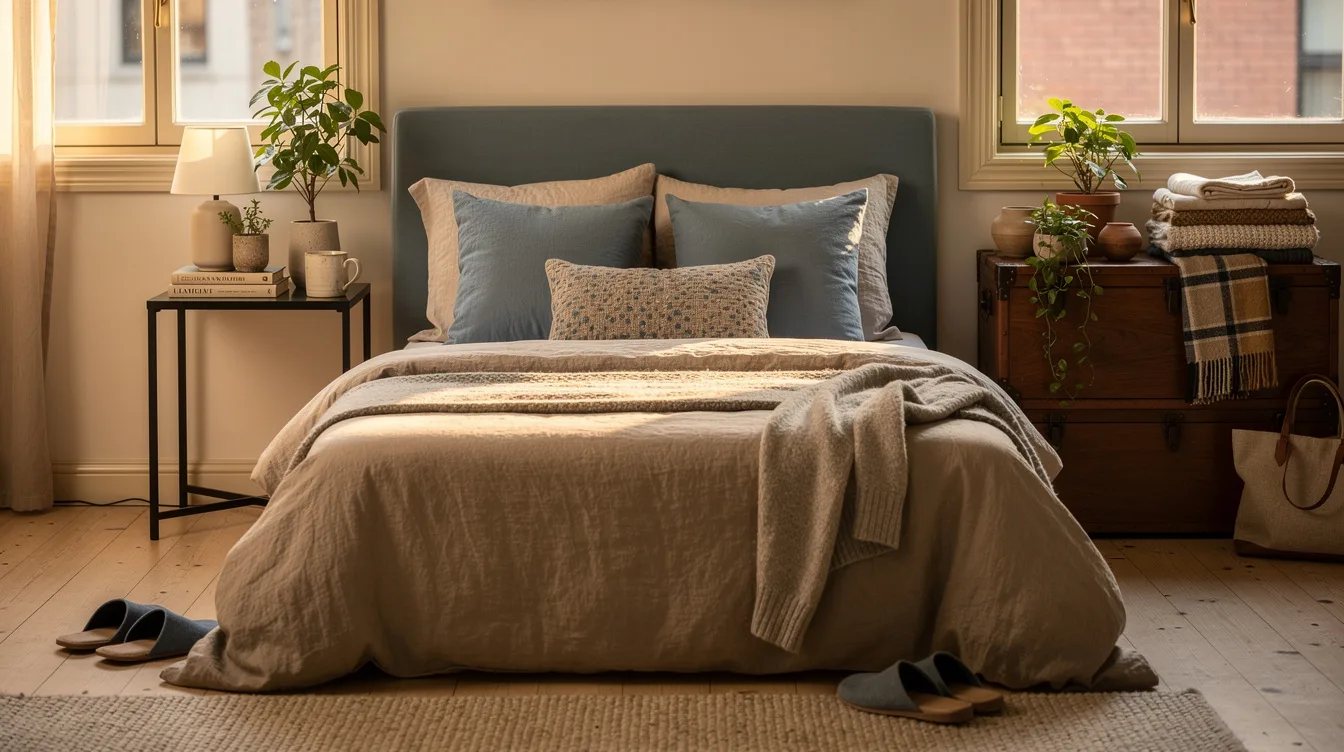
A rug needs to reach beyond the sides of the bed, otherwise it looks like an afterthought. For a queen, a roughly 6-by-9-foot or 8-by-10-foot Wayfair jute-look rug usually gives bare feet a landing spot.
Choose muted pattern, woven fiber, or a low-pile wool look. Bright geometric rugs pull the room toward a different, more polished style.
Hang Curtains High and Full
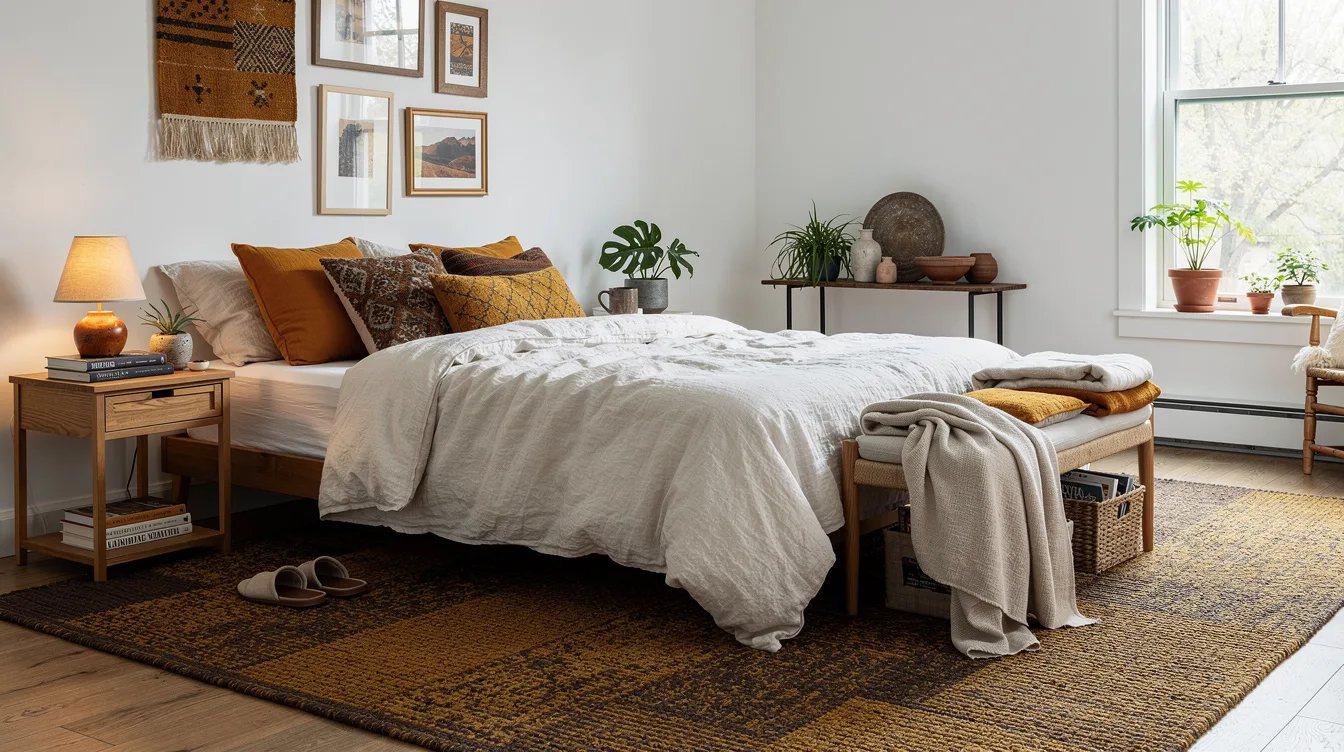
Mount the rod close to the ceiling and use panels that nearly brush the floor. Two IKEA linen-look curtain panels, typically about 50 inches wide each, make an ordinary window feel generous.
Gauzy cotton and relaxed linen texture belong here. Shiny blackout panels can work behind them, but they should not be the visible layer.
Bring In Wood With Some History
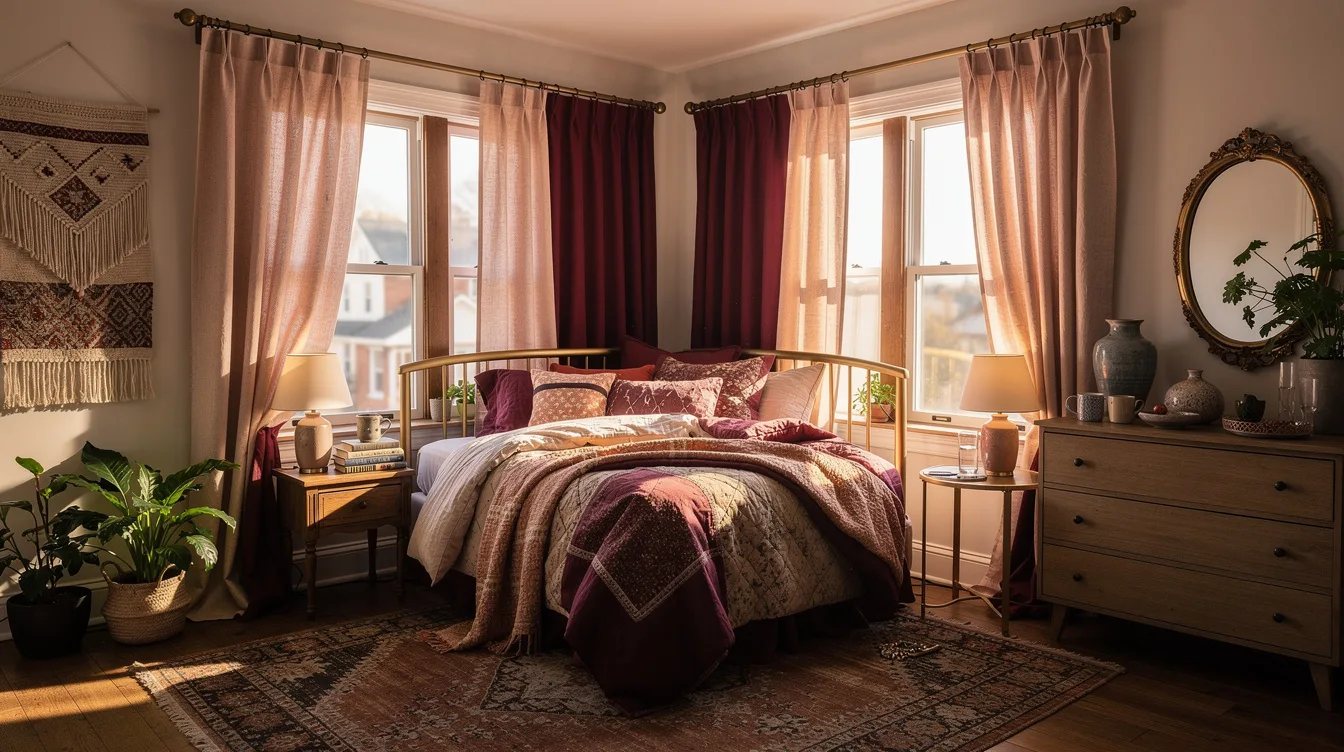
Use one wood piece with grain, wear, or carved detail: a nightstand, small dresser, bench, or picture frame. A secondhand mango wood nightstand with a few honest scratches often looks more convincing than a slick new set.
Anthropologie-style rooms favor pieces that seem gathered over time. Avoid buying every wood item in the same stain and finish.
Pair Imperfect Bedside Tables
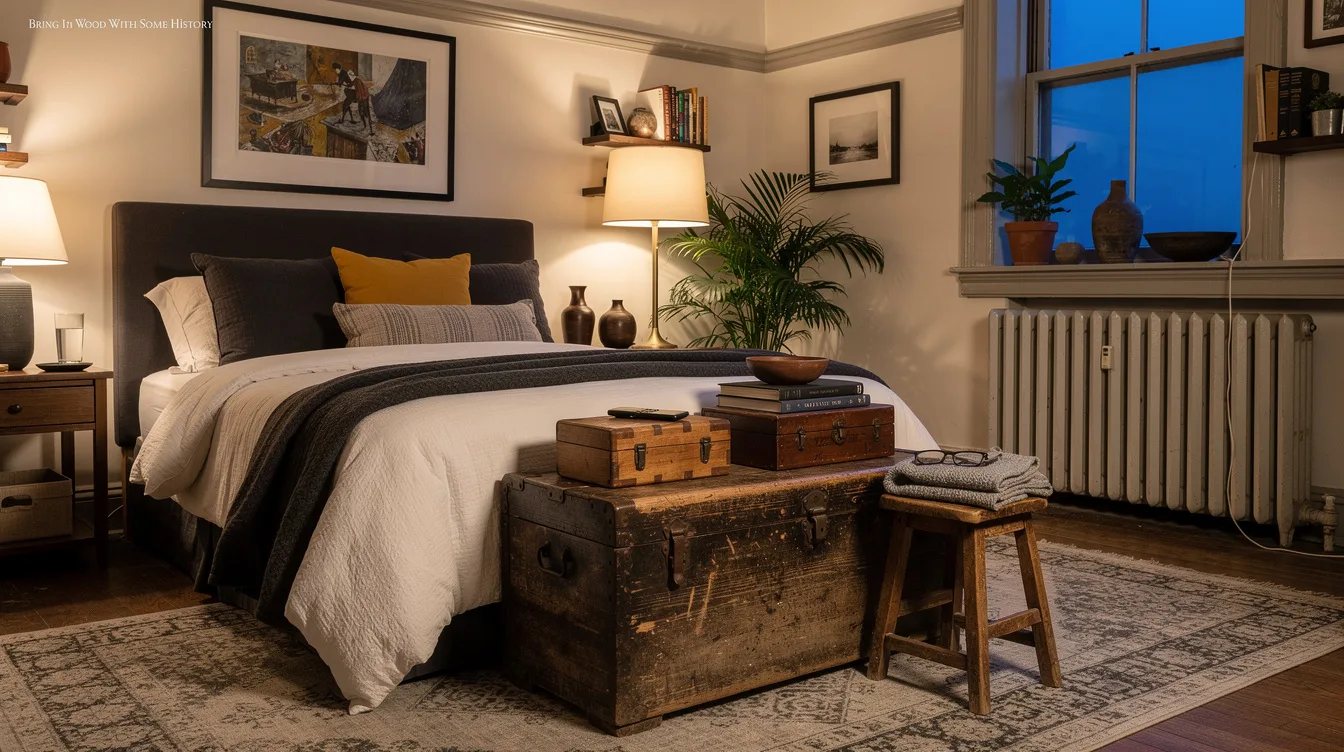
Bedside tables do not need to match, but their scale should cooperate. Keep each top within roughly 1 to 2 inches of mattress height, and aim for tables around 20 to 28 inches wide when space allows.
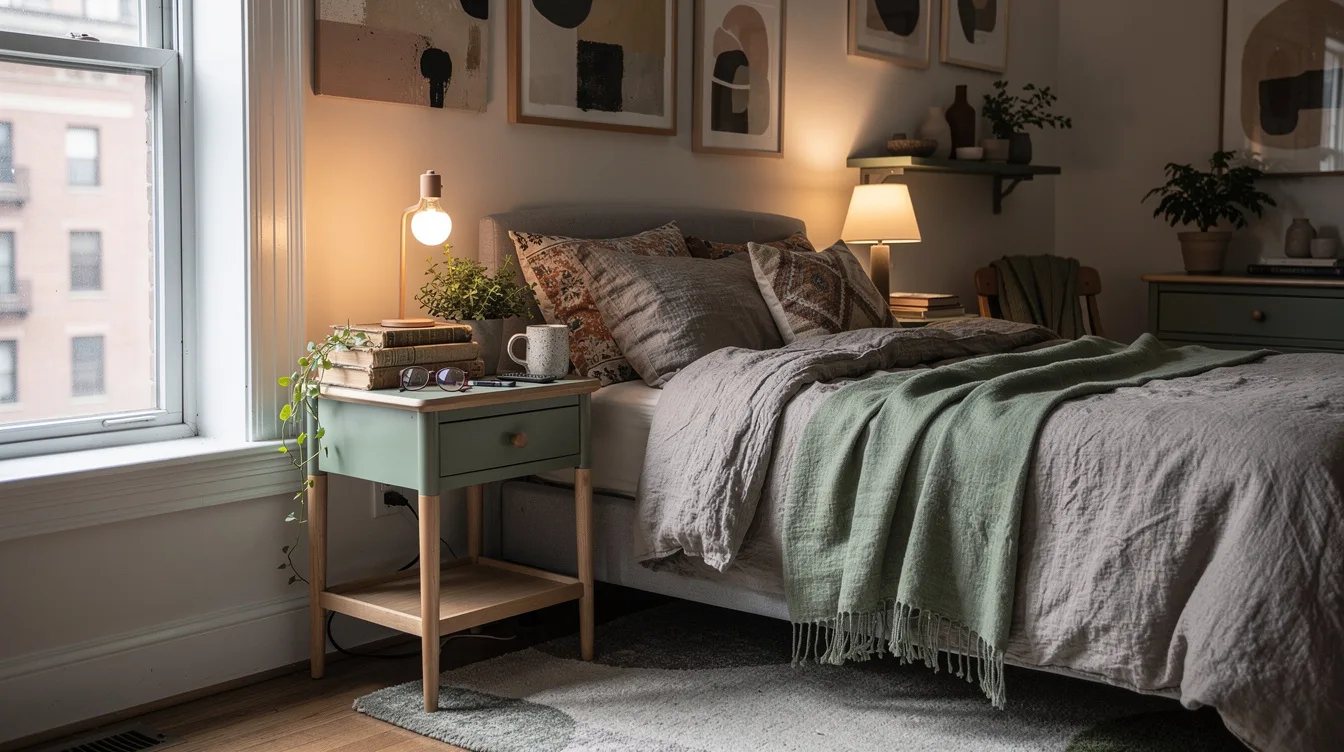
A painted thrifted table beside a Target cane-front nightstand has more charm than two identical glossy cubes. Let the shared link be color, hardware, or height rather than a matching label.
Add a Natural-Fiber Accent
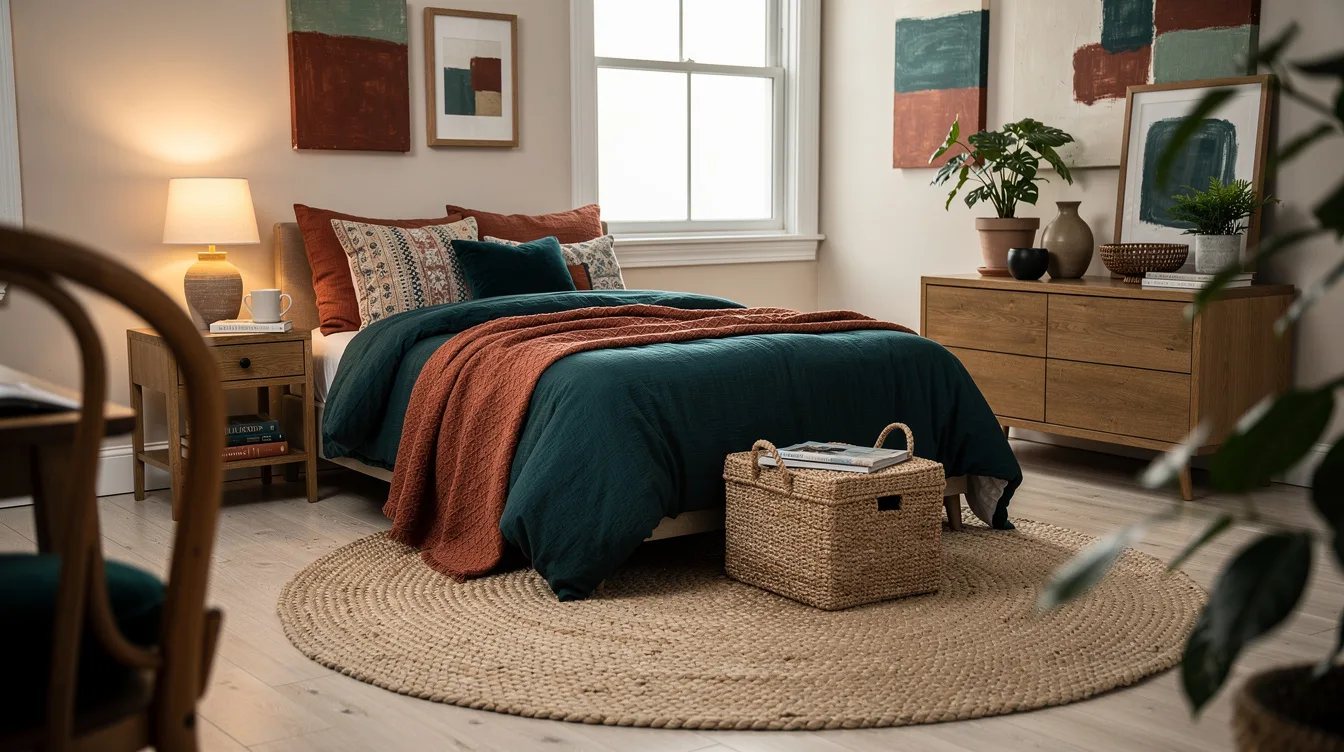
Rattan, seagrass, cane, wicker, and raw wood give the room the organic irregularity expensive collections rely on. A Costco seagrass basket beside the bed can hold an extra throw while breaking up all the soft fabric.
One substantial woven piece is stronger than several tiny baskets. Choose a basket around 16 to 20 inches wide if it needs to hold blankets.
Replace Harsh Overhead Light
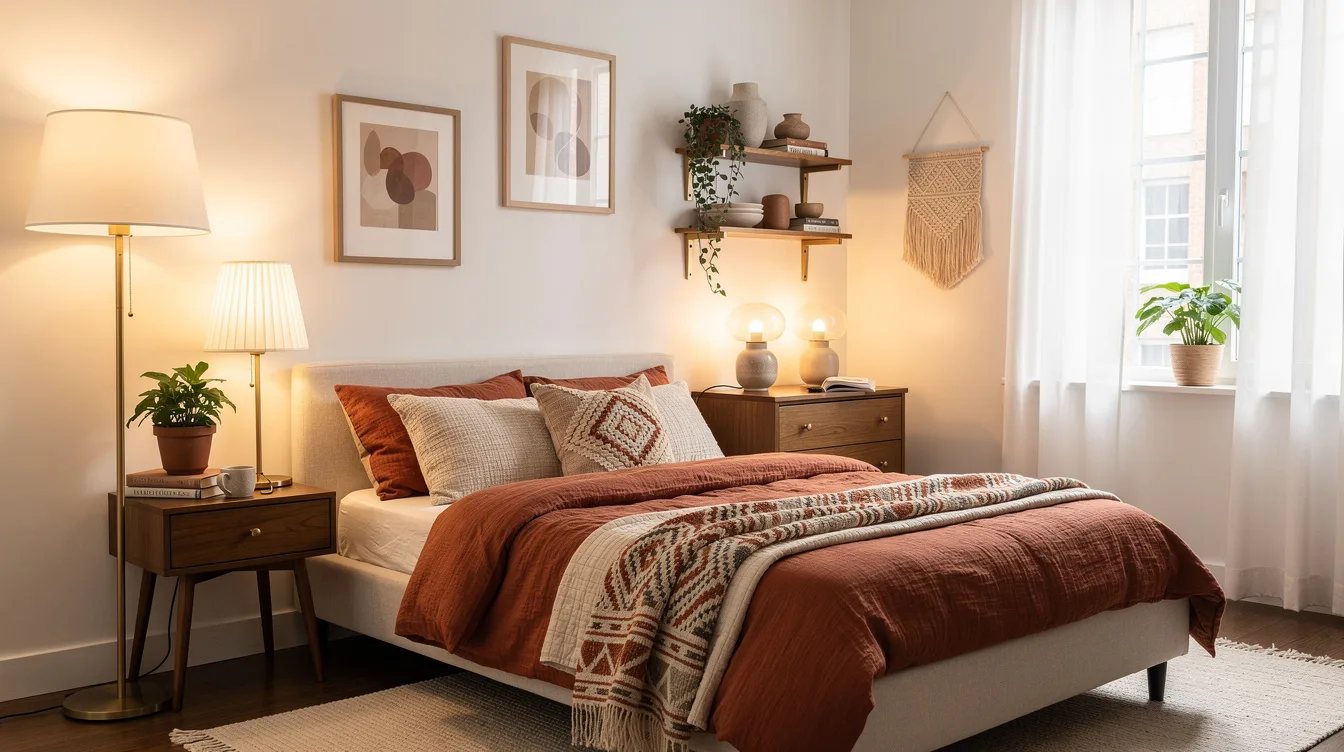
Use bedside lamps or plug-in sconces with warm bulbs, then treat the ceiling fixture as backup light. A Lowe's pleated-shade lamp around 20 to 28 inches high brings softness right to pillow level.
Cool white bulbs flatten clay, olive, and warm wood. Warm, low lighting makes the texture of quilted cotton and ceramic glaze visible after sunset.
Frame Botanical Art Like It Was Found
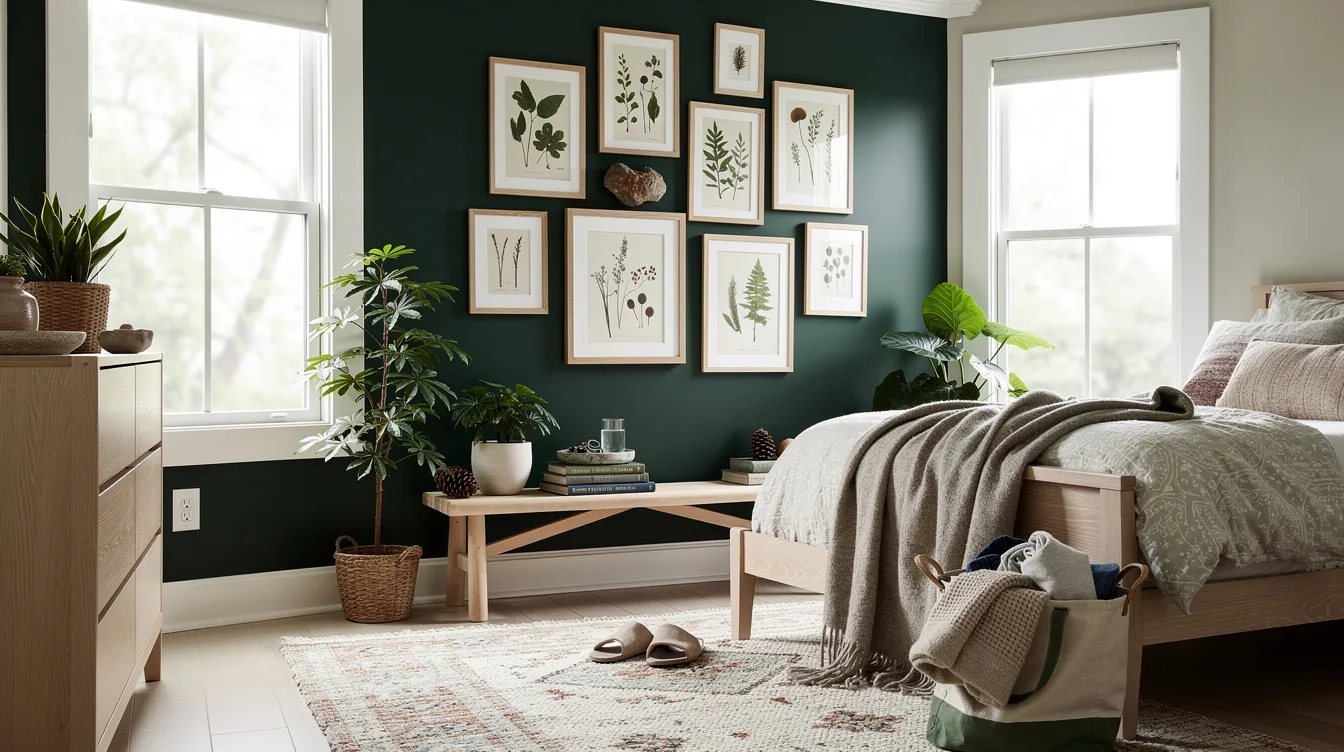
Choose botanical prints, a textile panel, or an old-looking landscape in wood or brass-toned frames. A pair of roughly 16-by-20-inch Amazon botanical prints has enough presence over nightstands without swallowing the wall.
Skip massed word art and perfectly aligned mini-frames. Slight variation in frame finish makes the display feel personal and settled.
Finish With Useful Small Objects
Give each surface a job: a ceramic catchall for jewelry, a vase with clipped branches, a book stack, or a lidded basket. A Home Depot ceramic table lamp paired with one small tray looks intentional without crowding the nightstand.
Leave some tabletop visible. The whole appeal depends on softness and personality, but clutter instantly makes the scheme feel less considered.
Keep reading
- 12 Hotel-Style Nightstand Rules That Make a Bedroom Feel Finished
- 10 Ritz Paris Bedroom Ideas That Look Luxurious Without the Hotel Price
Begin with the bed: choose one quiet duvet, one patterned layer, and a warm bedside lamp before shopping for furniture. Those three decisions establish the collected mood while keeping the rest of the budget flexible.