I Made an Aesthetic Home Gym, It’s Almost Too Pretty to Sweat In
20 august 2026An aesthetic home gym can cost $300 to $1,200 at the budget end, and mine started with an awkward spare room, one borrowed yoga mat, and a ceiling barely over 8 feet. I didn’t want a showroom. I wanted a place you’d walk into on a gray morning and feel ready to move.
- Paint the walls with the Calm-Down Color Rule
- Build an 8x10 Foot Movement Island
- Float the Rack With the Open-Floor Effect
- Hang a Mirror That Doesn’t Feel Like a Dance Studio
- Use the Three-Height Light Stack
- Choose walnut over glossy black storage
- Can one bench carry the whole room?
- Add a window treatment that can take humidity
Here's what it looked like before
Before, it was the full 2005 starter-home package: beige carpet, a folding chair holding laundry, and one overhead bulb that made everyone look tired. The room was useful only in the loosest sense. I’d bring in a mat, do ten minutes, then leave because nothing invited me to stay.
There was no real layout, either. A tiny desk blocked the window, cables collected dust in the corner, and the wall opposite the door was blank except for two old nail holes. You could fit equipment in there, sure, but you couldn’t imagine a routine.
That was the problem I decided to solve.
- Paint the walls with the Calm-Down Color Rule
- Build an 8x10 Foot Movement Island
- Float the Rack With the Open-Floor Effect
- Hang a Mirror That Doesn’t Feel Like a Dance Studio
- Use the Three-Height Light Stack
- Choose walnut over glossy black storage
- Can one bench carry the whole room?
- Add a window treatment that can take humidity
- Make the Two-Wood Rule do the warming
- Frame the equipment like it belongs there
- Keep one wall intentionally empty
- Swap plastic bottles for the Water Station Ritual
- Layer the floor with a soft landing strip
- Create a phone-free shelf near the door
- Use Sherwin-Williams Iron Ore on the ugly door
- Finish with a scent you’ll only use here
1Paint the walls with the Calm-Down Color Rule
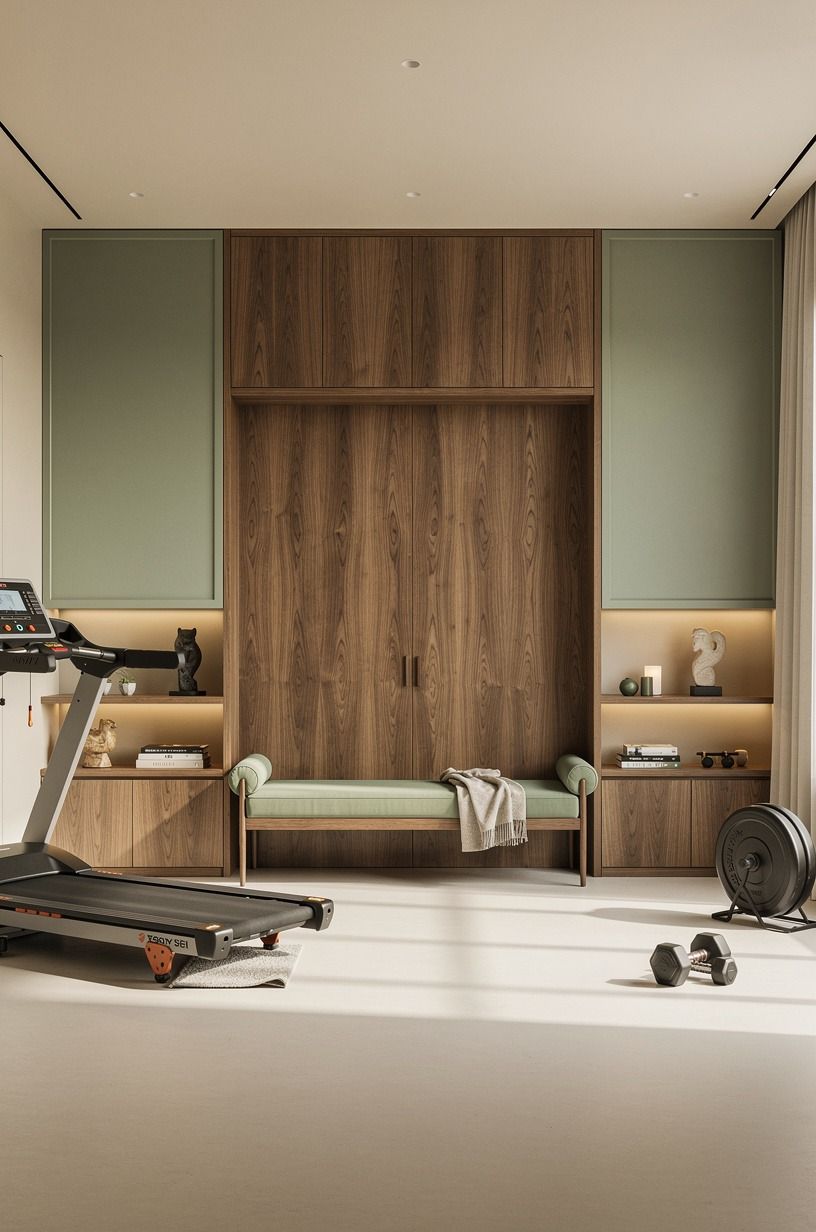
I painted the walls a soft sage green, and the room stopped feeling like a storage closet within an afternoon. Dark paint sounds risky in a small aesthetic home gym room, but a muted green makes the warm cream trim and natural wood look brighter. You don’t need a pale room to get an airy result.
I tested a warm greige first and hated it. It looked polite beside black equipment, while a sage green made the same rack feel intentional.
If your room gets almost no sun, I’d choose Farrow & Ball Studio Green instead; it has enough depth to feel grounded without turning muddy by lunchtime. Bold, yes.
But it’s more forgiving than bright white.
2Build an 8x10 Foot Movement Island
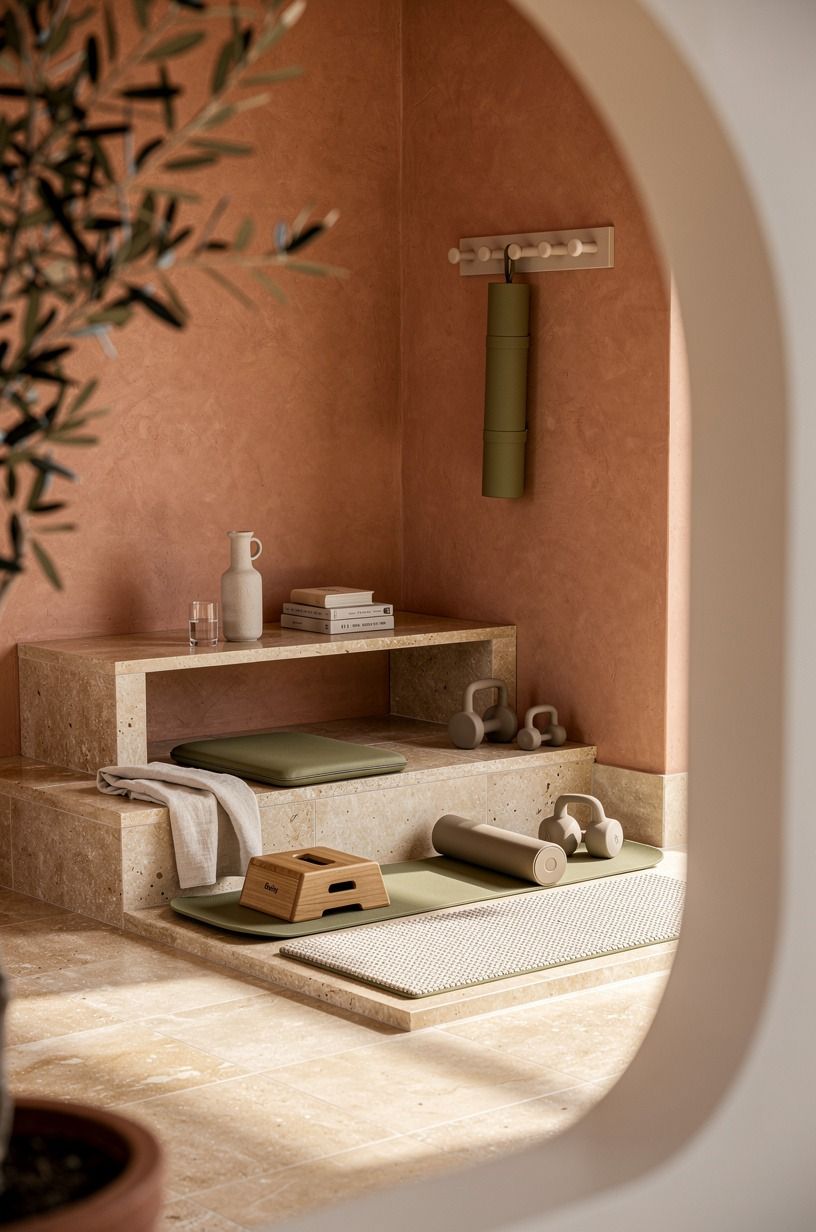
The first thing I measured was the floor, not the wall. An 8x10-foot rubber mat zone gave me enough room for stretching, dumbbells, and a bench without turning every workout into furniture Tetris. You’ll want your own clear rectangle before buying a single pretty object.
I used interlocking 3/8-inch rubber flooring in a warm terracotta-brown, then ran the seams toward the least-visible wall. The typical cost is $2 to $8 per square foot, and that range is why I skipped faux wood foam tiles.
They look good for a week, then curl where your feet land. The rubber is grounded, quiet, and far less precious beside stone and olive accents.
3Float the Rack With the Open-Floor Effect
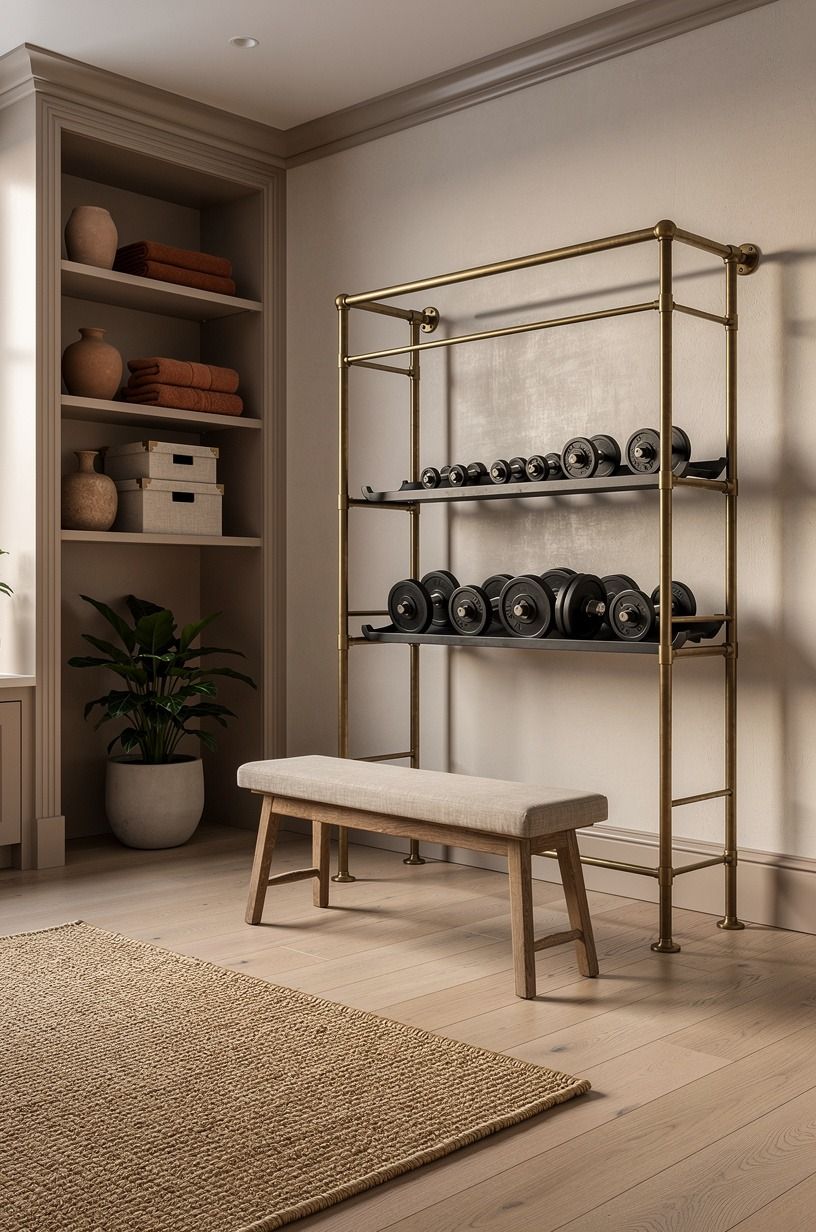
A wall-mount rack changed the whole at home gym design because it gave the floor back to me. Mine folds flat after training, so you can still roll out a mat and lie down without staring at steel legs. That open patch matters more than a huge machine in a modest room.
I chose a wall-mount folding rack instead of a full cage, even though the cage looked more serious online. A typical wall-mount rack runs $150 to $600, while a floor-standing cage eats visual space every hour you aren’t lifting.
You’ll need solid wall backing and a clear path to fold it. An unlacquered brass hook rail nearby will develop a little patina and makes towels feel considered.
4Hang a Mirror That Doesn’t Feel Like a Dance Studio
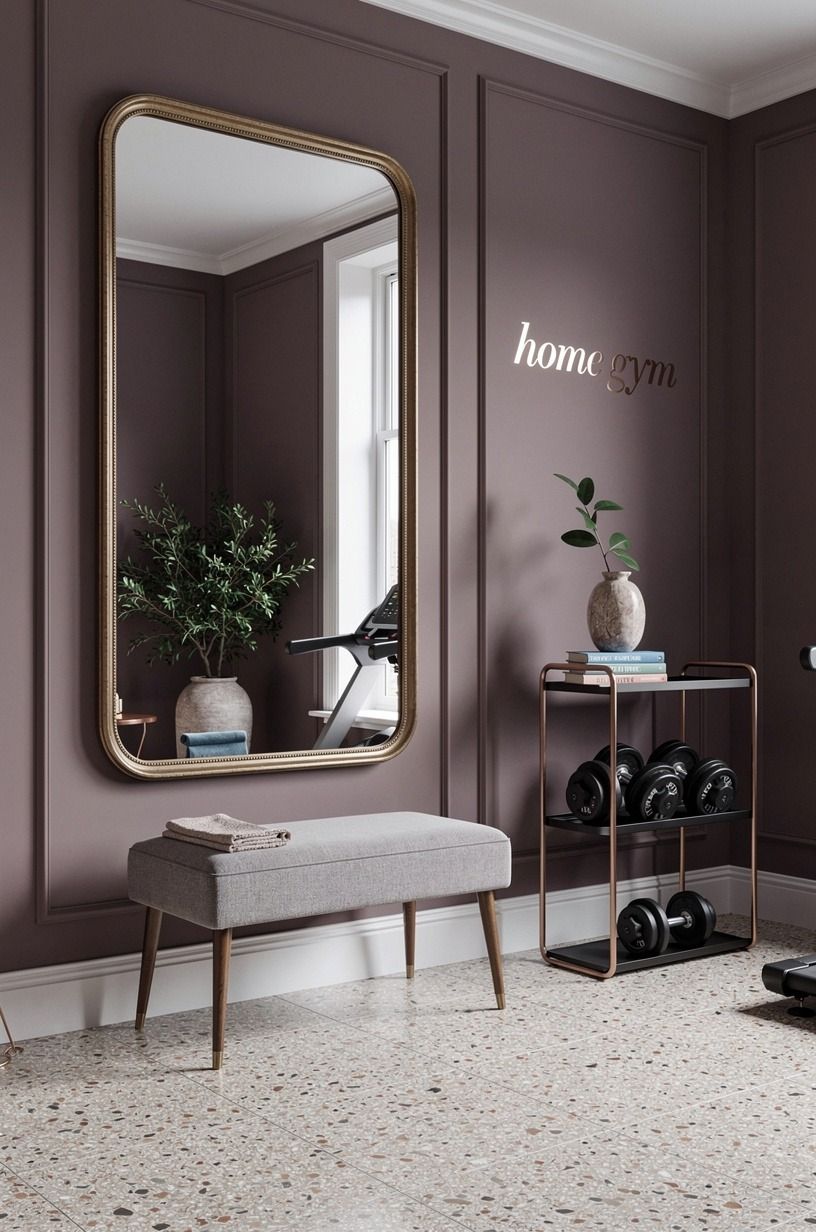
I wanted a mirror for form checks, but I didn’t want the room to feel like a fluorescent fitness chain. So I hung one wide arched gym mirror at eye level and let the plum-painted wall show around it. The reflected window brought in a gentle second source of light.
A typical gym mirror costs $100 to $400. I’d skip a collage of tiny mirrors because the broken-up reflections make a stylish gym feel fussy.
One clean panel gives you a useful view, then disappears into the room. And if you’re working in a rental, lean a framed version against the wall with furniture straps.
A terrazzo base with oversized chips can give the area a quietly playful finish.
5Use the Three-Height Light Stack
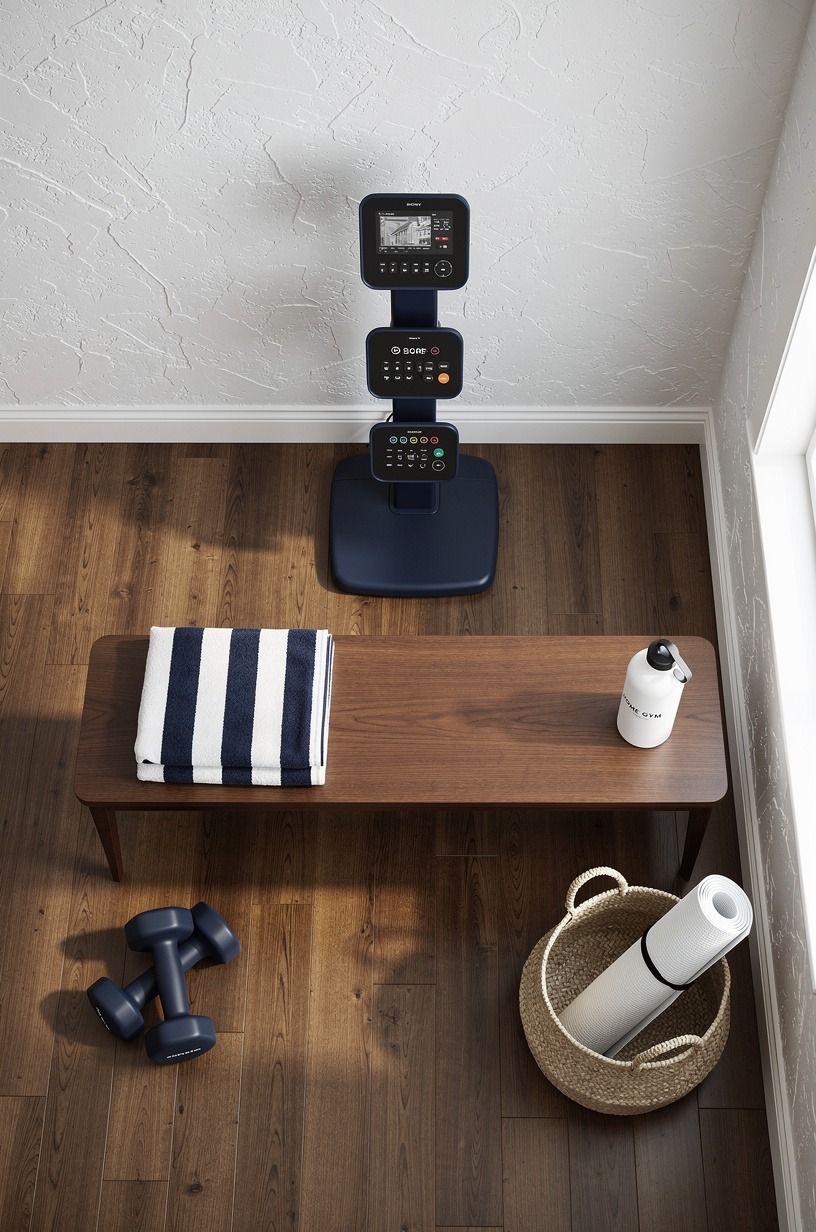
The overhead fixture was my enemy. It cast a hard circle on the floor and made the black mat look like wet pavement. I kept it for cleaning, then added a linen drum pendant, a low aged bronze floor lamp, and a small rechargeable light on the shelf.
You’ll get a more relaxing room when light lands at three heights: ceiling, shoulder, and floor. The pendant handles arrival, the lamp softens the mirror, and the small light keeps the corner from going dead.
I used warm bulbs only against navy, white, and walnut. Cool white light is productive in a dentist’s office; it’s miserable when you’re trying to convince yourself to do lunges.
6Choose walnut over glossy black storage
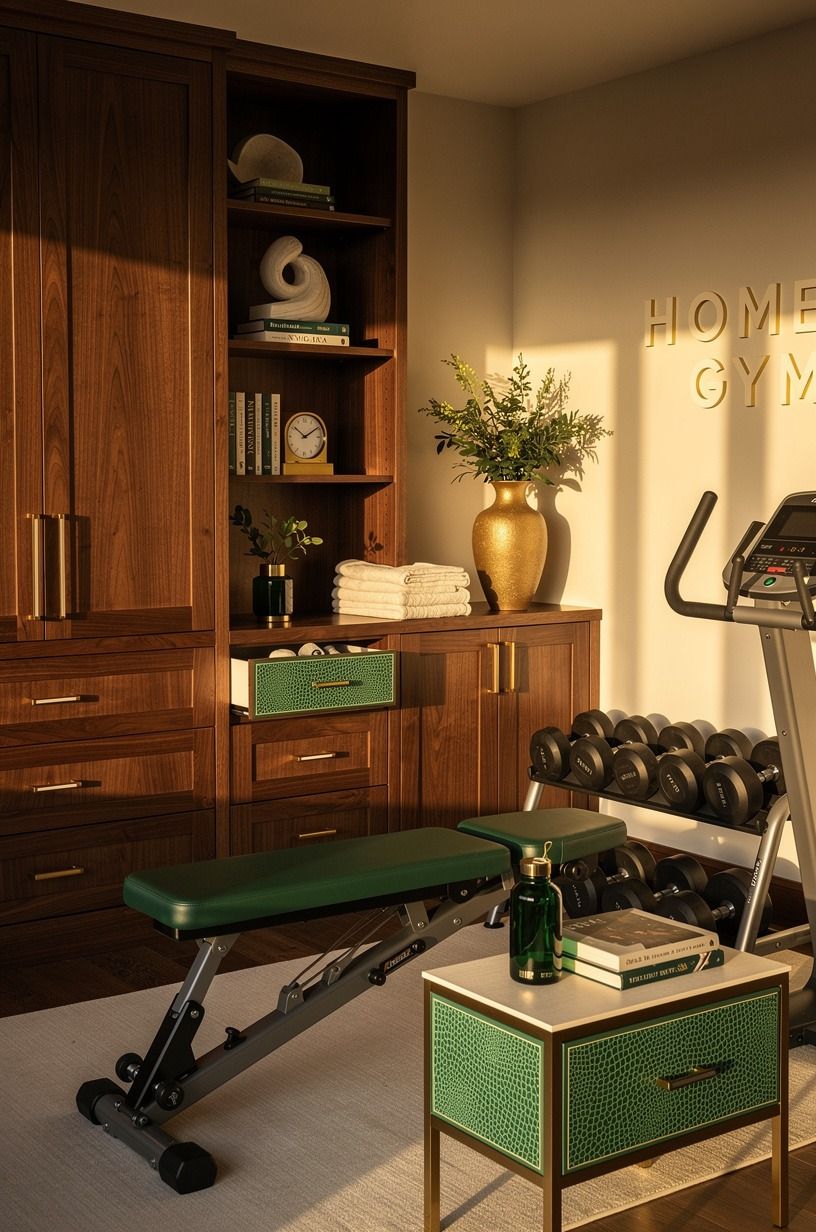
I bought a IKEA TONSTAD walnut-veneer cabinet instead of glossy black lockers, and I’m glad I did. The cabinet hides bands, towels, and the charger mess while adding an organic note against all that rubber and metal. You don’t need gym storage that looks like it belongs in a school hallway.
Inside, I used shallow bins for grips and straps, plus one basket for clean 600gsm Turkish cotton towels. A few shagreen details keep the emerald, gold, and cream palette from feeling flat.
You’ll find it easier to put things away when every item has one obvious home. I made the mistake of using open cubbies at first.
They looked fine empty, then collected every random receipt and resistance band I owned.
7Can one bench carry the whole room?
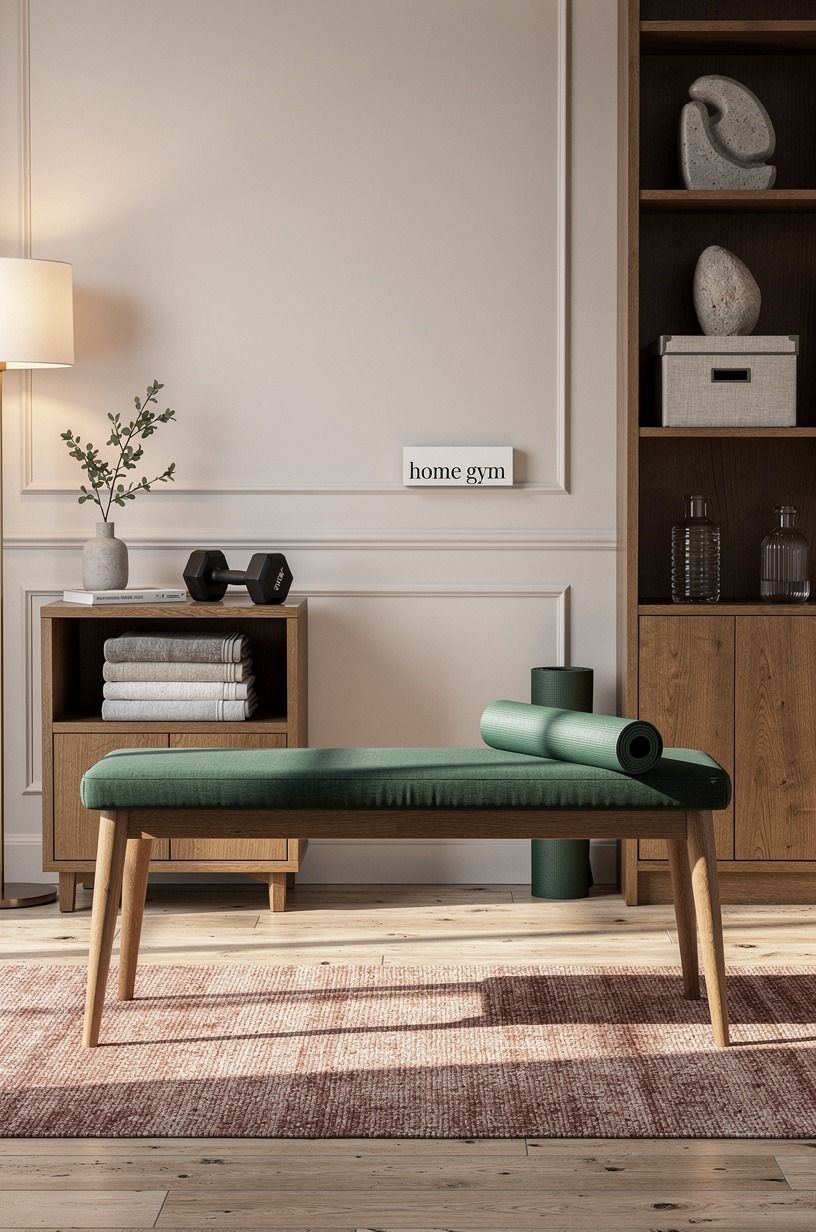
Yes, if you choose one that earns its footprint. I went with an adjustable Article Sven tan leather bench near the window, not because leather belongs in every gym, but because this one works as a seat for tying shoes and a place to drop a towel between sets.
You should leave roughly 6x6 feet of floor around a machine or bench zone so you’re not bumping into furniture mid-rep. A narrow bench upholstered in washed Belgian linen is better than a bulky storage ottoman here.
The ottoman is softer, but it becomes a dumping ground. This bench makes you put the room back together.

8Add a window treatment that can take humidity
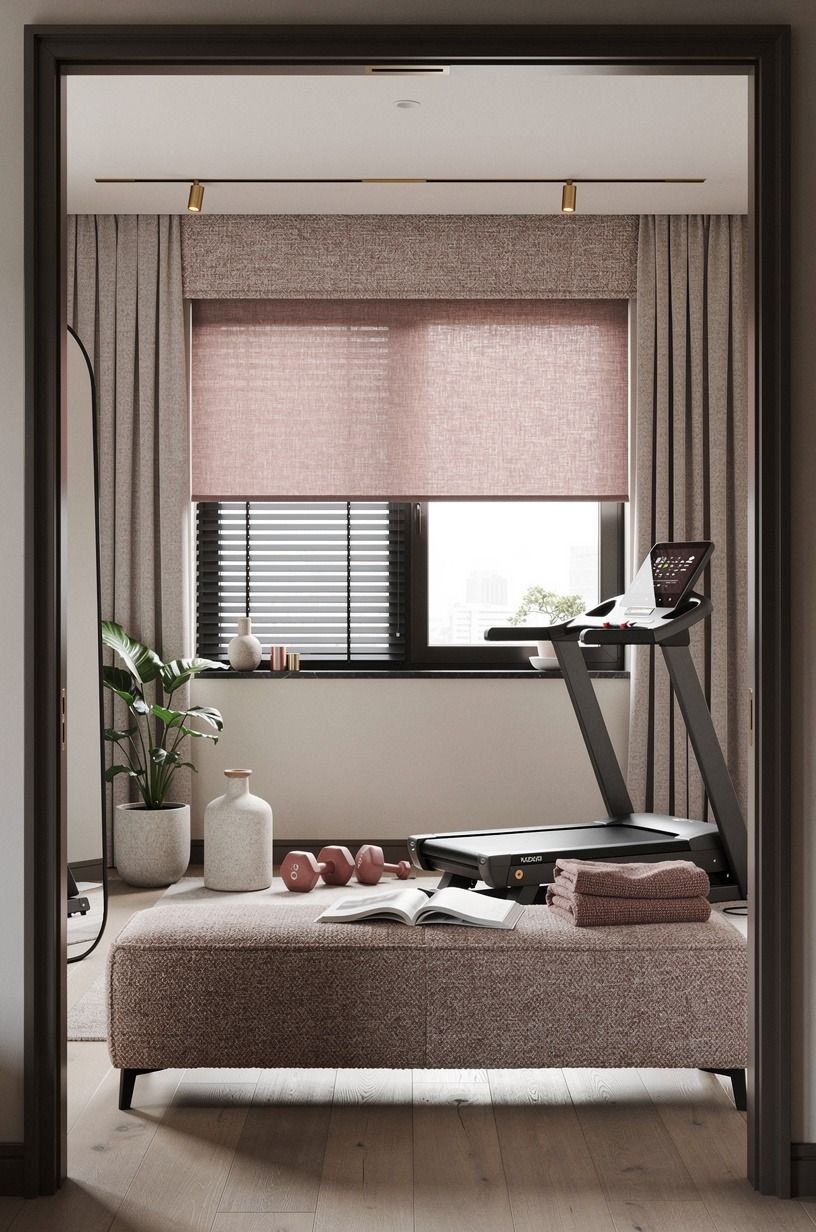
The bare window made the room feel unfinished, so I used a tension rod and organic bouclé curtains in dusty rose. They’re light enough to keep the morning bright, yet they soften the sharp edge of the trim. You’ll notice the difference most at sunset, when the fabric catches a little amber from the brass hardware.
I wouldn’t use thick velvet in a room where you sweat every day. It’s dramatic, but it holds odors and asks for more care than a home gym deserves. Bouclé is the better call because it looks relaxed even when it isn’t perfectly pressed.
Mine has a soft nubby texture, and I prefer it that way.
9Make the Two-Wood Rule do the warming
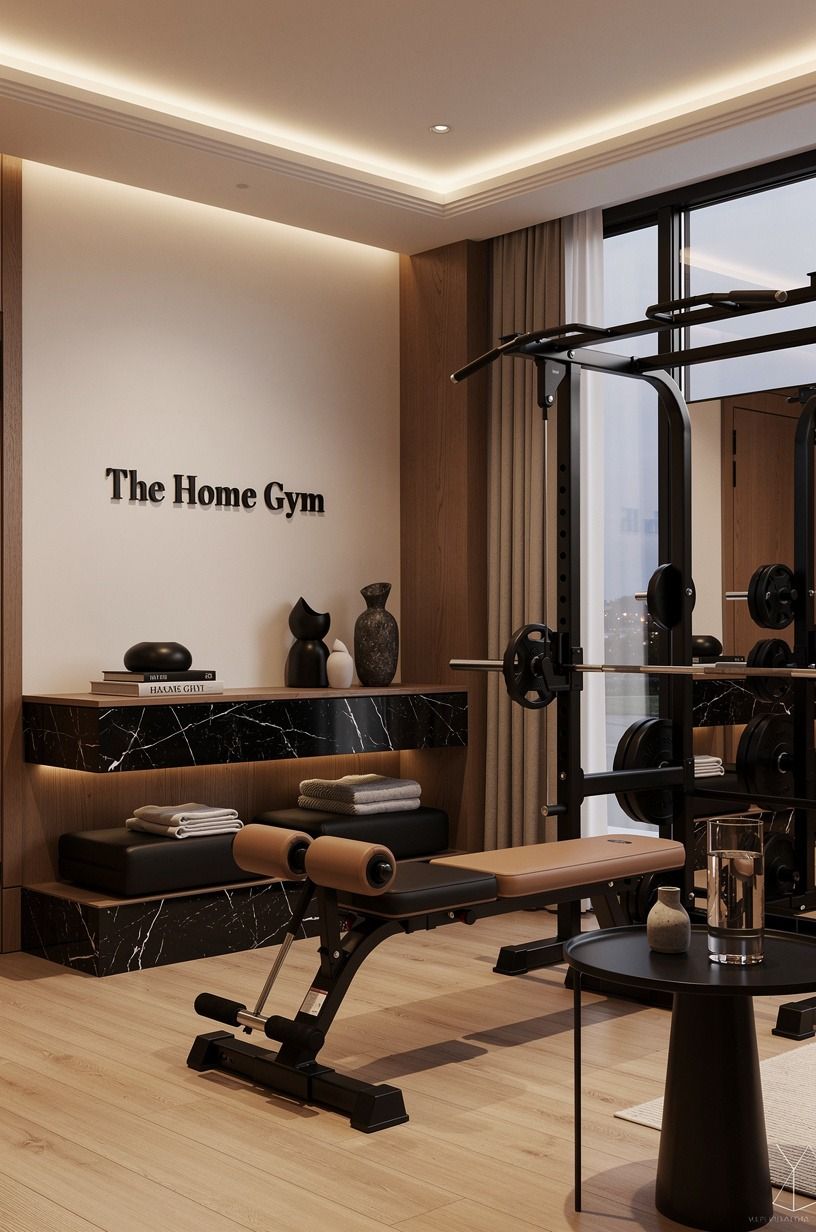
A gym needs more than black, gray, and chrome.
10Frame the equipment like it belongs there
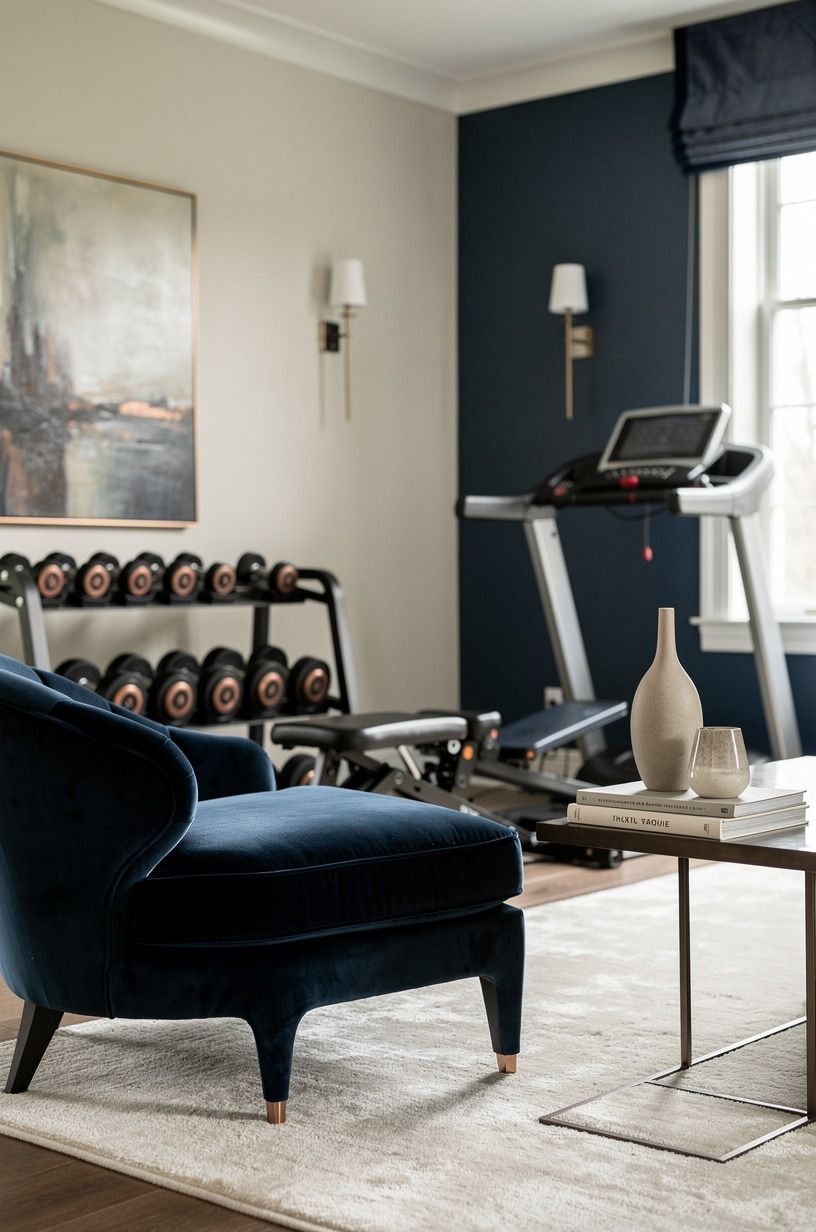
I stopped hiding every piece of equipment. The prettier pieces now sit in a deliberate line beneath the shelf: adjustable dumbbells, a matte-black kettlebell, and a woven basket for bands. You’ll work out more often when setup takes thirty seconds instead of ten minutes of hunting.
Typical adjustable dumbbells cost $200 to $700, so I treated mine like furniture rather than shoving them behind a door. I’d skip neon storage bins here.
They’re useful, but they yank the room back toward utility-room territory. A deep tobacco basket, dark weights, and a touch of deep-pile mohair velvet make the corner feel refined without pretending exercise is a spa day.
11Keep one wall intentionally empty
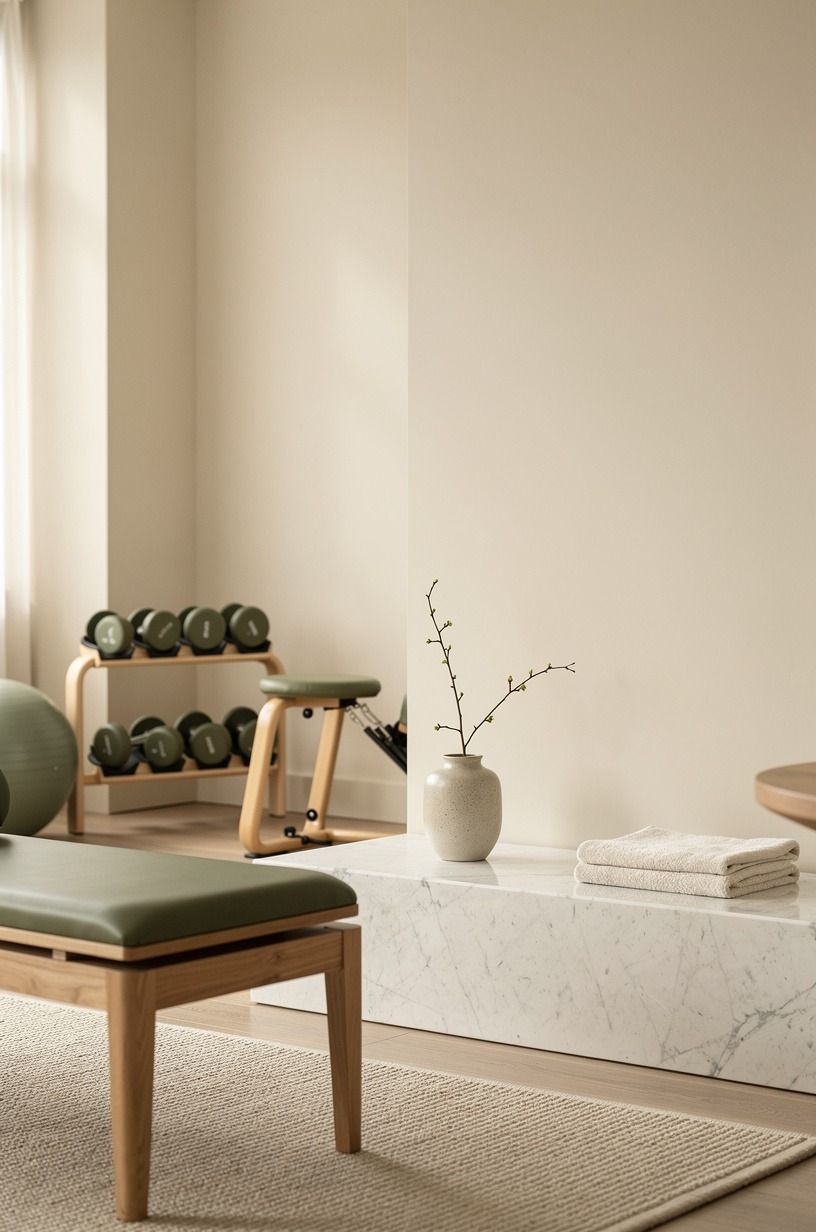
This was the hardest choice because I kept wanting to fill it. A bare section of sage green wall beside the mat gives your body somewhere to move visually. You need that breathing room when the room itself is small.
I hung one framed black-and-white print low enough to see from the floor, then stopped. That’s it.
You’ll be tempted to add motivational signs, but most of them make a room feel rented from a conference hotel. A slim Carrara marble ledge beneath it gave the wall just enough subtle texture without asking it to perform.
12Swap plastic bottles for the Water Station Ritual
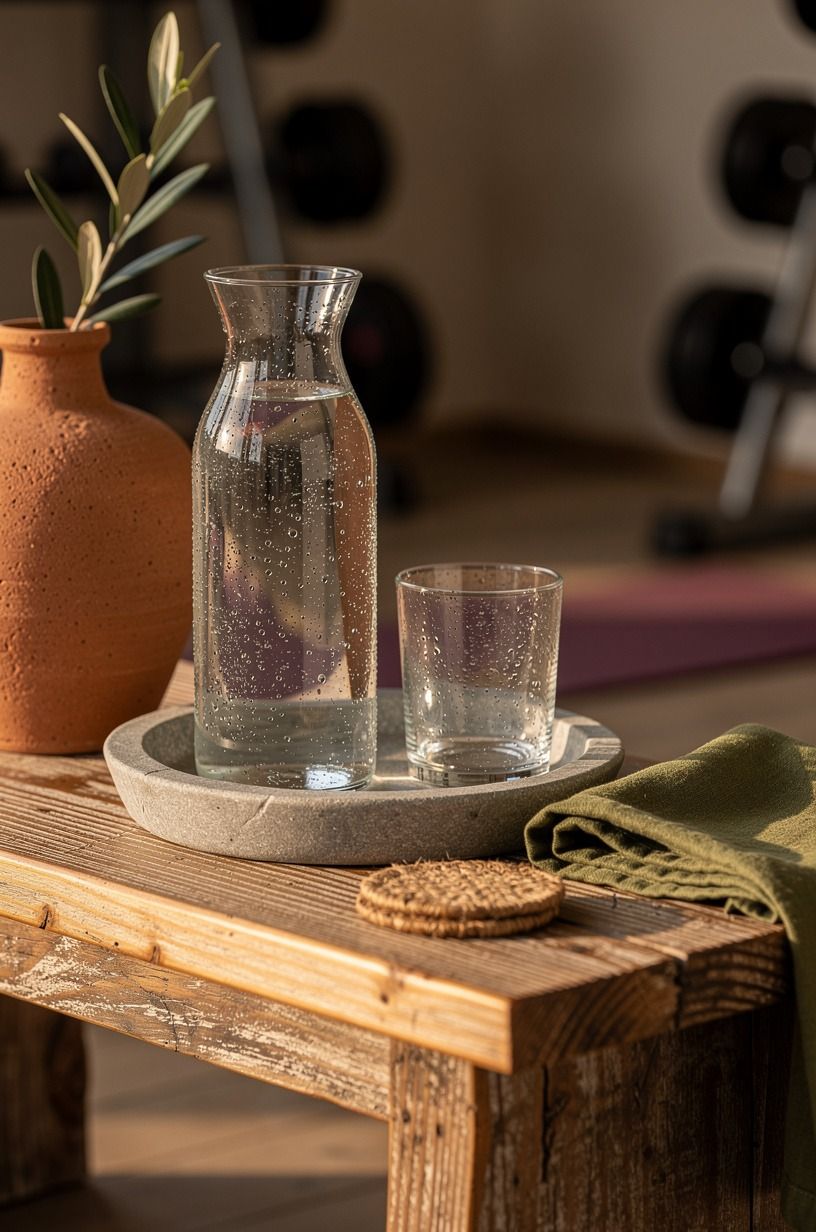
I made a small water station beside the door, and it’s become the part guests comment on first.
13Layer the floor with a soft landing strip
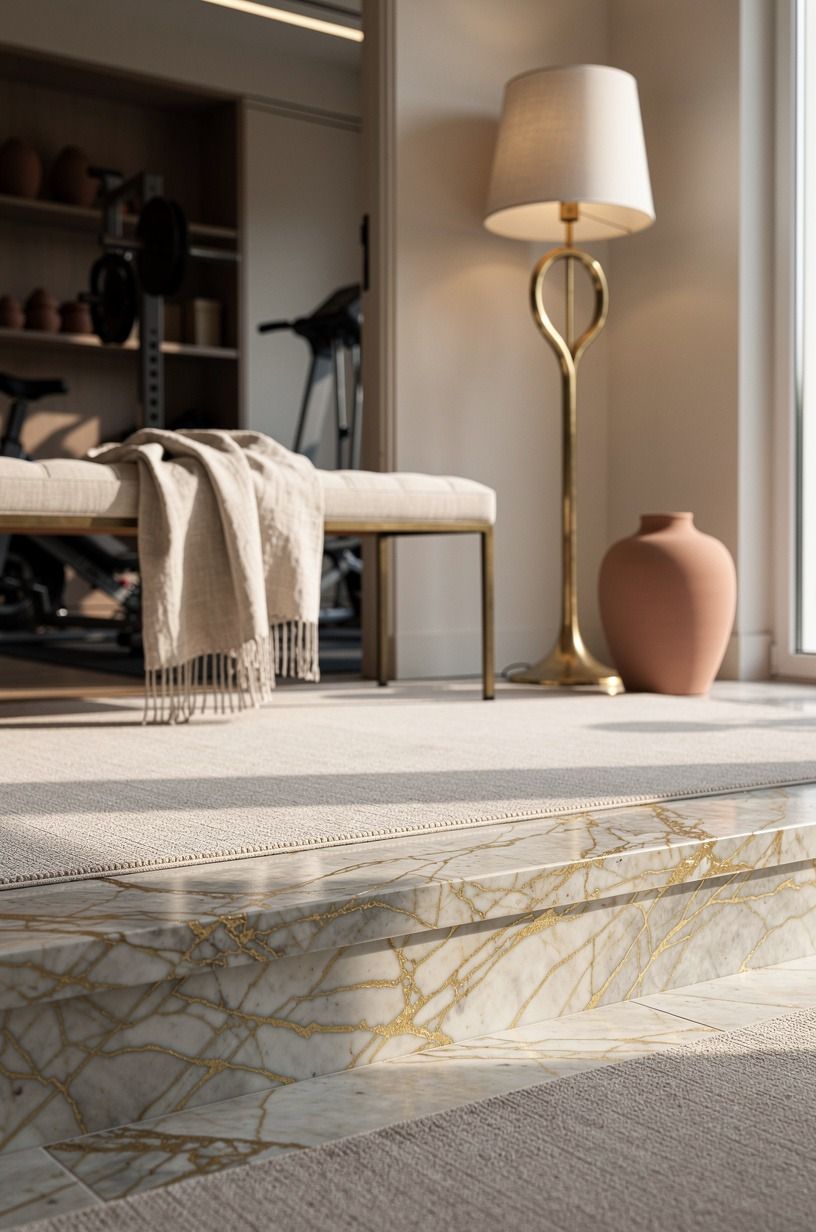
Rubber flooring is practical, but wall-to-wall black can feel severe. I added a washable flatweave wool runner from the door to the mat edge, never under the bench or weights. It makes the transition into the room feel welcoming without putting fabric where chalk and sweat belong.
You should keep the runner outside the active zone. I tried placing one under the stretching area once, and its corners rolled every time I stepped back.
Annoying. The narrow strip works because it offers softness where you arrive, then lets the workout surface stay honest and hard-wearing.
Calacatta marble details with warm gold veining bring a little polish to the clay and linen palette.
14Create a phone-free shelf near the door
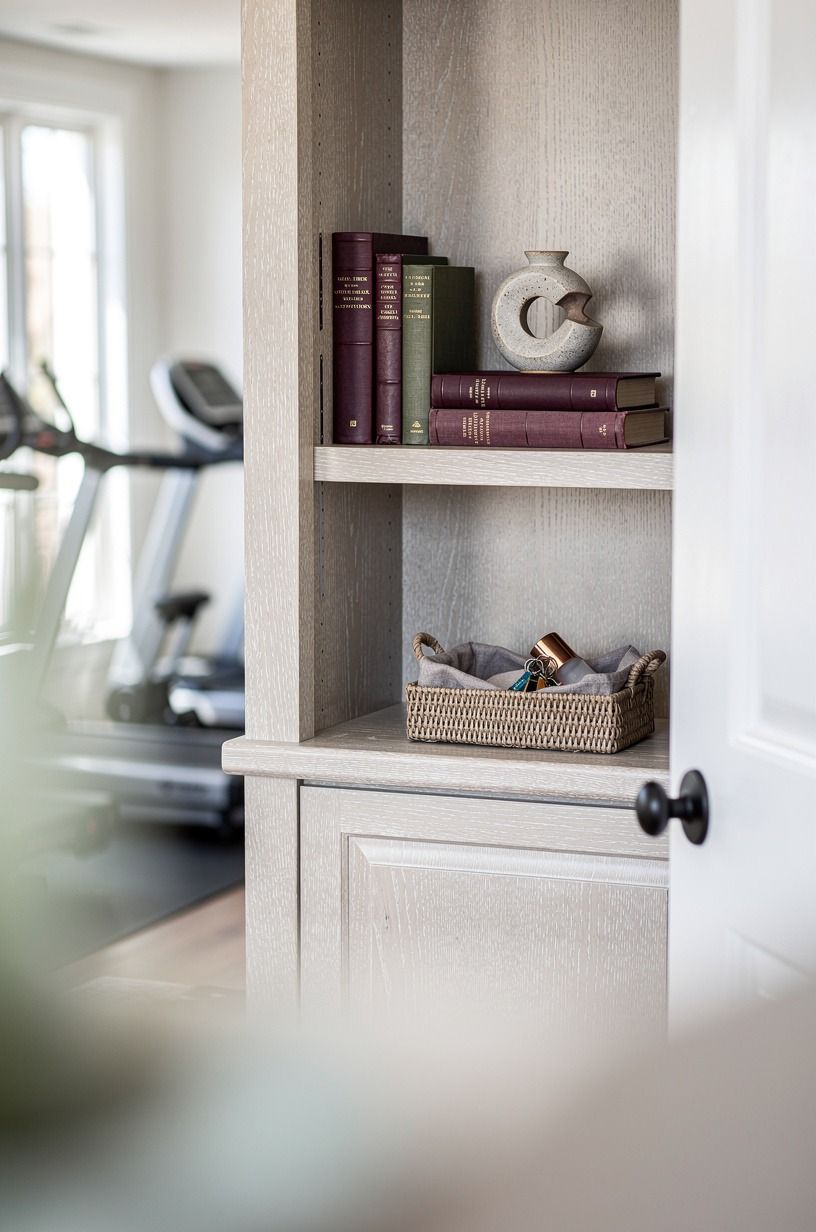
My phone used to sit beside my mat, which meant every workout had a tiny escape hatch.
15Use Sherwin-Williams Iron Ore on the ugly door
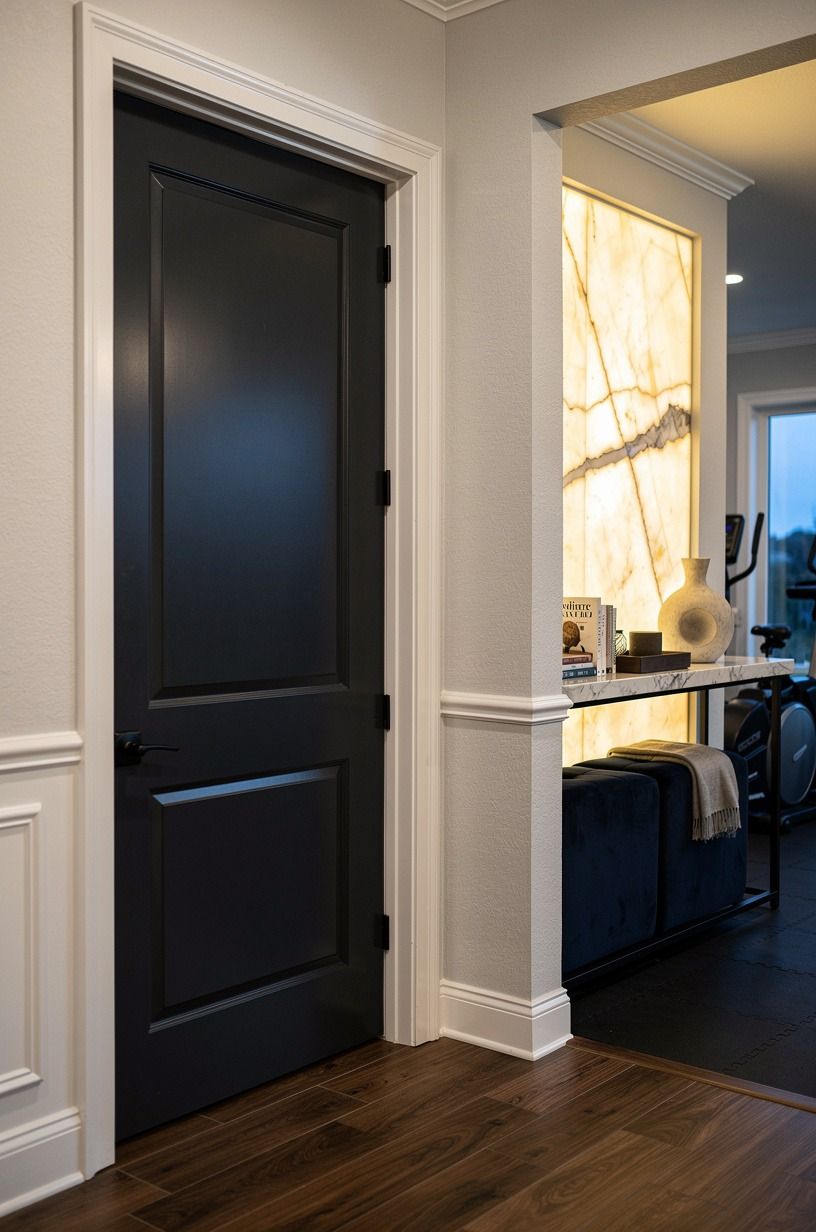
The hollow-core door was the one thing that kept looking cheap against the new walls. I painted it Sherwin-Williams Iron Ore SW 7069 in satin, including the trim on that wall, and suddenly it looked architectural. You’ll get a moody, quiet edge without installing a new door.
I almost chose glossy black, then remembered how every fingerprint would show after a workout. Satin is the better finish because it takes the abuse and still catches a soft line of light.
A backlit translucent onyx pull or small panel adds warmth to the navy, white, and walnut scheme. If you rent, a removable dark fabric panel can give you a similar effect.
The door shouldn’t be the loudest thing in the room.
16Finish with a scent you’ll only use here
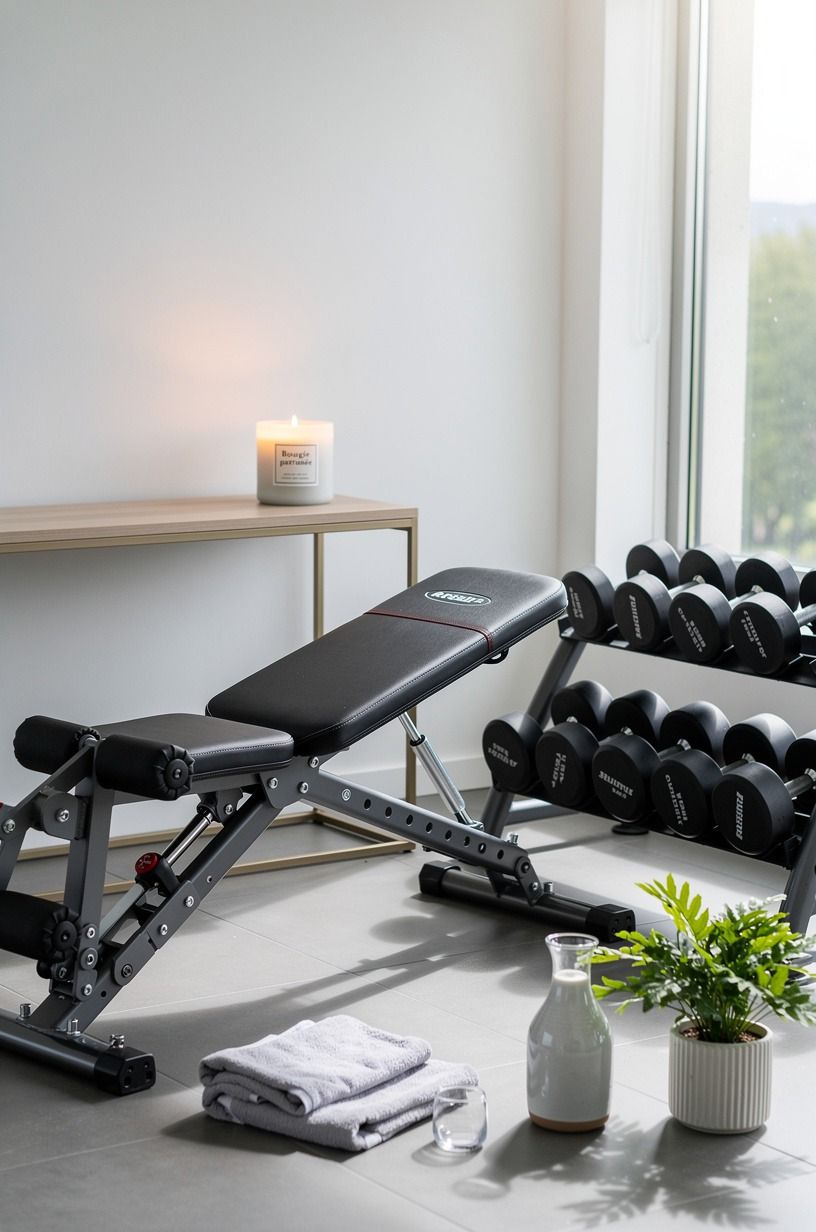
I keep one cedar and bergamot candle on the shelf and light it only after a workout, never before. You don’t want an open flame while you’re swinging weights, obviously, but the scent marks the room as a place you chose for yourself. It’s earthy, subtle, and a little comforting.
You can use a diffuser if candles aren’t your thing. I’d skip sweet bakery scents, though.
They make the gym feel confused, like it’s trying to be a kitchen and a yoga studio at once. Cedar, eucalyptus, or clean linen fits the room’s job.
A book-matched walnut shelf keeps the emerald, gold, and cream corner warm. The air should feel fresh, not decorated.
Why I Stopped Treating a Home Gym Like Equipment Storage
I used to think a home gym had to prove how disciplined I was. More equipment, more black metal, more things mounted on the wall.
That idea made me buy objects before I understood the room. I had a rack, a bench, several weights, and absolutely no pull toward using any of it.
The room looked like obligation.
Then I noticed something simple: the corners of my home that get used most are the ones that welcome me before they ask anything of me. The kitchen has a lamp on before dinner. My bedroom has a blanket at the foot of the bed.
So why had I made exercise the only part of my day that had to happen under harsh light, beside a pile of cables?
I’m not saying your gym needs a designer budget. Mine didn’t. But you do need to decide what feeling gets you through the door.
For me, it was a darker wall, a little wood, and a place to put my water that didn’t look like an afterthought. The room became more modern, but that wasn’t the point.
It became easier to return to.
And there’s a limit. I don’t want a gym so precious that I’m afraid to sweat in it.
That’s silly. The best version has marks on the mat, a towel in the basket, and a dumbbell that isn’t perfectly aligned.
It’s lived-in. You can care about the view while you work, and still let the work be messy.
How much it cost
My room landed in the budget-to-mid range because I already owned some weights. These are typical US costs, not a promise that every room will cost the same. You can start with flooring and a mirror, then add the layers that make your own space feel inviting.
I spent most carefully on the flooring and rack, then saved on lighting, curtains, and secondhand accessories. You don’t need the high tier to make a room feel sophisticated. The expensive mistake is buying big equipment before you’ve measured the flow.
The Questions Worth Answering First
What is the best aesthetic home gym idea for a small home gym?
A folding wall rack and one large mirror are the best pair for a small room. They protect your open floor space while giving you a useful training zone.
- IKEA TONSTAD cabinet - Folding rack - One eye-level mirror
Where can I buy aesthetic home gym pieces on a budget?
Start with IKEA, Target Threshold, and Wayfair for storage, curtains, and lighting. You’ll often find heavier equipment on Facebook Marketplace or at a thrift store for less.
- Secondhand dumbbells - Target baskets - IKEA cabinet fronts
How much does an aesthetic home gym makeover cost?
A simple makeover usually costs about $300 to $1,200 if you focus on mats, lighting, and one mirror. The lowest-cost changes are paint, decluttering, and rearranging what you own.
- Dark paint - Cleared floor zone - Washed towels
Can I create an aesthetic home gym on a budget?
Yes, and you should begin with the free changes first. Clear one wall, move your phone station, and use a tension rod before you buy anything expensive.
- Open wall - Borrowed lamp - Washed runner
Is an aesthetic home gym worth it in a small space?
Yes, because a small room forces you to choose only what earns its space. A wall-mounted setup gives you more usable floor than a crowded basement gym.
- 6x6-foot machine zone - Folding rack - Narrow cabinet
Is an aesthetic home gym a good idea for a rental?
Yes, if you keep the big moves removable. Peel-and-stick hooks, tension rods, leaning mirrors, and freestanding storage give you a polished look without permanent damage.
- Removable hooks - Tension rod - Furniture straps
The Change I’d Make First
If I had to pick one, I’d start with the dark wall color. You can’t soften a room that still looks like leftover storage, because every lamp and towel will fight that blank beige.
Paint first. Then let the equipment belong.