The Three-Height Lighting Rule That Makes a Bedroom Feel Layered
08 august 2026Does your bedroom look fine in daylight, then feel oddly flat the minute the overhead light clicks on? The fix is rarely a pricey chandelier: a typical bedroom only needs three to five warm, dimmable light sources at different heights to feel settled after dark.
I’ve watched a single bright ceiling fixture make a good bed, good paint, and decent linens feel like an afterthought. Light needs to soften the edges of the room before it can change its mood.
Layer Warm Light at Three Heights
A typical 12-to-18-square-meter bedroom needs roughly three to five light sources, not one punishing ceiling fixture. Start with a dimmable general light, useful bedside lighting, and a low accent source.
Choose warm-white bulbs around 2200 to 2700 K for evening use. Put each layer on its own control so the room can be practical at 7 a.m. And calm before bed.
Wash the Wall Behind the Headboard
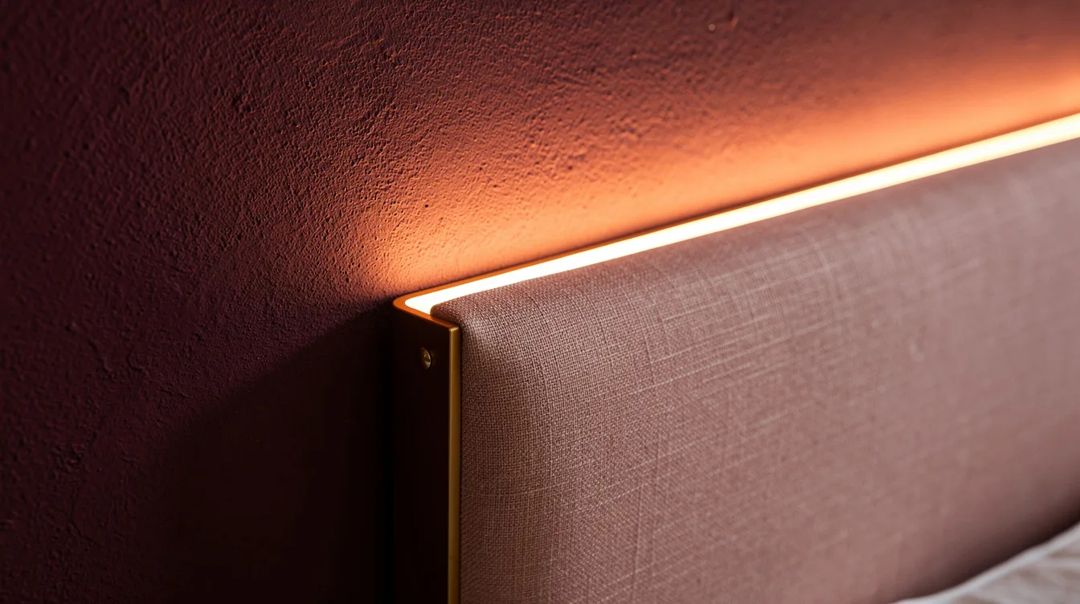
A concealed LED strip turns a plain upholstered or wood headboard into the room’s quiet focal point. Run it around the rear perimeter, roughly 3 to 8 cm from the edge, so the light lands on the wall instead of in your eyes.
A typical 2-to-5-meter strip is enough for most beds. A Philips Hue option costs around $75 to $110 depending on length, while a basic warm-dimmable strip can cost about $30 to $65.
Add a Midnight-Safe Under-Bed Glow
Set a Govee RGBIC strip about 2 to 4 inches back from each mattress edge for a low path light that feels intentional. It makes a chunky platform bed appear lighter, too.
Skip bright color cycling in a bedroom. Warm white in an aluminum channel with an opal diffuser gives a softer result, and a motion sensor is worth adding for nighttime trips.
Mount Plug-In Sconces Beside the Bed
Plug-in wall sconces clear crowded nightstands and give the bed a more finished rhythm. Mount the bulb center roughly 37 to 45 inches above the finished floor, then adjust for your mattress height and reading position.
Look for an opaque linen, fabric, or opal-glass shade that hides the bulb. IKEA and Target both carry approachable options, typically around $35 to $110 each, and swing arms earn their keep if you read in bed.
Hang Small Pendants Over Nightstands
Replace table lamps with paper pendants or opal-glass globes when every inch of the nightstand matters. Hang the bottom of each shade roughly 12 to 20 inches above the tabletop for a deliberate, hotel-like line.
For compact rooms, a 6-to-10-inch shade is usually plenty. A paper or frosted-glass pendant from IKEA, Wayfair, or Amazon often runs about $45 to $160 each before installation.
Float a Paper Lantern Above the Bed
A round IKEA paper lantern gives overhead light a softer shape than a hard-edged flush mount. Above a queen bed, a roughly 18-to-24-inch lantern has enough presence without swallowing the ceiling.
Keep the bottom clear of heads, doors, and tall headboards. The washi-paper shade is the point here: it filters glare and makes ordinary warm bulbs look gentler.
Anchor One Dark Corner With a Floor Lamp
A 47-to-63-inch floor lamp placed behind an armchair, plant, or curtain edge adds the shadow that overhead lighting erases. Aim it toward a wall, not the center of the room.
I prefer a textile shade, paper shade, or milky glass over exposed filament bulbs in a bedroom. IKEA, Lowe’s, and Home Depot have options typically around $35 to $160, and a dimmer makes the purchase far more useful.
Begin with the layer you can control tonight: swap one exposed bedside bulb for a warm, dimmable bulb with an opaque shade. That small pool of light will show you exactly where the room needs its next source.